Dr Margaretha Montagu – described as a “game changer”, “gifted healer”, “guiding light” and “life-enriching author” – is a certified transformational retreat leader who guides her clients towards their most meaningful and fulfilling lives, particularly when navigating life transitions – virtually, or with the assistance of her Friesian Horses, at their home in the southwest of France.
When we hear the word grief, most of us think of bereavement.
We think of funerals, sympathy cards and the aching absence of someone we loved.
But grief is far less selective than that.
Over the years, I’ve come to believe that many people walking through a bog life change aren’t simply stressed, anxious or overwhelmed. They’re grieving. The trouble is, they don’t always realise it.
You can grieve the career that once gave your days structure and meaning.
You can grieve the marriage that ended, even if you know it was the right decision.
You can grieve the home where your children grew up, the country you left behind, the healthy body you once took for granted, or the dreams that quietly slipped away while you were busy making other plans.
You can even grieve the person you used to be.
Unlike bereavement, these losses rarely come with rituals. Nobody sends flowers because you’ve retired. There isn’t a memorial service for the business that failed or the identity you’ve outgrown. Friends often assume you should be excited about your new beginning, while you’re privately mourning the ending you never expected.
That can leave you feeling confused.
“I should be grateful.”
“I wanted this change.”
“So why do I feel so sad?”
The answer is surprisingly simple.
Every ending involves a loss, even when it’s a chosen ending.
I’ve seen this time and again. Someone finally escapes a toxic job, yet feels strangely empty. A long-awaited retirement arrives, only to be followed by restlessness rather than relief. A couple relocate to their dream home in the countryside, only to discover they miss the familiar routines and neighbours they were so eager to leave behind.
I’ve experienced it time and again.
Our emotions don’t always keep pace with our decisions.
As a doctor, I’ve learned that healing often begins with an accurate diagnosis. We wouldn’t expect a broken ankle to heal correctly if we insist it is merely a bruise. Yet we often do exactly that with emotional pain. We call it stress when it’s grief. We call it weakness when it’s loss. We tell ourselves to “get over it” without acknowledging what has disappeared.
No wonder so many people feel stuck.
The good news is that grief isn’t something to fear. It isn’t a sign that you’re moving backwards. More often, it’s evidence that something mattered. A lot.
The more we have loved, invested, hoped or belonged, the more likely we are to grieve when life changes.
In fact, I sometimes think grief deserves a better reputation.
And, perhaps most importantly, it creates space for what comes next.
I’ve noticed that people begin to move forward not when they stop grieving, but when they stop fighting the fact that they are grieving.
There’s a quiet relief in finally saying, “Of course this is hard. I’m closing a chapter of my life.”
That simple acknowledgement often lifts a surprising weight from our shoulders.
We live in a culture that celebrates beginnings. New jobs, new homes, new relationships and fresh starts all receive applause.
Endings rarely do.
Yet every meaningful beginning asks us to let go of something first.
If you’re navigating a life change and finding yourself unexpectedly emotional, perhaps there’s nothing wrong with you.
Perhaps you’re simply honouring what has been.
Give yourself permission to do that.
Not forever. Grief isn’t somewhere we’re meant to pitch a tent and stay. But neither is it something to sprint through as quickly as you can.
Walk through it instead.
At your own pace.
One day you’ll look back and realise that what felt like the end of your story was, in truth, the closing of one chapter and the quiet beginning of another.
Every new chapter deserves its opening pages.
But first, we have to finish reading the last one.
Author Bio: Dr Margaretha Montagu – described as a “game changer”, “gifted healer”, “guiding light” and “life-enriching author” – is an experienced medical doctor, a certified NLP practitioner, a medical hypnotherapist, an equine-assisted psychotherapist (EAGALAcertified) and a transformational retreat leader who guides her clients through life transitions – virtually, or with the assistance of her Friesian and Falabella horses, at their home in the southwest of France.
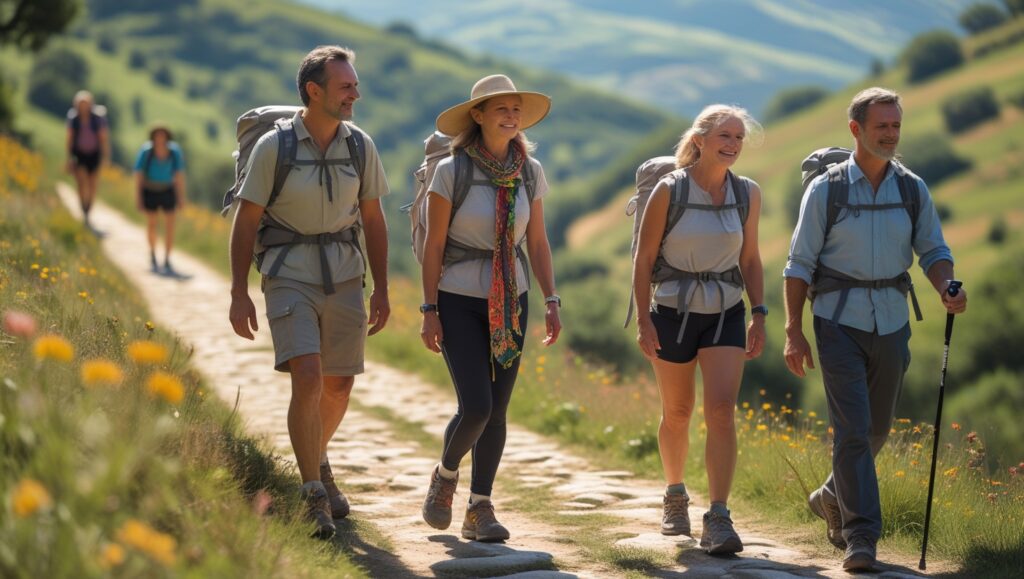
If your soul is craving fresh air, meaningful movement, and a chance to reconnect with nature, join us on a Camino de Santiago Walking Retreat in the southwest of France. This isn’t just a scenic hike – it’s a powerful, natural reboot for your body, mind, and spirit. Imagine quiet paths, rolling hills, cozy evenings, and slow conversations. No fitness requirements. No forced bonding. No pressure to have a breakthrough. Just one foot in front of the other, and finding your way to a brighter future.
Just when you’ve finally got the hang of things, the children have grown up, your career feels secure, the mortgage is becoming less frightening, or you’ve settled into a comfortable routine, life has a habit of throwing a rather spectacular spanner in the works.
A redundancy. A divorce. A frightening diagnosis. The loss of someone you love. Retirement that doesn’t feel nearly as liberating as everyone promised. A move to a different country. Or perhaps nothing dramatic at all—just the unsettling realisation that the life you’ve spent years building no longer feels like it belongs to you.
Most of us assume these moments are interruptions. We tell ourselves that if we can just get through this difficult patch, life will return to normal.
But what if this is it? This IS normal?
I have come to the mind-shattering conclusion that constant change is normal/
Life isn’t a straight road. It twists, climbs, descends, doubles back on itself and occasionally disappears into the undergrowth altogether.
Over the years, I’ve had the privilege of meeting some seriously awesome people, who arrived at one of my retreats believing they were somehow failing at life.
Yet the more stories I heard, the more I realised something rather comforting.
They weren’t failing.
They were changing.
There’s an important difference.
A caterpillar doesn’t become a butterfly by trying harder to be a better caterpillar. At some point, the old version simply doesn’t fit anymore. The transformation is uncomfortable, messy and, from the outside, probably looks like everything has gone terribly wrong.
We aren’t all that different.
Major life changes often dismantle more than our circumstances. They quietly dismantle our identity. We lose the job, but we also lose the person we believed ourselves to be. We lose the relationship, but we also lose the future we had imagined. We retire from a career, only to discover that our sense of purpose retired with it.
No wonder it feels so disorientating.
One of the greatest myths our culture perpetuates is that successful people have their lives neatly sorted, everything firmly under control. In reality, every meaningful life includes seasons of uncertainty. The difference isn’t that some people avoid these chapters. It’s that they eventually stop seeing them as evidence of failure.
Instead, they begin to recognise them for what they often are: invitations.
Not invitations anyone would willingly accept, admittedly. I doubt many people wake up desperate for a personal crisis. But life’s most difficult chapters frequently ask questions that our comfortable years never do.
Who are you when the title doesn’t fit anymore?
What still matters when the plan falls apart?
What kind of life do you want to rebuild?
These aren’t easy questions, and they rarely have quick answers. In fact, trying to answer them too quickly is often part of the problem. We rush to replace what we’ve lost instead of taking time to understand how we’re changing.
I’ve learned that clarity rarely arrives because we think harder. More often, it appears when we create enough time and space to listen—to ourselves, to that quieter voice we’ve been too busy to hear.
Perhaps that’s why so many people find unexpected answers while walking. When the body moves steadily forward, the mind often follows. One thoughtful step at a time, problems that seemed impossible begin to loosen their grip, and possibilities quietly emerge where none seemed to exist before.
If your own life feels as though it’s falling apart at the moment, I’d like to offer you a different perspective.
Perhaps it isn’t falling apart.
Perhaps it’s falling into place in a way you simply haven’t recognise yet.
That doesn’t make today any easier. It doesn’t remove the grief, uncertainty or fear. But it does mean that feeling lost isn’t necessarily a sign you’ve taken a wrong turn.
It may simply mean you’re between chapters.
And every worthwhile story has lots of those.
Author Bio: Dr Margaretha Montagu – described as a “game changer”, “gifted healer”, “guiding light” and “life-enriching author” – is an experienced medical doctor, a certified NLP practitioner, a medical hypnotherapist, an equine-assisted psychotherapist (EAGALAcertified) and a transformational retreat leader who guides her clients through life transitions – virtually, or with the assistance of her Friesian and Falabella horses, at their home in the southwest of France.
If your soul is craving fresh air, meaningful movement, and a chance to reconnect with nature, join us on a Camino de Santiago Walking Retreat in the southwest of France. This isn’t just a scenic hike – it’s a powerful, natural reboot for your body, mind, and spirit. Imagine quiet paths, rolling hills, cozy evenings, and slow conversations. No fitness requirements. No forced bonding. No pressure to have a breakthrough. Just one foot in front of the other, and finding your way to a brighter future.
When you’ve outgrown the job, the industry, or possibly the identity you built in your thirties and forties, the Camino has a suggestion: start walking.
Does walking the Camino actually help with a career crisis?
Yes — but not by producing answers directly. A 5-day break with 3 days of sustained walking on the Camino in southwest France reduces rumination and restores the brain’s executive control, measurably, according to Stanford and University of Utah research. That cognitive shift is what makes the underlying career question audible. The clarity people report afterward is a byproduct of the walking, not a guarantee built into the itinerary.
This article explains why that works, what a typical five-day walking retreat involves, how it compares to therapy and career coaching, and what to do with the clarity once you have it. It includes a named case study, three peer-reviewed studies, and a comparison table to help you work out whether what you’re feeling is ordinary work frustration or something that needs more than a holiday to resolve.
5 Key Takeaways
A career crisis in midlife is not necessarily about failure. It is the signal that an identity built in your thirties has done its job and is ready to be renegotiated — and most workplaces give you no space to hear that signal clearly.
Walking in nature measurably reduces rumination. A 2015 Stanford study (Bratman et al., PNAS) found a 90-minute nature walk reduced both self-reported rumination and activity in the subgenual prefrontal cortex, the brain region tied to repetitive negative self-focus.
A five-day break is enough. The shift doesn’t require a sabbatical — it requires enough consecutive days of walking, nature, and removal from professional context for the brain’s default mode network to do the background processing your commute and your inbox don’t allow.
The Via Podensis through France offer this without overcrowded paths — walkable by anyone reasonably active, not requiring athletic preparation.
Clarity is not a five-year plan. Most people return from the Camino with a clearer question, if not a finished answer — and that distinction matters more than it sounds, because the wrong plan built on the right question is still the wrong plan.
The Woman Who Had Everything and Couldn’t Explain Why That Was the Problem
Sophia Renard was, by the metrics her industry used to measure such things, doing extremely well. She was forty-six years old, a senior partner at a marketing consultancy in Paris, a woman who had spent twenty-two years building a career with the focused determination of someone who had known exactly what she wanted since her mid-twenties. She had the partnership, the clients, the reputation, the LinkedIn profile that was, if she were being objective, genuinely impressive.
She had also, for approximately two years, been waking at four in the morning. Not with anxiety exactly — just awake, her mind running at full capacity with nothing in particular to process, which was somehow more disconcerting than if it had been processing something specific. Her doctor said the things doctors say. Her husband Luc suggested she was working too hard, which was accurate and not useful. A therapist asked good questions she answered articulately and left no clearer than when she arrived.
The Camino was Luc’s idea, framed carefully as a holiday rather than a prescription. She arrived in the French countryside on a Saturday in October, had dinner with the small group of other walkers, said little, and went to bed at nine.
She woke at four. Out of habit she reached for her phone, then put it face-down and lay listening to a silence that was older and less pressured than the Paris one. She began walking the next morning through French farmland that looked as though it had been managing perfectly well for centuries.
On the second day, on a long straight section between two villages whose names she’d already forgotten, a thought arrived so simple it stopped her walking.
She had spent twenty-two years doing what she’d decided she wanted at twenty-four. She had done it extremely well. And somewhere in the last two years, without ceremony, she had finished wanting it. Not the work — the wanting. The drive. It had quietly redirected itself somewhere she hadn’t yet looked.
She stood on the path for a long moment. A bird she couldn’t identify called from a field to her left. She began walking again. She did not have the answer yet. For the first time in two years, she had the question — and the question turned out to be most of the work.
Is what you’re feeling a career crisis, or just a bad few months?
The two are easy to confuse and respond to different things. Ordinary work frustration eases with a holiday and is usually tied to a specific project, person, or deadline. A deeper identity-level shift persists across good weeks and bad ones, shows up as unexplained early waking, and doesn’t lift when something at work goes well.
Here is a quick way to tell the difference before you book anything — a holiday for the first, a different kind of break for the second:
Signal
This is restlessness
This is something else
Frequency
Comes and goes with workload, eases on holiday
Persists even when the work itself is going well
Focus
Frustration with a specific project, boss, or team
A diffuse sense that the role itself no longer fits
Sleep
Occasional bad nights before a deadline or review
Recurring early waking with no specific trigger
Response to success
A win resolves the feeling, at least for a while
A win registers but doesn’t touch the underlying flatness
Timeframe
Weeks
Many months to several years
Why does walking bring career clarity?
Walking in nature shifts the brain into its default mode network — a state of undirected, self-referential thinking associated with insight and autobiographical processing. Professional environments do the opposite: meetings, inboxes, and targets keep the brain in directed-attention mode, which actively suppresses the kind of background processing a career question needs to surface.
This matters because the modern response to career uncertainty — career assessments, coaching frameworks, five-year plans — assumes clarity comes from more analysis. That assumption solves the wrong problem. A career crisis in midlife is rarely a lack of information. It’s a perception problem: you already have the data, you just can’t see your own situation clearly enough from inside it, because the environment that produced the question is also the environment preventing you from answering it.
The career clarity the Camino produces isn’t the result of thinking harder about the problem. It’s the result of finally, for three consecutive days, thinking about something else — and letting the brain do the work it’s been trying to do at four in the morning for two years.
Removing the professional context matters too. Identity at work is environment-dependent: take the office, the title, and the inbox away, and the role becomes visible as a construction rather than a fact. On the Via Podensis, you are not the senior partner. You are a person walking through a Gascon forest. For most people carrying significant professional identity, that’s unexpectedly clarifying.
How does a Camino walking retreat compare to therapy or career coaching?
Each tool does something different, and the comparison helps clarify which one you actually need right now.
Approach
Best for
Limitation
Therapy
Processing specific emotional content, patterns, or past experience with professional support over time
Talk-based; doesn’t directly engage the nature-walking mechanism that reduces rumination
Career coaching
Structuring a known goal into an action plan, CV, or transition strategy
Assumes you already know what you want; doesn’t help if the question itself is unclear
Camino retreat
Creating the cognitive conditions for the question to surface clearly in the first place
Produces clarity, not a finished plan — you still need to act on what it reveals
Many people use these in sequence rather than as alternatives: the Camino to find the real question, then coaching or therapy to work out what to do about it.
What does a five-day French Camino walking retreat actually involve?
For anyone picturing a religious pilgrimage with hostel dormitories and strangers with blisters, the small-group version looks different in practice:
Three guided walks across the retreat, typically 10–15km per day on the Via Podensis — slightly shorterthan the daily stage range walked on the full French Camino routes, but paced for a three-day walk rather than a month-long pilgrimage.
Same, comfortable accommodation each night — proper beds, in a 200-year-old farmhouse — with a maximum of four guests per retreat, so the group stays small enough for real conversation.
Meals built around the regional Gascon table: the kind of food that makes the evenings as memorable as the walking.
Unstructured time built in deliberately — afternoons and evenings with nothing scheduled, because the clarity this article describes tends to arrive unscheduled. If you can walk for two to three hours without significant difficulty, and you’ve done some walking in the weeks beforehand, you’re ready.
5 Mistakes to Avoid
1. Bringing the laptop. A significant number of people bring their work as a security object, not intending to use it but unable to commit to five days without it nearby. Leave it. The insight you need cannot be found in a browser tab.
2. Using the walk as a strategy session. The temptation is to think hard and systematically about the career question while walking. This produces the same circular thinking the four o’clock mornings already produce. The clarity arrives in the gaps between thoughts, not in the thoughts themselves.
3. Expecting a five-point plan to fall out of the French sky. The Camino produces clarity — a sense of what matters — not a strategy document. Arrive expecting a direction, not a finished route.
4. Treating restlessness as failure. A career crisis at midlife is frequently a sign you’ve accomplished enough of what you set out to do that you’re now free to ask what’s next. That reframe is uncomfortable and accurate.
5. Not acting on what the walk reveals. The clarity is real but fragile once ordinary life reconvenes. Write down what you understood before you land, and identify one small, concrete next step before the week is out.
Further Reading
Designing Your Life by Bill Burnett and Dave Evans
Two Stanford professors apply design thinking to building a career that actually fits, using prototyping and curiosity rather than five-year planning. Most useful after the Camino, when the clarity is fresh and the question becomes what to do with it.
The Second Mountain by David Brooks
Brooks argues that the first mountain — career, achievement, accumulated professional identity — gives way in midlife to a second mountain: vocation over career, depth over breadth. It names, with precision, the exact transition this article describes.
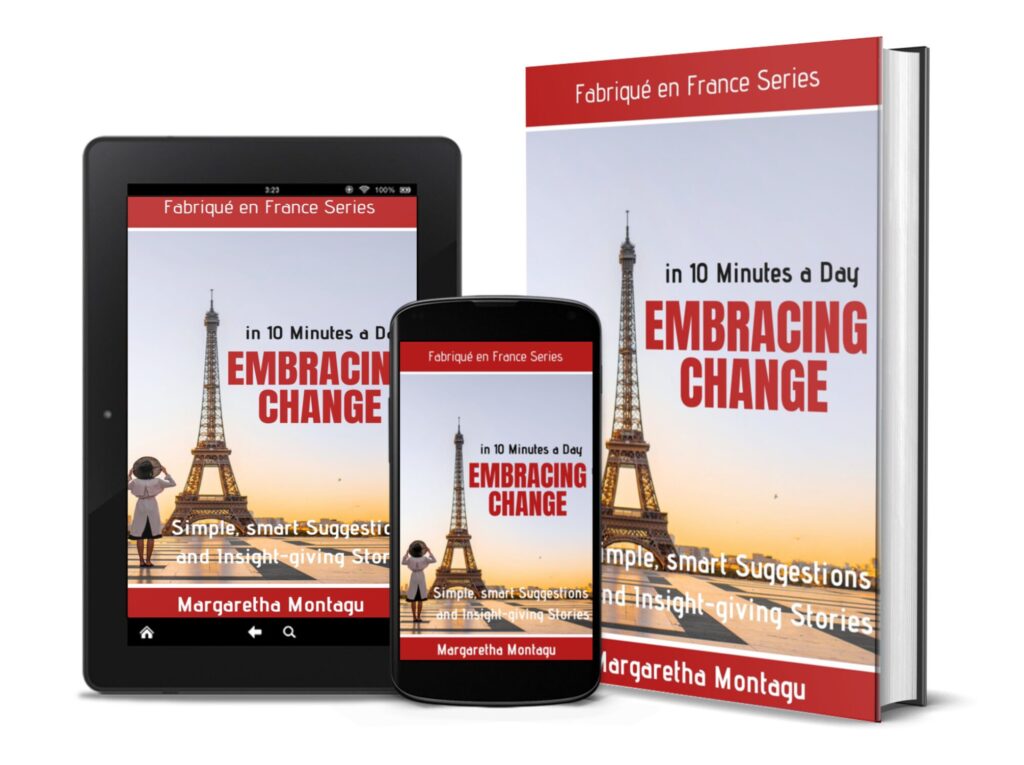
Embracing Change — in 10 Minutes a Day
Career renegotiation is a change problem — not dramatic enough to force itself, not comfortable enough to ignore. Margaret Montagu’s Embracing Change — in 10 Minutes a Day offers a practical framework for the daily choices that move you toward the life you want. Read it on the flight home, when the question shifts from what do I want to how do I begin.
If you are currently facing a major life transition or any other dramatic change in your circumstances, and you have no idea how you are going to cope, the good news is that the strategy presented in this book can help you, step by step, to improve your ability to handle the stress caused by change, even if you feel entirely powerless at the moment.
And if you’re approaching this as a sceptic who doesn’t buy the idea that a walk can fix anything,The Camino for Sceptics was written for exactly your objection.
5 FAQs
Can walking actually produce career clarity, or is that wishful thinking?
The neuroscience supports it. Walking in nature activates the brain’s default mode network, the state associated with insight and self-referential processing, while reducing the cortisol and mental fatigue that cloud judgement. It’s not magic — it’s measurable neuroscience plus five days of uninterrupted silence.
What if I spend the whole retreat worrying about work instead of thinking clearly?
This is the most common day-one experience and it resolves quickly. By day two, most people report the work worry has receded to background noise; by day three it’s frequently inaudible. The walking itself does this work — you don’t have to force it.
I’m not ready to decide anything — is the retreat still worth it?
Yes. The Camino is a clarity tool, not a decision-making tool, and clarity is the prerequisite for any useful decision rather than the decision itself. Most people leave with a clearer question, not a finished plan — which is the more valuable outcome at this stage.
How do I justify five days away to my employer or to myself?
Five days of annual leave needs no justification to your employer. Internally: the person who returns with real clarity about the next decade of their working life is a more valuable professional than the one still waking at four every morning running a job that no longer fits.
What if the clarity I find is something I don’t want to act on?
Then you have clarity and a choice, which is more than you had before. Some people return knowing, for the first time with certainty, that they want to stay exactly where they are — and find that certainty arrived at through walking feels entirely different from certainty assumed by default.
Sophia Renard came home from France on a Thursday and was back in the Paris office by Monday — faster, she admitted, than strictly necessary. But she came back differently, carrying something two years of four o’clock mornings hadn’t managed to produce on their own.
She had not resigned or restructured anything visible. What she had done, somewhere on a straight section of the Via Podensis, was locate the thing that had shifted — and understand it as a direction to follow slowly, not a problem to solve immediately. She stopped waking at four most nights within a few weeks. Luc noticed. He said nothing, which was one of the things she had always liked best about him.
If you’ve been waking at four in the morning with a mind that has something to say and nowhere to say it, spring and autumn retreats on the Camino de Santiago in southwest France are available for small groups of up to four guests. Three non-guided walks through the Gascon countryside, proper rest, regional food, and the particular quality of silence that tends to make the important things audible.
Think of asking your employer to pay for this stress-reducing break; you can motivate your application by mentioning that, according to Forbes, approximately 70% of people experienced burnout in the last year. Work-related consequences include job dissatisfaction, decreased productivity, poor performance, professional mistakes, absenteeism, quiet quitting and resignations, resulting in a high turnover rate. Although conditions at work may also need improvement, a retreat focused on stress management, led by a medical doctor, can contribute significantly to preventing burnout in employees.
Do you dream of escaping your stressful life to raise a herd of goats or grow sunflowers in the south of France? Then you may be ready for an Esprit Meraki retreat. Get access to this “very serious” quiz to help you figure out how urgent your need for a change of scenery is, when you subscribe to my monthly newsletter.
If your soul is craving fresh air, meaningful movement, and a chance to reconnect with nature, join us on a Camino de Santiago Walking Retreat in the southwest of France. This isn’t just a scenic hike – it’s a powerful, natural reboot for your body, mind, and spirit. Imagine quiet paths, rolling hills, cozy evenings, and slow conversations. No fitness requirements. No forced bonding. No pressure to have a breakthrough. Just one foot in front of the other, and finding your way to a brighter future.
“I am an experienced medical doctor – MBChB, MRCGP, NLP master pract cert, Transformational Life Coach (dip.) Life Story Coach (cert.) Stress Counselling (cert.) Med Hypnotherapy (dip.) and EAGALA (cert.) I may have an impressive number of letters after my name, and more than three decades of professional experience, but what qualifies me to excel at what I do is my intuitive understanding of my clients’ difficulties and my extensive personal experience of managing major life changes using strategies I developed over many years.” Dr M Montagu
3 Peer-Reviewed Research Articles That Support This Article
The claims above are grounded in published research, not impression. Each study below addresses a specific mechanism this article relies on.
1. Nature Experience Reduces Rumination and Subgenual Prefrontal Cortex Activation
Bratman, G.N., Hamilton, J.P., Hahn, K.S., Daily, G.C., & Gross, J.J. (2015). Proceedings of the National Academy of Sciences, 112(28), 8567–8572.
Stanford researchers compared a 90-minute walk in nature against an equivalent urban walk. The nature-walk group showed significantly reduced self-reported rumination and measurably lower activity in the subgenual prefrontal cortex — the region tied to repetitive negative self-focused thought. This is the direct evidence for why the four-in-the-morning loop quietens on a walking retreat.
2. How a Walk in Nature Restores Attention and Improves Executive Control
McDonnell, A. & Strayer, D. University of Utah, Department of Psychology.
Using EEG monitoring on 92 participants, this study found that a 40-minute walk through nature — but not through an equivalent urban route — produced measurable improvements in executive control, the prefrontal-cortex function governing decision-making and working memory. This is the mechanism behind clearer, calmer thinking after walking, not just calmer feeling.
3. Attention Restoration Theory
Kaplan, R. & Kaplan, S. (1989). The Experience of Nature: A Psychological Perspective. Cambridge University Press.
The foundational framework explaining why natural environments allow directed-attention fatigue to recover. The Kaplans’ theory of ‘soft fascination’ — the effortless attention nature requires compared with the demands of a screen or a meeting — explains why five consecutive days produces a depth of mental recovery that a single evening off cannot.
Last week I caught myself doing the thing again. You know the thing. Phone in hand, re-reading an email I’d already answered and mentally rehearsing a conversation that hadn’t happened and almost certainly never would. My shoulders were somewhere up near my ears. I was on high alert — the way you get when “high alert” has been the only viable setting for so long, you have long since forgotten your nervous system had any others.
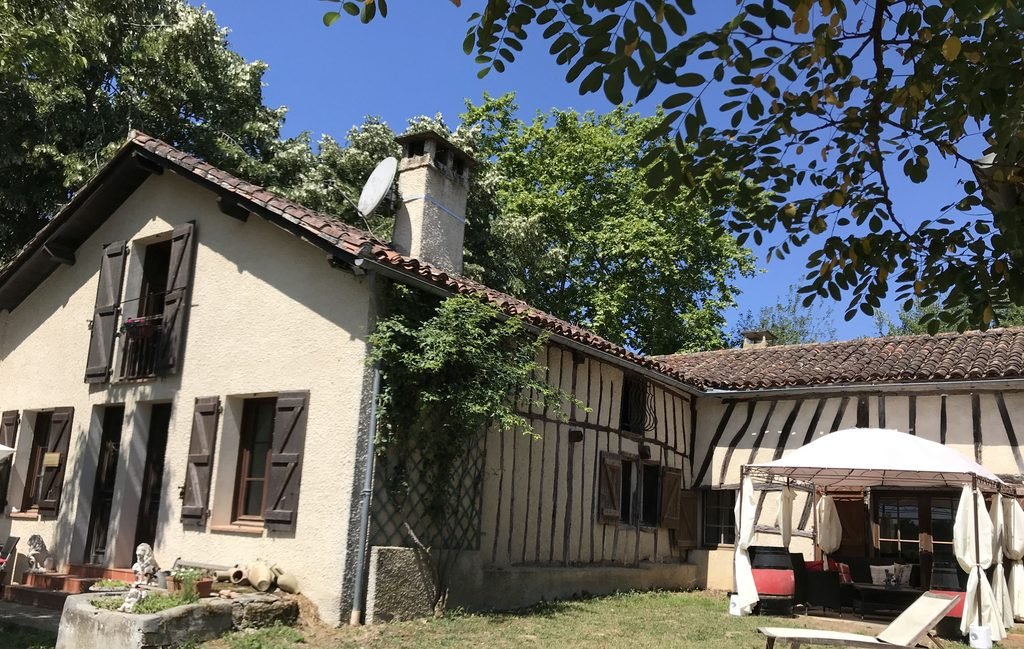
Because last week, there were huge changes here at my little farm in southwest France.
And I’m not talking about the interminable heatwave, though it was the worst ever registered in this part of the world.
Helping others manage change is what I do, so you’d think I’d be a bit better at it myself, but I’m as rubbish at this as everyone else.
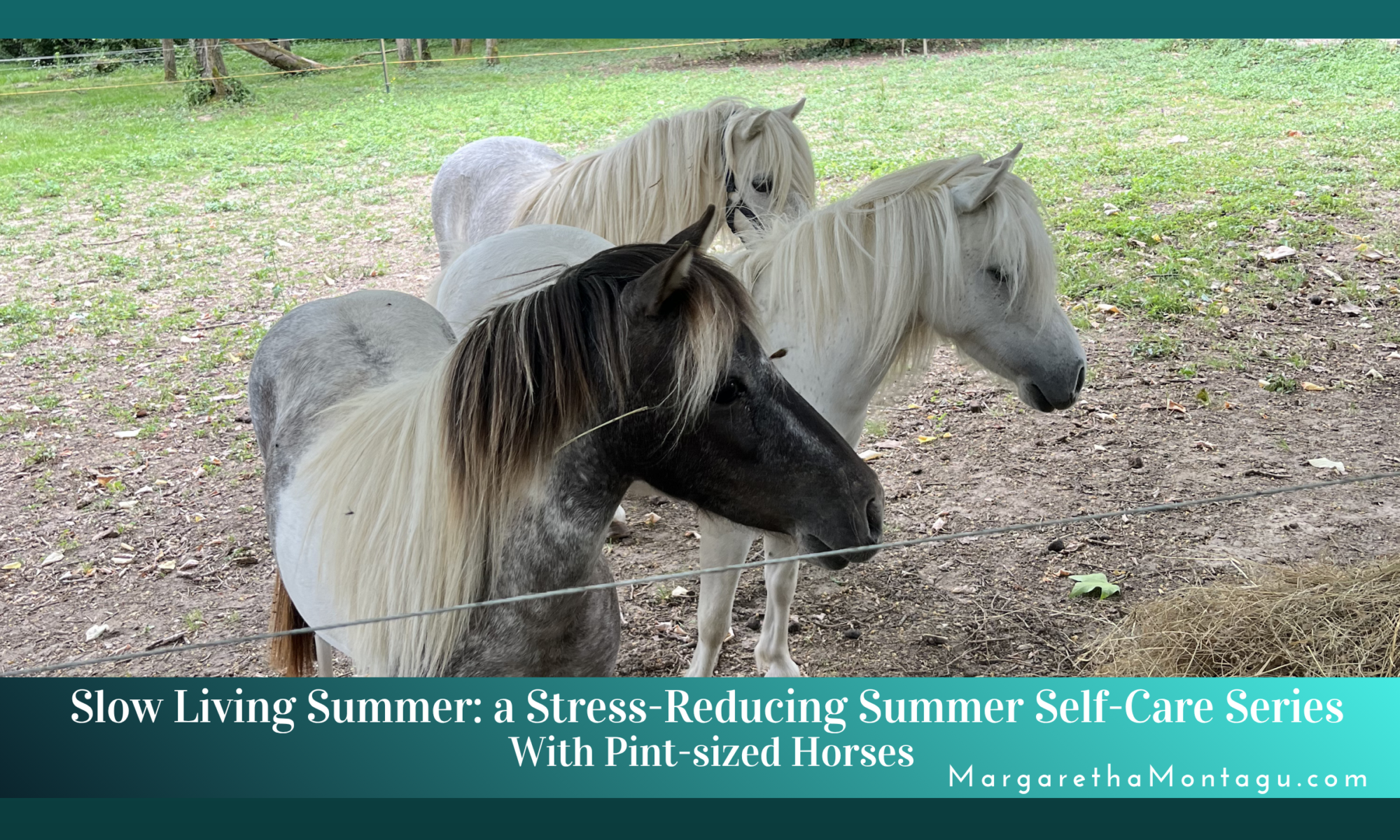
I just know what to do when I don’t know what to do anymore. I spend some time with my horses.
Now — picture a random Friday morning this summer. Without fanfare, an email lands in your inbox and you open it immediately. You’d been waiting for it. You quickly want to do the meditation before you leave for work, you’ll look at the rest in more detail over the weekend.
In your email:
A short meditation video, filmed right there on the farm with the horses — not a guru voice, just me, a paddock, and a small herd of Friesian and Falabella horses.
A breathing practice you can keep coming back to long after the six weeks are over, for whenever your chest does that tight thing.
One practical nervous system resetting tool, like saying no without the three-day guilt hangover, worrying less about the things you can’t control, finding pockets of calm inside an ordinary Tuesday.
And a story, gut-wrenching admittedly, but also hugely inspiring, to make the tool stick.
This is what my new summer series is all about: sharing with you how I cope when life gets overwhelming by taking time out to spend with the horses.
Because the “huge changes” are horse-related: you won’t just be doing this with Loki, Angelito, Tess and Zorie. Four rescued Falabellas have just joined the herd — Zofia and her daughters Estrella and Bianca, and a little boy named Valentino — and this series is their introduction to you.
My Slow Living Summer Series starts on the 10th of July — six Fridays, six emails with permission slips to switch from “high alert” to “maintenance.”
If you’d like to find out more, here’s the link. No pressure. Only open if you’re really interested.
(And why short nature immersion Camino de Santiago breaks in France are so popular)
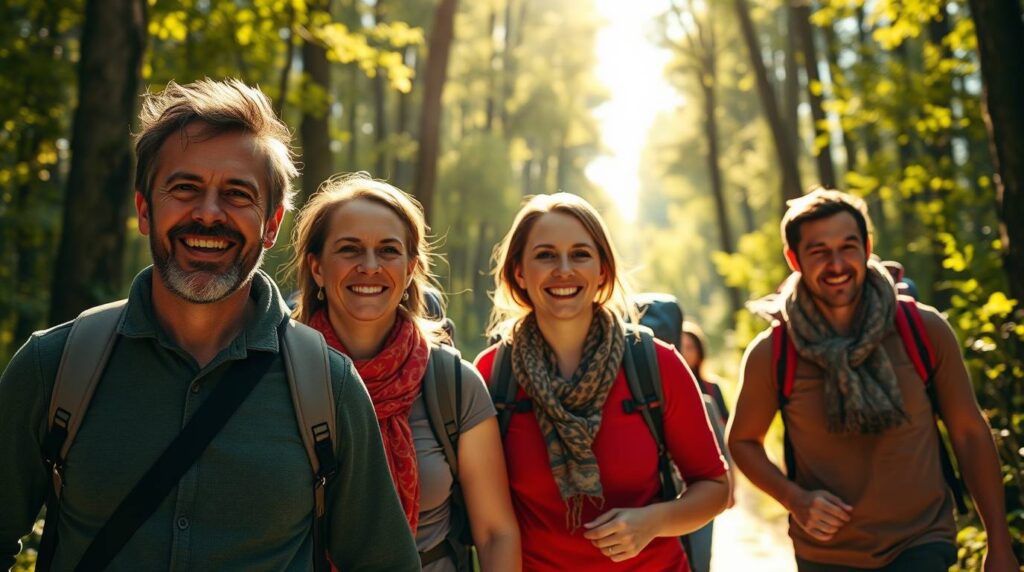
No man has ever said yes to a “healing men’s retreat.” Plenty have said yes to a hard week of walking through France with three other guys and no phone signal.
Take Mark, for example. Mark had told his wife it was a hiking holiday. He told his business partner the same thing. It took until day three, halfway up a hill in the French countryside, for him to find out it was something else entirely.
There’s a particular kind of silence that falls over a group of men on the second morning of a walk. It isn’t awkward. It isn’t tense. It’s the sound of nobody quite needing to fill it yet. Boots on gravel. A buzzard somewhere overhead. The occasional grunt about whose pack is heavier. And then, somewhere around kilometre eight, one of them says something he has never, ever, said out loud before.
This is not a new phenomenon, and it isn’t unique to the Camino de Santiago. But it is, increasingly, what men are seeking out — and deliberately avoiding calling by its real name. Ask a roomful of men if they’d like to go on a “healing men’s retreat” and watch the silence turn a different colour. Ask them if they fancy a week of hard walking through French countryside and several hands shoot up.
“Most men know they are stressed. They know they are sleeping poorly. They know they have gained weight. They know they are exercising less than they should. They know that their energy levels are not what they once were.” Dr Cijith Sreedhar, Naturopathy Doctor at Prakriti Shakti Clinic of Natural Medicine
The Global Wellness Institute’s Men’s Wellbeing Initiative reports that mental wellbeing is no longer the unmentionable topic at the men’s table. The old “grin and bear it” model of strength is finally losing its grip. Slowly, the old rulebook is being rewritten: replacing outdated notions of masculinity with a broader understanding of what it means to thrive physically, mentally and emotionally. Which is, in a way, exactly what a week on the Camino de Santiago gives a man room to do.
“Increasingly, men are seeking spaces that allow them to slow down, reconnect, restore balance and step away from constant performance and pressure.” Laura Montesanti, Founder of Synergy – The Retreat Show.
Key Takeaways
Men tend to open up through shared activity rather than face-to-face conversation — what’s often called “shoulder-to-shoulder” connection, and walking is ideal for this sort of connection.
Burnout, identity strain, and the absence of an “instruction manual” for modern manhood are now widely cited by retreat leaders as the top drivers behind men seeking out retreat experiences.
The description matters enormously. Retreats marketed around wellness or healing see lower uptake from men than retreats marketed around challenge, the outdoors, and perspective — even when the experience itself is similar.
A multi-day walk, like walking sections of the Camino de Santiago, removes the pressure of direct confrontation, lets conversation happen at its own pace, and builds the kind of unforced trust that therapy rooms often spend months trying to manufacture.
Small groups, several days on foot, and distance from daily roles all appear to matter more than any single “activity” — it’s the sustained rhythm of walking together that does the work.
Mark’s Third Day
Mark’s calves were still cramping from the day before when he zipped his pack and stepped outside at six. Cold enough that his breath showed. The kind of grey light that makes a stone farmhouse look like it’s been carved out of the hill rather than built on it. He hadn’t told his wife the real reason he’d booked this. He’d told his business partner it was “just a walking thing.” Four nights, France, get some air. Nothing that needed explaining.
By day three, his legs had found a rhythm his head hadn’t caught up to yet — and that gap, the half-step between body and mind, was where everything started to go sideways. No emails landing. No calls to dodge. Just gravel, the crunch of his own boots, and three other men who didn’t ask him anything he didn’t want to answer.
Day three broke the pattern. Twenty kilometres, a brutal climb out of the valley, cloud sitting low enough to taste. Forty minutes in, his lungs were burning and his legs felt like they belonged to someone else. He liked that. The pain gave him somewhere to put his attention that wasn’t the thing he’d been avoiding for eighteen months.
It was the other man’s breathing that got him talking — short, hard, right beside him on the climb, the two of them matching pace without ever deciding to. Somewhere past the worst of the gradient, with his heart going harder than the hill alone justified, the other man said it flat, no windup: “I haven’t slept right since my dad died.” No eye contact. Both of them staring at the track six feet ahead, breathing like men who’d earned the right to say something true.
Mark didn’t say anything back. Not then. But that night, in a stone gîte that still smelled of woodsmoke from a fire lit hours earlier, lying in the dark with someone’s snoring rattling down the hall, the thing he’d been carrying for a year and a half started moving on its own. The eighteen months since the company had nearly gone under. The year he’d told no one — not his wife, not his partner, not one person — because admitting how close it had come felt like admitting he wasn’t built for this after all.
The next climb was worse. Steeper, longer, the kind that turns conversation into grunts. And it was exactly there — gasping, legs gone, sweat stinging one eye — that Mark heard his own voice say it out loud for the first time. Not a confession. More like something finally given enough rope to hang itself.
Nobody stopped walking. Nobody made it a moment. One of the others reached over, put a hand flat on his shoulder for two seconds, kept moving, and said the only thing that needed saying: “Yeah. That’s heavy. Keep walking.”
So he did. And by the top of that climb, for the first time in eighteen months, the weight in his chest had lifted — not gone, but carried by more than one man for the first time since it settled there.
Why Walking Works When Talking Doesn’t
There’s a reason that moment happened on a hillside and not over coffee. Researchers studying interpersonal coordination have found that when two people physically synchronise their movement — walking in step, matching pace, sharing rhythm — they report greater connection, trust and cooperation with each other afterwards, and the effect appears to be mediated by the same hormonal pathways involved in social bonding more broadly.
None of this requires a confession circle or a facilitator with a flip chart. It requires distance, pace, and enough hours on foot so that the usual social armour gets too heavy. This is, in essence, the entire design principle behind a good Camino de Santiago walking retreat for men: the walking does the work that conversation alone can’t.
A lot of men who’d never sign up for “self-care” are deep into stress management, longevity protocols, sleep tracking, cold plunges, and zone-two cardio. Performance optimisation has become an acceptable, even admirable, male pursuit. The appeal is partly the data (men like a number they can improve) and partly the framing: optimising your body for the coming decades sounds a lot more palatable than “working on yourself.” A week of sustained walking through hill country fits neatly into that same logic — real exercise, real recovery, real sleep.
There’s a quieter strain running underneath all of this, and it rarely gets named directly: the identity question. For a lot of men, the sense of who they are has been welded for decades to what they do — provider, fixer, protector, leader. That works well right up until career plateaus, kids stop needing rescuing, bodies stop performing the way they used to, and the welds start to show. Researchers studying men’s psychosocial health describe this less as an individual weakness than as a predictable response to a culture that hands men one script — succeed, provide, stay strong — and very little guidance on what to do when that script becomes obsolete. A week of walking doesn’t hand a man a new identity. But it does something almost as useful: it strips away the roles for long enough that he can feel, even briefly, who he is underneath.
There’s also something to be said for what the walk takes away rather than what it adds. Recent research tracking loneliness across the U.S. and Europe found that midlife adults — broadly the demographic most likely to be running a business, raising teenagers, and quietly wondering where the last decade went — are experiencing rising and sustained loneliness that researchers now describe as endemic rather than episodic, a steady undertow rather than a passing phase. Five days on the Camino doesn’t solve that on its own. But it interrupts it, in a way that few other experiences manage, by putting a small group of men in physical proximity, on foot, for long enough that the usual scripts run out.
What a Men’s Camino de Santiago Retreat in southwest France Retreat Actually Looks Like
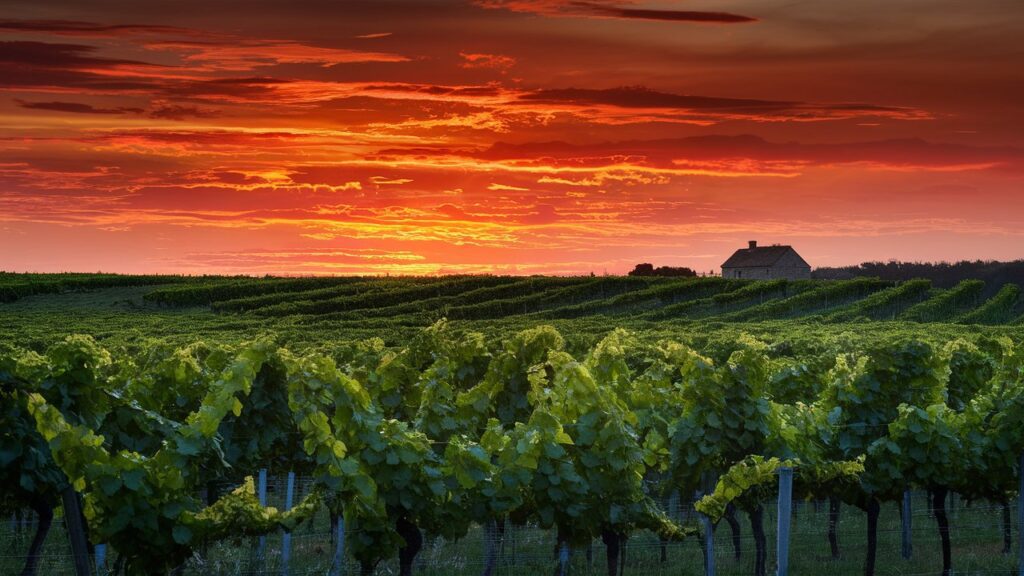
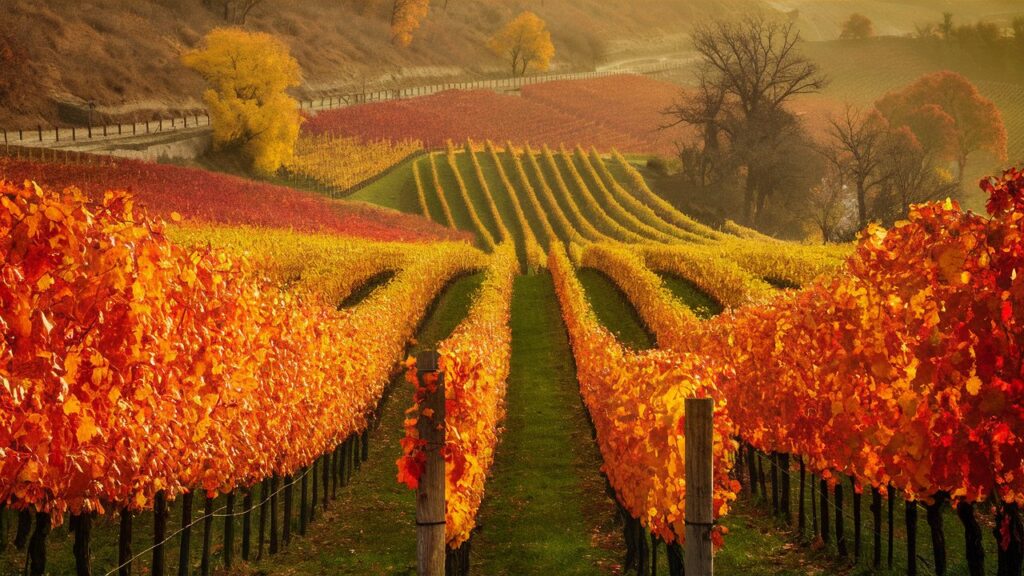
This isn’t the crowded, infrastructure-heavy Camino Francés of guidebook fame, with its thousands of pilgrims and packed albergues. My 5-day hiking breaks run along one of France’s own pilgrim routes, the Voie du Puy. The Voie du Puy is quieter and, in many ways, more atmospheric than its Spanish counterpart. These are the original medieval roads that pilgrims walked for centuries before ever reaching Spain: stone farmhouses, Romanesque churches, sunflower fields in summer and amber woodland in autumn, and a profound, working quiet that’s becoming increasingly rare to find.
I keep groups deliberately small — a maximum of four guests at a time — because the dynamic that lets men actually talk to each other doesn’t survive a crowd. There’s no facilitator standing over the group narrating the experience back to them, and there’s no language of “healing” anywhere in the itinerary. There’s solid, medically informed advice about stress management, good food, comfortable lodging on a working farm each night, daily walking through genuinely beautiful countryside, and the kind of unstructured time that, as it turns out, men tend to fill with exactly the conversations they didn’t know they wanted to have.
Mistakes Men Make When Choosing (or Avoiding) a Break Like This
Waiting for a crisis to justify it. Most men who eventually book this sort of break say they wish they’d done it two or three years earlier. You don’t need to be in freefall to benefit from stepping off the treadmill — burnout builds quietly, long before it becomes undeniable.
Choosing intensity over rhythm. A handful of men gravitate toward the most extreme version of a retreat available — multiple cold plunges a day, breathwork sessions stacked back to back — assuming more intensity equals more transformation. In practice, sustained, moderate physical effort over several days tends to do more for genuine connection than any single dramatic moment.
Going in expecting an instant breakthrough. The most meaningful conversations on a walking break rarely happen on day one. They happen once the body has settled into the rhythm and the small talk has run its course — usually day three or four. Expecting day one to deliver the goods, and feeling disappointed when it doesn’t, can sour the whole experience unnecessarily.
Underestimating the role of distance from home. A long weekend close to home, with phone signal and the option to “just check one email,” rarely produces the same shift as a week somewhere genuinely removed. The unplugging isn’t incidental — it’s structural.
Assuming the location matters more than the format. Plenty of men assume the spiritual or historical weight of Spain’s Camino Francés is what makes the experience powerful. In truth, it’s the format — walking, small group, multiple days, away from daily roles — that does most of the heavy lifting, which is exactly why the quieter French routes work just as well, if not better.
Frequently Asked Questions
Is a Camino de Santiago walking break in France different from walking the Camino in Spain?
Yes, meaningfully so. The French routes — the Via Turonensis, Via Lemovicensis, and Voie du Puy — are the historic approach roads that pilgrims walked for centuries before ever crossing into Spain. They’re quieter, less crowded, and arguably more atmospheric, with the same rhythm and reflective quality but without the high-season crowds of the Camino Francés.
Do I need to be fit to do this?
A reasonable, steady walking fitness is helpful, but this isn’t a forced march. Days are paced to allow conversation, rest, and genuine enjoyment of the countryside, not punishing distances for their own sake.
Will there be any pressure to “open up” or share personal things?
None at all. There’s no facilitated sharing circle and no expectation that anyone discusses anything they don’t want to. What tends to happen, happens because the walking creates the space for it — not because anyone is asked to perform vulnerability.
Why keep the group so small?
Four guests maximum keeps the dynamic genuinely conversational rather than performative. It’s the difference between having a real conversation and having an audience.
What time of year do these retreats run?
Retreats run from spring to autumn, when the French countryside is at its most walkable and most beautiful — golden light, manageable temperatures, and the harvest season in full swing through much of the route.
If any of this sounds like something you — or a friend who’s been “fine” for slightly too long — might need, you’ll find more information on my website. No wellness jargon used.
Research Notes & Sources
On synchronised movement and social bonding
Vuust, P. et al. Oxytocin improves synchronisation in leader–follower interaction. Scientific Reports / PMC, 2016. Found that interpersonal synchronisation — such as walking in time with another person — promotes liking, cooperation, and trust between participants.
On why men respond differently to retreat marketing language
Montesanti, L. Why Men Are Turning to Retreats: Connection, Brotherhood and the Search for Something More. Synergy — The Retreat Show, 2026. Interviews with retreat leaders Mark Hodgson (Mind & Body Travel), Scotty Johnson (Explore What Matters), Rob Williams (Nordic Wellness), and Steve Hodgson (Beyond The Noise Collective) on burnout, identity, and the role of challenge-based design in men’s retreats.
Why five days on the Camino de Santiago does what three months of therapy cannot — and costs less than your gym membership
What This Article Is About (And Whether It’s Worth Your Next Five Minutes)
You are probably carrying more than you should be right now. Not in your bag — in your head. The low-level hum of things unresolved, decisions deferred, conversations avoided, and a general background noise of modern life doing what modern life does best, which is refuse to be quiet for five consecutive minutes. This article is about why walking to reduce anxiety — specifically, walking the ancient pilgrimage route of the Camino de Santiago — has been dissolving exactly this kind of accumulated human weight for over a thousand years, and why it continues to work with a reliability that would be frankly embarrassing for most wellness industries if they cared to look too closely. If you have ever stood in your own kitchen feeling vaguely overwhelmed by a life that is, by most objective measures, absolutely fine, this article is for you.
5 Key Takeaways
Walking is not exercise disguised as therapy. It is, neurologically speaking, one of the most powerful mood-regulating tools available to a human being — and it requires no prescription, no Wi-Fi, and no prior experience of being outdoorsy.
The Camino de Santiago works not just because of the walking, but because of the specific combination of rhythm, nature, community, and purposeful forward movement that is almost impossible to replicate in ordinary life.
Three days is enough. You do not need to walk five hundred kilometres to experience a genuine shift. The pilgrimage effect — that particular quality of attention and release that the Camino is famous for — begins on day one.
The worries do not vanish. Something more interesting happens: they rearrange themselves. The ones that were enormous at home become manageable. The ones you had forgotten about entirely turn out to be the ones that mattered.
People do not return from the Camino unchanged. This is not marketing copy. It is the consistent, slightly startled testimony of the vast majority of people who have walked it, regardless of age, fitness level, background, or original reason for going.
The Man Who Walked Until the Noise Stopped
Daniel Forsythe had not slept properly in eleven months. He knew this because his phone, with the cheerful cruelty of modern technology, had been tracking his sleep and presenting him with weekly summaries that read like a minor medical concern dressed up in pastel graphics. He was forty-four years old, a project director at a mid-sized engineering consultancy in Bristol, the father of two children who were technically at ages he had been told would be easier by now, and the owner of a body that had recently started expressing its opinions about his lifestyle in ways that were increasingly difficult to ignore.
He was not, he would have been at pains to clarify, unwell. He was just — and here he would pause, looking for the word — full. Full of information. Full of decisions. Full of the particular modern affliction of never being entirely anywhere because there was always somewhere else he was supposed to be monitoring. His wife had described it as watching a man who had forgotten how to be in a room. His GP had suggested mindfulness. His colleague had suggested a long weekend in the Cotswolds. His mother had suggested he was working too hard, which was true but not useful.
What Daniel did instead — on the recommendation of a man he barely knew at a conference in Birmingham who had said ‘I’m not a spiritual person at all, but something happened on that road’ — was book five days on the Camino de Santiago.
He packed badly. He drove to the airport in a state of low-grade panic about seventeen things he had not finished before leaving. He sat on the plane with his laptop open for forty minutes before he admitted he was not actually reading what was on the screen. He closed it. He looked out of the window. Somewhere below him, southern France was doing what it had been doing for millennia, which was existing with considerable serenity and no particular interest in his project deadlines.
He began walking on a Tuesday morning. The path was marked with red-and-white arrows. The air smelled of eucalyptus and, less poetically, his own sun cream. His feet, in boots he had owned for three years and never properly broken in, began to offer feedback within the first two kilometres.
By the end of day one, something had happened that Daniel would later describe, with the slightly embarrassed precision of a man who does not usually talk like this, as the noise getting quieter. Not gone. Just — further away. As though the walking had created some physical distance between him and the contents of his own head. As though his worries, unable to keep up with the pace of his boots on an ancient stone path, had fallen slightly behind.
He stopped on a hillside above a village whose name he couldn’t pronounce. He stood still. For the first time in eleven months, his mind was not already somewhere else. He was, entirely, there.
What happened on the remaining days — and what Daniel understood by the end of them that he had not understood at the beginning — is the subject of the rest of this article.
Why Walking to Reduce Anxiety Works When Everything Else Doesn’t
There is a reason human beings have been walking towards things that matter to them for as long as they have existed. Before therapy, before pharmaceuticals, before the fourteen-day mindfulness course with the optional retreat, there was movement. Forward, purposeful, rhythmic movement through landscape — and the particular quality of thinking that it produces.
Neuroscience has spent the last two decades catching up with what pilgrims have known for centuries. Bilateral stimulation — the left-right alternating movement of walking — activates the same neural mechanism used in EMDR therapy to process difficult experiences and memories. The rhythmic nature of walking regulates the nervous system in ways that sitting, however therapeutically, does not. Nature exposure reduces cortisol. The combination of mild physical exertion and forward progress releases a neurochemical cocktail that even the most enthusiastic pharmacologist would struggle to improve upon.
But the Camino is not merely a walk in the woods. It is a walk with intention. And intention, it turns out, matters enormously. The pilgrimage format — a route with a beginning, a direction, and a destination — provides something that a circular walk in a local park does not: the psychological architecture of a journey. You are going somewhere. You are moving forward. You are, however you choose to interpret it, heading towards something.
This is not a small thing. A significant proportion of the anxiety and low-level misery that characterises modern life is the product of feeling stuck. Stuck in patterns, in roles, in relationships, in identities that were assumed years ago and never quite examined since. The Camino does not ask you to examine any of this. It simply puts you on a path and asks you to walk. And in the walking — in the days of putting one foot in front of the other through villages and vineyards and ancient stone-paved hills — the examination happens anyway. Quietly, without fanfare, at its own pace.
The Camino does not solve your problems. It does something more useful: it gives you enough distance from them to see which ones are actually problems, and which ones are just noise you forgot to stop listening to.
The community of the Camino adds another layer that is difficult to replicate. You walk alongside strangers who become, with the peculiar alchemy of shared miles, something approximating friends — people who know the version of you that showed up on a French road with nothing to prove and nowhere particular to be, rather than the version that exists inside your professional title and your family role and the ten-year accumulation of other people’s expectations. These conversations — unhurried, unscheduled, conducted at the pace of walking rather than the pace of modern life — have a quality that most people recognise immediately as something they have not had in years.
Five days is not a long time. But it is, as it turns out, precisely long enough.
5 Mistakes to Avoid When Walking to Reduce Anxiety
1. Treating it like a fitness challenge rather than a walking meditation. The Camino will involve physical effort, and you will be glad of a degree of preparation. But approaching it primarily as a fitness test — tracking pace, competing with other walkers, measuring everything — is a reliable way to miss the point entirely. The goal is not a personal best. The goal is to be present on a road for five days. The body is the vehicle. It is not the destination.
2. Filling every quiet moment with your phone. The quality of attention that the Camino produces is not accidental. It is the product of extended periods of not being entertained, stimulated, or distracted. Podcasts during every hour of walking, social media updates from the albergue, live-streaming your pilgrimage to your Instagram audience — all of these are ways of bringing the noise with you. Leave more space than feels comfortable. The discomfort is precisely where the interesting things happen.
3. Expecting a dramatic revelation rather than a gradual one. People arrive on the Camino hoping for a Road to Damascus moment — a single clear insight that restructures everything. What usually happens is quieter and more durable: a slow accumulation of small clarities over several days, arriving not as lightning but as light. The shift you will feel on day five would not have been possible without days one through four. Trust the pace of the thing.
4. Under-preparing physically and then suffering for it. There is a balance to strike. Treating it as purely spiritual and doing no walking preparation whatsoever means your first two days will be dominated by the extremely unspiritual experience of managing blisters. Walk regularly in the weeks before you come. Break in your boots. Bring the right socks — this is not a trivial detail. Your feet are carrying you to wherever you are going. They deserve your prior attention.
5. Rushing to return to normal life the moment it ends. The Camino effect is real, but it is also fragile in the immediate aftermath. The people who find that it changes nothing are often the people who stepped off the plane and immediately reimmersed in exactly the conditions that sent them to France in the first place. Build in a day of transition. Write something down before you land. Give the shift a chance to settle before the noise reconvenes.
Further Reading
The Camino de Santiago: A Pilgrimage to the Stars by Gitlitz & Davidson
For anyone who wants to understand what they are actually walking through — not just geographically, but historically and culturally — this is the essential companion. Gitlitz and Davidson trace the full history of the pilgrimage from its medieval origins to its modern revival, with a depth of scholarship that transforms the road beneath your boots from a pleasant walking route into a thousand-year conversation between human beings and the things they are trying to work out. Understanding why the Camino has drawn millions of people across a millennium of human history does not diminish the experience of walking it. It considerably deepens it.
Consolations: The Solace, Nourishment and Underlying Meaning of Everyday Words by David Whyte
David Whyte is a poet who has walked the Camino and written about walking, belonging, and the interior life with more precision and beauty than almost anyone working in the language. This book — a meditation on words like ‘Alone,’ ‘Despair,’ ‘Rest,’ ‘Silence,’ and ‘Worrying’ — is the ideal companion for anyone going to the Camino with unresolved things in their head. It does not offer solutions. It offers, as the title suggests, consolation: the particular relief of having your experience named accurately. Pack it alongside your boots.
Embracing Change — in 10 Minutes a Day by Margaretha Montagu
The Camino is, at its core, about change — walking away from one version of yourself and returning as someone slightly, meaningfully different. Margaret Montagu’s Embracing Change — in 10 Minutes a Day offers the perfect preparation for that process: a practical, warm, and genuinely useful framework for loosening the grip of the patterns and habits that make change feel more threatening than it actually is. Read it before you go. The Camino will do the rest.
If you are currently facing a major life transition or any other dramatic change in your circumstances, and you have no idea how you are going to cope, the good news is that the strategy presented in this book can help you, step by step, to improve your ability to handle the stress caused by change, even if you feel entirely powerless at the moment.
5 FAQs
Do I need to be fit to walk the Camino?
You need to be able to walk comfortably for several hours a day — which is a different thing from being conventionally fit. People of all ages, sizes, and fitness levels walk the Camino. The preparation that matters most is not gym work but progressive walking practice in the weeks before you go: building up to longer distances, on varied terrain, in the boots you intend to wear. If you can walk ten to fifteen kilometres on a weekend without significant difficulty, you are ready.
Does it matter if I’m not religious or spiritual?
Not in the slightest. The Camino is a pilgrimage route with deep religious origins, but the majority of modern walkers describe their motivation as personal rather than religious: they come because they need space to think, a change of perspective, a break from the life that has been accumulating around them. The road does not enquire about your beliefs. It simply offers the walking, the landscape, the community, and a thousand years of other people’s footsteps. What you make of it is entirely your own business.
What actually happens to your mental state after five days of walking?
The consistent testimony across thousands of walkers is a combination of the following: reduced anxiety, improved sleep, greater clarity about what matters and what doesn’t, a reduced tolerance for unnecessary complexity, and a heightened capacity for being present. Some people also report decisions made, conversations planned, or long-postponed changes finally felt as possible. The neurological reasons for this are well-documented. The experiential reasons are harder to articulate, which is why most Camino veterans eventually give up trying to explain it and simply recommend that you go.
Can walking actually help with anxiety and burnout, or is that overstated?
The research on this is robust and consistent. Regular walking in natural environments reduces cortisol, lowers blood pressure, improves sleep quality, and decreases symptoms of anxiety and depression with an effectiveness that compares favourably to medication for mild to moderate cases. The Camino adds the dimensions of purpose, community, rhythm, and extended nature immersion to the basic neurological benefits of walking. Whether it is ‘better than therapy’ depends on the person and the problem. But as a reset for an overloaded nervous system, it is difficult to improve upon.
How do I know if a five-day Camino retreat is right for me rather than doing it independently?
Independent walking on the Camino is wonderful — and also involves logistics, navigation, accommodation-booking, and an amount of planning that can itself become a source of stress for people who are already operating at capacity. A small-group guided retreat removes that friction entirely: the route is planned, the meals are arranged, the accommodation is sorted, and you arrive simply to walk. For first-time visitors, for people coming to walk as a form of recovery rather than adventure, and for anyone who wants the depth of the experience without the overhead of organising it, a guided retreat is not the soft option. It is the sensible one.
The Road Has Been Here the Whole Time
Daniel Forsythe came home from the Camino on a Friday evening. His children were at the kitchen table doing homework. His wife was making something that smelled of garlic and good intentions. The house was exactly as he had left it. The job was waiting. The emails had accumulated with their usual indifference to his five days of enlightenment.
But something had shifted in the way he stood in the middle of it all. Not the circumstances — those were identical. The relationship between Daniel and the circumstances. The noise was still there. He had simply stopped mistaking it for the important thing.
The Camino does not offer you a different life. It offers you a different relationship with the one you have. And sometimes — more often than you might expect, more reliably than almost anything else available to a human being with a pair of boots and five days to spare — that is exactly enough.
If you are carrying more than you should be right now, there is a road in northern Spain that has been receiving exactly this kind of weight for over a thousand years. It is very good at it. Summer and autumn retreats are available for small groups of up to four guests — three Camino walks, good food, good company, and the particular quality of silence that only arrives when you have been walking long enough to earn it.
Do you dream of escaping your stressful life to raise a herd of goats or grow sunflowers in the south of France? Then you may be ready for an Esprit Meraki retreat. Get access to this “very serious” quiz to help you figure out how urgent your need for a change of scenery is, when you subscribe to my monthly newsletter.
If your soul is craving fresh air, meaningful movement, and a chance to reconnect with nature, join us on a Camino de Santiago Walking Retreat in the southwest of France. This isn’t just a scenic hike – it’s a powerful, natural reboot for your body, mind, and spirit. Imagine quiet paths, rolling hills, cozy evenings, and slow conversations. No fitness requirements. No forced bonding. No pressure to have a breakthrough. Just one foot in front of the other, and finding your way to a brighter future.
What Life Lessons Can You Learn While Walking the Camino de Santiago? – a free guide filled with 10 not just “quaint anecdotes” or Instagram-worthy moments (though there are plenty of those) but real transformations from real people who walked this insight-giving trail – Subscribe to my monthly newsletter to Download the Guide
1. “The Benefits of Walking the Camino de Santiago” — Psychology Today (September 2022)
Written by a psychologist who has walked the Camino three times, this article examines the research on pilgrimage as a form of Exceptional Human Experience (EHE) — a term coined by researcher Rhea White to describe spontaneous experiences that produce lasting positive changes in mental and physical health. The most striking changes documented include increased appreciation for life, a heightened quest for meaning and purpose, greater self-acceptance, and deeper concern for others. Accessible, well-sourced, and written by someone with both academic credentials and personal experience of the route. Psychology Today
2. “The Effects of the Pilgrimage to Santiago de Compostela on Mental Health and Wellbeing” — ResearchGate / Proyecto Ultreya (2021)
This is the academic study behind everything. Compared to a control group who took a standard holiday, pilgrims showed significantly greater increases in positive affect, life satisfaction, and valued living, alongside greater reductions in anxiety, depression, and perceived stress — with most improvements sustained at a three-month follow-up. Stress and depressive symptoms decreased by 20–50%, and the Camino was found to function as a form of mindfulness training, encouraging pilgrims to be present in the moment and navigate challenges without judgment. This is the one to cite when anyone asks “but is there actual evidence?”
3. “Effect of Nature Walks on Depression and Anxiety: A Systematic Review” — MDPI Sustainability (April 2021)
A broader peer-reviewed systematic review covering 12 studies on nature walking as a mental health intervention. Nature walks consistently reduced state anxiety across multiple studies, with significant decreases measured by validated scales — and nature walks produced notably greater reductions in anxiety than urban walks. Useful for the wider argument that the Camino’s effects are grounded in solid, replicable science rather than anecdote or pilgrim romanticism.
“I am an experienced medical doctor – MBChB, MRCGP, NLP master pract cert, Transformational Life Coach (dip.) Life Story Coach (cert.) Stress Counselling (cert.) Med Hypnotherapy (dip.) and EAGALA (cert.) I may have an impressive number of letters after my name, and more than three decades of professional experience, but what qualifies me to excel at what I do is my intuitive understanding of my clients’ difficulties and my extensive personal experience of managing major life changes using strategies I developed over many years.” Dr M Montagu
You’ve been ‘meaning to do something memorable‘ together for years to maintain a friendship. This is the trip that finally counts — and the story you’ll still be telling at 80.
What This Article Is About
Somewhere in your life there is a friend — possibly two, possibly three — with whom you have been meaning to do something properly for longer than you care to calculate. You have had the conversation, probably more than once, possibly over a very good dinner that you also said you should do again and then didn’t for eight months. You have agreed, in principle, on the desirability of an adventure. You have perhaps even got as far as a group chat, which now contains seventeen enthusiasm-laden messages from eighteen months ago and has since been used exclusively for sharing photographs of dogs and occasionally wishing each other happy birthday. The adventure has not happened. This article is about why it keeps not happening, why that is a quiet loss worth taking seriously, and why five days walking the Camino de Santiago through the French countryside is the specific, bookable, entirely achievable thing that transforms the group chat from a monument to good intentions into the beginning of the story you will still be telling each other at eighty.
How to Maintain a Friendship: 5 Key Takeaways
Adult friendships are under serious structural pressure — not from conflict or indifference, but from the sheer logistics of lives that have accumulated children, careers, partners, and the particular tyranny of the shared diary. The adventure doesn’t happen not because you don’t want it to, but because no one has made it concrete enough to survive contact with ordinary life.
Shared experiences create a quality of friendship memory that shared meals, however excellent, cannot produce. The research on this is consistent: it is the effortful, novel, slightly challenging things you do together that become the stories that define the friendship in the long run.
Five days is the optimum duration for a group friendship trip — long enough to actually get somewhere together, short enough that the logistics of multiple lives can be made to align without requiring anyone to remortgage or explain themselves to HR.
The Camino de Santiago is particularly well suited to friend groups because it provides a shared external structure — a route, a purpose, a daily rhythm — that takes the pressure off the group to generate its own entertainment and creates instead the conditions for the conversations, the laughter, and the moments of genuine connection that the restaurant dinner keeps promising and rarely quite delivering.
The story matters. At eighty, you will not be telling each other about the dinners. You will be telling each other about the day you got lost and you ended up in someone’s orchard, about the bottle of wine you split on the hillside above the valley, about the insight-giving thing someone said on the third day that nobody has forgotten.
The Four Women Who Finally Did the Thing
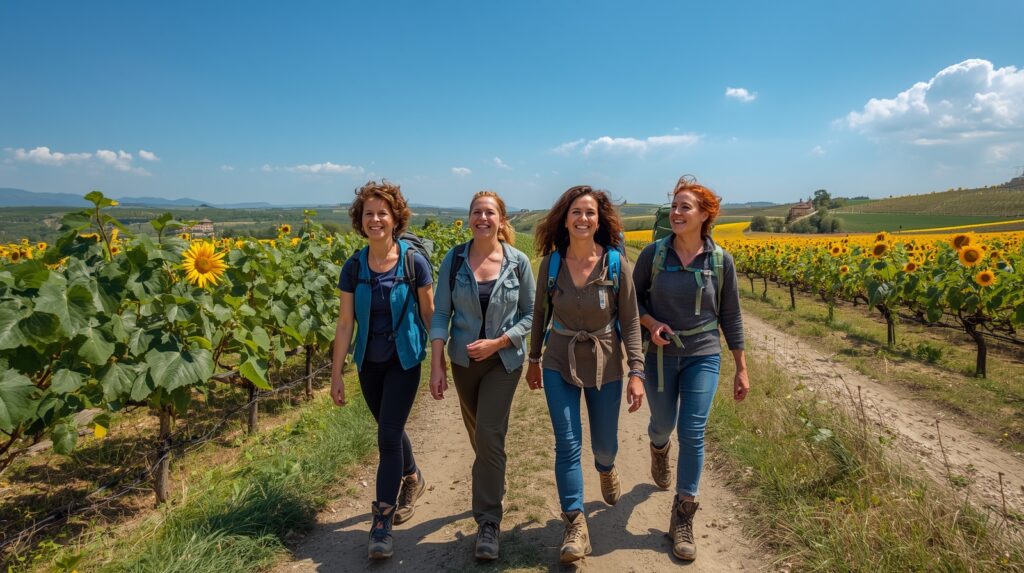
Nina Okafor, Bridget Saunders, Clare Whitfield, and Justine Marchetti had been friends since university, which meant, in practical terms, that they had been friends for twenty-six years, had been present at each other’s weddings, divorces, promotions, bereavements, and at least one very bad haircut that nobody EVER mentions. They lived in four different cities. They had between them six children, four demanding careers, two dogs, one complicated mother-in-law (Bridget’s), and a group chat called ‘THE GRATEFUL GIRLS’ that had been active since 2016 and had produced, in that time, approximately four thousand messages and zero joint holidays.
The holiday had been discussed at every reunion dinner for the past four years. It had taken many forms in those discussions: a villa in Portugal, a long weekend in Copenhagen, a yoga retreat in Tuscany that everyone had agreed on and nobody had booked because the dates kept not working and the yoga part had seemed increasingly optimistic as the months went on. The Camino had come up once, floated by Nina after she’d read something about it, and had been met with the specific kind of enthusiastic agreement that group chats produce and that means, in practice, roughly nothing.
It was Clare who finally did the concrete thing. Not because she was the most organised — that was indisputably Bridget — but because she had turned forty-seven in February and had stood in her kitchen eating birthday cake alone because her husband was travelling and her children were at school, and had thought, with a clarity that surprised her, that the group chat was going to still be discussing the Portugal villa when she was sixty if someone didn’t actually book something.
She sent one message. Not to the group chat — to Nina directly, because Nina was the one who had first mentioned the Camino and because Nina answered her phone. ‘I’m booking the Camino retreat in France,’ she said. ‘September. Are you in?’ Nina said yes before Clare finished the sentence. They called Bridget and Justine on a three-way voice note that evening. Both said yes. Justine said yes twice, for emphasis.
The logistics were, as logistics always are with four adult women in four cities, complicated. There were work commitments and school dates and one genuine conflict that required a change of departure day and a level of calendar negotiation that Clare later described as ‘basically a diplomatic incident.’ But they got there. They landed in France on a Saturday morning in September, at an age and stage of life where they were simultaneously more interesting than they had been at twenty-one and considerably less likely to pretend otherwise.
The first evening was what Clare would later describe as ‘the best dinner we’ve had in ten years,’ which was a significant claim given that they were women who ate well and took restaurants seriously. But it wasn’t the food — it was the quality of attention. No one was watching children. No one was half-present for a work call. No one had anywhere else to be. Four women, a table, Gascon food, and the particular luxury of time that had nowhere else to go.
They began walking the next morning. Justine, who had described herself as ‘not a walker’ with some conviction during the booking process, went quiet on the first long stretch through ancient forest and then said, to no one in particular: ‘Why don’t we do this every day?’ Nobody had an answer, because the answer was obvious and slightly inconvenient.
By the end of day two, something was happening between the four of them that the restaurant dinners had been circling for years without quite reaching.
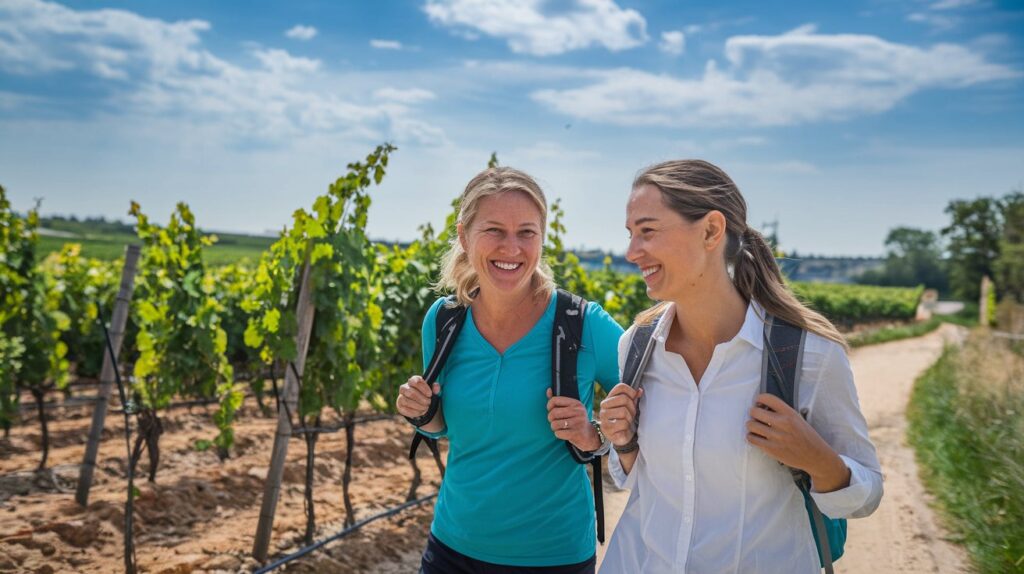
On the third afternoon, on a long descent through vineyard country with the light doing something extraordinary across the hills, Bridget said something about her marriage that she had not said aloud to anyone before. Not because it was a secret, exactly, but because there had never been quite this quality of unhurried, uninterruptible, forward-moving space in which to say it. The others listened the way that people listen when they are walking — fully, without the social pressure of eye contact, without the implicit obligation to respond immediately. When Bridget finished, Nina said: ‘I’ve been thinking the same thing about mine.’ There was a long pause. The vineyard continued in both directions. Then Clare said something that made all four of them laugh so hard that they had to stop walking.
This is the thing that restaurant dinners keep almost delivering and rarely do. The conversation that goes somewhere real. The laughter that arrives at the end of a sentence that wasn’t supposed to be funny. The moment that becomes, immediately and permanently, part of the story of a friendship.
What happened on the remaining two days — and why all four of them started checking dates for next year before they had even landed home — is what this article is about.
Why an Adventure Beats Dinner at a fancy Restaurant, Every Time
There is nothing wrong with the restaurant dinner. Let us be clear about this from the start. The restaurant dinner is civilised, enjoyable, and one of the better inventions of adult social life. It is also, by its nature, limited. It lasts two to three hours. It happens in a context designed for comfort rather than depth. It is vulnerable to the interruptions of phones and adjacent conversations and the logistical negotiation of the bill. It is, in the language of friendship research, a maintenance activity — something that keeps a friendship alive and warm, that reaffirms its existence, that says ‘we are still here, we still matter to each other.’ This is valuable. It is not, however, the same as building something new.
The research on friendship and shared experience is unambiguous on this point. It is the novel, effortful, slightly challenging experiences — the things that require something of both people, that put them in situations they haven’t been in before, that create a shared narrative of ‘we did that together’ — that deepen friendship in ways that maintenance activities cannot. They create what psychologists call ‘self-expansion’: the experience of growing through another person, of becoming slightly more than you were before because of what you did alongside them. This is the mechanism behind why people who go through something difficult together — who are stuck in a lift, or navigate a foreign city, or walk twenty kilometres through the French countryside — often feel closer afterwards than people who have known each other for decades of comfortable familiarity.
The Camino de Santiago amplifies this effect with a specificity that is worth examining. A standard group holiday — a villa, a city break, a beach week — provides novelty and shared experience but not structure. Someone has to decide what to do each day. Someone always wants different things. The group dynamic, freed from external organisation, becomes the thing that needs managing, which is not always the most relaxing way to spend time with people you love. The Camino provides the structure that resolves this. The path goes somewhere. The day has a shape. The purpose is shared and requires no negotiation. Within that structure, the group is free to be a group — to talk, to be silent, to laugh, to say the things that have been waiting for exactly this quality of unhurried, forward-moving time.
The best thing a friendship trip can do is take the pressure off the friendship to generate its own meaning, and hand that job to the landscape and the road. The Camino does this with a thousand years of practice behind it.
There is also the question of what walking does to conversation specifically. The shoulder-to-shoulder dynamic of walking together — no eye contact required, both people oriented in the same direction, the rhythm of movement creating a shared cadence — produces a conversational quality that sitting across a table cannot replicate. Difficult things become easier to say. Honest things arrive without the social friction of the face-to-face encounter. The pauses are comfortable rather than pointed. Four women who have known each other for twenty-six years, walking through French vineyard country with nowhere else to be, will have conversations in five days that the restaurant dinners have been working towards for years.
And then there is the story. This is perhaps the most underrated dimension of the adventure over the dinner, and the one that matters most in the long run. Stories are how friendships remember themselves. The shared references, the ‘do you remember when,’ the shorthand that only exists between people who were there — these are the connective tissue of a long friendship, and they require raw material that only shared experience can provide. At eighty, the story of the Camino — the vineyard descent, the thing Bridget said, the laughter that stopped them walking — will be as vivid as it was at forty-seven. The dinners will have merged into a warm general impression of good food and good company, which is lovely, and not the same thing.
5 Mistakes to Avoid to Maintain a Friendship
1. Waiting for everyone’s schedule to align perfectly before booking. It won’t. Not for four adults with careers and children and the particular entropy of modern life. The perfect window does not exist; it has to be created by someone making a decision and everyone else working backwards from it. Book the dates. Send the message that says ‘I’m booking, are you in.’ The logistics that seem insurmountable at the planning stage have a way of becoming manageable once the thing is actually real.
2. Trying to keep everyone happy at every moment. Friend groups on shared adventures are not homogeneous. Someone will want to walk faster. Someone will want to stop longer at the view. Someone will be tired on day three in a way they didn’t anticipate. Trying to micromanage the group’s collective experience into permanent consensus is exhausting and unnecessary. The Camino accommodates different paces and different needs — you can walk sections together and sections apart and reconvene for the things that matter. The friendship is robust enough to survive one person needing a slower afternoon. It has survived considerably more than that.
3. Filling every evening with organised activity. The evenings on the Camino — after the walking, with the wine poured and the particular tiredness that comes from a day of purposeful movement — are where a significant proportion of the best moments happen. Resist the urge to fill them. The conversation that arrives in the unscheduled space after dinner, when no one has anywhere to be and the day has already done the work of opening everyone up, is frequently the conversation that becomes the story.
4. Not talking about the real things. You have come a long way and rearranged a considerable amount of your life to spend five days in France with your closest friends. The small talk will arrive and depart naturally. But the Camino creates conditions for honesty that most of ordinary life does not — the movement, the distance from home, the shared purpose, the quality of attention that arrives when screens are put away and there is nowhere else to be. Use it. The things you’ve been meaning to say, or ask, or admit — this is where they find room. You will not regret having said them. You may regret not having.
5. Treating it as a one-off rather than a beginning. Many friend groups who walk the Camino together do not treat it as a bucket list item to be ticked and filed. They come back. The specific combination of shared purpose, beautiful landscape, and genuine quality time that the Camino provides is not easily replicated elsewhere, and once you have experienced it together, the restaurant dinner feels even more clearly like what it is — maintenance — and the adventure feels like what it also is — the thing you actually came for. Before you leave France, agree on a next time. Even a vague one. The group chat, from that point, will be used for something rather more interesting than birthday wishes.
Further Reading about Maintaining Friendships
Friendaholic: Confessions of a Friendship Addict by Elizabeth Day
Elizabeth Day’s examination of female friendship — what it means, what it costs, what happens when it fails, and what it offers that no other human relationship quite replicates — is the most honest book currently available on the subject and the ideal pre-trip read for any group of women who have known each other long enough to have accumulated both history and love in equal measure. Day is funny and precise and entirely without sentiment in the pejorative sense, which means she is also, ultimately, more moving than the sentimental books. She understands that friendship is not the consolation prize for the relationships that are supposed to matter more. It is, for many women, the primary one.
The Top Five Regrets of the Dying by Bronnie Ware
Bronnie Ware spent years as a palliative care nurse, and this book is her account of what people said, in the last weeks of their lives, about what they wished they had done differently. The second most common regret — after ‘I wish I’d had the courage to live a life true to myself’ — is: ‘I wish I hadn’t worked so hard.’ But the one that is most relevant to this article is the fifth: ‘I wish that I had let myself be happier.’ Not the happiness of achievement or acquisition, but the happiness of presence, of doing the things that mattered with the people who mattered, before the window that seemed permanently available turned out to have been finite all along. It is not a morbid book. It is a clarifying one. It has an excellent conversion rate for group chat procrastination.
Embracing Change — in 10 Minutes a Day by Margaretha Montagu
The Camino adventure with your closest friends is, among other things, a change — a departure from the comfortable maintenance of the restaurant dinner and into something that asks more and gives more in return. The challenge of sustaining that shift, of not simply sliding back into the group chat and the good intentions, is what Margaretha Montagu’s Embracing Change — in 10 Minutes a Day addresses with the warmth and practicality that characterise everything she writes. Ten minutes a day is a commitment that even the most overscheduled adult can defend. The friendship that does the Camino together and then does the ten minutes a day alongside each other — even remotely, even across four cities — is the friendship that keeps building rather than merely maintaining. Which is, when you think about it, exactly why you came to France.
If you are currently facing a major life transition or any other dramatic change in your circumstances, and you have no idea how you are going to cope, the good news is that the strategy presented in this book can help you, step by step, to improve your ability to handle the stress caused by change, even if you feel entirely powerless at the moment.
5 FAQs
How do we manage the logistics of four different people’s schedules?
With exactly the same blend of determination and flexible pragmatism that your group has applied to every other thing it has successfully done together. The key insight is to set the dates before the logistics are fully resolved, rather than waiting for the logistics to resolve themselves before setting the dates — because the latter never happens. One person books, sends the confirmation, and the others work backwards from the fixed point. Summer and autumn retreat dates are available well in advance, which gives multiple diary cycles in which to make the thing work. The logistics of four adult lives aligning are manageable. The inertia of not having a fixed date is considerably less so.
What if we’re at very different fitness levels?
This is one of the most common practical concerns friend groups raise and one of the least obstructive in practice. The French Camino retreats are designed for accessibility as well as beauty — the daily distances are meaningful without being punishing, the pace is that of the group rather than a competition, and the route allows for different walking speeds without anyone feeling left behind or held back. The fitness gap that seems significant at the planning stage tends to narrow considerably once everyone is on the path, doing the same thing, in the same landscape. Prepare in the weeks beforehand — build up your walking gradually, break in your boots — and the gap that worried you before departure will be much less apparent on arrival.
Won’t five days together be too much — will we get on each other’s nerves?
This is the question nobody quite says aloud but most people think, and it deserves a direct answer. Yes, five days in close proximity with anyone produces moments of friction — this is not a design flaw, it is a feature of human intimacy. The Camino structure helps considerably, because the day is organised around the walking rather than around the group’s collective preferences, which removes the most common source of small-group tension. You will also have time apart — walking at different paces, reading in different corners — which means that the time together has been earned rather than enforced. The friendships that have survived twenty-odd years of real life will survive five days in France. They will, in all likelihood, be considerably stronger for it.
Why the Camino rather than a villa or a city break?
A villa or a city break provides shared time. The Camino provides shared time plus shared purpose plus shared physical experience plus the specific conversational quality of walking together through extraordinary landscape. The difference between these things is the difference between a maintenance activity and a building one. The villa holiday is lovely. The Camino is the thing you will be telling each other about at eighty. Both have their place. This article is specifically about the second one.
Can we come as a group of two rather than three or four?
Absolutely. The retreats accommodate small groups of up to four guests, which means two friends can book and have the experience of the path with the intimacy of a pair — or join with other guests for the communal evenings and mealtimes that are among the most unexpectedly pleasurable aspects of the Camino. Two is, in many ways, the optimum friendship configuration for the walking itself: the side-by-side conversation of two people who know each other well, with no group dynamic to manage and no consensus required beyond ‘shall we stop here for a while.’ Some of the best Camino stories come from exactly this arrangement.
The Group Chat Rejuvenated
Nina, Bridget, Clare, and Justine came home from France on a Sunday. They landed in four different airports and sent messages to THE GRATEFUL GIRLS from four different baggage reclaim carousels. The messages were not, for the first time in a very long time, photographs of dogs.
They talked about the vineyard descent. They talked about what Bridget had said, and what Nina had said in reply, and the thing Clare had said that had stopped them all walking. They talked about the orchard they hadn’t meant to walk into on day two, and the farmer who had handed them apples with the expression of a man who had seen pilgrims do considerably more inexplicable things on his land and was no longer surprised by any of it. They talked about Justine saying ‘why don’t we do this every day,’ and the fact that none of them had had a good answer.
They are going back next autumn. The dates are already in four diaries in four cities, marked with a level of protection that the Portugal villa never received and probably never would have. The group chat now contains, alongside the dogs and the birthday wishes, a running thread of Camino logistics that has the specific, purposeful energy of people who have stopped meaning to do something and started actually doing it.
Twenty-six years of friendship had produced many excellent dinners. It had produced, until September, exactly zero stories of the kind that last. That number has been amended.
5-day retreats on the French Camino are available for small groups of up to four guests. Two to three non-guided walks, exceptional food, beautiful countryside, and the specific quality of time that turns good intentions into the stories you’ll still be telling each other at eighty. The group chat has been patient long enough.
Do you dream of escaping your stressful life to raise a herd of goats or grow sunflowers in the south of France? Then you may be ready for an Esprit Meraki retreat. Get access to this “very serious” quiz to help you figure out how urgent your need for a change of scenery is, when you subscribe to my monthly newsletter.
If your soul is craving fresh air, meaningful movement, and a chance to reconnect with nature, join us on a Camino de Santiago Walking Retreat in the southwest of France. This isn’t just a scenic hike – it’s a powerful, natural reboot for your body, mind, and spirit. Imagine quiet paths, rolling hills, cozy evenings, and slow conversations. No fitness requirements. No forced bonding. No pressure to have a breakthrough. Just one foot in front of the other, and finding your way to a brighter future.
Research
1. “Social Bonding Through Shared Experiences: The Role of Emotional Intensity” — Royal Society Open Science (October 2024)
The most directly relevant study to this article’s central argument was published in one of the world’s most respected scientific journals. The research found that sharing intense emotional experiences — positive or negative — with others motivates individuals to interact for bonding purposes, with joint attention identified as a prerequisite for the phenomenon. In plain terms: the shared physical and emotional intensity of walking the Camino together — the hills, the vineyard descents, the unexpected conversations — is not just pleasant. It is neurologically bonding in ways that sitting across a restaurant table cannot replicate. This is the science behind why Bridget’s hillside confession happened on day three of the walk rather than at any of the twenty-six years of dinners. Psychology Today
2. “Transformative Power of Friendships: Examining the Relationships Among Friendship Quality, Self-Change, and Wellbeing” — ResearchGate / Journal of Social and Personal Relationships (January 2024)
This is the study that directly underpins this article’s self-expansion argument. The research establishes that self-expansion — driven by the desire to increase potential self-efficacy and accomplish goals — occurs in two primary ways: through forming close relationships, and through engaging in novel activities that are challenging or interesting, either alone or with others. A five-day walking retreat on the French Camino delivers both simultaneously, which is precisely why it deepens friendship in ways that a familiar dinner in a familiar restaurant cannot.
3. “Buy Experiences Instead of Possessions to Build Social Connection” — Scientific American (Gilovich, Kumar & Mann)
The accessible, authoritative synthesis of Cornell University’s decade of research into experiential spending and social connection — and the one most likely to resonate with a general reader. Experiences connect people with others and provide memories of that connection that can be revisited — and after an experience has been consumed, it endures in the social relationships it helped to cultivate, with people who recalled an experiential purchase significantly more likely to choose social over solitary activities afterwards. This is the research behind the article’s closing argument: that the story Nina, Bridget, Clare, and Justine are still telling each other at eighty is not an aspiration. It is, according to the science, exactly what shared experiential memories are built to do.
Author Bio: Dr Margaretha Montagu – described as a “game changer”, “gifted healer”, “guiding light” and “life-enriching author” – is an experienced medical doctor, a certified NLP practitioner, a medical hypnotherapist, an equine-assisted psychotherapist (EAGALAcertified) and a transformational retreat leader who guides her clients through life transitions – virtually, or with the assistance of her Friesian and Falabella horses, at their home in the southwest of France.
You don’t need to be religious, mystical, or even particularly outdoorsy. But something happens on the Camino that even the most committed cynic finds hard to explain.
What This Article Is About
This article is specifically for you if you have heard about the Camino de Santiago, felt a flicker of something that might generously be described as interest, and then immediately dismissed it on the grounds that you are not religious, not spiritual, not the sort of person who talks about energy or uses the word ‘journey’ in a non-geographical context, and is not entirely sure you even own a pair of boots.
It is also for the person whose partner, friend, or suspiciously evangelical colleague has been going on about the Camino for months and who has been nodding politely while internally composing reasons why it is not for them. I will not try to convince you that the Camino is a spiritual experience. It will simply report, with the precision of someone who respects your scepticism, what actually tends to happen to people on it — including the ones who arrived with a substantial quantity of well-organised doubt — and let you draw your own conclusions. Which you will. Because you are a sceptic, and that is what sceptics do, and the Camino, as it happens, has a great deal of time for that.
5 Key Takeaways
The Camino de Santiago is a pilgrimage route. It is also, simultaneously, one of the most well-marked, well-supported, and scenically extraordinary walking routes in Europe. Both of these things are true at once, and you are entirely free to engage with only one of them.
The majority of people who walk the Camino today describe themselves as non-religious. You would be joining a very large and well-represented constituency — one that has been walking pilgrimage routes for secular reasons since well before it became fashionable to do so.
Something does tend to happen on the Camino that is difficult to account for entirely through neuroscience, scenery, and decent French food. Sceptics are statistically more likely to find this annoying than non-sceptics. They walk it anyway, and are glad they did.
The value of a pilgrimage structure — a route, a direction, a daily rhythm of walking and arriving and resting — does not depend on religious belief any more than the value of a library depends on believing in the divine origin of literature. The structure works. You can examine why later.
The most common post-Camino report from committed sceptics is not ‘I found God’ or ‘I had a spiritual awakening.’ It is: ‘I can’t quite explain what happened, but something shifted, and I’m different in ways I haven’t entirely mapped yet.’ This is, in my view, considerably more interesting.
The Engineer Who Went to Prove It Wouldn’t Work
James Kowalski was, by his own cheerful admission, the least likely person to walk a pilgrimage route in France. He was forty-eight years old, a structural engineer from Manchester, a man who had spent his professional life applying load calculations to physical problems and his personal life applying roughly the same methodology to everything else. He was not religious. He was not spiritual. He was not, he would specify with some precision, anti-religious — he simply had no particular use for frameworks that weren’t verifiable, which included astrology, homeopathy, most of what he had read about mindfulness, and the entire genre of book whose cover featured a person standing on a hillside with their arms outstretched.
The Camino had come to his attention via his friend Marcus, who had walked a section of it the previous autumn and had returned speaking about it in a way that James found simultaneously compelling and faintly suspicious. Marcus was not, historically, a man who used words like ‘profound.’ He was an accountant from Stockport who drove a sensible car and had strong opinions about the correct way to load a dishwasher. And yet here he was, describing something that had happened on a hillside above a valley in the French countryside in terms that James was finding, however reluctantly, difficult to dismiss.
‘What actually happened?’ James had asked, with the precision of a man who wanted specifics.
‘I can’t really explain it,’ Marcus had said, which was, in James’s professional experience, either the answer of a mystic or the answer of someone who had encountered something that genuinely exceeded the available vocabulary. He had stared at Marcus for a long moment, trying to determine which.
He booked the retreat six weeks later. He told himself he was going because it was a good walk in beautiful countryside and he needed a break. He told himself this so many times, and with such conviction, that he almost believed it. He packed with the efficiency of a man who had read the kit list twice and then read it again, who had broken in his boots over four dedicated weekend walks in the Peak District, and who had written a note in his phone that said simply: ‘Observe. Evaluate. Process.’
He arrived in France on a Saturday evening in September. The air smelled of something he couldn’t immediately identify — something green and old and unhurried. He had dinner with the small group of other walkers and spoke to a recently retired GP from Edinburgh called Fiona who had walked the Camino twice before and who, when James explained that he was there primarily as a sceptic conducting an informal experiment, had laughed with a warmth and recognition that suggested she had heard this particular opening position before.
‘How did the other sceptics get on?’ James asked.
‘They all came back,’ said Fiona simply. ‘Most of them more than once.’
James noted this. He filed it. He went to bed at ten o’clock, in a room that was quiet in a way that his flat in Manchester was not, and slept for nine hours without once waking up, which was not something he had done since approximately 2019.
He began walking the following morning. The path was clear. The waymarks were logical. The landscape was, he conceded immediately and without resistance, extraordinary — the kind of French countryside that looked as though it had been specifically designed to make structural engineers from Manchester feel that they had been living in the wrong place. He walked. He observed. He evaluated.
On the third day, something happened that was not in his observational framework.
He had been walking alone for two hours on a long, quiet stretch of path through ancient oak forest, the kind of silence that is not actually silence but a layered, textured, living quiet — birdsong, his own breathing, the rhythm of his boots on the old stone path. He was not thinking about anything in particular. His mind, for the first time in what felt like years, had simply stopped producing content. It was not meditating. It was not being mindful. It was just — empty. Clear. Present in a way that he had no category for and no particular interest in labelling. He walked in it for perhaps forty minutes. When the forest opened onto a ridge above a valley blazing with autumn colour, he stopped. He stood. He was aware, with a clarity that was entirely physical, that something had shifted in the architecture of his interior. Not dramatically. Not mystically. Just — differently arranged than it had been that morning.
He stood on that ridge for eleven minutes. He knows it was eleven minutes because he checked his watch when he arrived and again when he left, which is either the most or the least spiritual thing about the story, depending on your disposition.
What James Kowalski made of those eleven minutes — and what he told Marcus over a pint in Stockport three weeks later that made Marcus’s dishwasher opinions seem, temporarily, beside the point — is what this article is about.
What Actually Happens on the Camino (A Report for the Evidence-Minded)
The question is not whether the Camino is a spiritual experience. The question is what actually happens to people who walk it, measured against whatever framework of understanding they arrived with — and whether the results are consistent enough to be worth paying attention to.
The results are consistent enough to be worth paying attention to.
The neuroscience is the easiest part to account for. Sustained rhythmic walking in natural environments produces measurable changes in cortisol levels, activates the parasympathetic nervous system, and stimulates the default mode network in ways that are associated with creativity, insight, and what researchers describe as self-referential thought — the brain’s tendency, when released from active problem-solving, to begin processing the things it has been deferring. This is not mysticism. It is the entirely predictable consequence of giving an overloaded human brain five days of sustained, gentle, purposeful activity in a landscape that asks nothing of it except attention.
The pilgrimage structure adds something that a standard walking holiday does not, and this is worth examining carefully because it is where the sceptic’s position becomes most interesting. A pilgrimage is a walk with a direction and a purpose — even if that purpose is, for the secular walker, nothing more metaphysically loaded than ‘I am walking from A to B along a historically significant route.’ The direction matters. The purpose matters. The human brain, it turns out, responds differently to purposeful forward movement than to circular or directionless walking — it processes the journey as a narrative, with a beginning, a middle, and an endpoint, and that narrative structure creates the conditions for a kind of interior processing that ordinary life, with its circular repetitions and deferred decisions, rarely provides.
The community matters too, and in ways that are difficult to replicate outside the Camino context. The self-selecting nature of people who walk pilgrimage routes — the fact that they have all, for whatever reason, chosen to spend several days doing something that requires effort and intentionality — produces a conversational quality that most people recognise immediately as different from the conversations of ordinary life. People talk, on the Camino, about the things they are actually thinking about. Not the things they are supposed to be thinking about, not the professional and social performances of daily existence, but the actual contents of their minds. This happens with strangers. It happens within hours. The walking seems to dissolve, with a speed that is consistently startling, the usual social protocols that keep people at a polite distance from each other’s real lives.
The Camino does not require belief. It requires only the willingness to walk, and the basic intellectual honesty to report accurately what happens when you do. Most sceptics find, to their mild irritation, that what happens is rather more than they had budgeted for.
As for the thing that happens that cannot be entirely accounted for by neuroscience and scenery and the social alchemy of shared miles — the thing that James experienced on the ridge, felt in the forest, that person after person describes with the slightly embarrassed precision of someone trying to be accurate about something that resists accuracy — the honest answer is that this article will not tell you what it is. Not because it is too sacred to name, but because the naming tends to get in the way of the experiencing. What can be said with confidence is that it happens, that it happens to a remarkably high proportion of people including those who arrived specifically intending that it wouldn’t, and that the most useful thing a sceptic can do with it is what James Kowalski did: note the time, keep walking, and think about it later.
5 Mistakes to Avoid
1. Deciding before you arrive what the experience will and won’t be. The sceptic’s greatest asset — a well-calibrated resistance to being credulous — becomes a liability when it is deployed pre-emptively against an experience that hasn’t happened yet. There is a difference between healthy scepticism, which is the commitment to evaluating experience accurately, and defensive scepticism, which is the decision to protect yourself from certain categories of experience before you’ve had them. The Camino rewards the former and gently dismantles the latter, usually somewhere around day two.
2. Treating other walkers’ experiences as a measuring stick for your own. The Camino community is wonderfully mixed in what it produces for people, and the person at dinner who describes a profound emotional release on the path that morning is not reporting a superior experience to the person who simply had a very good walk and saw an excellent view. There is no correct Camino experience. There is only yours. The sceptic who spends five days waiting for the dramatic revelation that other people seem to be having is missing the quieter, more durable thing that is actually happening.
3. Filling the silence with podcasts and music. The silence of the Camino — not the absence of sound, but the absence of the particular cognitive noise of modern life — is not a problem to be managed. It is the point. The brain state that the walking produces, the one that creates the conditions for insight and clarity and the thing that cannot quite be explained, requires the silence to arrive. Piping your favourite podcast directly into it is the equivalent of going to a concert and spending the whole time on your phone. You are there. The music is playing. You are elsewhere.
4. Intellectualising the experience in real time. The sceptic’s instinct, when something unexpected happens on the path, is to immediately attempt to categorise and explain it. This is understandable and almost entirely counterproductive. The explaining is best done afterwards, with a glass of wine and the benefit of some temporal distance. In the moment, the most useful thing is simply to be present to what is happening without immediately reaching for the filing system. James Kowalski checked his watch. This was fine. He didn’t then spend the next forty minutes constructing a neurological framework for what had just occurred. The framework came later. The experience came first.
5. Coming home and telling no one about it. The sceptic who has an unexpectedly significant experience on the Camino often falls into a particular silence about it — partly from the difficulty of articulating something that resists articulation, partly from a reasonable concern about how it will sound to people who weren’t there. This silence is a small loss. The conversation that happens when you tell someone what occurred — not the mystical version, not the dismissive version, but the honest, slightly puzzled, ‘I’m not entirely sure what to make of this’ version — is frequently the most interesting conversation you will have all year. Have it. The Camino has been generating exactly this conversation for a thousand years.
Further Reading about the Camino de Santiago for Sceptics
I’m Off Then: Losing and Finding Myself on the Camino de Santiago by Hape Kerkeling
Hape Kerkeling is one of Germany’s best-known comedians — a man constitutionally suited to scepticism, wit, and the puncturing of pretension — and his account of walking the Camino Frances is the most useful book on this list for precisely that reason. He does not arrive on the path as a seeker. He arrives as a tired, overweight celebrity with dodgy knees who has been advised by his doctor to do something restorative and has selected this particular option with the resigned pragmatism of a man whose other options were worse. What happens to him is funny, honest, and progressively impossible to dismiss. It is the book to read if you want a first-person account of the Camino that respects your intelligence and your right to remain unimpressed — and that shows, without labouring the point, why remaining entirely unimpressed turns out to be rather difficult.
The Way of the Stars: Journeys on the Camino de Santiago by Robert Mullen
Mullen’s book is the most rigorously honest account of the Camino experience from a secular perspective currently available in English — a writer who neither embraces the pilgrimage mythology uncritically nor dismisses it with the lazy certainty of someone who hasn’t looked closely enough. He is interested, with genuine intellectual curiosity, in what the Camino actually does to the people who walk it — what the evidence shows, what the experience reports, and where the gap between the two becomes interesting rather than suspicious. For the sceptic who wants to understand the Camino before committing their boots to it, this is the book that earns that understanding honestly.
Embracing Change — in 10 Minutes a Day
The sceptic returning from the Camino tends to face a particular challenge: something has shifted, they are not entirely sure what, and ordinary life is waiting with its customary indifference to their interior rearrangement. Margaret Montagu’s Embracing Change — in 10 Minutes a Day is the book for exactly this moment — not mystical, not evangelical, but practical and honest and entirely respectful of the reader’s right to engage with change on their own terms. Ten minutes a day is a commitment even the most time-poor sceptic can defend. What those ten minutes produce is, like the Camino itself, rather more than the format would suggest.
Stop second-guessing yourself. Start owning your success. This book gives you the step-by-step roadmap to break free from imposter syndrome, build unshakable confidence, and finally believe you deserve every bit of your success. You ARE Good Enough!
5 FAQs about the Camino de Santiago for Sceptics
Do I need to have any interest in religion or spirituality to walk the Camino?
None whatsoever. The Camino de Santiago is a Catholic pilgrimage route, and that history and architecture is present throughout — the churches, the chapels, the scallop shells, the occasional roadside shrine — but it makes no demands on your beliefs and offers no obligations beyond walking. Surveys of modern Camino walkers consistently show that the majority describe their motivation as personal, cultural, or simply practical rather than religious. The path is entirely indifferent to what you believe. It is interested only in what you do, which is walk it.
What is the ‘something’ that people say happens on the Camino?
This is the question the article has been circling, and deserves a direct answer even if the answer is imprecise. The most consistent reports across thousands of walkers, including committed secular and sceptical ones, describe some combination of the following: an unusual quality of mental clarity, a reordering of priorities that happens without being deliberately engineered, a sense of being present in a way that daily life rarely produces, unexpected emotional processing, and occasionally something quieter and less categorisable that most people describe, with some embarrassment, as a feeling of being connected to something larger than themselves. Whether that something is neurological, historical, communal, or something else entirely is a question the Camino cheerfully declines to answer on your behalf.
Is a five-day retreat enough to experience whatever it is people experience?
Yes. The Camino effect — that particular quality of clarity and shift that the route is known for — does not require five hundred kilometres. It requires sufficient time away from the conditions that prevent it, sufficient walking to engage the body and quieten the overactive mind, and sufficient openness to notice what arrives when both of those conditions are met. Five days, in the experience of most people who have done it, is more than enough for something significant to happen. It is also, practically speaking, the minimum duration that allows the mind to genuinely arrive somewhere rather than just pass through.
What if I walk the whole thing and nothing particularly significant happens?
Then you will have spent five days walking through some of the most beautiful countryside in France, eating well, sleeping deeply, and having better conversations than you are likely to have had in the preceding six months of ordinary life. This is, by any reasonable measure, a successful holiday. The Camino does not guarantee transformation. It provides the conditions for it. What you do with those conditions — or what they do with you — is not something that can be contractually specified. Most people report that something happened. A small number report that it was primarily a very good walk. Both groups tend to go back.
How do I explain to people why I’m doing a pilgrimage if I’m not religious?
‘I’m walking a historic route through the French countryside for five days’ is both accurate and entirely unassailable. ‘I’m doing a section of the Camino de Santiago’ has, in recent years, become sufficiently mainstream that most people will nod rather than raise an eyebrow. If pressed for a reason, ‘I needed a proper break and someone whose judgment I trust recommended it’ is the answer that James Kowalski gave, and it has the considerable advantage of being completely true. You do not owe anyone a spiritual framework for your holidays. You owe yourself the experience of taking one that is actually worth having.
A Note to the Sceptic, From Someone Who Respects the Position
James Kowalski came home from France on a Sunday. He had walked approximately fifty kilometres. His boots, which he had broken in conscientiously over four weekends in the Peak District, had performed adequately. His ‘observe, evaluate, process’ note remained in his phone, undeleted, which he considered either a monument to consistency or a mild personal joke, depending on the day.
He had not found God. He had not had a spiritual awakening in any sense that he would have recognised before he left. He had not come home speaking in the manner of Marcus, with words like ‘profound’ deployed in settings that made the dishwasher conversation seem like a reasonable alternative.
What he had come home with was harder to name and, he was discovering, considerably more durable. A quality of quiet that hadn’t been there before. A slightly different relationship with the contents of his own head. A revised list — shorter and more honest than the previous one — of what he actually needed in order to feel that a day had been well spent. And the clear memory of eleven minutes on a ridge above a valley in autumn, which he had not told many people about and which had not, in three weeks, shown any signs of fading.
He told Marcus about it over that pint in Stockport. Marcus listened with the expression of a man hearing something he already knew. ‘Same thing happened to me,’ he said. ‘I still can’t explain it properly.’
‘I know,’ said James. ‘It’s extremely inconvenient.’
They both laughed. Outside the pub, Stockport went about its business with the cheerful indifference of a place that has not been walking pilgrimage routes in France. James looked at his pint. He was already, he realised, thinking about going back.
Retreats on the French Camino are available for small groups of up to four guests. Three non-guided walks, beautiful countryside, proper beds, excellent food, and the particular quality of something that this article has done its best to describe and that the Camino will, if you let it, demonstrate considerably more effectively. No religious requirement. No spiritual prerequisites. Sceptics not just welcome but, frankly, among the most interesting guests.
Do you dream of escaping your stressful life to raise a herd of goats or grow sunflowers in the south of France? Then you may be ready for an Esprit Meraki retreat. Get access to this “very serious” quiz to help you figure out how urgent your need for a change of scenery is, when you subscribe to my monthly newsletter.
Join us for the Book Lovers Binge Reading Camino de Santiago Walking Retreat in the sun-drenched southwest of France: a journey where the trail and the story unfold together. Walk ancient paths at your own pace, then settle in each evening with a good book. This isn’t a fitness challenge—it’s a gentle rhythm—one step, one chapter, one honest conversation at a time. Rolling hills, quiet villages, golden light. No expectations, no performance, no agenda but your own unfolding.
If your soul is craving fresh air, meaningful movement, and a chance to reconnect with nature, join us on a Camino de Santiago Walking Retreat in the southwest of France. This isn’t just a scenic hike – it’s a powerful, natural reboot for your body, mind, and spirit. Imagine quiet paths, rolling hills, cozy evenings, and slow conversations. No fitness requirements. No forced bonding. No pressure to have a breakthrough. Just one foot in front of the other, and finding your way to a brighter future.
“I am an experienced medical doctor – MBChB, MRCGP, NLP master pract cert, Transformational Life Coach (dip.) Life Story Coach (cert.) Stress Counselling (cert.) Med Hypnotherapy (dip.) and EAGALA (cert.) I may have an impressive number of letters after my name, and more than three decades of professional experience, but what qualifies me to excel at what I do is my intuitive understanding of my clients’ difficulties and my extensive personal experience of managing major life changes using strategies I developed over many years.” Dr M Montagu
Practical, honest, and occasionally hilarious — a solo travel guide to taking the trip you’ve been putting off because no one will come with you
What This Article Is About
You have a list. You’ve had it for years. It lives somewhere between your to-do app and your heart, and near the top of it is a place you desperately want to go — except every person you’ve asked is either broke, busy, scared of flying, or deeply committed to a husband who won’t eat foreign food. This article is for you: the woman who wants to travel solo, who is terrified of travelling solo, and who has been waiting for someone to give her permission, a plan, and a stiff drink of honest reassurance. Consider this all three.
5 Key Takeaways
1. Fear is not a stop sign — it’s a compass. The things that frighten us most are usually the ones most worth doing. Solo travel is scary precisely because it matters.
2. Planning beats paralysis every single time. Most of the terror around solo travel lives in the imagination. A bit of research and a decent itinerary deflates the monster under the bed quite spectacularly.
3. The Camino de Santiago is one of the safest and most solo-woman-friendly routes in the world. It has a built-in community, a well-marked path, and an 1,000-year-old tradition of welcoming strangers. It was practically designed for women who want to be brave but would also like a warm meal at the end of the day.
4. You will not be lonely. You might be alone, but those are startlingly different things. Solo travel tends to make you more socially connected, not less — because you are no longer hiding behind a companion.
5. The woman who comes home will not be quite the same as the woman who left. This is, in every possible way, the goal of the exercise.
Carla Hennessy’s Solo Travel Story
Her name was Carla Hennessy, and she had been “about to book the trip” for approximately four years.
Four years of browser tabs left open. Four years of guidebooks purchased and lightly annotated. Four years of asking friends — Justine, who was saving for a kitchen renovation; Bree, who was “a bit nervous about the food situation in Europe”; and her sister Helen, who had young children and laughed so hard at the suggestion that she nearly spilled her coffee.
Carla was fifty-three years old, worked in hospital administration, had walked her dog every morning for eleven years, and could organise a ward restructure with one arm tied behind her back. She was competent, warm, occasionally very funny, and completely convinced that she was incapable of travelling on her own.
She’d heard about the Camino de Santiago from a colleague — “people just walk it, you follow the arrows, there are beds along the way” — and something in her had lurched sideways, the way something does when it recognises itself in a description it wasn’t expecting.
She bought another book. She read it. She put it on the shelf next to the other ones.
And then, on a Tuesday in October, her dog died.
It wasn’t the grief alone — though the grief was real and surprisingly large — it was more that Milo’s absence revealed how small her world had quietly become. She walked the route they always walked together, alone, and at the corner where he used to stop to investigate a particularly interesting fence post, she stood still on the pavement and said, out loud to nobody: “This is not enough.”
She booked the flight that evening. Not to the start of the Camino — she wasn’t quite there yet — but to Paris. One city. One week. Herself.
The night before she left, she sat on her bed with her packed rucksack beside her, stared at the wall, and felt a fear so clean and clear it was almost exciting.
Almost.
She landed in Paris at 7am on a Thursday. She collected her bag. She walked out into the city. And standing at the taxi rank, still damp from the plane and slightly baffled, she felt something shift — small but seismic, like a key turning in a lock she hadn’t known was there.
What happened next changed everything she thought she knew about herself.
The Fear of Travelling Solo
The fear of solo travel for women is not irrational. It is layered, complicated, and handed down across generations like a family recipe that nobody questioned. We were told — in ways explicit and implicit — that the world was not entirely safe for us alone in it, and while that is not entirely untrue, it is considerably more nuanced than the anxiety would have us believe.
What the fear often obscures is that solo travel does not mean isolated travel. It means unaccompanied travel — which is, in practice, one of the most social things a woman can do. When you travel alone, you stop being half of something and become entirely yourself. You talk to strangers because there is no one else to talk to. You make decisions for your own pleasure without negotiation. You discover what you actually want to do, as opposed to what you’re willing to agree to.
The Camino de Santiago is an especially extraordinary place to test this, because the path itself provides community. You walk among other pilgrims — hundreds of them, from dozens of countries, of every age and background — all moving in the same direction for reasons as varied and personal as fingerprints. The Camino has welcomed women walking alone since the medieval pilgrims set out for Santiago in the twelfth century.
Research consistently shows that women who travel solo report higher levels of confidence, self-knowledge, and life satisfaction — not in spite of the discomfort, but because of it. The stretch is the point. The story you tell yourself about who you are and what you’re capable of quietly, irrevocably changes. You stop asking for permission — from friends, from partners, from your own internal voice of catastrophic what-ifs — and start simply going.
5 Mistakes to Avoid
1. Waiting for the perfect companion who will never materialise. This is the single most common reason women never take the trip they want to take. Companions are wonderful, but they are not a prerequisite. If you keep waiting for someone else’s schedule, budget, and appetite for adventure to align perfectly with yours, you will wait indefinitely.
2. Over-researching as a form of procrastination. There is a point at which reading every review, joining every Facebook group, and watching every YouTube vlog stops being preparation and starts being avoidance dressed up in productivity clothing. You need enough information to feel safe. You do not need to have pre-lived the entire experience. Leave room for the actual trip to surprise you — because it will, and the surprises are often the best bits.
3. Packing as though you’re preparing for both a summit expedition and a black-tie dinner. Solo female travellers are statistically known to overpack. Every extra kilogram you carry is a tax on your joy. A good rule: pack what you think you need, then remove a third of it. You can buy a forgotten item almost anywhere. You cannot buy back a ruined back.
4. Staying in touch too constantly. There is a version of solo travel where you spend the entire time reporting back — updating Instagram, texting home every two hours, FaceTiming your best friend from every café. This is understandable, especially at first, but it prevents the very thing solo travel is meant to offer: the experience of being fully, gloriously present with yourself. Check in when needed. Then put the phone away and look at where you actually are.
5. Dismissing your instincts as paranoia. The flip side of over-worrying is dismissing every uncomfortable feeling as irrational. It isn’t. Your instincts are remarkably good information, honed over decades of navigating the world. If a person makes you uneasy, leave. If a neighbourhood doesn’t feel right, go elsewhere. Solo travel is empowering precisely because you are in charge of the decisions — trust yourself to make them.
Further Reading
“Eat, Pray, Love” by Elizabeth Gilbert I’ve chosen this book not because it is perfect — it has been gently mocked in certain circles for its navel-gazing — but because it was the first mainstream book to tell millions of women that leaving your life to find yourself is not self-indulgent. It is necessary. It gave a generation of women permission, and permission was what they needed. Read it for the courage it lends, and take the navel-gazing as part of the deal.
“Wild” by Cheryl Strayed This is the book for women who think they can’t do it alone. Strayed hiked over 1,100 miles of the Pacific Crest Trail with no prior experience, considerable grief, and boots that were the wrong size. She was not prepared. She went anyway. It is brutal and beautiful and will make you feel that whatever you’re afraid of on your modest solo trip is probably manageable by comparison. Essential reading before any solo adventure.
“You ARE Good Enough” by Margaretha Montagu And then there is this — which is, quietly, the book that sits underneath all the others. Because the real reason many women don’t travel alone isn’t logistics, or safety, or companions. It’s the deep-seated belief that they don’t quite deserve the adventure. That their needs aren’t important enough to rearrange life for. That solo travel is for other women — braver ones, freer ones, ones without responsibilities. Margaretha Montagu’s You ARE Good Enough takes that belief gently but firmly by the collar. It is, at its core, about recognising your own worth — and that is the prerequisite for everything else, including buying the plane ticket. Find it here.
Stop second-guessing yourself. Start owning your success. This book gives you the step-by-step roadmap to break free from imposter syndrome, build unshakable confidence, and finally believe you deserve every bit of your success. You ARE Good Enough!
5 FAQs about Solo Travel
Q: Is solo travel actually safe for women? Yes — with the caveat that “safe” is relative and requires common sense, not paranoia. The majority of solo female travellers report no significant safety incidents. The Camino de Santiago, specifically, has an excellent safety record, with a well-lit and well-monitored route, communal albergues, and a culture of mutual looking-out-for-each-other that is genuinely remarkable. Standard precautions — keeping valuables secure, trusting your instincts, sharing your itinerary with someone at home — are sensible everywhere. Fear of the worst-case scenario should not prevent the best-case experience.
Q: What if I get lonely? You probably will, briefly, especially at the beginning — and then something unexpected will happen. You’ll share a table at dinner with a stranger and have the best conversation you’ve had in years. You’ll fall into step with another walker on the Camino and find yourself laughing about something that has no translation into your ordinary life. Loneliness on a solo trip is almost always temporary and is frequently followed by a kind of connection that simply isn’t possible when you’re busy being half of a partnership.
Q: Do I need to speak the local language? No. A smile, a phrasebook, the willingness to mime enthusiastically, and an honest attempt at “please” and “thank you” in the local language will carry you far. English is widely spoken throughout Western Europe, and on the Camino specifically, the shared language of the pilgrimage transcends words.
Q: What age is too old to travel solo? This question is asked by women of every age, which tells you something. Pilgrims in their seventies and eighties complete the Camino regularly. The question is not about age but about fitness, preparation, and desire. If you want to go and you are physically able, there is no age at which the world stops being worth seeing.
Q: How do I deal with the people who think I’m crazy for going alone? Nod pleasantly, thank them for their concern, and book the trip anyway. They are not coming from a bad place — they are coming from their own fears, projected onto your itinerary. The most effective response to the doubters is, ultimately, to come home transformed and to tell the story so well that they start asking you how you did it.
Conclusion
Here’s what nobody tells you about solo travel: the bravest part is the bit before you go. Once you are on the plane, or on the path, or standing in a foreign square with a coffee and nowhere to be except exactly there — the fear largely evaporates, replaced by something that feels suspiciously like freedom.
Carla Hennessy found this out in Paris, and then again, a year later, on a dirt path in Spain with her boots muddy and her rucksack lighter than she’d expected and a hundred strangers who became, for a while, her people.
If you are the woman who has been waiting for someone to tell you it’s time — consider this your yellow arrow.
If you’d like to walk the Camino during a retreat with a host who has done this many, many times and has thought carefully about what women need when they’re doing something they’re afraid of, my five-day retreats were made for exactly this moment. You don’t have to figure it all out alone. You just have to take the first step.
Do you dream of escaping your stressful life to raise a herd of goats or grow sunflowers in the south of France? Then you may be ready for an Esprit Meraki retreat. Get access to this “very serious” quiz to help you figure out how urgent your need for a change of scenery is, when you subscribe to my monthly newsletter.
If your soul is craving fresh air, meaningful movement, and a chance to reconnect with nature, join us on a Camino de Santiago Walking Retreat in the southwest of France. This isn’t just a scenic hike – it’s a powerful, natural reboot for your body, mind, and spirit. Imagine quiet paths, rolling hills, cozy evenings, and slow conversations. No fitness requirements. No forced bonding. No pressure to have a breakthrough. Just one foot in front of the other, and finding your way to a brighter future.
What Life Lessons Can You Learn While Walking the Camino de Santiago? – a free guide filled with 10 not just “quaint anecdotes” or Instagram-worthy moments (though there are plenty of those) but real transformations from real people who walked this insight-giving trail – Subscribe to my monthly newsletter to Download the Guide
Research
Jordan, F., & Gibson, H. (2005). “I’d like to kill him sometimes”: Understanding the relationship between women and solo travel. Annals of Leisure Research, 8(2–3), 117–138. This study explores women’s motivations for and experiences of solo leisure travel, documenting the personal transformation and increased self-confidence that participants consistently reported — alongside the fear that preceded departure. Its findings mirror what solo female travellers describe anecdotally: the fear is real, the reward is larger.
Wilson, E., & Little, D. E. (2008). The solo female travel experience: Exploring the ‘geography of women’s fear.’ Current Issues in Tourism, 11(2), 167–186. This paper maps the relationship between perceived risk and actual experience in solo female travel, finding that women’s fears are often disproportionate to encountered reality — and that the act of travelling alone substantially increases perceived competence, independence, and personal agency over time.
Berdychevsky, L., Gibson, H. J., & Bell, H. L. (2013). Girlfriend Getaways and Women’s Well-Being. Journal of Leisure Research, 45(5), 602–623. While focused on women’s group leisure travel, this research illuminates the mechanisms by which travel — removed from everyday roles and responsibilities — promotes psychological wellbeing, identity exploration, and resilience in women. Its findings are directly applicable to solo travel, which magnifies these effects by removing the social buffer entirely, placing the woman face-to-face with herself and the world simultaneously.
“I am an experienced medical doctor – MBChB, MRCGP, NLP master pract cert, Transformational Life Coach (dip.) Life Story Coach (cert.) Stress Counselling (cert.) Med Hypnotherapy (dip.) and EAGALA (cert.) I may have an impressive number of letters after my name, and more than three decades of professional experience, but what qualifies me to excel at what I do is my intuitive understanding of my clients’ difficulties and my extensive personal experience of managing major life changes using strategies I developed over many years.” Dr M Montagu
If you wonder if there are alternatives to beach holidays for adults, rest assured, there are meaningful travel experiences for grown-ups who are bored of beach resorts but have been traumatised by tents — especially the 5-day Camino de Santiago option you didn’t know existed
What This Article Is About
There are two types of holiday that most adults of a certain age have been cycling through for the past decade, and neither of them is quite right anymore. There is the beach resort holiday, which involves a great deal of lying down, a drinks menu with too many options, and the nagging sensation on day three that you are bored in a way that is somehow more dispiriting than being bored at home, because at least at home you have the excuse of things to do. And then there is the adventure holiday, which involves sleeping in a tent, being cold in ways you didn’t know was possible, and spending a significant portion of each day doing something that feels less like leisure and more like a punishment you have paid a considerable amount of money for.
This article is about the third option. The one that sits precisely between ‘subjectively passive’ and ‘aggressively outdoorsy.’ The one that involves proper beds, good food, beautiful French countryside, genuine physical effort, and the particular kind of satisfaction that only arrives when you have done something that was worth doing. It is about the Camino de Santiago — specifically the French routes through some of the most quietly spectacular landscape in Europe — and why it has become, for a growing number of adults who have finally admitted that they want more from a holiday than a sun lounger and a wifi password, exactly the thing they had been looking for without knowing what to call it.
5 Key Takeaways about Meaningful Travel Experiences
The meaningful holiday gap is real and growing. Research consistently shows that passive, consumption-based holidays produce significantly less lasting happiness than active, experience-based ones — and that the effort involved is directly correlated with the satisfaction remembered afterwards.
The Camino de Santiago is not a hardcore adventure. It is a walking pilgrimage route through beautiful landscape with a thousand years of infrastructure behind it, which means that ‘adventure’ and ‘comfortable bed’ are not mutually exclusive propositions here.
Five days is the Goldilocks duration for a genuinely transformative short break — long enough to actually arrive somewhere mentally, short enough to fit around the reality of modern working life without requiring a sabbatical.
The French Camino routes offer something the more famous Spanish sections cannot: genuine wildness, dramatically fewer crowds, extraordinarily beautiful countryside, and the particular pleasure of being somewhere that feels discovered rather than overrun.
The story you come home with matters more than you think. The memories that sustain people — the ones they are still telling five years later — are almost never from the beach holiday. They are from the time they did something.
The Man Who Had Run Out of Holiday Options
Patrick Brennan had been on a lot of holidays. He was fifty-six years old, a recently semi-retired management consultant from Dublin, a man who had spent thirty years travelling for work and who had, as a result, accumulated a fairly comprehensive knowledge of business hotels in fourteen countries and absolutely no knowledge of how to actually be anywhere. He had been to Rome three times and seen the Colosseum once, from a taxi, at speed, while on a phone call. He had stayed in a hotel in Kyoto that had a bathroom the size of his Dublin kitchen and had spent two of his four evenings there watching English-language television because he was too tired from the conference to do anything else.
The holidays were not better. His wife, Siobhan, was an infallible detector of his holiday restlessness, which typically set in around day two and manifested as a progressive inability to find a comfortable position on a sun lounger combined with a tendency to read the news on his phone with the intensity of a man who is monitoring a developing crisis rather than one who is, technically speaking, relaxing. They had done the Maldives. They had done Tuscany, twice. They had done a river cruise along the Danube that had been, by any objective measure, beautiful, and that Patrick had found, by a measure that was entirely his own, deeply boring in a way he felt guilty admitting because it seemed to reflect poorly on him as a human being.
He was not a difficult man. He was not impossible to please. He was simply, he had finally admitted to Siobhan over dinner one February evening, a man who needed to do something on holiday rather than merely be somewhere. He needed, he said, to feel like he’d earned the glass of wine at the end of the day. He needed, and this was harder to say, to come home with a story rather than a suntan.
Siobhan had looked at him across the table with the expression of a woman who had been waiting eleven years for him to say exactly this, and had refilled his glass, and had said: ‘I know exactly where we’re going.’
They arrived in France in July. The landscape was extraordinary — rolling hills and ancient forest and villages that appeared to have been designed by someone with an aggressive commitment to photogenic stonework, punctuated by the Camino’s shell waymarks pointing reliably north. Their accommodation was comfortable. There was hot water. There was, on the first evening, a bottle of local wine that was, Patrick later said, the best thing he had drunk in eleven years of trying to enjoy himself in expensive hotels.
He had walked eleven kilometres by the time he sat down to that wine. His legs ached pleasantly. He had spoken to a retired teacher from Glasgow on the path that morning about something he couldn’t quite remember now, but that had felt, at the time, entirely absorbing. He had stood on a ridge above a valley that had made him stop walking simply to look at it, which was not something he was in the habit of doing.
He had, he realised with a start, not checked his phone since ten o’clock that morning.
Siobhan was watching him from across the dinner table with that expression again — the one he recognised now as the look of a woman who had been right about something and was too fond of him to say so. He raised his glass. She raised hers. Through the window of the farmhouse dining room, the French countryside was doing what it did best in the early evening light, which was looking completely and unreasonably magnificent.
‘Right,’ said Patrick Brennan, semi-retired management consultant, lifelong over-thinker, and man who had run out of holiday options. ‘I understand now.’
What Patrick understood — and what the remaining four days confirmed with the unhurried certainty of good landscape and well-marked paths — is what this article is about.
Why Doing Something Sometimes Feels Better Than Being Somewhere
The science of holiday happiness is considerably more interesting than the holiday industry would like you to know, because if you knew it, you might stop booking the all-inclusive and start booking the walking retreat, and the profit margins are rather different.
The research — and there is a significant body of it, from positive psychologists and behavioural economists who have spent considerable time studying why expensive holidays so often produce such modest lasting happiness — consistently points to the same conclusions. Passive leisure produces what researchers call hedonic adaptation very quickly: the pleasure of lying by a pool diminishes rapidly as the novel becomes familiar, usually within two to three days, which is why the fourth day of a beach holiday so often has a quality of mild existential flatness that no cocktail menu fully resolves.
Active, effortful, experience-based leisure does something different. The effort involved — the physical challenge, the navigation of new situations, the moments of mild discomfort that resolve into satisfaction — creates memories that are stored differently. The brain, when encoding experiences, weights novelty, emotion, and effort. A day of walking through extraordinary French landscape, arriving tired and genuinely hungry at a farmhouse table as the light drops over the hills, produces a memory that is still vivid five years later. The day by the pool produces a general impression of warmth and a vague memory of reading something.
There is also what researchers call the ‘effort heuristic’ — the well-documented human tendency to value things more highly when they have cost us something. The wine at the end of a day’s walking tastes better than the wine at the pool bar not because it is better wine, but because it was earned. The conversation at dinner has a different quality because the day created the conditions for it. The sleep is deeper. The appetite is realer. The satisfaction is not manufactured by a hospitality industry working very hard to produce the impression of a good time — it is the genuine article, arrived at through the unglamorous but entirely reliable mechanism of having actually done something.
The best holidays are not the ones where everything was taken care of. They are the ones where you were required to show up — and discovered, in the showing up, that you were considerably more capable of enjoyment than the sun lounger had been giving you credit for.
The French Camino routes add a layer to this that is worth dwelling on. The sections of the Camino that pass through France — the Via Turonensis, the Via Lemovicensis, the Voie du Puy — are among the most historically rich and scenically extraordinary walking routes in Europe, and they carry a fraction of the foot traffic of the famous Camino Frances in Spain. This means something practical and something less tangible. Practically, it means you are walking through landscape that feels genuinely wild and genuinely yours, rather than through a procession of other walkers that occasionally resembles a mildly spiritual queue. Less tangibly, it means the sense of discovery that is so central to meaningful travel — the feeling of being somewhere real rather than somewhere prepared for your arrival — is present in a way that heavily touristed routes cannot fully provide.
You come home from the French Camino with stories that other people have not already heard. You come home with a landscape in your memory that is not available on anyone else’s Instagram feed. You come home having done something rather than been somewhere, which is a distinction that turns out, in the remembering, to matter enormously.
5 Mistakes to Avoid
1. Choosing the holiday that sounds impressive rather than the one that will actually suit you. All-inclusive resorts exist because a significant number of people genuinely enjoy them, and there is no shame in that. But if you are the kind of person who finds passive leisure quietly maddening — who comes home from beach holidays slightly more tired than when you left, who has never once used a hotel gym but somehow feels guilty about the fact — then booking another beach holiday in the hope that this time it will be different is an expensive way of ignoring information you already have about yourself.
2. Confusing ‘adventurous’ with ‘uncomfortable.’ This is the mistake that keeps a great many perfectly capable adults away from walking holidays, and it rests on a false binary. You do not have to choose between a five-star hotel and a sleeping bag on a hillside. The French Camino routes pass through villages with excellent accommodation, farmhouses with remarkable food, and gîtes that have been hosting pilgrims for centuries with a hospitality that puts most boutique hotels to considerable shame. Adventure does not require suffering. It requires only the willingness to walk somewhere beautiful and arrive hungry.
3. Under-estimating the social dimension. One of the least-advertised pleasures of a small-group walking retreat is the quality of the people you meet. The self-selecting nature of a Camino retreat — the fact that everyone there has chosen to spend their holiday doing something rather than nothing — produces, reliably, a more interesting dinner table than the average resort. People who walk pilgrimages tend to be people with things on their minds and the willingness to talk about them. The conversations that happen over dinner after a day on the path are frequently the ones guests remember longest. Budget for this. It is not a small part of the experience.
4. Arriving without any physical preparation and suffering for it unnecessarily. A five-day walking retreat on the French Camino is not an ultramarathon. It does not require special training or exceptional fitness. It does require that your feet have some prior acquaintance with your boots and that your body has been reminded, in the weeks beforehand, that it is capable of sustained walking. Build up gradually in the month before you arrive. Walk at weekends. The difference between arriving prepared and arriving unprepared is the difference between aching pleasantly and managing a crisis of blisters — and only one of those allows you to be present for the landscape.
5. Spending the whole time documenting it rather than experiencing it. The French Camino countryside is, without question, worth photographing. It is also worth putting the phone away for long enough to actually see it. The research on photo-taking and memory is nuanced — moderate photography can enhance memory, but the compulsive documentation of every moment is reliably associated with reduced presence and, paradoxically, less vivid memories of the experience itself. Take the photographs. Then put the phone in your pocket and walk. The landscape will still be beautiful when you look at it directly.
Further Reading
The Art of Travel by Alain de Botton
De Botton’s examination of why we travel, what we expect from travel, and why those expectations so frequently collide with reality is the most intelligent thing written on the subject since Montaigne. His central argument — that the quality of attention we bring to a place matters more than the place itself, and that we are capable of the same quality of attention in our own back garden as in the Maldives, if we could only slow down enough to deploy it — maps perfectly onto what the Camino does. The walking enforces the slowing. The landscape rewards the attention. Read this before you go and you will arrive already better equipped for what the path offers.
Wanderlust: A History of Walking by Rebecca Solnit
Solnit’s remarkable book traces the cultural, philosophical, and political history of walking — from the Romantics to the Situationists, from pilgrimage to protest — and makes the case, with scholarship and wit and considerable passion, that walking is not merely a form of transport but a mode of thinking, being, and relating to the world. It is the book that turns a walking holiday from a pleasant outdoor activity into something you understand yourself to be doing. Reading it is the difference between walking the Camino and knowing why you are walking the Camino, which turns out to be a significant difference in the quality of the experience.
Embracing Change — in 10 Minutes a Day by Margaretha Montagu
The meaningful holiday, at its best, is the one that changes something — in perspective, in habit, in the relationship between you and the life you have been living. The challenge, as every returning pilgrim knows, is holding onto that change when ordinary life reconvenes with its customary efficiency. Margaret Montagu’s Embracing Change — in 10 Minutes a Day is the practical companion for exactly that challenge: a gentle, honest, and genuinely useful guide to making the shifts that the Camino starts into the shifts that last. The ten-minutes-a-day format is designed for people with real lives and full schedules — which is to say, for most people reading this article. Read it on the journey home, while the walk is still in your legs and the wine is still in your memory.
If you are currently facing a major life transition or any other dramatic change in your circumstances, and you have no idea how you are going to cope, the good news is that the strategy presented in this book can help you, step by step, to improve your ability to handle the stress caused by change, even if you feel entirely powerless at the moment.
5 FAQs about Meaningful Travel Experiences
How fit do I need to be for a five-day walking retreat on the French Camino?
Comfortably active rather than athletically exceptional. If you can walk for two to three hours without significant difficulty, you are in the right territory. The distances covered each of the 3 walking days chosen for manageability as well as beauty, and the pace is that of a group rather than a competition. The preparation that matters most is not gym work but consistent walking in the weeks beforehand, in the boots you plan to bring — your feet will thank you for this in ways that no amount of cardiovascular fitness can compensate for.
What makes the French Camino different from the Spanish one?
The Spanish Camino Frances is magnificent, historically important, and extraordinarily popular — in peak season, it carries tens of thousands of walkers, which creates a particular atmosphere that is communal and energetic and occasionally resembles a very purposeful outdoor festival. The French routes are different in character: wilder, quieter, more intimate, with a sense of discovery that the heavily walked Spanish sections can no longer fully provide. The landscape through southwest and central France — the Dordogne, the Lot valley, the volcanic plateau of the Massif Central — is among the most quietly extraordinary in Europe. For those coming for the experience of the path rather than the social spectacle of it, France offers something the Spanish sections cannot.
Is a retreat better than walking independently?
It depends entirely on what you are looking for. Independent walking offers freedom, flexibility, and the particular satisfaction of having navigated everything yourself. A small-group retreat offers something different: the route planned, the accommodation arranged, the logistics handled, and the landscape with the depth of long familiarity. For first-time Camino walkers, for people coming primarily for the experience rather than the logistics challenge, and for those who want to arrive simply to walk rather than to organise, the retreat is not the easier option so much as the more focused one. The effort goes into the walking. Everything else is taken care of.
What kind of people typically come on a Camino walking retreat?
The range is broader than you might expect — which is itself one of the pleasures of it. The consistent thread is not age or background or fitness level but a particular disposition: people who want more from a holiday than passive consumption, who have something on their minds that deserves more than a fortnight of distraction, and who are drawn to the idea of earning their rest rather than simply purchasing it. They tend to be good company at dinner. They tend to have interesting things to say. They tend, in my experience, to be people who are more interesting than the roles they occupy in their ordinary lives — and the Camino, reliably, gives those people room to show it.
Will I feel out of place if I’m not religious or spiritual?
Not in the slightest. The Camino de Santiago is a pilgrimage route with deep religious roots and a thoroughly secular present — the majority of modern walkers describe their motivation as personal, cultural, or simply adventurous rather than religious. What the pilgrimage structure provides is not a theological framework but a practical one: a route, a direction, a community of fellow travellers, and a daily rhythm of walking and arriving and resting that produces, regardless of what you believe, the particular quality of attention and clarity that the Camino is famous for. The path does not check your credentials. It simply marks the way with yellow arrows and shell symbols and lets you bring whatever you need to bring.
A Holiday Option You Haven’t Tried Yet?
Patrick Brennan came home from France on a Sunday evening. He was tired in the manner of a man who has used his body for something it was designed for rather than subjected it to another flight and another hotel room. His boots were muddy. His legs were, he reported to anyone who asked, absolutely fine, which was technically accurate and considerably underselling how fine they actually were.
He had walked approximately fifty kilometres over three days. He had eaten better than he had eaten in years, in the unpretentious way of food that has been earned rather than ordered. He had had a conversation on the third day with a woman from Montreal who was walking the Camino for reasons she explained over the course of six kilometres and that Patrick found, when he tried to summarise it to Siobhan that evening, surprisingly difficult to reduce to a sentence. He had taken forty-three photographs, which was forty-three fewer than he had taken in the Maldives and represented, in his view, a significant improvement in his relationship with the places he visited.
He had not once checked the news. He had not once looked for a sun lounger. He had not once reached for a cocktail menu and felt, inexplicably, that there was something missing from his life that could be addressed with a small paper umbrella.
‘Same time next year?’ said Siobhan.
‘Same time next year,’ said Patrick.
Five-day retreats on the French Camino are available for small groups of up to four guests. Three non-guided walks through some of the most beautiful countryside in France, proper beds, extraordinary food, and the particular satisfaction of having genuinely earned it. No cocktail umbrellas. No sun loungers – well, actually there are a couple. No sense, at any point, that you are spending your holiday in the wrong way.
Do you dream of escaping your stressful life to raise a herd of goats or grow sunflowers in the south of France? Then you may be ready for an Esprit Meraki retreat. Get access to this “very serious” quiz to help you figure out how urgent your need for a change of scenery is, when you subscribe to my monthly newsletter.
If your soul is craving fresh air, meaningful movement, and a chance to reconnect with nature, join us on a Camino de Santiago Walking Retreat in the southwest of France. This isn’t just a scenic hike – it’s a powerful, natural reboot for your body, mind, and spirit. Imagine quiet paths, rolling hills, cozy evenings, and slow conversations. No fitness requirements. No forced bonding. No pressure to have a breakthrough. Just one foot in front of the other, and finding your way to a brighter future.
What Life Lessons Can You Learn While Walking the Camino de Santiago? – a free guide filled with 10 not just “quaint anecdotes” or Instagram-worthy moments (though there are plenty of those) but real transformations from real people who walked this insight-giving trail – Subscribe to my monthly newsletter to Download the Guide
Research
1. “A Wonderful Life: Experiential Consumption and the Pursuit of Happiness” — Professor Thomas Gilovich, Cornell University / Journal of Consumer Psychology (2014)
The foundational study behind this article’s entire argument, and one of the most cited pieces of research in positive psychology. Gilovich’s research demonstrates that experiential purchases provide greater satisfaction and happiness than material ones for three specific reasons: they enhance social relations more readily and effectively, they form a bigger part of a person’s identity, and they are evaluated more on their own terms rather than through invidious social comparisons. This is the science behind why a week on the French Camino leaves a deeper mark than a week at an all-inclusive resort. Cite it with confidence — it has been replicated across multiple studies over two decades.
2. “Why Travel Prolongs Happiness: Longitudinal Analysis Using a Latent Growth Model” — ScienceDirect / Tourism Management (2019)
This is the study that directly addresses hedonic adaptation — the mechanism this article identifies as the reason the beach holiday stops working by day three. The research provides evidence that travel experience actively reduces hedonic adaptation, and identifies expectation and serendipity as the two factors most important for prolonging happiness after a trip — meaning that active, discovery-based travel produces a more durable happiness effect than passive, predictable leisure. The French Camino, with its unpredictable encounters and ever-changing landscape, delivers precisely those two qualities in abundance.
3. “Examining the Change in Wellbeing Following a Holiday” — ScienceDirect / Tourism Management (2021)
The study that proves Patrick Brennan’s instinct was scientifically correct all along. This longitudinal research found that people who had greater optimal tourism experiences during their trip reported higher levels of both hedonic and eudaimonic wellbeing afterwards — and crucially, that the adaptation and decline of wellbeing was slower for those who had active, meaningful experiences compared to those who had passive ones, with eudaimonic wellbeing declining only marginally over the two months following the trip. In plain terms: the meaningful holiday keeps giving long after you’ve unpacked. Mundiplus
“I am an experienced medical doctor – MBChB, MRCGP, NLP master pract cert, Transformational Life Coach (dip.) Life Story Coach (cert.) Stress Counselling (cert.) Med Hypnotherapy (dip.) and EAGALA (cert.) I may have an impressive number of letters after my name, and more than three decades of professional experience, but what qualifies me to excel at what I do is my intuitive understanding of my clients’ difficulties and my extensive personal experience of managing major life changes using strategies I developed over many years.” Dr M Montagu
All content of this website is copyrighted. You cannot copy the content of this page