
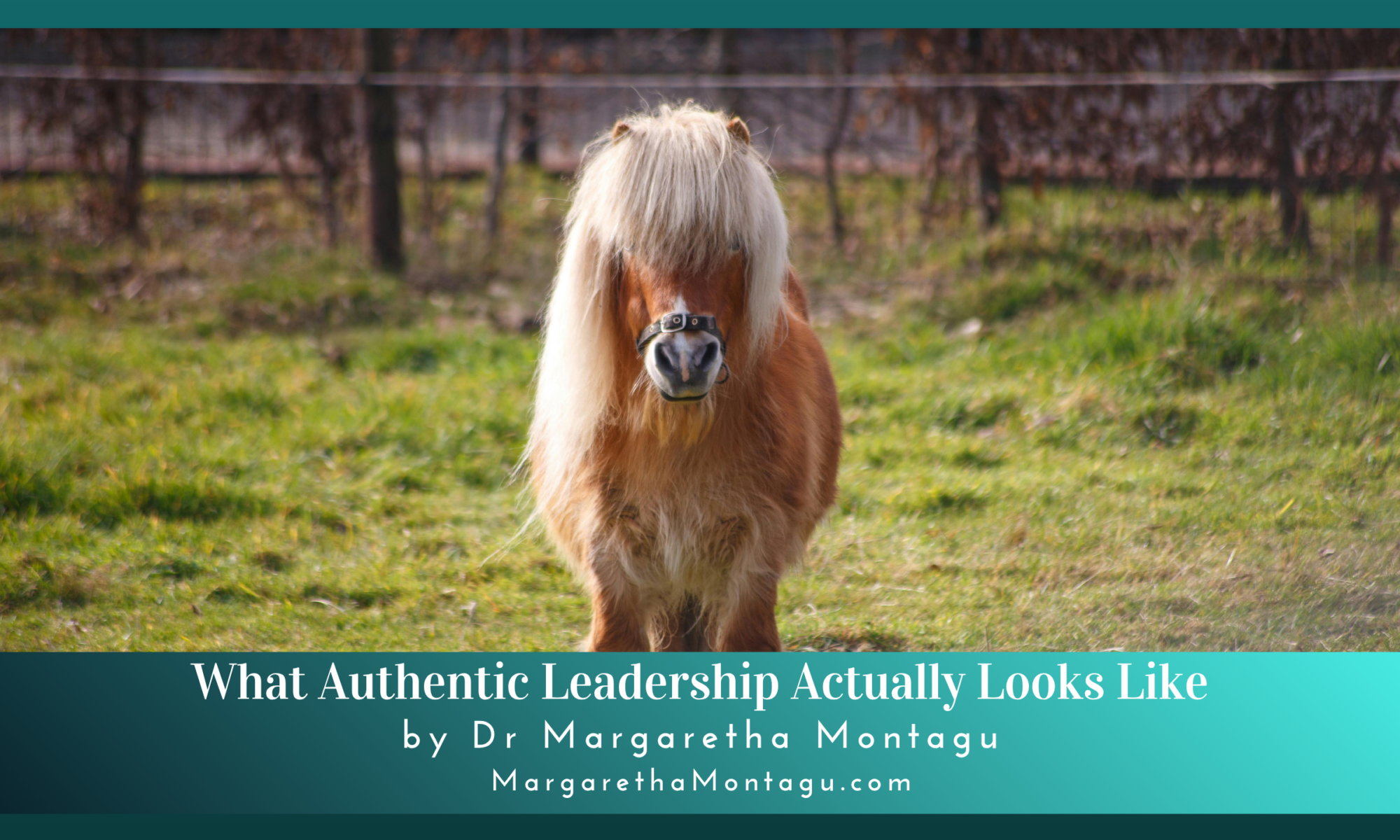
For years, whenever someone asked me about leadership, I gave the answer I thought I was supposed to give. I talked about vision. I talked about decisiveness. I talked about the importance of being the one in the room who makes the call. It was a perfectly serviceable answer, and it was also, I now think, mostly wrong. I didn’t understand what authentic leadership actually required until I watched a small, opinionated Falabella named Loki lead five other horses across a field.
Loki is not the biggest horse in the herd, and he is certainly not the loudest. He can be a little grumpy before breakfast. But when something in the field spooks the others, or when they need to move somewhere unfamiliar, he is the one they follow. Not because he pushes them. Not because he has any way of forcing them to. They follow him because, over time, he has proven himself calm when it counts, consistent in how he behaves, and safe to be near even when things feel uncertain. That is the entire mechanism. No hierarchy imposed from above, no authority claimed by size or noise. Just trust, earned repeatedly, in small, potentially dangerous moments.
I think about that a great deal now, mostly because it is the exact opposite of how most of us were taught to think about leading people.
The Ability to remain Calm is a skill, not a personality trait
We tend to treat calmness as something people either have or do not have, a fixed temperament rather than a practice. But the calm that horses respond to, and that people respond to too, is usually not the absence of stress. It is the visible management of it. A leader who can stay steady while things go wrong is not someone who feels nothing. They are someone who has learned not to transmit their own alarm to everyone around them. That is trainable, in horses and in humans alike, and it starts with noticing how much of your reaction other people absorb before you have said a single word.
Clarity is worth more than confidence
Confidence gets far more credit than it deserves. What actually builds trust is clarity, being specific about what you expect, what is happening, and what comes next. A horse does not need you to seem certain. It needs you to be legible. The same is true of the people you lead. Vague reassurance (“it’ll be fine”) tends to unsettle people more than plain information (“here is what we know, here is what we don’t, here is the next step”), because vagueness leaves too much room for imagination to fill the gaps with something worse.
Consistency is essential
You cannot demand trust, and you cannot rush it. It accumulates, slowly, through the boring repetition of doing what you said you would do. One inspiring speech will not outweigh a pattern of unpredictability, and one bad day will not undo months of reliability either, as long as it stays the exception rather than the rule. Horses have an almost comic disinterest in your intentions. They respond entirely to your patterns. People are more forgiving than horses, but not by as much as we would like to think.
Safety is not the same as comfort
This is the one people misunderstand most. Making people feel safe around you does not mean protecting them from difficulty, disagreement, or hard truths. It means they trust that you will not use your position against them, that you will not humiliate them for being wrong, and that you are steady enough to be told bad news. A herd will walk through discomfort with a leader it trusts. It will not walk two steps with one it does not.
Authority without force is slower to build and far more durable
The version of leadership built on force, whether that is fear, hierarchy, or sheer force of personality, can move people quickly in the short term. But it does not survive the leader’s absence, and it tends to collapse the moment real pressure arrives. The version built on respect and trust takes longer to establish. It also does not disappear when things get hard.
None of this is naturally intuitive for most of us. We are trained, from very early on, to associate leadership with volume, certainty, and control. It takes real, deliberate unlearning to lead the way Loki does, through calm, clarity, consistency, and safety rather than through pure authority. I did not learn that from an authentic leadership seminar. I learned it standing in a field in Gascony, watching a small, slightly stubborn horse prove, again and again, that trust is a far stronger tool than force will ever be.
If this is a pattern you recognise in yourself, whether you are leading a team, a family, or simply trying to be someone others feel steady around, it is worth working through properly rather than picking it apart alone. That kind of untangling is exactly what I help people do, one to one, over three unhurried days at my private Realignment Retreat. No audience, no agenda but yours, just time to think clearly about the kind of leader, and person, you actually want to be.
Do you dream of escaping your stressful life to raise a herd of goats or grow sunflowers in the south of France? Then you may be ready for an Esprit Meraki retreat. Get access to this “very serious” quiz to help you figure out how urgent your need for a change of scenery is, when you subscribe to my monthly newsletter.
5-day/4-night “Press Pause” Camino de Santiago Walking Retreat – If your soul is craving fresh air, meaningful movement, and a chance to reconnect with nature and connect with horses, join me on a powerful, natural reboot for your body, mind, and spirit. Same content as the 3-day retreat, spread over 5 days. And an extra day of walking. No extreme fitness requirements. No forced bonding. No pressure to have a breakthrough. For one or two guests travelling together.
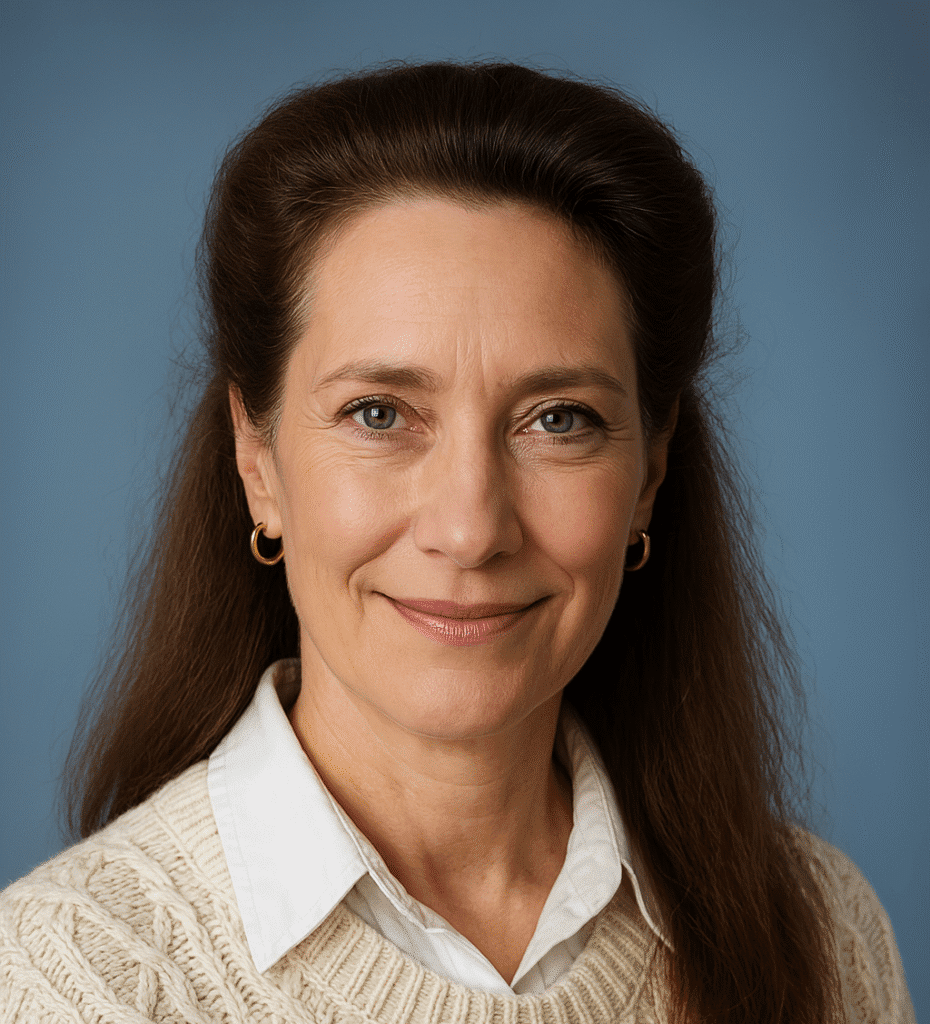
Author Bio: Dr Margaretha Montagu – described as a “game changer”, “gifted healer”, “guiding light” and “life-enriching author” – is an experienced medical doctor, a certified NLP practitioner, a medical hypnotherapist, an equine-assisted psychotherapist (EAGALAcertified) and a transformational retreat leader who guides her clients through life transitions – virtually, or with the assistance of her Friesian and Falabella horses, at their home in the southwest of France.