
How a Long Walk Can Short-Circuit Your Existential Crisis
I’ve been wondering about two things.
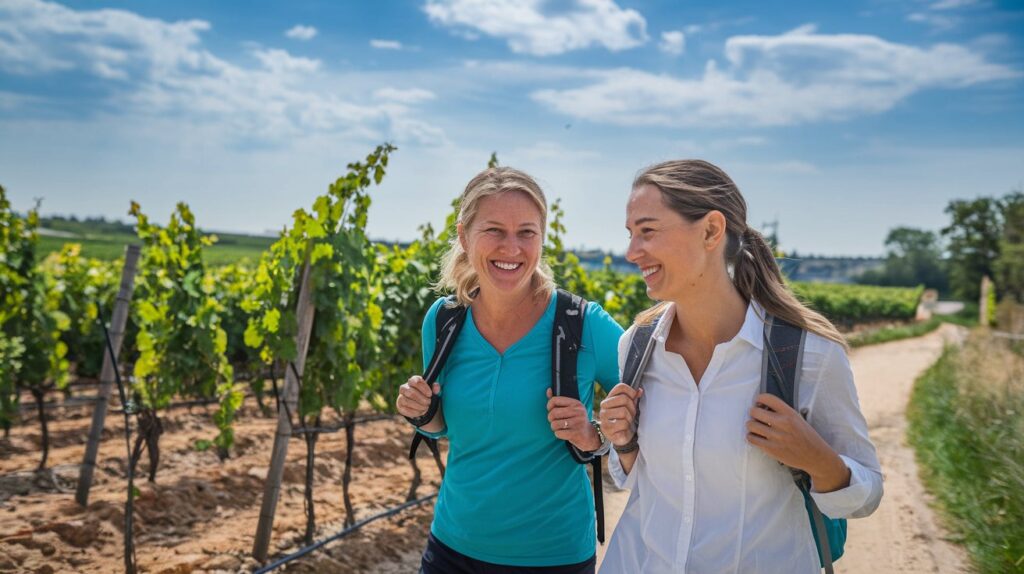
Firstly, why nearly all of my Camino de Santiago walking retreats guests, often weary from the demands of modern life when they arrive, within just two or three days of treading this ancient path, experience what I call “life-changing incidents and insights.” Secondly, why do they come back again and again to walk the same sections of the Camino, here in the sun-blessed southwest of France?
Why does this specific path act as such a potent catalyst for change? Is it merely the fresh air and stunning scenery? I think, maybe, it’s due to a hair-raising cocktail of pattern disruption, neurological recalibration, and a psychological state known as liminality. It’s not just a walk; it’s a physical, psychological and spiritual reset button, served with a side of unexpected camaraderie and, if you’re lucky, a fresh and flaking butter-drenched croissant.
You Remove Yourself From Your Own Story, because Sometimes, All You Need is a New Path (and a Good Pair of Socks)
Most of us spend our lives as unreliable narrators of our own stories. The same worries, the same misunderstandings, the same people whose opinions we care too much about — they form a kind of echo chamber that we mistake for reality.
The moment you step onto the Camino, you’re out of that echo chamber. Your usual props are gone. You’re in a foreign country, you don’t speak the language particularly well, or at all, your phone has no service, and the only thing on your agenda is to put one foot in front of the other and secure a bed at the end of the day’s walk.
Our modern lives are often lived on autopilot. We wake up, check our phones, commute, work, scroll, sleep, repeat. Our brains are constantly engaged in a relentless barrage of micro-decisions and digital distractions, leaving little room for genuine introspection.
The Camino, even in short bursts, offers a radical, almost jarring, disruption to this pattern. Suddenly, the urgent emails, the incessant notifications, the endless to-do lists—they all fade into the background. Your KPIs (key performance indicators) for the day become delightfully simple: follow the arrows, find water and somewhere to have a wild wee, and get yourself to the next charming village. This forced simplicity is a precious gift. When the brain is liberated from the relentless cognitive (over)load of daily life, it finally has the time, the glorious, unburdened bandwidth, to wander, to reflect, and to process information on a much deeper level.
Distance — literal, physical distance — is one of the oldest tools we have for gaining perspective. It’s why we “need space” in relationships, why therapists ask you to imagine watching your life from the outside, why the best decisions are rarely made in the room where the problem lives.
This is precisely when those “insights” begin to bubble to the surface.
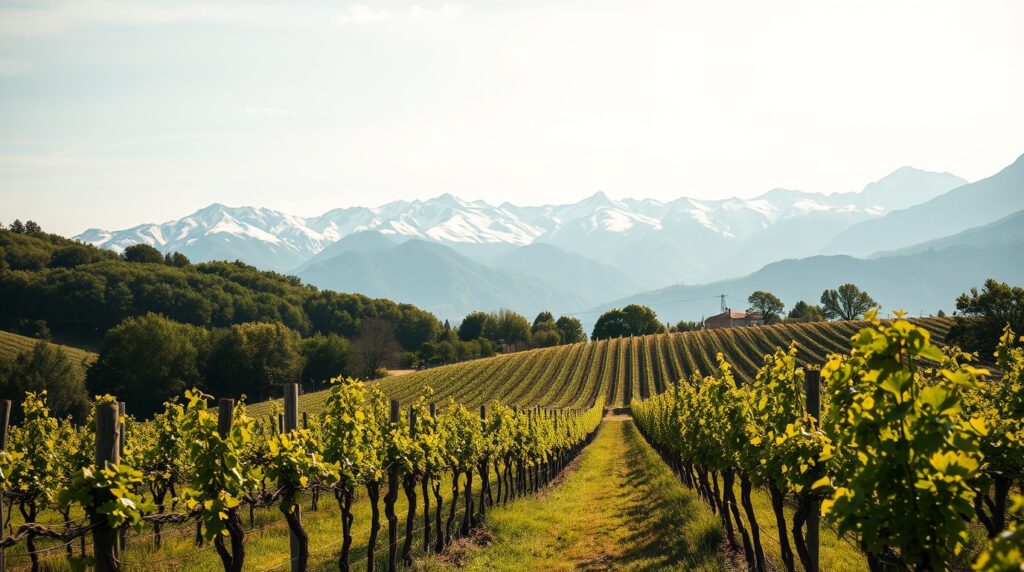
So you might find yourself grappling with a profound existential question about your life’s purpose, only to realise the most pressing decision of the moment is whether to take the scenic route or the slightly shorter, muddier path. Or perhaps a deep spiritual revelation will strike you while you’re trying to decipher the subtle differences between two types of local cheese. These moments, where the mundane meets the magnificent, are the heart of the Camino’s charm. It’s a gentle reminder that sometimes, clarity arrives not in grand pronouncements, but in the quiet spaces between steps.
The Camino Effect: Why Your Brain Loves Long Walks (Even When Your Knees Don’t)
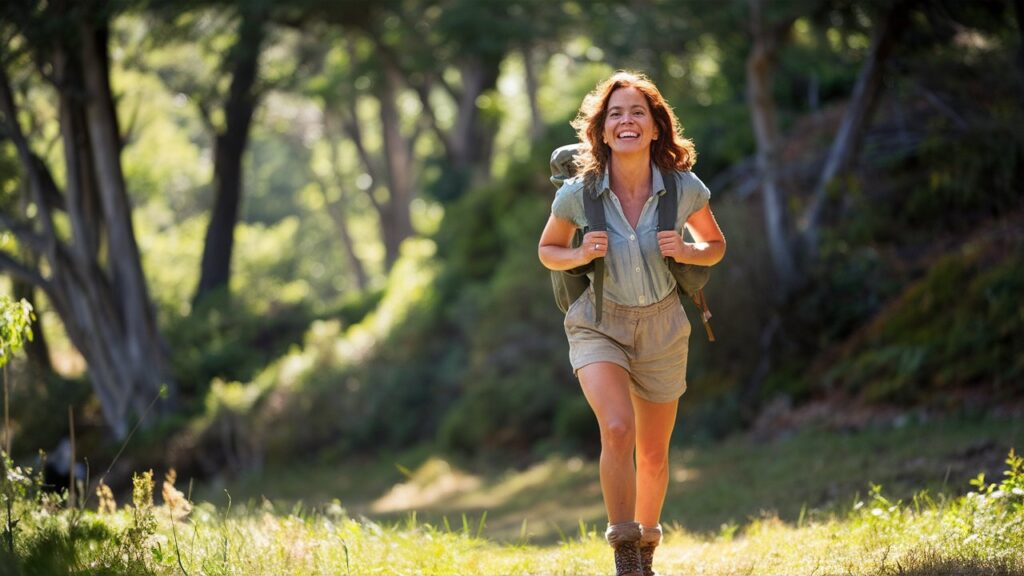
When you engage in physical activity, especially sustained walking, your body produces more BDNF, or Brain-Derived Neurotrophic Factor. Think of it as “Miracle-Gro” for your neurons. This incredible protein promotes neuroplasticity—the brain’s ability to reorganise itself by forming new neural connections—and encourages the growth of new brain cells. So, while you’re busy admiring the rolling hills of Gascony, your brain is literally getting smarter, more adaptable, and more open to new ideas.
Then there is the activation of the Default Mode Network (DMN). This is the brain’s “daydreaming” network, responsible for introspection, memory retrieval, and creative problem-solving. While our busy modern lives often suppress the DMN, the rhythmic, meditative act of walking allows it to flourish. This is why so many people experience those “aha!” moments on the Camino—the solutions to long-standing problems, the creative sparks, the sudden clarity about a life decision. Your brain, finally given permission to process, connects disparate ideas and serves up insights you didn’t even know you were seeking.
En plus, the left-right-left rhythm of walking helps to synchronise the brain’s hemispheres. This bilateral stimulation can create a unique state of consciousness, often compared to the effects of EMDR (Eye Movement Desensitisation and Reprocessing) therapy, helping individuals process old traumas or deeply ingrained emotional patterns. It’s a gentle, natural way to untangle the knots in your mind, one step at a time.
Liminality, a term coined by anthropologist Victor Turner, describes a state of being “in-between.” On the Camino, you shed your everyday identity. You are no longer defined by your job title, your social status, or your usual roles. You are simply “a pilgrim.” This threshold state, neither here nor there, is a sacred space of transition, deconstruction, and ultimately, reconstruction. It’s a temporary suspension of the rules, where defenses drop, and genuine self-discovery becomes not just possible, but almost inevitable. It’s where you learn that the person you thought you were might just be a costume you’ve been wearing.
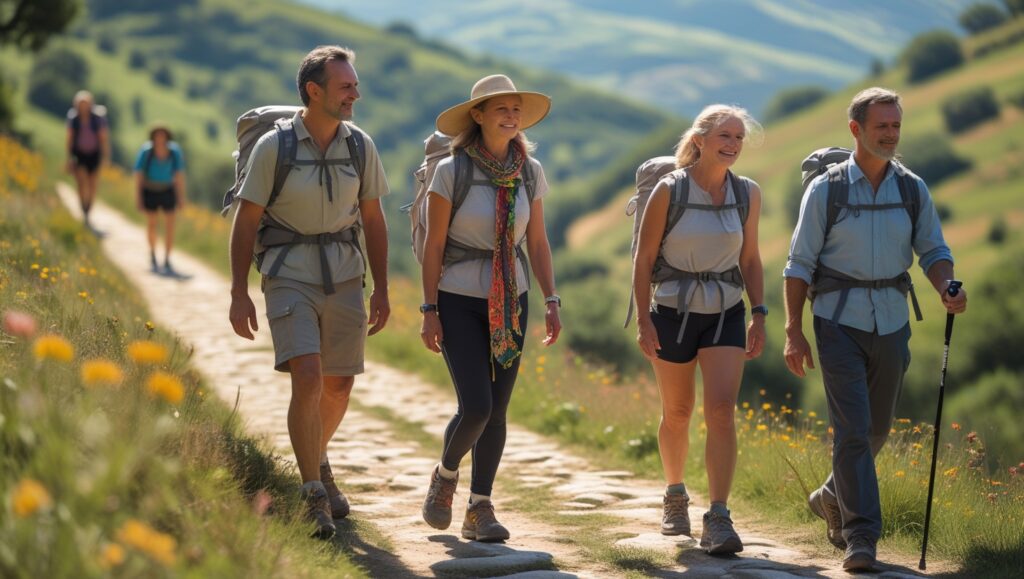
There’s a peculiar intimacy that develops on the Camino. You meet someone at a retreat, walk together for four hours, share a lunch of bread and cheese, and somehow end up discussing your marriage, your career, your relationship with your father. Then you walk ahead, and you may never see them again. So you don’t need to manage the other person’s opinion of you. You don’t need to be the version of yourself that your colleagues or family expect.
This is not a malfunction. It’s a feature.
Southwest France’s Secret Sauce: How Even a Mini-Camino Can Lead to Maxi-Metamorphosis
It seems to me that the Camino is a metaphor for life. You are, quite literally, on a path. You have to keep moving. You can’t see what’s around the next bend. Sometimes you take a wrong turn and have to double back, and somehow the detour ends up being the most interesting part. Some days it’s beautiful. Some days it rains sideways and your boots are soaked and you question every life choice that led to this moment.
Sound familiar?
The Camino externalises something we usually experience only internally. The abstract — “finding your way,” “the journey of life,” “one step at a time” — becomes concrete and embodied. And when something abstract becomes concrete, it becomes workable.
I believe this is why even a short section of the Camino — two or three days, as my 5-day retreat guests walk — can carry the weight of something much more. Because the insight isn’t really about the miles. It’s about the permission. The path gives you permission to see your life as a journey with a purpose: not a problem to be solved, but a route to be walked.
The intensity of an experience isn’t always proportional to its duration. These shorter sections offer a potent blend of pattern disruption, physical activity, and communal connection, allowing my guests to quickly shed their everyday burdens and open themselves to incoming insight. The stunning landscapes, the rich gastronomy (a well-deserved reward after a day’s walk!), and the warm, genuine hospitality of the region act as powerful sensory anchors, helping to solidify the insights gained.
The Camino, with its centuries of footsteps and its unofficial motto Ultreïa (roughly: “onward, ever onward”), carries a quietly radical message. The point is not to arrive. The point is to walk with attention. To notice. To let the path teach you what you need to know, in the order it decides you need to know it.
This is a profoundly countercultural idea in a world obsessed with destinations, outcomes, and optimised results. But it’s also, if you’ve ever had a sleepless night of so-called “productive worry,” a deeply liberating one.
What if the confusion you’re in right now is not a failure? What if it’s a section of the path you haven’t walked before?
The people who come home from the Camino changed are not, in my experience, the ones who found The Answer. They’re the ones who stopped being afraid of The Question. They walked far enough to remember — or discover for the first time — that not knowing where you’re going is not the same as being lost..
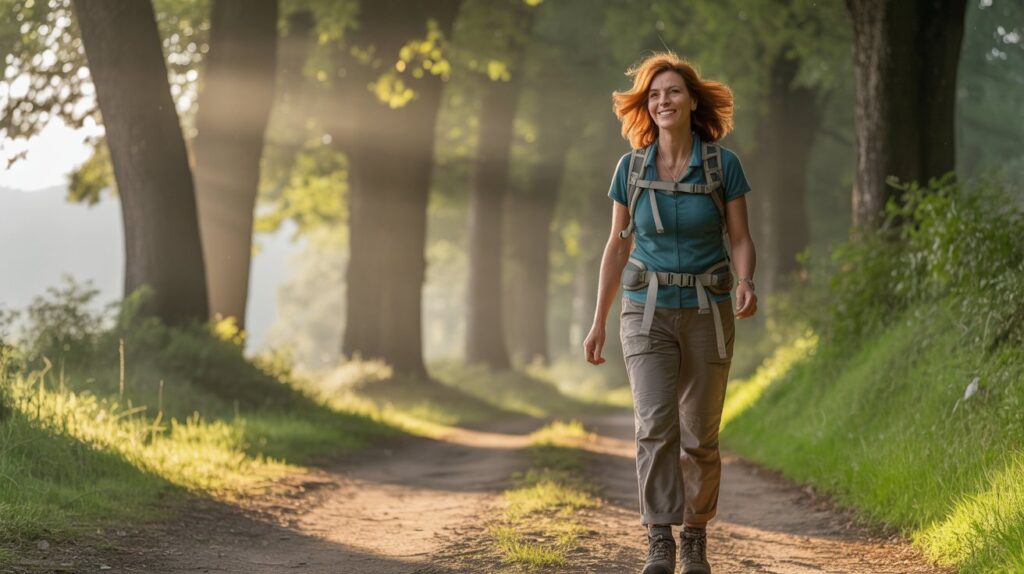
So, perhaps it’s time to lace up your boots, step out of your comfort zone, and onto the path. Even if it’s just for a few days, you might just discover that the person you’re meant to be has been waiting for you all along, just a few steps down the road.
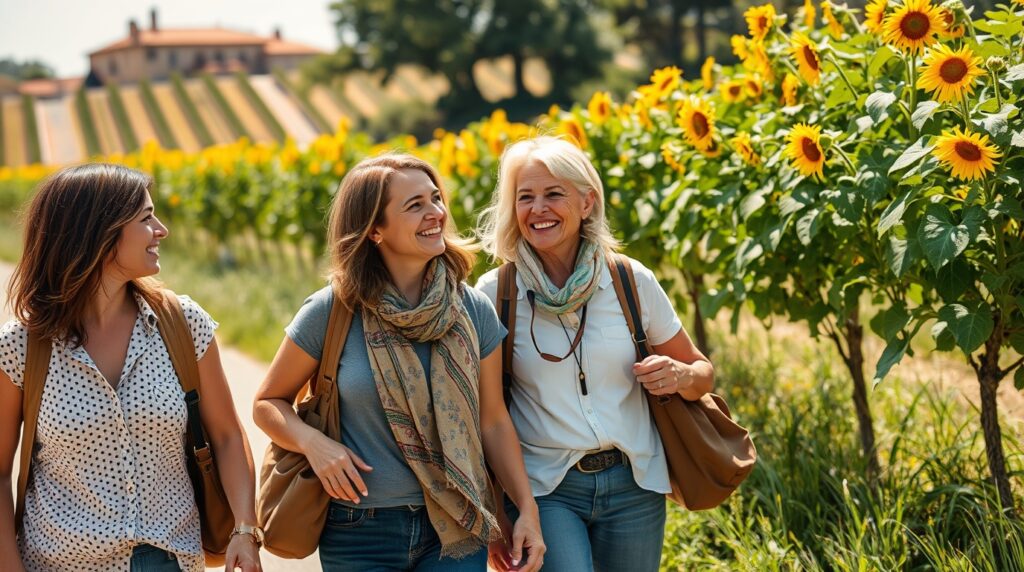
Do you dream of escaping your stressful life to raise a herd of goats or grow sunflowers in the south of France? Then you may be ready for an Esprit Meraki retreat. Get access to this “very serious” quiz to help you figure out how urgent your need for a change of scenery is, when you subscribe to my monthly newsletter.

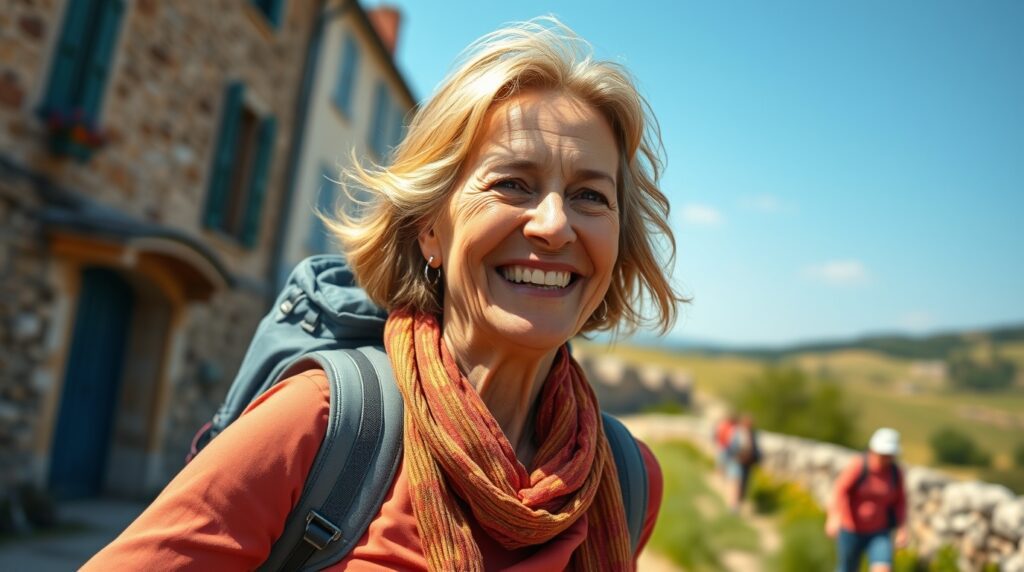
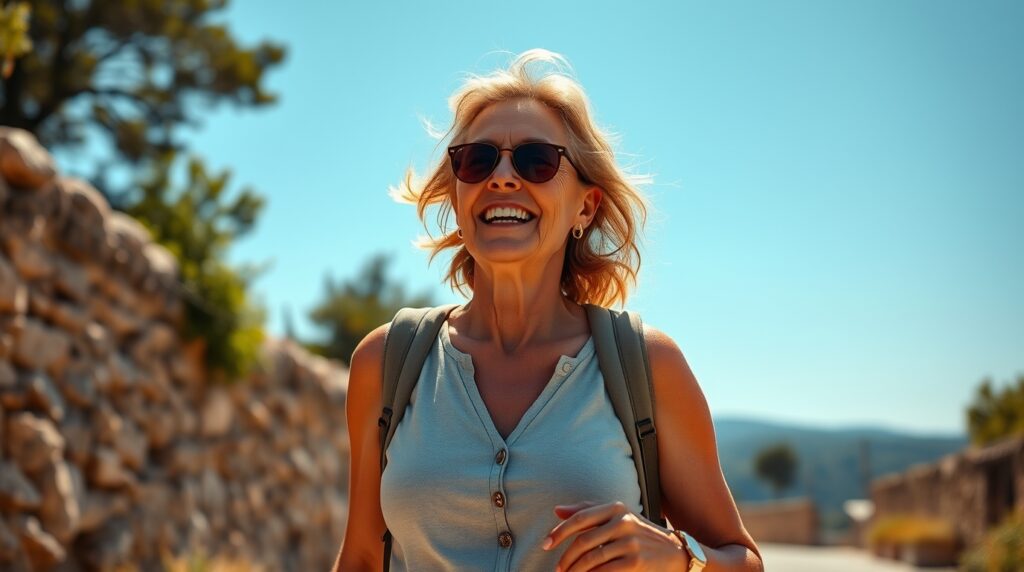
Join us for the Book Lovers Binge Reading Camino de Santiago Walking Retreat in the sun-drenched southwest of France: a journey where the trail and the story unfold together. Walk ancient paths at your own pace, then settle in each evening with a good book. This isn’t a fitness challenge—it’s a gentle rhythm—one step, one chapter, one honest conversation at a time. Rolling hills, quiet villages, golden light. No expectations, no performance, no agenda but your own unfolding.




Author Bio: Dr Margaretha Montagu – described as a “game changer”, “gifted healer”, “guiding light” and “life-enriching author” – is an experienced medical doctor, a certified NLP practitioner, a medical hypnotherapist, an equine-assisted psychotherapist (EAGALAcertified) and a transformational retreat leader who guides her clients through life transitions – virtually, or with the assistance of her Friesian and Falabella horses, at their home in the southwest of France.