
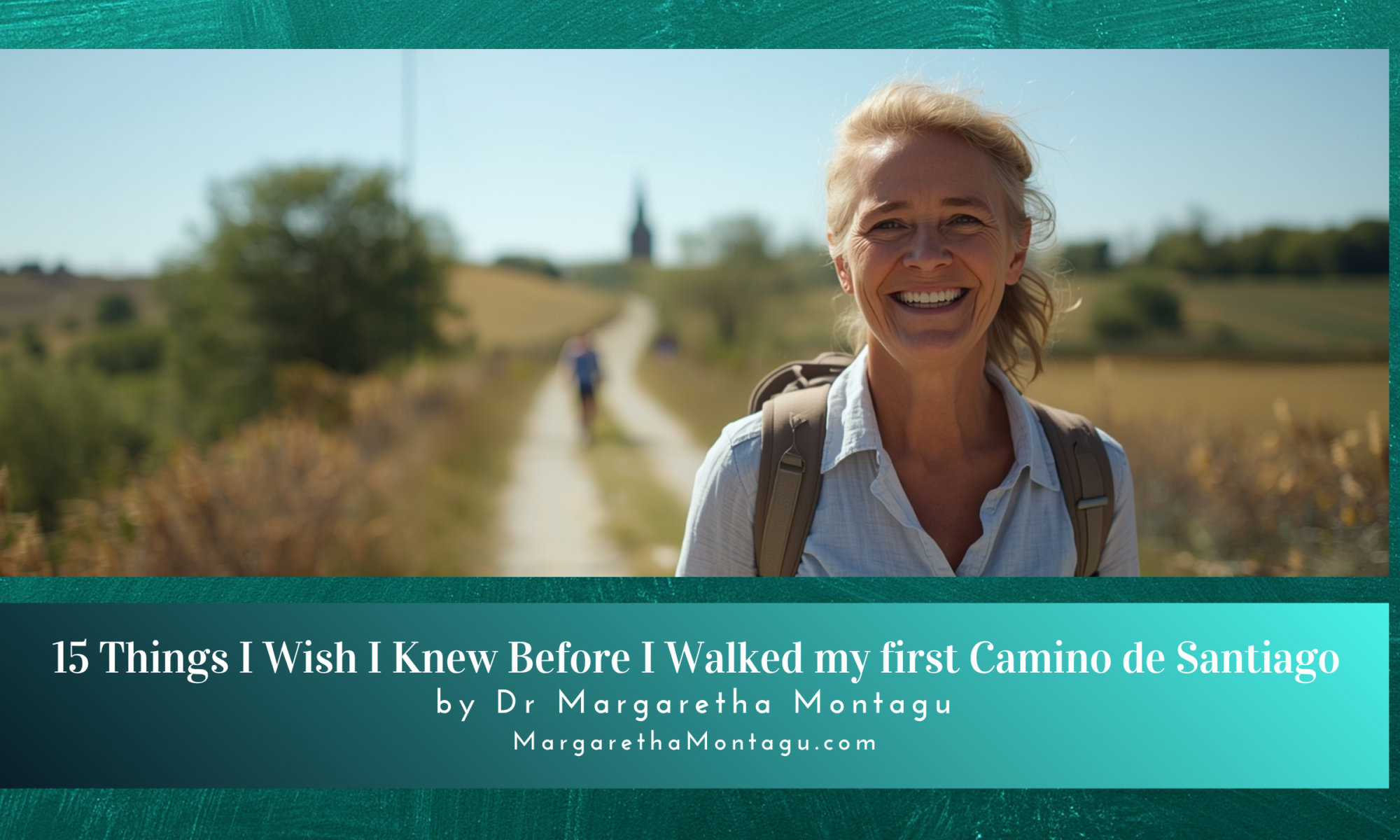
Hard-won lessons, honest surprises, and why this ancient path might be exactly what your overwrought nervous system needs right now
What this is: A candid, warm, and occasionally hair-raising guide to what really happens when you walk your first Camino de Santiago — the blisters, the breakthroughs, the beauty, and the bits the guidebooks politely skip.
What this isn’t: A step-by-step training manual, an equipment review, or a spiritual dissertation. You won’t find a packing checklist or a calorie-by-kilometre breakdown here.
Read this if: You’re exhausted by the relentless noise of the world, you’ve been quietly wondering whether a long walk in France might fix what nothing else has, or you’re simply a book-loving human who suspects that the answers you’re looking for might be found somewhere between page 247 of a good novel and a sun-drenched vineyard path in Gascony.
5 Key Takeaways
- The Camino asks nothing of you except your presence — and in a world that asks everything of you, on spread sheets, this is a radically different experience.
- You don’t need to be religious, athletic, or spiritually enlightened to benefit from walking the Camino. You just need to show up.
- The combination of walking, reading, and nature immersion is one of the most scientifically supported ways to reduce cortisol, restore focus, and reclaim a sense of self.
- Slowing down is not falling behind. The Camino will teach you this. Repeatedly. With great kindness on the occasional steep hill.
- The person who starts the walk is rarely the person who finishes it — and that is entirely the point.
Introduction
The headlines are relentless. The group chats ping at midnight. Your nervous system hasn’t had a day off since approximately 2019, and somewhere under the pile of to-do lists and doomscrolling, there’s a quieter version of you — one who used to read whole books in a single sitting, who used to notice the breathtahing colour of autumn light, who used to feel genuinely rested on a Monday morning.
That version of you isn’t gone. It’s just buried.
And here’s what this article is: a love letter to that quieter self, wrapped in the practical wisdom of an ancient pilgrimage route, seasoned with ten honest lessons from people who walked the Camino de Santiago and came back fundamentally changed.
By the time you finish reading, you’ll have a clearer picture of what the Camino actually involves (beyond the romanticised Instagram reels), what surprises most first-timers, what mistakes to sidestep, and — if you’re open to it — how five days walking through the vineyards and sunflower fields of southwest France, with a good book tucked under your arm, might be the most quietly revolutionary thing you do this year.
What Life Lessons Can You Learn While Walking the Camino de Santiago? – a free guide filled with 10 not just “quaint anecdotes” or Instagram-worthy moments (though there are plenty of those) but real transformations from real people who walked this insight-giving trail – Subscribe to my monthly newsletter to Download the Guide
10 Things I Wish I Knew Before I Walked the Camino de Santiago
1. Your feet will have a few objections. Pay attention.
The Camino teaches you, quickly and without much sentimentality, that your body has been trying to tell you things for years. Blisters are information. Aching hips are information. The bone-deep tiredness you feel after the first day is information. Pay attention. It is the beginning of a much longer conversation. Break in your boots long before you arrive. Your feet will thank you with an enthusiasm that borders on the emotional.
2. You do not need to be particularly fit. You need to be consistent.
There is a myth that stops more people than any blister ever has: the idea that the Camino is only for athletes, seasoned hikers, and people who eat quinoa for breakfast. It is not. The vast majority of pilgrims are in their fifties, sixties, and beyond, many of whom are not regular walkers. What matters is building a steady, consistent walking habit in the weeks before you go, not hitting a particular speed or distance. The Camino rewards those who simply keep moving, not those who move fastest.
3. The Camino is not a race.
The competitive achiever in you will want to walk faster, farther, and more impressively than everyone else. The Camino will gently, then insistently, disabuse you of this instinct. The people who get the most from it are invariably the ones who slow down, stop often, and occasionally sit on a wall for twenty minutes doing nothing but watching a bird. You set your own pace. That is not a consolation. That is the whole point.
4. You will meet yourself on the path.
Somewhere around kilometre three, when the novelty has worn off and your podcast has ended and there is nothing between you and your thoughts except birdsong and gravel, you will discover what is actually on your mind. This can be uncomfortable. It is always useful. The Camino is as much a mental and emotional journey as a physical one, something that surprises almost every first-time pilgrim. Hours of walking through open countryside gives you something most of us rarely experience: uninterrupted, unhurried time to think. Bring something worth thinking about.
5. The path itself is the teacher.
You don’t need to manufacture insight or force revelation. The Camino has been teaching people things for over a thousand years. Your only job is to walk, pay attention, and stay curious. The lessons arrive on their own schedule, with excellent timing and no respect whatsoever for your agenda. There are traditions woven into the path that carry their own wisdom, including the custom of carrying a stone from home and leaving it behind at the Cruz de Ferro, a small, weighty act of letting go that means something different to everyone who does it.
6. A good book and a long walk are more therapeutic than they have any right to be.
There is something about moving through beautiful landscape and then settling into a story that unlocks a particular kind of calm. It isn’t escapism, it’s integration. Your body walks, your mind reads, and somewhere in between, the two start cooperating in ways they haven’t managed for years. The combination is, frankly, unreasonably effective. Give it two days before you notice the difference.
7. You will not feel lonely, even if you arrive alone.
Many first-time pilgrims worry about this, especially solo travellers. The Camino has a way of dissolving that particular anxiety within the first few hours. You will see familiar faces along the path, share tables with people who will become friends, and find that the community of the Camino is one of the most genuinely warm and welcoming you will encounter anywhere. And if you need solitude, that is equally available. The path holds both.
8. The food matters more than you think.
Simple food, shared with other people, eaten slowly, without a screen in sight, is a form of medicine. The first time you sit down to a bowl of homemade soup after a long walk, you will understand this in your body before your brain has caught up. No complicated menu, no decision fatigue, no scrolling for restaurant options at 9 p.m. Just good, honest food and the particular satisfaction of having earned it.
9. A simple daily rhythm is a form of freedom, not a limitation.
Most pilgrims are surprised by how quickly, and how gratefully, they fall into the Camino’s basic daily pattern: wake, breakfast, walk, stop for coffee in a village, walk, lunch, walk, rest, dinner, sleep. No complicated schedule. No competing demands. Just one step at a time. Within days, this simplicity stops feeling sparse and starts feeling intensely, unexpectedly liberating. You begin to understand how much of your daily exhaustion comes not from doing too much, but from choosing too much.
10. You don’t have to be spiritual to have a spiritual experience.
The Camino has a way of producing moments of inexplicable clarity regardless of your beliefs, or lack of them. A particular quality of morning light. A conversation with a stranger that goes somewhere you didn’t expect. A hawk overhead at precisely the right moment. Call it what you like. It tends to happen anyway.
11. The other walkers are half the gift.
You will talk to people on the Camino that you would never encounter in your ordinary life. And you will have conversations, real ones, unmediated by status or small talk or the performance of productivity, that stay with you long after you’re home. The Camino strips away the usual social scaffolding and leaves something more honest in its place.
12. Pack once, then take half of it back out.
Overpacking is the single most universal rookie mistake on the Camino. Even if you’re just carrying a day pack, too much stuff is still too much stuff. Heavy bags are harder to manage and quietly demoralising in ways that are difficult to explain until you’ve experienced them. Leave room in your bag for what you bring back.
13. Silence is not absence.
Most of us are starving for silence and don’t know it. The Camino provides it in abundance. At first, you may find it deeply uncomfortable. The instinct to fill it, with music, podcasts, news, anything, is strong and entirely understandable. Resist it. By day three, you will be protective of the silence. By the time you leave, you will be wondering how to carry it home.
14. You are stronger than you currently believe.
Before you start, it is entirely normal to wonder: Can I actually do this? Am I fit enough, good enough, young enough, brave enough? These questions are valid. They are also, in practice, answered by the walking itself. Day by day, step by step, your body finds its rhythm and your confidence follows. And by the end, you will know, in a way that no motivational quote has ever managed to convey, that you are considerably more capable than you gave yourself credit for.
15. You will not want to leave.
The pull you feel, standing at the car on the last morning, to stay just one more day, is not attachment to a place. It is a recognition that you have found something in yourself worth keeping, and a quiet, fierce determination not to let it go. The Camino does not end when the walking stops. It continues in every choice you make to slow down, pay attention, and live just a little more deliberately than before.
The Day Thomas Bergmann Finally Stopped Running
Thomas Bergmann was the sort of man who scheduled his dentist appointments six months in advance and colour-coded his inbox.
He was fifty-two, a senior architect at a firm in Hamburg, and he had not taken a proper holiday in four years. Not because he couldn’t afford one. Not because the firm couldn’t survive without him. But because somewhere along the way, Thomas had confused busyness with significance, and stillness with failure.
He heard about the Camino de Santiago from a colleague who’d walked it the previous autumn. The colleague had returned with muddy boots, a deeper laugh, and an irritating habit of saying things like, “Yes, but does it matter?” at project meetings. Thomas found it annoying. Then, six months later, he found himself researching it at 2 a.m. while half-watching a documentary about climate change and half-reading three different breaking news alerts on his phone.
Something in him cracked open. Not dramatically. The way old plaster cracks, quietly, in a corner you’d stopped noticing.
He found the five-day Camino de Santiago Appetiser Express retreat first, but finally decided to book a spot at a five-day Book Lovers’ Binge Reading and Camino de Santiago retreat in southwest France, in the Côtes de Gascogne, almost entirely on impulse. He told himself it was research. He packed four books, his laptop, two pairs of hiking boots (one for trail, one for “just in case”), a portable charger, and a low-level anxiety about what he might find when he stopped moving fast enough to outrun himself.
He arrived on a Saturday evening in October, when the Gascon light was doing that thing it does in autumn, pouring itself sideways across the vineyards in shades of copper and amber that no Instagram filter has ever quite replicated. The farmhouse smelled of woodsmoke and something scrumptiously slow-cooked. There were books on every surface.
The other guests were already settled: a woman called Miriam who’d been reading since before dinner and barely looked up, a retired teacher called Antoine who was working his way through a stack of Nordic crime fiction with great concentration and a glass of local wine, and a younger woman named Sofia who announced cheerfully that she’d left her phone in her car and wasn’t going back for it until Wednesday.
Thomas opened his laptop. Then he closed it. Then he looked at the bookshelf. Then he looked out at the darkening vineyard. Then, with a feeling he couldn’t quite name, a mixture of relief and terror, he picked up the first book he’d thrown in his bag at the last minute, an old copy of The Alchemist he hadn’t read since university, and he sat down in the armchair by the window.
He didn’t move for two hours.
The first Camino walking day came on Monday morning. Thomas had expected a solemn procession of deeply spiritual people in matching pilgrim gear, speaking in hushed tones about their inner journeys. What he found was considerably more human: a gravel path winding through sunlit fields, the distant sound of cowbells, the smell of damp earth and wild thyme, and his own lungs working in a way they hadn’t in years.
The retreat host walked with them for part of the morning, pointing out a medieval waymarker half-hidden in the hedgerow, a hawk circling above the ridge, a cluster of wild rosehips heavy on their stems. She didn’t say much. She didn’t need to.
Thomas noticed his thoughts, initially frantic, all unread emails and looming deadlines and a background hum of global anxiety, beginning to slow. Not stop. Just slow. Like a river hitting a wider channel.
By the second kilometre, he had stopped checking the time.
By the fourth, he was noticing the way the autumn light moved across the path ahead of him, always just slightly out of reach, always inviting him forward.
By the time he stopped for lunch, sitting on a low stone wall with sandwiches and a thermos of coffee, looking out across a valley that had been quietly going about its business since the twelfth century, Thomas said something he hadn’t said in a very long time.
“I feel like myself.”
He said it quietly, to no one in particular. Miriam, beside him, nodded without looking up from her book. She’d heard that one before. It was what the Camino did, she said, if you let it.
By Wednesday morning, when it was time to leave, Thomas had finished two books. He had walked approximately forty kilometres over three days through some of the most quietly beautiful countryside in France. He had eaten better than he had in months, slept longer than he had in years, and had a conversation with Antoine over dinner that somehow moved from Nordic crime fiction to the meaning of life to a shared laugh about their respective attempts at sourdough bread during lockdown.
He hadn’t checked the news once. He hadn’t scheduled a single meeting. He’d received seventeen work emails, which he knew because his phone, restored to his pocket on the last day, told him so. And his reaction, for the first time in years, was a mild, unconcerned: those can wait until tomorrow.
The man who packed his car in the golden Gascon morning light was, in all measurable ways, the same Thomas Bergmann who had arrived four days earlier with his colour-coded inbox and his backup hiking boots.
Except that he wasn’t.
Not really.
Not at all.
One Person’s Camino Can Change Everything Around Them
Walking the Camino de Santiago has a ripple effect.
Yes, the transformation begins with one person, on one path, putting one foot in front of the other. But what happens next ripples outward in ways that are difficult to predict and impossible to overstate.
Thomas, back in Hamburg, began taking his lunch breaks outside. He started leaving his phone in his jacket pocket during meetings. He said “I don’t know” more often, and meant it, and discovered that his team respected him more for it, not less. He began recommending the retreat to a colleague who was struggling. He talked to his teenage daughter about her phone use with considerably more gentleness and considerably less hypocrisy than before.
He started reading again, properly, the way he had before architecture school had swallowed him whole, before the world had become so loudly, insistently urgent. He read novels, histories, poetry. He discovered that a man who reads widely is a man who listens better, thinks more carefully, and is slower to catastrophise.
This is the quiet revolution that begins on an ancient path in southwest France.
It doesn’t announce itself. It doesn’t arrive with a thunderbolt or a viral moment. It arrives as a small, stubborn shift in how you hold your attention, how you treat your own tiredness, how willing you are to stop — genuinely stop — and let the world continue its spinning without your supervision.
Research consistently bears this out. Studies in environmental psychology show that spending time in natural settings reduces rumination, lowers cortisol, and restores directed attention. The combination of rhythmic walking, narrative immersion through reading, and social connection in a low-pressure environment creates conditions for what researchers call psychological restoration, a deep resetting of the nervous system that cannot be achieved by a weekend on the sofa, however worthy your intentions.
When one person restores themselves, genuinely, they become less reactive and more present. And presence is, arguably, the thing the world is most desperately short of right now.
It begins with five days. It continues for a lifetime.
5 Mistakes to Avoid on Your First Camino
Mistake 1: Over-packing, in every sense of the word
Most people bring far too much — in their bags, in their heads, in expectations. Pack light. Physically, yes, but also mentally. Leave the plan at home. Leave the ambition to have the definitive transformative experience. Show up with room for whatever actually happens.
Mistake 2: Treating it as a fitness challenge
If you’re spending your preparation period training for peak performance rather than walking for pleasure, you’ve already misunderstood the invitation. A reasonable base of walking fitness is sensible; turning the Camino into a training target is a different thing entirely, and one that tends to produce misery rather than magic.
Mistake 3: Spending the walk on your phone
The news will still be terrible when you get back. The emails will wait. Social media will continue its relentless performance of other people’s lives without your participation. The single greatest gift you can give yourself on the Camino is your full, undivided, offline attention. You can do it. You know you can.
Mistake 4: Comparing your experience to someone else’s
Someone will have had a profound spiritual awakening on day one. Someone else will have cried unexpectedly at a medieval chapel. Your experience is yours. Maybe you’ll feel peaceful. Maybe you’ll feel bored before you feel peaceful. Maybe you’ll spend an entire afternoon thinking about nothing except what you want for dinner. It’s all the Camino. It’s all valid. It’s all enough.
Mistake 5: Treating it as a one-time event rather than a beginning
The single most common regret among Camino walkers isn’t about blisters or rain or wrong turns. It’s that they went home and gradually let the clarity they found slip through their fingers as daily life reclaimed them. The Camino works best as a beginning, a starting point for the slower, quieter, more intentional life you caught a glimpse of on the path.
A Short Intention-Setting Exercise Before Your Walk
Sit somewhere comfortable, preferably near something natural, a window, a garden, a park bench. Take three slow, deliberate breaths. Then, without editing yourself or aiming for profundity, complete these sentences:
“What I am most ready to put down is…”
“What I most want to find, or find again, is…”
“The version of me I’d like to walk back home as is…”
Write them down. Fold the paper. Keep it with you.
Further Reading: 5 Books That Walked the Same Path
1. The Pilgrimage by Paulo Coelho
The book that introduced the Camino to the wider world, and still, decades later, one of the most honest accounts of what the path does to a person. Coelho doesn’t romanticise the difficulty or the doubt. He walks alongside them. I see the book is going to be filmed soon.
2. I’ll Push You by Patrick Gray and Justin Skeesuck
A true story of friendship, vulnerability, and extraordinary determination — one man pushes his disabled best friend in a wheelchair across the Camino. It will rearrange your understanding of what is possible, what matters, and what friendship actually means.
3. Walking the Camino: A Modern Pilgrim’s Journey by John Brierley
Less a guidebook than a philosophical companion, Brierley’s text treats the outer landscape as a mirror for the inner one. Packed with reflection questions and gentle wisdom, it is the book most likely to make you stop mid-path and stare thoughtfully into the middle distance.
4. The Art of Pilgrimage by Phil Cousineau
For those who want to understand not just the Camino but the deeper human impulse toward pilgrimage, this is a beautiful, quietly radical read. Cousineau argues convincingly that sacred travel is not an indulgence but a necessity, and makes you wonder why you haven’t done this sooner.
5. Wanderlust: A History of Walking by Rebecca Solnit
Solnit explores the relationship between walking, thinking, and freedom across history and culture. It is the kind of book that makes you want to immediately put on your boots, which is precisely the effect it should have.
PS. If you are in the thick of change right now, navigating a world that seems to shift under your feet daily, my book Embracing Change — in 10 Minutes a Day is a quietly powerful companion. Practical, warm, and entirely free of the breathless urgency that characterises most self-help, it is the book equivalent of a reliable friend who happens to know exactly what to say.
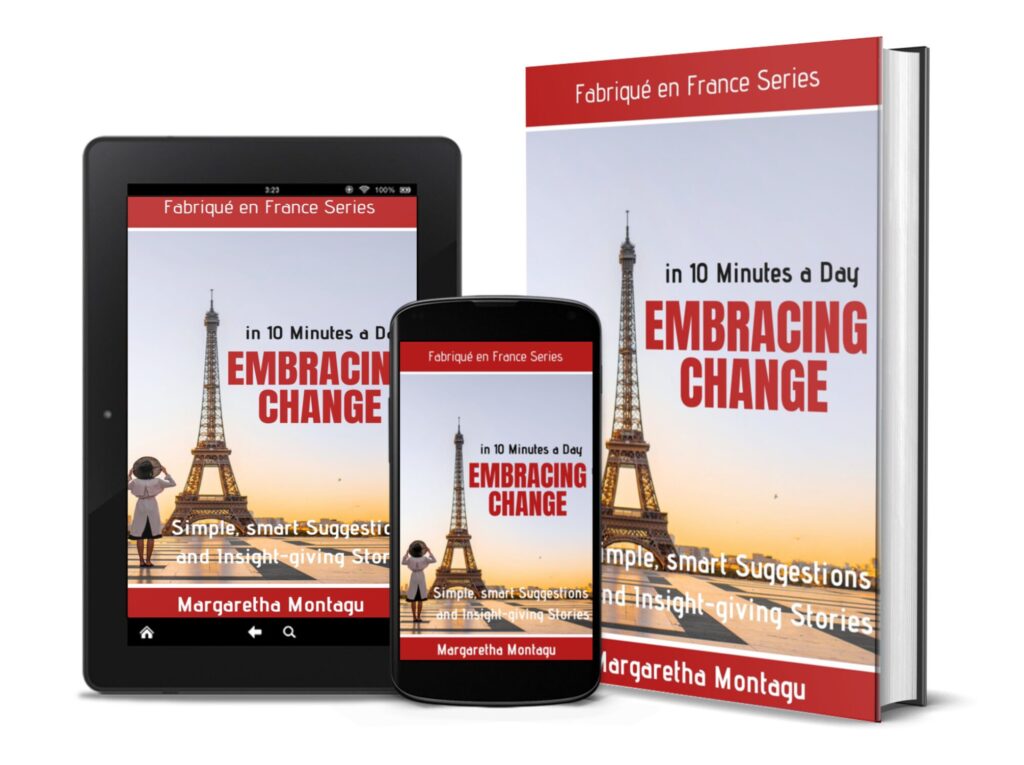
If you are currently facing a major life transition or any other dramatic change in your circumstances, and you have no idea how you are going to cope, the good news is that the strategy presented in this book can help you, step by step, to improve your ability to handle the stress caused by change, even if you feel entirely powerless at the moment.
My Reconnect with Nature: A Guided Journaling Course Inspired by Horses online course is included free in every reading retreat. Because walking the Camino is one kind of nature immersion, and this gentle, beautifully crafted journaling course deepens and extends that reconnection in ways that continue long after you’ve returned home. It is, in a word, generous — and it is yours.
Reconnect with Nature: A Guided Journaling Course Inspired by Horses for anyone interested in increasing their emotional, physical and social resilience by starting a journal, but does not have much time to invest and is looking for a simple, easy-to-implement strategy that gives tangible and lasting results. Get immediate access
5 FAQs People Are Actually Asking Right Now
Is the Camino de Santiago dangerous for solo travellers?
The Camino is consistently rated among the safest long-distance walking routes in the world. It is well-marked, well-travelled (particularly in spring and autumn), and hosted by communities that have been welcoming pilgrims for over a thousand years. Solo women, in particular, frequently cite the Camino as one of the most empowering and safe travel experiences of their lives.
Do I need to be physically fit to walk the Camino?
A reasonable level of walking fitness is helpful, particularly for the longer stages of the full Camino Francés. However, retreats that incorporate shorter, curated sections of the Camino — such as the Appetiser Express and the Book Lovers’ retreat in Gascony — are designed to be accessible to walkers of varying fitness levels. The focus is on immersion and experience, not athletic achievement.
What is the best time of year to walk the Camino?
Spring (April to June) and autumn (September to October) are widely considered the most rewarding seasons — mild temperatures, manageable crowds, and a quality of light that borders on the unreasonable. The retreats in southwest France run from March to November, with October and May being particularly popular.
Can the Camino help with burnout and anxiety?
The research strongly suggests yes. Multiple studies on nature-based interventions, rhythmic exercise, and narrative reading show significant reductions in cortisol and anxiety symptoms. Walking in natural environments has been shown to reduce activity in the prefrontal cortex regions associated with rumination, which is the kind of science that makes you want to immediately book your train ticket.
Do I need to be religious or Catholic to walk the Camino?
Absolutely not. The Camino welcomes pilgrims of every faith, background, and philosophical persuasion. It has been walked by atheists, agnostics, Buddhists, Christians, and a great many people who simply describe themselves as “looking for something.” Whatever that something is, the Camino has a long, distinguished history of helping people find it.
Conclusion
The world is not going to quieten down on your behalf. The news cycle, the group chats, the low hum of collective anxiety that seems to have installed itself permanently somewhere behind your left eyebrow — none of that is disappearing while you figure out the right moment to take a break.
There is no right moment. There is only the decision.
The Camino de Santiago has been walked by stressed, searching, world-weary people since the ninth century. They came carrying grief, confusion, exhaustion, and an unshakeable sense that something needed to change. Most of them found not a destination but a direction — a quieter, more honest orientation toward their own lives.
The fifteen things I wish I’d known before I walked are really one thing, dressed in different clothes: the path gives back what you bring to it, and more. Presence returns you to yourself. Silence gives you room to hear what matters. Walking reminds your body that it is a body, not a machine. Reading restores the inner world. And kindness, the warm, generative, unhurried kindness you find in a sun-drenched Gascon farmhouse among a small group of fellow readers, reminds you that you are not alone in any of it.
“Not all those who wander are lost. Some of them are simply finding their way back.” — adapted from J.R.R. Tolkien
An Invitation
Are you tired enough to rest? Brave enough to slow down? Curious enough to see what’s on the other side of all that noise?
Five days, four nights. Southwest France. Vineyards, books, good food, ancient path, and a small circle of like-minded humans who have also decided that enough is enough.
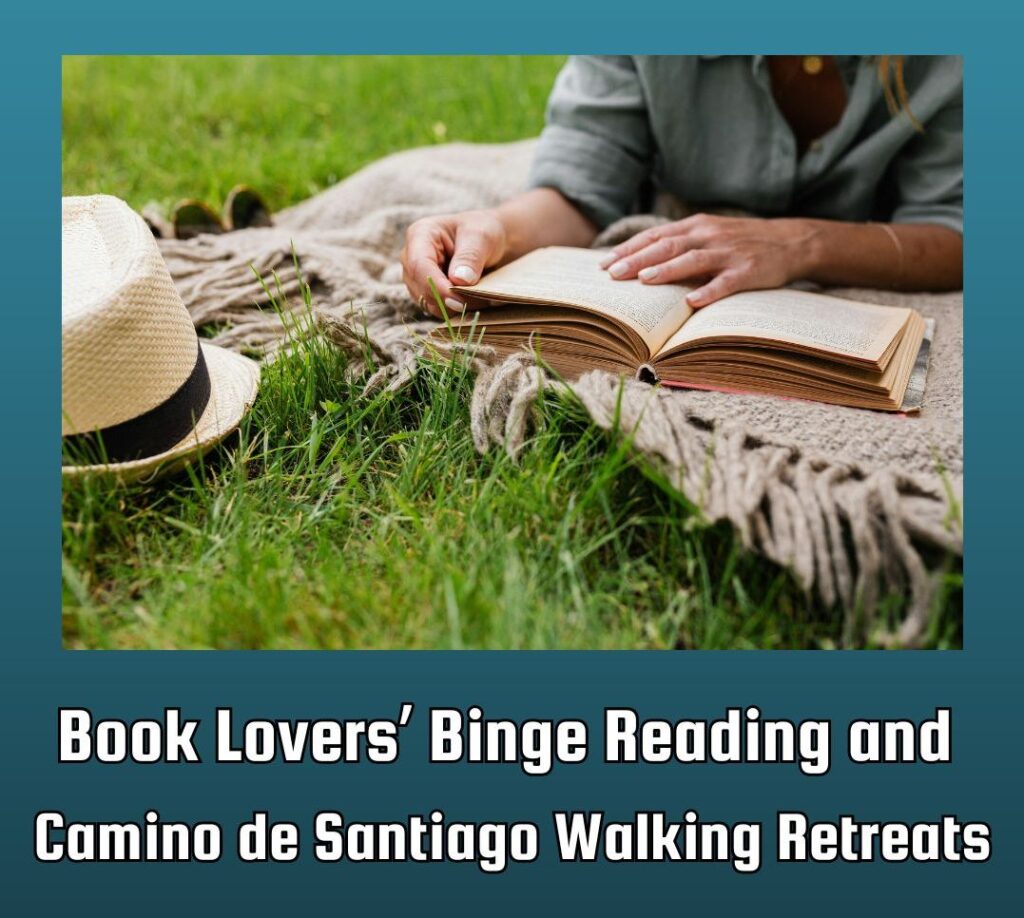
Join us for the Book Lovers Binge Reading Camino de Santiago Walking Retreat in the sun-drenched southwest of France: a journey where the trail and the story unfold together. Walk ancient paths at your own pace, then settle in each evening with a good book. This isn’t a fitness challenge—it’s a gentle rhythm—one step, one chapter, one honest conversation at a time. Rolling hills, quiet villages, golden light. No expectations, no performance, no agenda but your own unfolding.
The Book Lovers’ Binge Reading and Camino de Santiago Retreat is a 5-day, 4-night escape in the Côtes de Gascogne — the most unhurried, sun-blessed corner of France. You’ll walk sections of the Camino through fields and forest, eat simple Gascon food, sleep deeply, and read as much as you want, for as long as you want, without a single person asking you to be anywhere or do anything. There are only four spots per retreat date. Which means it is as close to truly personal as a retreat gets. Your nervous system will send you a thank-you note. Possibly several.
👉 Discover the retreat and claim your spot here.
Not Sure If You’re Ready?
Take the Ready for a Retreat? Quiz — it takes three minutes and will tell you more about what you actually need right now than six months of vague intention-setting.
Do you dream of escaping your stressful life to raise a herd of goats or grow sunflowers in the south of France? Then you may be ready for an Esprit Meraki retreat. Get access to this “very serious” quiz to help you figure out how urgent your need for a change of scenery is, when you subscribe to my monthly newsletter.
Sign up for the newsletter and take the quiz here.
What would you do, who would you become, and what would you finally let go of, if you gave yourself five uninterrupted days to simply be?
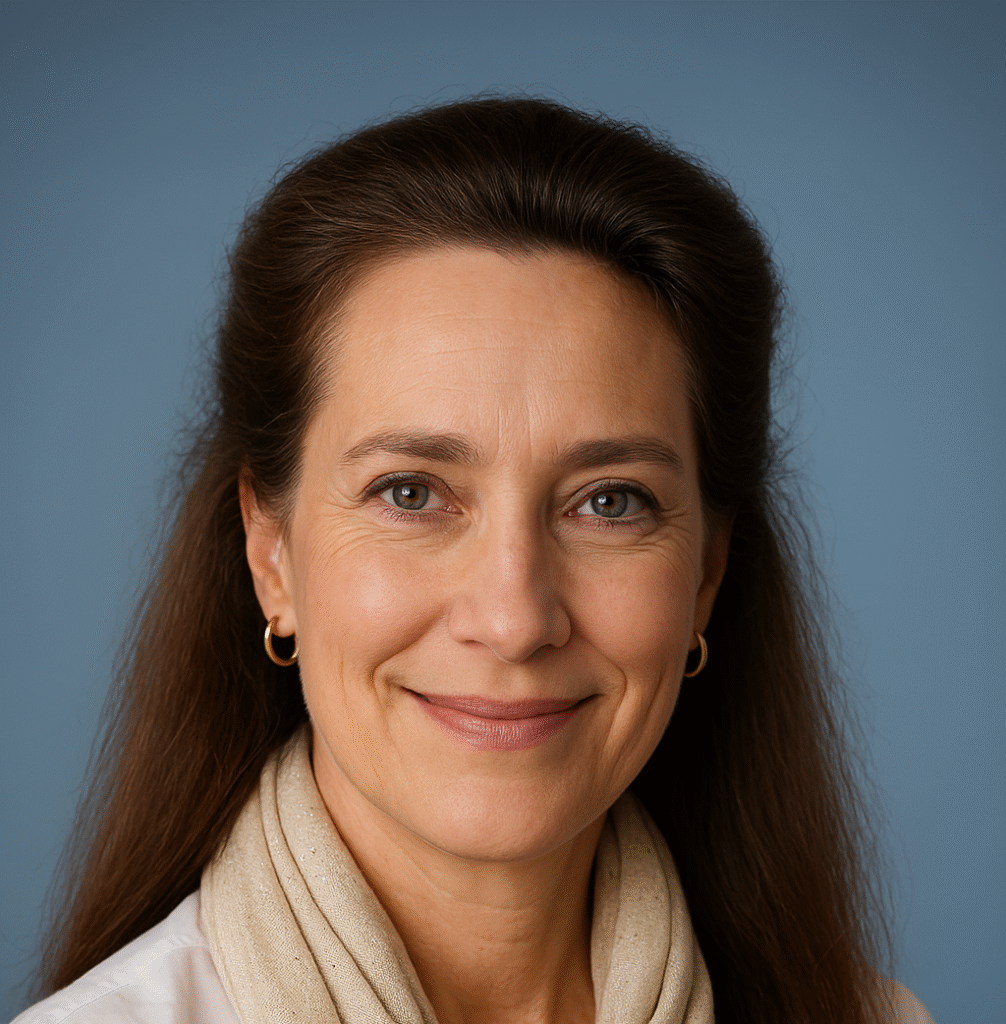
Author Bio: Dr Margaretha Montagu – described as a “game changer”, “gifted healer”, “guiding light” and “life-enriching author” – is an experienced medical doctor, a certified NLP practitioner, a medical hypnotherapist, an equine-assisted psychotherapist (EAGALAcertified) and a transformational retreat leader who guides her clients through life transitions – virtually, or with the assistance of her Friesian and Falabella horses, at their home in the southwest of France.
References
- Bratman, G. N., Hamilton, J. P., Hahn, K. S., Daily, G. C., & Gross, J. J. (2015). Nature experience reduces rumination and subgenual prefrontal cortex activation. Proceedings of the National Academy of Sciences, 112(28), 8567–8572.
- Kaplan, S. (1995). The restorative benefits of nature: Toward an integrative framework. Journal of Environmental Psychology, 15(3), 169–182.
- Berman, M. G., Jonides, J., & Kaplan, S. (2008). The cognitive benefits of interacting with nature. Psychological Science, 19(12), 1207–1212.
- Mar, R. A., Oatley, K., & Peterson, J. B. (2009). Exploring the link between reading fiction and empathy: Ruling out individual differences and examining outcomes. Communications, 34(4), 407–428.
- Holt-Lunstad, J., Smith, T. B., & Layton, J. B. (2010). Social relationships and mortality risk: A meta-analytic review. PLOS Medicine, 7(7), e1000316.
© Dr Margaretha Montagu. All rights reserved. This article is for informational purposes only and does not constitute medical advice. All stories are illustrative. Images are for representational purposes only.