
★★★★★
Reviewed by Margaretha Montagu, host of the Booklover’s Binge Reading and Camino de Santiago Walking Retreats
There are books you read, and then there are books that read you. Paulo Coelho’s The Alchemist belongs firmly, defiantly, and rather magically in the second category. Published in 1988 and since translated into more than 80 languages, it has sold well over 320 million copies worldwide — a number so staggering that the mind goes a little wobbly trying to picture it. That’s not a readership. That’s a movement.
I first read The Alchemist right around the time I started hosting my retreats — those glorious, muddy, blister-inducing, soul-expanding weeks where book lovers and Camino hikers converge in the most improbable and wonderful combination imaginable. I remember sitting with the novel in the evenings after long walking days, reading by lamplight, and thinking: this is it. This is the book. Not just a book for a reading list. Not just a book to recommend in passing. The one book. The book I want every single guest who came through my doors to read.
And so that’s exactly what I did. The Alchemist is now not merely on the recommended reading list for my retreats — it is the book I ask all my guests to bring with them. Every one. No exceptions. Not because I’m bossy (well, not only because of that), but because I have witnessed, retreat after retreat, how profoundly this small, deceptively simple story amplifies the Camino experience. There is something almost alchemical — and yes, I use that word deliberately — in what happens when a person reads this book with aching legs and wide open eyes and endlessly rolling landscape ahead of them.
“I don’t live in either my past or my future. I’m interested only in the present. If you can concentrate always on the present, you’ll be a happy man. Life will be a party for you, a grand festival, because life is the moment we’re living now.”― Paulo Coelho, The Alchemist
So, what is it about? On the surface, The Alchemist tells the story of Santiago, a young Andalusian shepherd boy who has a recurring dream of treasure buried near the Egyptian pyramids. Encouraged by a mysterious old king, he sells his flock and sets off across the Sahara, encountering merchants, alchemists, wars, and love along the way. It is, technically, a quest story. But calling The Alchemist a quest story is a bit like calling the Camino de Santiago a walk. Technically accurate. But completely inadequate.
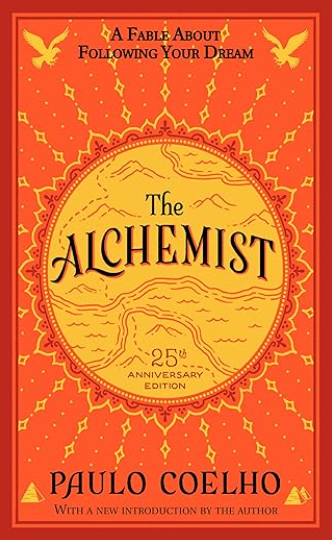
What Coelho has written is a fable about the courage it takes to listen to your own heart. Santiago’s journey is every reader’s journey: the moment you decide to pursue what your soul is calling you toward, the universe (in Coelho’s philosophy, quite literally) rearranges itself to help you. He calls it the Personal Legend — the thing you were born to do, the dream you carry, the treasure that is uniquely and irreversibly yours. The book asks whether you are brave enough to go looking for it. And whether, when you find it, you’ll recognise it.
“Il existe deux choses qui empêchent une personne de réaliser ses rêves : croire qu’ils sont irréalisables, ou bien, quand la roue du destin tourne à l’improviste, les voir se changer en possible au moment où l’on s’y attend le moins.” Paulo Coelho – Le démon et Mademoiselle Prym
It is a short book. You can read it in an afternoon. But it will live in you for years.
My retreat guests who arrive having read The Alchemist walk differently. There’s a particular quality of attention that settles over them. They notice things — the angle of afternoon light on the vineyards, the kindness of a stranger at a waymarker, the peculiar grace of being lost and then found again — with a kind of heightened receptivity. As though the book has tuned them to a frequency they didn’t know existed. That I didn’t know existed.
I’ve had guests tell me that reading The Alchemist before or during the Camino felt like receiving a set of instructions in an hitherto unspoken language they suddenly realised they’d always understood. One guest described walking into Santiago de Compostela with tears streaming down her face, the final lines of the novel running through her head. Another told me, over a cup of herbal tea in the courtyard, that the book had made her rethink her entire career — not dramatically, not overnight, but quietly and permanently, the way the best books always do.
The evenings we’ve spent discussing this book are, honestly, among my happiest memories as a retreat host. There is something particularly rich about discussing The Alchemist in a place where people are already doing the very thing the book describes — following a call, walking toward something they can’t quite name, discovering that the journey is as meaningful as the destination. The conversations go deep, fast. People who met at breakfast are confessing their unlived dreams by dinner.
“Everything tells me that I am about to make a wrong decision, but making mistakes is just part of life. What does the world want of me? Does it want me to take no risks, to go back to where I came from because I didn’t have the courage to say “yes” to life?” ― Paulo Coelho, Eleven Minutes
Got to tell you about the moment that made me feel, rather briefly but unforgettably, like the luckiest person in the literary world. Several years ago, I tweeted about The Alchemist — something heartfelt and probably slightly overenthusiastic, as my tweets about books tend to be. And Paulo Coelho replied. Directly. To me. I won’t pretend I was cool about it. I was not cool about it at all. I may have made a sound that alarmed the horses. It was a small moment in the grand scheme of things, but it felt like a little wink from the universe — the kind of synchronicity that The Alchemist itself is entirely full of, and which you begin, after enough Caminos and enough re-readings, to take almost for granted.
If you haven’t yet read The Alchemist, I want to gently and firmly insist that you do. And if you have read it — read it again. It is a different book at different points in your life, which is perhaps the truest mark of a great one.
Coelho’s wider body of work is rich and worth exploring in full. His novels include The Pilgrimage, The Valkyries, The Fifth Mountain, Eleven Minutes, The Zahir, The Witch of Portobello, Veronika Decides to Die, The Winner Stands Alone, Aleph, Adultery, The Spy, and Hippie. Each has its own flavour and preoccupation, but they share a common beating heart: the conviction that human beings are capable of transformation, that love is the most serious business there is, and that the life you long for is not as far away as you think.
His autobiographical novel The Pilgrimage is particularly worth mentioning in the context of my retreats, as it documents his own walk of the Camino de Santiago in 1986, an experience he later described as a personal spiritual turning point — and the creative catalyst that made The Alchemist possible. Reading The Pilgrimage alongside or just before walking your own Camino adds yet another layer of richness to the experience.
And for those who want to know what Coelho has been up to most recently: his latest book, The Supreme Gift, sees him adapt the classic wisdom of 19th-century missionary Henry Drummond and St. Paul, exploring the nature of love through nine elements: patience, kindness, generosity, humility, gentleness, dedication, tolerance, sincerity, and innocence. It offers a message that will help readers incorporate love into daily life and experience its transformational power — which is, when you think about it, exactly what The Alchemist has been doing quietly for nearly four decades.
The Alchemist is the kind of book that makes you want to set out. It makes you want to sell your flock of sheep, metaphorically speaking, and walk toward whatever treasure your heart has been whispering about for years. It makes the Camino feel not like a challenge to be endured, but a conversation to be had — with the landscape, with fellow pilgrims, with the oldest and most persistent parts of yourself.
Pack it in your rucksack. Bring it to the retreat. Read it by the fire. Argue about it over dinner. Let it argue back.
You won’t regret it.
“When you find your path, you must not be afraid. You need to have sufficient courage to make mistakes. Disappointment, defeat, and despair are the tools God uses to show us the way.”― Paulo Coelho, Brida
Join us for the Book Lovers Binge Reading Camino de Santiago Walking Retreat in the sun-drenched southwest of France: a journey where the trail and the story unfold together. Walk ancient paths at your own pace, then settle in each evening with a good book. This isn’t a fitness challenge—it’s a gentle rhythm—one step, one chapter, one honest conversation at a time. Rolling hills, quiet villages, golden light. No expectations, no performance, no agenda but your own unfolding.
Do you dream of escaping your stressful life to raise a herd of goats or grow sunflowers in the south of France? Then you may be ready for an Esprit Meraki retreat. Get access to this “very serious” quiz to help you figure out how urgent your need for a change of scenery is, when you subscribe to my monthly newsletter.
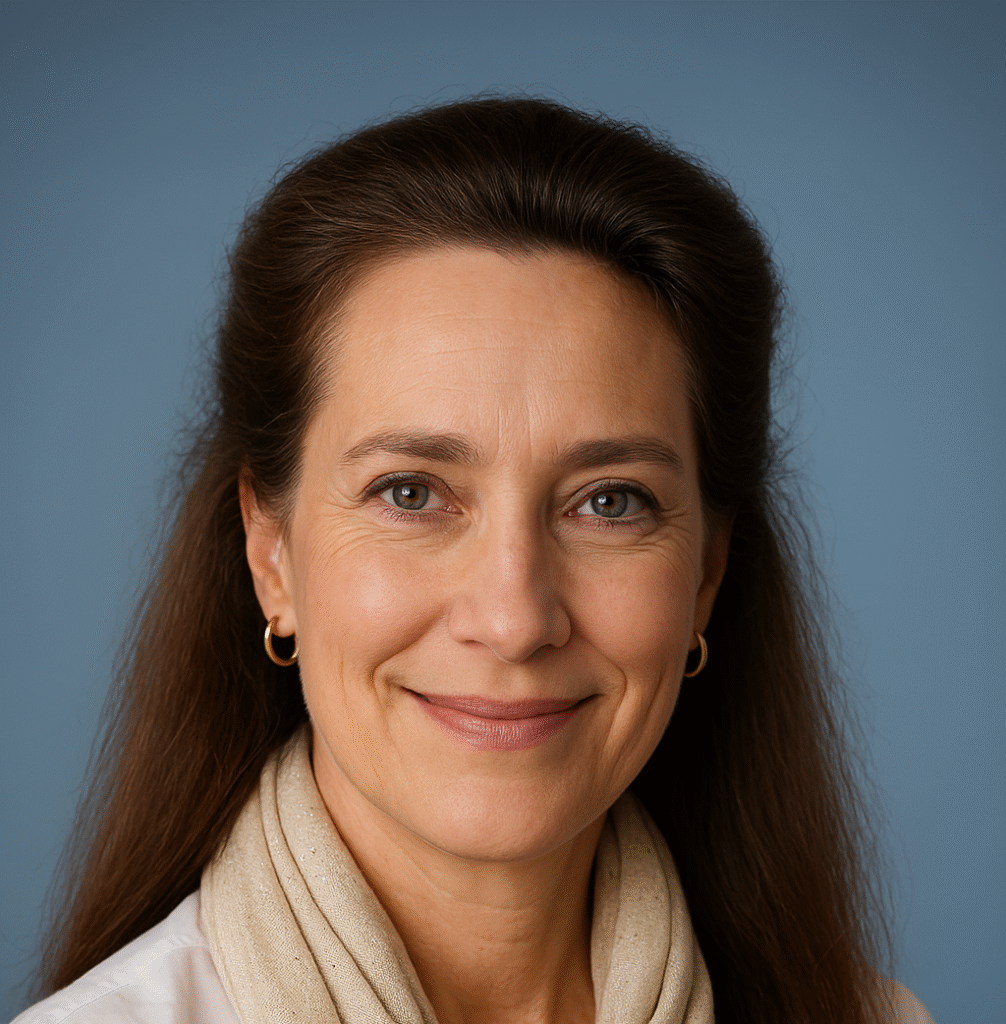
Author Bio: Dr Margaretha Montagu – described as a “game changer”, “gifted healer”, “guiding light” and “life-enriching author” – is an experienced medical doctor, a certified NLP practitioner, a medical hypnotherapist, an equine-assisted psychotherapist (EAGALAcertified) and a transformational retreat leader who guides her clients through life transitions – virtually, or with the assistance of her Friesian and Falabella horses, at their home in the southwest of France.