Dr Margaretha Montagu – described as a “game changer”, “gifted healer”, “guiding light” and “life-enriching author” – is a certified transformational retreat leader who guides her clients towards their most meaningful and fulfilling lives, particularly when navigating life transitions – virtually, or with the assistance of her Friesian Horses, at their home in the southwest of France.
It’s the 1st of December 2025 and time to start my annual Countdown to Christmas Calendar! The theme is friends and friendships and the format this year includes a story and a Making Friends and Maintaining Friendships Master Plan.
Story first:
Today’s Story: The Frozen Aisle Meltdown
Rebecca has been standing in the grocery store’s frozen food aisle for twenty minutes, which she knows because the same Jingle Bells instrumental has come around twice. She’s supposed to be choosing dinner for Christmas Eve. Instead, she’s having a full-blown existential crisis over whether buying the single-serving turkey dinner is admitting defeat or overdoing self-care.
Her cart contains: one (1) bottle of mulled wine, one (1) a fire engine red Poinsettia she’ll definitely drown, and seventeen (17) varieties of cheese because the divorce lawyer said she could have whatever she wanted, and apparently what she wanted was CHEESE. Also, somehow, three triple packs of TUC biscuits she doesn’t remember adding.
“You communing with that turkey or what?”
Rebecca turns. A woman roughly her age is standing there wearing a jumper with a light-up reindeer on it. Her cart looks like she’s preparing for either a Christmas dinner-for-twenty party or for the apocalypse—there are at least four whole chickens visible, plus what appears to be an entire ham.
“I’m sorry, what?”
“You’ve been staring at that turkey like it is about to reveal the meaning of life. I’ve lapped this aisle three times. People are starting to talk.” The woman gestures vaguely at a stock boy wearing a Santa hat who is, indeed, watching nervously.
Rebecca realises she’s crying. Not cute crying. The kind where your nose is running and you’re wiping it with your ex-husband’s Christmas sweatshirt sleeve because you haven’t unpacked the tissues yet and honestly, screw his “Feliz Navidad” sweatshirt anyway.
“Bad day?” the woman asks.
“Bad year,” Rebecca says. “Bad Christmas.” Rebecca finds herself spilling it: the move, the divorce, the new city, the job she starts the day after Boxing Day, where she knows exactly zero people, the fact that she’s been eating cereal for dinner because she hasn’t unpacked her pots yet and isn’t sure she wants to because that would make this permanent. The fact that this is her first Christmas alone in fifteen years. She stops. “Sorry. You asked a yes or no question.”
The woman wheels her apocalypse cart closer, and Rebecca notices she’s also got candy canes hooked over the side. “This frozen aisle is known locally as the meltdown section. It’s an accepted thing. We’ve all lost it at least once. Christmas just makes it worse, doesn’t it?” She extends her hand. “Diana. Professional frozen aisle crisis counsellor. Unpaid. Overworked in December.”
They shake hands. Rebecca’s hand is cold from holding the freezer door open.
“Here’s what you’re gonna do,” Diana says with the authority of a military general. “Put down the single-serving turkey dinner. That’s depression food, and we’re not there yet—we’re in the angry cheese phase, which I see you’ve nailed.” She points at Rebecca’s cart. “You’re gonna get the family-size rotisserie chicken, and you’re gonna eat it for three days straight, like the empowered, independent woman you are. Christmas dinner doesn’t have to be turkey. Christmas dinner can be whatever you want it to be. With cheese.”
“That’s… weirdly specific advice.”
“I did four months on roasted chicken after my divorce. Started on Christmas Day, actually. I ate it cold out of the container at 2 AM like a gremlin, while watching Love Actually and crying. You know what? I survived. I thrived. I learned that ‘serving size’ is a construct invented by people with large families.”
Rebecca laughs, which comes out as a concerning honk-sob sound. The stock boy in the Santa hat takes a step back.
“Also,” Diana continues, loading whole cooked chickens into Rebecca’s cart without asking, “you’re coming to Christmas Eve dinner tomorrow night.”
“I don’t—I can’t just—”
“It’s at my place. Seven PM. Bunch of random disasters, trying to figure out life and survive the holidays. Last week, Martin brought his emotional support chicken. The animal, not the food. It wore a tiny Santa hat and a sweater. We’re all very supportive of each other’s journeys, especially this time of year.” Diana pulls out her phone. “Give me your number before you have time to overthink it.”
Rebecca, who has not had a friend in this city for the approximately eight days she’s lived here, finds herself reciting her number.
“Perfect. Fair warning: none of us has got our acts together. Two weeks ago, someone brought wine in a 2-litre water bottle. Another person brought their dating app profile for workshopping. We told him to delete the photo where he’s holding a fish while wearing a Christmas jumper. He did not take it well. Not the world’s brightest – hopefully that’s only temporarily.”
“I don’t even know you,” Rebecca says, but she’s smiling.
“You knew me well enough to share your breakdown with me. That’s basically third-date territory.” Diana’s phone buzzes. “That’s my timer. I’ve been here too long, and my child thinks I’ve been kidnapped. He doesn’t understand that grocery shopping is my meditation, even when they’re playing All I Want For Christmas on loop.” She starts wheeling away, then turns back. “Oh, and Rebecca?”
“Yeah?”
“Bring whatever. Store-bought is fine. We had someone bring a frozen bag of broccoli last month, wrapped in tinsel and Christmas paper. She’s no longer in charge of organising the New Year’s party.”
Next episode will be in tomorrow’s Countdown to Christmas 2025 email.
The Make Friends and Maintain Friendships Masterplan
Friendship is a gift we often overlook. This season, let’s focus on fostering connection and finding comfort in the bonds we share with others. Take a moment today to reflect on the friends in your life—past, present, and those you wish to reconnect with.
Every day, we’ll explore a new way to deepen friendships, lean on others, and bring warmth to this holiday season as we implement the Make Friends and Maintain Friendships Masterplan.
Today, notice someone who looks like they’re struggling in a public space this week—and say something kind, even if it feels awkward. Worst case scenario: They look at you like you just asked them to join a pyramid scheme selling artisanal, gluten-free air. They walk away thinking you’re charmingly odd… or just seriously odd. Best case scenario: You accidentally spark a spontaneous conversation. Someone else overhears. Suddenly, three strangers are bonding over questionable life choices, and the fact that none of you know how to fold fitted sheets.
Making friends and maintaining friendships can be complicated. Would you like to find out what type of friend YOU are? How well do you know your friends? If you and a new friend are really compatible? I have created a set of light-hearted quizzes to help you do just that. Just fill in the form below, and you’ll get immediate access to all of them. I’ll also add you to my newsletter list, though you can unsubscribe from this list effortlessly and at any time. Included:
How well do you know your Friends? Quiz
What is your Friendship Style? and Are your Friendship Styles compatible? Quiz
20 of the Most Inspiring Friends and Friendship Quotes and
20 lighthearted Questions you can ask to get to know a new Friend
Friends and Friendships
Discover how to build meaningful, lasting friendships and create a support system that truly has your back—delivered straight to your inbox! (newsletter subscription included)
Thank you so much!
More information about making friends and maintaining friendships (including the quizzes I mentioned) is on its way to you. You have also successfully subscribed to my newsletter.
“I am an experienced medical doctor – MBChB, MRCGP, NLP master pract cert, Transformational Life Coach (dip.) Life Story Coach (cert.) Stress Counselling (cert.) Med Hypnotherapy (dip.) and EAGALA (cert.) I may have an impressive number of letters after my name, and more than three decades of professional experience, but what qualifies me to excel at what I do is my intuitive understanding of my clients’ difficulties and my extensive personal experience of managing major life changes using strategies I developed over many years.” Dr M Montagu
Recent (and not so recent) Blog Posts – there are more than 450 now.
How Hyper-Successful People Use Micro-Manifestation The Myth of “Thinking Big” What if I told you that think big!—that beloved, motivational, plastered-on-vision-boards-everywhere mantra—is actually stopping you from achieving massive success? That your well-intentioned grand dreams might be the very thing keeping you stuck? I know, I know. That’s practically heresy in the world of self-improvement. We’ve …
Introverts vs Extroverts: Many introverts spend decades pretending to be extroverts to fit in but according to Laurie Helgoe, “Introverts are more effective leaders of proactive employees. When you have a creative, energetic workforce, an introvert is going to draw out that energy better.” Introduction: The Private Struggle of Successful Professional Introverts At some point …
There is no passion to be found playing small – in settling for a life that is less than the one you are capable of living. Nelson Mandela In Short Here’s the uncomfortable truth wrapped in a comfortable sweater: That “good enough” job, relationship, or living conditions you’re tolerating? It’s not prudent compromise—it’s you slowly …
Author: Julia Cameron Rating: ⭐⭐⭐⭐⭐ (5 out of 5 stars) Read if: You’ve been telling yourself “I used to be creative” for longer than you’d like to admit.
The Backbone of the Book
According to Julia Cameron, your creative self isn’t dead—it’s just buried under years of self-criticism, practical concerns, and that one time your third-grade teacher said your drawing looked “interesting.” The Artist’s Way promises that in just 12 weeks of structured exercises, you can excavate your inner artist from beneath the rubble of adult responsibility and rediscover the joy of creating without the nagging voice that insists everything must be profitable, perfect, or LinkedIn-worthy.
The book’s central thesis is refreshingly straightforward: creativity is a spiritual practice, creative blocks are essentially spiritual blocks, and recovery is possible through consistent, gentle effort. Cameron presents creativity not as a rare gift bestowed upon the chosen few, but as a natural human function that’s been beaten out of most of us by well-meaning parents, budget-conscious partners, and our own merciless inner critics. You’re not uncreative—you’re just creatively injured, and Cameron has written you a 12-week rehab program complete with exercises, pep talks, and the kind of earnest spiritual optimism that somehow doesn’t feel cloying.
Useful Take-aways
Morning Pages: This is the book’s cornerstone practice, and honestly, it’s genius in its simplicity. Every morning, before you do anything else, you write three pages of longhand, stream-of-consciousness rambling. It doesn’t matter what you write—grocery lists, complaints about your commute, anxiety spirals about that email you need to send. The point isn’t to produce good writing; it’s to drain the mental static so your actual creative thoughts can surface. What makes this different from regular journaling is the non-negotiable “before anything else” timing and the “absolutely no one will read this” freedom. I was sceptical about the longhand requirement, but there’s something about the slower pace of handwriting that really does short-circuit your internal editor. It’s like a daily brain dump that prevents your mental trash from contaminating your creative well.
Artist Dates: Once a week, you take yourself on a solo expedition to do something that delights or intrigues you. Not networking, not research for a project, not something productive—just play. Cameron is adamant that these must be solo because you need to learn to trust and enjoy your own company, to hear your own creative whispers without someone else’s agenda drowning them out. The beauty of this practice is that it trains you to notice what genuinely appeals to you, not what you think should appeal to you. Maybe you spend an hour in a hardware store marvelling at paint chips, or you go to a matinee of a terrible action movie, or you visit a pet store with no intention of buying anything. These dates refill your creative reservoir with images, textures, experiences, and joy—the raw materials of art.
The Concept of Creative Recovery: Cameron reframes creative blocks not as laziness or lack of talent, but as wounds that need healing. She identifies specific “creativity monsters” like perfectionism, comparison, and the internalised voices of people who discouraged you. There’s something deeply liberating about understanding that the voice saying “who do you think you are?” isn’t actually you—it’s your fourth-grade teacher, or your practical father, or the culture that insists art is only legitimate if it pays the bills. The book offers targeted exercises to identify whose voice you’re really hearing and permission to gently tell them to shut up. This psychological archaeology approach resonated far more than generic “believe in yourself!” platitudes because it acknowledges that creative blocks have specific, often painful origins.
Less Useful Suggestions
Cameron writes from a place of considerable privilege that occasionally shows. The assumption throughout is that you have mornings available for lengthy writing sessions (where does one find 30 minutes every morning?), afternoons free for artist dates, and the financial breathing room to potentially quit your soul-crushing job to pursue art full-time. For the single parent working two jobs, the suggestion to “take yourself to a museum mid-week” lands differently than for someone with a flexible schedule and disposable income.
The spiritual language can be a barrier for some readers. Cameron uses terms like “the Great Creator” and frames creativity as fundamentally spiritual work, which is beautiful if you’re on that wavelength but potentially alienating if you’re not. She does say you can substitute whatever higher power concept works for you, but the book is pretty consistently “woo-woo” in a way that might make hardcore sceptics roll their eyes hard enough to sprain something.
Some of the exercises feel dated or oddly specific to Cameron’s own creative wounds. There are tasks about calling people who discouraged you (anxiety-inducing and sometimes impossible) and multiple exercises involving making collages (not everyone’s jam). The book was published in 1992, and occasionally you can feel it—the cultural references, the assumption that everyone has access to physical art supplies, the pre-Internet framework for how creative careers work.
The 12-week program is genuinely demanding. Morning Pages alone require about 30-45 minutes daily. Add the artist dates, the weekly tasks, and the reading, and you’re looking at a serious time commitment. Cameron is somewhat dismissive of excuses here, which can feel harsh when your excuses are actually called “children” or “chronic illness.”
Who This Book Is For
Perfect for you if:
You used to draw/write/dance/make music and have no idea when you stopped or why
You’re a recovering perfectionist who needs permission to make bad art
You find yourself saying, “I’m not creative” while simultaneously envying people who are
You’re willing to engage with spiritual/metaphysical language about creativity, or at least not be bothered by it
You have enough life stability to commit to a daily practice (even if imperfectly)
Maybe skip it if:
You’re looking for technique-specific instruction (this isn’t about how to paint or write—it’s about unblocking yourself)
Spiritual or New Age-y language makes you physically recoil
You’re currently in crisis mode and barely keeping your head above water (maybe come back to this during a calmer season)
You need creativity advice that’s explicitly tailored to balancing art-making with caregiving, disability, or financial precarity
The One Thing You’ll Remember in Six Months
You probably won’t maintain the full Artist’s Way program with religious devotion forever, but Morning Pages has converted enough people to become a legitimate cultural phenomenon. Six months from now, you’ll likely still be doing some version of brain-dump writing most mornings, and you’ll notice how much clearer your thinking is on days when you do it versus days when you skip. The specific weekly tasks will blur together, but the permission to be a beginner, to make bad art, to create just for the joy of it—that shift in mindset tends to stick.
“Perfectionism is not a quest for the best. It is a pursuit of the worst in ourselves, the part that tells us that nothing we do will ever be good enough.”
“Creativity is not a business, though it may generate business. It is not a career, though it can lead to a career. Creativity is a spiritual experience.”
Bottom Line
The Artist’s Way is the rare self-help book that has earned its classic status. Yes, it asks a lot of you, and yes, some parts feel dated or privileged, but the core practices are genuinely transformative if you commit to them. Cameron writes with the conviction of someone who has walked this path herself and guided thousands of others down it, and that authority comes through on every page.
Recommendation: Buy it if you’re serious about creative recovery, borrow it if you want to test the waters, read a summary if you just want the Morning Pages concept.
Personal Note on Artist’s Way
I picked this up after years of calling myself a “recovering creative”—which is a very pretentious way of saying I stopped making things and felt sad about it. I expected either magic-bullet thinking or tedious art therapy exercises. What I got instead was something more like a firm, loving friend who refuses to let you keep talking shit about yourself while also not accepting your excuses.
The Morning Pages practice genuinely changed my mental landscape. It turns out that when you pour out all your petty resentments and anxious thought loops onto paper every morning, there’s actually space left over for ideas, wonder, and the quiet voice that says “hey, what if we tried making something today?” I abandoned most of the weekly exercises, but the core practices of Morning Pages have stuck with me for decades now.
Did I become a wildly successful artist? No. But I started writing things again without the crushing weight of “is this good enough?” constantly on my shoulders. I write terrible first drafts. I take blurry photos. Somehow, after years of creative constipation, things are moving again. That’s worth considerably more than the price of the book.
. Six years ago, I suddenly had a strong desire to stop the bus and simply get off. But not in a dramatic “sell everything I own and move to an isolated cabin with an open fireplace in the Pyrenées mountains” sort of way. Although admittedly, after one particularly absurd day recently involving bureaucracy, passwords, …
A frank, funny, and surprisingly practical guide to using an ancient pilgrimage as a reset button for anxious, overwhelmed souls, helping them to reconnect with what actually matters What this is: A candid, warm, and occasionally cheeky article about what happens when stressed, switched-on people stop consuming the news and start walking ancient pilgrim roads. …
How a Long Walk Can Short-Circuit Your Existential Crisis I’ve been wondering about two things. Firstly, why nearly all of my Camino de Santiago walking retreats guests, often weary from the demands of modern life when they arrive, within just two or three days of treading this ancient path, experience what I call “life-changing incidents …
★★★★★ Reviewed by Margaretha Montagu, host of the Booklover’s Binge Reading and Camino de Santiago Walking Retreats There are books you read, and then there are books that read you. Paulo Coelho’s The Alchemist belongs firmly, defiantly, and rather magically in the second category. Published in 1988 and since translated into more than 80 languages, …
How walking an ancient trail in southwest France can quiet the noise of a world that won’t stop shouting What this is: A thoughtful, grounded exploration of the Camino de Santiago effect, specifically the French routes through southwest France, remains one of the most quietly radical acts of self-renewal available to anyone carrying the weight …
These book reviews represent my personal reading experience and interpretation. Your mileage may vary—and that’s not only okay, it’s expected.
What these reviews are:
One reader’s honest take on books that made me think, feel, or occasionally throw things across the room
A blend of summary, analysis, and subjective response
An attempt to help you decide if a book is worth your time and money
Written with warmth, wit, and the occasional tangent
What these reviews are not:
Professional literary criticism or academic analysis
Comprehensive summaries of every concept in the book
A substitute for reading the actual book (though sometimes they might save you the trouble)
Sponsored content—I buy my own books and all opinions are genuinely mine
About Self-Help Books Specifically
These reviews discuss psychological concepts as they appear in books, not as professional advice
If you’re struggling with mental health issues, please seek support from qualified professionals
Books can be powerful tools for self-reflection, but they’re not replacements for therapy
I bring my own background, experiences, and biases to every book I read. I do my best to recognise when my perspective might limit my understanding, but I’m sure I miss things. If you notice gaps in my perspective or feel I’ve misrepresented something, I’m always open to thoughtful discussion.
About recommendations:
When I suggest a book might help with certain issues, I’m sharing what resonated with me—not making clinical recommendations
Everyone’s healing journey is different; what works for one person may not work for another
Some books can be triggering or emotionally difficult—please practice self-care in your reading choices
I don’t use affiliate links.
Copyright and Fair Use
Reviews may include brief descriptions of concepts and ideas from books, but I never reproduce substantial excerpts or copyrighted material. All paraphrasing is in my own words. If you’re the author or publisher and have concerns about a review, please contact me at margarethamontagu@gmail.com
The Bottom Line
These reviews are written in good faith to foster conversation about books and ideas. Take what resonates, leave what doesn’t, and always apply your own judgment about what you choose to read.
The Simple Writing Practice That Clears Mental Chaos so You CanFinally Start Your Next Chapter
What this is: A practical exploration of morning pages, the brain-clearing writing practice that helps you process the mental chaos of major life transitions. Think of it as your daily mind-detox, not your therapy session.
What this isn’t: Another fluffy journaling article telling you to “gratitude your way to happiness” or pretend everything’s fine when it’s clearly not. No toxic positivity here.
Read this if: You’re navigating a significant life change (health crisis, divorce, loss, career shift), you’re over 40/50/60, your mind won’t stop spinning, and you’re ready to stop rehashing the same thoughts in an endless loop.
5 Key Takeaways
Morning pages aren’t about solutions, they’re about evacuation. Getting thoughts onto paper prevents them from bouncing around your skull all day like mental shrapnel.
The practice works precisely because it’s unedited and unseen. This isn’t Instagram-worthy journaling; it’s raw, messy thought-dumping that no one will ever read.
Consistency matters more than perfection. Five minutes of complaining on paper beats hours of “trying to journal properly” that never happens.
Morning pages create space for what matters. Once you’ve emptied the mental rubbish bin, there’s actually room for clarity, creativity, and forward movement.
This practice is especially powerful during life transitions. When your entire world is shifting, morning pages become the one stable container that can hold whatever you’re feeling.
Introduction: When Your Brain Won’t Shut Down
You wake at 3 a.m., and there it is again: the same worry, the same question, the same mental replay of yesterday’s conversation. By morning, you’re exhausted from thinking. By midday, you’re making decisions you suspect you’ll regret. By evening, you’re too drained to do anything except collapse and prepare for another night of mental gymnastics.
Sound familiar?
If you’re navigating a major life transition, whether it’s recovering from a health crisis, processing divorce, grieving a loss, putting an empty nest in order and rebuilding after your world turned upside down, your mind likely feels like a browser with 47 tabs open. Some are frozen, some are playing ineffective calming music, and you can’t find the one that has the important information you need.
The hardest part isn’t always the event itself. It’s the relentless mental noise that follows. The rumination. The what-ifs. The endless replay of how things used to be or might have been. It’s exhausting, but it’s completely normal.
What if I told you that five minutes of complaining on paper each morning could change everything? That this simple, unglamorous practice could be the difference between drowning in mental chaos and actually moving forward, slowly and steadily?
I’m Dr. Margaretha Montagu, a GP with two decades of experience in stress management, an NLP master practitioner, medical hypnotherapist, and life transition coach. During the 15 years I’ve been hosting transformational retreats on the Camino de Santiago, I’ve witnessed hundreds of people navigate major life crossroads. I’ve written eight books on divorce, loss, illness, and coping with crisis. And I can tell you this: the people who successfully start their next chapter are the ones who learn to get their disturbing thoughts out of their heads onto paper.
Let me introduce you to morning pages, and explain why this deceptively simple practice might be exactly what you need right now.
Sarah Mitchell’s Story: From Midnight Spirals to Morning Clarity
Sarah Mitchell sat in her Edinburgh kitchen at 2:47 a.m., watching rain streak the window, her laptop screen casting a blue glow across her pale face. Again. This was the fourth night this week she’d found herself here, mind churning through the same loop: the diagnosis, the treatment, the career she’d had to put on pause, the woman she used to be versus whoever she was becoming.
At 49, Sarah had been a litigation solicitor, known for her sharp mind and sharper arguments. Then came the breast cancer diagnosis, eight months of treatment that felt like eight years, and a reconstruction surgery that left her body foreign to itself. Now, six months into remission, everyone expected her to be “back to normal.” To be grateful. To move on.
But her brain had other plans.
Every morning, she’d wake with her heart already racing, thoughts spooling out before her eyes even opened: Will it come back? Can I handle the pressure of court again? What if I’m not as sharp as I was? Should I go back at all? What else could I do? But I’ve invested 20 years in this career. Am I throwing it away? Am I being ungrateful? Other people don’t even survive…
The guilt of that last thought would trigger another spiral, and by the time she dragged herself out of bed, she was already defeated by the day.
Her sister had mentioned something called “morning pages” during a phone call. “Just write whatever’s in your head,” she’d said. “Don’t think, don’t edit, just dump it all out.”
Sarah had scoffed. She was a solicitor, for heaven’s sake. She wrote for a living. She didn’t need another writing exercise. What she needed was to stop thinking so much, not write more.
But at 2:47 a.m. on a rainy Tuesday, desperate for something, anything, to change, Sarah pulled out an old notebook from a kitchen drawer. She clicked her pen. And she started writing.
I hate this. I hate that I’m awake again. I hate that my brain won’t shut down. I hate that everyone thinks I should be fine now. I hate that I don’t know who I am anymore. I hate that I can’t decide about work. I hate that I’m scared all the time. I hate that…
She wrote for exactly four minutes, her handwriting getting messier as she went. Then she stopped, closed the notebook, and went back to bed. She didn’t read what she’d written. She didn’t analyse it. She just… slept.
The next morning, something unexpected happened. When Sarah woke and the usual thought-spiral began, it felt… quieter. Less urgent. The thoughts were still there, but they weren’t screaming quite as loudly. She made coffee, opened the notebook again, and wrote for another five minutes. More complaints. More questions. More messiness.
By the end of the first week, Sarah noticed she was sleeping past 5 a.m. By week two, she realised she’d made a decision about work; she didn’t even remember consciously considering it, it had simply emerged, clear as day, after days of dumping the mental debris onto paper.
Three months later, Sarah had filled two notebooks with mostly illegible ranting. She’d never once reread a single page. But she’d also done something remarkable: she’d negotiated a part-time return to work, started training for a half-marathon (something she’d vaguely wanted to do for years but never had “mental space” for), and begun exploring mediation work instead of litigation, using her legal skills in a less adversarial way.
“The pages didn’t solve anything,” she told her sister over lunch. “They didn’t give me answers. They just… stopped my brain from eating itself alive. Once I’d vomited all the worry onto paper each morning, I could actually think clearly enough to make decisions. It’s like I was trying to work out complex legal problems while someone was simultaneously shouting all my worst fears at me. The pages turned down the volume.”
Her sister smiled. “So, not just a writing exercise for solicitors?”
Sarah laughed, properly laughed, for the first time in months. “Turns out, sometimes you need to write the mess out before you can write the way forward.”
Why Morning Pages Work: The Science Behind the Brain Dump
Morning pages, originated by author Julia Cameron in her book The Artist’s Way, involve writing three pages of longhand, stream-of-consciousness writing first thing in the morning. Tim Ferriss adapted this into a five-minute version, which he describes as “bitching and moaning on paper.” Both approaches share the same fundamental principle: getting thoughts out of your head and onto paper, unfiltered and unedited.
But why does something so simple work so profoundly, especially during major life transitions?
Think of your mind as a computer’s working memory, what tech people call RAM. When too many programs are running simultaneously, everything slows down. Your brain operates the same way. During a major life change, your cognitive load skyrockets. You’re processing grief, uncertainty, identity shifts, practical concerns, and existential questions, often all at once. Your mental RAM is maxed out.
Morning pages act as a daily system reboot. By externalising the thoughts, you’re literally freeing up cognitive resources. This isn’t metaphorical; research in cognitive psychology shows that writing about stressful experiences reduces intrusive thoughts and improves working memory. When you write something down, your brain can stop using energy to remember or rehearse it.
For those of us over 40/50 and 60 navigating transitions, this is especially crucial. Midlife doesn’t just bring major life events; it brings them against a backdrop of hormonal changes, ageing parents, grown children, career pressures, and the unsettling realisation that time is finite. Your brain is already working overtime. Morning pages prevent complete system overload.
As someone who’s spent 20 years working with patients experiencing stress-related conditions, I’ve observed a consistent pattern: the people who cope best aren’t those who “stay positive” or “don’t think about it.” They’re the ones who acknowledge the mental chaos, give it somewhere to go, and then move forward with whatever cognitive space remains.
Morning pages also work because they’re private and imperfect. Unlike journaling intended for reflection or growth, morning pages are meant to be garbage. This removes performance pressure. You’re not trying to have insights or write beautifully. You’re just emptying the bin. This matters enormously when you’re already feeling fragile, scrutinised, or like you should be “handling things better.”
Finally, morning pages create a container for ambivalence, something life transitions are full of. You can simultaneously miss your old life and be excited about a new one. You can grieve and hope. You can be angry and grateful. Morning pages hold all of it without requiring resolution. This is precisely what your mind needs during major change: permission to be messy without having to fix it all immediately.
This practice becomes not just a mental health tool, but a life transition strategy. It helps you process without getting stuck in processing. It honours the difficulty without making the difficulty your entire identity. And it creates just enough space between you and your thoughts to remember that you are not your thoughts; you’re the person witnessing them.
When one person in a family or community begins processing their transition more effectively, the ripple effects are remarkable. They show up more present. They make clearer decisions. They stop leaking unprocessed anxiety onto everyone around them. They model that it’s possible to go through something hard without falling apart or pretending everything’s fine. This permission, given through example, often liberates others to address their own transitions more honestly.
In my retreats on the Camino de Santiago, I’ve watched morning pages transform group dynamics. When participants start their day clearing their mental clutter, they arrive at our storytelling circles more open, less defensive, more genuinely curious about others’ experiences. The practice creates a foundation for deeper connection because people aren’t simultaneously trying to navigate conversation while wrestling with their internal noise.
5 Critical Mistakes to Avoid with Morning Pages
Mistake 1: Rereading What You’ve Written
The whole point is evacuation, not analysis. If you read back over your pages, you’re essentially re-ingesting the mental garbage you just expelled. It defeats the purpose entirely. Write it, close the notebook, move on. These pages aren’t your memoir; they’re your mind’s compost heap.
Mistake 2: Trying to Make Them “Productive” or “Insightful”
Morning pages aren’t for epiphanies, though they sometimes produce them as a side effect. They’re for complaining, worrying, rambling, and mentally sorting through the detritus of your life. The moment you start performing for an imagined audience or trying to force wisdom, you’ve lost the raw honesty that makes this practice effective.
Mistake 3: Waiting Until You “Have Time” or “Feel Like It”
Morning pages work through consistency, not perfection. Five minutes of scribbled nonsense every morning beats an hour of beautiful journaling once a month. The practice creates cumulative cognitive relief. Waiting for the perfect moment ensures you’ll never start, and your brain will continue its exhausting loop.
Mistake 4: Judging the Content
You’ll write petty things. Repetitive things. Things that seem trivial or embarrassing. You’ll complain about the same issue 47 days in a row. This is normal and fine. Your morning pages aren’t a reflection of your character; they’re a reflection of what your brain needs to release that particular morning. No judgment, no censoring, no editing for palatability.
Mistake 5: Expecting Immediate Transformation
Morning pages work quietly and cumulatively. You won’t finish day one feeling like a new person. You might not notice anything for two weeks. Then one day, you’ll realise you slept through the night, or made a decision that had been paralysing you, or felt genuinely present during a conversation instead of mentally rehearsing your worries. Trust the process before you see the results.
Intention Setting Exercise: Your Morning Pages Commitment
Take a moment right now to set a clear intention around this practice. You might even want to write this out:
My Morning Pages Promise to Myself:
For the next 21 days, I commit to writing morning pages for five minutes immediately upon waking. I will not reread them. I will not judge them. I will not make them profound. I will simply use them as a daily mental evacuation system, trusting that clearing space in my mind will allow clarity to emerge naturally.
I’m doing this because: [Fill in your specific reason: because my mind won’t stop spinning, because I need to make decisions about my next chapter, because I’m tired of mental exhaustion, etc.]
I’ll know this is working when: [Name one small sign: I sleep better, I feel less mentally chaotic, I make a decision I’ve been avoiding, etc.]
My backup plan if I miss a day: I’ll start again the next morning without self-criticism or abandoning the practice entirely.
Sign it. Date it. Refer back to it when motivation wavers.
Further Reading: 5 Books on Morning Pages and Life Transitions
1. The Artist’s Way by Julia Cameron
This is the origin text for morning pages. Cameron developed this practice as a creativity tool, but its applications extend far beyond art. Her 12-week program includes morning pages as the foundational practice. I recommend this book because it contextualises the practice within a broader framework of creative recovery, which is often what life transitions require: recovering your ability to imagine new possibilities.
2. Writing Down Your Soul by Janet Conner
Conner takes morning pages deeper into spiritual territory, exploring how this practice can become a dialogue with your deeper self or, if you’re spiritually inclined, with the divine. For those navigating transitions that raise existential questions, this book offers a framework for using morning pages as a tool for accessing wisdom beyond your conscious mind.
3. The Morning Mind by Dr. Robert Carter Jr. and Dr. Kirti Salwe Carter
This book combines neuroscience with the practice of morning routines, including writing. It’s particularly useful if you want to understand the brain science behind why dumping thoughts onto paper first thing creates cognitive benefits throughout your day. The authors explain how morning practices literally reshape neural pathways.
4. A Mindfulness-Based Stress Reduction Workbook by Bob Stahl and Elisha Goldstein
While not specifically about morning pages, this workbook offers complementary practices for managing the stress and rumination that often accompany major life transitions. Morning pages combined with mindfulness practices create a powerful toolkit for navigating change without being overwhelmed by it.
5. The Untethered Soul by Michael Singer
Singer’s work on learning to observe your thoughts rather than being consumed by them pairs beautifully with morning pages. His exploration of how we create suffering through mental narrative helps contextualise why getting those narratives onto paper, where you can see them as separate from yourself, is so liberating.
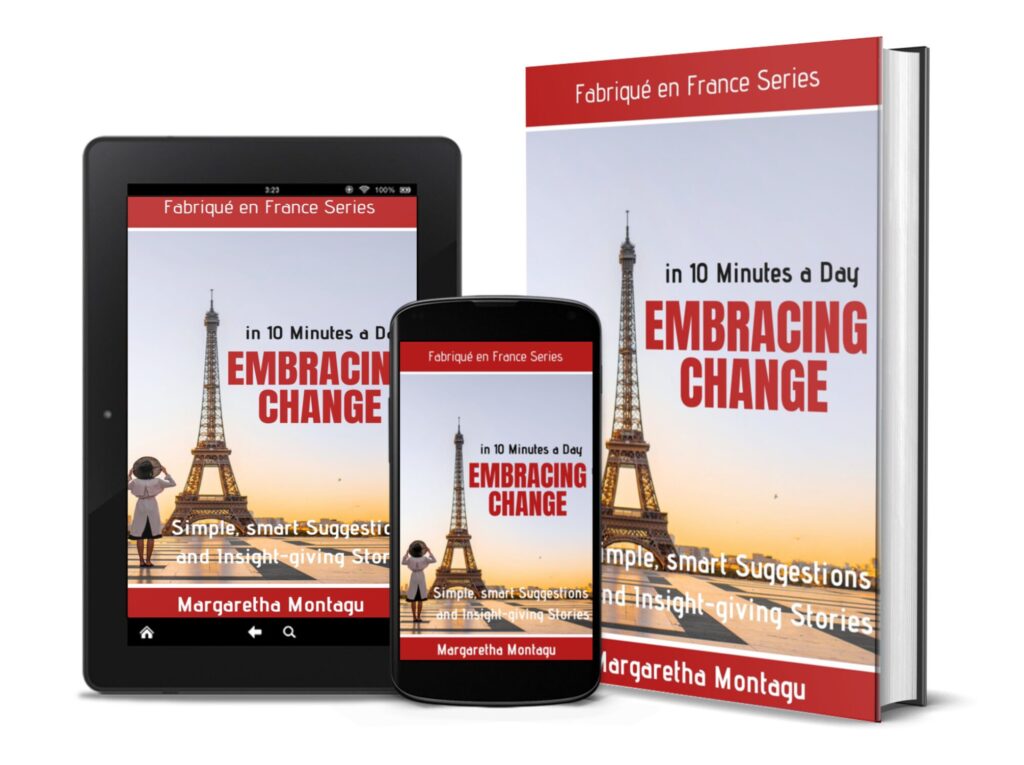
P.S. If you’re specifically looking for a practical, day-by-day guide to navigating life transitions, my book Embracing Change, in 10 Minutes a Day offers bite-sized practices (including morning pages) designed for people who are overwhelmed and don’t have hours for self-development. It’s structured to meet you where you are, even on the hardest days. Available here
A Voice from the Storytelling Circle
“After losing my husband, I felt like I was drowning in my own head. Every morning was a battle to get out of bed, and the thoughts just never stopped. When I joined Dr. Montagu’s Purpose Pivot Protocol and started attending the weekly storytelling circles, she introduced us to morning pages. Honestly, I thought it was too simple to work. But within three weeks, something shifted. The pages gave my grief somewhere to go every morning, and the storytelling circle gave me a safe place to share the parts I needed witnessed. For the first time in 18 months, I felt like I wasn’t just surviving, I was actually beginning to live again. The combination of private morning pages and shared stories in the circle created this beautiful balance between solitude and connection that I desperately needed.”
— Jennifer K., Purpose Pivot Protocol participant, 2024
Can I type my morning pages instead of writing by hand?
You can, though handwriting is generally more effective for several reasons. Handwriting is slower, which prevents your brain from racing ahead. It also engages different neural pathways than typing, creating stronger cognitive processing. That said, if you have arthritis, mobility issues, or truly hate handwriting, typed morning pages are infinitely better than no morning pages. The practice matters more than the medium.
What if five minutes isn’t enough to get everything out?
Then write for longer, but be cautious about this becoming an avoidance strategy. The goal isn’t to resolve everything on paper; it’s to release enough pressure that you can function. Julia Cameron’s original recommendation is three pages (about 750 words), which typically takes 20-30 minutes. Experiment to find what works, but don’t let “not having enough time to finish” become a reason not to start.
Should I use morning pages instead of therapy?
Absolutely not. Morning pages are a self-care practice, not a replacement for professional support. If you’re navigating trauma, clinical depression, severe anxiety, or complex grief, you need proper therapeutic support. Morning pages can complement therapy beautifully, they give you somewhere to process between sessions, but they’re not a substitute for professional help when that’s what’s truly needed.
What if I don’t have anything to write about?
Write “I don’t have anything to write about” until something emerges. Or write about how annoying this exercise is. Or write about what you can see, hear, smell, taste, and feel right now. The content genuinely doesn’t matter. The act of moving pen across paper, even if it’s nonsense, creates the cognitive shift. Your brain will fill the space if you just keep the pen moving.
How long before I notice results?
Most people report subtle shifts within one to two weeks: slightly better sleep, marginally clearer thinking, small decisions made more easily. Significant changes, feeling genuinely less mentally chaotic, making major decisions with clarity, often emerge around the three to four week mark. This is why the 21-day commitment is so important. You need to push past the “is this working?” phase to reach the “this is working” phase.
Conclusion: The Page Knows Before You Do
Here’s what I’ve learned from two decades of working with people in transition, both in my medical practice and through transformational retreats: the answer is rarely “think harder.” It’s almost always “get the thoughts out of the way so you can see what’s left.”
Morning pages don’t solve your problems. They don’t make the grief disappear or the decisions obvious or the uncertainty comfortable. What they do is create just enough space between you and the mental chaos that you can begin to move forward, one small decision at a time.
As Tim Ferris says, “Morning pages don’t need to solve your problems. They simply need to get them out of your head, where they’ll otherwise bounce around all day like a bullet ricocheting inside your skull. Could bitching and moaning on paper for 5 minutes each morning change your life? As crazy as it seems, I believe the answer is yes.”
Morning pages are that first step. The one that requires nothing except a pen, paper, and five minutes of your morning. The one that doesn’t demand you have answers or feel better or be further along than you are. Just the willingness to empty your mind onto paper and see what emerges when you’ve cleared the space.
Your next chapter is waiting, not in some distant future when you’ve “figured everything out,” but in the quiet clarity that comes when you stop letting thoughts ricochet inside your skull and start letting them out.
Walk Your Next Chapter into Being
Sometimes, the thoughts are so loud that sitting still makes them worse. Sometimes, you need to move your body to settle your mind.
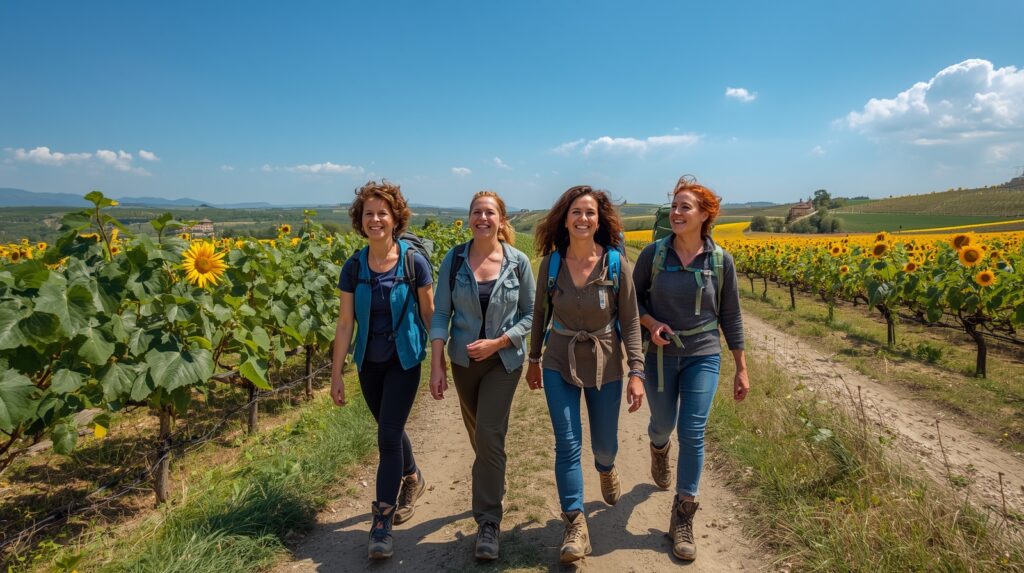
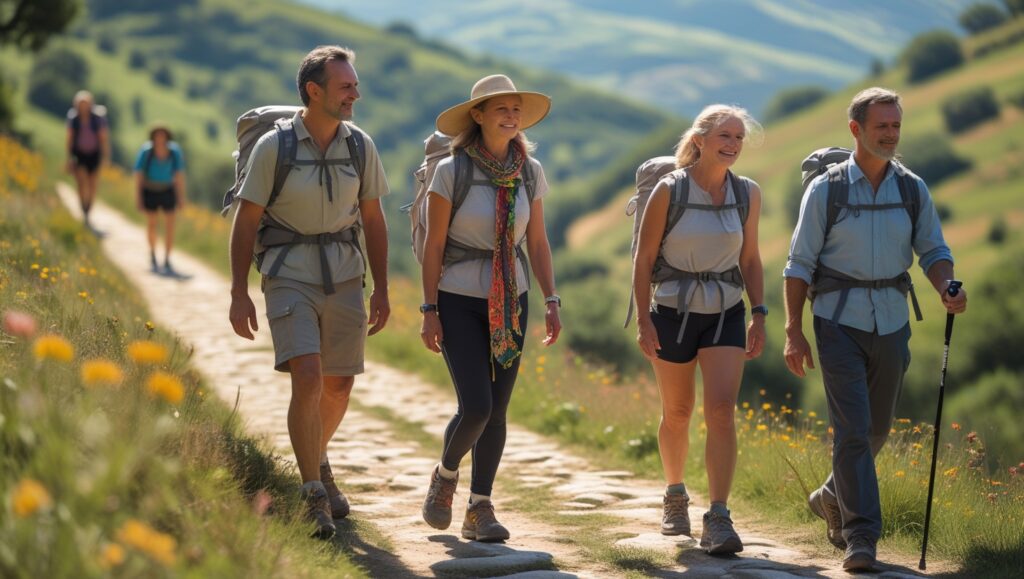
If you’re ready to combine the clarity of morning pages with the ancient practice of walking meditation, join me for a 7-day Camino de Santiago Crossroads Retreat in the stunning southwest of France. These retreats are designed specifically for people navigating life transitions, the ones who know they’re at a crossroads and are ready to walk toward what’s next.
Each morning begins with morning pages in the peaceful French countryside. Then you walk sections of the legendary pilgrimage route, giving your body somewhere to put the restless energy while your mind processes. We often gather for storytelling circles with my Friesian horses, whose quiet presence creates a profound space for sharing, listening, and being witnessed in your transition.
This isn’t a hiking trip with some self-help tacked on. It’s a carefully crafted container for the messy, non-linear work of starting your next chapter. You’ll leave with clarity you couldn’t access while sitting in your usual environment, thinking the same thoughts in the same rooms.
Reflection Question: What would become possible if you cleared just five minutes of mental space each morning? What decision might emerge if you stopped rehearsing it and started releasing it onto paper?
Stress destroys Lives. To find out what you can do to safeguard your sanity by taking my insight-giving quiz, subscribe to my mailing list.
Foundations for Your FutureProtocol– a fast-paced, high-impact, future-focused course that facilitates the construction of identity-shaping stories about your future self so that you can make the changes needed to avoid having to go through big life changes again and again—without needing to process your past in depth and in detail.
Author Bio: Dr Margaretha Montagu – described as a “game changer”, “gifted healer”, “guiding light” and “life-enriching author” – is an experienced medical doctor, a certified NLP practitioner, a medical hypnotherapist, an equine-assisted psychotherapist (EAGALAcertified) and a transformational retreat leader who guides her clients through life transitions – virtually, or with the assistance of her Friesian and Falabella horses, at their home in the southwest of France.
There appears to be no peer‑reviewed research that studies Julia Cameron’s specific “morning pages” protocol by name, but there is a substantial body of research on closely related practices such as expressive writing, free‑writing, and daily journaling for mental health, eg. : Sohal M, Singh P, Dhillon BS, Gill HS. Efficacy of journaling in the management of mental illness: a systematic review and meta-analysis. Fam Med Community Health. 2022 Mar;10(1):e001154.
You Don’t Owe Anyone Your Story: Why Privacy Matters During Major Life Changes
What This Is: Permission to protect your tender, transforming self from well-meaning interrogators, social media pressure, and the exhausting expectation that you owe everyone an explanation. This is about choosing wisely who gets access to your unfinished story.
What This Isn’t: Advice to become a hermit, cut everyone off, or hide under your bed. This isn’t about secrecy, isolation, or pretending everything’s fine when it isn’t.
Read This If: You’re tired of fielding invasive questions, you’ve been oversharing out of obligation, or you’re wondering why you feel worse after “updating” people about your divorce, illness, job loss, or other major life shift.
5 Key Takeaways
Privacy creates the psychological space needed for authentic transformation – constant explanation keeps you stuck in the past rather than writing the next chapter.
You’re not obliged to satisfy others’ curiosity – their discomfort with your silence is not your emergency to solve.
Selective sharing with trusted friends deepens genuine connection – whilst broadcasting to everyone dilutes your energy and invites unhelpful input.
Protecting your privacy isn’t the same as hiding – it’s a strategic choice that honours the sacred work of rebuilding.
The right people will respect your boundaries – and those who don’t are showing you exactly who shouldn’t have a front-row seat to your next chapter.
Introduction: The Questions That Corner You
You’re in the supermarket queue, mentally calculating whether you have enough energy to cook tonight, when someone from your old life spots you. Their face lights up with that particular mix of curiosity and concern that makes your stomach drop. “So,” they say, leaning in, “how are you? I heard about… everything.”
If you’re over 40/50/60 and navigating a major life transition—divorce, redundancy, illness, loss, an identity shift that’s shifted your world sideways—you know this moment intimately. The expectation hangs in the air like humidity before a storm. They want the story. The details. The drama. And somehow, you’re supposed to package your messy, unfinished transformation into a tidy two-minute update whilst your frozen peas defrost.
You don’t have to do that.
Not with colleagues. Not with distant relatives. Not with Facebook friends or the yoga instructor or your neighbour who “just wants to check in.” You are allowed—gloriously, unapologetically allowed—to keep your private life private.
This isn’t about shame or secrecy. It’s about something far more valuable: protecting the tender, uncertain space where real change happens. It’s about recognising that your life transition isn’t a spectator sport, and that the people who truly love you will respect the boundaries you set.
What you’re feeling right now—the exhaustion of explaining, the resentment of intrusive questions, the guilt when you don’t want to share—is completely normal. You’re not being difficult or closed off. You’re being wise. And by the end of this article, you’ll understand why privacy isn’t just acceptable during major life changes; it’s essential.
You’ll gain clarity on who deserves your trust, strategies for protecting your energy, and permission to build your next chapter without a live studio audience. Because the truth is, the most profound transformations happen in the quiet spaces we guard carefully.
Sarah Mitchell’s Story: The Woman Who Learned to Close the Door
Sarah Mitchell had always been an open book. As a secondary school teacher and mother of three, she prided herself on her transparency. “I’m an authentic person,” she’d say, posting candid updates about parenting struggles, marriage challenges, even her mother’s dementia on social media. Her friends called her brave. Her followers called her relatable.
So when her 22-year marriage ended—not with betrayal or drama, but with the quiet, mutual acknowledgement that they’d become strangers who happened to share a mortgage—Sarah did what she’d always done. She shared.
She posted about it on Facebook (a thoughtful, mature announcement). She told her book club the whole story over Pinot Grigio. She explained the details to concerned parents at the school gate, to the hairdresser, to her dentist. Within three weeks, she’d told the story of her marriage’s ending perhaps forty times, each retelling a performance that left her more depleted than the last.
The breaking point came on a Sunday evening. Sarah sat in her newly rented flat—the one that still smelled of paint—and realised she couldn’t remember what she actually felt about her divorce. She’d been so busy narrating it, explaining it, reassuring everyone else that she was “fine, really,” that she’d lost touch with her own experience. The story had calcified before she’d had a chance to understand it.
That night, something shifted. She could taste the metallic anxiety in her mouth, feel the weight of expectation pressing on her chest like a sandbag. The next morning, when a colleague cornered her in the staffroom with “So, tell me everything,” Sarah heard herself say, “Thank you for asking, but I’m keeping things private whilst I figure it out.”
The colleague’s face flickered with surprise, then—was it disappointment? But Sarah felt something else entirely: relief flooding through her body like cool water.
She began practising what she came to call “strategic silence.” When her sister pressed for updates, Sarah said, “I’ll share when I’m ready.” When a Facebook friend messaged asking for “the real story,” she didn’t respond. She stopped posting altogether. The silence felt strange at first, like wearing someone else’s clothes. But gradually, it began to fit.
Within that protected space, Sarah discovered something remarkable. Without the constant obligation to explain herself, she could actually feel what was happening to her. The grief came—properly, messily. So did the unexpected moments of lightness. She started swimming at dawn, the chlorine sharp in her nostrils, the rhythm of her breath the only story she needed to tell. She filled notebooks with thoughts she’d never share. She had long, meandering conversations with two trusted friends who asked questions not out of curiosity but genuine care.
Six months later, Sarah barely recognized the woman who’d felt obligated to narrate her pain to anyone who asked. She’d learned that privacy wasn’t about hiding; it was about having the space to become someone new without an audience rating the performance. Her next chapter was being written in the margins, away from commentary and advice and the exhausting work of managing other people’s reactions to her life.
“I thought being private meant I was ashamed,” Sarah told me over coffee, her hands wrapped around the mug, a small smile playing at the corners of her mouth. “But actually, it meant I finally had the courage to be honest with myself.”
Why Privacy Matters More Than You Think During Life Transitions
When you’re navigating a major life change, your psyche is doing extraordinarily delicate work. You’re not just dealing with external circumstances—you’re reconstructing your identity, questioning long-held beliefs, and discovering who you are when the old structures fall away. This process requires what psychologists call “psychological space”: room to experiment, fail, contradict yourself, change your mind, and slowly feel your way towards a new version of normal.
Every time you explain your situation to someone, you’re doing several things simultaneously. You’re activating the stress response in your body as you relive the events. You’re managing their emotional reaction (the shock, the pity, the unsolicited advice). You’re editing your experience to fit the social context. And crucially, you’re reinforcing a particular narrative before you’ve had time to truly understand what your story is.
As a GP for over 20 years with a particular interest in stress management, I’ve witnessed countless patients whose healing was complicated—not by their circumstances, but by the exhaustion of constant explanation. The nervous system needs calm to process trauma and transition. It needs predictability and safety. Broadcasting your unfinished story creates the opposite: an environment of vigilance where you’re constantly bracing for others’ reactions.
But here’s what’s even more profound: when you protect your privacy during transitions, you’re not just protecting yourself. You’re creating the conditions for genuine transformation that ripples outward.
The person who guards their healing space carefully becomes more present with their children because they’re not depleted by managing thirty different people’s opinions. They have energy for the friendships that truly matter. They model healthy boundaries, showing others (especially younger women watching and learning) that it’s possible to go through hard things with dignity rather than drama.
In my 15 years hosting transformational retreats on the Camino de Santiago, I’ve observed this pattern repeatedly. The guests who transform most deeply are those who initially resist the urge to text updates to everyone back home. They allow themselves to be unavailable, in process. They write in journals no one will read. They have conversations that stay on the path. And when they return home, they’re changed in ways that those who documented every step never quite achieve.
Your community doesn’t need a blow-by-blow account of your transition. What it needs is the healthier, more integrated version of you that emerges when you’ve had space to actually heal. Your silence now is an investment in the person you’re becoming—someone who knows the difference between authentic vulnerability with safe people and performative oversharing with everyone.
5 Mistakes to Avoid When Protecting Your Privacy
Mistake 1: Confusing Privacy with Secrecy
Privacy is a healthy boundary; secrecy carries shame. You can be private about your divorce without pretending it didn’t happen. You can decline to discuss your illness without lying about it. The difference? Privacy says, “This is happening, and I’m choosing to process it privately.” Secrecy says “I must hide this because there’s something wrong with me.” One is strategic; the other is corrosive. When you catch yourself lying to avoid a conversation, you’ve crossed from privacy into secrecy. Instead, practice the simple truth: “Yes, things are changing for me, and I’m keeping the details private whilst I work through it.”
Mistake 2: Setting Boundaries Without Communication
Simply disappearing creates anxiety in the people who genuinely care about you. Your close friends and family aren’t mind readers. If you’re pulling back to protect your privacy, tell them explicitly. “I’m going through something significant, and I need some space to process it privately. It’s not about you; it’s about what I need right now. I’ll reach out when I’m ready.” This prevents the hurt feelings and misunderstandings that come when loved ones think they’ve done something wrong.
Mistake 3: Treating Everyone the Same
Not all relationships require the same level of boundary. Your best friend of twenty years who’s proven her trustworthiness deserves a different level of access than your colleague who’s essentially a professional acquaintance. Create tiers: inner circle (2-3 trusted people who get the real story), middle circle (people who get basic updates), outer circle (people who get “I’m fine, thanks for asking”). The mistake is either shutting everyone out or letting everyone in equally.
Mistake 4: Apologising for Your Boundaries
“I’m sorry, but I’m not really talking about it right now.” That apology undermines your boundary before you’ve even set it. You’re teaching people that your needs are an inconvenience you’re embarrassed about. Instead: “I’m not discussing the details right now.” Full stop. No apology. You don’t owe a justification for protecting your psychological wellbeing. The people who love you will respect this. The people who don’t… well, that’s information worth having.
Mistake 5: Filling the Silence with Substitutes
When you stop oversharing about your real struggles, there’s a temptation to fill that space with superficial updates—constant posts about your new hobby, your fitness journey, your redecorated flat. This is often a different version of the same problem: performing your life for an audience rather than living it privately. The goal isn’t to replace deep oversharing with shallow oversharing. It’s to reduce the need for external validation altogether and become more comfortable with the quiet, unseen work of transformation.
Intention Setting Exercise: The Circle of Trust
Find a quiet moment and take three deep breaths. On a piece of paper, draw three concentric circles.
In the innermost circle, write the names of 2-3 people who have earned your complete trust. These are people who’ve proven they can hold your story with care, who don’t gossip, who respect boundaries, who can sit with your pain without trying to fix it. These are the only people who get the full, unedited version of your transition.
In the middle circle, write the names of people who care about you but don’t need every detail. These are solid, well-meaning people who deserve to know the basics but not the nuances. They get the “I’m going through changes, here’s the broad outline” version.
In the outer circle, write categories of people rather than names: work colleagues, acquaintances, social media friends, distant relatives. These people get the most basic acknowledgement: “Things are changing, I’m managing, thanks for your concern.”
Now, here’s your intention: “I commit to honouring these boundaries. I will not upgrade people to inner circles they haven’t earned. I will not feel guilty for having these tiers. I will protect my energy by being strategic about who gets access to my unfinished story.”
Keep this paper somewhere private as a reminder that your story is valuable—too valuable to be given to anyone who asks.
Further Reading: 5 Books on Privacy, Boundaries, and Life Transitions
1. “Boundaries: When to Say Yes, How to Say No to Take Control of Your Life” by Henry Cloud and John Townsend
I’ve recommended this book to hundreds of patients over the years because it elegantly unpacks why boundaries aren’t selfish—they’re essential for healthy relationships. The authors use clear examples to show how setting limits actually creates more authentic connection, not less. For anyone struggling with guilt about protecting their privacy, this book provides both permission and practical tools.
Brown’s research distinguishes between vulnerability (sharing with people who’ve earned the right to hear your story) and oversharing (using disclosure as a strategy to manage anxiety or seek validation). This distinction is crucial for anyone navigating life transitions. Her work helps you understand why you might be oversharing and how to choose connection over confession.
3. “Transitions: Making Sense of Life’s Changes” by William Bridges
This classic maps the psychological journey through life transitions with remarkable insight. Bridges identifies the “neutral zone”—that uncomfortable in-between space—as where the real transformation happens. Understanding this phase helps you see why privacy is so critical: you can’t rush through the neutral zone, and you can’t do it well with an audience.
4. “The Dance of Connection” by Harriet Lerner
Lerner offers brilliant guidance on staying true to yourself in relationships whilst maintaining connection. Her chapters on managing intrusive questions and protecting yourself from other people’s anxiety are particularly relevant. She helps you understand that setting boundaries is an act of respect—for yourself and for the relationship.
5. “Sacred Rest: Recover Your Life, Renew Your Energy, Restore Your Sanity” by Dr. Saundra Dalton-Smith
This book explores seven types of rest we all need, including “social rest”—the freedom from social obligations and performance. During major life transitions, social rest is often the most depleted resource. Dalton-Smith gives you permission to see privacy not as antisocial behaviour but as essential restoration.
PS: “Embracing Change: In 10 Minutes a Day” by Dr. Margaretha Montagu
My own book offers daily practices designed specifically for people navigating major life transitions. The ten-minute format acknowledges that when you’re in crisis or change, you don’t have hours to dedicate to self-improvement—but you do have moments. Many readers tell me the privacy-focused exercises were particularly transformative in helping them create space for authentic healing. Available here
A Voice from the Circle
“I joined Dr. Montagu’s virtual storytelling circle as part of the Purpose Pivot Protocol online course, thinking I needed to ‘share my story’ to heal from my divorce. What I discovered was the opposite. In our small, trusted group of five women, I learned the difference between sharing with strangers for validation and sharing with the right people for connection. The storytelling exercises taught me how to honour my experience without broadcasting it. For the first time in eighteen months, I felt permission to keep parts of my journey just for me. The circle didn’t push me to reveal everything—they created space for me to discover what was truly mine to keep and what was ready to be shared. That discernment changed everything about how I’m approaching my next chapter.” — Emma, Manchester, Age 47
5 FAQs: What People Are Really Asking About Privacy During Life Transitions
How do I handle people who say “I’m just worried about you” when I set boundaries?
Recognize this for what it often is: anxiety disguised as care. Respond with warmth but firmness: “I appreciate your concern. The best way to support me right now is to respect that I’m processing things privately. I promise I’ll reach out if I need help.” Their worry doesn’t obligate you to manage their feelings by giving them access they haven’t earned.
What if keeping quiet makes people think I’m ashamed of what happened?
This fear is common, particularly for women who’ve been socialised to believe that silence equals shame. Here’s the truth: the people who matter know the difference. Your dignity speaks louder than any explanation. And frankly, what people speculate about in your absence says far more about them than about you. Focus on your healing, not their misinterpretations.
How much should I share on social media during a major life change?
Consider this guideline: only post what you’d be comfortable with a future employer, your children, or a stranger reading five years from now. Social media creates a permanent record of your most temporary feelings. During transitions, emotions are volatile. The angry post you make at 2am, the cryptic quote you share, the photo meant to show you’re “fine”—these often complicate your healing rather than support it. When in doubt, stay silent online.
What about people who helped me through hard times? Don’t I owe them updates?
Gratitude doesn’t equal obligation. You can thank someone sincerely for their past support whilst still maintaining boundaries now. “You were such a help when Mum died. I’m so grateful. Right now, I need to work through this next thing more privately, but please know your kindness hasn’t been forgotten.” True supporters will understand. Those who get offended were helping for the wrong reasons anyway.
How long should I keep things private? When do I “go public” with my new chapter?
You’ll know. There’s a felt sense when a story shifts from raw and unfinished to integrated and yours to share. Generally, wait until you can talk about it without your nervous system activating, without needing validation, and without editing for your audience’s comfort. This might be three months or three years. Trust your gut, not the calendar. And remember: you never have to “go public” in any formal sense. Your life isn’t a press conference.
Conclusion: The Quiet Courage of Guarding What Matters
There’s a particular kind of bravery that our culture rarely celebrates: the courage to be unknown, to move through transformation without fanfare, to resist the constant pressure to explain yourself. This isn’t the loud, public courage of grand gestures. It’s the quiet, private courage of saying “This is mine to hold for now.”
When you’re navigating a major life transition, every ounce of energy matters. Every conversation you don’t have to have is energy reclaimed for your actual healing. Every boundary you set is a small act of self-respect that compounds over time. Every time you resist the urge to overshare, you’re choosing depth over breadth, quality over quantity, genuine transformation over performed recovery.
You are allowed to be a mystery, even to people who think they deserve your story. You are allowed to close the door on curiosity that isn’t rooted in genuine care. You are allowed to save your words for the two or three people who’ve proven they can hold them safely. This isn’t cold; it’s wise. This isn’t closed; it’s boundaried. This isn’t hiding; it’s growing.
Your next chapter deserves to be written without a live studio audience offering commentary on every sentence. It deserves the sacred space of privacy, where you can try on new versions of yourself, make mistakes, change direction, and slowly discover who you’re becoming when the old story falls away.
As Bruce Schneier says: “Privacy is an inherent human right, and a requirement for maintaining the human condition with dignity and respect.” – the kind of privacy that lets something new grow without being scrutinised.
You don’t owe anyone the unfinished chapters. Keep them close. Guard them carefully. Share them only when you’re ready, only with those who’ve earned the right to hear them. This is how transformation happens—quietly, privately, one protected moment at a time.
Walk Your Way to Clarity: The Camino Crossroads Retreat
Sometimes the most profound way to create private space for transformation is to physically remove yourself from the demands of daily life. My 7-day Camino de Santiago Crossroads hiking retreats in the southwest of France offer exactly this: a held, intentional space where you can process major life transitions without the pressure to explain yourself to anyone back home.
These aren’t typical wellness retreats with packed schedules and constant group activities. Instead, you walk short sections of the ancient Camino—your body finding its rhythm, your mind slowly quieting, your heart beginning to unpack what it’s been carrying. The landscape holds you. The silence restores you. And in our evening storytelling circles with my Friesian horses (whose non-judgmental presence has a way of unlocking things words alone can’t reach), you practice sharing your story with a small group of fellow travellers who understand the value of privacy and trust.
This retreat is specifically designed for people navigating crossroads moments—divorce, empty nests, loss, career changes, identity transitions—who need to step away from the questions, the pressure, the constant explaining. You’ll learn to distinguish between isolation and sacred solitude, between secrecy and healthy privacy. You’ll return home with clarity about who deserves access to your unfolding story and the confidence to protect the space your next chapter needs to emerge.
A question for reflection: What would become possible for you if you gave yourself permission to keep the next six months of your life transformation completely private from everyone except your most trusted friends? What might emerge in that protected space?
Ready to gain clarity on your next chapter? Take my Turning Point Quiz to discover where you are in your life transition and what specific support might serve you best right now.
What Life Lessons Can You Learn While Walking the Camino de Santiago? – a free guide filled with 10 not just “quaint anecdotes” or Instagram-worthy moments (though there are plenty of those) but real transformations from real people who walked this insight-giving trail – Subscribe to my monthly newsletter to Download the Guide
Ready for a retreat? Do you dream of escaping your stressful life to raise a herd of goats or grow sunflowers in the south of France? Then you may be ready for an Esprit Meraki retreat. Get access to this “very serious” quiz to help you figure out how urgent your need for a change of scenery is when you subscribe to my monthly newsletter.
“I am an experienced medical doctor – MBChB, MRCGP, NLP master pract cert, Transformational Life Coach (dip.) Life Story Coach (cert.) Stress Counselling (cert.) Med Hypnotherapy (dip.) and EAGALA (cert.) I may have an impressive number of letters after my name, and more than three decades of professional experience, but what qualifies me to excel at what I do is my intuitive understanding of my clients’ difficulties and my extensive personal experience of managing major life changes using strategies I developed over many years.” Dr M Montagu
Research
Petelka J, Van Kleunen L, Albright L, Murnane E, Voida S, Snyder J. Being (In)Visible: Privacy, Transparency, and Disclosure in the Self-Management of Bipolar Disorder. Proc SIGCHI Conf Hum Factor Comput Syst. 2020 Apr;2020:10.1145/3313831.3376573.
Ben Zefeng Zhang, Tianxiao Liu, Shanley Corvite, Nazanin Andalibi, and Oliver L. Haimson. 2022. Separate Online Networks During Life Transitions: Support, Identity, and Challenges in Social Media and Online Communities. Proc. ACM Hum.-Comput. Interact. 6, CSCW2, Article 458 (November 2022), 30 pages.
A doctor’s guide to using gratitude as a lifeline (not a bandaid) when navigating major life upheavals and unexpected crises
What this is: A practical, research-informed exploration of how cultivating gratitude can become your anchor during life’s most turbulent transitions—whether you’re navigating divorce, illness, career upheaval, or loss.
What this isn’t: Another fluffy “just be grateful” lecture that ignores your real pain, or toxic positivity disguised as wellness advice.
Read this if: You’re standing at a crossroads, feeling unmoored by change, and you’re willing to consider that noticing what remains might help you navigate what’s next.
Five Key Takeaways
Gratitude doesn’t erase difficulty—it creates breathing room beside it. When crisis consumes your mental space, a structured gratitude practice offers cognitive relief and perspective.
Neuroplasticity means your brain can rewire, even mid-crisis. Regular gratitude exercises literally change your neural pathways, making resilience more accessible over time.
Gratitude is a bridge, not a destination. It connects who you were before the change to who you’re becoming, helping you carry forward what matters whilst releasing what doesn’t.
Community amplifies gratitude’s power. Sharing what you’re grateful for—in storytelling circles, with friends, or in journaling—compounds its emotional and psychological benefits.
Starting small is starting smart. Three things daily, written down, is enough to begin shifting your internal landscape during major transitions.
Introduction: The Unexpected Gift Hidden in Crisis
Here’s what nobody tells you about major life changes: the ground doesn’t just shift beneath your feet—it disappears entirely. One moment you’re standing on solid earth, the next you’re suspended in mid-air, watching everything you thought was permanent scatter like autumn leaves.
I’ve spent two decades as a doctor listening to people describe this freefall. The woman whose marriage ended after twenty-three years. The executive whose body betrayed him with unexpected illness. The parent whose child moved continents away. Each story is different, each person convinced they’re the only one who feels this untethered.
But here’s the curious thing I’ve observed both in clinical practice and through fifteen years of hosting stress management retreats along the Camino de Santiago: the people who find their footing fastest aren’t the ones who ignore their pain or rush through it. They’re the ones who somehow manage to notice what’s still standing amidst the rubble.
That noticing? That’s gratitude. And it might be the most radical, transformative practice available to anyone navigating the terrifying territory of a major life transition.
The Woman Who Found Solid Ground in Quicksand: Elena’s Story
Elena Rothschild’s hands shook as she set down her morning coffee, the china cup rattling against the saucer in a way that made her inexplicably furious. The sound seemed to echo through her London flat—a space that felt cavernous now, though nothing about its physical dimensions had changed.
Six months earlier, her husband had moved out. Three months after that, her mother died. Last week, the restructure at work had eliminated her position. At fifty-two, Elena felt like she’d been stuffed into a box, shaken violently, and dumped out somewhere unrecognisable.
The morning light slanting through her kitchen window caught dust motes spinning in the air. She watched them drift, suspended, going nowhere. Exactly like me, she thought bitterly.
Her therapist had suggested keeping a gratitude journal. Elena had laughed—actually laughed—in the session. “Grateful? For what, exactly? My failed marriage? My dead mother? Unemployment?” The words had tasted like copper in her mouth.
But desperation makes you try strange things. That first morning, Elena sat with her notebook and pen, staring at the blank page as though it were mocking her. The silence of her flat pressed against her eardrums. She could hear the refrigerator humming, a taxi passing on the street below, her own breathing.
Fine, she thought. I’m grateful for… bloody hell.
She wrote: “I’m grateful I can still afford this flat for another three months.”
It felt hollow. Clinical. Like ticking a box. But the next morning, muscle memory brought her back to the page. “I’m grateful my hands still work to write this.” Still mechanical, but something whispered at the edges of her awareness—something she couldn’t quite name.
By the fourth day, she noticed the magnolia tree outside her window was budding. “I’m grateful I can see the magnolia from here,” she wrote. And as her pen moved across paper, she really looked at the tree—its dark branches, the tight-fisted buds holding pink promises. When had she last actually seen it?
Week two brought a shift. Elena’s neighbour, Mrs. Chen, knocked with leftover soup. The warmth of the container in Elena’s hands, the steam rising with its ginger-laced fragrance, the fact that someone had thought of her—she wrote it all down. The words came easier now, and with them, something that felt dangerously close to tears.
By week four, Elena’s morning ritual had expanded. She’d make her coffee, watching the cream spiral through the dark liquid like a tiny galaxy. She’d sit by the window where the light was best, and she’d write. Some days the entries were simple: “Grateful for hot water.” Other days they unfurled into paragraphs about the kindness of strangers, the resilience of her own body, the way her mother’s favourite cardigan still smelled faintly of her perfume.
The grief hadn’t vanished. The uncertainty about her future still kept her awake at night. But something had shifted—like adjusting the lens on a camera. The painful things were still in frame, but so were other things. The magnolia had bloomed, a riot of pink against grey London sky. Mrs. Chen had become a friend. Elena had started volunteering at a local charity, where her project management skills felt suddenly relevant again.
Three months into her gratitude practice, Elena sat in a job interview. When asked about her recent career gap, she found herself speaking honestly about loss and transition. But she also spoke about what she’d learned: resilience, perspective, the importance of community. She spoke with a groundedness she hadn’t possessed six months earlier.
She got the job. But more importantly, she’d found something else—a kind of internal anchor that held steady even when external circumstances churned. It wasn’t that gratitude had solved her problems. It had done something more subtle and more powerful: it had reminded her that even in crisis, she was still capable of noticing beauty, receiving kindness, and finding meaning.
The magnolia would bloom again next spring. And so, Elena realised, would she.
Why Does Gratitude Work When Everything Else Doesn’t?
When you’re in the midst of a major life upheaval, your brain enters what we might call “threat mode.” As someone who has spent twenty years treating stress-related conditions—from my early days in general practice through to my current work as a Life Transition Coach—I’ve witnessed this neurological response countless times. Your amygdala, that almond-shaped cluster of neurons responsible for processing emotions and threats, goes into overdrive. It’s scanning constantly for danger, for loss, for what else might go wrong.
This is adaptive in genuine emergencies, but exhausting during prolonged transitions. Your nervous system doesn’t distinguish well between a physical threat and an emotional one. Divorce, redundancy, illness, bereavement—your body responds to all of them as crises requiring hypervigilance.
Here’s where gratitude becomes genuinely revolutionary rather than merely pleasant. Research in neuroscience reveals that practising gratitude activates the brain’s reward pathways, particularly in the prefrontal cortex and anterior cingulate cortex. These areas are associated with moral cognition, value judgement, and emotional regulation. When you consciously focus on what you appreciate, you’re literally recruiting different neural networks—ones associated with wellbeing and connection rather than threat and loss.
As an NLP Master Practitioner and Medical Hypnotherapist, I work extensively with the concept of neuroplasticity—the brain’s ability to form new neural connections throughout life. A regular gratitude practice doesn’t just make you feel better temporarily; it restructures your neural pathways over time. Your brain becomes more efficient at noticing positive elements in your environment, creating a subtle but significant shift in baseline mood and resilience.
But there’s something else, something I’ve observed during my fifteen years hosting retreats where guests walk the Camino de Santiago. Gratitude connects you to something larger than your current crisis. When you acknowledge the kindness of a stranger, the beauty of morning light, the comfort of a warm meal, you’re reminded that the world extends beyond your pain. You’re still part of the human community, still capable of receiving and giving, still connected to the rhythms of life that continue regardless of your personal upheaval.
This matters profoundly during major transitions. One of the most destabilising aspects of life change is the sense of disconnection—from your former identity, from your community, from your sense of purpose. Gratitude rebuilds those bridges, one small acknowledgement at a time.
How Can This Practice Transform Not Just You, But Also Your Environment?
Here’s something remarkable about gratitude during life transitions: its effects ripple outward in ways you might never anticipate.
When you begin noticing what you appreciate, you naturally start expressing that appreciation. You thank people more readily. You acknowledge kindness. You see the efforts others make on your behalf. This creates what psychologists call a “positive feedback loop.” People feel valued, and they’re more likely to continue offering support. Your relationships deepen precisely when you need them most.
But the transformation extends further. As you navigate your transition with more groundedness and perspective, you become a different kind of presence in your community. Instead of being solely defined by your crisis, you model something else—resilience, adaptability, the capacity to hold both grief and gratitude simultaneously. This matters enormously, especially if you have children, ageing parents, or people who look to you for guidance.
I’ve written eight books about navigating major life challenges—divorce, loss, unexpected illness, coping with crises—and one theme emerges consistently: the people who transform their pain into wisdom become beacons for others. Not because they’ve transcended suffering, but because they’ve learned to move through it with grace and perspective. Gratitude is often the practice that makes this transformation possible.
Your next chapter doesn’t begin when the crisis ends. It begins the moment you start intentionally choosing where to direct your attention, what to nurture, what kind of person you want to become through this experience. Gratitude is that intentional choice, made daily, sometimes hourly, until it becomes as natural as breathing.
Mining Your Present Moment for Hidden Gold
Gratitude Journaling Prompt
Set a timer for fifteen minutes. Complete this sentence in as many ways as you can: “Despite everything that’s changed, I’m grateful that…”
Don’t censor yourself. Write quickly, letting your pen move across the page without judgement. Some responses will feel trivial (“I’m grateful for good coffee”). Others might surprise you with their emotional weight (“I’m grateful I’m finally being honest about what I need”).
The practice isn’t about finding silver linings or minimising your pain. It’s about training your attention to see both what’s broken and what remains whole. Both truths can exist simultaneously.
Gratitude Exercise: The Five Senses Check-In
When crisis overwhelms you, this exercise brings you back to your body and your immediate environment:
Right now, in this moment:
What’s one thing you can see that you appreciate? (Perhaps light through a window, a colour that pleases you, a photograph of someone you love)
What’s one sound you can hear that brings comfort? (Rain, music, silence itself, someone’s laughter)
What’s one thing you can touch that feels good? (Soft fabric, warm tea cup, a pet’s fur, smooth wood)
What’s one scent you can smell that you’re grateful for? (Fresh air, coffee, flowers, clean laundry)
What taste are you grateful to have tasted recently? (A favourite meal, chocolate, fresh water)
Write these down. This exercise anchors you in sensory reality and reminds you that even in crisis, your body can still experience comfort and pleasure.
Further Reading: Five Books to Deepen Your Practice
1. “The Gratitude Diaries” by Janice Kaplan Kaplan spent a year living gratefully and documenting the effects on her relationships, career, health, and happiness. What I appreciate about this book is its honest acknowledgement that gratitude isn’t always easy or natural—it’s a practice that requires intention, especially during difficult seasons. Her research is thorough, but her voice remains accessible and warm.
2. “Thanks! How the New Science of Gratitude Can Make You Happier” by Robert Emmons As the world’s leading scientific expert on gratitude, Emmons brings rigorous research to what could otherwise be dismissed as a soft topic. His work demonstrates the measurable psychological and physical benefits of gratitude practices. This is the book for anyone who needs evidence-based reasons to commit to the practice.
3. “The Book of Awakening” by Mark Nepo While not exclusively about gratitude, Nepo’s daily meditations consistently return to themes of appreciation, presence, and finding meaning in ordinary moments. His writing is poetic without being precious, and he writes from his own experience of navigating life-threatening illness. It’s a companion for the journey rather than a prescriptive manual.
4. “Option B: Facing Adversity, Building Resilience, and Finding Joy” by Sheryl Sandberg and Adam Grant After her husband’s sudden death, Sandberg partnered with psychologist Adam Grant to explore how people can build resilience after life-shattering experiences. The book includes substantial discussion of how gratitude practices helped Sandberg find her footing during devastating grief. It’s honest about pain whilst offering practical strategies for moving forward.
5. “Grateful: The Transformative Power of Giving Thanks” by Diana Butler Bass Bass takes a historical and cultural look at gratitude across religions, philosophies, and societies. She examines how gratitude functions not just as personal practice but as social and political act. It’s particularly valuable for understanding how gratitude connects individual wellbeing to community flourishing.
P.S. I wrote my book ‘Embracing Change – in 10 minutes a day book‘ specifically for people standing at major life crossroads. It offers daily practices, reflections, and exercises designed to help you navigate transition with intention and grace. Gratitude forms a central thread throughout, woven together with other evidence-based approaches from my years in medical practice and coaching.
A Voice from the Circle
“Joining Dr Montagu’s virtual storytelling circle was one of the most unexpected gifts of my divorce. I thought I was just signing up for a weekly Zoom call, but what I found was a community of people who understood what it meant to be unravelling and rebuilding simultaneously. Sharing my story—and listening to others share theirs—helped me see my situation from new angles. The gratitude practices Margaretha guided us through didn’t minimise our pain, but they did give us tools to hold both grief and hope at the same time. Six months later, I have a regular gratitude practice that genuinely sustains me. More importantly, I have friends who’ve walked through fire with me and come out the other side. That’s a kind of wealth I never expected to find in my darkest season.” — Sarah T., London
If you’re navigating major change and feeling isolated in the experience, my Purpose Pivot Protocol online course offers structured guidance through life transitions. It combines the gratitude practices I’ve refined over decades with practical frameworks for reimagining your next chapter. You’ll also gain access to a community of fellow travellers who understand the terrain.
Frequently Asked Questions
What if I’m too angry or depressed to feel grateful for anything?
This is perhaps the most common and honest objection I hear. Start smaller than you think necessary. You don’t need to feel grateful for your situation—you’re simply noticing specific, concrete things that aren’t terrible. “I’m grateful my legs worked to carry me to the kitchen” is enough. “I’m grateful for the warmth of this blanket” counts. Gratitude isn’t about denying your anger or depression; it’s about acknowledging that other things also exist alongside those difficult emotions. Your anger is valid. Your depression is real. And you also had lunch today. All can be true simultaneously.
How is this different from toxic positivity or “just think positive” nonsense?
Crucial difference: gratitude practice acknowledges reality as it is, then chooses where to direct attention within that reality. Toxic positivity denies or minimises genuine suffering. It says “everything happens for a reason” or “just look on the bright side.” Gratitude says “this is genuinely terrible, and I’m also noticing this one small thing that isn’t terrible.” It’s not a replacement for processing grief, seeking therapy, or taking practical action. It’s a complementary practice that creates cognitive space beside your pain rather than suppressing it.
How long before I actually feel different?
Research suggests that consistent daily practice for three to four weeks begins showing measurable effects on mood and outlook. However, some people report subtle shifts within the first week—not dramatic transformations, but small moments of perspective or relief. Think of it like physical exercise: you won’t see muscle growth after one gym session, but you might feel slightly more energised. Consistency matters more than intensity. Ten minutes daily for a month will serve you better than occasional hour-long sessions.
What if writing isn’t my thing? Are there other ways to practice gratitude?
Absolutely. Some people prefer verbal practices—sharing three things they’re grateful for with a partner or friend each evening. Others create photo gratitude journals, taking one picture daily of something they appreciate. Walking meditations where you mentally note things you’re grateful for engage both body and mind. Voice recording works well for those who process verbally. The key is regularity and specificity, not the medium. Experiment until you find a format that feels sustainable rather than burdensome.
Can gratitude practice actually help with serious issues like divorce, illness, or bereavement, or is this just for minor stress?
Having worked with thousands of people navigating precisely these situations—through my medical practice, my retreat work, and my coaching—I can say unequivocally that gratitude practice is often most powerful during severe transitions. It doesn’t cure illness or repair marriages, but it provides psychological ballast when everything feels chaotic. Multiple studies show that gratitude practices reduce symptoms of depression and anxiety, improve sleep, and enhance overall wellbeing even among people facing serious health challenges. It’s not a substitute for medical treatment, therapy, or practical support, but it’s a valuable complement that costs nothing and has no negative side effects.
Conclusion: The Ground Beneath Your Feet
There’s a moment on the Camino de Santiago—I’ve witnessed it hundreds of times with retreat guests—when someone who’s been struggling suddenly looks up from the path and really sees where they are. The limestone trail winding through ancient forests. The way afternoon light gilds everything gold. The other pilgrims sharing the journey.
Nothing external has changed. The blisters still hurt. The pack still weighs heavy. But something internal has shifted. They’ve remembered they’re not just enduring something; they’re also in something, experiencing something, connected to something larger than their immediate discomfort.
That’s what gratitude does during major life transitions. It doesn’t erase the difficulty, but it reminds you that you’re still here, still capable of noticing beauty and kindness, still part of the great human story of loss and resilience and unexpected grace.
As Viktor Frankl wrote: “Everything can be taken from a man but one thing: the last of the human freedoms—to choose one’s attitude in any given set of circumstances, to choose one’s own way.”
Your circumstances may be unchosen. But your response—what you notice, what you nurture, what you allow to shape you—that remains beautifully, powerfully yours.
A Different Kind of Pilgrimage: Walk Your Way to Clarity
For twenty years, I’ve witnessed something extraordinary happen when people experiencing major life transitions walk the Camino de Santiago. There’s something about the combination of physical movement, stunning natural beauty, intentional community, and daily spiritual practice that creates space for profound transformation.
My Camino de Santiago Crossroads hiking retreatsin the breathtaking south-west of France are specifically designed for people standing at crossroads. We walk gentle sections of this ancient pilgrimage route, moving at a pace that allows for reflection and conversation. Each day includes guided mindfulness and meditation exercises drawn from my training as a Medical Hypnotherapist. But perhaps most transformative are our storytelling circles with my Friesian horses—these magnificent, intuitive creatures have a remarkable way of helping people access and share their truths.
The retreats are deliberately small and intimate, with typically two to four participants. Thirty testimonials from previous guests speak to the deep work that happens when you combine physical pilgrimage, nature, community, and intentional practice. You’ll return home not with answers necessarily, but with clarity, perspective, and tools you’ll use for years to come. If you’re navigating divorce, loss, career transition, illness, or any major life change, this might be exactly the breathing space you need to find your footing for whatever comes next.
Reflection question: What’s one small thing that remains good in your life right now, even amidst everything that’s changed?
Recent Research
A 2023 systematic review and meta-analysis of 64 clinical trials revealed that gratitude interventions increase feelings of gratitude and life satisfaction (up to 7% higher), improve mental health, and decrease symptoms of anxiety and depression—even when participants were facing significant life challenges such as illness or other stressful transitions – Diniz G, Korkes L, Tristão LS, Pelegrini R, Bellodi PL, Bernardo WM. The effects of gratitude interventions: a systematic review and meta-analysis. Einstein (Sao Paulo). 2023 Aug 11;21:eRW0371.
Another review of studies since 2010 found strong cross-sectional and longitudinal correlations between gratitude practices and life satisfaction, as well as evidence for causal links via gratitude interventions. While the strength of these effects sometimes varies depending on the population and specific context, the overall pattern is robust – Kerry N, Chhabra R, Clifton JDW. Being Thankful for What You Have: A Systematic Review of Evidence for the Effect of Gratitude on Life Satisfaction. Psychol Res Behav Manag. 2023 Nov 28;16:4799-4816.
Research shows that gratitude is associated with more positive moods, optimism, resilience, greater appreciation, prosocial behaviour, and less psychological pain in the wake of major life events – H. Choi, Y. Cha, M.E. McCullough,N.A. Coles, & S. Oishi, A meta-analysis of the effectiveness of gratitude interventions on well-being across cultures, Proc. Natl. Acad. Sci. U.S.A. 122 (28) e2425193122
“I am an experienced medical doctor – MBChB, MRCGP, NLP master pract cert, Transformational Life Coach (dip.) Life Story Coach (cert.) Stress Counselling (cert.) Med Hypnotherapy (dip.) and EAGALA (cert.) I may have an impressive number of letters after my name, and more than three decades of professional experience, but what qualifies me to excel at what I do is my intuitive understanding of my clients’ difficulties and my extensive personal experience of managing major life changes using strategies I developed over many years.” Dr M Montagu
What this is: A deep dive into Social Intelligence (SQ), the often-overlooked skill that determines whether your next chapter becomes a triumph or a struggle. This article explores why your ability to read people, build authentic connections, and navigate social situations matters more during transitions than your CV, bank balance, or five-year plan ever will.
What this isn’t: A quick-fix guide to becoming popular, a networking strategy for career climbers, or another article telling you to “just put yourself out there.” This isn’t about collecting contacts or mastering small talk at cocktail parties.
Read this if: You’re standing at a crossroads, divorce papers are drying, redundancy letters have arrived, your diagnosis has changed everything, your children have left home, or you’re moving countries. Read this if you’ve realised that knowing how to connect with people might be the difference between thriving and merely surviving your transition.
Five Key Takeaways
Social IQ is your emotional GPS during chaos – whilst IQ helps you solve problems and EQ helps you manage feelings, SQ helps you navigate the human landscape when everything else has shifted beneath your feet.
Isolation amplifies crisis – major life changes often disconnect us from our support networks precisely when we need them most, making social intelligence not just helpful, but essential for survival.
Your next chapter requires new social skills – the relationships that sustained you in your old life may not transfer to your new one, and building fresh connections requires intentional social awareness.
Social IQ can be learned and strengthened – unlike IQ, which remains relatively fixed, your ability to read social cues, build rapport, and create meaningful connections improves with practice and awareness.
Communities are built, not found – waiting for the “right people” to appear keeps you stuck; using social intelligence to actively create connections transforms isolation into belonging.
Introduction: The Intelligence Nobody Taught You About
We’ve been sold a particular story about intelligence. Get good grades. Climb the ladder. Make smart decisions. Manage your emotions. But here’s what they forgot to mention: when life cracks open and everything familiar disappears, none of that matters nearly as much as your ability to read a room, sense what someone needs, build a bridge between strangers, or ask for help without apologising for your existence.
I’ve spent two decades as a GP listening to people describe their unravelling. I’ve hosted 15 years’ worth of Camino retreats for people rebuilding their lives after divorce, death, diagnosis, and displacement. I’ve written eight books about crisis and change. And here’s what I’ve learned: the people who not only survive but actually transform their transitions into something meaningful all share one quality. It isn’t resilience (though that helps). It isn’t a positive attitude (though that’s lovely). It’s Social IQ, the capacity to connect authentically with others even when you feel like a stranger in your own skin.
Meet Claire Henderson: An Expat’s Journey into Social Wilderness
Claire Henderson had researched everything. She’d downloaded apps for learning Portuguese, bookmarked expat forums, memorised the exchange rate, and colour-coded spreadsheets tracking shipping costs from Manchester to Porto. What she hadn’t prepared for was the suffocating loneliness of not knowing how to read the unspoken rules of her new world.
The removal van had barely disappeared down the cobbled street when panic struck. Not the exciting, adventurous kind. The kind that tastes like metal in your mouth and sounds like your heartbeat in your ears at 3 a.m.
Her first morning in Porto, Claire walked to the neighbourhood café. The owner, a woman perhaps her age with silver threaded through black hair, smiled and said something incomprehensible. Claire’s carefully memorised “bom dia” came out strangled. The woman’s smile didn’t change, but something flickered in her eyes, pity perhaps, or impatience, Claire couldn’t tell. That inability to read the micro-expressions, to sense whether she should persist or retreat, to know if the coolness was cultural or personal, left her feeling transparent and foolish.
She ordered by pointing. The coffee arrived in a tiny cup, not the mug she expected. She sat at a table near the window. Wrong choice, apparently. The regulars, all men in their seventies, occupied those tables. They didn’t say anything, but their glances said enough. She moved, cheeks burning, to a table near the back, in shadow.
Back in Manchester, Claire had been fluent in her own life. She knew when her colleague Sarah was having a rough day by the way she held her coffee cup. She could sense tension in a room within seconds and knew instinctively how to diffuse it or when to stay silent. She understood the rhythms of friendship, the dance of asking and offering help, the subtle signals that meant “I’m struggling” versus “I just need to vent.”
Here, she was illiterate. Socially blind.
The weeks blurred together. She’d smile at neighbours who’d nod but never stop. She’d attempt conversations that died after three exchanges. She joined an expat Facebook group and attended a meeting at a British pub, but the desperation in the room was suffocating. Everyone performing okay-ness, nobody admitting they were drowning.
Three months in, she sat in her beautiful Portuguese apartment with its terracotta tiles and perfect light, eating dinner alone again, and realised she hadn’t had a meaningful conversation with another human being in weeks. The silence wasn’t peaceful; it was oppressive, like a weight on her chest that made breathing difficult.
One Saturday, at the Mercado do Bolhão, she was examining tomatoes when a woman beside her spoke in English. “Those ones are better. Sweeter.” The woman was Portuguese, perhaps sixty, with paint under her fingernails and kind eyes.
Claire could have just thanked her and moved on. Instead, something shifted. She noticed the paint, asked about it, really asked, with genuine curiosity rather than polite performance. The woman’s face transformed. She was an artist. Watercolours. Landscapes mostly. Did Claire like art?
It was the first real conversation Claire had had since arriving. Not because the woman spoke English, but because Claire had finally remembered how to do the thing she’d always done naturally: notice people, ask questions that mattered, create space for connection rather than just filling silence.
The woman, Maria, invited her to a weekly painting group. Claire went, despite not being able to paint. She went because she’d finally remembered that social intelligence wasn’t about language fluency or cultural expertise. It was about genuine curiosity, about reading emotional cues, about offering and accepting vulnerability, about building bridges one authentic exchange at a time.
That first painting evening, Claire didn’t understand most of the Portuguese conversation swirling around her. But she understood laughter. She understood the way someone touched another’s shoulder in encouragement. She understood the communal sigh when someone created something beautiful. She began to tune into the emotional frequency of the room rather than the words.
Within six months, Porto stopped feeling like exile and started feeling like home. Not because Claire had mastered Portuguese or decoded all the cultural mysteries, but because she’d reactivated her social intelligence, that fundamental human capacity to connect, to read beneath surfaces, to build relationships that sustained her through the strangeness.
What Exactly Is Social IQ, and Why Does It Matter More During Transitions?
Social Intelligence, sometimes called Social Quotient (SQ), is your ability to navigate complex social environments, read emotional and social cues accurately, respond appropriately to others’ needs and feelings, and build authentic, meaningful relationships. Whilst IQ measures cognitive abilities and EQ focuses on emotional self-awareness and regulation, SQ is fundamentally about understanding and effectively engaging with the social world around you.
Dr Daniel Goleman, who popularised the concept of Emotional Intelligence, expanded his work to include social intelligence, arguing that our brains are designed for connection and that our ability to navigate social situations directly impacts our wellbeing, success, and even our physical health.
During major life transitions, divorce, relocation, career changes, illness, loss, retirement, Social IQ becomes critically important for several reasons:
Your social networks often fracture. The friends who surrounded you in your marriage may choose sides. Colleagues disappear when you leave a job. Your identity, so tied to your role, evaporates, and with it, the social structures that supported you. Your ability to build new connections determines whether you sink into isolation or create a new community.
The rules have changed. What worked socially in your old life may not transfer. As an expat, you’re navigating new cultural norms. As a newly single person, you’re re-entering social spaces you haven’t inhabited in decades. Your social intelligence helps you decode these new environments and adapt your behaviour accordingly.
Stress compromises your natural abilities. During crisis, we often lose access to the social skills that normally come naturally. We become self-focused, unable to read others accurately, withdrawn, or desperately needy. Conscious awareness of social intelligence helps you recognise when stress is hijacking your ability to connect and gives you tools to course-correct.
Isolation compounds suffering. Research consistently shows that social connection is one of the most powerful predictors of wellbeing during difficult times. People with strong social networks recover more quickly from illness, divorce, and loss. Your Social IQ determines your ability to build and maintain those vital connections.
How Does Building Social IQ Transform Not Just You, But Your Community?
Here’s what I’ve observed over 15 years of walking the Camino with people rebuilding their lives: when someone consciously develops their social intelligence during a transition, the impact ripples outward far beyond their individual healing.
Consider what happens when you become skilled at reading emotional cues and responding with empathy. You notice the woman at the school gate who’s struggling. You sense your neighbour’s isolation. You recognise the young colleague who needs mentoring. Your increased social awareness creates opportunities for connection that weren’t visible before.
As you practice asking better questions, really listening, creating space for authentic conversation, you give others permission to be honest about their own struggles. Your willingness to be appropriately vulnerable about your transition challenges the toxic positivity that keeps everyone performing okay-ness whilst drowning privately.
In my Purpose Pivot Protocol online course, participants consistently report that as they develop stronger social intelligence, they naturally begin creating the communities they need. A woman going through divorce starts a walking group for other single mothers. An early retiree begins a men’s shed project. An expat creates a language exchange that becomes a genuine friendship circle.
Social intelligence, when activated during transitions, doesn’t just help you cope; it equips you to become a community builder, someone who recognises and responds to social needs around them because they’ve learned to pay attention, to read beneath surfaces, to create connection rather than wait for it to appear.
This is how individual transformation becomes collective healing. Your next chapter doesn’t have to be just about your survival. It can be about creating the social fabric that supports everyone navigating difficult transitions.
Mapping Your Social Intelligence
Take 20 minutes with your journal and respond to these prompts with radical honesty:
Before my life changed, my social intelligence showed up in these ways: (List 3-5 specific examples of how you naturally connected with others, read social situations, or built relationships)
Since my transition began, I’ve noticed these changes in my social awareness and abilities: (What’s harder now? What feels unfamiliar? Where do you feel socially lost?)
The person who demonstrates strong social intelligence in my current situation is: (Describe someone you’ve observed who navigates your new social landscape well. What specifically do they do?)
One small social risk I could take this week to practice social intelligence: (What’s one micro-action that would move you toward connection, even if it feels uncomfortable?)
If I developed stronger social intelligence during this transition, it would change: (Imagine specifically how enhanced SQ would transform your daily experience and relationships)
Weekly Social Intelligence Intention (Sunday evenings)
Set one specific social intelligence intention for the coming week:
“I will ask three people genuine questions and really listen to their answers”
“I will notice when someone seems withdrawn and check in with them”
“I will introduce myself to one person in my new neighbourhood/workplace/community”
“I will attend one social gathering and focus on making one authentic connection rather than collecting contacts”
“I will reach out to someone who might be struggling and offer specific, practical help”
Write your intention somewhere visible. At week’s end, reflect on what happened when you brought conscious awareness to developing your social intelligence.
Further Reading: Five Books to Deepen Your Understanding
1. “Social Intelligence: The New Science of Human Relationships” by Daniel Goleman
This is the foundational text on social intelligence from the psychologist who brought emotional intelligence into mainstream consciousness. Goleman explains the neuroscience behind human connection and why our brains are wired for social engagement. I recommend this book because it validates what we intuitively know: relationships aren’t just nice to have, they’re neurologically essential, especially during times of stress and change.
2. “Daring Greatly: How the Courage to Be Vulnerable Transforms the Way We Live, Love, Parent, and Lead” by Brené Brown
Brown’s research on vulnerability and shame provides crucial insight into why social connection feels so risky during transitions and how authentic connection requires the courage to be seen when we feel most exposed. This book is essential for anyone rebuilding their social life after divorce, loss, or major change because it dismantles the myth that we must have everything together before we’re worthy of connection.
3. “The Art of Gathering: How We Meet and Why It Matters” by Priya Parker
Parker’s book transforms how we think about creating meaningful social experiences. For anyone starting a next chapter, this provides practical wisdom about how to intentionally build the communities and connections you need rather than waiting for them to appear. It’s particularly valuable for understanding how to create gatherings that foster genuine connection rather than superficial socialising.
4. “Quiet: The Power of Introverts in a World That Can’t Stop Talking” by Susan Cain
Not everyone builds social intelligence the same way. Cain’s book is essential reading for introverts navigating transitions because it validates quieter, more thoughtful approaches to social connection. It challenges the assumption that strong social intelligence requires extroversion and offers strategies for building meaningful relationships that honour your temperament.
5. “How to Know a Person: The Art of Seeing Others Deeply and Being Deeply Seen” by David Brooks
Brooks explores what he calls “illuminators,” people with the rare capacity to make others feel truly seen and understood. This book provides practical skills for deepening your social intelligence through better questions, genuine attention, and the kind of presence that creates real connection. It’s particularly powerful for anyone feeling socially lost during a transition because it offers a roadmap back to meaningful engagement.
P.S. My book, “Embracing Change, in 10 minutes a day,” offers daily practices specifically designed for people navigating major life transitions. Whilst the books above provide theory and context, mine offers practical, bite-sized exercises you can implement immediately, including specific techniques for strengthening social connections when you’re struggling.
Voices
“Joining Margaretha’s virtual storytelling circle during the lockdown quite literally saved me. I was struggling with a health diagnosis and felt completely isolated. What I learned in those circles wasn’t just about telling my story, it was about really listening to others, about noticing emotional undercurrents, about creating connection even through a screen. Margaretha teaches by example. The way she holds space, asks questions, helps people feel seen, it’s a masterclass in social intelligence. The circle gave me tools I now use everywhere: in my family, my workplace, my neighbourhood. I’m a different person socially, more aware, more intentional, more connected.” — Jennifer M., storytelling circle member
Frequently Asked Questions About Social IQ and Life Transitions
Can you really develop social intelligence as an adult, or is it something you either have or don’t?
Absolutely, you can develop social intelligence at any age. Unlike IQ, which remains relatively stable throughout life, social intelligence is remarkably plastic. It improves with conscious attention, practice, and feedback. The key is moving from unconscious social behaviour to conscious awareness. When you start noticing patterns (how do people respond when I do X? what happens when I try Y?), you’re already developing stronger SQ. Many people discover their social intelligence actually strengthens during major transitions because the disruption forces them to pay attention to social dynamics they previously navigated on autopilot.
I’m an introvert. Does strong social intelligence require being outgoing and social all the time?
Not at all. Some of the most socially intelligent people I know are introverts. Social intelligence isn’t about quantity of interactions; it’s about quality of attention and understanding. Introverts often excel at reading subtle emotional cues, listening deeply, and creating meaningful one-to-one connections precisely because they’re not distracted by performing or entertaining. The challenge for introverts during transitions isn’t developing social intelligence, it’s giving themselves permission to use it in ways that honour their energy needs rather than forcing themselves into extroverted social patterns that feel exhausting.
What if my major life change has left me feeling like I have nothing to offer socially?
This is one of the cruelest tricks transitions play on us. When our identity shifts (divorce ends our role as spouse, redundancy ends our professional identity, illness changes our capabilities), we forget that our fundamental humanity is what creates connection, not our roles or achievements. People connect with vulnerability, with authenticity, with shared struggles, not with polished perfection. Your willingness to show up honestly in your mess, to ask for help, to admit you’re finding things difficult, these are offerings. In fact, they’re often more valuable offerings than the performed competence that keeps everyone at arm’s length.
How do I know if I’m being socially intelligent or just needy during a crisis?
This is a brilliant and important question. The distinction lies in awareness and reciprocity. Social intelligence involves reading what others need and can offer, not just broadcasting your own needs. Neediness shows up as: repeatedly turning every conversation back to your crisis, inability to read when someone’s reached their capacity to help, expecting others to fix your situation, taking without considering what you might offer in return. Social intelligence shows up as: sharing appropriately for the depth of relationship, asking “is now a good time?” before launching into heavy topics, noticing and acknowledging others’ generosity, offering support even whilst struggling yourself. If you’re asking the question, you’re already more self-aware than most.
What’s the single most important thing I can do right now to strengthen my social intelligence during this transition?
Start noticing. That’s it. For one week, pay conscious attention to: What micro-expressions do you see on people’s faces? What’s the energy in rooms you enter? Who seems to be struggling? When do conversations flow and when do they stall? What happens in your body when you’re with different people? You’re not trying to fix anything or force connections. You’re just waking up your social awareness, which stress and crisis often numb. Once you’re noticing again, the appropriate responses and actions will become clearer. Social intelligence begins with attention.
Conclusion: Your Next Chapter Is Written in Collaboration
Here’s the truth about major life transitions that nobody mentions in the self-help books: you cannot successfully navigate them alone. Not because you’re weak or incapable, but because humans are fundamentally social creatures. Our nervous systems literally regulate through connection with other nervous systems. Our brains are wired for collaboration. Our deepest healing happens in relationship.
Your next chapter, whatever it holds, will be shaped not just by what you know or how you feel, but by how well you can read the people around you, build authentic connections, ask for and offer help, and create the communities that sustain you through uncertainty.
Social intelligence isn’t a soft skill or a nice-to-have. It’s survival equipment for transitions. It’s the difference between isolation and belonging, between performing okay-ness and being genuinely supported, between enduring change alone and transforming it collectively.
As the poet Adrienne Rich wrote: “An honorable human relationship, that is, one in which two people have the right to use the word ‘love,’ is a process, delicate, violent, often terrifying to both persons involved, a process of refining the truths they can tell each other.”
Your willingness to develop your social intelligence, to show up authentically, to learn to read and respond to the people around you, to create connection even when it feels risky, this is how you transform crisis into the beginning of something not just different, but genuinely meaningful.
An Invitation to Walk Your Transition Into Transformation
If this article has resonated with something in you, if you’re recognising that your next chapter needs more than positive thinking and willpower, if you’re craving not just information but actual experience of what it feels like to rebuild social connection during major change, I invite you to consider my Camino de Santiago Crossroads walking retreats in the beautiful south-west of France.
These aren’t typical walking holidays where you cover distance and tick off sights. They’re carefully designed spaces where social intelligence develops naturally through shared experience. You’ll walk ancient pilgrimage routes at a pace that allows for both solitude and spontaneous conversation. You’ll practice mindfulness and meditation exercises that reduce the stress that blocks connection. We gather each evening for storytelling circles, where my Friesian horses (who are extraordinary teachers of non-verbal communication and authentic presence) join us, and where participants rediscover their capacity to share honestly and listen deeply.
What participants consistently report is that something fundamental shifts. The combination of gentle physical movement, natural beauty, intentional practices, and authentic community creates the exact conditions for social intelligence to wake up again. You remember how to be with people without performing. You practice reading emotional cues and responding with kindness. You discover that sharing your transition story, and witnessing others’, dissolves the isolation that’s been suffocating you.
These retreats are designed specifically for people navigating crossroads: divorce, loss, career changes, health challenges, relocations, or simply the sense that your old life no longer fits. You’ll find yourself among others who understand, guided by someone who’s walked alongside hundreds of people through these territories, both literally on the Camino and metaphorically through life’s most challenging transitions.
The walking heals your body. The practices calm your nervous system. But it’s the social intelligence you rediscover, the authentic connections you build, the community you experience, that transforms your relationship with whatever transition you’re navigating.
If you’re ready to stop struggling alone and start building the social resources that will sustain you through your next chapter, I’d be honoured to walk alongside you. You can find full details about the retreats, dates, and how to join us here.
A Final Reflection
Think about someone in your life right now who seems to be navigating difficulty with grace. What is it about how they connect with others that you notice? What might you learn from observing their social intelligence? And here’s the deeper question: what would change in your transition if you gave yourself permission to reach out, to connect authentically, to use your natural social intelligence even whilst feeling lost?
What’s one small step towards connection you could take today?
Ready for a retreat? Do you dream of escaping your stressful life to raise a herd of goats or grow sunflowers in the south of France? Then you may be ready for an Esprit Meraki retreat. Get access to this “very serious” quiz to help you figure out how urgent your need for a change of scenery is when you subscribe to my monthly newsletter.
“I am an experienced medical doctor – MBChB, MRCGP, NLP master pract cert, Transformational Life Coach (dip.) Life Story Coach (cert.) Stress Counselling (cert.) Med Hypnotherapy (dip.) and EAGALA (cert.) I may have an impressive number of letters after my name, and more than three decades of professional experience, but what qualifies me to excel at what I do is my intuitive understanding of my clients’ difficulties and my extensive personal experience of managing major life changes using strategies I developed over many years.” Dr M Montagu
At the time, I asked my faithful newsletter readers for advice, as I wanted to amalgamate all my different retreats into one signature retreat. They replied, “You do you.” In that post, I looked at what “You do you” means to me. Again and again, I came back to what I believe I’m best at: helping people through difficult life transitions like career changes, divorce, relocation, menopause, empty nest syndrome, loss of a spouse/friend (including 4-legged ones) or family member, retirement, starting a business, getting used to living alone, facing health issues etc. I have been through many life changes and learned a bit more about coping with the stress generated each time. I remain convinced that:
“Change can be exhilarating, intimidating, overwhelming, challenging, or liberating, depending on your perspective. Changing your perspective can positively influence your ability to cope with change, whether voluntary or involuntary.” Dr Margaretha Montagu
Spending time in Nature, preferably while walking – the Camino de Santiago is easily accessible from here, but sitting in my courtyard watching the sun come up with a cup of coffee to hand is pure bliss too.
Spending time with my horses, even watching them chomp away at their hay makes me happy. What makes me happiest is when they help my guests master stress-eradicating coping strategies.
Reading – I am unashamedly addicted to historical murder mysteries in English, French or, on occasion, Dutch.
Writing – I am a devoted daily gratitude journaler, a member of 2 writing groups and I am a productive writer of articles, stories (mostly about dragons,) courses and books.
Giving my time to a charity – the one I spend most time supporting has irresistible side benefits – it sells vintage clothes, shoes, books and bric-a-brac.
Looking after myself mentally, physically and spiritually. I have managed to slow the progression of my eye disease by eating healthily and sticking to intermittent fasting for nearly 5 years now.
Spending time with my friends, good food, good wine, good company and all that – but what I especially love is sharing my house, my little farm, and Gascony, the awesome region where I am blessed to live, with them.
As I gradually transitioned from hosting a variety of shorter retreats into one signature longer-but-less-frequent retreat, these anchors held my little boat steady. The result is:
18 months ago, I grabbed the bull by the horns and decided that if I changed nothing, nothing would change. Keeping in mind that what I also want for my retreat guests, more than anything else, is time to relax, rest and recharge their batteries, in their own good time, at their own pace, spend time with my Friesians and Falabella horses and reconnect with Nature in one of the most beautiful parts of the world, I created the Camino de Santiago Crossroads retreat. Initially named the From Troubled to Triumphant retreat, it is structured in such a way that my guests will want to come back year after year for their reconnect-and-reset fix, to spend one blissful week in an as-familiar-as-a-favourite-winter-cardigan sanctuary, lightyears away from the overwhelming demands of their personal and professional lives.
I did not have that much of a choice because my eye problems were getting worse again, and it became clear that I would not be able to offer retreats as frequently as I did before.
Looking back over this year, a year of transition, I am more or less satisfied with what I have achieved. I started offering my 7-day signature retreats, and I have met the most awesome people. I have learned loads from them and changed the retreats accordingly. I knew I would not be able to make a clean break from 5-day to less frequent 7-day retreats, so I still do the reading retreats (I just love them), the writing retreats (ditto) and the Camino appetiser retreats.
Next year?
A slight shift of focus. The spotlight will now be more on “starting a new chapter” than “surviving a life quake”, and I’m launching my courses-with-coaching as an online alternative to my retreats – in this mind-bending, new AI-altered world.
I miss the one-on-one conversations with patients that characterised my working life as a medical doctor, so this is a looking-forward change as much as a reviving-the-past change.
These 18 months of transition have taught me that courage isn’t about making one big, dramatic leap. It’s about showing up each day, even when you’re not sure it’s working. It’s about trusting that small, consistent steps in the direction of your values will eventually get you where you need to be.
I’ve learned that:
Change requires both structure and flexibility. I had a clear vision for my signature retreat, but I also had to remain open to feedback and adapt as I went along. The retreats I run now are better because I listened to my guests and made changes accordingly.
You can’t rush change. Letting go of the way things were – even when you’re excited about what’s coming – takes time. I had to let go of offering retreats as frequently as I did before, even whilst celebrating the new rhythm that protects my health and energy.
Your anchors matter more during transitions than at any other time. Those daily walks, time with the horses, gratitude journaling, and connection with friends weren’t luxuries – they were lifelines. They reminded me who I am when everything else felt uncertain.
Sometimes the best changes are forced upon us. I didn’t choose deteriorating eyesight, but it forced me to create something more sustainable and, ultimately, more aligned with how I want to live and work.
Why this matters
Perhaps you’re reading this because you’re standing at your own crossroads, wondering if you have the courage to make a change. Maybe you’re exhausted by a job that no longer fits, a relationship that’s run its course, or a version of yourself that feels too small. Or perhaps, like me, circumstances beyond your control are pushing you towards a change you didn’t ask for.
You don’t need to have it all figured out before you start, you know. You don’t need to make the perfect plan or wait until you feel “ready”. You just need to take one small, decisive step in the direction of the life you long for.
That might mean:
Having one conversation with someone who’s made a similar change
Blocking out one hour this week to dream about what could be different
Setting one small boundary with something that’s draining you
Saying “yes” to something that scares you a little but excites you more
The courage to change grows as you use it. Each small act of bravery makes the next one a bit easier.
Conclusion:
If I could go back 18 months and whisper something to myself at the start of this transition, I’d say: “Trust the process. Trust your anchors. Trust that even when it feels messy and uncertain, you’re moving in the right direction.”
Change is rarely neat or linear. There will be days when you question everything, days when you want to retreat to the familiar, and days when you feel utterly lost. But there will also be days – more than you expect – when you catch yourself thinking, “Yes. This is it. This is what I was meant to do.”
My Camino de Santiago Crossroads retreat exists because I found the courage to change. It exists because I listened to the whisper that said, “If you change nothing, nothing will change.” And it exists because I believed that creating something more sustainable and aligned with my values was worth the uncertainty and discomfort of transition.
Now, I want to create spaces – both in-person and online – where others can find their own courage to change. Where you can rest, reflect, and reconnect with what matters most. Where you can figure out what “you do you” means for your life, right now, in this season.
Because you deserve a life that fits who you’re becoming, not just who you’ve been.
Your brain is brilliant at making lightning-fast decisions, but sometimes it gets a bit too clever for its own good. Unconscious bias is the mental shortcut that whispers misleading stories in your ear, especially when you’re navigating major life changes. This article explores what’s happening in your remarkable brain, why it matters more than you think, and how to gently challenge those automatic assumptions before they derail your next chapter. Whether you’re reinventing yourself at sixty or wrestling with a career crossroads, understanding unconscious bias might just be the kindest gift you give yourself.
Five Key Takeaways
Unconscious bias operates below your awareness, making snap judgements based on stereotypes rather than facts, particularly affecting people trying to cope with life changes.
Age bias is one of the most pervasive forms of unconscious bias, often preventing talented people from pursuing new ventures after fifty.
Your brain’s predictive system creates biases as energy-saving shortcuts, but these can become obstacles during life crises.
Simple awareness practices can significantly reduce the impact of unconscious bias on your decision-making.
Storytelling and mindful reflection help identify and challenge hidden biases in ourselves and others.
Introduction: The Invisible Hand on Your Shoulder
Here’s something nobody tells you about major life transitions: just when you need your brain to be most flexible, most open, most creative, it doubles down on old patterns like a stubborn terrier refusing to drop a bone. That’s unconscious bias at work, and it’s probably whispering unhelpful nonsense in your ear right now.
Unconscious bias, those automatic mental shortcuts we all carry, becomes particularly mischievous during life transitions such as retirement, career changes, or embarking on new ventures. These hidden prejudices operate beneath conscious awareness, influencing decisions about ourselves and others based on stereotypes rather than reality. The fascinating, slightly unsettling truth is this: the very brain that got you this far can become your biggest obstacle when you’re trying to write your next chapter.
But here’s the beautiful part, you can learn to spot these biases, question them, and choose differently. And that’s precisely what this article will help you do.
The Story of Henri’s Coffee Shop
Henri Beaumont had rehearsed his pitch seventeen times in the mirror of his seventh arrondissement apartment, each delivery more polished than the last. At sixty-seven, with silver hair that caught the autumn light streaming through his windows, he’d finally done what he’d dreamed about for forty years: left his position as a corporate insurance executive to open a speciality coffee roastery in the Marais.
The aroma of freshly ground beans filled his kitchen as he practised, his hands, still strong despite the slight tremor of nervous energy, gesturing with the passion he’d kept bottled up through decades of actuarial tables and risk assessments. His daughter had helped him create a business plan. His wife had supported his decision to cash in part of his pension. Everything was aligned, except for one crucial element: startup capital.
The bank appointment was at two o’clock on a Tuesday, the kind of crisp October afternoon when Paris feels like a watercolour painting coming to life. Henri arrived fifteen minutes early, wearing his best navy suit, the one that made him feel confident and capable. He carried a leather portfolio containing five years of financial projections, market research on the growing speciality coffee movement in Paris, and letters of intent from three restaurants interested in his beans.
The loan officer, Madame Leclerc, couldn’t have been more than thirty-five. Her handshake was firm, professional, but Henri noticed something shift in her expression the moment she registered his age on the application form. It was subtle, a micro-expression that lasted perhaps half a second, a slight tightening around the eyes, a barely perceptible pull at the corner of her mouth.
“Monsieur Beaumont,” she began, her voice taking on a tone Henri recognised instantly, the same tone people used when explaining technology to his mother, “starting a business at your stage of life is quite… ambitious.” The word ‘ambitious’ landed like a stone in still water.
Henri’s stomach clenched. He could taste the metallic tang of disappointment already forming on his tongue. The office suddenly felt smaller, the air heavier. He watched her manicured fingers, painted a tasteful burgundy, flip through his proposal, barely pausing on the pages he’d agonised over for months.
“Have you considered,” she continued, not quite meeting his eyes, “that the coffee industry is extremely competitive? The physical demands of running a roastery, the long hours on your feet, the technology involved in modern coffee equipment…” She let the sentence trail off, the implication hanging in the air like cigarette smoke.
Henri felt heat rising up his neck, not from anger but from something worse: self-doubt. Was she right? The question wormed its way into his confidence. He could hear his own heartbeat, feel the slight dampness of his palms against the leather portfolio. Outside the window, he watched a young couple laughing, carrying shopping bags, their whole lives ahead of them.
But then something else rose within him, a memory of teaching his granddaughter to ride a bicycle the previous summer, running alongside her for hours without tiring. He thought of the marathon he’d completed just six months earlier, the coffee cupping sessions where his palate consistently outperformed people half his age, the software he’d mastered to model his business finances.
“Madame Leclerc,” Henri said, his voice steady, “I’ve spent forty years managing risk. I know exactly what I’m getting into.” He opened his portfolio, the crisp sound of turning pages filling the silence. “According to research from Duke University, entrepreneurs over fifty-five have significantly higher success rates than younger founders. We understand our customers better, we have established networks, and we’ve learned from decades of watching others succeed and fail.”
The air in the room shifted. Henri pulled out a photograph, the glossy paper catching the light. It showed him at origin, visiting coffee farms in Colombia, his face tanned and smiling, surrounded by farmers who’d agreed to supply his roastery. “This isn’t a retirement hobby,” he said quietly. “This is my life’s work, finally beginning.”
I share Henri’s story often in my storytelling circles, both online and at my retreats in France. It never fails to spark recognition, that collective intake of breath when people realise they’ve been on both sides of this equation: experiencing age bias and, if we’re honest, harbouring it themselves. Henri eventually secured his loan from a different institution, and his roastery opened the following spring. But the real transformation happened in that bank office, when he chose to see the unconscious bias for what it was and refuse to let it become his internal narrative.
Unconscious bias, also called implicit bias, refers to the attitudes and stereotypes that affect our understanding, actions, and decisions in an unconscious manner. These biases operate automatically, triggered by our brain’s tendency to categorise people and situations rapidly based on limited information.
The Science Behind the Shortcuts
Your brain processes approximately eleven million bits of information every second, yet your conscious mind can only handle about forty bits. To manage this overwhelming flood, your brain creates shortcuts, mental models that allow for quick decision-making without exhausting cognitive resources. These shortcuts, whilst efficient, often rely on stereotypes, cultural conditioning, and past experiences that may not apply to current situations.
Research published in medical and psychological journals confirms that everyone possesses unconscious biases, regardless of their conscious values or intentions. Even individuals who consciously reject prejudice can harbour implicit biases that contradict their stated beliefs. This isn’t a moral failing, it’s a feature of human cognition, albeit one that requires active management.
Why Life Transitions Amplify Bias
During major life changes, uncertainty and stress heighten, making people more likely to rely on automatic thinking patterns. When you’re navigating retirement, career change, or personal reinvention, you’re already managing significant cognitive load. Your brain, seeking to conserve energy, defaults to familiar patterns and stereotypes.
This creates a double challenge. Not only do others project biases onto you based on your age, background, or circumstances, but you also internalise biases about yourself. You might question your capability, relevance, or worthiness of new opportunities, not because the evidence supports these doubts, but because unconscious bias has become your inner critic.
Common Types of Unconscious Bias
Age bias affects people across the lifespan but becomes particularly problematic for those over fifty seeking new opportunities. Despite research showing that older entrepreneurs achieve higher success rates, they face significant barriers accessing capital, employment, and training. Assumptions about energy levels, technological competence, and adaptability often mask the genuine advantages of experience, wisdom, and established networks.
Confirmation bias leads us to seek information that confirms existing beliefs whilst dismissing contradictory evidence. If you believe you’re too old to start something new, you’ll notice every story of youthful success whilst overlooking examples of later-life achievement.
Affinity bias draws us towards people similar to ourselves, potentially limiting opportunities and perspectives during transitions. This bias can prevent valuable mentorship relationships, business partnerships, or friendships that cross demographic boundaries.
Practical Strategies for Recognising and Reducing Bias
Cultivate Mindful Awareness
The SPACE² model, an evidence-based framework for managing unconscious bias, emphasises six key strategies: slowing down, perspective-taking, asking yourself questions, cultural intelligence, exemplars, and expand. Slowing down your decision-making process creates room for reflection rather than automatic response.
When facing important decisions during life transitions, pause before acting. Notice your immediate reactions and examine them with curiosity rather than judgement. Ask yourself: what assumptions am I making? What evidence supports or contradicts these assumptions? Whose perspective am I missing?
Practice Perspective-Taking
Actively seek experiences and stories that challenge your existing mental models. If you’re worried about age limiting your opportunities, research successful later-life entrepreneurs like the eighty-six-year-old editor building her brand on Fiverr or the eighty-one-year-old who secured patents for his refrigeration system. These examples aren’t outliers, they represent a significant trend of capable, creative people reimagining work after traditional retirement.
Perspective-taking also means examining how your own biases might affect others. Have you made assumptions about younger colleagues, people from different backgrounds, or those whose life paths differ from yours? Recognising your own biases reduces their power whilst building empathy.
Question Your Stories
In my storytelling circles, participants discover that the narratives they tell themselves about their capabilities and worth often contain hidden biases. These internal stories, shaped by culture, media, and past experiences, can become self-fulfilling prophecies if left unexamined.
Try this exercise: write down a belief you hold about your current life transition. Then challenge it. What evidence contradicts this belief? Who successfully navigated a similar change despite facing comparable or greater obstacles? How might you reframe this belief to serve rather than limit you?
Build Cultural Intelligence
Cultural intelligence involves developing awareness of how different backgrounds, generations, and experiences shape perspectives and assumptions. During life transitions, expanding your cultural competence opens possibilities you might otherwise miss.
Seek diverse input when making decisions. Consult people from different age groups, industries, and backgrounds. Their perspectives can reveal blind spots and opportunities invisible from your vantage point.
Find and Become Exemples
Identify role models who’ve successfully navigated transitions similar to yours. Their existence challenges stereotypical thinking and provides practical roadmaps. Equally important, recognise that your journey can inspire others facing similar crossroads.
Research confirms that exposure to counter-stereotypical exemplars reduces implicit bias over time. The more examples you encounter of people defying limiting assumptions, the weaker those assumptions become.
Further Reading
“Blindspot: Hidden Biases of Good People” by Mahzarin R. Banaji and Anthony G. Greenwald
This seminal work by the creators of the Implicit Association Test explores how unconscious bias operates even in people committed to fairness and equality. I chose this book because it provides scientific rigour without sacrificing accessibility, offering readers both understanding and practical tools. The authors demonstrate how implicit biases develop, how they influence behaviour, and most importantly, how awareness can begin to counteract their effects. For anyone navigating life transitions, this book offers the foundation for recognising hidden biases that might otherwise sabotage new beginnings.
“The Leader’s Guide to Unconscious Bias: How to Reframe Bias, Cultivate Connection, and Create High-Performing Teams” by Pamela Fuller
Fuller’s practical approach makes this book invaluable for anyone reinventing themselves professionally. The book emphasises that unconscious bias isn’t about blame but about understanding and growth. I selected this because it offers concrete strategies for reframing bias, building inclusive thinking, and making better decisions under uncertainty. The focus on connection and high performance makes it particularly relevant for people starting new ventures or building new professional identities during transitions.
“Thinking, Fast and Slow” by Daniel Kahneman
Whilst not exclusively about unconscious bias, Kahneman’s exploration of the two systems of thinking, fast (intuitive) and slow (deliberate), illuminates how biases form and persist. I included this book because understanding your cognitive architecture helps you recognise when you’re operating on autopilot versus making considered choices. During major life changes, knowing how your mind works becomes a superpower. Kahneman’s accessible writing transforms complex neuroscience into practical wisdom applicable to everyday decisions.
Voices
“Margaretha’s storytelling circles opened my eyes to biases I didn’t even know I had, especially about my own capabilities after redundancy. Hearing others’ stories and sharing my own helped me see that the limiting voice in my head wasn’t truth, it was conditioning. Within three months of attending the online circle, I’d launched the consulting practice I’d been ‘too old’ to start. That shift in perspective was everything.” — J.M., Storytelling Circle Participant
Five Sharp FAQs
Q: Can unconscious bias really be eliminated completely? Probably not entirely, but that’s not the goal. The aim is awareness and management rather than elimination. Research shows that acknowledging biases and actively working to counteract them significantly reduces their influence on decisions and behaviour. Think of it like learning to notice when you’re hungry rather than eating unconsciously, you can’t eliminate hunger, but you can make better choices about how and when you respond.
Q: How can I tell if I’m experiencing bias from others or if I’m being oversensitive? Trust your instincts whilst seeking patterns rather than focusing on isolated incidents. If multiple interactions leave you feeling dismissed, underestimated, or stereotyped, that’s data worth examining. Document specific behaviours and statements rather than vague feelings. Also consider: would this same treatment apply to someone from a different demographic? If the answer is probably not, bias is likely at play.
Q: What if recognising my own biases makes me feel guilty or ashamed? Guilt indicates you’re human, not flawed. Everyone possesses unconscious biases because everyone’s brain uses shortcuts. The goal isn’t moral perfection but conscious evolution. Shame keeps biases hidden; curiosity transforms them. Approach your biases with the same gentle kindness you’d offer a friend learning something new.
Q: How do I challenge age bias in professional settings without seeming defensive? Lead with evidence rather than emotion. When assumptions surface, calmly present data, examples, or your own track record. Henri’s approach in the story works well: acknowledge the concern, then reframe it with facts. Research supports that older entrepreneurs often outperform younger ones, so you’re not being defensive, you’re being accurate. Confidence grounded in evidence rarely reads as defensiveness.
Q: Can mindfulness practices genuinely reduce unconscious bias? Yes, research increasingly supports this connection. Mindfulness strengthens the capacity to notice automatic thoughts without immediately acting on them, creating space for more deliberate responses. Regular mindfulness practice enhances self-awareness, reduces stress-driven reactivity, and increases cognitive flexibility, all factors that help manage unconscious bias. It’s not magic, but it is measurably effective.
Conclusion: Your Next Chapter, Unbiased
Understanding unconscious bias isn’t about achieving perfection or eliminating every automatic thought your brain produces. It’s about developing the awareness to notice when those thoughts are leading you astray and the courage to choose differently. During major life transitions, when everything feels uncertain and your confidence might waver, recognising and challenging bias, both in yourself and others, becomes an act of self-compassion and wisdom.
The stories you tell yourself matter profoundly. They shape not only how you see yourself but what you believe is possible. When those stories are contaminated by unconscious bias, they limit your next chapter before it even begins. But when you learn to question assumptions, seek diverse perspectives, and trust evidence over stereotypes, you reclaim authorship of your life.
Your age, your history, your unique path, these aren’t obstacles to reinvention. They’re advantages, if you refuse to let bias convince you otherwise. Every transition offers an opportunity to shed old stories and step into new possibilities. The question isn’t whether you’re capable of writing your next chapter. It’s whether you’ll let unconscious bias hold the pen.
Walk the Camino at any Age: A Retreat for Life’s Crossroads
Sometimes the most powerful way to recognise and release unconscious bias is to step away from the noise, both external and internal, and walk yourself into clarity. That’s precisely what happens on my Camino de Santiago Crossroads retreats in the sun-blessed southwest of France.
Imagine spending seven days walking through noble vineyards, wildflower meadows, and quiet ancient forests, each step creating space for the stories you’ve been carrying to surface and transform. At Esprit Meraki, my 200-year-old farmhouse nestled in lush meadows, you’ll experience a carefully crafted blend of walking meditation, mindfulness practices for stress management, and my signature storytelling circles where bias loses its grip and authentic possibility emerges.
These retreats aren’t about pushing through or proving yourself. They’re about releasing the weight of others’ expectations and your own unconscious limitations. Through daily walks on the legendary Camino, micro-meditations you can take home, and evening storytelling circles, you’ll discover which narratives serve your next chapter and which ones need to be left by the wayside.
Previous guests describe the experience as transformative, returning home with laser-sharp clarity about their path forward and the confidence to walk it regardless of what others assume. Whether you’re navigating retirement, career reinvention, or any significant life transition, the combination of movement, mindfulness, and shared stories creates the perfect environment for seeing beyond bias into what’s truly possible.
The retreats run from March through November, welcoming small groups that allow for genuine connection and personal attention. You’ll be supported, nourished, and given the time and space to reconnect with your authentic self whilst walking one of the world’s most meaningful pilgrimage routes. Click Here to discover how a week in France might just change everything.
A reflection for you: What story about yourself have you been accepting as truth that might actually be unconscious bias in disguise? What would become possible if you questioned it?
Firm Foundations for Your FutureProtocol– a fast-paced, high-impact, future-focused course that facilitates the construction of identity-shaping stories about your future self so that you can make the changes needed to avoid having to go through big life changes again and again—without needing to process your past in depth and in detail.
The Purpose Pivot Protocol – drawing inspiration from the Camino de Santiago, this transformative course guides you through a proven framework to recalibrate your authentic purpose and create a meaningful and fulfilling next act. Get immediate access
“I am an experienced medical doctor – MBChB, MRCGP, NLP master pract cert, Transformational Life Coach (dip.) Life Story Coach (cert.) Stress Counselling (cert.) Med Hypnotherapy (dip.) and EAGALA (cert.) I may have an impressive number of letters after my name, and more than three decades of professional experience, but what qualifies me to excel at what I do is my intuitive understanding of my clients’ difficulties and my extensive personal experience of managing major life changes using strategies I developed over many years.” Dr M Montagu
Equine-assisted learning (EAL) is a powerful experiential approach that blends horse-human interaction with personal development, emotional intelligence, and therapeutic insight. I have been involved in this discipline for nearly 2 decades. Initially, there were few books on the subject, now there are several. I have listed some of my favourites (old and new) in this post, including The Tao of Equus, which started me off on this journey.
Definition of Equine-Assisted Learning (EAL)
Equine-Assisted Learning (EAL) is an experiential educational approach that incorporates horses as partners in facilitating personal growth, emotional intelligence, leadership development, and behavioral change. Unlike traditional riding instruction or hippotherapy (which focuses on physical rehabilitation), EAL typically involves ground-based activities where participants interact with horses to achieve specific learning objectives related to psychological, social, emotional, or cognitive development.
Core Characteristics
Experiential & Interactive: Learning occurs through direct, hands-on engagement with horses rather than passive instruction. Participants complete activities such as leading, grooming, creating obstacle courses, or simply observing horse behavior, then reflect on their experiences with trained facilitators.
Horse as Teacher & Mirror: Horses serve as authentic feedback mechanisms, responding immediately and honestly to human emotional states, body language, and energy. Their sensitivity to nonverbal communication and congruence makes them powerful mirrors that reflect participants’ internal states without judgment.
Ground-Based Focus: Most EAL activities do not involve riding. Participants work with horses from the ground, which removes barriers related to riding skill, physical ability, and fear, making the work accessible to diverse populations.
Facilitated Reflection: Trained facilitators guide participants through structured processing of their experiences, helping them draw connections between interactions with horses and patterns in their daily lives, relationships, and challenges.
Goal-Oriented: Sessions are designed with specific learning objectives tailored to individual or group needs, whether building confidence, improving communication skills, developing leadership qualities, processing emotions, or addressing behavioural concerns.
Distinction from Related Fields
While closely related to Equine-Assisted Therapy (EAT) or Equine-Assisted Psychotherapy (EAP)—which involve licensed mental health professionals treating diagnosed conditions—EAL focuses on educational and developmental goals rather than clinical treatment. However, the boundaries between these approaches can be fluid, and many practitioners integrate elements of both depending on their training and client needs.
Equine-assisted learning advocates that horses possess unique qualities—authenticity, present-moment awareness, clear boundaries, and sophisticated social intelligence—that create powerful opportunities for human learning and transformation.
Below are 15 of the most respected books on equine-assisted learning, covering theory, practical exercises, case studies, and the profound emotional and psychological insights that horses help facilitate.
1. “The Tao of Equus: A Woman’s Journey of Healing and Transformation through the Way of the Horse” – Linda Kohanov
A poetic and groundbreaking work that weaves together personal narrative, mythology, neuroscience, and animal communication within the context of equine-facilitated learning. Kohanov shares her own transformative journey from music critic to horse woman and EAL pioneer, documenting how her relationship with horses healed deep emotional wounds and awakened new ways of perceiving human consciousness. The book explores the horse as a sentient mirror, reflecting back our authentic selves while teaching us to navigate emotion as information. Rich with spiritual insights and practical wisdom, this remains the seminal text that has inspired thousands to explore the healing potential of horses. Kohanov’s eloquent prose bridges the rational and intuitive, making complex concepts accessible while honoring the profound mystery of interspecies connection.
2. “Riding Between the Worlds: Expanding Our Potential Through the Way of the Horse” – Linda Kohanov
A powerful follow-up to The Tao of Equus, this book delves deeper into specific case studies and the spiritual dimensions of equine-facilitated learning. Kohanov examines how horses facilitate personal transformation by helping humans access altered states of consciousness and develop what she calls the “five roles of the master herder”: dominant, leader, nurturer/companion, sentinel, and predator. Through compelling real-life examples from her Epona Equestrian Services programs, she demonstrates how working with horses can help individuals navigate life transitions, heal trauma, and develop authentic leadership skills. The book offers practical exercises for developing intuition and emotional agility while exploring shamanic and mythological dimensions of horse-human relationships. It’s particularly valuable for those seeking to understand the deeper spiritual aspects of this work.
3. “The Power of the Herd: A Nonpredatory Approach to Social Intelligence, Leadership, and Innovation” – Linda Kohanov
Ideal for those interested in leadership development, team building, and nonverbal communication through horse-human dynamics. Kohanov draws on research in neuroscience, anthropology, and animal behavior to present horses as models of sophisticated emotional and social intelligence. She contrasts predatory versus nonpredatory forms of power, showing how horses embody collaborative leadership and authentic community-building. The book includes the “Guiding Principles of Eponaquest,” a framework for developing emotional and social intelligence skills transferable to business, education, and personal relationships. Rich with case studies from corporate executives to trauma survivors, this work demonstrates how the wisdom of the herd can revolutionize human approaches to authority, consensus-building, and innovation. It’s essential reading for anyone using EAL in organizational or leadership contexts.
4. “Equus Lost? How We Misunderstand the Horse and Ourselves” – Francesco De Giorgio & José De Giorgio-Schoorl
A philosophical and science-based critique of traditional equine practices, advocating for relationship-based interaction grounded in mutual respect and learning. The authors examine how cultural conditioning and mechanistic thinking have distorted humanity’s understanding of horses, leading to training methods that ignore their true nature as sentient, emotionally sophisticated beings. Drawing on ethology, phenomenology, and their own extensive experience with horses, they present a compelling argument for approaching horses as partners rather than tools. The book challenges readers to examine their own assumptions about dominance, control, and communication, offering instead a framework based on curiosity, presence, and genuine relationship. It’s particularly valuable for practitioners seeking to deepen their ethical foundation and understand the philosophical underpinnings of horse-centered approaches to EAL.
Psychological & Emotional Development
5. “Horse Sense for the Leader Within” – Kathy Pike with Kathleen Prasad
Focuses on how horses reveal blind spots and enhance leadership qualities and personal authenticity through their honest, immediate feedback. Pike, founder of the Academy of Equine Assisted Learning, presents horses as “truth-tellers” who respond to our authentic emotional state rather than our words or intentions. The book includes practical exercises for developing intuitive intelligence, emotional regulation, and congruent communication—all essential leadership skills. Through stories from her work with corporate leaders and individuals in transition, Pike demonstrates how horses help people identify limiting beliefs, develop confidence, and cultivate presence. The exercises are clearly outlined and adaptable for various settings, making this an excellent resource for both personal growth and professional facilitation work.
6. “Hope…From the Heart of Horses: How Horses Teach Us About Presence, Strength, and Awareness” – Kathy Pike
A deeply moving collection of stories and lessons about emotional awareness, resilience, and spiritual growth through horses. Pike shares transformative moments from her years facilitating equine-assisted learning sessions, illustrating how horses guide people toward healing, self-acceptance, and empowerment. Each chapter explores a different quality—such as courage, boundaries, forgiveness, or joy—through the lens of human-horse encounters. The narratives are intimate and honest, revealing both struggles and breakthroughs while honoring the wisdom horses offer through their presence. This book is particularly valuable for those seeking inspiration and emotional connection to the work, as well as practitioners looking for examples of how to hold space for transformation. Pike’s compassionate voice and the horses’ gentle teachings make this an uplifting and hope-filled read.
7. “Zen Mind, Zen Horse: The Science and Spirituality of Working with Horses” – Allan J. Hamilton, MD
Written by a Harvard-trained neurosurgeon, brain researcher, and accomplished horse trainer, this unique book bridges neuroscience, spirituality, and equine wisdom in an accessible, engaging way. Hamilton explores how horses perceive and interact with the world through heightened sensory awareness and present-moment consciousness, qualities he relates to Zen Buddhist principles. He examines the neurobiology of human-horse connection, including mirror neurons, emotional contagion, and the physiological effects of being with horses. The book offers practical guidance for developing mindfulness, intuition, and what Hamilton calls “horse sense”—a form of embodied wisdom accessed through direct experience rather than intellectual analysis. His scientific credibility combined with genuine reverence for horses’ spiritual gifts makes this essential reading for anyone seeking to understand both the measurable and mysterious aspects of equine-assisted learning.
8. “It’s Not About the Horse: It’s About Overcoming Fear and Self-Doubt” – Wyatt Webb
An honest, no-nonsense guide to personal growth through equine therapy, drawing on Webb’s experience founding and running groundbreaking EAL programs at Miraval Resort and later at his own Tucson facility. Webb uses direct, sometimes confrontational language to challenge readers to examine their patterns of avoidance, fear, and self-sabotage. The book presents horses as mirrors who reflect our true emotional state, making it impossible to hide behind the masks we typically wear. Through powerful client stories and practical exercises, Webb demonstrates how working with horses can break through denial, build accountability, and foster authentic self-acceptance. While his approach is more directive than some other EAL methodologies, his passion for helping people transform their lives is evident throughout. This book is particularly useful for those who appreciate straight talk and are ready to do serious personal work.
Practical Guides & Professional Resources
9. “Equine-Assisted Mental Health Interventions: Harnessing Solutions to Common Problems” – Kay Sudekum Trotter & Jennifer N. Baggerly
A comprehensive clinical and practical guide for therapists and facilitators integrating equine-assisted learning with mental health practices. The authors, both experienced licensed professionals, address common challenges practitioners face when incorporating horses into therapeutic work, including safety protocols, ethical considerations, treatment planning, and outcome measurement. The book includes specific interventions for various populations and presenting issues—from anxiety and depression to trauma and relationship problems. Each chapter offers theoretical background, practical activities, case examples, and reflection questions, making it valuable for both new and experienced practitioners. The emphasis on evidence-informed practice and professional standards makes this an essential resource for mental health professionals seeking to establish or enhance EAL programs within clinical frameworks.
10. “The Equine-Assisted Therapy Workbook: A Practitioner’s Guide” – Leif Hallberg
Offers structured activities, ethical guidelines, and detailed case examples for EAL practitioners, coaches, and therapists at all levels of experience. Hallberg provides a systematic approach to designing and implementing equine-assisted sessions, with ready-to-use exercises organized by therapeutic goals such as building trust, developing boundaries, improving communication, and processing emotions. Each activity includes clear objectives, materials needed, facilitation tips, and processing questions to help clients integrate their experiences. The book also addresses practical concerns like liability, horse welfare, team dynamics between mental health professionals and equine specialists, and documentation requirements. Hallberg’s thorough, organized approach makes this an invaluable desk reference for practitioners who want structured guidance while maintaining flexibility to meet individual client needs.
11. “Walking the Way of the Horse: Exploring the Power of the Horse-Human Relationship” – Leif Hallberg
A thorough exploration of both the theoretical foundations and practical applications of equine-facilitated work, widely used in professional training programs. Hallberg examines the philosophical, psychological, and spiritual dimensions of human-horse relationships, drawing on diverse sources including indigenous wisdom, attachment theory, somatic psychology, and his own extensive experience. The book presents a holistic framework for understanding how horses facilitate healing and growth, emphasizing the importance of practitioner self-awareness, ethical practice, and honoring the horse as a full partner in the work. With chapters on everything from reading equine body language to designing effective programs to avoiding common pitfalls, this comprehensive text serves as both an introduction for newcomers and a deepening resource for experienced practitioners. Hallberg’s respectful, thoughtful approach and commitment to both human and equine welfare make this essential reading.
12. “Harnessing the Power of Equine Assisted Counselling: Adding Animal Assisted Therapy to Your Practice” – Kay Sudekum Trotter
Especially useful for licensed mental health professionals looking to integrate horses into their existing therapy practices. Trotter, a pioneering researcher and practitioner in the field, provides a step-by-step guide to establishing equine-assisted counseling services, including facility requirements, horse selection and care, liability and insurance considerations, and building relationships with equine specialists. The book emphasizes the importance of proper training, ethical practice, and evidence-based approaches while offering specific techniques for various therapeutic modalities including CBT, EMDR, play therapy, and family systems work adapted for the equine environment. Case studies demonstrate applications across diverse populations and presenting problems. Trotter’s pragmatic, professional approach helps clinicians navigate the transition from office-based to barn-based practice while maintaining therapeutic integrity and standards of care.
Memoir & Personal Transformation
13. “Riding Home: The Power of Horses to Heal” – Tim Hayes
A deeply personal memoir that chronicles Hayes’ journey from a successful corporate career through devastating loss to profound healing through horses. After the death of his teenage son, Hayes found himself drawn to horses despite having no prior experience with them. This book beautifully documents his transformation as he learned to listen to horses’ wisdom and eventually became a practitioner of equine-assisted learning himself. Hayes shares vulnerable, honest accounts of his grief process and how horses helped him rediscover meaning, connection, and purpose. The book illuminates the therapeutic potential of horses for processing trauma and navigating life’s most difficult passages. Interwoven with his personal story are insights about horse behavior, herd dynamics, and the unique qualities that make horses such powerful healers. This moving narrative will resonate with anyone who has experienced loss or is seeking to understand the emotional healing dimension of equine work.
14. “The Compassionate Equestrian: 25 Principles to Improve Your Relationship with Your Horse and Yourself” – Susan Gordon and Stephanie Millman
A groundbreaking book that applies mindfulness practices and Buddhist principles to horsemanship and equine-assisted learning. The authors present 25 principles organized around the “Five Rs”—Respect, Responsibility, Receptivity, Responsiveness, and Resonance—offering a comprehensive framework for ethical, conscious interaction with horses. Each principle includes practical exercises, reflection questions, and real-life examples that help readers develop greater self-awareness, emotional regulation, and authentic partnership with horses. The book challenges traditional dominance-based training methods and instead advocates for approaches based on compassion, clear communication, and mutual understanding. Whether working with horses in therapeutic contexts, teaching, training, or recreational riding, practitioners will find valuable guidance for creating relationships built on trust rather than control. The emphasis on personal growth and mindful awareness makes this particularly relevant for EAL facilitators committed to horse-centered, ethical practice.
15. “The Horse Boy: A Father’s Quest to Heal His Son” – Rupert Isaacson
An extraordinary memoir documenting one family’s remarkable journey to Mongolia to seek healing for their autistic son through traditional shamanic practices and horses. When Isaacson and his wife discovered that their son Rowan’s autism symptoms improved dramatically when he was around horses, they embarked on an audacious adventure to the birthplace of horsemanship. The book chronicles their travels across the Mongolian steppes on horseback, consulting with shamans while witnessing profound changes in their son’s behavior and communication abilities. While not a traditional EAL text, this compelling narrative has inspired countless families dealing with autism and other developmental challenges to explore equine-assisted approaches. Isaacson’s honest portrayal of the struggles of parenting a child with special needs, combined with moments of transcendent hope and healing, makes this an unforgettable story. The book has spawned a documentary film and led to the creation of the Horse Boy Foundation, which provides equine-assisted programs for children with special needs worldwide.
This expanded list offers diverse perspectives on equine-assisted learning—from scientific foundations to spiritual dimensions, from practical implementation to personal transformation. Whether you’re a practitioner, student, or simply curious about the healing power of horses, these books provide a comprehensive foundation for understanding and engaging with this profound work.
FAQ: Using Equine-Assisted Learning Books
1. I’m completely new to equine-assisted learning. Which book should I start with?
If you’re drawn to personal narrative and want to understand the transformative potential of horses through story, start with “The Tao of Equus” by Linda Kohanov. It’s beautifully written, accessible, and provides both inspiration and foundational concepts without overwhelming technical detail. Alternatively, if you prefer a more direct, practical approach, “It’s Not About the Horse” by Wyatt Webb offers straightforward insights into how horses facilitate personal growth.
For those specifically interested in the emotional healing aspects, “Hope…From the Heart of Horses” by Kathy Pike provides moving stories that illustrate key principles, while “The Horse Boy” by Rupert Isaacson offers an inspiring memoir that demonstrates horses’ healing power in action.
2. I’m a licensed therapist or counselor. Which books will help me integrate horses into my clinical practice?
Start with “Harnessing the Power of Equine Assisted Counselling” by Kay Sudekum Trotter, which specifically addresses how to add equine work to an existing therapy practice, including practical considerations like facility requirements, liability, and adapting various therapeutic modalities to the barn environment.
Follow this with “Equine-Assisted Mental Health Interventions” by Trotter & Baggerly, which provides clinical frameworks and evidence-informed approaches, and “The Equine-Assisted Therapy Workbook” by Leif Hallberg for ready-to-use structured activities with clear therapeutic objectives. These three books together provide both the theoretical foundation and practical tools needed for professional implementation while maintaining clinical standards and ethics.
3. Do I need horse experience to benefit from these books?
Not at all. Many of these books are written precisely for people without prior horse experience. In fact, several authors—including Tim Hayes in “Riding Home” and Rupert Isaacson in “The Horse Boy”—came to horses as complete beginners and share their learning journey.
Books like “The Tao of Equus,”“Zen Mind, Zen Horse,” and “The Compassionate Equestrian” explain horse behavior and communication in accessible ways. If you’re planning to work professionally with horses in EAL, you’ll eventually need hands-on training and horse handling skills, but reading these books first will give you valuable context and help you understand whether this path is right for you. The theoretical and philosophical insights don’t require horse expertise to appreciate and apply to your life.
4. I work in corporate training or leadership development. Are any of these books relevant to my field?
Absolutely. “The Power of the Herd” by Linda Kohanov is specifically designed for leadership, team building, and organizational applications. It explores how horses model sophisticated social intelligence and nonpredatory power dynamics that can revolutionize workplace culture and leadership approaches.
“Horse Sense for the Leader Within” by Kathy Pike focuses directly on leadership development and how horses reveal blind spots while enhancing authenticity and presence—qualities essential for effective leadership. Both books include corporate case studies and frameworks that translate directly to business contexts.
“Walking the Way of the Horse” by Leif Hallberg also offers valuable content on team dynamics and communication applicable to organizational settings. These books demonstrate how equine-assisted learning can address leadership challenges, improve emotional intelligence, and foster innovation in ways that traditional corporate training often cannot.
5. Should I read these books in a particular order, or can I jump around based on my interests?
Feel free to follow your interests and intuition. The books are organized by category in the list (Foundational & Theoretical, Psychological & Emotional Development, Practical Guides & Professional Resources, and Memoir & Personal Transformation), which can help you choose based on your current needs.
That said, if you want a logical progression, consider this path:
For personal exploration: Start with a memoir or foundational book (The Tao of Equus, Riding Home, or The Horse Boy) → move to emotional development books (Hope…From the Heart of Horses or Zen Mind, Zen Horse) → explore philosophy and ethics (The Compassionate Equestrian or Equus Lost?).
For professional development: Begin with foundational theory (Walking the Way of the Horse or The Power of the Herd) → add practical guides (The Equine-Assisted Therapy Workbook or Harnessing the Power of Equine Assisted Counselling) → deepen with psychological frameworks (Equine-Assisted Mental Health Interventions).
Many readers find that books resonate differently depending on where they are in their own journey, so revisiting books after gaining experience often yields new insights. Linda Kohanov’s three books (The Tao of Equus, Riding Between the Worlds, and The Power of the Herd) do build on each other, so reading them in order provides the most coherent progression of her developing framework.
Experience Equine-assisted Learning Yourself
While these books offer profound wisdom and inspiration, there’s something irreplaceable about standing in the presence of horses, feeling their breath, witnessing their honest response to your energy, and discovering what they have to teach you in that moment.
Join me on a Camino de Santiago for a Crossroads retreat. This transformative experience combine the soul-searching journey of the Camino with intimate interactions with my Friesian and Falabella horses—gentle teachers who will meet you exactly where you are.
Whether you’re at a crossroads in your life, seeking clarity, healing old wounds, or simply ready to deepen your connection with yourself and these remarkable beings, this retreat offers space for reflection, growth, and genuine transformation.
The counterintuitive mindfulness practice that’s revolutionising how we handle stress, make decisions, and reclaim our sanity
Micro-meditations are bite-sized mindfulness practices lasting anywhere from 30 seconds to five minutes that can be seamlessly woven into your workday. For time-strapped executives and entrepreneurs drowning in back-to-back meetings, ping-ponging between crises, and perpetually three steps behind their to-do lists, these miniature mental resets offer surprising stress relief. Think of them as espresso shots for your nervous system, minus the jitters. This article explores what micro-meditations actually are, whether the science backs them up, and how they might just save your sanity whilst boosting your bottom line. Plus, there’s a cautionary tale about a chap named Marcus who learned this lesson the hard way.
Micro-meditations has been a life-saver for me, I don’t think my business would have survived without it.
Five Key Takeaways
Micro-meditations are brief mindfulness practices (1-5 minutes) that fit seamlessly into the busiest schedules and require no special equipment or training.
The research is compelling: Studies show consistent micro-meditation practice can reduce workplace stress by 28%, improve sustained attention by 43%, and boost productivity by an average of 62 minutes per week.
They’re particularly powerful for entrepreneurs and executives, who face 50% higher rates of mental health challenges than the general population and make 80% of decisions based on emotions.
Even 1-2 minute practices create measurable brain changes, reducing amygdala reactivity (your brain’s alarm system) and activating the parasympathetic nervous system for immediate stress relief.
Consistency is more important than duration: Multiple brief sessions throughout the day can be more effective than one longer meditation for workplace wellbeing and sustained focus.
Introduction: The Pause That Pays Dividends
Here’s a radical thought for your overscheduled, perpetually-behind, caffeine-fuelled brain: what if the most productive thing you could do right now is absolutely nothing for precisely 90 seconds?
I know, I know. You haven’t got 90 seconds. You’ve got investor pitches to perfect, teams to manage, fires to extinguish, and that looming deadline that’s keeping you awake at 3 AM. The very notion of stopping feels dangerous, perhaps even reckless. After all, sharks die if they stop swimming, right? (Actually, that’s a myth, but that’ll have to be in another article.)
Yet here’s what two decades of running wellness retreats and my years as a medical doctor have taught me: the entrepreneurs and executives who resist pausing are often the ones hurtling fastest toward burnout. Research now confirms what I’ve witnessed time and again, those who practise micro-meditations demonstrate a 29% improvement in decision-making, experience significantly lower stress levels, and gain an average of 62 additional productive minutes each week.
Micro-meditations aren’t about transcendence or achieving some zen-like state of eternal calm (though wouldn’t that be lovely?). They’re about creating tiny pockets of intentional awareness throughout your day, brief moments where you stop reacting and start responding. They’re the difference between drowning in the overwhelm and surfing the waves of entrepreneurial chaos with something resembling grace.
Let me tell you about Marcus.
The Tale of Marcus and the Meeting That Never Ended
Marcus Thornbury hadn’t slept properly in four months, though he’d never admit it, not even to himself.
At 42, he’d built his fintech startup from a scribbled napkin idea into a Series B company with 47 employees, venture capital breathing down his neck, and competitors snapping at his heels. Success tasted metallic, like blood from biting your cheek, sharp and salty. His days blurred into a relentless sequence: morning standup at 7:30, product reviews at 9:00, investor calls at 11:00, strategy sessions at 2:00, crisis management (always, always crisis management) at 4:00, followed by after-hours emails that stretched until midnight.
This particular Tuesday started badly and accelerated downhill from there.
Marcus had spilled his double espresso on his laptop keyboard at 6:47 AM, the brown liquid seeping between the keys with cruel determination. The acrid smell of burnt coffee mingled with the sharp tang of his own sweat as he frantically dabbed at the keys with yesterday’s shirt. His hands trembled, not from the caffeine he hadn’t yet consumed, but from the accumulated exhaustion of a hundred sleepless nights.
By 10:00 AM, he was trapped in Conference Room B with his CFO, CTO, and head of product, arguing about whether to pivot their core offering or double down on their current strategy. Sarah, his CFO, kept citing burn rate statistics that made his chest tighten. Dev, his brilliant but maddeningly literal CTO, countered every suggestion with technical objections. Marcus could hear his own pulse throbbing in his ears, a dull whoosh-whoosh that drowned out coherent thought.
“Marcus? Marcus, are you even listening?” Sarah’s voice cut through the fog.
He wasn’t. He’d been staring at the motivational poster on the wall, “Innovate or Die,” watching the letters blur and refocus whilst his mind careened through worst-case scenarios. The conference room suddenly felt impossibly small, the recycled air thick and stale, tasting of old coffee and accumulated stress. The fluorescent lights hummed their maddening frequency above him. His shirt collar felt like a noose.
“I need five minutes,” Marcus said, standing abruptly. His chair scraped against the floor with a screech that made everyone wince. “Just… five minutes.”
He found himself in the tiny kitchenette, gripping the edge of the sink, knuckles white. The cold stainless steel was the only solid thing in his spinning world. Through the window, he watched September clouds drift past, indifferent to his crisis. A lorry rumbled by on the street below, its diesel exhaust wafting up, harsh and real.
That’s when Priya from marketing walked in.
“You look like I feel,” she said, reaching for the kettle. “Which is to say, terrible.”
Marcus attempted a laugh that came out more like a bark. “That obvious?”
“You’ve been wearing that same expression for three months.” She poured hot water over a tea bag, and the scent of chamomile bloomed between them, soft and incongruous against his panic. “Can I tell you something weird that’s been helping me?”
Marcus nodded, desperate.
“Ninety-second meditations. I learned it in this online storytelling circle I joined, of all places.” She glanced at her watch. “We’ve got time right now. Just humour me.”
What happened next would strike Marcus, later, as absurdly simple. Priya had him stand with his feet flat on the floor, “like you’re a tree, rooted,” she said. She guided him to place one hand on his chest, feeling the rise and fall of his breath. The warmth of his own palm against his sternum felt startling, intimate, like he was meeting himself for the first time in months.
“Breathe in for four. Hold for four. Out for four. Hold for four,” Priya murmured, her voice steady as a metronome.
At first, Marcus’s mind raced, cataloguing all the reasons this was nonsense, all the urgent matters waiting in Conference Room B. But somewhere around breath seven, something shifted. The tightness in his chest loosened by perhaps two degrees. By breath twelve, he noticed the smooth coolness of the sink still beneath his other hand, the distant sound of traffic, the ordinary miracle of his lungs doing what they’d done automatically for 42 years.
Ninety seconds. That’s all it took.
When Marcus returned to the meeting, something had changed. Not everything, certainly. The problems were still there, looming and complex. But he could suddenly see the space between the problems and his reaction to them. He could hear Sarah’s concerns without his nervous system treating them as existential threats. He could consider Dev’s technical constraints as information rather than obstacles.
They made their decision in 20 minutes flat.
Over the following weeks, Marcus built those 90-second pauses into his day. Before investor calls. Between meetings. When his inbox made his chest tight. It felt ridiculously small, almost embarrassingly simple. Yet the cumulative effect astonished him. His team noticed it first, “You seem… present?” his head of product ventured one afternoon, making it a question.
Six months later, Marcus would sign on for one of my Camino de Santiago Crossroads retreats, seeking to deepen what those miniature moments had awakened. But that’s his next chapter. This one belongs to the revelation that you don’t need to climb a mountain or spend a month in silence to find your centre. Sometimes you just need 90 seconds and the courage to pause.
What Exactly Are Micro-Meditations?
Let’s demystify this term that’s been floating around wellness circles and corporate boardrooms with equal enthusiasm.
Micro-meditations are precisely what they sound like: abbreviated mindfulness practices lasting anywhere from 30 seconds to five minutes that you can perform virtually anywhere, without special equipment, apps, or assuming the lotus position at your desk. They’re meditation’s pragmatic cousin, designed for the reality of modern work life rather than some idealised retreat scenario.
Think of traditional meditation as a full Sunday roast with all the trimmings, whilst micro-meditations are those perfectly-formed canapés at a cocktail party: small, satisfying, and you can have several throughout the evening. Both nourish, just in different ways and contexts.
The beauty lies in their accessibility. Whilst conventional wisdom once insisted that meaningful meditation required 20-30 minutes of uninterrupted silence, emerging research reveals that brief, consistent practices can actually be more effective for workplace wellbeing than occasional longer sessions. The reason? Sustainability and compound effects.
The Science Behind the Brevity
Here’s where it gets fascinating, and where my medical background makes me particularly evangelical about this practice.
Research from the University of Wisconsin-Madison demonstrates that even 1-2 minute mindfulness practices can measurably reduce amygdala reactivity, essentially calming your brain’s alarm system that triggers stress responses. When your amygdala is constantly firing, you’re operating in a state of perpetual threat detection, which is exhausting and clouds decision-making.
Studies published in 2024 revealed that employees maintaining consistent micro-meditation practices for just 12 weeks showed remarkable improvements: a 43% enhancement in sustained attention tasks, 32% reduction in workplace conflicts, 27% increase in creative problem-solving scores, and 38% decrease in sick days taken. These aren’t marginal gains; they’re transformative shifts that ripple through every aspect of professional life.
Even more compelling for time-pressed entrepreneurs, Aetna’s corporate mindfulness programme found that participants gained an average of 62 minutes of productivity per week, translating to over 3,000 minutes annually from a minimal daily investment. That’s essentially buying back an entire work week through practices that collectively take less time than your morning commute.
Why Entrepreneurs Need This More Than Most
If you’re running a startup or leading a company, pay particular attention here.
Research shows entrepreneurs face mental health challenges at rates 50% higher than the general population, grappling with unique pressures that come with leadership. The emotional volatility of startup life, where setbacks arrive with brutal regularity, means founders need tools for emotional regulation that are both powerful and portable.
Here’s a sobering statistic: emotions drive 80% of our decisions and actions. For leaders making high-stakes choices daily, the ability to create space between emotional reactions and strategic responses isn’t just nice to have; it’s essential for survival. Micro-meditations provide precisely this skill, helping founders separate temporary hurdles from core mission and identity.
Studies focusing specifically on mindful leaders show they demonstrate 29% improvement in decision-making and strategic thinking, stemming from enhanced ability to focus and empathise with their teams. This translates directly to increased employee engagement and lower turnover rates, two metrics that profoundly impact your bottom line.
Practical Techniques You Can Start Today
The genius of micro-meditations lies in their simplicity. Here are several evidence-based techniques you can implement immediately:
The Four-Four-Four Breath: Inhale for four counts, hold for four, exhale for four, hold for four, then repeat for 90 seconds. This box breathing pattern activates your parasympathetic nervous system, triggering the relaxation response.
The Desk Body Scan: Sitting with feet flat and hands resting comfortably, spend two minutes mentally scanning from toes to head, noticing areas of tension without trying to change them. This builds awareness and often spontaneously releases held stress.
The Meeting Transition Pause: Take three intentional breaths between commitments, setting a brief intention for the next engagement. This prevents you from carrying emotional residue from one interaction into the next.
Mindful Technology Use: Before opening your email or checking Slack, take 30 seconds to notice your breath and set an intention for how you want to engage. This tiny pause prevents reactive doom-scrolling and maintains agency.
The key is consistency over duration. Multiple brief sessions scattered throughout your day create cumulative benefits that surpass what most busy professionals can sustain with longer, infrequent practices.
The Compound Effect: Small Practices, Substantial Results
What I’ve observed in two decades of retreat work, and what the research now confirms, is that micro-meditations operate on a compound interest model.
Each brief practice creates what researchers call a “state change,” interrupting autopilot mode and returning you to present awareness. Individually, these moments might seem insignificant. Collectively, they fundamentally alter how you navigate your day, your decisions, and ultimately, your life trajectory.
Companies embracing micro-meditation initiatives report not just individual benefits but organisational transformation. Aetna’s programme, for instance, saw 28% decrease in stress levels and 20% improvement in sleep quality amongst participants. The ripple effects touched team dynamics, customer relationships, and innovation capacity.
This isn’t about achieving some permanent state of unshakeable calm (which, frankly, sounds rather boring). It’s about building resilience, the capacity to bend without breaking under pressure. It’s about reclaiming agency in a world designed to keep you reactive, scattered, and perpetually behind.
Further Reading: Three Essential Books
“Wherever You Go, There You Are” by Jon Kabat-Zinn: I’ve recommended this classic to countless retreat participants and storytelling circle members because Kabat-Zinn, founder of the secular mindfulness movement in the West, makes meditation accessible without stripping it of depth. His writing feels profoundly grounding, balancing intellectual rigour with deep humanity. For executives resistant to anything that feels “too Buddhist or mystical,” this book presents mindfulness as common sense rather than spiritual practice, whilst offering brief chapters perfect for busy schedules.
“The Miracle of Mindfulness” by Thich Nhat Hanh: Vietnamese monk Thich Nhat Hanh writes with such gentle wisdom that even the most sceptical entrepreneur finds themselves softening. This slender volume focuses on integrating mindfulness into everyday activities, washing dishes, drinking tea, walking from your car to your office, making it ideal for understanding how micro-meditations weave into ordinary life. His approach emphasises that practice doesn’t require retreating from the world but rather engaging more fully with it.
“Buddha’s Brain: The Practical Neuroscience of Happiness, Love & Wisdom” by Rick Hanson: For the data-driven leaders who need to understand the mechanism behind the method, neuropsychologist Dr. Hanson brilliantly bridges neuroscience and contemplative practice. He explains precisely how mindfulness rewires neural pathways, offering bite-sized exercises and “brain breaks” specifically designed for common challenges like anxiety and decision fatigue. This book transforms micro-meditations from woo-woo to actionable neurobiology, which can be tremendously reassuring for analytical minds.
A Word from the Storytelling Circle
“I joined Margaretha’s online Storytelling Circle expecting to work on my presentation skills, and somehow ended up with something far more valuable. She introduced us to these tiny meditation practices, literally 60-90 seconds, before we’d begin sharing our stories. I was sceptical, thought it was a bit precious, honestly. But I started using them before difficult client calls and board meetings. The difference has been remarkable, I’m calmer, more articulate, and I’ve noticed my team responding differently to my leadership. These micro-moments have become non-negotiable parts of my workday. Who knew that learning to tell better stories would teach me to live a better one?” — James K., Tech Entrepreneur, London
Five Sharp FAQs
Can micro-meditations really make a difference if they’re so brief? Yes, and the research is unequivocal on this point. Studies show that consistent brief practices (1-5 minutes) can reduce amygdala reactivity, decrease cortisol levels, and improve focus just as effectively as longer sessions for workplace applications. The key is consistency; multiple short practices throughout the day often outperform single longer sessions because they’re more sustainable and create repeated “state changes” that interrupt stress accumulation.
How often should I practise micro-meditations at work? Aim for 3-5 brief sessions strategically placed throughout your day: upon arriving at work, before important meetings or calls, during natural transition points (lunch, between tasks), and before leaving for home. The beauty is flexibility; even twice daily provides measurable benefits, whilst more frequent practice compounds results. Research suggests that consistency matters more than frequency.
What if I can’t quiet my mind or I’m too distracted? Here’s the liberating truth: you’re not trying to empty your mind or achieve some blissed-out state. Micro-meditations aren’t about eliminating thoughts but rather noticing them without getting swept away. Distraction is normal; the practice is simply returning attention to your breath or body when you notice you’ve wandered. That returning is the practice, not a failure of it.
Do I need apps or guided recordings? Absolutely not, though they can be helpful if you prefer structure. The techniques described, breath counting, body scanning, intentional pausing, require nothing beyond your own awareness. This is partly why micro-meditations work so well for busy professionals; there’s zero barrier to entry. You can practise in a taxi, before presentations, or whilst your computer boots up.
How quickly will I notice benefits? Many people report feeling calmer and more focused after even a single practice session, experiencing immediate physiological changes as the nervous system shifts. However, the compound benefits, improved decision-making, enhanced emotional regulation, increased resilience, typically become noticeable within 2-4 weeks of consistent practice. Research showing substantial workplace improvements used 12-week timeframes, suggesting patience pays dividends.
Conclusion: The Power of the Pause
In a culture that glorifies busy-ness and treats rest as weakness, micro-meditations represent quiet rebellion. They’re your declaration that you’re more than your output, that sustainable success requires tending your inner landscape, and that 90 seconds of intentional awareness holds more value than 90 minutes of scattered reactivity.
After 20 years of guiding people through transformational retreats and witnessing countless executives arrive burnt out and leave renewed, I can tell you this with certainty: the entrepreneurs who thrive long-term aren’t necessarily the most driven or talented. They’re the ones who’ve learned to pause, to create space between stimulus and response, to access wisdom rather than just information.
Micro-meditations won’t solve all your problems (if only it were that simple). Your competitors will still compete. Your inbox will still overflow. Challenges will still arrive with dismaying regularity. But you’ll meet them differently, with more clarity, resilience, and perhaps even a bit of grace.
The invitation is simple: try it. Right now, before you click away from this article, take 90 seconds. Feel your feet on the floor. Notice three breaths. That’s it. You’ve just practised.
The transformation begins not in grand gestures but in these miniature moments of coming home to yourself, repeatedly, throughout your day.
A Bold Invitation: Walk Your Way to Renewal
If Marcus’s story resonated, if you’ve been running on empty whilst telling yourself you’ll rest “when things calm down” (spoiler: they never do), perhaps it’s time for something more substantial than stolen moments at your desk.
From March through November, I host seven-day Camino de Santiago Crossroads retreats in the breathtaking south-west of France, specifically designed for people standing at life’s transitions, launching new chapters, leaving behind what no longer serves, stepping toward what might. These aren’t your typical walking holidays; they’re transformational experiences that weave together gentle daily hikes through ancient pilgrimage routes, guided mindfulness and meditation practices (including, yes, micro-meditations you can take back to your boardrooms), and the profound healing that happens in storytelling circles.
We gather both online and in-person, sharing our stories around fires and over meals, discovering that we’re never as alone in our struggles as we imagined. I bring two decades of retreat leadership and my background as a medical doctor to create spaces where high-achievers can finally stop achieving and simply be. Where the only metric that matters is how you feel, not what you produce. Where the walking itself becomes meditation, each step a tiny practice of presence.
The Camino teaches what micro-meditations hint at: transformation happens not in giant leaps but in the accumulation of intentional steps. One foot in front of the other. One breath at a time. One story shared, then another, then another, until you remember who you are beneath all the doing.
What tiny pause might you build into tomorrow that could change everything? I’d love to hear what resonates, or what you’re already doing to create space in your overscheduled days. Drop a comment below.
If you’re feeling overwhelmed, exhausted, or on the edge of burnout, you need immediate support. The Road Map to Resilience: Burnout to Brilliance online course (with the option of adding coaching sessions) is designed for exactly that: a practical, step-by-step course to help you regain control, rebuild your energy, and find clarity in the chaos. This isn’t a quick fix—it’s about proven strategies to calm your nervous system, shift your mindset, and create sustainable resilience. No need to cope with this on your own—let’s get you back on track.
“I am an experienced medical doctor – MBChB, MRCGP, NLP master pract cert, Transformational Life Coach (dip.) Life Story Coach (cert.) Stress Counselling (cert.) Med Hypnotherapy (dip.) and EAGALA (cert.) I may have an impressive number of letters after my name, and more than three decades of professional experience, but what qualifies me to excel at what I do is my intuitive understanding of my clients’ difficulties and my extensive personal experience of managing major life changes using strategies I developed over many years.” Dr M Montagu
All content of this website is copyrighted. You cannot copy the content of this page