Book Review: 8 Minute Meditation

8 minute meditation

Author: Victor Davich
Rating: ⭐⭐⭐⭐ (4 out of 5 stars)
Read if: You’re meditation-curious but allergic to incense, chanting, and books that assume you have unlimited free time and zero scepticism.

The Backbone of the Book

According to Victor Davich, you’re exactly eight minutes away from inner peace, reduced anxiety, and the kind of mental clarity that makes you feel like you’ve had three cups of coffee without the jitters. Eight minutes a day.

For me, this is where it all started, in 1998.

The premise is refreshingly simple: meditation doesn’t require you to become a different person, adopt new beliefs, or sit in painful positions while contemplating the universe. You just need eight minutes a day and a willingness to show up. Davich presents meditation as a skill anyone can learn—not a mystical practice reserved for monks, yogis, or people who own meditation cushions that cost more than your monthly grocery bill.

The book is structured as an eight-week program, with each week introducing a different meditation technique. Week one focuses on breath counting. Week two explores following the breath. By week eight, you’re working with thoughts and emotions in a way that feels surprisingly manageable. Each daily session literally takes eight minutes, which Davich chose deliberately because it’s short enough that you can’t reasonably claim you don’t have time, but long enough to actually experience a change.

What makes this book stand out in the crowded meditation-industrial complex is Davich’s tone. He’s not a guru. He’s not promising enlightenment. He’s a regular person who found meditation helpful and wants to strip away all the cultural baggage, spiritual requirements, and intimidation factors that keep people from trying it. His approach is secular, practical, and almost comically unpretentious. There’s no Sanskrit terminology, no discussion of chakras, and minimal talk of “energy.” Just: here’s how to sit, here’s what to do with your mind, here’s why it might help.

Useful Take-aways

The “One Breath at a Time” Foundation: Davich’s first-week technique—simply counting breaths from one to ten—sounds almost insultingly simple until you try it. Most people can’t get to ten without their mind wandering to their grocery list, that embarrassing thing they said in 2012, or whether they left the stove on. This immediate encounter with your own mental chaos is both humbling and illuminating. The genius here is that Davich doesn’t frame a wandering mind as failure; he frames it as the whole point. Noticing your mind wandered and bringing it back is the meditation. This reframing alone is worth the price of the book, because it transforms what feels like constant failure into actual success. You’re not trying to achieve a blank mind—you’re building the muscle of noticing and returning. That’s a skill that translates directly to daily life, whether you’re trying to focus on work, listen better in conversations, or not spiral into anxiety about things you can’t control.

The Progressive Structure That Actually Works: Unlike books that throw you into the deep end or offer fifty different techniques you’ll never use, Davich builds one skill on top of another. Each week’s meditation is slightly more complex than the last, but in a way that feels natural rather than overwhelming. You spend a week just watching your breath before you try to follow it through your whole body. You get comfortable with physical sensations before you tackle thoughts and emotions. This progression respects the reality that meditation is genuinely difficult at first, and your attention span has the staying power of a goldfish on espresso. By the time you reach the more advanced techniques, you’ve built enough fundamental skill that they’re actually accessible. It’s the difference between being asked to run a marathon on day one versus following a couch-to-5K program.

The “No Special Circumstances Required” Philosophy: Davich obliterates every excuse before you can make it. You don’t need a quiet space (traffic noise is fine). You don’t need to sit on the floor (a chair works perfectly). You don’t need any particular time of day (whenever works is the right time). You don’t need to believe anything (sceptics welcome). You don’t need special equipment, apps, or guidance beyond this book. This radical accessibility is both the book’s greatest strength and a legitimate insight: the things we think are necessary for meditation are usually just barriers we construct to avoid the actual challenge, which is sitting with our own minds for eight minutes. Davich’s approach strips meditation down to its absolute essence, proving that the practice itself is what matters, not the aesthetics surrounding it.

Less Useful Suggestions

The book’s main weakness is that it’s almost too stripped down. Davich is so committed to making meditation accessible and non-intimidating that he sometimes undersells the actual difficulty of maintaining a daily practice. Eight minutes isn’t long, true, but finding those eight minutes every single day—or more accurately, finding the motivation to use those eight minutes for meditation instead of scrolling your phone—is genuinely challenging. The book would benefit from more troubleshooting for the inevitable days when you don’t want to meditate, when it feels pointless, or when you’ve missed a week and feel too guilty to restart.

There’s also a somewhat dated quality to the writing (the book was originally published in 1998, though it’s been updated). Some of the research Davich cites is decades old, and while the basic techniques remain sound, the understanding of meditation’s effects on the brain has evolved significantly. Readers coming from a more modern neuroscience perspective might find themselves wanting more current scientific backing for the claims.

Additionally, while Davich insists you don’t need any particular circumstances to meditate, the book does assume a level of privacy and control over your environment that not everyone has. His casual “just find eight minutes” doesn’t fully address parents of young children, people with chronic pain that makes sitting uncomfortable, those dealing with severe anxiety or trauma (for whom meditation can actually be triggering), or anyone whose living situation doesn’t allow for even brief periods of being undisturbed. The accessibility is real, but it’s not quite as universal as he suggests.

The week-by-week structure, while helpful, is also somewhat rigid. Davich strongly encourages you to stick with each week’s technique for the full seven days before moving on, but some readers might find certain techniques click immediately while others never quite work for them. There’s limited guidance on customising the program to your own responses or mixing techniques once you’ve completed the eight weeks.

Who The 8 Minute Meditation Book Is For

Perfect for you if:

  • You’ve been meaning to try meditation but every book you’ve picked up felt too woo-woo, too religious, or too demanding
  • You’re a natural sceptic who needs things explained practically rather than mystically
  • You can commit to eight minutes a day, but genuinely don’t have time for longer practices
  • You appreciate clear, step-by-step instructions without flowery language or vague concepts
  • You’ve tried meditation apps and found them either too cluttered or too simplistic
  • You want to understand why you’re doing what you’re doing, not just follow commands from a soothing voice

Maybe skip it if:

  • You’re looking for meditation as a spiritual practice connected to Buddhism, Hinduism, or other traditions (this is aggressively secular)
  • You already have an established meditation practice and want to deepen it (this is strictly for beginners)
  • You need extensive troubleshooting, community support, or guided audio to stay consistent
  • You’re dealing with serious mental health challenges that require more than a basic self-help book can provide
  • You prefer learning through apps, videos, or in-person instruction rather than books

The One Thing You’ll Remember in Six Months

You probably won’t remember the specific differences between “following the breath” and “sweeping the breath,” and you might not stick with the full eight-week program. But you’ll definitely remember that meditation is just noticing when your mind wanders and bringing it back—over and over, without judgment—and that eight minutes is genuinely enough to make a difference. The demystification sticks with you even if the daily practice doesn’t.

Quotable Moments

“Meditation is not about getting anywhere else. It is about being where you are and knowing it.”

“The goal of meditation is not to get rid of thoughts or emotions. The goal is to become more aware of your thoughts and emotions and to learn how to move through them without getting stuck.”

“You don’t meditate to become a better meditator. You meditate to become better at life.”

Bottom Line

This is the book to hand someone who insists they “can’t meditate” or that they’ve tried it and it “didn’t work.” Davich’s no-nonsense approach and genuinely doable time commitment make meditation accessible without dumbing it down. It won’t change your life overnight, but it might change how you relate to your own mind, which is arguably more valuable.

Recommendation: Buy it – the expanded 2014 version – if you’re a meditation beginner (support an author! we need all the help we can get) or download it – the original version – if you’re meditation-curious but uncommitted.

Personal Note about the original 8 Minute Meditation Book

I picked this up more than 2 decades ago, after years of failed attempts with meditation apps that always felt like they were trying to sell me something or guide me to enlightenment I didn’t ask for. What surprised me most was how liberating the simplicity felt. No soothing voices, no nature sounds, no achievement badges—just you, your breath, and eight minutes. The first week, I spent most of each session thinking about how bad I was at meditation, which Davich would probably say means I was doing it exactly right. I didn’t experience any dramatic transformations, but I did notice I was slightly less reactive when my inbox exploded or when I got stuck in traffic. That small shift—from immediate frustration to a brief pause where I could choose my response—made the whole thing worthwhile. I still don’t meditate every day, which probably makes me a meditation failure by most standards, but I do it enough that it’s become a tool I can reach for when I need it. And honestly, that’s exactly what Davich promises: not perfection, just practice.

Latest Blogposts:

Book Review Disclaimer

These book reviews represent my personal reading experience and interpretation. Your mileage may vary—and that’s not only okay, it’s expected.

What these reviews are:

  • One reader’s honest take on books that made me think, feel, or occasionally throw things across the room
  • A blend of summary, analysis, and subjective response
  • An attempt to help you decide if a book is worth your time and money
  • Written with warmth, wit, and the occasional tangent

What these reviews are not:

  • Professional literary criticism or academic analysis
  • Comprehensive summaries of every concept in the book
  • A substitute for reading the actual book (though sometimes they might save you the trouble)
  • Sponsored content—I buy my own books and all opinions are genuinely mine

On Self-Help Books Specifically

Important context:

  • These reviews discuss psychological concepts as they appear in books, not as professional advice
  • If you’re struggling with mental health issues, please seek support from qualified professionals
  • Books can be powerful tools for self-reflection, but they’re not replacements for therapy
  • I bring my own background, experiences, and biases to every book I read. I do my best to recognise when my perspective might limit my understanding, but I’m sure I miss things. If you notice gaps in my perspective or feel I’ve misrepresented something, I’m always open to thoughtful discussion.

About recommendations:

  • When I suggest a book might help with certain issues, I’m sharing what resonated with me—not making clinical recommendations
  • Everyone’s healing journey is different; what works for one person may not work for another
  • Some books can be triggering or emotionally difficult—please practice self-care in your reading choices

I don’t use affiliate links.

Copyright and Fair Use

Reviews may include brief descriptions of concepts and ideas from books, but I never reproduce substantial excerpts or copyrighted material. All paraphrasing is in my own words. If you’re the author or publisher and have concerns about a review, please contact me at margarethamontagu@gmail.com

The Bottom Line

These reviews are written in good faith to foster conversation about books and ideas. Take what resonates, leave what doesn’t, and always apply your own judgment about what you choose to read.

Happy reading!

Shattered, Not Silenced: How One Honest Conversation Can Start Your Comeback Story

conversation

Moving Forward When Everything’s Gone Sideways – one Conversation at a Time

Imagine this: You’re about to walk into a coffee shop to meet a friend after news that upended your world. You’re raw, defensive, maybe a touch desperate for reassurance. How you talk—and especially how you’re listened to—can make the difference between a from-bad-to-worse afternoon and the first hint of solid ground.

Every single one of us lives and dies by our conversations and connections.

This guide offers 15 eye-opening, evidence-backed ways to upgrade everyday conversations—even if you’re reeling from divorce, job loss, or unexpected illness. It’s packed with practical advice shaped by TED speaker Celeste Headlee and my own insights honed in life’s harshest classrooms.

Celeste Headlee’s TED talk is called “10 Ways to have Better Conversations” and I highly recommend it. It’s sharp, witty and spot-on. (See below)

This is for you if: Life has thrown you a curve-ball—divorce, loss, upheaval—or you’re staring down a major transition and need conversation strategies designed for people in crisis, not bots or boardrooms.

The Story: When One Conversation Changes Everything

Eva Moreau had nearly cancelled three times that morning. Her thumb hovered over Anne’s name in her contacts, the delete message already composed: Sorry, not feeling well. Rain check?

It would have been the fourth cancellation in two months.

Instead, she found herself standing outside Café des Augustins, watching raindrops chase each other down the fogged glass windows. Inside, she could see the warm amber glow of Edison bulbs, the blur of strangers laughing over tartines and bowls of café crème. The smell of roasting coffee beans mixed with wet pavement and the faint sweetness of pain au chocolat from the bakery next door. Her stomach turned—not from hunger, but from the familiar clench of dread that had become her constant companion.

Two weeks ago, the oncologist had used words like “aggressive” and “resistant” and “stage two.” Three months before that, Marc had moved his things out on a Tuesday morning while she was at work, leaving only a note on the kitchen counter and the ghost-smell of his aftershave lingering in the bathroom. And her job—the marketing director position she’d worked a decade to secure—had evaporated in a restructuring email that arrived the same week she’d found the lump.

Eva’s reflection stared back at her from the café window: a woman whose hair was already thinning from the first round of chemotherapy, hidden beneath a silk scarf she’d tied with shaking hands that morning. Her face looked hollowed out, like someone had taken an eraser to the person she used to be.

I should leave, she thought. Anne doesn’t need this. Nobody needs this.

But then the door opened, releasing a burst of warmth and the metallic jingle of the bell above the entrance. Anne stood there in her moss-green woollen coat, rain-spotted and slightly breathless, her cheeks flushed from the cold. Their eyes met.

“Eva.” Not a question. Just her name, spoken like a lifeline.

Anne didn’t rush forward with a crushing hug or a pitying smile. She simply held out her hand, and Eva took it, letting herself be guided to their usual corner table—the one by the window with the wrought-iron radiator that clanked and hissed like an old friend.

The café noise—the hiss of the espresso machine, the scrape of chair legs against tile, the murmur of French conversations—created a cocoon around them. Eva wrapped her fingers around the ceramic mug Anne had ordered for her: black tea, honey, no milk. Anne had remembered.

The heat from the mug seeped into Eva’s palms, but it couldn’t touch the cold that had settled in her chest weeks ago.

“How are you, really?” Anne asked. No preamble. No small talk about the weather or the upcoming holidays or the new restaurant down the street.

Eva opened her mouth to deliver the lie she’d perfected: Fine, managing, taking it one day at a time. But something in Anne’s steady gaze—patient, open, unhurried—unraveled her.

“I’m not,” she whispered. The words felt like stones dropping into deep water. “I’m not fine at all.”

Tears came before she could stop them, hot and shameful, spilling down her cheeks and onto the scarred wooden table. She waited for Anne to lean back, to offer a tissue with that apologetic expression people wore when confronted with raw grief. Instead, Anne leaned in. She reached across the table and placed her hand over Eva’s, her skin warm and solid and real.

“Tell me,” Anne said simply.

So Eva did.

She told Anne about the chemotherapy ward with its fluorescent lights and the woman two chairs down who hummed hymns under her breath during infusions. About waking at 3 AM in a tangle of sweat-soaked sheets, convinced she could feel the cancer spreading like dark water through her body. About the insurance forms she couldn’t bring herself to open, stacked in a pile on her kitchen counter next to dishes she hadn’t washed in days.

She told Anne about the ghost-marriage to Marc—how she still found herself setting two places at the table some mornings, how she’d called his number once at midnight just to hear his voicemail greeting. About the rage that bloomed in her chest when well-meaning friends said things like “everything happens for a reason” or “at least they caught it early.”

Anne didn’t flinch. She didn’t interrupt with her own divorce story or her mother’s battle with breast cancer or advice about positive thinking. She asked questions that cracked Eva open even further:

“What’s the hardest moment of your day?”

“When do you feel most alone?”

“What’s one thing—even something tiny—that’s brought you any comfort at all?”

The questions weren’t performative. Anne waited for real answers, her brown eyes steady, her thumb tracing small circles on the back of Eva’s hand. When Eva’s voice cracked and failed, Anne simply sat with her in the silence, holding space for the weight of everything Eva couldn’t name.

Outside, the rain intensified, drumming against the windows. The radiator clanked. Someone dropped a cup, and there was laughter, the sound of ceramic being swept away. Life continued in its ordinary chaos while Eva’s world felt suspended in this moment of being truly seen.

“I’m so angry,” Eva finally said, the words sharp and bitter on her tongue. “At Marc. At my body. At God, if there is one. I’m furious, and I’m exhausted, and I’m terrified I’m going to die alone in some hospital room and nobody will remember me because I never—” Her voice broke. “I never figured out who I was supposed to be.”

Anne squeezed her hand. Not the patronizing pat of someone trying to comfort, but the firm grip of someone holding on. “I hear you,” she said. And then, after a beat: “I’m not going anywhere.”

Something shifted. Not fixed—nothing was fixed. The cancer was still there. Marc was still gone. Her career was still ashes. But in that moment, with the rain creating a silver veil over Toulouse and the taste of honey-sweetened tea on her lips and Anne’s hand steady in hers, Eva felt the first hairline crack in the wall of isolation she’d built around herself.

They sat there for two hours. Anne didn’t offer solutions or silver linings. She didn’t tell Eva to stay positive or suggest alternative treatments she’d read about online. She just listened—deeply, fully, without agenda—and asked gentle questions that helped Eva untangle the knots in her chest.

When they finally stood to leave, Eva’s legs felt shaky but her breathing came easier. The café had grown crowded with the lunch rush, filled with the clatter of plates and the rich smell of cassoulet. Anne helped Eva with her coat, a small gesture that felt enormous.

At the door, Anne hugged her—not the brief, obligatory embrace of social convention, but a real hug, the kind where you feel another person’s heartbeat against your own.

“Same time next week?” Anne asked.

Eva nodded. “Same time next week.”

Walking home through the rain-washed streets, Eva realised she wasn’t lighter. The burdens were still there, heavy and real. But she was no longer carrying them alone. That single conversation hadn’t cured anything, but it had created something more precious: a witnessing. Someone had held space for her pain without trying to diminish it, fix it, or turn it into a lesson.

It was, Eva thought, the first real breath she’d taken in months.

And then the next one.

Conversation Can Be a Catalyst for Change

The right conversation can turn the dial from despair to hope. Whether you’re at the edge of a messy divorce or frostbitten by a professional setback, “better” conversations aren’t just a social nicety—they’re a lifeline.

Conversations aren’t just about problem-solving—they’re about rebuilding the emotional scaffolding we need to grow. They shape identity, foster trust, and establish new possibilities, especially for those battered by crisis.

Clarity in communication helps people grasp the bigger picture, see fresh options, and feel genuinely understood—a building block for lasting change.

20 Ways to Have a Better Conversation

Celeste Headlee’s Suggestions:

1. Be present
Don’t multitask. Give the gift of full attention. Put down your phone, close your laptop, and truly show up for the person in front of you.

2. Don’t pontificate
Avoid the preacher’s pulpit. Invite others in. Set aside your opinions and enter every conversation assuming you have something to learn.

3. If you don’t know, say so
Honesty invites honesty. There’s power in admitting uncertainty rather than bluffing your way through.

4. Ask open-ended questions
Use “how,” “what,” and “why” to dig deeper. Instead of “Did that upset you?” try “How did that make you feel?”

5. Go with the flow
If your mind drifts, let thoughts float out again without hijacking the moment. Stay anchored to what’s being said right now.

6. Listen—fully, deeply, and with curiosity
Listening is perhaps the most important skill of all. Listen with the intent to understand, not to respond.

7. Don’t equate your experience with theirs
It’s not about you; hold their story with respect. Every experience is unique—resist the urge to say “that happened to me too.”

8. Avoid repeating yourself
Once is enough; trust others to hear you the first time. Repetition suggests you don’t think they’re listening.

9. Stay out of the weeds
Details are good, but don’t drown people in them. Names, dates, and minor specifics can bog down the emotional truth you’re trying to share.

10. Be brief
Clarity beats verbosity; aim for substance over length. As Celeste Headley says, “A good conversation is like a miniskirt; short enough to retain interest, but long enough to cover the subject.”

My Additions:

11. Use empathy intentionally
Imagine, for a moment, what it’s like in their shoes. Empathy isn’t just feeling sorry for someone—it’s understanding their perspective.

12. Embrace awkward silences
They open space for real connection. Don’t rush to fill every pause. Silence can be where the most honest thoughts emerge.

13. Follow up thoughtfully
After a meaningful talk, send a brief message or note. “I’ve been thinking about what you shared” can mean the world.

14. Share vulnerabilities selectively
Be real, but don’t overshare; boundaries matter. Vulnerability builds connection, but it should serve the conversation, not dominate it.

15. Celebrate tiny progress
Acknowledge each step someone takes toward openness. “Thank you for sharing that” validates courage and encourages further honesty.

FAQ: Better Conversations during Majot Life Changes

How do I start a tough conversation when I feel overwhelmed?
Begin with vulnerability, not solutions. Name your emotions (“I’m feeling lost”). Open-ended questions can invite dialogue.

What if the person I’m speaking to isn’t receptive?
Stay respectful and brief. If needed, pause and revisit later. Not every conversation succeeds the first time.

How do I avoid hijacking the discussion with my own story?
Practice reflective listening—acknowledge their experience before sharing yours, and keep comparisons minimal.

How do I build trust quickly in a new group or community?
Listen attentively, show empathy, and follow up with gratitude. Transparency and kindness accelerate trust-building.

How does mindful conversation help stress?
It shifts focus from anxiety to connection, lowers emotional “noise,” and invites the brain to settle—a proven stress-relief mechanism.

Recommended Reading

  1. “Difficult Conversations” by Douglas Stone, Bruce Patton, Sheila Heen — A classic for navigating personal and professional conflict; lucid, practical, and rooted in research.
  2. “Crucial Conversations” by Kerry Patterson, Joseph Grenny et al. — Step-by-step tools for talking when stakes are high.
  3. “Nonviolent Communication” by Marshall Rosenberg — Essential for anyone seeking to build empathy and resolve misunderstandings.

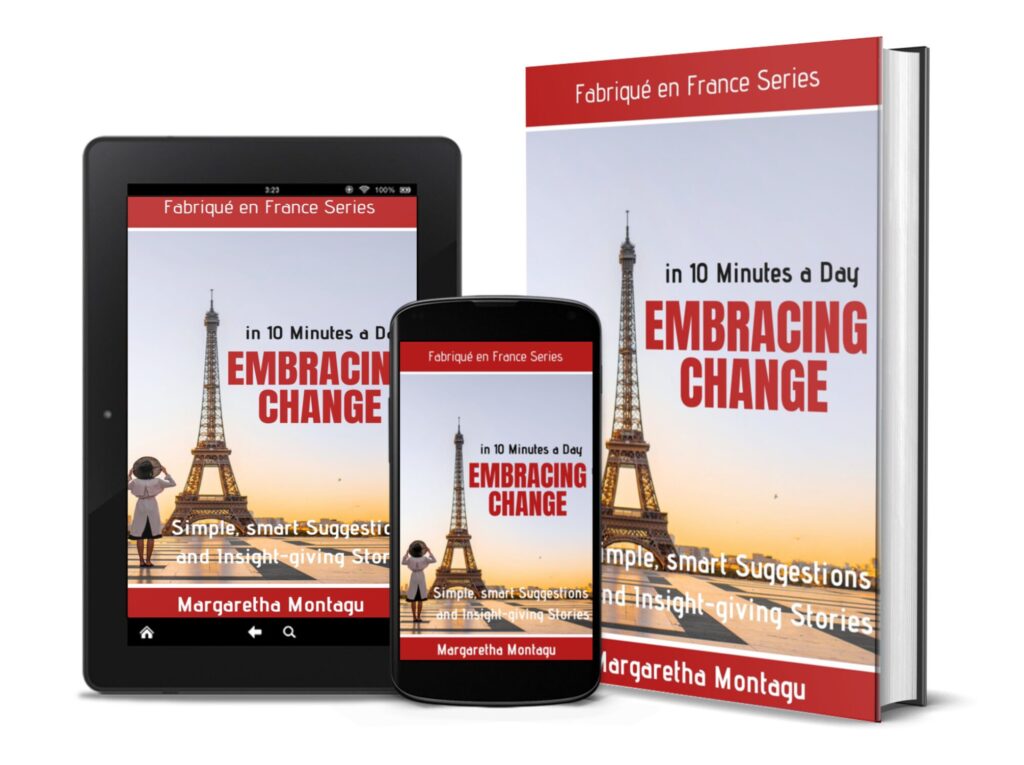
PS: For everyday micro-reflections, check out ‘Embracing Change – in 10 minutes a day’—built for survivors, rebuilders, and all who crave clarity and comfort.

Start Your Next Chapter—One Conversation at a Time

“The quality of your life is in direct proportion to the quality of your conversations.” Each talk, no matter how brief, is a chance to invite hope, restore equilibrium, and start anew.

Ready for a soul-reset? Join one of my Camino de Santiago Crossroads Retreats in the south-west of France. Here, ancient walking routes merge with mindful meditation, and stories unfold beside the gentle presence of Friesian horses. Every day offers guided exercises in stress management, gratitude, and clarity—designed for individuals moving through divorce, loss, illness, or simply those seeking new purpose.

Guests leave not just refreshed, but transformed—armed with practical tools for resilience, self-care, and trust in their own voice. With over 30 guest testimonials, eight non-fiction books, and fifteen years hosting at the retreat’s heart, your retreat host brings world-class expertise, warmth, and a gentle dose of humour to each journey.


Stress destroys Lives. To find out what you can do to safeguard your sanity by taking my insight-giving quiz, subscribe to my mailing list.

“I am an experienced medical doctor – MBChB, MRCGP, NLP master pract cert, Transformational Life Coach (dip.) Life Story Coach (cert.) Stress Counselling (cert.) Med Hypnotherapy (dip.) and EAGALA (cert.) I may have an impressive number of letters after my name, and more than three decades of professional experience, but what qualifies me to excel at what I do is my intuitive understanding of my clients’ difficulties and my extensive personal experience of managing major life changes using strategies I developed over many years.” Dr M Montagu

Boost Your Adaptability Quotient Or Your “Hard-Earned” Experience May Become A Toxic Liability

adaptability quotient

Forget IQ and EQ. In the age of constant disruption, your Adaptability Quotient (AQ) is the only metric that guarantees you won’t become a dinosaur in a digital age.

Overview

Natalie Fratto’s TED Talk 3 Ways to measure your Adaptability – and how to improve it made me think. Most of us know what EQ, SQ and IQ are. But AQ? And how crucial is a high AQ to people navigating life changes? Adaptability isn’t just about surviving the storm; it’s about learning to dance in the rain without slipping on the wet pavement. This article explores why your Adaptability Quotient (AQ) matters more than your IQ or EQ in today’s volatile market, offering actionable strategies to upgrade your mental software from “panic” to “pivot.”

5 Key Takeaways

  • AQ Trumps IQ: In a rapidly changing world, the ability to unlearn and relearn is your most valuable currency.
  • The ACE Framework: Adaptability relies on three pillars: Ability (skills), Character (traits), and Environment (context).
  • Unlearning is Vital: Letting go of obsolete “best practices” is often harder, and more important, than learning new ones.
  • Curiosity Kills Fear: Replacing anxiety with curiosity rewires your brain to see disruption as data rather than a threat.
  • Environment Matters: You cannot be highly adaptable in a rigid, fear-based culture; psychological safety is a prerequisite for AQ.

Why The Old Rules Won’t Help You Win The New Game

Imagine playing a high-stakes game of chess where, every ten minutes, someone swaps the board for a poker table, then a tennis court. Frustrating? Absolutely. But this is modern business. For years, we have worshipped at the altar of IQ (intellectual horsepower) and EQ (emotional intelligence). While these remain vital, they are no longer sufficient. Enter Adaptability Quotient (AQ): the metric that measures how successfully you navigate the unknown. It is not just about resilience—bouncing back—but about “bouncing forward” into a new reality with grace and speed.

The Man Who Refused to Fold

Arthur sat in the circle, his posture rigid, hands gripping his knees as if he were bracing for a collision. The air in the old Gascon farmhouse was thick with the scent of dried lavender and the faint, smoky aroma of a wood fire burning in the hearth. Outside, the twilight settled over the rolling hills of the Gers, silencing the cicadas that had buzzed frantically all afternoon.

“I’m a fixer,” Arthur said, his voice cracking just enough to betray the exhaustion beneath his tailored exterior. “I fix companies. I fix bottom lines. But I can’t fix this.”

He was referring to the merger that had unseated him, but really, he was talking about the terrifying irrelevance he felt creeping into his bones. Arthur was sixty, a titan of analogue industry in a digital world that seemed to speak a language he refused to learn. He had come to my storytelling circle not because he wanted to share, but because his wife had insisted he needed to “find himself,” a phrase he uttered with visible disdain.

“Tell us about a time you were lost,” I suggested gently.

Arthur scoffed, shifting his weight on the wooden chair. “I don’t get lost. I have a GPS. I have a plan.”

“But what happens when the battery dies?” someone whispered from across the circle.

Arthur blinked. The silence stretched, heavy and expectant. He looked at his hands, weathered and strong, hands that had built a manufacturing empire now being dismantled by algorithms.

“I was twenty,” he began, the memory surfacing reluctantly. “Hiking in the Pyrenees. Fog rolled in. Thick as wool. I couldn’t see my boots. I froze. I had a map, but it was useless without landmarks.”

He described the cold seeping into his jacket, the metallic taste of fear in his mouth, and the disorienting silence of the whiteout. “I wanted to march forward, to force my way out. That’s what you do, right? You push.”

“And?” I asked.

“And I realised if I moved, I’d walk off a cliff,” Arthur confessed, his shoulders dropping an inch. “So I sat down. I waited. For hours. I had to admit that my strength, my speed, my plan—none of it mattered. I had to just… be still. I had to listen to the wind to know where the gap in the ridge was.”

A tear traced a path through the stubble on his cheek. In that storytelling circle, surrounded by strangers, the “fixer” finally broke. He realised that his rigidity—the very trait that made him a reliable CEO—was the anchor pulling him under. He didn’t need to fight the current; he needed to let go of the riverbank.

By the end of the week, Arthur wasn’t just telling stories; he was listening to them. He stopped trying to optimise the retreat schedule and started watching the way the light changed on the vineyards. He discovered that surrender isn’t defeat; it is the ultimate adaptation.

Decoding the Anatomy of Adaptability

Arthur’s breakthrough highlights the core of AQ. It is not a fixed trait but a muscle you can build. To truly understand it, we can look at the ACE Model, widely recognised in adaptability research (and championed by experts like Ross Thornley), which breaks AQ down into three dimensions:

Ability: The Skill Set

This is your “adaptability capability.” It includes grit (perseverance toward long-term goals) and mental flexibility (the ability to hold opposing ideas simultaneously). Crucially, it involves unlearning—the intentional act of discarding outdated methods. As the futurist Alvin Toffler famously predicted, the illiterate of the 21st century are not those who cannot read and write, but those who cannot learn, unlearn, and relearn.

Character: The Mindset

Your personality traits influence how you approach change. Are you defensive or curious? This dimension includes emotional range and hope. People with high AQ don’t just tolerate ambiguity; they are energised by it. They ask “What if?” instead of “Why me?” They view disruption as a puzzle to be solved rather than a personal attack.

Environment: The Context

You cannot bloom in a toxic soil. Even the most adaptable leader will struggle in a rigid bureaucracy that punishes failure. High AQ environments provide psychological safety, allowing teams to experiment, fail fast, and share information without fear of retribution. If your company culture prioritises compliance over creativity, you are actively suppressing your team’s AQ.

5 Strategies You Can Use to Boost Your AQ

Use these strategies to boost your Adaptability Quotient (AQ) today, without needing a sabbatical or a PhD in neuroscience:

1. Shock Your Autopilot

The Action: Change one small, daily routine. Drive a different route to work. Brush your teeth with your non-dominant hand. Order the item on the menu you’d never usually pick.
The Why: Your brain loves efficiency (habits), but efficiency kills adaptability. By introducing safe, low-stakes “novelty,” you desensitize your amygdala (fear center) to the feeling of “different,” making you calmer when high-stakes changes hit.

2. Play “The Anti-You”

The Action: In your next meeting, force yourself to argue against your own strong opinion for two minutes.
The Why: This builds Cognitive Flexibility. If you are a “details person,” look for the big picture. If you are a risk-taker, argue for caution. It forces your brain to forge new neural pathways and stops you from becoming rigid in your identity.

3. Ask “What If?” Instead of “WTF?”

The Action: When bad news hits (e.g., a client cancels, a project fails), immediately ask: “What if this is actually data, not a disaster?”
The Why: Fear constricts your vision; curiosity expands it. This simple reframe shifts you from a “Threat Response” (fight/flight) to a “Challenge Response,” allowing you to spot the pivot opportunity that panic would have missed.

4. The “Kill Your Darlings” Audit

The Action: Identify one “Best Practice” in your business that hasn’t changed in 2 years. Ask: “If I started my company today, would I still do it this way?” If the answer is no, kill it.
The Why: High AQ isn’t just about learning; it’s about unlearning. Holding onto obsolete success strategies is the fastest way to sink.

5. Focus on “Next,” Not “End”

The Action: Stop trying to predict the “end state” (which is impossible). Instead, just ask: “What is the single next right move?”
The Why: Adaptability is about motion, not perfection. Paralysis often comes from trying to see the whole map. High AQ leaders know they only need to see as far as their headlights.

Further Reading

To deepen your understanding, I recommend these three books:

1. The Adaptation Advantage by Heather E. McGowan and Chris Shipley
I chose this because it fundamentally reframes the future of work. The authors argue that we have moved from the “learn-to-work” era to the “work-to-learn” era. It is an essential guide for executives who need to stop hiring for past skills and start hiring for future potential.

2. Adaptability by Max McKeown
This is a classic that offers a strategic view. McKeown studies why some organisations (and civilisations) survive while others collapse. His rules for adaptability—like “Stability is a dangerous illusion”—are provocative and necessary for any leader clinging to the status quo.

3. Decoding AQ by Ross Thornley
Selected for its practical application of the ACE model. Thornley moves beyond theory to measurement, offering a scientific approach to quantifying adaptability. If you love data and want to know exactly how to measure your team’s flexibility, this is your manual.

Voices

“I came to the retreat convinced that ‘adaptability’ was just a buzzword for ‘working harder without complaining.’ I was resentful and burnt out. The storytelling circles changed everything. Hearing others share their struggles made me realize I was holding onto an identity that no longer served me. I left with a lower heart rate and a higher AQ.”
Sarah J., Corporate Attorney & Camino Guest

Frequently Asked Questions

Can you actually measure AQ?

Yes, assessments based on the ACE model (Ability, Character, Environment) provide a score by evaluating dimensions like unlearning, resilience, and environmental support, giving you a baseline for improvement.

Is AQ more important than IQ?

In stable environments, IQ rules. In volatile, complex environments (like today’s), AQ is the stronger predictor of success because raw intelligence cannot solve problems it has never seen before.

Can I improve my AQ if I hate change?

Absolutely. Start with “micro-adaptations.” Take a different route to work, change your morning routine, or learn a useless skill. You need to desensitize your brain’s fear response to novelty.

How do I boost my team’s AQ?

Focus on the “Environment” pillar. Create a culture where “I don’t know” is an acceptable answer and where failed experiments are celebrated as learning opportunities rather than punished errors.

What is the biggest enemy of adaptability?

Success. When we succeed, we tend to codify what worked, creating rigid best practices. Ironically, your past success is often the biggest barrier to your future adaptation.

Conclusion

Boosting your Adaptability Quotient isn’t about becoming a chaotic shapeshifter who stands for nothing. It is about becoming like water—strong enough to carve canyons but flexible enough to move around obstacles. As you navigate the uncertain waters of your professional life, remember that the goal isn’t to predict the future. It is to build a vessel—your mind and spirit—that can sail on any sea.

Finding Your Footing on the Camino

If the story of Arthur resonated with you, or if you feel the creeping exhaustion of trying to force old maps onto new territories, it might be time to pause. You cannot rewire your brain while it is frying in cortisol.

I invite you to join me for the Camino de Santiago Crossroads Retreat in the lush, rolling heart of Gascony, France. This is not a boot camp; it is a sanctuary for the soul. Over five transformative days, we will walk the ancient paths of the Camino, not to race to a destination, but to rediscover the rhythm of our own thoughts.

Our days are anchored in mindfulness and meditation exercises designed to lower your stress baseline, giving your nervous system the safety it needs to unlearn and adapt. In the evenings, we gather for my signature storytelling circles—safe, warm spaces where, like Arthur, you can lay down the heavy armour of your “professional self” and reconnect with the human beneath.

There is no networking here. No judgment. Just good food, deep rest, and the kind of clarity that only comes from walking at 4km/h. Come find your new direction.

Find your Way at a Crossroads Retreat

Which old habit are you holding onto that might be blocking your next great adventure?

Stress destroys Lives. To find out what you can do to safeguard your sanity by taking my insight-giving quiz, subscribe to my mailing list.

“I am an experienced medical doctor – MBChB, MRCGP, NLP master pract cert, Transformational Life Coach (dip.) Life Story Coach (cert.) Stress Counselling (cert.) Med Hypnotherapy (dip.) and EAGALA (cert.) I may have an impressive number of letters after my name, and more than three decades of professional experience, but what qualifies me to excel at what I do is my intuitive understanding of my clients’ difficulties and my extensive personal experience of managing major life changes using strategies I developed over many years.” Dr M Montagu

References

Kam, C. C. S., Morin, A. J. S., Meyer, J. S., & Topolnytsky, L. (2016b). Are Commitment Profiles Stable and Predictable? A Latent Transition Analysis. Journal of Management, 42(6), 1462–1490.

Rudolph, C. W., Lavigne, K. N., & Zacher, H. (2017b). Career adaptability: A meta-analysis of relationships with measures of adaptivity, adapting responses, and adaptation results. Journal of Vocational Behavior, 98, 17–34.

Uhl-Bien, M., & Arena, M. J. (2018b). Leadership for organizational adaptability: A theoretical synthesis and integrative framework. Leadership Quarterly, 29(1), 89–104.

Van Steenbergen, E. F., Van Der Ven, C. M., Peeters, M. C. W., & Taris, T. W. (2018).Transitioning Towards New Ways of Working: Do Job Demands, Job Resources, Burnout, and Engagement Change? Psychological Reports, 121(4), 736–766.

“Work-Life Balance? Nonsense. You Can’t Have It All.”

Article inspired by Alain de Botton’s TED Talk

I watch a lot of TED Talks, as you may have gathered. Sometimes the same one, again and again. I first watched this in 2009, it’s still as topical now as it was then, if not more. Alain de Botton explains how embracing the beautiful messiness of “imperfect variety” can liberate you from guilt, release you from impossible expectations, and open the door to a more authentic next chapter.

What this is: A permission slip to stop apologising for your choices. A frank, research-backed exploration of why the pursuit of “having it all” is not only exhausting but fundamentally impossible, and how understanding this truth can transform your relationship with success.​

What this isn’t: Another productivity hack promising you can squeeze more into your already overcrowded schedule. A self-help sermon about manifesting abundance. Or a suggestion that you give up on what matters.​

Read this if: You’ve ever felt like a failure for not being simultaneously the perfect professional, partner, parent, friend, and person. If you’re standing at a crossroads, wondering what comes next, and tired of the exhausting mental gymnastics required to convince yourself you can “balance it all”.​

Five Key Takeaways

  1. Everything worth fighting for unbalances your life, and accepting this is liberating, not limiting.​
  2. Your version of success has likely been borrowed from parents, colleagues, media, and culture, not authentically chosen by you.​
  3. Meritocracy is a myth, success contains enormous elements of chance and luck, and recognising this brings compassion for yourself and others.​
  4. Envy is the dominant emotion of our age, fuelled by the illusion that anyone can achieve anything if they just try hard enough.​
  5. Opting for “imperfect variety over flawless focus” is not a compromise; it’s a choice that reflects the full spectrum of being human.​

The Sunday Night Scaries

Philosopher Alain de Botton admits that his career crises typically arrive on Sunday evenings, just as the sun begins to set, when the gap between his hopes for himself and the reality of his life diverges so painfully that he ends up “weeping into a pillow”. It’s a startlingly honest confession from someone who has built a career examining the nature of success, and it perfectly captures what so many high-achieving professionals experience but rarely voice aloud.​

The myth of work-life balance has become the ultimate modern guilt trip, a shiny promise that if we just organise better, optimise smarter, or manifest harder, we can have it all without sacrifice. But here’s the uncomfortable truth that de Botton articulates so beautifully: “We hear a lot of talk about work-life balance. Nonsense. You can’t have it all.” And recognising this, rather than being depressing, might be the most liberating realisation of your life.​

For executives, entrepreneurs, and professionals who’ve spent decades climbing ladders and meeting targets, this message lands differently than it might for those just starting out. You’ve already experienced the trade-offs, even if you haven’t named them. You’ve missed bedtimes for board meetings, sacrificed friendships for promotions, and chosen ambition over ease more times than you can count. The question isn’t whether you’ll make sacrifices in your next chapter, but whether you’ll make them consciously, for goals that are authentically yours.​

Can You Really Choose Your Own Definition of Success?

The answer, according to de Botton, is both yes and profoundly difficult. We are, he argues, “highly open to suggestion”. If banking is presented as respectable, hordes of bright graduates rush toward finance. When the cultural narrative shifts, so do our desires. The forces shaping what we want, from advertising to parental expectations to social media, are “hugely powerful”.

Psychoanalysis has been insisting for 80 years that our ideas of success are largely inherited, chiefly from our fathers if we’re men, and mothers if we’re women. Yet we resist this insight with remarkable tenacity. We prefer to believe our ambitions are self-generated, that we’re captaining our own ships. But are we truly the authors of our own ambitions, or are we performing scripts written by others?​

I’ve witnessed this dynamic play out countless times over 20 years of medical practice focused on stress management, and 15 years hosting transformational retreats where participants walk the Camino de Santiago. My guests often have success stories that look enviable from the outside, yet feel hollow on the inside. Through mindfulness exercises, storytelling circles with my Friesian horses, and the gentle rhythm of walking, they begin to distinguish between borrowed dreams and authentic aspirations.​

Why Does Modern Success Feel So Insubstantial?

De Botton identifies several interconnected reasons why contemporary life generates unprecedented levels of career anxiety, even for (or perhaps especially for) those who appear successful. ​

First, there’s the snobbery epidemic. We live in an era of “job snobbery” where people make swift judgments about your worth based on your business card. St. Augustine warned that “it’s a sin to judge any man by his post,” but modern society has done precisely that, creating strict correlations between professional status and human value. When you see someone driving a Ferrari, de Botton suggests, don’t think “this person is greedy”—think “this person is incredibly vulnerable and in need of love”. We pursue material goods not because we’re materialistic, but because society has “pegged certain emotional rewards to the acquisition of material goods”.

Second, there’s the toxic combination of equality and envy. We’ve dismantled formal hierarchies and declared everyone equal, which is beautiful in theory. But in practice, it’s turned “the whole world into a school,” where we’re constantly comparing ourselves to our peers. The closer two people are in age, background, and circumstance, the more dangerous the envy becomes. (This is why, de Botton wryly notes, you should never attend a school reunion).

Third, there’s the meritocracy trap. The idea that talent plus effort equals success sounds progressive. But if you believe success is purely earned, you must also believe failure is deserved. In medieval England, a poor person was called “unfortunate,” someone not blessed by fortune. Today, particularly in America, they’re labelled a “loser”—implying personal responsibility for their circumstances. This shift represents “400 years of evolution in society and our belief in who is responsible for our lives”. It’s “exhilarating if you’re doing well, and very crushing if you’re not”.

This framework helps explain why high achievers often experience disproportionate anxiety. They’ve internalised the meritocratic mythology completely. Every success reinforces the belief that they’re in control, which makes any setback feel like personal failure. The sociologist Émile Durkheim connected this dynamic to increased suicide rates in developed, individualistic countries. People take what happens to them “extremely personally—they own their success, but they also own their failure”.

What Does This Mean for Your Next Chapter?

If you’re contemplating a transition, whether it’s a career pivot, retirement, a relationship or a lifestyle change, or responding to a sudden loss, de Botton’s philosophy offers unexpected comfort. Understanding that perfect balance is impossible, and that all meaningful pursuits create imbalance, removes a significant layer of guilt and expectation.​

Your next chapter doesn’t need to be “balanced”—it needs to be intentional. As de Botton articulates, “any vision of success has to admit what it’s losing out on, where the element of loss is”. The question isn’t “can I have it all?” but rather “what am I choosing, and what am I consciously releasing?”

This reframing transforms transitions from failures (failing to maintain previous achievements) into opportunities for conscious selection. Perhaps you’re choosing deeper relationships over professional accolades. Maybe you’re trading income for impact, or status for creativity, or recognition for peace. These aren’t compromises; they’re wise choices reflecting your actual values rather than borrowed ones.

The Story of Caroline Ashworth-Kent

Caroline Ashworth-Kent had perfected the art of appearing effortlessly successful. At 52, she was a partner at a prestigious consulting firm, maintained a meticulously renovated Georgian townhouse in Bath, served on two charity boards, and somehow still found time to host dinner parties that her friends described, with equal parts admiration and envy, as “magazine-worthy.”

What nobody saw were the Sunday evenings. That particular flavour of dread that began around four o’clock, creeping through her chest like cold water as she mentally catalogued the week ahead: client presentations, team performance reviews, the gala she’d committed to organising, her mother’s care needs, the bathroom renovation that had stalled. The list scrolled endlessly.

One Sunday in March, something shifted. She was standing in her kitchen—Carrara marble countertops gleaming under pendant lights—assembling a charcuterie board for guests arriving within the hour. The prosciutto felt slippery between her fingers. She could hear her husband upstairs, searching for something in increasingly irritated tones. Her phone buzzed with a message from a colleague needing input on a proposal. The wine glasses needed polishing. And suddenly, Caroline found herself crying, silently at first, then with gulping sobs that made her shoulders shake.

Her husband found her that way, surrounded by expensive meats and imported cheeses, mascara tracking down her face. “I can’t do this anymore,” she said, though she wasn’t entirely sure what “this” encompassed.

The unravelling took months. First came the admission that she didn’t actually enjoy most of her life—she’d simply become exceptionally skilled at it. The consulting work that had once energised her now felt repetitive, a series of slides rearranging deck chairs on similar corporate ships. The dinner parties weren’t about connection; they were performances of a version of Caroline she no longer recognised. Even the house, with its perfect proportions and tasteful renovations, felt like a museum she was curating rather than a home she inhabited.

But the hardest realisation was this: she couldn’t even clearly articulate what she’d prefer instead. Her desires had become so entangled with expectations—from her father (a successful barrister who’d taught her that ambition was the highest virtue), from her professional peer group (where worth was measured in billable hours and corner offices), from some internalised perfectionist who insisted excellence was possible in all domains simultaneously—that Caroline had no idea which ambitions were actually hers.

She began by doing something small and strange: taking solo walks. Not power walks with a fitness tracker and podcast, but slow, meandering routes through countryside near Bath with no destination or purpose. She’d leave her phone in the car, feeling the spring air against her face, noticing the particular green of new leaves, the muddy smell of the riverbank. These walks felt utterly unproductive, which was precisely why they mattered.

During one of these rambles, Caroline encountered a woman walking with an elderly border collie. They fell into conversation, and the woman mentioned she had recently attended a walking retreat on the Camino de Santiago. “It’s not religious,” she clarified, “more about creating space to hear yourself think.” Caroline surprised herself by asking for details.

Three months later, Caroline found herself in the south-west of France, part of a small group walking 10 kilometres per day. Her feet hurt. Her carefully managed appearance gave way to sunburned cheeks and unwashed hair tied in a pragmatic knot. They walked in silence, then gathered each evening for simple meals and storytelling circles, sometimes with the retreat leader’s horses present—their calm, attentive presence somehow making it easier to speak difficult truths.

It was on the fourth day, sitting with her feet in a cold stream, that Caroline had the realisation: she didn’t need to have it all. In fact, having it all had nearly destroyed her. What she needed was to choose consciously, to release some things with gratitude rather than guilt, and to invest deeply in what actually nourished her.

She didn’t quit her job immediately or abandon her life. But she did begin the careful work of disentangling her authentic desires from her inherited scripts. She reduced her hours at the firm and used the freed time not to fill her schedule with new commitments but to create space. She joined a writing group focused on personal essays. She became a volunteer mentor for women leaving corporate careers. She and her husband began planning a year-long slow travel sabbatical.

Some friends didn’t understand. A few colleagues viewed her choices as a “waste of potential.” But Caroline discovered something unexpected: the less she tried to excel at everything, the more present she became in what she chose to pursue. Her life became gloriously unbalanced, weighted heavily toward meaning rather than achievement, connection rather than status, curiosity rather than certainty.

How Can This Transform Not Just You, But Your Community?

When one person steps off the treadmill of enforced balance and begins living from authentic choice, it creates ripples. Your willingness to be honest about trade-offs gives others permission to do the same. Your example of conscious imbalance challenges the mythology that perpetuates collective exhaustion. ​

Communities of stressed professionals benefit enormously when individuals begin modelling a different path. In my work hosting storytelling circles at Inner Camino retreats, I’ve observed how one person’s vulnerability about their struggles often unlocks honest conversations throughout the group. When an executive admits they’re not coping, when an entrepreneur acknowledges they’ve lost sight of why they started, when a high achiever confesses to feeling hollow despite external success, it creates what I call “permission fields”—spaces where others can finally be honest too. ​

This has practical implications for workplaces, families, and social networks. When you stop perpetuating the myth that you’re effortlessly balancing everything, you make it easier for colleagues to advocate for sustainable workloads, for friends to admit they’re struggling, for family members to opt out of expectations that don’t serve them. Your transition becomes not just personal transformation but a form of quiet leadership.​

Moreover, the wisdom gained from consciously choosing imbalance over exhausted balance becomes transferable knowledge. You develop insights about authentic prioritisation, graceful release, and conscious trade-offs that can be shared with others navigating similar crossroads. My eight non-fiction books on divorce, loss, unexpected illness, and coping with crises have emerged from exactly this process of transforming personal struggle into communal wisdom.

Excavating Your Borrowed Dreams

Take 20 minutes to write freely, without editing, on these questions:

What ambitions am I currently pursuing that might not actually be mine? Where did they originate? (Specific people, cultural messages, professional norms?) If I’m brutally honest, which goals am I chasing because I believe I “should” rather than because they genuinely matter to me?

What would I release if I weren’t afraid of disappointing someone? Name specific expectations, commitments, or identities. What does it feel like in your body to imagine releasing them?

If nobody else’s opinion mattered, what would my next chapter look like? Not a fantasy version with unlimited resources, but a realistic life weighted differently than your current one. What would you emphasise? What would you de-emphasise or eliminate entirely?

Don’t censor yourself. Nobody else will read this unless you choose to share it. The goal isn’t to immediately act on everything you uncover, but to begin distinguishing between borrowed and authentic desires.​

Gratitude for What Got You Here:

Write down five things you’re genuinely grateful for about your current or previous chapter, even if you’re ready to move beyond it. Perhaps the skills you developed, the relationships you formed, the financial security you created, the discipline you cultivated, or even the clarity about what you don’t want.

Intentions for What Comes Next:

Now identify three specific qualities or experiences you want to characterise your next chapter. Not outcomes (which often aren’t fully in our control) but the texture of how you want to live. Examples might include: spaciousness over busyness, depth over breadth, authenticity over approval, presence over productivity, or curiosity over certainty.

Write these intentions somewhere visible. Return to them when facing decisions or feeling pulled back into old patterns.

Further Reading

1. “The Happiness Industry: How the Government and Big Business Sold Us Well-Being” by William Davies

Davies provides a critical examination of how concepts like work-life balance have been co-opted by corporate culture, revealing why these promised solutions often increase rather than decrease our stress. Essential reading for understanding the systems that shape our expectations. ​

2. “The Art of Choosing” by Sheena Iyengar

Iyengar’s research on choice illuminates how we make decisions and how cultural context shapes what we perceive as desirable. Particularly valuable for executives used to making strategic decisions for organisations who struggle with personal choices.​

3. “Tragedy and Hope: A Philosophy of Necessity” by Arthur Versluis

This explores the concept of tragedy not as purely negative but as a necessary dimension of ambitious lives. Directly relevant to de Botton’s discussion of why we need tragic art to balance our relentless optimism.​

4. “Seasons of Your Life: How Understanding Cyclical Change Can Enhance Your Life” by Vivienne Weil

Weil’s framework helps readers recognise that different life seasons require different priorities. Perfect for those transitioning between chapters who need permission to let previous versions of success go.​

5. “The Ruthless Elimination of Hurry” by John Mark Comer

Comer articulates why speed and productivity have become toxic cultural values, offering practical wisdom on creating a more sustainable pace. Though grounded in Christian spirituality, the insights are applicable regardless of religious affiliation.​

My book Embracing Change, in 10 minutes a day offers practical daily exercises specifically designed for busy professionals navigating life transitions, combining evidence-based practices with compassionate guidance drawn from two decades of clinical experience.

Voices

“I arrived at Dr. Montagu’s Camino retreat absolutely convinced I was failing at life because I couldn’t ‘have it all.’ I was a COO trying to be a present mother, an engaged partner, a dutiful daughter, a supportive friend, and maintain my physical health and spiritual practice. I was exhausted and increasingly resentful. Through the walking meditations, the storytelling circles with those extraordinary horses, and the gentle conversations with Dr. Montagu and other guests, I finally understood that balance was never the goal. The goal was choosing consciously. I left the retreat with fewer commitments but clearer purpose. The peace I’ve found since embracing intentional imbalance has transformed not just my life, but my relationships with everyone around me. This wasn’t a vacation; it was a recalibration.”

— Katherine R., Amsterdam

“Being part of Dr. Montagu’s virtual Inner Camino storytelling circle gave me something I didn’t even know I needed: permission to be imperfect and honest. Hearing other high-achieving women acknowledge their struggles with impossible expectations helped me recognise I wasn’t uniquely failing. The structured format and Dr. Montagu’s skilled facilitation created a rare space where vulnerability felt safe. These circles have become essential maintenance for my mental health, a monthly reminder that my worth isn’t measured by my productivity or ability to juggle everything flawlessly. The insights and connections have been invaluable as I navigate a major career transition.”

— Simone L., London

Frequently Asked Questions

Isn’t giving up on work-life balance just accepting burnout as inevitable?

Not at all. Recognising that you can’t excel at everything simultaneously isn’t the same as accepting destructive overwork in one domain. It’s about conscious choice rather than exhausted striving. Burnout typically results from feeling trapped, from pouring energy into meaningless work, or from constantly falling short of impossible standards. Choosing intentional imbalance means directing your finite resources toward what genuinely matters to you, which is actually protective against burnout​

How do I know which version of success is authentically mine versus borrowed?

De Botton’s guidance is to “probe away at our notions of success”. Practical questions include: Does pursuing this goal energise or deplete me? Am I doing this to gain someone else’s approval or because it resonates with my actual values? Would I pursue this if nobody else would ever know about it? Can I identify whose voice is in my head when I imagine achieving this? Working with a life transition coach trained in evidence-based approaches, as offered through Inner Camino’s Purpose Pivot Protocol, can provide structured support for this excavation process.​

What about financial realities? I can’t just quit my high-stress job to “find myself.”

Absolutely valid. De Botton isn’t advocating irresponsibility. The philosophy is about honest recognition of trade-offs within real constraints, not fantasy thinking. You might, for instance, choose to remain in a demanding role while releasing the expectation of simultaneously being available for every family event, or excel professionally while letting go of guilt about a less-than-perfect home. The shift is internal as much as external, moving from “I should be able to do everything” to “I’m choosing this, which means not choosing that”. ​

Won’t embracing imbalance make me less successful professionally?

Research suggests the opposite. High achievers who stop fragmenting their energy across impossible standards and instead focus deeply on selected priorities often become more effective, not less. Moreover, success redefined on your own terms might look different than conventional markers, but it’s likely to be more sustainable and satisfying. De Botton notes that “focusing on one thing to the exclusion of all others has its costs,” but so does diffusing yourself so thinly that nothing gets your best energy. ​

How do I handle judgment from others when I make unconventional choices about balance?

De Botton’s suggestion about the Ferrari driver applies here: when someone judges your choices, recognise they’re likely projecting their own anxieties and insecurities. People who’ve built their identities around “having it all” may feel threatened by your different approach. Your job isn’t to justify yourself to them, but to ensure your choices genuinely reflect your values. Over time, living with greater authenticity and less exhaustion becomes its own validation. And often, your willingness to choose differently gives others quiet permission to examine their own assumptions. ​

Conclusion: An Unbalanced Life, Well-Lived

Alain de Botton’s declaration that work-life balance is “nonsense” isn’t pessimistic—it’s liberating. When you stop pursuing an impossible ideal and start making conscious choices about where to direct your limited time, energy, and attention, you trade chronic guilt for grounded intentionality. ​

Your next chapter doesn’t need to prove you can have it all. It needs to reflect who you actually are and what you genuinely value, not what you’ve been told to want. As you contemplate transitions, whether by choice or circumstance, remember that “opting for imperfect variety over flawless focus” isn’t compromise—it’s wisdom.​

The executives, entrepreneurs, and professionals I’ve worked with over 15 years of Camino de Santiago retreats consistently discover that their most profound transformation comes not from adding more to their lives, but from consciously releasing what doesn’t serve them, making space for what does. This process requires courage, honesty, and often support from others navigating similar terrain.

As the writer Annie Dillard reminds us: “How we spend our days is, of course, how we spend our lives.” Not how we wish we spent them, not how we think we should spend them, but how we actually, consciously choose to spend them. The question isn’t whether your life will be balanced, but whether it will be yours.​

An Invitation to Walk Your Own Path

If this article resonated with something stirring in you, if you’re standing at a crossroads wondering what your next chapter might hold, if you’re exhausted from maintaining impossible standards and ready to explore a different way forward, I invite you to consider joining us for anCamino de Santiago Crossroads Retreat in the stunning south-west of France.

These aren’t typical walking holidays, nor are they rigid wellness programmes with impossible schedules. They’re carefully designed spaces where accomplished professionals like you can step away from performance, reconnect with what matters, and begin discerning your authentic path forward. Over five or seven days, you’ll walk 12-15 kilometres daily through beautiful countryside, participate in guided mindfulness and meditation exercises specifically tailored for stress management, and join intimate storytelling circles where my Friesian horses create a calm, non-judgemental presence that often helps people access deeper truths.

Drawing on my qualifications as an MBChB, MRCGP, NLP master practitioner, medical hypnotherapist, and life transition coach, along with 20 years of clinical experience supporting patients through stress and transitions, these retreats blend evidence-based practices with the transformative power of walking meditation. The 30+ testimonials on my website speak to the profound shifts guests experience, not through pressure or prescription, but through the gentler path of spaciousness, honest reflection, and supportive community.

Whether you’re contemplating a career pivot, recovering from loss or unexpected change, or simply sensing that your current chapter is complete even though the next one hasn’t yet revealed itself, this retreat offers the rare gift of time and space to listen to yourself. You’ll leave not with answers imposed from outside, but with greater clarity about your own questions and more confidence in your capacity to navigate whatever comes next.

Learn more and reserve your room

For those not ready for an in-person retreat, my Purpose Pivot Protocol online course offers structured guidance through life transitions, helping you distinguish between borrowed and authentic goals, release what no longer serves you, and step confidently into your next chapter from wherever you are.

The Purpose Pivot Protocol – drawing inspiration from the Camino de Santiago, this transformative course guides you through a proven framework to recalibrate your authentic purpose and create a meaningful and fulfilling next act. Get immediate access


Stress destroys Lives. To find out what you can do to safeguard your sanity by taking my insight-giving quiz, subscribe to my mailing list.

Author Bio: Dr Margaretha Montagu – described as a “game changer”, “gifted healer”, “guiding light” and “life-enriching author” – is an experienced medical doctor, a certified NLP practitioner, a medical hypnotherapist, an equine-assisted psychotherapist (EAGALAcertified) and a transformational retreat leader who guides her clients through life transitions – virtually, or with the assistance of her Friesian and Falabella horses, at their home in the southwest of France.

The Digital Ghost

digital ghost

.

Wordweavers Story: The Digital Ghost

I am a member of a writing group called the WordWeavers in the southwest of France. We meet once a month to share stories of 1000 words written in response to a prompt.

August 2025 Story: The Kingdom of Eternal Night

July 2025 Story: The Scarlet Spectre’s Social Hour

This month’s prompt is “backwards glance”, and here is my contribution, a ghost story:

Logline: When a former corporate executive receives a phantom work anniversary notification three years after being laid off, she confronts the high-powered ghost of her LinkedIn profile and must decide whether to resurrect her toxic past or finally lay it to rest in the present of her new life as a digital nomad in Bali.

The Wi-Fi in the Canggu café was acting like a capricious teenager: fast and furious when it felt like it, sullen and slow when you really needed it.

Cleo tapped her fingers against the ceramic cup. Tap-tap-tap. Condensation pooled around the base of her iced turmeric latte, the coffee so roasted it probably had its own zip code. Outside, a scooter horn blared, answered by a motorbike weaving around a stray dog like a stunt double in a low-budget action film. Tuesday had a new soundtrack: no sirens, no elevator chimes from the 42nd floor.

Her laptop screen flickered. A notification slid into the top right corner, polite but lethal.

LinkedIn: Congrats on your work anniversary at Orion Global! Give your network a heads-up.

Cleo stared. The cursor hovered over the “X,” trembling slightly.

Orion Global. It had been three years since the layoffs. Three years since the “restructuring” that had escorted her out of the glass-walled building with a cardboard box and a severance package that felt more like hush money.

The algorithm, in its infinite wisdom, had forgotten she was fired. It thought she was still the VP of Strategic Operations. She was still the woman in the silk blouse who slept four hours a night and considered a panic attack a valid form of cardio.

She clicked the notification. Mistake.

A ghost filled the screen. Her old headshot.

Just look at her. The blazer was sharp enough to cut glass. The smile was practised—teeth whitened to a blinding unnatural gleam, eyes wide and terrifyingly alert. It was the face of a woman who answered emails at 3:00 AM and wore waterproof mascara because crying in the bathroom had to be a scheduled event.

Three years, the notification chirped. Celebrate with your network!

“Celebrate,” she muttered. A barista with a topknot looked over, concerned. She waved him off.

She scrolled down. The phantom limb syndrome kicked in—buzzing phone, adrenaline spike, toxic triumph in the boardroom. Down, down, into the archives of her digital past.

Cleo M. (3 years ago): “Grind while they sleep. Sleep is for the weak when you’re changing the world!. #HustleCulture #Leadership”

She winced. Physical pain. She actually posted that.

Cleo M. (3 years ago): “Another 80-hour week in the books. The team crushed it. “

“Sleep is for the weak,” she whispered to her latte. “FFS, Cleo.”

She looked up. Through the open slats of the café window, she saw a woman walking down the dusty street. The woman was balancing a basket of offerings—flowers, incense, rice—on her head. She moved with a fluid, unhurried grace, stepping around a puddle without breaking her rhythm.

Cleo looked back at the screen. The “Cleo” in the posts was a stranger. A frantic, hollowed-out stranger who thought “busy” was a personality trait. She remembered the ulcer that had gnawed at her stomach lining during Q4. She remembered missing her sister’s engagement party because of a merger that fell through anyway.

She looked at her hands now. Unmanicured. Tan. A small callous on her thumb from the surfboard she was terrible at riding but loved anyway.

The ghost on the screen was so very successful.
The woman in the café had a pulse.

The choice wasn’t hard, but it was heavy. It required an exorcism.

She hit Edit Profile.

The cursor blinked at “VP of Strategic Operations.” It waited for her to update the years, to legitimise the lie.

Instead, she highlighted the text. Delete.

She typed: Freelance Consultant & Errant Nomad.

She went to the summary section. The paragraph about “synergy” and “maximising ROI” vanished.

New Summary: “I help sustainable brands tell their stories. Sometimes I miss meetings. I never miss the sunset. Formerly high-powered, currently high-humidity.”

She hovered over the “Update” button. A sudden, sharp fear spiked in her chest. The fear of irrelevance. If she wasn’t the VP of Orion Global, who was she? Just another digital nomad with a laptop and a fantasy?

She looked outside again. The woman with the basket had reached the temple gate. She set the offering down, lit the incense, and bowed. A small, quiet act of devotion.

Cleo exhaled. The breath was long and shaky, leaving her lungs empty and ready to be filled with the damp, thick air of the present.

She clicked Save.

The page refreshed. The blazer photo remained—she’d change that later, maybe to one where she looked less like a hostage—but the title was gone. The anniversary notification vanished, replaced by the new truth.

Her phone buzzed. Not an email. A WhatsApp message from her surf instructor.

Waves good at 4pm. You coming?

Cleo closed the laptop. The screen went black, reflecting her own face. No filter. Just her, unenhanced, looking back at herself.

“Yeah,” she said to the empty chair opposite her. “I’m on my way.”

Wordweavers in France has recently published an anthology called Thank you, Shirley Valentine that contains stories about strong women making radical changes in their lives.

On the threshold of your next chapter, how do you lay the ghost of your first chapter to rest?

To lay the ghost of a first chapter to rest, you must stop trying to ignore it and instead invite it to sit down for a final exit interview.

In psychological terms, you are navigating a liminal space—the disorienting “threshold” between an identity that no longer fits and one that hasn’t fully formed. The “ghost” isn’t the job or the relationship itself; it is the neural pathways of your old habits and the lingering attachment to status or security.

Here is a protocol for laying that ghost to rest, drawing on narrative therapy and transition psychology.

1. The “Skill Distillation” (Deconstruction)

Ghosts often haunt us because we think we left our “best self” behind in the old life. You need to separate your intrinsic value from your institutional container.

  • The Exercise: Take a piece of paper. In one column, write down the things you miss about the old chapter (e.g., “I miss being the expert,” “I miss the team,” “I miss the adrenaline”).
  • The Shift: In the second column, strip away the context to reveal the core skill or need. “I miss being the VP” becomes “I miss high-level problem solving.” “I miss the office banter” becomes “I need connection.”
  • The Insight: You realize the ghost (the title/role) is dead, but the spirit (your capability) is alive and can be translocated to your new life.

2. The “Digital Exorcism” (Ritual)

As Cleo discovered in the story, our digital footprints act as anchors, keeping us tethered to past versions of ourselves. We often keep old profiles “just in case,” which signals to our brain that the door is still ajar.

  • The Exercise: Schedule a 30-minute “Digital Exorcism.” Go to LinkedIn, your website, or your bio. Delete the corporate buzzwords. Archive the photos that look like a stranger.
  • The Shift: Do not just delete; replace. Write a bio that reflects your current reality, even if it feels smaller. “Former Architect” is a tombstone; “Landscape Painter” is a living breathing person.
  • The Insight: When you align your public avatar with your private reality, you stop performing for an audience that has already left the theater.

3. The “Eulogy for the Old Self” (Grief Work)

We often rush to “move on” without properly mourning. This creates “unresolved grief,” which manifests as that phantom limb syndrome—reaching for a phone that doesn’t ring.

  • The Exercise: Write a literal eulogy for your past self. Acknowledge what that version of you achieved, what they survived (the burnout, the late nights), and—crucially—thank them for getting you to this threshold.
  • The Shift: Read it aloud (perhaps on a walk or in nature, given your affinity for the outdoors). Then, perform a physical act of closure: burn the paper, delete the old work files, or pack the “power suit” into a donation bag.
  • The Insight: You are not killing the past; you are burying it with honor so it becomes an ancestor rather than a ghost. Ancestors offer wisdom; ghosts just make noise.

4. Re-Authoring the Narrative

In narrative therapy, we move from a “contamination sequence” (where the good past was ruined by the bad ending) to a “redemption sequence” (where the struggle was the necessary fire for the new forging).

  • The Shift: Stop telling the story of “how I lost X.” Start telling the story of “how I chose Y.”
  • The Reframing: Instead of “I got laid off and now I’m freelancing,” try “I survived a system that wasn’t built for me, and now I’m building one that is.”

The goal isn’t to forget the first chapter. It’s to place it firmly on the bookshelf of your life so you can stop re-reading it and finally pick up the pen to write the next one.

Firm Foundations for Your Future Protocol – a fast-paced, high-impact, future-focused course that facilitates the construction of identity-shaping stories about your future self so that you can make the changes needed to avoid having to go through big life changes again and again—without needing to process your past in depth and in detail.

Author Bio: Dr Margaretha Montagu – described as a “game changer”, “gifted healer”, “guiding light” and “life-enriching author” – is an experienced medical doctor, a certified NLP practitioner, a medical hypnotherapist, an equine-assisted psychotherapist (EAGALAcertified) and a transformational retreat leader who guides her clients through life transitions – virtually, or with the assistance of her Friesian and Falabella horses, at their home in the southwest of France.

I feel like I will lose my identity if I walk away from what I’ve built

I feel like I will lose my identity if I walk away from what I’ve built

How to Leave Behind What You’ve Built Without Losing Who You Are

What this is: A compassionate exploration of the terror, grief, and unexpected liberation that comes when successful people consider stepping away from their empires, careers, or identities they’ve spent decades building.

What this isn’t: Career advice, retirement planning, or a cheerful “just follow your passion” pep talk that ignores the very real psychological complexity of releasing a life’s work.

Read this if: You’ve built something impressive but feel trapped by it. You wake at 3 a.m. wondering if this is all there is. You’re terrified that without your title, company, or professional identity, you’ll simply… disappear.

Five Key Takeaways for the Fatally Accomplished

  1. Your identity crisis is actually an identity opportunity. That uncomfortable feeling isn’t failure, it’s your authentic self knocking rather insistently on the door you’ve kept locked for years.
  2. Walking away doesn’t erase what you’ve built, it completes it. The greatest leaders know when their chapter ends and someone else’s begins.
  3. You are not your résumé, and thank goodness for that. Your achievements are things you’ve done, not who you are, though you’ve been confusing the two for so long they’ve become entangled.
  4. The void you fear is actually spaciousness. What feels like losing yourself is often the first time you’ve had room to find yourself.
  5. Your next chapter doesn’t diminish your last one. Evolution isn’t betrayal. Growth isn’t abandonment. And reinvention isn’t admission of failure.

Introduction: The Cage You Built Yourself

There’s a particular flavour of success that tastes like achievement but feels like entrapment. You’ve built something remarkable, something that bears your name or carries your vision or wouldn’t exist without your relentless determination. And now? Now you’re not entirely sure whether you own it or it owns you.

The thought of walking away creates a vertigo so profound you can barely let yourself think it. Who would you be without this company, this practice, this role you’ve inhabited so completely that colleagues, clients, even your own family, can’t seem to imagine you outside of it? More terrifyingly, can you imagine yourself outside of it?

This isn’t about burnout, though I’m sure you’re familiar with that particular companion. This is something deeper, more existential. This is about the dawning realisation that the life you worked so hard to build might not be the life you want to live anymore. And the guilt, oh, the guilt of even thinking such a thing.

But here’s what I’ve learned from twenty years as a doctor specialising in stress management, fifteen years hosting retreats where exhausted professionals walk the Camino de Santiago, and countless conversations with people who’ve stood exactly where you’re standing now: this crisis of identity isn’t the end of your story. It’s the beginning of the most authentic chapter you’ve ever written.

The Woman Who Built an Empire and Then Dismantled It

Sarah Elisabeth Thornton sat in her corner office on the forty-second floor, watching the November rain streak the windows, transforming the cityscape below into an impressionist painting of blurred lights and shadows. The leather of her chair creaked as she shifted, a sound so familiar it had become the soundtrack to a thousand difficult decisions. But this decision, the one she’d been avoiding for eighteen months, was different.

The company she’d founded twenty-three years ago, the one that had grown from a single rented desk to three continents and 847 employees, the one that bore her name in elegant serif font on buildings in seven cities, no longer fit. The realisation had crept in slowly, like cold water seeping through a crack, until one morning she woke and knew with absolute clarity: she was done.

Not burned out. Done. There’s a difference.

Her hands trembled as she touched the edge of her mahogany desk, feeling the smooth wood grain beneath her fingertips. How many times had she gripped this desk during crisis calls? How many strategies had been sketched on the notepad that sat, as always, perfectly aligned in the upper right corner? The smell of her office, that particular combination of expensive carpet, her bergamot hand cream, and the faint coffee aroma that never quite disappeared, seemed suddenly overwhelming. This was the scent of her identity, or what she’d thought was her identity.

The terror came in waves. Without Thornton Consulting, who was Sarah Elisabeth Thornton? The woman who turned around failing corporations? The sought-after keynote speaker? The name that opened doors and commanded respect before she even entered the room? Or simply… someone’s mother, someone’s ex-wife, someone who used to be someone?

She could taste the copper tang of fear in her mouth as she imagined telling her board. Worse, telling her father, who’d never built anything but had endless opinions about those who did. The sound of her own heartbeat seemed deafening in the quiet office. Through the window, she watched a bird, just a small dark shape against the grey sky, flying in whatever direction it chose. The freedom of it made her throat tighten.

That evening, she drove to the place she always went when the walls closed in: a small café three miles from her home, the kind of place where nobody knew her name or cared about her LinkedIn profile. The warmth inside hit her face as she entered, steam from the espresso machine creating small clouds, the comfortable murmur of conversations she wasn’t part of, the clink of spoons against ceramic. She ordered chamomile tea, something she never drank, and sat by the window.

An elderly man at the next table was showing his grandson photographs, their heads bent together over a phone, both laughing. The boy couldn’t have been more than eight. “Tell me about when you were young, Grandpa,” she heard him say. The man’s response was immediate, animated, joyful: “Oh, I wasn’t always this handsome, you know…”

Sarah found herself crying, right there in the café, tears running down her cheeks and dropping onto the scratched wooden table. Not from sadness, exactly, but from a sudden, piercing recognition. That man wasn’t telling his grandson about his career. He was sharing who he’d been, who he was. His identity wasn’t trapped in what he’d built. It lived in him.

She pulled out her phone, hands still shaking but steadier now, and texted her executive coach: “We need to talk about succession planning. Real succession planning. I’m ready.”

The relief that flooded through her body was so intense she had to steady herself against the table. Her chest loosened. The café air tasted sweeter somehow. She could hear the music playing, something gentle and acoustic that she’d been too preoccupied to notice before. The possibility of a future that wasn’t just more of the same opened before her like a door she’d been too afraid to try.

She didn’t know yet what came next. She only knew that the cage she’d built, beautiful and impressive as it was, had a door. And she’d just decided to find the key.

Why Identity and Achievement Become Dangerously Entangled

What Happens When Success Becomes Your Surname?

For driven professionals, entrepreneurs, and executives, success rarely arrives quietly. It demands everything: your time, your energy, your weekends, your attention at your daughter’s school play, your presence at dinner parties where you’re physically there but mentally reviewing tomorrow’s presentation. Slowly, imperceptibly, your professional identity doesn’t just describe what you do, it becomes who you are.

This entanglement happens through repetition and reinforcement. Every introduction begins with your title. Every conversation eventually winds its way to your work. Your achievements become conversational currency. Your business card might as well say “Doctor/CEO/Founder/Director” and then, in smaller print, “Also Sometimes a Person.”

I’ve witnessed this phenomenon countless times during my twenty years in medical practice and fifteen years hosting Inner Camino crisis management retreats in southwest France. The peoplewho arrive at my Camino de Santiago walking retreats often can’t complete the simple exercise: “Describe yourself without mentioning your profession.” They stumble, genuinely confused, as if I’d asked them to describe the colour blue without using colours.

This isn’t vanity or superficiality. It’s the natural consequence of pouring yourself so completely into something that the boundaries between you and it dissolve. You’ve metabolised your work into your very sense of self. Your achievements have become your autobiography.

But here’s what I’ve learned as an NLP master practitioner and medical hypnotherapist working with people in transition: this entanglement, whilst feeling permanent, is actually a trance state. You’ve been hypnotised by your own success story, repeating it so many times that you’ve forgotten it’s just one story you could tell about yourself.

The Crisis That Precedes The Transformation

Walking away triggers what I call the “identity dissolution panic,” a psychological state where your sense of self feels genuinely threatened. This isn’t dramatic language, it’s neuroscience. The brain structures that have been reinforcing your professional identity for decades don’t distinguish between career transition and actual threat. Your amygdala responds to the thought of resignation with the same alarm system it would activate if you were standing at the edge of a cliff.

This is why successful people stay in roles they’ve outgrown. It’s not lack of courage or imagination. It’s that the brain perceives starting over as existential danger.

Yet in my eight non-fiction books about divorce, loss, unexpected illness, and coping with crises, the pattern remains consistent: the people who break through this fear don’t do so by becoming fearless. They do it by recognising that who they are exists independently of what they’ve built. The company can thrive without you. The practice can continue. Your professional legacy stands complete. But you? You have chapters left to write that have nothing to do with quarterly earnings or strategic initiatives.

How Your Transition Transforms More Than Just You

The Ripple Effect of a Courageous Reinvention

When you summon the courage to walk away from what you’ve built, you don’t just change your own story. You give permission to everyone watching, especially those who thought they had no choice but to keep performing in roles that have become costumes rather than callings.

Your employees, your colleagues, your children, they’re all absorbing the lesson you’re teaching. If you stay trapped, you teach them that success is a life sentence. If you transition with integrity, you teach them that wholeness matters more than titles, that evolution is strength, not weakness.

I’ve seen this ripple effect firsthand in my Purpose Pivot Protocol online course. When one leader steps into authentic transition, it creates space for others to examine their own lives honestly. Your courage becomes contagious. Your reinvention gives others permission to reimagine their own futures.

The Purpose Pivot Protocol – drawing inspiration from the Camino de Santiago, this transformative course guides you through a proven framework to recalibrate your authentic purpose and create a meaningful and fulfilling next act. Get immediate access

Beyond your immediate circle, your community benefits when successful people demonstrate that there’s life, meaning, and purpose beyond professional achievement. You become a model for sustainable success, for knowing when to hold on and when to let go, for understanding that the greatest legacy isn’t what you built but how you lived.

Gratitude Practice: Finding Yourself in What You’re Leaving Behind

Each evening for the next week, write down three things:

  1. Something your professional identity taught you about yourself. (Not what you achieved, but what you discovered about your character, your values, your capabilities.)
  2. Something that will remain true about you regardless of your title. (Your kindness, your curiosity, your sense of humour, your ability to see solutions.)
  3. Something you’re grateful for that has nothing to do with your professional success. (A friendship, a sunset, your ability to make perfect scrambled eggs, the way your dog greets you.)

This practice gently separates identity from achievement, reminding you that you existed before your success and you’ll continue existing after you walk away. You’re not losing yourself. You’re finally meeting yourself.

Further Reading: Books That Understand Your Transition

1. “Transitions: Making Sense of Life’s Changes” by William Bridges

I recommend this book first because Bridges understands what most career advice misses: the neutral zone. That uncomfortable space between letting go and beginning again where you feel lost and directionless. He doesn’t rush you through it. He helps you inhabit it wisely. For high-achievers who are used to having a plan, learning to trust the in-between is revolutionary.

2. “The Second Mountain” by David Brooks

Brooks writes with unusual honesty about how first-half-of-life success (building, achieving, climbing) eventually rings hollow. His exploration of second-mountain living, where contribution and connection matter more than conquest, speaks directly to executives wondering if there’s more to life than the summit they’ve already reached. It’s permission, in book form, to want something different.

3. “Falling Upward: A Spirituality for the Two Halves of Life” by Richard Rohr

Rohr, a Franciscan priest, offers a spiritual framework for understanding why successful people often face their deepest questions at the height of their achievement. His concept of the “second half of life” as necessarily different from the first gives language to the transition you’re experiencing. This isn’t failure, it’s maturation. Not everyone will resonate with his religious framework, but his wisdom transcends denomination.

4. “Die Empty: Unleash Your Best Work Every Day” by Todd Henry

Henry’s premise is deceptively simple: don’t die with your best work still inside you. For people considering walking away, this book asks the uncomfortable question: are you staying because you still have contribution to make here, or because you’re avoiding the harder work of discovering what else you might create? It’s a book about legacy that might help you see yours isn’t finished, it’s just changing form.

5. “The Crossroads of Should and Must: Find and Follow Your Passion” by Elle Luna

Luna’s slim, beautifully illustrated book distinguishes between “should” (what others expect) and “must” (what your soul demands). For professionals who’ve spent careers meeting everyone else’s expectations whilst ignoring their own inner compass, this book is a gentle but firm invitation to finally listen to that quieter voice that’s been waiting for your attention.

P.S. My own book, “Embracing Change, in 10 Minutes a Day,” offers daily practices specifically designed for people navigating major life transitions. It’s structured for busy professionals who need bite-sized wisdom they can actually implement between meetings, including exercises I’ve developed over fifteen years of retreat work and my training as a life transition coach. Available on my website and wherever books are sold.

Voices

“I arrived at Dr. Montagu’s Camino retreat convinced I was having a breakdown because I wanted to leave the law firm I’d built. The walking, the space, the storytelling circles, they showed me I wasn’t losing my mind, I was finding it. Sitting with her Friesian horses, who couldn’t care less about my impressive client list, I finally understood: I am not my career. The relief was physical. Within six months of returning, I’d begun my transition. Best decision I’ve ever made, including starting the firm in the first place.”
— Rebecca M., Corporate Attorney, London

“The Inner Camino virtual storytelling circles gave me something I didn’t know I needed: witnesses to my transition who weren’t invested in my old identity. When I shared my fear about stepping down as CEO, nobody tried to talk me out of it or convince me to stay. They just listened, really listened, and helped me see my own courage. That circle held me through the scariest months of my life. Now, eighteen months into my new chapter, I’m still part of the group. We’ve all transformed, together.”
— Jennifer S., Former CEO, Virtual Circle Member

Five Razor-Sharp FAQs: What People Are Actually Asking

How do I know if it’s time to walk away or if I’m just tired?

Tiredness wants rest. A soul that’s finished wants release. Here’s the test: imagine taking a three-month sabbatical where you’re completely refreshed. Now imagine returning to your current role. Does the thought energise you or make your chest tighten? Fatigue is temporary. Completion is existential. If rest sounds good but return sounds like re-imprisonment, you have your answer.

What if I walk away and regret it?

This question assumes walking away is irreversible, but most transitions are negotiations, not exits. You might step back and discover consultancy work that keeps your hand in without consuming your life. You might find you miss certain aspects and can incorporate them differently. The bigger question: what if you stay and regret never trying? That regret has no remedy. At least transition regret can be course-corrected.

How do I financially prepare for stepping away from my primary income?

This deserves more than a paragraph, but here’s the starting point: begin modeling your exit twelve to eighteen months before you take it. Work with a financial planner who understands entrepreneurial transition. Build your “freedom fund” that covers twelve months of expenses. Explore how your expertise translates to less time-intensive income streams. Most importantly, separate your identity from your income. You might earn less. You’ll live more. That’s a trade-off worth considering.

Won’t people judge me for walking away from success?

Yes. Some will. People who’ve never built anything substantial will have opinions about why you shouldn’t dismantle what you’ve built. People who are trapped in their own successful cages will judge you for finding your key. Here’s the liberating truth: their judgment is about their fear, not your choice. The people whose opinions actually matter, the ones who love you rather than your achievements, they’ll understand. As for the rest? Their judgment is the price of your freedom. Pay it gladly.

How do I introduce myself once my title is gone?

This is the existential heart of your fear, isn’t it? I’ll tell you what I’ve watched successful people discover: you introduce yourself as a person with interests, values, and curiosity rather than as a profession with a title. Try it at a dinner party. Instead of “I’m the CEO of…” say “I’m fascinated by…” or “I’ve been exploring…” or simply “I’m Sarah.” The conversations that follow are often the first authentic ones you’ve had in years. Your identity isn’t what you do. It’s how you engage with being alive.

Conclusion: The Identity That Survives Everything

Walking away from what you’ve built doesn’t diminish it. It doesn’t erase your accomplishments or make your professional life meaningless. It completes that chapter so a new one can begin. Your achievements stand as testimony to what you’re capable of. Your transition stands as testimony to who you are.

The person you are without your title, without your company, without your professional identity, that person has been there all along. They’ve been the one making the decisions, showing the courage, demonstrating the resilience. They’ve been you, underneath the achievements, before the success, beyond the accolades.

You are not what you’ve built. You’re the one who built it. And you can build again. Or rest. Or explore. Or simply exist without building anything at all. That choice, that freedom, that spaciousness, it’s not loss. It’s reclamation.

As the poet David Whyte writes: “The antidote to exhaustion is not necessarily rest. The antidote to exhaustion is wholeheartedness.”

Perhaps it’s time to discover what wholeheartedness looks like when you’re no longer performing someone else’s definition of success, or even your own outdated one.

A Bold Invitation

If you’re standing at this crossroads, exhausted by achievement and terrified of what comes next, I want to extend a very specific invitation.

My Camino de Santiago CrossRoads walking retreats in southwest France are designed precisely for people like you. Not tourists seeking picturesque walks, though the landscape is breathtaking. Not casual wanderers looking for a holiday, though rest is woven throughout.

These retreats are for successful, stressed, questioning professionals who need space to hear themselves think. Who need physical distance from their impressive lives to gain psychological distance from their consuming identities. Who need to walk, literally and metaphorically, into a different way of being.

You’ll walk moderate distances through stunning French countryside, allowing your body to release what your mind has been holding. We practice mindfulness and meditation techniques I’ve refined over twenty years of stress management work as a GP, techniques that actually work for people whose minds run at executive speed. We gather in storytelling circles, sometimes with just us, sometimes in the presence of my Friesian horses, who have an uncanny ability to help humans drop pretence and find authenticity.

But here’s what really happens on these retreats: you discover you’re still you without your title. You remember what it feels like to be interested in things that don’t advance your career. You have conversations where nobody asks what you do, only who you are. You sleep properly for the first time in years. You cry, you laugh, you question everything, and somewhere along the path, you find the courage to imagine your next chapter.

The Inner Camino isn’t about religious pilgrimage, though some find spiritual renewal. It’s about the internal journey that happens when you give yourself permission to step off the treadmill long enough to ask: is this the life I want? And if not, what am I going to do about it?

Space is intentionally limited to ensure the intimacy necessary for transformation. If this speaks to you, I invite you to explore the retreat details and consider whether now might be your time to take the walk that changes everything.

Stress destroys Lives. To find out what you can do to safeguard your sanity by taking my insight-giving quiz, subscribe to my mailing list.

“I am an experienced medical doctor – MBChB, MRCGP, NLP master pract cert, Transformational Life Coach (dip.) Life Story Coach (cert.) Stress Counselling (cert.) Med Hypnotherapy (dip.) and EAGALA (cert.) I may have an impressive number of letters after my name, and more than three decades of professional experience, but what qualifies me to excel at what I do is my intuitive understanding of my clients’ difficulties and my extensive personal experience of managing major life changes using strategies I developed over many years.” Dr M Montagu

5 Fairy Tales About A Career Change At 40

career change at 40

Flash-Non-Fiction: 3-minute read

You hit your forties, and suddenly that career ladder you’ve been dutifully ascending starts giving off serious “is this thing up to code?” energy. The view is… adequate. The title sounds important at dinner parties. The paycheck clears. And yet, some annoying little voice inside keeps asking, “Wait, this is the final destination?”

Cue your old fears, now cosplaying as “practical advice” and “being realistic.”

Today, let’s gently eviscerate these fears with facts.

Here are the five biggest fairy tales about a career change at 40, or after 40, and the reality checks that might dramatically improve your outlook.

Myth #1: “You’ll have to start from scratch.”

Ah yes, the 2 a.m. special from your inner saboteur.

Plot twist: You’re not starting from scratch — you’re starting from decades of competence.

You’ve accumulated years of judgment, problem-solving wizardry, emotional intelligence, and the ability to lead without having a meltdown. These superpowers don’t evaporate when you pivot. They’re literally your competitive advantage.

The real work? Teaching a new industry to recognise your value. That’s not starting over — that’s strategic rebranding.

Myth #2: “You’ll make less money.”

Maybe. Maybe not. (Helpful, right?)

Sure, some folks take a temporary financial haircut during a transition. But I’ve watched just as many people increase their earning potential once they stop forcing themselves into ill-fitting roles.

When you strategically align your expertise with what you actually do well — and what the market desperately needs — your value doesn’t shrink. It multiplies.

Also, burnout has a price tag. Misalignment bleeds energy, joy, and productivity. When you’re actually engaged, your performance improves dramatically — and not altogether surprisingly, so does your bank account.

Myth #3: “You’re too old to change careers.”

Adorable. But no.

You’re not too old — you’re too experienced to keep tolerating mediocrity.

Career pivots at this stage aren’t panicked escapes; they’re intentional pursuits of meaning.

Every lesson, every failure, every soul-crushing meeting — it’s all been training. You’re not a beginner. You’re a strategic powerhouse with better instincts than your 25-year-old self could’ve dreamed of.

Myth #4: “You’ll lose your professional identity.”

Ooh, this one hits different because it’s wrapped in feelings.

Who are you without that LinkedIn headline? Without your corner office?

Here’s the thing: you’re not your job title. You’re the brilliance that made that title possible.

When you stop clinging to labels and reconnect with your actual purpose, you realize your professional identity was never meant to be permanent. It was meant to grow.

Repositioning your expertise doesn’t delete your identity — it upgrades it.

Myth #5: “It’s too risky.”

You know what’s risky? Staying exactly where you are.

Burnout, resentment, and the quiet desperation of “is this really it?” — those are the slow-motion disasters that steal your best years.

Yes, change requires courage. But the real risk is waking up half a decade from now in the exact same spot, still muttering “what if.”

The truth: you don’t need to YOLO your entire life. You can pivot strategically, methodically, with actual structure and support.

Which is precisely what I share in my online course (with or without one-on-one coaching) How to Change Careers Without Starting Over – The Ultimate Career Transition Roadmap for Mid-Career Professionals.

It’s not a guide to dramatic bridge-burning. It’s a blueprint for repositioning your expertise — safely, confidently, and with a plan that doesn’t involve panic.

So the next time your inner critic hisses, “You’re too old for a complete career change at 40”, just smile sweetly and reply, “Bold of you to assume I’m starting over. I’m starting smarter.”

Because the only thing riskier than changing direction — is staying stuck pretending you’re fine.

“I am an experienced medical doctor – MBChB, MRCGP, NLP master pract cert, Transformational Life Coach (dip.) Life Story Coach (cert.) Stress Counselling (cert.) Med Hypnotherapy (dip.) and EAGALA (cert.) I may have an impressive number of letters after my name, and more than three decades of professional experience, but what qualifies me to excel at what I do is my intuitive understanding of my clients’ difficulties and my extensive personal experience of managing major life changes using strategies I developed over many years.” Dr M Montagu

Stress destroys Lives. To find out what you can do to safeguard your sanity by taking my insight-giving quiz, subscribe to my mailing list.

change careers

Intellectual Humility: The Counterintuitive Superpower That Makes Smart People Even Smarter

Intellectual Humility

How admitting “I don’t know” can transform your relationships

What this is: A practical exploration of intellectual humility, the art of knowing what you don’t know, and why the happiest people are those brave enough to admit their blind spots.

What this isn’t: A call to become indecisive, self-doubting, or to abdicate your expertise. This isn’t about diminishing your accomplishments; it’s about amplifying your capacity to grow.

Read this if: You’re exhausted from always having to have all the answers. You’ve noticed your certainty sometimes costs you relationships. You’re ready to lead with wisdom rather than just intelligence. You suspect there might be freedom in the phrase “I could be wrong.”

Five Key Takeaways

  1. Intellectual humility doesn’t weaken your authority; it strengthens it. When you acknowledge gaps in your knowledge, people trust you more, not less.
  2. The smartest people in the room are often those willing to say, “Teach me.” Curiosity is the hallmark of true intelligence, not the illusion of omniscience.
  3. Being intellectually humble reduces stress and anxiety. When you stop defending every position as if your identity depends on it, you breathe easier.
  4. It transforms conflict into collaboration. Arguments become explorations. Disagreements become opportunities to learn rather than battles to win.
  5. Intellectual humility can be mastered. It’s not a personality trait you either have or don’t have, it’s a practice you can cultivate, starting today.
Use this prompt to ask AI to help you learn something new:
“Help me design a personalised learning plan for mastering [subject]. Break it down into daily learning tasks, recommended resources, and practical exercises I can do to build my skills.”

Introduction: The Paradox at the Heart of Success

I came across the term “intellectual humility” for the first time recently as I was reading an article in the Greater Good Magazine. I though it may be interesting to look into it, in more depth, considering the opinionated times we live in.

Why? Because the very traits that got you to the top, your decisiveness, your confidence, your ability to analyse complex situations and make bold calls, may now be the cage keeping you trapped in stress, frustration, and diminishing returns.

You’ve spent decades building credibility. You’re the person people turn to for answers. Your opinion carries weight in boardrooms, strategy sessions, and family decisions. You’ve earned your expertise through late nights, hard lessons, and relentless dedication. So why would you ever admit you don’t know something?

Because intellectual humility, the capacity to recognise the limits of your knowledge and remain open to new information, might be the single most valuable skill you haven’t yet fully embraced. It’s the counterintuitive secret that separates leaders who burn out from those who evolve. It’s what transforms strained relationships into genuine connections. And it’s a quality that can help you sleep better at night, even when you don’t have all the answers.

My mentoring approach, refined by personal experience over many, many years, is based on the premise that true transformation begins not with adding more knowledge, but with creating space, space to question, space to be wrong, space to grow. Over 20 years of working with executives and professionals in stress management, I’ve witnessed a pattern: the most resilient leaders aren’t those with the most answers, they’re those comfortable with the most questions.

The Story of Catherine Ainsworth

Catherine Ainsworth had perfected the art of certainty. As the Chief Operating Officer of a mid-sized pharmaceutical company, she’d built her reputation on making tough calls quickly and being right more often than not. The data was her religion, the spreadsheet her bible, and her track record spoke for itself: three consecutive years of revenue growth, a streamlined supply chain that competitors envied, and a team that, though occasionally resentful of her exacting standards, consistently delivered results.

But at 47, Catherine was exhausted in a way that no amount of sleep could fix.

Eventually, the cracks began to show.

She was sitting in the executive conference room, the autumn light streaming through floor-to-ceiling windows, illuminating dust motes that danced above the polished mahogany table. Her CFO, Marcus, was presenting an alternative approach to the Q4 strategy, one that diverged significantly from Catherine’s proposal.

She could feel her jaw tightening, that familiar sensation of her teeth pressing together as Marcus spoke. Her fingers drummed against her leather portfolio, a staccato rhythm of impatience. The room smelled of fresh coffee and the faint vanilla scent of someone’s perfume, but Catherine tasted only the metallic edge of defensiveness on her tongue.

“The problem with that approach,” she interrupted, her voice clipped and precise, “is that it ignores the supply chain vulnerabilities we identified in Q2. We’ve already analysed this.”

Marcus paused, his shoulders dropping almost imperceptibly. Around the table, eyes shifted downward to notes that suddenly required intense scrutiny. The silence stretched like taffy, uncomfortable and sticky. Catherine could hear the hum of the air conditioning, the soft tap of someone’s pen against paper, the sound of her own pulse in her ears.

She won that meeting, as she usually did. But as she returned to her office, the victory felt hollow. Through her glass walls, she could see her team, heads bent over their desks, and she realised with a jolt how rarely anyone challenged her anymore. How often meetings ended with nods of agreement that felt more like resignation than genuine consensus.

That evening, Catherine sat in her BMW in the underground car park, unable to summon the energy to drive home. Her fingers gripped the steering wheel, knuckles white, and she felt the leather’s grain pressing into her palms. The fluorescent lights cast everything in a sickly green hue. She could smell engine oil and concrete, that particular scent of enclosed spaces where cars live instead of people.

Her phone buzzed. A text from her daughter: “Mom, are you coming to my recital or are you too busy being right about everything?”

Catherine’s breath caught. The words stung precisely because they were true. When had “being right” become her primary mode of existing? When had her need for certainty transformed from an asset into a wall, one that kept her apart from her team, her family, herself?

She thought about her marriage, dissolved three years earlier. “You can’t just listen, can you?” her ex-husband had said during one of their final arguments. “You always have to correct, to improve, to show me the better way. Sometimes I just need you to be uncertain with me.”

Sitting in that car park, the engine cooling with soft metallic ticks, Catherine felt something crack open inside her. Not breaking, exactly. More like the first fissure in a chrysalis. She didn’t have the words for it yet, but she was touching the edge of intellectual humility, the recognition that her relentless certainty had become both her shield and her prison.

The next morning, Catherine did something unprecedented. She walked into the executive suite and asked Marcus to coffee. “Tell me more about your Q4 proposal,” she said, and then, with words that felt foreign but somehow liberating in her mouth: “I think I might have dismissed it too quickly. I’d like to understand what I’m missing.”

Marcus’s expression shifted from wariness to something resembling hope. And Catherine felt, for the first time in months, the lightness that comes with putting down a burden you didn’t realise you were carrying.

Over the following weeks, as she began practising what she’d later learn to call intellectual humility, Catherine noticed something remarkable. Her team started speaking up more. Meetings became laboratories for ideas rather than stages for her expertise. Her blood pressure, which had been creeping upward for years, began to normalise. She slept better. She laughed more.

And her daughter started texting more often, messages that began with “I’ve been thinking about what you said” rather than complaints about what she hadn’t heard.

Catherine’s journey was just beginning, but she’d discovered that intellectual humility isn’t weakness dressed up as virtue. It’s the courage to grow, even when you’ve already arrived.

What Is Intellectual Humility, and Why Does It Matter?

The Definition: More Than Just Admitting You’re Wrong

Intellectual humility is the recognition that your beliefs, knowledge, and perspectives are inherently limited and potentially flawed. It’s the capacity to hold your convictions lightly enough to examine them honestly, to welcome contradictory evidence without defensiveness, and to change your mind when the facts warrant it.

But here’s what makes it truly powerful: intellectual humility isn’t self-deprecation. It’s not about thinking less of yourself, it’s about thinking of yourself less often. It’s the difference between “I might be wrong” (humility) and “I’m probably wrong about everything” (lack of confidence). One opens doors; the other closes them.

Research in psychology and organisational behaviour reveals that intellectually humble people actually make better leaders, maintain stronger relationships, learn faster, and experience less anxiety. They’re not paralysed by doubt, they’re liberated by curiosity. In my work with executives during our Camino de Santiago stress management retreats, I’ve observed this transformation repeatedly: when people give themselves permission to not know, they paradoxically become more effective at navigating complexity.

The Neuroscience of Certainty and Why We Cling to It

Our brains are prediction machines, constantly creating models of reality and then defending those models as if our survival depends on it. In our evolutionary past, it often did. Uncertainty triggered the amygdala, our brain’s threat-detection system, because not knowing where the predator lurked could mean death.

Today, intellectual threats activate the same neural pathways. When someone challenges your deeply held belief, your brain processes it similarly to a physical threat. Your heart rate increases, stress hormones flood your system, and your prefrontal cortex, responsible for nuanced thinking, goes partially offline. You literally become less intelligent when your certainty is challenged. See Porter T, Elnakouri A, Meyers EA, Shibayama T, Jayawickreme E, Grossmann I. Predictors and consequences of intellectual humility. Nat Rev Psychol. 2022;1(9):524-536.

This is why intellectual humility is both difficult and essential. It requires overriding your brain’s protective instincts in service of growth. It demands that you befriend uncertainty rather than banish it. Through two decades of clinical practice and fifteen years hosting transformative retreats where guests walk the Camino de Santiago, I’ve witnessed how powerful this shift can be when people learn to sit with “I don’t know” without panic. See also Bąk W, Wójtowicz B, Kutnik J. Intellectual humility: an old problem in a new psychological perspective. Current Issues in Personality Psychology. 2022;10(2):85–97.

The Professional Benefits: Why Humble Leaders Outperform

Study after study confirms what seems counterintuitive: leaders who display intellectual humility create more innovative, engaged, and profitable organisations. Why? Because they:

Build psychological safety. When the leader can say “I was wrong” or “I need help understanding this,” team members feel safe to take risks, admit mistakes, and propose unconventional ideas.

Make better decisions. By actively seeking disconfirming evidence and diverse perspectives, intellectually humble leaders avoid costly confirmation bias and groupthink.

Adapt faster. In rapidly changing environments, the ability to update your mental models quickly is more valuable than being right initially.

Inspire loyalty. People don’t trust perfection, they trust authenticity. A leader who admits limitations appears more credible, not less.

Reduce team stress. When perfectionism isn’t the standard, everyone breathes easier. Teams led by intellectually humble managers report lower burnout and higher job satisfaction.

In my Road Map to Resilience online course, we explore how intellectual humility serves as a foundation for career transitions and leadership evolution. It’s not about abandoning your expertise, it’s about holding it with an open hand.

If you’re feeling overwhelmed, exhausted, or on the edge of burnout, you need immediate support. The Road Map to Resilience: Burnout to Brilliance online course (with the option of adding coaching sessions) is designed for exactly that: a practical, step-by-step course to help you regain control, rebuild your energy, and find clarity in the chaos. This isn’t a quick fix—it’s about proven strategies to calm your nervous system, shift your mindset, and create sustainable resilience. No need to cope with this on your own—let’s get you back on track.

How Intellectual Humility Transforms Those Around You

The Ripple Effect in Relationships

When you embrace intellectual humility, something remarkable happens in your relationships. Arguments lose their edge. Your partner’s different perspective becomes interesting rather than threatening. Your children feel heard rather than corrected. Your colleagues become collaborators rather than competitors.

This isn’t just about keeping the peace, it’s about accessing collective wisdom. Every person in your life has knowledge you lack, experiences that could inform your blind spots, and insights that could shift your trajectory. But they’ll only share them if they believe you’re genuinely open to being influenced.

I’ve written eight books about divorce, loss, unexpected illness, and coping with crises, and one pattern emerges consistently: relationships fracture not because people disagree, but because they defend their convictions as if life itself is at stake. Intellectual humility reverses this. It says, “Your perspective matters more than my need to be right.”

The Community Impact: Leadership That Lifts

When you model intellectual humility, you give others permission to do the same. You create cultures, whether in your organisation, your family, or your community, where learning is valued over looking smart, where curiosity trumps certainty, where “I changed my mind” is celebrated as growth rather than criticised as inconsistency.

This matters beyond your immediate circle. In a world fractured by polarisation and rigid ideologies, intellectual humility is a form of radical hope. It suggests that bridge-building is possible, that we can hold strong values without demonising those who disagree, that complexity can be navigated without pretending everything is simple.

The people who attend my retreats often describe a profound shift: from seeing themselves as islands of competence to recognising they’re part of an ecosystem of wisdom. With over 30 testimonials on my website speaking to these transformations, the pattern is clear: intellectual humility doesn’t just change you, it changes the people around you.

How to Cultivating Intellectual Humility – three Options

A Writing Prompt

Set aside 20 minutes in a quiet space. Consider a belief you hold with strong conviction, something you feel certain about in your professional or personal life. Now write:

Part 1: Describe this belief in detail. Why do you hold it? What evidence supports it? How has it served you?

Part 2: Now, imagine you’re wrong. Not slightly mistaken, but fundamentally incorrect about this belief. Write from that perspective. What would the evidence for the opposite view look like? What would you need to revise about your understanding?

Part 3: Reflect on what this exercise felt like. Did you resist? Did you discover nuances you hadn’t considered? What might you be missing by holding this belief too tightly?

This practice, inspired by the reflective work we do during Inner Camino storytelling circles, isn’t about abandoning your convictions. It’s about loosening your grip enough to examine them honestly.

A Gratitude and Intention-Setting Exercise

Each morning for the next week, practice this brief ritual:

Gratitude: Identify one thing you learned yesterday that challenged or expanded your previous understanding. It might be small (“I learned my colleague’s scepticism comes from a past project failure I knew nothing about”) or significant (“I realised my approach to work-life balance isn’t the only valid one”). Express gratitude for that learning.

Intention: Set an intention for intellectual humility today. It might be: “I will ask three questions before offering my opinion in meetings,” or “I will respond to criticism with ‘Tell me more’ instead of defending myself,” or “I will notice when I feel defensive and breathe before responding.”

An AI Prompt

Use this prompt to ask AI to help you examine your convictions:
“Act as an expert on [your conviction], explain the most important concepts, and provide real-world examples to illustrate each. Then, give me a step-by-step guide to master this topic in the next 30 days.”

Further Reading: Five Books on Intellectual Humility

1. “Think Again: The Power of Knowing What You Don’t Know” by Adam Grant

Grant, an organisational psychologist at Wharton, makes a compelling case for the joy of being wrong. His research-backed insights into how successful people update their beliefs make this essential reading. I chose this book because it bridges rigorous science with practical application, perfect for evidence-driven professionals.

2. “The Scout Mindset: Why Some People See Things Clearly and Others Don’t” by Julia Galef

Galef distinguishes between “soldier mindset” (defending your beliefs) and “scout mindset” (mapping the terrain accurately). This book offers concrete techniques for developing intellectual humility without sacrificing conviction. It’s particularly valuable for leaders who need to make decisive calls while remaining open to new information.

3. “Humble Inquiry: The Gentle Art of Asking Instead of Telling” by Edgar Schein

Schein, a pioneer in organisational culture, demonstrates how asking the right questions builds relationships and solves problems more effectively than having all the answers. This book transformed how I facilitate the storytelling circles during our retreats, showing how curiosity creates connection.

4. “Being Wrong: Adventures in the Margin of Error” by Kathryn Schulz

Schulz explores the experience of being wrong with humour and philosophical depth. She argues that our capacity for error is inseparable from our capacity for genius. I included this because it reframes “wrongness” as not just acceptable but essential to the human experience.

5. “The Wisdom of Insecurity: A Message for an Age of Anxiety” by Alan Watts

Watts, the philosopher who bridged Eastern and Western thought, explores how our pursuit of security and certainty creates the very anxiety we’re trying to escape. This contemplative book pairs beautifully with the physical practice of walking, which is why I often recommend it to retreat participants.

P.S. For a practical, accessible guide to navigating life transitions with humble curiosity, explore my book Embracing Change, in 10 minutes a day. It offers daily practices for building psychological flexibility, including exercises that cultivate intellectual humility during uncertain times.

From the Inner Camino Community: Real Stories of Transformation

Testimonial from a Camino de Santiago Retreat Guest:

“I arrived at Dr Montagu’s Camino de Santiago walking retreat convinced I had my life figured out. I was a successful consultant, used to being the smartest person in the room. But during our evening storytelling circle with the Friesian horses present, something shifted. When Margaretha gently asked, ‘What if your certainty is costing you connections?’ I felt defensive. Then I felt tears. By the end of the week, walking those ancient paths and sharing vulnerably with strangers who became friends, I discovered that admitting ‘I don’t know’ wasn’t weakness, it was freedom. My relationships at home have transformed. My teenage son actually talks to me now because I’ve stopped lecturing and started listening.” — Richard M., Management Consultant, London

Testimonial from a Virtual Storytelling Circle Member:

“Joining Dr Montagu’s virtual storytelling circle was a leap of faith during a difficult career transition. I’d always been the one with the plan, the answers, the five-year strategy. But redundancy at 52 shattered that identity. In the circle, I learned to hold my story lightly, to listen without immediately problem-solving, to say ‘I’m still figuring this out’ without shame. The other members modelled intellectual humility in the most beautiful ways, sharing their own uncertainties, their revised beliefs, their works in progress. Being part of this community taught me that wisdom isn’t having all the answers, it’s being brave enough to sit with the questions. I’m now in a new role that I never would have considered before because I was finally open to paths I hadn’t predetermined.” — Jennifer L., Former Financial Director, Manchester

Frequently Asked Questions About Intellectual Humility

Doesn’t intellectual humility make you appear weak or indecisive as a leader?

Quite the opposite. Research shows that leaders who display intellectual humility are perceived as more competent and trustworthy, not less. There’s a crucial distinction between intellectual humility (“I might be missing something, let’s examine all angles”) and chronic indecisiveness (“I can’t make up my mind”). Strong leaders make decisions, but they do so after genuinely considering alternative viewpoints. When you admit what you don’t know, people trust what you say you do know.

How do I balance intellectual humility with the need to project confidence in high-stakes situations?

Confidence and humility aren’t opposites, they’re dance partners. You can be absolutely confident in your values, your commitment to finding the best solution, and your ability to navigate complexity, while remaining humble about whether your current understanding is complete. In high-stakes situations, saying “Based on current information, here’s my recommendation” is both confident and humble. It demonstrates decisiveness while acknowledging that you’ll adjust if better data emerges.

Won’t people take advantage of me if I admit I don’t know things?

This concern usually reflects past environments where vulnerability was punished. In healthy systems, intellectual humility builds respect rather than inviting exploitation. People who might take advantage of genuine openness are revealing their own character, not exposing a flaw in your approach. Moreover, pretending to know what you don’t creates far greater vulnerability, when you’re eventually found out, which is inevitable, you lose credibility permanently.

How can I develop intellectual humility when my entire career has been built on being the expert?

Your expertise remains valuable, intellectual humility doesn’t erase it. Instead, it expands your expertise by making you coachable and adaptive. Start small: in low-stakes situations, practice saying “I hadn’t considered that angle” or “Tell me more about your thinking.” Notice that the world doesn’t end. In fact, you’ll likely find that people engage more deeply with you. Your expertise becomes more impactful when it’s offered as a contribution rather than a declaration.

Is there such a thing as too much intellectual humility?

Yes, though it’s rare. Intellectual humility becomes problematic when it slides into self-doubt or prevents you from acting on well-founded knowledge. If you find yourself paralysed by uncertainty or dismissing your own expertise automatically, you’ve overcorrected. Healthy intellectual humility says, “I’m confident in what I know, and I’m open to learning more.” It’s the integration of confidence and curiosity, not the abdication of judgment.

Conclusion: The Courage to Admit We Do Not Know

In a world that rewards certainty, choosing intellectual humility is an act of courage. It’s the recognition that your growth matters more than your image, that connection matters more than being right, that wisdom is found not in having all the answers but in asking better questions.

As David Foster Wallace observed, “The truth will set you free. But not until it is finished with you.” Intellectual humility is the willingness to be finished with, to let truth refine you rather than defend yourself against it. It’s uncomfortable work. It requires dismantling the fortress of certainty you’ve built brick by brick over decades. But on the other side of that dismantling is something more valuable than being right: the freedom to keep growing.

You’ve achieved remarkable things with your intelligence, your decisiveness, your expertise. Imagine what becomes possible when you add humility to that already impressive foundation. Imagine leading teams where people bring you their wildest ideas because they know you’ll truly consider them. Imagine relationships where disagreement becomes opportunity rather than threat. Imagine sleeping soundly, knowing you don’t have to have all the answers because you’re part of a community of seekers, all fumbling toward truth together.

The path of intellectual humility doesn’t diminish you. It liberates you. And that liberation ripples outward, touching everyone you lead, love, and serve.

The question isn’t whether you know enough. The question is: Do you understand the need to keep on learning?

Your Invitation: Walk the Camino, Transform Your Relationship with Certainty

Imagine seven days where the only thing you need to know for certain is which foot to place next on an ancient pilgrim path. Where the rhythm of walking, the beauty of the French countryside in Gascony, and the companionship of fellow seekers creates space for the kind of transformation that’s impossible to schedule into your already-packed calendar.

My Camino de Santiago Crossroads walking retreats in the south-west of France offer something increasingly rare: permission to not have it all figured out. Each day, you walk through stunning landscapes, practising mindfulness and meditation techniques designed specifically for people who carry the weight of responsibility like a second skin. The walking itself becomes a metaphor for intellectual humility; you can’t rush the path, you can’t control the terrain, you can only show up present for each step.

Evenings are spent in our storytelling circles, sometimes in the peaceful presence of my Friesian horses, who have an uncanny ability to reflect back our authentic selves without judgment. Here, we become simply human, sharing vulnerabilities, asking questions that have no easy answers, practising the art of listening without needing to fix or solve. Participants consistently describe these circles as the most transformative element of the retreat, the place where intellectual humility shifts from concept to lived experience.

This isn’t a holiday, though the setting in the south-west of France is undeniably beautiful. This is intentional time away from the demands of your high-performance life to reconnect with the curiosity and openness that first fuelled your success before certainty became your default mode. It’s where you remember that “I don’t know” can be the beginning of wisdom rather than the admission of weakness.

With 15 years of hosting these retreats and a varied collection of testimonials speaking to their impact, I’ve witnessed again and again how the combination of walking, mindfulness practices, and authentic community creates lasting shifts in how participants lead, relate, and live. You’ll return not with all the answers, but with something better: the capacity to sit with uncertainty while still moving forward with purpose.

Spaces are intentionally limited to preserve the intimacy and depth of the experience. If you’re ready to trade the exhausting weight of certainty for the liberating practice of intellectual humility, I’d be honoured to host you.

Learn more and reserve your spot.

Stress destroys Lives. To find out what you can do to safeguard your sanity by taking my insight-giving quiz, subscribe to my mailing list.

Use all suggested AI prompts with circumspection.


Dr Margaretha Montagu, MBChB, MRCGP, NLP Master Practitioner, Medical Hypnotherapist, Life Transition Coach, has spent 20 years supporting stressed professionals in finding sustainable wellbeing and 15 years guiding transformative walking retreats on the Camino de Santiago. She is the author of eight books on navigating life’s inevitable transitions and the creator of the Inner Camino approach to stress management and personal growth.

Latest Posts

Why Women “Tend and Befriend” instead of Fight, Flee, Freeze or Fawn

Why Women "Tend and Befriend" instead of Fight, Flee, Freeze or Fawn

When life gets overwhelming, do you reach for the phone to call a friend? Make tea for everyone, even though you’re the one falling apart? Organise a girls’ night out? That’s not weakness—that’s your nervous system’s brilliant survival strategy in action. While traditional stress research focuses on fight-or-flight, women often have a completely different response: we tend (nurture and care for others) and befriend (strengthen our social bonds). This article explores why women instinctively gather their tribe during crisis, why that’s actually your superpower, and how understanding this changes everything about managing stress during life’s major transitions.

5 Key Takeaways

  1. The tend-and-befriend stress reaction is biological, not cultural. Oxytocin, released during stress in women, drives us toward connection rather than isolation.
  2. This response pattern is equally valid as fight-or-flight but has been historically overlooked in stress research that primarily studied men.
  3. Tend-and-befriend becomes particularly crucial during major life transitions—precisely when women aged 35-65 need it most.
  4. Understanding your natural stress reaction helps you stop judging yourself for “not being strong enough” when you seek support.
  5. Intentional community-building—from walking groups to storytelling circles—isn’t indulgent; it’s essential stress management.

Introduction: The Invitation You Didn’t Know You Needed

Picture this: Your world is crumbling. Perhaps it’s divorce papers on the kitchen table, redundancy notice in your inbox, or the sudden silence of an empty nest. What do you do?

If you’re like most women, your first instinct isn’t to run away (flight), pick a fight (fight), shut down completely (freeze), or desperately please everyone (fawn). No—you ring your best friend. You put the kettle on. You gather your people.

And then you judge yourself for it.

“I should be stronger,” you think. “Why can’t I handle this alone?”

But what if I told you that this instinct to reach out, to nurture others whilst seeking comfort yourself, isn’t a weakness at all? What if it’s actually your nervous system’s most sophisticated survival strategy—one that science ignored for decades because researchers primarily studied stressed-out male rats and university lads?

Welcome to the revolutionary world of tend-and-befriend: the stress reaction pattern that’s been hiding in plain sight, waiting to validate what women have known intuitively for millennia.

Andrea White’s Story: The Woman Who Tried to Be an Island

Andrea White arrived at one of my Camino de Santiago retreat’s storytelling circles in the Gers region of south-west France with shoulders hunched like question marks and a smile that didn’t quite reach her eyes. Fifty-three years old, recently divorced, and utterly convinced she needed to “woman up” and face her new life alone.

“I’m not here to make friends,” she announced on our first evening, as three other women settled onto cushions in the ancient stone barn, candlelight dancing across weathered beams. “I just need to walk. Clear my head. Get strong.”

I recognised that particular brand of fierce independence immediately. I’d worn it myself once—like armour that’s actually a cage.

The Gers countryside stretched before us: rolling hills of sunflowers, medieval villages perched like crowns on hilltops, and the white-and-gold path of the Camino winding through it all. We’d spend three days walking, meditating, and sharing stories.

Andrea walked alone that first day. Quite deliberately. When others paired up, chatting and laughing, she strode ahead, jaw set, earbuds firmly in place. At our midday rest stop—a perfect picnic beneath plane trees, with fresh bread, local cheese, and tomatoes that tasted of pure sunshine—she sat apart, scrolling her phone.

“She’s hurting,” whispered Marie, a French teacher from Lyon.

“She’s terrified,” added Susan, a doctor from Edinburgh.

By day three, Andrea’s isolation had become almost comical. She’d speed-walk ahead, but we’re a persistent lot on these retreats. Someone would inevitably catch her up. “Gorgeous view, isn’t it?” “Did you try the plum tart at breakfast?” “My feet are killing me—are yours?”

I watched her defences crack like dried mud in rain.

It happened properly on day three. We’d stopped at a tiny chapel, barely larger than a garden shed, its interior cool and dark after the fierce August sun. The smell of old incense and candles mixed with lavender from the fields outside. Inside, a visitors’ book lay open, filled with prayers and hopes scrawled in dozens of languages.

Andrea stood reading them, and I saw her shoulders begin to shake.

That evening’s storytelling circle was different. We’d built a fire carefully—crackling oak, the smoke sweet and sharp, stars appearing one by one in the darkening sky. The ritual is always the same: whoever holds the talking stick shares what they need to share. Sometimes it’s funny. Sometimes profound. Often both.

Andrea took the stick with trembling hands.

“I’ve been so angry,” she began, her voice rough as sandpaper. “Angry at my ex-husband. Angry at myself. But mostly—” she paused, tears now flowing freely, reflecting firelight like tiny amber rivers, “—I’ve been furious at myself for needing people. For not being able to just… cope alone.”

She told us everything then. The twenty-five-year marriage that had slowly suffocated her. The adult children who’d moved away. The career she’d sacrificed. The friends she’d lost touch with because her husband hadn’t liked them. And underneath it all, the crushing shame of needing help.

“When the stress hit,” she said, “everyone kept telling me about fight-or-flight. My therapist, my GP, the self-help books. They said I needed to fight for myself or remove myself from the situation. But all I wanted—” her voice broke, “—all I wanted was for someone to sit with me. To just… be there.”

Around the circle, women nodded. The knowing was palpable, thick as the wood smoke.

“I thought that made me weak,” Andrea whispered.

That’s when Susan spoke. “That’s oxytocin, love. That’s your stress reaction doing exactly what it’s meant to do.”

What happened next was pure magic—the kind that only occurs when women stop performing strength and start practising it. We spent three hours by that fire, sharing stories of times we’d felt broken for seeking connection, ashamed for not being “strong enough” to isolate ourselves through pain.

By dawn, Andrea was sleeping peacefully, surrounded by new friends who’d promised to WhatsApp daily, to visit, to stay connected. She’d walked alone for three days. She’d spend the next weeks walking hand-in-hand with her tribe.

The Science Behind the Sisterhood: Understanding Tend-and-Befriend

For decades, stress research focused almost exclusively on the fight-or-flight response—that adrenaline-fuelled reaction where your body prepares either to battle the threat or leg it in the opposite direction. This model, developed largely from studies on male subjects (both human and animal), became the default understanding of how humans respond to stress.

But here’s the fascinating bit: it’s incomplete.

In 2000, psychologist Dr Shelley Taylor and her colleagues at UCLA published groundbreaking research identifying a distinctly different stress reaction pattern, observed predominantly in women: tend-and-befriend – Taylor SE, Klein LC, Lewis BP, Gruenewald TL, Gurung RA, Updegraff JA. Biobehavioral responses to stress in females: tend-and-befriend, not fight-or-flight. Psychol Rev. 2000 Jul;107(3):411-29.

When women experience stress, particularly chronic or social stress, our bodies release oxytocin alongside the usual stress hormones. This “bonding hormone” doesn’t just make us feel warm and fuzzy—it actively drives us toward social connection and nurturing behaviours. Instead of fighting or fleeing, we tend (care for offspring and others) and befriend (build and strengthen social networks).

This isn’t socialisation or cultural conditioning (though those certainly reinforce it). It’s biology. Evolution shaped this response because, for most of human history, a woman’s survival—and her children’s survival—depended not on her individual ability to outfight or outrun threats, but on the strength of her social bonds.

Think about it: when danger threatened our ancestors, men might benefit from aggressive defence or rapid escape. But women, often pregnant or caring for young children, needed different strategies. Gathering together, sharing resources, and maintaining strong community bonds became survival tools as powerful as any spear or swift legs.

The tend-and-befriend stress reaction offers remarkable benefits:

Stress buffering: Social connection literally dampens our stress response. When we’re with trusted friends, our cortisol levels decrease, our heart rate stabilises, and our nervous system calms.

Enhanced resilience: Women with strong social networks navigate major life transitions—divorce, bereavement, illness, career changes—with significantly better mental and physical health outcomes.

Collective wisdom: When we gather and share experiences, we access perspectives and solutions we’d never discover alone. Your crisis becomes less overwhelming when you realise others have weathered similar storms.

Oxytocin’s magic: This hormone not only motivates social connection but also reduces anxiety and promotes healing. It’s literally nature’s antidote to stress.

Yet despite this biological imperative toward connection, we live in a culture that often valorises isolation as strength. “I’m fine on my own,” we say proudly, as though needing others reflects poorly on our character.

This is particularly damaging during the transitional years between 35 and 65, when women face some of life’s most profound shifts. Empty nests. Caring for ageing parents. Menopause. Divorce. Career pivots. Bereavement. These aren’t moments for stoic isolation—they’re precisely when our tend-and-befriend response should be activated at full throttle.

The problem? Many of us have spent decades disconnecting from this natural response. We’ve absorbed messages about independence and self-sufficiency to such a degree that we’ve forgotten how to properly tend and befriend. We’ve let friendships atrophy. We’ve prioritised productivity over community. We’ve worn our ability to “cope alone” like a badge of honour.

And then stress hits, our bodies scream for connection, and we judge ourselves for the need.

Understanding tend-and-befriend isn’t just intellectually interesting—it’s transformative. It means that when you reach for the phone during a crisis, you’re not being weak; you’re being wise. When you organise a girls’ weekend or join a walking group or book yourself onto a retreat, you’re not being indulgent; you’re practising essential stress management.

Your nervous system knows what it needs.

Further Reading: Five Unconventional Books

1. “Tending the Fire: Through Conflict, Trauma and Tragedy, What We Share in Common Is Seeking Peace” by Tending the Fire Collective (edited by Molly Remer)

This isn’t a traditional academic text—it’s a collection of women’s voices exploring how we hold space for each other through crisis. What makes this book invaluable is that it demonstrates tend-and-befriend in action rather than just theorising about it. The contributors—mothers, activists, healers, and ordinary women—share raw, honest accounts of how they’ve created circles of care during their darkest moments. I chose this because it mirrors what I witness in my storytelling circles: the transformative power of women simply showing up for each other. It’s proof that tending isn’t passive or weak; it’s revolutionary resistance against a culture that insists we suffer alone.

2. “The Tend and Befriend Theory of Stress: A New Perspective on Women’s Responses to Stress” (published research collection, available through academic libraries)

For those who want the actual science straight from the source, this collection includes Dr Shelley Taylor’s original groundbreaking research along with subsequent studies that expanded our understanding of women’s stress responses. Yes, it’s more academic, but Taylor writes accessibly, and reading the research that overturned decades of male-centred stress theory is genuinely thrilling. I recommend this because understanding the biological mechanisms—the interplay of oxytocin, oestrogen, and social bonding—gives you scientific ammunition when others suggest your need for connection during stress is somehow “emotional” rather than physiological. It validates what you’ve always known in your bones.

3. “Linked: How Everything Is Connected to Everything Else and What It Means for Business, Science, and Everyday Life” by Albert-László Barabási

This might seem an unexpected choice for a book about women’s stress responses, but stay with me. Barabási, a network scientist, explores how connection and networks function across all systems—from the internet to disease transmission to social relationships. What makes this relevant is his research showing that the strength of a network lies not in isolated strong nodes but in the quality and diversity of connections between nodes. Reading this, I had a revelation: tend-and-befriend isn’t just a stress response; it’s women instinctively understanding network theory. We’re not building dependencies; we’re creating resilient systems. When one node struggles, the network redistributes support. It’s brilliant, interconnected survival—and this book explains why it works so effectively.

4. “The Village Effect: How Face-to-Face Contact Can Make Us Healthier and Happier” by Susan Pinker

This isn’t another self-help manifesto telling you to journal your feelings. Pinker, a developmental psychologist, presents compelling evidence that in-person social contact is as important to longevity as giving up smoking. I chose this because it validates what my Camino retreats demonstrate repeatedly: there’s something irreplaceable about physical presence, shared meals, walking side-by-side, and actual eye contact. Zoom calls are lovely, but they don’t trigger the same biological stress-buffering responses as sitting around a fire with other humans.

5. “Women Who Run With the Wolves” by Clarissa Pinkola Estés

This might seem an odd choice, but hear me out. Estés, a Jungian analyst and cantadora (keeper of old stories), explores women’s wild nature through myth and fairy tale. Her work reminds us that gathering to share stories isn’t frivolous—it’s ancient feminine practice, a way of passing wisdom and processing experience that predates written language. After years of running storytelling circles, I’ve witnessed the profound healing that occurs when women reclaim this tradition. Estés articulates why it matters so deeply.

“I arrived at Margaretha’s Camino retreat convinced that asking for help meant I’d failed somehow. After thirty years in corporate law, I’d built my entire identity around being the person others leaned on. When my mother died and I fell apart, I was horrified by my own neediness. The retreat changed everything. Walking with other women, sharing stories around the fire, practising meditation together—I finally understood that connection isn’t weakness; it’s how we’re meant to move through pain. The tend-and-befriend concept gave me permission to be human. Six months on, I still WhatsApp my Camino sisters weekly. They’ve become my lifeline.” — Rachel M., London

FAQs about Tend-and-Befriend

Q: Is tend-and-befriend only a female stress reaction?

Not exclusively, but predominantly. Men can and do experience tend-and-befriend responses, particularly in nurturing contexts (fatherhood, caregiving roles). However, hormonal differences—specifically the interaction between oxytocin and testosterone—mean this pattern is more consistently observed in women. Testosterone appears to reduce oxytocin’s social bonding effects, whilst oestrogen enhances them.

Q: What if I’m a woman who doesn’t feel drawn to “befriending” during stress?

Perfectly valid! Stress responses exist on a spectrum, and individual variation is normal. Some women do default to fight-or-flight patterns. Others might have learned to suppress tend-and-befriend impulses due to past experiences where seeking connection felt unsafe. The key is noticing your authentic response without judgment and ensuring you have adequate stress-management strategies that work for your nervous system.

Q: Can you develop tend-and-befriend responses if they don’t come naturally?

Absolutely. Like any skill, building and maintaining social connections strengthens with practice. Start small: regular coffee dates, joining a walking group, attending workshops or retreats. Notice what happens in your body when you’re with trusted others during stressful periods. Your nervous system can learn that connection equals safety, which gradually makes reaching out feel more natural.

Q: How is this different from codependency or people-pleasing (fawning)?

Brilliant question. Tend-and-befriend is about mutual support and authentic connection—you give and receive care within healthy boundaries. Fawning is a trauma response where you prioritise others’ needs to avoid conflict or rejection, often at significant cost to yourself. The difference lies in reciprocity, choice, and whether the connection genuinely soothes your nervous system or leaves you depleted and resentful.

Q: What about introverts who find social interaction draining?

Introversion relates to how you recharge energy (alone time versus social time), not whether you need connection. Introverted women still benefit enormously from tend-and-befriend responses—they just need to structure connection differently. Smaller gatherings, one-on-one walks, written correspondence, or time-limited social events can all activate the stress-buffering benefits of connection without overwhelming your system. Quality matters far more than quantity.

Conclusion: Reaching Out

We’ve been sold a lie about strength—that it means gritting teeth and soldiering on alone, that needing others reflects some fundamental inadequacy within us.

But your body knows better. When stress strikes and you feel that pull toward connection, toward sharing your story, toward gathering your people—that’s not weakness whispering. That’s wisdom. That’s millions of years of evolutionary intelligence reminding you that humans are tribal creatures who survive and thrive through connection.

The tend-and-befriend stress reaction isn’t a lesser response to fight-or-flight. It’s a sophisticated, deeply effective strategy for navigating life’s inevitable storms, particularly those transitional periods when everything familiar seems to be shifting beneath your feet.

So the next time stress sends you reaching for the phone, booking coffee with a friend, or considering a retreat with strangers who might become sisters—don’t judge that impulse. Honour it. Your nervous system is doing exactly what it’s meant to do.

And perhaps, just perhaps, what you’re really seeking isn’t someone to fix your problems or tell you what to do. Perhaps you’re seeking the oldest medicine humans possess: the healing that occurs when we stop pretending we’re islands and remember we’re part of an archipelago.

You don’t have to walk this path alone. You were never meant to.

Walk Your Story into Being: Join a Camino de Santiago Retreat

Imagine this: walking the ancient Camino de Santiago through the honey-coloured hills of south-west France, where medieval villages crown hilltops and sunflower fields stretch toward the distant Pyrenees mountains. This isn’t a hiking holiday. It’s a coming home—to yourself.

Our Camino de Santiago Crossroads Retreats combine gentle daily walking (no hardcore fitness required—just willingness and comfortable shoes) with mindfulness practices that ground you in the present moment, meditation exercises specifically designed for stress management, and evening storytelling circles where transformation happens around the fire.

You’ll sleep in an old French farmhouse, eat meals prepared from local markets, and walk paths where millions of pilgrims have processed their own transitions over a thousand years. The rhythm of walking, the beauty of the landscape, and the companionship of others navigating life’s crossroads create the perfect conditions for healing and clarity.

This is where your tend-and-befriend response gets exactly what it’s been asking for: time in nature, meaningful connection, space to share your story and hear others’, and practices that help your nervous system remember what peace feels like.

Because life’s crossroads aren’t meant to be navigated alone. They’re invitations to gather your tribe and walk into what’s next—together.

Discover more and reserve your spot: Camino de Santiago Crossroads Retreat

“I am an experienced medical doctor – MBChB, MRCGP, NLP master pract cert, Transformational Life Coach (dip.) Life Story Coach (cert.) Stress Counselling (cert.) Med Hypnotherapy (dip.) and EAGALA (cert.) I may have an impressive number of letters after my name, and more than three decades of professional experience, but what qualifies me to excel at what I do is my intuitive understanding of my clients’ difficulties and my extensive personal experience of managing major life changes using strategies I developed over many years.” Dr M Montagu

Congratulations In the Aftermath of Forgiveness: Why You Deserve a Standing Ovation

Reclaim Your Power and Peace by Celebrating the Courage It Takes to Forgive

What this is: A deep dive into the overlooked final stage of forgiveness: the bit where you actually pat yourself on the back for completing one of life’s most gruelling emotional marathons. Think of it as permission to throw yourself a one-person ticker-tape parade.

What this isn’t: Another “forgiveness is a gift you give yourself” platitude that makes you want to throw something. This isn’t about bypassing your pain or rushing the process. We’re not here to tie everything up with a pretty bow and pretend betrayal doesn’t sting like fury.

Read this if: You’ve done the hard yards of forgiving someone (or yourself), you’re exhausted from the emotional heavy-lifting, and you’re wondering why there’s no certificate, medal, or at least a decent bottle of wine waiting for you on the other side.

5 Key Takeaways

  1. Forgiveness is a multi-stage process that deserves recognition at every milestone, especially at the very end
  2. Self-congratulation isn’t narcissism, it’s essential psychological hygiene that reinforces positive behavioural patterns
  3. The lack of external validation for forgiveness work means you must become your own cheerleader
  4. Celebrating your forgiveness journey creates neurological pathways that make future emotional work easier
  5. Acknowledging your achievement prevents resentment from creeping back in through the back door

Introduction: The Silent Achievement

Here’s something nobody tells you about forgiveness: it’s the only Herculean task you’ll ever complete without so much as a participation trophy. You can run a marathon and get a medal. Finish your degree and receive a diploma. Lose weight and people notice. But forgive someone who shattered your trust? Crickets.

We live in a culture obsessed with visible achievements, yet forgiveness, one of the most demanding emotional accomplishments a human being can undertake, happens entirely in the shadows of your psyche. No one rings a bell. No one posts congratulations on your social feed. The person you forgave might not even know you’ve done it.

Admit it: you probably haven’t congratulated yourself either.

We’re brilliant at beating ourselves up for holding grudges, but rubbish at celebrating when we finally let them go. It’s as if we expect forgiveness to be instantaneous, like flicking a light switch, rather than what it actually is: a slow, painful climb up a mountain you never asked to scale in the first place.

As someone who has spent 20 years working with stressed professionals and executives, I’ve witnessed countless successful people who can negotiate million-pound deals, manage teams of hundreds, and juggle impossible schedules, yet they struggle to acknowledge their own emotional victories. The hardest journey isn’t always the one under your feet, it’s the one within.

So let’s change that narrative. Let’s talk about why you deserve a standing ovation for the forgiveness work you’ve done, and why celebrating yourself isn’t optional, it’s essential.

The Story of Elena Rogers: When Forgiveness Feels Like Failure

Elena Rogers sat in her corner office on the 47th floor, watching the September sun paint London in shades of amber and gold. The view was spectacular. Her career was spectacular. Her life, on paper, was spectacular. But inside, she felt hollow, as though she’d been scooped out with a spoon and left to function on autopilot.

Six months earlier, Elena had forgiven her former business partner, Marcus, for the betrayal that had nearly destroyed the company they’d built together over a decade. He’d been siphoning funds, making deals behind her back, undermining her authority with clients she’d nurtured from their first nervous pitch meetings. When the truth emerged, it felt like being hit by a lorry she never saw coming.

The forgiveness hadn’t been a lightning bolt moment. It had been more like erosion, waves of acceptance gradually wearing down the jagged edges of her rage. She’d worked with a therapist. She’d written letters she never sent. She’d walked, and walked, and walked, through parks and along the Thames, trying to make sense of something that would never fully make sense.

And then one morning, she woke up and realised the burning sensation in her chest had faded. She could think about Marcus without her jaw clenching. She could remember the good years without the memories being immediately contaminated by the betrayal. She had, impossibly, forgiven him.

But instead of relief, Elena felt… deflated. Shouldn’t there be fireworks? Shouldn’t she feel transformed, lighter, free? Instead, she just felt tired. Bone-tired. The kind of exhaustion that seeps into your marrow and then sets up camp.

She mentioned it, almost embarrassedly, to her sister during their weekly phone call. “I’ve forgiven Marcus,” she said, the words tasting strange in her mouth.

“That’s good,” her sister replied absently, clearly distracted by her toddler’s demands in the background. “What are you doing for Dad’s birthday?”

That was it. The conversation moved on. No acknowledgement of the Everest she’d just climbed. No recognition of the emotional surgery she’d performed on herself without anaesthesia. Elena felt a fresh wave of something, not anger exactly, but disappointment. She’d expected… more.

What Elena didn’t realise was that she was waiting for external validation for an entirely internal achievement. She was waiting for someone else to hand her the gold star she needed to give herself.

That evening, Elena poured herself a glass of wine, something she rarely did on weeknights. The city lights twinkled below her, each one a life being lived, a story unfolding. She could smell the leather of her sofa, the faint vanilla from the candle she’d lit. The wine was crisp on her tongue, cold and sharp.

She raised her glass to her reflection in the floor-to-ceiling window. “Well done, Elena,” she whispered. The words felt ridiculous. Melodramatic. But also, somehow, necessary. “You did something really bloody hard, and you did it alone, and you did it anyway.”

The tears came then, hot and unexpected, streaming down her face in a way they hadn’t during all those months of anger and processing. These weren’t tears of sadness. They were tears of recognition. Of finally, finally, acknowledging what she’d accomplished.

She’d forgiven someone who didn’t deserve it, not for him, but for herself. She’d chosen peace over vindication. She’d done the work when every instinct screamed to stay bitter, to nurse the wound, to make sure the world knew how wronged she’d been.

And nobody had noticed. Nobody except her.

In that moment, Elena understood something profound: the celebration, the congratulations, the recognition, it all had to come from within. She was the only witness to her own transformation. She was the only one who could truly comprehend what she’d survived and how she’d emerged on the other side.

Why Don’t We Congratulate Ourselves After Forgiveness?

The absence of self-congratulation following forgiveness isn’t accidental; it’s cultural, psychological, and deeply ingrained. I’ve spent two decades exploring this phenomenon with stressed professionals, and I’ve identified several reasons why we skip our own celebration party.

The Invisibility Problem

Forgiveness leaves no physical evidence. There’s no “before and after” photo opportunity. Your colleagues can’t see that you’ve shed 20 pounds of emotional baggage. Unlike external achievements, forgiveness is an internal revolution that looks utterly unremarkable from the outside. We’re conditioned to celebrate visible milestones, not invisible victories.

The “Should” Trap

Many people operate within a framework of shoulds. “I should be able to forgive.” “I should be the bigger person.” “I should have done this months ago.” When we frame forgiveness as an obligation rather than an achievement, we strip it of its celebratory potential. It becomes just another item ticked off an endless to-do list.

The Minimisation Reflex

Successful people are often experts at moving the goalposts on themselves. The moment they achieve something difficult, they immediately focus on what’s next or what’s still imperfect. “Yes, I forgave them, but I still feel sad sometimes.” “I’ve let it go, but I’m still dealing with the consequences.” This relentless focus on what remains undone prevents us from honouring what we’ve already accomplished.

The Humility Myth

There’s a pervasive belief, particularly in British culture, that celebrating yourself is somehow unseemly or arrogant. We’ve confused healthy self-recognition with narcissism. We’ve internalised the notion that proper people don’t make a fuss, even when they’ve done something extraordinary.

The Exhaustion Factor

Frankly, by the time you’ve completed the forgiveness process, you’re knackered. The last thing you want to do is organise a celebration. You just want to collapse on the sofa with a cup of tea and pretend to watch television whilst your brain finally, blissfully, quiets down.

But here’s what 15 years of hosting stress management retreats on the Camino de Santiago has taught me: the celebration isn’t optional. It’s not the cherry on top; it’s the final, crucial stage of the forgiveness process itself.

The Stages of Forgiveness

Understanding forgiveness as a staged process helps us recognise why congratulations matter. Drawing from psychological research and my own clinical experience, here are the stages most people traverse:

Stage One: Impact and Injury

This is the immediate aftermath of betrayal, loss, or harm. You’re in shock. The wound is fresh. Your nervous system is in fight-or-flight mode. This isn’t the time for forgiveness; this is the time for acknowledgement and self-protection. You’re simply trying to survive the emotional tsunami.

Stage Two: Anger and Blame

The shock wears off and fury rushes in to fill the space. This stage is necessary and healthy. Anger is information. It tells you that your boundaries were violated, that something precious was damaged. Many people try to skip this stage because anger feels uncomfortable or “unspiritual.” Don’t. Anger is the bridge between victimhood and empowerment.

Stage Three: Bargaining and Rumination

Your mind becomes a hamster wheel of “what ifs” and “if onlys.” You replay the situation endlessly, trying to find the moment where things went wrong, the place where you could have prevented the damage. This stage is exhausting and can last far longer than the others if you’re not careful.

Stage Four: Depression and Grief

You stop fighting reality and start feeling the full weight of your loss. This is where many people struggle most because they’re not accustomed to sitting with difficult emotions. They want to do something, fix something. But this stage requires you to simply feel.

Stage Five: Acceptance

This isn’t forgiveness yet. Acceptance means you’ve stopped fighting with reality. You’ve acknowledged that what happened, happened, and you cannot change it. You’ve integrated this painful truth into your life narrative.

Stage Six: Meaning-Making

Here, you begin to explore what this experience has taught you. How have you grown? What have you learned about yourself, about others, about life? This is where post-traumatic growth begins to emerge from post-traumatic stress.

Stage Seven: Forgiveness

Finally, you reach a place where the person or situation no longer holds power over your emotional wellbeing. You’ve released the need for revenge or vindication. You’ve chosen peace over being right. This doesn’t mean forgetting or excusing the behaviour. It means you’re no longer willing to let the past poison your present.

Stage Eight: Celebration (The Forgotten Stage)

This is where most people drop the ball. Having completed one of life’s most demanding emotional journeys, they simply… move on. They miss the crucial opportunity to consolidate the learning, reinforce the new neural pathways, and honour the incredible work they’ve done.

Each of these stages deserves attention and respect. The journey through forgiveness isn’t linear; you might circle back through stages, and that’s perfectly normal. But the celebration? That’s non-negotiable.

How Forgiveness Changes Everything: The Ripple Effect

When you forgive, you don’t just free yourself from the prison of resentment, you fundamentally alter your relationship with the world. This has implications far beyond your individual wellbeing.

Research in positive psychology demonstrates that forgiveness reduces stress hormones, lowers blood pressure, improves sleep quality, and strengthens immune function. These aren’t minor benefits; for busy executives and professionals already operating at maximum capacity, these improvements can mean the difference between thriving and burning out.

But the transformation extends further. When you model forgiveness, you give others permission to do the same. Your children watch how you handle betrayal and learn emotional resilience. Your team observes how you navigate conflict and learns that mistakes don’t define people. Your community witnesses your grace and remembers that redemption is possible.

I’ve written eight non-fiction books exploring divorce, loss, illness, and coping with change, Challenges and crises because I’ve seen firsthand how one person’s journey can illuminate the path for countless others. The 30-plus testimonials on my website aren’t just about individual transformations; they’re evidence of how personal healing ripples outward, touching everyone in its path.

Consider Elena from our earlier story. Her forgiveness of Marcus didn’t just free her from bitterness; it changed how she led her team. She became more patient with mistakes, more willing to have difficult conversations, more focused on solutions than blame. Her entire leadership style evolved because she’d done the internal work of forgiveness.

Your forgiveness journey, whatever form it takes, has the potential to be equally transformative, not just for you, but for everyone you encounter. That’s worth celebrating.

A Gratitude Practice to Sustain the Forgiveness Process

Each evening for the next seven days, write down three specific things you’re grateful for related to your forgiveness journey. These might include:

  • The strength you discovered you possessed
  • The people who supported you (even if they didn’t fully understand)
  • The lessons you learned about yourself
  • The damage you didn’t do
  • The peace you now experience
  • The freedom to move forward

This practice rewires your brain to associate forgiveness with positive outcomes rather than just the painful process.

Further Reading: Four Unconventional Books on Forgiveness

  1. “The Sunflower: On the Possibilities and Limits of Forgiveness” by Simon Wiesenthal – A Holocaust survivor’s meditation on whether some things are unforgivable. I include this because it honours the complexity of forgiveness and doesn’t offer easy answers.
  2. “Forgive for Good” by Dr Fred Luskin – Based on scientific research at Stanford University, this book provides evidence-based techniques for forgiveness. I appreciate that it treats forgiveness as a learnable skill rather than a personality trait.
  3. “Left to Tell” by Immaculée Ilibagiza – A Rwandan genocide survivor’s journey to forgive her family’s killers. This book demonstrates the extraordinary capacity of the human spirit and makes our own forgiveness challenges feel navigable by comparison.
  4. “The Dance of Anger” by Harriet Lerner – While not exclusively about forgiveness, this book brilliantly explains why we must honour our anger before we can genuinely forgive. It’s the missing piece most forgiveness books ignore.

P.S. My book, “Embracing Change, in 10 minutes a day,” offers practical daily practices that support the forgiveness process by helping you navigate life transitions with greater ease and self-compassion.

Testimonial: Sarah’s Journey on the Camino

“I came to Dr Montagu’s Camino de Santiago walking retreat carrying three years of bitterness towards my ex-husband like a rucksack full of rocks. I thought I’d forgiven him, moved on, done the work. But during a storytelling circle with her Friesian horses, something cracked open. I realised I’d never actually congratulated myself for the forgiveness I’d already accomplished. I’d been so focused on what still hurt that I couldn’t see how far I’d travelled. Dr Montagu helped me understand that celebration isn’t self-indulgence; it’s completion. On the final day of the retreat, I stood on a hilltop in southwest France and literally applauded myself. It sounds ridiculous, but it was one of the most powerful moments of my life. I finally felt free.” – Sarah M., Management Consultant, London

FAQs: What You’re Really Asking About Forgiveness

Does forgiving someone mean I have to reconcile with them?

Absolutely not. Forgiveness is internal; reconciliation is external. Forgiveness means you’ve released the emotional charge around what happened. Reconciliation means re-establishing a relationship. You can forgive someone and never speak to them again. You can forgive and maintain firm boundaries. Forgiveness doesn’t require you to be naive or to put yourself back in harm’s way.

What if I’ve forgiven someone but still feel angry sometimes?

That’s completely normal. Forgiveness isn’t a permanent state of zen. It’s more like a direction you’re moving in. You might have moments where old anger flares up, especially if you encounter triggers. This doesn’t mean you haven’t truly forgiven; it means you’re human. The key is that the anger no longer dominates your emotional landscape or controls your decisions. “Emotional forgiveness is much harder and takes longer, as it’s common for those feelings to return on a regular basis,” says Dr. VanderWeele, co-director of the Initiative on Health, Religion, and Spirituality at the Harvard T.H. Chan School of Public Health. “This often happens when you think about the offender, or something triggers the memory, or you still suffer from the adverse consequences of the action.”

How do I know if I’ve actually forgiven someone or if I’m just suppressing my feelings?

Suppression requires constant energy to keep feelings pushed down. True forgiveness brings a sense of spaciousness and ease. Ask yourself: Can I think about this person or situation without my body tensing up? Am I free to talk about what happened without needing to make them the villain? Do I wish them ill or am I indifferent to their situation? Suppression feels heavy; forgiveness feels light.

Is it possible to forgive too quickly?

Yes. Rushed forgiveness is often spiritual bypassing, a way of avoiding the difficult emotions that need to be processed. Genuine forgiveness can’t be forced or hurried. If you’re pushing yourself to forgive because you “should” or because someone else expects it, you’re not actually forgiving, you’re performing forgiveness. Give yourself permission to move through the stages at your own pace.

Should I tell the person I’ve forgiven them?

It depends entirely on the situation and your motivations. Ask yourself why you want to tell them. Is it to free yourself from the need for their response? Is it to restore a relationship? Is it because you think it will help them? Sometimes sharing your forgiveness can be healing for both parties. Other times, it reopens wounds or creates expectations that aren’t healthy. The forgiveness itself doesn’t require their participation or acknowledgement.

Conclusion: The Standing Ovation

Here’s what I know after 20 years of working with stressed professionals and 15 years of walking the Camino de Santiago with people in transition: the hardest journeys are the ones nobody sees.

You’ve climbed a mountain that has no summit marker, run a race with no finish line tape, completed a transformation that leaves no visible scar. You’ve chosen peace over bitterness, grace over grudges, freedom over being right.

And you did it without a roadmap, without a cheering section, without any guarantee that it would work.

That deserves recognition. Not from me, not from the person you forgave, not from anyone else. It deserves recognition from you.

So here’s your permission slip: Stop waiting for someone else to notice. Stop minimising what you’ve accomplished. Stop moving immediately to the next challenge without pausing to honour this one.

Take a moment. Pour yourself that glass of wine or that perfect cup of tea. Stand in front of a mirror if you need to. And say the words out loud: “I forgive you, and I’m proud of myself for doing the work.”

You’ve earned it.

As the poet Maya Angelou so perfectly expressed: “It is one of the greatest gifts you can give yourself, to forgive. Forgive everybody.” But I’d add this: another great gift you can give yourself to acknowledge that you’ve done it.

Congratulations. You’ve done something remarkable.

Your Next Step: The Inner Camino Experience

Imagine standing on a hillside in the sun-drenched southwest of France, the Pyrenees mountains magnificent in the distance, your feet on an ancient pilgrimage path that has witnessed a thousand years of transformation.

You walk sections of the historic Camino de Santiago, yes, but you’re not just covering physical distance, your’re traversing the internal landscape of personal growth.

Each day combines mindful walking through stunning French countryside with practical stress management tools drawn from my 20 years as a medical doctor specialising in stress-related conditions. We practice meditation and mindfulness exercises that calm your nervous system and create space for genuine peace. And perhaps most powerfully, we gather in storytelling circles with my Friesian horses, majestic beings whose quiet presence helps us access truths we’ve been carrying but haven’t yet spoken.

These aren’t ordinary retreats. They’re carefully crafted experiences where forgiveness is not just discussed but embodied. Where your achievements are witnessed and celebrated. Where you finally get the recognition and support your journey deserves.

The southwest of France provides the perfect backdrop for this work: rolling green hills, medieval villages, paths worn smooth by millions of pilgrims seeking their own answers. The slower pace, the absence of daily demands, the beauty of the landscape itself, it all conspire to help you finally breathe.

You’ve done the hard work of forgiveness. Now it’s time to consolidate that achievement, to integrate your learning, and to step fully into the next chapter of your life, whatever that might be.

Click Here to discover dates, programme details, and everything else you need to know about joining us.

What Life Lessons Can You Learn While Walking the Camino de Santiago? a free guide filled with 10 not just “quaint anecdotes” or Instagram-worthy moments (though there are plenty of those) but real transformations from real people who walked this insight-giving trail – Subscribe to my monthly newsletter to Download the Guide


Dr Margaretha Montagu is a medical doctor (MBChB, MRCGP), NLP Master Practitioner, Medical Hypnotherapist, and Life Transition Coach with 20 years of experience helping professionals manage stress and navigate life’s challenges. She is the author of eight non-fiction books and has guided hundreds of people through transformative experiences on the Camino de Santiago.

Author Bio: Dr Margaretha Montagu – described as a “game changer”, “gifted healer”, “guiding light” and “life-enriching author” – is an experienced medical doctor, a certified NLP practitioner, a medical hypnotherapist, an equine-assisted psychotherapist (EAGALAcertified) and a transformational retreat leader who guides her clients through life transitions – virtually, or with the assistance of her Friesian and Falabella horses, at their home in the southwest of France.

References

Mróz J, Kaleta K. Forgive, Let Go, and Stay Well! The Relationship between Forgiveness and Physical and Mental Health in Women and Men: The Mediating Role of Self-Consciousness. Int J Environ Res Public Health. 2023 Jun 26;20(13):6229. 

Feng Gao, Yuanwei Li, Xuejun Bai, Forgiveness and subjective well-being: A meta-analysis review, Personality and Individual Differences, Volume 186, Part B, 2022, 111350, ISSN 0191-8869

All content of this website is copyrighted. You cannot copy the content of this page