
Or, why your calling begins at home. With the person who lives there.
In one of my previous posts, I announced that I had had quite enough of life lessons for 2026, thank you very much. After a year that seems to have mistaken me for a particularly enthusiastic student in an advanced course in adversity, I decided that what I really needed was to press pause.
I’ve been thinking about what I actually do want to spend my time on. Because it’s all very well deciding what you’re no longer prepared to put up with, but eventually you have to come up with a plan for what you do want to do.
And I think I’ve got an idea.
Hospitality.
It’s something that has been part of me for as long as I can remember. I love welcoming people, making them feel at home, feeding them, sharing stories, and creating the sort of atmosphere in which people can finally put their feet up and stop pretending they’ve got everything under control.
(You’d be amazed how many people are secretly longing to do precisely that.)
For years, I’ve welcomed guests to Maison Meraki, my old farmhouse in the sun-drenched southwest of France. I’ve watched people arrive carrying the invisible baggage of busy lives, demanding jobs, difficult decisions and worries they haven’t had the time or space to think about properly. And I’ve had the privilege of seeing them gradually relax into the slower rhythm of life here.
There’s a great deal to be said for a place where you can simply be.
And yet, somewhere along the way, I managed to overlook a rather important person in all this business of making people feel welcome.
Me.
Yes, me. The woman who lives here.
The hostess. The cook. The person who knows where the spare towels are, what needs doing in the garden, whether there’s enough coffee, and exactly how much time is left before the next guests arrive.
I suspect I’m not alone in this.
Many of us are rather good at looking after other people. We notice when someone is tired, hungry, worried or in need of a little encouragement. We make the coffee, prepare the meal, remember the birthday, offer the spare bed and ask whether there’s anything else we can do.
We can be wonderfully attentive to everyone else’s needs.
Our own? Not so much.
I’ll have my coffee after I’ve finished this. I’ll sit down when the kitchen is tidy. I’ll take a proper break once everything is done.
And, of course, everything is never done.
There’s always another cupboard to organise, another email to answer, another little job that will apparently take only five minutes and somehow devours the next forty-five. If you’re particularly gifted in this department, you can even invent new tasks while completing the old ones.
It’s an awesome talent, really. Entirely useless, but awesome.
I’ve spent much of my life being capable and dependable. As a doctor, I was accustomed to looking after people, often while working punishing hours. Eventually, I learned that one should not keep going at the cost of one’s own wellbeing.
You’d think that particular lesson might have stuck.
But old habits are remarkably persistent. Even when you know better, you can still find yourself treating your own needs as an inconvenient administrative duty.
And hospitality, which ought to be a pleasure, can become another duty. The house must be ready, the food must be good, the guests must be comfortable, and the hostess must somehow manage all of this without looking as though she’s just completed a marathon in high heels.
Hospitality begins at home
Here’s what I’ve been realising: if hospitality is my calling, then perhaps I need to start by extending some of it to myself.
Not because I intend to become a better hostess through a complicated programme of self-improvement. Heaven forbid. I have officially retired from compulsory personal development for the foreseeable future.
But because I want to enjoy the life I’m creating, not simply maintain it for the benefit of everyone who comes through the front door.
I want my home to be a place that nourishes me, too.
Fortunately, I live in a 200-year-old farmhouse in Gascony, surrounded by the sort of countryside that makes you want to put the kettle on, sit down and stare out of the window for a while. There are vineyards, woods, orchards, fields that change colour with the seasons, and those glorious skies that seem to go on forever.
It would be rather ungrateful not to enjoy them occasionally.
And yet, how easy it is to be so busy doing things in a place that you forget to enjoy being there.
I want to change that.
I want to make my home feel welcoming without turning every arrival into a military operation. I want to cook food I enjoy cooking, set a table that makes me happy, and create spaces where people can settle in without feeling that they must behave like visitors.
I want to light a candle because I like the light it gives, not because a home-styling expert has informed me that candles are essential to creating an atmosphere.
I want to put flowers on the table because they’re beautiful, not because the table looks insufficiently photogenic without them.
And I want to sit down and enjoy my own coffee while it’s still hot.
The small things are not small
I’m beginning to think that taking care of ourselves doesn’t always require grand gestures, expensive treats or a weekend at a luxury spa where someone tells us to breathe while charging us the equivalent of a month’s groceries.
Sometimes it’s much simpler.
It’s making a proper coffee in the morning and drinking it without simultaneously answering emails, checking the weather, planning supper and mentally rearranging the furniture.
It’s having a house that feels pleasant to live in, rather than maintaining an imaginary standard of domestic perfection that nobody has actually asked for.
It’s keeping a favourite book within reach. Having something delicious in the cupboard. Going for a walk because the day is beautiful, or because the day is dreadful and you need to get out of the house before you start arguing with the washing machine.
It’s noticing what makes you feel more like yourself and allowing a little more of it into your days.
I don’t think we talk enough about that.
Self-care has become such a heavily marketed concept that it can feel like yet another responsibility. Apparently, we must optimise our sleep, perfect our morning routines, regulate our nervous systems, practise mindfulness, eat seventeen varieties of vegetable, and maintain a journal in which we record our gratitude for having achieved all the above.
I’m exhausted just thinking about it.
What if we made it a little less complicated?
What if we simply asked ourselves, What would make today feel a little happier?
Perhaps the answer is a phone call with a friend, a good lunch, an afternoon with a book, or an evening in which absolutely nothing useful gets accomplished.
Perhaps it’s saying no to something you don’t have the energy for, without writing a dissertation explaining why.
Or perhaps it’s giving yourself permission to leave the house slightly untidy because the sun is shining and you’d rather be outside.
The world will not stop turning. The dust will not disappear. I can personally vouch for the astonishing resilience of dust.
And if the dust doesn’t approve of your priorities, it can always go and live somewhere else.
A calling, not another job
I’ve spent years creating retreats at Maison Meraki, welcoming people who need a little breathing space from the demands of their lives. There are walks on the Camino de Santiago, time in nature, books, conversations, and the quiet presence of my horses. There are meals around the table and the simple pleasure of staying in a real home, rather than somewhere that feels as though a committee of interior designers has been instructed to remove every trace of human existence.
And I want to create that atmosphere in a way that is sustainable for me, too.
That means being a little more thoughtful about how much I take on, how I use my energy, and what I actually enjoy doing. It means recognising that a welcoming home doesn’t depend on its hostess running herself ragged. It means making room for my own life alongside the lives of the people who come here.
Perhaps that’s what returning to my calling looks like: not doing more, but doing what matters with greater care.
Not becoming endlessly available to everyone, but offering genuine hospitality when I can do so wholeheartedly.
And what about you?
Perhaps you don’t run retreats in France. Perhaps you don’t have horses, vineyards or a 200-year-old farmhouse that occasionally requires you to negotiate with its plumbing.
But I suspect you know something about putting yourself last.
Perhaps you’re the person everyone calls when they need help. The one who remembers, organises, supports, encourages and quietly gets on with things. Perhaps you’ve become so accustomed to looking after everyone else that you’ve stopped asking what you need.
Or perhaps you’ve simply been so busy getting through life that you’ve forgotten to make time for enjoying it.
If so, I’d like to offer you a small invitation.
You don’t need to reinvent yourself. You don’t need a new morning routine, a grand five-year plan or a notebook full of inspirational quotations.
You might simply begin by treating yourself as someone whose comfort matters.
Make the coffee. Sit down while you drink it. Put the flowers on the table. Read the book. Take the walk. Invite a friend for lunch without feeling obliged to produce a banquet worthy of a royal wedding.
Because a home isn’t made welcoming by the absence of dust, the perfection of the cushions or the number of courses served at supper.
It’s made welcoming by the feeling people have when they’re there.
And that feeling begins, at least in part, with the person who lives in it.
After all, if I’ve learned anything from the year I’ve just had, it’s that life is far too precious to spend all of it preparing for the moment when we finally get to enjoy it.
Do you dream of escaping your stressful life to raise a herd of goats or grow sunflowers in the south of France? Then you may be ready for an Esprit Meraki retreat. Get access to this “very serious” quiz to help you figure out how urgent your need for a change of scenery is, when you subscribe to my monthly newsletter.

What Life Lessons Can You Learn While Walking the Camino de Santiago? – a free guide filled with 10 not just “quaint anecdotes” or Instagram-worthy moments (though there are plenty of those) but real transformations from real people who walked this insight-giving trail – Subscribe to my monthly newsletter to Download the Guide
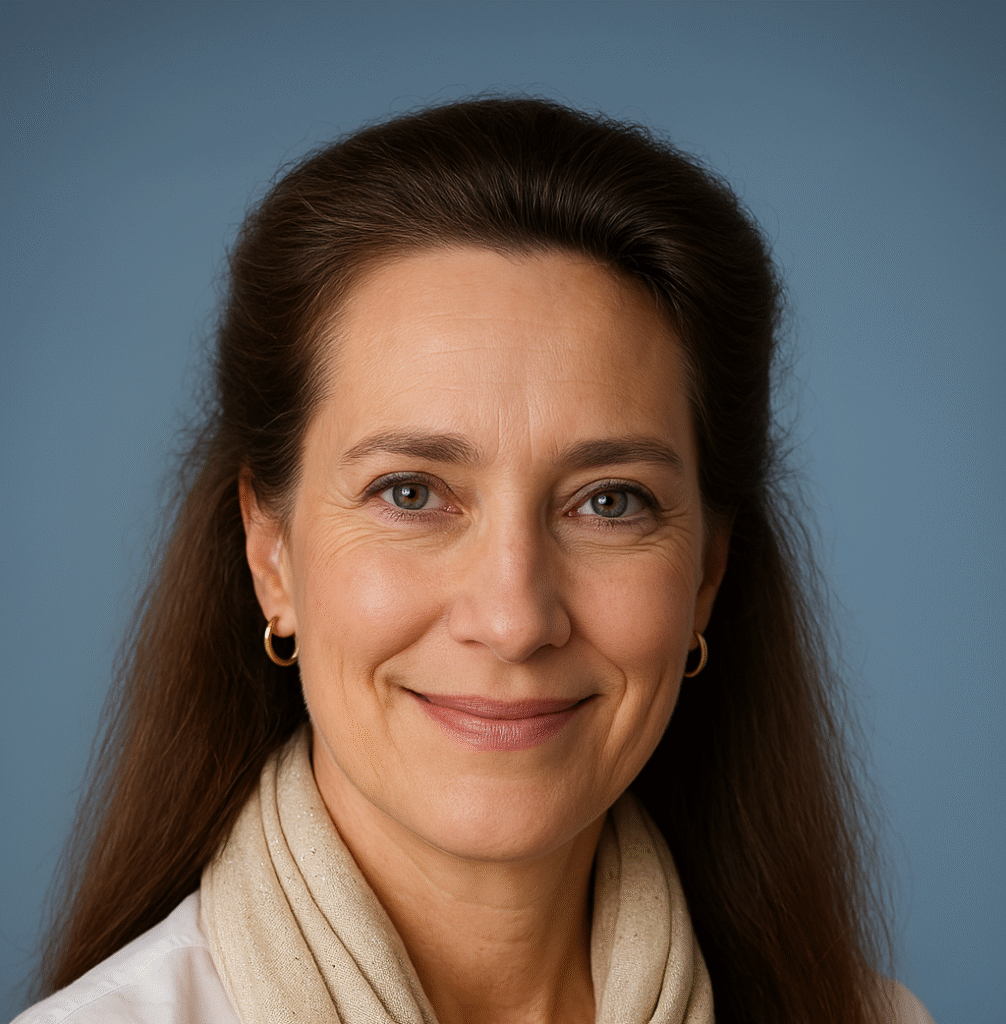
“I am an experienced medical doctor – MBChB, MRCGP, NLP master pract cert, Transformational Life Coach (dip.) Life Story Coach (cert.) Stress Counselling (cert.) Med Hypnotherapy (dip.) and EAGALA (cert.) I may have an impressive number of letters after my name, and more than three decades of professional experience, but what qualifies me to excel at what I do is my intuitive understanding of my clients’ difficulties and my extensive personal experience of managing major life changes using strategies I developed over many years.” Dr M Montagu