
Learn how to identify toxic friendships, protect your energy, and build the real connections you need.
From the warning signs to the recovery plan, this guide helps you navigate fake friendships.
What this is: A warm, witty, evidence-informed guide to identifying fake friends, understanding why they exist, protecting your mental health, and building the kind of genuine friendships that actually sustain you.
What this isn’t: A bitter rant about people who’ve wronged you, a manifesto for cutting everyone out, or a beginners’ lesson in “what is a friend.”
Read this if: You’ve recently noticed that some of your friendships feel more exhausting than energising, you’re trying to cope with a major life change and your social world feels shaky, or you’re craving connections that are honest, deep, and real.
5 Key Takeaways
- Fake friends aren’t always villains. Some are simply in pain from their own unhealed wounds — but that doesn’t mean you’re required to put up with their behaviour.
- The cost of fake friendships is real and measurable. Stress hormones, immune function, and mental health are all affected by toxic connections.
- Major life transitions are prime time for friendship audits. Divorce, illness, grief, and world upheaval all change who shows up — and who doesn’t.
- Authentic friendships can be built at any age. Intentionality, vulnerability, and shared experience are the building blocks — and they’re available to you right now.
- Your environment matters more than you think. Who you spend time with, and where, profoundly shapes your capacity for real connection.
Introduction: The Friend-Shaped Hole in Your Life
You’ve just been through something hard — a diagnosis, a divorce, a redundancy, a slow-burn disillusionment with the world as it currently is. You pick up your phone to call a friend. And then you hesitate. Because somehow, you already know that what you’ll get back won’t quite be what you need.
That hesitation? Worth paying attention to.
We live in an era of unprecedented connectivity and epidemic loneliness, and one of the most quietly damaging contributors to that paradox is the fake friend: the person who occupies the space where a real friend should be, without actually filling it.
This article is your guide to seeing clearly. By the time you’ve finished reading, you’ll know how to identify the fake friends in your life, understand what drives their behaviour, be able to protect yourself from the damage they cause, and, most importantly, now how to build the kind of friendships that actually hold you up when life gets heavy.
Which, right now, it rather is.
The Hidden Cost of Fake Friendships: Claire’s Story
Claire Beaumont had always been the kind of person people described as “so easy to be with.” Warm, funny, reliably available with a cup of coffee and a sympathetic ear. At forty-three, she had a full address book, a rich social calendar, and a deep, gnawing feeling that she was profoundly alone.
The feeling had been creeping in for months, gaining momentum the way a slow puncture does, until one Tuesday morning in October it arrived fully formed at her kitchen table.
She’d just received her biopsy results. Not the terrifying kind — “watchful waiting,” the consultant had said, the medical profession’s elegant way of suggesting nothing and meaning everything. But still. She sat there in the particular silence of unexpected news and reached, instinctively, for her phone.
She thought of Dominique first. They’d been friends since university — twenty years of birthday dinners, holiday WhatsApps, and the kind of conversational shorthand that only decades can build. She typed the words, then stopped. Dominique would make it about Dominique. She always did. Last year, when Claire’s mother died, Dominique had listened for approximately four minutes before pivoting to her own estrangement from her father. Claire had ended up consoling her.
She thought of Harriet, bright and effervescent Harriet, who would absolutely come over — bearing artisan croissants and a new anecdote about her renovation project — and somehow make Claire feel, by the end of the visit, as though she’d been interviewed rather than heard.
She thought of Priya, who had been conspicuously absent since Claire’s marriage ended eighteen months earlier, presumably because Claire was now inconveniently single in a world of couples.
She put her phone face-down on the table.
The kitchen smelled of coffee and last night’s rain through an open window. Outside, the oak tree her daughter had climbed as a child was beginning its slow, magnificent surrender to autumn, each leaf letting go with the kind of unhurried certainty Claire suddenly envied deeply. It knows what it’s doing, she thought, irrationally.
She sat with the quiet for a moment. And in it, something became undeniable.
She had a full life and almost no one to call.
It was her GP — a woman she’d always liked for her tendency to treat patients as intelligent adults — who first suggested the word “depletion.” Not burnout, not depression exactly, but a kind of chronic relational depletion. “You give a lot,” she said. “Do the people around you give back?”
The question sat with Claire for weeks. She began, tentatively, to pay attention — not with suspicion, but with the curious honesty of someone who has decided that clarity, however uncomfortable, is preferable to comfortable fog.
What she noticed: Dominique contacted her primarily when something good had happened and she needed an audience, or when something bad had happened and she needed rescuing. The in-between, the ordinary Tuesday of Claire’s life, held little apparent interest.
Harriet, she realised, never asked questions she was genuinely curious about. Her enquiries were conversational bridges back to herself.
Priya had been a fair-weather friend all along, and Claire had simply never stress-tested the friendship before.
There was also Marcus, who had befriended her in the aftermath of her divorce with a warmth that had initially felt like a lifeline, and who she gradually recognised was collecting her vulnerability the way some people collect art — not to cherish, but to display.
None of them were monsters. That was the strange part. They were people, with their own histories and hurt and blind spots. But they were, Claire slowly understood, not actually her friends.
The turning point came in late spring, when a colleague mentioned a reading retreat she’d attended in southwest France, somewhere in the rolling hills of Gascony.
Claire, who had loved books since childhood but had somehow lost the habit of reading them — along with the habit of stillness, and the habit of her own company — signed up on a mild impulse that felt, in retrospect, less like impulse and more like instinct.
She arrived carrying a suitcase, a battered copy of Middlemarch, and the particular exhaustion of someone who has been performing “fine” for rather too long.
What she found there: cool mornings walking an ancient path through vineyards and flowering meadows, the smell of the earth after rain, conversations with strangers who had no investment in who she used to be. A bookcase with pre-loved books. Long afternoons of uninterrupted reading. A journalling practice that asked her, gently but relentlessly, to look at her own life without flinching.
And, quietly, in that space: the beginning of what she now calls “the recalibration.”
She came home knowing which friendships to water and which to let go. She came home knowing what she actually wanted in a friend. She came home, for the first time in years, with the distinct sensation of fully occupying her own life.
The takeaway: Sometimes it takes physical distance, genuine stillness, and a change of landscape to see the people in your life clearly. Not because they look different from far away, but because you do.
How Can You Tell Who’s a Fake Friend?
What Does “Fake Friends” Actually Mean?
A fake friend isn’t necessarily someone who has set out to deceive you. The term covers a wide spectrum, from the mildly self-absorbed to the actively manipulative, but what they share is a fundamental imbalance: the friendship costs you more than it gives you, consistently and over time.
Dr. Judith Orloff, psychiatrist and author, describes these relationships as “energy vampires” — people who leave you feeling drained rather than replenished after time together. You might recognise this feeling as the mild dread before meeting someone, the strange exhaustion that follows what should have been a pleasant afternoon, or the creeping realisation that you edit yourself significantly in someone’s presence.
Key signs to watch for:
- They’re only present during your highs or your lows — they love your successes (as reflected glory) or your crises (as opportunities to advise), but have no appetite for ordinary life.
- Conversations are imbalanced. You leave knowing everything about their life and feeling unseen and unheard in your own.
- They’re competitive rather than collaborative. Good news from you triggers comparison rather than celebration.
- They share your confidences with others. This one is a bright red flag and non-negotiable.
- They make you feel vaguely guilty for having needs.
- You feel, consistently, that you’re auditioning for the friendship rather than simply being part of it.
Why Are Some People Fake Friends?
What Drives Inauthentic Friendship?
People are rarely fake friends out of malice. More often, it’s a function of their own unmet needs, unresolved wounds, or limited capacity for reciprocal intimacy.
Attachment theory offers useful insight here. People with anxious attachment styles may cling in ways that feel suffocating; those with avoidant attachment may pull away precisely when closeness is needed. Neither is villainous — both can be extremely painful.
Other drivers include:
- Narcissistic traits. Not all fake friends are narcissists, but narcissistic individuals tend to treat friendships as supply chains rather than mutual connections.
- Social anxiety. Some people perform friendship rather than inhabit it because genuine vulnerability feels too risky.
- Transactional worldviews. In a culture that commodifies everything, some people unconsciously apply a cost-benefit calculus to relationships — you are useful until you aren’t.
- Fear of genuine intimacy. It’s paradoxical but true: some people surround themselves with shallow connections precisely because deep ones feel dangerous.
Understanding this doesn’t mean tolerating the impact on your own wellbeing. But it can dissolve some of the bitterness, which, frankly, is worth something.
What Are the Different Types of Fake Friends?
A (Slightly Wry) Taxonomy of Inauthentic Friendship
The Fair-Weather Friend. Present for champagne, absent for chemotherapy. Easily identified by their sudden scheduling conflicts when your life gets complicated.
The Competitive Friend. Can’t hear good news from you without immediately one-upping it. Your promotion becomes a reminder of theirs. Your new haircut invites a commentary on theirs.
The Gossip. Brings you compelling stories about other people’s lives, which is enjoyable right up until you realise you’re in their stories too.
The Emotional Vampire. Every conversation circles back to their needs, their crises, their feelings. They are exhausting in the way of a leaking tap — not dramatic enough to fix immediately, but steadily depleting.
The Status Friend. Interested in you as a social accessory — your connections, your accomplishments, your postcode. Watch what happens to their availability if any of these change.
The Frenemy. The classic. Delivers criticism disguised as concern, damns with faint praise, and seems genuinely more comfortable when you’re struggling than when you’re thriving.
The Social Media Friend. Energetically present in your digital life — every post liked, every milestone heart-reacted — and nearly impossible to actually reach when you need them.
How Do Fake Friendships Harm Us?
What Does the Science Actually Say?
The damage is not merely emotional — it is physiological, and it’s well-documented.
A landmark study published in PNAS (Cacioppo & Hawkley, 2003) found that chronic loneliness — the kind experienced even within superficially populated social lives — is associated with elevated cortisol, disrupted sleep, compromised immune function, and accelerated cardiovascular decline. The key insight: it’s not the number of social connections that matters, but their quality.
A 2022 study in Nature Human Behaviour found that high-quality social relationships are among the most robust predictors of both longevity and subjective wellbeing — more significant, in some analyses, than exercise, diet, or even smoking status.
Fake friendships are not neutral. They create the physiological illusion of social support while delivering its opposite — a particularly insidious kind of stress, because it comes wrapped in the packaging of “connection.”
Additional possible damage includes:
- Erosion of self-trust. Chronic gaslighting and emotional manipulation — even low-level varieties — can corrode your confidence in your own perceptions.
- Reduced capacity for authentic connection. People who’ve been burned by false friends often become guarded in ways that inadvertently push away genuine ones.
- Opportunity cost. Time, energy, and emotional bandwidth spent on depleting friendships are unavailable for nourishing ones.
- Identity diffusion. Long-term exposure to a friend who doesn’t truly see you can eventually make it harder to see yourself.
How Can This Realisation Change Not Just Your Life, But Those Around You?
When you begin to audit your friendships honestly — not with cruelty, but with the compassionate precision of someone who has decided their own wellbeing matters — you don’t just change your own experience. You change what you model for others.
The colleague who watches you begin saying no to draining social obligations and yes to the walk, the book, the quiet evening that restores you. Your daughter, who notices that you’ve started choosing friends who laugh at your jokes instead of at you. The friend who, seeing you draw a gentle boundary with someone exhausting, finally feels permission to do the same.
Authentic self-regard is, at its heart, a gift to the community. When we stop tolerating what diminishes us, we raise the standard for what connection can be — not just for ourselves, but for everyone in our orbit.
This is particularly true during times of collective stress, when the instinct is to clutch at whatever is familiar rather than question whether it’s good. The world is currently delivering uncertainty in generous quantities. In that climate, the temptation to settle for the comfort of known faces, however unreliable, is real and understandable.
But the cost of settling is also real. And it compounds.
My Reconnect with Nature on the Camino de Santiago guests often describe the same experience: they arrived thinking they needed rest, and discovered they also needed renegotiation — a quiet, unhurried reassessment of what and whom they were supporting, and why.
Walking the ancient Camino de Santiago path through the hills, bookended by long afternoons of reading and reflection, creates the conditions for a particular kind of honesty. The kind that is difficult to access in the midst of ordinary life, with its noise and its obligations and its thousand small distractions.
How to Handle Fake Friends: 5 Mistakes to Avoid
What Not to Do When You Realise a Friendship Isn’t What You Thought
Mistake 1: Confronting immediately, impulsively, and without clarity. The urge to fire off a message the moment you’ve had an insight is understandable and almost always counterproductive. Give yourself time to distinguish between a genuinely toxic dynamic and a temporarily difficult patch. Not every bad week makes someone a bad friend.
Mistake 2: Expecting them to change if you just explain clearly enough. Fake friendships are rarely cured by honest conversations, however well-conducted. Change requires self-awareness, motivation, and sustained effort. You cannot supply any of these on behalf of another person.
Mistake 3: Going cold without explanation. The silent fade — while sometimes preferable to confrontation — leaves both parties without closure and can create unnecessary confusion and hurt. If the friendship matters enough to grieve, it matters enough to acknowledge its ending, however briefly.
Mistake 4: Replacing them immediately with new people. The impulse to fill the space left by a lost friend is natural and nearly always premature. Time alone — or in good company with yourself — is where the recalibration happens. Rushing into new social obligations before you’re clear about what you want is how fake friendships get replaced with different fake friendships.
Mistake 5: Concluding that all friendship is this complicated. It isn’t. Genuine friendship — the kind built on mutual curiosity, honest affection, and reciprocal care — exists, is available to you, and is worth everything it takes to find it.
A Short Intention-Setting Exercise
Think of the people you call friends. For each one, ask yourself these three questions without analysis — just notice your first honest response:
- After spending time with this person, do I generally feel better, worse, or the same?
- Am I fully myself with them, or do I perform a version of myself I think they’ll accept?
- If I were in real trouble — the 3am kind — would I call them?
You don’t need to act on what you notice today. Simply noticing, with honesty and without judgment, is the beginning.
Further Reading: 5 Books on Friendship, Authenticity, and Human Connection
1. Necessary Endings by Dr. Henry Cloud Cloud’s unflinching examination of why we hold on to things — relationships, habits, situations — that are no longer serving us is essential reading for anyone navigating a friendship audit. He is compassionate but clear: some endings are not failures. They are requirements.
2. The Art of Friendship by Roger Horchow and Sally Horchow A thoughtful, practical exploration of what great friendships look like and how they are made — particularly useful for those who want to move beyond recognising false connections toward building genuine ones.
3. Frientimacy by Shasta Nelson Nelson’s research-based framework for understanding friendship satisfaction is unusually rigorous and deeply humane. Her concept of “positivity, consistency, and vulnerability” as the pillars of authentic friendship is both simple and transformative.
4. Loneliness: Human Nature and the Need for Social Connection by John T. Cacioppo and William Patrick The definitive scientific exploration of loneliness and its effects — essential for understanding why fake friendships are not merely unsatisfying but genuinely harmful. Dense in places, but the insights are worth every page.
5. Untamed by Glennon Doyle Not strictly a book about friendship — it’s a memoir about dismantling the life you performed in order to find the one you actually want — but its passages on female friendship, loyalty, and the courage required to be truly known are among the most honest written on the subject.
PS: If you’re looking for a companion that meets you exactly where you are, do take a look at my book Embracing Change — in 10 Minutes a Day. Written for people who are navigating upheaval and rebuilding their lives with intention, it offers simple, daily practices for moving through change without losing yourself in the process.
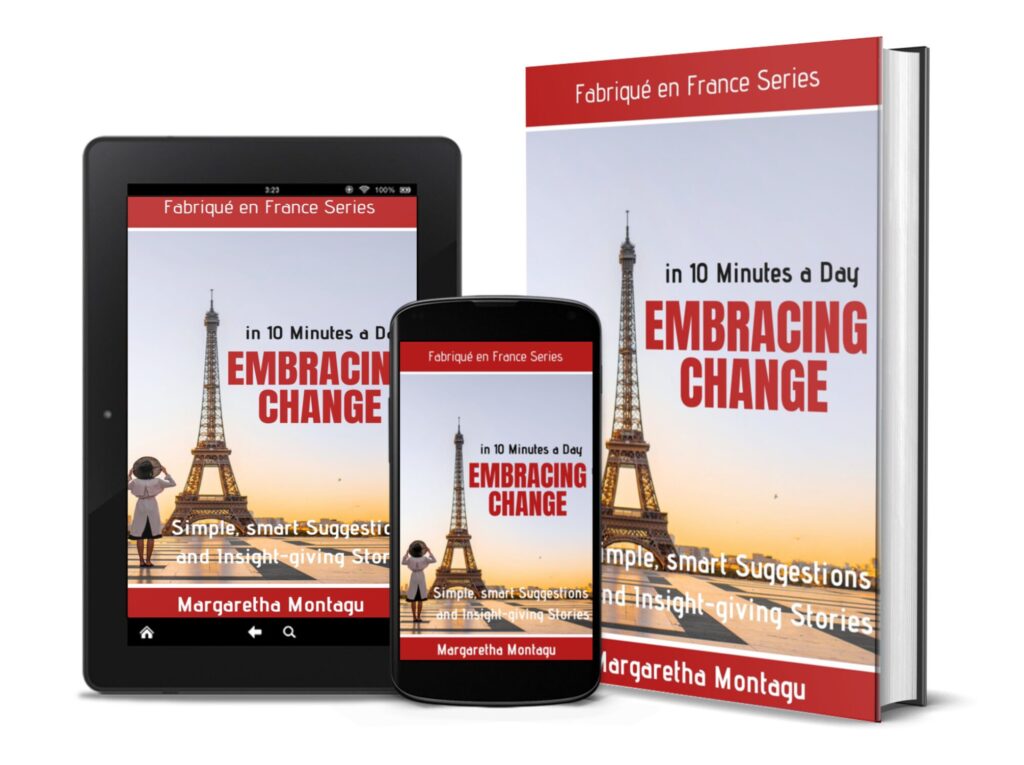
If you are currently facing a major life transition or any other dramatic change in your circumstances, and you have no idea how you are going to cope, the good news is that the strategy presented in this book can help you, step by step, to improve your ability to handle the stress caused by change, even if you feel entirely powerless at the moment.
You might also be interested in my online course, Reconnect with Nature: A Guided Journaling Course Inspired by Horses — a gentle, beautiful exploration of presence, self-awareness, and reconnection through the wisdom of nature. This course is included free with all reading retreat bookings.
5 FAQs About Fake Friends
Q1: Can a friendship become fake, even if it started as real? Absolutely — and this is perhaps the most painful variety. People change, circumstances shift, and what was once a genuine connection can curdle over time into something habitual and hollow. Recognising this doesn’t erase the real history; it simply acknowledges the present reality.
Q2: What if my fake friend is a family member I can’t avoid? This is genuinely harder, and deserves its own article. The short version: you can limit the intimacy you share with someone without removing them from your life entirely. Managed distance — warm but boundaried — is a legitimate option.
Q3: Is it possible to call out a fake friend without destroying the relationship? Sometimes. If the relationship is worth it, and if you can approach the conversation with curiosity rather than accusation — “I’ve noticed I often feel [x] after we talk; can we explore that?” rather than “you always make everything about you” — genuine dialogue is possible. Be prepared for the fact that they may not receive it well.
Q4: How do I make new friends as an adult? With more intentionality than in youth, and more patience. Shared sustained activity — classes, walks, retreats, book groups — creates the repetition and mild vulnerability that genuine connection requires. Proximity, frequency, and small shared experiences: these are the building blocks.
Q5: How do I know if I’m the fake friend? This is a courageous question and the very fact that you’re asking it probably means you’re not the worst offender. But reflection is useful: Do you ask questions and actually listen to the answers? Do you show up consistently, not just when it’s convenient? Are you honest with your friends, even when honesty is uncomfortable? If any of these are challenging, they’re worth working on.
Conclusion
There’s a reason the friendships we form during times of upheaval so often become the most enduring ones. Stripped of the ordinary social scaffolding, something more honest emerges. You meet people as they actually are, and you meet yourself the same way.
The world is in a peculiar season right now — anxious, fragmented, and loud in ways that make stillness feel almost radical. In that climate, the quality of who you spend your time with is not a luxury consideration. It’s a mental (and physical!) health one.
“The most basic and powerful way to connect to another person is to listen. Just listen. Perhaps the most important thing we ever give each other is our attention.” — Dr. Rachel Naomi Remen
A Gentle Invitation
If you’re feeling the particular exhaustion of a life that looks full but doesn’t feel it — if you’re craving connection that’s honest, conversation that goes somewhere real, and a few days of glorious, guilt-free reading in the company of people who actually see you — then the 5-Day Booklovers’ Binge Reading and Camino de Santiago Hiking Retreat in the south-west of France might be exactly what you need next.
You’ll walk an ancient pilgrimage path through the most beautiful landscape in Europe, read deeply without apology, and return home knowing something about yourself that you didn’t know when you left. Dr. Margaretha Montagu, physician, life transition coach, NLP master practitioner, and retreat host for over 15 years, has created a space where real friendship — the kind you’ve been missing — tends to happen naturally. Come with a book and an open mind. Leave replenished.
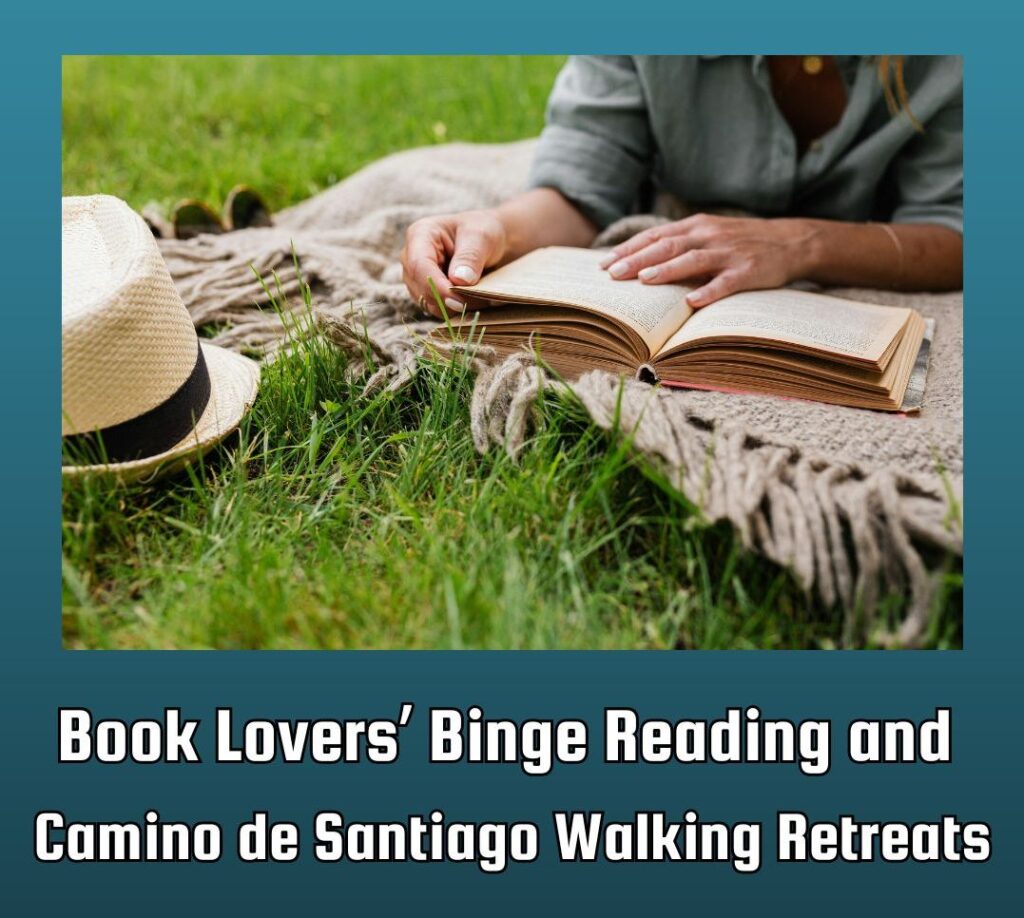
Join us for the Book Lovers Binge Reading Camino de Santiago Walking Retreat in the sun-drenched southwest of France: a journey where the trail and the story unfold together. Walk ancient paths at your own pace, then settle in each evening with a good book. This isn’t a fitness challenge—it’s a gentle rhythm—one step, one chapter, one honest conversation at a time. Rolling hills, quiet villages, golden light. No expectations, no performance, no agenda but your own unfolding.
What’s Next?
If this article has you nodding, wondering, or quietly rearranging something in your mind, you might find it illuminating to take Dr. Montagu’s Turning Point Quiz — a short, revealing assessment designed for people who sense they’re at a crossroads and want a little clarity about which way to go next. Access this quiz by signing up to my newsletter.
Here’s a question worth sitting with: If you could design a friendship from scratch — built entirely around who you actually are now, not who you used to be — what would it look like? And is there anyone in your current life who comes close?
References
- Cacioppo, J. T., & Hawkley, L. C. (2003). Social isolation and health, with an emphasis on underlying mechanisms. Perspectives in Biology and Medicine, 46(3), S39–S52.
- Holt-Lunstad, J., Smith, T. B., & Layton, J. B. (2010). Social relationships and mortality risk: A meta-analytic review. PLOS Medicine, 7(7), e1000316.
- Umberson, D., & Montez, J. K. (2010). Social relationships and health: A flashpoint for health policy. Journal of Health and Social Behavior, 51(S), S54–S66.
- Qualter, P., Vanhalst, J., Harris, R., Van Roekel, E., Lodder, G., Bangee, M., Maes, M., & Verhagen, M. (2015). Loneliness across the life span. Perspectives on Psychological Science, 10(2), 250–264.
- Yang, Y. C., Boen, C., Gerken, K., Li, T., Schorpp, K., & Harris, K. M. (2016). Social relationships and physiological determinants of longevity across the human life span. Proceedings of the National Academy of Sciences, 113(3), 578–583.

Author Bio: Dr Margaretha Montagu – described as a “game changer”, “gifted healer”, “guiding light” and “life-enriching author” – is an experienced medical doctor, a certified NLP practitioner, a medical hypnotherapist, an equine-assisted psychotherapist (EAGALAcertified) and a transformational retreat leader who guides her clients through life transitions – virtually, or with the assistance of her Friesian and Falabella horses, at their home in the southwest of France.
Stress destroys Lives. To find out what you can do to safeguard your sanity by taking my insight-giving quiz, subscribe to my mailing list.