Dr Margaretha Montagu – described as a “game changer”, “gifted healer”, “guiding light” and “life-enriching author” – is a certified transformational retreat leader who guides her clients towards their most meaningful and fulfilling lives, particularly when navigating life transitions – virtually, or with the assistance of her Friesian Horses, at their home in the southwest of France.
By the time Claire Dubois signed her divorce papers on December 18th, she felt as if she had spent five years inside a malfunctioning emotional blender—one of those noisy, lid-jumping contraptions with several warning labels and a tendency to splatter carrot puree on the ceiling. So when her three closest friends—Sophie, Marianne, and Elodie—announced they were taking her to Bagnères-de-Bigorre for a spa day to celebrate her newfound freedom, Claire didn’t protest. She needed pampering. She needed steam, serenity, and something resembling a full nervous system reboot before facing Christmas dinner with her well-meaning but relentlessly nosy family.
The drive to the Pyrenees felt like slipping inside a snow globe. Fresh powder dusted the mountain peaks like royal icing on a gingerbread landscape. The air smelled of pine resin, wood smoke, and cold stone. Christmas lights twinkled from the windows of wooden chalets along the road—reds and golds reflecting off the snow—and somewhere in the distance a church bell chimed Adeste Fideles, muffled by the crisp mountain air. Roadside vendors sold roasted chestnuts and vin chaud from steaming pots. By the time the four women arrived at the thermal spa—its elegant stone façade rising out of the valley, draped in garlands of pine and white lights—Claire felt her shoulders finally unclench.
Which was, of course, the moment the day started slipping sideways.
Inside the spa, a calming soundtrack of flutes and trickling water played, occasionally interrupted by instrumental versions of Christmas carols that made “Silent Night” sound like meditation music. Miniature Christmas trees dotted the reception area, their ornaments catching the soft amber light. Each locker offered a neatly folded white cocoon of terry cloth. Sophie’s and Marianne’s looked plush enough to double as duvets. Claire’s XXXS version looked like it had shrunk in the wash—or been designed for an unusually modest elf. She tried to put it on anyway. It wrapped around her torso with all the generosity of a disgruntled dish towel. Her left hip staged an immediate escape attempt. Elodie took one look and doubled over laughing, loud enough to attract stares from two indignant retirees in matching terry cloth, attempting to preserve the sanctity of spa silence. Claire couldn’t help it—she had to laugh too, the kind of laughter that bubbled up unexpectedly like champagne.
She marched to the reception, one hand clamped across her chest to preserve her dignity (and modesty, although why she bothers…), the other attempting to hold the robe closed. The receptionist, without even blinking, sighed as though this was a daily occurrence and murmured, “Oh. Yes. Er, our apologies.” She disappeared into a back room and returned with a robe so enormous Claire could have hosted a community meeting inside it. But it fit, and it was warm, and smelled faintly of cinnamon. Disaster averted.
Robe secured, the four friends floated toward the outdoor thermal pool. Steam rose in soft curtains from the turquoise water, backlit by strings of white lights wound through the surrounding pine trees. Snowflakes drifted from the grey winter sky, melting the instant they touched the surface. The air smelled of minerals and eucalyptus, with an undertone of mulled wine from the spa bar, a scent suggesting festive promise. Claire lowered herself into the water and felt it envelop her like a warm exhale from the earth itself.
“This is bliss,” she sighed, leaning back. “This I could get used to.”
The universe, hearing her, chuckled and said, “Hold my spiced cider.”
Just as Claire began to relax, a sudden roar erupted behind her. Before she could turn around, something flew across the water. Her robe. The huge, heavy, comforting robe she had laid neatly on the pool’s edge was now spinning in the water like a squid being sucked toward the filtration intake. She lunged for it. She missed. People turned. A few applauded. The lifeguard—wearing a Santa hat over his regulation cap—sighed, retrieved a long pole, and began fishing for it with resigned professionalism. When he finally hauled it out, limp, dripping and drowned, the receptionist materialised at her side with another, working hard to keep her face straight.
Her friends were laughing so hard they could barely stay afloat, which made Claire laugh too—big, helpless, ridiculous laughter that made her cheeks hurt. The kind she hadn’t felt in far too long.
They eventually staggered their way to the hammam, decorated with a small garland of eucalyptus and holly above the entrance. Inside, the steam was so thick Claire couldn’t see the bench in front of her, the walls around her, or the limits of her own personal space. Voices echoed strangely in the fog, disembodied. Someone murmured “over here,” and Claire, imagining she was moving toward Marianne, took a confident step forward, reached out, and sat down.
On a stranger.
A very startled, very unclothed stranger.
His shocked gasp cut through the steam like a foghorn. A moment later, the steam parted enough for Claire to see his horrified eyes, wide as poached eggs. Claire yelped, jumped up, slipped on condensation, and skidded across the tile floor with the helpless momentum of a baby deer encountering ice for the first time. Somewhere behind her, her friends dissolved again into uncontrollable laughter—the sort that suggested they might need medical attention.
The man coughed. “Is okay,” he wheezed. “I think… you break no bones?”
“My dignity,” Claire said, “is in traction.”
After the hammam debacle, they attempted lunch. The spa café smelled promising: roasted chestnuts, mulled wine, something buttery and cinnamon-spiced. A small Christmas tree stood in the corner, its lights twinkling hopefully. But their soup—described enthusiastically by the waitress as “rustic, warming, a heritage recipe from the mountains”—arrived as a beige, flavourless puddle that somehow managed to be the exact opposite of every comforting winter meal promised by the season. They seasoned it. They stirred it. They attempted to coax character out of it. Nothing helped. Sophie said, “It tastes like my last relationship: bland, lukewarm, and profoundly disappointing.” Finally, Elodie announced, “It tastes like beige had a personality and lost it halfway through therapy. Beyond redemption.”
At sunset, they finally made their way to the rooftop hot tub. Steam curled into the cold winter sky. The Pyrenean peaks blushed pink and peach as daylight faded, their snow-covered slopes glowing like they’d been dusted with silver. In the distance, church bells chimed. Claire felt herself melt into the warm water, into the moment, in the presence of the three women who had held her up through the darkest season of her life.
“I thought today was supposed to be calming,” she smiled.
“Oh, it was never going to be calm,” Sophie replied. “We don’t do calm. We do… memorable.”
“Thank you,” Claire said. “For today. For all of it. A Christmas gift I’ll never forget. For making sure I didn’t spend Christmas week crying while binging on not-yet-discounted chocolate.”
“Even though everything went wrong?” Sophie asked.
“Because everything went wrong. My marriage was about everything going right. Perfect plans, perfect image, perfect relationship. Perfect Christmases with matching sweaters and colour-coordinated gift wrap. And it was hell.” She paused, watching a snowflake land on her finger and melt. “This was about everything going wrong. And it was perfect.”
They clinked plastic spa cups of spicy herbal tea together.
Today, be the friend who shows up when needed. Don’t wait for the perfect moment or the perfect Christmas gift. Just show up—and create the messy, imperfect memory. Worst case scenario: Nothing goes to plan, someone sits on a stranger in a hammam, and you all eat terrible soup while questioning your life choices. Best case scenario: Years later, when your friend thinks about that difficult Christmas, they won’t remember the pain as much as they remember you—showing up with ridiculous robes and refusing to let them face it alone, turning the worst spa day ever into the moment they realised that love looks like friends who stay through no matter what goes wrong.
The Making Friends and Maintaining Friendships Masterplan
Christmas reminds us of the joy of giving, but sometimes, we hesitate. In our friendships, we often hold back. We hesitate before reaching out, before offering help, before being the first to say “I’m thinking of you.” We worry about seeming needy, or too much, or like we care more than they do.
True generosity in friendship isn’t transactional. It’s not a ledger that needs balancing by year-end. It’s the quiet decision to reach out simply because you want to—because someone matters to you, because connection itself is the reward, because giving from genuine affection needs no return on investment.
Forget the perfect Christmas gift. A small act of kindness—a thoughtful message at 11 PM because something reminded you of them, a shared memory that says “remember when we laughed until we couldn’t breathe?”, a surprise gesture that requires no occasion beyond “I saw this and thought of you”—these moments carry more weight than we realise. They brighten someone’s day in ways you might never witness.
This Christmas season, be the friend who reaches out first.
Sometimes the greatest gift we give is letting someone know they’re worth the effort.
What questions can you ask to get to know a new friend? How do you know if you and a new friend are really compatible? I have created a set of light-hearted quizzes, quotes and questions to help you do just that. Just fill in the form below and you’ll get immediate access to them all. I’ll also add you to my newsletter list, though you can unsubscribe from this list effortlessly and at any time. Included:
– How well do you know your Friends? Quiz
– What is Your Friendship Style? and Are your Friendship Styles compatible? Quiz
– 20 of the Most Inspiring Friends and Friendship Quotes and
– 20 lighthearted Questions you can ask to get to know a new Friend
Discover how to build meaningful, lasting friendships and create a support system that truly has your back—delivered straight to your inbox!
Friends and Friendships
Discover how to build meaningful, lasting friendships and create a support system that truly has your back—delivered straight to your inbox! (newsletter subscription included)
Thank you so much!
More information about making friends and maintaining friendships (including the quizzes I mentioned) is on its way to you. You have also successfully subscribed to my newsletter.
Murphy’s law can help you through a difficult time, certainly when surrounded by friends in this sort of situation and the laughter can’t be held back.
Endlessly renewable. “We need women at all levels, including the top, to change the dynamic, reshape the conversation, to make sure women’s voices are heard and heeded, not overlooked and ignored.” Sheryl Sandberg
If your soul is craving fresh air, meaningful movement, and a chance to reconnect with nature, join us on a Camino de Santiago Walking Retreat in the southwest of France. This isn’t just a scenic hike – it’s a powerful, natural reboot for your body, mind, and spirit. Imagine quiet paths, rolling hills, cozy evenings, and slow conversations. No fitness requirements. No forced bonding. No pressure to have a breakthrough. Just one foot in front of the other, and finding your way to a brighter future.
Author Bio: Dr Margaretha Montagu – described as a “game changer”, “gifted healer”, “guiding light” and “life-enriching author” – is an experienced medical doctor, a certified NLP practitioner, a medical hypnotherapist, an equine-assisted psychotherapist (EAGALAcertified) and a transformational retreat leader who guides her clients through life transitions – virtually, or with the assistance of her Friesian and Falabella horses, at their home in the southwest of France.
The moment Priya stepped into the “3ème Soirée Annuelle de Networking & Canapés de Noël”—an event title that sounded like a hostile takeover of her free time, now with added French pretension—she knew she’d made a mistake.
The Marais loft glowed with fairy lights strung between exposed wooden beams, and smelled of mulled wine and those expensive beeswax candles that people light when they are trying too hard. Through the tall windows, she could see the December drizzle turning the cobblestones below into dark mirrors. People were already clustering in tight conversational pods, their laughter too loud, their talk bouncing between English and French as they discussed Q4 projections and something called “strategic disruptions pendant les fêtes.”
A man in a blazer, the exact shade of a bruised plum, wearing a tiny Santa hat at a jaunty angle, materialised beside her. He looked like a Christmas ornament that had achieved sentience and a six-figure salary at a consulting firm.
“Champagne, ou peut-être un ‘Mistletini’—it’s 90% gin and 10% potential indigestion!” he chirped in that particular Franco-English accent that suggested international business school and expensive ski holidays.
She took a glass. Bubbles hit her nose, making her sneeze. Velvet Plum Blazer took a quick step back. “Santé,” he said, then vanished faster than he appeared.
Priya wished she could vanish too—maybe dissolve into the mist outside and reform somewhere less aggressively festive.
Don’t overthink it, she told herself. You’re a grown woman. You’ve survived corporate take-overs and layoffs, three terrible bosses, and that time you accidentally replied-all to a company-wide email about your cat’s digestive issues. You can survive two hours of forced merriment in a foreign city where you’re still not entirely sure which bises situations require two cheek-kisses or three.Or four?
She executed a tactical retreat to the groaning food table—her natural habitat at any social event—and formed a strategic alliance with a platter of mini-quiches shaped like tiny wreaths and some suspiciously fancy foie gras on toast points that probably cost more than her monthly rent.
She was chewing thoughtfully (or buying time—hard to say) when she heard it. The question. The social landmine. The six words that could instantly turn a festive gathering into an existential dread-fest.
“So, what do you do?”
Her jaw froze mid-chew. She turned to find a smiling woman wearing a sweater featuring a reindeer in an Eiffel Tower scarf—the kind of knitwear that announced “I’m whimsical but also serious about networking.” She had the festive confidence of someone who owned a separate set of Christmas napkins and knew exactly which arrondissement had the best Christmas markets.
Priya tried to stall, pointing at the quiche in her mouth. The woman waited, her smile unwavering with that particularly French patience that feels both generous and vaguely judgmental.
Arrrgh.
This was where she usually deployed one of her practised evasions: “It’s complicated,” or “I’m between things,” or the magical word “Consulting”—a word that meant absolutely nothing but usually impressed people into silence, especially when said in Paris, where everyone claimed to be consulting about something, at any given time.
But tonight, with the rain softly tapping against the windows and the distant bells of Notre-Dame chiming the hour, she was tired. Tired of pretending, tired of dodging, tired of shaping herself into something acceptable for strangers who probably wouldn’t remember her name by the time the accordion version of “Douce Nuit” ended.
She gulped down the quiche.
“I am currently a professional consumer of artisanal holiday snacks,” Priya deadpanned.
The woman blinked.
Priya considered spontaneously combusting on the spot, or possibly throwing herself into the Seine, whichever would be quicker.
Then the woman laughed—a real, booming, un-corporate laugh that made three people stop discussing their stock options and smoothly move on to the best boulangeries in the 16th.
She lifted her glass. “Welcome to the club. I quit my job as a ‘Chief Optimisation Strategist’ to become a ‘Senior Executive of Existential Dread.’ Relocated to Paris, thinking the wine and cheese would fix me. Jury’s still out.”
Priya exhaled so sharply her bangs fluttered. “You did?”
“Yup,” Reindeer-sweater Woman said. “After fourteen years of pretending I loved optimising regional workflow systems. My soul escaped by faking its own death and mailing me a postcard from Provence. It said ‘Bisous‘ and nothing else.”
Priya snorted. “Félicitations to that.”
They clinked glasses and migrated toward a quieter corner near a potted plant and a window overlooking the rain-slicked street below, where the Christmas lights reflected in puddles like scattered stars. A man in a beret walked past with a baguette under his arm—so stereotypically Parisian that Priya wondered if he was performance art.
“I’m Maya, by the way.”
“Priya.”
“So,” Maya said, sliding into a vintage velvet armchair with the elegance of someone abandoning all pretence, “how’s your quarter-life, mid-life, two-thirds-life crisis going? Mine is currently focused by the terrifying realisation that I don’t know how to do anything but make pivot tables. Turns out that’s not a transferable skill for Parisian dinner parties.”
Priya laughed, startled. “Honestly? I think I’m in the renegotiation period of the ceasefire between Me and My Expectations. I’m demanding better terms. Possibly in French, for dramatic effect.”
Maya raised her glass. “To demanding better terms. À nos projets flous et terrifiants.”
Priya settled beside her. The chair sighed under the weight of her honesty. Outside, the city twinkled—the Eiffel Tower doing its hourly sparkle show in the distance, because even infrastructure here was dramatic. She took a breath. “I thought leaving my job would make things clearer. Like the universe would hand me a neatly labelled folder: ‘Priya’s New Purpose—Action Items Inside.’ Instead, I’m… here. In Paris. At a party. Eating expensive quiche and pretending I understand when people switch mid-sentence to French.”
“I get it,” Maya said. “I spent ten years working toward a corner office. Then I finally got it, sat in the leather chair, looked out over the city and thought, ‘Ah. I think I might have made a horrible, irreversible mistake.’ So I moved to Paris, thinking geographical relocation would solve existential problems. Spoiler: it doesn’t. But the bread is better.”
“Ten years for one uncomfortable chair?”
Maya nodded solemnly. “It was ergonomic, which is corporate code for ‘will slowly destroy your spine in a very expensive way.’ The Paris version has better stuffing but the same soul-crushing vibe.”
Something warm started expanding in Priya’s chest, competing with the mulled wine. “It’s just… everyone else seems so certain. I tell people I left my job, and they congratulate me like I just climbed Everest. But then they ask what’s next, and when I say ‘I don’t know,’ they stare at me like I’ve confessed to burning down the Galeries Lafayette Christmas display.”
Maya tilted her head, her reindeer-Eiffel earrings swaying. “Priya, look around. This entire place is filled with people pretending they have A PLAN. Some do. But a lot of them are one minor inconvenience—like running out of champagne or discovering their Navigo pass expired—away from Googling ‘What’s my real purpose in life?‘ just like the rest of us.”
Priya followed her gaze. The confidently networking people looked a little different now—less intimidating. Slightly panicked, even, beneath the curated glow of ambition and the blinking Santa hats perched atop perfectly styled French haircuts.
“Huh,” Priya said. “Maybe none of us really knows what we’re doing. We’re just doing it in nicer cities.”
They fell into the kind of conversation that feels like slipping on warm, well-worn slippers—cozy, unpretentious, safe. They talked about old dreams, lost passions, the terrifying thrill of blank calendars, and the existential dread of absent LinkedIn notifications. Maya confessed she’d been in Paris for three months and still couldn’t figure out which day her building’s concierge speaks to people. Priya admitted she’d cried in a boulangerie last week because she couldn’t remember the word for croissant(?!) and just pointed desperately while the baker looked confused and slightly concerned.
They shared their fears, too.
“What if I never figure it out?” Priya whispered.
Maya shrugged softly. “Figuring it out might be a tad… overrated. The French have been philosophically unsure about everything for centuries, and they seem fine. Well, fine-ish. They have 300 varieties of cheese to help them cope.”
That landed somewhere deep. Priya swallowed.
“I watch a lot of TED Talks,” Maya said dryly. “Two and a half, and suddenly I’m Yoda. Un Yoda parisien avec un béret rouge.”
They sat in companionable silence, two strangers who’d become something more—companions in the strange, brave wilderness between endings and beginnings, sitting in a Marais loft while the city glittered outside and accordion music drifted up from somewhere below.
Later, as Priya stepped out into the cold December night, her breath made soft clouds in the air. The street glimmered with rain and reflected Christmas lights. A couple hurried past sharing an umbrella, laughing. The smell of roasting chestnuts drifted from a corner stand. Somewhere, church bells chimed.
Priya didn’t have all the answers, but she had one honest conversation under her belt and the phone number of someone who understood what it felt like to be spectacularly uncertain in a beautiful city.
For tonight, that felt like enough.
The Make Friends and Maintain Friendships Masterplan
We often under-rate relocation as a life transition. I have had to relocate several times. I know what it takes to survive: friends you can depend on.
Making new friends after a relocation isn’t about replacing the people you left behind—it’s about building the infrastructure you need to survive and thrive in your new reality. Your best friend from your old location knows your history, your inside jokes, the person you were before everything changed, and that connection is irreplaceable—nurture it fiercely through regular calls, visits, and the kind of texts that pick up mid-conversation like no time has passed. They can’t, however, bring you soup when you’re sick at 2 AM, can’t meet you for an impromptu coffee when you’re spiralling, can’t introduce you to their dentist or help you figure out which grocery store has the best bread.
New friends become your on-the-ground support system—the people who help you build a life where you actually live, not just where you used to live. You need both: the deep roots of old friendship that remind you who you are, and the new connections that help you figure out who you’re becoming. One gives you continuity; the other gives you community.
Christmas events, community gatherings, or even online spaces are filled with opportunities to connect. Every friendship starts with a simple introduction. The barista you see every morning, the neighbour you exchange nods with, or someone in your extended social circle could become a meaningful connection if you’re open to the possibility.
New friendships are a reminder that life always offers fresh beginnings, even during times of change. You don’t have to navigate transitions alone—there are people out there ready to walk alongside you. Making friends and maintaining friendships is one of the subjects we’ll address during my 3-6 month mentoring program, the Radical Renaissance Protocol.
Today, say yes to one social event that feels uncomfortable or outside your comfort zone—especially if you’re new somewhere or going through a transition. Show up even when you’d rather stay home. Go to the networking thing, the expat meetup, the random invitation from an acquaintance. Join local and regional Facebook groups. Worst case scenario: You waste a couple of hours. Best case scenario: You meet someone else who also feels out of place, you bond over your mutual discomfort and inability to remember how many bises are appropriate, and six months later they’re the person you text when you need someone to sit with you in your uncertainty—the friend who gets it because they were there too, pretending to have their life together while everything felt impossibly hard and terrifyingly uncertain all at once.
It’s not easy to make friends, especially in a country where you may not speak the language, but it is essential. As Helen Keller said, “I would rather walk with a friend in the dark, than alone in the light.” Would you like to figure out what type of friend YOU are and maybe adjust your approach to fit your new circumstances? Are you and a new friend really are compatible? To help my clients make friends, have created a set of light-hearted quizzes, quotes and questions to help you do just that. Just fill in the form below and you’ll get immediate access to them all. I’ll also add you to my newsletter list, though you can unsubscribe from this list effortlessly and at any time.
Included:
– How well do you know your Friends? Quiz
– What is Your Friendship Style? and Are your Friendship Styles compatible? Quiz
– 20 of the Most Inspiring Friends and Friendship Quotes and
– 20 lighthearted Questions you can ask to get to know a new Friend
Friends and Friendships
Discover how to build meaningful, lasting friendships and create a support system that truly has your back—delivered straight to your inbox! (newsletter subscription included)
Thank you so much!
More information about making friends and maintaining friendships (including the quizzes I mentioned) is on its way to you. You have also successfully subscribed to my newsletter.
If your soul is craving fresh air, meaningful movement, and a chance to reconnect with nature, join us on a Camino de Santiago Walking Retreat in the southwest of France. This isn’t just a scenic hike – it’s a powerful, natural reboot for your body, mind, and spirit. Imagine quiet paths, rolling hills, cozy evenings, and slow conversations. No fitness requirements. No forced bonding. No pressure to have a breakthrough. Just one foot in front of the other, and finding your way to a brighter future.
I put the essence of who I am, and everything I have experienced that makes me who I am, with great enthusiasm, into my retreats, courses and books. – Dr Margaretha Montagu (MBChB, MRCGP, NLP master pract (cert,) Transformational Life Coach (dip,) Life Story Coach (cert) Counselling (cert,) Med Hypnotherapy (dip) and EAGALA (cert)
Comment
Just wanted to say how wonderful I think your stories are and today in particular made me think back to when I came to live in France, although my husband was here everything was new including taking on the headship of the International School; And then within a year my husband of 30+ years had suddenly passed away and without the support of my close colleagues I would not have survived and some of those very special people have become my firm friends and still though I dont see them very often are so very special to me. S. B.
Château de la Garde had rough-hewn limestone walls that rose from the damp earth like a sleeping giant. Elsie pulled her wool scarf higher, the fabric scratching her chin. Her instincts, which usually guided her safely to the nearest quiet corner with a book and a cup of tea, had screamed No, stay at home! ‘Christmas Carols at the Chateau’ is not your thing! But her neighbour, Madame Dubois, insisted with such determined, festive goodwill that Elsie had capitulated.
She followed a small stream of people—mostly couples in expensive, sensible outerwear—across the courtyard. The air smelled of cold stone, damp leaves, and woodsmoke. Above the heavy oak door hung a single, enormous wreath decorated with pinecones the size of her fist.
The Great Hall was a cavern of soaring ceilings and shadows. Gilded frames held portraits of long-dead dukes who looked perpetually annoyed, now flanked by towering, twinkling fir trees. The cold air of the entrance gave way to a dense warmth, thick with the scent of beeswax candles and the cloying sweetness of vin chaud.
Elsie found a seat near the back, against a wall that felt genuinely medieval, radiating a bone-deep chill that no amount of central heating could disperse. She was safe here, a lone island in a sea of rustling velvet and murmured French. She pulled out her phone, intending to check the weather, but the signal had clearly been sacrificed to preserve the chateau’s authentic atmosphere.
The choir filed in, a group of twenty-odd people in deep blue robes, their faces serious. The conductor, a man with a wild shock of white hair and a bow tie that seemed to vibrate with enthusiasm, raised his hands.
The first note of the carol—a low, powerful bass—hit the stone walls and rebounded, vibrating through the floor and up into Elsie’s chest. It wasn’t just music; it was a physical experience, a heavy blanket woven from sound.
It was during the third verse of a particularly complex French carol that Elsie felt a sharp, unexpected jab in her ribs.
“I’m ever so sorry,” a voice whispered, heavily accented, right next to her ear. “I think my elbow just committed a felony against your person.”
Elsie turned her head slowly. The woman next to her was small, with a riot of dark, curly hair that seemed to defy gravity and a pair of glasses perched precariously on her nose. She was holding a plastic cup of mulled wine with the intensity of someone guarding a national treasure.
“It’s fine,” Elsie whispered back, rubbing her side. “I think the chateau’s acoustics must have amplified the impact.”
The woman grinned, a quick, bright flash. “Ah, yes. The medieval echo chamber. Designed to make you feel spiritually uplifted. I’m Clara.”
“Elsie.”
“I’m here under duress,” Clara confided, leaning in slightly. “My husband is in the tenor section. He sings with the passion of a man who believes he is personally responsible for the salvation of the entire audience. It’s exhausting to watch.”
Elsie let out a small, involuntary puff of laughter. “Mine was a neighbour. Madame Dubois. She operates on a level of festive coercion I’ve never before encountered.”
“Ah, French women of a certain age. Forces of nature.” Clara took a careful sip of her wine. “Do you think this vin chaud is actually just port with a cinnamon stick? Because it’s suspiciously strong.”
“I suspect it’s a secret regional recipe,” Elsie replied, feeling a lightness she hadn’t anticipated. She hadn’t spoken more than three sentences to a stranger in a week, and here she was, dissecting the alcohol content of the local Christmas tipple.
The choir launched into a rousing, slightly off-key rendition of “Deck the Halls.”
“Fa la la la la,” Clara mouthed, rolling her eyes with theatrical flair. “I love the carols, I really do, but I swear my other half just went rogue on the ‘la’s.”
“He’s expressing his artistic freedom,” Elsie murmured, watching the husband in question, whose face was indeed a mask of intense, slightly pained devotion.
During the brief intermission, the crowd surged towards the refreshments table. Elsie and Clara, having established a comfortable proximity, moved together.
“So, you’re not from around here,” Clara stated, not as a question, but as a shared observation.
“Is it the way I flinch when someone speaks French too quickly?” Elsie asked, accepting a tiny, star-shaped mince pie.
“No, it’s the coat,” Clara said, tapping Elsie’s sleeve. “It’s too practical. Too sensible. Everyone here wears something that looks like it was woven from a rare alpaca and a thousand euros. In rebellion, I’m wearing a coat I bought in a panic at a motorway service station.”
They fell into an easy, meandering conversation that drifted far from the chateau and the carols. Clara was a graphic designer who had followed her historian husband to this corner of the world and was now trying to launch a business selling online journals to people who still used paper diaries. Elsie confessed her current state of professional drift—a quiet, post-burnout sabbatical she hadn’t yet told anyone about.
The conductor, now back on the stage, clapped his hands sharply, signaling the end of the intermission.
“We should probably go back,” Elsie said, feeling a pang of genuine disappointment.
“Wait,” Clara whispered. She reached into her small, impractical handbag and pulled out a slightly crumpled business card.
Elsie took the card as they returned to their seats. The choir began a slow, soaring piece, the voices weaving together like threads of silver and gold. This time, Elsie didn’t lean against the cold wall. She sat upright, her attention split between the music and the small, warm presence beside her.
The music was beautiful, undeniably so, but it was the quiet, shared moment after the final note—the collective sigh of the audience, the scrape of chairs, the sudden rush of cold air as the doors opened—that felt most significant.
Outside, the frost had thickened, turning the courtyard into a sheet of silver. Clara’s husband appeared, scarf wound haphazardly around his neck, still flushed with post-performance adrenaline.
“Ah, ma chérie, you survived!” he said, kissing Clara on both cheeks. “Did you hear the exquisite harmonies in the second piece, Noel Nouvelet? Magnifique, non?”
“Magnificent,” Clara agreed, with such sincere affection that Elsie felt a small pang of something she couldn’t quite name. Clara turned to introduce them, but her husband was already being pulled away by another choir member, deep into a passionate debate about the tempo of “Minuit Chétiens.”
“He’ll be another twenty minutes at least,” Clara said, pulling her ridiculous, fluffy hat down over her ears. “I’m going to need a proper coffee after this. A coffee that tastes like actual coffee, not a medieval spice rack.”
“I know a place,” Elsie heard herself say. “It’s tiny, but the coffee is excellent.”
Clara stopped, turning to face her. The chateau lights cast long shadows across the courtyard, but her expression was clear. “When?”
The directness of it caught Elsie off guard. Not maybe or we should, but when.
“Tomorrow?” The word came out tentative, as if testing whether it was real.
“Tomorrow,” Clara confirmed. “Text me the address. I’ll be the one who looks desperately grateful to be somewhere that isn’t a medieval monument to seasonal obligation.”
They stood there for a moment longer, breath clouding in the frozen air, as the last of the crowd dispersed around them. The chateau loomed behind them, its windows golden, the wreath above the door catching the light. Somewhere, a door closed with a heavy, final thud.
“I should let you find your husband,” Elsie said.
“He’ll find me eventually. He always does.” Clara smiled, then reached out and squeezed Elsie’s arm. “Thank you for making this bearable. Better than bearable, actually.”
Elsie walked to her car alone, her footsteps crunching on the gravel. She unlocked the door and sat for a moment in the cold interior, looking at the business card in her hand.
As she pulled out of the car park, she caught sight of Clara (aka Penny) in her rearview mirror, standing in a pool of light, waving with both hands above her head like someone signalling a rescue plane.
Elsie lifted one hand from the steering wheel and waved back.
The road home was dark and winding, but she knew the way. And tomorrow, she would know the way to somewhere else entirely—a small café, a proper cup of coffee, and a conversation that doesn’t have to end when the carols did.
Maybe Madame Dubois had been right after all.
The Make Friends and Maintain Friendships Masterplan
The invitations you’re most tempted to decline are often the ones you need most. Not because every event will be amazing (some will be terrible), but because isolating during life transitions feels safe until it becomes suffocating.
You don’t have to say yes to everything. You don’t have to become a social butterfly. You just have to say yes to one thing you’d normally decline.
Maybe it’ll be awkward. Maybe you’ll leave early. Maybe you’ll spend the whole time thinking about your couch.
Or maybe—justmaybe—you’ll meet your person. The one who also wanted to leave early. The one who also felt awkward. The one who becomes your Tuesday dinner friend, your emergency contact, your “I need to complain about life” text thread.
You won’t know until you say yes.
Today, say yes to one Christmas invitation you’d normally decline. The community Christmas carols sing-along, even though you don’t know the words past the first verse. The tree lighting ceremony in the town square when it’s definitely going to rain. That annual Christmas concert your overly enthusiastic neighbour won’t stop mentioning. What you’re risking: Frozen fingers and frozen toes. Making small talk with strangers about fruitcake. Pretending to enjoy mulled wine that tastes like liquid potpourri. One slightly embarrassing evening you would have forgotten all about by January. What you might gain: A moment when someone’s elbow digs into your ribs, and they apologise with the kind of quirky humour that makes you forget you actually want to be anywhere else. A conversation that starts with “I’m only here under duress” and ends with a business card in your pocket. The discovery that the person sitting next to you also thinks this is ridiculous, and suddenly, ridiculous not only becomes bearable, but the highlight of your season.
Would you like to find out what type of friend YOU are? How well do you know your friends? If you and a new friend are really compatible? I have created a set of light-hearted quizzes, quotes and questions to help you do just that. Just fill in the form below and you’ll get immediate access to them all. I’ll also add you to my newsletter list, though you can unsubscribe from this list effortlessly and at any time.
Included:
– How well do you know your Friends? Quiz
– What is your Friendship Style? and Are your Friendship Styles compatible? Quiz
– 20 of the Most Inspiring Friends and Friendship Quotes and
– 20 lighthearted Questions you can ask to get to know a new Friend
Friends and Friendships
Discover how to build meaningful, lasting friendships and create a support system that truly has your back—delivered straight to your inbox! (newsletter subscription included)
Thank you so much!
More information about making friends and maintaining friendships (including the quizzes I mentioned) is on its way to you. You have also successfully subscribed to my newsletter.
Author Bio: Dr Margaretha Montagu – described as a “game changer”, “gifted healer”, “guiding light” and “life-enriching author” – is an experienced medical doctor, a certified NLP practitioner, a medical hypnotherapist, an equine-assisted psychotherapist (EAGALAcertified) and a transformational retreat leader who guides her clients through life transitions – virtually, or with the assistance of her Friesian and Falabella horses, at their home in the southwest of France.
Why bother figuring out your life purpose at all? Because a life without one runs on autopilot. Every decision, from which job to take to how to spend a Tuesday, starts to feel arbitrary, and that’s exhausting in a way that’s hard to pinpoint. You end up making the same choices over and over, not …
If you love walking, you may have come across the term walking retreat and wondered how on earth it differs from an organised walking holiday. After all, both involve beautiful countryside, well-worn walking shoes, fresh air and a few days away from everyday life. There may even be a backpack involved, although hopefully not one …
AI has revolutionised online learning in ways we could never have imagined. These days, you can ask AI to create a course on almost anything—from astrophysics to how to keep your houseplants alive—and it will hand you a neatly structured programme in seconds. Want six modules? No problem. Learning objectives, worksheets, quizzes, reflection questions and …
. For the first year or two of hosting Camino de Santiago walking retreats, I worried about the wrong things. I fretted over the towels. I agonised slightly over whether the guest rooms felt “smart” enough, whether the breakfast presentation looked sufficiently considered, whether I measured up to the polished retreat centres with their infinity …
I used to think setting healthy boundaries had to be dramatic to count. That you needed a raised voice, or a slammed door, or at the very least a strongly worded text, for a boundary to register. Turns out I only believed this because I’d never before watched Loki work a paddock. Loki is the …
The text arrives at 6:47 AM on December 10th: Chemo brain strikes again. Forgot to buy eggs. Also forgot what eggs are for. Send help.
By 7:15, there are four dozen eggs in Marie’s kitchen. Also: three different types of bread, two quiches (one still warm), a rotisserie chicken, and Lisa standing at the stove making scrambled eggs.
“You didn’t have to come,” Marie says from the doorway, her own head wrapped in the soft green scarf that Jen brought last week because it “matched her eyes and also her face when she’s nauseous.”
“I was already up,” Lisa lies. She wasn’t. Her hair is in a messy bun and she’s wearing inside-out leggings. “Besides, someone has to make sure you eat some real food.”
Marie shuffles to the table. Her slippers make a soft shushing sound against the hardwood. Everything feels both sharper these days—colours too bright, sounds too loud, but her own body somewhere far away, like she’s operating it by remote control.
Lisa slides eggs onto a plate. They’re perfect—soft, buttery, the way Marie’s mom used to make them. Marie’s throat tightens.
“Don’t you dare cry over eggs,” Lisa warns. “I have a reputation to maintain as someone who can’t cook.”
“These are really good.”
“I Googled it in your driveway. ‘Scrambled eggs for your friend who’s going through hell.'” Lisa sits down across from her.
Marie takes a bite. Her stomach, which has spent three days staging a revolution, cautiously accepts the offering.
“The group chat is losing it, by the way,” Lisa says, pulling out her phone. “Jen wants to know if we’re doing Christmas at your place or hers. Rachel sent seventeen ideas for ‘chemo-friendly holiday crafts,’ which is apparently a category that exists. And Sarah—” She pauses, scrolling. “Sarah wants to know if you’d rather talk about it or never mention it and just aggressively focus on normal things.”
“What did you tell them?”
“That you’d let us know when you knew.” Lisa looks up. “Will you? Let us know?”
Marie pushes eggs around her plate. Outside, someone’s car alarm is going off. The morning light coming through the window is thin and pale, the kind of winter light that makes everything look temporary.
“I don’t know what I need,” she admits. “Some days I want everyone here. Other days I want to crawl into a corner.”
“Okay. So we’ll figure it out as we go.” Lisa says it like it’s simple. Like Marie isn’t a burden with a rotating schedule of bad days and worse days. Like showing up at 7 AM to make scrambled eggs is just what you do.
By December 15th, there’s a system.
Monday, Wednesday, Friday: Lisa brings breakfast and sits with Marie during the morning nausea. They don’t talk much. Sometimes Lisa reads the news out loud. Sometimes they just sit.
Tuesday and Thursday: Jen comes after work with dinner and terrible reality TV. They watch home renovation shows and make fun of people’s design choices. Jen does a running commentary in different accents. Marie laughs until her ribs hurt, and it’s the first time hurting has felt good in weeks.
Saturday: Rachel arrives with craft supplies and chaos. Last week, they made ornaments out of salt dough. This week, she’s brought supplies for decorating gingerbread houses, except she forgot the gingerbread, and they end up building houses out of TUC crackers and icing. Marie’s collapses. Rachel declares it “architecturally honest.”
Sunday: Sarah takes Marie to appointments. Holds her hand as the needle goes in. Doesn’t flinch at the blood draws. Asks the doctors questions Marie’s too tired to ask. Takes notes in a little spiral notebook with a ginger cat on the front.
It’s not perfect. Some days, Marie cancels everythin,g and they let her be. Some days, someone says the wrong thing and Marie cries in the bathroom. Some days, the group chat goes quiet because nobody knows what to say.
But they keep showing up.
On December 23rd, Marie wakes up, and her pillow is covered in hair—the last of it finally letting go. She knew it was coming. The oncologist warned her. But knowing and seeing are different countries.
She texts the group chat: Houston, we have a situation.
Twenty minutes later, all four of them are in her bathroom. Rachel brought clippers. Jen brought champagne (sparkling cider for Marie). Lisa brought the wig collection—all five of them, lined up on the counter like a strange police lineup.
“We could do a ceremonial shaving,” Rachel suggests. “Very Britney Spears 2007.”
“Or we could just buzz it quick and move on,” Sarah offers, ever practical.
Marie looks at herself in the mirror. At her friends crowded into her tiny bathroom, still in their coats because they came so fast. At the wigs—blond, auburn, black, silver, and one truly unfortunate pink one they bought as a joke, but Marie secretly loves.
“Ceremonial,” she decides. “But skip the breakdown. I’m too tired for a full Britney moment.”
Lisa plugs in the clippers. The buzz fills the small space—mechanical, final, and somehow less scary than Marie imagined.
Rachel goes first, shaving one strip down the middle. “Mohawk phase!” she announces. Jen takes the next section. Then Sarah. Then Lisa. They’re laughing, and Marie’s crying, but it’s not sad crying. It’s something else—something that feels like a mix of surrender and relief.
When it’s done, Marie runs her hand over her bare scalp. It’s smooth. Strange. Hers.
“You look badass,” Jen says.
“You look like you could join a punk band,” Rachel adds.
“You look like you,” Sarah says quietly, and somehow that’s the one that lands.
Lisa picks up the pink wig and places it on Marie’s head with the solemnity of a coronation. “Your Majesty.”
They take seventeen selfies. Marie looks exhausted, ridiculous, surrounded by her support team. She posts one to Instagram with the caption: “Like my new hair”? The comments flood in within minutes.
That night, they eat Chinese takeout in Marie’s living room. Her tiny Christmas tree—decorated entirely with the salt dough ornaments they made—twinkles in the corner. Someone’s fortune cookie says “Better things are coming.” Marie doesn’t believe in fortune cookies, but she keeps the slip of paper anyway.
“Next year,” Jen says, sprawled on the floor, “we’re doing Christmas somewhere warm. Beach. Mimosas. No cancer.”
“Legally binding,” Rachel agrees.
Marie pulls the pink wig down lower. It’s itchy but perfect. Her friends are arguing now about whether Die Hard is a Christmas movie. The same argument they’ve had every December for six years.
Everything is different. Everything is the same.
She’s going to be okay. Not because the treatment is working—though it is. Not because she’s so brave—but because she has friends she can trust.
The Make Friends and Maintain Friendships Masterplan
In a season often marked by busy schedules and loud celebrations, there’s something beautifully grounding about quiet moments shared with friends. Sometimes, the best connections don’t need words.
Friends aren’t just the people we laugh with during the good times—they’re the ones who show up with scrambled eggs at dawn when we’ve forgotten what eggs are for, who sit in silence when words fail, who hold our hands through the unbearable and somehow make it bearable. During life’s hardest transitions—illness, loss, divorce, upheaval—friends become our infrastructure, the scaffolding that holds us upright when we can’t stand on our own. Those friendships don’t suddenly materialise in crisis; they’re built in the ordinary moments that come before, in the small, consistent acts of showing up, checking in, and staying connected even when life gets busy.
Nurturing friendships isn’t just about enriching our lives—it’s about building a network of love sturdy enough to catch us when we fall, and being strong enough to catch others when they do. We invest in friendships not because we expect catastrophe, but because we’re human, and being human means we’ll all face hard seasons eventually. When we do, we’ll need someone who knows us well enough to bring the right wig, ask the right questions, or simply sit beside us and say nothing at all. The friends we cultivate today become the lifeline we’ll need tomorrow, and the lifeline we can offer when someone else’s world falls apart.
Today, show up consistently for someone going through a hard time—not just once, but again and again, even when it’s inconvenient. Worst case scenario: Your schedule gets complicated and you have to wake up early sometimes. Best case scenario: You become the person someone thinks of when they remember who helped them survive the hardest season of their life, and you learn that love isn’t just the big gestures—it’s scrambled eggs at 7 AM and sitting quietly through the bad days and showing up with clippers when life falls apart.
As my mission in life is to help people through difficult times, this Christmas Countdown Calendar is about making friends and maintaining friendships, because we all need our friends in times of trouble. I have created a set of light-hearted quizzes, quotes and questions to help you “Be the friend you’d like to have.” Would you like to find out what type of friend you are? How well do you know your friends? If you and a new friend are really compatible? Just fill in the form below, and you’ll get immediate access. I’ll also add you to my newsletter list, though you can unsubscribe from this list effortlessly and at any time. Included:
How well do you know your Friends? Quiz
What is Your Friendship Style? and Are your Friendship Styles compatible? Quiz
20 of the Most Inspiring Friends and Friendship Quotes and
20 lighthearted Questions you can ask to get to know a new Friend
Friends and Friendships
Discover how to build meaningful, lasting friendships and create a support system that truly has your back—delivered straight to your inbox! (newsletter subscription included)
Thank you so much!
More information about making friends and maintaining friendships (including the quizzes I mentioned) is on its way to you. You have also successfully subscribed to my newsletter.
If your soul is craving fresh air, meaningful movement, and a chance to reconnect with nature, join us on a Camino de Santiago Walking Retreat in the southwest of France. This isn’t just a scenic hike – it’s a powerful, natural reboot for your body, mind, and spirit. Imagine quiet paths, rolling hills, cozy evenings, and slow conversations. No fitness requirements. No forced bonding. No pressure to have a breakthrough. Just one foot in front of the other, and finding your way to a brighter future.
I put the essence of who I am, and everything I have experienced that makes me who I am, with great enthusiasm, into my retreats, courses and books. – Dr Margaretha Montagu (MBChB, MRCGP, NLP master pract (cert,) Transformational Life Coach (dip,) Life Story Coach (cert) Counselling (cert,) Med Hypnotherapy (dip) and EAGALA (cert)
What this is: A practical exploration of how your brain responds to life’s curveballs, and why understanding the difference between reactive and responsive thinking is the single most important skill for anyone ready to write their next chapter (especially when your previous chapter ended in a way you didn’t choose).
What this isn’t: Another “just think positive” pep talk, a neuroscience lecture that requires a medical degree to understand, or a suggestion that you should suppress your very legitimate feelings about whatever storm you’ve just weathered.
Read this if: You’re tired of feeling hijacked by your own emotions, you want to make decisions you’ll still respect six months from now, or you’re simply done with the exhausting cycle of reacting to life instead of responding to it with intention.
5 Key Takeaways
Your reactive brain kept you alive during the crisis, but it will sabotage your next chapter if you let it stay in charge. The same neural pathways that protected you when everything fell apart will keep you stuck in survival mode long after the danger has passed.
The gap between stimulus and response is where your power lives. That pause, even if it’s just three seconds, is the difference between a life you’re proud of and a life that happens to you.
Responsive thinking isn’t about being calm or zen, it’s about being choiceful. You can still feel all the feelings and choose what you do with them.
Your brain’s default setting after trauma is hypervigilance, not wisdom. Understanding this removes the self-judgement when you find yourself overreacting to small things.
Christmas (and other emotionally loaded occasions) is your annual training ground for building a responsive brain. Master the holidays, master your life transitions.
Introduction: The Chapter You Didn’t Choose
Here’s something nobody mentions in those “embrace change” Instagram posts: most of us don’t get to choose when our old life ends. Death doesn’t check your calendar. Illness doesn’t wait for a convenient moment. Redundancy letters arrive on Tuesday mornings. Relationships implode spectacularly, often just when you thought you’d finally got things sorted.
And then, after the initial shock wears off and the casseroles from well-meaning neighbours stop arriving, you’re left with this enormous question: Now what?
This article is for you if you’re over 40/50/60, you’ve been through something that fundamentally changed your life’s trajectory, and you’re ready (or at least ready-ish) to start your next chapter. Not because you’ve “moved on” or “got over it” or any of those other phrases people use when they’re uncomfortable with grief, but because staying stuck in the wreckage isn’t serving you anymore.
What you’re feeling, by the way, is completely normal. The confusion, the second-guessing, the 3am anxiety spirals, the days when you feel ridiculously hopeful followed by the days when you can barely get out of bed. Your brain is doing exactly what it’s supposed to do after massive disruption. The problem is, what kept you safe during the crisis will keep you small during your comeback.
Here’s what you’ll gain from the next 2,000 words: you’ll understand why your brilliant, capable brain keeps betraying you at crucial moments, you’ll learn the neurological difference between reacting and responding (and why it matters more than any other skill you’ll develop), and you’ll discover how to catch yourself mid-spiral and choose differently. Not perfectly. Just differently enough to matter.
The Story of Claire Hartwell: When Loss Rewires Everything
Claire Hartwell was 53 when her husband died. Not dramatically, not after a long illness that gave everyone time to prepare, but suddenly, on a Thursday, from a massive heart attack in the cereal aisle at Tesco. One moment he was debating between bran flakes and granola (bran flakes always won; he was that sort of man), and the next moment he was gone.
The first six months were a blur of paperwork and platitudes. Claire moved through the necessary rituals with impressive competence. She organised the funeral, sorted the life insurance, fielded the endless “how are you holding up?” questions with appropriate responses. Her adult children marvelled at how well she was coping.
But Claire wasn’t coping. Claire was reacting. Her brain had shifted into pure survival mode, and every decision, every interaction, every thought was filtered through her amygdala’s primitive binary: threat or safety? The problem with this mode is that it’s exhausting to maintain, and it results in terrible decisions about your future.
Eight months after David died, Claire’s daughter Emma announced her engagement. The wedding would be in June, eighteen months away. Plenty of time. Emma was glowing, talking about venues and flowers and guest lists, and Claire heard herself say, “I don’t think I can come.”
The silence in the room was spectacular.
“Mum,” Emma said carefully, “it’s not for another year and a half.”
“I know. But I can’t. I just can’t.” Claire’s chest was tight, her hands were trembling, and she could feel the tears coming. “How can I go to a wedding without your father? How can I watch you walk down an aisle he’ll never see? I can’t do it. Don’t make me do it.”
Emma left shortly after, confused and hurt. Claire sat in her kitchen, the same kitchen where she and David had shared thirty years of breakfasts, and felt something crack open inside her chest. Not grief this time. Something else. A terrible clarity.
This was the moment Claire realised her brain had been hijacked. For eight months, she’d been operating from her reactive brain, the part that perceives everything through the lens of threat and loss. The wedding wasn’t happening for eighteen months, but her amygdala was treating it like an immediate danger, flooding her system with cortisol and adrenaline as if she were being chased by a predator.
She could smell the coffee going cold in her mug, bitter and metallic. She could hear the clock ticking in the hallway, each second marking another moment David wasn’t there to hear. She could feel the worn wooden edge of the kitchen chair pressing into her thighs, the same chair where David used to sit and do the crossword every Sunday. The house felt too quiet and too loud simultaneously.
Claire picked up her phone and called her sister, Ruth, who’d been gently suggesting therapy for months.
“I need help,” Claire said. “I nearly missed my own daughter’s wedding because my brain is broken.”
“Your brain isn’t broken,” Ruth said. “It’s just stuck. There’s a difference.”
That phone call led Claire to a life transition coach (not immediately; first she tried three therapists who were lovely but wrong, which often happens). The coach introduced her to the concept of reactive versus responsive thinking. The reactive brain, Claire learned, is your body’s emergency broadcast system. It’s brilliant in actual emergencies. It makes you jump out of the way of speeding cars and grab children before they touch hot stoves. It kept Claire functioning during those first impossible weeks after David died.
But the reactive brain has no nuance. It treats Emma’s wedding announcement the same way it treats a smoke alarm. Everything is urgent, everything is dangerous, everything requires an immediate, protective response. It’s why Claire, who was normally thoughtful and measured, found herself saying “I can’t come” before her conscious mind even caught up.
The responsive brain, by contrast, creates space. It says, “I’m feeling triggered right now. That’s information. What do I actually want to do with this information?” It allows for complexity, for holding multiple truths simultaneously: I miss David desperately AND I want to celebrate Emma’s joy. This moment is painful AND it’s also an opportunity to show up for my daughter. I’m grieving AND I’m still living.
Claire started practising the pause. Three seconds. Just three seconds between stimulus and response. When Emma mentioned wedding details, instead of immediately reacting from her fear brain, Claire would breathe, count to three, and then choose her response. It felt mechanical at first, almost stupid. But gradually, incrementally, it changed everything.
By the time June arrived, Claire walked Emma down the aisle. She cried through the entire ceremony, yes. She had David’s photo in her bouquet, yes. She needed to step outside twice to breathe through panic attacks, yes. But she was there. Present. Responsive. Choosing her life instead of being steered by her fear.
Understanding the Reactive vs Responsive Brain: The Neuroscience of Next Chapters
Here’s what’s actually happening in your skull when life implodes: your brain’s threat detection system, the amygdala, goes into overdrive. This almond-shaped cluster of neurons is remarkably efficient at keeping you alive, but it’s catastrophically bad at helping you build a meaningful life after crisis.
The reactive brain operates from your limbic system, the ancient part of your brain that predates language and logic. When it perceives a threat (and after major life disruption, everything feels threatening), it triggers the sympathetic nervous system’s fight, flight, or freeze response. Your heart rate increases, your pupils dilate, your digestion shuts down, and your prefrontal cortex, the part responsible for rational decision-making, essentially goes offline. You’re operating on instinct, not insight.
This is magnificent if you’re escaping a burning building. It’s disastrous if you’re trying to decide whether to sell your house, change careers, or repair a damaged relationship.
The responsive brain, by contrast, engages your prefrontal cortex, the newest part of your brain in evolutionary terms. This is where executive function lives: planning, impulse control, emotional regulation, and the ability to consider long-term consequences. The responsive brain can hold paradox. It can acknowledge fear without being controlled by it. It can feel grief and still choose joy.
As a Life Transition Coach and NLP Master Practitioner with 15 years’ experience hosting transformational retreats on the Camino de Santiago, I have witnessed dozens of people make this crucial shift from reactive to responsive thinking. The pattern is consistent: those who learn to pause between stimulus and response, even for mere seconds, consistently make choices they’re proud of six months later. Those who remain stuck in reactive mode often report feeling like their life is happening to them, rather than being shaped by them.
This isn’t about positive thinking or suppressing legitimate emotions. The responsive brain doesn’t deny reality; it chooses how to engage with reality. It’s the difference between “this is terrible and I can’t cope” (reactive) and “this is terrible and I’m struggling, so what support do I need?” (responsive). Both acknowledge the difficulty. Only one opens a door.
The implications extend far beyond individual wellbeing. When you shift from reactive to responsive, you stop unconsciously spreading your stress to everyone around you. Your children, your colleagues, your friends, they all benefit from your increased emotional regulation. You become a stabilising presence rather than an amplifying one. In communities recovering from collective trauma, the presence of even a few responsive individuals can shift the entire group’s trajectory. Your personal healing becomes a form of service.
This matters because life transitions don’t happen in isolation. Your divorce affects your children’s sense of security. Your career crisis influences your partner’s stress levels. Your grief ripples out through your entire social network. When you develop a responsive brain, you’re not just changing your own life; you’re changing the emotional ecosystem of everyone who depends on you.
Why the Holidays Demand a Responsive Brain (And Why Christmas Is Your Annual Stress Test)
If you want to understand the difference between reactive and responsive thinking, spend Christmas with your family of origin. Nothing reveals your default neural pathways quite like navigating the emotional minefield of festive family gatherings, especially during your first major holiday season after a significant loss or life change.
Christmas triggers our reactive brain for several neurological reasons. First, it’s saturated with memory cues: specific songs, smells (cinnamon, pine, roasting chestnuts), visual triggers (twinkling lights, familiar decorations), and rituals that have been encoded in your neural pathways since childhood. When you’ve experienced a major loss, every single one of these triggers can activate your amygdala before your conscious mind even registers what’s happening.
Second, the holidays carry enormous social expectations. You’re “supposed” to feel joyful, grateful, and connected. When you’re actually feeling bereaved, anxious, or resentful, the gap between expectation and reality creates cognitive dissonance that your reactive brain interprets as threat. Your stress response activates not because anything is objectively dangerous, but because you’re failing to meet an imagined standard.
Third, family gatherings often involve people who knew you before your life changed, which means they’re relating to a version of you that no longer exists. Your reactive brain perceives this as invalidation, even when no harm is intended. Aunt Margaret asks about your husband at the Christmas dinner table, forgetting (or not knowing) that he left you six months ago. Your reactive brain wants to flip the table. Your responsive brain recognises this as an opportunity to gently update her and then redirect the conversation.
How Does a Responsive Brain Navigate Family Dynamics During Christmas?
A responsive brain practices what I call “strategic withdrawal.” You recognise that you have limited emotional bandwidth during this vulnerable season, and you budget it accordingly. You don’t attend every party. You don’t stay for every course of Christmas dinner. You create exit strategies before you arrive.
The responsive approach involves:
Acknowledging your triggers beforehand. You know that carol service will be difficult because you attended it with your late partner for 25 years. You prepare for this. You bring a trusted friend. You allow yourself to leave early. You don’t shame yourself for finding it hard.
Setting boundaries clearly and kindly. “I’m only staying until 3pm this year” is a responsive statement. “I suppose I should stay longer because it’s Christmas” is reactive thinking disguised as obligation.
Choosing your responses instead of defaulting to patterns. When your sister makes that comment she always makes about your life choices, your reactive brain wants to engage in the familiar argument. Your responsive brain thinks, “I’ve had this fight 47 times. It never goes well. What if I just smiled and changed the subject?”
Building in recovery time. The responsive brain knows that difficult interactions deplete your resources, so you schedule empty days after intense family gatherings. You don’t fill every moment of the holiday season with obligations.
What Happens When You Stay Reactive During the Holidays?
You snap at people you love. You drink too much to numb the discomfort. You commit to things you don’t want to do and then resent everyone for “making” you do them (even though nobody actually forced you). You end up creating the very drama you were trying to avoid. You start January exhausted and disappointed in yourself.
The Christmas season becomes a magnified version of whatever neural pattern you’re running. If you’re stuck in reactive mode, the holidays will amplify your stress, your grief, and your sense of being overwhelmed. If you’ve cultivated a responsive brain, the holidays become practice for the harder moments ahead. You learn that you can feel difficult emotions and still make wise choices. You discover that you’re more resilient than you thought.
5 Critical Mistakes That Keep You Stuck in Reactive Mode
1. Mistaking Intensity for Urgency
The mistake: Your reactive brain treats every uncomfortable emotion as an emergency requiring immediate action. You feel anxious about your financial future at 2am, so you start googling “sell house fast” and making major decisions from panic mode.
Why it sabotages you: Intensity and urgency are not the same thing. Most life transition decisions don’t require immediate action, even when the feelings about them are overwhelming. The responsive brain asks: “Is this actually urgent, or does it just feel urgent because I’m triggered?”
The fix: Implement a 48-hour rule for any major decision that isn’t genuinely time-sensitive. If it still feels right after two days, proceed. If it doesn’t, you’ve saved yourself from a reactive mistake.
2. Avoiding All Discomfort Because You’ve Already Survived Enough
The mistake: After a major crisis, your brain becomes hypervigilant about protecting you from any additional pain. So you start declining invitations, avoiding difficult conversations, and shrinking your life to only what feels completely safe. This seems like self-care, but it’s actually self-imprisonment.
Why it sabotages you: Growth lives just beyond comfort. The responsive brain distinguishes between unnecessary pain (which should be avoided) and necessary discomfort (which builds capacity). Your next chapter requires you to tolerate some discomfort, whether it’s the awkwardness of dating again, the vulnerability of starting a new career, or the grief that comes in waves at unexpected moments.
The fix: Practice distinguishing between danger (which requires protection) and discomfort (which requires courage). Ask yourself: “Is this situation actually unsafe, or does it just feel uncomfortable because it’s unfamiliar?”
3. Believing You Should Be “Over It” By Now
The mistake: You set arbitrary timelines for your healing based on what you think you “should” feel. Six months after the divorce, a year after the redundancy, two years after the death. When you’re still struggling past these imaginary deadlines, you add shame to your already heavy load.
Why it sabotages you: The reactive brain loves binary thinking: healed or broken, coping or failing, moving forward or stuck. Real life is messier. You can be healing and still have terrible days. You can be moving forward and still miss what you’ve lost. The responsive brain allows for complexity.
The fix: Eliminate the word “should” from your vocabulary about grief and healing. Replace it with “am”: I am where I am. This is where I am today. What do I need right now, from this place, not from where I think I should be?
4. Isolating Because Nobody Understands
The mistake: After major life disruption, many people retreat from their social connections because “nobody understands what I’m going through.” This feels protective but actually increases your brain’s threat response. Isolation signals danger to your nervous system, which keeps you stuck in reactive mode.
Why it sabotages you: You don’t need people who understand everything you’re experiencing. You need people who are willing to sit with you while you experience it. The responsive brain recognizes that connection, even imperfect connection, is regulating. Your nervous system literally calms down in the presence of safe others.
The fix: Lower your bar for connection. You don’t need deep understanding; you need consistent presence. A friend who shows up with coffee and doesn’t need you to perform “fine” is worth more than a dozen people offering advice.
5. Trying to Think Your Way Through a Body Problem
The mistake: Your reactive brain is a physiological state, not just a mental one. Yet most people try to manage it purely through cognitive strategies, reading books and setting intentions while their nervous system remains dysregulated. You can’t think your way into a responsive brain when your body is stuck in threat mode.
Why it sabotages you: As I observed over two decades of clinical practice, stress and trauma are stored in the body. Your racing thoughts are often a symptom of your activated nervous system, not the cause. Trying to calm your mind without addressing your body’s stress response is like trying to drain a bathtub without turning off the tap.
The fix: Engage your vagus nerve through embodied practices: walking in nature, deep breathing, cold water on your face, humming, gentle movement. Your body needs to feel safe before your brain can access responsive thinking.
Intention-Setting Exercise: Building Your Pause Practice
This exercise takes five minutes and can shift your entire day. Do it before situations you know will trigger your reactive brain (difficult phone calls, family gatherings, important decisions).
Step 1: Ground yourself physically. Place both feet flat on the floor. Feel the pressure of your feet against the ground. Notice the temperature of the air on your skin. This signals safety to your nervous system.
Step 2: Acknowledge what you’re feeling without judgment. “I’m noticing anxiety in my chest.” “I’m aware of anger in my shoulders.” “I’m feeling grief in my throat.” Name it, don’t fight it.
Step 3: State your intention. Not what you hope will happen, but who you want to be in this situation. “I intend to stay present even when this gets uncomfortable.” “I intend to respond rather than react.” “I intend to honour my boundaries without apologising for them.”
Step 4: Identify your pause trigger. Choose a physical anchor that will remind you to pause before responding. It might be pressing your thumb and forefinger together, taking one deep breath, or silently counting to three. This becomes your circuit breaker between stimulus and response.
Step 5: Grant yourself permission to be imperfect. Say this out loud: “I will probably get this wrong at some point today, and that’s part of the practice.” This removes the pressure of perfection, which is often what triggers the reactive brain in the first place.
Further Reading: Books That Actually Help
1. “The Body Keeps the Score” by Bessel van der Kolk
Why this one: Van der Kolk explains brilliantly why trauma lives in your body, not just your mind. If you’re wondering why you’re still reacting intensely months or years after an event, this book provides the neuroscience behind it without being overwhelming. Essential reading for understanding why thinking differently isn’t enough.
2. “Rising Strong” by Brené Brown
Why this one: Brown’s work on emotional resilience focuses on the “in-between” space after you fall and before you rise. This is exactly where most people get stuck after major life transitions. She provides a framework for processing difficult emotions without either suppressing them or being consumed by them.
3. “When Things Fall Apart” by Pema Chödrön
Why this one: This Buddhist nun writes about groundlessness, the terrifying sensation that nothing is stable anymore. Her approach is practical, not preachy, and she genuinely understands what it feels like when your entire life structure collapses. Particularly helpful for those who want depth without religious dogma.
Why this one: After crisis, many people become perfectionistic about their healing, which creates a reactive cycle of shame and striving. Brown’s work on embracing imperfection is liberating for those who are exhausted from trying to “do recovery right.”
5. “Man’s Search for Meaning” by Viktor Frankl
Why this one: Frankl survived Nazi concentration camps and went on to develop logotherapy, a psychological approach based on finding meaning even in suffering. This isn’t light reading, but if you’re someone who needs to find purpose in your pain, Frankl provides a framework for doing exactly that.
P.S. If you want a practical, daily approach to navigating change, my book “Embracing Change, in 10 Minutes a Day“ provides short, accessible exercises designed specifically for people who are overwhelmed and time-poor but committed to moving forward. It distils 20 years of clinical experience into manageable daily practices. Available at
A Voice from the Circle
“I joined Dr Montagu’s storytelling circle as part of her Purpose Pivot Protocol course thinking I’d learn some narrative techniques for my business. What I actually learned was how to stop telling myself the story that I was broken. Each week, as we shared our experiences and witnessed each other’s struggles and victories, I realised my reactive brain had been narrating my life as a tragedy. The circle taught me to pause that narrative and choose a different story, one where I was the protagonist, not the victim. The combination of Dr Montagu’s gentle guidance and the collective wisdom of women who truly understood the terrain of loss changed not just how I tell stories, but how I live my life. Six months after finishing the course, I’ve started the business I’d been afraid to launch for three years.” — Jennifer M., Purpose Pivot Protocol participant
5 Frequently Asked Questions About Reactive vs Responsive Thinking
How Long Does It Take to Shift from Reactive to Responsive Thinking?
There’s no fixed timeline, and anyone who promises one is selling you something. However, most people notice a difference within 2,3 weeks of consistent practice. The shift isn’t binary; you don’t suddenly “become” responsive. Instead, you gradually catch yourself reacting and choose differently. Early wins are small: you pause before sending an angry text, you take three breaths before responding to a triggering comment, you notice your body’s stress response before it hijacks your decision-making. These micro-shifts accumulate into macro-changes. After about three months of practice, the responsive approach starts feeling more natural than the reactive default. But expect setbacks. Stress, exhaustion, and triggers will still activate your reactive brain. The difference is that you recover faster and with less collateral damage.
Can You Ever Really Stop Being Reactive After Major Trauma?
The goal isn’t to eliminate reactivity; it’s to reduce how long you stay in that state and how much control it has over your choices. Your reactive brain served a crucial protective function during your crisis. The neural pathways it created aren’t erased just because the immediate threat has passed. However, neuroscience tells us that brains are remarkably plastic, meaning new neural pathways can form throughout your life. Every time you pause and choose a response instead of defaulting to a reaction, you strengthen the responsive pathway. You don’t “get over” major life disruption, but you can build new capacity around it. Think of it less like curing a condition and more like building a muscle. The reactive tendency will always be there in extreme stress, but the responsive muscle gets stronger with use.
What If My Reactive Brain Is Protecting Me from Real Danger?
This is the crucial question. Sometimes your reactive brain is absolutely correct, and the responsive pause would be dangerous. If someone is behaving in genuinely threatening ways, your amygdala’s alarm bells deserve attention. The key is discernment: is this situation actually dangerous, or does it just feel dangerous because it’s activating old trauma? Ask yourself: “If I explained this situation to a trusted, objective friend, would they agree this requires an emergency response?” If you’re uncertain, err on the side of safety. The responsive brain isn’t about ignoring red flags; it’s about distinguishing between red flags and old triggers. A helpful rule: physical danger requires reactive speed. Emotional discomfort benefits from a responsive approach.
How Do You Develop a Responsive Brain When You’re Completely Alone in Your Crisis?
This is genuinely one of the hardest aspects of life transitions: developing regulation capacity when you have no external support. First, acknowledge that this is harder, not impossible. Your nervous system naturally regulates through connection, so doing this work in isolation requires more intentional effort. Start with very small practices: five minutes of walking outside daily (nature regulates your nervous system), writing three pages of uncensored thoughts each morning (externalising reduces rumination), or listening to guided meditations designed for trauma recovery. Consider online communities of people navigating similar transitions; they’re not substitutes for in-person connection, but they reduce the sense of being the only person who’s ever felt this way. If finances allow, even occasional sessions with a therapist or coach create an anchor of support. My Radical Renaissance Protocol exist precisely because isolation compounds crisis. You don’t need a large support network; you need one or two people (or even one online community) that feels safe enough to be honest with.
Is There a Difference Between Being Responsive and Just Suppressing Your Emotions?
Yes, and it’s an enormous difference. Suppression is “I shouldn’t feel this way, so I’ll push it down and pretend it’s not happening.” Response is “I do feel this way, and I’m going to feel it fully, and then I’m going to choose what I do about it.” The responsive brain makes space for emotion without being controlled by it. You can acknowledge rage and not send the email. You can feel grief and still show up for your responsibilities. You can experience fear and still take the next step. Suppression creates pressure; eventually, the lid blows off and you react explosively. Response creates flow; emotions move through you rather than getting stuck or erupting. A helpful test: After an interaction, do you feel relieved (suppression often brings temporary relief followed by later eruption) or do you feel integrated (responsive choices often feel hard in the moment but aligned afterwards)? Your body knows the difference.
Conclusion: The Space Between
Here’s the truth that nobody tells you about life transitions: the hardest part isn’t the crisis itself. It’s the long, uncertain stretch afterwards when everyone else has moved on but you’re still figuring out who you are without the life you used to have. That’s where most people get stuck, caught between a past that no longer exists and a future they can’t yet imagine.
The difference between reactive and responsive thinking isn’t just a clever cognitive trick. It’s the skill that determines whether this chapter break becomes a breakdown or a breakthrough. Your reactive brain will keep you safe, but small. Your responsive brain will require courage, but it opens every door.
As Maya Angelou wrote: “There is no greater agony than bearing an untold story inside you.” The story of your next chapter is waiting to be told, not by your circumstances, but by the choices you make in the space between what happens to you and how you respond to it. That space, however narrow, is where your power lives.
What would become possible in your life if you paused for just three seconds before your next difficult decision?
Your Invitation
If you’re reading this and recognising yourself in these patterns, you’re already halfway to transformation. The other half requires more than reading; it requires experience, embodiment, and the kind of deep work that only happens when you step away from your daily triggers and into a space designed for emergence.
My 7-day Camino de Santiago Crossroads hiking retreats in the southwest of France exist precisely for people at your juncture: those who’ve survived the crisis and are ready to move from reactive survival to responsive living. These retreats combine the ancient transformative practice of walking the Camino with daily storytelling circles alongside my Friesian horses, whose presence alone regulates nervous systems in ways I’ve witnessed hundreds of times but still find quietly miraculous.
You walk the Camino, both literally and metaphorically. The physical movement releases what talk therapy alone cannot touch. The rhythm of daily hiking builds exactly the pause between stimulus and response that this article describes. The storytelling circles create the safe container where you practice crafting a responsive narrative about your life, supported by others who understand the geography of loss. And the horses, with their extraordinary capacity for presence, mirror back your emotional state without judgment, teaching you to recognise reactive patterns before they fully activate.
This isn’t a holiday. It’s a recalibration, a chance to reset your nervous system and rebuild your responsive capacity in an environment where every element, from the landscape to the horses to the group process, supports your emergence.
Your next chapter is waiting. But first, you need to learn how to direct it instead of letting it direct you.
Stress destroys Lives. To find out what you can do to safeguard your sanity by taking my insight-giving quiz, subscribe to my mailing list.
“I am an experienced medical doctor – MBChB, MRCGP, NLP master pract cert, Transformational Life Coach (dip.) Life Story Coach (cert.) Stress Counselling (cert.) Med Hypnotherapy (dip.) and EAGALA (cert.) I may have an impressive number of letters after my name, and more than three decades of professional experience, but what qualifies me to excel at what I do is my intuitive understanding of my clients’ difficulties and my extensive personal experience of managing major life changes using strategies I developed over many years.” Dr M Montagu
Research
Goldin PR, Manber T, Hakimi S, Canli T, Gross JJ. Neural Bases of Social Anxiety Disorder: Emotional Reactivity and Cognitive Regulation During Social and Physical Threat. Arch Gen Psychiatry. 2009;66(2):170–180.
Goldin PR, McRae K, Ramel W, Gross JJ. The neural bases of emotion regulation: reappraisal and suppression of negative emotion. Biol Psychiatry. 2008 Mar 15;63(6):577-86. Epub 2007 Sep 21. PMID: 17888411; PMCID: PMC2483789.
Ironside M, Browning M, Ansari TL, Harvey CJ, Sekyi-Djan MN, Bishop SJ, Harmer CJ, O’Shea J. Effect of Prefrontal Cortex Stimulation on Regulation of Amygdala Response to Threat in Individuals With Trait Anxiety: A Randomized Clinical Trial. JAMA Psychiatry. 2019 Jan 1;76(1):71-78. PMID: 30347011; PMCID: PMC6583758.
Alexandra Kredlow, M., Fenster, R. J., Laurent, E. S., Ressler, K. J., & Phelps, E. A. (2021). Prefrontal cortex, amygdala, and threat processing: Implications for PTSD. Neuropsychopharmacology, 47(1), 247-259.
Life transitionscan be isolating, especially during the holiday season when everything seems to revolve around togetherness. But even in the darkest times, we don’t have to face challenges alone. Our friends want to support us; they just need to know we’re open to receiving their help.
Christmas Eve has arrived. Frozen to the bone, Rebecca is standing on the slippery steps outside Diana’s house, holding a box of Christmas decorations. Snow falls.
“What am I doing here?” she whispers, looking towards the inflatable Santa on the lawn for an answer. Her eyes fill with tears. She spins dramatically, marches back to her car, and is two seconds from peeling out of the driveway like a woman fleeing a crime scene when—
Her phone buzzes: I can see you retreating. Ring the doorbell or I’m coming out there in my elf slippers. – Diana
Rebecca, fearing a confrontation with a certifiable elf, promptly rings the doorbell.
Diana whips open the door, carrying a gigantic wreath that appears to weigh more than she does, drenched in pine-scented room freshener. She’s wearing huge red-and-green elf slippers, with tiny tinkling bells, and clutching a wooden spoon like she’s about to beat off intruders. A crooked Christmas tree behind her sparkles feebly under its burden of ornaments chosen entirely at random by what appears to be eight different committees with conflicting aesthetic agendas.”You came! Everyone, Rebecca-from-the-Frozen-Aisle is here!”
“Please don’t call me that,” Rebecca says, but she’s laughing as Diana drags her inside.
There are eight people crammed in Diana’s living room, which looks as if it has been decorated by a small army of sticky-fingered toddlers on sugar highs. A man in his forties, wearing a Christmas jumper inside-out, is engaged in a surprisingly heated debate with a woman whose t-shirt reads “Came Out As An Introvert At 50—Merry Christmas To Me” about whether boxing is an effective coping strategy. On the coffee table sits a shop-bought cake that originally wished Jennifer a happy birthday, but someone has added “and Happy Christmas” in icing that suggests either debatable artistic vision or motor skill issues.
A woman about Rebecca’s age appears at her elbow wearing reindeer antlers. “First timer? I’m Ashley. Moved here for a job that got eliminated before I finished unpacking. That was four months ago. I’m still living out of boxes out of spite. Also, I’m spending Christmas alone tomorrow, and I’m fine with it.” She doesn’t sound fine with it at all.
“I’m Rebecca. Divorced eight months. Also living out of boxes, but more out of fear that unpacking makes it real. Also spending Christmas alone tomorrow.” She pauses. “Also NOT fine with it.”
“Oh, you’re gonna fit right in.” Ashley hands her a paper plate with tiny candy canes printed on it. “Warning: Martin’s emotional support chicken is here. Her name is Beyoncé. She’s wearing a Santa hat. She will try to steal food off your plate. We put up with her because Martin’s going through something serious and honestly, although Beyoncé has extremely bad taste, she does have lots of festive spirit.”
Rebecca scans the room. There is indeed a chicken in a sweater AND a tiny Santa hat pecking joyfully at the Jennifer cake.
Diana appears with mulled wine. “What’d I tell you? Functional chaos. Also, you brought decorations, which means you’re automatically invited to Christmas 2025 dinner tomorrow.”
“Wait, what?”
“Christmas dinner. Here. One PM. I’ve got a ham the size of a small camel and Martin’s bringing Beyoncé. You’re coming.”
“I can’t just—”
“Too late, I’m adding you to the group chat.” Diana’s already typing.
By 10 PM, Rebecca has:
Helped workshop someone’s Hinge profile (they deleted the fish photo AND the one with him and his mom wearing matching Christmas jumpers)
Reluctantly eaten a piece of rock-hard Jennifer cake
Been attacked three times by Beyoncé (the Santa hat never budged)
Received a label maker from Greg (“Unpacking is less soul-crushing when you can passive-aggressively label your ex’s stuff before donating it. I’ve marked seventeen boxes ‘RICHARD’S REGRETS'”)
Participated in a Secret Santa where everyone wrapped random items from their houses (she got a potato masher and a travel guide to Peru)
Been added to a group chat called “Frozen Aisle Survivors – Christmas Edition”
As she’s leaving, Diana walks her out into the cold night. Someone’s started an ear-splitting rendition of “We Wish You A Merry Christmas” inside.
“So, Christmas dinner tomorrow. One PM?” Diana asks.
“I don’t have anything to bring.”
“Bring yourself. I have a confession. I had finished shopping that day. My cart was already full. I just saw you crying and did another lap.”
Rebecca feels her throat tighten. “Why?”
“Because six months ago, I was you. Christmas Eve, crying in the frozen aisle. A lady with a full trolley told me I looked like I needed friends and tricked me into joining her book club. We haven’t read a book in four months but we meet every week anyway. She’s coming tomorrow, by the way. You’ll love her.”
Diana shrugs. “Frozen aisle criers look out for each other. Especially at Christmas.”
Rebecca’s phone buzzes. The group chat is already active:
Martin: Beyoncé wants to know if Rebecca is coming tomorrow Greg: Beyoncé can’t type Martin: She’s more literate than half this group Ashley: If I have to hear about fantasy football again, I’m bringing my own chicken Diana: Rebecca, you have 30 seconds to say yes before this becomes a wellness check
Rebecca looks at Diana, then at her phone, then back at Diana.
“I’ll bring more decorations,” she says.
“Perfect. Merry Christmas, frozen aisle girl.”
“Merry Christmas, random grocery store stranger.”
The Make Friends and Maintain Friendships Masterplan
Reaching out can feel daunting. What if they don’t understand? What if they think you’re being too much? These fears are normal, but they’re often unfounded. Vulnerability is a bridge that connects hearts. By opening up, you not only lighten your own burden but also give your friends permission to do the same.
Take a moment to reflect on who you trust. Then, take the first step, however small it feels. A simple “I’m having a tough time” can lead to deeper conversations and a stronger bond.
Today, say yes to one social invitation you’d normally decline—the after-work drinks, the neighbour’s cookie exchange, the hiking group that meets at an ungodly hour, or the plus-one situation where you won’t know anyone. In the worst-case scenario, you spend an hour feeling awkward, eat some mediocre appetisers, and concoct a perfectly valid excuse to leave early and never go again. Or, best-case scenario, you meet someone who also hates small talk, you bond over your mutual desire to be home in your pyjamas, and six months later, you’re in their wedding party, wondering how you went from “virtual strangers” to “I trust you with my life” because you both said yes when you wanted to say no.
Discover how to build meaningful, lasting friendships and create a support system that truly has your back – especially during major life changes or lifequakes – just fill in the form below. I’ll also add you to my newsletter list, though you can unsubscribe from this list effortlessly and at any time. You’ll get immediate access to the:
How well do you know your Friends? Quiz
What is your Friendship Style? and Are your Friendship Styles compatible? Quiz
20 of the Most Inspiring Friends and Friendship Quotes and
20 lighthearted Questions you can ask to get to know a new Friend
Friends and Friendships
Discover how to build meaningful, lasting friendships and create a support system that truly has your back—delivered straight to your inbox! (newsletter subscription included)
Thank you so much!
More information about making friends and maintaining friendships (including the quizzes I mentioned) is on its way to you. You have also successfully subscribed to my newsletter.
Today’s (Other) Blog Post – there are more than 450 now.
Author Bio: Dr Margaretha Montagu – described as a “game changer”, “gifted healer”, “guiding light” and “life-enriching author” – is an experienced medical doctor, a certified NLP practitioner, a medical hypnotherapist, an equine-assisted psychotherapist (EAGALAcertified) and a transformational retreat leader who guides her clients through life transitions – virtually, or with the assistance of her Friesian and Falabella horses, at their home in the southwest of France.
It’s the 1st of December 2025 and time to start my annual Countdown to Christmas Calendar! The theme is friends and friendships and the format this year includes a story and a Making Friends and Maintaining Friendships Master Plan.
Story first:
Today’s Story: The Frozen Aisle Meltdown
Rebecca has been standing in the grocery store’s frozen food aisle for twenty minutes, which she knows because the same Jingle Bells instrumental has come around twice. She’s supposed to be choosing dinner for Christmas Eve. Instead, she’s having a full-blown existential crisis over whether buying the single-serving turkey dinner is admitting defeat or overdoing self-care.
Her cart contains: one (1) bottle of mulled wine, one (1) a fire engine red Poinsettia she’ll definitely drown, and seventeen (17) varieties of cheese because the divorce lawyer said she could have whatever she wanted, and apparently what she wanted was CHEESE. Also, somehow, three triple packs of TUC biscuits she doesn’t remember adding.
“You communing with that turkey or what?”
Rebecca turns. A woman roughly her age is standing there wearing a jumper with a light-up reindeer on it. Her cart looks like she’s preparing for either a Christmas dinner-for-twenty party or for the apocalypse—there are at least four whole chickens visible, plus what appears to be an entire ham.
“I’m sorry, what?”
“You’ve been staring at that turkey like it is about to reveal the meaning of life. I’ve lapped this aisle three times. People are starting to talk.” The woman gestures vaguely at a stock boy wearing a Santa hat who is, indeed, watching nervously.
Rebecca realises she’s crying. Not cute crying. The kind where your nose is running and you’re wiping it with your ex-husband’s Christmas sweatshirt sleeve because you haven’t unpacked the tissues yet and honestly, screw his “Feliz Navidad” sweatshirt anyway.
“Bad day?” the woman asks.
“Bad year,” Rebecca says. “Bad Christmas.” Rebecca finds herself spilling it: the move, the divorce, the new city, the job she starts the day after Boxing Day, where she knows exactly zero people, the fact that she’s been eating cereal for dinner because she hasn’t unpacked her pots yet and isn’t sure she wants to because that would make this permanent. The fact that this is her first Christmas alone in fifteen years. She stops. “Sorry. You asked a yes or no question.”
The woman wheels her apocalypse cart closer, and Rebecca notices she’s also got candy canes hooked over the side. “This frozen aisle is known locally as the meltdown section. It’s an accepted thing. We’ve all lost it at least once. Christmas just makes it worse, doesn’t it?” She extends her hand. “Diana. Professional frozen aisle crisis counsellor. Unpaid. Overworked in December.”
They shake hands. Rebecca’s hand is cold from holding the freezer door open.
“Here’s what you’re gonna do,” Diana says with the authority of a military general. “Put down the single-serving turkey dinner. That’s depression food, and we’re not there yet—we’re in the angry cheese phase, which I see you’ve nailed.” She points at Rebecca’s cart. “You’re gonna get the family-size rotisserie chicken, and you’re gonna eat it for three days straight, like the empowered, independent woman you are. Christmas dinner doesn’t have to be turkey. Christmas dinner can be whatever you want it to be. With cheese.”
“That’s… weirdly specific advice.”
“I did four months on roasted chicken after my divorce. Started on Christmas Day, actually. I ate it cold out of the container at 2 AM like a gremlin, while watching Love Actually and crying. You know what? I survived. I thrived. I learned that ‘serving size’ is a construct invented by people with large families.”
Rebecca laughs, which comes out as a concerning honk-sob sound. The stock boy in the Santa hat takes a step back.
“Also,” Diana continues, loading whole cooked chickens into Rebecca’s cart without asking, “you’re coming to Christmas Eve dinner tomorrow night.”
“I don’t—I can’t just—”
“It’s at my place. Seven PM. Bunch of random disasters, trying to figure out life and survive the holidays. Last week, Martin brought his emotional support chicken. The animal, not the food. It wore a tiny Santa hat and a sweater. We’re all very supportive of each other’s journeys, especially this time of year.” Diana pulls out her phone. “Give me your number before you have time to overthink it.”
Rebecca, who has not had a friend in this city for the approximately eight days she’s lived here, finds herself reciting her number.
“Perfect. Fair warning: none of us has got our acts together. Two weeks ago, someone brought wine in a 2-litre water bottle. Another person brought their dating app profile for workshopping. We told him to delete the photo where he’s holding a fish while wearing a Christmas jumper. He did not take it well. Not the world’s brightest – hopefully that’s only temporarily.”
“I don’t even know you,” Rebecca says, but she’s smiling.
“You knew me well enough to share your breakdown with me. That’s basically third-date territory.” Diana’s phone buzzes. “That’s my timer. I’ve been here too long, and my child thinks I’ve been kidnapped. He doesn’t understand that grocery shopping is my meditation, even when they’re playing All I Want For Christmas on loop.” She starts wheeling away, then turns back. “Oh, and Rebecca?”
“Yeah?”
“Bring whatever. Store-bought is fine. We had someone bring a frozen bag of broccoli last month, wrapped in tinsel and Christmas paper. She’s no longer in charge of organising the New Year’s party.”
Next episode will be in tomorrow’s Countdown to Christmas 2025 email.
The Make Friends and Maintain Friendships Masterplan
Friendship is a gift we often overlook. This season, let’s focus on fostering connection and finding comfort in the bonds we share with others. Take a moment today to reflect on the friends in your life—past, present, and those you wish to reconnect with.
Every day, we’ll explore a new way to deepen friendships, lean on others, and bring warmth to this holiday season as we implement the Make Friends and Maintain Friendships Masterplan.
Today, notice someone who looks like they’re struggling in a public space this week—and say something kind, even if it feels awkward. Worst case scenario: They look at you like you just asked them to join a pyramid scheme selling artisanal, gluten-free air. They walk away thinking you’re charmingly odd… or just seriously odd. Best case scenario: You accidentally spark a spontaneous conversation. Someone else overhears. Suddenly, three strangers are bonding over questionable life choices, and the fact that none of you know how to fold fitted sheets.
Making friends and maintaining friendships can be complicated. Would you like to find out what type of friend YOU are? How well do you know your friends? If you and a new friend are really compatible? I have created a set of light-hearted quizzes to help you do just that. Just fill in the form below, and you’ll get immediate access to all of them. I’ll also add you to my newsletter list, though you can unsubscribe from this list effortlessly and at any time. Included:
How well do you know your Friends? Quiz
What is your Friendship Style? and Are your Friendship Styles compatible? Quiz
20 of the Most Inspiring Friends and Friendship Quotes and
20 lighthearted Questions you can ask to get to know a new Friend
Friends and Friendships
Discover how to build meaningful, lasting friendships and create a support system that truly has your back—delivered straight to your inbox! (newsletter subscription included)
Thank you so much!
More information about making friends and maintaining friendships (including the quizzes I mentioned) is on its way to you. You have also successfully subscribed to my newsletter.
“I am an experienced medical doctor – MBChB, MRCGP, NLP master pract cert, Transformational Life Coach (dip.) Life Story Coach (cert.) Stress Counselling (cert.) Med Hypnotherapy (dip.) and EAGALA (cert.) I may have an impressive number of letters after my name, and more than three decades of professional experience, but what qualifies me to excel at what I do is my intuitive understanding of my clients’ difficulties and my extensive personal experience of managing major life changes using strategies I developed over many years.” Dr M Montagu
Recent (and not so recent) Blog Posts – there are more than 450 now.
How Hyper-Successful People Use Micro-Manifestation The Myth of “Thinking Big” What if I told you that think big!—that beloved, motivational, plastered-on-vision-boards-everywhere mantra—is actually stopping you from achieving massive success? That your well-intentioned grand dreams might be the very thing keeping you stuck? I know, I know. That’s practically heresy in the world of self-improvement. We’ve …
Introverts vs Extroverts: Many introverts spend decades pretending to be extroverts to fit in but according to Laurie Helgoe, “Introverts are more effective leaders of proactive employees. When you have a creative, energetic workforce, an introvert is going to draw out that energy better.” Introduction: The Private Struggle of Successful Professional Introverts At some point …
There is no passion to be found playing small – in settling for a life that is less than the one you are capable of living. Nelson Mandela In Short Here’s the uncomfortable truth wrapped in a comfortable sweater: That “good enough” job, relationship, or living conditions you’re tolerating? It’s not prudent compromise—it’s you slowly …
Author: Julia Cameron Rating: ⭐⭐⭐⭐⭐ (5 out of 5 stars) Read if: You’ve been telling yourself “I used to be creative” for longer than you’d like to admit.
The Backbone of the Book
According to Julia Cameron, your creative self isn’t dead—it’s just buried under years of self-criticism, practical concerns, and that one time your third-grade teacher said your drawing looked “interesting.” The Artist’s Way promises that in just 12 weeks of structured exercises, you can excavate your inner artist from beneath the rubble of adult responsibility and rediscover the joy of creating without the nagging voice that insists everything must be profitable, perfect, or LinkedIn-worthy.
The book’s central thesis is refreshingly straightforward: creativity is a spiritual practice, creative blocks are essentially spiritual blocks, and recovery is possible through consistent, gentle effort. Cameron presents creativity not as a rare gift bestowed upon the chosen few, but as a natural human function that’s been beaten out of most of us by well-meaning parents, budget-conscious partners, and our own merciless inner critics. You’re not uncreative—you’re just creatively injured, and Cameron has written you a 12-week rehab program complete with exercises, pep talks, and the kind of earnest spiritual optimism that somehow doesn’t feel cloying.
Useful Take-aways
Morning Pages: This is the book’s cornerstone practice, and honestly, it’s genius in its simplicity. Every morning, before you do anything else, you write three pages of longhand, stream-of-consciousness rambling. It doesn’t matter what you write—grocery lists, complaints about your commute, anxiety spirals about that email you need to send. The point isn’t to produce good writing; it’s to drain the mental static so your actual creative thoughts can surface. What makes this different from regular journaling is the non-negotiable “before anything else” timing and the “absolutely no one will read this” freedom. I was sceptical about the longhand requirement, but there’s something about the slower pace of handwriting that really does short-circuit your internal editor. It’s like a daily brain dump that prevents your mental trash from contaminating your creative well.
Artist Dates: Once a week, you take yourself on a solo expedition to do something that delights or intrigues you. Not networking, not research for a project, not something productive—just play. Cameron is adamant that these must be solo because you need to learn to trust and enjoy your own company, to hear your own creative whispers without someone else’s agenda drowning them out. The beauty of this practice is that it trains you to notice what genuinely appeals to you, not what you think should appeal to you. Maybe you spend an hour in a hardware store marvelling at paint chips, or you go to a matinee of a terrible action movie, or you visit a pet store with no intention of buying anything. These dates refill your creative reservoir with images, textures, experiences, and joy—the raw materials of art.
The Concept of Creative Recovery: Cameron reframes creative blocks not as laziness or lack of talent, but as wounds that need healing. She identifies specific “creativity monsters” like perfectionism, comparison, and the internalised voices of people who discouraged you. There’s something deeply liberating about understanding that the voice saying “who do you think you are?” isn’t actually you—it’s your fourth-grade teacher, or your practical father, or the culture that insists art is only legitimate if it pays the bills. The book offers targeted exercises to identify whose voice you’re really hearing and permission to gently tell them to shut up. This psychological archaeology approach resonated far more than generic “believe in yourself!” platitudes because it acknowledges that creative blocks have specific, often painful origins.
Less Useful Suggestions
Cameron writes from a place of considerable privilege that occasionally shows. The assumption throughout is that you have mornings available for lengthy writing sessions (where does one find 30 minutes every morning?), afternoons free for artist dates, and the financial breathing room to potentially quit your soul-crushing job to pursue art full-time. For the single parent working two jobs, the suggestion to “take yourself to a museum mid-week” lands differently than for someone with a flexible schedule and disposable income.
The spiritual language can be a barrier for some readers. Cameron uses terms like “the Great Creator” and frames creativity as fundamentally spiritual work, which is beautiful if you’re on that wavelength but potentially alienating if you’re not. She does say you can substitute whatever higher power concept works for you, but the book is pretty consistently “woo-woo” in a way that might make hardcore sceptics roll their eyes hard enough to sprain something.
Some of the exercises feel dated or oddly specific to Cameron’s own creative wounds. There are tasks about calling people who discouraged you (anxiety-inducing and sometimes impossible) and multiple exercises involving making collages (not everyone’s jam). The book was published in 1992, and occasionally you can feel it—the cultural references, the assumption that everyone has access to physical art supplies, the pre-Internet framework for how creative careers work.
The 12-week program is genuinely demanding. Morning Pages alone require about 30-45 minutes daily. Add the artist dates, the weekly tasks, and the reading, and you’re looking at a serious time commitment. Cameron is somewhat dismissive of excuses here, which can feel harsh when your excuses are actually called “children” or “chronic illness.”
Who This Book Is For
Perfect for you if:
You used to draw/write/dance/make music and have no idea when you stopped or why
You’re a recovering perfectionist who needs permission to make bad art
You find yourself saying, “I’m not creative” while simultaneously envying people who are
You’re willing to engage with spiritual/metaphysical language about creativity, or at least not be bothered by it
You have enough life stability to commit to a daily practice (even if imperfectly)
Maybe skip it if:
You’re looking for technique-specific instruction (this isn’t about how to paint or write—it’s about unblocking yourself)
Spiritual or New Age-y language makes you physically recoil
You’re currently in crisis mode and barely keeping your head above water (maybe come back to this during a calmer season)
You need creativity advice that’s explicitly tailored to balancing art-making with caregiving, disability, or financial precarity
The One Thing You’ll Remember in Six Months
You probably won’t maintain the full Artist’s Way program with religious devotion forever, but Morning Pages has converted enough people to become a legitimate cultural phenomenon. Six months from now, you’ll likely still be doing some version of brain-dump writing most mornings, and you’ll notice how much clearer your thinking is on days when you do it versus days when you skip. The specific weekly tasks will blur together, but the permission to be a beginner, to make bad art, to create just for the joy of it—that shift in mindset tends to stick.
“Perfectionism is not a quest for the best. It is a pursuit of the worst in ourselves, the part that tells us that nothing we do will ever be good enough.”
“Creativity is not a business, though it may generate business. It is not a career, though it can lead to a career. Creativity is a spiritual experience.”
Bottom Line
The Artist’s Way is the rare self-help book that has earned its classic status. Yes, it asks a lot of you, and yes, some parts feel dated or privileged, but the core practices are genuinely transformative if you commit to them. Cameron writes with the conviction of someone who has walked this path herself and guided thousands of others down it, and that authority comes through on every page.
Recommendation: Buy it if you’re serious about creative recovery, borrow it if you want to test the waters, read a summary if you just want the Morning Pages concept.
Personal Note on Artist’s Way
I picked this up after years of calling myself a “recovering creative”—which is a very pretentious way of saying I stopped making things and felt sad about it. I expected either magic-bullet thinking or tedious art therapy exercises. What I got instead was something more like a firm, loving friend who refuses to let you keep talking shit about yourself while also not accepting your excuses.
The Morning Pages practice genuinely changed my mental landscape. It turns out that when you pour out all your petty resentments and anxious thought loops onto paper every morning, there’s actually space left over for ideas, wonder, and the quiet voice that says “hey, what if we tried making something today?” I abandoned most of the weekly exercises, but the core practices of Morning Pages have stuck with me for decades now.
Did I become a wildly successful artist? No. But I started writing things again without the crushing weight of “is this good enough?” constantly on my shoulders. I write terrible first drafts. I take blurry photos. Somehow, after years of creative constipation, things are moving again. That’s worth considerably more than the price of the book.
Why bother figuring out your life purpose at all? Because a life without one runs on autopilot. Every decision, from which job to take to how to spend a Tuesday, starts to feel arbitrary, and that’s exhausting in a way that’s hard to pinpoint. You end up making the same choices over and over, not …
If you love walking, you may have come across the term walking retreat and wondered how on earth it differs from an organised walking holiday. After all, both involve beautiful countryside, well-worn walking shoes, fresh air and a few days away from everyday life. There may even be a backpack involved, although hopefully not one …
AI has revolutionised online learning in ways we could never have imagined. These days, you can ask AI to create a course on almost anything—from astrophysics to how to keep your houseplants alive—and it will hand you a neatly structured programme in seconds. Want six modules? No problem. Learning objectives, worksheets, quizzes, reflection questions and …
. I assumed, in the early days, when I was still walking the Camino with my guests, that silence was simply the absence of talking — that if I stopped scheduling activities and left enough open space in the day, quiet would arrive on its own, the way it does when you finally turn off …
. For years, I planned reflection exercises the way I imagine a nervous conference organiser plans icebreakers — carefully, a little anxiously, with a backup in case the first one fell flat. A guided journaling prompt after brunch. A short silent walk with a question to chew on. A candle, occasionally, if I’m honest, which …
These book reviews represent my personal reading experience and interpretation. Your mileage may vary—and that’s not only okay, it’s expected.
What these reviews are:
One reader’s honest take on books that made me think, feel, or occasionally throw things across the room
A blend of summary, analysis, and subjective response
An attempt to help you decide if a book is worth your time and money
Written with warmth, wit, and the occasional tangent
What these reviews are not:
Professional literary criticism or academic analysis
Comprehensive summaries of every concept in the book
A substitute for reading the actual book (though sometimes they might save you the trouble)
Sponsored content—I buy my own books and all opinions are genuinely mine
About Self-Help Books Specifically
These reviews discuss psychological concepts as they appear in books, not as professional advice
If you’re struggling with mental health issues, please seek support from qualified professionals
Books can be powerful tools for self-reflection, but they’re not replacements for therapy
I bring my own background, experiences, and biases to every book I read. I do my best to recognise when my perspective might limit my understanding, but I’m sure I miss things. If you notice gaps in my perspective or feel I’ve misrepresented something, I’m always open to thoughtful discussion.
About recommendations:
When I suggest a book might help with certain issues, I’m sharing what resonated with me—not making clinical recommendations
Everyone’s healing journey is different; what works for one person may not work for another
Some books can be triggering or emotionally difficult—please practice self-care in your reading choices
I don’t use affiliate links.
Copyright and Fair Use
Reviews may include brief descriptions of concepts and ideas from books, but I never reproduce substantial excerpts or copyrighted material. All paraphrasing is in my own words. If you’re the author or publisher and have concerns about a review, please contact me at margarethamontagu@gmail.com
The Bottom Line
These reviews are written in good faith to foster conversation about books and ideas. Take what resonates, leave what doesn’t, and always apply your own judgment about what you choose to read.
The Simple Writing Practice That Clears Mental Chaos so You CanFinally Start Your Next Chapter
What this is: A practical exploration of morning pages, the brain-clearing writing practice that helps you process the mental chaos of major life transitions. Think of it as your daily mind-detox, not your therapy session.
What this isn’t: Another fluffy journaling article telling you to “gratitude your way to happiness” or pretend everything’s fine when it’s clearly not. No toxic positivity here.
Read this if: You’re navigating a significant life change (health crisis, divorce, loss, career shift), you’re over 40/50/60, your mind won’t stop spinning, and you’re ready to stop rehashing the same thoughts in an endless loop.
5 Key Takeaways
Morning pages aren’t about solutions, they’re about evacuation. Getting thoughts onto paper prevents them from bouncing around your skull all day like mental shrapnel.
The practice works precisely because it’s unedited and unseen. This isn’t Instagram-worthy journaling; it’s raw, messy thought-dumping that no one will ever read.
Consistency matters more than perfection. Five minutes of complaining on paper beats hours of “trying to journal properly” that never happens.
Morning pages create space for what matters. Once you’ve emptied the mental rubbish bin, there’s actually room for clarity, creativity, and forward movement.
This practice is especially powerful during life transitions. When your entire world is shifting, morning pages become the one stable container that can hold whatever you’re feeling.
Introduction: When Your Brain Won’t Shut Down
You wake at 3 a.m., and there it is again: the same worry, the same question, the same mental replay of yesterday’s conversation. By morning, you’re exhausted from thinking. By midday, you’re making decisions you suspect you’ll regret. By evening, you’re too drained to do anything except collapse and prepare for another night of mental gymnastics.
Sound familiar?
If you’re navigating a major life transition, whether it’s recovering from a health crisis, processing divorce, grieving a loss, putting an empty nest in order and rebuilding after your world turned upside down, your mind likely feels like a browser with 47 tabs open. Some are frozen, some are playing ineffective calming music, and you can’t find the one that has the important information you need.
The hardest part isn’t always the event itself. It’s the relentless mental noise that follows. The rumination. The what-ifs. The endless replay of how things used to be or might have been. It’s exhausting, but it’s completely normal.
What if I told you that five minutes of complaining on paper each morning could change everything? That this simple, unglamorous practice could be the difference between drowning in mental chaos and actually moving forward, slowly and steadily?
I’m Dr. Margaretha Montagu, a GP with two decades of experience in stress management, an NLP master practitioner, medical hypnotherapist, and life transition coach. During the 15 years I’ve been hosting transformational retreats on the Camino de Santiago, I’ve witnessed hundreds of people navigate major life crossroads. I’ve written eight books on divorce, loss, illness, and coping with crisis. And I can tell you this: the people who successfully start their next chapter are the ones who learn to get their disturbing thoughts out of their heads onto paper.
Let me introduce you to morning pages, and explain why this deceptively simple practice might be exactly what you need right now.
Sarah Mitchell’s Story: From Midnight Spirals to Morning Clarity
Sarah Mitchell sat in her Edinburgh kitchen at 2:47 a.m., watching rain streak the window, her laptop screen casting a blue glow across her pale face. Again. This was the fourth night this week she’d found herself here, mind churning through the same loop: the diagnosis, the treatment, the career she’d had to put on pause, the woman she used to be versus whoever she was becoming.
At 49, Sarah had been a litigation solicitor, known for her sharp mind and sharper arguments. Then came the breast cancer diagnosis, eight months of treatment that felt like eight years, and a reconstruction surgery that left her body foreign to itself. Now, six months into remission, everyone expected her to be “back to normal.” To be grateful. To move on.
But her brain had other plans.
Every morning, she’d wake with her heart already racing, thoughts spooling out before her eyes even opened: Will it come back? Can I handle the pressure of court again? What if I’m not as sharp as I was? Should I go back at all? What else could I do? But I’ve invested 20 years in this career. Am I throwing it away? Am I being ungrateful? Other people don’t even survive…
The guilt of that last thought would trigger another spiral, and by the time she dragged herself out of bed, she was already defeated by the day.
Her sister had mentioned something called “morning pages” during a phone call. “Just write whatever’s in your head,” she’d said. “Don’t think, don’t edit, just dump it all out.”
Sarah had scoffed. She was a solicitor, for heaven’s sake. She wrote for a living. She didn’t need another writing exercise. What she needed was to stop thinking so much, not write more.
But at 2:47 a.m. on a rainy Tuesday, desperate for something, anything, to change, Sarah pulled out an old notebook from a kitchen drawer. She clicked her pen. And she started writing.
I hate this. I hate that I’m awake again. I hate that my brain won’t shut down. I hate that everyone thinks I should be fine now. I hate that I don’t know who I am anymore. I hate that I can’t decide about work. I hate that I’m scared all the time. I hate that…
She wrote for exactly four minutes, her handwriting getting messier as she went. Then she stopped, closed the notebook, and went back to bed. She didn’t read what she’d written. She didn’t analyse it. She just… slept.
The next morning, something unexpected happened. When Sarah woke and the usual thought-spiral began, it felt… quieter. Less urgent. The thoughts were still there, but they weren’t screaming quite as loudly. She made coffee, opened the notebook again, and wrote for another five minutes. More complaints. More questions. More messiness.
By the end of the first week, Sarah noticed she was sleeping past 5 a.m. By week two, she realised she’d made a decision about work; she didn’t even remember consciously considering it, it had simply emerged, clear as day, after days of dumping the mental debris onto paper.
Three months later, Sarah had filled two notebooks with mostly illegible ranting. She’d never once reread a single page. But she’d also done something remarkable: she’d negotiated a part-time return to work, started training for a half-marathon (something she’d vaguely wanted to do for years but never had “mental space” for), and begun exploring mediation work instead of litigation, using her legal skills in a less adversarial way.
“The pages didn’t solve anything,” she told her sister over lunch. “They didn’t give me answers. They just… stopped my brain from eating itself alive. Once I’d vomited all the worry onto paper each morning, I could actually think clearly enough to make decisions. It’s like I was trying to work out complex legal problems while someone was simultaneously shouting all my worst fears at me. The pages turned down the volume.”
Her sister smiled. “So, not just a writing exercise for solicitors?”
Sarah laughed, properly laughed, for the first time in months. “Turns out, sometimes you need to write the mess out before you can write the way forward.”
Why Morning Pages Work: The Science Behind the Brain Dump
Morning pages, originated by author Julia Cameron in her book The Artist’s Way, involve writing three pages of longhand, stream-of-consciousness writing first thing in the morning. Tim Ferriss adapted this into a five-minute version, which he describes as “bitching and moaning on paper.” Both approaches share the same fundamental principle: getting thoughts out of your head and onto paper, unfiltered and unedited.
But why does something so simple work so profoundly, especially during major life transitions?
Think of your mind as a computer’s working memory, what tech people call RAM. When too many programs are running simultaneously, everything slows down. Your brain operates the same way. During a major life change, your cognitive load skyrockets. You’re processing grief, uncertainty, identity shifts, practical concerns, and existential questions, often all at once. Your mental RAM is maxed out.
Morning pages act as a daily system reboot. By externalising the thoughts, you’re literally freeing up cognitive resources. This isn’t metaphorical; research in cognitive psychology shows that writing about stressful experiences reduces intrusive thoughts and improves working memory. When you write something down, your brain can stop using energy to remember or rehearse it.
For those of us over 40/50 and 60 navigating transitions, this is especially crucial. Midlife doesn’t just bring major life events; it brings them against a backdrop of hormonal changes, ageing parents, grown children, career pressures, and the unsettling realisation that time is finite. Your brain is already working overtime. Morning pages prevent complete system overload.
As someone who’s spent 20 years working with patients experiencing stress-related conditions, I’ve observed a consistent pattern: the people who cope best aren’t those who “stay positive” or “don’t think about it.” They’re the ones who acknowledge the mental chaos, give it somewhere to go, and then move forward with whatever cognitive space remains.
Morning pages also work because they’re private and imperfect. Unlike journaling intended for reflection or growth, morning pages are meant to be garbage. This removes performance pressure. You’re not trying to have insights or write beautifully. You’re just emptying the bin. This matters enormously when you’re already feeling fragile, scrutinised, or like you should be “handling things better.”
Finally, morning pages create a container for ambivalence, something life transitions are full of. You can simultaneously miss your old life and be excited about a new one. You can grieve and hope. You can be angry and grateful. Morning pages hold all of it without requiring resolution. This is precisely what your mind needs during major change: permission to be messy without having to fix it all immediately.
This practice becomes not just a mental health tool, but a life transition strategy. It helps you process without getting stuck in processing. It honours the difficulty without making the difficulty your entire identity. And it creates just enough space between you and your thoughts to remember that you are not your thoughts; you’re the person witnessing them.
When one person in a family or community begins processing their transition more effectively, the ripple effects are remarkable. They show up more present. They make clearer decisions. They stop leaking unprocessed anxiety onto everyone around them. They model that it’s possible to go through something hard without falling apart or pretending everything’s fine. This permission, given through example, often liberates others to address their own transitions more honestly.
In my retreats on the Camino de Santiago, I’ve watched morning pages transform group dynamics. When participants start their day clearing their mental clutter, they arrive at our storytelling circles more open, less defensive, more genuinely curious about others’ experiences. The practice creates a foundation for deeper connection because people aren’t simultaneously trying to navigate conversation while wrestling with their internal noise.
5 Critical Mistakes to Avoid with Morning Pages
Mistake 1: Rereading What You’ve Written
The whole point is evacuation, not analysis. If you read back over your pages, you’re essentially re-ingesting the mental garbage you just expelled. It defeats the purpose entirely. Write it, close the notebook, move on. These pages aren’t your memoir; they’re your mind’s compost heap.
Mistake 2: Trying to Make Them “Productive” or “Insightful”
Morning pages aren’t for epiphanies, though they sometimes produce them as a side effect. They’re for complaining, worrying, rambling, and mentally sorting through the detritus of your life. The moment you start performing for an imagined audience or trying to force wisdom, you’ve lost the raw honesty that makes this practice effective.
Mistake 3: Waiting Until You “Have Time” or “Feel Like It”
Morning pages work through consistency, not perfection. Five minutes of scribbled nonsense every morning beats an hour of beautiful journaling once a month. The practice creates cumulative cognitive relief. Waiting for the perfect moment ensures you’ll never start, and your brain will continue its exhausting loop.
Mistake 4: Judging the Content
You’ll write petty things. Repetitive things. Things that seem trivial or embarrassing. You’ll complain about the same issue 47 days in a row. This is normal and fine. Your morning pages aren’t a reflection of your character; they’re a reflection of what your brain needs to release that particular morning. No judgment, no censoring, no editing for palatability.
Mistake 5: Expecting Immediate Transformation
Morning pages work quietly and cumulatively. You won’t finish day one feeling like a new person. You might not notice anything for two weeks. Then one day, you’ll realise you slept through the night, or made a decision that had been paralysing you, or felt genuinely present during a conversation instead of mentally rehearsing your worries. Trust the process before you see the results.
Intention Setting Exercise: Your Morning Pages Commitment
Take a moment right now to set a clear intention around this practice. You might even want to write this out:
My Morning Pages Promise to Myself:
For the next 21 days, I commit to writing morning pages for five minutes immediately upon waking. I will not reread them. I will not judge them. I will not make them profound. I will simply use them as a daily mental evacuation system, trusting that clearing space in my mind will allow clarity to emerge naturally.
I’m doing this because: [Fill in your specific reason: because my mind won’t stop spinning, because I need to make decisions about my next chapter, because I’m tired of mental exhaustion, etc.]
I’ll know this is working when: [Name one small sign: I sleep better, I feel less mentally chaotic, I make a decision I’ve been avoiding, etc.]
My backup plan if I miss a day: I’ll start again the next morning without self-criticism or abandoning the practice entirely.
Sign it. Date it. Refer back to it when motivation wavers.
Further Reading: 5 Books on Morning Pages and Life Transitions
1. The Artist’s Way by Julia Cameron
This is the origin text for morning pages. Cameron developed this practice as a creativity tool, but its applications extend far beyond art. Her 12-week program includes morning pages as the foundational practice. I recommend this book because it contextualises the practice within a broader framework of creative recovery, which is often what life transitions require: recovering your ability to imagine new possibilities.
2. Writing Down Your Soul by Janet Conner
Conner takes morning pages deeper into spiritual territory, exploring how this practice can become a dialogue with your deeper self or, if you’re spiritually inclined, with the divine. For those navigating transitions that raise existential questions, this book offers a framework for using morning pages as a tool for accessing wisdom beyond your conscious mind.
3. The Morning Mind by Dr. Robert Carter Jr. and Dr. Kirti Salwe Carter
This book combines neuroscience with the practice of morning routines, including writing. It’s particularly useful if you want to understand the brain science behind why dumping thoughts onto paper first thing creates cognitive benefits throughout your day. The authors explain how morning practices literally reshape neural pathways.
4. A Mindfulness-Based Stress Reduction Workbook by Bob Stahl and Elisha Goldstein
While not specifically about morning pages, this workbook offers complementary practices for managing the stress and rumination that often accompany major life transitions. Morning pages combined with mindfulness practices create a powerful toolkit for navigating change without being overwhelmed by it.
5. The Untethered Soul by Michael Singer
Singer’s work on learning to observe your thoughts rather than being consumed by them pairs beautifully with morning pages. His exploration of how we create suffering through mental narrative helps contextualise why getting those narratives onto paper, where you can see them as separate from yourself, is so liberating.
P.S. If you’re specifically looking for a practical, day-by-day guide to navigating life transitions, my book Embracing Change, in 10 Minutes a Day offers bite-sized practices (including morning pages) designed for people who are overwhelmed and don’t have hours for self-development. It’s structured to meet you where you are, even on the hardest days. Available here
A Voice from the Storytelling Circle
“After losing my husband, I felt like I was drowning in my own head. Every morning was a battle to get out of bed, and the thoughts just never stopped. When I joined Dr. Montagu’s Purpose Pivot Protocol and started attending the weekly storytelling circles, she introduced us to morning pages. Honestly, I thought it was too simple to work. But within three weeks, something shifted. The pages gave my grief somewhere to go every morning, and the storytelling circle gave me a safe place to share the parts I needed witnessed. For the first time in 18 months, I felt like I wasn’t just surviving, I was actually beginning to live again. The combination of private morning pages and shared stories in the circle created this beautiful balance between solitude and connection that I desperately needed.”
— Jennifer K., Purpose Pivot Protocol participant, 2024
Can I type my morning pages instead of writing by hand?
You can, though handwriting is generally more effective for several reasons. Handwriting is slower, which prevents your brain from racing ahead. It also engages different neural pathways than typing, creating stronger cognitive processing. That said, if you have arthritis, mobility issues, or truly hate handwriting, typed morning pages are infinitely better than no morning pages. The practice matters more than the medium.
What if five minutes isn’t enough to get everything out?
Then write for longer, but be cautious about this becoming an avoidance strategy. The goal isn’t to resolve everything on paper; it’s to release enough pressure that you can function. Julia Cameron’s original recommendation is three pages (about 750 words), which typically takes 20-30 minutes. Experiment to find what works, but don’t let “not having enough time to finish” become a reason not to start.
Should I use morning pages instead of therapy?
Absolutely not. Morning pages are a self-care practice, not a replacement for professional support. If you’re navigating trauma, clinical depression, severe anxiety, or complex grief, you need proper therapeutic support. Morning pages can complement therapy beautifully, they give you somewhere to process between sessions, but they’re not a substitute for professional help when that’s what’s truly needed.
What if I don’t have anything to write about?
Write “I don’t have anything to write about” until something emerges. Or write about how annoying this exercise is. Or write about what you can see, hear, smell, taste, and feel right now. The content genuinely doesn’t matter. The act of moving pen across paper, even if it’s nonsense, creates the cognitive shift. Your brain will fill the space if you just keep the pen moving.
How long before I notice results?
Most people report subtle shifts within one to two weeks: slightly better sleep, marginally clearer thinking, small decisions made more easily. Significant changes, feeling genuinely less mentally chaotic, making major decisions with clarity, often emerge around the three to four week mark. This is why the 21-day commitment is so important. You need to push past the “is this working?” phase to reach the “this is working” phase.
Conclusion: The Page Knows Before You Do
Here’s what I’ve learned from two decades of working with people in transition, both in my medical practice and through transformational retreats: the answer is rarely “think harder.” It’s almost always “get the thoughts out of the way so you can see what’s left.”
Morning pages don’t solve your problems. They don’t make the grief disappear or the decisions obvious or the uncertainty comfortable. What they do is create just enough space between you and the mental chaos that you can begin to move forward, one small decision at a time.
As Tim Ferris says, “Morning pages don’t need to solve your problems. They simply need to get them out of your head, where they’ll otherwise bounce around all day like a bullet ricocheting inside your skull. Could bitching and moaning on paper for 5 minutes each morning change your life? As crazy as it seems, I believe the answer is yes.”
Morning pages are that first step. The one that requires nothing except a pen, paper, and five minutes of your morning. The one that doesn’t demand you have answers or feel better or be further along than you are. Just the willingness to empty your mind onto paper and see what emerges when you’ve cleared the space.
Your next chapter is waiting, not in some distant future when you’ve “figured everything out,” but in the quiet clarity that comes when you stop letting thoughts ricochet inside your skull and start letting them out.
Walk Your Next Chapter into Being
Sometimes, the thoughts are so loud that sitting still makes them worse. Sometimes, you need to move your body to settle your mind.
If you’re ready to combine the clarity of morning pages with the ancient practice of walking meditation, join me for a 7-day Camino de Santiago Crossroads Retreat in the stunning southwest of France. These retreats are designed specifically for people navigating life transitions, the ones who know they’re at a crossroads and are ready to walk toward what’s next.
Each morning begins with morning pages in the peaceful French countryside. Then you walk sections of the legendary pilgrimage route, giving your body somewhere to put the restless energy while your mind processes. We often gather for storytelling circles with my Friesian horses, whose quiet presence creates a profound space for sharing, listening, and being witnessed in your transition.
This isn’t a hiking trip with some self-help tacked on. It’s a carefully crafted container for the messy, non-linear work of starting your next chapter. You’ll leave with clarity you couldn’t access while sitting in your usual environment, thinking the same thoughts in the same rooms.
Reflection Question: What would become possible if you cleared just five minutes of mental space each morning? What decision might emerge if you stopped rehearsing it and started releasing it onto paper?
Stress destroys Lives. To find out what you can do to safeguard your sanity by taking my insight-giving quiz, subscribe to my mailing list.
Foundations for Your FutureProtocol– a fast-paced, high-impact, future-focused course that facilitates the construction of identity-shaping stories about your future self so that you can make the changes needed to avoid having to go through big life changes again and again—without needing to process your past in depth and in detail.
Author Bio: Dr Margaretha Montagu – described as a “game changer”, “gifted healer”, “guiding light” and “life-enriching author” – is an experienced medical doctor, a certified NLP practitioner, a medical hypnotherapist, an equine-assisted psychotherapist (EAGALAcertified) and a transformational retreat leader who guides her clients through life transitions – virtually, or with the assistance of her Friesian and Falabella horses, at their home in the southwest of France.
There appears to be no peer‑reviewed research that studies Julia Cameron’s specific “morning pages” protocol by name, but there is a substantial body of research on closely related practices such as expressive writing, free‑writing, and daily journaling for mental health, eg. : Sohal M, Singh P, Dhillon BS, Gill HS. Efficacy of journaling in the management of mental illness: a systematic review and meta-analysis. Fam Med Community Health. 2022 Mar;10(1):e001154.
You Don’t Owe Anyone Your Story: Why Privacy Matters During Major Life Changes
What This Is: Permission to protect your tender, transforming self from well-meaning interrogators, social media pressure, and the exhausting expectation that you owe everyone an explanation. This is about choosing wisely who gets access to your unfinished story.
What This Isn’t: Advice to become a hermit, cut everyone off, or hide under your bed. This isn’t about secrecy, isolation, or pretending everything’s fine when it isn’t.
Read This If: You’re tired of fielding invasive questions, you’ve been oversharing out of obligation, or you’re wondering why you feel worse after “updating” people about your divorce, illness, job loss, or other major life shift.
5 Key Takeaways
Privacy creates the psychological space needed for authentic transformation – constant explanation keeps you stuck in the past rather than writing the next chapter.
You’re not obliged to satisfy others’ curiosity – their discomfort with your silence is not your emergency to solve.
Selective sharing with trusted friends deepens genuine connection – whilst broadcasting to everyone dilutes your energy and invites unhelpful input.
Protecting your privacy isn’t the same as hiding – it’s a strategic choice that honours the sacred work of rebuilding.
The right people will respect your boundaries – and those who don’t are showing you exactly who shouldn’t have a front-row seat to your next chapter.
Introduction: The Questions That Corner You
You’re in the supermarket queue, mentally calculating whether you have enough energy to cook tonight, when someone from your old life spots you. Their face lights up with that particular mix of curiosity and concern that makes your stomach drop. “So,” they say, leaning in, “how are you? I heard about… everything.”
If you’re over 40/50/60 and navigating a major life transition—divorce, redundancy, illness, loss, an identity shift that’s shifted your world sideways—you know this moment intimately. The expectation hangs in the air like humidity before a storm. They want the story. The details. The drama. And somehow, you’re supposed to package your messy, unfinished transformation into a tidy two-minute update whilst your frozen peas defrost.
You don’t have to do that.
Not with colleagues. Not with distant relatives. Not with Facebook friends or the yoga instructor or your neighbour who “just wants to check in.” You are allowed—gloriously, unapologetically allowed—to keep your private life private.
This isn’t about shame or secrecy. It’s about something far more valuable: protecting the tender, uncertain space where real change happens. It’s about recognising that your life transition isn’t a spectator sport, and that the people who truly love you will respect the boundaries you set.
What you’re feeling right now—the exhaustion of explaining, the resentment of intrusive questions, the guilt when you don’t want to share—is completely normal. You’re not being difficult or closed off. You’re being wise. And by the end of this article, you’ll understand why privacy isn’t just acceptable during major life changes; it’s essential.
You’ll gain clarity on who deserves your trust, strategies for protecting your energy, and permission to build your next chapter without a live studio audience. Because the truth is, the most profound transformations happen in the quiet spaces we guard carefully.
Sarah Mitchell’s Story: The Woman Who Learned to Close the Door
Sarah Mitchell had always been an open book. As a secondary school teacher and mother of three, she prided herself on her transparency. “I’m an authentic person,” she’d say, posting candid updates about parenting struggles, marriage challenges, even her mother’s dementia on social media. Her friends called her brave. Her followers called her relatable.
So when her 22-year marriage ended—not with betrayal or drama, but with the quiet, mutual acknowledgement that they’d become strangers who happened to share a mortgage—Sarah did what she’d always done. She shared.
She posted about it on Facebook (a thoughtful, mature announcement). She told her book club the whole story over Pinot Grigio. She explained the details to concerned parents at the school gate, to the hairdresser, to her dentist. Within three weeks, she’d told the story of her marriage’s ending perhaps forty times, each retelling a performance that left her more depleted than the last.
The breaking point came on a Sunday evening. Sarah sat in her newly rented flat—the one that still smelled of paint—and realised she couldn’t remember what she actually felt about her divorce. She’d been so busy narrating it, explaining it, reassuring everyone else that she was “fine, really,” that she’d lost touch with her own experience. The story had calcified before she’d had a chance to understand it.
That night, something shifted. She could taste the metallic anxiety in her mouth, feel the weight of expectation pressing on her chest like a sandbag. The next morning, when a colleague cornered her in the staffroom with “So, tell me everything,” Sarah heard herself say, “Thank you for asking, but I’m keeping things private whilst I figure it out.”
The colleague’s face flickered with surprise, then—was it disappointment? But Sarah felt something else entirely: relief flooding through her body like cool water.
She began practising what she came to call “strategic silence.” When her sister pressed for updates, Sarah said, “I’ll share when I’m ready.” When a Facebook friend messaged asking for “the real story,” she didn’t respond. She stopped posting altogether. The silence felt strange at first, like wearing someone else’s clothes. But gradually, it began to fit.
Within that protected space, Sarah discovered something remarkable. Without the constant obligation to explain herself, she could actually feel what was happening to her. The grief came—properly, messily. So did the unexpected moments of lightness. She started swimming at dawn, the chlorine sharp in her nostrils, the rhythm of her breath the only story she needed to tell. She filled notebooks with thoughts she’d never share. She had long, meandering conversations with two trusted friends who asked questions not out of curiosity but genuine care.
Six months later, Sarah barely recognized the woman who’d felt obligated to narrate her pain to anyone who asked. She’d learned that privacy wasn’t about hiding; it was about having the space to become someone new without an audience rating the performance. Her next chapter was being written in the margins, away from commentary and advice and the exhausting work of managing other people’s reactions to her life.
“I thought being private meant I was ashamed,” Sarah told me over coffee, her hands wrapped around the mug, a small smile playing at the corners of her mouth. “But actually, it meant I finally had the courage to be honest with myself.”
Why Privacy Matters More Than You Think During Life Transitions
When you’re navigating a major life change, your psyche is doing extraordinarily delicate work. You’re not just dealing with external circumstances—you’re reconstructing your identity, questioning long-held beliefs, and discovering who you are when the old structures fall away. This process requires what psychologists call “psychological space”: room to experiment, fail, contradict yourself, change your mind, and slowly feel your way towards a new version of normal.
Every time you explain your situation to someone, you’re doing several things simultaneously. You’re activating the stress response in your body as you relive the events. You’re managing their emotional reaction (the shock, the pity, the unsolicited advice). You’re editing your experience to fit the social context. And crucially, you’re reinforcing a particular narrative before you’ve had time to truly understand what your story is.
As a GP for over 20 years with a particular interest in stress management, I’ve witnessed countless patients whose healing was complicated—not by their circumstances, but by the exhaustion of constant explanation. The nervous system needs calm to process trauma and transition. It needs predictability and safety. Broadcasting your unfinished story creates the opposite: an environment of vigilance where you’re constantly bracing for others’ reactions.
But here’s what’s even more profound: when you protect your privacy during transitions, you’re not just protecting yourself. You’re creating the conditions for genuine transformation that ripples outward.
The person who guards their healing space carefully becomes more present with their children because they’re not depleted by managing thirty different people’s opinions. They have energy for the friendships that truly matter. They model healthy boundaries, showing others (especially younger women watching and learning) that it’s possible to go through hard things with dignity rather than drama.
In my 15 years hosting transformational retreats on the Camino de Santiago, I’ve observed this pattern repeatedly. The guests who transform most deeply are those who initially resist the urge to text updates to everyone back home. They allow themselves to be unavailable, in process. They write in journals no one will read. They have conversations that stay on the path. And when they return home, they’re changed in ways that those who documented every step never quite achieve.
Your community doesn’t need a blow-by-blow account of your transition. What it needs is the healthier, more integrated version of you that emerges when you’ve had space to actually heal. Your silence now is an investment in the person you’re becoming—someone who knows the difference between authentic vulnerability with safe people and performative oversharing with everyone.
5 Mistakes to Avoid When Protecting Your Privacy
Mistake 1: Confusing Privacy with Secrecy
Privacy is a healthy boundary; secrecy carries shame. You can be private about your divorce without pretending it didn’t happen. You can decline to discuss your illness without lying about it. The difference? Privacy says, “This is happening, and I’m choosing to process it privately.” Secrecy says “I must hide this because there’s something wrong with me.” One is strategic; the other is corrosive. When you catch yourself lying to avoid a conversation, you’ve crossed from privacy into secrecy. Instead, practice the simple truth: “Yes, things are changing for me, and I’m keeping the details private whilst I work through it.”
Mistake 2: Setting Boundaries Without Communication
Simply disappearing creates anxiety in the people who genuinely care about you. Your close friends and family aren’t mind readers. If you’re pulling back to protect your privacy, tell them explicitly. “I’m going through something significant, and I need some space to process it privately. It’s not about you; it’s about what I need right now. I’ll reach out when I’m ready.” This prevents the hurt feelings and misunderstandings that come when loved ones think they’ve done something wrong.
Mistake 3: Treating Everyone the Same
Not all relationships require the same level of boundary. Your best friend of twenty years who’s proven her trustworthiness deserves a different level of access than your colleague who’s essentially a professional acquaintance. Create tiers: inner circle (2-3 trusted people who get the real story), middle circle (people who get basic updates), outer circle (people who get “I’m fine, thanks for asking”). The mistake is either shutting everyone out or letting everyone in equally.
Mistake 4: Apologising for Your Boundaries
“I’m sorry, but I’m not really talking about it right now.” That apology undermines your boundary before you’ve even set it. You’re teaching people that your needs are an inconvenience you’re embarrassed about. Instead: “I’m not discussing the details right now.” Full stop. No apology. You don’t owe a justification for protecting your psychological wellbeing. The people who love you will respect this. The people who don’t… well, that’s information worth having.
Mistake 5: Filling the Silence with Substitutes
When you stop oversharing about your real struggles, there’s a temptation to fill that space with superficial updates—constant posts about your new hobby, your fitness journey, your redecorated flat. This is often a different version of the same problem: performing your life for an audience rather than living it privately. The goal isn’t to replace deep oversharing with shallow oversharing. It’s to reduce the need for external validation altogether and become more comfortable with the quiet, unseen work of transformation.
Intention Setting Exercise: The Circle of Trust
Find a quiet moment and take three deep breaths. On a piece of paper, draw three concentric circles.
In the innermost circle, write the names of 2-3 people who have earned your complete trust. These are people who’ve proven they can hold your story with care, who don’t gossip, who respect boundaries, who can sit with your pain without trying to fix it. These are the only people who get the full, unedited version of your transition.
In the middle circle, write the names of people who care about you but don’t need every detail. These are solid, well-meaning people who deserve to know the basics but not the nuances. They get the “I’m going through changes, here’s the broad outline” version.
In the outer circle, write categories of people rather than names: work colleagues, acquaintances, social media friends, distant relatives. These people get the most basic acknowledgement: “Things are changing, I’m managing, thanks for your concern.”
Now, here’s your intention: “I commit to honouring these boundaries. I will not upgrade people to inner circles they haven’t earned. I will not feel guilty for having these tiers. I will protect my energy by being strategic about who gets access to my unfinished story.”
Keep this paper somewhere private as a reminder that your story is valuable—too valuable to be given to anyone who asks.
Further Reading: 5 Books on Privacy, Boundaries, and Life Transitions
1. “Boundaries: When to Say Yes, How to Say No to Take Control of Your Life” by Henry Cloud and John Townsend
I’ve recommended this book to hundreds of patients over the years because it elegantly unpacks why boundaries aren’t selfish—they’re essential for healthy relationships. The authors use clear examples to show how setting limits actually creates more authentic connection, not less. For anyone struggling with guilt about protecting their privacy, this book provides both permission and practical tools.
Brown’s research distinguishes between vulnerability (sharing with people who’ve earned the right to hear your story) and oversharing (using disclosure as a strategy to manage anxiety or seek validation). This distinction is crucial for anyone navigating life transitions. Her work helps you understand why you might be oversharing and how to choose connection over confession.
3. “Transitions: Making Sense of Life’s Changes” by William Bridges
This classic maps the psychological journey through life transitions with remarkable insight. Bridges identifies the “neutral zone”—that uncomfortable in-between space—as where the real transformation happens. Understanding this phase helps you see why privacy is so critical: you can’t rush through the neutral zone, and you can’t do it well with an audience.
4. “The Dance of Connection” by Harriet Lerner
Lerner offers brilliant guidance on staying true to yourself in relationships whilst maintaining connection. Her chapters on managing intrusive questions and protecting yourself from other people’s anxiety are particularly relevant. She helps you understand that setting boundaries is an act of respect—for yourself and for the relationship.
5. “Sacred Rest: Recover Your Life, Renew Your Energy, Restore Your Sanity” by Dr. Saundra Dalton-Smith
This book explores seven types of rest we all need, including “social rest”—the freedom from social obligations and performance. During major life transitions, social rest is often the most depleted resource. Dalton-Smith gives you permission to see privacy not as antisocial behaviour but as essential restoration.
PS: “Embracing Change: In 10 Minutes a Day” by Dr. Margaretha Montagu
My own book offers daily practices designed specifically for people navigating major life transitions. The ten-minute format acknowledges that when you’re in crisis or change, you don’t have hours to dedicate to self-improvement—but you do have moments. Many readers tell me the privacy-focused exercises were particularly transformative in helping them create space for authentic healing. Available here
A Voice from the Circle
“I joined Dr. Montagu’s virtual storytelling circle as part of the Purpose Pivot Protocol online course, thinking I needed to ‘share my story’ to heal from my divorce. What I discovered was the opposite. In our small, trusted group of five women, I learned the difference between sharing with strangers for validation and sharing with the right people for connection. The storytelling exercises taught me how to honour my experience without broadcasting it. For the first time in eighteen months, I felt permission to keep parts of my journey just for me. The circle didn’t push me to reveal everything—they created space for me to discover what was truly mine to keep and what was ready to be shared. That discernment changed everything about how I’m approaching my next chapter.” — Emma, Manchester, Age 47
5 FAQs: What People Are Really Asking About Privacy During Life Transitions
How do I handle people who say “I’m just worried about you” when I set boundaries?
Recognize this for what it often is: anxiety disguised as care. Respond with warmth but firmness: “I appreciate your concern. The best way to support me right now is to respect that I’m processing things privately. I promise I’ll reach out if I need help.” Their worry doesn’t obligate you to manage their feelings by giving them access they haven’t earned.
What if keeping quiet makes people think I’m ashamed of what happened?
This fear is common, particularly for women who’ve been socialised to believe that silence equals shame. Here’s the truth: the people who matter know the difference. Your dignity speaks louder than any explanation. And frankly, what people speculate about in your absence says far more about them than about you. Focus on your healing, not their misinterpretations.
How much should I share on social media during a major life change?
Consider this guideline: only post what you’d be comfortable with a future employer, your children, or a stranger reading five years from now. Social media creates a permanent record of your most temporary feelings. During transitions, emotions are volatile. The angry post you make at 2am, the cryptic quote you share, the photo meant to show you’re “fine”—these often complicate your healing rather than support it. When in doubt, stay silent online.
What about people who helped me through hard times? Don’t I owe them updates?
Gratitude doesn’t equal obligation. You can thank someone sincerely for their past support whilst still maintaining boundaries now. “You were such a help when Mum died. I’m so grateful. Right now, I need to work through this next thing more privately, but please know your kindness hasn’t been forgotten.” True supporters will understand. Those who get offended were helping for the wrong reasons anyway.
How long should I keep things private? When do I “go public” with my new chapter?
You’ll know. There’s a felt sense when a story shifts from raw and unfinished to integrated and yours to share. Generally, wait until you can talk about it without your nervous system activating, without needing validation, and without editing for your audience’s comfort. This might be three months or three years. Trust your gut, not the calendar. And remember: you never have to “go public” in any formal sense. Your life isn’t a press conference.
Conclusion: The Quiet Courage of Guarding What Matters
There’s a particular kind of bravery that our culture rarely celebrates: the courage to be unknown, to move through transformation without fanfare, to resist the constant pressure to explain yourself. This isn’t the loud, public courage of grand gestures. It’s the quiet, private courage of saying “This is mine to hold for now.”
When you’re navigating a major life transition, every ounce of energy matters. Every conversation you don’t have to have is energy reclaimed for your actual healing. Every boundary you set is a small act of self-respect that compounds over time. Every time you resist the urge to overshare, you’re choosing depth over breadth, quality over quantity, genuine transformation over performed recovery.
You are allowed to be a mystery, even to people who think they deserve your story. You are allowed to close the door on curiosity that isn’t rooted in genuine care. You are allowed to save your words for the two or three people who’ve proven they can hold them safely. This isn’t cold; it’s wise. This isn’t closed; it’s boundaried. This isn’t hiding; it’s growing.
Your next chapter deserves to be written without a live studio audience offering commentary on every sentence. It deserves the sacred space of privacy, where you can try on new versions of yourself, make mistakes, change direction, and slowly discover who you’re becoming when the old story falls away.
As Bruce Schneier says: “Privacy is an inherent human right, and a requirement for maintaining the human condition with dignity and respect.” – the kind of privacy that lets something new grow without being scrutinised.
You don’t owe anyone the unfinished chapters. Keep them close. Guard them carefully. Share them only when you’re ready, only with those who’ve earned the right to hear them. This is how transformation happens—quietly, privately, one protected moment at a time.
Walk Your Way to Clarity: The Camino Crossroads Retreat
Sometimes the most profound way to create private space for transformation is to physically remove yourself from the demands of daily life. My 7-day Camino de Santiago Crossroads hiking retreats in the southwest of France offer exactly this: a held, intentional space where you can process major life transitions without the pressure to explain yourself to anyone back home.
These aren’t typical wellness retreats with packed schedules and constant group activities. Instead, you walk short sections of the ancient Camino—your body finding its rhythm, your mind slowly quieting, your heart beginning to unpack what it’s been carrying. The landscape holds you. The silence restores you. And in our evening storytelling circles with my Friesian horses (whose non-judgmental presence has a way of unlocking things words alone can’t reach), you practice sharing your story with a small group of fellow travellers who understand the value of privacy and trust.
This retreat is specifically designed for people navigating crossroads moments—divorce, empty nests, loss, career changes, identity transitions—who need to step away from the questions, the pressure, the constant explaining. You’ll learn to distinguish between isolation and sacred solitude, between secrecy and healthy privacy. You’ll return home with clarity about who deserves access to your unfolding story and the confidence to protect the space your next chapter needs to emerge.
A question for reflection: What would become possible for you if you gave yourself permission to keep the next six months of your life transformation completely private from everyone except your most trusted friends? What might emerge in that protected space?
Ready to gain clarity on your next chapter? Take my Turning Point Quiz to discover where you are in your life transition and what specific support might serve you best right now.
What Life Lessons Can You Learn While Walking the Camino de Santiago? – a free guide filled with 10 not just “quaint anecdotes” or Instagram-worthy moments (though there are plenty of those) but real transformations from real people who walked this insight-giving trail – Subscribe to my monthly newsletter to Download the Guide
Ready for a retreat? Do you dream of escaping your stressful life to raise a herd of goats or grow sunflowers in the south of France? Then you may be ready for an Esprit Meraki retreat. Get access to this “very serious” quiz to help you figure out how urgent your need for a change of scenery is when you subscribe to my monthly newsletter.
“I am an experienced medical doctor – MBChB, MRCGP, NLP master pract cert, Transformational Life Coach (dip.) Life Story Coach (cert.) Stress Counselling (cert.) Med Hypnotherapy (dip.) and EAGALA (cert.) I may have an impressive number of letters after my name, and more than three decades of professional experience, but what qualifies me to excel at what I do is my intuitive understanding of my clients’ difficulties and my extensive personal experience of managing major life changes using strategies I developed over many years.” Dr M Montagu
Research
Petelka J, Van Kleunen L, Albright L, Murnane E, Voida S, Snyder J. Being (In)Visible: Privacy, Transparency, and Disclosure in the Self-Management of Bipolar Disorder. Proc SIGCHI Conf Hum Factor Comput Syst. 2020 Apr;2020:10.1145/3313831.3376573.
Ben Zefeng Zhang, Tianxiao Liu, Shanley Corvite, Nazanin Andalibi, and Oliver L. Haimson. 2022. Separate Online Networks During Life Transitions: Support, Identity, and Challenges in Social Media and Online Communities. Proc. ACM Hum.-Comput. Interact. 6, CSCW2, Article 458 (November 2022), 30 pages.
All content of this website is copyrighted. You cannot copy the content of this page











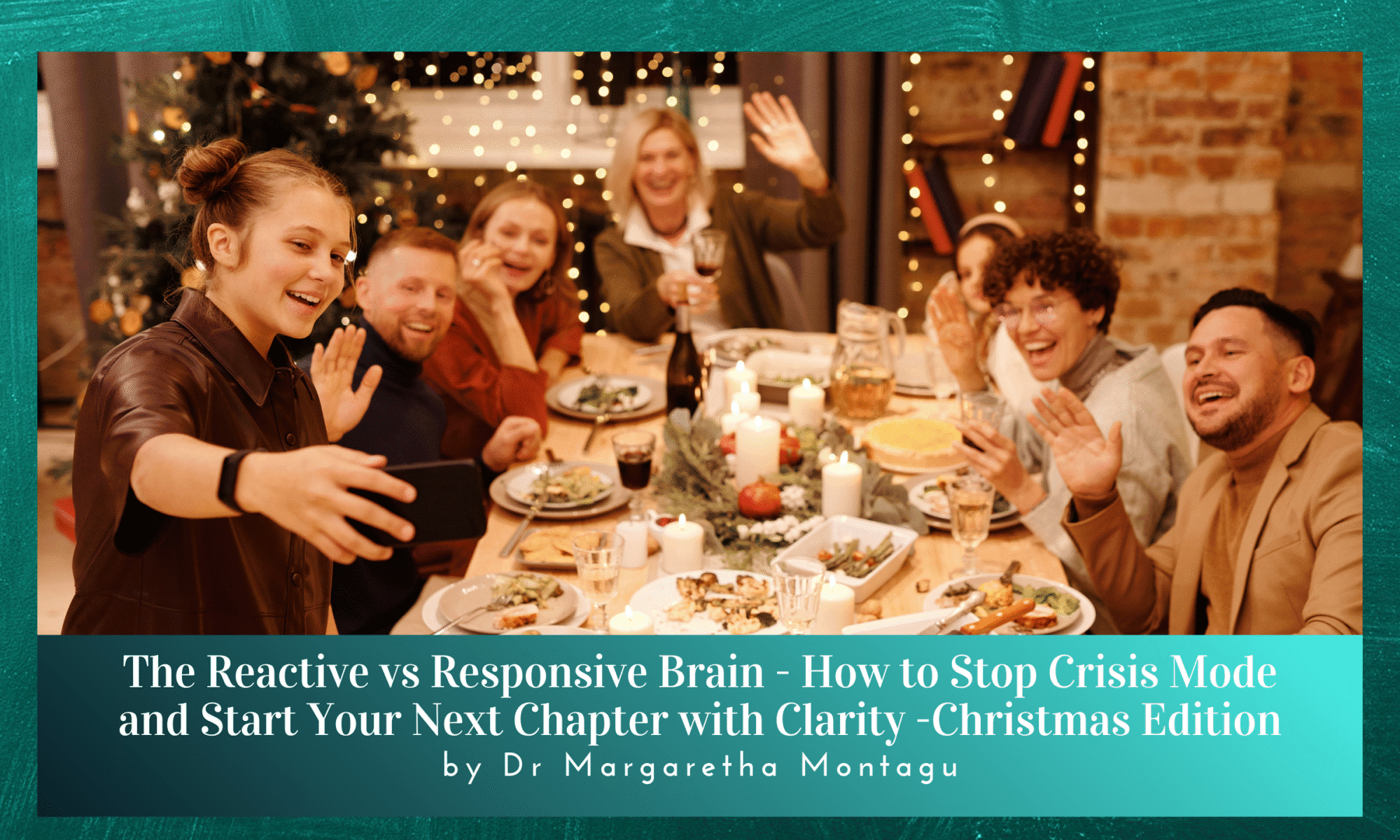




























4 responses to “Countdown to Christmas Day 6”
Murphy’s law can help you through a difficult time, certainly when surrounded by friends in this sort of situation and the laughter can’t be held back.
I’m so glad the comment section finally works!!! Indeed,as far as I can make out, Murphy was an optimist. 😉
“Women’s friendships are like a renewable source of power.” Jane Fonda and she is right and shows it.
Endlessly renewable. “We need women at all levels, including the top, to change the dynamic, reshape the conversation, to make sure women’s voices are heard and heeded, not overlooked and ignored.” Sheryl Sandberg