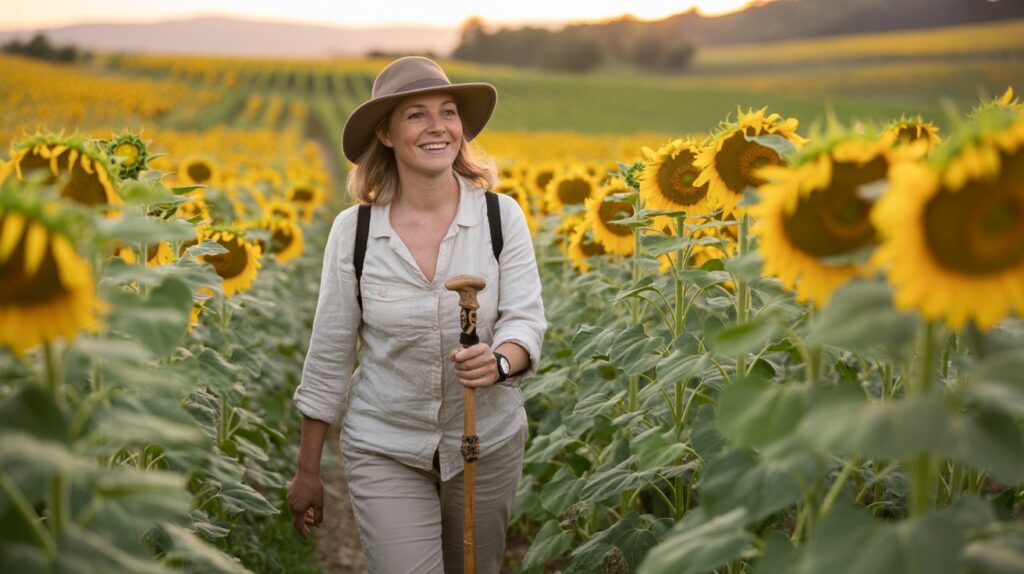
Dr Margaretha Montagu – described as a “game changer”, “gifted healer”, “guiding light” and “life-enriching author” – is a certified transformational retreat leader who guides her clients towards their most meaningful and fulfilling lives, particularly when navigating life transitions – virtually, or with the assistance of her Friesian Horses, at their home in the southwest of France.
Julien sat at his kitchen table, staring at his Hailhe de Nadau list, while his father shouted at the television in the next room about a football referee who’d apparently committed crimes against humanity and should be tried at The Hague.
On the list: getting hold of the wood needed (12 cubic meters, source TBD, possibly prayer), fire safety coordination (volunteer brigade, insurance forms, liability waivers that made it sound like they were launching rockets instead of lighting a bonfire), community outreach (flyers, announcements, someone’s nephew who could allegedly “do social media”), food preparation (soup, wine, chestnuts), and approximately forty-seven other tasks that Julien had inherited because his name had been drawn from a hat at the village meeting and everyone else had suddenly remembered urgent appointments in other departments.
His phone buzzed. His daughter Sophie, calling from Bordeaux. He could hear anxiety in the ringtone. “Dad, my landlord is raising rent again. I know you said you couldn’t help but—”
In the living room, his father bellowed: “JULIEN! The remote isn’t working! I’m hungry! And that referee should be in PRISON! Are you LISTENING?”
Julien closed his eyes. Breathed in through his nose, and entertained—briefly but sincerely—the idea of walking into the Landes forest and never coming out again.
His phone buzzed again. Text this time. Marie, his childhood friend: I can see your kitchen light is still on. I’m coming over with a bottle of Tursan.
Headlights swept across the yard a moment later.
Marie came in without knocking, shook the cold from her coat, took one look at Julien’s face and said, “Mon vieux, you look like something the cat dragged in, dragged back out, and then refused responsibility for.”
“Good evening to you, too.”
She sat at the kitchen table, in “her” chair, hers since she was six, found two mismatched glasses—one wedding gift, one from a service station—and poured the dark Tursan wine. She took a long sip. “Where’s the list?”
“Marie, really, I can manage—”
“You’ve been trying to organise the Hailhe all on your own for the last two weeks, and I’ve watched you age approximately ten years. You’re going to give yourself an ulcer.”
She fixed him with the look that made her sheep line up without being asked. “You’re caring for your father, who has dementia and the personality of an angry badger. You’re supporting a daughter who can’t afford Bordeaux rent on a teacher’s salary—nobody can afford Bordeaux rent on a teacher’s salary. And you have to organise a pagan fire festival that requires coordinating thirty people, several tons of wood, and the cooperation of the volunteer fire brigade who, let’s be honest, think this whole thing is a lawsuit waiting to happen. You cannot handle it on your own. Stop pretending you’re Superman.”
From the living room: “JULIEN! Is someone here? Are we being robbed? Should I call the police? WHERE’S MY PHONE?”
“IT’S MARIE, PAPA!” Julien shouted back. “YOU KNOW MARIE! SHE’S BEEN HERE A THOUSAND TIMES!”
Silence. Then: “WHO’S MARIE?”
Julien dropped his head into his hands. “He doesn’t know who I am. Keeps calling me by my uncle’s name. Yesterday, he introduced me to the postman as ‘that man who keeps breaking into my house.'”
Marie squeezed his hand. “My mother had Alzheimer’s, remember? I know. It’s exhausting and frustrating, and you feel guilty for becoming frustrated, which makes you more exhausted, which makes you feel guiltier.”
“How did you—” Julien’s voice cracked. “How did you cope?”
“I asked for help. ”
She pulled his list towards her.
‘You need wood?”
“Twelve cubic meters of good burning wood, properly seasoned—”
“My neighbour Bernard has it. He owes me for helping with his ewes during lambing season—complicated birth, very dramatic, I saved his prize ewe’s life, and he cried. I’ll arrange delivery. Fire safety coordination?”
“I need to coordinate with the volunteer brigade, file insurance forms, get them to sign off—”
“My son Lucas is in the brigade. Sixteen years old, thinks he’s a hero, will do anything if I promise to stop telling his girlfriend about the time he cried watching Ratatouille. I’ll handle it. Food preparation?”
“I was going to make soup, organise wine, chestnuts—”
“Delegate it. Ask Claudine—she’s been wandering around the village like a ghost since her husband died, desperate to find something useful to do. She’ll make enough soup to feed the entire fire département, and she’ll love you forever for asking.”
Julien stared at the list—at Marie systematically dismantling his anxiety with six phone calls and the particular rural French superpower of knowing everybody’s business, and who owed what to whom.
“Why are you doing this?” he asked quietly.
“Because we’re friends. Because you stood by me when Guillaume died, and my teenagers went off the rails. Because sandwich generation stress is a special kind of hell—caring for parents, supporting children, getting crushed in the middle—and nobody should have to do it alone.”
On Christmas Eve, la Veille de Noël, the Hailhe de Nadau bonfire was ready on a hill overlooking Saint-Sever—twelve cubic meters of wood (delivered by Bernard’s tractor, stacked perfectly, seasoned to perfection) arranged in a traditional pyre. Around it, the village had gathered: maybe eighty people, bundled in coats and scarves and wool hats with pompoms, holding cups of Claudine’s soup (chestnut, bacon, cream, so absurdly good that people were already asking for the recipe), waiting for sunset.
A tradition older than anyone could remember: on Christmas Eve, bonfires are lit across the Landes from hill to hill, an unbroken chain of light stretching back to pagan winter solstice celebrations that predated civilisation itself. Once the first fire was lit, the next village would see it and light theirs, fire calling to fire across the darkness, a tradition that had been honoured for hundreds of years.
Hailhe—the old Gascon word for firewood, for the bundle of wood, for the fire itself. Nadau—Christmas. The fire of Christmas. The light in the longest dark.
Julien stood near the pyre with the ceremonial torch. His father was somewhere in the crowd, being supervised by Sophie, who’d come home for Christmas after Julien had quietly sent her three months’ rent he didn’t have and would be paying off until Easter.
Marie appeared beside him, “Ready?”
“I don’t know why we still do this,” Julien said. “Light fires on hills, pretend it means something—”
Marie didn’t answer right away. She watched the villagers shifting their weight, the way people do when they’re cold but unwilling to leave, cups of soup steaming in their hands, children tugging at their sleeves, the old ones standing maybe a little closer to the fire than necessary.
“It’s about memories,” she said at last. “Not the kind that lives neatly in your head and answers when you call it, but the kind that survives for centuries. Because eighty people showed up on Christmas Eve to watch wood burn because their grandparents did, and their great-grandparents before them, and even when names go missing, and faces blur, and stories fall apart mid-sentence, the body remembers what to look for in the dark. Because somewhere back in the mists of time, some freezing genius said ‘let’s light a fire so big we can see it from the next village’ and everyone said ‘yes, excellent idea, very sensible.’ Now light the thing before everyone freezes their but off.”
Julien touched the torch to the base of the pyre. As the first spark caught, a murmur ran through the group—not surprise, not excitement exactly, but recognition. Heads turned toward the next hill, eyes searching, waiting. Flames were soon devouring the wood hungrily, orange and gold and red against the darkening sky, crackling and snapping, sending sparks out in all directions.
People cheered. Someone started singing—”Nadau, Nadau, Nadau”—in Gascon, the old language few of them still spoke, though everyone knew the words, the way you know prayers or nursery rhymes or the lyrics to lullabies your grandmother sang.
The fire burned higher, visible for kilometres, a beacon, a signal, a call.
“Regardez!” Marie shouted, pointing across the valley. “Hagetmau has lit theirs!”
Across the valley, another fire blazed to life. Then another—Grenade-sur-l’Adour, then Aire-sur-l’Adour, then Tartas. Chain of light across the Landes, fire answering fire, exactly as it had for centuries. You could see them all from here, little points of light scattered across the dark landscape like stars fallen to earth.
“Dad.” Sophie appeared suddenly, voice tight with panic, eyes wide. “Papie’s wandered off. I turned around for two minutes to take a photo, and he was gone—”
Julien’s stomach dropped into his boots. His father! Darkness. Fire. The woods. Oh no oh no oh no— “
This way,” Marie said immediately, already moving, voice calm. “He’ll go toward the light. He’ll go toward the fire.”
They found him quickly, slowly but steadily approaching the bonfire. He stopped when he saw the flames, staring up at them with an expression Julien hadn’t seen in months. And for a brief, piercing moment, his face cleared.
“Nadau,” he said. “My father brought me. I brought Julien. I remember.”
Julien felt the moment expand—and then slip away.
“Where’s Julien?” his father asked. “He should be here.”
“I’m here, Papa,” Julien said, voice unsteady.
“Good,” his father said, patting his arm. “Is there soup?”
“Yes, Papa. There’s soup. Let’s get you some.”
Later, much later, after they’d gotten his father home and settled, Marie and Julien sat on his front steps, sharing what was left of the Tursan, watching smoke still rising from the hill.
“I can’t do this anymore,” Julien said quietly. “I love him. I do. Mon Dieu, I do. But I’m exhausted.”
“I know. The solution’s name is Véronique Mercier. She does respite care. Professional, experienced. I’m texting you her number. Not expensive if you qualify for the departmental subsidy, which I’m sure you do.”
“Marie—”
“You know what my mother said when she still could speak? When she still had words? ‘Get help before you hate me.’ She was right. You can’t care for someone if you’re destroyed by caring for them. Accept it. Accept help. Or you’ll break, and then where will he be?”
Julien looked at Véronique’s number glowing on his phone screen. “D’accord,” he said. “Okay. I’ll call her.”
The Making of Friends and Maintaining of Friendships Master Plan
In a world filled with distractions, one of the most meaningful gifts you can offer a friend is your full presence. Being present isn’t about doing or saying the “right” thing—it’s about showing up fully, with an open heart and undivided attention.
When you’re truly present, you create a safe space for your friend to share their thoughts, fears, and joys. It’s in these moments of deep connection that friendships grow stronger. This holiday season, give the gift of your presence. Turn off your phone, silence the noise, and simply be there.
Presence is also a gift you can give yourself. When you slow down and embrace the moment, you’ll find clarity and peace, even amid life’s transitions.
Today, stop pretending you can handle everything on your own. You can’t. Nobody can.
Worst case scenario: You admit you need help, feel vulnerable, and discover the world doesn’t end when you’re not controlling everything yourself.
Best case scenario: Your childhood friend who survived her own caregiving crisis shows up with wine and a terrifying amount of competence, systematically dismantles two weeks of your anxiety with six phone calls, connects you with respite care you didn’t know existed, and forces you to ask for help with the village fire festival. You discover that asking for help isn’t a weakness—it’s the thing that keeps you alive and functional and able to actually care for the people who need you. You learn that community tradition exists not just to preserve memory but to share burden, that fire spreads from hill to hill because it’s meant to be collective light not individual responsibility, and that the friends who refuse to let you collapse quietly are the ones who understand that caring for others requires letting others care for you, even when guilt and pride say you should do it all alone.
What does being present mean to you? How can you practice presence in your friendships this season?
Newsletter Subscription
I’m still collecting subscriptions to my news letter with these post, so if you haven’t subscribed already and would you like to find out what type of friend you are, how well you know your friends or if you and a new friend really are compatible, subscribe my filling in your email address in the box below and I’ll send you a set of light-hearted quizzes, quotes and questions to help you do just that. Just fill in the form below and you’ll get immediate access to them all. You can unsubscribe from this list effortlessly and at any time. Included:
–How well do you know your Friends? Quiz – What is Your Friendship Style? and Are your Friendship Styles compatible? Quiz – 20 of the Most Inspiring Friends and Friendship Quotes and – 20 lighthearted Questions you can ask to get to know a new Friend
Discover how to build meaningful, lasting friendships and create a support system that truly has your back—delivered straight to your inbox!
Friends and Friendships
Discover how to build meaningful, lasting friendships and create a support system that truly has your back—delivered straight to your inbox! (newsletter subscription included)
Thank you so much!
More information about making friends and maintaining friendships (including the quizzes I mentioned) is on its way to you. You have also successfully subscribed to my newsletter.
If your soul is craving fresh air, meaningful movement, and a chance to reconnect with nature, join us on a Camino de Santiago Walking Retreat in the southwest of France. This isn’t just a scenic hike – it’s a powerful, natural reboot for your body, mind, and spirit. Imagine quiet paths, rolling hills, cozy evenings, and slow conversations. No fitness requirements. No forced bonding. No pressure to have a breakthrough. Just one foot in front of the other, and finding your way to a brighter future.
I put the essence of who I am, and everything I have experienced that makes me who I am, with great enthusiasm, into my retreats, courses and books. – Dr Margaretha Montagu (MBChB, MRCGP, NLP master pract (cert,) Transformational Life Coach (dip,) Life Story Coach (cert) Counselling (cert,) Med Hypnotherapy (dip) and EAGALA (cert)
Margaux stood in Henri’s farmhouse kitchen at 4:47 AM on December 24rd, drinking coffee that could strip paint and wondering why she’d agreed to this.
“Remind me,” she said, “why I’m awake at an hour that shouldn’t exist, preparing to go to a marché aux gras?”
Henri, who looked distressingly awake for someone sixty-five years old, handed her a thermos. “Because you’ve spent six months alone in your apartment trolling everyone with an opinion on the internet, and I decided it was my civic duty to intervene before you became completely insufferable.”
“I’m already completely insufferable. It’s who I am.”
“Mais non. You are a ‘brilliant journalist who’s temporarily lost her mojo’.” He pulled on a worn jacket. “The market starts at six. Let’s go and watch them set it up.”
Margaux had known Henri for thirty-five years. They’d covered wars, corruption scandals, and environmental disasters together; they reported fearlessly all the ways humans found to destroy each other. Then Henri had retired, bought a farm, started raising ducks ethically (a phrase Margaux found oxymoronic), and apparently decided that dragging his cynical former colleague to a foie gras market at dawn was going to give her a new zest for life. (???)
She got in his Deux Chevaux. The Gers countryside was pitch black, silent except for their engine rattling and the occasional bark of a farm dog. Winter fog hung low, making everything look like a badly exposed photograph.
“This is going to be depressing,” Margaux said. “Industrial animal agriculture, rural economic collapse, traditional farming methods disappearing—”
“Or,” Henri interrupted, “it’s going to be a lively farmers’ market, days before Christmas. With farmers proudly selling their produce. You should try observing before editorialising.”
“Observing IS editorialising. Everything’s a story with an angle.”
Henri did not reply, he was manoeuvring the Citroen into a minuscule parking spot on a point rond.
The Marché au Gras in Samatan was not what Margaux expected.
She’d expected corporate stands, industrial farming, the sanitised brutality of modern food production.
She found hundreds of small farmers setting up individual stalls in the pre-dawn dark, the intoxicating aroma of freshly brewed coffee and vin chaud, in deference to the season, a market that had apparently run every Monday from November to March since the Middle Ages, uninterrupted by wars, revolutions, and the general collapse of rural France.
“This is it,” Henri said. “Biggest foie gras market in France. Two hundred producers, all small-scale, all local. Most of them I know personally.”
They walked through the setup. Farmers arranging their products with the precision of people who’d done this weekly for decades: whole ducks and geese, foie gras (raw, mi-cuit, stuffed), confit, rillettes, eggs, and a large selection of vegetables from winter potagers. Everything displayed in metal basins or wicker baskets, no plastic, no corporate branding, just food and the people who’d produced it.
“Sacré Henri!” A woman roughly Henri’s age embraced him, then looked at Margaux with the assessing gaze of someone who could judge character at twenty paces. “This is the journalist? The famous one?”
“Bah. Once a journalist, always nosy.” The woman—Claudette, apparently—gestured at her stall. “You want to learn about foie gras? Real foie gras, not the industrial garbage? I’ll teach you.”
Before Margaux could protest, she really did not want to have anything to do with foie gras, Claudette was explaining: the ducks (prize Mulards, or crossbreeds), the feeding (gavage, controversial, but done traditionally—hand-feeding twice daily, birds living outdoors), the liver itself (colour, texture, marbling, how to identify quality).
“People say it’s cruel,” Claudette said bluntly. “City people who’ve never seen a duck. These birds—” She gestured at photos of her farm. “They run to me at feeding time. They’re not afraid. Industrial farming is cruel. This? This is tradition. The birds live good lives. More respect than humans give each other.”
Margaux found herself asking questions, her journalist’s instinct impossible to suppress. About economics (tight, but sustainable), about regulations (onerous, but necessary), about why Claudette did this when she could make more money doing literally anything else.
“Because my grandfather did it. My father did it. The land is ours. The knowledge is ours. If we stop, it dies.” Claudette shrugged. “Also, the ducks need someone who gives a shit. Might as well be me.”
The market opened at six. Instant chaos: buyers flowing in, farmers calling out prices, rapid-fire negotiations in French and Occitan, the particular energy of commerce that’s been happening in the same place for six centuries.
Henri moved through it like he belonged—greeting farmers, inspecting products, negotiating prices with the practised ease of someone who understood both quality and value. Margaux followed, notebook appearing in her hand without conscious decision, journalist brain engaging despite her much-maligned retirement.
She watched an old farmer, had to be eighty at least, selling foie gras he’d clearly prepared himself, hands shaking slightly as he wrapped each purchase in paper, refusing to raise his prices even though his product was clearly superior to his neighbours’.
She watched a young couple, not yet thirty, hesitantly buying what must be their first Christmas foie gras, the vendor explaining, at length and in detail, the various preparation methods, with the patience of someone teaching something that mattered to him.
She watched Henri negotiate for a foie gras with a woman named Thérèse, both of them laughing about something, their transaction more conversation than commerce, twenty minutes of discussion ending with a handshake and Henri paying slightly more than asked because “it’s Christmas and your grandson needs braces.”
“You overpaid,” Margaux said when they moved on.
“I paid what it was worth. There’s a difference.”
By eight AM, they’d bought: one exceptional foie gras (Thérèse’s), two confits de canard, fresh eggs, walnuts from someone’s orchard, wine from a neighbour’s vineyard, and vegetables from Claudette’s winter garden.
“This is for tonight,” Henri explained. “Réveillon. Christmas Eve dinner. Traditional. That you’re cooking with me.”
“I don’t cook—”
“You observe and criticise. Same skill set, different application.”
Later that evening, Henri’s kitchen smelled like duck fat and Armagnac. They’d spent the afternoon preparing: the foie gras seared quickly, perfectly, served with toasted bread and fig jam Henri had made in September. The confit cooked slowly in its own fat, skin crisping, meat falling off the bone. Potatoes roasted in duck fat with garlic and thyme.
Simple food. Prepared with great care. Nothing industrial, nothing corporate, just ingredients treated with respect by people who cooked with love.
“You’ve been quiet,” Henri said, pouring wine—the neighbour’s Côtes de Gascogne, rough but honest.
“I’m processing.”
“Process out loud. You’re a journalist. Report.”
Margaux stared at her wine. “I spent thirty years documenting how terrible people are. Corruption, violence, environmental destruction, all the ways we’re destroying everything I care about. I got good at it. Won awards. Then I retired.”
“And?”
“This morning, I just watched two hundred farmers wake up at 4 AM to sell food they produced themselves, in a market that’s run for more than six hundred years, in a rural area that everyone says is dying, and it’s not dying—their story is just very different from the story I expected.” She took another sip. “It’s not all moonshine and roses. Half of those farmers are seriously struggling. The economics are brutal. Traditional farming is being crushed by industrial agriculture.”
“But?”
“But they’re still there. Still doing it. Thérèse is raising ducks the way her grandmother did. Claudette could sell to corporations for twice the money, but won’t because it would compromise quality. That old man of eighty is still showing up every Monday.” She looked at Henri. “You could have stayed in journalism. Covered more wars, won more awards. Instead, you’re raising ducks and paying extra for foie gras because someone’s grandson needs braces.”
“Your point?”
“My point is I forgot that we are also capable of this, of doing things because they’re worth doing even when they’re hard. And controversial.” She gestured at the food, the kitchen, the farm outside. “I’ve been so focused on documenting darkness that I forgot to look for light. And then you dragged me to a duck market at 4 AM and forced me to see it.”
Henri smiled. “The world is full of darkness. You know that better than most. But it’s also full of farmers who care about their ducks, markets that run for centuries, and people who overpay for foie gras because community matters. Both things are true. You just forgot to look for the other part.”
They ate slowly, carefully, the food tasting like history and the particular satisfaction of knowing exactly where it came from. Outside, Christmas Eve settled over the Gers—cold, clear, stars sparkling in the vast night sky.
“Thank you,” Margaux said finally. “For not letting me disappear into cynicism.”
“De rien. That’s what friends do. Also, you’re coming back for the January market. Claudette wants to introduce you to her nephew. He’s single, runs an organic vegetable farm, and apparently needs someone to argue with.”
“I’m sixty-two and retired—”
“So is he. Perfect match. Also, you should write about this.”
“Henri, I’m retired—”
Margaux looked at her notebook, at the pages of observations she’d accumulated without meaning to. At the story forming in her head: the market, the farmers, the six centuries of tradition continuing despite everything.
“Maybe,” she said. “Maybe one more story.”
The Making of Friends and Maintaining of Friendships Master Plan
During challenging times, friends often serve as our guiding lights. They may not have all the answers, but their presence helps us find our way. This holiday season, take a moment to honour the friends who’ve been a source of light in your life.
Think about the friend who calls just to check in, the one who sends a random text that makes you smile, or the person who’s always willing to listen. These acts, no matter how small, are profound reminders that you are not alone.
Friendships are about mutual illumination. Just as your friends light your path, you have the power to brighten theirs. Even if life feels uncertain right now, trust that the light you share will always be enough.
Today, reach out to a friend who’s found meaning in simple, honest work. Go to the market, the farm, the place where people are doing something real with their hands. Observe without editorialising. Let yourself see both the struggle and the passion.
Worst case scenario: You wake up at 4 AM, feel awkward around strangers, and confirm that the world is as depraved and depressing as it’s always been.
Best case scenario: Your former colleague, who left journalism to raise ducks, drags you to a six-hundred-year-old foie gras market where two hundred small farmers prove that tradition, passion and honest work still exist despite industrial agriculture trying to crush them. You remember why you became a journalist—not to document darkness exclusively, but to tell true stories about both darkness and light. You accidentally take notes, meet farmers who care more about quality than profit, and watch your friend overpay for foie gras because their community matters to them. You end up writing one more story, maybe dating an organic vegetable farmer, definitely returning to the January market, because your friend reminded you that the world contains both corruption and duck farmers who hand-feed their birds, and both deserve documentation, and maybe the second story is actually more important because everyone already knows about the darkness but someone needs to remind people about the light.
Who has been a source of light in your life this year? How can you express your gratitude to them this holiday season?
Newsletter Subscription
I’m still collecting subscriptions to my news letter with these post, so if you haven’t subscribed already and would you like to find out what type of friend you are, how well you know your friends or if you and a new friend really are compatible, subscribe my filling in your email address in the box below and I’ll send you a set of light-hearted quizzes, quotes and questions to help you do just that. Just fill in the form below and you’ll get immediate access to them all. You can unsubscribe from this list effortlessly and at any time. Included:
–How well do you know your Friends? Quiz – What is Your Friendship Style? and Are your Friendship Styles compatible? Quiz – 20 of the Most Inspiring Friends and Friendship Quotes and – 20 lighthearted Questions you can ask to get to know a new Friend
Discover how to build meaningful, lasting friendships and create a support system that truly has your back—delivered straight to your inbox!
Friends and Friendships
Discover how to build meaningful, lasting friendships and create a support system that truly has your back—delivered straight to your inbox! (newsletter subscription included)
Thank you so much!
More information about making friends and maintaining friendships (including the quizzes I mentioned) is on its way to you. You have also successfully subscribed to my newsletter.
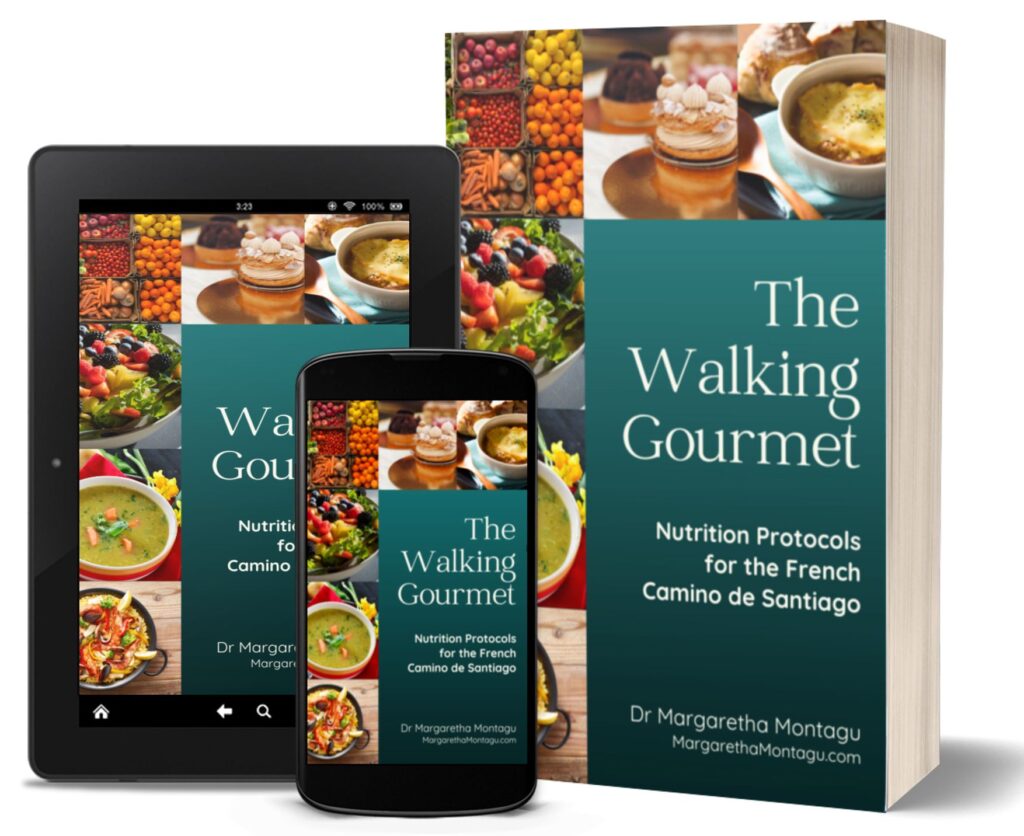
I’ve lost count of the number of guests who have asked for the recipes of the dishes I serve during my retreats. I’ve finally gotten around to publishing my retreat recipe collection as an e-book. If you’re interested in nutrition, especially while you’re walking the Camino de Santiago, or you just love authentic French cuisine, here is a link to my ebook The Walking Gourmet: Essential Food Strategies for the French Camino de Santiago
If your soul is craving fresh air, meaningful movement, and a chance to reconnect with nature, join us on a Camino de Santiago Walking Retreat in the southwest of France. This isn’t just a scenic hike – it’s a powerful, natural reboot for your body, mind, and spirit. Imagine quiet paths, rolling hills, cozy evenings, and slow conversations. No fitness requirements. No forced bonding. No pressure to have a breakthrough. Just one foot in front of the other, and finding your way to a brighter future.
I put the essence of who I am, and everything I have experienced that makes me who I am, with great enthusiasm, into my retreats, courses and books. – Dr Margaretha Montagu (MBChB, MRCGP, NLP master pract (cert,) Transformational Life Coach (dip,) Life Story Coach (cert) Counselling (cert,) Med Hypnotherapy (dip) and EAGALA (cert)
Theme: Making Friends and Maintaining Friendships during Life Transitions
December 13, 2025 – 12 days to Christmas
Today’s Story: The Sorano Revival
For Sue T.
Sophia had been standing in front of the Christmas ornament stall at the Bordeaux Christmas market for seventeen minutes, staring at a glass angel with such intensity that the vendor was starting to look concerned.
She wasn’t actually seeing the angel. She was seeing her house in Caudéran: three floors of honey-colored stone, four bedrooms, a kitchen that still smelled faintly of the cinnamon rolls she’d made every December morning for eighteen years. Decorated to within an inch of its life because that’s what you did when you had children. Except she didn’t have children anymore. She had two university students who’d sent exactly three texts between them since September: “arrived safe,” “need money,” and “staying with friends for Xmas hope thats ok?”
It was not, in fact, okay.
The angel’s wings caught the light from the market stalls, sending little prisms across the cobblestones. Around her, Bordeaux was doing what Bordeaux does best in December: being effortlessly, infuriatingly beautiful. The Place Pey-Berland glowed with thousands of lights. The smell of vin chaud and roasting chestnuts and pain d’épices hung seductively in the cold air. Children shrieked with delight on the carousel. Couples held mittened hands.
“Are you buying that or planning to propose to it?”
Sophia turned. Philippe stood there holding two steaming cups of vin chaud, wearing a scarf so aggressively festive it looked like Christmas had mugged a pride parade and stolen its wardrobe. The scarf had bells. Actual bells.
“I’m having a moment,” Sophia said.
“You’re having a breakdown in public, chérie.” He handed her the wine. “Drink this before you do something regrettable.”
The wine was perfect—hot, spiced, the kind of warm that started in your hands and worked its way to your soul. Sophia took three large sips before answering. “How did you even know I was here?”
“Because you’ve been avoiding my calls for two weeks, your house has been dark every time I drive past—yes, I’ve been checking, don’t look at me like that—and the Marché de Noël is where sad people go to pretend they’re participating in the joy of the season while slowly freezing to death.” He sipped his own wine, eyeing her over the rim. “Also, Marie-Claire at the boulangerie on rue Sainte-Catherine said you’ve been buying single croissants every morning with the energy of someone contemplating throwing themselves into the Garonne.”
“I’m not—” Sophia gestured helplessly at the market, at the cathedral, at the impossible beauty of her city at Christmas, at her entire life. “I’m just adjusting.”
“Mm. So how’s that going?”
“Terribly.”
“Thought so.” Philippe linked his arm through hers with the confidence of someone who’d known her for thirty years and had written permission—notarised—to physically remove her from public spaces when necessary. “Come. I need your help with something catastrophically ambitious and possibly illegal.”
They wound through the Vieille Ville, past shop windows full of canelés and foie gras and bottles of wine that cost more than Sophia’s car down payment. Past the cathedral, where bells were ringing for evening mass. Past the bookshop where she used to buy bedtime story books and now wouldn’t know what to do with herself.
Philippe’s apartment was near the Place de la Bourse, in one of those buildings that looked stern from the outside and impossibly elegant inside—all exposed brick and original parquet floors and the kind of tall windows that made you understand why French people are so smug about their architecture. Music sheets covered every surface. A grand piano dominated the living room, black and gleaming and clearly expensive enough that Philippe’s teaching career was going significantly better than her current lifestyle of ornament-coveting and single-croissant purchasing.
“Sit,” Philippe commanded, already rummaging through a folder thick enough to be a doctoral thesis. “I’m making an executive decision about your life.”
“That’s concerning.”
He emerged with sheet music, a bottle of Sauternes, and the expression of someone who’d had an idea so good it might actually kill him. “Flash mob. Christmas Eve. After the evening performance at the Grand Théâtre. Lobby. Sixty-voice choir, four songs in four-part harmony, complete surprise. I’m organising. You’re directing.”
Sophia actually laughed—a real laugh, the first in weeks, the kind that came from somewhere deep and forgotten. “Philippe. Mon Dieu. I don’t sing anymore—”
“You don’t sing professionally anymore. Altogether a different kettle of—what’s the expression?”
“Fish.”
He sat at the piano, running his fingers over the keys like greeting old friends. “Point stands. You’re a soprano, you’ve always been a soprano and you’ll always be a soprano.”
“My voice is gone. Twenty years of not using it—”
“Singing,” Philippe interrupted, playing a chord—middle C, pure and clear and so familiar it hurt—”is like riding a bicycle. Or making love. You don’t forget, you just get nervous about starting again.” He looked at her expectantly. “Sing.”
“No.”
“Sing or I’m calling both your children and telling them you’re having a crisis and need them to come home immediately and deal with their mother’s breakdown. I have their numbers. I will do it. I have no shame.”
“That’s blackmail—”
“That’s motivation. Different thing. Now sing.”
Sophia opened her mouth. The note came out—rusty, uncertain, not the crystalline soprano she’d once commanded, but there. Present. Real. Hers.
Philippe played another chord. She matched it. Then another. Before she knew what was happening, they were halfway through “Ave Maria”—the Schubert, not the Gounod, because Philippe had always been pretentious—and she was crying, and Philippe kept playing like this was completely normal, which it probably was because he’d accompanied her through four pregnancies, two career crises, one divorce scare, and one extremely ill-advised attempt to dye her hair burgundy in 1998.
“Your voice,” he said when they finished, not looking at her because he was too kind to watch her cry, “is fine. Not performance ready, but flash-mob ready, which is what we need.” He handed her the folder. “Sixty people. Mix of ages, experience levels. Half can’t read music. Two are actively tone-deaf but very enthusiastic, and I didn’t have the heart to turn them away. One is ninety-three. You have five days to organise them into something that won’t make the Grand Théâtre ban me for life.”
“Philippe. This is insane—”
“Yes! Exactement!” He poured them both Sauternes in glasses that looked like they cost more than the wine. “You’ve spent two months sitting in your silent house feeling sorry for yourself, eating single croissants. Time to do something absolutely ridiculous that reminds you who you were before you became a mother.”
“I don’t know who that is anymore.”
“Moi, je sais. She’s a soprano who made grown men weep with Puccini. Who whipped a cathedral choir into shape in six days when the director had appendicitis during Easter week. Who once told Conductor Bernard he was ‘musically illiterate’ in front of the entire Orchestre National because he didn’t understand the concept of pianissimo.” Philippe grinned, raising his glass. “That woman is still in there. She’s just been buried under two decades of school runs and maternal guilt and convincing yourself you were done with music. Time to excavate her, ma belle.”
Sophia looked at the sheet music. At Philippe’s ridiculously hopeful face. At the alternative, which was going home to her silent house and staring at the ceiling until New Year’s.
“D’accord,” she said. “But if this goes badly, I’m telling everyone it was your idea.”
“Chérie, it is my idea. I’m counting on the credit.”
The rehearsals were glorious, exhausting, chaotic disasters.
Philippe had recruited from everywhere: his university students, the chorus from Sciences Po, a community choir that met in a church basement near Saint-Michel, random people who’d responded to a Facebook post that said “Can you sing? Want to ambush the bourgeoisie with Christmas joy? No experience necessary, enthusiasm mandatory.”
They met in a rehearsal space near the Chartrons—sixty people ranging from eighteen to seventy-five, crammed into a room that comfortably held thirty, attempting to learn four-part harmony while wearing winter coats because the heating was “temperamental,” which was French for “broken and no one’s fixing it until January.”
Sophia had forgotten what this felt like. The particular chaos of sixty people trying to sing the same thing at the same time. The acoustic mess of untrained voices finding their range. The moment when something clicked and suddenly, miraculously, it sounded like music.
She’d forgotten how good she was at this.
“Tenors!” she called, cutting them off mid-phrase. “You’re flat. You’re singing harmony, not melody. Think of it as lurking musically. You’re the mysterious stranger at the party.”
“I can do mysterious,” said a tenor who looked about nineteen and was wearing a beret unironically.
“Then lurk as if you mean it.”
The tenors lurked. It worked.
“Basses, more depth. You’re singing from your throat. Sing from here—” She gestured at her diaphragm. “Like you’re trying to knock down a wall with sound. Like you’re arguing with your mother-in-law. Passion.”
The basses knocked. The room vibrated. Someone’s coffee cup fell over.
“Parfait. Sopranos—” She paused, looking at the twelve women attempting the high part of “Les Anges dans nos Campagnes.” They were singing beautifully. Too beautifully. “You’re doing that thing where you’re singing pretty instead of singing true. Stop singing prettily. Be powerful. Be enormous. Shatter the windows.”
“But I thought sopranos were supposed to be—”
“Supposed to be what? Delicate? Feminine? Non. You’re the bells in the cathedral tower. You’re the cry of victory. You’re not decorative.” Sophia felt something old and fierce rising in her chest. “Sing like you’re calling down the heavens. From the top. Again.”
They sang again. The sound was enormous, thrilling, the kind of sound that made the hairs on your arms stand up.
By the third rehearsal, they sounded almost competent. By the fifth, they sounded good. By Christmas Eve afternoon—their final run-through in the Grand Théâtre’s upper lobby, sneaking in while the matinee performance of Handel’s Messiah was happening downstairs—they sounded like something worth hearing.
They sounded like magic.
“Bon,” Philippe said, addressing the group. He was wearing another catastrophic scarf, this one featuring embroidered reindeer. “Tonight. Eight-thirty PM. The main performance ends at eight-fifteen. Audience exits into the lobby—it’ll be packed, champagne everywhere, very Bordeaux, very self-satisfied. We’re scattered among them. Look like normal audience members. Try not to look terrified. When Sophia gives the signal, we start. No announcement, no introduction. Just music.”
“What’s the signal?” asked the ninety-three-year-old alto, who had the best voice in the section and the posture of a duchess.
“She’ll sing the first line of ‘Minuit Chrétien.'” Philippe looked at Sophia. “Can you do that? Walk into a lobby full of strangers and just… start singing? In public? Without warning? Like an unhinged pigeon?”
Sophia thought about her silent house. About her children spending Christmas elsewhere. About twenty years of not singing because there was always something more important—dinner to make, homework to check, permission slips to sign, laundry to fold, a life that had consumed her so completely she’d forgotten she used to be someone else.
“Bien sûr,” she said. “I can do that.”
“Bon.” Philippe grinned. “Alors—scatter. Reconvene at eight-fifteen. Try not to get arrested. I haven’t budgeted for bail.”
Eight-fifteen PM, Christmas Eve.
The Grand Théâtre sparkled with lights and nineteenth-century grandeur, all gold leaf and crystal chandeliers and the particular smugness of a building that knows it’s magnificent. The performance—Handel’s Messiah, very traditional, very Bordeaux—had just ended. The lobby filled with well-dressed audience members, champagne appearing on silver trays as if by magic, conversations about the soprano’s high notes and whether the conductor had been too slow and wasn’t the alto section divine, and where were they having dinner afterwards.
Sophia stood near the centre, wearing the black dress she’d bought for her daughter’s graduation and hadn’t worn since. Around the lobby, scattered invisibly among the crowd, were sixty people trying desperately to look casual while having private panic attacks.
She caught sight of Philippe across the lobby. He was pretending to admire a painting, champagne in hand, looking like any other cultured Bordelais enjoying a night at the theatre. He caught her eye. Winked. Nodded.
Sophia took a breath. Then another. Her heart was hammering so hard she could hear it in her ears.
Twenty years. Twenty years since she’d performed. Twenty years since she’d stood in front of people and opened her mouth and trusted that something beautiful would come out.
She took one more breath.
Then she opened her mouth and sang:
“Minuit, Chrétien—”
Her voice—her real voice, the one she’d abandoned twenty years ago—rang out into the lobby. Pure, clear, effortless. The voice that had made men cry and women fall silent and conductors forgive her for calling them musically illiterate.
It was still there. It had always been there.
The crowd went silent. Conversations stopped mid-sentence. Champagne glasses froze halfway to lips.
Then the basses joined, their voices rising from different corners of the lobby like something ancient and inevitable:
“C’est l’heure solennelle—”
Then the tenors, lurking magnificently. Then the altos, then the sopranos, sixty voices filling the Grand Théâtre lobby with “O Holy Night”—Minuit Chrétien—sung in French, in four-part harmony, building from pianissimo to fortissimo until the chandelier crystals were vibrating and every person in the lobby was either crying or filming or both.
Sophia conducted with small gestures—a hand indicating dynamics, a nod for tempo, her whole body communicating joy and power and the particular transcendence of perfectly executed choral music. The soprano she’d been. The woman she’d forgotten.
They moved through the set: “Minuit Chrétien,” then “Les Anges dans nos Campagnes” with its Gloria in excelsis Deo so joyful people started laughing, then a jazz arrangement of “Petit Papa Noël” that made the audience clap along, then finally “Douce Nuit“—Silent Night—sung so softly the lobby held its collective breath, everyone leaning in, afraid to miss a single note.
The final chord faded into silence.
For one perfect moment, no one moved.
Then applause—not polite concert applause, but the real kind, the standing ovation kind, people cheering and wiping their eyes and demanding to know who they were, where they were from, whether they were professionals, whether they were touring, whether they could possibly, please, do it again.
Sophia stood in the center of it all, sixty smiling faces around her, the sound of applause echoing off marble and gold leaf, and felt something she hadn’t felt in twenty years.
She was back.
Later, past midnight, at a brasserie near the theatre—Chez Baptiste, all zinc counters and red velvet and waiters who’d seen everything—sixty people crammed around tables pushed together, drinking wine and eating oysters and dissecting the performance with the obsessive detail of musicians who’d just pulled off something miraculous.
“The tenor section was flat in the second verse—”
“We were NOT flat, the altos were sharp—”
“The tempo was perfect, non, it was parfait—”
“Did you see that woman in the front row crying? I made someone cry—”
“The acoustics in that lobby, mon Dieu—”
Philippe slid into the seat beside Sophia, holding a glass of Sauternes that definitely wasn’t from the bar. “The theatre director cornered me. Wants to talk to you about directing their community outreach choir. Also, three people asked if you teach voice lessons. One asked if we’re doing this again next year. Another asked if we’re touring. I told him yes to all of it because I make terrible decisions when I’m happy.”
Sophia laughed—the real kind, from her belly, the way she used to laugh. “I don’t know if I can—”
“You just led a flash mob choir in the Grand Théâtre lobby on Christmas Eve. You can do literally anything.” He raised his glass, and around the table, sixty people fell silent and raised theirs too. “To Sophia, who discovered that empty nests can be launching pads. À la tienne!”
Sophia’s phone buzzed. Her daughter:
MOM. You’re all over Instagram. You’re SINGING??? In the GRAND THÉÂTRE???? Why didn’t you tell us? Also Jules and I are coming home for New Year’s, we want to hear EVERYTHING.
Sophia smiled, typed back: Long story.
The Making Friends and Maintaining Friendships Masterplan
Traditions carry a special kind of magic. They ground us in moments of joy and connection, and when shared with friends, they become even more meaningful. Whether it’s decorating a tree, baking cookies, or watching a favourite holiday movie, traditions are the glue that keeps relationships strong through life’s changes.
If you’re going through a life transition, revisiting old traditions—or creating new ones—can bring comfort and joy. It’s also a wonderful opportunity to invite friends into your world. Shared traditions become shared memories, and those memories create bonds that last far beyond the holiday season.
When an identity loss makes you feel invisible, reach out to the friend who knew you before—and accept their ridiculous, ambitious plan to remind you who you are. Say yes to the flash mob, the project, the thing that terrifies you because it requires you to be the person you used to be before life transformed you into someone else.
Worst case scenario: You spend a week organising chaos, remember that leading is exhausting, and discover your voice isn’t quite what it was twenty years ago.
Best case scenario: Your best friend, who’s known you for thirty years, refuses to let you disappear into maternal grief and empty-house silence, organises sixty strangers into a choir, and makes you lead them in a Christmas Eve ambush of Bordeaux’s fanciest theatre. You discover your voice isn’t gone—it was just waiting for permission to come back, and that leading feels as natural as breathing once you remember how. You accidentally go viral on Instagram, get job offers, reconnect with your passion, and realize that your children leaving wasn’t an ending—it was finally having space to be yourself again, the self who made grown men cry with Puccini and told conductors they were musically illiterate, the self who can still command a room with one pure note and sixty people who trust you to make them sound like angels. You learn that identity isn’t something you lose when your children leave—it’s something you reclaim, one flash mob at a time, with friends who refuse to let you forget you were magnificent before motherhood and will be magnificent after.
What’s a holiday tradition you love? How could you involve a friend in it this year, or start a new tradition together?
Newsletter Subscription
I’m still collecting subscriptions to my news letter with these post, so if you haven’t subscribed already and would you like to find out what type of friend you are, how well you know your friends or if you and a new friend really are compatible, subscribe my filling in your email address in the box below and I’ll send you a set of light-hearted quizzes, quotes and questions to help you do just that. Just fill in the form below and you’ll get immediate access to them all. You can unsubscribe from this list effortlessly and at any time. Included:
–How well do you know your Friends? Quiz – What is Your Friendship Style? and Are your Friendship Styles compatible? Quiz – 20 of the Most Inspiring Friends and Friendship Quotes and – 20 lighthearted Questions you can ask to get to know a new Friend
Discover how to build meaningful, lasting friendships and create a support system that truly has your back—delivered straight to your inbox!
Friends and Friendships
Discover how to build meaningful, lasting friendships and create a support system that truly has your back—delivered straight to your inbox! (newsletter subscription included)
Thank you so much!
More information about making friends and maintaining friendships (including the quizzes I mentioned) is on its way to you. You have also successfully subscribed to my newsletter.
Stop second-guessing yourself. Start owning your success. This book gives you the step-by-step roadmap to break free from imposter syndrome, build unshakable confidence, and finally believe you deserve every bit of your success. You ARE Good Enough!
“I am an experienced medical doctor – MBChB, MRCGP, NLP master pract cert, Transformational Life Coach (dip.) Life Story Coach (cert.) Stress Counselling (cert.) Med Hypnotherapy (dip.) and EAGALA (cert.) I may have an impressive number of letters after my name, and more than three decades of professional experience, but what qualifies me to excel at what I do is my intuitive understanding of my clients’ difficulties and my extensive personal experience of managing major life changes using strategies I developed over many years.” Dr M Montagu
Camille stood in the arched stone doorway of Jean-Luc’s wine cellar, convulsively clutching a dust-covered journal from 1847 like it was a sacred Christmas relic, trying—futilely—to appear composed. Behind her, a thick cloud of dirty smoke still billowed from the barn, where she had very nearly flambéed twenty thousand euros’ worth of oak barrels. In her defence, she had only wanted to “help” prepare the cellar for the holiday tastings. In the barn’s defence, it apparently preferred water to the highly flammable cleaning solvent she’d enthusiastically tossed over everything like a deranged elf.
It might be cold in the foothills of the Pyrenees this year, but her accidental arson attempt had certainly warmed things up.
“I think,” Jean-Luc said carefully, stumbling from the barn with a fire extinguisher, “that you should stick to working in the library, Professor. At least for today, ” and quietly to himself, “preferably forever.”
“So sorry, Jean-Luc, I was trying to be useful—”
“I know, but it cost me my eyebrows,” he said, as he guided her gently but firmly away from anything potentially flammable, potentially explosive or easily breakable. “Professor—”
“Former professor. Retired. Not much use now, I’m afraid,” she sighed.
“Former professor, current researcher, and currently banned from touching anything in the chai without supervision.” He steered her toward the rambling farmhouse—eighteenth-century stone, wrapped in dormant grapevines. Smoke curled from the chimney in slow, lazy spirals, carrying the unmistakable scent of burning oak and a hint of chestnuts roasting over an open fire. As they approached, Camille could hear the soft creak of the old wooden shutters shifting in the cold breeze and the distant hum of a radio playing an old French Christmas chanson, slightly crackling but impossibly charming.”There are three centuries of family documents in the library, Professor. I need you to organise them. I’m paying you to organise them. S’il vous plaît. Before you discover even more creative ways to destroy my livelihood.”
Camille trudged inside, feeling approximately ninety years old despite being only sixty-three. Three months into retirement, and she’d become spectacularly incompetent at everything except cataloguing the stories of people who were long dead.
It had started so well. Jean-Luc—one of her former students, now running his family’s boutique vineyard near Bordeaux—had hired her to research the estate’s history. A kind gesture. Possibly charity disguised as work, but Camille was too desperate to refuse.
She spent the first week happily and meticulously organising documents. Seventeenth-century land deeds, eighteenth-century harvest records, and nineteenth-century letters discussing phylloxera and family drama. She was in her element. But as the chaotic Christmas approached, she felt the need to contribute in a more practical, companionable way.
Take 1: She attempted to “assist” with racking wine from barrel to barrel. Knocked over a siphon. Fifty litres of 2023 Merlot flooded the cellar floor. Jean-Luc’s assistant, Baptiste, had actually burst into tears. Seriously overreacting, she thought, quand meme.
Take 2: Offered to help with bottling. Unintentionally reprogrammed the bottling machine. The three hundred bottles labelled as 2020 Cabernet Sauvignon were actually 2022 rosé. Baptiste stopped making eye contact.
Take 3: The barrel incident. Baptiste threatened to resign if she came anywhere near the chai again. The man was clearly unstable, prone to throwing temper tantrums at the slightest provocation.
So here she was, two days before Christmas, banished to the farmhouse library surrounded by documents and finally having to onboard the crushing realisation that knowing everything about medieval vine cultivation made her exactly zero per cent useful in the modern winemaking world.
Jean-Luc appeared with coffee, clearly on a mission.
“I need you to do something,” he said.
“If it involves wine, equipment, or anything that can catch fire—”
“Research. Your speciality.” He placed a folder on the desk. “Le Courrier de la Gironde wants a piece on historical Christmas traditions in Bordeaux vineyards. Five hundred words, wine-related, due in three days. They’re paying. You’re writing it.”
“Jean-Luc, I’m a historian, not a journalist—”
“You’re a storyteller who happens to have a PhD. Same thing, different audience. Also, Baptiste bet me fifty euros you’d say no, and I refuse to give him the satisfaction.”
So, with renewed vigour, Camille dove back into the archives, desperate to prove she still had marketable skills. The Christmas angle was tricky—most historical vineyard records focused on practical matters, not festivities.
Suddenly she saw it, half-hidden beneath a stack of dusty ledgers, brittle with age: a journal from 1803, penned by Jean-Luc’s great-great-great-something grandmother, Marguerite Duchamp. The moment Camille opened it, her pulse picked up. The handwriting swirled across the pages in lavish, looping flourishes, the French deliciously archaic, the revelations inside startlingly intimate… as if Marguerite herself had leaned across two centuries to whisper secrets straight into Camille’s ear.
24 décembre 1803: Once again, I have prepared the vin de Noël, exactly as Maman taught me all those decades ago. In another life, in fact. Cloves, cinnamon, orange peel, and honey from our hives. The workers gather at sunset. We will drink it together—all of us—because Christmas makes equals of us all. Papa would disapprove of this democratie, but Papa is dead.
Spellbound, Camille kept reading. Marguerite had maintained this tradition for forty years—spiced Christmas wine, shared with everyone who worked the vineyard, a deliberate breaking of social hierarchy that apparently scandalised her neighbours and delighted her loyal workers.
Marguerite had carefully written down the recipe, adding improvements over the years: a gentle red wine (Merlot, preferably young), specific spices in specific quantities, precise temperatures and timings, and a blessing Marguerite had created for the occasion that mixed Catholic prayer with what sounded suspiciously like pagan harvest incantations.
“Jean-Luc!” Camille burst into the chai where he was doing something technical with a hydrometer. “You need to see this! Right now!”
She explained about Marguerite, the Christmas wine, the tradition that had apparently died with her in 1843.
Jean-Luc read the journal entries, his face softening. “I never knew about this. Grand-mère never mentioned it.”
“Probably got lost. Families forget traditions, especially controversial ones. That’s why archives matter.” Camille felt something unfamiliar stir in her chest: purpose. “I could write about this for the article. The lost tradition, your ancestor’s decidedly democratic feast—”
“Encore mieux,” Jean-Luc interrupted, “you could help me revive it.”
“What?” She looked at him uncomprehendingly.
“Christmas Eve. Tomorrow. We make Marguerite’s vin de Noël. Share it with everyone—the family, our workers, neighbours, that annoying couple from the tourism board who keep asking for ‘authentic wine-related experiences.’ You sort it. Source the ingredients, and recreate the tradition. Make it come alive again. Give it back to us.”
“Jean-Luc, I nearly burned down your barn—”
“This doesn’t involve machinery or fire-starting possibilities. Enfin, it shouldn’t. Just wine, spices, and historical accuracy. Your actual skillset.” He grinned. “Unless you’re too afraid to try? I could ask Baptiste?”
“I AM terrified. Of being useless, of becoming invisible in retirement, being irrelevant, the fact that I apparently can’t operate simple tools—”
“Bien sûr, c’est plutôt normale. So do this thing you’re actually qualified for. Show yourself you still have value beyond a title that doesn’t exist anymore.”
On Christmas Eve morning, Camille was in Jean-Luc’s farmhouse kitchen, and it soon smelled like a medieval apothecary had exploded in there.
The recipe required:
10 litres young Merlot (Jean-Luc’s 2023, still developing)
Cinnamon sticks (8, Ceylon variety, because Camille had opinions)
Whole cloves (precisely 24, Marguerite’s journal was specific)
Orange peel (dried, from Seville oranges, which required a panicked phone call to a spice merchant in Bordeaux)
Honey (local, from hives tended by Jean-Luc’s neighbour)
“A measure of Armagnac for spirit and warmth” (Marguerite’s words; Camille scientifically interpreted this as “a fair bit”)
Baptiste watched skeptically as Camille heated wine in an enormous pot, adding spices with the precision of someone who’d spent forty years citing sources.
“Professor, the temperature—”
“I know what I’m doing,” Camille said, which was actually partly true.
She added cinnamon. The kitchen was filled with warmth. Cloves next—pungent, sharp. Orange peel. Zany and full of zest. The wine turned aromatic, complex, and started smelling like Christmas.
“Honey,” she said. Baptiste handed it over. Holding her breath, she stirred it in slowly, watching it dissolve. “Armagnac.”
“How much?”
“Marguerite says ‘enough to honour the harvest.’ Quite a bit, I think,” she said as she emptied a bottle of millesime Armagnac into her concoction. And then another one, it was Christmas, after all.
She poured. The wine darkened, enriched. She tasted it hesitantly, expecting disaster.
It was mindblowing. Literally.
Not just good—perfect. Spiced but not overwhelming, sweet but balanced, warming in a way that had nothing to do with alcohol and everything to do with the particular alchemy of ingredients that belonged together.
Baptiste tasted it. His eyes widened. “Professor, this is—”
“Historically accurate?”
“This is going to make Jean-Luc VERY popular with the tourism board.”
Much later, at sunset, the vineyard courtyard glowed with candles and fairy lights. Thirty people had gathered—workers, neighbours, local officials, the annoying tourism couple (who were actually quite nice), Baptiste, Jean-Luc’s grandmother, who’d driven two hours from Bordeaux.
Camille stood at a wooden table holding Marguerite’s journal and a ladle, feeling like an imposter about to be exposed.
Jean-Luc appeared beside her. “Ready?”
“To make a fool of myself? Absolutely.”
“To share something unique you discovered and brought back to life. Venez gouter les amis, c’est le moment!”
She ladled wine into cups—mismatched, ceramic, borrowed from everyone’s kitchens. Everyone was impatient to take their first sip.
Camille cleared her throat. “This recipe is from 1803. Marguerite Duchamp, who then owned this vineyard, made this wine every Christmas Eve and shared it with everyone who worked in her vineyard. She wrote—” Camille opened the journal and read slowly: “At Christmas, we are all equal in the vineyard and before God. May this wine warm us, may this gathering bind us, may we remember that the harvest belongs to all who tend it.“
She raised her cup. “To Marguerite. To traditions worth reviving. To the fact that I successfully made something without destroying Jean-Luc’s property or traumatising Baptiste.”
“Santé!” everyone chorused.
They drank. They gasped. They looked up in awe.
Jean-Luc’s grandmother grabbed Camille’s arm. “You’re the professor?”
“Former professor—”
“Bah, ‘former.’ You brought my great-grandmother back to life. That’s not ‘former’ anything. That’s fully present. Here and now.” She squeezed Camille’s hand. “Jean-Luc says you’ve been regretting your retirement.”
“Not regretting exactly—”
“And nearly set his barn on fire. Because you thought you were only useful when you were working at the university. But look—” She gestured at the courtyard, people laughing, drinking, Baptiste explaining to the tourism couple how Camille had sourced sixteenth-century orange peel like a detective. “You are useful here. In knowing things, teaching things, and bringing dead things back to life. That’s not retirement. That’s your next chapter.”
Later, Jean-Luc found Camille sitting in the kitchen.
“The article?” he asked.
“Submitted. Five hundred words on Marguerite Duchamp and her unique vin chaud. The editor called it ‘unexpectedly compelling.’ I think she meant ‘surprisingly not boring.'”
“You’re a genius at historical research. It’s your thing.” He sat beside her. “Professor—”
“Camille. I’m not a professor anymore.”
“You’ll always be Professor to me. Titles aren’t just what institutions give us. They’re what we earn through expertise. You earned yours. Retirement didn’t take it away—it just freed you to use your skills differently.”
Above them, stars were appearing. They sat in comfortable silence, drinking the last of Marguerite’s wine, while Christmas settled over the vineyard like a blessing. Camille thought about Marguerite, about creating controversial new traditions and her own ability to bring dead things back to life through careful research and questionable amounts of Armagnac.
Author’s note: True story – from my own family’s winemaking history. Names and location changed, obviously.
The Make Friends and Maintain Friendships Masterplan
Friendships aren’t always perfect, and misunderstandings can create distance. But the holiday season is a time for healing. Forgiveness doesn’t mean forgetting or condoning—it means freeing yourself from resentment and opening the door for connection.
Think about a friend you’ve had a disagreement with. Could this season be an opportunity to mend the relationship? Even a small step toward reconciliation can bring peace to your heart.
When retirement or a career transition makes you feel useless, reach out to someone who values your expertise in a new context—and actually accept projects that scare you. Let them challenge you to apply your skills differently. Stop trying to be useful in ways that don’t suit you, and start being useful in ways only you can be.
Worst case scenario: You discover some things you’re genuinely bad at (winemaking equipment, apparently), survive some embarrassing disasters, and have good stories about the time you almost burned down a barn.
Best case: Your former student becomes your collaborator who shows you that expertise doesn’t retire—it just finds new applications. You discover that bringing dead things back to life through research is exactly as valuable as you always thought, maybe more so, because now you’re doing it for love and curiosity instead of tenure requirements. You accidentally create traditions, write compelling articles, become the person the tourism board calls for “authentic experiences,” and realise that your value was never in your title—it was in your knowledge, your passion, your ability to read eighteenth-century French and translate it into spiced wine that makes people feel connected to something larger than themselves. You learn that retirement isn’t about becoming useless—it’s about finally being free to be useful in exactly the ways you were meant to be, without committee meetings or grading papers, just you and the archives and people who actually want what you know, which turns out to be everything you needed.
Stop second-guessing yourself. Start owning your success. This book gives you the step-by-step roadmap to break free from imposter syndrome, build unshakable confidence, and finally believe you deserve every bit of your success. You ARE Good Enough!
Subscribe to my Newsletter
I’m still collecting subscriptions to my news letter with these post, so if you haven’t subscribed already and would you like to find out what type of friend you are, how well you know your friends or if you and a new friend really are compatible, subscribe my filling in your email address in the box below and I’ll send you a set of light-hearted quizzes, quotes and questions to help you do just that. Just fill in the form below and you’ll get immediate access to them all. You can unsubscribe from this list effortlessly and at any time. Included:
–How well do you know your Friends? Quiz – What is Your Friendship Style? and Are your Friendship Styles compatible? Quiz – 20 of the Most Inspiring Friends and Friendship Quotes and – 20 lighthearted Questions you can ask to get to know a new Friend
Discover how to build meaningful, lasting friendships and create a support system that truly has your back—delivered straight to your inbox!
Friends and Friendships
Discover how to build meaningful, lasting friendships and create a support system that truly has your back—delivered straight to your inbox! (newsletter subscription included)
Thank you so much!
More information about making friends and maintaining friendships (including the quizzes I mentioned) is on its way to you. You have also successfully subscribed to my newsletter.
I put the essence of who I am, and everything I have experienced that makes me who I am, with great enthusiasm, into my retreats, courses and books. – Dr Margaretha Montagu (MBChB, MRCGP, NLP master pract (cert,) Transformational Life Coach (dip,) Life Story Coach (cert) Counselling (cert,) Med Hypnotherapy (dip) and EAGALA (cert)
What Life Lessons Can You Learn While Walking the Camino de Santiago? – a free guide filled with 10 not just “quaint anecdotes” or Instagram-worthy moments (though there are plenty of those) but real transformations from real people who walked this insight-giving trail – Subscribe to my monthly newsletter to Download the Guide
Isabelle sat in her car outside the Agen Christmas market, watching people buy things they didn’t need with money they hadn’t earned yet. Her phone buzzed. Her mother. Again. Seventh call this week.
She let it go to voicemail, already knowing what it would say: “Have you talked to your boss about that promotion yet? Your cousin just got promoted. Again. Call me back.”
Her boss didn’t exist anymore. Neither did her job. “Restructuring due to budgetary constraints”—twenty-eight years of public sector employment, gone in one meeting and a severance package that wouldn’t last through January.
She’d told no one. Not her mother, not her sister, definitely not her cousin.
Her phone buzzed again. Text this time. Agnès.
Stop hiding in your car. We can see you from the stall. Come and help us, or we’re coming to get you and it will be seriously embarrassing for everyone.
Isabelle looked up. Across the market square, Agnès, brandishing a wooden spoon dripping with batter, was waving enthusiastically.
She scrambled out of the car.
Golden lights shimmered across the square as the smell of gingerbread, pine needles, and sizzling duck fat curled through the air. Vendors shouted cheerful greetings over a soundtrack of brass bands and upbeat Noël classics. Stalls draped in garlands offered heaps of woollen mittens, hand-carved wooden toys, delicate hand-blown glass ornaments and velvety scarves. A group of children rushed past her, leaving a trail of giggles behind them.
Agnès and Thomas’s stall was organised chaos barely contained by wooden crates: jars of preserved plums, bottles of prune liqueur, and a mountain of what looked like small, dark cannonballs wrapped in cheesecloth.
“Plum puddings,” Agnès announced, thrusting one into Isabelle’s hands. It was surprisingly heavy. “Traditional English Christmas pudding, but made with Agen prunes instead of raisins. Revolutionary. Also, possibly illegal—we haven’t checked.”
“Why would it be illegal?” Isabelle asked.
“Everything fun is illegal,” Thomas said philosophically. He was tall, bearded, wearing an apron that said “Agriculteur et Fier“—farmer and proud. “Also, we’re threatening the bûche de Noël monopoly. People take their Christmas desserts very seriously here. We’ve had threats.”
“Threats?”
“Mostly passive-aggressive. One woman told Agnès our puddings looked like ‘something from the compost heap.’ Another said we were ‘betraying French Christmas traditions.’ Very dramatic. We consider it free publicity.”
Agnès grabbed Isabelle’s arm. “Thanks for offering to help us today. We have forty puddings to sell, three more markets to do, and Thomas pulled his back lifting a crate this morning like an idiot.”
“I’m not an idiot, I’m old—”
“You’re fifty-two, pas plus. Isabelle, you’re in charge of sales, organisation, and preventing Thomas from arguing with customers about the cultural superiority of pudding over bûche.”
“I don’t know anything about selling—”
“You managed an entire department of public servants who didn’t want to be managed. This is easier. These puddings actually want to be sold.”
Before Isabelle could protest further, a customer appeared—an elderly woman, sceptical expression, the look of someone who’d been eating bûche de Noël since the invention of Christmas.
“What,” she said, “is this?”
Isabelle panicked. Looked at Agnès. Back at the woman. At the pudding in her hands.
“It’s a plum pudding,” she heard herself say. “A traditional English Christmas dessert, made with local Agen prunes. All ingredients from within fifty kilometres. Soaked in Armagnac. Takes three months to mature properly. You steam it on Christmas Day, serve it with brandy butter or crème anglaise.”
The woman’s eyebrows rose. “Steam it? Like vegetables?”
“Like tradition. This recipe is older than the Republic. Older than Napoleon. Probably older than this market.” Isabelle was making things up now, but it felt good. “You can’t buy this in a supermarket. It’s made by two people who left sensible jobs to make something real with their hands instead of pushing papers around desks.”
The woman bought three.
After she left, Agnès stared at Isabelle. “Where did that come from?”
“I have no idea. I think I’m having a breakdown.”
“Have a few more while we sell out. You’re a natural.”
By the third market, in a town called Nérac, where fairy lights swung between bare plane trees, they’d developed a system. Isabelle handled customers with the organisational precision of someone who’d spent eighteen years managing bureaucratic chaos. Thomas managed the inventory. Agnès handled production crises and periodic announcements like “we’re out of brandy butter” or “someone just asked if the puddings are vegan, and I may have laughed.”
During a lull, Thomas handed Isabelle a bowl and a large wooden spoon. “New batch. Help me to mix it?”
The bowl contained what looked like the combined contents of a fruit shop and a liquor store: chopped prunes, candied orange peel, almonds, flour, butter, eggs, and enough Armagnac to sterilise surgical equipment.
“Just mix,” Thomas said. “Fold it together. Don’t overthink.”
Isabelle plunged her spoon in. The mixture was thick, sticky, and smelled like Armagnac-soaked fruit and butter and something darkly spiced she couldn’t identify.
“Nutmeg,” Agnès said, appearing beside her. “And cinnamon. The secret ingredient though is cardamom. Don’t tell anyone, or we’ll have to kill you.”
They mixed in companionable silence—Isabelle’s spoon working the pudding mixture while Thomas added ingredients and Agnès wrapped finished puddings in cheesecloth with the efficiency of someone who’d done this a thousand times.
“What’s up, Izzy?” Agnès said eventually.
“I got laid off,” Isabelle said. The words came out easily, surprisingly. “Six weeks ago. I haven’t told anyone. I’ve been sitting in my apartment eating cereal and applying for jobs I’m not qualified for.”
Thomas stopped measuring flour. Agnès’s hands stilled.
“Why didn’t you call us?” Thomas asked.
“Because you left five years ago to do this—” Isabelle gestured at the stall, the puddings, their obvious success “—and I stayed. Safe job, predictable pension, slowly dying inside. I thought you’d judge me.”
“Judge you?” Agnès laughed. “Isabelle, we were terrified when we left. Absolutely convinced we’d fail and have to crawl back begging for our old jobs. You know what kept us going?”
“Stubbornness?”
“That too. But also, we knew how to organise. How to plan. How to manage inventory, track expenses, and deal with bureaucracy. All the things we learned in those terrible office jobs.” She squeezed Isabelle’s shoulder. “You have those skills. You’re using them right now. You sold forty puddings using nothing but organisational competence and mild desperation.”
“That’s not a business plan—”
“Of course it is,” Thomas interrupted. “Look at today. You reorganised our stall layout—sales up thirty per cent. You created a customer tracking system using a notebook and a pencil. You convinced a woman who called our puddings ‘compost’ to buy three of them. These are marketable skills.”
Isabelle looked at her hands, still covered in pudding mixture. At the stall they’d somehow made more efficient. At the empty crates that had been full this morning.
“Doesn’t matter yet,” Agnès said. “First, you help us through the Christmas season. Second, we teach you everything we know about small businesses. Third, you figure out what you want to make or do or sell. Fourth, we help you do it. This is the plan.”
“That’s not a very well-planned plan.”
“It worked just fine for us.” Thomas handed her a finished pudding. “Et voilà. First one of the new batch. Take it home. Make it for Christmas.”
On Christmas Eve, the steaming pudding filled Isabelle’s apartment with a luxurious haze of fat, juicy, sun-kissed plums, lifted by zany orange zest and notes of cinnamon, nutmeg, and clove, enriched by a generous soaking of 10-year-old Armagnac. The first bite was rich, dense, and deeply comforting—molasses, tender fruit, toasted nuts, and spice melting together in slow, velvety harmony. It was the kind of flavour that insists you pause, breathe in, and savour.
Isabelle’s phone buzzed insistently. Agnès.
Boxing Day market. 6 AM. Bring coffee and your organisational brain. We’re teaching you pricing strategy and you’re teaching us how to file taxes properly. Partnership?
Isabelle typed back: Bien entendu. Partnership.
Outside, church bells rang. Inside, a woman who’d spent twenty-eight years behind a desk slowly savoured the most marvellous Christmas pudding she had ever tasted and thought about what her loss of safety had bought her: the strange discovery that sometimes losing everything means finding more than you ever dreamed of having.
The Making Friends and Maintaining Friendships Masterplan
Laughter is one of the quickest ways to strengthen friendships. In the midst of life’s challenges, a shared joke or a moment of silliness can lighten the load and bring you closer to your friends.
This holiday season, let laughter be your gift. Seek out moments of joy, whether it’s through funny holiday movies, playful traditions, or simply sharing a funny memory with a friend.
When you lose your job-tied identity, reach out to friends who’ve successfully reinvented themselves—and actually accept their help. Let them put you to work. Learn their business. Translate your “useless” skills into new contexts. Be willing to get your hands dirty (literally, with pudding mixture) doing something completely different from what you did before.
Worst case scenario: You spend a few weeks helping friends with their business, learn some new skills, and go back to traditional job hunting with better stories and references.
Best case scenario: You discover that all those “boring” administrative skills—organisation, planning, attention to detail, managing difficult people—are actually the foundation of entrepreneurship. Your friends become mentors who show you that reinvention isn’t about having a brilliant idea, it’s about having the courage to try something and the skills to make it work. You end up with a business partnership, your mother’s investment, and the realisation that the job that defined you for eighteen years was actually just training for what comes next. You learn that sometimes losing everything means you finally have space to build something that’s actually yours, and that the best business plan starts with friends who refuse to let you eat cereal alone in your apartment when they know you’re capable of so much more.
What Christmas memory always makes you laugh? How can you recreate or celebrate that joy this season?
Newsletter Subscription
I’m still collecting subscriptions to my news letter with these post, so if you haven’t subscribed already and would you like to find out what type of friend you are, how well you know your friends or if you and a new friend really are compatible, subscribe my filling in your email address in the box below and I’ll send you a set of light-hearted quizzes, quotes and questions to help you do just that. Just fill in the form below and you’ll get immediate access to them all. You can unsubscribe from this list effortlessly and at any time. Included:
–How well do you know your Friends? Quiz – What is Your Friendship Style? and Are your Friendship Styles compatible? Quiz – 20 of the Most Inspiring Friends and Friendship Quotes and – 20 lighthearted Questions you can ask to get to know a new Friend
Discover how to build meaningful, lasting friendships and create a support system that truly has your back—delivered straight to your inbox!
Friends and Friendships
Discover how to build meaningful, lasting friendships and create a support system that truly has your back—delivered straight to your inbox! (newsletter subscription included)
Thank you so much!
More information about making friends and maintaining friendships (including the quizzes I mentioned) is on its way to you. You have also successfully subscribed to my newsletter.
I put the essence of who I am, and everything I have experienced that makes me who I am, with great enthusiasm, into my retreats, courses and books. – Dr Margaretha Montagu (MBChB, MRCGP, NLP master pract (cert,) Transformational Life Coach (dip,) Life Story Coach (cert) Counselling (cert,) Med Hypnotherapy (dip) and EAGALA (cert)
Pierre stared at the email on his phone screen with the particular despair of someone who’d just watched their dreams get bureaucratically slaugthered. Again.
“Re: Mobile Food Service Permit Application #2847-B. Unfortunately, we require additional documentation regarding…”
He stopped reading. There were seventeen more paragraphs. There were always at least seventeen more paragraphs.
Behind him, his food truck La Route Épicée, painted an optimistic orange-and-yellow, equipped with a state-of-the-art kitchen he’d gone into serious debt for, sat immobile in a parking lot on the outskirts of Bayonne. It had been sitting there for three months. Three months of paperwork. Three months of “just one more form.” Three months of watching the Christmas market season—the lucrative, business-saving Christmas market season approach.
His phone rang. Maïa.
“You got the email,” she said. Not a question.
“How did you—”
“Because I know that sound you just made. The sound of a man being slowly strangled by French bureaucracy. Come to the shop. I have chocolate. Also, I have a plan.”
“I don’t need chocolate, I need a permit—”
“Everyone needs chocolate. Especially people lying to themselves about not needing chocolate.”
Maïa’s chocolaterie sat in the heart of old Bayonne, all exposed stone and wooden beams, the air thick with the smell of cocoa and caramelised sugar.
Maïa stood behind the counter wearing an apron that said “La Vie est Courte, Mangez du Chocolat“—life is short, eat chocolate. She was thirty-two, Pierre’s age, and had somehow managed to build a successful business while he was fighting self-righteous bureaucrats who seemed to have a vendetta against him, personally.
She slid a plate across the counter. Three pieces of dark chocolate, each topped with something unexpected: espelette pepper, fleur de sel, smoked paprika.
“Eat,” she commanded. “Then we talk about your terrible decision-making.”
Somewhat miffed, Pierre nevertheless ate. The chocolate was perfect—bitter, complex, the pepper building slowly at the back of his throat.
“You’re wasting your time,” Maïa said.
“Excuse me?”
“The permit. You’re fighting a system designed to make you quit. It’s nearly November. Even if you got approved tomorrow—which you won’t—you’d miss the entire Christmas season. Face it: your food truck is dead until January.”
Pierre felt something crack in his chest. Hearing it said out loud made it heart-wrenchingly real.
“So what am I supposed to do? Give up? Go back to working in someone else’s kitchen?”
“Non.” Maïa leaned forward. “You take a stand at the Chocolate Fair.”
The Salon du Chocolat de Bayonne—Bayonne’s famous chocolate fair. Chocolatiers from across the Basque Country and beyond set up elaborate stalls. Thousands of people attended. It was, essentially, chocolate Disneyland.
“I don’t make chocolate, Maïa. I make—”
“Fusion cuisine that nobody can try because your truck is a very expensive parking ornament. I know.” She pulled out her phone, showed him photos. “I have a double stall this year. Very prestigious, corner position. I’m offering you half. You make a small menu—four dishes, maybe five—incorporating Basque chocolate. Savoury, sweet, whatever your brain comes up with. We split the space, split the costs, you get access to my permits and my suppliers.”
“That’s not my concept—”
“Your concept is currently sitting in a parking lot, making no money AT ALL and crushing your soul. This is called adaptation. Also called not being a complete idiot.” The joy of having friends who don’t beat around the bush.
Pierre looked at the chocolate on the counter. At Maïa’s face—determined, certain, the expression of someone who’d already decided this was happening and was just waiting for him to catch up.
“I don’t know anything about cooking with chocolate.”
“Good thing your best friend is a chocolatier then, isn’t it?”
There were only five days left until the fair opened.
Maïa’s kitchen became a laboratory of taste bud destroying disasters. Pierre’s first attempt—duck confit with chocolate mole—was so rich it felt like eating velvet-covered concrete. His second—chocolate-espelette glazed pork belly—set off the smoke alarm and made Maïa’s assistant cry (probably from the pepper, though it was hard to tell). The third attempt—chocolate-infused squid ink risotto—looked like something dredged from the bottom of a gothic lake and tasted, according to Maïa, “like the ocean had a nervous breakdown and decided to punish humanity.” They tried to feed it to Maïa’s neighbour’s cat, who sniffed it once and walked away with visible disdain.
The chocolate and anchovy croquettes that were theoretically sound—salty, bitter, fried—but in practice tasted like Pierre had weaponised the concept of umami. Maïa took one bite, held up her hand for silence, chewed thoughtfully, then said, “I think you’ve created something that violates the Geneva Convention.”
“You’re thinking too complicated,” she said, rescuing the pork belly before it became charcoal. “This is Basque Country. People want familiar made interesting, not interesting made incomprehensible.”
“I don’t do familiar. I do fusion—”
“Fusion is just familiar ingredients having an identity crisis. Stop fighting your location. Use it.”
She handed him a bar of her signature dark chocolate—70% cacao from Cameroonian beans, made in Bayonne for three generations. “Start here. What does this taste like?”
Pierre closed his eyes, let the chocolate melt on his tongue. “Earth. Smoke. Something almost savoury.”
“Exactement. So use it that way. Think: what grows here? What do people eat here? How does chocolate fit?”
By day three, they had it:
Txistorra sausage with a chocolate-red wine reduction. The sausage—spicy, fatty, distinctly Basque—cut by the bittersweet depth of Maïa’s chocolate and local Irouléguy wine.
Pan-seared foie gras with a chocolate-and-pear compote. Controversial, decadent, impossible to stop eating.
Marmitako—traditional Basque tuna stew—finished with a square of dark chocolate that melted into the broth, adding complexity without sweetness.
And for dessert: gâteau Basque reimagined, filled with chocolate-cherry cream, topped with candied espelette.
“This,” Maïa said, tasting the tuna stew on day four, “this is what you should have been making all along. This is you, but also Basque. Fusion that makes sense.”
Pierre stared at her. “You just revolutionised my entire business concept in a kitchen the size of a closet.”
“Eh oui, so I did. You’re welcome. Also, dinner is on you tonight.”
That year, the Chocolate Fair exploded with people—locals, tourists, families with children hopped up on sugar samples, serious foodies with notebooks, everyone drawn by the smell of chocolate handmade-with-love and Pierre’s sausages sizzling on Maïa’s portable burner.
Their stall looked like controlled chaos. Maïa’s chocolates on one side—elegant, precisely arranged—Pierre’s pop-up kitchen on the other, steam rising, plates moving, the scent of his cooking cutting through the sweetness like a jazz note in a symphony.
By noon, they’d sold out of the foie gras.
By three, the tuna stew was gone.
By five, people were queuing thirty deep, phones out, taking photos of Pierre’s dishes, of Maïa’s chocolates, of the sign Pierre had hastily made: “Basque Fusion—La Route Épicée@Maïa Chocolaterie.”
A food critic from Sud Ouest approached tentatively, tasted everything, took notes with an expression that revealed nothing and everything. A chef from San Sebastián tried the txistorra, closed his eyes, and said something in rapid Euskara that made Maïa laugh.
“What did he say?”
“That you’ve finally stopped being a Parisian chef pretending to understand the Basque Country and started being a Basque chef with a few promising ideas.”
Pierre wasn’t sure if that was a compliment or an insult. Didn’t matter—the man bought six portions to take back to his restaurant.
By closing time, they were exhausted, depleted, covered in chocolate and olive oil and the particular satisfaction of having fed several hundred people something they’d remember. For a long time.
Maïa produced a bottle from under the counter. Patxaran—traditional Basque sloe berry liqueur, dark red, smelling of anise and success.
“To adaptation,” she said, pouring two glasses.
“To friends with brilliant ideas,” Pierre countered.
They clinked glasses, drank, and watched the fair wind down around them—the lights, the people, the success that had materialised from desperation and friendship and Maïa’s refusal to let Pierre’s concept die in a parking lot.
Pierre’s phone buzzed. An email. He almost ignored it.
The food critic. Five stars. Photos of every dish. Final line: “La Route Épicée has found its route—and it runs directly through the Basque Country’s heart, with a stop at Maïa’s chocolaterie. Book ahead for January.”
“We’re doing this again,” Pierre said. “Not just Chocolate fairs in November. Christmas. New Year. Regular pop-ups. Your kitchen, my food, our collaboration.”
“Obviously. You think I’d let you go back to fighting permit applications alone? You’d starve.”
Pierre laughed, surveyed the disaster zone of their successful day, and thought about how sometimes the best business plan is just having someone who believes in you enough to hand you half their stall and say, “Now stop being stupid and cook.”
The Making Friends and Maintaining Friendships Masterplan
The holiday season is the perfect time to reconnect with old friends. Life transitions often pull us in different directions, but that doesn’t mean the bond is lost. Sometimes, reaching out after years apart can feel like picking up right where you left off.
Think about someone you’ve lost touch with—a friend who once meant a lot to you. What would it feel like to reconnect? You might just reignite a friendship that brings new joy and comfort.
Next time you’re stuck in a professional or creative crisis, reach out to a friend who understands your field—and be willing to accept help that looks different from what you imagined. Ask for advice. Accept the corner of someone’s stall, their kitchen, their contacts, their hard-won local knowledge. Be willing to adapt your vision to reality without abandoning what makes it yours.
Worst case scenario: Your collaboration doesn’t work, you spend a week trying something different, and you go back to your original plan with new insights.
Best case scenario: Your best friend revolutionises your entire business concept in five days, gives you access to their infrastructure and their community connections, challenges you to stop fighting your location and start using it, and accidentally creates a partnership that transforms both your businesses. You discover that adaptation isn’t failure—it’s evolution, and sometimes the thing you thought was a compromise (chocolate in your savoury dishes, a pop-up instead of a food truck, fusion that respects its foundation) becomes the signature that makes everything work. You learn that friendship in business isn’t just emotional support—it’s someone handing you half their stall and saying “stop being stubborn, cook something,” and refusing to let your dream die in a parking lot because bureaucracy is terrible, but giving up is worse.
If you’re currently stuck in bureaucratic hell or professional limbo with a dream that’s going nowhere, what would your Maïa tell you to do differently?
Newsletter Subscription
I’m still collecting subscriptions to my news letter with these post, so if you haven’t subscribed already and would you like to find out what type of friend you are, how well you know your friends or if you and a new friend really are compatible, subscribe my filling in your email address in the box below and I’ll send you a set of light-hearted quizzes, quotes and questions to help you do just that. Just fill in the form below and you’ll get immediate access to them all. You can unsubscribe from this list effortlessly and at any time. Included:
–How well do you know your Friends? Quiz – What is Your Friendship Style? and Are your Friendship Styles compatible? Quiz – 20 of the Most Inspiring Friends and Friendship Quotes and – 20 lighthearted Questions you can ask to get to know a new Friend
Discover how to build meaningful, lasting friendships and create a support system that truly has your back—delivered straight to your inbox!
Friends and Friendships
Discover how to build meaningful, lasting friendships and create a support system that truly has your back—delivered straight to your inbox! (newsletter subscription included)
Thank you so much!
More information about making friends and maintaining friendships (including the quizzes I mentioned) is on its way to you. You have also successfully subscribed to my newsletter.
I’ve lost count of the number of guests who have asked for the recipes of the dishes I serve during my retreats. I’ve finally gotten around to publishing my retreat recipe collection as an e-book. If you’re interested in nutrition, especially while you’re walking the Camino de Santiago, or you just love authentic French cuisine, here is a link to my ebook The Walking Gourmet: Essential Food Strategies for the French Camino de Santiago
Author Bio: Dr Margaretha Montagu – described as a “game changer”, “gifted healer”, “guiding light” and “life-enriching author” – is an experienced medical doctor, a certified NLP practitioner, a medical hypnotherapist, an equine-assisted psychotherapist (EAGALAcertified) and a transformational retreat leader who guides her clients through life transitions – virtually, or with the assistance of her Friesian and Falabella horses, at their home in the southwest of France.
Sophie stood at the kitchen window of the ancient half-timbered farmhouse. Vineyards stretch across the rolling hills, their geometric rows precise even in dormancy. The gnarled trunks of the vines are twisted with age. The leaves are long gone, leaving only the dark, knotted wood, almost black against the frost-whitened earth.
A morning mist still pools in the valleys, thick and stagnant, obscuring where the vineyard rows end and the next hill begins. It moves slowly, deliberately, with intention. Finally, the sun breaks through—thin and watery, a December sun that promises light but not warmth—the mist burns off in patches, revealing the landscape piece by piece: a stone chai here, a distant farmhouse there, the Pyrenees rising sharply and startlingly white on the horizon.
Behind her, Clara’s bedroom door was firmly closed—had been closed, in fact, for most of the three weeks since they’d moved here from Toulouse. The silence from that room was solid and slow, something physical she kept bumping into.
A sudden, persistent knocking at the front door startled her from her reverie. In three weeks, exactly two people came knocking: a curious postman (once) and a confused delivery driver looking for a different address (once).
A woman in her seventies stood shivering on the doorstep, shaking a dripping umbrella with one hand and clutching a covered dish in the other. She had the kind of face that suggested she’d seen everything worth seeing and found most of it less than amusing.
“Bonjour! I am Madame Belmont. I live three houses down, the one with the blue shutters. I have brought you some cassoulet.”
Sophie, who had in fact been planning a jambon-fromage dinner, accepted the dish gratefully. “Très grand merci. This smells awesome. So very kind.”
“Bof. It’s just beans and duck.” Madame Belmont peered past her into the house. “You have a daughter, oui? Fifteen? Sixteen? I saw her once, looking very much like someone who would rather be anywhere else than in Ste Suzanne.”
“Sixteen. And yes.”
“Ahh. The age of such self-righteousness! When you are certain your mother has ruined your life and that small villages are where joy goes to die.” She said this with such cheerful matter-of-factness that Sophie almost laughed. “I have a proposition for your daughter. May I come in?”
Maybe Sophie should have said no. Maybe should have protected Clara’s fragile privacy, her right to be furious about this relocation. Instead, she found herself saying, “Coffee?”
Sitting at Sophie’s kitchen table, drinking terrible instant coffee without complaint, Madame Belmont explained the concept of the Crèche Vivante.
“Every Christmas Eve, we bring the Nativity to life in the village square. Real people, real animals. Last year the donkey ate Baby Jesus’s straw bed and we had to improvise with someone’s jacket. All very authentic, actually.”
“That sounds… chaotic.”
“Entièrement! En plus, this year, our costume maker, Colette, a lovely woman, terrible sense of style, created everything from brown potato sacks, has moved to Pau to live with her daughter. We are desperate.” She leaned forward conspiratorially. “I saw your daughter’s fashion sketchbook. She left it on the garden wall last week. I did not snoop—it was open, the wind was turning pages like it wanted me to see. She has talent.”
Sophie’s chest tightened. “Clara’s going through a difficult time. We both are. I don’t think—”
“I am not asking you to think. I am asking you if she knows how to sew.”
“She… used to. Before.”
Before the divorce. Before Sophie’s ex-husband decided his new life didn’t have room for weekend custody. Before Sophie looked at their Toulouse apartment—expensive, cramped, full of memories that hurt—and thought: We need to get away from here.
“Parfait.” Madame Belmont stood, decision apparently made. “I will ask her myself. Which door?”
“She won’t—she doesn’t—” But Madame Belmont was already in the hallway, knocking firmly on Clara’s door with the confidence of someone who’d raised four children and wasn’t intimidated by teenage sulking.
“Clara! I am Madame Belmont. I need a costume designer for our village Christmas pageant. Your mother says you sew.”
Silence. Then, incredibly, the door opened a crack.
“I don’t know anyone here,” Clara whispered.
“Bon. Then you can design the costumes without worrying about hurting people’s feelings, oui?”
The door opened wider. Clara stood there in an oversized sweatshirt, her dark hair in a messy bun, looking younger than sixteen and older than she should have to. “What kind of costumes?”
“Mary, Joseph, shepherds, wise men, angels, animals. The usual suspects.”
The corner of Clara’s mouth twitched. Almost a smile. “I’d need to see the fabrics you have.”
“Naturellement. Come to my house tomorrow, three o’clock. I will show you everything. Also, I make excellent hot chocolate, not the powder nonsense, real chocolate melted with milk and melt-in-the-mouth calissons on the side.”
After Madame Belmont left—leaving the cassoulet, her phone number, and a subtle frison of revival in her wake—Clara emerged fully from her room for the first time in days.
“You told her about my sketchbook?”
“Not I. The wind did, apparently.”
Clara sat at the kitchen table, pulling the cassoulet toward her and eating directly from the dish with a spoon. “Her house is the one with blue shutters?”
“Three down.”
“Okay. I’ll go. But just to look. I’m not promising anything.”
“Understood.”
“And I’m still moving back to Toulouse as soon as I finish school.”
“Noted.”
Clara took another bite. “This is really good.”
Clara started disappearing to Madame Belmont’s house daily, the one with blue shutters that Sophie could see from the kitchen window, and return hours later with fabric scraps in her hair, pins stuck to her sweater, talking about seam allowances and Biblical-era authenticity and whether angels should have practical footwear.
Sophie started helping—not because she knew anything about costumes, but because Madame Belmont recruited her with the same cheerful inevitability she’d used on Clara.
“You can hem, oui? Everyone can hem. It’s just making things shorter with thread.” Not patronising at all then.
Madame Belmont’s house smelled like hot chocolate and old books, a place that had been lived in happily for decades. Her dining room had become costume central—fabrics draped over every surface, Clara’s sketches pinned to the walls, the sewing machine (older than Sophie, still functioning perfectly) humming at all hours.
Other village women appeared: Thérèse with her mother’s lace collection, Anne-Marie with sheets they could dye for shepherd robes, and young Émilie, who was taught how to embroider by her grandmother. They worked in companionable chaos, drinking coffee, sharing gossip, teaching Clara techniques she wouldn’t have found in YouTube tutorials.
Sophie hemmed angel robes beside Thérèse, who told stories about her son in Paris—also sixteen, also angry about village life until he’d left and realised he missed it, desperately. Or maybe he just hated having to do his own laundry.
“Your daughter,” Madame Belmont said one evening, watching Clara explain her design vision to Émilie with the confidence of someone who’d found her element, “she is gifted. Not just at sewing.”
“She gets that from her father,” Sophie said automatically.
“Non.” Madame Belmont’s voice was firm. “She gets it from watching her mother be brave enough to start over. From learning that sometimes leaving is the only way forward.”
Sophie’s eyes burned. “I don’t feel brave. I feel like I’ve dragged her to the middle of nowhere and ruined her life.”
“Bof. You’re a mother. Feeling guilty is part of the job description.” Madame Belmont patted her hand. “Look, she’s laughing now. When did you last hear her laugh?”
Clara was indeed laughing at something Émilie had said about last year’s donkey fiasco. The sound resonated around Madame Belmont’s dining room like a Christmas bell.
Two weeks later, Christmas Eve arrived cold and crystalline, the kind of night where breath hung visible in the air, and stars felt close enough to touch. The village square of Sainte-Suzanne glowed with hundreds of candles, tapers flickering in iron lanterns hung from the plane trees, their flames wavering in the December wind but refusing to die. Behind it all, the stone church rose ancient and implacable, its romanesque walls honey-colored in the candlelight, its bell tower dark against the indigo sky.
The entire village had turned out for the Crèche Vivante—elderly couples in heavy coats, families with sleepy children bundled in scarves, teenagers trying to look bored but enchanted anyway—everyone gathered in that particular hush that comes when a community anticipates entertainment. The air smelled of wood smoke and beeswax, cold stone and the faint sweetness of vin chaud being poured at a makeshift stand near the church steps, steam rising from cups clasped in gloved hands.
Sophie stood with Madame Belmont at the edge, watching Clara make last-minute adjustments to Mary’s costume, pins in her mouth, completely in her element.
Then Mary and Joseph (and the donkey, on a lead, because he was so not carrying anyone or anything) started walking around the square, their costumes glowing in candlelight. Clara’s designs transformed the familiar story into something ethereal. The shepherds’ robes moved like water. The angels’ wings caught light as if they might actually take flight. Even the wise men looked properly regal instead of like revenants wearing brown potato sacks.
When it ended, the village burst into spontaneous applause. Someone shouted Clara’s name. Then someone else. She stood there, stunned, as people she’d barely met thanked her, complimented her work, and welcomed her.
Walking back to their farmhouse later, Clara slipped her hand into Sophie’s—something she hadn’t done in years.
“Mom?”
“Yes?”
“I still want to go to art school in Toulouse eventually.”
“I know.”
“But maybe… I could just go during term.”
Sophie squeezed her hand, afraid to speak, afraid she’d cry.
“It’s still the middle of nowhere.”
“It is.”
“But it’s kind of our middle of nowhere now. You know?”
Sophie did know. She looked back at the village square, still glowing with candlelight, and at Madame Belmont’s house with its blue shutters, and thought about how home wasn’t something you returned to—it was something you built, stitch by stitch, with people brave enough to knock on your door and refuse to let you isolate yourself in your grief.
“En effet,” Sophie said. “I know.”
The Making Friends and Maintaining Friendships Masterplan
In winter, the vineyards might look like they’re dying, but the vignerons know better—beneath the frozen ground, the roots are growing ever deeper, intertwining with neighbouring vines in an underground network of support that will sustain them through the growing season.
Friendship works the same way: it’s in the cold, dormant seasons of life that the surprising new connections can form, initially invisible but soon essential, so that when spring finally comes, you discover you’ve been held up by roots you didn’t even know were there.
Today, join one community activity where you live, especially if you’re going through a difficult transition—even if (especially) if you’re convinced you don’t belong there yet. Volunteer for something. Join a committee. Show up to a community event. Offer your skills, whatever they are—cooking, organising, designing, hemming, showing up with hands willing to help. Worst case scenario: You spend a few awkward hours with people you don’t know well, contribute something small, and go home still feeling uncomfortable about being the new person. Best case scenario: You accidentally find your Madame Belmont—the person who sees past your walls and your grief and your conviction that you don’t belong, who recruits you and your daughter into community with the cheerful inevitability of someone who knows that isolation is a choice and belonging is work worth doing. You discover that talent and contribution are better icebreakers than small talk, that your teenager starts laughing again because someone gave her purpose beyond her anger, that home isn’t about geography—it’s about being seen and needed and welcomed for exactly what you can offer. You realise six months later that you’ve stopped planning your escape because somewhere between hemming angel robes and finding out which is the best boulangerie, you accidentally built a life, and the people who were strangers became the ones you text when anything—good or bad—happens, because they saw you at your most lost and said “here, try this” and refused to let you disappear into your grief and behind your closed doors.
Have you ever been recruited into a community project or tradition that you initially resisted, only to discover it made all the difference? What was it, and how did it transform your experience of that place?
Share your stories about the volunteer committees, the pageants, the potlucks, or the community events that turned strangers into neighbours and neighbours into family.
Newsletter Subscription
I’m still collecting subscriptions to my news letter with these post, so if you haven’t subscribed already and would you like to find out what type of friend you are, how well you know your friends or if you and a new friend really are compatible, subscribe my filling in your email address in the box below and I’ll send you a set of light-hearted quizzes, quotes and questions to help you do just that. Just fill in the form below and you’ll get immediate access to them all. You can unsubscribe from this list effortlessly and at any time. Included:
–How well do you know your Friends? Quiz – What is Your Friendship Style? and Are your Friendship Styles compatible? Quiz – 20 of the Most Inspiring Friends and Friendship Quotes and – 20 lighthearted Questions you can ask to get to know a new Friend
Discover how to build meaningful, lasting friendships and create a support system that truly has your back—delivered straight to your inbox!
Friends and Friendships
Discover how to build meaningful, lasting friendships and create a support system that truly has your back—delivered straight to your inbox! (newsletter subscription included)
Thank you so much!
More information about making friends and maintaining friendships (including the quizzes I mentioned) is on its way to you. You have also successfully subscribed to my newsletter.
If you are currently facing a major life transition or any other dramatic change in your circumstances, and you have no idea how you are going to cope, the good news is that the strategy presented in this book can help you, step by step, to improve your ability to handle the stress caused by change, even if you feel entirely powerless at the moment.
Author Bio: Dr Margaretha Montagu – described as a “game changer”, “gifted healer”, “guiding light” and “life-enriching author” – is an experienced medical doctor, a certified NLP practitioner, a medical hypnotherapist, an equine-assisted psychotherapist (EAGALAcertified) and a transformational retreat leader who guides her clients through life transitions – virtually, or with the assistance of her Friesian and Falabella horses, at their home in the southwest of France.
Maya stood in her minuscule apartment staring at the empty cardamom jar like it had personally betrayed her. Which, in a way, it had.
It was Christmas Eve. She was thirty-eight years old, a “mature student” (academic code for “your life fell apart so spectacularly you had to start over“), and she’d been in France for exactly four months. Long enough to know where the best boulangerie was. Not long enough to receive an invitation to any celebrations.
The recipe was her grandmother’s—handwritten on an index card so stained and worn the measurements were more memories than instructions. Cardamom cookies. The smell of her childhood Christmases, back when she’d had a job and a plan and hadn’t been “let go due to restructuring” which was corporate-speak for “we’ve decided you’re expendable.”
She’d bought all the ingredients yesterday. Checked the list twice. Somehow still managed not to buy cardamom, which was possibly the most on-brand thing that had happened to her this year.
Outside, Pau was doing its picturesque French Christmas thing—the Pyrenees snow-capped in the distance, lights twinkling on the Boulevard des Pyrénées, families heading to réveillon dinners. Inside, Maya was having a small crisis over a spice while her upstairs neighbours’ footsteps creaked overhead and their television soundtrack sounded like a dubbed version of Love Actually.
She could go to the store. Except it was 6 PM on Christmas Eve and everything was closing. She could make different cookies. Except these specific cookies were the entire point—her one attempt to make this silent apartment feel less like exile and more like choice.
She could also just give up, eat a jambon-beurre for dinner, and watch Christmas movies until she felt sufficiently sorry for herself to justify going to bed at 8 PM.
Or.
She looked at her apartment door. Directly across the hall, in 5B, her neighbour lived. The woman she’d seen exactly three times: once on the stairs, once collecting mail, once taking out recycling with the grim efficiency of someone who had opinions about proper sorting.
Mrs. Petrov. That’s what the name on the mailbox said. Somewhere in her seventies, steel-grey hair always in a bun, the kind of posture that suggested either ballet training or military service. She’d nodded at Maya precisely once. The nod had contained multitudes, none of them particularly welcoming.
Maya stood at her door for a full two minutes, conducting an internal negotiation with her inner critic.
She probably has cardamom. Old ladies always have spices.
She also probably wants to be left alone on Christmas Eve.
Or.
Or she might be lonely too.
What if she thinks you’re an idiot American who can’t plan ahead?
You ARE an idiot American who can’t plan ahead.
Helpful, thanks.
She knocked before she could talk herself out of it.
Silence. Then footsteps—measured, unhurried, the footsteps of someone who wasn’t expecting company and wasn’t particularly excited about the prospect.
The door opened.
Mrs. Petrov stood there in an apron dusted with flour, holding a wooden spoon like a weapon. Her expression suggested Maya had interrupted something important, possibly state secrets or a very serious conversation with her cat.
“Bonsoir,” Maya said, then switched to English because her French deserted her under pressure. “I’m so sorry to bother you. I’m your neighbour, Maya, from 5A, and I’m making cookies—trying to make cookies—and I’ve run out of cardamom and everything’s closed and I know this is incredibly presumptuous, but I was wondering if possibly you might have any I could borrow?”
She said all of this in one breath, like verbal diarrhoea, and immediately wanted to sink through the floor.
Mrs. Petrov stared at her. Maya couldn’t tell if the expression was judgment, irritation, or gas.
“Cardamom,” Mrs. Petrov said finally. Her English was accented, precise, with something Eastern European underneath. “For cookies.”
“Yes. My grandmother’s recipe. It’s—it’s stupid, I know, I should have checked, I’m terrible at planning, I just—” Maya heard herself spiralling steadily downwards and forced herself to stop. “I’m sorry. I shouldn’t have bothered you.”
She started to back away.
“What kind of cookies?” Mrs. Petrov asked.
“Um. Cardamom. Swedish, actually. My grandmother was—”
“Swedish cardamom cookies. With pearl sugar on top?”
“Yes! Exactly those.”
Something shifted in Mrs. Petrov’s face. Not quite a smile, but a thawing. “I have cardamom. But you will ruin them if you use old cardamom. When did you buy yours?”
“…September?”
“Bozhe moy.” Mrs. Petrov shook her head, a gesture that seemed to encompass all of Maya’s poor life choices. “Come. I will give you fresh cardamom. Also, you will help me with koledna pitka because my hands are old and the dough is stubborn.”
Before Maya could process what was happening, she was inside Mrs. Petrov’s apartment.
It smelled like heaven. Yeast and butter and something warm and spiced that made Maya’s stomach growl audibly. The kitchen was small but immaculate, every surface covered with evidence of serious baking: cooling racks, mixing bowls, a massive round loaf of bread studded with walnuts and dried fruit.
“Sit,” Mrs. Petrov commanded, pointing at a chair. “You look like you haven’t eaten today.”
“I had coffee—”
“Coffee is not food. Americans. Pffft.” She said it with the weary tone of someone who’d been dealing with American nonsense for decades. “I am making koledna pitka. Bulgarian Christmas bread. You will eat, then you will take cardamom, then you will make your grandmother’s cookies properly.”
She cut a thick slice of the bread—still warm—and placed it in front of Maya with a small dish of honey and butter. The bread was golden, studded with walnuts and what looked like dried apricots, the crust crackling, the inside impossibly soft.
Maya took a bite and almost cried. Not because it tasted like her grandmother’s cookies—it didn’t. But because it tasted like someone’s grandmother’s something, and she hadn’t realised how desperately she’d been missing that.
“Good, yes?” Mrs. Petrov said, sitting across from her with her own slice.
“It’s incredible.”
“Koledna pitka. Christmas bread. In Bulgaria, we make it Christmas Eve, hide coin inside for luck. Here in France, I make it anyway. No one to share with usually, but the bread doesn’t care.”
She said it matter-of-factly, but Maya heard the loneliness underneath.
“How long have you been in France?” Maya asked.
“Forty-three years. Came in 1981, from Sofia. My husband was French, worked in Pau. I spoke no French, knew no one, understood nothing.” She broke off a piece of bread, dipped it in honey. “First Christmas, I cried for three days. Tried to make banitsa, burned it because French ovens are different. Sat alone in apartment smaller than this, eating burned banitsa, thinking I had made terrible mistake.”
“What happened?”
“Neighbour knocked. Old French woman, very proper, very stern. She could smell the burning, thought maybe I had set the flat on fire. Instead, I was crying over pastry.” Mrs. Petrov smiled—actually smiled, a real one that transformed her entire face. “She invited me for réveillon. Her family, twelve people, all speaking French too fast to understand. I sat there like deaf person, smiling, nodding. But they fed me, gave me wine, taught me French Christmas songs. And that woman—Madame Dubois—she became my French teacher, my friend, my family here.”
She looked at Maya directly, her eyes sharp but kind. “You are alone for Christmas, yes?”
Maya nodded, not trusting her voice.
“Your family is where?”
“California. I couldn’t afford the flight. New student budget.” She tried to smile. “Plus I got laid off from my job six months ago and I’m still kind of… figuring things out. Coming here to study felt like either a great idea or the worst decision of my life. Jury’s still out.”
“Ahh.” Mrs. Petrov stood, started pulling down spice jars from a cabinet. “You are running away.”
“I prefer ‘strategic relocation.'”
“You are running away,” Mrs. Petrov repeated, but not unkindly. “Is okay. I ran away too. Sometimes running away is just running toward something you cannot see yet.”
She placed a jar of cardamom on the table—the good kind, whole pods in a glass jar. “Fresh. From the Indian shop on Rue Serviez. You grind yourself, yes? Better flavour.”
“I don’t have a grinder—”
Mrs. Petrov produced a mortar and pestle like a magician pulling a rabbit from a hat. “You grind here. I teach you. Then you make cookies here, in oven that works properly, not your terrible American apartment oven that heats up and cools down too fast.”
“I couldn’t possibly—”
“You think I want to eat the entire koledna pitka alone? You will make cookies, I will make banitsa, we will eat together. This is how Christmas works.”
It wasn’t a question.
For the next three hours, Maya ground cardamom, learned that Swedish cookies and Bulgarian bread had more in common than she’d thought, and listened to Mrs. Petrov’s stories about Sofia in winter, about learning French, about Madame Dubois and the family that adopted a lonely Bulgarian woman forty years ago.
The kitchen filled with the smell of cardamom and butter and yeast and something else—the particular warmth that comes from cooking with someone who understands what it means to be far from home.
Maya’s cookies came out perfect—golden, fragrant, studded with pearl sugar that Mrs. Petrov produced from her improbably well-stocked pantry. They ate them warm with strong coffee while Mrs. Petrov’s banitsa cooled, and somewhere between the second cookie and the third story about Madame Dubois, Maya realised she was laughing. Actually laughing, for the first time in weeks.
“Your grandmother,” Mrs. Petrov said, examining a cookie critically. “She was good baker.”
“She was. She died two years ago.”
“Ahh. So you make cookies to remember her.”
“To feel less alone, maybe.”
Mrs. Petrov nodded slowly. “We carry our grandmothers in recipes. In bread, in cookies, in things we make with our hands.” She placed another cookie on Maya’s plate. “But you cannot eat cookies alone in sad apartment. This is not what grandmothers want. They want you to share, to make new family, to keep living.”
“Is that what you did?”
“Is what Madame Dubois taught me. She died ten years ago, but I still make koledna pitka every year. Still invite lonely people who knock on my door asking for cardamom.” Her eyes crinkled. “Still believe that Christmas is for finding family wherever you are.”
They sat in comfortable silence, eating cookies and bread, while outside, Pau celebrated Christmas Eve and inside, two women from different continents and different generations shared the universal language of butter, flour, and generosity.
“Next week,” Mrs. Petrov said, standing to brew more coffee, “you come for dinner. I teach you to make proper banitsa. Also, you will meet my friend Simone from downstairs—French teacher, very bossy, will improve your French whether you want her to or not.”
“I’d like that.”
She poured coffee, placed a cup in front of Maya. Maya wrapped her hands around the warm cup, feeling something unknot in her chest. “Thank you. For the cardamom. For everything.”
“Nishto. Is nothing. Is Christmas.” Mrs. Petrov raised her cup. “Chestita Koleda. Merry Christmas, Maya from California, who bakes vintage Christmas cookies.”
“Merry Christmas, Mrs. Petrov, who saves Americans with incomplete spice collections.”
They clinked cups while church bells rang across Pau, and somewhere between the bells and the bread and the overwhelming smell of cardamom, Maya realised this was exactly what her grandmother would have wanted: not perfect traditions recreated in isolation, but new traditions built with whoever happened to be there, sharing whatever they had.
Stop second-guessing yourself. Start owning your success. This book gives you the step-by-step roadmap to break free from imposter syndrome, build unshakable confidence, and finally believe you deserve every bit of your success. You ARE Good Enough!
The Making Friends and Maintaining Friendships Masterplan
Friendship also means setting boundaries to protect your energy, especially during challenging life transitions. It’s okay to say no to invitations or expectations that don’t align with your well-being. True friends will understand and respect your needs.
This Christmas, give yourself permission to prioritise what feels right for you. Saying no isn’t about shutting people out—it’s about making space for the connections and activities that truly matter.
Today, knock on a neighbour’s door—literally or metaphorically—and ask for help with something small. Borrow sugar. Ask for directions. Request a restaurant recommendation. Admit you don’t know how something works. Be the person who’s willing to be vulnerable first. Worst case scenario: They say no, you feel awkward for three minutes, life continues. Best case scenario: You discover that your stern neighbour is actually lonely too, that asking for help is how friendship starts, that the people who seem most intimidating are often the ones who most understand what it means to start over in a strange place. You end up with cardamom, Christmas bread, stories about Sofia in winter, and an invitation to dinner next week, where you’ll meet your neighbour’s friend who will improve your French whether you want her to or not.
Have you ever knocked on a neighbour’s door for help—or had someone knock on yours? What happened, and did it change your relationship?What’s your “cardamom moment”—a time when running out of something small led to something bigger and more meaningful?
Newsletter Subscription
I’m still collecting subscriptions to my news letter with these post, so if you haven’t subscribed already and would you like to find out what type of friend you are, how well you know your friends or if you and a new friend really are compatible, subscribe my filling in your email address in the box below and I’ll send you a set of light-hearted quizzes, quotes and questions to help you do just that. Just fill in the form below and you’ll get immediate access to them all. You can unsubscribe from this list effortlessly and at any time. Included:
–How well do you know your Friends? Quiz – What is Your Friendship Style? and Are your Friendship Styles compatible? Quiz – 20 of the Most Inspiring Friends and Friendship Quotes and – 20 lighthearted Questions you can ask to get to know a new Friend
Discover how to build meaningful, lasting friendships and create a support system that truly has your back—delivered straight to your inbox!
Friends and Friendships
Discover how to build meaningful, lasting friendships and create a support system that truly has your back—delivered straight to your inbox! (newsletter subscription included)
Thank you so much!
More information about making friends and maintaining friendships (including the quizzes I mentioned) is on its way to you. You have also successfully subscribed to my newsletter.
Author Bio: Dr Margaretha Montagu – described as a “game changer”, “gifted healer”, “guiding light” and “life-enriching author” – is an experienced medical doctor, a certified NLP practitioner, a medical hypnotherapist, an equine-assisted psychotherapist (EAGALAcertified) and a transformational retreat leader who guides her clients through life transitions – virtually, or with the assistance of her Friesian and Falabella horses, at their home in the southwest of France.
Theme: The Importance of Making Friends and Maintaining Friendships during Difficult Times
Today’s Story: Au Café des Platanes
Friends as Chosen Family
The air outside the Café des Platanes smelled like caramelised sugar, finest dark roast coffee, and old radiators working overtime against the sudden cold. A hand-lettered sign propped up in the window read “Atelier d’Écriture Créative—Tout Les Mardis à 19h” with a small fountain pen sketched beneath it.
Outside, Natalie was trying to keep her footing on the treacherous cobblestones. Through the steamed-up glass, she could see four women already seated at a corner table. Behind her, a group of laughing people was setting up the Christmas market on the town’s central square—wooden chalets strung with garlands, the smell of roasting chestnuts drifting on the cold air, someone testing speakers with a crackly recording of French carols.
She clutched her A4-sized notebook, containing a random collection of half-finished stories, against her chest like a shield.
You don’t have to go in, her brain offered helpfully. You could walk to the boulangerie, buy a croissant aux amandes, go home to your rented apartment, and curl up on the sofa with your cat and a chocolat chaud.
But her sister in London had been annoyingly insistent during their last video call: “You need to get out more. Mingle. Meet people. Join some groups. You moved to France to start a new chapter, not to become a hermit in a French flat, however cosy and comfortable.”
Natalie pushed open the door.
The brass bell above it jangled. Heads turned. The café was pleasantly warm, despite the struggling heaters, all three-legged wooden tables and mismatched wooden chairs, strings of white lights woven around exposed beams. The room was dominated by a huge Christmas tree decorated with vintage postcards. A dog was fast asleep in a basket next to the roaring fireplace. French jazz played softly from speakers that had probably been installed in 1977.
“Bonsoir, Madame et bienvenue!” A woman with silver-streaked hair in a violet scarf waved enthusiastically. “Vous êtes là pour l’atelier de l’écriture? Sorry, you’re here for the writing? I’m Patricia. British, been here twelve years, still can’t properly conjugate a single irregular verb. Sit, sit—Marc will bring you something to drink.”
Marc, presumably the owner, appeared with a knowing smile and a café crème.
The other women introduced themselves: Amara, French-Senegalese, with box braids and paint-stained fingers, who’d recently moved down from Paris; Jin, Korean-American, speaking careful French with a perfect accent that suggested expensive language lessons; Sophie, French, roughly Natalie’s age, wearing a sweatshirt that said “J’ai des sentiments mitigés” and holding a large glass of dark red wine; and Lisa, Austrian, who still missed her children who had moved to Vienna and Stuttgart ten years ago.
“I’m Natalie. American. Moved here three months ago.” She settled into a chair that was actually comfortable, unlike the avarage plastic torture device in every community centre she’d ever entered in the States.
“Right,” Patricia said, adding sugar to her espresso with the dedication of someone who’d given up pretending to like it bitter, “who brought something to share?”
Silence. Outside, someone was hanging lights in the plane trees. The Christmas market music drowned out the café’s jazz—an accordion version of “Petit Papa Noël.”
“Right,” Patricia said. “First meeting nerves. perfectly understandable. Maybe we should start with why we’re here? I’ll go first. I’m recently widowed, my children in Manchester think I should sell this house and move into one of those ghastly retirement communities, and I’d rather eat my own boots. I’ve always wanted to write, but spent forty years convinced I had nothing interesting to say. Then Roger died last Christmas Eve—horrible timing—and suddenly I found I had rather a lot to say.”
The silence shifted—still dense, but less defensive. Someone’s phone buzzed. The dog in the basket snored.
“I’m going through a divorce,” Natalie heard herself say. “I used to write. Before I got married and somehow forgot I was a person with interests beyond making dinner reservations and pretending my husband’s jokes were funny.”
Sophie raised her glass of wine in a sardonic toast. “Similar situation, different catastrophe. Broke up with my boyfriend of seven years. He kept the Paris apartment, and I got the ancestral house in the countryside that needs new plumbing and possibly an exorcist. I know exactly four people here: my notaire, my pharmacist, the woman at the tabac, and the man who delivers my Amazon packages and definitely judges my life choices.”
Jin laughed softly. “Corporate burnout. Silicon Valley tech startup, eighty-hour weeks, stock options I never cashed because I was too busy building someone else’s dream. Had a panic attack during a funding presentation, decided France sounded ‘interesting,’ applied for a skills visa. My mother in Seoul is thrilled I’m finally ‘finding myself.’ She hopes it’s a phase.”
“Cancer,” Amara said simply, and the word landed like a stone in still water. Marc, delivering more coffee, squeezed her shoulder gently. “Courage, ma belle.” She smiled up at him. “Finished treatment in September. Everyone keeps congratulating me like I won a competition, but mostly I feel like someone took me apart and put me back together without looking at the instruction manual. Missing pieces, extra pieces in weird places. I’m trying to figure out who this version is.”
Lisa was last. She folded her hands around her steaming tea—something herbal that smelled like Christmas spices. “Empty nest. Both children long grown and gone, living in cities I can barely afford to visit. Husband and I looked at each other across the breakfast table six months ago and realised we’d forgotten how to talk about anything except the children. So I came here—this was my grandmother’s house, left to me. He stayed in Austria. We’re… figuring it out.”
Patricia looked around the table at this mismatched collection of women. “Well,” she said, a smile crinkling the corners of her eyes. “at least we have lots of life experience. Writers need material. Nothing says ‘compelling narrative’ like an existential crisis during the most wonderful time of the year.”
Someone giggled nervously. Soon they were all laughing, with relief mostly, at not having to pretend everything was magical just because there were Christmas lights everywhere.
“Right,” Patricia said, pulling out a battered Moleskine. “I brought a short story. It’s probably dreadful. It’s about a woman who ‘accidentally’ destroys her husband’s antique cricket bat collection.”
“I need to hear this immediately,” Sophie said, refilling her wine glass.
Soon, they developed habits.
Patricia always arrived first, claiming the corner table near the radiator. Marc would have their usual drinks ready—café crème for Natalie, espresso for Patricia, dark Madiran wine for Sophie (“An acquired taste,” she insisted), ginger tea for Lisa, and hot, melted chocolate for Amara, who said after chemo everything else tasted like metal. Jin brought pastries—sometimes kouign-amann from the Breton bakery, sometimes pain aux raisins, once an entire galette des rois, even though it was barely December. Amara sketched in the margins while people read, creating tiny illustrations of their stories. Lisa had started bringing stollen from the German bakery one town over. Sophie appointed herself sommelier, bringing different wines each week and explaining their terroir with the seriousness of someone who’d grown up in wine country. Natalie, who’d barely spoken that first week, now brought printed copies of her work, her confidence growing like a seed tentatively reaching toward the light.
They wrote about everything. Amara wrote speculative fiction where women with bodies that had betrayed them transformed into creatures with wings. Jin wrote sharp, funny essays about the tech world that had chewed her up. Lisa wrote aching pieces about the rooms filled with ghosts her children left behind. Sophie wrote experimental poetry that made no sense grammatically in either French or English but somehow captured exactly what heartbreak felt like at 3 AM in an empty house that creaked with loneliness. Patricia was working on a novel about a woman who started by destroying her husband’s cricket bat collection and then moved on to ever more ambitious targets.
“It’s very therapeutic,” Patricia explained.
“It’s slightly concerning,” Jin said.
“Et alors?” Patricia teased.
Natalie wrote about divorce, but sideways—stories about women who woke up in different countries, living different lives, in different dimensions where they’d made different choices. Stories about becoming unrecognisable to yourself in foreign languages.
“These are good,” Amara said after Natalie finished reading one evening. Outside, the Christmas market was still in full swing—carousel music drifting across the square, the smell of vin chaud and croustade, children shrieking with joy near the ice rink they’d set up. “Like, actually good. Vraiment. You should submit this somewhere.”
“Oh, I don’t know—”
“Submit it,” Sophie said firmly. “We’re not doing that thing where we diminish our own work because we’re women who were socialised to apologise for existing, in three languages.”
The meetings stretched longer. Till eight, then nine, then Marc would finally start stacking chairs around them, and they’d realise it was past eleven and he wanted to go home. They exchanged phone numbers. Started a WhatsApp group that soon featured the best writing memes, recipe exchanges and 2 AM messages like “cannot sleep, obsessing about mortality, someone send cat videos.”
When Natalie’s ex-husband got engaged, she texted the group at 11 PM: Is it normal to want to set things on fire? Asking for a friend.
Five responses came within minutes: Very normal (Patricia) What things? Be specific (Jin) I’m bringing wine (Sophie) Coming over with cookies straight-from-the-oven (Lisa) Already in my car, be there in 10 (Amara)
They all showed up at her flat. Brought wine, melt-in-the-mouth cookies, and Patricia’s latest chapter, which involved increasingly creative uses of sporting equipment as murder weapons.
“I’m fine,” Natalie said, which was a lie, and they all knew it.
“Bien sûr,” Lisa said, opening the wine. “That’s why we’re here. To be fine together.”
They stayed until 2 AM, reading terrible reviews of her ex-husband’s favourite restaurant aloud in dramatic voices, workshop-editing Patricia’s murder scene (“More visceral! More conviction!”), and letting Natalie cry when she finally stopped pretending she wasn’t going to. Outside, everything was silent except for the wind whipping around the bare branches of sleeping trees and the distant sound of church bells marking the hour.
On Christmas Eve, they met at Patricia’s house, which smelled of pine needles, woodsmoke, and pain d’épices. Candles flickered on every surface. And over the fireplace, stockings hung—six of them, each in a different fabric, clearly handmade.
“I may have gotten carried away,” Patricia said, catching Natalie’s look.
Each stocking had a name stitched on it: Patricia. Amara. Jin (in Hangul). Sophie. Lisa. Natalie.
Something in Natalie’s chest cracked open.
They settled into Patricia’s living room with champagne and sablés and the particular comfort of a space warmed by both fire and friendship.
They talked about the year, about survival, about the strange gift of falling apart in good company in a foreign country where even buying stamps was an adventure.
“I joined this group,” Natalie said quietly, “because I was desperately lonely and my sister threatened to fly here and physically drag me to social events. I thought I was coming to practice writing in my second language.”
“Plot twist,” Sophie said. “Tu as trouvé une famille.”
“Very Hallmark Channel of us,” Jin added.
“I’m serious. A year ago, I didn’t know any of you. I was married and miserable in a different country. I thought moving to France would fix me, or at least give me a better choice of cheese while I figured my life out. And instead I found—” She gestured helplessly at the room, the stockings, the faces watching her with understanding from four different continents. “This.”
“Through the universal language of the written word,” Patricia said. Somewhere in the house, a clock chimed midnight.
Outside, church bells rang Christmas Eve into being. Marc texted the group chat a photo of the café’s Christmas tree with the message “Joyeux Noël, mes écrivaines préférées,” and somewhere in the warmth of that room was every good reason to keep showing up, keep trying, keep believing that the best things in life often come disguised as Tuesday night writing groups in cafés that smell like coffee and caramel and hope.
“Mardi prochain?” Lisa asked.
“Mardi prochain,” they agreed.
Today, join one group—online or in person—centred around something you genuinely care about, even if (especially if) you’re going through a difficult time and even if it’s in a language you’re still learning. Book club. Writing group. Hiking club. Cooking class. Language exchange. Art workshop. Choir. Whatever sparks even mild interest. Worst case scenario: You spend a few Tuesday evenings with people who share one interest, stumble through conversations in mixed languages, and decide it’s not for you. Best case scenario: You walk into a café and walk out six months later with five people from four continents who have stockings with your name on them, who show up at midnight when you’re falling apart, who become the family you didn’t know you were building while you thought you were just learning to write better dialogue in your second language. Tuesday after Tuesday, story after story, crisis after crisis, until one day you realise you’re not alone anymore in this foreign country and you haven’t been for a while, and the word “home” suddenly means something different than it did when you arrived.
Making Friends and Maintaining Friendships Masterplan
The holidays can highlight the importance of family, especially if you’re going struggling through a major life crisis, but for some, traditional family relationships may feel strained or distant. This is where friends can become your chosen family—a group of people who truly see, accept, and support you.
Maybe take a moment to appreciate the friends who’ve stepped into that role in your life? These relationships are a testament to the idea that family isn’t always about blood—it’s about love, loyalty, and shared experiences.
How well do you know your new friends? If you and a new friend are really compatible? For my Radical Renaissance students, I have created a set of light-hearted quizzes, quotes and questions about frienship, as I firmly believe a strong support group is invaluable in a crisis. Just fill in the form below and you’ll get immediate access to them all. I’ll also add you to my newsletter list, though you can unsubscribe from this list effortlessly and at any time. Included:
– How well do you know your Friends? Quiz
– What is Your Friendship Style? and Are your Friendship Styles compatible? Quiz
– 20 of the Most Inspiring Friends and Friendship Quotes and
– 20 lighthearted Questions you can ask to get to know a new Friend
Discover how to build meaningful, lasting friendships and create a support system that truly has your back—delivered straight to your inbox!
Friends and Friendships
Discover how to build meaningful, lasting friendships and create a support system that truly has your back—delivered straight to your inbox! (newsletter subscription included)
Thank you so much!
More information about making friends and maintaining friendships (including the quizzes I mentioned) is on its way to you. You have also successfully subscribed to my newsletter.
I put the essence of who I am, and everything I have experienced that makes me who I am, with great enthusiasm, into my retreats, courses and books. – Dr Margaretha Montagu (MBChB, MRCGP, NLP master pract (cert,) Transformational Life Coach (dip,) Life Story Coach (cert) Counselling (cert,) Med Hypnotherapy (dip) and EAGALA (cert)
High-Functioning Burnout Symptoms Are Easy to Miss when you’re still “holding it together”: A doctor’s guide to rebuilding after burning bright for too long.
Additional feature: High-Functioning Burnout Symptoms at Christmas: Why this season reveals the cracks in your carefully constructed coping mechanisms
What this is: A clear-eyed look at the specific type of burnout that doesn’t announce itself with obvious breakdowns, the kind that lets you keep performing whilst quietly eroding your foundations. This is about recognising the whisper before it becomes a scream.
What this isn’t: A productivity hack disguised as self-care, a “push through it” pep talk, or another article telling you to take bubble baths and practice gratitude. This isn’t about doing more; it’s about understanding why you’ve been doing too much in the first place.
Read this if: You’re over 40/50/60, you’ve navigated a major life transition (divorce, loss, illness, career shift), and you’re intellectually ready for your next chapter but emotionally running on fumes. Read this if people tell you how “well you’re handling everything” whilst you secretly fantasise about disappearing to a remote island.
5 Key Takeaways
High-functioning burnout is a slow-burning fuse, not an immediate explosion – You can appear successful, organised, and “fine” whilst your nervous system quietly accumulates debt that will eventually demand payment.
Christmas doesn’t cause your burnout; it reveals it – The holiday season acts as a magnifying glass on already-strained capacity, exposing the gap between how you appear and how you actually feel.
Your greatest strength became your greatest liability – The very resilience and capability that got you through your life crisis is now preventing you from recognising you need to rest, reset, and rebuild differently.
Recovery isn’t about returning to your previous pace – It’s about designing a sustainable next chapter rather than simply resuming the patterns that depleted you in the first place.
Burnout symptoms include unexpected emotional volatility – Crying at adverts, snapping at loved ones, and feeling inexplicably rage-filled at minor inconveniences aren’t character flaws; they’re your body’s late-stage alarm system finally getting your attention.
Introduction: When “Fine” Becomes a Four-Letter Word
When you are working your way through a major life crisis, the adrenaline that carries you through the acute phase has an expiration date. And when it runs out, you don’t gradually slow down. You hit a wall you didn’t even see coming.
If you’ve recently navigated divorce, bereavement, unexpected illness, redundancy, or any other seismic life shift, you probably became exceptionally good at functioning under pressure. You made decisions, handled logistics, showed up for work, kept your household running, and reassured worried friends that you were “absolutely fine.”
And you were. Until you weren’t.
This is for you if you’re intellectually ready to start your next chapter but emotionally feel like you’re treading water in wet concrete. You’ve done the hard work of getting through the crisis itself, but now you’re discovering that “getting through it” and “actually recovering from it” are two entirely different projects.
What you’re experiencing isn’t laziness, weakness, or a character defect. It’s high-functioning burnout, the achiever’s affliction. You’re still showing up, still delivering, still appearing remarkably capable to the outside world. But inside? You’re running on vapours, duct tape, and the muscle memory of competence.
The good news: recognising this is half the battle. The better news: recovery isn’t about returning to your old pace. It’s about designing something entirely more sustainable for the life you’re actually building now.
In this article, I’ll share what I’ve learned in 20 years as a doctor with a special interest in stress management, 15 years hosting transformational retreats where guests walk the Camino de Santiago, and through writing eight books about navigating life’s most challenging transitions. More importantly, I’ll help you understand whether high-functioning burnout is what’s standing between you and the next chapter you’re ready to claim.
The Story of Elena Hartfield: When Excellence Morphed into Exhaustion
Elena Hartfield woke at 5:47 a.m., thirteen minutes before her alarm, her heart already racing with the day’s to-do list scrolling behind her closed eyelids like ticker tape. The dawn light filtering through her bedroom curtains felt accusatory somehow, as though even the sun was disappointed she hadn’t managed to wake feeling refreshed.
She’d been divorced for eighteen months now. Eighteen months of proving to everyone, including herself, that she was absolutely fine. Better than fine, actually. Thriving.
The evidence was compelling: she’d been promoted at work, had taken up wild swimming, maintained her book club attendance, never missed her daughter’s rugby matches, and had recently started dating again. On paper, Elena was a case study in resilience. Her friends marvelled at how well she was handling everything.
So why, she wondered whilst forcing herself upright, did her bones feel like they were made of jelly?
The morning unfolded with its usual precision. Shower, efficient. Coffee, strong. Emails, answered. She chose her clothes carefully, a navy shift dress that conveyed competence, paired with the silver earrings her mother had given her. Armour disguised as accessories.
By 9:15 a.m., she was in her third meeting, nodding attentively whilst her colleague Marcus droned on about quarterly projections. The fluorescent lights hummed their eternal tuneless song. Someone had brought pastries; the smell of almond croissants made her stomach turn. When had she last been actually hungry? She couldn’t remember. She ate because her body required fuel, approaching meals with the same grim efficiency she applied to everything else.
“Elena? Your thoughts?”
She blinked. Seven faces turned toward her expectantly. She had no idea what the question was, but eighteen months of high-functioning survival had taught her the art of strategic vagueness.
“I think we need more data before committing to that approach,” she said smoothly. Heads nodded. Meeting continued. Crisis averted.
But her hands were trembling slightly as she reached for her water glass. She pressed them flat against her thighs, willing steadiness.
Lunchtime arrived, and Elena ate a sad desk salad whilst reviewing the presentation she’d give that afternoon. The lettuce tasted like wet paper. Everything lately tasted like wet paper. Or like nothing at all. Her taste buds had apparently joined the general rebellion her body was staging against her iron will.
The afternoon presentation went brilliantly. She knew this because people told her so. Elena herself felt like she was watching someone who looked remarkably like her deliver confident insights about market positioning. Dissociation, her therapist had called it. Elena preferred to think of it as efficiency. Why waste energy being fully present when autopilot worked just as well?
By 6:30 p.m., she was home, standing in front of her open refrigerator, staring blankly at its contents. Her daughter was at her father’s this week. The flat was quiet, which should have felt peaceful but instead felt like the walls were pressing in.
She should eat something. She should call her mother back. She should respond to that text from James, the nice man she’d had three dates with. She should do laundry, review tomorrow’s agenda, sort through that pile of mail accumulating on the counter.
Instead, Elena sat down on her kitchen floor, still wearing her coat and heels, and felt the first genuine emotion she’d experienced all day: a bone-deep exhaustion so profound it felt archaeological.
The tears came then, sudden and shocking. Not delicate, photogenic tears but ugly, gulping sobs that shook her entire frame. She cried for twenty minutes, possibly longer. Time felt elastic down here on the cold tile floor.
When the storm passed, she noticed three things: her chest hurt, her face was swollen, and she felt oddly lighter. As though crying had released some pressure valve she hadn’t known was jammed shut.
Elena pulled out her phone with shaking hands and googled “why am I so tired when I’m doing everything right.”
The top result read: “High-Functioning Burnout: When Success Becomes Survival.”
She read the article twice. Then three times. Each symptom felt like someone had been taking notes on her life: emotional numbness punctuated by sudden volatility, physical exhaustion despite adequate sleep, loss of joy in previously pleasurable activities, persistent anxiety coupled with achievement, feeling like an imposter in your own successfully functioning life.
The article explained that high-functioning burnout was particularly insidious because you didn’t collapse. You kept going. You kept delivering. But you were doing it all on borrowed reserves, and eventually, those reserves ran dry.
Elena sat on her kitchen floor until her legs went numb, reading about something she’d been living without having words for it. The relief of recognition was so intense it felt physical.
She wasn’t failing. She wasn’t weak. She wasn’t broken.
She was burned out. And she was finally ready to admit it.
The next morning, Elena sent her manager an email requesting to take two weeks of accumulated leave. She cancelled her social commitments for the following month. She booked an appointment with her doctor. And she stopped telling people she was fine.
The real recovery, she was learning, could only begin once you stopped performing it.
Understanding High-Functioning Burnout: The Achiever’s Invisible Crisis
High-functioning burnout is about succeeding whilst simultaneously disintegrating. It’s burnout in a tailored suit, burnout with a tidy inbox, burnout that shows up on time and delivers quality work whilst slowly eroding your capacity for joy, connection, and authentic presence.
In my two decades as a doctor, I’ve watched countless capable people, particularly those navigating major life transitions, mistake high-functioning burnout for simply “being busy” or “getting older.” They don’t recognise it because they’re still performing at a high level, still meeting their obligations, still appearing remarkably capable to everyone around them.
High-functioning burnout isn’t about what you’re still managing to do. It’s about what it’s costing you to do it.
The classic burnout narrative involves dramatic collapse, inability to get out of bed, and obvious decline in work performance. High-functioning burnout is far more insidious. You’re getting out of bed. You’re going to work. You’re handling your responsibilities. You’re just doing it all whilst running on fumes, feeling increasingly disconnected from your own life, and wondering why everything that used to bring you satisfaction now feels like you’re checking boxes on someone else’s list.
This type of burnout is particularly common after major life transitions because you’ve spent months, possibly years, in survival mode. You developed extraordinary coping mechanisms to get through your divorce, bereavement, illness, or career upheaval. Those mechanisms worked beautifully for the acute crisis. The problem is, you never downshifted. You’re still operating at crisis-management speed even though the crisis itself has passed.
Your body and mind are trying desperately to tell you something important: it’s time to stop just coping and actually recover. But if you’re a high-functioning person who prides themselves on resilience, that message feels like failure. So you override it. You push through. You tell yourself you’re fine.
Until one day, you’re sitting on your kitchen floor in your work clothes, ugly-crying for no apparent reason, and you finally understand: you’ve been fine for so long that you’ve forgotten what actually feeling good feels like.
This matters profoundly as you contemplate your next chapter. You can’t build something sustainable on a foundation of depletion. Whatever you create from this exhausted state will simply replicate the patterns that burned you out in the first place. Recovery isn’t a luxury or an indulgence; it’s the prerequisite for the life you’re trying to design.
The impact extends far beyond your personal wellbeing. When you’re running on empty, your relationships suffer. Your creativity diminishes. Your decision-making capacity narrows. Your ability to be present for the people and projects you care about erodes. You’re not showing up as your best self, you’re showing up as your most defended, depleted, dissociated self.
Recognising high-functioning burnout and choosing to address it rather than push through it can become a pivotal moment, not just for you but for everyone who orbits your life. When you model genuine recovery rather than performative resilience, you give others permission to do the same. When you acknowledge that strength includes knowing when to rest, you challenge the toxic productivity culture that convinced you burnout was simply the price of success.
Your burnout recovery can ripple outward, changing not only how you approach your next chapter but how your children, friends, colleagues, and community understand the relationship between achievement and wellbeing. This is how individual healing becomes collective transformation.
How Do I Know If I Have High-Functioning Burnout?
What Are the Key Symptoms I Should Look For?
High-functioning burnout symptoms are notoriously difficult to self-diagnose because they masquerade as personality traits or minor inconveniences rather than presenting as a coherent syndrome. Here’s what to watch for:
Physical symptoms that persist despite adequate sleep:
Waking exhausted regardless of hours slept
Frequent headaches or muscle tension
Digestive issues that appeared seemingly from nowhere
Susceptibility to every passing cold or virus
Physical heaviness, as though moving through molasses
Emotional symptoms that feel out of character:
Emotional numbing, feeling like you’re watching your life from outside
Sudden tearfulness or rage at minor inconveniences
Loss of enthusiasm for activities that previously brought joy
Persistent low-level anxiety that colours everything
Feeling like an imposter in your successfully functioning life
Cognitive symptoms that affect performance:
Difficulty concentrating, even on important tasks
Decision fatigue around trivial choices
Memory lapses that weren’t previously an issue
Reduced creativity or problem-solving capacity
Reliance on external structures because internal motivation has vanished
Perfectionism is intensifying as a control mechanism
Inability to rest even during designated downtime
Why Does High-Functioning Burnout Feel Different from “Normal” Burnout?
The key differentiator is that you’re still performing. To outside observers, you appear successful, capable, organised, and on top of things. You’re meeting your deadlines, honouring your commitments, and showing up where you’re supposed to be. The crisis is entirely internal.
This makes high-functioning burnout particularly isolating because you can’t point to external evidence of struggle. Your life looks fine. You look fine. So why do you feel like you’re barely holding it together?
High-functioning burnout is what happens when your conscious performance exceeds your unconscious capacity. You’ve trained yourself so effectively to override your body’s signals that you’ve severed the connection between what you can technically do and what you can sustainably do.
Can I Recover Whilst Still Managing My Responsibilities?
Yes, but recovery requires fundamentally redefining what “managing responsibilities” means. You can’t recover by simply adding self-care tasks to an already overfull schedule. That’s not recovery; that’s performative wellness.
Genuine burnout recovery involves:
Ruthless prioritisation: Identifying what truly matters versus what you’ve been doing because you always have
Permission to be “good enough”: Releasing perfectionism as a coping mechanism
Rebuilding rest capacity: Relearning how to actually rest rather than just collapsing
Processing rather than bypassing: Actually feeling your feelings instead of managing them
Redesigning your next chapter intentionally: Rather than defaulting to previous patterns
This isn’t about returning to your pre-burnout pace. It’s about acknowledging that pace was unsustainable and designing something entirely different.
Christmas and High-Functioning Burnout: When the Holidays Expose the Cracks
Why Does Christmas Push High-Functioning Burnout Over the Edge?
Christmas doesn’t cause your burnout; it reveals it. The holiday season acts as a stress test on systems that are already strained, exposing the gap between the capable person you’re presenting to the world and the depleted person you actually are.
Here’s why Christmas is particularly brutal for high-functioning burnout sufferers:
Expectation inflation: The cultural narrative around Christmas intensifies all existing pressures. You’re not just managing your regular responsibilities; you’re also expected to create magic, foster connection, purchase thoughtful gifts, attend social events, and radiate festive cheer. For someone already running on empty, this is gasoline on embers.
No permission to opt out: Unlike other social obligations, Christmas comes with moral weight. Declining participation feels like you’re being Scrooge, disappointing children, or failing at basic human connection. So you override your limitations and show up, even when showing up depletes your last reserves.
Forced proximity: The holidays often involve extended time with family, which can be wonderful but also requires enormous emotional energy, particularly if you’re navigating complex family dynamics, managing others’ expectations, or fielding questions about your life transitions.
Performance pressure: Christmas cards, social media posts, family gatherings, all invite comparison. High-functioning people already struggle with imposter syndrome; Christmas creates additional stages on which to perform being “fine” whilst privately falling apart.
Rest that isn’t restful: The holidays are theoretically time off, but for people managing households, organising gatherings, or coordinating family logistics, they’re often more exhausting than regular work weeks. You’re busy in different ways but not actually resting.
What Does Christmas Burnout Actually Look Like?
In my practice, I’ve seen Christmas-induced burnout crashes present in remarkably consistent patterns:
Crying in the car park at the supermarket because they’re out of cranberry sauce
Snapping at loved ones with a viciousness that shocks you
Feeling inexplicable rage at festive music or decorations
Fantasising about Christmas being cancelled entirely
Physical illness that conveniently provides permission to withdraw
Drinking more than usual to numb the overwhelm
Going through all the Christmas motions whilst feeling completely disconnected
If you’re experiencing any of these, you’re not a terrible person who hates Christmas. You’re a burned-out person whose capacity has been exceeded, and Christmas simply made that undeniable.
How Can I Protect Myself During the Holiday Season?
Radical simplification: Choose three things that actually matter to you about Christmas and release everything else. Not reduce, release. Give yourself permission for “good enough” to be genuinely good enough.
Proactive boundary-setting: Decide in advance what you will and won’t do, then communicate those boundaries clearly before others have set expectations. “We’re doing a quiet Christmas this year” is a complete sentence.
Schedule actual rest: Block time in your calendar for genuine rest, and protect it as fiercely as you’d protect an important meeting. Rest is not the reward for completing everything; it’s the foundation that makes everything else possible.
Lower the performance bar: The goal isn’t Instagram-worthy magic. The goal is surviving this season without completely depleting yourself. If you achieve that, you’ve succeeded.
Seek support: If you’re navigating your first Christmas after divorce, bereavement, or other major loss, acknowledge that this season will be particularly challenging. Reach out for support rather than white-knuckling your way through alone.
Remember: protecting your wellbeing during Christmas isn’t selfish. It’s the prerequisite for actually being present for the connections that matter.
Five Critical Mistakes to Avoid During Burnout Recovery
Mistake #1: Treating Recovery Like Another Project to Excel At
High-functioning people approach burnout recovery the same way they approach everything else: with goals, metrics, and determination to do it perfectly. This is like trying to put out a fire with more fire.
Recovery isn’t about optimisation. It’s about permission. Permission to be messy, incomplete, uncertain, and ordinary. Your burnout was caused, in part, by your relentless drive to excel. Applying that same drive to recovery simply replicates the pattern that depleted you.
Instead: Approach recovery with curiosity rather than goals. Notice what helps without needing to systematise it immediately.
Mistake #2: Waiting Until You’ve “Earned” Rest
Many high-functioning people operate under the belief that rest must be earned through sufficient productivity. But when you’re burned out, you’ll never feel productive enough to have earned rest. The bar keeps moving because the problem isn’t productivity; it’s permission.
You don’t earn rest by completing tasks. Rest is a biological necessity, not a reward for good behaviour. Your body needs it whether or not you’ve checked everything off your list.
Instead: Schedule rest first, then build your commitments around it. Treat rest as non-negotiable infrastructure, not optional luxury.
Mistake #3: Isolating Because You’re “Too Much” for Others
Burnout often comes with shame. You’re ashamed you’re struggling when your life “isn’t that bad.” You’re ashamed you can’t handle what you used to handle effortlessly. So you withdraw, convinced you’re burdening others with your mess.
But isolation intensifies burnout. Connection is healing, even when, especially when, you feel like you have nothing to offer. The people who truly care about you want to support you. Letting them do so isn’t weakness; it’s trust.
Instead: Reach out to safe people and tell the truth. “I’m really struggling right now” is often met with relief and reciprocal honesty.
Mistake #4: Expecting Linear Progress
Recovery isn’t a straight line from burned out to recovered. It’s two steps forward, three steps sideways, one step back, then inexplicably better for a week before crashing again. This isn’t failure; it’s the nature of nervous system healing.
If you expect linear progress, every setback feels like evidence you’re not really recovering. This creates additional stress that compounds the original burnout.
Instead: Track overall trajectory rather than daily fluctuations. Are you slightly more resilient than you were three months ago? That’s progress, even if today is difficult.
Mistake #5: Returning to Exactly the Same Life That Burned You Out
The most seductive mistake is thinking recovery means getting back to “normal.” But if normal burned you out, why would you want to return to it? Your burnout is valuable information about the unsustainability of your previous patterns.
Recovery isn’t about restoration; it’s about redesign. The question isn’t “How do I get back to how things were?” It’s “What needs to change so I can sustain the next chapter I’m trying to create?”
Instead: Use this pause to examine which commitments, relationships, and patterns are life-giving versus life-draining. Design your recovery toward a different life, not your previous one.
Intention-Setting Exercise: Reclaiming Your Energy
Find a quiet space where you won’t be interrupted for ten minutes. You’ll need paper and something to write with.
Step One: Acknowledge What Is Write this sentence and complete it honestly: “Right now, my energy feels…” Don’t edit. Don’t make it sound better than it is. Just tell the truth.
Step Two: Identify Energy Drains List five things currently depleting your energy. Be specific. Not “work” but “attending meetings that don’t require my input.” Not “family” but “feeling responsible for managing everyone’s emotions during gatherings.”
Step Three: Claim One Boundary From your list, choose one energy drain you could reduce or eliminate in the next fortnight. Not five things. One. Write: “To protect my recovery, I will…” Complete this with one specific, actionable boundary.
Step Four: Design One Energy Source What genuinely restores you? Not what you think should restore you, what actually does. Even small things count. Write: “To rebuild my reserves, I will make time for…”
Step Five: Set Your Intention Complete this sentence: “I’m recovering from burnout because I want to…” This isn’t about returning to productivity. What do you actually want? Presence? Peace? Connection? Joy? Name it.
Place this somewhere you’ll see it daily. Your recovery has a purpose beyond simply “not being burned out anymore.” Keep that purpose visible.
From Surviving to Storytelling
“When I joined Dr. Montagu’s Rooted in Resilience online course, I was six months post-divorce and convinced I was managing beautifully. Everyone said how strong I was. Inside, I felt like I was performing strength whilst quietly dissolving. The storytelling circles were revelatory. For the first time in years, I wasn’t trying to have the right answer or appear capable. I was simply sharing my truth and hearing others share theirs. The other women in the circle held space for my mess without trying to fix it. Between the course modules and our weekly storytelling sessions, I finally understood that my burnout wasn’t failure, it was my body insisting I design a different life. Those circles gave me permission to stop performing recovery and actually experience it.” — Sue M., Virtual Storytelling Circle Participant
Further Reading: Books That Understand Burnout
1. Burnout: The Secret to Unlocking the Stress Cycle by Emily Nagoski and Amelia Nagoski I recommend this book because it brilliantly distinguishes between the stressor and the stress itself, explaining why you can remove the cause of stress but still carry the stress in your body. The Nagoskis provide practical, science-based strategies for completing the stress cycle, which is essential for high-functioning burnout recovery.
2. Rest Is Resistance: A Manifesto by Tricia Hersey This book reframes rest as a radical act rather than a luxury. Hersey’s work is particularly powerful for high-functioning people who’ve internalized capitalism’s message that our worth is tied to our productivity. Her perspective helps readers understand that choosing rest is political, personal, and revolutionary.
3. The Body Keeps the Score by Bessel van der Kolk Van der Kolk’s work illuminates how trauma and chronic stress live in our bodies, not just our minds. For people experiencing high-functioning burnout after major life transitions, this book explains why you can intellectually process your experiences but still feel physically depleted. Understanding the neuroscience is often the first step toward compassionate recovery.
4. Atlas of the Heart by Brené Brown Brown’s exploration of 87 different emotions and experiences helps readers develop the emotional vocabulary needed to understand what they’re actually feeling beneath the numbing fog of burnout. High-functioning people often excel at doing but struggle with feeling; this book bridges that gap beautifully.
5. How to Do Nothing: Resisting the Attention Economy by Jenny Odell Odell’s book challenges the very premise that our time must always be productive, optimised, and monetised. For high-functioning burnout sufferers who’ve lost the ability to simply be, this manifesto offers both philosophy and permission for reclaiming attention, time, and presence.
P.S. My book, Embracing Change, in 10 Minutes a Day, offers daily reflections and practices specifically designed for people navigating major life transitions. It’s structured to meet you where you are, even when where you are is exhausted, overwhelmed, and uncertain.
Five FAQs About High-Functioning Burnout
How long does it take to recover from high-functioning burnout?
There’s no universal timeline because recovery depends on how long you’ve been operating in deficit and how willing you are to fundamentally redesign your patterns rather than simply rest briefly before resuming. That said, most people notice initial improvements within 6-8 weeks of implementing real changes, with substantial recovery taking 6-12 months. The key is accepting that recovery is a process, not an event.
Can I experience burnout even if I’m not working full-time?
Absolutely. Burnout isn’t just about employment; it’s about chronic depletion exceeding your capacity to recover. Caregiving, managing a household, navigating a major life transition, processing grief, or any sustained high-stress situation can cause burnout regardless of employment status. High-functioning burnout particularly affects people who are managing multiple significant demands simultaneously.
Is high-functioning burnout the same as depression?
They can overlap and co-occur, but they’re distinct. Depression typically involves a pervasive low mood, loss of interest in nearly everything, and often includes feelings of worthlessness. High-functioning burnout is characterised by emotional exhaustion specifically related to prolonged stress, and people often retain the ability to function at high levels even whilst depleted. That said, untreated burnout can develop into clinical depression, so it’s worth consulting a healthcare professional if you’re unsure.
What’s the difference between self-care and actual burnout recovery?
Self-care often involves adding restorative practices (bubble baths, meditation, exercise) to an already overfull life. It’s necessary but insufficient for burnout recovery. Actual recovery requires examining and restructuring the systems that caused burnout: your workload, your boundaries, your relationship with productivity, and your capacity to disappoint others. Recovery is about saying no, releasing responsibilities, and redesigning your life, not just treating the symptoms with occasional yoga.
How do I know if I need professional help for burnout?
Seek professional support if you’re experiencing any of the following: persistent suicidal thoughts, inability to function in basic daily activities, physical symptoms that aren’t improving, substance use to cope, relationships deteriorating significantly, or you’ve tried implementing changes for several months without improvement. A doctor, therapist, or coach who specialises in life transitions can provide crucial support. You don’t have to recover alone.
Conclusion: The Gift Hidden in Your Burnout
Your burnout is telling you something important: the life you’ve been living is no longer viable. Not because you’ve failed, but because you’ve outgrown it.
The person who entered your major life transition is not the person who emerged from it. You’ve been changed by what you’ve survived. Yet you’ve been trying to slot your transformed self back into your previous life’s structures. No wonder you’re exhausted. You’re forcing a changed person into an unchanged container.
Your burnout is the friction of that mismatch. It’s your body’s wisdom insisting that what got you here won’t get you where you’re going.
As writer Mary Oliver asks, “Tell me, what is it you plan to do with your one wild and precious life?”
Not the life you had before. Not the life others expect. This life. The one you’re building now. The one your burnout is demanding you design differently.
Before you move forward, pause here for clarity. My Turning Point Quiz helps you assess your readiness for change and identify exactly where you are in your transition journey. Understanding your current position is the first step toward designing what comes next.
A Different Kind of Reset: Walk Toward Your Next Chapter
Sometimes recovery requires removing yourself from the machinery of your daily life entirely. Not to escape, but to create space for something new to emerge.
My 7-day Camino de Santiago Crossroads hiking retreats in the southwest of France offer exactly this: intentional space for people navigating life transitions. These aren’t fitness holidays or tourist experiences. They’re carefully designed containers for transformation.
You’ll walk ancient pilgrimage paths, surrounded by the timeless landscape of the Pyrenees foothills. The rhythm of walking creates what conversation cannot: permission for your nervous system to finally downshift. The physical movement completes stress cycles that have been stuck in your body for months, possibly years.
Each evening, we gather in intimate storytelling circles with my Friesian horses. There’s something profoundly healing about being witnessed by both humans and horses, creatures who respond only to authentic presence, not performed capability. In these circles, you’ll share your truth without needing to package it neatly or make it palatable.
The groups are small, maximum four people, ensuring genuine connection rather than performative sharing. You’ll be with others who understand the particular loneliness of high-functioning burnout: looking fine whilst falling apart, ready for the next chapter but too depleted to imagine it clearly.
This retreat isn’t about pushing yourself to complete another challenging thing. It’s about permission. Permission to rest deeply. Permission to speak honestly. Permission to imagine a next chapter designed around sustainability rather than just survival.
If your burnout has been asking you to stop, to listen, to redesign rather than just recover, this retreat might be your answer.
What would become possible in your life if you gave yourself the same compassion you readily extend to others?
Stress destroys Lives. To find out what you can do to safeguard your sanity by taking my insight-giving quiz, subscribe to my mailing list.
If your soul is craving fresh air, meaningful movement, and a chance to reconnect with nature, join us on a Camino de Santiago Walking Retreat in the southwest of France. This isn’t just a scenic hike – it’s a powerful, natural reboot for your body, mind, and spirit. Imagine quiet paths, rolling hills, cozy evenings, and slow conversations. No fitness requirements. No forced bonding. No pressure to have a breakthrough. Just one foot in front of the other, and finding your way to a brighter future.
“I am an experienced medical doctor – MBChB, MRCGP, NLP master pract cert, Transformational Life Coach (dip.) Life Story Coach (cert.) Stress Counselling (cert.) Med Hypnotherapy (dip.) and EAGALA (cert.) I may have an impressive number of letters after my name, and more than three decades of professional experience, but what qualifies me to excel at what I do is my intuitive understanding of my clients’ difficulties and my extensive personal experience of managing major life changes using strategies I developed over many years.” Dr M Montagu
All content of this website is copyrighted. You cannot copy the content of this page