
.
A Camino de Santiago walking retreat host on the quiet exhaustion so many high-achievers mistake for normality
CrossRoads Conversations
When I first started hosting Camino de Santiago walking retreats in rural Gascony, the French Tuscany, I assumed I would be the one doing most of the teaching.
I couldn’t have been more wrong.
Over the years, dozens of people have arrived at my farmhouse carrying backpacks, walking boots, and lives that had gradually become much too heavy. Some were still working. Some had retired. Some were rebuilding after loss, illness or divorce. Others simply couldn’t explain why they felt so restless.
They thought they had come to walk a couple of sections of the Camino.
In the end, they became MY teachers. The CrossRoads Conversations blog post series explores what my guests have taught me over the last twenty-odd years.
One of the questions I ask every guest when they arrive is, “How are you?”
Almost everyone gives roughly the same answer. “Oh, I’m fine.” Or perhaps, “A bit tired,” usually accompanied by a smile that suggests they’re apologising for even mentioning it.
What I’ve learned after hosting dozens of Camino de Santiago walking retreats is that almost nobody realises quite how tired they really are. I don’t mean the kind of tiredness that a good night’s sleep sorts out. I mean the more debilitating kind — the sort that creeps up so gradually we stop noticing it’s there at all, the way you stop noticing a low hum in a room until someone switches the fan off.
Life has a habit of demanding more than we realise it’s asking. Careers become more draining. Parents grow older. Children leave home — or don’t. Relationships need nurturing. The news gets scarier, the world less predictable than it once seemed, and we adapt, because that’s what human beings do rather well. We keep going, right up until the day we find ourselves standing in front of the fridge, unable to decide what to have for dinner, and wondering when small decisions started feeling quite so difficult.
Many of my guests are remarkably capable people. They’ve built careers, raised families, started businesses, cared for ageing parents, volunteered, and quietly held up friends going through hard times. They’re used to managing a great deal, and they’ve become so good at it that they no longer recognise how much coping they’re actually doing. Competence, it turns out, is an excellent disguise.
Then they arrive here — and for the first day or so, most of them continue at exactly the same pace. They check their phones. They apologise for taking a work call. They tell me they’ll “just quickly” answer a few emails before dinner. I’ve learned not to say very much at this stage. The Camino tends to take care of it without my interference.
My retreats include two or three days walking sections of the historic Le Puy route, alone, carrying little more than lunch, water and perhaps a notebook. On the first morning, many set off with real determination — some even tell me how quickly they expect to finish, as though the Camino were a to-do list of particularly scenic bullet points. I smile, not because they’re wrong exactly, but because they haven’t yet discovered that the Camino will no doubt have other ideas. It’s been here for over a thousand years. It’s not going to be rushed by someone’s Tuesday deadline.
After walking for a while, the pace will begin to slow as you grow physically tired, as will the constant mental commentary, the endless planning, and the invisible pressure to make full use of every single minute. Somewhere between the vineyards and the sunflower fields, the shady woodland paths and the hilltop stone villages, your nervous system seems to breathe out for what may be the first time in years. You’ll start noticing birdsong instead of notifications. The scent of wild mint and thyme replaces the smell of exhaust fumes. It sounds almost ridiculously simple. I rather think it is.
One of the things that fascinates me is how extraordinarily well people sleep during the retreat. They tell me they haven’t slept like that in years, and at first they assume it’s the walking. Walking certainly helps. So does fresh air, and so does good food. But I suspect something more important is going on underneath all that. For the first time in a long while, they stop being vigilant. They stop anticipating the next outrageous demand, stop wondering who desperately needs them, stop worrying about tomorrow before today has even finished. Their bodies finally get the message that, for now, it’s safe to rest.
As a doctor, I spent many years watching what prolonged stress does to people physically. As a retreat host, I’ve become just as interested in what it does emotionally. It shrinks our world. It convinces us that rushing is normal and that rest has to be earned. It whispers that if we stop, even for a moment, everything might quietly fall apart.
Do you know what I’ve noticed, though? It rarely does. Emails wait. Meetings happen without us, somehow. The world carries on spinning with a confidence that is, frankly, a little insulting given how essential we’d assumed we were. We, meanwhile, come home remembering what it feels like not to be running on empty.
The Camino doesn’t remove our responsibilities — they’re all still there when we get back, patiently queuing for attention. What it often removes is the illusion that we have to lug them around every waking moment of every day. Perhaps that’s why so many guests tell me they feel lighter when they leave. Not because their lives have become easier, but because they’ve remembered what it feels like not to be exhausted all the time.
I sometimes think emotional tiredness is rather like living next to a railway line. At first, every passing train keeps you awake. Eventually you stop hearing them altogether — until you spend a few quiet nights in the countryside and suddenly realise just how much noise you’d been living with the whole time, without clocking it.
The Camino offers that kind of quiet. And in it, many people discover something they hadn’t expected: they weren’t lazy, they weren’t unmotivated, and they certainly weren’t “just getting older.” They were simply far more tired than they’d ever allowed themselves to admit.
Could you be more exhausted than you realise?
If you’re longing for a few days to step away from the demands of everyday life, walk the Camino through the peaceful countryside of southwest France, and rediscover what genuine rest actually feels like, I’d love to tell you more about my small-group Camino de Santiago walking retreats.
Sometimes the greatest gift we can give ourselves isn’t another task completed. It’s permission to stop carrying the world on our shoulders for a little while.
You can email me at MargarethaMontagu@gmail.com.
5-day/4-night “Press Pause” Camino de Santiago Walking Retreat – If your soul is craving fresh air, meaningful movement, and a chance to reconnect with nature and connect with horses, join me on a powerful, natural reboot for your body, mind, and spirit. Same content as the 3-day retreat, spread over 5 days. And an extra day of walking. No extreme fitness requirements. No forced bonding. No pressure to have a breakthrough. For one or two guests travelling together.
Do you dream of escaping your stressful life to raise a herd of goats or grow sunflowers in the south of France? Then you may be ready for an Esprit Meraki retreat. Get access to this “very serious” quiz to help you figure out how urgent your need for a change of scenery is, when you subscribe to my monthly newsletter.
What Life Lessons Can You Learn While Walking the Camino de Santiago? – a free guide filled with 10 not just “quaint anecdotes” or Instagram-worthy moments (though there are plenty of those) but real transformations from real people who walked this insight-giving trail – Subscribe to my monthly newsletter to Download the Guide
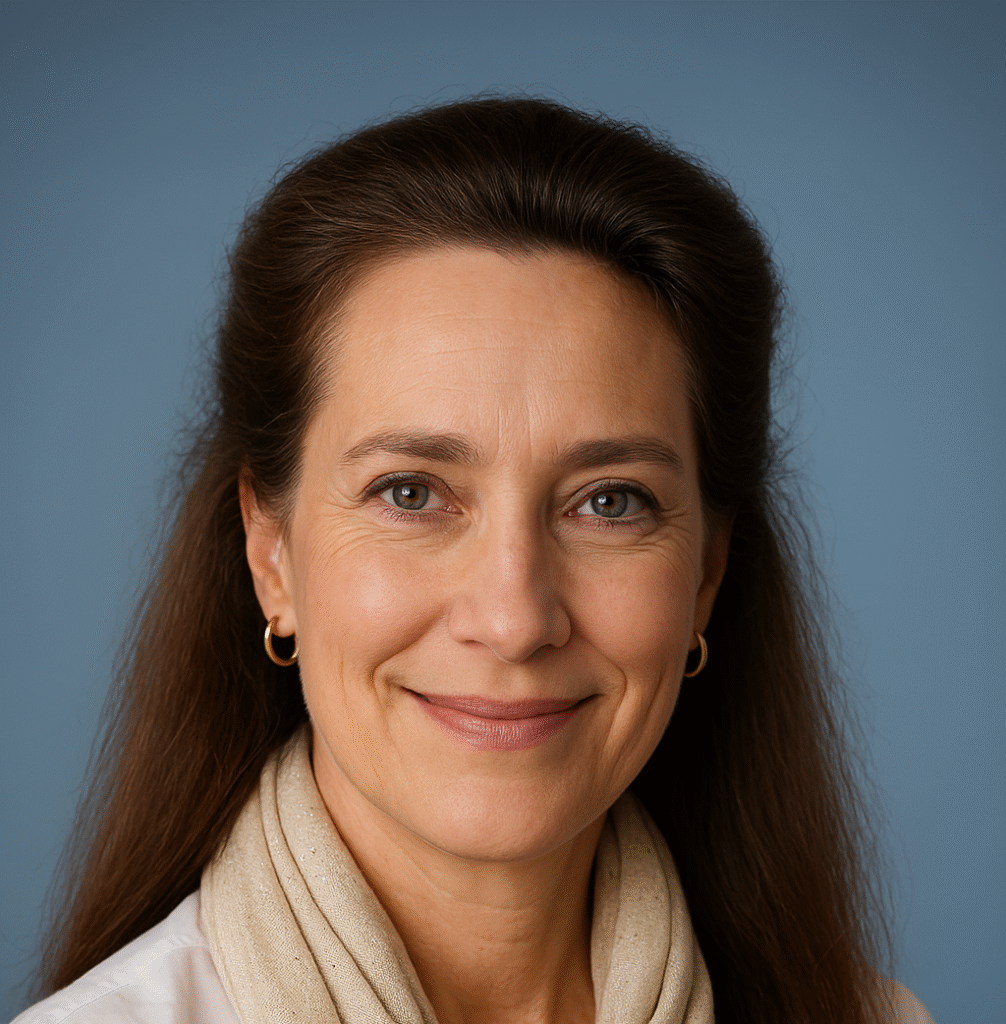
“I am an experienced medical doctor – MBChB, MRCGP, NLP master pract cert, Transformational Life Coach (dip.) Life Story Coach (cert.) Stress Counselling (cert.) Med Hypnotherapy (dip.) and EAGALA (cert.) I may have an impressive number of letters after my name, and more than three decades of professional experience, but what qualifies me to excel at what I do is my intuitive understanding of my clients’ difficulties and my extensive personal experience of managing major life changes using strategies I developed over many years.” Dr M Montagu