The Luxury We Need Most Isn’t Five-Star Hotels. It’s Time to Think.

time to think

.

CrossRoads Conversations

When I first started hosting Camino de Santiago walking retreats in rural Gascony, the French Tuscany, I assumed I would be the one doing most of the teaching.

I couldn’t have been more wrong.

Over the years, dozens of people have arrived at my farmhouse carrying backpacks, walking boots, and lives that had gradually become much too heavy. Some were still working. Some had retired. Some were rebuilding after loss, illness or divorce. Others simply couldn’t explain why they felt so restless.

They thought they had come to walk a couple of sections of the Camino.

In the end, they became MY teachers. The CrossRoads Conversations blog post series explores what my guests have taught me over the last twenty-odd years.

.

When people hear the word luxury, they often imagine infinity pools, Michelin-starred restaurants, Egyptian cotton sheets and champagne on arrival.

There’s nothing wrong with any of those things. I enjoy a comfortable hotel as much as the next person.

But after hosting dozens of Camino retreats in southwest France, I’ve come to believe that the greatest luxury of all isn’t something money can buy.

It’s uninterrupted time to think.

That may not sound particularly glamorous. In fact, in a world that celebrates productivity and busyness, it can sound almost wasteful. Surely we should be doing something.

Yet I’ve noticed something remarkable over the years.

Guests often arrive convinced they need answers. They hope that somewhere during the retreat, they’ll finally manage to decide whether to retire, change careers, move house, end a relationship, begin a new project or simply work out what comes next.

What they haven’t realised is that they just haven’t given themselves enough time to think things through.

Not reflective thinking.

The kind that isn’t squeezed between meetings, interrupted by notifications or accompanied by the constant temptation to “just check this “important” email.”

The kind that unfolds slowly, like a country lane disappearing on the horizon.

My Camino de Santiago walking retreats include two or three days of walking sections of the historic Le Puy route. Guests walk alone, carrying little more than a picnic, some water and perhaps a notebook. I don’t walk with them, because over the years I’ve learned that people benefit more from the walk when they succeed in finding their own way.

Something begins to happen after the first hour or two.

The conversation in our heads gradually quietens.

The mental to-do list loses its urgency.

The imaginary arguments, worries and rehearsed conversations begin to fade.

People start noticing things again.

The scent of wild thyme warming in the sunshine.

The neat rows of vines stretching towards the horizon.

A buzzard circling overhead.

The reassuring rhythmic footfall of boots on a 1000-year-old path.

At first glance, it looks as though nothing is happening.

In reality, something very important is.

Thoughts start to flow freely.

For many of my guests, particularly those who have spent decades in demanding careers, this can feel surprisingly unfamiliar. They have become exceptionally good at solving everyone else’s problems, meeting deadlines and making decisions under pressure.

What they have forgotten is how to sit quietly with their own thoughts.

Perhaps that is one of the hidden costs of modern life.

We have more information available to us, instantly, than any previous generation. More opinions. More entertainment. More news. More noise.

What we have less of is uninterrupted reflection.

Little wonder so many people feel mentally crowded.

One of the things my guests have taught me is that clarity rarely arrives because we force it. It appears when we stop chasing it quite so desperately.

Some of the most important decisions I’ve seen people make haven’t happened at a table with spreadsheets and pros-and-cons lists. They’ve happened somewhere between two small villages on the Camino de Santiago, while watching butterflies drift across a wildflower meadow or listening to the wind rustle through the trees.

Not because the Camino generously hands out answers.

But because it gives people something they need: Time.

Not time to be entertained.

Not time to be productive.

Simply time to think.

It’s curious, really.

We think nothing of spending a considerable sum on a luxurious holiday, yet we often struggle to justify setting aside a few days simply to reflect on our lives.

I’ve come to believe that genuine luxury has very little to do with opulence.

It’s waking without an alarm.

It’s walking without being in a hurry.

It’s hearing birds instead of traffic.

It’s eating lunch beneath a tree instead of at your desk.

It’s allowing your mind enough room to wander until, almost unnoticed, it begins to find its way home.

Perhaps that’s why so many guests tell me that walking the Camino was the highlight of their retreat. Not because it was physically demanding or particularly adventurous, but because it gave them permission to do something they hadn’t done in years.

To stop.

To breathe.

And finally, to think.

Perhaps you’re longing for that kind of luxury too.

If you think you—or someone you care about—would benefit from a few days walking the Camino, slowing down, and giving yourself the priceless gift of time to think, I’d love to tell you more about my small-group Camino de Santiago walking retreats in the peaceful countryside of southwest France.

You can email me at MargarethaMontagu@gmail.com.

If your soul is craving fresh air, meaningful movement, and a chance to reconnect with nature, join us on a CrossRoads Camino de Santiago Walking Retreat – a powerful, natural reboot for your body, mind, and spirit. No fitness requirements. No forced bonding. No pressure to have a breakthrough. Just one foot in front of the other, and finding your way to a brighter future.

Do you dream of escaping your stressful life to raise a herd of goats or grow sunflowers in the south of France? Then you may be ready for an Esprit Meraki retreat. Get access to this “very serious” quiz to help you figure out how urgent your need for a change of scenery is, when you subscribe to my monthly newsletter.
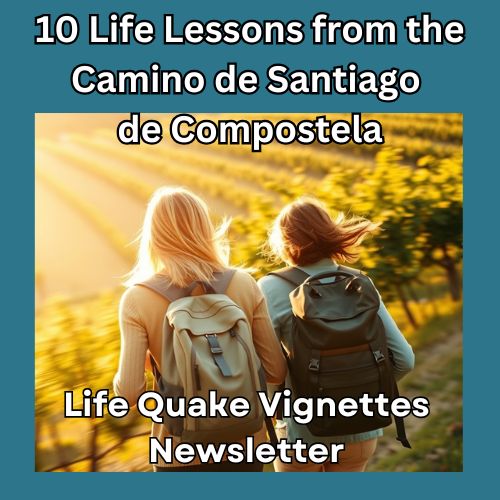
What Life Lessons Can You Learn While Walking the Camino de Santiago? a free guide filled with 10 not just “quaint anecdotes” or Instagram-worthy moments (though there are plenty of those) but real transformations from real people who walked this insight-giving trail – Subscribe to my monthly newsletter to Download the Guide

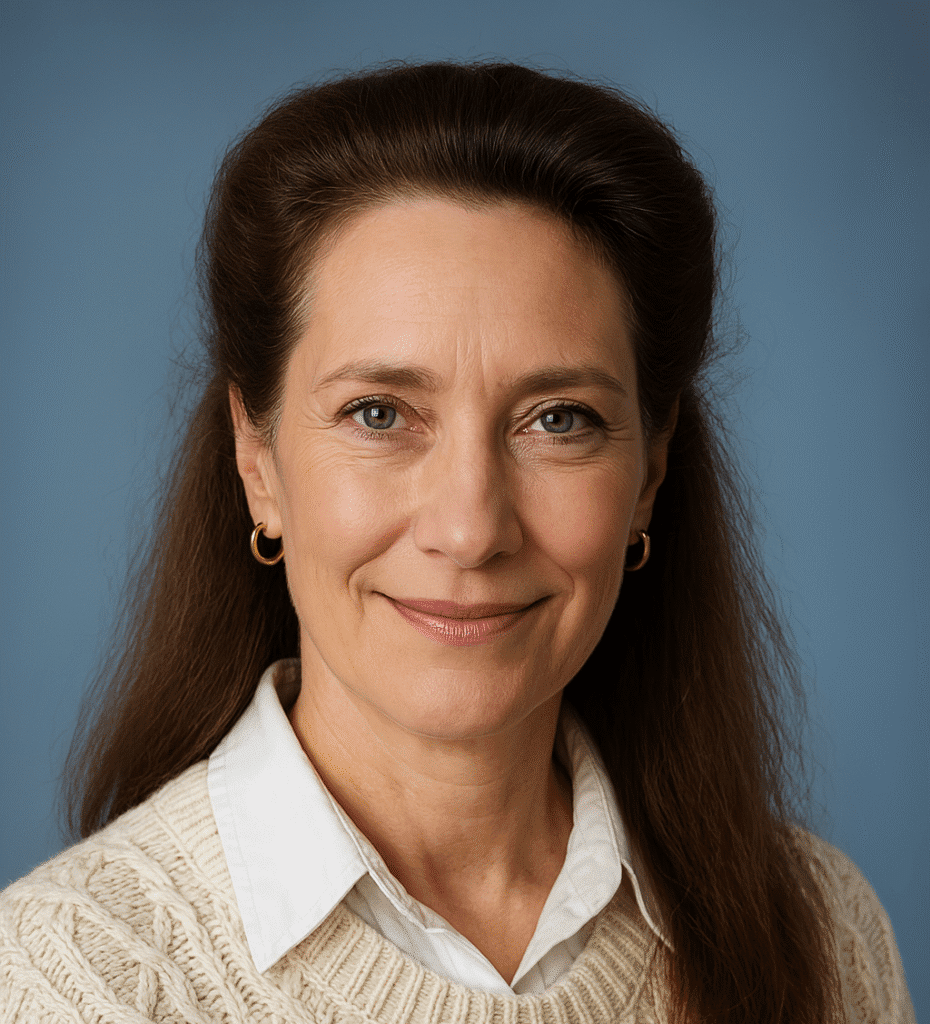
Author Bio: Dr Margaretha Montagu – described as a “game changer”, “gifted healer”, “guiding light” and “life-enriching author” – is an experienced medical doctor, a certified NLP practitioner, a medical hypnotherapist, an equine-assisted psychotherapist (EAGALAcertified) and a transformational retreat leader who guides her clients through life transitions – virtually, or with the assistance of her Friesian and Falabella horses, at their home in the southwest of France.

The Camino de Santiago Doesn’t Change People. It Creates the Conditions for Change.

Conditions for Change.

.

Crossroads Conversations

When I first started hosting Camino de Santiago walking retreats in rural Gascony, the French Tuscany, I assumed I would be the one doing most of the teaching.

I couldn’t have been more wrong.

Over the years, dozens of people have arrived at my farmhouse carrying backpacks, walking boots, and lives that had gradually become much too heavy. Some were still working. Some had retired. Some were rebuilding after loss, illness or divorce. Others simply couldn’t explain why they felt so restless.

They thought they had come to walk a couple of sections of the Camino.

In the end, they became MY teachers. The CrossRoads Conversations blog post series explores what my guests have taught me over the last twenty-odd years.

.

Spend any time reading about the Camino de Santiago, and you’ll soon come across stories of life-changing experiences.

People find themselves. They discover their purpose. They return home transformed.

Having hosted Camino de Santiago walking retreats in southwest France for many years, along the historic Le Puy route, I have no doubt that the Camino can be deeply transformative.

I simply don’t think the Camino deserves all the credit.

That may sound almost heretical coming from someone whose retreats include two or three days of walking the Camino, but hear me out.

If walking alone along an ancient pilgrimage route automatically changed people, every pilgrim would return home a different person. They don’t. Some finish with aching feet and wonderful memories. Others quietly begin making decisions that alter the course of the rest of their lives.

The difference isn’t the path beneath their boots.

It’s what the path makes possible.

When guests arrive at my farmhouse, they’re often standing at a crossroads, although they don’t always realise it immediately. Some are contemplating retirement and wondering who they will be without the career that has defined them for decades. Others are recovering from illness, divorce or bereavement. Some are simply exhausted by years of trying to keep every ball in the air. Increasingly, people arrive with worries about a world that feels so much less predictable than it once did. Global uncertainty, economic pressure and a relentless news cycle all have a way of weighing heavily on us.

Their circumstances are different, but the underlying question is often the same.

What now?

It’s a difficult question to answer while rushing from meeting to meeting, replying to emails or ticking yet another task off an endless to-do list.

The Camino removes many of those distractions.

For a few hours, life becomes wonderfully uncomplicated. You follow the arrows. You notice the changing light on the vineyards, the scent of warm pine, the chatter of birds hidden in the hedgerows. You stop for lunch on a weathered bench or beneath the shade of an ancient oak. Your mind, so accustomed to being occupied every waking minute, gradually begins to settle.

I don’t walk with my guests. That is a deliberate choice.

Over the years, I’ve discovered that people rarely need another person telling them what to think. What they actually need is enough uninterrupted time to process their own thoughts.

Walking the Camino on your own provides exactly that.

Answers are rarely dramatic. Nobody reaches the top of a hill and suddenly knows precisely what to do with the rest of their life. Change usually arrives much more quietly than that.

Someone realises they are more tired than they dare admit.

Someone else recognises that they’ve been trying to live up to other people’s expectations.

A retiree begins to see the next chapter as an invitation.

A business owner acknowledges that success has come at too high a price.

Not miraculous interventions.

Moments of clarity.

The Camino doesn’t create those insights. They were already there, waiting patiently in the background.

The Camino simply creates the conditions in which they can finally surface.

One of the greatest privileges of hosting retreats has been watching this happen again and again. I never know what each guest will discover, and neither do they. That’s precisely as it should be. There is no formula, no guarantee and certainly no one-size-fits-all transformation.

What there is, however, is time.

Time to breathe.

Time to think.

Time to notice.

Time to intentionally imagine a different future.

Perhaps that is why people return home speaking so enthusiastically about the Camino. They aren’t really talking about the footpath, the churches or even the beautiful countryside, wonderful though it is.

They’re talking about what they discovered when life finally grew quiet enough to listen.

Perhaps you’re standing at a crossroads yourself.

If you think you—or someone you care about—might benefit from a few days of slowing down, walking the Camino and creating the space for life’s next chapter to emerge, I’d love to tell you more about my small, self-guided Camino de Santiago walking retreats in southwest France.

You can email me at MargarethaMontagu@gmail.com.

If your soul is craving fresh air, meaningful movement, and a chance to reconnect with nature, join us on a CrossRoads Camino de Santiago Walking Retreat – a powerful, natural reboot for your body, mind, and spirit. No fitness requirements. No forced bonding. No pressure to have a breakthrough. Just one foot in front of the other, and finding your way to a brighter future.

Do you dream of escaping your stressful life to raise a herd of goats or grow sunflowers in the south of France? Then you may be ready for an Esprit Meraki retreat. Get access to this “very serious” quiz to help you figure out how urgent your need for a change of scenery is, when you subscribe to my monthly newsletter.

What Life Lessons Can You Learn While Walking the Camino de Santiago? a free guide filled with 10 not just “quaint anecdotes” or Instagram-worthy moments (though there are plenty of those) but real transformations from real people who walked this insight-giving trail – Subscribe to my monthly newsletter to Download the Guide

“I am an experienced medical doctor – MBChB, MRCGP, NLP master pract cert, Transformational Life Coach (dip.) Life Story Coach (cert.) Stress Counselling (cert.) Med Hypnotherapy (dip.) and EAGALA (cert.) I may have an impressive number of letters after my name, and more than three decades of professional experience, but what qualifies me to excel at what I do is my intuitive understanding of my clients’ difficulties and my extensive personal experience of managing major life changes using strategies I developed over many years.” Dr M Montagu
How Walking Helps Untangle Thoughts That Talking Never Did

How Walking Helps Untangle Thoughts That Talking Never Did

.

Crossroads Conversations

When I first started hosting Camino de Santiago walking retreats in rural Gascony, the French Tuscany, I assumed I would be the one doing most of the teaching.

I couldn’t have been more wrong.

Over the years, dozens of people have arrived at my farmhouse carrying backpacks, walking boots, and lives that had gradually become much too heavy. Some were still working. Some had retired. Some were rebuilding after loss, illness or divorce. Others simply couldn’t explain why they felt so restless.

They thought they had come to walk a couple of sections of the Camino.

In the end, they became MY teachers. The CrossRoads Conversations blog post series explores what my guests have taught me over the last twenty-odd years.

One of the things that has surprised me most since I began hosting Camino de Santiago walking retreats is how often people tell me, “I just needed some time out to think.”

Not advice.

Not answers.

Not someone to tell them what they should do next.

Just time out.

This might sound strange coming from someone who spent many years as a doctor and therapist, where conversations were central to helping people understand what was happening in their lives. Talking is a powerful tool. Sometimes saying something out loud for the first time can be incredibly liberating.

But over the years, both professionally and through hosting dozens of retreat guests, I’ve noticed something else.

Some of your thoughts won’t untangle themselves while you’re sitting in a chair.

Sometimes you need to move to make that happen.

When guests arrive at my farmhouse in southwest France for a Camino de Santiago walking retreat, many are carrying questions they have been trying to answer for months, sometimes years.

Should I retire?

If I do, what do I want the next chapter of my life to look like?

And why do I feel so exhausted when everything appears to be going well?

Is it too late to start over?

How do I find meaning now that my old identity no longer fits?

These are not simple questions. They are not problems to be solved by a quick internet search or a motivational quote popping up at exactly the right moment on social media.

Solving some of our problems takes time.

And sometimes, it takes a good pair of walking boots to see the light.

During my retreats, my guests spend two or three days walking sections of the historic Le Puy route of the Camino de Santiago. They walk alone, carrying only what they need for the day.

That is deliberate.

I don’t walk with my guests because I have learned that when they say they need time out, they mean they need time on their own.

To have a conversation with themselves.

At first, many people find this uncomfortable.

We are not very good at being alone with our own thoughts anymore. We fill every spare moment with podcasts, messages, news updates and the irresistible urge to check whether someone somewhere has replied to something we sent three days ago.

Modern technology has given us the extraordinary ability to be constantly connected.

Walking in nature creates a different kind of connection.

There is a rhythm to it.

Left foot.

Right foot.

Breathe.

Be present.

Repeat.

The mind, which was initially racing through unfinished tasks and old worries, gradually begins to settle. Thoughts that felt tangled and overwhelming often start arranging themselves, almost without conscious effort.

It reminds me of shaking a snow globe.

When you shake it, everything is cloudy and unclear. Let it settle for a while, and eventually you can see what is actually there.

The Camino does something similar.

It doesn’t magically provide answers.

The arrows don’t point towards your life purpose, unfortunately. (I’ve checked. It would certainly make my retreat brochures easier to write.)

But they do provide direction.

I’ve watched guests discover things during a day’s walking that they had been unable to access through weeks of thinking.

A realisation that they don’t actually want the promotion they have been chasing.

An acceptance that retirement is not an ending but a beginning.

The courage to have a conversation they’ve been avoiding.

The understanding that perhaps they don’t need to become someone new—they simply need to resussitate the person they were before life became so demanding.

These moments are rarely dramatic.

There are no Hollywood-style revelations with swelling music and a perfectly timed sunset.

More often, they arrive quietly somewhere along a country lane, while walking past a field of sunflowers beneath the shade of ancient trees.

Sometimes the harder we try to think our way out of a problem, the more tangled it becomes. Sometimes the answer appears when we stop staring at the knot and simply start walking.

The Camino has been teaching people this for centuries.


Perhaps you have thoughts that will need a little time out to untangle.

If you feel that a few days walking the Camino de Santiago through the peaceful countryside of southwest France could help you step away from all the noise and reconnect with what matters, I’d love to tell you more about my small-group walking retreats.

You can email me at MargarethaMontagu@gmail.com.

If your soul is craving fresh air, meaningful movement, and a chance to reconnect with nature, join us on a CrossRoads Camino de Santiago Walking Retreat – a powerful, natural reboot for your body, mind, and spirit. No fitness requirements. No forced bonding. No pressure to have a breakthrough. Just one foot in front of the other, and finding your way to a brighter future.

Do you dream of escaping your stressful life to raise a herd of goats or grow sunflowers in the south of France? Then you may be ready for an Esprit Meraki retreat. Get access to this “very serious” quiz to help you figure out how urgent your need for a change of scenery is, when you subscribe to my monthly newsletter.

What Life Lessons Can You Learn While Walking the Camino de Santiago? a free guide filled with 10 not just “quaint anecdotes” or Instagram-worthy moments (though there are plenty of those) but real transformations from real people who walked this insight-giving trail – Subscribe to my monthly newsletter to Download the Guide

“I am an experienced medical doctor – MBChB, MRCGP, NLP master pract cert, Transformational Life Coach (dip.) Life Story Coach (cert.) Stress Counselling (cert.) Med Hypnotherapy (dip.) and EAGALA (cert.) I may have an impressive number of letters after my name, and more than three decades of professional experience, but what qualifies me to excel at what I do is my intuitive understanding of my clients’ difficulties and my extensive personal experience of managing major life changes using strategies I developed over many years.” Dr M Montagu

Nature Doesn’t Solve Our Problems. It Changes Our Perspective.

Nature Doesn't Solve Our Problems. It Changes Our Perspective.

.

CrossRoads Conversations

When I first started hosting Camino de Santiago walking retreats in rural Gascony, the French Tuscany, I assumed I would be the one doing most of the teaching.

I couldn’t have been more wrong.

Over the years, dozens of people have arrived at my farmhouse carrying backpacks, walking boots, and lives that had gradually become much too heavy. Some were still working. Some had retired. Some were rebuilding after loss, illness or divorce. Others simply couldn’t explain why they felt so restless.

They thought they had come to walk a couple of sections of the Camino.

In the end, they became MY teachers. The CrossRoads Conversations blog post series explores what my guests have taught me over the last twenty-odd years.

It would make wonderful marketing if I could tell you that spending two days walking the Camino de Santiago will solve all your problems.

Unfortunately, it won’t.

You may still have a difficult boss, a challenging marriage, an uncertain retirement, grown-up children who insist on making their own questionable decisions, and a tax return waiting for you when you get home. The Camino, for all its many gifts, has yet to develop a talent for dealing with bureaucracy.

What it does, however, is something rather more subtle.

It changes how we see our problems.

Over the years, I’ve hosted dozens of people at my little farmhouse in southwest France. They come from all walks of life, although many have one thing in common: they have reached a point where life feels heavier than it used to. Some are standing at a crossroads. Others have recently lost someone they love, are adjusting to retirement, recovering from illness, or simply wondering when life became so relentlessly complicated.

And then they spend two or three days walking sections of the Camino de Santiago along the historic Le Puy route.

Alone.

People are often surprised when I tell them that I don’t walk with my guests. Surely, they ask, wouldn’t it be more supportive if I accompanied them?

Perhaps.

But over the years, I’ve discovered that people don’t usually need someone beside them telling them where to put their feet.

The red-and-white arrows do a perfectly good job of that.

What people often need is the freedom to notice their thoughts.

One of the unexpected things I’ve learned is that nature has an extraordinary way of restoring perspective.

Not because it whispers the answers.

Not because trees possess secret therapeutic powers.

And certainly not because vineyards spend their evenings discussing existential philosophy.

It happens because nature gently reminds us that we are part of something much bigger than the small, noisy world we’ve built around ourselves.

On the Camino, life becomes beautifully simple.

You walk.

You breathe.

You notice.

The warm scent of pine drifts through the air. Swallows skim low over fields of ripening wheat. Cicadas provide the soundtrack on hot summer afternoons. In autumn, the vineyards glow gold and crimson beneath impossibly wide Gascon skies. Even the silence has texture.

Without really trying, your attention shifts.

Yesterday, you were replaying an awkward conversation for the seventeenth time.

Today, you’re wondering how many people have walked this same path before you.

Yesterday your inbox felt like a national emergency.

Today, you’re watching a line of ants carrying crumbs many times their own size and thinking they seem remarkably organised.

Nature has an amusing way of exposing our exaggerated sense of urgency.

It quietly reminds us that the seasons continue regardless of whether we’ve answered every email.

The vines don’t panic because it’s already Tuesday.

The oak trees don’t compare themselves to the walnut trees.

The sunflowers don’t spend their mornings worrying whether they’re blooming too early in the season.

Only we humans seem to have perfected the art of exhausting ourselves by measuring our worth according to how busy we are.

I’ve noticed something else over the years.

Guests rarely return from a day’s walking announcing that they’ve solved every problem in their lives.

What they do say is remarkably consistent.

“I can see things more clearly.”

“I think I know what I need to do.”

“It doesn’t feel quite so overwhelming anymore.”

The problems haven’t disappeared.

Their perspective has changed.

And changing your perspective is a remarkably empowering activity.

It offers enough distance from everyday life for us to see patterns that were invisible when we were caught up in them.

Perhaps that’s why I never promise my guests that the Camino will change their lives.

Instead, I tell them something much simpler.

Walk.

Pay attention.

See what happens.

Because while nature may not solve our problems for us, it has an extraordinary gift for helping us remember that we are usually stronger, wiser and more resourceful than we believed when we first laced up our walking boots.

And sometimes, that change in perspective is all we need.

Could you do with seeing life from a different perspective?

If you think you—or someone you care about—might benefit from stepping away from the noise of everyday life and spending a few days walking the Camino de Santiago through the peaceful countryside of southwest France, I’d love to tell you more about my small-group Camino de Santiago walking retreats.

Sometimes the greatest change begins not with finding new answers, but with looking at old questions from a different perspective.

You can email me at MargarethaMontagu@gmail.com.

If your soul is craving fresh air, meaningful movement, and a chance to reconnect with nature, join us on a CrossRoads Camino de Santiago Walking Retreat – a powerful, natural reboot for your body, mind, and spirit. No fitness requirements. No forced bonding. No pressure to have a breakthrough. Just one foot in front of the other, and finding your way to a brighter future.

Do you dream of escaping your stressful life to raise a herd of goats or grow sunflowers in the south of France? Then you may be ready for an Esprit Meraki retreat. Get access to this “very serious” quiz to help you figure out how urgent your need for a change of scenery is, when you subscribe to my monthly newsletter.

What Life Lessons Can You Learn While Walking the Camino de Santiago? a free guide filled with 10 not just “quaint anecdotes” or Instagram-worthy moments (though there are plenty of those) but real transformations from real people who walked this insight-giving trail – Subscribe to my monthly newsletter to Download the Guide

I put the essence of who I am, and everything I have experienced that makes me who I am, with great enthusiasm, into my retreats, courses and books. – Dr Margaretha Montagu (MBChB, MRCGP, NLP master pract (cert,) Transformational Life Coach (dip,) Life Story Coach (cert) Counselling (cert,) Med Hypnotherapy (dip) and EAGALA (cert)

What Hundreds of CrossRoads Conversations Have Taught Me About Life

Camino de Santiago Hikers

.

When I first started hosting Camino de Santiago walking retreats in rural Gascony, the French Tuscany, I assumed I would be the one doing most of the teaching.

I couldn’t have been more wrong.

Over the years, dozens of people have arrived at my farmhouse carrying backpacks, walking boots, and lives that had gradually become much too heavy. Some were still working. Some had retired. Some were rebuilding after loss, illness or divorce. Others simply couldn’t explain why they felt so restless.

They thought they had come to walk a couple of sections of the Camino.

In the end, they became MY teachers. The CrossRoads Conversations blog post series explores what my guests have taught me over the last twenty-odd years.

Why So Many Guests Leave With Less

One of the first things I notice when guests arrive at my little farmhouse in the Gers isn’t their smiling faces. It’s their luggage.

Some people pull up with suitcases that suggest they’re headed to the North Pole for six months, not to a five-day retreat in the sun-warmed southwest of France. A bag for clothes. A bag for shoes. A bag for “just in case.” Every year, I watch another wheel snag on the gravel, and another guest laughs and says, “I think I brought a bit too much, maybe?”

I know that feeling. Most of us do. We pack for sunshine and for rain, for elegant dinners and impromptu barbecues, for books we’ll never crack open and snacks we’ll never eat. Travelling light, it turns out, does not come naturally to the human species.

Until we decide to walk the Camino.

During my Camino de Santiago walking retreats, guests spend two or three days on foot along the historic Le Puy route. The walks are unguided — deliberately so. I’ve come to believe that people find their way through life more easily when they’re trusted to find their own way along a path, rather than being herded down it.

Before setting off, I nudge them gently: take only what you truly need. Water. A picnic. A waterproof, if the sky looks moody. Maybe a notebook. That’s more or less it.

And somewhere between those first uncertain steps and the end of the day’s walking, something quietly shifts. Carrying a lighter backpack has a funny way of reminding you that other things in life have gotten unnecessarily heavy, too.

Not everyone who arrives here is grieving or burnt out. Some are wondering what comes after retirement. Some, despite having hit a successful stride in their careers, still feel oddly restless. Some have recently lost someone dear. Others just have that nagging sense that life has become far more complicated than it needs to be.

After hundreds of crossroads conversations, I’ve noticed a pattern: the heaviest things people carry are seldom visible.

Expectations. Old disappointments. The pressure to keep achieving. Guilt. Regret. Responsibilities that quietly stopped belonging to them years ago. The belief that they need every answer before they’re allowed to take the next step.

Unlike an overstuffed suitcase, none of that gets left behind in the bedroom. It comes along for the whole walk.

The Camino has a gentle way of bringing this into focus. It doesn’t solve anything, and it certainly doesn’t perform miracles. What it does is make space — enough space for people to finally notice what they’ve been hauling around without ever questioning it.

I never set out to host retreats for people standing at life’s crossroads. And yet, somewhere along the way, I realised that’s precisely who kept showing up on my doorstep. Doctors, teachers, business owners, engineers, artists, retirees, parents, grandparents. Different stories, remarkably similar undertone: I can’t keep going on like this.

The Camino rarely answers that outright. Instead, it asks a quieter question:

What are you still lugging around that you should be leaving behind?

Not your responsibilities, obviously. Not the people you love. But perhaps the unrealistic expectations. The relentless busyness. The need to prove yourself, again and again. The habit of dragging yesterday into tomorrow.

If there’s one thing dozens of guests have taught me, it’s this: people usually arrive believing they need to add something to their lives. More confidence. More certainty. More purpose. More answers.

Far more often, they leave having let go of something instead.

A few unnecessary burdens stay behind on the Camino. Like the stone many people bring from home to leave on the path.

If you (or someone you know) are carrying more emotional baggage than you’d like to admit — and you suspect a few days on the Camino de Santiago might help you set some of it down — email me at MargarethaMontagu@gmail.com

If your soul is craving fresh air, meaningful movement, and a chance to reconnect with nature, join us on a CrossRoads Camino de Santiago Walking Retreat – a powerful, natural reboot for your body, mind, and spirit. No fitness requirements. No forced bonding. No pressure to have a breakthrough. Just one foot in front of the other, and finding your way to a brighter future.

Do you dream of escaping your stressful life to raise a herd of goats or grow sunflowers in the south of France? Then you may be ready for an Esprit Meraki retreat. Get access to this “very serious” quiz to help you figure out how urgent your need for a change of scenery is, when you subscribe to my monthly newsletter.

What Life Lessons Can You Learn While Walking the Camino de Santiago? a free guide filled with 10 not just “quaint anecdotes” or Instagram-worthy moments (though there are plenty of those) but real transformations from real people who walked this insight-giving trail – Subscribe to my monthly newsletter to Download the Guide

“I am an experienced medical doctor – MBChB, MRCGP, NLP master pract cert, Transformational Life Coach (dip.) Life Story Coach (cert.) Stress Counselling (cert.) Med Hypnotherapy (dip.) and EAGALA (cert.) I may have an impressive number of letters after my name, and more than three decades of professional experience, but what qualifies me to excel at what I do is my intuitive understanding of my clients’ difficulties and my extensive personal experience of managing major life changes using strategies I developed over many years.” Dr M Montagu
All content of this website is copyrighted. You cannot copy the content of this page