
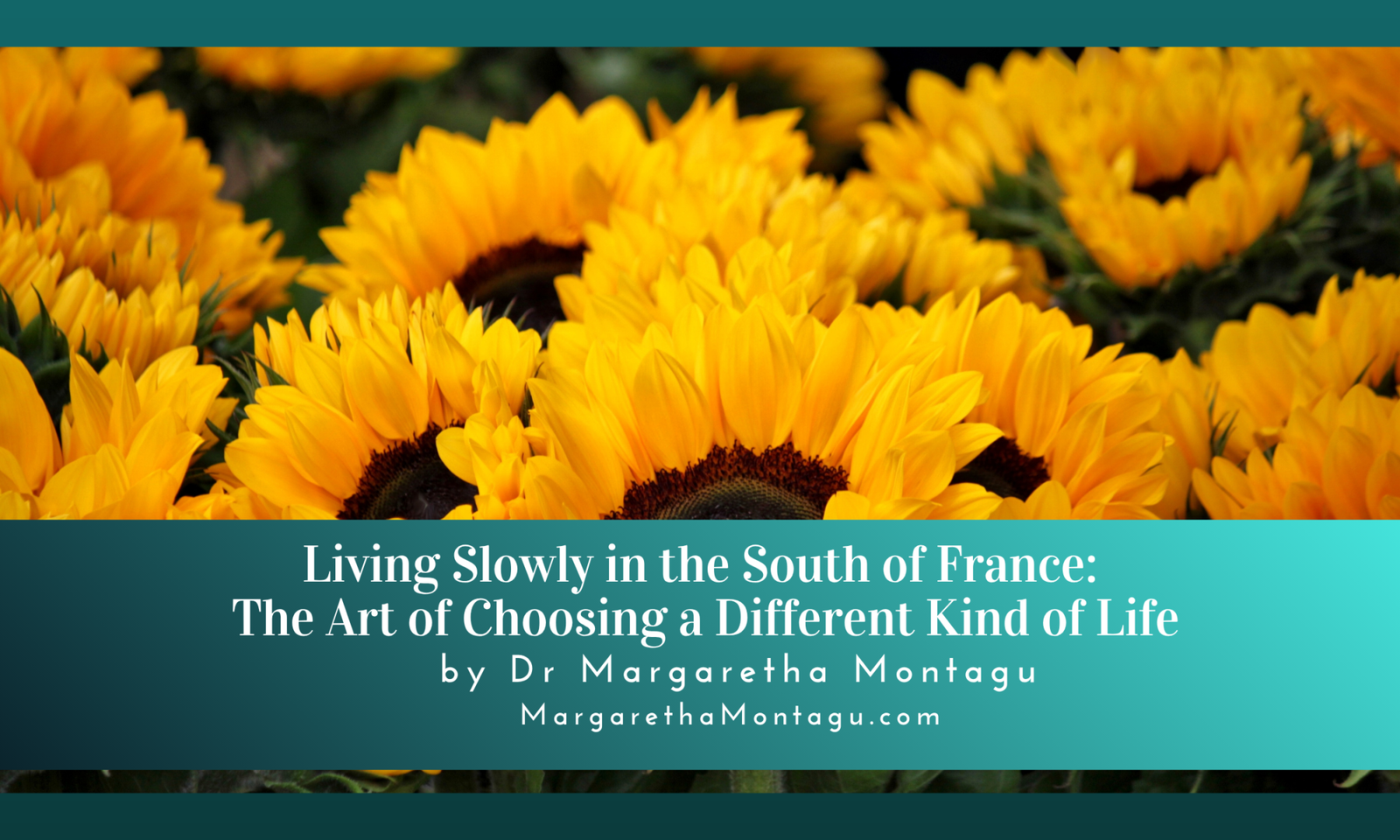
There is a particular image that comes to mind when people think about slow living in the south of France. A pretty stone farmhouse, perhaps, surrounded by vineyards and sunflowers. A leisurely lunch under the shade of a tree, a chilled glass of rosé, a market basket filled with ripe tomatoes, crusty bread and a wedge of cheese. Long afternoons, warm evenings and absolutely nowhere in particular to be.
Some of this is true.
There are certainly worse ways to spend a Tuesday.
But living slowly in the south of France is rather less about picturesque lunches and rather more about the decisions we make. Because a slower life doesn’t happen simply because we move somewhere with more sunshine, fewer traffic jams and an alarming number of roundabouts.
It requires a certain amount of intention. And, occasionally, quite a lot of saying no.
A different definition of a successful life
For much of my adult life, I was rather good at being busy. As a doctor, I worked long hours, took responsibility for other people’s wellbeing and became quite accomplished at fitting an unreasonable number of requests into an already full day.
I suspect many people will recognise the pattern. We become so accustomed to being needed, productive and available that we eventually forget there might be another way of organising our lives.
For a long time, I measured a successful day by how much I had accomplished. How many people I had helped, how many problems I had solved, how many things I had crossed off my list.
These days, I tend to measure it differently.
Did I have time to enjoy my morning coffee? Did I spend a little time outside? Did I have a proper conversation with someone I care about? Did I do something that made me happy, rather than simply something that needed doing?
And, perhaps most importantly, did I leave enough room in my day to enjoy being alive?
It sounds ridiculously simple. It is surprisingly difficult to put into practice.
Deciding what deserves our time
One of the things living in rural France has taught me is that there is a difference between having time and making time.
I live in Gascony, in the southwest of France, where the landscape changes its personality with the seasons. Sunflowers appear and disappear, the vineyards turn golden, the orchards blossom and the fields become a patchwork of different shades of green and brown.
There is always something happening outside, although very little of it requires my immediate attention.
The French countryside has a rather useful way of reminding you that not everything needs to be hurried along. The seasons will take their time, whether we notice or not.
I have learned to make some deliberate choices.
I no longer try to fill every available space in my calendar. I don’t automatically say yes to invitations, commitments or opportunities simply because they are available. I have become much more protective of my energy, and considerably less interested in being busy for the sake of appearing busy.
This doesn’t mean I have stopped doing things. Far from it. I run retreats, welcome guests, write, look after my home and have more than enough practical responsibilities to keep me occupied.
But I am trying to be more selective about what I take on and, equally importantly, what I leave out.
Choosing fewer things, but enjoying them more
There is a particular pleasure in doing ordinary things without feeling that you should be doing something else at the same time.
Going to the local market in Eauze, for instance, is not necessarily an efficient way of acquiring groceries. There are stalls to browse, people to greet, conversations to have and occasionally a lengthy discussion about the relative merits of different varieties of tomatoes.
You may return home with considerably more cheese than you intended and forget the one thing you actually went to buy.
But that is rather beside the point.
The pleasure is in the experience itself.
I have become increasingly fond of simple things: a good book, a comfortable chair, a walk in the countryside, cooking something delicious, sitting outside with a cup of coffee and watching the horses.
I don’t need every day to be interesting, productive or memorable. Some days can simply be interesting.
This is, I think, one of the most underrated luxuries of getting older: discovering that we don’t have to turn every experience into an achievement.
We don’t have to learn a lesson from every walk, find a deeper meaning in every sunset or emerge from every holiday as a slightly improved version of ourselves.
Choosing a home, rather than a lifestyle
People sometimes imagine that moving to the French countryside means exchanging the pressures of modern life for a permanent holiday.
I can assure you that old farmhouses have an impressive capacity for generating work.
There are roofs to maintain, gardens to tame, things that break at inconvenient moments and an endless supply of practical tasks. Country life is not always as idyllic as the photographs suggest. Especially when it rains for three days straight and something plumbing-related shows up unexpectedly.
But there is something deeply satisfying about making a home in a place that feels connected to its surroundings.
My 200-year-old farmhouse has its imperfections. It isn’t a luxury hotel, and I have no intention of turning it into one. It is comfortable, welcoming and full of character. I like the old furniture, the slightly mismatched crockery and the feeling that people can put their feet up without worrying about leaving a mark.
Over the years, welcoming people into my home has become an important part of my life. I have discovered that hospitality doesn’t need to be elaborate. Often, it is simply about making someone feel welcome, giving them something delicious to eat and allowing them to be themselves.
There is something intensely satisfying about that.
But I have also had to learn that hospitality begins at home, and that includes being hospitable to myself. It is difficult to create a welcoming space for others if I consistently exhaust myself in the process.
So I am learning to do less, leave more breathing space between commitments and accept that I don’t have to be available ALL the time.
A revolutionary concept, to me, anyway.
About being less available
This may be one of the more difficult decisions, particularly for those of us who have spent much of our lives looking after other people.
We are accustomed to responding, helping, organising, reassuring and making ourselves useful. We may even have built a considerable part of our identity around being the person everyone can rely on.
There is nothing wrong with generosity. I value it enormously.
But generosity without boundaries can become just another way of neglecting ourselves.
Living more slowly has meant recognising that my time and energy are finite resources. I cannot give them indiscriminately and then wonder why I have nothing left for myself.
I am learning to protect the quieter parts of my life. To enjoy an afternoon without feeling obliged to make it useful. To leave messages unanswered until I have the inclination to respond. To spend time alone without having to explain myself.
Choosing connection over constant activity
A slower life does not necessarily mean a smaller social life, although it may mean a life shaped differently.
I have become more interested in meaningful connections than in the number of people I see. A good conversation over lunch, an afternoon with a friend, an unexpected kindness or a shared laugh can be worth considerably more than a diary full of social engagements.
I particularly enjoy the conversations that happen around my kitchen table when guests come to stay. People arrive from different parts of the world, sharing their own stories, worries, experiences and expectations. Sometimes they talk, sometimes they read, sometimes they simply enjoy the silence.
Choosing to let go of the life we thought we should have
Perhaps the most important decision involved in living slowly is accepting that the life we want now may not be the life we once imagined.
Our circumstances change. Our health changes. Relationships evolve, careers come to an end, children grow up and priorities shift.
Sometimes we discover that the things we worked so hard to achieve no longer matter quite as much as they once did.
This can be uncomfortable. We may feel that we are somehow stepping backwards, particularly if our previous definition of success involved achievement, recognition, financial security or being indispensable.
But perhaps we are not stepping backwards at all.
Perhaps we are simply changing direction.
I have had to reconsider what I want from my own life, particularly as I grow older. I still enjoy having projects, welcoming people and contributing something useful. But I no longer want to organise my entire existence around what needs doing.
I want more time to enjoy the life I have worked so hard to create.
More time for friendships, reading, writing, nature, the horses and the simple pleasure of being at home.
A slower life is a series of choices
I don’t believe you need to move to France to live more slowly. Nor do I think everyone should abandon their careers, move to the countryside or spend their afternoons contemplating vineyards.
A slower life looks different for everyone.
It might mean working fewer hours, even if that involves earning less. It might mean choosing a smaller home, a simpler holiday or fewer social commitments. It might mean cooking proper meals, spending more time outside, cultivating friendships or finally taking up something you have always wanted to do.
It might simply mean stopping for five minutes before agreeing to yet another commitment and asking yourself whether you actually want to do it.
The important thing is that these decisions are made consciously, rather than allowing our lives to be shaped entirely by habit, expectation and other people’s demands.
Living slowly isn’t about doing nothing. It is about making room for the things that make life worth living.
And it isn’t necessarily easy. There are practical constraints, financial realities, family responsibilities and all the other complications that come with being a grown-up. We cannot always choose our circumstances, but we can sometimes choose how we respond to them.
I have no particular desire to turn my life into a permanent advert for the French art de vivre. There are still days when the washing machine breaks, the internet disappears, the weather refuses to cooperate and I wonder why on earth I thought running a retreat business in an old farmhouse was such a splendid idea.
But there is a great deal I wouldn’t change.
I like the rhythm of the seasons, the slower mornings, the familiar landscape, the people who have become friends and the freedom to arrange my days with a little more consideration for what I actually need.
I think I could get rather good at that.
Ready to discover this way of life? Join me for a 5-day small group retreat, or an in-depth, private, bespoke 3/5 day Press Pause retreat.
Do you dream of escaping your stressful life to raise a herd of goats or grow sunflowers in the south of France? Then you may be ready for an Esprit Meraki retreat. Get access to this “very serious” quiz to help you figure out how urgent your need for a change of scenery is, when you subscribe to my monthly newsletter.
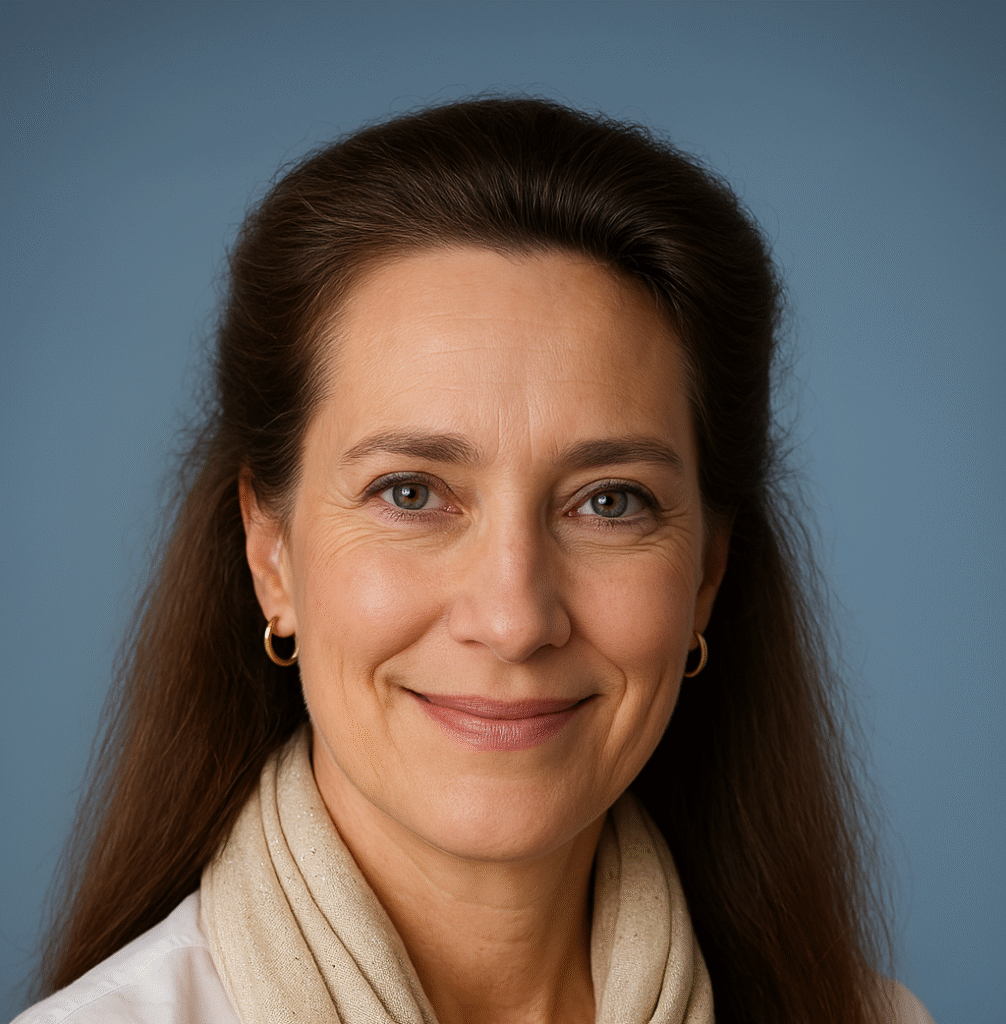
“I am an experienced medical doctor – MBChB, MRCGP, NLP master pract cert, Transformational Life Coach (dip.) Life Story Coach (cert.) Stress Counselling (cert.) Med Hypnotherapy (dip.) and EAGALA (cert.) I may have an impressive number of letters after my name, and more than three decades of professional experience, but what qualifies me to excel at what I do is my intuitive understanding of my clients’ difficulties and my extensive personal experience of managing major life changes using strategies I developed over many years.” Dr M Montagu
© Dr. Margaretha Montagu, Esprit Meraki.