
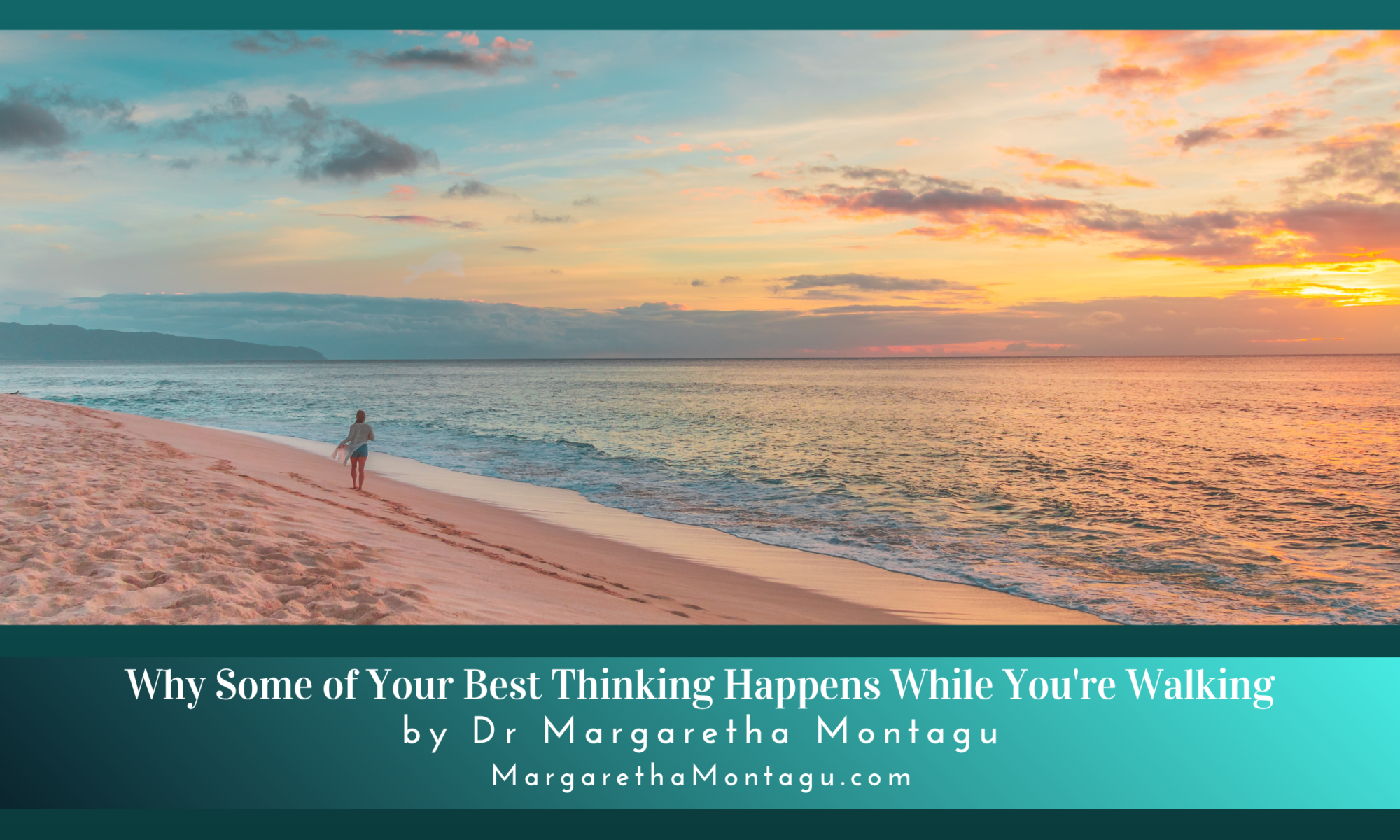
Have you ever noticed that some problems shrink once you start walking?
The problem itself hasn’t changed. The difficult conversation still needs to happen. The diagnosis hasn’t disappeared. Your bank account hasn’t magically recovered. Yet somewhere between the first few hundred metres and the next bend in the path, your mind begins to loosen its grip.
You breathe a little more easily.
You stop rehearsing imaginary arguments.
You notice the birdsong, the breeze, the scent of wildflowers or freshly cut hay.
Without quite knowing how, you begin to think clearly.
I’ve always found that fascinating.
With my medical background, I do appreciate the science. Walking increases blood flow to the brain, reduces stress hormones and encourages the release of chemicals that improve mood and cognitive function. It’s hardly surprising that we often think more clearly after a walk than after another hour spent worrying in the same chair.
But I suspect there’s something else going on too.
Walking changes our perspective in more ways than one.
When we’re anxious, our world closes in on us. Our attention narrows until all we can see is the problem directly in front of us. We go round and round the same thoughts like a hamster on a wheel, hoping that one more lap will somehow produce a different answer.
It rarely does.
Walking interrupts that pattern.
The rhythm of placing one foot in front of the other has a calming effect that sitting still often doesn’t. The body is moving forwards, and somehow the mind begins to believe that moving forwards is possible too.
Perhaps that’s why walking has been part of the human story for so long.
Pilgrims have walked in search of meaning.
Philosophers have walked while thinking.
Poets have walked while writing.
Countless ordinary people have gone for “a walk to clear my head” without ever reading a scientific paper explaining why it works.
Sometimes instinct gets there before research does.
One of the things I’ve observed over the years is that answers rarely arrive when we chase them. They tend to appear when we create enough space for them to catch up with us.
That’s why I encourage people not to fill every walk with podcasts, phone calls or endless scrolling. There is nothing wrong with those things in moderation, but they don’t leave much room for your own thoughts to emerge.
Silence can feel surprisingly uncomfortable at first.
Then something changes.
The mental noise begins to settle, rather like muddy water left undisturbed. The questions that seemed impossibly tangled became a little clearer. Not always because you’ve found the answer, but because you’ve finally found the right question.
I see this time and again. In my Camino de Santiago walking retreat guests and in myself.
Someone arrives convinced they need to make a huge decision immediately. They spend a couple of days walking quietly through fields, forests and sleepy villages, and by the end of the week, they’re asking completely different questions.
Their circumstances haven’t necessarily changed.
They have.
I think that’s because walking reminds us of something we often forget during difficult times.
Life is lived one step at a time.
Not twenty miles at a time.
Not five years at a time.
One step.
When we’re facing a life quake, a change, challenge or crisis, it’s tempting to believe we must have the whole plan ready before we can begin. We want certainty before we take action. Unfortunately, life is rather stingy with certainty.
What it usually offers instead is the next step.
And then the one after that.
Looking back, most of the important changes in my own life didn’t begin with a grand master plan. They began with a conversation, an unexpected opportunity, a quiet realisation or quite literally a long, slow walk.
Only in hindsight did the path make sense.
Perhaps that’s the greatest lesson walking has to teach us.
You don’t need to see the entire journey before you take the first step.
You simply need the courage to trust that the path will reveal itself as you keep moving.
After all, every destination, no matter how extraordinary, begins in exactly the same way.
With one foot in front of the other.
5-day/4-night “Press Pause” Camino de Santiago Walking Retreat – If your soul is craving fresh air, meaningful movement, and a chance to reconnect with nature and connect with horses, join me on a powerful, natural reboot for your body, mind, and spirit. Same content as the 3-day retreat, spread over 5 days. And an extra day of walking. No extreme fitness requirements. No forced bonding. No pressure to have a breakthrough. For one or two guests travelling together.
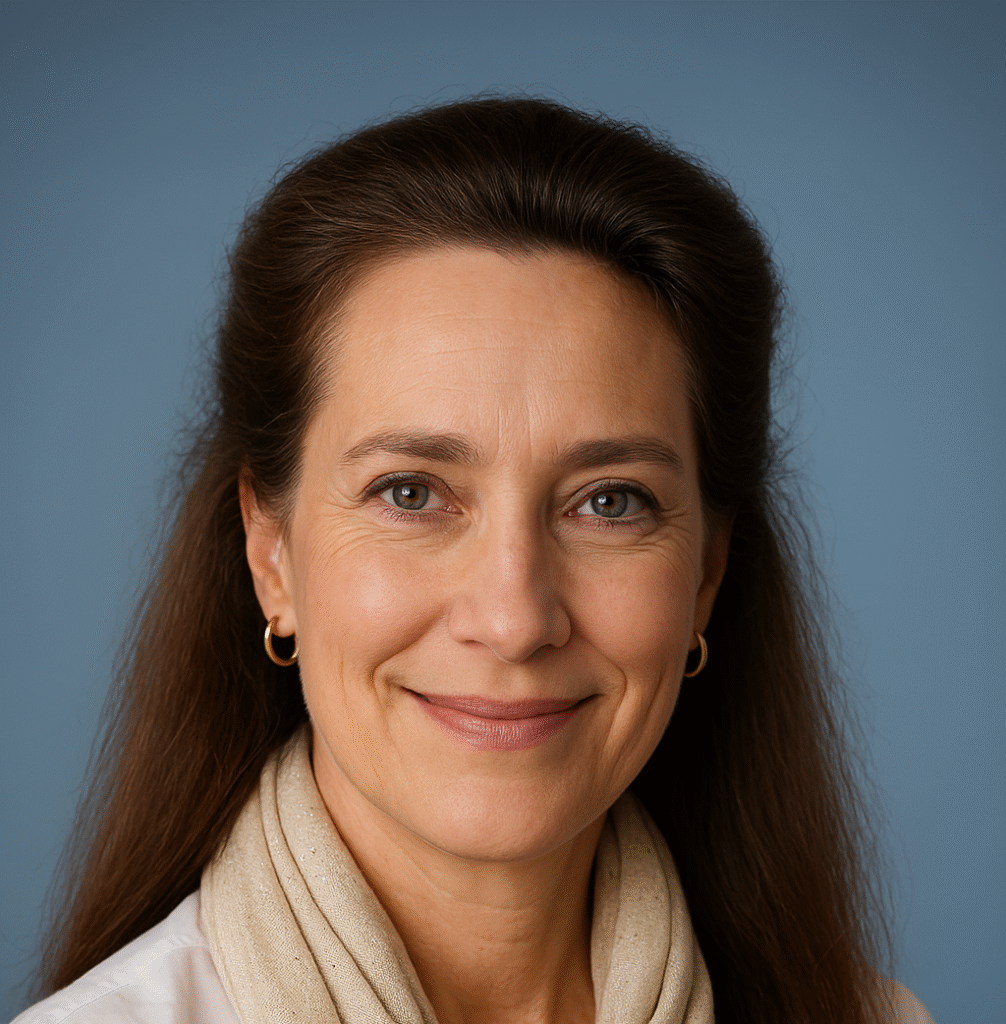
“I am an experienced medical doctor – MBChB, MRCGP, NLP master pract cert, Transformational Life Coach (dip.) Life Story Coach (cert.) Stress Counselling (cert.) Med Hypnotherapy (dip.) and EAGALA (cert.) I may have an impressive number of letters after my name, and more than three decades of professional experience, but what qualifies me to excel at what I do is my intuitive understanding of my clients’ difficulties and my extensive personal experience of managing major life changes using strategies I developed over many years.” Dr M Montagu
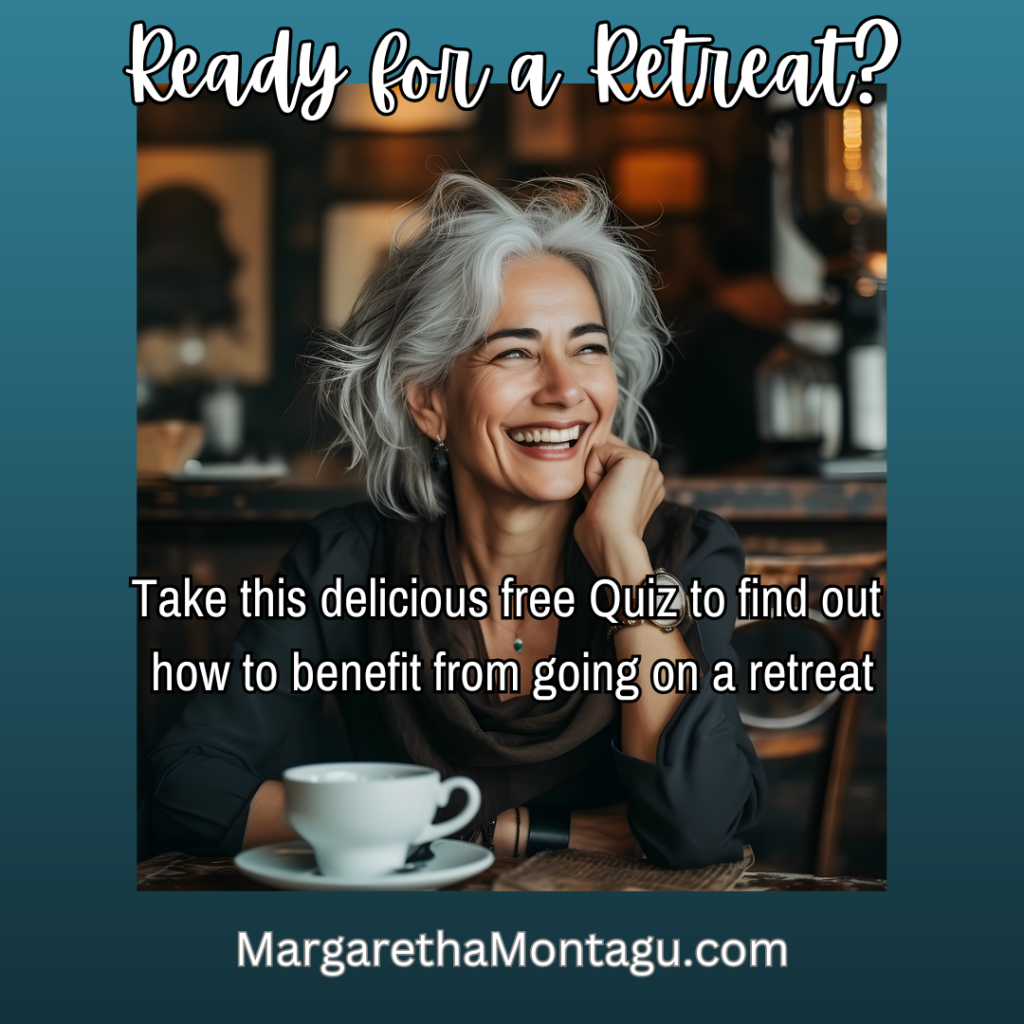
Do you dream of escaping your stressful life to raise a herd of goats or grow sunflowers in the south of France? Then you may be ready for an Esprit Meraki retreat. Get access to this “very serious” quiz to help you figure out how urgent your need for a change of scenery is, when you subscribe to my monthly newsletter.