
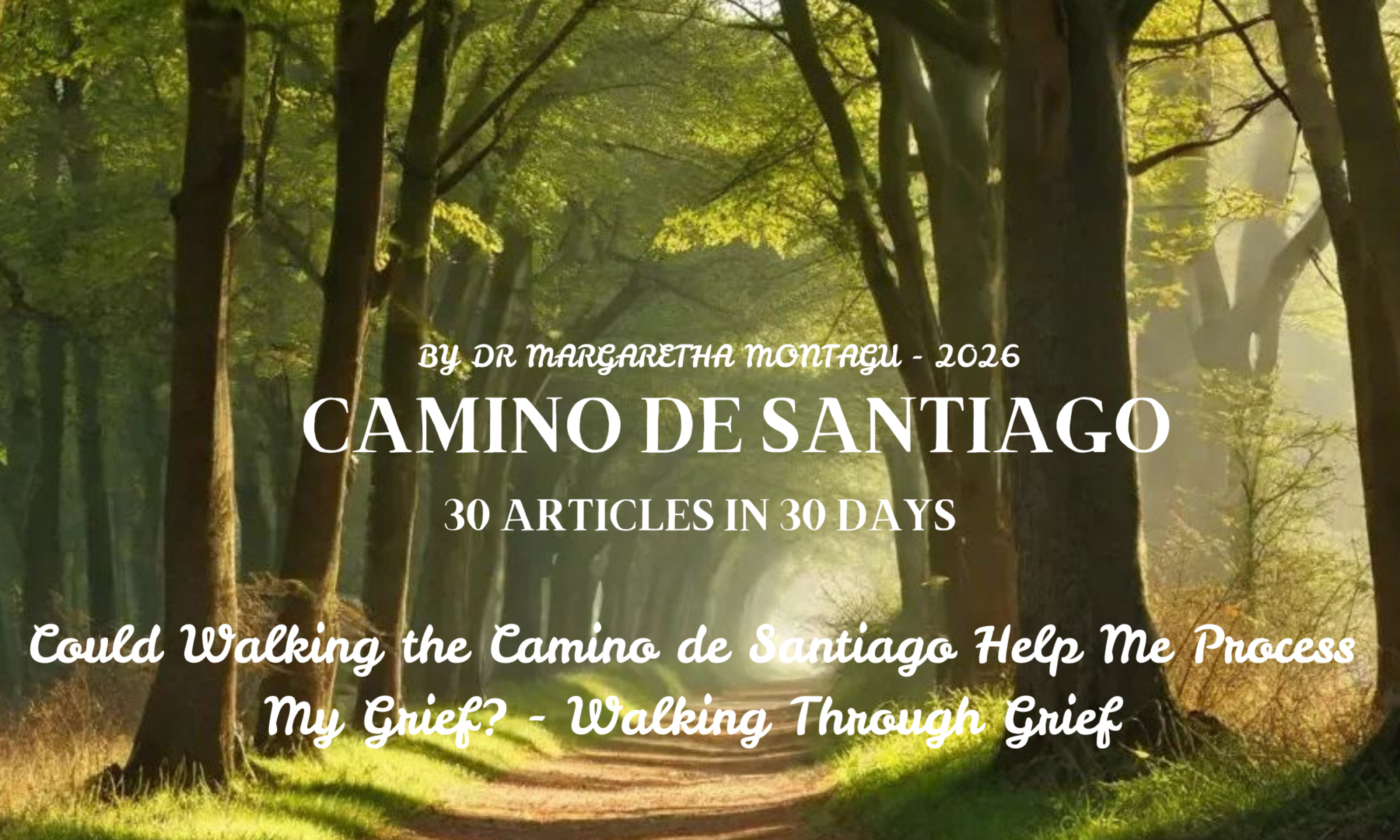
When the ordinary tools of healing aren’t working, sometimes the answer is to put on your boots and start walking — as this ancient French pilgrimage route has been proving for a thousand years
What This Article Is About
This article is for anyone who is carrying a loss that refuses to fade. Not a fresh loss— but the kind that has settled in for the long haul. The grief that has passed the point where people expect you to be over it, that sounds on ordinary days like a low, distant but persistent note, that resurfaces at inconvenient moments in supermarket queues and on motorways and in the middle of meetings about things that feel, in those moments, spectacularly beside the point. This article is about why walking — specifically walking the ancient pilgrimage route of the Camino de Santiago through the French countryside — has been one of humanity’s most reliable tools for processing loss for over a thousand years, why it works in ways that talking frequently cannot, and why some griefs simply need to be walked rather than discussed. It is also, because grief deserves honesty rather than relentless solemnity, occasionally gently funny. Loss is serious. It is not, however, incompatible with a glass of good French wine at the end of a long day’s walking.
5 Key Takeaways about Walking Through Grief
- Grief is not a problem to be solved. It is an experience to work through — and movement, in the most literal sense, is one of the most ancient and effective ways of doing that work.
- The body holds grief in ways the mind cannot always access. Walking — rhythmic, bilateral, physical — reaches the places that talking, journalling, and thinking cannot reliably reach.
- The Camino de Santiago has been receiving grieving pilgrims for over a thousand years. There is something in the structure of a pilgrimage — a direction, a purpose, a community of fellow travellers, an endpoint — that the formless weight of grief finds particularly useful.
- You do not need to be ready. You do not need to have processed anything before you arrive. Some people come to the Camino in pieces and find that the walking does the assembling. This is not a retreat for the healed. It is a retreat for the healing.
- The Camino does not promise resolution. It promises movement. And after a long stillness in grief, movement — even slow, uncertain, occasionally blister-accompanied movement — is frequently enough.
The Woman Who Packed Her Grief in a Rucksack and Carried It to France
Margaret Calloway had done everything right. She had seen the grief counsellor, the recommended one, with the good reviews and the reassuring certificates on the wall of her consulting room in Edinburgh. She had read the books — not all of them, but enough to know the stages, to be able to identify where she was supposed to be in the process and feel the particular mild despair of finding herself somewhere else entirely. She had talked to her sister, her two closest friends, her GP, and, on one memorable occasion, a stranger on a train from Glasgow who had asked if she was alright and then possibly regretted the question. She had taken the medication for three months and then stopped, because it had made the grief quieter but also more intangible, as though it were happening to someone in the next room, and that had felt, in its own way, worse.
Her mother had died fourteen months ago. They had been, in the particular way of certain mothers and daughters, each other’s primary person. Not without complexity — the relationship had contained the usual sedimentary layers of love and frustration and old arguments that had long since stopped being about what they were ostensibly about — but primary. The person Margaret called first. The person who knew the original versions of all the stories. The person whose absence had created a silence in Margaret’s daily life that was, fourteen months on, still startling in its size.
She was fifty-three years old, a secondary school librarian, a reader of considerable voracity, and a woman who had, by her own reckoning, done absolutely everything the grief literature recommended. She was not better. She was functional — she had never stopped being functional, which was its own kind of exhaustion — but she was not better. The grief had not moved. It had simply become familiar, like a piece of furniture she had stopped noticing but still walked around.
The Camino was her friend Diane’s idea, delivered with the bluntness of a twenty-year friendship: ‘You need to go somewhere, Maggie. Somewhere that isn’t here. Somewhere that asks something of your body rather than just your head.’ Margaret had said she would think about it, which was what she said about everything Diane suggested, and then she had thought about it for six weeks and booked it at midnight on a Monday while her tea went cold.
She arrived in France in late September. The light was different — lower and more golden than Edinburgh, with the particular quality of autumn in the French countryside that feels like the landscape is doing something generous, on purpose. She had dinner with the small group of other walkers and said very little. She went to bed at nine o’clock. She lay in the dark in a room that smelled of old stone and thyme and thought about her mother, which she did every night, and cried, which she also did most nights, and then, unexpectedly, slept.
She began walking the following morning. The path was marked with the Camino’s familiar arrows. The air was cool and smelled of damp earth and something she couldn’t name. Her rucksack, which she had packed and repacked three times in the fortnight before leaving, contained everything practical and nothing she actually needed, which was, of course, not in the rucksack at all.
It was on the second day, on a long stretch of path through ancient forest where the only sounds were her footsteps and the occasional distant bell of a village church, that something happened which Margaret had not read about in any of the grief books and which she has since been unable to adequately explain to anyone who wasn’t there.
She stopped walking. She stood completely still on a forest path in southwest France, fourteen months after her mother died, and felt — not the absence of her mother, which was what grief had been until now — but her presence. A warmth, a nearness, an inexplicable and utterly convincing sense that something of her mother was in the light between the trees. It lasted perhaps thirty seconds. Margaret stood very still and let it happen. Then she put one foot in front of the other and kept walking.
She did not tell anyone about it that evening. She is telling you now, in this article, because it is the truest thing she knows about the Camino and about grief, and the books she read never mentioned it once.
What happened over the remaining three days — and what Margaret understood by the end of them that the grief counsellor’s certificates and the stages model had never quite reached — is what this article is about.
Why Grief Needs to Move
There is a reason the word ‘processing’ has become so attached to grief, and it is not merely therapeutic jargon. Grief, unprocessed, does not dissolve. It consolidates. It becomes load-bearing in the architecture of a life — not moving, but not gone, quietly structural in ways that affect everything built above it. The question that most grief support is trying to answer is: how do you get it to move?
The talking approaches — therapy, counselling, support groups — work, and work well, for many people. They work particularly well for grief that is primarily located in the mind: in thoughts, narratives, memories, the stories we tell ourselves about the person we lost and the life that has changed. But grief is not only mental. It is somatic — it lives in the body as much as the mind, in the chest and the throat and the particular physical heaviness that accompanies a significant loss. And bodies, as it turns out, do not process their contents through talking. They process through movement.
The research on somatic grief and physical movement is increasingly clear. Walking — particularly rhythmic, sustained walking in natural environments — activates the bilateral stimulation of the nervous system that underlies EMDR, one of the most evidence-based trauma and grief therapies currently available. It regulates cortisol and activates the parasympathetic nervous system, which is the physiological opposite of the state that unresolved grief tends to produce. It gives the body something to do with what it is carrying, which is precisely what grief asks for and ordinary life so rarely provides.
The Camino adds several layers to this that are worth understanding. A pilgrimage is not simply a walk. It is a walk with a structure that maps remarkably well onto the interior architecture of grief. You begin somewhere. You move forward. The path is marked — you are not required to navigate, only to follow. There is a community of fellow travellers, each carrying something of their own, which creates the particular solace of not being alone in the effort without requiring anyone to explain what they are carrying. And there is a direction: south, into France, through landscape that has been receiving the weight of human lives for a thousand years and has developed, one might almost say, a talent for it.
The Camino does not take your grief away. It does something more honest: it walks beside it with you, at whatever pace you need, through landscape that has held this kind of weight before and is entirely willing to hold it again.
The pilgrimage tradition has always understood something about grief that the modern therapeutic model sometimes misses: that loss needs to go somewhere. The medieval pilgrims who walked to Santiago de Compostela were not walking away from their troubles. They were walking them somewhere — to a destination, to a stone cathedral at the end of a long road, to a place where the weight could be set down, at least briefly, in the presence of something larger than themselves. Whether you interpret that something as sacred or simply as the accumulated meaning of a thousand years of human footsteps, the effect is not the same.
You arrive carrying something. You walk. The landscape welcomes you without judgement, at whatever pace you can manage, through whatever weather prevails. At the end of the day there is food and rest and the quiet company of people who are also moving through emotions. And in the morning, you put on your boots and start walking again.
This, it turns out, is enough. Not to resolve grief — grief does not resolve, it changes shape. But to set it moving again. And movement, after the long stillness of loss, feels very much like a beginning, rather than an end.
5 Mistakes to Avoid
1. Waiting until you feel ready. There is no version of grief that feels ready for a 5-day walking retreat in France. The people who wait until they feel ready tend to wait a long time, and the waiting is rarely more useful than the going. You do not need to be in a good place. You need to be in a place where movement — literal, forward, one boot in front of the other — might be more useful than stillness. That is a much lower bar, and most people reading this article have already cleared it.
2. Expecting to cry the whole time, or expecting not to cry at all. Grief on the Camino does not behave according to schedule. Some people weep on day one and feel strangely light by day three. Some people feel nothing particularly dramatic for four days and then fall apart quietly on a hillside on the last morning in a way that feels, inexplicably, like relief. Some people laugh more than they have in months and feel guilty about it. All of these are appropriate. There is no wrong way to grieve on a pilgrimage, except perhaps to police it.
3. Trying to think your way through it on the walk. The temptation, for the analytically-minded griever, is to use the walking hours as extended therapy sessions with yourself — to think hard about the loss, to process narratively, to arrive at conclusions. Resist this. The walking works precisely when you stop directing it. Let your mind wander. Notice the path, the light, the sound of your own breathing. The processing that the body needs to do does not require your conscious participation. It requires only that you keep moving and stay out of the way.
4. Isolating yourself from the group. The instinct of grief is often to withdraw — to protect others from the weight of it, to avoid the effort of social interaction, to preserve the privacy of something so interior. This instinct is understandable and, on the Camino, worth gently overriding. The community of fellow walkers is not a demand on your sociability. It is a reminder that human beings move through loss better in company than alone, and that company does not require conversation. Shared miles in comfortable silence are among the most healing things the Camino offers.
5. Treating the retreat as the end of the process rather than a turning point. The Camino will shift something. It does this with a reliability that is, by now, well-documented. But the shift it creates needs tending when you return home, in a context that will immediately and enthusiastically attempt to return you to the person you were before you left. Carry something back deliberately — a practice, a pace, a habit of walking, a commitment to the quality of attention you found on the path. The Camino opens a door. You have to choose to walk through it.
Further Reading
The Year of Magical Thinking by Joan Didion
Joan Didion’s account of the year following the sudden death of her husband John Gregory Dunne is, by universal agreement, one of the most precise and honest pieces of writing about grief ever published. It is not a comforting book — Didion is constitutionally incapable of false comfort, which is precisely its value — but it is an extraordinarily accurate one. Reading it before a grief retreat on the Camino is useful not because it offers solutions, but because it names the experience of loss with a clarity that makes the reader feel, sometimes for the first time, genuinely understood. There is a particular relief in reading a book that knows exactly what you are talking about. This is that book.
Walking in the Dark: A Grief Memoir of the Camino by Felicia Schneiderhan
Schneiderhan walked the Camino Frances after the death of her father and wrote about it with a candour and warmth that makes this the most directly relevant book on this list. It is not a polished literary memoir so much as an honest account of what it actually feels like to carry grief onto an ancient pilgrimage route: the difficulty, the unexpected kindnesses, the moments of grace in unlikely places, and the gradual, unspectacular, entirely real process of something beginning to shift. For anyone considering a Camino retreat as a response to loss, this book is the closest thing to a first-person briefing that exists.
Embracing Change — in 10 Minutes a Day by Dr Margaretha Montagu
Grief is, among its many other qualities, the most total form of unwanted change a person can experience. Margaretha Montagu’s Embracing Change — in 10 Minutes a Day does not specifically address grief — but it addresses something that every grieving person eventually has to face: the moment when the loss is not new anymore, and life asks you to begin building something with what remains. The ten-minutes-a-day framework is gentle enough for the exhausted, practical enough for the sceptical, and honest enough to be trusted. Read it on the flight home, when the Camino has done its work and the question of what comes next begins to feel like something you might actually be able to answer.

If you are currently facing a major life transition or any other dramatic change in your circumstances, and you have no idea how you are going to cope, the good news is that the strategy presented in this book can help you, step by step, to improve your ability to handle the stress caused by change, even if you feel entirely powerless at the moment.
5 FAQs
Is it too soon after a bereavement to walk the Camino?
In the very early months of acute grief — the first three to six months, broadly speaking — a physically demanding walk may not be what the body and mind need. Acute grief has its own requirements, and rest is among them. But for the grief that has settled in for the longer term, that has passed the acute phase and entered the chronic, there is no ‘too soon’ and no ‘too late.’ People walk the Camino one month after a loss and ten years after.
Do I need to talk about my grief with the group?
Not unless you want to. A small-group guided retreat is not a support group, and there is no expectation that participants share their reasons for coming. You may find, as many people do, that the walking creates a natural openness and that conversations happen organically over dinner or on the path. You may equally find that you prefer to keep the interior of your experience private and simply walk. Both are entirely valid. The Camino has always been a place where people carry things they are not required to explain.
What if I become overwhelmed with emotion on the walk?
Then you become overwhelmed with emotion on the walk, which is a completely appropriate response to being a grieving person in a beautiful landscape doing something meaningful. There is space for this on the Camino — considerably more space than exists in most of ordinary life. Your guide is experienced with the emotional dimensions of pilgrimage walking, the pace can always be adjusted, and there is no schedule so fixed that it cannot accommodate a person who needs to stop for a while. You are not required to hold yourself together on this particular road.
Can walking really help with grief, or is that an overstatement?
The evidence is solid and growing. Nature-based walking interventions show measurable reductions in grief-related depression, anxiety, and complicated grief symptoms across multiple studies. The bilateral stimulation of sustained walking activates the same neural mechanisms used in EMDR therapy, which has strong evidence for grief and trauma processing. The specific combination of physical movement, nature immersion, purposeful direction, and community that the Camino offers has been the subject of dedicated research showing significant positive effects on wellbeing and grief outcomes. It is not a cure. It is, however, considerably more than a pleasant walk.
I’m grieving but I’m not sure a ‘retreat’ is for me — it sounds too wellness-y.
A fair concern, and one worth addressing directly. This is not a retreat in the crystals-and-journalling sense of the word. It is five days of walking an ancient path through the French countryside with a small group of people, good food, proper rest, and a guide who knows the route and the landscape. The word ‘retreat’ is used because you are, in the most practical sense, retreating from ordinary life for five days. What you do with that time — how much you talk, how much you reflect, how interior or how simply physical the experience is — is entirely yours. Some people come to grieve. Some come to walk. Most find, somewhere on the path between the two, exactly what they needed.
The Path Has Seen It All Many Times Before
Margaret Calloway came home from France in early October. The grief was still there. She had not expected otherwise, and she would have been suspicious of anyone who promised otherwise. But something in its quality had changed — in the way it sat in her body, in the relationship between her and it. It had moved. Not away. Somewhere different. Somewhere she could, for the first time in fourteen months, walk past rather than through.
She walked every Sunday morning now, in the hills above Edinburgh, in all weathers, with her mother’s voice in her head the way it had always been — only quieter now, and somehow closer for the quietness. She cannot fully explain this. She has stopped trying. Some things that happen on old roads in the French countryside resist explanation and deserve, perhaps, to be left that way.
The Camino de Santiago has been welcoming people who are carrying loss for over a thousand years. It is not surprised by grief. It is not made awkward by it, or impatient with it, or uncertain about how long it is supposed to take. It simply offers the path, the light, the company of fellow travellers, and the ancient reliable medicine of forward movement through a landscape that has seen all of this before.
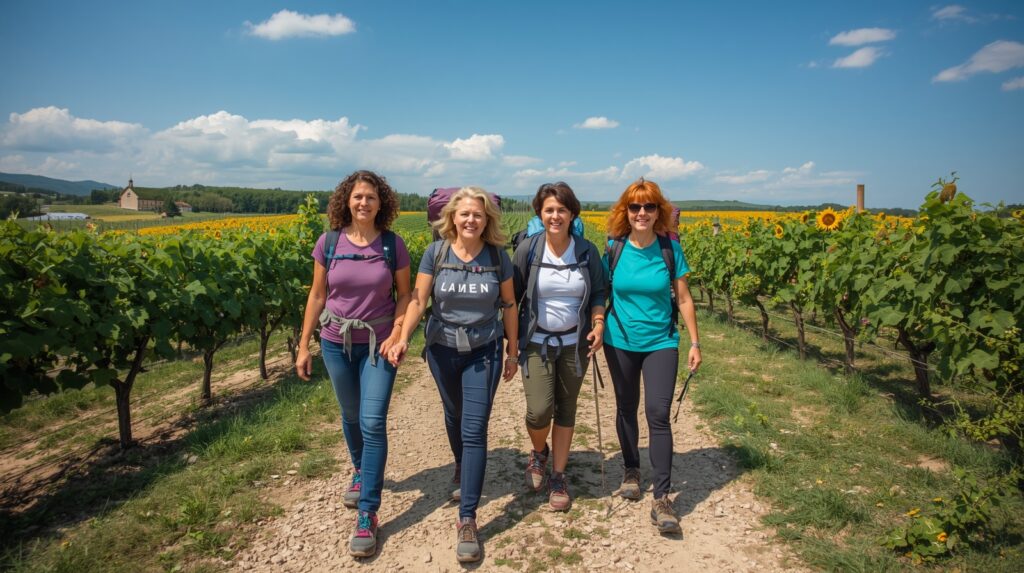
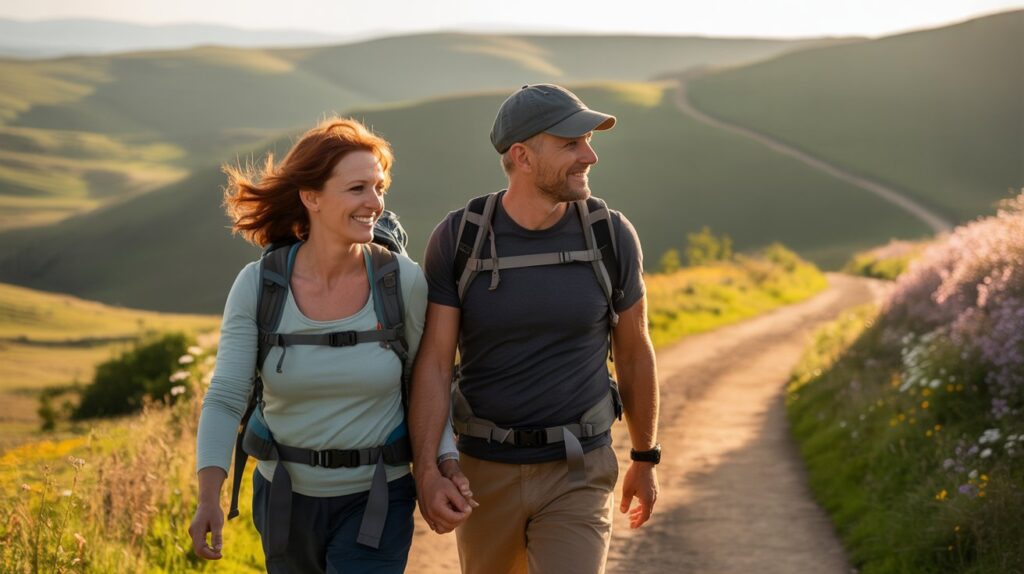
If you are carrying something that the ordinary tools have not been able to move, 5-day retreats are available for small groups of up to four guests on the Camino in southwest France. Three non-guided walks, good food, unhurried days, and a road that has been doing this particular work considerably longer than any of us.
You do not need to be ready. You only need to start walking.
Find out more and book your retreat at margarethamontagu.com



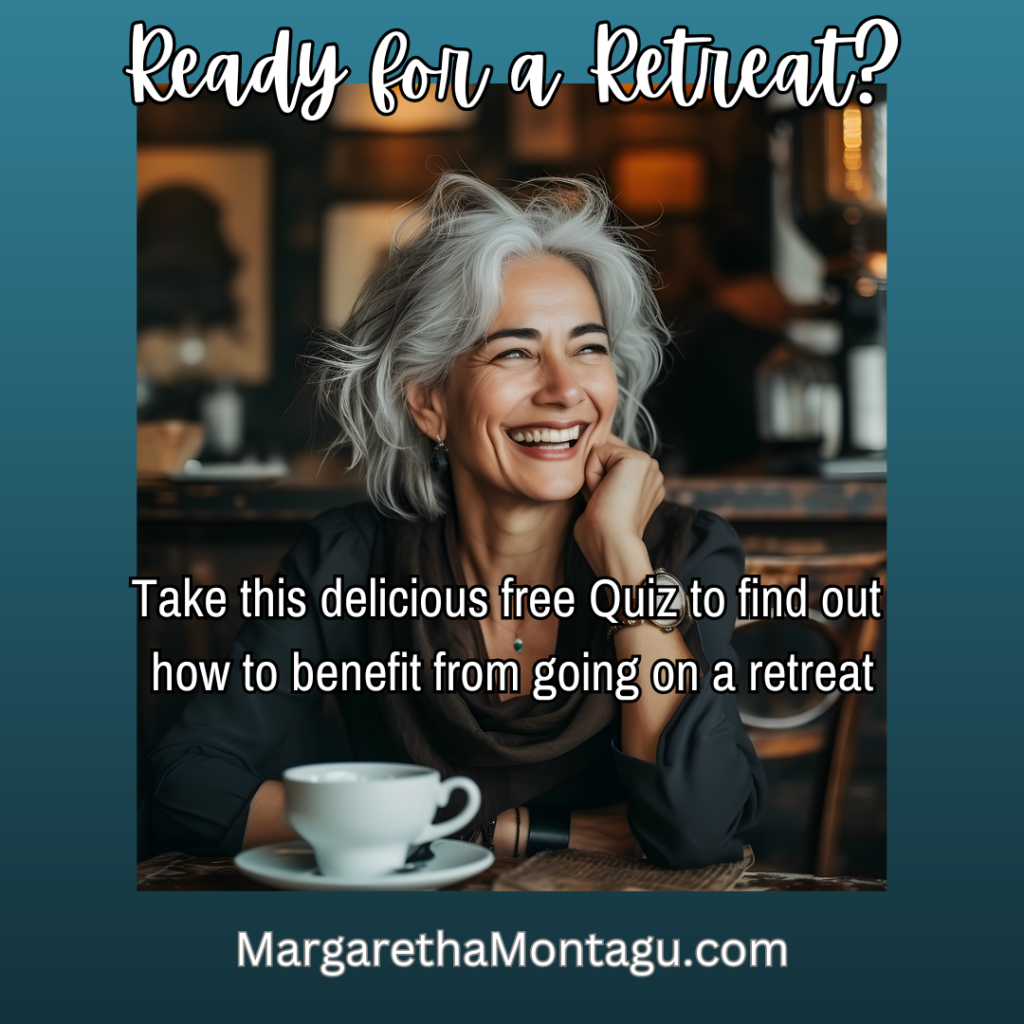
Do you dream of escaping your stressful life to raise a herd of goats or grow sunflowers in the south of France? Then you may be ready for an Esprit Meraki retreat. Get access to this “very serious” quiz to help you figure out how urgent your need for a change of scenery is, when you subscribe to my monthly newsletter.

Join us for the Book Lovers Binge Reading Camino de Santiago Walking Retreat in the sun-drenched southwest of France: a journey where the trail and the story unfold together. Walk ancient paths at your own pace, then settle in each evening with a good book. This isn’t a fitness challenge—it’s a gentle rhythm—one step, one chapter, one honest conversation at a time. Rolling hills, quiet villages, golden light. No expectations, no performance, no agenda but your own unfolding.
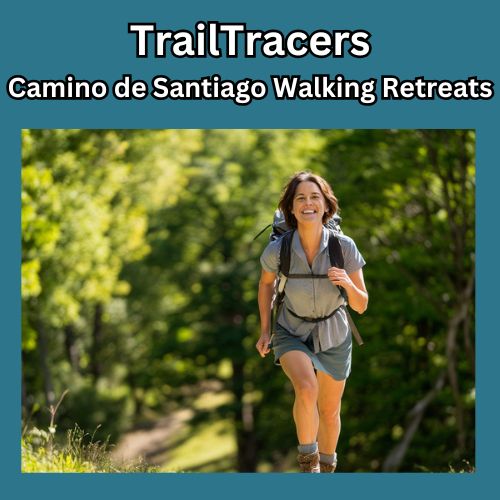
If your soul is craving fresh air, meaningful movement, and a chance to reconnect with nature, join us on a Camino de Santiago Walking Retreat in the southwest of France. This isn’t just a scenic hike – it’s a powerful, natural reboot for your body, mind, and spirit. Imagine quiet paths, rolling hills, cozy evenings, and slow conversations. No fitness requirements. No forced bonding. No pressure to have a breakthrough. Just one foot in front of the other, and finding your way to a brighter future.
Research
1. “How a Secular Pilgrimage on the Camino de Santiago Helped Me Grieve in Public” — America Magazine (October 2025)
A beautifully observed first-person account written after walking the Camino following the death of a sibling, published in one of America’s oldest and most respected cultural magazines. What makes it credible beyond the personal testimony is its precise observation of the communal grief culture of the Camino itself. The writer describes how the Camino created a container for grief — with pilgrims carrying names written on scallop shells, lighting candles, walking together in silence — and how the shared rhythm of walking made grief public and communal in a way that private grieving through writing and meditation had not been able to achieve.
2. “Walking and EMDR: Grounding and Empowering One Step at a Time” — KBIA / NPR (November 2023)
This is the article that directly connects walking to the neuroscience at the heart of this article. Produced by an NPR affiliate and drawing on clinical therapists working with trauma and grief patients, it explains in accessible terms exactly why the body responds to walking the way it does. The piece explains that our nervous systems are wired to calm through bilateral stimulation — the left-right alternating movement of walking, tapping, or eye movement — presenting a stimulus to both sides of the body and both sides of the brain, grounding us especially effectively in nature. This is the scientific backbone of the EMDR connection made in the article, from a credible public broadcasting source. clinicaltrials
3. “Scoping Review of Nature-Based Interventions in Bereavement Care” — ScienceDirect (October 2023)
The most academically rigorous of the three — a peer-reviewed scoping review published in 2023 that examined 17 studies across eight academic databases specifically looking at nature-based interventions for bereaved people. The review examined qualitative and quantitative evidence for the role of nature-based activities — including walking — as bereavement support interventions, making it the most directly relevant piece of academic research for the specific claim that taking grief outdoors and into nature is a clinically supported response. Psychology Today

“I am an experienced medical doctor – MBChB, MRCGP, NLP master pract cert, Transformational Life Coach (dip.) Life Story Coach (cert.) Stress Counselling (cert.) Med Hypnotherapy (dip.) and EAGALA (cert.) I may have an impressive number of letters after my name, and more than three decades of professional experience, but what qualifies me to excel at what I do is my intuitive understanding of my clients’ difficulties and my extensive personal experience of managing major life changes using strategies I developed over many years.” Dr M Montagu