
A Simple Guide to Finding The Perfect Camino de Santiago Walking Shoe
Walking Shoe Buying Checklist : free downloadable document (pdf)
There is a particular kind of optimism involved in lacing up a pair of walking shoes and heading out the door. You don’t know exactly what the ground will throw at you — rain-slicked pavement, a sudden detour down a gravel path, a stretch of grass that looked dry from across the park but very much was not. A great walking shoe is the friend who says, “Honestly? I’ll go wherever.” A bad one is the friend who bails at the mention of hills.
Few places put shoes to the test quite like the Camino de Santiago. Paved roads, dirt paths, gravel tracks, and the occasional ancient cobblestone have been humbling walking boots since the medieval era. There is arguably no better real-world test of a walking shoe’s character. And the lessons learned on the Camino apply equally to anyone covering serious ground across varied terrain — whether or not they’re carrying a scallop shell.
This guide is here to help you find the right companion for the journey — wherever yours happens to lead.
Why The Terrain Matters More Than You Think
Here’s a truth that the footwear industry sometimes buries under marketing copy: no single shoe is perfect for all surfaces. But some come remarkably close. The key is understanding what “varied terrain” actually means for your life.
Are you a city dweller who occasionally gets ambitious on weekends? A suburban rambler who alternates between sidewalks, parks, and unpaved trails? A traveler who logs ten miles a day across cobblestones, airport carpets, and mountain pathways? Each of these scenarios calls for slightly different priorities — and knowing yours before you shop will save you both money and blisters.
The Camino de Santiago is a useful mental model here, because it contains almost everything: the route is a variety of surfaces — paved, dirt, and gravel — and includes some challenging early days with significant climbs followed by many moderate days of slowly ascending or descending paths. If your shoe can handle that, it can handle most of what daily life will throw at it.
The three big variables to balance are traction (what the outsole grips), cushioning (how the midsole absorbs impact), and stability (how the shoe keeps your foot from rolling or fatiguing). Spoil yourself in one direction and you often sacrifice another. A heavily cushioned cloud of a shoe might leave you feeling uncertain on wet rock. A grippy trail shoe might feel like punishment after six hours on pavement. The sweet spot is what we’re hunting.
The Anatomy of Great All-Terrain Walking Shoes
Before we get to specific recommendations, let’s talk about what to actually look for — because understanding the language helps you shop smarter.
The outsole is the bottom layer, and it’s doing all the diplomacy with the ground beneath you. The outsole is the grippy material at the very bottom of the shoe — the part that makes contact with the ground — and some outsoles are better suited to indoor or outdoor terrain. For mixed surfaces, look for multi-directional lugs (the little rubber nubs): deep enough to bite into dirt and gravel, but not so aggressive that they clack obnoxiously on tile. Vibram rubber, in particular, has earned its excellent reputation — Vibram EcoStep outsoles scored a friction score 36% above average in traction tests, which is the rubber equivalent of an A+ on the report card. On the Camino, where conditions can shift from a muddy track to hard-packed village streets within the same hour, that kind of all-surface grip is not a luxury.
The midsole is where comfort lives. This foam layer absorbs the shock of each step — and over the course of a long walk, that adds up to thousands of micro-impacts your knees and hips are quietly grateful not to feel. Podiatrists emphasize that a cushioned midsole helps the shoe absorb shock and provide stability during each step, while arch support maintains natural foot alignment and helps reduce strain on the ankles and lower leg. For Camino pilgrims covering several miles a day, this is the difference between arriving at a hostel feeling tired-but-triumphant versus hobbling in at dusk wondering what went wrong.
The upper — the part that hugs your foot — should ideally be breathable mesh reinforced with TPU (thermoplastic urethane) overlays. A combination of ripstop nylon mesh and TPU in the upper provides durability without sacrificing breathability. On a warm afternoon in the French countryside, breathability is not a selling point — it is a mercy.
And then there’s the toe box, which more people should think about. A roomy toe box allows your toes to splay naturally as you walk, reducing fatigue and the likelihood of blisters. Podiatrists flag a roomy toe box as one of the most important features to look for, alongside a grippy outsole and cushioned midsole. Cramped toes are not a character-building experience. They’re just uncomfortable — and on day four of a long-distance pilgrimage, uncomfortable becomes unbearable remarkably quickly.
The Shortlist: Walking Shoes Worth Your Attention
Hoka Transport 2 — The Dependable All-Rounder
If you want a shoe that will simply handle it, the Hoka Transport 2 has become a standout pick across multiple independent testing panels. It’s a highly-capable and dependable walking shoe that inspires confidence no matter the terrain — not a dedicated hiking boot, but a durable and reliable shoe ready to take on just about any surface, from tile and hardwood to mild-to-moderate paths. Testers logged thousands of steps across varied conditions and praised its balance between capability and comfort. It is not the cheapest option on the shelf, but you do get a lot for the cost.
The Transport 2 features a twist-resistant base for steady footing, a broader-than-average heel for stability, and a prominent rocker midsole that rolls you forward effortlessly — useful on any long walk, but especially welcome on the rolling terrain of southwest France. One caveat worth noting: with its limited breathability, the Transport 2 will feel best in cool weather — in summer heat, the warmth can build up uncomfortably. Pair it with merino wool socks, it’s nearly unbeatable.
Brooks Ghost 18 — The Miles-Eater
Brooks has been making reliable footwear for decades, and the Ghost line is the company’s most loved workhorse. The Brooks Ghost 18 delivers a well-judged amount of cushion in the midsole, a durable rubber outsole, and a breathable mesh upper to keep your feet comfortable mile after mile. Recent updates to the upper include a softer flat-knit tongue, improved breathability, and a slightly roomier toe box — nothing earth-shattering, but the kind of updates that add up over miles.
This is the shoe for the person who has a long day ahead and doesn’t want to think about their feet. It performs beautifully on pavement, holds up admirably on packed dirt trails, and transitions from the Saturday farmers’ market to a post-lunch stroll in the park without complaint. On the Camino, where many days alternate between country paths and village streets, the Ghost 18’s easy versatility is precisely the point.
Hoka Clifton 10 — The Cushion Champion
If your joints are asking for a little more tenderness, the Clifton line answers the call with characteristic generosity. The Hoka Clifton 10 balances cushioning and responsiveness better than almost any comparable shoe — it feels light on your feet while still delivering well-cushioned landings, and at 11 oz, it’s one of the most lightweight walking shoes with serious cushioning.
One enthusiast described her Cliftons as feeling like “walking on a cushiony cloud” across hilly terrain, day after day — perfectly cushioning without squeezing, with plenty of room in the toe box for toes to flex. The Clifton also comes in a waterproof GTX version — a wise consideration for anyone walking the Camino in the southwest France in spring or autumn.
Salomon X Ultra 5 — The Trail-Ready Adventurer
For those who take “varied terrain” seriously — or who are contemplating those first dramatic days of the Camino Francés, which begin in Saint-Jean-Pied-de-Port with a steep climb into the mountains — the Salomon X Ultra 5 is the shoe that bridges the gap between hiker and sneaker. Built as a lightweight, low-cut hiker that fits like a sneaker, it features a stable chassis and Salomon’s Contagrip® outsole, designed for improved traction across varied surfaces. One reviewer described the stability as making her “feel like a younger person” on the trail, which is possibly the most wholesome product testimonial ever committed to the internet.
The Camino is, by expert consensus, very varied — and for the rougher, rocky sections in the early Pyrenean stages, lightweight hiking shoes like the Salomon X Ultra 5 are precisely what is recommended over heavy boots or simple running shoes. It’s a capable all-rounder: stable enough for hauling a pack over a mountain pass, light enough to feel like a pleasure on the gentler meseta days that follow. The women’s version weighs around 1.5 pounds; the men’s mid version just under 2 pounds.
ASICS GT-2000 14 — The Stability Specialist
For walkers who overpronate (meaning the foot rolls inward with each step), or who have flat feet, support is non-negotiable. The ASICS GT-2000 14 has been recognized as the walking shoe with the best arch support in independent testing, and its reputation among podiatrists backs that up. The Gel Kayano — ASICS’ sibling stability shoe — offers superior support to reduce fatigue and a secure fit that won’t slip or slide while in motion.
On a journey like the Camino, where foot fatigue accumulates across days rather than hours, a shoe that actively supports your gait mechanics is not a nice-to-have — it’s the difference between finishing and not. If your feet have opinions about arch support, ASICS is worth a very close look.
5 Mistakes to Avoid When Buying Walking Shoes for the Camino
1. Buying new shoes just before you leave This is the single most common mistake pilgrims make — and the most painful. A brand-new shoe needs weeks of breaking in before it’s ready for 15-mile days. Turning up at the start with shoes still stiff from the box is an invitation to blisters that will haunt you all the way to the end. Buy your shoes at least six weeks before departure and walk in them everywhere.
2. Choosing style over function A sleek, minimalist trainer might look wonderful in the shop. On a wet gravel track descending a hill, it will let you down in every sense. Resist the temptation to prioritise how a shoe looks over what it does. Nobody on the Camino is judging your footwear — except your feet.
3. Ignoring your foot type Flat feet, high arches, and overpronation all demand specific kinds of support. Buying a neutral shoe for a foot that needs stability — or vice versa — leads to fatigue, knee pain, and misery by day three. If you’re not sure what your foot type is, visit a specialist running or walking shop and ask them to assess your gait. It takes ten minutes and saves enormous grief.
4. Trusting “they’ll loosen up” If a shoe feels tight or rubs anywhere in the shop, it will feel tighter and rub harder after eight hours on a mountain path. A shoe that fits should feel comfortable immediately — not eventually. The Camino is not the place for positive thinking about footwear. Take note of the discomfort and keep looking.
5. Forgetting that conditions change daily Pilgrims often buy for the weather they’re hoping for rather than the weather they’ll actually get. The French Pyrenean stages can involve cold, wet, and muddy conditions even in June. The meseta in July can bake your feet in anything with poor ventilation. A shoe that handles the full range — or a carefully considered pair of shoes for different conditions — will serve you far better than the perfect shoe for one ideal day.
Frequently Asked Questions: Walking Shoes for the Camino
Should I wear hiking boots or trail running shoes on the Camino? For most people, lightweight trail running shoes or low-cut hiking shoes strike the best balance. Full hiking boots offer more ankle support on rocky terrain but add significant weight — and over 500 miles, that weight accumulates into fatigue. Unless you have a history of ankle instability or are carrying a very heavy pack, most experienced pilgrims find that a well-cushioned trail shoe handles the Camino beautifully.
How many pairs of shoes should I bring? Two is the sweet spot. A primary pair of trail shoes or walking shoes for the daily stages, and a lighter pair — sandals or packable shoes — for evenings at the albergue and rest-day strolling. Alternating your main shoes over consecutive days also lets each pair dry fully, which extends their life and keeps your feet healthier.
When should I replace my shoes before the Camino? Buy your shoes at least six to eight weeks before your start date, and begin breaking them in immediately with progressively longer walks. If you’re an experienced long-distance walker and your current shoes have fewer than 300 miles on them, they may well be fine — but test them on hills and mixed terrain before committing.
Do I really need waterproof shoes? It depends heavily on when you’re walking. Spring and autumn pilgrims on the Le Puy route will be very grateful for waterproofing. Summer walkers may find that GORE-TEX becomes uncomfortably warm and prefer breathable shoes they can dry out overnight. A useful middle ground is a water-resistant (rather than fully waterproof) shoe, which handles light rain without trapping heat.
My feet are fine at the shop but hurt after a few miles. What’s going wrong? Several things could be at play. The most common culprits are insufficient cushioning for the distance, a toe box that’s too narrow (causing the toes to compress as they swell), or a shoe that’s slightly too short — feet lengthen as well as swell on long walks. Try sizing up half a size, ensure there’s a thumb’s width of space at the toe, and if the problem persists, consider an aftermarket insole for additional arch support. A gait assessment at a specialist shop is also worth the trip.
A Few Principles That Transcend Any Specific Shoe
Fit first, features second. Fit is the most important part of any pair of walking shoes, according to podiatrists and footwear experts alike. The fanciest midsole technology in the world cannot compensate for a shoe that doesn’t fit your foot. Always try on at the end of the day, when your feet are at their largest, and wear the socks you’d actually walk in.
Break them in before the big day. This bears special emphasis for anyone with Camino ambitions: test your shoes and break them in well before the pilgrimage — not doing so is one of the most common mistakes walkers make, and can lead to blisters or injury. Multiple experienced Camino veterans recommend beginning training walks months ahead. Your first outing in new shoes should be modest. Feet have long memories, and blisters have longer ones.
Weather is terrain too. The southwest of France and the Pyrenean crossing can be famously unpredictable — rain, mist, and mud are real possibilities even in the warmer months. If you walk in wet climates, or plan a spring or autumn Camino, invest in a GORE-TEX or waterproof GTX version of your chosen shoe. A soggy foot at mile two is a miserable companion for the rest of the day. Waterproofing adds a little weight and reduces breathability, but for routes where the sky has strong opinions, it’s an entirely worthwhile trade.
Consider your complete footwear kit. Many seasoned pilgrims recommend bringing a second, lighter pair — sandals or packable flats — for evenings at the albergue, rest stops, and the gentler stretches where your feet deserve a change of scenery. The Camino is a long conversation between you and the ground; it helps to have more than one thing to say.
Match the shoe to the mission. All feet are not created the same — the structure of your feet dictates the types of shoes you may find more comfortable. There is no universally perfect shoe, only the shoe that is perfect for your feet, your terrain, and your particular walking life.
The Bottom Line
A good walking shoe is an act of self-respect. It’s an acknowledgment that you’re going to use your body, cover some ground, and that your feet deserve to arrive at the destination in roughly the same condition they set out in. Whether you’re a city strider, a weekend trail explorer, or a pilgrim who has just left Saint-Jean-Pied-de-Port with a backpack, a scallop shell, and a somewhat ambitious itinerary, there is a shoe out there that will keep up with you cheerfully.
Buy for the terrain you actually walk, fit for the foot you actually have, and break in gently before the grand adventure. Your future self — somewhere out there on a cobblestone street in Eauze, or a sun-dappled trail through the vineyards of the Cotes de Gascogne — will be quietly, profoundly, comfortably grateful.



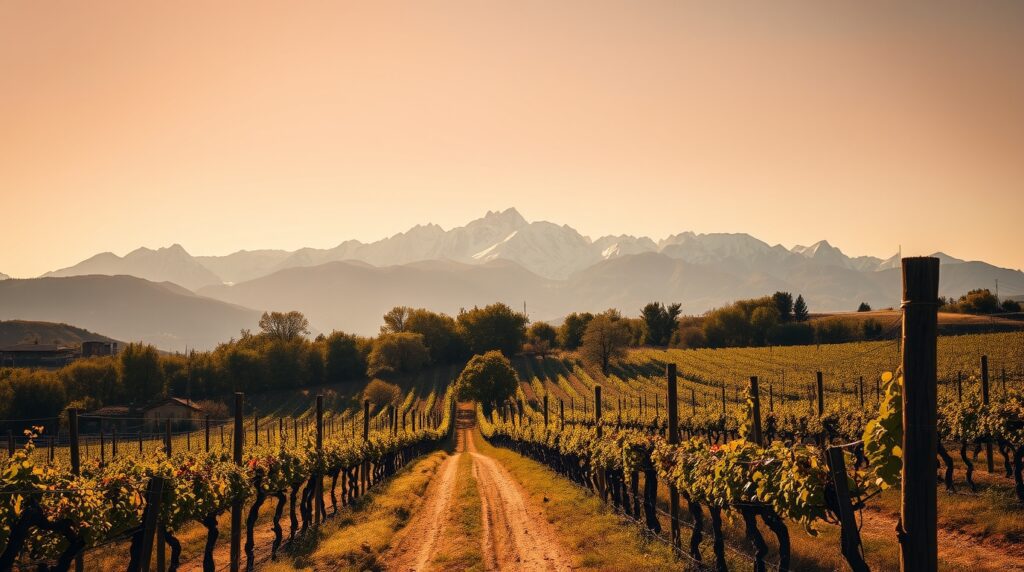
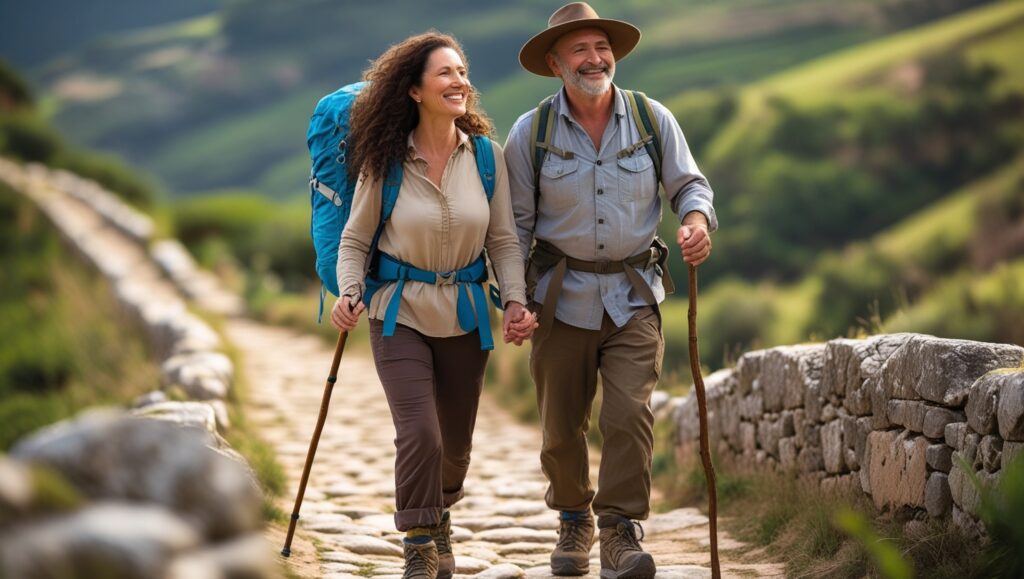


If your soul is craving fresh air, meaningful movement, and a chance to reconnect with nature, join us on a Camino de Santiago Walking Retreat in the southwest of France. This isn’t just a scenic hike – it’s a powerful, natural reboot for your body, mind, and spirit. Imagine quiet paths, rolling hills, cozy evenings, and slow conversations. No fitness requirements. No forced bonding. No pressure to have a breakthrough. Just one foot in front of the other, and finding your way to a brighter future.

Do you dream of escaping your stressful life to raise a herd of goats or grow sunflowers in the south of France? Then you may be ready for an Esprit Meraki retreat. Get access to this “very serious” quiz to help you figure out how urgent your need for a change of scenery is, when you subscribe to my monthly newsletter.