I was in the middle of one of the hardest weeks of my life when a friend of over a decade simply stopped being there for me. Not dramatically — there was no argument, no angry text, no falling out I could point to. She just went quiet exactly when I needed her most, and stayed quiet long enough that the message became impossible to misunderstand. I told myself she was busy. I told myself maybe she doesn’t realise how bad things were. Eventually I ran out of excuses.
It felt like a betrayal — not a lie, not a knife in the back, just an absence exactly where presence was needed. And I think it stings in a quieter but longer-lasting way. A dramatic betrayal at least gives you something to be angry about. Being abandoned gives you nothing to hold, just a friend-shaped space where support should have been, and a slow, creeping question about whether you were ever as close as you thought you were.
I spent two decades as a doctor before I started hosting retreats in a French farmhouse with a herd of rescued horses, and if there’s one thing both my careers have taught me, it’s that people are remarkably bad at processing betrayal. We tend to do one of two things: we either loop endlessly, replaying the moment until it’s worn meaningless, or we shove it to the back of our minds entirely and decide to “move on.” Neither one involves processing the betrayal. Both are delay tactics, just with different aesthetics.
I’ve learned a few things, painfully, from my own experiences, and from years of sitting across from people mid-way through theirs:
Name the feelings accurately
Before you can process betrayal, you have to stop calling it something less than it is. “I’m annoyed” when you mean “I’ll never trust this person again” is a very common way of protecting yourself from the extent of the betrayal. It doesn’t work. Vague feelings won’t help you resolve anything. Name it plainly, even if only to yourself: this was a betrayal, and it hurt, badly.
Expect your body to weigh in before your mind does
Betrayal tends to announce itself physically before it makes emotional sense: a tight chest, a bad night’s sleep, an inexplicable urge to reorganise your kitchen cupboards at 11pm. This isn’t drama. It’s a nervous system responding to a genuine threat: the loss of safety in a relationship you depended on. Give that reaction some room instead of talking yourself out of it.
Separate the story from the facts
This is the part I find myself repeating most often, to friends and to former patients alike. What actually happened is usually less dramatic and more specific than the story we build around it. The story includes every past slight reinterpreted in a darker light, every future conversation you’re dreading, every conclusion about your own worth that the betrayal seems to confirm. The facts are simple: this person did this specific thing. Untangling the essence doesn’t make the betrayal hurt less, but it stops it from metastasising into a damning verdict on your ability to choose trustworthy friends.
Grieve the version of the friendship you thought you had
This is SO important. Even should you eventually repair the relationship, the friendship you had before the betrayal is gone — not necessarily replaced by something worse, but definitely replaced by something different. That’s worth grieving on its own terms, separate from any decision about what comes next. Trying to skip straight to resolution, before you’ve let yourself mourn what was lost, tends to backfire later.
Decide what you need to rebuild trust after betrayal
There’s a difference between the apology you feel you’re owed and the resolution you actually need to move forward, and they don’t always match. Sometimes the person who hurt you never fully understands why, and you have to find your own way through the betrayal. That’s not fair. It’s also frustratingly common. Waiting for accountability before you allow yourself to heal can leave you stuck indefinitely, tethered to someone else’s (un)willingness to show up.
Let the timeline be unreasonable
Processing betrayal rarely follows a tidy arc. You’ll think you’re through it, and then a smell, a song, an unrelated conversation will put you right back at the beginning. That’s not failure — it’s just how injuries to trust actually heal, in loops rather than lines. Be suspicious of anyone, including yourself, who tells you that you should be “over it” by now.
What I didn’t expect, in my own situation, was how much clarity came simply from having somewhere quiet to think it through without an audience of people who already had opinions. Betrayal has a way of making you want to talk to everyone and no one about it at the same time — and yet it’s rarely a group conversation that actually gets you through it. It’s often one honest conversation, uninterrupted, in a setting that isn’t asking anything else of you. And sometimes that is a conversation you have with yourself.
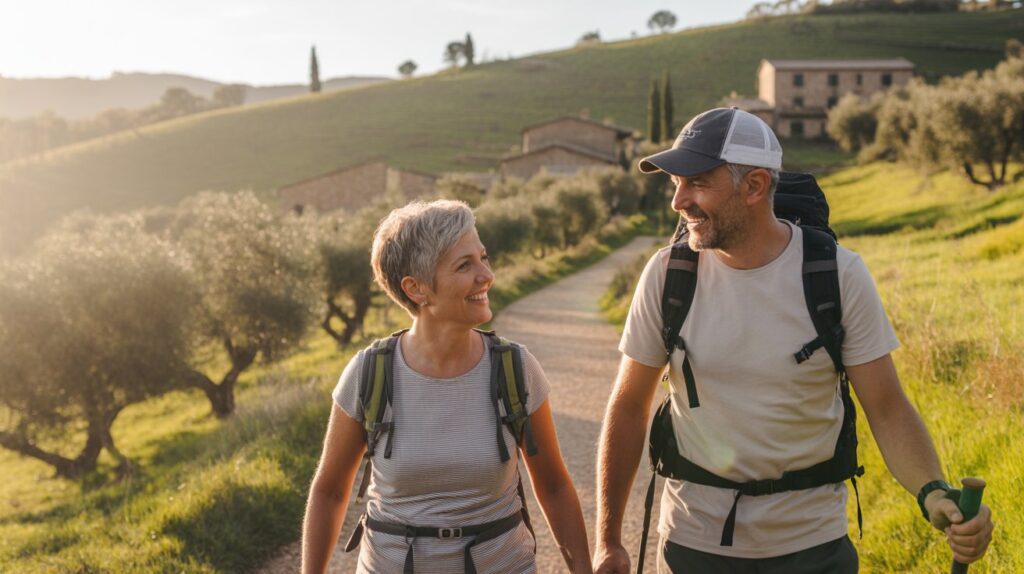
That’s the whole raison d’être of my private Realignment Retreat — three days, just you, no group to engage with or perform “fine” in front of. Time to wander along the Camino de Santiago, think out loud, and actually work through what happened, at your own pace, with someone who’s spent two decades learning how to listen for what’s underneath the version people lead with.
5-day/4-night “Press Pause” Nervous System Regulation Retreat– If your soul is craving fresh air, meaningful movement, and a chance to reconnect with nature and connect with horses, join me on a powerful, natural reboot for your body, mind, and spirit. Same content as the 3-day retreat, spread over 5 days. And an extra day of walking. No extreme fitness requirements. No forced bonding. No pressure to have a breakthrough. For one or two guests travelling together.
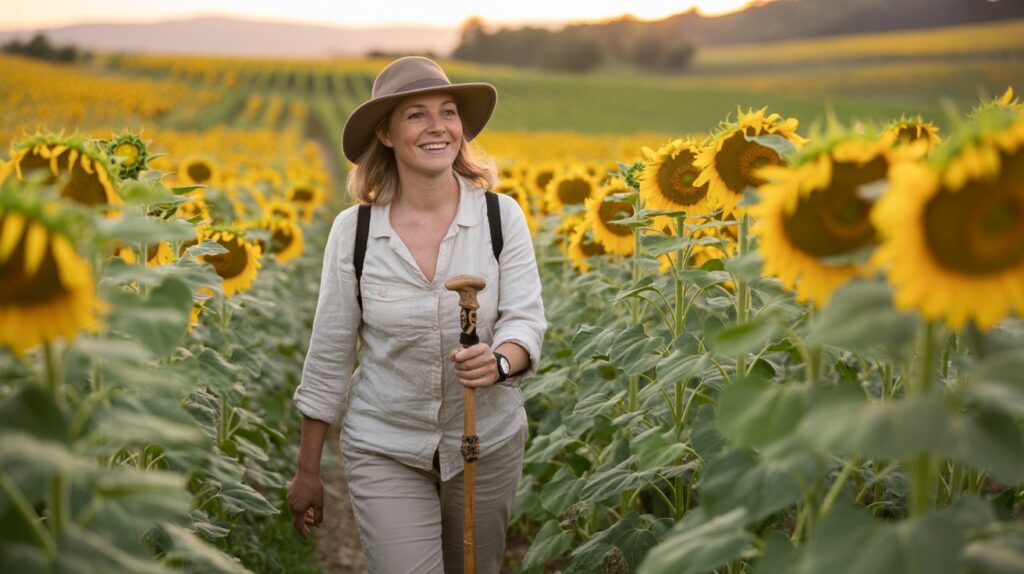
Do you dream of escaping your stressful life to raise a herd of goats or grow sunflowers in the south of France? Then you may be ready for an Esprit Meraki retreat. Get access to this “very serious” quiz to help you figure out how urgent your need for a change of scenery is, when you subscribe to my monthly newsletter.
Author Bio: Dr Margaretha Montagu – described as a “game changer”, “gifted healer”, “guiding light” and “life-enriching author” – is an experienced medical doctor, a certified NLP practitioner, a medical hypnotherapist, an equine-assisted psychotherapist (EAGALAcertified) and a transformational retreat leader who guides her clients through life transitions – virtually, or with the assistance of her Friesian and Falabella horses, at their home in the southwest of France.
Learn how to identify toxic friendships, protect your energy, and build the real connections you need.
From the warning signs to the recovery plan, this guide helps you navigate fake friendships.
What this is: A warm, witty, evidence-informed guide to identifying fake friends, understanding why they exist, protecting your mental health, and building the kind of genuine friendships that actually sustain you.
What this isn’t: A bitter rant about people who’ve wronged you, a manifesto for cutting everyone out, or a beginners’ lesson in “what is a friend.”
Read this if: You’ve recently noticed that some of your friendships feel more exhausting than energising, you’re trying to cope with a major life change and your social world feels shaky, or you’re craving connections that are honest, deep, and real.
5 Key Takeaways
Fake friends aren’t always villains. Some are simply in pain from their own unhealed wounds — but that doesn’t mean you’re required to put up with their behaviour.
The cost of fake friendships is real and measurable. Stress hormones, immune function, and mental health are all affected by toxic connections.
Major life transitions are prime time for friendship audits. Divorce, illness, grief, and world upheaval all change who shows up — and who doesn’t.
Authentic friendships can be built at any age. Intentionality, vulnerability, and shared experience are the building blocks — and they’re available to you right now.
Your environment matters more than you think. Who you spend time with, and where, profoundly shapes your capacity for real connection.
Introduction: The Friend-Shaped Hole in Your Life
You’ve just been through something hard — a diagnosis, a divorce, a redundancy, a slow-burn disillusionment with the world as it currently is. You pick up your phone to call a friend. And then you hesitate. Because somehow, you already know that what you’ll get back won’t quite be what you need.
That hesitation? Worth paying attention to.
We live in an era of unprecedented connectivity and epidemic loneliness, and one of the most quietly damaging contributors to that paradox is the fake friend: the person who occupies the space where a real friend should be, without actually filling it.
This article is your guide to seeing clearly. By the time you’ve finished reading, you’ll know how to identify the fake friends in your life, understand what drives their behaviour, be able to protect yourself from the damage they cause, and, most importantly, now how to build the kind of friendships that actually hold you up when life gets heavy.
Which, right now, it rather is.
The Hidden Cost of Fake Friendships: Claire’s Story
Claire Beaumont had always been the kind of person people described as “so easy to be with.” Warm, funny, reliably available with a cup of coffee and a sympathetic ear. At forty-three, she had a full address book, a rich social calendar, and a deep, gnawing feeling that she was profoundly alone.
The feeling had been creeping in for months, gaining momentum the way a slow puncture does, until one Tuesday morning in October it arrived fully formed at her kitchen table.
She’d just received her biopsy results. Not the terrifying kind — “watchful waiting,” the consultant had said, the medical profession’s elegant way of suggesting nothing and meaning everything. But still. She sat there in the particular silence of unexpected news and reached, instinctively, for her phone.
She thought of Dominique first. They’d been friends since university — twenty years of birthday dinners, holiday WhatsApps, and the kind of conversational shorthand that only decades can build. She typed the words, then stopped. Dominique would make it about Dominique. She always did. Last year, when Claire’s mother died, Dominique had listened for approximately four minutes before pivoting to her own estrangement from her father. Claire had ended up consoling her.
She thought of Harriet, bright and effervescent Harriet, who would absolutely come over — bearing artisan croissants and a new anecdote about her renovation project — and somehow make Claire feel, by the end of the visit, as though she’d been interviewed rather than heard.
She thought of Priya, who had been conspicuously absent since Claire’s marriage ended eighteen months earlier, presumably because Claire was now inconveniently single in a world of couples.
She put her phone face-down on the table.
The kitchen smelled of coffee and last night’s rain through an open window. Outside, the oak tree her daughter had climbed as a child was beginning its slow, magnificent surrender to autumn, each leaf letting go with the kind of unhurried certainty Claire suddenly envied deeply. It knows what it’s doing, she thought, irrationally.
She sat with the quiet for a moment. And in it, something became undeniable.
She had a full life and almost no one to call.
It was her GP — a woman she’d always liked for her tendency to treat patients as intelligent adults — who first suggested the word “depletion.” Not burnout, not depression exactly, but a kind of chronic relational depletion. “You give a lot,” she said. “Do the people around you give back?”
The question sat with Claire for weeks. She began, tentatively, to pay attention — not with suspicion, but with the curious honesty of someone who has decided that clarity, however uncomfortable, is preferable to comfortable fog.
What she noticed: Dominique contacted her primarily when something good had happened and she needed an audience, or when something bad had happened and she needed rescuing. The in-between, the ordinary Tuesday of Claire’s life, held little apparent interest.
Harriet, she realised, never asked questions she was genuinely curious about. Her enquiries were conversational bridges back to herself.
Priya had been a fair-weather friend all along, and Claire had simply never stress-tested the friendship before.
There was also Marcus, who had befriended her in the aftermath of her divorce with a warmth that had initially felt like a lifeline, and who she gradually recognised was collecting her vulnerability the way some people collect art — not to cherish, but to display.
None of them were monsters. That was the strange part. They were people, with their own histories and hurt and blind spots. But they were, Claire slowly understood, not actually her friends.
The turning point came in late spring, when a colleague mentioned a reading retreat she’d attended in southwest France, somewhere in the rolling hills of Gascony.
Claire, who had loved books since childhood but had somehow lost the habit of reading them — along with the habit of stillness, and the habit of her own company — signed up on a mild impulse that felt, in retrospect, less like impulse and more like instinct.
She arrived carrying a suitcase, a battered copy of Middlemarch, and the particular exhaustion of someone who has been performing “fine” for rather too long.
What she found there: cool mornings walking an ancient path through vineyards and flowering meadows, the smell of the earth after rain, conversations with strangers who had no investment in who she used to be. A bookcase with pre-loved books. Long afternoons of uninterrupted reading. A journalling practice that asked her, gently but relentlessly, to look at her own life without flinching.
And, quietly, in that space: the beginning of what she now calls “the recalibration.”
She came home knowing which friendships to water and which to let go. She came home knowing what she actually wanted in a friend. She came home, for the first time in years, with the distinct sensation of fully occupying her own life.
The takeaway: Sometimes it takes physical distance, genuine stillness, and a change of landscape to see the people in your life clearly. Not because they look different from far away, but because you do.
How Can You Tell Who’s a Fake Friend?
What Does “Fake Friends” Actually Mean?
A fake friend isn’t necessarily someone who has set out to deceive you. The term covers a wide spectrum, from the mildly self-absorbed to the actively manipulative, but what they share is a fundamental imbalance: the friendship costs you more than it gives you, consistently and over time.
Dr. Judith Orloff, psychiatrist and author, describes these relationships as “energy vampires” — people who leave you feeling drained rather than replenished after time together. You might recognise this feeling as the mild dread before meeting someone, the strange exhaustion that follows what should have been a pleasant afternoon, or the creeping realisation that you edit yourself significantly in someone’s presence.
Key signs to watch for:
They’re only present during your highs or your lows — they love your successes (as reflected glory) or your crises (as opportunities to advise), but have no appetite for ordinary life.
Conversations are imbalanced. You leave knowing everything about their life and feeling unseen and unheard in your own.
They’re competitive rather than collaborative. Good news from you triggers comparison rather than celebration.
They share your confidences with others. This one is a bright red flag and non-negotiable.
They make you feel vaguely guilty for having needs.
You feel, consistently, that you’re auditioning for the friendship rather than simply being part of it.
Why Are Some People Fake Friends?
What Drives Inauthentic Friendship?
People are rarely fake friends out of malice. More often, it’s a function of their own unmet needs, unresolved wounds, or limited capacity for reciprocal intimacy.
Attachment theory offers useful insight here. People with anxious attachment styles may cling in ways that feel suffocating; those with avoidant attachment may pull away precisely when closeness is needed. Neither is villainous — both can be extremely painful.
Other drivers include:
Narcissistic traits. Not all fake friends are narcissists, but narcissistic individuals tend to treat friendships as supply chains rather than mutual connections.
Social anxiety. Some people perform friendship rather than inhabit it because genuine vulnerability feels too risky.
Transactional worldviews. In a culture that commodifies everything, some people unconsciously apply a cost-benefit calculus to relationships — you are useful until you aren’t.
Fear of genuine intimacy. It’s paradoxical but true: some people surround themselves with shallow connections precisely because deep ones feel dangerous.
Understanding this doesn’t mean tolerating the impact on your own wellbeing. But it can dissolve some of the bitterness, which, frankly, is worth something.
What Are the Different Types of Fake Friends?
A (Slightly Wry) Taxonomy of Inauthentic Friendship
The Fair-Weather Friend. Present for champagne, absent for chemotherapy. Easily identified by their sudden scheduling conflicts when your life gets complicated.
The Competitive Friend. Can’t hear good news from you without immediately one-upping it. Your promotion becomes a reminder of theirs. Your new haircut invites a commentary on theirs.
The Gossip. Brings you compelling stories about other people’s lives, which is enjoyable right up until you realise you’re in their stories too.
The Emotional Vampire. Every conversation circles back to their needs, their crises, their feelings. They are exhausting in the way of a leaking tap — not dramatic enough to fix immediately, but steadily depleting.
The Status Friend. Interested in you as a social accessory — your connections, your accomplishments, your postcode. Watch what happens to their availability if any of these change.
The Frenemy. The classic. Delivers criticism disguised as concern, damns with faint praise, and seems genuinely more comfortable when you’re struggling than when you’re thriving.
The Social Media Friend. Energetically present in your digital life — every post liked, every milestone heart-reacted — and nearly impossible to actually reach when you need them.
How Do Fake Friendships Harm Us?
What Does the Science Actually Say?
The damage is not merely emotional — it is physiological, and it’s well-documented.
A landmark study published in PNAS (Cacioppo & Hawkley, 2003) found that chronic loneliness — the kind experienced even within superficially populated social lives — is associated with elevated cortisol, disrupted sleep, compromised immune function, and accelerated cardiovascular decline. The key insight: it’s not the number of social connections that matters, but their quality.
A 2022 study in Nature Human Behaviour found that high-quality social relationships are among the most robust predictors of both longevity and subjective wellbeing — more significant, in some analyses, than exercise, diet, or even smoking status.
Fake friendships are not neutral. They create the physiological illusion of social support while delivering its opposite — a particularly insidious kind of stress, because it comes wrapped in the packaging of “connection.”
Additional possible damage includes:
Erosion of self-trust. Chronic gaslighting and emotional manipulation — even low-level varieties — can corrode your confidence in your own perceptions.
Reduced capacity for authentic connection. People who’ve been burned by false friends often become guarded in ways that inadvertently push away genuine ones.
Opportunity cost. Time, energy, and emotional bandwidth spent on depleting friendships are unavailable for nourishing ones.
Identity diffusion. Long-term exposure to a friend who doesn’t truly see you can eventually make it harder to see yourself.
How Can This Realisation Change Not Just Your Life, But Those Around You?
When you begin to audit your friendships honestly — not with cruelty, but with the compassionate precision of someone who has decided their own wellbeing matters — you don’t just change your own experience. You change what you model for others.
The colleague who watches you begin saying no to draining social obligations and yes to the walk, the book, the quiet evening that restores you. Your daughter, who notices that you’ve started choosing friends who laugh at your jokes instead of at you. The friend who, seeing you draw a gentle boundary with someone exhausting, finally feels permission to do the same.
Authentic self-regard is, at its heart, a gift to the community. When we stop tolerating what diminishes us, we raise the standard for what connection can be — not just for ourselves, but for everyone in our orbit.
This is particularly true during times of collective stress, when the instinct is to clutch at whatever is familiar rather than question whether it’s good. The world is currently delivering uncertainty in generous quantities. In that climate, the temptation to settle for the comfort of known faces, however unreliable, is real and understandable.
But the cost of settling is also real. And it compounds.
My Reconnect with Nature on the Camino de Santiago guests often describe the same experience: they arrived thinking they needed rest, and discovered they also needed renegotiation — a quiet, unhurried reassessment of what and whom they were supporting, and why.
Walking the ancient Camino de Santiago path through the hills, bookended by long afternoons of reading and reflection, creates the conditions for a particular kind of honesty. The kind that is difficult to access in the midst of ordinary life, with its noise and its obligations and its thousand small distractions.
How to Handle Fake Friends: 5 Mistakes to Avoid
What Not to Do When You Realise a Friendship Isn’t What You Thought
Mistake 1: Confronting immediately, impulsively, and without clarity. The urge to fire off a message the moment you’ve had an insight is understandable and almost always counterproductive. Give yourself time to distinguish between a genuinely toxic dynamic and a temporarily difficult patch. Not every bad week makes someone a bad friend.
Mistake 2: Expecting them to change if you just explain clearly enough. Fake friendships are rarely cured by honest conversations, however well-conducted. Change requires self-awareness, motivation, and sustained effort. You cannot supply any of these on behalf of another person.
Mistake 3: Going cold without explanation. The silent fade — while sometimes preferable to confrontation — leaves both parties without closure and can create unnecessary confusion and hurt. If the friendship matters enough to grieve, it matters enough to acknowledge its ending, however briefly.
Mistake 4: Replacing them immediately with new people. The impulse to fill the space left by a lost friend is natural and nearly always premature. Time alone — or in good company with yourself — is where the recalibration happens. Rushing into new social obligations before you’re clear about what you want is how fake friendships get replaced with different fake friendships.
Mistake 5: Concluding that all friendship is this complicated. It isn’t. Genuine friendship — the kind built on mutual curiosity, honest affection, and reciprocal care — exists, is available to you, and is worth everything it takes to find it.
A Short Intention-Setting Exercise
Think of the people you call friends. For each one, ask yourself these three questions without analysis — just notice your first honest response:
After spending time with this person, do I generally feel better, worse, or the same?
Am I fully myself with them, or do I perform a version of myself I think they’ll accept?
If I were in real trouble — the 3am kind — would I call them?
You don’t need to act on what you notice today. Simply noticing, with honesty and without judgment, is the beginning.
Further Reading: 5 Books on Friendship, Authenticity, and Human Connection
1. Necessary Endings by Dr. Henry Cloud Cloud’s unflinching examination of why we hold on to things — relationships, habits, situations — that are no longer serving us is essential reading for anyone navigating a friendship audit. He is compassionate but clear: some endings are not failures. They are requirements.
2. The Art of Friendship by Roger Horchow and Sally Horchow A thoughtful, practical exploration of what great friendships look like and how they are made — particularly useful for those who want to move beyond recognising false connections toward building genuine ones.
3. Frientimacy by Shasta Nelson Nelson’s research-based framework for understanding friendship satisfaction is unusually rigorous and deeply humane. Her concept of “positivity, consistency, and vulnerability” as the pillars of authentic friendship is both simple and transformative.
4. Loneliness: Human Nature and the Need for Social Connection by John T. Cacioppo and William Patrick The definitive scientific exploration of loneliness and its effects — essential for understanding why fake friendships are not merely unsatisfying but genuinely harmful. Dense in places, but the insights are worth every page.
5. Untamed by Glennon Doyle Not strictly a book about friendship — it’s a memoir about dismantling the life you performed in order to find the one you actually want — but its passages on female friendship, loyalty, and the courage required to be truly known are among the most honest written on the subject.
PS: If you’re looking for a companion that meets you exactly where you are, do take a look at my bookEmbracing Change — in 10 Minutes a Day. Written for people who are navigating upheaval and rebuilding their lives with intention, it offers simple, daily practices for moving through change without losing yourself in the process.
If you are currently facing a major life transition or any other dramatic change in your circumstances, and you have no idea how you are going to cope, the good news is that the strategy presented in this book can help you, step by step, to improve your ability to handle the stress caused by change, even if you feel entirely powerless at the moment.
You might also be interested in my online course,Reconnect with Nature: A Guided Journaling Course Inspired by Horses— a gentle, beautiful exploration of presence, self-awareness, and reconnection through the wisdom of nature. This course is included free with all reading retreat bookings.
5 FAQs About Fake Friends
Q1: Can a friendship become fake, even if it started as real? Absolutely — and this is perhaps the most painful variety. People change, circumstances shift, and what was once a genuine connection can curdle over time into something habitual and hollow. Recognising this doesn’t erase the real history; it simply acknowledges the present reality.
Q2: What if my fake friend is a family member I can’t avoid? This is genuinely harder, and deserves its own article. The short version: you can limit the intimacy you share with someone without removing them from your life entirely. Managed distance — warm but boundaried — is a legitimate option.
Q3: Is it possible to call out a fake friend without destroying the relationship? Sometimes. If the relationship is worth it, and if you can approach the conversation with curiosity rather than accusation — “I’ve noticed I often feel [x] after we talk; can we explore that?” rather than “you always make everything about you” — genuine dialogue is possible. Be prepared for the fact that they may not receive it well.
Q4: How do I make new friends as an adult? With more intentionality than in youth, and more patience. Shared sustained activity — classes, walks, retreats, book groups — creates the repetition and mild vulnerability that genuine connection requires. Proximity, frequency, and small shared experiences: these are the building blocks.
Q5: How do I know if I’m the fake friend? This is a courageous question and the very fact that you’re asking it probably means you’re not the worst offender. But reflection is useful: Do you ask questions and actually listen to the answers? Do you show up consistently, not just when it’s convenient? Are you honest with your friends, even when honesty is uncomfortable? If any of these are challenging, they’re worth working on.
Conclusion
There’s a reason the friendships we form during times of upheaval so often become the most enduring ones. Stripped of the ordinary social scaffolding, something more honest emerges. You meet people as they actually are, and you meet yourself the same way.
The world is in a peculiar season right now — anxious, fragmented, and loud in ways that make stillness feel almost radical. In that climate, the quality of who you spend your time with is not a luxury consideration. It’s a mental (and physical!) health one.
“The most basic and powerful way to connect to another person is to listen. Just listen. Perhaps the most important thing we ever give each other is our attention.” — Dr. Rachel Naomi Remen
A Gentle Invitation
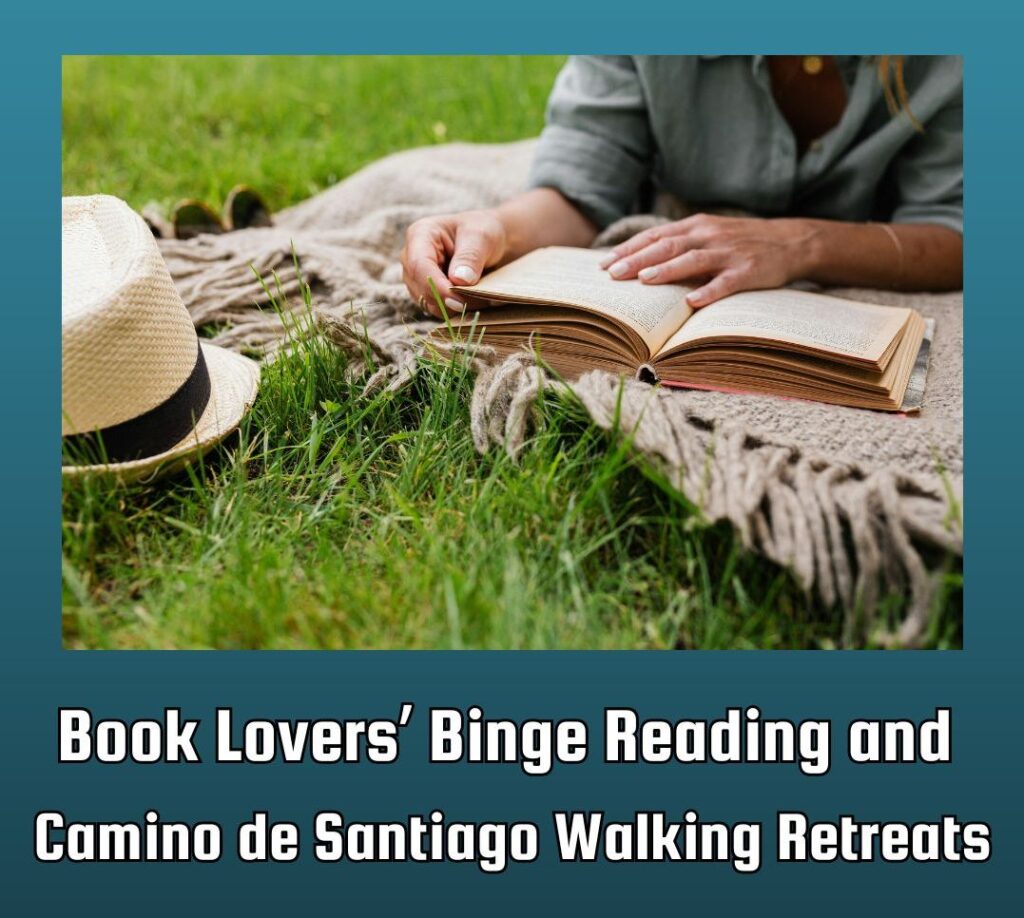
If you’re feeling the particular exhaustion of a life that looks full but doesn’t feel it — if you’re craving connection that’s honest, conversation that goes somewhere real, and a few days of glorious, guilt-free reading in the company of people who actually see you — then the 5-Day Booklovers’ Binge Reading and Camino de Santiago Hiking Retreatin the south-west of France might be exactly what you need next.
You’ll walk an ancient pilgrimage path through the most beautiful landscape in Europe, read deeply without apology, and return home knowing something about yourself that you didn’t know when you left. Dr. Margaretha Montagu, physician, life transition coach, NLP master practitioner, and retreat host for over 15 years, has created a space where real friendship — the kind you’ve been missing — tends to happen naturally. Come with a book and an open mind. Leave replenished.
Join us for the Book Lovers Binge Reading Camino de Santiago Walking Retreat in the sun-drenched southwest of France: a journey where the trail and the story unfold together. Walk ancient paths at your own pace, then settle in each evening with a good book. This isn’t a fitness challenge—it’s a gentle rhythm—one step, one chapter, one honest conversation at a time. Rolling hills, quiet villages, golden light. No expectations, no performance, no agenda but your own unfolding.
What’s Next?
If this article has you nodding, wondering, or quietly rearranging something in your mind, you might find it illuminating to take Dr. Montagu’s Turning Point Quiz — a short, revealing assessment designed for people who sense they’re at a crossroads and want a little clarity about which way to go next. Access this quiz by signing up to my newsletter.
Here’s a question worth sitting with: If you could design a friendship from scratch — built entirely around who you actually are now, not who you used to be — what would it look like? And is there anyone in your current life who comes close?
References
Cacioppo, J. T., & Hawkley, L. C. (2003). Social isolation and health, with an emphasis on underlying mechanisms. Perspectives in Biology and Medicine, 46(3), S39–S52.
Holt-Lunstad, J., Smith, T. B., & Layton, J. B. (2010). Social relationships and mortality risk: A meta-analytic review. PLOS Medicine, 7(7), e1000316.
Umberson, D., & Montez, J. K. (2010). Social relationships and health: A flashpoint for health policy. Journal of Health and Social Behavior, 51(S), S54–S66.
Qualter, P., Vanhalst, J., Harris, R., Van Roekel, E., Lodder, G., Bangee, M., Maes, M., & Verhagen, M. (2015). Loneliness across the life span. Perspectives on Psychological Science, 10(2), 250–264.
Yang, Y. C., Boen, C., Gerken, K., Li, T., Schorpp, K., & Harris, K. M. (2016). Social relationships and physiological determinants of longevity across the human life span. Proceedings of the National Academy of Sciences, 113(3), 578–583.
Author Bio: Dr Margaretha Montagu – described as a “game changer”, “gifted healer”, “guiding light” and “life-enriching author” – is an experienced medical doctor, a certified NLP practitioner, a medical hypnotherapist, an equine-assisted psychotherapist (EAGALAcertified) and a transformational retreat leader who guides her clients through life transitions – virtually, or with the assistance of her Friesian and Falabella horses, at their home in the southwest of France.
Stress destroys Lives. To find out what you can do to safeguard your sanity by taking my insight-giving quiz, subscribe to my mailing list.
The text arrives at 6:47 AM on December 10th: Chemo brain strikes again. Forgot to buy eggs. Also forgot what eggs are for. Send help.
By 7:15, there are four dozen eggs in Marie’s kitchen. Also: three different types of bread, two quiches (one still warm), a rotisserie chicken, and Lisa standing at the stove making scrambled eggs.
“You didn’t have to come,” Marie says from the doorway, her own head wrapped in the soft green scarf that Jen brought last week because it “matched her eyes and also her face when she’s nauseous.”
“I was already up,” Lisa lies. She wasn’t. Her hair is in a messy bun and she’s wearing inside-out leggings. “Besides, someone has to make sure you eat some real food.”
Marie shuffles to the table. Her slippers make a soft shushing sound against the hardwood. Everything feels both sharper these days—colours too bright, sounds too loud, but her own body somewhere far away, like she’s operating it by remote control.
Lisa slides eggs onto a plate. They’re perfect—soft, buttery, the way Marie’s mom used to make them. Marie’s throat tightens.
“Don’t you dare cry over eggs,” Lisa warns. “I have a reputation to maintain as someone who can’t cook.”
“These are really good.”
“I Googled it in your driveway. ‘Scrambled eggs for your friend who’s going through hell.'” Lisa sits down across from her.
Marie takes a bite. Her stomach, which has spent three days staging a revolution, cautiously accepts the offering.
“The group chat is losing it, by the way,” Lisa says, pulling out her phone. “Jen wants to know if we’re doing Christmas at your place or hers. Rachel sent seventeen ideas for ‘chemo-friendly holiday crafts,’ which is apparently a category that exists. And Sarah—” She pauses, scrolling. “Sarah wants to know if you’d rather talk about it or never mention it and just aggressively focus on normal things.”
“What did you tell them?”
“That you’d let us know when you knew.” Lisa looks up. “Will you? Let us know?”
Marie pushes eggs around her plate. Outside, someone’s car alarm is going off. The morning light coming through the window is thin and pale, the kind of winter light that makes everything look temporary.
“I don’t know what I need,” she admits. “Some days I want everyone here. Other days I want to crawl into a corner.”
“Okay. So we’ll figure it out as we go.” Lisa says it like it’s simple. Like Marie isn’t a burden with a rotating schedule of bad days and worse days. Like showing up at 7 AM to make scrambled eggs is just what you do.
By December 15th, there’s a system.
Monday, Wednesday, Friday: Lisa brings breakfast and sits with Marie during the morning nausea. They don’t talk much. Sometimes Lisa reads the news out loud. Sometimes they just sit.
Tuesday and Thursday: Jen comes after work with dinner and terrible reality TV. They watch home renovation shows and make fun of people’s design choices. Jen does a running commentary in different accents. Marie laughs until her ribs hurt, and it’s the first time hurting has felt good in weeks.
Saturday: Rachel arrives with craft supplies and chaos. Last week, they made ornaments out of salt dough. This week, she’s brought supplies for decorating gingerbread houses, except she forgot the gingerbread, and they end up building houses out of TUC crackers and icing. Marie’s collapses. Rachel declares it “architecturally honest.”
Sunday: Sarah takes Marie to appointments. Holds her hand as the needle goes in. Doesn’t flinch at the blood draws. Asks the doctors questions Marie’s too tired to ask. Takes notes in a little spiral notebook with a ginger cat on the front.
It’s not perfect. Some days, Marie cancels everythin,g and they let her be. Some days, someone says the wrong thing and Marie cries in the bathroom. Some days, the group chat goes quiet because nobody knows what to say.
But they keep showing up.
On December 23rd, Marie wakes up, and her pillow is covered in hair—the last of it finally letting go. She knew it was coming. The oncologist warned her. But knowing and seeing are different countries.
She texts the group chat: Houston, we have a situation.
Twenty minutes later, all four of them are in her bathroom. Rachel brought clippers. Jen brought champagne (sparkling cider for Marie). Lisa brought the wig collection—all five of them, lined up on the counter like a strange police lineup.
“We could do a ceremonial shaving,” Rachel suggests. “Very Britney Spears 2007.”
“Or we could just buzz it quick and move on,” Sarah offers, ever practical.
Marie looks at herself in the mirror. At her friends crowded into her tiny bathroom, still in their coats because they came so fast. At the wigs—blond, auburn, black, silver, and one truly unfortunate pink one they bought as a joke, but Marie secretly loves.
“Ceremonial,” she decides. “But skip the breakdown. I’m too tired for a full Britney moment.”
Lisa plugs in the clippers. The buzz fills the small space—mechanical, final, and somehow less scary than Marie imagined.
Rachel goes first, shaving one strip down the middle. “Mohawk phase!” she announces. Jen takes the next section. Then Sarah. Then Lisa. They’re laughing, and Marie’s crying, but it’s not sad crying. It’s something else—something that feels like a mix of surrender and relief.
When it’s done, Marie runs her hand over her bare scalp. It’s smooth. Strange. Hers.
“You look badass,” Jen says.
“You look like you could join a punk band,” Rachel adds.
“You look like you,” Sarah says quietly, and somehow that’s the one that lands.
Lisa picks up the pink wig and places it on Marie’s head with the solemnity of a coronation. “Your Majesty.”
They take seventeen selfies. Marie looks exhausted, ridiculous, surrounded by her support team. She posts one to Instagram with the caption: “Like my new hair”? The comments flood in within minutes.
That night, they eat Chinese takeout in Marie’s living room. Her tiny Christmas tree—decorated entirely with the salt dough ornaments they made—twinkles in the corner. Someone’s fortune cookie says “Better things are coming.” Marie doesn’t believe in fortune cookies, but she keeps the slip of paper anyway.
“Next year,” Jen says, sprawled on the floor, “we’re doing Christmas somewhere warm. Beach. Mimosas. No cancer.”
“Legally binding,” Rachel agrees.
Marie pulls the pink wig down lower. It’s itchy but perfect. Her friends are arguing now about whether Die Hard is a Christmas movie. The same argument they’ve had every December for six years.
Everything is different. Everything is the same.
She’s going to be okay. Not because the treatment is working—though it is. Not because she’s so brave—but because she has friends she can trust.
The Make Friends and Maintain Friendships Masterplan
In a season often marked by busy schedules and loud celebrations, there’s something beautifully grounding about quiet moments shared with friends. Sometimes, the best connections don’t need words.
Friends aren’t just the people we laugh with during the good times—they’re the ones who show up with scrambled eggs at dawn when we’ve forgotten what eggs are for, who sit in silence when words fail, who hold our hands through the unbearable and somehow make it bearable. During life’s hardest transitions—illness, loss, divorce, upheaval—friends become our infrastructure, the scaffolding that holds us upright when we can’t stand on our own. Those friendships don’t suddenly materialise in crisis; they’re built in the ordinary moments that come before, in the small, consistent acts of showing up, checking in, and staying connected even when life gets busy.
Nurturing friendships isn’t just about enriching our lives—it’s about building a network of love sturdy enough to catch us when we fall, and being strong enough to catch others when they do. We invest in friendships not because we expect catastrophe, but because we’re human, and being human means we’ll all face hard seasons eventually. When we do, we’ll need someone who knows us well enough to bring the right wig, ask the right questions, or simply sit beside us and say nothing at all. The friends we cultivate today become the lifeline we’ll need tomorrow, and the lifeline we can offer when someone else’s world falls apart.
Today, show up consistently for someone going through a hard time—not just once, but again and again, even when it’s inconvenient. Worst case scenario: Your schedule gets complicated and you have to wake up early sometimes. Best case scenario: You become the person someone thinks of when they remember who helped them survive the hardest season of their life, and you learn that love isn’t just the big gestures—it’s scrambled eggs at 7 AM and sitting quietly through the bad days and showing up with clippers when life falls apart.
As my mission in life is to help people through difficult times, this Christmas Countdown Calendar is about making friends and maintaining friendships, because we all need our friends in times of trouble. I have created a set of light-hearted quizzes, quotes and questions to help you “Be the friend you’d like to have.” Would you like to find out what type of friend you are? How well do you know your friends? If you and a new friend are really compatible? Just fill in the form below, and you’ll get immediate access. I’ll also add you to my newsletter list, though you can unsubscribe from this list effortlessly and at any time. Included:
How well do you know your Friends? Quiz
What is Your Friendship Style? and Are your Friendship Styles compatible? Quiz
20 of the Most Inspiring Friends and Friendship Quotes and
20 lighthearted Questions you can ask to get to know a new Friend
Friends and Friendships
Discover how to build meaningful, lasting friendships and create a support system that truly has your back—delivered straight to your inbox! (newsletter subscription included)
Thank you so much!
More information about making friends and maintaining friendships (including the quizzes I mentioned) is on its way to you. You have also successfully subscribed to my newsletter.
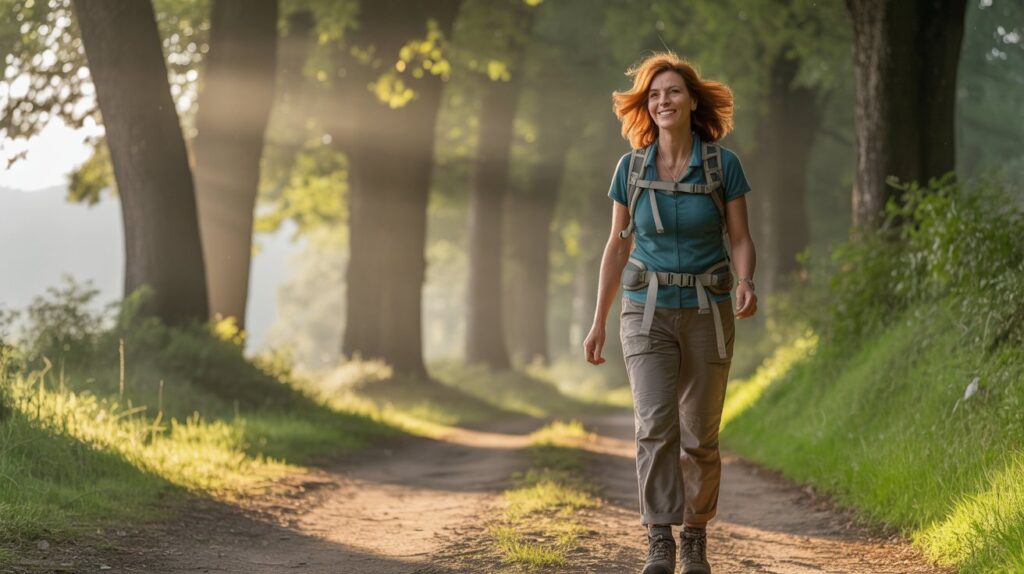
If your soul is craving fresh air, meaningful movement, and a chance to reconnect with nature, join us on a Camino de Santiago Walking Retreat in the southwest of France. This isn’t just a scenic hike – it’s a powerful, natural reboot for your body, mind, and spirit. Imagine quiet paths, rolling hills, cozy evenings, and slow conversations. No fitness requirements. No forced bonding. No pressure to have a breakthrough. Just one foot in front of the other, and finding your way to a brighter future.
I put the essence of who I am, and everything I have experienced that makes me who I am, with great enthusiasm, into my retreats, courses and books. – Dr Margaretha Montagu (MBChB, MRCGP, NLP master pract (cert,) Transformational Life Coach (dip,) Life Story Coach (cert) Counselling (cert,) Med Hypnotherapy (dip) and EAGALA (cert)
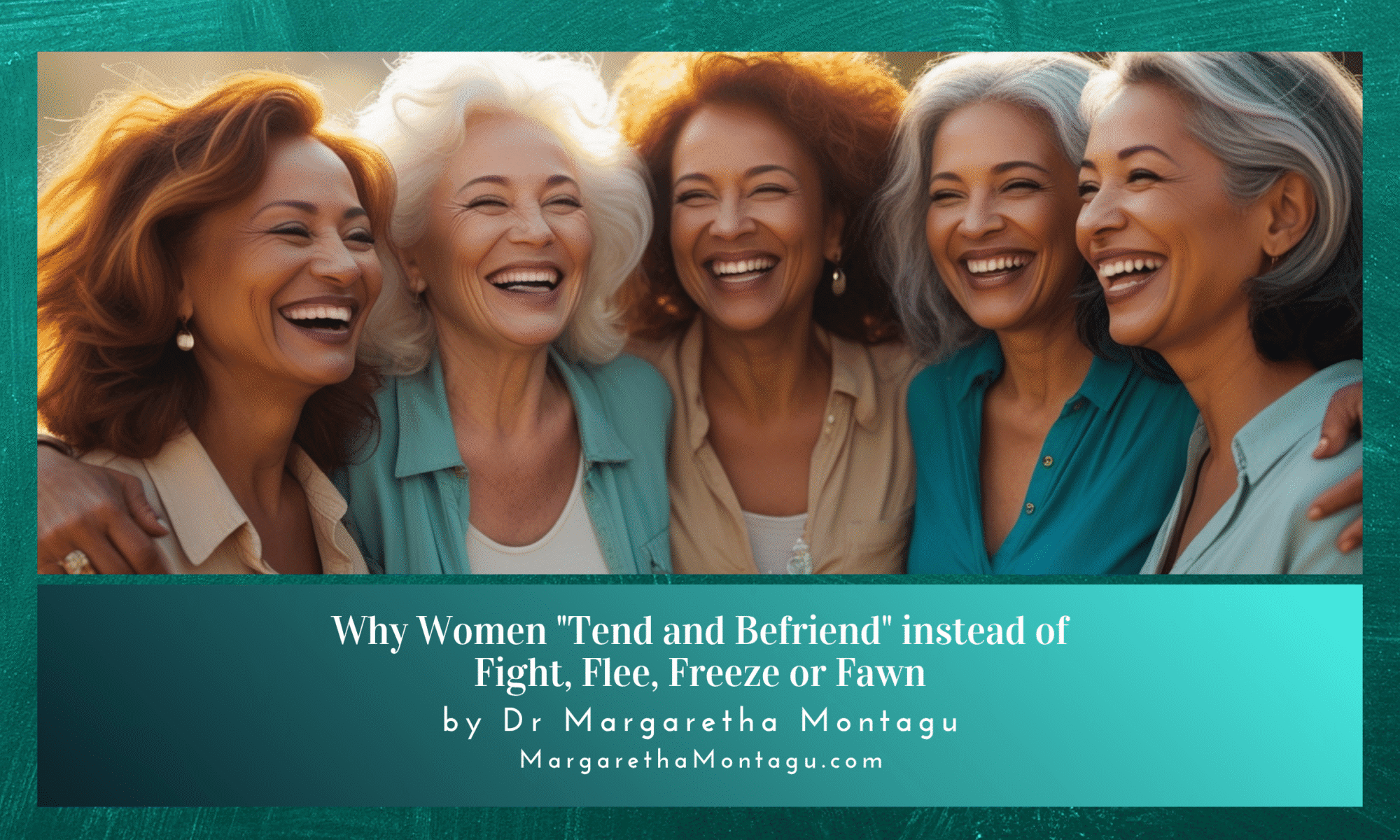
When life gets overwhelming, do you reach for the phone to call a friend? Make tea for everyone, even though you’re the one falling apart? Organise a girls’ night out? That’s not weakness—that’s your nervous system’s brilliant survival strategy in action. While traditional stress research focuses on fight-or-flight, women often have a completely different response: we tend (nurture and care for others) and befriend (strengthen our social bonds). This article explores why women instinctively gather their tribe during crisis, why that’s actually your superpower, and how understanding this changes everything about managing stress during life’s major transitions.
5 Key Takeaways
The tend-and-befriend stress reaction is biological, not cultural. Oxytocin, released during stress in women, drives us toward connection rather than isolation.
This response pattern is equally valid as fight-or-flight but has been historically overlooked in stress research that primarily studied men.
Tend-and-befriend becomes particularly crucial during major life transitions—precisely when women aged 35-65 need it most.
Understanding your natural stress reaction helps you stop judging yourself for “not being strong enough” when you seek support.
Intentional community-building—from walking groups to storytelling circles—isn’t indulgent; it’s essential stress management.
Introduction: The Invitation You Didn’t Know You Needed
Picture this: Your world is crumbling. Perhaps it’s divorce papers on the kitchen table, redundancy notice in your inbox, or the sudden silence of an empty nest. What do you do?
If you’re like most women, your first instinct isn’t to run away (flight), pick a fight (fight), shut down completely (freeze), or desperately please everyone (fawn). No—you ring your best friend. You put the kettle on. You gather your people.
And then you judge yourself for it.
“I should be stronger,” you think. “Why can’t I handle this alone?”
But what if I told you that this instinct to reach out, to nurture others whilst seeking comfort yourself, isn’t a weakness at all? What if it’s actually your nervous system’s most sophisticated survival strategy—one that science ignored for decades because researchers primarily studied stressed-out male rats and university lads?
Welcome to the revolutionary world of tend-and-befriend: the stress reaction pattern that’s been hiding in plain sight, waiting to validate what women have known intuitively for millennia.
Andrea White’s Story: The Woman Who Tried to Be an Island
Andrea White arrived at one of my Camino de Santiago retreat’s storytelling circles in the Gers region of south-west France with shoulders hunched like question marks and a smile that didn’t quite reach her eyes. Fifty-three years old, recently divorced, and utterly convinced she needed to “woman up” and face her new life alone.
“I’m not here to make friends,” she announced on our first evening, as three other women settled onto cushions in the ancient stone barn, candlelight dancing across weathered beams. “I just need to walk. Clear my head. Get strong.”
I recognised that particular brand of fierce independence immediately. I’d worn it myself once—like armour that’s actually a cage.
The Gers countryside stretched before us: rolling hills of sunflowers, medieval villages perched like crowns on hilltops, and the white-and-gold path of the Camino winding through it all. We’d spend three days walking, meditating, and sharing stories.
Andrea walked alone that first day. Quite deliberately. When others paired up, chatting and laughing, she strode ahead, jaw set, earbuds firmly in place. At our midday rest stop—a perfect picnic beneath plane trees, with fresh bread, local cheese, and tomatoes that tasted of pure sunshine—she sat apart, scrolling her phone.
“She’s hurting,” whispered Marie, a French teacher from Lyon.
“She’s terrified,” added Susan, a doctor from Edinburgh.
By day three, Andrea’s isolation had become almost comical. She’d speed-walk ahead, but we’re a persistent lot on these retreats. Someone would inevitably catch her up. “Gorgeous view, isn’t it?” “Did you try the plum tart at breakfast?” “My feet are killing me—are yours?”
I watched her defences crack like dried mud in rain.
It happened properly on day three. We’d stopped at a tiny chapel, barely larger than a garden shed, its interior cool and dark after the fierce August sun. The smell of old incense and candles mixed with lavender from the fields outside. Inside, a visitors’ book lay open, filled with prayers and hopes scrawled in dozens of languages.
Andrea stood reading them, and I saw her shoulders begin to shake.
That evening’s storytelling circle was different. We’d built a fire carefully—crackling oak, the smoke sweet and sharp, stars appearing one by one in the darkening sky. The ritual is always the same: whoever holds the talking stick shares what they need to share. Sometimes it’s funny. Sometimes profound. Often both.
Andrea took the stick with trembling hands.
“I’ve been so angry,” she began, her voice rough as sandpaper. “Angry at my ex-husband. Angry at myself. But mostly—” she paused, tears now flowing freely, reflecting firelight like tiny amber rivers, “—I’ve been furious at myself for needing people. For not being able to just… cope alone.”
She told us everything then. The twenty-five-year marriage that had slowly suffocated her. The adult children who’d moved away. The career she’d sacrificed. The friends she’d lost touch with because her husband hadn’t liked them. And underneath it all, the crushing shame of needing help.
“When the stress hit,” she said, “everyone kept telling me about fight-or-flight. My therapist, my GP, the self-help books. They said I needed to fight for myself or remove myself from the situation. But all I wanted—” her voice broke, “—all I wanted was for someone to sit with me. To just… be there.”
Around the circle, women nodded. The knowing was palpable, thick as the wood smoke.
“I thought that made me weak,” Andrea whispered.
That’s when Susan spoke. “That’s oxytocin, love. That’s your stress reaction doing exactly what it’s meant to do.”
What happened next was pure magic—the kind that only occurs when women stop performing strength and start practising it. We spent three hours by that fire, sharing stories of times we’d felt broken for seeking connection, ashamed for not being “strong enough” to isolate ourselves through pain.
By dawn, Andrea was sleeping peacefully, surrounded by new friends who’d promised to WhatsApp daily, to visit, to stay connected. She’d walked alone for three days. She’d spend the next weeks walking hand-in-hand with her tribe.
The Science Behind the Sisterhood: Understanding Tend-and-Befriend
For decades, stress research focused almost exclusively on the fight-or-flight response—that adrenaline-fuelled reaction where your body prepares either to battle the threat or leg it in the opposite direction. This model, developed largely from studies on male subjects (both human and animal), became the default understanding of how humans respond to stress.
But here’s the fascinating bit: it’s incomplete.
In 2000, psychologist Dr Shelley Taylor and her colleagues at UCLA published groundbreaking research identifying a distinctly different stress reaction pattern, observed predominantly in women: tend-and-befriend – Taylor SE, Klein LC, Lewis BP, Gruenewald TL, Gurung RA, Updegraff JA. Biobehavioral responses to stress in females: tend-and-befriend, not fight-or-flight. Psychol Rev. 2000 Jul;107(3):411-29.
When women experience stress, particularly chronic or social stress, our bodies release oxytocin alongside the usual stress hormones. This “bonding hormone” doesn’t just make us feel warm and fuzzy—it actively drives us toward social connection and nurturing behaviours. Instead of fighting or fleeing, we tend (care for offspring and others) and befriend (build and strengthen social networks).
This isn’t socialisation or cultural conditioning (though those certainly reinforce it). It’s biology. Evolution shaped this response because, for most of human history, a woman’s survival—and her children’s survival—depended not on her individual ability to outfight or outrun threats, but on the strength of her social bonds.
Think about it: when danger threatened our ancestors, men might benefit from aggressive defence or rapid escape. But women, often pregnant or caring for young children, needed different strategies. Gathering together, sharing resources, and maintaining strong community bonds became survival tools as powerful as any spear or swift legs.
The tend-and-befriend stress reaction offers remarkable benefits:
Stress buffering: Social connection literally dampens our stress response. When we’re with trusted friends, our cortisol levels decrease, our heart rate stabilises, and our nervous system calms.
Enhanced resilience: Women with strong social networks navigate major life transitions—divorce, bereavement, illness, career changes—with significantly better mental and physical health outcomes.
Collective wisdom: When we gather and share experiences, we access perspectives and solutions we’d never discover alone. Your crisis becomes less overwhelming when you realise others have weathered similar storms.
Oxytocin’s magic: This hormone not only motivates social connection but also reduces anxiety and promotes healing. It’s literally nature’s antidote to stress.
Yet despite this biological imperative toward connection, we live in a culture that often valorises isolation as strength. “I’m fine on my own,” we say proudly, as though needing others reflects poorly on our character.
This is particularly damaging during the transitional years between 35 and 65, when women face some of life’s most profound shifts. Empty nests. Caring for ageing parents. Menopause. Divorce. Career pivots. Bereavement. These aren’t moments for stoic isolation—they’re precisely when our tend-and-befriend response should be activated at full throttle.
The problem? Many of us have spent decades disconnecting from this natural response. We’ve absorbed messages about independence and self-sufficiency to such a degree that we’ve forgotten how to properly tend and befriend. We’ve let friendships atrophy. We’ve prioritised productivity over community. We’ve worn our ability to “cope alone” like a badge of honour.
And then stress hits, our bodies scream for connection, and we judge ourselves for the need.
Understanding tend-and-befriend isn’t just intellectually interesting—it’s transformative. It means that when you reach for the phone during a crisis, you’re not being weak; you’re being wise. When you organise a girls’ weekend or join a walking group or book yourself onto a retreat, you’re not being indulgent; you’re practising essential stress management.
Your nervous system knows what it needs.
Further Reading: Five Unconventional Books
1. “Tending the Fire: Through Conflict, Trauma and Tragedy, What We Share in Common Is Seeking Peace” by Tending the Fire Collective (edited by Molly Remer)
This isn’t a traditional academic text—it’s a collection of women’s voices exploring how we hold space for each other through crisis. What makes this book invaluable is that it demonstrates tend-and-befriend in action rather than just theorising about it. The contributors—mothers, activists, healers, and ordinary women—share raw, honest accounts of how they’ve created circles of care during their darkest moments. I chose this because it mirrors what I witness in my storytelling circles: the transformative power of women simply showing up for each other. It’s proof that tending isn’t passive or weak; it’s revolutionary resistance against a culture that insists we suffer alone.
2. “The Tend and Befriend Theory of Stress: A New Perspective on Women’s Responses to Stress” (published research collection, available through academic libraries)
For those who want the actual science straight from the source, this collection includes Dr Shelley Taylor’s original groundbreaking research along with subsequent studies that expanded our understanding of women’s stress responses. Yes, it’s more academic, but Taylor writes accessibly, and reading the research that overturned decades of male-centred stress theory is genuinely thrilling. I recommend this because understanding the biological mechanisms—the interplay of oxytocin, oestrogen, and social bonding—gives you scientific ammunition when others suggest your need for connection during stress is somehow “emotional” rather than physiological. It validates what you’ve always known in your bones.
3. “Linked: How Everything Is Connected to Everything Else and What It Means for Business, Science, and Everyday Life” by Albert-László Barabási
This might seem an unexpected choice for a book about women’s stress responses, but stay with me. Barabási, a network scientist, explores how connection and networks function across all systems—from the internet to disease transmission to social relationships. What makes this relevant is his research showing that the strength of a network lies not in isolated strong nodes but in the quality and diversity of connections between nodes. Reading this, I had a revelation: tend-and-befriend isn’t just a stress response; it’s women instinctively understanding network theory. We’re not building dependencies; we’re creating resilient systems. When one node struggles, the network redistributes support. It’s brilliant, interconnected survival—and this book explains why it works so effectively.
4. “The Village Effect: How Face-to-Face Contact Can Make Us Healthier and Happier” by Susan Pinker
This isn’t another self-help manifesto telling you to journal your feelings. Pinker, a developmental psychologist, presents compelling evidence that in-person social contact is as important to longevity as giving up smoking. I chose this because it validates what my Camino retreats demonstrate repeatedly: there’s something irreplaceable about physical presence, shared meals, walking side-by-side, and actual eye contact. Zoom calls are lovely, but they don’t trigger the same biological stress-buffering responses as sitting around a fire with other humans.
5. “Women Who Run With the Wolves” by Clarissa Pinkola Estés
This might seem an odd choice, but hear me out. Estés, a Jungian analyst and cantadora (keeper of old stories), explores women’s wild nature through myth and fairy tale. Her work reminds us that gathering to share stories isn’t frivolous—it’s ancient feminine practice, a way of passing wisdom and processing experience that predates written language. After years of running storytelling circles, I’ve witnessed the profound healing that occurs when women reclaim this tradition. Estés articulates why it matters so deeply.
“I arrived at Margaretha’s Camino retreat convinced that asking for help meant I’d failed somehow. After thirty years in corporate law, I’d built my entire identity around being the person others leaned on. When my mother died and I fell apart, I was horrified by my own neediness. The retreat changed everything. Walking with other women, sharing stories around the fire, practising meditation together—I finally understood that connection isn’t weakness; it’s how we’re meant to move through pain. The tend-and-befriend concept gave me permission to be human. Six months on, I still WhatsApp my Camino sisters weekly. They’ve become my lifeline.” — Rachel M., London
FAQs about Tend-and-Befriend
Q: Is tend-and-befriend only a female stress reaction?
Not exclusively, but predominantly. Men can and do experience tend-and-befriend responses, particularly in nurturing contexts (fatherhood, caregiving roles). However, hormonal differences—specifically the interaction between oxytocin and testosterone—mean this pattern is more consistently observed in women. Testosterone appears to reduce oxytocin’s social bonding effects, whilst oestrogen enhances them.
Q: What if I’m a woman who doesn’t feel drawn to “befriending” during stress?
Perfectly valid! Stress responses exist on a spectrum, and individual variation is normal. Some women do default to fight-or-flight patterns. Others might have learned to suppress tend-and-befriend impulses due to past experiences where seeking connection felt unsafe. The key is noticing your authentic response without judgment and ensuring you have adequate stress-management strategies that work for your nervous system.
Q: Can you develop tend-and-befriend responses if they don’t come naturally?
Absolutely. Like any skill, building and maintaining social connections strengthens with practice. Start small: regular coffee dates, joining a walking group, attending workshops or retreats. Notice what happens in your body when you’re with trusted others during stressful periods. Your nervous system can learn that connection equals safety, which gradually makes reaching out feel more natural.
Q: How is this different from codependency or people-pleasing (fawning)?
Brilliant question. Tend-and-befriend is about mutual support and authentic connection—you give and receive care within healthy boundaries. Fawning is a trauma response where you prioritise others’ needs to avoid conflict or rejection, often at significant cost to yourself. The difference lies in reciprocity, choice, and whether the connection genuinely soothes your nervous system or leaves you depleted and resentful.
Q: What about introverts who find social interaction draining?
Introversion relates to how you recharge energy (alone time versus social time), not whether you need connection. Introverted women still benefit enormously from tend-and-befriend responses—they just need to structure connection differently. Smaller gatherings, one-on-one walks, written correspondence, or time-limited social events can all activate the stress-buffering benefits of connection without overwhelming your system. Quality matters far more than quantity.
Conclusion: Reaching Out
We’ve been sold a lie about strength—that it means gritting teeth and soldiering on alone, that needing others reflects some fundamental inadequacy within us.
But your body knows better. When stress strikes and you feel that pull toward connection, toward sharing your story, toward gathering your people—that’s not weakness whispering. That’s wisdom. That’s millions of years of evolutionary intelligence reminding you that humans are tribal creatures who survive and thrive through connection.
The tend-and-befriend stress reaction isn’t a lesser response to fight-or-flight. It’s a sophisticated, deeply effective strategy for navigating life’s inevitable storms, particularly those transitional periods when everything familiar seems to be shifting beneath your feet.
So the next time stress sends you reaching for the phone, booking coffee with a friend, or considering a retreat with strangers who might become sisters—don’t judge that impulse. Honour it. Your nervous system is doing exactly what it’s meant to do.
And perhaps, just perhaps, what you’re really seeking isn’t someone to fix your problems or tell you what to do. Perhaps you’re seeking the oldest medicine humans possess: the healing that occurs when we stop pretending we’re islands and remember we’re part of an archipelago.
You don’t have to walk this path alone. You were never meant to.
Walk Your Story into Being: Join a Camino de Santiago Retreat
Imagine this: walking the ancient Camino de Santiago through the honey-coloured hills of south-west France, where medieval villages crown hilltops and sunflower fields stretch toward the distant Pyrenees mountains. This isn’t a hiking holiday. It’s a coming home—to yourself.
Our Camino de Santiago Crossroads Retreats combine gentle daily walking (no hardcore fitness required—just willingness and comfortable shoes) with mindfulness practices that ground you in the present moment, meditation exercises specifically designed for stress management, and evening storytelling circles where transformation happens around the fire.
You’ll sleep in an old French farmhouse, eat meals prepared from local markets, and walk paths where millions of pilgrims have processed their own transitions over a thousand years. The rhythm of walking, the beauty of the landscape, and the companionship of others navigating life’s crossroads create the perfect conditions for healing and clarity.
This is where your tend-and-befriend response gets exactly what it’s been asking for: time in nature, meaningful connection, space to share your story and hear others’, and practices that help your nervous system remember what peace feels like.
Because life’s crossroads aren’t meant to be navigated alone. They’re invitations to gather your tribe and walk into what’s next—together.
“I am an experienced medical doctor – MBChB, MRCGP, NLP master pract cert, Transformational Life Coach (dip.) Life Story Coach (cert.) Stress Counselling (cert.) Med Hypnotherapy (dip.) and EAGALA (cert.) I may have an impressive number of letters after my name, and more than three decades of professional experience, but what qualifies me to excel at what I do is my intuitive understanding of my clients’ difficulties and my extensive personal experience of managing major life changes using strategies I developed over many years.” Dr M Montagu
The thought of building new friendships during a life transition can be intimidating. But this season of warmth and connection offers the perfect backdrop to meet new people who might bring unexpected joy into your life.
Christmas events, community gatherings, or even online spaces are filled with opportunities to connect. Remember, every friendship starts with a simple introduction. The barista you see every morning, the neighbor you exchange nods with, or someone in your extended social circle could become a meaningful connection if you’re open to the possibility.
New friendships are a reminder that life always offers fresh beginnings, even during times of change. You don’t have to navigate transitions alone—there are people out there ready to walk alongside you.
Journaling Prompt: What qualities do you value most in a friend? How can you show those qualities to others as you meet new people?
Action Step: Introduce yourself to someone new today. It could be as simple as a smile or a short conversation. Small beginnings can lead to big friendships.
Interactive Comment: Taking the first step is brave! Comment with “Here’s to new friends!” if you’re ready to try.
Would you like to find out what type of friend YOU are? How well do you know your friends? If you and a new friend really are compatible? I have created a set of light-hearted quizzes, quotes and questions to help you do just that. Just fill in the form below and you’ll get immediate access to them all. I’ll also add you to my newsletter list, though you can unsubscribe from this list effortlessly and at any time. Included:
How well do you know your Friends? Quiz
What is Your Friendship Style? and Are your Friendship Styles compatible? Quiz
20 of the Most Inspiring Friends and Friendship Quotes and
20 lighthearted Questions you can ask to get to know a new Friend
If you would like to get access to these quizzes, quotes, insights and inspiration, please fill in the form below:
Friends and Friendships
Discover how to build meaningful, lasting friendships and create a support system that truly has your back—delivered straight to your inbox! (newsletter subscription included)
Thank you so much!
More information about making friends and maintaining friendships (including the quizzes I mentioned) is on its way to you. You have also successfully subscribed to my newsletter.
All content of this website is copyrighted. You cannot copy the content of this page