
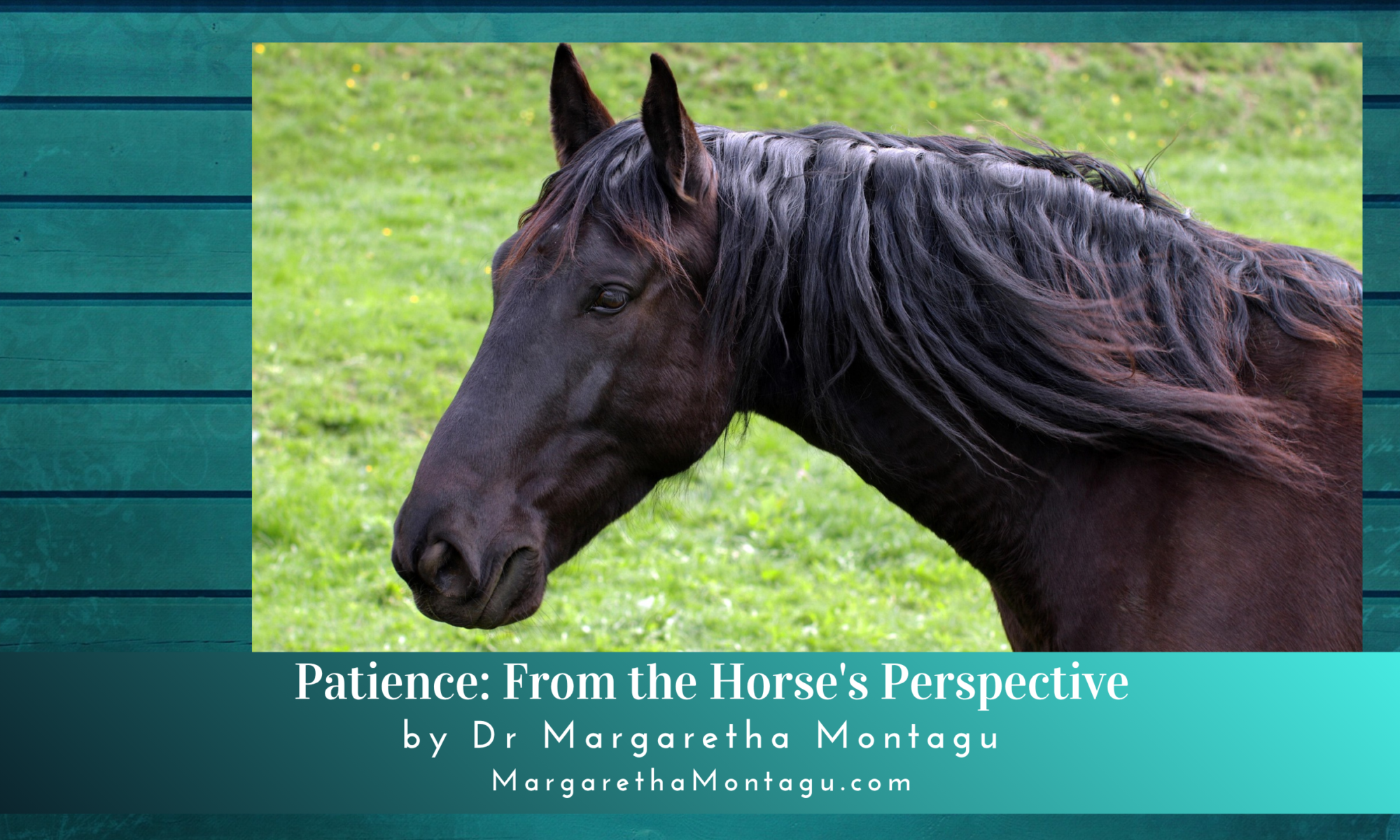
I have never once managed to hurry a horse into trusting me. I want to be very clear about this, because for the first few months after I brought Tess home, I tried.
Not obviously, of course. I wasn’t standing in the paddock barking commands. But there was a quieter version of rushing that I didn’t recognise as rushing at the time — the extra step I’d take toward her when she flinched, the treat I’d hold out a little too eagerly, the small, hopeful “come on, it’s okay” I’d murmur as if saying it enough times might speed things along. I told myself I was being patient. I was, technically, waiting. But I was waiting the way you wait for a kettle to boil — watching it, willing it, checking constantly to see if we were there yet.
Tess was having none of it. And thank goodness, honestly, because she taught me the difference between waiting patiently and waiting impatiently, which turns out to be enormous.
The Horse Who Wouldn’t Be Rushed
Tess came to me carrying whatever her history had handed her — I don’t know the specifics, only the evidence. The way she’d startle at raised hands. The care she took never to be cornered, always leaving herself an exit. The length of time it took before she’d let anyone near her shoulder, let alone her head. Everything about her said she’d learned, at some point, that trust was a dangerous thing to offer.
I discovered, somewhat humbling, that none of my urgency made the slightest difference to her timeline. Not my good intentions, not my genuine affection for her, not even the fact that I meant her nothing but well. Tess didn’t care how I felt about the process. She cared about consistency. It wasn’t one grand gesture that won her over. It was showing up the same unremarkable way, day after day, until eventually “same” became something she could rely on. Trust, it turns out, isn’t about persuasion. It’s demonstrated, slowly, until it becomes evidence.
The turning point wasn’t dramatic. There was no breakthrough moment, no music swelling. One ordinary morning, she simply didn’t move away when I walked past. That was it. Months of consistency, and the reward was an absence — she didn’t flinch. I nearly missed it.
We Want Everything Immediately
I think about Tess a lot when I watch how impatient we’ve become with anything that requires time — including ourselves. We want the six-week transformation, the parenting hack that finally gets the toddler to sleep through the night, the leadership technique that turns a disengaged team into a high-performing one by the next quarterly review. There’s an entire industry selling shortcuts to things that, by their nature, don’t have shortcuts. Trust — a child’s, a colleague’s, a horse’s — doesn’t respond to technique. It responds to time and to whether you show up the same way when nobody’s checking.
I saw this constantly in medicine, long before the horses. The patients who healed weren’t the ones who wanted it most, or tried hardest, or read the most about their condition. They were the ones who could tolerate a process that didn’t move at the speed of their wanting. Frustration doesn’t accelerate healing. It just makes the person feel worse while the actual timeline continues, unmoved, underneath.
Parenting a frightened child, managing a burned-out team, rebuilding your own trust in yourself after a hard few years — they’re all the same exercise, dressed differently. You cannot bully your way to feeling safe. You can only be reliable long enough that reliability starts to register as fact rather than a hope.
What Patience Actually Requires
The uncomfortable part of this lesson is that patience isn’t a feeling you generate. It’s not about staying calm on the inside while you wait for the good outcome — I certainly wasn’t calm on the inside with Tess, not for a long while. Real patience is behavioural. It’s doing the same steady thing regardless of how you feel about the pace, and regardless of whether today looks like progress or looks like nothing at all.
That reframe helped me more than anything else. I stopped needing to feel patient and started just acting consistently, which is a much lower bar and, conveniently, the only bar that actually matters to the horse — or the child, or the team, or the version of yourself you’re trying to rebuild trust with.
Tess still keeps her exits open. She probably always will. But she’ll stand beside me now while I do it, which is its own kind of trust — not the erasure of what came before, just proof that consistency, held for long enough, can sit right next to caution without either one needing to win.
If You’re in the Slow Middle of Something
If you’re in the unglamorous middle of rebuilding trust with someone — a child, a team, yourself — and you’re tired of being told to just be more patient as though patience were a mood you could simply select, I’d love to welcome you to a Crossroads or a Rebooted and Realigned retreat here in the southwest of France.
A lot of my one-to-one mentoring work also sits exactly here: not in grand strategy, but in the steady, repeatable groundwork that actual change is built on. So get in touch if you’d like a thinking partner for the slow season.
© Dr. Margaretha Montagu, Esprit Meraki
Do you dream of escaping your stressful life to raise a herd of goats or grow sunflowers in the south of France? Then you may be ready for an Esprit Meraki retreat. Get access to this “very serious” quiz to help you figure out how urgent your need for a change of scenery is, when you subscribe to my monthly newsletter.

5-day/4-night “Press Pause” Camino de Santiago Walking Retreat – If your soul is craving fresh air, meaningful movement, and a chance to reconnect with nature and connect with horses, join me on a powerful, natural reboot for your body, mind, and spirit. Same content as the 3-day retreat, spread over 5 days. And an extra day of walking. No extreme fitness requirements. No forced bonding. No pressure to have a breakthrough. For one or two guests travelling together.

“I am an experienced medical doctor – MBChB, MRCGP, NLP master pract cert, Transformational Life Coach (dip.) Life Story Coach (cert.) Stress Counselling (cert.) Med Hypnotherapy (dip.) and EAGALA (cert.) I may have an impressive number of letters after my name, and more than three decades of professional experience, but what qualifies me to excel at what I do is my intuitive understanding of my clients’ difficulties and my extensive personal experience of managing major life changes using strategies I developed over many years.” Dr M Montagu