
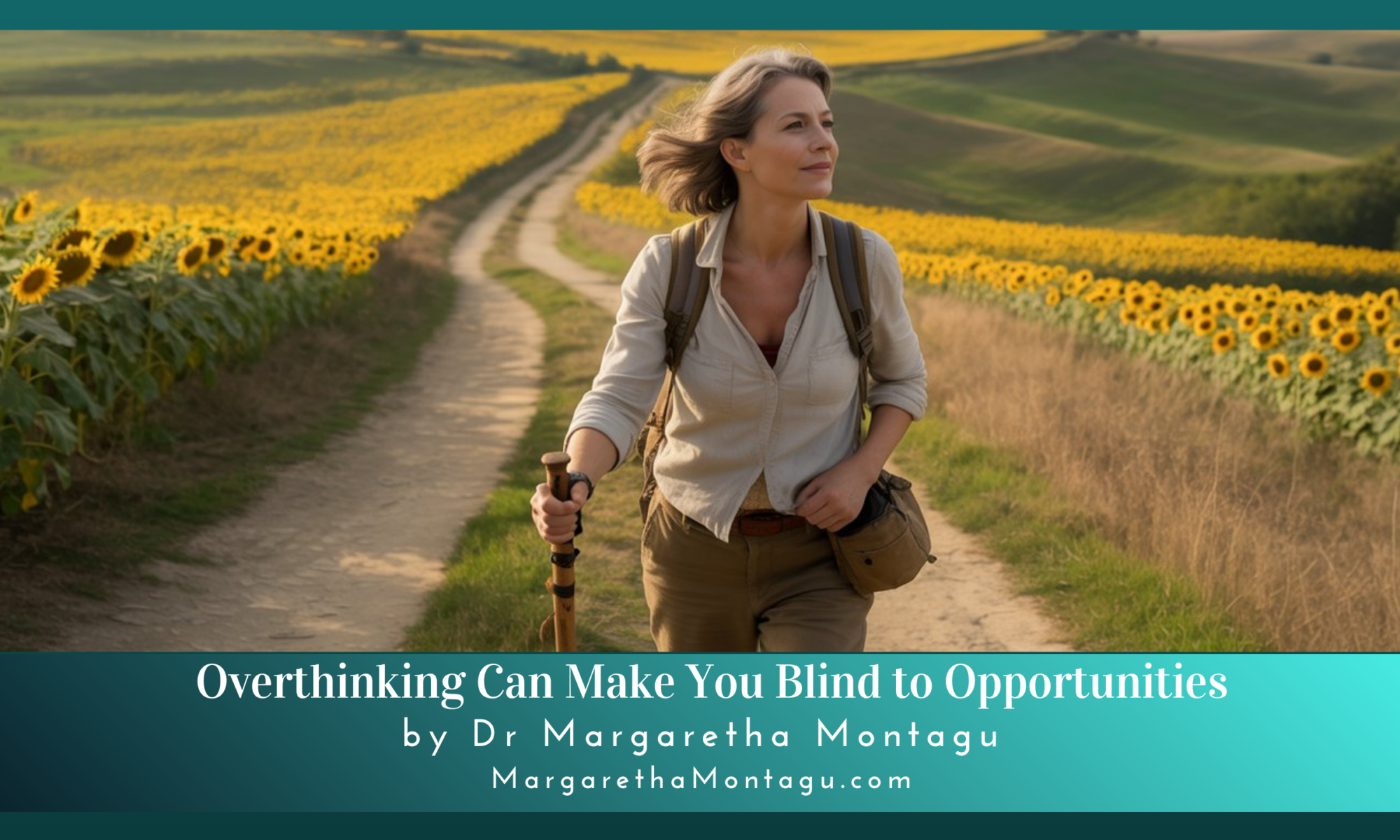
The mental habit that keeps smart, capable people stuck, and the surprisingly simple shift that changes everything.
What this is: A candid, research-informed look at how overthinking, especially during times of stress and uncertainty, actively blinds you to the opportunities that could change your life. Practical, warm, occasionally irreverent.
What this isn’t: A collection of platitudes dressed up as insight, or another well-meaning reminder that gratitude journals exist. It won’t tell you that your anxiety is simply a mindset problem, or that the solution is a green smoothie and an earlier bedtime. You are too smart for that, and frankly, you have already tried most of it.
Read this if: You are a thoughtful person navigating a stressful, uncertain world; someone who suspects your mind is working overtime and under-delivering; or someone who has ever thought, “There must be more than this,” but keeps getting interrupted by your own brain.
5 Key Takeaways
- Overthinking is not planning. It is the brain stuck in a loop, consuming energy that should be directed toward noticing, deciding, and acting.
- Opportunity rarely announces itself loudly. It tends to appear quietly, at the edge of your attention, precisely where chronic overthinking refuses to look.
- The state of the world is genuinely stressful. Acknowledging that is not a weakness. But letting it colonise every corner of your mind is a cost you can choose not to pay.
- Nature, stillness, and story are scientifically supported tools for resetting the over-activated mind and restoring the clarity that opportunity-spotting requires.
- The answers you are looking for are rarely found in another hour of analysis. They tend to show up on a quiet walk, in the margins of a good book, or in a conversation you weren’t expecting to need.
Introduction: Is Your Mind Too Full to Let Anything New In?
When did you last notice something delightful that you were not already looking for?
A stranger’s kind gesture. A path you had never explored. A conversation that opened a door you did not even know existed. A feeling, however fleeting, that something good was starting to happen.
If you are struggling to remember, you are not alone. And you are not broken. You are, in all likelihood, simply exhausted. Overwhelmed by a world that has become, in recent months, genuinely difficult to process. The relentless news cycle, the ambient anxiety, the sense that the ground keeps shifting, quietly and without warning.
When the brain is chronically stressed, it narrows. This is not a character flaw. It is biology. But the cost, over time, is significant. You stop seeing what is new. You stop trusting what is good. You become, without quite noticing, blind to the very opportunities that could help you move forward.
This article is about that blindness. What causes it, what it costs you, and, more importantly, what you can actually do about it. You will find here a story that might feel familiar, some hard-won wisdom, five common mistakes to avoid, and a handful of tools and resources, including a retreat in the southwest of France that has already enriched the lives of more than two decades’ worth of guests.
What Has Overthinking Already Cost You, Without You Noticing?
The Story of Miriam Voss
Miriam Voss was the kind of person you would describe, admiringly, as someone who had her life together.
Senior project manager at a respected architecture firm. Owner of a sensibly mortgaged flat in Edinburgh. Regular gym-goer, conscientious voter, reliable friend. The person at the dinner party who always knew the context behind the headline.
She was also, at the age of forty-four, quietly unravelling.
It had started, as these things often do, not with a single dramatic event, but with an accumulation. A restructure at work that left her role technically intact but spiritually gutted. A long-term relationship that had ended, not badly, but with the particular sadness of two people who had simply started moving in different directions. A mother whose health was declining. And then the world, doing what the world had been doing with increasing insistence: delivering a daily drumroll of uncertainty that felt impossible to tune out.
Miriam did what high-functioning, intelligent people do when the pressure mounts. She thought longer and harder.
She made spreadsheets. Not one, several. Spreadsheets about her career options, her financial projections, her relationship patterns, her health habits. She listened to podcasts during her commute, during her runs, during her lunch breaks. She read articles, bookmarked newsletters, kept a notes app that had swollen to four hundred and sixty-three entries and was, she admitted to herself at 2 am on a Wednesday, beginning to resemble a conspiracy board.
She was, in her own words, “trying to think my way to certainty in an uncertain world.” And it was not working.
What she had not noticed, because she was too busy analysing everything else, was that opportunities had been presenting themselves with some regularity. A colleague had mentioned, twice, an opening in a small sustainable design studio that would have suited Miriam’s quieter, more creative ambitions perfectly. She had filed it under “things to look into” and never looked. A friend had forwarded details of a five-day reading and walking retreat in France, the kind that combined the company of books and fellow travellers with long mornings on ancient paths through the French countryside. Miriam had opened the email, thought “that sounds lovely,” and immediately opened a spreadsheet about her Q3 budget instead.
Her mind was full of good ideas. It was too noisy to hear them.
The turning point came, as turning points often do, when the noise simply became too loud to ignore. It was a Tuesday in November. Miriam was on her third coffee, in a meeting she had not needed to attend, watching herself contribute nothing while her mind ran its usual marathon. And she thought, clearly, for the first time in months: I am tired of my own brain.
She went home, did not open the laptop, did not turn on the news. She made soup, the old-fashioned way, chopping things slowly, smelling the onions and rosemary, letting the kitchen fill with warmth. She noticed, for the first time in a very long time, what her kitchen actually smelled like. She sat at the table and ate, without her phone.
And into that small silence, uninvited, came a thought: What if I actually went?
She went. The retreat, five days of reading, walking ancient paths, sleeping well, turned out to be the beginning of something she could not have predicted. Not a solution, exactly. But a reorientation. A recalibration of what she was actually paying attention to.
Within six weeks of returning, she had applied for the studio position. Within four months, she had the job. Not because the retreat had handed her a plan, but because it had given her back the mental space to notice one.
How Does Overthinking Actually Blind Us to Opportunity?
The neuroscience, here, is both sobering and clarifying.
When the brain perceives threat, whether from a predator or a punishing news cycle, it activates the amygdala and narrows attentional focus. This is adaptive, in the short term. In a genuinely dangerous situation, the last thing you need is to be distracted by a beautiful sunset. You need tunnel vision.
The problem is that chronic stress, the low-grade, persistent kind that many of us have been living with for several years now, keeps that narrowing mechanism activated long after the immediate danger has passed. The brain, unable to distinguish between a tiger and a difficult quarterly review, maintains a state of heightened vigilance that is exhausting, self-perpetuating, and, crucially, opportunity-blind.
Psychologist Barbara Fredrickson’s Broaden-and-Build Theory (see below) offers the counterpoint. Positive emotional states, she has shown, literally broaden the scope of attention and cognition. You see more. You connect more dots. You notice the colleague’s offhand comment, the email that sat unopened, the path you had not considered. Positive states, in short, are the conditions under which opportunity becomes visible.
Overthinking, by its very nature, is not a positive state. It is a state of low-grade alarm, dressed up as productivity.
This matters not only for the individual, but for the communities and families around them. The person who breaks free from chronic overthinking does not simply feel better. They show up differently. They are more present in their relationships, more creative in their work, more open to collaboration, more willing to take the kind of considered risks that generate genuine change. A mind released from the tyranny of the loop is a resource for everyone it touches.
There is a particular poignancy, worth naming, in the fact that so many of the people most likely to overthink are also the most thoughtful, most conscientious, most capable. The very qualities that make them assets to their families and communities are the ones that, under sustained pressure, tip into paralysis. The world, right now, does not need its most thoughtful people to be paralysed.
What Are the Five Most Common Overthinking Mistakes?
Mistake 1: Confusing analysis with action
uThere is a seductive logic to the idea that if you just think about something long enough, you will arrive at the perfect decision/solution. You will not. At some point, continued analysis is simply a way of avoiding the discomfort of uncertainty. Decide with the information you have. Adjust as you go.
Mistake 2: Asuming worry helps you prepare
Many chronic overthinkers believe, at some level, that worrying is what caring people do. If they stop worrying, something bad will happen and they will not have been prepared. This is magical thinking in a sensible coat. Worry does not protect you or the people you love. Presence does.
Mistake 3: Seeking certainty in an uncertain world
The world is, right now, genuinely uncertain. No amount of news-consumption, scenario-planning, or spreadsheet-building will make it otherwise. The capacity to tolerate ambiguity is not a weakness. It is one of the most sophisticated cognitive skills available to us.
Mistake 4: Waiting until you feel ready
Readiness is a feeling, and overthinking is very good at preventing that feeling from arriving. People who make significant positive changes in their lives rarely report feeling ready before they made them. They report feeling ready afterwards, once they had moved.
Mistake 5: Underestimating the value of environmental change
The brain, somewhat inconveniently, tends to reproduce the same thoughts in the same environments. If you want to think differently, consider going somewhere different. Ancient pilgrimage routes exist, in part, because our ancestors understood this. Walk a different path, and a different mind tends to show up for it.
A Short Intention-Setting Exercise
Find a quiet place. You do not need long. Five minutes will do.
Sit comfortably, close your eyes if that is comfortable, and take three slow breaths. On the exhale, let your shoulders drop.
Now, ask yourself, without rushing to answer: “What have I been too busy to notice?”
Do not analyse the question. Simply hold it. Let whatever surfaces, surface. It might be a person, a feeling, an idea, a door you have been walking past. Write it down, without judgement.
What Can You Read to Understand This Better? A Reading List
1. Thinking, Fast and Slow by Daniel Kahneman
Kahneman’s foundational work on the two systems of thought, one fast and instinctive, one slow and deliberate, is essential reading for anyone who suspects their mind may be working against them. It explains, with precision and wit, why we overthink, why our conclusions are often wrong, and what better thinking actually looks like. A masterclass in cognitive humility.
2. The Miracle of Mindfulness by Thích Nhất Hạnh
Gentle, profound, and quietly revolutionary. Thích Nhất Hạnh offers the simplest possible antidote to overthinking: full attention to what is in front of you. Washing the dishes. Drinking tea. Breathing. This is not about spirituality, unless you want it to be. It is about the science of presence, and its extraordinary rewards.
3. Quiet by Susan Cain
For the introverted overthinker, and there are many, Quiet is both a mirror and a lifeline. Cain’s exploration of introversion challenges the assumption that the loudest, most decisive voice in the room is the wisest one. It validates the deep thinker while gently pointing toward the costs of thinking alone, in circles, without outlet.
4. The Body Keeps the Score by Bessel van der Kolk
Van der Kolk’s groundbreaking work on trauma and the nervous system explains, in compelling detail, why we cannot simply think our way out of stress. The body holds what the mind circles. Walking, nature, movement, and creative engagement are not optional extras for the chronically stressed. They are medicine.
5. Essentialism: The Disciplined Pursuit of Less by Greg McKeown
For the overwhelmed high-achiever who has confused busyness with purpose, Essentialism is a necessary disruption. McKeown argues, persuasively, that the ability to focus on what matters, and to let go of what does not, is not a luxury but a survival skill. Particularly useful for those who overthink because they are trying to do everything, rather than the right thing.
P.S. My own book, Embracing Change, in 10 minutes a day, was written specifically for people navigating major life transitions under pressure. Drawing on two decades of clinical practice and more than fifteen years of hosting transformational retreats, it offers practical, compassionate, ten-minute daily practices for moving through change without being consumed by it. Short enough to actually use. Substantial enough to actually help.
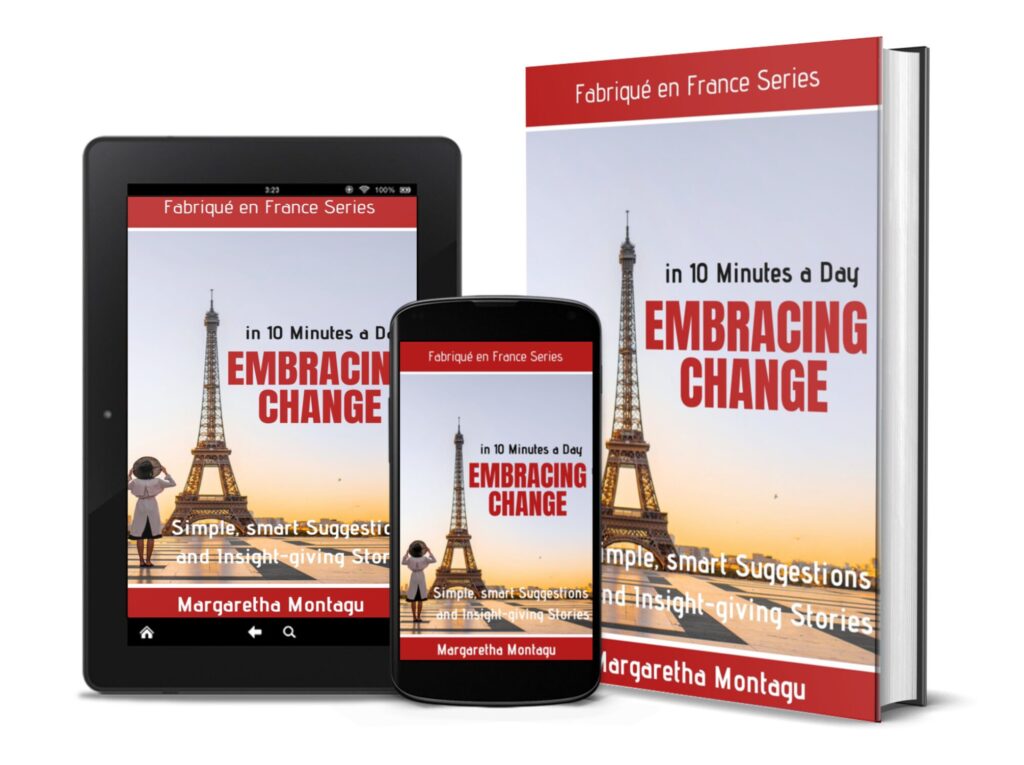
If you are currently facing a major life transition or any other dramatic change in your circumstances, and you have no idea how you are going to cope, the good news is that the strategy presented in this book can help you, step by step, to improve your ability to handle the stress caused by change, even if you feel entirely powerless at the moment.
If you are someone who finds that your thinking clarifies outdoors, you are not imagining it. Research consistently shows that time in natural environments reduces cortisol, lowers rumination, and restores directed attention, the very capacity that overthinking depletes.
My online course, Reconnect with Nature: A Guided Journaling Course Inspired by Horses, explores this connection through the lens of equine-inspired reflection and guided nature journaling. Horses, as any horse person will tell you, do not overthink. They are exquisitely present. Spending time with them, even metaphorically through guided reflection, has a way of recalibrating our own relationship with the present moment.
This course is included free with all my reading retreats. Guests consistently tell me it was one of the most unexpected and valuable parts of their experience.
5 FAQs People Are Asking About Overthinking
Q1: Is overthinking a mental health condition?
Overthinking itself is not a diagnosable condition, but it is a well-documented symptom of anxiety, depression, and chronic stress. If your overthinking is significantly disrupting your daily life, sleep, or relationships, it is worth speaking to a healthcare professional. As a physician with a longstanding interest in stress management, I would say this: if you are asking the question, the answer is probably “yes, seek support.”
Q2: Why do intelligent people overthink more?
Research suggests that higher intelligence is associated with a greater capacity for abstract thinking, which is the same cognitive function involved in worry and rumination. Essentially, a powerful mind with insufficient direction turns on itself. This is not a character flaw. It is a management challenge.
Q3: Can overthinking damage your health?
Yes. Chronic rumination is associated with elevated cortisol, disrupted sleep, impaired immune function, and increased risk of anxiety and depression. It is not a harmless quirk. After twenty years in clinical practice, I can tell you that the body keeps a very accurate account.
Q4: What is the fastest way to stop an overthinking spiral?
Change your physical state. Stand up. Go outside. Splash cold water on your face. Walk around the block. The brain cannot sustain the same thought pattern when the body is doing something different. This is not a permanent solution, but it is a reliable circuit breaker, and sometimes that is exactly what you need.
Q5: How long does it take to change an overthinking habit?
It depends on the depth of the habit and the tools you use. In my experience, both clinically and as a retreat host, meaningful change often begins during a period of significant environmental shift, away from the ordinary. The brain, given new inputs and reduced pressure, is remarkably responsive. The question is not how long. It is whether you are ready to give it the conditions it needs.
Conclusion: What Does Your Life Look Like When You Stop Overthinking?
“You can’t see the view from inside the maze.”
This is the quiet truth at the heart of overthinking. The mind, when it is circling, cannot also be witnessing. And witnessing, it turns out, is how we find our way.
You are, in all likelihood, a person of genuine capability and depth. You have already navigated more than most. And precisely because you care, because you take the world seriously, because you feel the weight of uncertainty rather than simply brushing past it, you are also vulnerable to the particular trap of over-analysis.
The world will not become less uncertain if you think about it too long. But your relationship to it can become less fraught if you give yourself, regularly, the conditions under which a calmer, clearer, more opportunity-awake version of you can emerge. It is arguably the most important thing you can do, for yourself, and for the people around you.
Is It Time to Step Outside Your Head, and Into Something Extraordinary?
Five days. Ancient paths. Good books. Unhurried conversation. And the particular magic of the southwest of France in its golden seasons.
My Book Lovers’ Binge Reading and Camino de Santiago Walking Retreat was designed for exactly the kind of person described in this article. The thoughtful one. The capable one. The one who has been thinking very hard and getting, somehow, nowhere. You walk trails that people have walked for a thousand years. You read, deeply and without apology. And you return home not with answers, precisely, but with the clarity to start finding them. With more than thirty guest testimonials speaking to the power of this experience, and fifteen years of refinement behind it, this retreat has become, for many guests, the turning point they had been circling for years.
If that sounds like something you need, it probably is.

Join us for the Book Lovers Binge Reading Camino de Santiago Walking Retreat in the sun-drenched southwest of France: a journey where the trail and the story unfold together. Walk ancient paths at your own pace, then settle in each evening with a good book. This isn’t a fitness challenge—it’s a gentle rhythm—one step, one chapter, one honest conversation at a time. Rolling hills, quiet villages, golden light. No expectations, no performance, no agenda but your own unfolding.









If this article has resonated, I would invite you to do two things.
First, sign up for my newsletter, where I share regular reflections, research, and practical wisdom on life transitions, stress, and the quiet art of moving forward.
Second, take my Turning Point Quiz. It is a short, thoughtfully designed quiz that helps you identify where you are in your transition, and what you actually need right now. Not what the internet thinks you need. Not what your most anxious inner voice insists. What, given your particular situation and strengths, is most likely to help.
It takes about five minutes. It tends to be quietly illuminating.
The opportunities you have been missing have not gone anywhere. They are still there, at the edge of your attention, waiting patiently.
References
- Fredrickson, B. L. (2001). The role of positive emotions in positive psychology: The broaden-and-build theory of positive emotions. American Psychologist, 56(3), 218–226. https://doi.org/10.1037/0003-066X.56.3.218
- Nolen-Hoeksema, S., Wisco, B. E., & Lyubomirsky, S. (2008). Rethinking rumination. Perspectives on Psychological Science, 3(5), 400–424.
- Kahneman, D., & Klein, G. (2009). Conditions for intuitive expertise: A failure to disagree. American Psychologist, 64(6), 515–526.
- Bratman, G. N., Hamilton, J. P., Hahn, K. S., Daily, G. C., & Gross, J. J. (2015). Nature experience reduces rumination and subgenual prefrontal cortex activation. Proceedings of the National Academy of Sciences, 112(28), 8567–8572.
- Andreatta, M., & Pauli, P. (2022). Anxious overthinking and distorted beliefs: Neural and behavioural correlates of chronic worry. Neuroscience & Biobehavioural Reviews, 134, 104509.

Author Bio: Dr Margaretha Montagu – described as a “game changer”, “gifted healer”, “guiding light” and “life-enriching author” – is an experienced medical doctor, a certified NLP practitioner, a medical hypnotherapist, an equine-assisted psychotherapist (EAGALAcertified) and a transformational retreat leader who guides her clients through life transitions – virtually, or with the assistance of her Friesian and Falabella horses, at their home in the southwest of France.