
When the World Feels Like It’s Unravelling, Open a Book: Literature’s Timeless Guide to Turbulent Times
From the trenches of existentialism to the marching fields of the civil rights movement, great writers have always known how to hold a candle in the dark
What this is: A literary tour through some of history’s most gloriously turbulent minds, and a gentle argument that the best therapy for modern anxiety may have been sitting on your bookshelf all along.
What this isn’t: A reading list you’ll feel guilty about not finishing. Nor a lecture on the death of Western civilisation. Nor a suggestion that you simply “read more” as though that’s a novel idea you hadn’t considered.
Read this if: You’re a thoughtful person who finds the current state of world affairs somewhere between deeply unsettling and outright alarming, you’ve already tried the deep breathing and the digital detox, and you suspect that somewhere in the pages of Camus or Baldwin there’s a sentence that will make everything make sense again. Or at least feel less lonely.
5 Key Takeaways
- Great literature was almost always written during, or in response to, chaos. The books we call classics weren’t born in comfortable armchairs. They were written through wars, pandemics, exile, and personal collapse.
- Reading literary fiction during times of stress isn’t escapism. It’s a form of sophisticated emotional processing. Research in cognitive neuroscience supports what thoughtful readers have always suspected: inhabiting other minds on the page builds emotional resilience.
- The writers who survived their eras did so by developing what we might now call intentional narrative. They wrote themselves into meaning. You can do something similar, even without a publishing contract.
- Disconnecting from noise and reconnecting with nature and story has measurable, lasting effects on stress and perspective. This isn’t woo. It’s physiology.
- You don’t have to white-knuckle your way through uncertain times alone. History’s greatest writers were, in a very real sense, writing to you. Specifically you, reading this, right now, wondering if the world has always been this strange.
Introduction: The Books That Hold a Torch in the Dark
Why does reading feel like the only sane response to an insane world?
You open the news and close it again. You’ve read enough think-pieces to wallpaper your hallway. You’re not uninformed. You’re not naïve. You are simply, and quite reasonably, exhausted.
And yet, something keeps pulling you toward your bookshelves.
There is a peculiar comfort in that instinct, and it turns out it’s not nostalgia or avoidance. It’s wisdom. Because the writers whose work has endured, Virginia Woolf finishing Mrs Dalloway in the shadow of her own fragile mental health. Albert Camus writing The Plague during the Nazi occupation of France. James Baldwin crafting his searing essays whilst America burned around him. Anton Chekhov documenting the quiet despair of a society in slow collapse, were not writing from positions of safety and certainty. They were writing from inside the storm.
And here you are, reading them, from inside your own.
This article is an invitation to look more closely at what these writers were really doing, and why their words feel, with startling frequency, as though they were composed specifically for this moment in history. It is also, quietly, a reminder that the most powerful thing you can do when the world feels unmanageable is to step away from it long enough to find your own signal in the noise.
By the time you finish reading, you will have:
- A fresh understanding of how great literature functions as emotional and psychological medicine
- A handful of specific writers and works to turn to when current events feel overwhelming
- Permission, fully backed by evidence, to prioritise slow reading, nature, and intentional solitude
- A sense that you are not as alone in your anxiety as the algorithm has led you to believe
Let’s begin.
The Story: What Elena Vasquez Found on Page 247
Could a dog-eared paperback really change a life?
Elena Vasquez was fifty-three years old when she realised she had stopped reading.
Not stopped entirely. She still consumed things: news scrolls, email threads, reports, meeting agendas, the labels on wine bottles at 10pm when she was too wired to sleep and too tired to do anything useful. She consumed words constantly. But she had not read, not really, not with that particular quality of attention she remembered from her thirties, when she used to disappear into a novel for entire Sunday afternoons, emerging blinking and slightly disoriented, as if she’d briefly inhabited someone else’s nervous system.
She couldn’t quite say when it had happened. Somewhere between the promotion that required her to be available at all hours, the slow unravelling of her twenty-year marriage (polite, then awkward, then achingly sad, then finally, officially over), and the particular ambient dread of watching the world outside her London flat grow louder and stranger and harder to parse, she had simply…stopped having the attention span for narrative.
She knew it was a loss. She felt it the way you feel a missing tooth: not constantly, but whenever you pressed against it.
It was her friend Gillian who suggested the retreat. Not a spa, not a yoga thing, not a digital detox with green juice and enforced silence, though Elena had briefly considered all of those. A reading retreat. Five days in the south-west of France, walking the Camino de Santiago in the mornings and reading in the afternoons. Structured conversation about books in the evenings. The kind of thing Elena would have dismissed as indulgent six months earlier. But six months earlier, she had still believed she was coping.
She packed four books. She almost didn’t pack Camus.
The farmhouse where they stayed smelled of lavender and thyme. The mornings were pale gold, the kind of light that makes everything look like it belongs in a film about someone who has their life together. Elena didn’t have her life together. But she laced up her walking boots on the first morning and followed the path anyway, because there was something about putting one foot in front of another on an ancient road that felt, if not exactly healing, then at least honest.
She was a surgeon. She had spent twenty years keeping other people functional under conditions of extreme stress. She knew, intellectually, all the things a physician knows about cortisol and chronic stress responses and the importance of recovery. She had given that talk. She had not, it turned out, taken it.
On the third afternoon, she opened Camus. The Plague. She had read it at university and remembered thinking it was bleak and important, the way you think things are bleak and important at twenty-two.
She was not twenty-two now.
She read for four hours without stopping. The light shifted from gold to amber to rose. Somewhere outside, she could hear the faint bells of a church and the rustling of the oak trees that lined the path she’d walked that morning. She could smell the coffee someone had made downstairs and feel the slight roughness of the old linen cushion against her bare arm.
And on page 247, she found the sentence that undid her.
“There are more things to admire in men than to despise.”
She read it three times. Then she put the book down, looked out of the window at the French countryside going quietly golden in the afternoon, and cried. Not unhappily. Something more complicated than that: the specific release of someone who has been holding something tightly for a very long time and has finally, carefully, set it down.
The world was still complicated. Her divorce was not undone. The news was not fixed. But somewhere in those four hours, in Camus’s quarantined city, watching his characters move through fear and loss and strange solidarity, Elena had found something she hadn’t known she was looking for.
She had found herself in good company.
Dr Margaretha Montagu, who has been hosting these walking and reading retreats in south-west France for more than fifteen years, sees this moment of recognition often. After two decades as a physician with a particular interest in stress management, and as the author of eight non-fiction books exploring life’s most disorienting transitions, she has observed something consistent: people arrive at the retreat carrying the weight of a world that won’t slow down, and they leave having remembered, often for the first time in years, how to be still inside a story.
“Literature is one of the most sophisticated tools we have for processing experience,” she notes. “When we read, we don’t just encounter information. We inhabit perspective. And inhabiting perspective, especially the perspective of someone navigating chaos with grace and humour and honesty, changes the reader at a neurological level. It genuinely does.”
Elena would agree. She went home with six books she hadn’t arrived with, a slightly different posture, and a renewed sense that the world, however baffling, was also full of people trying their best in interesting ways. She started reading again on Sunday afternoons.
It turned out that was not a small thing at all.
How did literature’s greatest writers transform chaos into clarity?
The common assumption is that great literature emerges from suffering, which is only half true and rather misses the point.
What these writers did was more active than that. They were imposing narrative on chaos. And that, it turns out, is one of the most powerful things a human being can do.
Virginia Woolf wrote Mrs Dalloway and To the Lighthouse whilst managing the recurring breakdowns that would eventually take her life. Her prose, with its radical interiority, its refusal to privilege external event over internal experience, was not merely a stylistic choice. It was a form of insistence: the inner life matters. The texture of a single day matters. A woman walking across London matters. In a world that had just survived the First World War and was still processing its own incomprehension, this was a radical act.
Albert Camus wrote The Plague not as allegory (though it functions magnificently as one) but as a direct response to the experience of occupation, isolation, and collective dread. The genius of the novel is that it refuses simple morality. Nobody in it is purely heroic. The plague itself is indifferent. And yet, somehow, that indifference becomes the ground from which human solidarity grows. The message that we now read as timely, because it always will be, is not that suffering ennobles us, but that the choice to show up for one another in the face of suffering is always available, regardless of the circumstance.
James Baldwin wrote because silence was not an option. His essays, The Fire Next Time, Notes of a Native Son, are not comfortable reading. They are not meant to be. But they model something extraordinary: the ability to hold rage and love simultaneously, to speak truth about injustice without losing faith in humanity. Baldwin understood that the alternative to speaking the difficult truth was a particular kind of internal corrosion. “Not everything that is faced can be changed,” he wrote, “but nothing can be changed until it is faced.” For anyone navigating a world where the difficult truths keep accumulating, this is not just wisdom. It is instruction.
Chekhov is perhaps the most underrated read of the four. His stories are quiet, unheroic, and devastatingly human. Nobody in a Chekhov story makes a dramatic gesture. People miss each other, long for things just out of reach, muddle through, commit small kindnesses, fail in small ways. And somehow this is enormously consoling, because it is true. During the collapse of tsarist Russia, with revolution gathering on the horizon, Chekhov was writing about a man who plants a cherry tree. About a woman who keeps a lap dog. About the enormous significance of ordinary life.
Which is, ultimately, what all four of them are saying to us now:
- The world has always been unstable. Stability was always illusory.
- The inner life is not a side room. It is the engine room.
- Story is how human beings process experience. This is not metaphorical. This is neurological.
- The community of readers, those who have sat with these books across decades and centuries, is a genuine community. You are not reading alone.
How can one person’s literary reconnection ripple outward?
What happens when one stressed, depleted person takes five days to read deeply and walk slowly is not only personal. Elena’s story does not end with her. She went back to her hospital. She started recommending novels to patients navigating difficult diagnoses. She began a book group for junior doctors, who, it turned out, were as depleted as she had been. She talked differently about what she was going through with her adult children, with a new specificity and openness that she traced directly to the language she had been inhabiting all week in France.
This is how transformation works when it is genuine. It does not stay private. It radiates.
Communities that read together, that share literary language, have access to a kind of collective meaning-making that is genuinely protective. Book groups, reading retreats, literary conversations are not frivolous social activities. They are acts of civic and relational health. When you return from a week of reading Camus by firelight with a small group of thoughtful strangers who have become, unexpectedly, friends, you bring something back with you. Not just a reading list. A new perspective.
5 Mistakes to Avoid When Using Literature as a Lifeline
What are the most common ways well-intentioned readers go wrong?
1. Reading for information rather than immersion. If you’re skimming literary fiction the way you skim a news article, extracting plot points and putting the book down to check your phone, you are not getting the benefit. The neurological and emotional gains from literary reading come from sustained, immersed attention. Slow down. You are not behind.
2. Choosing books that confirm your existing despair. There is a version of reading that is actually a sophisticated form of rumination: choosing the bleakest possible literature to confirm your bleakest possible suspicions about humanity. Camus is not bleak. Chekhov is not bleak. They are honest, which is different. Be discerning about what you’re actually doing when you pick up a book.
3. Reading in isolation without processing. Literature works best when it has somewhere to go. Whether that’s a journal, a conversation, a book group, or a retreat setting, the act of articulating what a book has done to you is part of the benefit. Don’t let insights dissolve unexamined.
4. Treating literary reading as a weekend activity. Fifteen to twenty minutes of literary reading per day has measurable effects on stress, empathy, and cognitive flexibility. You don’t need a whole Sunday afternoon (though those are wonderful). You need consistency. A chapter before bed. Ten pages over your morning coffee.
5. Waiting until you’re calm enough to read. Many people say they “can’t concentrate enough to read right now.” This is precisely the wrong time to give up on books. The act of reading, the sustained attention it demands, is itself a form of cognitive and nervous system regulation. Start with something accessible. Start short. Just start.
Intention-Setting Exercise
Find a quiet place, even five minutes will do. Sit comfortably, put your phone face down.
Take three slow breaths. Then ask yourself, honestly, one question: What do I most need to feel right now?
Not what you need to fix or understand or decide. What you need to feel.
If the answer is connection: reach for Baldwin or Chekhov. If the answer is courage: reach for Camus. If the answer is permission to be complex and interior and unresolved: reach for Woolf. If the answer is something you haven’t named yet: walk to your bookshelf, run your fingers along the spines, and pick the one that makes your hand stop.
Further Reading: Five Books for Troubled Times
Which books have genuinely helped people navigate upheaval?
1. The Plague by Albert Camus (1947). Chosen because it remains the most precise literary examination of collective fear and the ethics of showing up that exists in the Western canon. Every time the world enters a crisis, this book sells out. There is a reason for that.
2. The Waves by Virginia Woolf (1931). Not Woolf’s most accessible work, but for readers who are exhausted by the relentless eventfulness of the world, this novel’s interior architecture, its insistence that consciousness itself is the subject, is deeply restorative.
3. The Fire Next Time by James Baldwin (1963) Short, searing, and improbably hopeful. Baldwin’s dual essays on race, faith, and America are essential for anyone trying to understand how to hold love and rage together without one destroying the other.
4. The Bishop and Other Stories by Anton Chekhov: A collection for when you need the world to slow down. Chekhov’s gift is making the ordinary feel sacred. In times of chaos, this is not a small thing.
5. Man’s Search for Meaning by Viktor Frankl (1946). Not a novel, but essential. Written in the aftermath of the Holocaust, Frankl’s argument that human beings can find meaning under any conditions is both the most extreme test case and the most enduring answer to the question of how to survive what cannot be controlled.
PS: If you’re looking for a more personal starting point, you might appreciate my own book, Embracing Change, in 10 Minutes a Day. It’s a practical, compassionate daily practice for navigating life’s most disorienting transitions: the ones you chose and the ones that chose you. Ten minutes at a time. Because that, sometimes, is all any of us have.
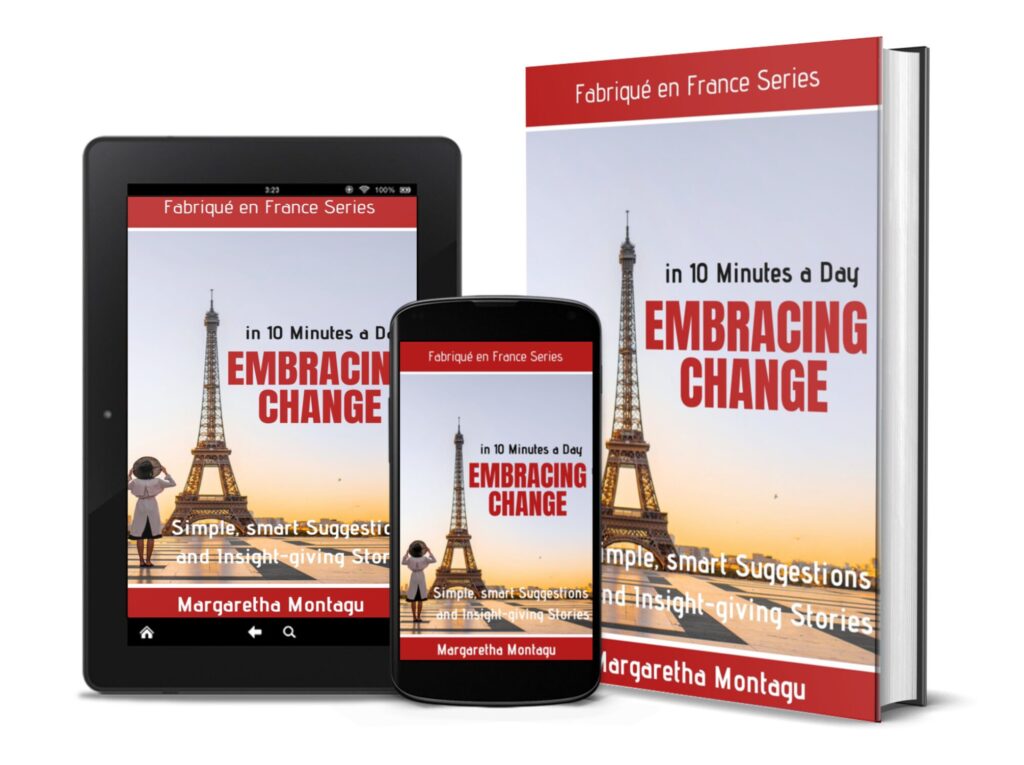
If you are currently facing a major life transition or any other dramatic change in your circumstances, and you have no idea how you are going to cope, the good news is that the strategy presented in this book can help you, step by step, to improve your ability to handle the stress caused by change, even if you feel entirely powerless at the moment.
A Note on Reconnecting with Nature
One of the things I know with certainty, after twenty years as a physician and fifteen years as a retreat host, is that reading alone is powerful. Reading outside, or after walking, is something else entirely.
There is a physiological reason why the retreat format combines the Camino with books. Walking in nature reduces cortisol. It activates the parasympathetic nervous system. It quite literally changes the brain’s capacity for attention and openness. Which means you bring a different reader to the book.
My online course, Reconnect with Nature: A Guided Journaling Course Inspired by Horses, offers a gentler first step: a structured invitation to bring contemplative attention to the natural world around you, guided by the particular wisdom of horses, which, as any horse person will tell you, are extraordinarily good at detecting when you’re not being honest with yourself.
This course is included free for all retreat guests.
5 Razor-Sharp FAQs
What are people really asking about literature and difficult times?
Q: Is it really possible to feel better by reading fiction when real things are going wrong? A: Yes, and this is not wishful thinking. A landmark study from the New School for Social Research (Kidd & Castano, 2013) found that reading literary fiction measurably improves Theory of Mind, our capacity to understand the mental states of others. Separately, research in bibliotherapy has demonstrated that reading specific literary works reduces symptoms of anxiety and depression. The caveat is that this is literary fiction, not just any reading. The complexity of character and perspective is the active ingredient.
Q: I haven’t read a whole book in years. Where do I even start? A: Short stories. Chekhov’s short stories are often under ten pages. Baldwin’s essays can be read in twenty minutes. Start small. The attention muscle, and it is a muscle, rebuilds quickly with use. Don’t begin with Woolf if it’s been a while. Begin with something that pulls you forward by the collar.
Q: Isn’t reading a very solitary response to a problem that might need community? A: The two aren’t in opposition. Some of the richest community I’ve ever witnessed has formed around books: around the shared experience of having been changed by the same words. Reading retreats, in particular, combine solitary reading with deeply connective conversation. You walk the same path, read the same pages, and find that strangers become companions remarkably quickly.
Q: Do I need to walk the Camino to get the benefit of a reading retreat? A: The walking and the reading work synergistically, but neither requires you to be an athlete. The sections of the Camino walked during my retreats are chosen for their beauty and accessibility. The point is movement in nature, not endurance sport. People with very modest fitness levels attend and describe the walking as one of the most powerful parts of the experience.
Q: Is this kind of retreat appropriate for people in real crisis, not just general stress? A: My retreats are not a substitute for clinical care, and I would always say so clearly, with twenty years of medical training behind the statement. However, they have been attended by people navigating divorce, bereavement, serious illness, burnout, career collapse, and major life transitions. More than thirty guest testimonials on my website speak to this directly. Many guests describe the retreat as the moment they turned a corner, not because it fixed anything, but because it gave them the clarity, community, and restoration to begin doing that themselves.
Conclusion
What does literature actually tell us about coming out the other side?
There is a line near the end of The Plague that Camus almost didn’t include. His narrator, Rieux, having witnessed everything, having lost people he loved, having worked until he could barely stand, looks out over the city and thinks this:
He knew that the tale he had to tell could not be one of a final victory. It could only be the record of what had had to be done, and what assuredly would have to be done again in the never-ending fight against terror and its relentless onslaughts, despite their personal afflictions, by all who, while unable to be saints but refusing to bow down to pestilences, strive their utmost to be healers.
To be a healer rather than a saint. To do what has to be done. To refuse to bow, while acknowledging that the fight will continue.
This is not a motivational poster. It is a compass.
You are not required to be unafraid. You are not required to have all the answers. You are required, if you choose to accept the invitation, only to show up, to keep reading, to keep walking, and to bring what you find back to the people around you.
That is, when you think about it, quite enough.
“You think your pain and your heartbreak are unprecedented in the history of the world, but then you read. It was books that taught me that the things that tormented me most were the very things that connected me with all the people who were alive, or who had ever been alive.” — James Baldwin
Attend a Reading Retreat
If some part of this article has made you want to get back to reading, I’d like to tell you about my 5-Day Booklovers’ Binge Reading and Camino de Santiago Hiking Retreat in the south-west of France.
Morning walks on one of the world’s most ancient pilgrim routes. Long afternoons with brilliant books in a beautiful old farmhouse. Evening conversations that tend to go on rather later than planned, because it turns out that people who love reading have a great deal to say to each other.
It is for people who are clever and kind and a little bit wrung out by the world. People who remember what it felt like to lose themselves in a story and would very much like to do that again, somewhere with good wine and better light.
You don’t need to have a plan. You just need to pack a few books and show up. The path, as it has a habit of doing, will take care of the rest.
Find out more and reserve your place here.
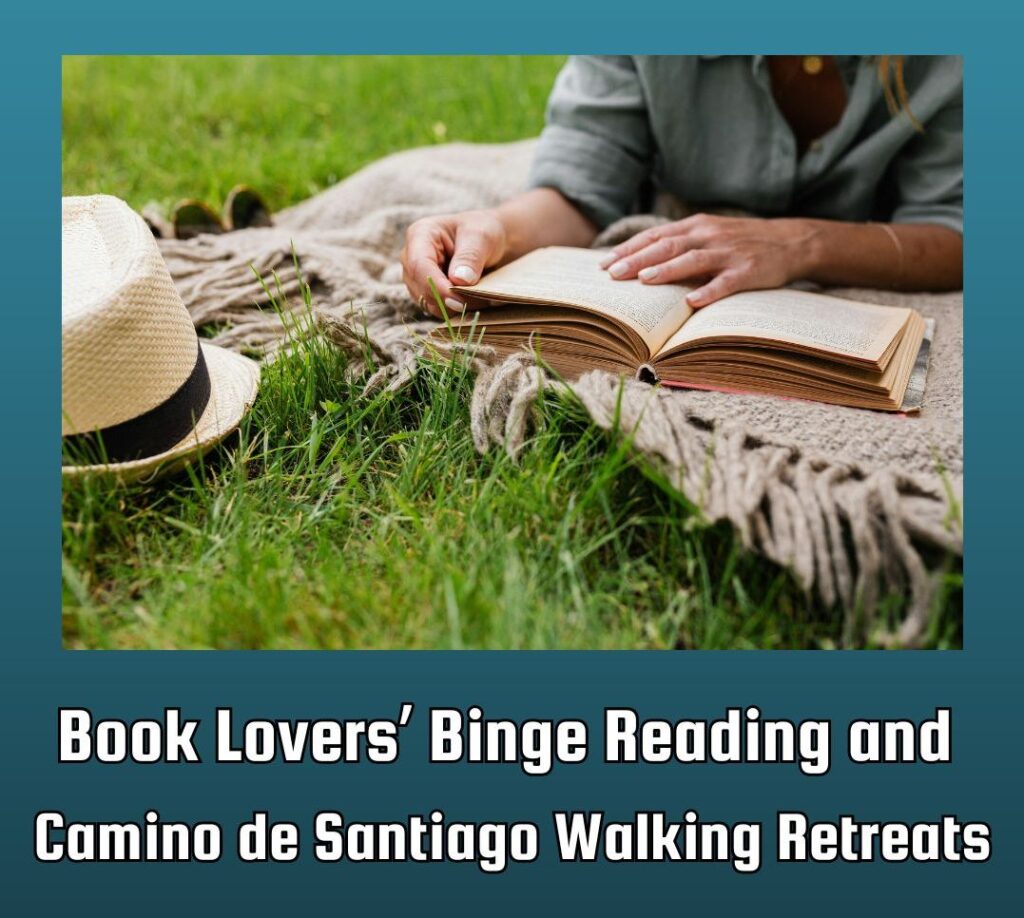
Join us for the Book Lovers Binge Reading Camino de Santiago Walking Retreat in the sun-drenched southwest of France: a journey where the trail and the story unfold together. Walk ancient paths at your own pace, then settle in each evening with a good book. This isn’t a fitness challenge—it’s a gentle rhythm—one step, one chapter, one honest conversation at a time. Rolling hills, quiet villages, golden light. No expectations, no performance, no agenda but your own unfolding.
If you’re not yet ready for a retreat, or you’d simply like a quiet place to begin, two invitations:
📩 Join the newsletter for regular book reviews, reflections on navigating life’s more interesting moments, and news of upcoming retreats, all delivered at a civilised pace, without algorithmic urgency.
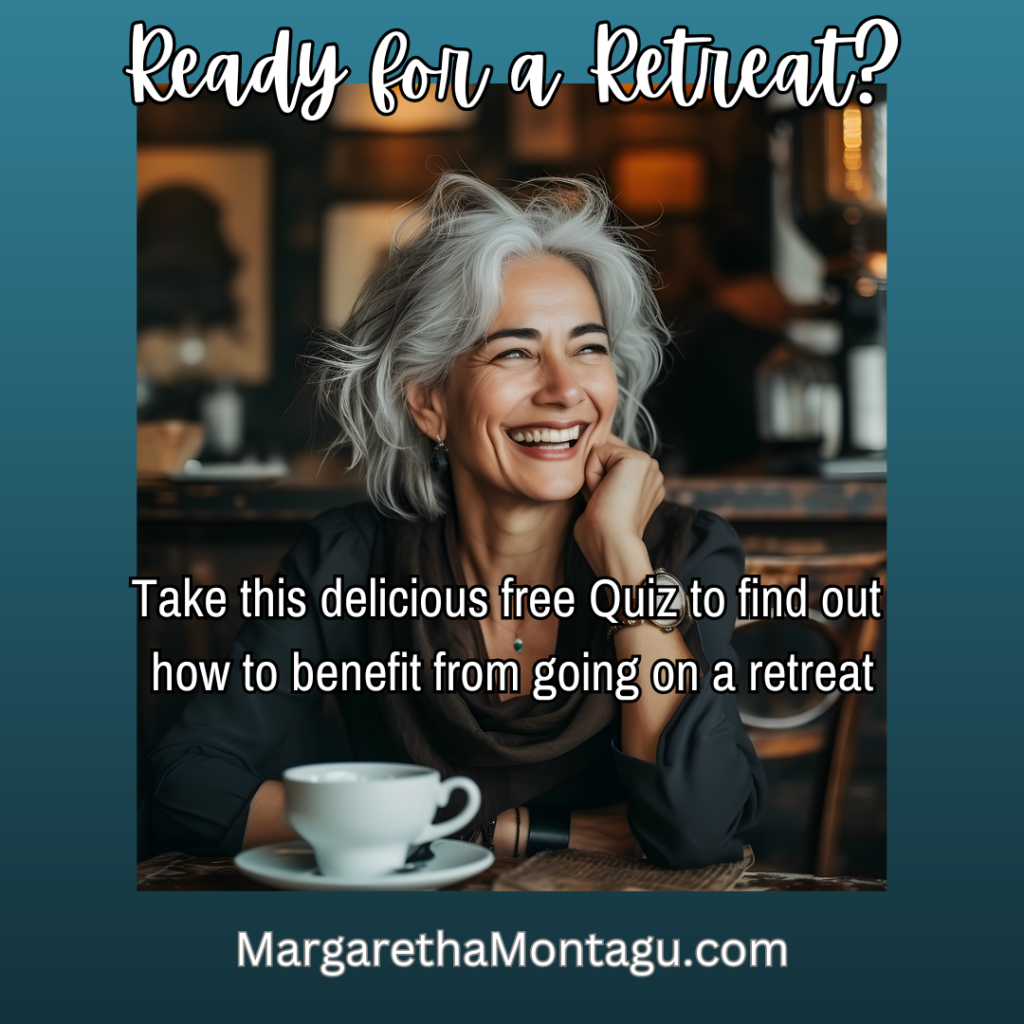
Ready for a retreat? Do you dream of escaping your stressful life to raise a herd of goats or grow sunflowers in the south of France? Then you may be ready for an Esprit Meraki retreat. Get access to this “very serious” quiz to help you figure out how urgent your need for a change of scenery is when you subscribe to my monthly newsletter.
References
- Kidd, D. C., & Castano, E. (2013). Reading literary fiction improves theory of mind. Science, 342(6156), 377–380.
- Mar, R. A., Oatley, K., Hirsh, J., dela Paz, J., & Peterson, J. B. (2006). Bookworms versus nerds: Exposure to fiction versus non-fiction, divergent associations with social ability, and the simulation of fictional social worlds. Journal of Research in Personality, 40(5), 694–712.
- Billington, J., Carroll, J., Davis, P., Healey, C., & Kinderman, P. (2013). A literature-based intervention for older people living with dementia. Perspectives in Public Health, 133(3), 165–173.
- Bratman, G. N., Hamilton, J. P., Hahn, K. S., Daily, G. C., & Gross, J. J. (2015). Nature experience reduces rumination and subgenual prefrontal cortex activation. Proceedings of the National Academy of Sciences, 112(28), 8567–8572.
- Stuckey, H. L., & Nobel, J. (2010). The connection between art, healing, and public health: A review of current literature. American Journal of Public Health, 100(2), 254–263.
Dr Margaretha Montagu, MBChB, MRCGP, NLP Master Practitioner, Medical Hypnotherapist, and Life Transition Coach, has spent twenty years as a physician and fifteen years as a host of transformational retreats walking the Camino de Santiago. She is the author of eight books on navigating life’s most disorienting turning points. She believes, with some conviction, that the right book at the right moment is one of the most reliable treatments available.