
.
The Wordweavers, my writing group, meets tomorrow. This month’s prompt is “the letter that was never read/sent.” Definitely a prompt that I’m going to use during my next Writing and Walking the Camino de Santiago de Compostela retreats.
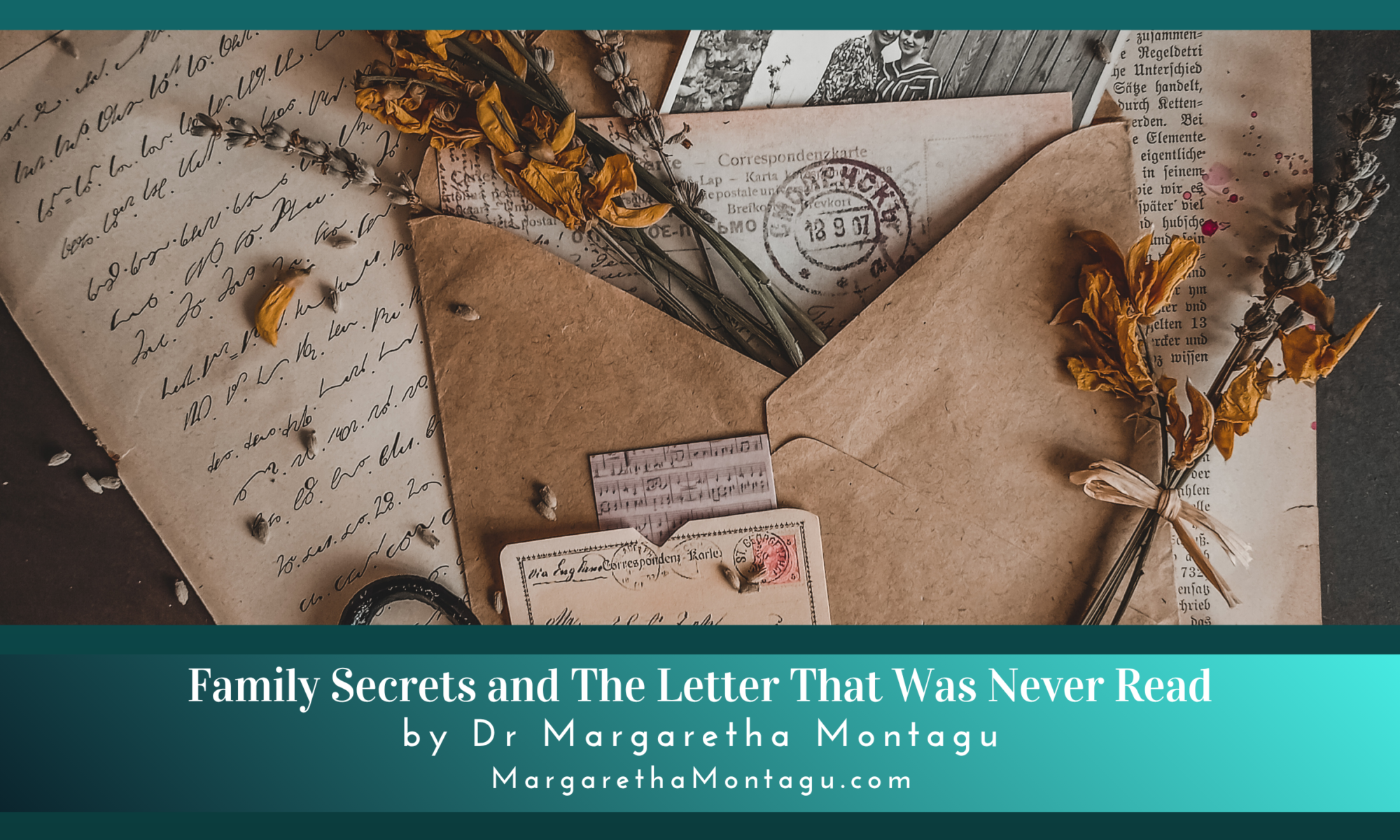
The letter turned up where all the best secrets do: behind a drawer that didn’t quite fit.
Odile had been renovating the old farmhouse for exactly eleven days, which was long enough to develop strong opinions about French carpentry from 1962 (“charming,” she’d told her sister, “in the way a dog with three legs is charming — you admire the effort”) and short enough to still be delighted, rather than defeated, by surprises. So when the bottom drawer of the study dresser refused to slide shut, she didn’t sigh. She got down on her knees, reached behind it, and pulled out an envelope, faded to the soft brown of old tea.
No stamp. No address. Just a name: Henri.
Odile did what any reasonable person would do, which is to say she made coffee first and opened it second, because some adventures require one’s favourite coffee, with just a nuage of milk, no sugar, as a companion.
4 June, 1943
Henri —
You will read this the day you come home, and not before, because I have written it four times already and burned the first three, and I am tired of my own handwriting looking so composed when I am not.
Here is what I could not say standing at the gate, with your mother watching from the window like a woman counting the silverware: I am carrying your child.
I am not sorry. I want to be clear about that. I am not sorry, and I am not asking anything of you except to come back so I can be furious with you properly, in person, the way it deserves to be done.
If it is a girl, I am going to call her after your mother, which you will hate, and if it is a boy, I am naming him after no one you know, because I have had quite enough of this family repeating itself.
Come home, Henri. I have decided several things in your absence and you are going to have opinions about all of them. I am ready.
— C.
Odile read it twice, then a third time with her coffee going cold, because there is a particular kind of stillness that arrives when a stranger’s life turns out to have a plot twist. She had expected pining. She had not expected pregnancy.
She spent the next two weeks doing what any sensible woman with wifi and no immediate deadline does: she fell down a rabbit hole. Parish records. A very patient archivist who clearly hadn’t had this much excitement since the mairie’s roof leaked. A Facebook group for local history buffs who argued about hedgerows with the ferocity most people reserve for politics.
She found Henri.
Or rather, she found where he’d ended up — a village forty minutes away, a long and, she felt strongly, unfair drive for a story with no confirmed ending. Henri had come home from the war in 1945, married a woman named Simone, had four children with her, and died in 1998 with, according to the archivist, “a magnificent moustache.”
Four children with Simone. Odile did the arithmetic. If Colette’s child had been born — and there was no if about a woman that certain, that furious, that ready — it would have arrived sometime in early 1944. Before Henri came home. Before Simone. Which meant that somewhere, possibly still breathing, possibly two villages over with grandchildren of her own, there might be a fifth child nobody in the official record had ever mentioned.
Odile tracked down Henri’s eldest daughter — the one who could still remember her father, seventies now, the sort of woman who answers the door already holding a teapot, as though hospitality were a reflex rather than a decision.
“My mother would want to know about this,” the daughter said, once Odile had explained — badly, over tea, with far too many anyway, so, the thing is — what she’d found. She read the letter slowly, then she went very quiet.
“My father used to send money every month,” she said. “My mother knew. She never said a word about it, not once, not even when he died. She just stopped the payments. We all assumed it was a debt. Or a mistress.” She looked up at Odile, and something had shifted behind her eyes, a woman doing the same arithmetic Odile had done in her kitchen a week earlier. “I need to find out where that money went.”
Odile opened her mouth to offer the archivist’s number, the parish records, the Facebook group with the hedgerow enthusiasts — and stopped.
Because the daughter had gone very still, staring at the letter’s last line — if it is a girl, I am going to call her after your mother — and then at Odile with an expression that had nothing to do with arithmetic anymore.
“My grandmother was named Marguerite,” she said. “My father’s mother — and so is my aunt. The aunt nobody talks about. The one my mother always said ‘isn’t really family.'”
She set her teacup down very carefully, the way people do when their hands are no longer entirely steady.
“I always thought that was just something mothers say about difficult in-laws.”
Family Secrets July 2026 © MargarethaMontagu
Join me in the sun-kissed southwest of France, where this unique Writing and Walking the Camino de Santiago Retreat is an antidote to creative stagnation, offering you a supportive environment where inspiration flows freely, where you’ll reignite your passion for storytelling and rediscover the joy of putting pen to paper (or fingers to keyboard). Say goodbye to writer’s block and immerse yourself in your writing without the distractions of modern life.
Surrounded by the serene beauty of the French countryside, you’ll cultivate a state of flow where words effortlessly pour onto the page, leading to unprecedented levels of productivity. You’ll gain valuable insights and perspective to propel your writing to new heights, and you’ll emerge from the retreat feeling empowered, inspired, and ready to share your story with the world.
Do you dream of escaping your stressful life to raise a herd of goats or grow sunflowers in the south of France? Then you may be ready for an Esprit Meraki retreat. Get access to this “very serious” quiz to help you figure out how urgent your need for a change of scenery is, when you subscribe to my monthly newsletter.