
You don’t need to be religious, mystical, or even particularly outdoorsy. But something happens on the Camino that even the most committed cynic finds hard to explain.
What This Article Is About
This article is specifically for you if you have heard about the Camino de Santiago, felt a flicker of something that might generously be described as interest, and then immediately dismissed it on the grounds that you are not religious, not spiritual, not the sort of person who talks about energy or uses the word ‘journey’ in a non-geographical context, and is not entirely sure you even own a pair of boots.
It is also for the person whose partner, friend, or suspiciously evangelical colleague has been going on about the Camino for months and who has been nodding politely while internally composing reasons why it is not for them. I will not try to convince you that the Camino is a spiritual experience. It will simply report, with the precision of someone who respects your scepticism, what actually tends to happen to people on it — including the ones who arrived with a substantial quantity of well-organised doubt — and let you draw your own conclusions. Which you will. Because you are a sceptic, and that is what sceptics do, and the Camino, as it happens, has a great deal of time for that.
5 Key Takeaways
- The Camino de Santiago is a pilgrimage route. It is also, simultaneously, one of the most well-marked, well-supported, and scenically extraordinary walking routes in Europe. Both of these things are true at once, and you are entirely free to engage with only one of them.
- The majority of people who walk the Camino today describe themselves as non-religious. You would be joining a very large and well-represented constituency — one that has been walking pilgrimage routes for secular reasons since well before it became fashionable to do so.
- Something does tend to happen on the Camino that is difficult to account for entirely through neuroscience, scenery, and decent French food. Sceptics are statistically more likely to find this annoying than non-sceptics. They walk it anyway, and are glad they did.
- The value of a pilgrimage structure — a route, a direction, a daily rhythm of walking and arriving and resting — does not depend on religious belief any more than the value of a library depends on believing in the divine origin of literature. The structure works. You can examine why later.
- The most common post-Camino report from committed sceptics is not ‘I found God’ or ‘I had a spiritual awakening.’ It is: ‘I can’t quite explain what happened, but something shifted, and I’m different in ways I haven’t entirely mapped yet.’ This is, in my view, considerably more interesting.
The Engineer Who Went to Prove It Wouldn’t Work
James Kowalski was, by his own cheerful admission, the least likely person to walk a pilgrimage route in France. He was forty-eight years old, a structural engineer from Manchester, a man who had spent his professional life applying load calculations to physical problems and his personal life applying roughly the same methodology to everything else. He was not religious. He was not spiritual. He was not, he would specify with some precision, anti-religious — he simply had no particular use for frameworks that weren’t verifiable, which included astrology, homeopathy, most of what he had read about mindfulness, and the entire genre of book whose cover featured a person standing on a hillside with their arms outstretched.
The Camino had come to his attention via his friend Marcus, who had walked a section of it the previous autumn and had returned speaking about it in a way that James found simultaneously compelling and faintly suspicious. Marcus was not, historically, a man who used words like ‘profound.’ He was an accountant from Stockport who drove a sensible car and had strong opinions about the correct way to load a dishwasher. And yet here he was, describing something that had happened on a hillside above a valley in the French countryside in terms that James was finding, however reluctantly, difficult to dismiss.
‘What actually happened?’ James had asked, with the precision of a man who wanted specifics.
‘I can’t really explain it,’ Marcus had said, which was, in James’s professional experience, either the answer of a mystic or the answer of someone who had encountered something that genuinely exceeded the available vocabulary. He had stared at Marcus for a long moment, trying to determine which.
He booked the retreat six weeks later. He told himself he was going because it was a good walk in beautiful countryside and he needed a break. He told himself this so many times, and with such conviction, that he almost believed it. He packed with the efficiency of a man who had read the kit list twice and then read it again, who had broken in his boots over four dedicated weekend walks in the Peak District, and who had written a note in his phone that said simply: ‘Observe. Evaluate. Process.’
He arrived in France on a Saturday evening in September. The air smelled of something he couldn’t immediately identify — something green and old and unhurried. He had dinner with the small group of other walkers and spoke to a recently retired GP from Edinburgh called Fiona who had walked the Camino twice before and who, when James explained that he was there primarily as a sceptic conducting an informal experiment, had laughed with a warmth and recognition that suggested she had heard this particular opening position before.
‘How did the other sceptics get on?’ James asked.
‘They all came back,’ said Fiona simply. ‘Most of them more than once.’
James noted this. He filed it. He went to bed at ten o’clock, in a room that was quiet in a way that his flat in Manchester was not, and slept for nine hours without once waking up, which was not something he had done since approximately 2019.
He began walking the following morning. The path was clear. The waymarks were logical. The landscape was, he conceded immediately and without resistance, extraordinary — the kind of French countryside that looked as though it had been specifically designed to make structural engineers from Manchester feel that they had been living in the wrong place. He walked. He observed. He evaluated.
On the third day, something happened that was not in his observational framework.
He had been walking alone for two hours on a long, quiet stretch of path through ancient oak forest, the kind of silence that is not actually silence but a layered, textured, living quiet — birdsong, his own breathing, the rhythm of his boots on the old stone path. He was not thinking about anything in particular. His mind, for the first time in what felt like years, had simply stopped producing content. It was not meditating. It was not being mindful. It was just — empty. Clear. Present in a way that he had no category for and no particular interest in labelling. He walked in it for perhaps forty minutes. When the forest opened onto a ridge above a valley blazing with autumn colour, he stopped. He stood. He was aware, with a clarity that was entirely physical, that something had shifted in the architecture of his interior. Not dramatically. Not mystically. Just — differently arranged than it had been that morning.
He stood on that ridge for eleven minutes. He knows it was eleven minutes because he checked his watch when he arrived and again when he left, which is either the most or the least spiritual thing about the story, depending on your disposition.
What James Kowalski made of those eleven minutes — and what he told Marcus over a pint in Stockport three weeks later that made Marcus’s dishwasher opinions seem, temporarily, beside the point — is what this article is about.
What Actually Happens on the Camino (A Report for the Evidence-Minded)
The question is not whether the Camino is a spiritual experience. The question is what actually happens to people who walk it, measured against whatever framework of understanding they arrived with — and whether the results are consistent enough to be worth paying attention to.
The results are consistent enough to be worth paying attention to.
The neuroscience is the easiest part to account for. Sustained rhythmic walking in natural environments produces measurable changes in cortisol levels, activates the parasympathetic nervous system, and stimulates the default mode network in ways that are associated with creativity, insight, and what researchers describe as self-referential thought — the brain’s tendency, when released from active problem-solving, to begin processing the things it has been deferring. This is not mysticism. It is the entirely predictable consequence of giving an overloaded human brain five days of sustained, gentle, purposeful activity in a landscape that asks nothing of it except attention.
The pilgrimage structure adds something that a standard walking holiday does not, and this is worth examining carefully because it is where the sceptic’s position becomes most interesting. A pilgrimage is a walk with a direction and a purpose — even if that purpose is, for the secular walker, nothing more metaphysically loaded than ‘I am walking from A to B along a historically significant route.’ The direction matters. The purpose matters. The human brain, it turns out, responds differently to purposeful forward movement than to circular or directionless walking — it processes the journey as a narrative, with a beginning, a middle, and an endpoint, and that narrative structure creates the conditions for a kind of interior processing that ordinary life, with its circular repetitions and deferred decisions, rarely provides.
The community matters too, and in ways that are difficult to replicate outside the Camino context. The self-selecting nature of people who walk pilgrimage routes — the fact that they have all, for whatever reason, chosen to spend several days doing something that requires effort and intentionality — produces a conversational quality that most people recognise immediately as different from the conversations of ordinary life. People talk, on the Camino, about the things they are actually thinking about. Not the things they are supposed to be thinking about, not the professional and social performances of daily existence, but the actual contents of their minds. This happens with strangers. It happens within hours. The walking seems to dissolve, with a speed that is consistently startling, the usual social protocols that keep people at a polite distance from each other’s real lives.
The Camino does not require belief. It requires only the willingness to walk, and the basic intellectual honesty to report accurately what happens when you do. Most sceptics find, to their mild irritation, that what happens is rather more than they had budgeted for.
As for the thing that happens that cannot be entirely accounted for by neuroscience and scenery and the social alchemy of shared miles — the thing that James experienced on the ridge, felt in the forest, that person after person describes with the slightly embarrassed precision of someone trying to be accurate about something that resists accuracy — the honest answer is that this article will not tell you what it is. Not because it is too sacred to name, but because the naming tends to get in the way of the experiencing. What can be said with confidence is that it happens, that it happens to a remarkably high proportion of people including those who arrived specifically intending that it wouldn’t, and that the most useful thing a sceptic can do with it is what James Kowalski did: note the time, keep walking, and think about it later.
5 Mistakes to Avoid
1. Deciding before you arrive what the experience will and won’t be. The sceptic’s greatest asset — a well-calibrated resistance to being credulous — becomes a liability when it is deployed pre-emptively against an experience that hasn’t happened yet. There is a difference between healthy scepticism, which is the commitment to evaluating experience accurately, and defensive scepticism, which is the decision to protect yourself from certain categories of experience before you’ve had them. The Camino rewards the former and gently dismantles the latter, usually somewhere around day two.
2. Treating other walkers’ experiences as a measuring stick for your own. The Camino community is wonderfully mixed in what it produces for people, and the person at dinner who describes a profound emotional release on the path that morning is not reporting a superior experience to the person who simply had a very good walk and saw an excellent view. There is no correct Camino experience. There is only yours. The sceptic who spends five days waiting for the dramatic revelation that other people seem to be having is missing the quieter, more durable thing that is actually happening.
3. Filling the silence with podcasts and music. The silence of the Camino — not the absence of sound, but the absence of the particular cognitive noise of modern life — is not a problem to be managed. It is the point. The brain state that the walking produces, the one that creates the conditions for insight and clarity and the thing that cannot quite be explained, requires the silence to arrive. Piping your favourite podcast directly into it is the equivalent of going to a concert and spending the whole time on your phone. You are there. The music is playing. You are elsewhere.
4. Intellectualising the experience in real time. The sceptic’s instinct, when something unexpected happens on the path, is to immediately attempt to categorise and explain it. This is understandable and almost entirely counterproductive. The explaining is best done afterwards, with a glass of wine and the benefit of some temporal distance. In the moment, the most useful thing is simply to be present to what is happening without immediately reaching for the filing system. James Kowalski checked his watch. This was fine. He didn’t then spend the next forty minutes constructing a neurological framework for what had just occurred. The framework came later. The experience came first.
5. Coming home and telling no one about it. The sceptic who has an unexpectedly significant experience on the Camino often falls into a particular silence about it — partly from the difficulty of articulating something that resists articulation, partly from a reasonable concern about how it will sound to people who weren’t there. This silence is a small loss. The conversation that happens when you tell someone what occurred — not the mystical version, not the dismissive version, but the honest, slightly puzzled, ‘I’m not entirely sure what to make of this’ version — is frequently the most interesting conversation you will have all year. Have it. The Camino has been generating exactly this conversation for a thousand years.
Further Reading about the Camino de Santiago for Sceptics
I’m Off Then: Losing and Finding Myself on the Camino de Santiago by Hape Kerkeling
Hape Kerkeling is one of Germany’s best-known comedians — a man constitutionally suited to scepticism, wit, and the puncturing of pretension — and his account of walking the Camino Frances is the most useful book on this list for precisely that reason. He does not arrive on the path as a seeker. He arrives as a tired, overweight celebrity with dodgy knees who has been advised by his doctor to do something restorative and has selected this particular option with the resigned pragmatism of a man whose other options were worse. What happens to him is funny, honest, and progressively impossible to dismiss. It is the book to read if you want a first-person account of the Camino that respects your intelligence and your right to remain unimpressed — and that shows, without labouring the point, why remaining entirely unimpressed turns out to be rather difficult.
The Way of the Stars: Journeys on the Camino de Santiago by Robert Mullen
Mullen’s book is the most rigorously honest account of the Camino experience from a secular perspective currently available in English — a writer who neither embraces the pilgrimage mythology uncritically nor dismisses it with the lazy certainty of someone who hasn’t looked closely enough. He is interested, with genuine intellectual curiosity, in what the Camino actually does to the people who walk it — what the evidence shows, what the experience reports, and where the gap between the two becomes interesting rather than suspicious. For the sceptic who wants to understand the Camino before committing their boots to it, this is the book that earns that understanding honestly.
Embracing Change — in 10 Minutes a Day
The sceptic returning from the Camino tends to face a particular challenge: something has shifted, they are not entirely sure what, and ordinary life is waiting with its customary indifference to their interior rearrangement. Margaret Montagu’s Embracing Change — in 10 Minutes a Day is the book for exactly this moment — not mystical, not evangelical, but practical and honest and entirely respectful of the reader’s right to engage with change on their own terms. Ten minutes a day is a commitment even the most time-poor sceptic can defend. What those ten minutes produce is, like the Camino itself, rather more than the format would suggest.
Stop second-guessing yourself. Start owning your success. This book gives you the step-by-step roadmap to break free from imposter syndrome, build unshakable confidence, and finally believe you deserve every bit of your success. You ARE Good Enough!
5 FAQs about the Camino de Santiago for Sceptics
Do I need to have any interest in religion or spirituality to walk the Camino?
None whatsoever. The Camino de Santiago is a Catholic pilgrimage route, and that history and architecture is present throughout — the churches, the chapels, the scallop shells, the occasional roadside shrine — but it makes no demands on your beliefs and offers no obligations beyond walking. Surveys of modern Camino walkers consistently show that the majority describe their motivation as personal, cultural, or simply practical rather than religious. The path is entirely indifferent to what you believe. It is interested only in what you do, which is walk it.
What is the ‘something’ that people say happens on the Camino?
This is the question the article has been circling, and deserves a direct answer even if the answer is imprecise. The most consistent reports across thousands of walkers, including committed secular and sceptical ones, describe some combination of the following: an unusual quality of mental clarity, a reordering of priorities that happens without being deliberately engineered, a sense of being present in a way that daily life rarely produces, unexpected emotional processing, and occasionally something quieter and less categorisable that most people describe, with some embarrassment, as a feeling of being connected to something larger than themselves. Whether that something is neurological, historical, communal, or something else entirely is a question the Camino cheerfully declines to answer on your behalf.
Is a five-day retreat enough to experience whatever it is people experience?
Yes. The Camino effect — that particular quality of clarity and shift that the route is known for — does not require five hundred kilometres. It requires sufficient time away from the conditions that prevent it, sufficient walking to engage the body and quieten the overactive mind, and sufficient openness to notice what arrives when both of those conditions are met. Five days, in the experience of most people who have done it, is more than enough for something significant to happen. It is also, practically speaking, the minimum duration that allows the mind to genuinely arrive somewhere rather than just pass through.
What if I walk the whole thing and nothing particularly significant happens?
Then you will have spent five days walking through some of the most beautiful countryside in France, eating well, sleeping deeply, and having better conversations than you are likely to have had in the preceding six months of ordinary life. This is, by any reasonable measure, a successful holiday. The Camino does not guarantee transformation. It provides the conditions for it. What you do with those conditions — or what they do with you — is not something that can be contractually specified. Most people report that something happened. A small number report that it was primarily a very good walk. Both groups tend to go back.
How do I explain to people why I’m doing a pilgrimage if I’m not religious?
‘I’m walking a historic route through the French countryside for five days’ is both accurate and entirely unassailable. ‘I’m doing a section of the Camino de Santiago’ has, in recent years, become sufficiently mainstream that most people will nod rather than raise an eyebrow. If pressed for a reason, ‘I needed a proper break and someone whose judgment I trust recommended it’ is the answer that James Kowalski gave, and it has the considerable advantage of being completely true. You do not owe anyone a spiritual framework for your holidays. You owe yourself the experience of taking one that is actually worth having.
A Note to the Sceptic, From Someone Who Respects the Position
James Kowalski came home from France on a Sunday. He had walked approximately fifty kilometres. His boots, which he had broken in conscientiously over four weekends in the Peak District, had performed adequately. His ‘observe, evaluate, process’ note remained in his phone, undeleted, which he considered either a monument to consistency or a mild personal joke, depending on the day.
He had not found God. He had not had a spiritual awakening in any sense that he would have recognised before he left. He had not come home speaking in the manner of Marcus, with words like ‘profound’ deployed in settings that made the dishwasher conversation seem like a reasonable alternative.
What he had come home with was harder to name and, he was discovering, considerably more durable. A quality of quiet that hadn’t been there before. A slightly different relationship with the contents of his own head. A revised list — shorter and more honest than the previous one — of what he actually needed in order to feel that a day had been well spent. And the clear memory of eleven minutes on a ridge above a valley in autumn, which he had not told many people about and which had not, in three weeks, shown any signs of fading.
He told Marcus about it over that pint in Stockport. Marcus listened with the expression of a man hearing something he already knew. ‘Same thing happened to me,’ he said. ‘I still can’t explain it properly.’
‘I know,’ said James. ‘It’s extremely inconvenient.’
They both laughed. Outside the pub, Stockport went about its business with the cheerful indifference of a place that has not been walking pilgrimage routes in France. James looked at his pint. He was already, he realised, thinking about going back.
Retreats on the French Camino are available for small groups of up to four guests. Three non-guided walks, beautiful countryside, proper beds, excellent food, and the particular quality of something that this article has done its best to describe and that the Camino will, if you let it, demonstrate considerably more effectively. No religious requirement. No spiritual prerequisites. Sceptics not just welcome but, frankly, among the most interesting guests.
Find out more and book your retreat at margarethamontagu.com
Do you dream of escaping your stressful life to raise a herd of goats or grow sunflowers in the south of France? Then you may be ready for an Esprit Meraki retreat. Get access to this “very serious” quiz to help you figure out how urgent your need for a change of scenery is, when you subscribe to my monthly newsletter.

Join us for the Book Lovers Binge Reading Camino de Santiago Walking Retreat in the sun-drenched southwest of France: a journey where the trail and the story unfold together. Walk ancient paths at your own pace, then settle in each evening with a good book. This isn’t a fitness challenge—it’s a gentle rhythm—one step, one chapter, one honest conversation at a time. Rolling hills, quiet villages, golden light. No expectations, no performance, no agenda but your own unfolding.
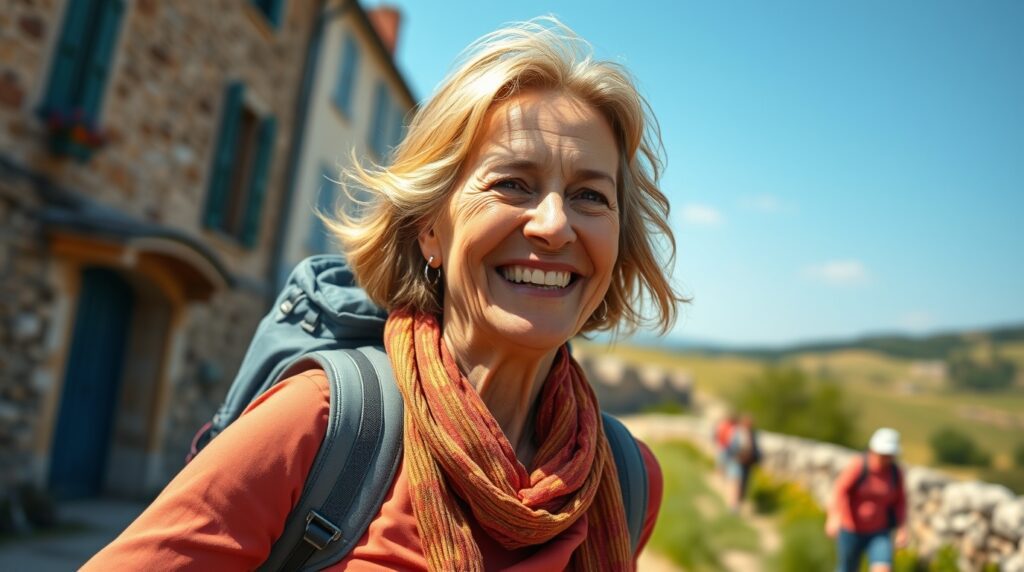

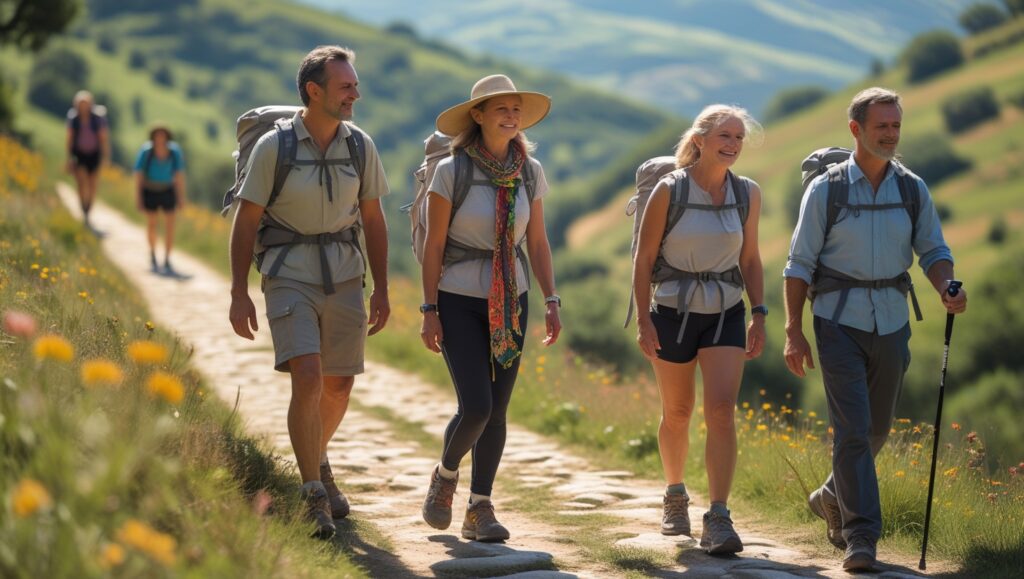
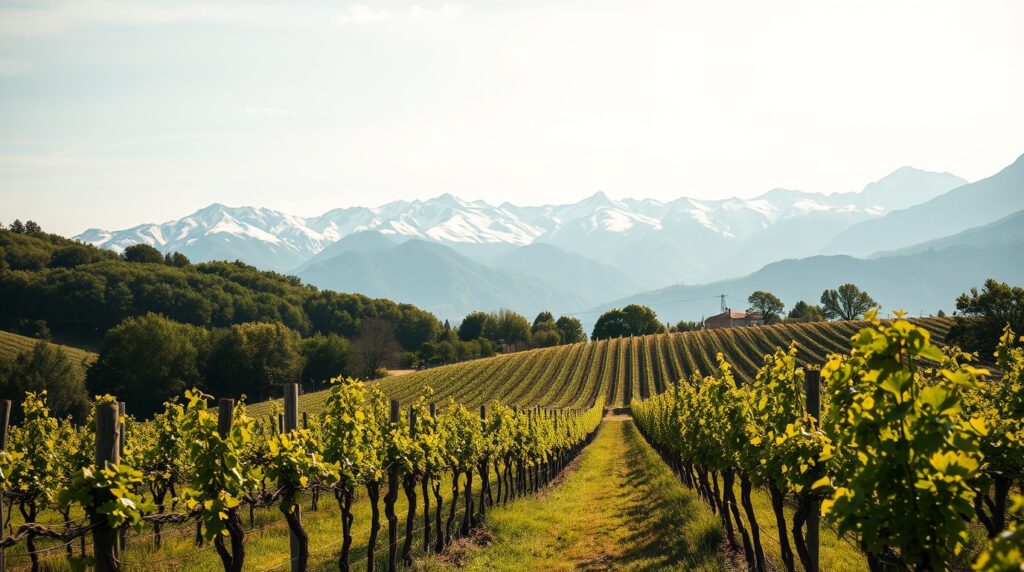
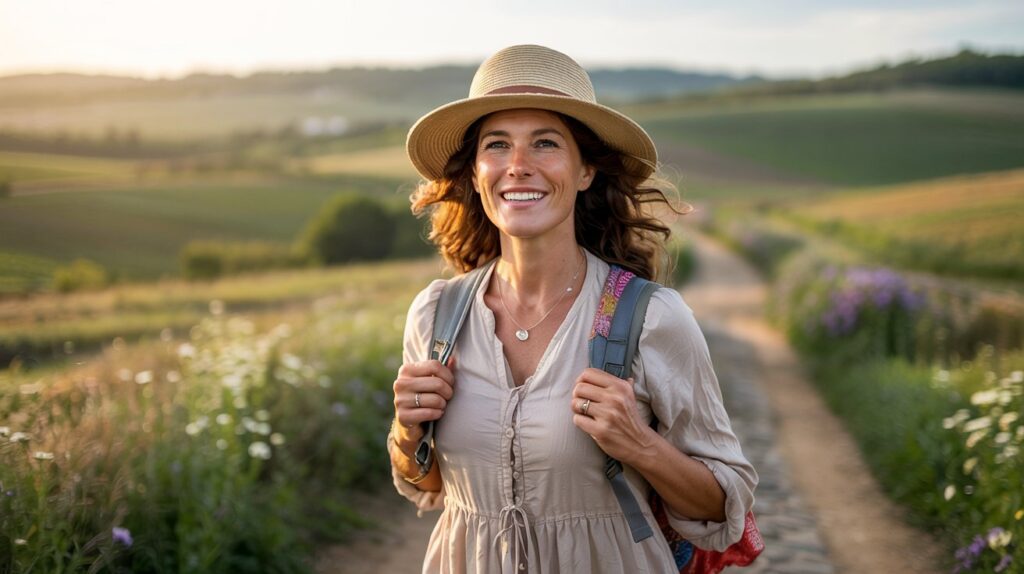
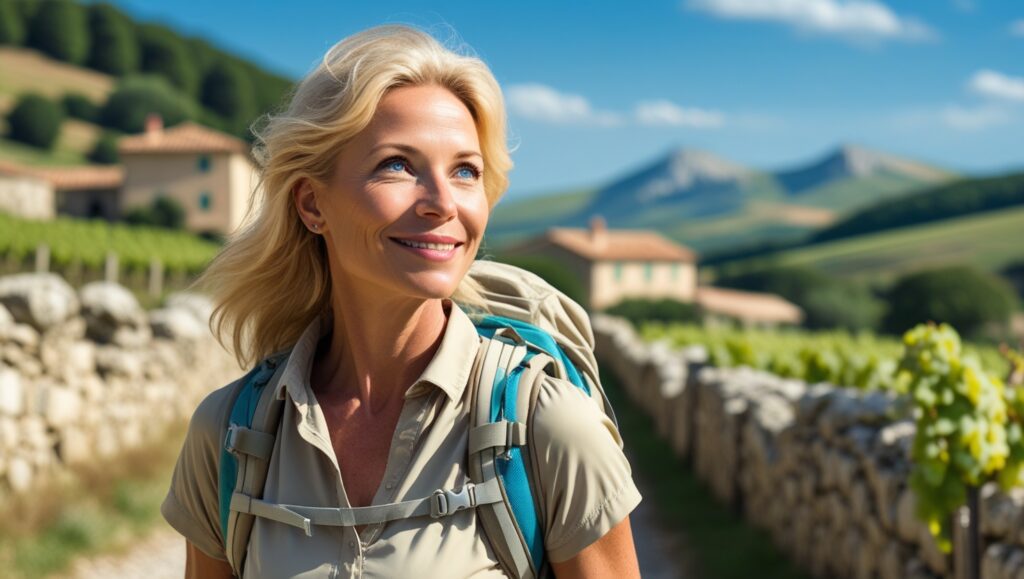
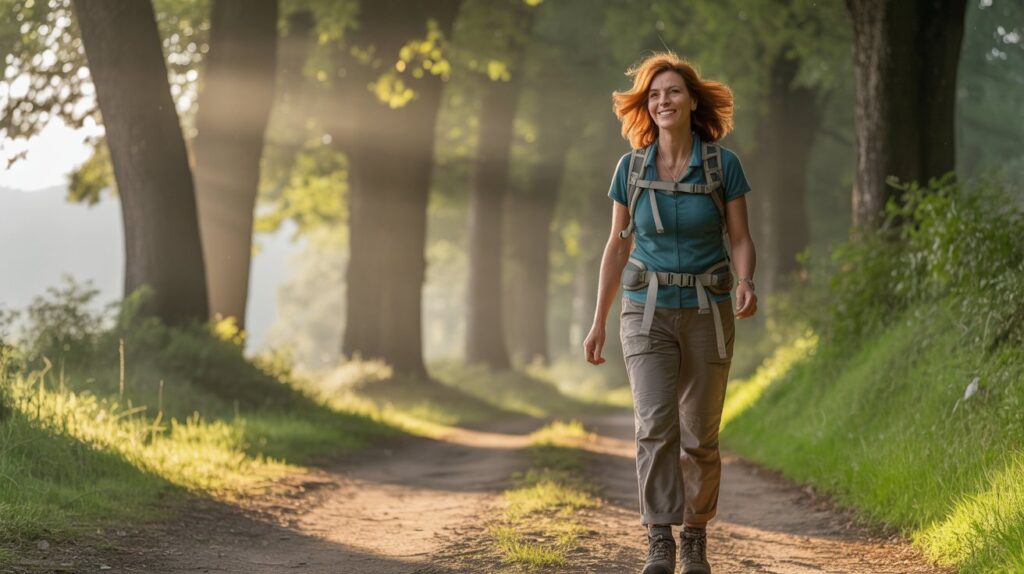
If your soul is craving fresh air, meaningful movement, and a chance to reconnect with nature, join us on a Camino de Santiago Walking Retreat in the southwest of France. This isn’t just a scenic hike – it’s a powerful, natural reboot for your body, mind, and spirit. Imagine quiet paths, rolling hills, cozy evenings, and slow conversations. No fitness requirements. No forced bonding. No pressure to have a breakthrough. Just one foot in front of the other, and finding your way to a brighter future.

“I am an experienced medical doctor – MBChB, MRCGP, NLP master pract cert, Transformational Life Coach (dip.) Life Story Coach (cert.) Stress Counselling (cert.) Med Hypnotherapy (dip.) and EAGALA (cert.) I may have an impressive number of letters after my name, and more than three decades of professional experience, but what qualifies me to excel at what I do is my intuitive understanding of my clients’ difficulties and my extensive personal experience of managing major life changes using strategies I developed over many years.” Dr M Montagu