
A frank, funny, and surprisingly practical guide to using an ancient pilgrimage as a reset button for anxious, overwhelmed souls, helping them to reconnect with what actually matters
What this is: A candid, warm, and occasionally cheeky article about what happens when stressed, switched-on people stop consuming the news and start walking ancient pilgrim roads. It is also, very gently, an invitation to consider doing it yourself.
What this isn’t: A lecture about digital detoxing. A woo-woo promise that walking will fix your life. A guilt trip. A beginner’s guide to stress management. You already know stress is bad for you; we are past that.
Read this if: The current state of the world is quietly hollowing you out. You are tired in a way sleep does not fix. You have a suspicion that something important has gone missing, you just cannot quite name it. And you are curious, even just a little, about what might happen if you gave yourself five days, a pair of decent walking shoes, and a very good book.
See also: From Couch to Camino
5 Key Takeaways
- The Camino acts as a living mirror, reflecting back who you actually are, not who the news cycle, your inbox, or your social feed needs you to be.
- Movement is medicine for an anxious mind, and walking in nature activates neurological processes that therapy, supplements, and Netflix binges simply cannot replicate.
- Reading in retreat is not escapism, it is a sophisticated act of self-recalibration. Stories change the chemistry of how we see our own lives.
- The world’s chaos is real, but your nervous system was never designed to carry all of it, all of the time. Choosing to step back is not irresponsible; it is necessary.
- Transformation is rarely loud. It often arrives quietly, on a dusty path, somewhere between the third kilometre and the second café au lait.
Introduction: The Mirror You Did Not Know You Were Avoiding
NOBODY warns you about this particular kind of tired.
Not the tired that comes from running a marathon or pulling an all-nighter. This is something else entirely, the bone-deep, soul-level exhaustion that settles in when you have been paying attention to the world for too long and it keeps handing you things you cannot fix.
You check the headlines. You close the app. You open it again. Rinse, repeat, despair.
You are not fragile, and you are not catastrophising. The world genuinely is in a state right now. Climate anxiety, geopolitical instability, economic uncertainty, the relentless acceleration of everything, all of it is real, and all of it is landing on people like you, thoughtful, empathetic, capable people who care deeply and feel the weight of that caring like a stone in each pocket.
Here is what nobody is saying loudly enough: you were not built to absorb this much. And more importantly, you do not have to keep trying.
This article is about what happens when you stop. When you lace up your boots, tuck a novel into your bag, and walk an ancient path through the golden hills of southwest France. It is about the strange, irreversible magic of the Camino de Santiago, and specifically about this: the Camino does not give you answers. It shows you a reflection. And sometimes, that reflection is exactly what a stressed, wonderful, slightly frayed human being needs most.
By the time you reach the end of this piece, you will understand why thousands of people return from the Camino not with solutions to the world’s problems, but with something far more useful: a clearer sense of who they are, what actually matters to them, and how to live with purpose in a world that will always be imperfect.
That is not nothing. That is, in fact, everything.
Alana’s Hills
Alana Spencer did not like hills.
This was established within the first twenty minutes. Not dramatically, not with complaint—just a quiet, consistent preference for the path of least resistance. When the trail tilted upward, she slowed. When it steepened, she paused. When there was an alternative—even a longer one—she took it.
“I just prefer a steady pace,” she said lightly, the first time someone noticed.
It sounded reasonable. It was reasonable. That was the problem.
The Camino, that morning, had other ideas. The path rose gently at first, then less gently, then with a kind of unapologetic insistence. Not extreme. Not heroic. Just undeniably uphill. The others kept walking.
Alana hesitated, scanned for options, and—finding none—followed.
Within minutes, the familiar negotiation began. This is unnecessary. There’s probably an easier way. You’re not built for this sort of thing. Her breathing shortened. Her shoulders tightened. She stopped, hands on hips, watching the others continue—unbothered, it seemed, by both gravity and existence.
“I’ll catch up,” she called, with the optimism of someone who did not intend to.
She waited until they were out of sight, then turned slightly, noticing a faint suggestion of a flatter detour skirting the hill. Not an official path. Not entirely a path at all. But passable.
She took it.
It worked, in the way these things often do. It was easier. Less steep. Less demanding. It curved gently around the hill, rejoining the main trail further along. She arrived at the top only a few minutes after the others.
No one said anything.
But something in her chest felt… off. Not guilt, exactly. Not quite relief either. More like a quiet, persistent question.
Later that day, it happened again. Another incline. Another pause. Another calculation.
This time, there was no alternative path.
She stood at the bottom of the hill longer than necessary, staring up at it as though it might reconsider.
“You coming?” someone asked, not unkindly.
“In a minute.”
They went on ahead.
Alana remained, suspended between intention and avoidance.
It was, she realised with a flicker of recognition she did not entirely enjoy, a familiar position. Projects delayed. Conversations postponed. Decisions softened into “later.” Not dramatic avoidance—nothing so obvious—but a lifetime of gentle rerouting. Choosing the manageable over the meaningful. The flatter path over the direct one.
She looked up again.
The hill had not changed.
She exhaled, adjusted her backpack, and started walking.
It was not graceful. Within ten steps, her breathing was uneven. Within twenty, she considered stopping. Within thirty, she was mildly offended by the entire concept of elevation.
But she kept going.
Something shifted—not suddenly, not triumphantly, but incrementally. Her breathing found a rhythm. Her legs, though unconvinced, continued cooperating. The hill remained uphill, but it stopped feeling like an argument.
Halfway up, she noticed birdsong. Not because it had started, but because she had.
At the top, she did not collapse. She did not celebrate. She simply arrived.
The others were sitting on a low stone wall, passing around a bottle of water, talking about nothing in particular.
“Good climb,” someone said. Alana nodded, slightly surprised to find that she agreed.
That afternoon, the path rose again. Not as steep. Not as long. Just enough.
She didn’t look for a way around. She walked.
By the third day, it became quietly obvious.
It wasn’t the hills.
It had never been the hills.
It was the reflex. The almost invisible instinct to step sideways at the first sign of discomfort. To make things easier, even when “easier” cost her something she couldn’t quite name.
The Camino, with its inconvenient honesty, had simply declined to participate in that arrangement.
On the final morning, they approached a long, steady incline that stretched further than the eye particularly appreciated.
Alana didn’t pause.
She didn’t scan for alternatives.
She just adjusted her pace and began.
Step by step. Breath by breath. No negotiation. No detour.
At the top, she turned—not to admire the view, though it was worth admiring—but to look at the path behind her.
It hadn’t changed.
But she had.
The Camino as Mirror
There is a reason the Camino de Santiago has been walked by millions of people across more than a thousand years. And it is not (only) the spectacular scenery, though the southwest French stretches of the route, with their medieval villages, rolling vineyards, and theatrical skies, could stop your heart on a clear morning.
It is what the path does to a mind in motion.
When we walk, particularly in nature and over sustained distances, something genuinely neurological happens. The bilateral rhythm of walking, left, right, left, right, activates both hemispheres of the brain in a way that mirrors EMDR therapy. Stress hormones fall. The default mode network, that anxious, self-referential part of your brain that lies awake at 3am composing catastrophic scenarios, finally gets a rest. Creativity and emotional processing step into the space.
In other words: the Camino does not just tire your legs. It genuinely quiets the noise.
But here is the piece most people miss. The walking is only half of it.
When you combine sustained, rhythmic movement in nature with reflective reading, good conversation, and intentional journaling, you create a perfect storm of self-awareness. Stories, as neuroscientist Uri Hasson’s research shows, synchronise the brains of storyteller and listener. Reading a great novel is not escapism; it is a profound act of perspective-taking. It stretches the empathy muscle, softens rigid thinking, and often allows us to see our own situations with a clarity we could not access while living inside them.
This is the design, conscious or not, behind a retreat that pairs the Camino with a Booklovers’ Binge. You walk to quiet the noise. You read to hear yourself again.
And then something interesting happens. The Camino, ancient and indifferent and beautiful, begins to hold up a mirror.
You discover what kind of walker you are, and it is never entirely separate from what kind of person you are. Do you charge ahead and exhaust yourself? Do you hang back and miss things? Do you stop to examine every interesting stone, to the mild exasperation of others? Do you share your water bottle freely or guard it anxiously?
The path shows you, without agenda or judgment, without any particular interest in sparing your feelings. That is rare. And it is, when you are ready for it, a gift of immeasurable value.
The Ripple Effect: How One Person’s Reset Changes More Than Just One Person
This is the part that is easy to overlook when you are in the middle of your own exhaustion: your depletion costs the people around you.
Not as a guilt trip. As a fact of interconnection.
When you return from a genuine reset, from five days in which you have moved your body, rested your nervous system, read deeply, journalled honestly, and been in conversation with other thoughtful human beings, you do not arrive home as the same person who left. You arrive as a slightly more spacious, clear-eyed, less reactive version of yourself.
And that version shows up differently. At the dinner table. In the difficult conversation you have been avoiding. In the meeting where you used to lose your temper. In the quiet moment when your child or partner or friend needs you to be actually present, not half-absent and scrolling.
One person’s reset is never just one person’s reset. It ripples. It models something to every person in their orbit, that it is possible to step back, to choose rest, to return clearer. It gives others permission to do the same.
And at a community level? When more people are operating from a place of genuine, grounded self-awareness rather than chronic anxiety, the quality of every conversation, decision, and relationship improves. The Camino is, quietly, a civic act.
5 Mistakes to Avoid (So You Actually Get Something From This)
Mistake 1: Treating It Like a Productivity Hack
The Camino is not a five-day course in becoming more efficient. If you arrive with a list of outcomes, optimised sleep strategies, and a tracking app for your steps, you will miss the entire point. Come with open hands, not a project plan.
Mistake 2: Spending the First Two Days Decompressing and Calling It Wasted Time
The first day, possibly the second, will feel uncomfortable. Your mind will be loud. You will wonder if you should have stayed home. This discomfort is not a sign something is wrong. It is proof something is working. Do not bail on the process before the process begins.
Mistake 3: Comparing Your Walk to Someone Else’s
If Harriet from Edinburgh powers up every hill like a fell runner while you are gasping after a gentle incline, good for Harriet. Your pace is your pace. Your insights are your insights. This is not a competition; it is a conversation between you and yourself.
Mistake 4: Refusing to Journal Because You “Are Not a Writer”
The journalling component of this retreat (specifically the Reconnect with Nature guided prompts, which are included free with the retreat) is not asking you to write beautifully. It is asking you to write honestly. The pen is not for aesthetics. It is for excavation.
Mistake 5: Leaving Your Insights Behind at the Farmhouse
The retreat ends. Real life resumes. The mistake is believing that the clarity belongs to France and not to you. Before you leave, write down the three most important things you noticed about yourself. Decide, specifically, what you will do differently with that knowledge. Insight without intention is a lovely holiday souvenir. Insight with intention is a life change.
A Short, Powerful Intention-Setting Exercise: The Three Honest Questions
1. What am I actually carrying right now that does not belong to me? (Name the global anxieties, other people’s fears, the problems you cannot personally solve that you are nevertheless dragging around.)
2. What have I been neglecting in myself that genuinely needs attention? (Not what you think you should want. What your body, heart, and mind are actually hungry for.)
3. If I knew I was allowed to choose rest and renewal right now, what would that look like? (Write the answer before the practical objections arrive. Let the answer be honest before it is reasonable.)
The intention is not a plan. It is a compass bearing.
Further Reading: Five Books That Will Change How You Walk Through This World
1. The Way Is Made by Walking by Arthur Boers
Boers, a theologian and professor, walked the Camino Francés and wrote one of the most intellectually rigorous and emotionally honest accounts of pilgrimage you will find. He explores what slow, intentional movement does to a distracted, modern mind, and why the ancient practice of pilgrimage is not nostalgic but urgently necessary. Perfect for people who need permission to slow down and want the science and philosophy to back it up.
2. A Field Guide to Getting Lost by Rebecca Solnit
Solnit is a writer who thinks in spirals rather than straight lines, and this book is her masterwork. Exploring loss, wandering, and the strange gifts that come from not quite knowing where you are, it is essential reading for anyone who suspects that their uncertainty might actually be their most interesting feature. Read it on the path and watch the pages come alive.
3. The Gifts of Imperfection by Brené Brown
Before you groan: Brown is not the self-help cliché she has been flattened into by motivational posters. This book is sharp, research-grounded, and genuinely useful for people who are exhausted by the performance of coping fine. It maps the territory between who you are pretending to be and who you actually are, which is, of course, exactly what the Camino shows you too.
4. Wanderlust: A History of Walking by Rebecca Solnit
Yes, Solnit again, she is that good. This is her rigorous, dazzling history of walking as a philosophical, political, and spiritual act. From Rousseau to the Situationists to pilgrimage routes, she makes the case that walking is not transport; it is a form of thought. Deeply affirming for anyone who suspects that their sanest moments happen on their feet.
5. Lost and Found: A Memoir by Kathryn Schulz
A Pulitzer Prize-winning account of grief, love, and the things we lose and discover about ourselves in the hardest chapters of life. Schulz writes with a precision and warmth that makes you feel seen in the places you least expected. Ideal for the retreat reading stack: immersive, intelligent, and quietly transformative.
P.S. If you would like a gentle, practical companion for building resilience and clarity into your daily life before and after the retreat, I cannot recommend highly enough: Embracing Change , in 10 Minutes a Day by Margaretha Montagu. Ten minutes a day, honest and warm and deeply practical, it is exactly the kind of book that meets you where you are and walks alongside you. Fittingly, you can take it with you on the Camino.
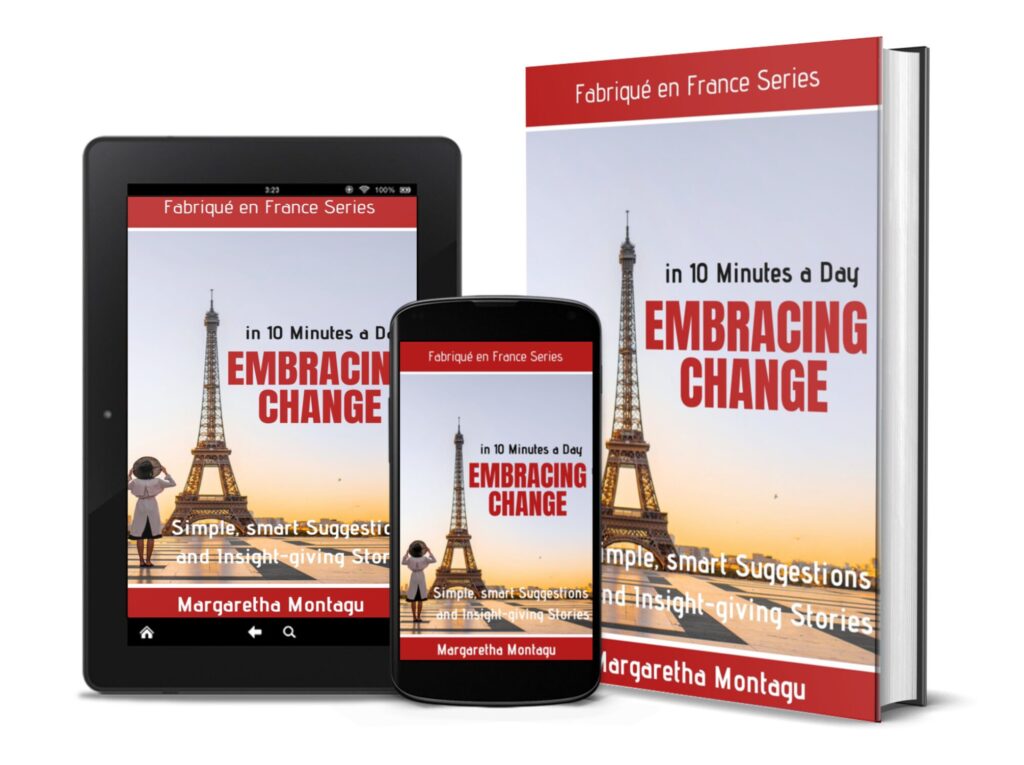
If you are currently facing a major life transition or any other dramatic change in your circumstances, and you have no idea how you are going to cope, the good news is that the strategy presented in this book can help you, step by step, to improve your ability to handle the stress caused by change, even if you feel entirely powerless at the moment.
Included Free With All Retreats: Reconnect with Nature: A Guided Journaling Course Inspired by Horses
One of the loveliest things about the reading and walking retreats is that Reconnect with Nature: A Guided Journaling Course Inspired by Horses is included free for every guest.
This online journalling course, inspired by the quiet wisdom of horses and the restorative power of the natural world, provides a gentle, structured framework for noticing what the path is showing you. Horses, as anyone who has spent time with them knows, are extraordinarily good mirrors. They respond to what you are actually feeling, not what you are performing. The prompts in this course carry that same quality of honest reflection.
Reconnect with Nature: A Guided Journaling Course Inspired by Horses for anyone interested in increasing their emotional, physical and social resilience by starting a journal, but does not have much time to invest and is looking for a simple, easy-to-implement strategy that gives tangible and lasting results. Get immediate access
Completing the course alongside the walking days deepens everything. It turns experience into insight, and insight into intention.
5 FAQs: The Questions People Are Actually Asking
Q1: Do I have to be religious to walk the Camino?
Absolutely not. The Camino de Santiago originated as a Christian pilgrimage route, but today it is walked by people of every faith, no faith, and every variety of spiritual curiosity in between. What the path requires is not belief in any particular doctrine, but a willingness to be present and reflective. That is a thoroughly secular capacity, and one that rewards everyone who brings it.
Q2: What if I am not fit enough? The walking will put me off.
The 5-day Camino Express retreat includes three walking days on routes that are carefully chosen for their accessibility and beauty, not their difficulty. You do not need to be an athlete. You need comfortable shoes and a willingness to put one foot in front of the other, which, if you have survived the past several years of global news cycles, you are clearly capable of.
Q3: Is it strange to go on retreat alone?
It is, for approximately the first forty-five minutes. After that, the combination of a warm, well-fed group of fellow thoughtful humans, a good book, and the particular social lubricant of shared experience tends to dissolve that strangeness entirely. Many guests arrive alone and leave with friendships that last years. The long dinner table has a way of doing that.
Q4: What actually happens to my stress levels? Is there evidence for this?
Yes, and the evidence is robust. Research published in journals including Frontiers in Psychology and Environmental Health and Preventive Medicine consistently shows that sustained walking in natural environments significantly reduces cortisol levels, lowers blood pressure, reduces rumination, and improves mood and cognitive function. Add meaningful reading and reflective journalling, and you are working with some of the most evidence-based wellbeing interventions available.
Q5: What if I am in the middle of a crisis, a job loss, a relationship ending, a health scare? Is this the right time?
Possibly the best time. Not because the Camino will solve your crisis (it will not), but because a crisis is precisely the moment when you most need to hear yourself clearly above the noise. The path creates the conditions for that. Many guests arrive carrying something specific and heavy, and while the thing itself does not disappear, they leave with a clearer sense of how to carry it, and why, and what actually matters in light of it.
Conclusion: The Path Ahead
There is a line attributed, probably apocryphally, to the Camino itself: “The path does not judge. It simply reveals.”
That is, in the end, what makes this ancient route so stubbornly, persistently relevant. Not its medieval churches or its spectacular French countryside, though both are worth the airfare on their own. But the fact that something about sustained, unhurried movement in beautiful landscape, in the company of honest people and good books, strips away the performed version of yourself and leaves you standing, slightly sweaty, perhaps with blistered toes, face to face with who you actually are.
In a world that is asking you to be outraged, anxious, and constantly responsive, the decision to step onto a pilgrim path and simply walk is, quietly, an act of profound self-respect.
“Not all those who wander are lost. Some of them are, at last, beginning to find themselves.”, adapted, with reverence, from J.R.R. Tolkien
Step Onto the Path: A Gentle Invitation
You have been carrying the weight of the world for long enough.
Imagine five days in the golden light of southwest France. Three walking days on ancient Camino routes through vineyards, medieval villages, and open skies that put everything back in proportion. Unhurried breakfasts. Long, candlelit dinners with people who are also, quietly, looking for something real. Afternoons deep in a brilliant novel. Evenings writing things in a journal you did not know you needed to say.
The Booklovers’ Binge Reading and Camino de Santiago Retreat was designed precisely for people like you, capable, thoughtful, a little worn, and ready for something that is not a package holiday or a productivity course, but a genuine chance to remember who you are.
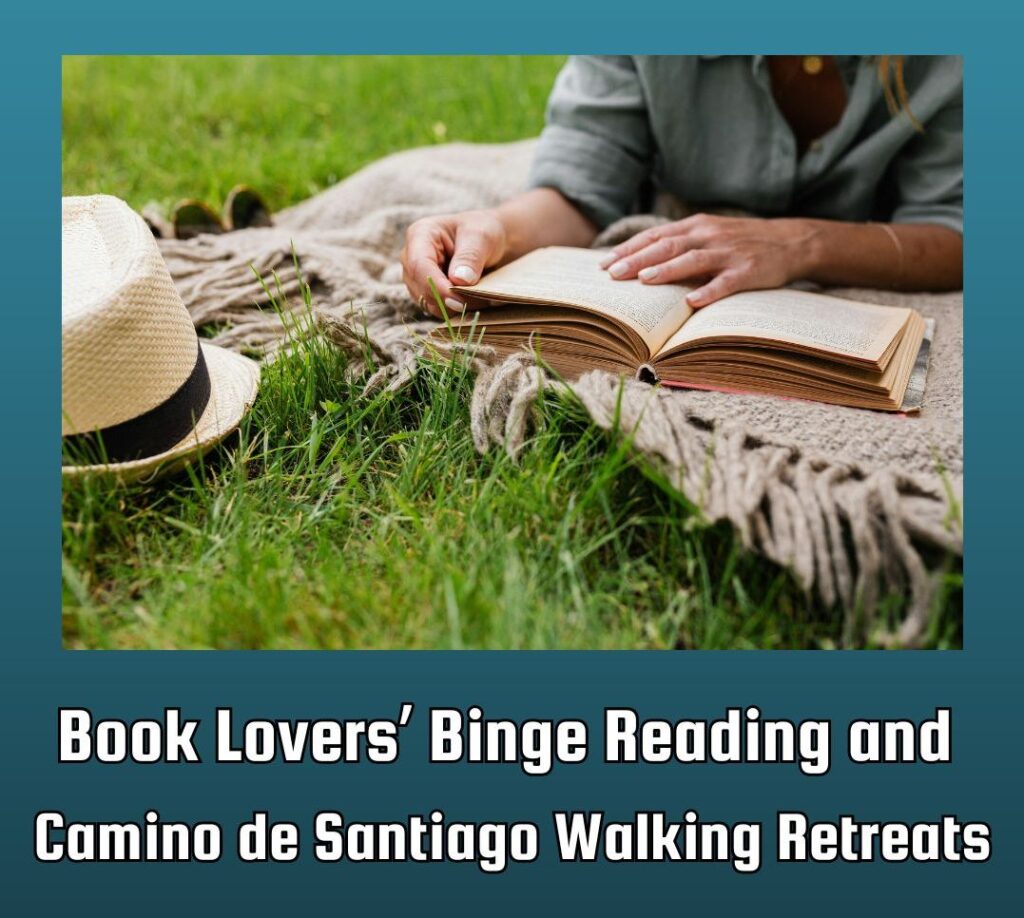
Join us for the Book Lovers Binge Reading Camino de Santiago Walking Retreat in the sun-drenched southwest of France: a journey where the trail and the story unfold together. Walk ancient paths at your own pace, then settle in each evening with a good book. This isn’t a fitness challenge—it’s a gentle rhythm—one step, one chapter, one honest conversation at a time. Rolling hills, quiet villages, golden light. No expectations, no performance, no agenda but your own unfolding.
Not Sure If You Are Ready? Take the Quiz
If something in this article made you pause, that pause is worth paying attention to.
Sign up for the newsletter and take the Ready for a Retreat? Quiz to discover whether a walking and reading retreat is the right next step for where you are right now. It takes five minutes and asks the questions you have probably been half-asking yourself already.
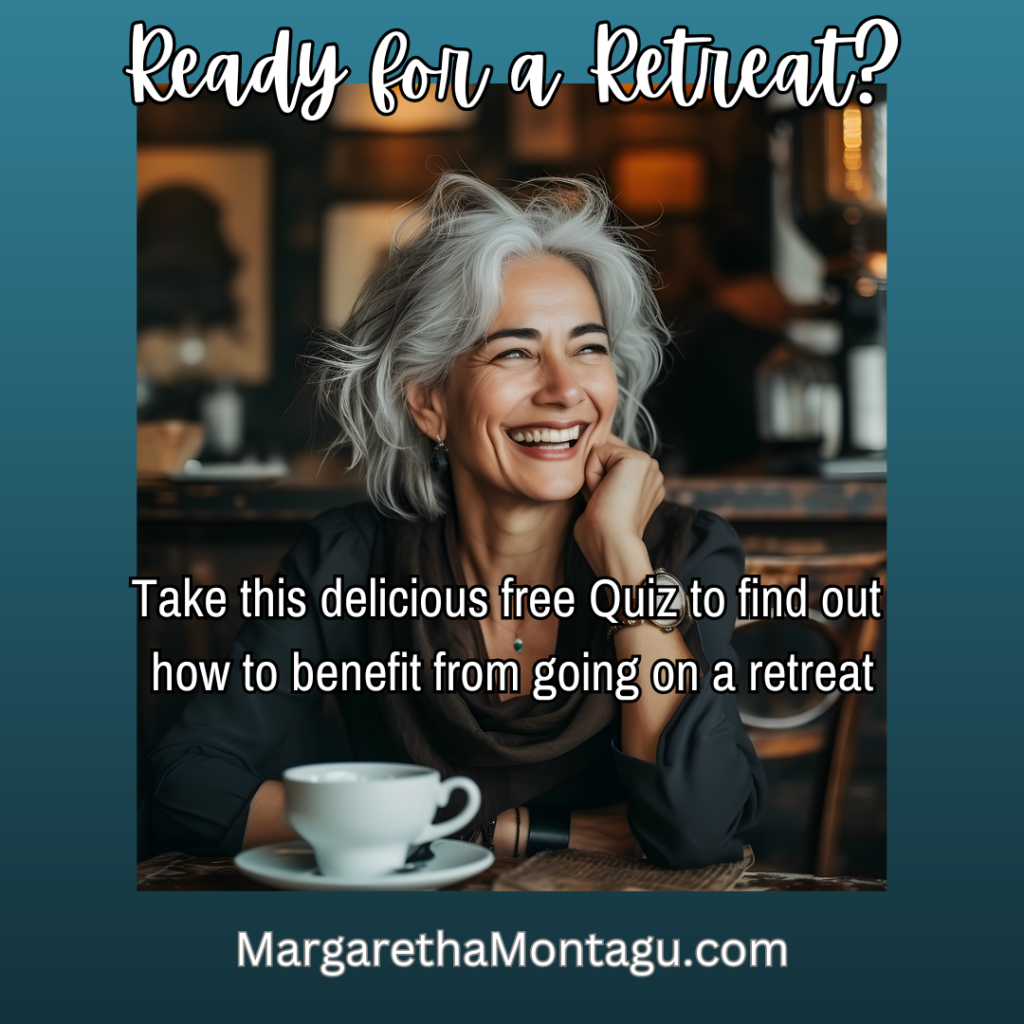
Do you dream of escaping your stressful life to raise a herd of goats or grow sunflowers in the south of France? Then you may be ready for an Esprit Meraki retreat. Get access to this “very serious” quiz to help you figure out how urgent your need for a change of scenery is, when you subscribe to my monthly newsletter.
The Camino does not promise you a better world when you return. It promises you a better view of the one you already inhabit, and of the person navigating it.
Before you close this tab or pick up your phone, ask yourself:
What would it mean for you, specifically, to stop running from the chaos and start walking toward yourself?
Take your time.

Author Bio: Dr Margaretha Montagu – described as a “game changer”, “gifted healer”, “guiding light” and “life-enriching author” – is an experienced medical doctor, a certified NLP practitioner, a medical hypnotherapist, an equine-assisted psychotherapist (EAGALAcertified) and a transformational retreat leader who guides her clients through life transitions – virtually, or with the assistance of her Friesian and Falabella horses, at their home in the southwest of France.
References
- Bratman, G. N., Hamilton, J. P., Hahn, K. S., Daily, G. C., & Gross, J. J. (2015). Nature experience reduces rumination and subgenual prefrontal cortex activation. Proceedings of the National Academy of Sciences, 112(28), 8567–8572. (Demonstrates that walking in natural environments significantly reduces repetitive negative thinking and associated neural activity, providing evidence for the Camino’s restorative psychological effects.)
- Capaldi, C. A., Dopko, R. L., & Zelenski, J. M. (2014). The relationship between nature connectedness and happiness: A meta-analysis. Frontiers in Psychology, 5, 976. (Meta-analysis confirming that connection with the natural world is robustly associated with greater wellbeing, subjective happiness, and reduced anxiety, underpinning the therapeutic value of nature-based retreats.)
- Hasson, U., Ghazanfar, A. A., Galantucci, B., Garrod, S., & Keysers, C. (2012). Brain-to-brain coupling: A mechanism for creating and sharing a social world. Trends in Cognitive Sciences, 16(2), 114–121. (Provides neuroscientific evidence that reading narrative fiction creates neural coupling between writer and reader, supporting the claim that deep reading is a powerful empathy-expanding and self-awareness tool.)
- Song, C., Ikei, H., & Miyazaki, Y. (2016). Physiological effects of nature therapy: A review of the research in Japan. International Journal of Environmental Research and Public Health, 13(8), 781. (Systematic review of shinrin-yoku and nature therapy research showing significant reductions in cortisol, blood pressure, and sympathetic nervous system activity following immersion in natural environments, directly relevant to the walking retreat model.)
- Smyth, J. M., Johnson, J. A., Auer, B. J., Lehman, E., Talamo, G., & Skinner, C. S. (2018). Online positive affect journaling in the improvement of mental distress and wellbeing in general medical patients with elevated anxiety symptoms: A preliminary randomised controlled trial. JMIR Mental Health, 5(4), e11290. (Randomised controlled trial demonstrating that structured reflective journalling produces significant improvements in mental wellbeing and reductions in anxiety, providing evidence for the journalling component of the retreat experience.)