
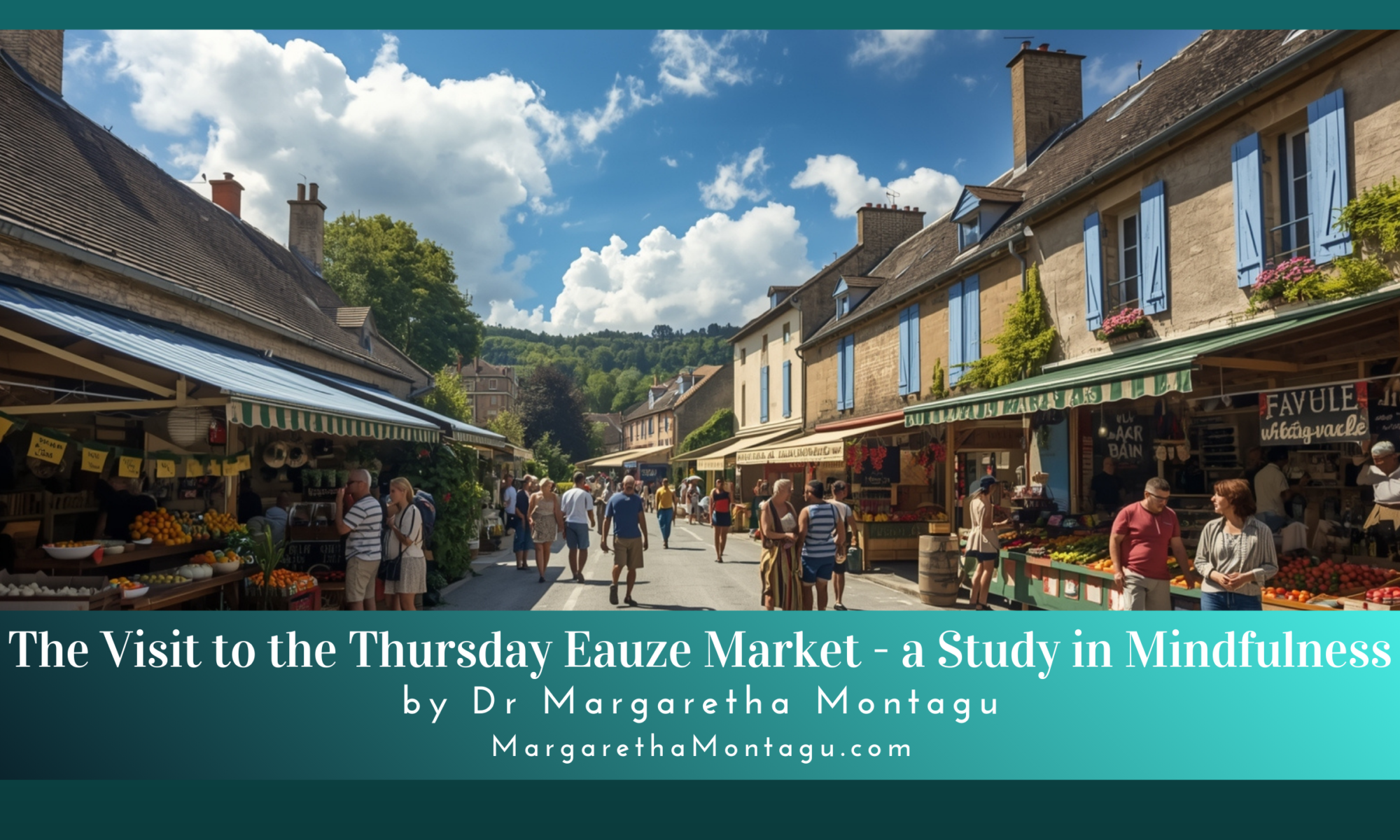
During my Camino de Santiago Crossroads Retreat, we spend one morning visiting the Thursday Eauze market. This is not, strictly speaking, a demanding activity. No mountains are climbed, no ice baths are required, and the greatest physical challenge tends to be resisting the cheese stalls. Rather than rushing through with a shopping list, we slow down and use the market as a gentle mindfulness practice. By paying attention to what we can see, hear, smell, touch, and taste, an ordinary market visit becomes a powerful way to reconnect with the present moment and with our own senses. When we are stressed, the mind is often busy worrying about the future or replaying the past, this simple exercise helps people rediscover something surprisingly grounding: the ability to pause, breathe, and fully experience where they are.
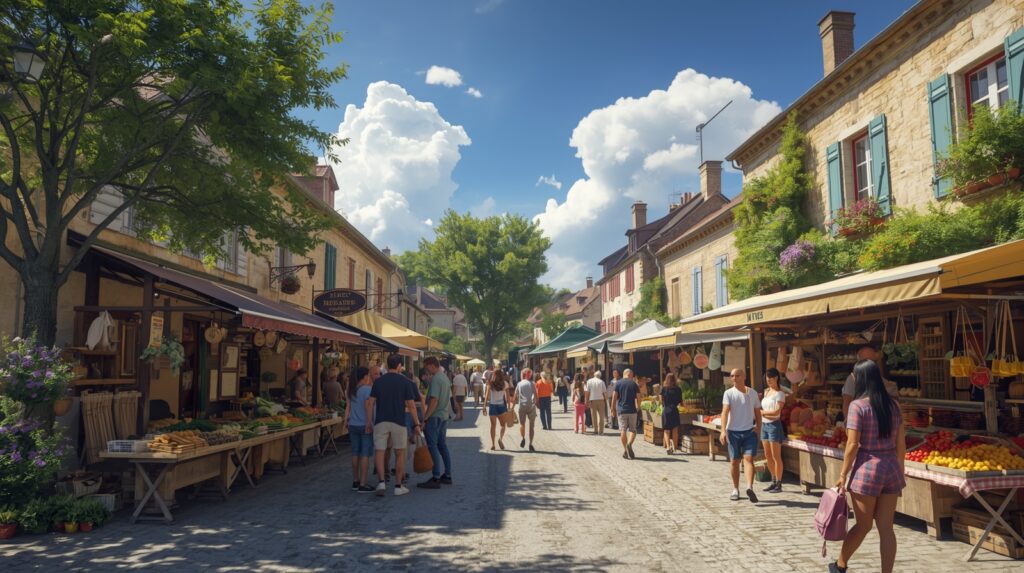
On a Thursday morning, the market in Eauze unfolds slowly but decisively, like a stage curtain rising on a very cheerful play. (more about Eauze, the town)
If you arrive early enough, you witness the opening act.
White vans pull up and reverse into improbable spaces with the calm confidence of people who have been doing this every week since before GPS existed. Metal tables unfold with a clatter, crates appear from the backs of vans as if by magic, and someone begins arranging tomatoes with the care of a museum curator placing rare artefacts.
Within half an hour, the entire street has transformed into something vibrant and alive. What was an ordinary stretch of pavement becomes a lively corridor of colour, conversation, and irresistible smells. Striped awnings stretch overhead while folding tables appear in neat rows. Boxes that moments ago looked unremarkable suddenly reveal their contents: piles of fruit, vegetables, cheeses, breads, jars, herbs, and mysterious local delicacies that seem to defy easy classification.
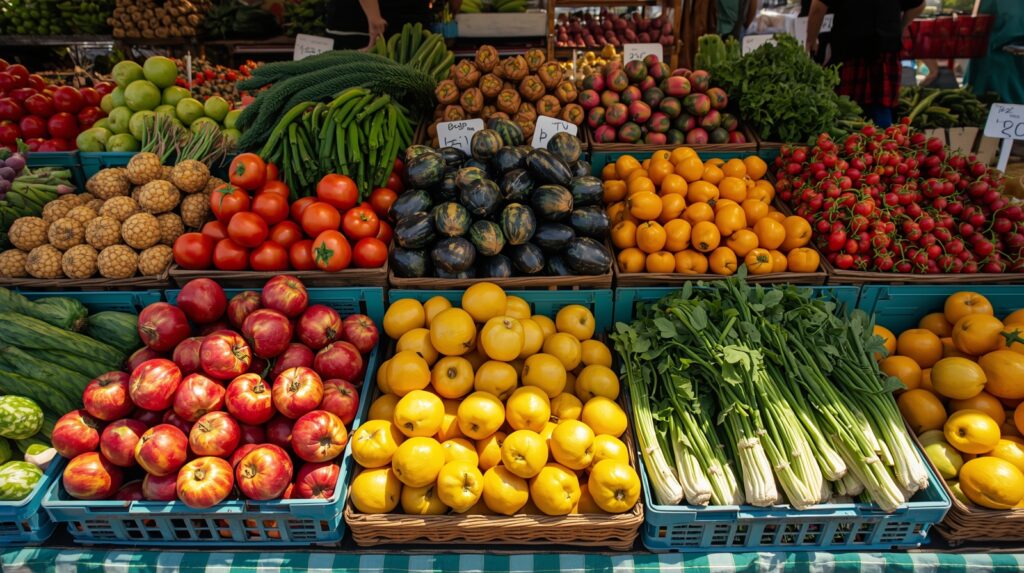
Colour is often the first thing that catches your attention as you wander through the market. Tables bloom with piles of glossy aubergines, scarlet tomatoes, deep-green courgettes, and peaches blushing in shades that would make a painter feel slightly inadequate. Straw baskets overflow with apricots while bundles of carrots still carry a little earth on their tips. Nearby, jars of honey line up in glowing ranks, each one catching the light differently depending on whether the bees had been visiting chestnut trees, wildflowers, or sunflowers.
A photographer’s dream outing.
As you move further along, the sounds of the market begin to weave themselves into the experience. This market hums with the comfortable noise of a community gathering. Greetings are exchanged with the warmth of people who have been seeing each other here every Thursday for years. A vendor calls out the day’s price for strawberries while a crate lands on a wooden table with a satisfying thump. Somewhere nearby a small dog contributes enthusiastic commentary, clearly convinced that its opinions are essential to the smooth running of events.
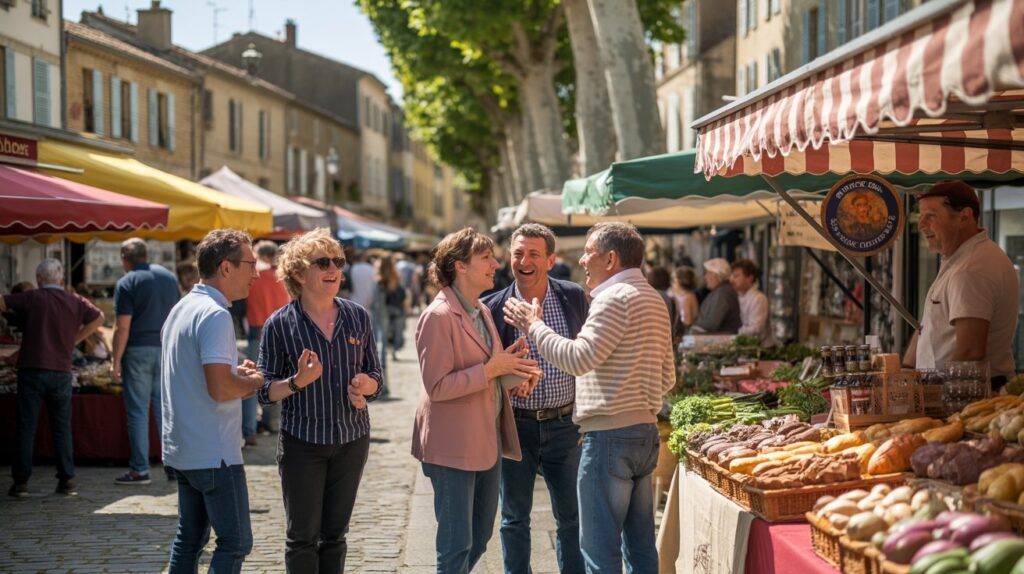
Snippets of conversation drift through the air as you pass from stall to stall. Someone is discussing the weather with deep seriousness while another person debates whether the peaches are quite ready yet. Two friends compare notes about a recent dinner as if conducting an in-depth culinary investigation. The rhythm of the voices rises and falls in that distinctive musical cadence of southwestern French, creating a background soundtrack that feels both lively and intensely comforting.
Soon the smells begin to compete for your attention, and they do so with remarkable enthusiasm. Fresh bread drifts across the street in warm waves while herbs release their perfume whenever someone brushes past a stall. The scents of thyme, rosemary, and basil mingle in the air, occasionally joined by the rich aroma of rotisserie chickens turning slowly on a nearby spit. The chickens glisten as they rotate, filling the street with a smell that has been known to derail even the most disciplined shopping list.
There is also the faint nutty richness of duck fat, which seems entirely appropriate in this corner of Gascony. Added to that are the sweet notes of strawberries warming gently in the sun and the earthy smell of vegetables that still remember the soil they grew in.
Following your nose from one stall to the next soon becomes a perfectly reasonable and entirely sensible way to navigate the market.
Before long your hands join the exploration, because markets invite touch in a way that supermarkets rarely do. You pick up a peach and test it gently with your fingers, noticing that the skin is soft and faintly fuzzy from the morning sun. A vendor hands you a small paper bag filled with walnuts that feel cool and smooth in your palm. Nearby, a bar of handmade soap sits on a wooden table with edges that are slightly rough, releasing a gentle lavender scent as you turn it over.
Part of the pleasure lies in the textures of real food and handmade objects. Feeling the weight of a tomato or the smooth curve of an apple reconnects you with something that modern packaging often removes from everyday life. Even the simple act of placing vegetables into a woven basket carries a quiet satisfaction.
Taste, of course, inevitably becomes part of the experience. Markets in this part of France are delightfully relaxed about the idea of sampling. Someone offers you a slice of saucisson on the tip of a knife while a cheesemaker hands over a small cube of something local and magnificent. At another stall, a plum appears in your hand with the casual encouragement to try it.
The plum is sweet, fragrant, and slightly warm from the sun. Its flavour is so vivid that it has been known to permanently alter one’s expectations of supermarket fruit. For a brief moment, you stand there eating it, wondering why something so simple can taste so astonishingly good.
Most people move through the market in a pleasant blur as they buy vegetables, exchange a few friendly words, and perhaps pick up some paella for lunch before heading home. Yet if you slow down, the experience begins to shift in a subtle but powerful way.
The market becomes more than a place to shop, because it becomes an opportunity to practice mindfulness.
Mindfulness does not require a mountain retreat or a silent meditation hall. At its core, mindfulness simply means paying attention to the present moment with curiosity and without rushing away from it. A busy market turns out to be a surprisingly effective place to practice this skill because it engages all of your senses at once.
One of the simplest ways to begin is through the five-senses exercise, a grounding technique used in mindfulness and stress reduction. The exercise is straightforward but remarkably effective. As you walk through the market, you pause and deliberately notice what you can perceive through each of your senses.
You might start by noticing five things you can see around you. Your eyes move across the scene, observing the deep purple of aubergines stacked in neat rows, the golden glow of honey jars catching the light, and the red-and-white cloth covering a cheese stall. You may notice the quick hands of a vendor counting change or the bright green leaves still attached to a bunch of carrots.
Next you listen for four things you can hear. The murmur of conversation drifts through the crowd while footsteps echo softly on cobblestones. Paper bags rustle as people gather their purchases and someone nearby greets a friend they have not seen since last Thursday.
Then you pause to notice three things you can smell. The scent of warm bread reaches you from one direction while herbs release their perfume from another. Not far away the slow rotation of roasting chickens adds its rich aroma to the mix.
After that, you bring your attention to two things you can touch. The smooth skin of a tomato feels cool against your fingers while the rough weave of a basket rests comfortably in your hand. Even the simple weight of a bag filled with apples provides a reassuring sense of presence.
Finally, you notice one thing you can taste. It might be that ripe, juicy plum you were offered earlier or a small sip of coffee from a nearby stall.
When you move through the senses this way, something interesting happens to the mind. Instead of racing ahead to the next task or replaying yesterday’s worries, your attention settles into the moment you are actually living. Colours seem brighter, smells richer, and conversations more vivid.
The market has not changed, yet your experience of it has intensified.
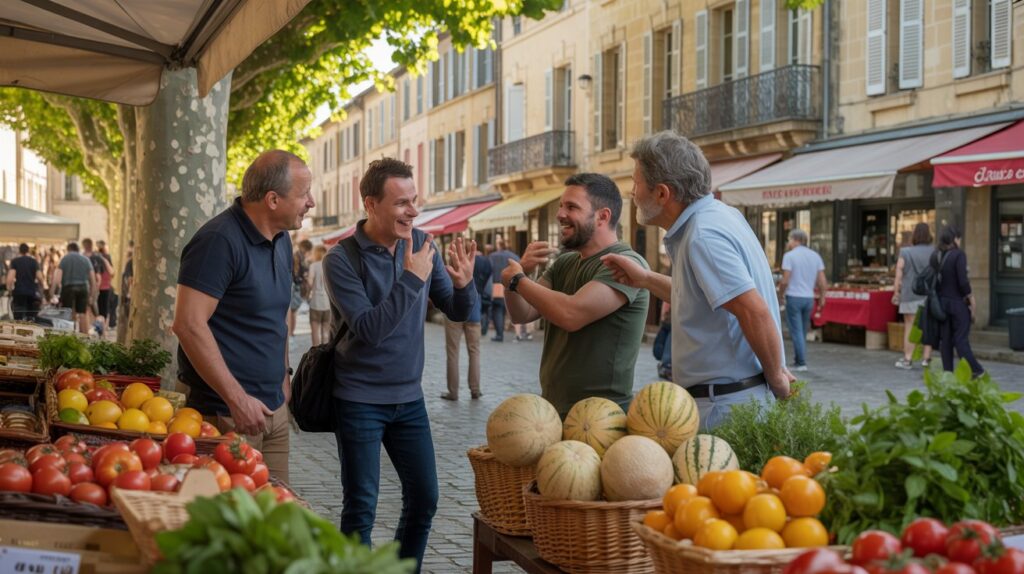
You are no longer rushing through the crowd while thinking about everything else you need to do. Instead, you are standing in the middle of a lively market, fully aware of the sights, sounds, and flavours around you.
This kind of awareness often brings an unexpected sense of calm. Even though the market is busy and full of activity, your mind begins to slow down. The cheerful noise of the crowd becomes part of the experience rather than a distraction from it.
Another pleasant side effect of paying attention in this way is that you begin to notice the people around you. The woman who arranges her vegetables as carefully as if they were small works of art becomes part of the story. The cheesemaker who speaks proudly about his products suddenly seems more interesting. The elderly gentleman who arrives with a basket and leaves half an hour later after greeting half the market becomes a familiar character in the weekly rhythm of the place.
By the time you leave the market, your basket may contain vegetables, a piece of cheese that seemed like an excellent idea at the time, and perhaps a roast chicken whose aroma followed you halfway across the stalls. Along with those purchases, you carry something less tangible but equally valuable.
You leave with a quieter mind, a steadier breath, and the gentle feeling that you have fully inhabited the past hour rather than rushing through it.
All of that can come from wandering through a market and paying attention to your five senses, which is not a bad return for an ordinary Thursday morning.
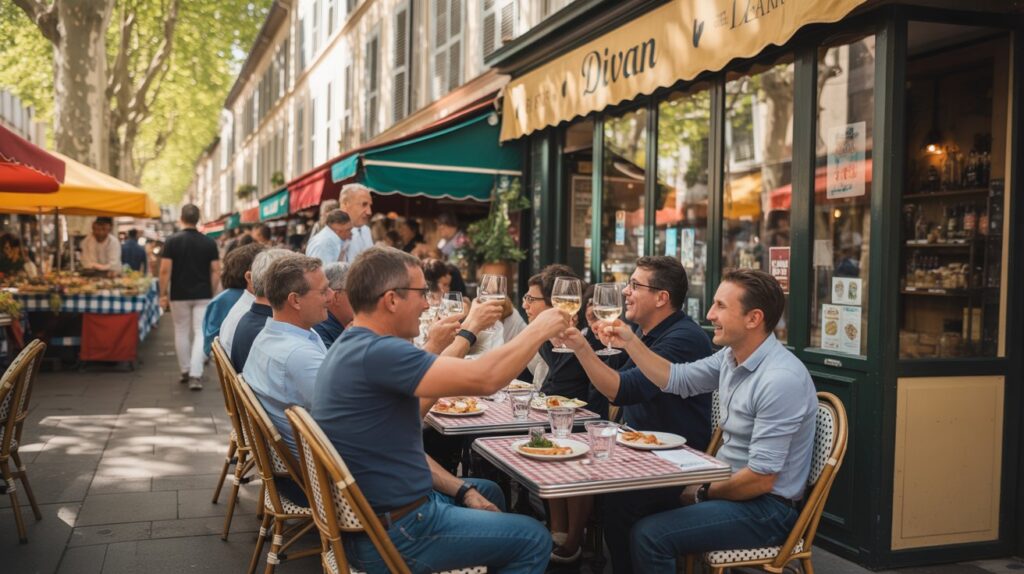
Once our baskets have been filled with items that seemed absolutely essential at the time — we step into a nearby local bistro for lunch. By this point, our senses are fully awake and everyone has developed a sudden and entirely understandable interest in good food. Conversation drift easily, the flavours seem even richer after a morning spent paying attention, and someone usually produces a small bag of market purchases to admire or share. It is a wonderfully civilised way to end this exercise: a mindful morning at the market followed by a relaxed lunch in a local bistro, where the only serious decision left to make is whether dessert would be excessive. Experience suggests the correct answer is usually “probably not, let’s see…”

If your soul is craving fresh air, meaningful movement, and a chance to reconnect with nature, join us on a Camino de Santiago Crossroads Retreat in the southwest of France. This isn’t just a scenic hike – it’s a powerful, natural reboot for your body, mind, and spirit. Imagine quiet paths, rolling hills, cozy evenings, and slow conversations. No fitness requirements. No forced bonding. No pressure to have a breakthrough. Just one foot in front of the other, and a journey that meets you exactly where you are.

10 Powerful Life Lessons Learned While Walking the Camino de Santiago – a free guide filled with 10 not just “quaint anecdotes” or Instagram-worthy moments (though there are plenty of those) but real transformations from real people who walked the same insight-giving trail you might want to walk one day – Subscribe to my monthly newsletter to Download the Guide

Author Bio: Dr Margaretha Montagu – described as a “game changer”, “gifted healer”, “guiding light” and “life-enriching author” – is an experienced medical doctor, a certified NLP practitioner, a medical hypnotherapist, an equine-assisted psychotherapist (EAGALAcertified) and a transformational retreat leader who guides her clients through life transitions – virtually, or with the assistance of her Friesian and Falabella horses, at their home in the southwest of France.