
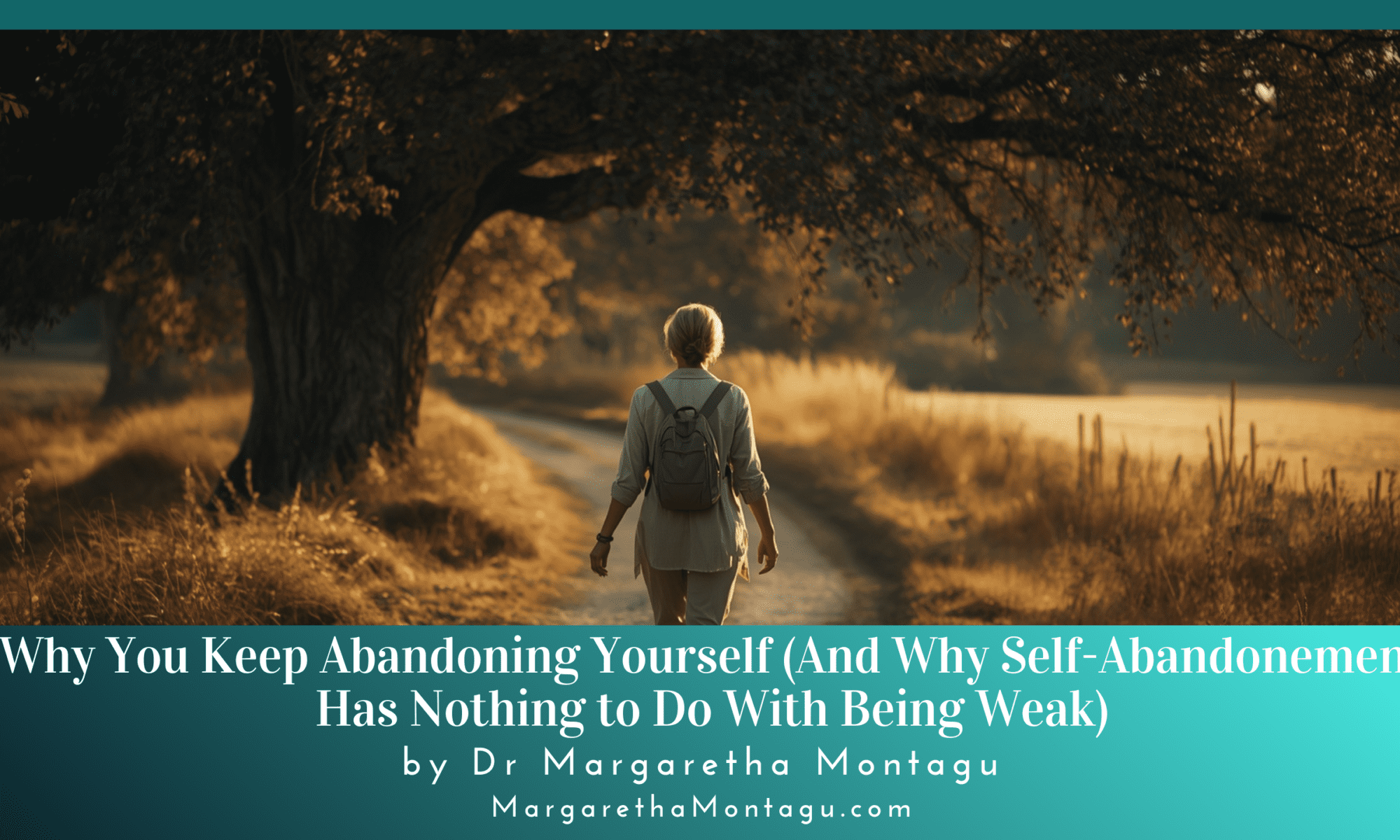
Understanding Self-Abandonment as a Nervous System Response, and how to Stop the Cycle for Good
People-pleasing is a survival response, not a character flaw, and what it takes to rewire this response.
What this is: A deep, science-informed look at why so many capable, intelligent people spend decades minimising their needs, suppressing their feelings, and contorting themselves to keep the peace, and what’s actually happening to your nervous system when you do it.
What this isn’t: A lecture about self-love, a cheerful “put yourself first!” pep talk, or yet another article telling you to take more bubble baths. We’re going deeper than that. It might hurt.
Read this if: You’re navigating a major life change (divorce, illness, loss, retirement, reinvention), you’ve noticed you’re always the one accommodating, and you’re quietly wondering whether there are other possible ways to respond.
5 Key Takeaways
- Self-abandonment is a survival strategy, not a personality flaw. It developed when connecting felt conditional, and your nervous system did what nervous systems do: it adapted.
- Fawning, freezing, and people-pleasing are nervous system responses, not choices. Understanding this shifts the conversation from self-blame to self-compassion, which is the only place real change happens.
- Major life transitions are the most powerful moments to interrupt the pattern. When old structures collapse, old survival strategies become visible, and visible things can be changed.
- The goal isn’t to become selfish; it’s to become a reliable internal source of safety. When you stop sourcing safety entirely from external approval, your relationships actually improve.
- Healing is not a solo sport, but it does require solitude. Community, movement, nature, and honest reflection are not luxuries. They are the conditions under which nervous systems genuinely change.
Introduction: The Art of Making Yourself Very, Very Small
You know the moment. Someone asks what you’d like for dinner, and you say, “I don’t mind, whatever everyone else wants”, even though you are absolutely, categorically minding. Someone steamrolls your idea in a meeting and you hear yourself saying “no, no, that makes total sense” even as something in your chest quietly deflates. Someone behaves badly, and you spend the next three days wondering what you did wrong.
This is self-abandonment. And if you’re here, reading this, it’s likely not new information.
What might be new, though, is this: it has nothing to do with being weak, unassertive, or insufficiently self-aware. It has everything to do with your nervous system doing exactly what it was trained to do, prioritise connection over authenticity, because at some point in your history, connection felt like survival.
This article is for people who are navigating major life change and who are starting to notice, perhaps for the first time, just how much of themselves they’ve been quietly editing out. You’re not broken. You’re not beyond help. You’re actually, inconveniently, at the most powerful possible moment to do something about it.
By the time you finish reading, you’ll understand what’s actually happening physiologically when you disappear into someone else’s needs, why life transitions crack open this pattern in particular, and what the first concrete steps toward changing it look like, not in theory, but in practice.
What Does Self-Abandonment Actually Look Like in Real Life?
Sophie Brennan’s Story
The morning Sophie Brennan’s solicitor called to say the divorce was finalised, she made a pot of tea she didn’t drink, sat down at the kitchen table, and waited to feel something.
Nothing came. Just the distant hum of the refrigerator and the faint smell of someone else’s life, seventeen years of it, still pressed into the walls of the house she’d agreed to sell.
She’d always been, as people liked to say, “so good in a crisis.” Steady. Capable. The one who kept things moving. Through the years of her husband’s career upheavals, the children’s various adolescent catastrophes, her mother’s long illness, Sophie had been the hub around which everything else turned. She prided herself on it, the way some people pride themselves on being able to parallel park in one go.
What she hadn’t noticed, because you rarely notice the water you swim in, was that she’d spent seventeen years, possibly longer, doing something very specific: she’d been making herself easier to love by making herself harder to see.
The habit had started early. Growing up in a house where emotional weather could change without warning, where her father’s approval came and went like Irish sunshine, Sophie had learned to read the room before she entered it. To adjust. To smooth. To become, as necessary, whatever version of herself created the least friction. She’d been good at it. She still was.
At 51, she was also exhausted in a way that sleep didn’t fix.
It was her GP, a woman of carefully calibrated patience, who first used the word. Not diagnosis, nothing so dramatic. Just a gentle observation across a desk cluttered with coffee cups and patient files: “Sophie, I wonder if you’ve spent so long managing everyone else’s needs that you’ve lost track of your own.”
Sophie had nodded politely, driven home, cried for forty minutes in the car park of a Tesco Extra, and then gone in to buy milk she didn’t need because doing something practical felt safer than sitting with the feeling.
That was the first crack.
The second came six months later, on a dusty trail in the south of France. She’d signed up for a walking retreat on something between impulse and desperation, the kind of decision you make at 2am when you’ve read the same paragraph four times and realised you haven’t the faintest idea what it said. Something about the Camino. Something about finding your next chapter. Something about storytelling and horses, which had made no logical sense but had felt, in the way that things sometimes feel before your rational mind can veto them, like exactly right.
The morning of the first walk, the air smelled of wild thyme and something she couldn’t name, something green and old and unhurried. Her boots were too new and slightly rubbing. The group was small, three women at various stages of various upheavals, and the guide, Dr. Margaretha Montagu, had said something so casually devastating as she dropped them off that Sophie had to stop walking to absorb it.
“Your nervous system,” Margaretha had said, gesturing at nothing in particular, or perhaps at everything, “learned to prioritise connection over reality. That wasn’t weakness. That was intelligence. The question now is: what does intelligence look like, from here?”
Sophie had looked at the dusty path ahead, at the oak trees throwing long shadows in the early light, and felt something move in her chest. Not a big, cinematic feeling. Something quieter. Like a door that had been stuck for years, shifting just slightly in its frame.
During the rest of the retreat, walking several hours each morning, gathering in the evenings for what Margaretha called “storytelling circles” sometimes with the Friesian horses standing nearby in the warm dusk like large, opinionated therapists, Sophie began to do something she hadn’t done in decades: she began to notice what she actually wanted.
Not what would be easiest. Not what would cause the least disruption. What she, Sophie Brennan, specifically wanted.
It was terrifying, and then it was funny, and then it was the most natural thing in the world. By day four, she’d told the group about her father. By day five, she’d laughed until she cried about something genuinely absurd, and realised she couldn’t remember the last time she’d laughed like that, without first checking whether it was appropriate. By day seven, walking into the village in the late afternoon heat, boots finally broken in and a blister she’d stopped apologising for, she felt, for the first time in as long as she could recall, like herself.
Not a version of herself edited for palatability. Just, herself.
The takeaway, if there is one, is not that a week in France fixes thirty years of nervous system patterning. It doesn’t. What it does, what the combination of movement and nature and honest community and skilled guidance does, is create the conditions under which you can finally hear the question you’ve been drowning out: who are you when there’s no one left to perform for?
Why Does Self-Abandonment Persist, and Why Does It Matter Beyond You?
What Is Actually Happening in Your Nervous System?
Self-abandonment isn’t a mindset problem you can fix with a good affirmation and a planner. It is a nervous system pattern, meaning it operates below the level of conscious choice. When connection has felt unpredictable or conditional, the brain’s threat-detection system, specifically the amygdala and its complex interaction with the vagal nerve, learns to treat relational tension as genuine danger.
In this state, the fawn response, a term coined by trauma therapist Pete Walker to describe the people-pleasing survival strategy, kicks in automatically. You shrink, accommodate, defer, smooth, explain yourself unnecessarily, apologise for having needs, and monitor other people’s emotional states like a satellite dish pointed permanently outward. All of this happens fast, faster than thought.
The cruel irony is that it works, in the short term. Tension dissolves. The other person seems pleased. Your nervous system gets its hit of safety. And so the pattern is reinforced, again and again, until it becomes the default operating system for every relationship you enter.
The longer-term cost is significant. Research (see below) consistently links chronic self-suppression with elevated cortisol, immune dysregulation, anxiety, depression, and a particularly corrosive form of exhaustion that isn’t about sleep deprivation at all. It’s the exhaustion of spending decades being someone else.
Why Major Life Transitions Are Both the Trigger and the Opportunity
Divorce, serious illness, bereavement, career collapse, children leaving home: these aren’t just stressful events. They are structural changes. They remove the scaffolding around which self-abandonment has been quietly organised for years.
When the marriage ends, you are no longer someone’s partner. When the children leave, you are no longer primarily someone’s parent. When the career shifts, the role that came with it, and all the performing-for-approval that role required, disappears too.
This is disorienting. It is also, if you can tolerate the disorientation long enough to look around, an extraordinary opportunity. Because for perhaps the first time in decades, the question of who you actually are, stripped of every performance, every role, every carefully maintained version of yourself, is genuinely open.
As someone who has spent twenty years as a physician working with stress and life change, and nearly fifteen years guiding people through transformational retreats on the Camino, Dr. Margaretha Montagu has watched this moment arrive for hundreds of people. “The transition is painful,” she says. “It’s also, without exception, the most alive people have felt in years. That aliveness is not a coincidence. It’s information.”
The Ripple Effect: Why Your Healing Matters Beyond You
Here is something that doesn’t get said enough: when you stop self-abandoning, the people around you change too.
Not because you’ve “fixed” them, but because the dynamic shifts. When you stop offering bottomless accommodation, relationships have to find a more honest equilibrium. Some of those relationships will flourish. Some won’t survive, which is painful and also, eventually, a relief.
More profoundly: the people who have been unconsciously absorbing your resentment, your exhaustion, your muted frustration, will be affected by its absence. Children of self-abandoning parents often carry an ambient guilt they can’t quite name. Partners often sense, even if they can’t articulate it, that something is being withheld. Friends notice when you become, suddenly and inexplicably, more fully present.
Communities, too, benefit. Women who have reclaimed their own authority, who speak with the confidence of someone who’s stopped editing themselves for palatability, bring a particular quality to their professional lives, their creative work, their civic engagement. It is not a small thing. Authenticity at the individual level has collective consequences.
What Are the 5 Most Common Mistakes When Trying to Break the Cycle?
Mistake 1: Treating it as a Mindset Problem
Repeating “I am allowed to have needs” into a mirror will not rewire a nervous system. Self-abandonment is a body-based, relational pattern. It needs body-based, relational interventions: movement, breath, regulation practices, safe connection. Insight helps. Insight alone is not enough.
Mistake 2: Going to War With the Pattern
Shame and self-criticism are themselves nervous system activators. If you spend your energy being furious with yourself for people-pleasing, you add another layer of threat to an already overloaded system. The work is curious observation, not attack.
Mistake 3: Overcorrecting Into Aggression
The pendulum move from endless accommodation to harsh, blunt “I’m just being honest now” boundary-setting is common and understandable, and it’s still a nervous system response, just a different one. The goal is not to become the person who never accommodates. It’s to become the person who chooses when and why they do.
Mistake 4: Doing It Alone
Self-abandonment developed in relationship. It heals in relationship. The idea that you can fully rewire attachment patterns through solo journaling and meditation, while both are useful, misunderstands the nature of the work. You need safe witnesses. Honest community. People with whom you can practice being seen.
Mistake 5: Waiting Until You Feel Ready
Readiness is a feeling the nervous system promises and never fully delivers. The people who change are, by and large, not the people who felt ready. They’re the people who went anyway, uncomfortable, uncertain, and a little terrified, and discovered that the discomfort was manageable after all.
A Short Intention-Setting Exercise: The Three Questions
Find somewhere quiet. Sit for a moment without an agenda. Then ask yourself, slowly and without rushing to answer:
What have I been pretending not to mind? (Not in a dramatic sense. Just: what have I been quietly absorbing that I’d rather not?)
What would I do or say today if I trusted that the important connections in my life could survive my honesty?
What is one small act of self-fidelity I can commit to in the next 24 hours? Not a grand gesture. Something real and doable. Saying no to one thing. Saying yes to one thing you actually want.
Write your answers down. Read them back. Notice what feels true versus what feels performed, even in private.
Further Reading: Five Books Worth Your Time on This Subject
1. Complex PTSD: From Surviving to Thriving by Pete Walker
Walker is the therapist who coined the term ‘fawn response,’ and this book is the clearest, most compassionate account of how people-pleasing develops as a trauma response that exists. Practical, honest, and quietly revolutionary.
2. Attached: The New Science of Adult Attachment by Amir Levine and Rachel Heller
An accessible and evidence-based guide to attachment styles and how they shape adult relationships. Particularly useful if you’re trying to understand your own relational patterns in the context of a major life change like divorce.
3. The Body Keeps the Score by Bessel van der Kolk
Essential reading for understanding why self-abandonment can’t be resolved by thinking alone. Van der Kolk’s exploration of how trauma lives in the body is the scientific foundation for any serious approach to nervous system change.
4. Set Boundaries, Find Peace by Nedra Tawwab
Nedra Tawwab is a therapist who writes about boundaries with unusual clarity and zero drama. This book is practical, warm, and devoid of the preachy self-help tone that makes so many books in this genre unreadable. Chosen because it bridges the gap between insight and actual application.
5. Women Who Run With the Wolves by Clarissa Pinkola Estes
A different kind of book, mythic, psychological, and deeply female in its orientation. Estes writes about the recovery of the instinctual self with the kind of depth and imagery that the rational brain can’t quite reach. Best read slowly, outdoors if possible.
PS: If you’re looking for a practical, daily companion for this work, my book Embracing Change, in 10 Minutes a Day offers exactly what the title promises: grounded, doable micro-practices for navigating life transitions without losing yourself in them. It reads less like a self-help book and more like a thoughtful conversation with someone who genuinely understands.

If you are currently facing a major life transition or any other dramatic change in your circumstances, and you have no idea how you are going to cope, the good news is that the strategy presented in this book can help you, step by step, to improve your ability to handle the stress caused by change, even if you feel entirely powerless at the moment.
A Note on the Purpose Pivot Protocol
The storytelling circle Sophie attended on retreat was working through my Purpose Pivot Protocol, an online course designed specifically for people at major life crossroads who are ready to move from managing change to actively choosing what comes next. It’s available at . Worth exploring if the idea of structured, supported transition work appeals to you, particularly between retreats.

The Purpose Pursuit Protocol – if you want to discover your life purpose, this course will provide you with the clarity, motivation and direction you need to manifest your next chapter – in both your personal and professional life. Get immediate access
FAQs: What People Are Actually Asking About Self-abandonment Right Now
Is self-abandonment the same as codependency?
They overlap, but they’re not identical. Codependency typically refers to a specific relationship dynamic in which your sense of self becomes enmeshed with someone else’s wellbeing. Self-abandonment is the broader nervous system pattern underneath: the habitual erasure of your own needs, preferences, and emotions in the service of maintaining connection. You can self-abandon in relationships that aren’t classically codependent, in friendships, workplaces, or even in how you relate to your own inner life.
Can you actually change attachment patterns as an adult?
Yes, and the evidence for this is now fairly robust. The concept is called ‘earned secure attachment,’ and it describes the process by which people with insecure attachment histories develop more secure relational patterns through consistent, corrective relational experiences. This can happen in therapy, in close friendships, in certain kinds of community settings, and yes, in immersive retreat experiences where safety, honesty, and sustained reflection are part of the design.
Why does self-abandonment get worse during major life changes?
Because the structures that made it manageable have gone. The role of spouse, parent, or senior professional came with implicit instructions about who to be. When those roles dissolve, the underlying pattern becomes exposed and often intensified, as the nervous system redoubles its efforts to find safety through familiar means. This is why transitions feel so destabilising even for people who, on paper, chose them.
What’s the difference between being kind and self-abandoning?
Genuine kindness is a choice made from a place of relative internal security. Self-abandonment is an automatic response driven by anxiety about connection. The practical test: when you accommodate someone, do you feel freely generous, or do you feel the quiet pressure of having no real alternative? Kindness expands you. Self-abandonment, over time, contracts you.
Do I need therapy, or can I work on this myself?
Therapy, particularly somatic approaches, EMDR, or attachment-focused modalities, can be enormously valuable here. That said, therapy is not the only path. Honest community, skilled coaching, movement-based practices, and immersive experiences that provide both challenge and safety can all create meaningful nervous system change. For many people, the most powerful shifts happen not in a therapy room but in a context that combines physical experience, honest reflection, and genuine connection, which is, not coincidentally, exactly what a well-designed walking retreat provides.
Conclusion: The Person You’ve Been Protecting Them From Is You
The most quietly devastating thing about self-abandonment is not the exhaustion, though there is plenty of that. It’s not even the resentment, which has a way of building behind a pleasant facade like water behind a dam. It’s the slow, steady erosion of your own company. The way you can spend forty, fifty, sixty years on this earth and realise, somewhere in the middle of a life change that nobody asked for, that you’ve never quite introduced yourself, properly, to yourself.
The transition you’re in right now, however unwelcome it felt at the start, is handing you something unusual: the unstructured, raw, slightly terrifying gift of an open question. Who are you, when the old roles have dissolved and the approval you’ve been managing for is no longer available to manage?
That question has an answer. It just needs space, honesty, and the right conditions to emerge.
“You did not abandon yourself in one dramatic moment. You did it in a thousand small accommodations, each one reasonable, each one kind, each one a vote cast, very quietly, for connection over truth. The next chapter is not about learning to be selfish. It’s about learning to be faithful, to the person who has been waiting, quite patiently, to be allowed into the room. Dr. Margaretha Montagu
Ready for a Different Kind of Next Chapter?
You’ve spent long enough making yourself comfortable to be around. The 7-Day Crossroads Camino de Santiago Retreat in the sun-drenched south-west of France is designed for exactly where you are right now: at the crossroads between who you’ve been and who you’re becoming. Walk the ancient Camino trails each morning, let the rhythm of your boots on old earth do what weeks of thinking cannot. Gather in the evenings for storytelling circles alongside Dr. Montagu’s magnificent Friesian horses, because some truths arrive more easily in the presence of creatures who have absolutely no interest in who you used to be. Come as you are. Leave as yourself. Find out more and reserve your place.









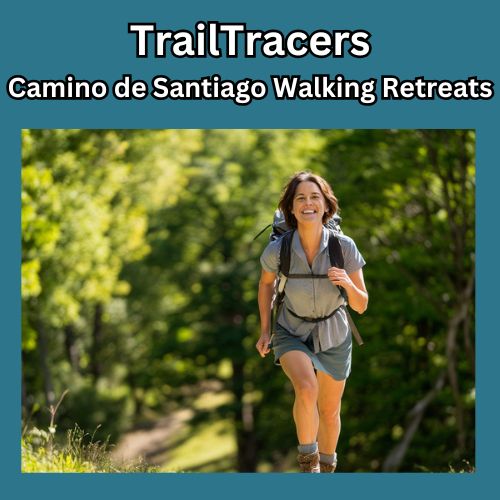
If your soul is craving fresh air, meaningful movement, and a chance to reconnect with nature, join us on a Camino de Santiago Crossroads Retreat in the southwest of France. This isn’t just a scenic hike – it’s a powerful, natural reboot for your body, mind, and spirit. Imagine quiet paths, rolling hills, cozy evenings, and slow conversations. No fitness requirements. No forced bonding. No pressure to have a breakthrough. Just one foot in front of the other, and a journey that meets you exactly where you are.
Reflection question: If you could send a voice message to the version of yourself who first learned that making yourself smaller kept people closer, what would you want her to know?
References
- Fawning: Walker, P. (2013). Complex PTSD: From Surviving to Thriving. Azure Coyote Publishing. (Primary source for fawn response conceptualisation in trauma literature.)
- Attachment: Mikulincer, M., & Shaver, P. R. (2007). Attachment in adulthood: Structure, dynamics, and change. Guilford Press. (Comprehensive review of adult attachment theory, including insecure attachment and hypervigilance to relational cues.)
- Self-suppression and health: Gross, J. J., & John, O. P. (2003). Individual differences in two emotion regulation processes: implications for affect, relationships, and well-being. Journal of Personality and Social Psychology, 85(2), 348,362.
- Earned secure attachment: Roisman, G. I., Padrón, E., Sroufe, L. A., & Egeland, B. (2002). Earned-secure attachment status in retrospect and prospect. Child Development, 73(4), 1204,1219. (Key evidence for plasticity in attachment representations across the lifespan.)
- Fawning and the polyvagal system: Porges, S. W. (2011). The Polyvagal Theory: Neurophysiological Foundations of Emotions, Attachment, Communication, and Self-regulation. W. W. Norton & Company. (Foundational text on the vagal nerve’s role in social engagement and threat response.)