

8 December 2025, 17 days to Christmas!
Theme: Making Friends and Maintaining Friendships
Today’s Story: The Cardamom Conspiracy
Maya stood in her minuscule apartment staring at the empty cardamom jar like it had personally betrayed her. Which, in a way, it had.
It was Christmas Eve. She was thirty-eight years old, a “mature student” (academic code for “your life fell apart so spectacularly you had to start over“), and she’d been in France for exactly four months. Long enough to know where the best boulangerie was. Not long enough to receive an invitation to any celebrations.
The recipe was her grandmother’s—handwritten on an index card so stained and worn the measurements were more memories than instructions. Cardamom cookies. The smell of her childhood Christmases, back when she’d had a job and a plan and hadn’t been “let go due to restructuring” which was corporate-speak for “we’ve decided you’re expendable.”
She’d bought all the ingredients yesterday. Checked the list twice. Somehow still managed not to buy cardamom, which was possibly the most on-brand thing that had happened to her this year.
Outside, Pau was doing its picturesque French Christmas thing—the Pyrenees snow-capped in the distance, lights twinkling on the Boulevard des Pyrénées, families heading to réveillon dinners. Inside, Maya was having a small crisis over a spice while her upstairs neighbours’ footsteps creaked overhead and their television soundtrack sounded like a dubbed version of Love Actually.
She could go to the store. Except it was 6 PM on Christmas Eve and everything was closing. She could make different cookies. Except these specific cookies were the entire point—her one attempt to make this silent apartment feel less like exile and more like choice.
She could also just give up, eat a jambon-beurre for dinner, and watch Christmas movies until she felt sufficiently sorry for herself to justify going to bed at 8 PM.
Or.
She looked at her apartment door. Directly across the hall, in 5B, her neighbour lived. The woman she’d seen exactly three times: once on the stairs, once collecting mail, once taking out recycling with the grim efficiency of someone who had opinions about proper sorting.
Mrs. Petrov. That’s what the name on the mailbox said. Somewhere in her seventies, steel-grey hair always in a bun, the kind of posture that suggested either ballet training or military service. She’d nodded at Maya precisely once. The nod had contained multitudes, none of them particularly welcoming.
Maya stood at her door for a full two minutes, conducting an internal negotiation with her inner critic.
She probably has cardamom. Old ladies always have spices.
She also probably wants to be left alone on Christmas Eve.
Or.
Or she might be lonely too.
What if she thinks you’re an idiot American who can’t plan ahead?
You ARE an idiot American who can’t plan ahead.
Helpful, thanks.
She knocked before she could talk herself out of it.
Silence. Then footsteps—measured, unhurried, the footsteps of someone who wasn’t expecting company and wasn’t particularly excited about the prospect.
The door opened.
Mrs. Petrov stood there in an apron dusted with flour, holding a wooden spoon like a weapon. Her expression suggested Maya had interrupted something important, possibly state secrets or a very serious conversation with her cat.
“Bonsoir,” Maya said, then switched to English because her French deserted her under pressure. “I’m so sorry to bother you. I’m your neighbour, Maya, from 5A, and I’m making cookies—trying to make cookies—and I’ve run out of cardamom and everything’s closed and I know this is incredibly presumptuous, but I was wondering if possibly you might have any I could borrow?”
She said all of this in one breath, like verbal diarrhoea, and immediately wanted to sink through the floor.
Mrs. Petrov stared at her. Maya couldn’t tell if the expression was judgment, irritation, or gas.
“Cardamom,” Mrs. Petrov said finally. Her English was accented, precise, with something Eastern European underneath. “For cookies.”
“Yes. My grandmother’s recipe. It’s—it’s stupid, I know, I should have checked, I’m terrible at planning, I just—” Maya heard herself spiralling steadily downwards and forced herself to stop. “I’m sorry. I shouldn’t have bothered you.”
She started to back away.
“What kind of cookies?” Mrs. Petrov asked.
“Um. Cardamom. Swedish, actually. My grandmother was—”
“Swedish cardamom cookies. With pearl sugar on top?”
“Yes! Exactly those.”
Something shifted in Mrs. Petrov’s face. Not quite a smile, but a thawing. “I have cardamom. But you will ruin them if you use old cardamom. When did you buy yours?”
“…September?”
“Bozhe moy.” Mrs. Petrov shook her head, a gesture that seemed to encompass all of Maya’s poor life choices. “Come. I will give you fresh cardamom. Also, you will help me with koledna pitka because my hands are old and the dough is stubborn.”
Before Maya could process what was happening, she was inside Mrs. Petrov’s apartment.
It smelled like heaven. Yeast and butter and something warm and spiced that made Maya’s stomach growl audibly. The kitchen was small but immaculate, every surface covered with evidence of serious baking: cooling racks, mixing bowls, a massive round loaf of bread studded with walnuts and dried fruit.
“Sit,” Mrs. Petrov commanded, pointing at a chair. “You look like you haven’t eaten today.”
“I had coffee—”
“Coffee is not food. Americans. Pffft.” She said it with the weary tone of someone who’d been dealing with American nonsense for decades. “I am making koledna pitka. Bulgarian Christmas bread. You will eat, then you will take cardamom, then you will make your grandmother’s cookies properly.”
She cut a thick slice of the bread—still warm—and placed it in front of Maya with a small dish of honey and butter. The bread was golden, studded with walnuts and what looked like dried apricots, the crust crackling, the inside impossibly soft.
Maya took a bite and almost cried. Not because it tasted like her grandmother’s cookies—it didn’t. But because it tasted like someone’s grandmother’s something, and she hadn’t realised how desperately she’d been missing that.
“Good, yes?” Mrs. Petrov said, sitting across from her with her own slice.
“It’s incredible.”
“Koledna pitka. Christmas bread. In Bulgaria, we make it Christmas Eve, hide coin inside for luck. Here in France, I make it anyway. No one to share with usually, but the bread doesn’t care.”
She said it matter-of-factly, but Maya heard the loneliness underneath.
“How long have you been in France?” Maya asked.
“Forty-three years. Came in 1981, from Sofia. My husband was French, worked in Pau. I spoke no French, knew no one, understood nothing.” She broke off a piece of bread, dipped it in honey. “First Christmas, I cried for three days. Tried to make banitsa, burned it because French ovens are different. Sat alone in apartment smaller than this, eating burned banitsa, thinking I had made terrible mistake.”
“What happened?”
“Neighbour knocked. Old French woman, very proper, very stern. She could smell the burning, thought maybe I had set the flat on fire. Instead, I was crying over pastry.” Mrs. Petrov smiled—actually smiled, a real one that transformed her entire face. “She invited me for réveillon. Her family, twelve people, all speaking French too fast to understand. I sat there like deaf person, smiling, nodding. But they fed me, gave me wine, taught me French Christmas songs. And that woman—Madame Dubois—she became my French teacher, my friend, my family here.”
She looked at Maya directly, her eyes sharp but kind. “You are alone for Christmas, yes?”
Maya nodded, not trusting her voice.
“Your family is where?”
“California. I couldn’t afford the flight. New student budget.” She tried to smile. “Plus I got laid off from my job six months ago and I’m still kind of… figuring things out. Coming here to study felt like either a great idea or the worst decision of my life. Jury’s still out.”
“Ahh.” Mrs. Petrov stood, started pulling down spice jars from a cabinet. “You are running away.”
“I prefer ‘strategic relocation.'”
“You are running away,” Mrs. Petrov repeated, but not unkindly. “Is okay. I ran away too. Sometimes running away is just running toward something you cannot see yet.”
She placed a jar of cardamom on the table—the good kind, whole pods in a glass jar. “Fresh. From the Indian shop on Rue Serviez. You grind yourself, yes? Better flavour.”
“I don’t have a grinder—”
Mrs. Petrov produced a mortar and pestle like a magician pulling a rabbit from a hat. “You grind here. I teach you. Then you make cookies here, in oven that works properly, not your terrible American apartment oven that heats up and cools down too fast.”
“I couldn’t possibly—”
“You think I want to eat the entire koledna pitka alone? You will make cookies, I will make banitsa, we will eat together. This is how Christmas works.”
It wasn’t a question.
For the next three hours, Maya ground cardamom, learned that Swedish cookies and Bulgarian bread had more in common than she’d thought, and listened to Mrs. Petrov’s stories about Sofia in winter, about learning French, about Madame Dubois and the family that adopted a lonely Bulgarian woman forty years ago.
The kitchen filled with the smell of cardamom and butter and yeast and something else—the particular warmth that comes from cooking with someone who understands what it means to be far from home.
Maya’s cookies came out perfect—golden, fragrant, studded with pearl sugar that Mrs. Petrov produced from her improbably well-stocked pantry. They ate them warm with strong coffee while Mrs. Petrov’s banitsa cooled, and somewhere between the second cookie and the third story about Madame Dubois, Maya realised she was laughing. Actually laughing, for the first time in weeks.
“Your grandmother,” Mrs. Petrov said, examining a cookie critically. “She was good baker.”
“She was. She died two years ago.”
“Ahh. So you make cookies to remember her.”
“To feel less alone, maybe.”
Mrs. Petrov nodded slowly. “We carry our grandmothers in recipes. In bread, in cookies, in things we make with our hands.” She placed another cookie on Maya’s plate. “But you cannot eat cookies alone in sad apartment. This is not what grandmothers want. They want you to share, to make new family, to keep living.”
“Is that what you did?”
“Is what Madame Dubois taught me. She died ten years ago, but I still make koledna pitka every year. Still invite lonely people who knock on my door asking for cardamom.” Her eyes crinkled. “Still believe that Christmas is for finding family wherever you are.”
They sat in comfortable silence, eating cookies and bread, while outside, Pau celebrated Christmas Eve and inside, two women from different continents and different generations shared the universal language of butter, flour, and generosity.
“Next week,” Mrs. Petrov said, standing to brew more coffee, “you come for dinner. I teach you to make proper banitsa. Also, you will meet my friend Simone from downstairs—French teacher, very bossy, will improve your French whether you want her to or not.”
“I’d like that.”
She poured coffee, placed a cup in front of Maya. Maya wrapped her hands around the warm cup, feeling something unknot in her chest. “Thank you. For the cardamom. For everything.”
“Nishto. Is nothing. Is Christmas.” Mrs. Petrov raised her cup. “Chestita Koleda. Merry Christmas, Maya from California, who bakes vintage Christmas cookies.”
“Merry Christmas, Mrs. Petrov, who saves Americans with incomplete spice collections.”
They clinked cups while church bells rang across Pau, and somewhere between the bells and the bread and the overwhelming smell of cardamom, Maya realised this was exactly what her grandmother would have wanted: not perfect traditions recreated in isolation, but new traditions built with whoever happened to be there, sharing whatever they had.
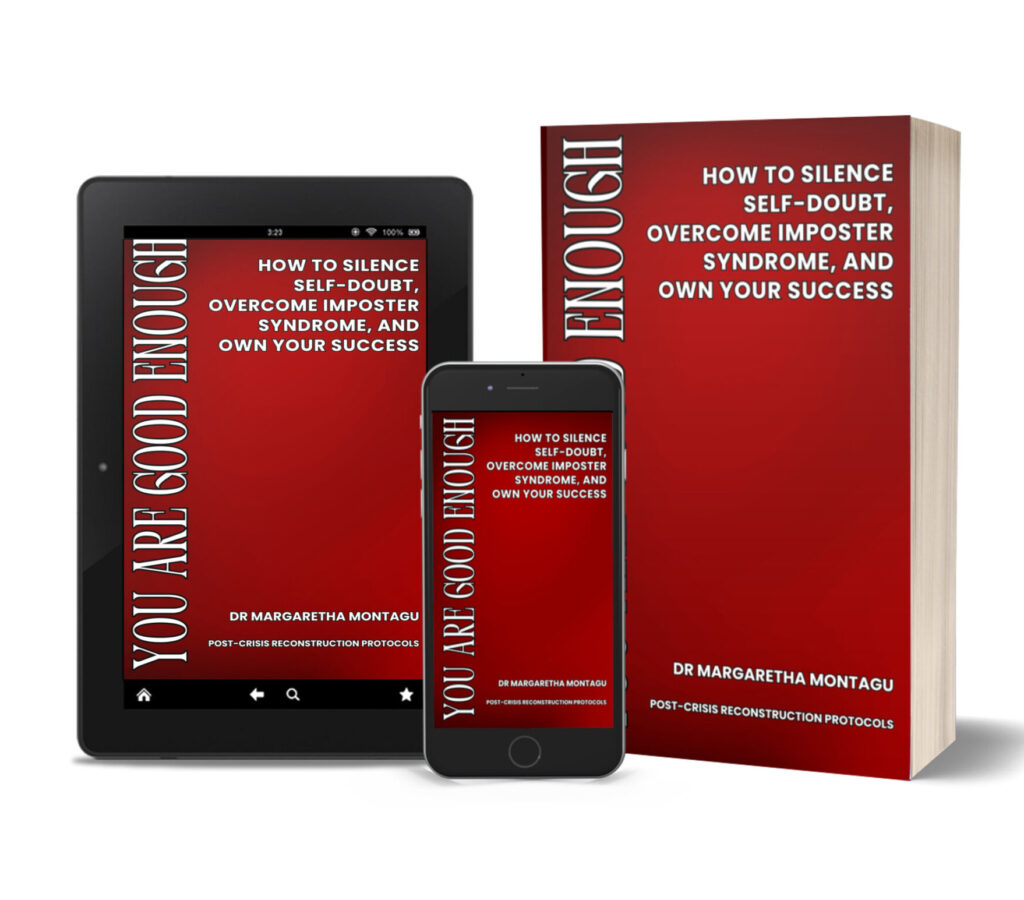
Stop second-guessing yourself. Start owning your success. This book gives you the step-by-step roadmap to break free from imposter syndrome, build unshakable confidence, and finally believe you deserve every bit of your success. You ARE Good Enough!
The Making Friends and Maintaining Friendships Masterplan
Friendship also means setting boundaries to protect your energy, especially during challenging life transitions. It’s okay to say no to invitations or expectations that don’t align with your well-being. True friends will understand and respect your needs.
This Christmas, give yourself permission to prioritise what feels right for you. Saying no isn’t about shutting people out—it’s about making space for the connections and activities that truly matter.
| Today, knock on a neighbour’s door—literally or metaphorically—and ask for help with something small. Borrow sugar. Ask for directions. Request a restaurant recommendation. Admit you don’t know how something works. Be the person who’s willing to be vulnerable first. Worst case scenario: They say no, you feel awkward for three minutes, life continues. Best case scenario: You discover that your stern neighbour is actually lonely too, that asking for help is how friendship starts, that the people who seem most intimidating are often the ones who most understand what it means to start over in a strange place. You end up with cardamom, Christmas bread, stories about Sofia in winter, and an invitation to dinner next week, where you’ll meet your neighbour’s friend who will improve your French whether you want her to or not. |
Have you ever knocked on a neighbour’s door for help—or had someone knock on yours? What happened, and did it change your relationship? What’s your “cardamom moment”—a time when running out of something small led to something bigger and more meaningful?
Newsletter Subscription
I’m still collecting subscriptions to my news letter with these post, so if you haven’t subscribed already and would you like to find out what type of friend you are, how well you know your friends or if you and a new friend really are compatible, subscribe my filling in your email address in the box below and I’ll send you a set of light-hearted quizzes, quotes and questions to help you do just that. Just fill in the form below and you’ll get immediate access to them all. You can unsubscribe from this list effortlessly and at any time. Included:
–How well do you know your Friends? Quiz
– What is Your Friendship Style? and Are your Friendship Styles compatible? Quiz
– 20 of the Most Inspiring Friends and Friendship Quotes and
– 20 lighthearted Questions you can ask to get to know a new Friend
Discover how to build meaningful, lasting friendships and create a support system that truly has your back—delivered straight to your inbox!

Author Bio: Dr Margaretha Montagu – described as a “game changer”, “gifted healer”, “guiding light” and “life-enriching author” – is an experienced medical doctor, a certified NLP practitioner, a medical hypnotherapist, an equine-assisted psychotherapist (EAGALAcertified) and a transformational retreat leader who guides her clients through life transitions – virtually, or with the assistance of her Friesian and Falabella horses, at their home in the southwest of France.
Smell the cookies indeed. The smell that brings back beautifull memories.
One of my clients, offerd me tea. And all of a sudden i reminded the special smell from long time ago. It was the tea i drank at my grandmothers. My mom didn’t liked it, so it was almost forgotten.
Now i have it. Lapsang suchong, with Earl grey, lovely combination.
I love Lapsang with Oolong, makes it a bit softer. Lapsang 85%, Oolong 15% There is a tea shop in Pau who mixes it for you.
I could smell the cooking! Kindness is so comforting just like food.
Nothing like food to bring back memories!
You did it again….touched something inside me and it’s so recognizable…..you are a marvellous writer.
It makes it all worthwhile.
xxxM