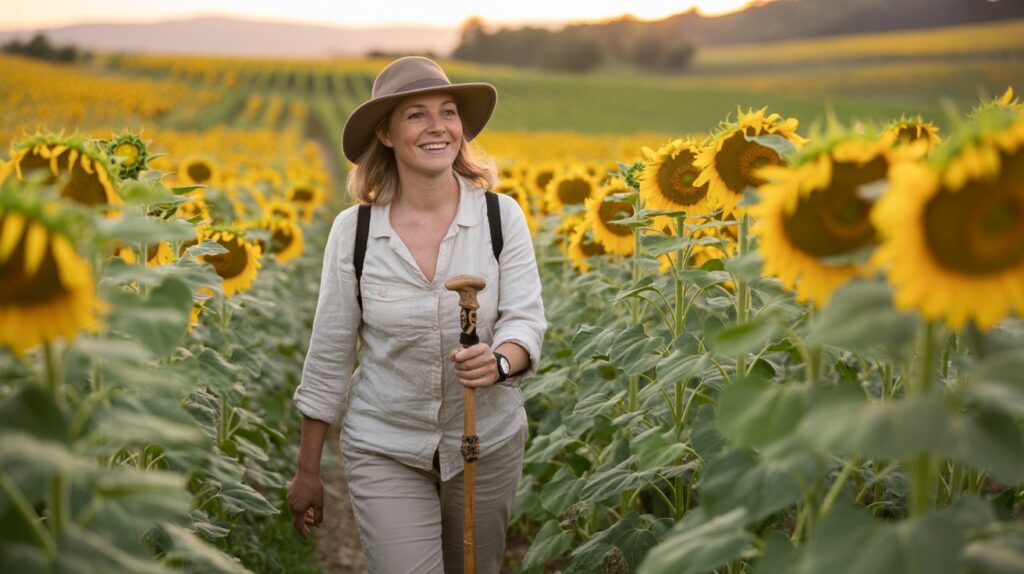
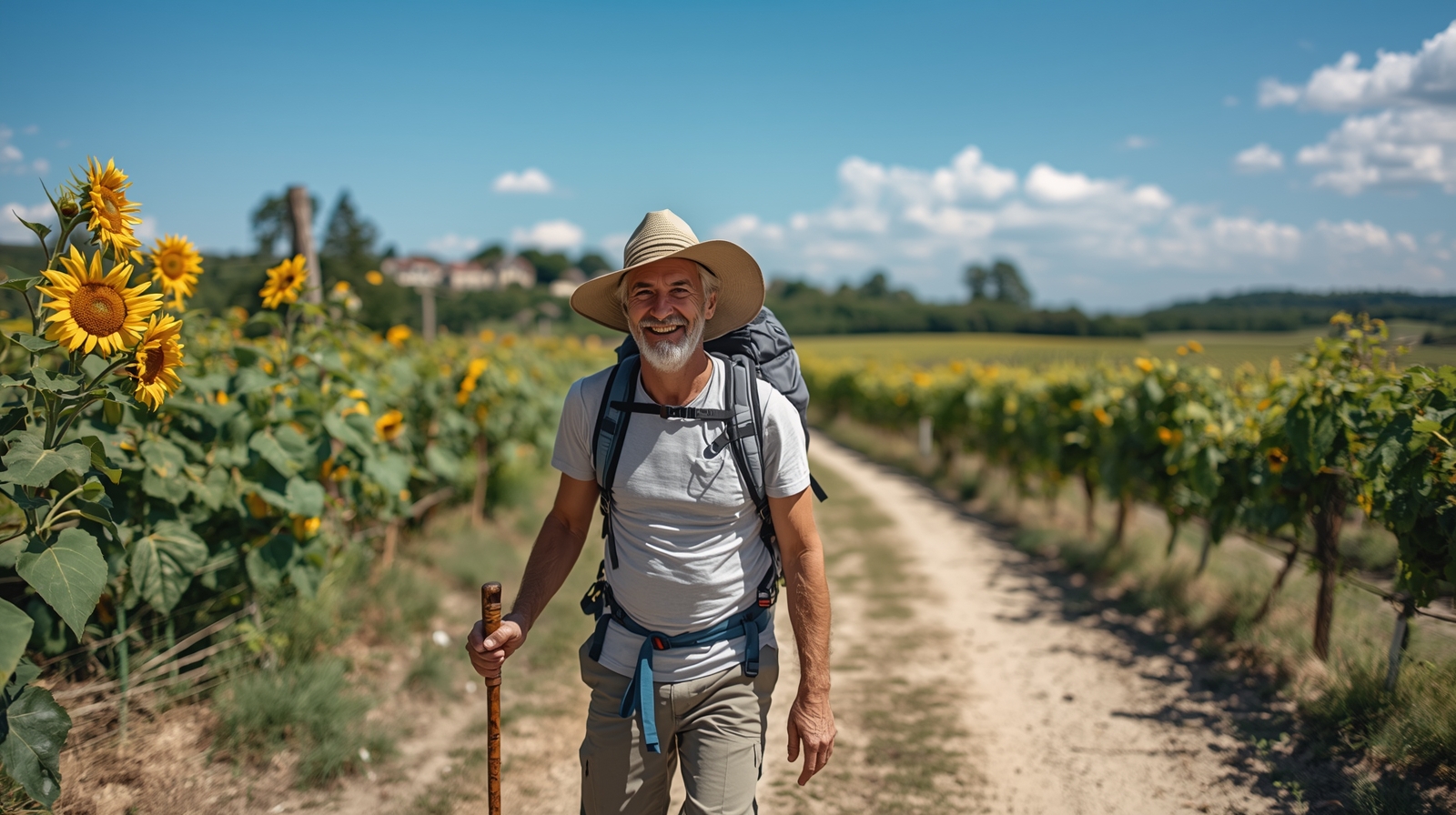
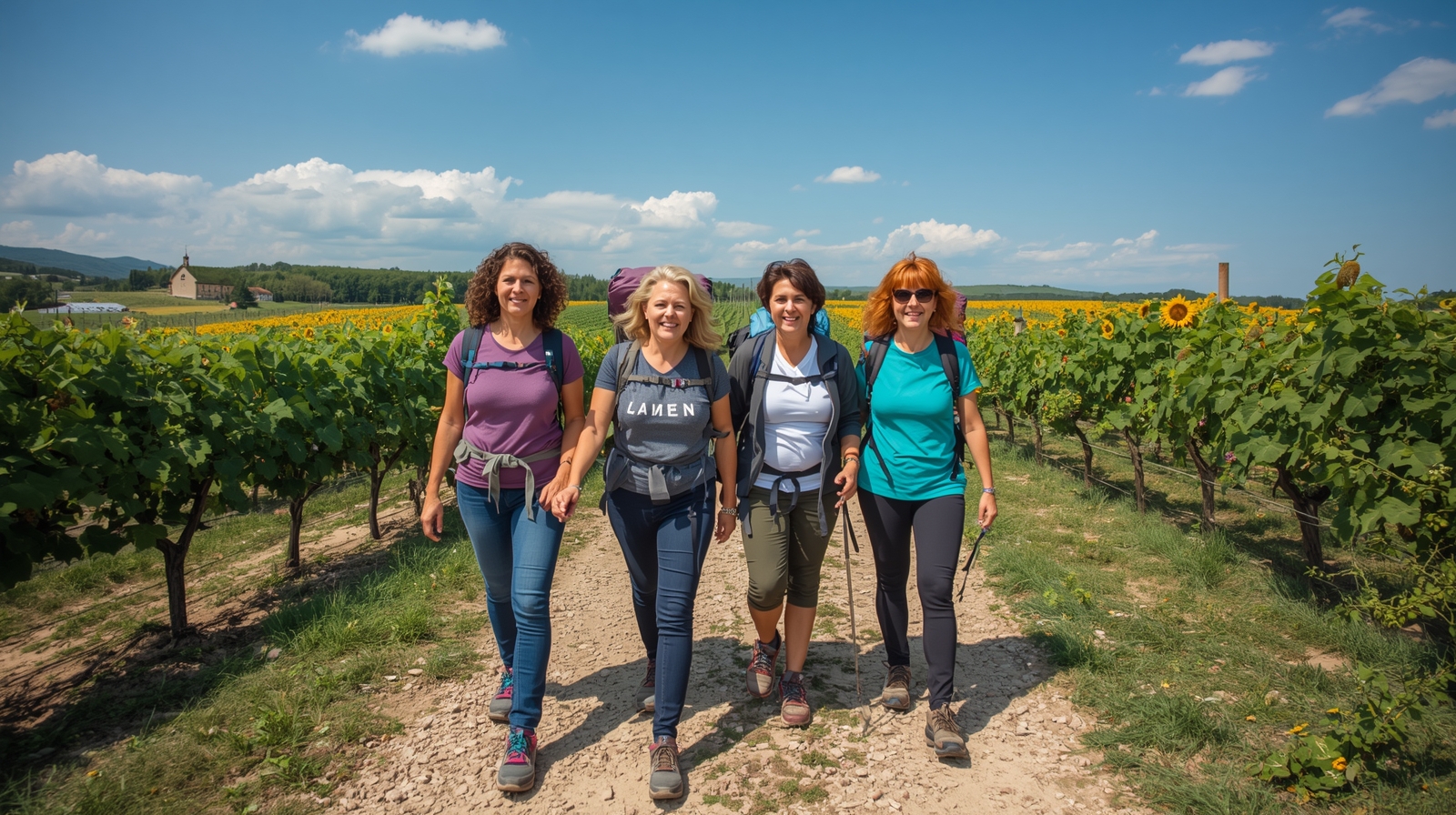
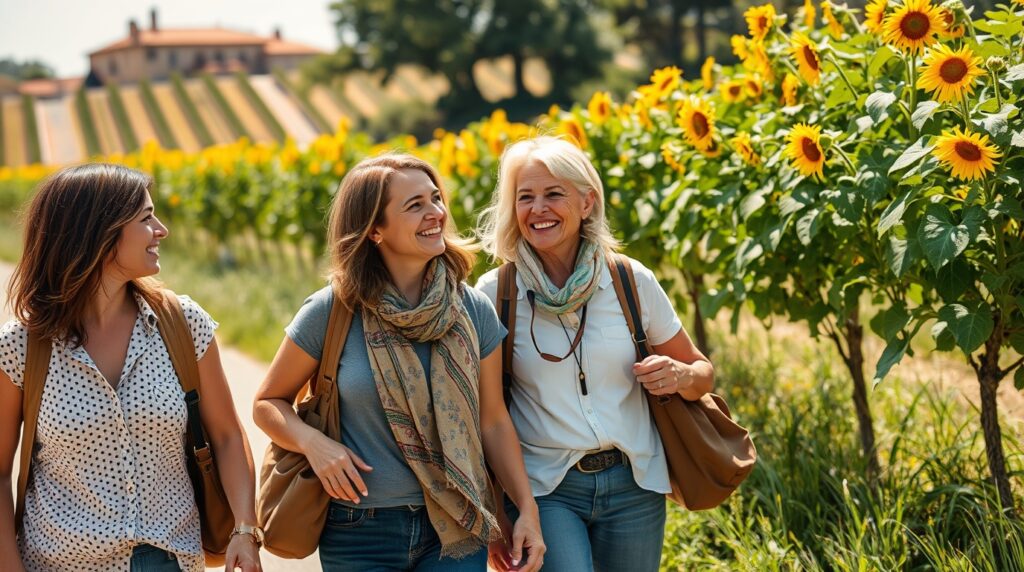
Dr Margaretha Montagu – described as a “game changer”, “gifted healer”, “guiding light” and “life-enriching author” – is a certified transformational retreat leader who guides her clients towards their most meaningful and fulfilling lives, particularly when navigating life transitions – virtually, or with the assistance of her Friesian Horses, at their home in the southwest of France.
Look, we’ve all seen those morning routines videos. You know the ones: someone wakes up at 4:47 AM looking suspiciously well-rested, drinks lemon water while watching the sunrise, journals their gratitude, does yoga on a pristine white rug with their adorable dog/cat/parrot, and somehow makes it to work looking like they’ve just stepped out of a wellness magazine photoshoot.
Meanwhile, the rest of us hit snooze seventeen times, stumble to the kitchen like caffeinated zombies, and consider it a win if we remember to put on matching socks.
Researching my Why do I need a Morning Routine? article, I discovered there is a whole world of morning routines out there that are actually… way out weird? Borderline unhinged?Stark, raving bonkers? You decide. Here are 22 unconventional ways to start your day that’ll make you either the most interesting person at brunch or someone people politely avoid making eye contact with. Your call.
Margaret’s Morning
5:45 AM: Margaret’s alarm goes off. But instead of groaning and reaching for her phone, she bolts upright, rips off her pajamas, and sprints directly to her backyard kiddie pool filled with ice water. Her neighbours have stopped calling the police.
5:50 AM: Emerging from the cold plunge, now thankfully wrapped in her dressing gown, Margaret stands barefoot on her lawn for exactly 11 minutes of “grounding.” Mrs. Henderson from next door waves. Margaret does not wave back—she’s in her silent non-communicative hour.
6:01 AM: Time for breakfast! Margaret, eyes closed, blindfolded for maximum sensory deprivation, attempts to eat yoghurt with her left hand (she’s right-handed). Approximately 40% makes it into her mouth. Her shirt bears the evidence of the other 60%.
6:15 AM: Margaret removes the blindfold and stands in front of her bathroom mirror for an intense session of mirror work affirmations. “You are POWERFUL, Margaret!” she shouts at her reflection. “You are a FORCE OF NATURE!” Her roommate texts from the other room: “plz stop i have a meeting in 10 min”
6:30 AM: Before allowing herself coffee, Margaret must solve today’s riddle: “What has keys but no locks, space but no room, and you can enter but can’t go inside?” She stares at her phone for eight minutes before finally Googling it. (It’s a keyboard. Obviously. She knew that.)
6:45 AM: Finally caffeinated, Margaret spends ten minutes plotting her random act of kindness for the day. She settles on leaving encouraging sticky notes in the office bathroom stalls.
7:00 AM: One full song of uninhibited dancing in her bedroom. Today’s selection: “Baby Shark.” She achieves spiritual enlightenment around the “doo doo doo doo doo doo” part.
Margaret arrives at work looking slightly disheveled, smelling faintly of grass and pool chlorine, with yoghurt on her collar. But is she ALIVE? Is she PRESENT? Of course she is.
Is she questioning the very fabric of reality before 8 AM?
You bet your gratitude journal she is.
The Morning Routines List: 22 Ways to Shake Up Your Morning
1. Cold plunge first thing – Jump into ice-cold water or a cold shower immediately upon waking to shock your system into alertness and boost circulation. Your nervous system will either thank you or file for divorce.
2. Morning silence hour – No phones, music, or talking for the first 60 minutes—just quiet contemplation and presence. Perfect for introverts or people avoiding their responsibilities.
3. Backward breakfast – Eat dessert for breakfast instead of traditional breakfast food. Life’s short. Have the cake.
4. Sunrise photography walk – Head out with a camera to capture the early morning light, combining exercise with creative practice. Bonus: you’ll finally use that expensive camera gathering dust.
5. Writing morning pages in unusual places – Journal three stream-of-consciousness pages while sitting in your car, on the roof, or in a closet. The weirder the location, the more honest you’ll be. Apparently.
6. Random act of kindness planning – Spend 10 minutes plotting a small anonymous act of kindness you’ll execute that day. Be the mysterious hero nobody asked for.
7. Singing or humming for 10 minutes – Use vocal exercises to activate your voice and energise your body. It’s a type of breathwork.
8. Barefoot grounding – Stand outside on grass, dirt, or sand for 10-20 minutes to “ground” yourself to the earth’s energy. Science is still out on this one, but it feels nice.
9. Micro-adventure challenge – Take a different route to work or explore a new street in your neighbourhood each morning. Get lost on purpose.
10. Inverted morning – Do headstands, handstands, or use an inversion table to get blood flowing in the opposite direction. See the world from a new perspective, literally.
11. Sensory deprivation start – Spend time in a dark, quiet room or wear a blindfold and earplugs to heighten awareness. Basically, meditation for people who think they’re too cool for meditation.
12. Creative constraint challenge – Set a weird limitation for your morning (only use your left hand, hop everywhere, speak in rhymes) to activate different neural pathways.
13. Morning debate with yourself – Argue both sides of a random topic out loud to activate critical thinking before the day begins. “Should cereal be considered a soup?” Discuss.
14. Scent-based wake-up – Use strong, unusual scents like eucalyptus, peppermint oil, or coffee beans to stimulate your olfactory system first. Your nose leads, you follow.
15. Gratitude scavenger hunt – Find five things in your home you’re grateful for that you’ve never consciously appreciated before. That weird lamp your aunt gave you? Today’s its day to shine.
16. Mirror work affirmations – Stand face-to-face with yourself in the mirror for 5-10 minutes, making direct eye contact while speaking affirmations. It’s uncomfortable, which means it’s probably working.
17. Darkness breakfast – Eat your morning meal completely in the dark or blindfolded to heighten your other senses and create a meditative eating experience. Napkins recommended.
18. Morning voice memos to future self – Record rambling audio messages to yourself about your current thoughts, dreams, or goals to listen to months or years later. Future you will either cringe or cry. Maybe both.
19. Puzzle or riddle before coffee – Refuse caffeine until you’ve solved a complex puzzle, riddle, or brain teaser. Masochistic but effective.
20. Dance party for one – Put on high-energy music and dance wildly for one full song with complete abandon, curtains closed, no judgment. What happens in the living room stays in the living room.
21. Opposite hand routine – Brush teeth, make coffee, get dressed, and do everything with your non-dominant hand to build new neural pathways. Also builds patience. And humility.
22. Watch 10 minutes of stand-up comedy. Because one really shouldn’t take life too seriously.
Ditto this blog post.
The Bottom Line
Morning routines don’t have to make sense to anyone but you. While the internet insists you need to wake up at dawn, meditate for an hour, and optimise every second of your existence, maybe what you actually need is to stand on one foot while eating ice cream and reciting Shakespeare. I can’t believe I just wrote that.
The best morning routine is the one that makes you feel alive, present, and maybe just a tiny bit unhinged. It’s the one that breaks the monotony of alarm-snooze-coffee-commute-repeat. It’s the one that reminds you that mornings don’t have to be something you survive—they can be something you actually look forward to. Maybe.
So tomorrow, when that alarm goes off, don’t reach for your phone. Maybe crawl to the kitchen instead. Eat dessert. Stand on your head. Argue with your reflection. Dance like nobody’s watching (because hopefully, nobody is).
Life’s too short for boring mornings.
Here’s to weird and wonderful.
Now, if you’ll excuse me, I have a date with Bach’s Toccata and Fugue in D Minor and my other questionable life choices. And then I’m going to watch this:
Author Bio: Dr Margaretha Montagu – described as a “game changer”, “gifted healer”, “guiding light” and “life-enriching author” – is an experienced medical doctor, a certified NLP practitioner, a medical hypnotherapist, an equine-assisted psychotherapist (EAGALAcertified) and a transformational retreat leader who guides her clients through life transitions – virtually, or with the assistance of her Friesian and Falabella horses, at their home in the southwest of France.
You’re successful. You’re accomplished. You run companies, manage teams, juggle impossible deadlines, and somehow still make it to your daughter’s piano recital. So why does everything feel like you’re perpetually running to catch a train that left the station three hours ago? This article explores why the most powerful people in the world swear by morning routines—and why you might actually need one too. Not because you’re failing, but because you’re ready to stop merely surviving and start genuinely thriving.
Five Key Takeaways for Time-Starved Professionals
Morning routines aren’t about productivity theatre—they’re about reclaiming sovereignty over your own nervous system before the world makes its demands.
The first hour of your day sets your biochemical tone—cortisol, decision fatigue, and emotional resilience are all established in those precious morning moments.
High achievers who resist routines often do so because they’re already running on empty—creating structure feels like “one more thing” when you’re already sinking in quicksand.
A morning routine isn’t another item on your to-do list—it’s the foundation that makes everything else possible, including being present for the people you love.
Starting small changes everything—you don’t need a three-hour ritual involving yoga, journaling, and cold plunges. You need ten intentional minutes that belong entirely to you.
Introduction: You’re Awake at 4:11, Again
It’s 3:47 in the morning, and you’re awake again.
Not because you want to be. Not because you’ve suddenly been blessed with the gift of insomnia as a life hack. But because your mind is already racing through tomorrow’s presentation, the difficult conversation you need to have with your business partner, whether you remembered to sign the permission slip for your son’s field trip, and that nagging sensation that you’re somehow letting everyone down—including yourself.
You’ve read the articles. You know the statistics. Establishing well-defined habits conserves mental energy whilst staying focused on priorities, and in 2025, leading executives have refined their morning habits to enhance mental clarity, physical well-being, and productivity. But here’s the thing nobody tells you: when you’re already overwhelmed, the idea of adding anything else to your day—even something beneficial—feels like being asked to juggle flaming torches whilst standing on one leg.
So let me ask you directly: Why do you need a morning routine?
The answer isn’t what you think. It’s not about becoming more productive (though that’s a useful side effect). It’s not about optimising every moment of your existence until you’re essentially a well-dressed robot. It’s about something far more profound: reclaiming your life before your life reclaims you.
I’ve spent twenty years working with professionals exactly like you, people whose external success masks an internal chaos that’s becoming increasingly difficult to manage. For the past fifteen years, I’ve hosted stress management retreats where guests walk the ancient Camino de Santiago, finding their rhythm again through mindfulness, meditation, and the simple act of putting one foot in front of the other. I’ve written eight non-fiction books about divorce, loss, unexpected illness, and coping with crises—the unglamorous territory of being human when life doesn’t go according to plan. And I’ve gathered over forty testimonials from guests who’ve discovered that transformation doesn’t require dramatic gestures; it requires consistent, intentional attention to the moments that matter most.
Including the morning ones.
Alan Nottman’s 4:13 AM Epiphany
Alan Nottman stood in his kitchen at 4:13 AM, staring at the coffee machine as though it held the secrets to the universe. Outside, the world was still mercifully dark, that particular quality of pre-dawn darkness that feels both peaceful and vaguely accusatory, depending on why you’re awake.
He wasn’t supposed to be awake.
The coffee machine gurgled to life—a sound he knew so intimately he could probably identify it in a police line-up of household appliances. His hand reached for the mug before his brain fully engaged, muscle memory from years of predawn wake-ups. The ceramic was cold against his palm, a small shock of reality that made him pause.
How many mornings had he stood in this exact spot, this exact position? How many times had he promised himself “just this week” or “after this project” or “once things settle down”? And how many times had “things settling down” proven to be as mythical as unicorns or balanced budgets?
Alan’s feet were cold on the kitchen tiles—he’d forgotten slippers again. The chill travelled up through his heels, a creeping reminder that his body still existed beneath the suit and the titles and the carefully cultivated persona of someone who had everything under control. His shoulders ached. When had they started aching? Probably around the same time his jaw had started clenching during conference calls, though he couldn’t pinpoint exactly when that had begun either.
The coffee finished brewing, releasing that rich, almost chocolatey aroma that had once meant possibility but now simply meant survival. He poured it slowly, watching the dark liquid fill the mug with the kind of intense focus usually reserved for bomb disposal or signing divorce papers. Which, he thought darkly, weren’t entirely unrelated activities in his current life trajectory.
His phone buzzed on the counter—a dull, insistent vibration that made his stomach tighten before he even looked at the screen. Emails. Of course. Because somewhere in the world, it was already business hours, which meant somewhere in his world, someone needed something. The notification count glowed like a small, accusatory sun: 47 unread messages since he’d checked at midnight.
Midnight. When he’d finally climbed into bed next to his wife, Sarah, trying not to wake her, though they both knew she was already awake, pretending to sleep because it was easier than acknowledging the growing chasm of unspoken resentments between them. When had they stopped talking? Really talking, not just exchanging logistics about school pickups and whose turn it was to call the plumber?
Alan lifted the coffee mug to his lips, and the steam rose into his face—warm, almost intimate, like a secret being shared. The first sip burned slightly, that perfect edge of discomfort that meant the coffee was exactly the right temperature. He closed his eyes, just for a moment, allowing himself this small pleasure.
And in that moment, with his eyes closed and the coffee warming his hands and the silence of the pre-dawn kitchen wrapping around him like a cocoon, something shifted.
It wasn’t dramatic. There were no angels singing or celestial lights breaking through his ceiling. But Alan became suddenly, achingly aware that this might be the only moment today that truly belonged to him. Not to his clients. Not to his board of directors. Not to the seventeen people who reported to him or the quarterly earnings call that would determine whether his company met projections. Not even to his children, whom he loved desperately but saw mostly as tired faces across the dinner table, faces that had started looking at him with a mixture of need and resignation, as though they’d already accepted his absence even when he was physically present.
This moment. This coffee. This kitchen. This strange, liminal space between night and day. It was his.
And he was wasting it checking emails.
Alan set down his phone with deliberate care, as though it might explode if handled roughly. His hand trembled slightly—adrenaline or exhaustion, he couldn’t tell anymore. They felt increasingly similar. He looked around his kitchen properly for the first time in months: the stack of school artwork pinned haphazardly to the fridge, his daughter’s drawing of their family where he appeared as a tiny figure in the corner, holding what looked like either a briefcase or a tombstone. The pile of unread cookbooks his wife had bought during that brief period when she’d convinced herself that if she just made more elaborate meals, he’d come home earlier. The motivational magnet someone had given him that read “Success is a journey, not a destination,” which had always struck him as something people said to justify never actually arriving anywhere.
The kitchen smelled like coffee, yes, but also like the faint ghost of last night’s dinner—something with garlic that his daughter had refused to eat, leading to the usual negotiation, followed by the usual defeat, followed by cereal before bed. The smell of family life, messy and imperfect and somehow both comforting and suffocating.
Alan’s breathing had slowed. He noticed this with surprise, the way you notice you’ve been humming a song without realising it. His shoulders had dropped maybe half an inch, though they still carried enough tension to qualify as mountain ranges. The clock on the microwave blinked 4:19 AM. Six minutes had passed. Six minutes of not checking emails, not planning, not optimising, not achieving. Just… being.
He heard a sound from upstairs—the pipes groaning as water moved through them, which meant Sarah was awake too, probably standing in their ensuite bathroom, staring at herself in the mirror and wondering when her husband had become a stranger who occasionally slept in her bed. The thought made his chest tighten with a guilt so familiar it had almost become comfortable.
What if, Alan thought, the question wasn’t “How do I fit more into my day?” What if the question was “How do I make sure the day doesn’t steal everything from me before I’ve even had a chance to remember who I am?”
He took another sip of coffee. The taste had changed slightly now that it had cooled—less bitter, more complex, with subtle notes he’d never noticed before because he was usually already halfway out the door by this point in his morning.
Alan looked at his phone again, still buzzing periodically like an insect trapped in amber. For the first time in years, he made a choice that terrified him more than any board meeting or earnings call ever had: he decided not to pick it up. Not yet. Not for another ten minutes. Maybe twenty.
He had no idea what he’d do with those minutes. He had no routine, no plan, no productivity hack to optimise this thin slice of morning. But standing there in his kitchen with cold feet and warm coffee and the strange sensation that he’d just stumbled across something important without even looking for it, Alan Nottman decided that maybe, just maybe, not having a plan was exactly the point.
That’s when the real work began.
The Annoying Truth About Morning Routines
Here’s what nobody tells you about morning routines: they’re not really about the morning at all. They’re about identity.
Every morning, whether you realise it or not, you’re making a fundamental choice about who you are and what your life means. Are you someone who reacts, or someone who responds? Are you a person whose day owns them, or someone who owns their day? These aren’t abstract philosophical questions—they’re neuroscience.
Research has found that well-defined routines can reduce cognitive load, freeing mental resources for creative thinking. But let’s translate that from academic-speak into human terms: every decision you make depletes your energy. Every time you wonder, “What should I do next?” you’re spending precious mental currency that you’ll need later for actual important decisions. By the time you’ve decided what to wear, what to eat, whether to exercise, and how to respond to the seventeen things demanding your attention before 8 AM, you’re already exhausted. And you haven’t even started work yet.
A morning routine isn’t about optimising your productivity (though that happens). It’s about protecting your nervous system from the onslaught of demands, decisions, and digital noise that will otherwise colonise your consciousness before you’ve had a chance to remember what you actually care about.
Think about it this way: when you board an aeroplane, the flight attendants tell you to put on your own oxygen mask before helping others. This isn’t selfishness—it’s survival. Your morning routine is your oxygen mask. It’s the twenty minutes (or two hours, or even just ten minutes) where you remember that you’re not merely a productivity unit or a problem-solving machine. You’re a human being with a body that needs care, a mind that requires stillness, and a spirit that deserves to be more than merely functional.
The Ripple Effect: How Your Morning Changes Everything
But here’s where it gets really interesting: your morning routine doesn’t just affect you. It affects everyone around you.
I’ve watched this transformation countless times during my Camino de Santiago retreats. Someone arrives frazzled, disconnected, running on fumes and force of will. They start each day with simple mindfulness practices before walking—nothing elaborate, just breathing, noticing, being present. Within days, their entire demeanour shifts. They become more patient. More present. More genuinely themselves. And then they start talking about the changes they want to make when they return home. Not huge, sweeping changes. Small ones. Like reclaiming their mornings.
Those small changes ripple outward. A parent who’s less frazzled in the morning creates a calmer household for their children. An executive who’s centred before entering the office makes better decisions and creates less stress for their team. A partner who’s taken time to care for themselves has more capacity to genuinely connect with their spouse. This isn’t new-age philosophy—it’s practical emotional ecology.
We live in an interconnected system. Your stress is contagious. But so is your calm. So is your groundedness. So is your capacity to be fully present for the people and moments that matter.
The Community Dimension: Beyond Individual Transformation
In my storytelling circles, we explore this idea regularly. We gather—professionals, parents, people navigating transitions—and we tell stories about the moments that changed us. And repeatedly, the stories that resonate most deeply are about small morning moments: the cup of tea drunk in silence before the house wakes, the ten-minute walk around the block, the journal entry that unlocked clarity, the meditation that reconnected someone to their own breath.
These aren’t trivial domestic details. They’re the foundation of resilient communities. Because communities aren’t built by exhausted, overwhelmed people running on empty. They’re built by individuals who’ve learned to care for themselves well enough that they have genuine capacity to care for others.
When you establish a morning routine, you’re not just changing your day—you’re participating in a quiet revolution of people choosing presence over productivity theatre, depth over distraction, being over merely doing.
Three Powerful Writing Prompts to Explore Your Morning Identity
Grab your journal (or open your notes app, I’m not precious about the format) and spend ten minutes with each of these prompts:
1. The Morning Inventory Describe your typical morning in excruciating sensory detail. What do you hear, smell, feel, taste, see? Don’t analyse or judge—just observe and record. Then ask yourself: Is this the morning of someone living the life they want, or someone surviving the life they have?
2. The Future Morning Write about your ideal morning five years from now. Not the Instagram-perfect, perfectly lit version—the real one. What does it feel, sound, smell like? Who else is there? What emotional quality does it have? How does your body feel? What’s the first thought you have when you wake? Now ask yourself: What’s the smallest step I could take tomorrow to move one inch closer to that morning?
3. The Morning Legacy Imagine your children, or your team members, or your closest friends describing your morning energy to someone else. What would they say? Would they describe someone rushed, stressed, distracted? Or someone grounded, present, intentional? Write the description you’d want them to give, then write the description they’d honestly give today. The gap between those two descriptions is your invitation to change.
Further Reading: Five Unconventional Books That Will Transform Your Relationship with Mornings
Most books about morning routines are insufferably prescriptive: wake at 5 AM, meditate for an hour, run ten kilometres, drink green juice, optimise your mitochondria. These books are not that. These are books that understand the deeper questions beneath the surface ones.
1. “The Miracle of Mindfulness” by Thich Nhat Hanh
Why this book: This Vietnamese Buddhist monk doesn’t tell you what to do with your mornings—he teaches you how to be fully present for whatever you’re doing. Whether you’re washing dishes or drinking tea, he offers practices for transforming ordinary moments into extraordinary ones. For the busy professional who believes they don’t have time for elaborate routines, this book reveals that presence isn’t about time—it’s about attention. And attention is something you can practise anywhere, including in your kitchen at 6 AM whilst making coffee.
2. “My Grandmother’s Hands: Racialised Trauma and the Pathway to Mending Our Hearts and Bodies” by Resmaa Menakem
Why this book: This might seem like an unusual choice for a morning routine book, but stay with me. Menakem explores how trauma lives in our bodies and how we can heal through somatic practices. Many high-achieving professionals carry stress not in their minds but in their clenched jaws, tight shoulders, and shallow breathing. Your morning routine needs to address your body, not just your schedule. This book offers practical body-based practices that take minutes but can shift your entire nervous system. It’s especially valuable for understanding how your morning stress patterns might be inherited survival responses rather than personal failings.
3. “Kitchen Table Wisdom” by Rachel Naomi Remen
Why this book: Remen, a physician who counsels people with life-threatening illnesses, writes about the wisdom found in ordinary moments. Her short, story-driven essays are perfect for reading in small increments—perhaps, say, during a morning routine. What makes this book invaluable is her understanding that transformation doesn’t happen through grand gestures but through small, consistent moments of noticing, caring, and choosing differently. Her writing reminds us that our morning routine isn’t about perfection—it’s about practising kindness towards ourselves.
4. “Braiding Sweetgrass” by Robin Wall Kimmerer
Why this book: Kimmerer, a botanist and member of the Citizen Potawatomi Nation, writes about the indigenous practice of greeting the day with gratitude and attention to the natural world. Her lyrical writing invites us to consider our morning not as a productivity sprint but as a threshold moment where we cross from the dream world into the waking world. For professionals who feel disconnected from their bodies and the natural world, this book offers a gentle reconnection. Reading even a few pages in the morning can shift your entire orientation from scarcity and urgency to abundance and relationship.
5. “The Practice of Groundedness” by Brad Stulberg
Why this book: Stulberg writes for high-achievers who’ve discovered that constant striving has left them feeling unmoored and exhausted. Unlike traditional productivity books, this one argues for groundedness over growth, presence over performance. He offers practical frameworks for building routines that create stability rather than just efficiency. What I particularly value is his honesty about the challenges of maintaining practices when life gets chaotic—because life always gets chaotic. This book acknowledges that reality whilst still offering genuine pathways forward.
PS: And Then There’s “Embracing Change – in 10 Minutes a Day”
I wrote this book for people exactly like you: professionals who believe they don’t have time for transformation. The premise is simple and perhaps slightly rebellious: meaningful change doesn’t require hours of daily practice. It requires ten minutes of consistent, intentional attention. The book offers daily practices for navigating transitions, building resilience, and reclaiming your life from the tyranny of urgency. Many of the practices work beautifully as morning routines precisely because they’re designed for time-starved, overwhelmed humans who are doing their best with limited resources. It’s available on my website, and I wrote it because I was tired of transformation being marketed as something that requires wealth, leisure, and a personal assistant to manage your existing commitments whilst you become enlightened.
Real Voices: Two Stories of Morning Transformation
Sarah’s Story: From Camino Guest to Morning Advocate
“I arrived at Dr Montagu’s Camino retreat in pieces. Successful on paper, shattered in reality. The idea of a ‘morning routine’ felt like a joke—I could barely manage to get dressed most days without feeling overwhelmed. But those mornings on the Camino changed everything. We’d wake early, gather for simple mindfulness exercises, then walk in silence as the sun rose. Nothing elaborate. Just breathing, walking, noticing. For the first time in years, I experienced mornings that didn’t feel like an assault. When I returned home, I was terrified of losing that peace. But I didn’t. I started with just ten minutes before my family woke—sitting in silence, drinking my coffee with actual attention. That ten minutes has become the anchor of my entire day. I’m not exaggerating when I say it saved my marriage and my sanity. Those mornings on the Camino didn’t just give me a routine—they gave me back my life.” — Sarah T., Marketing Director, London
Jennifer’s Story: Empty Nest, Full Mornings
“Joining Dr Montagu’s storytelling circle seemed frivolous at first. My children had left home, my career was winding down, and I felt invisible and purposeless. But in those circles, I discovered something profound: my stories mattered. And the story that surprised me most was about my mornings. For thirty years, my mornings had belonged to everyone else—getting children ready, managing household chaos, coordinating schedules. When that ended, I felt lost. I had no idea who I was in the morning without someone needing me. The storytelling circle helped me see that reclaiming my morning wasn’t selfish—it was necessary. I started small: tea on my patio, watching birds, writing in my journal. Those quiet mornings taught me who I am beyond mother, beyond wife, beyond professional. I’m someone who loves the way morning light looks on leaves. Who thinks better with a warm cup in her hands. Who still has stories to tell, even if they’re just to myself. My mornings now aren’t about productivity—they’re about companionship with myself. That might sound strange, but it’s the most important relationship I’ve rebuilt.” — Jennifer M., Teacher (retired), Manchester
Five Razor-Sharp FAQs
Q1: I barely have time to shower in the morning. How am I supposed to add a routine?
Here’s the uncomfortable truth: you do have time. You’re choosing to spend it reactively—checking emails in bed, scrolling news whilst brushing your teeth, letting the morning happen to you instead of with you. Start with five minutes. Set your alarm five minutes earlier. Use those minutes to sit quietly and breathe. Not meditate perfectly, not optimise, not achieve—just breathe. If you genuinely cannot find five minutes, your morning routine is the least of your problems. You need to examine your entire life structure, because you’re living in crisis mode masquerading as normal life.
Q2: What if I’m not a morning person?
Then adapt the principle to whenever you wake. The point isn’t to become someone who leaps from bed at 5 AM singing showtunes. The point is to create a deliberate threshold between sleep and the demands of your day. If you naturally wake at 9 AM, your morning routine happens at 9 AM. The time matters far less than the intention. That said, you might discover you’re not actually “not a morning person”—you’re a person who’s been treating mornings as an enemy to overcome rather than an ally to befriend.
Q3: What if my routine stops working?
Then it stops. Routines aren’t meant to be rigid structures that you maintain through force of will when they’re no longer serving you. They’re meant to evolve with your life. Pregnancy, illness, job changes, family crises—these all require adaptation. The flexibility to adjust your routine when circumstances change isn’t failure. It’s wisdom. Start again. Start smaller. Start differently. The point is the starting, not the perfection.
Q4: Can’t I just have coffee and get on with my day? Why does everything have to be so intentional?
You absolutely can. And if your life is genuinely working brilliantly, if you’re deeply satisfied, connected, energised, and fulfilled, then carry on. But you’re reading this article, which suggests something isn’t working. The question isn’t “Why does everything have to be so intentional?” The question is: “What happens when you spend your entire life on autopilot, never stopping to ask if you’re actually heading where you want to go?” Intention isn’t the enemy of spontaneity—it’s the foundation that makes genuine spontaneity possible.
Q5: What if I try and fail? I’ve tried morning routines before and they never stick.
Then you’ve learned what doesn’t work for you. Try differently, not harder. Maybe you’ve been attempting someone else’s ideal morning instead of designing your own. Maybe you’ve been making it too complicated. Maybe you’ve been treating your morning routine as another achievement to optimise rather than a gift you give yourself. Here’s a radical thought: what if “failing” at a morning routine just means you haven’t found your rhythm yet? Keep experimenting. Treat it like play rather than performance. And remember: even one morning of choosing presence over reactivity is worth celebrating, not dismissing because you “failed” the rest of the week.
Conclusion
So why do you need a morning routine?
Not because you’re broken and need fixing. Not because you’re insufficiently optimised or productive. Not because successful people do it and you should too.
You need a morning routine because you deserve to remember who you are before the world tells you who you need to be today.
You need a morning routine because your nervous system deserves a moment of peace before the onslaught begins.
You need a morning routine because the people you love deserve the best version of you, not the frazzled, depleted version that’s left over after you’ve given everything away to everyone else.
You need a morning routine because life is short, and spending your mornings in reactive chaos isn’t how you want to spend the precious, limited mornings you have remaining.
And mostly, you need a morning routine because somewhere deep inside, beneath the exhaustion and the obligations and the carefully maintained persona of having everything under control, there’s a version of you that remembers what it feels like to greet the day with something approaching curiosity, or peace, or even joy. That version hasn’t disappeared. It’s just been waiting for you to create the space for it to emerge.
Your morning routine is that space. It’s not one more thing on your impossibly long list. It’s the foundation that makes everything else possible—not just bearable, but actually meaningful.
Start tomorrow. Start with five minutes. Start with breathing. Start imperfectly. Start messy. Start without knowing exactly what you’re doing.
Because your life—your real life, not the one you’re performing for everyone else—is waiting for you in those morning moments. And it’s been patient long enough.
A Gentle Invitation: Walk the Camino, Find Your Rhythm
If this article has stirred something in you—a recognition, a longing, perhaps a whisper of possibility—then let me extend an invitation.
For fifteen years, I’ve hosted small groups of professionals, parents, and people navigating life’s messier transitions on walking retreats along the Camino de Santiago in the south-west of France. These aren’t boot-camp productivity workshops or wellness retreats where you’re relentlessly optimised. They’re something gentler and perhaps more radical: spaces where you remember how to simply be.
Each morning, you’re invited to practise mindfulness and meditation exercises specifically designed for stress management—nothing esoteric or complicated, just practical tools for calming your nervous system and reconnecting with yourself. You walk ancient paths at a human pace, not a productivity race. We gather in storytelling circles where your story matters, where you can explore the questions you haven’t had space to ask anywhere else.
And yes, there are the horses: my gentle Friesians, Twiss, Kashkin and Zorie, and my charming Falabellas, Loki and Lito. They teach us things about presence and authenticity that no human teacher could convey quite the same way.
These 7-day retreats aren’t about escaping your life—they’re about remembering how to live it fully. Many guests arrive wondering if they need a morning routine. By the time they leave, they’ve already established one, not through force or discipline, but through the simple experience of what it feels like to greet each day with intention, peace, and genuine presence.
The retreats are small by design, typically just two to four participants. This isn’t about crowds or networking—it’s about depth, connection, and having enough space and silence to hear your own thoughts again.
If you’re curious about what mornings could feel like when they belong to you rather than your obligations, I’d be honoured to host you.
Sometimes the answer to “Why do I need a morning routine?” is best discovered not through reading about it, but through experiencing what it feels like to wake up in the French countryside, step onto ancient paths, and discover that you’ve been carrying your peace with you all along. You just needed permission to access it.
Whenever you’re ready.
Dr. Margaretha Montagu (MBChB, MRCGP) is an NLP Master Practitioner, Storytelling Life Coach, Equine-assisted Learning Facilitator and Medical Hypnotherapist with twenty years of experience in stress management. She has spent fifteen years hosting walking retreats on the Camino de Santiago and has authored eight non-fiction books addressing divorce, loss, unexpected illness, and coping with life’s major crises. Her work combines medical expertise with deep understanding of the human spirit’s capacity for resilience and reinvention.
What Life Lessons Can You Learn While Walking the Camino de Santiago? – a free guide filled with 10 not just “quaint anecdotes” or Instagram-worthy moments (though there are plenty of those) but real transformations from real people who walked this insight-giving trail – Subscribe to my monthly newsletter to Download the Guide
For over a thousand years, pilgrims have made their way across Europe to Santiago de Compostela, each one carrying their own questions, their own burdens, their own hopes. As Johann Wolfgang von Goethe once observed, “Europe was made by pilgrimages to Santiago de Compostela.” But what is it about this ancient path that continues to call to us, generation after generation?
The Teaching Path
Carolyn Gillespie offers a simple but profound truth: “The path is the teacher.” There’s something remarkable about this idea. We’re so accustomed to seeking wisdom in books, in experts, in the voices of others. But the Camino suggests that sometimes the greatest teacher is simply the act of moving forward, step by step, day after day. The path doesn’t lecture. It doesn’t overwhelm you with information. It simply invites you to walk, to breathe, to notice, to be present.
Paulo Coelho takes this idea further, reminding us that “life always teaches us more than the road to Santiago does, but we don’t have much faith in what life teaches us.” How true this is. We’re willing to travel across the world, to blister our feet and ache our muscles, seeking wisdom on an ancient pilgrimage route. Yet somehow we overlook the lessons that life offers us daily in our own homes, our own neighborhoods, our own hearts. Perhaps the Camino’s greatest gift is teaching us to pay attention—not just on the path, but everywhere we go.
António Machado captured this beautifully in his famous verse: “Caminante, no hay camino, se hace camino al andar”—Walker, there is no path, the path is made by walking. These words resonate so deeply because they speak to a fundamental truth about life itself. We cannot wait for the perfect moment, the clear answer, the certain path. We must simply begin, trusting that the way will reveal itself as we go.
Walking With an Wide Open Heart
When preparing for the Camino, many pilgrims ask: What will I find? What answers will I get? What will change? Jane V. Blanchard offers perhaps the wisest counsel for anyone considering this journey: “Don’t come to the Camino looking for answers. Instead, come with an open heart and you may be surprised by what you find.”
This invitation to openness is at the heart of the pilgrim experience. When we come seeking specific answers, we often miss the gifts we weren’t expecting. But when we come with open hearts, ready to receive whatever the journey offers, transformation becomes possible. The Camino has a way of giving us what we need rather than what we think we want.
Kevin A. Codd speaks to this mystery when he writes about the pilgrim spirit: “To feel the pull, the draw, the interior attraction, and to want to follow it, even if it has no name still, that is the pilgrim spirit. The ‘why’ only becomes clear as time passes, only long after the walking is over.” How many of us have felt that wordless pull toward something we can’t quite name? That sense that we need to go, to walk, to seek, even when we can’t articulate exactly what we’re seeking? This is the beginning of pilgrimage—following that inner call with trust rather than certainty.
A Metaphor for Life
Hape Kerkeling describes the Camino as “a metaphor for life: You start out not knowing what to expect, you take it step by step, and you trust the path ahead.” In these words, we find a mirror of our own experience. Life, like the Camino, rarely gives us the complete map at the beginning. We set out with hopes and plans, but the actual journey unfolds in ways we could never have predicted. We learn to take it day by day, kilometer by kilometer, trusting that each step forward is enough.
Shirley MacLaine echoes this sentiment simply: “Walking the Camino is a metaphor for life itself.” On the path, we experience everything life offers—beauty and pain, connection and solitude, joy and struggle, doubt and faith. We wake before dawn and walk into uncertainty. We meet strangers who become friends. We discover strengths we didn’t know we had. We face our limitations with humility. We keep going even when we’re tired, even when we’re not sure why we’re doing this, even when every part of us wants to stop.
And through it all, as John Brierley reminds us, “The Camino leaves its mark on everyone who walks it.” This mark is different for each pilgrim, but it’s always there—a subtle shift in perspective, a deeper appreciation for simplicity, a renewed sense of what truly matters.
Learning to Keep Going
One of the most practical and profound lessons of the Camino comes from Tristina Oppliger: “The Camino taught me to keep going, to keep moving forward when life gets hard—even if it’s one step at a time.” This is no small thing. In our daily lives, we often wait until we feel ready, until conditions are perfect, until we have the energy or motivation. But the Camino teaches us that sometimes we simply need to put one foot in front of the other, even when it’s hard, even when we’re tired, even when the path ahead seems impossibly long.
There’s a beautiful resilience that develops on the Camino. You wake up with sore feet and aching shoulders, and you walk anyway. You face a mountain that seems too steep, and you climb it anyway. You get lost, and you find your way back. You reach your limit, and then you discover you can go a little further. These lessons of endurance and perseverance don’t stay on the Camino—they come home with us, strengthening us for whatever challenges we face in ordinary life.
Releasing What We Hold Too Tightly
Christine Valters Paintner offers another profound insight: “Pilgrimage invites us to notice what we are holding too tightly to, so we might release ourselves into the current of life.” There’s something about carrying everything you need on your back for weeks that teaches you about the weight of what we carry—both literally and metaphorically.
On the Camino, pilgrims quickly learn to distinguish between what they truly need and what they’ve been carrying out of habit or fear. That extra pair of shoes gets sent home. Those “just in case” items are left behind. And as the backpack gets lighter, something inside us often lightens too. We begin to question: What else have I been carrying that I no longer need? What worries, what grudges, what expectations could I release? What would it feel like to travel lighter through life?
The Transformation, Not the Destination
Richard R. Niebuhr cuts to the heart of pilgrimage with these words: “Pilgrimage is not about the road; it is about the transformation.” Yes, the Camino Frances is beautiful. Yes, Santiago de Compostela is a magnificent destination. Yes, receiving your Compostela certificate is meaningful. But these external markers are not the point. The point is who you become in the process of getting there.
Jane V. Blanchard expresses this beautifully: “Use the guides and the maps to lead you to Santiago; use the lessons learned on the camino to find your way.” The maps get you to the cathedral. But the lessons—about perseverance, about community, about simplicity, about faith, about yourself—these guide you through the rest of your life.
And then comes Paulo Coelho’s beautiful paradox: “Santiago is not the end of the Camino, but the beginning.” After all those kilometers, after all that effort, you arrive at the cathedral, and you realise that this is where the real journey starts. The Camino was preparation, training, awakening. Now comes the harder part: taking what you’ve learned and living it in your everyday life back home.
Walking in Faith
Throughout history, pilgrimage has been a spiritual practice, a physical expression of faith and seeking. The Book of Proverbs offers this assurance: “In all your ways acknowledge Him, and He shall direct your paths.” There’s deep comfort in this promise—that when we walk with awareness, with intention, with openness to something larger than ourselves, we are guided.
Sir Walter Ralegh, in his beautiful poem “The Passionate Man’s Pilgrimage,” prayed for “my scallop shell of quiet, my staff of faith to walk upon, my scrip of joy, immortal diet, my bottle of salvation, my gown of glory, hope’s true gage.” These metaphors speak to the inner resources we need for any pilgrimage: quiet, faith, joy, hope. Whether we’re walking across Spain or simply walking through our daily lives, these are the provisions that sustain us.
The Unexpected Gift of Community
One of the most beautiful surprises of the Camino often comes in the form of other pilgrims. Helen Burns captures this perfectly: “I had no idea when starting off on my lone pilgrimage how many dear friends I would make.” You set out alone, perhaps seeking solitude or self-discovery, and somehow you find yourself walking alongside others who are on their own journeys. You share meals, stories, struggles, and laughter. You help each other over difficult terrain. You celebrate each other’s victories.
The Camino community is unlike any other. There’s a vulnerability, an authenticity, that develops when you’re all carrying your lives on your backs, walking toward the same destination, sharing the same challenges. Strangers become friends quickly because the usual walls we maintain in daily life seem unnecessary here. Everyone is tired, everyone is searching, everyone is trying to keep going. In this shared vulnerability, real connection becomes possible.
Starting Again
So what does the Camino actually teach us? It teaches us that we are stronger than we think. That we need less than we imagine. That beauty exists in simple things—a cold glass of water, a kind word from a stranger, a sunrise over a wheat field. That community forms when we’re open to it. That we can keep going even when we’re tired. That transformation happens not in grand moments but in the accumulation of small steps. That faith is simply continuing to walk, even when you can’t see around the next bend.
The path is still there, ancient and patient, waiting for the next wave of seekers and wanderers and questioners. And perhaps that’s the final lesson: the Camino doesn’t demand perfection or certainty or even understanding. It simply invites us to walk, to remain open, to trust the journey.
As you consider your own path—whether it leads to Santiago de Compostela or simply through the landscape of your daily life—may you walk with courage and curiosity. May you remain open to the lessons that come. May you discover strengths you didn’t know you possessed. May you lighten your load and open your heart. May you find community in unexpected places. And may you remember that every journey, every step, is both an ending and a beginning.
Walking the Camino in Southwest France
Perhaps you’ve felt that quiet pull, that wordless invitation to walk, to seek, to open yourself to transformation. You don’t need to walk 800 kilometers to experience the wisdom of the Camino. Sometimes, a week is enough—enough to step away from the noise of daily life, enough to discover what emerges when you walk with intention, enough to taste the pilgrim spirit and see what it awakens in you.
I invite you to join me for one of my 7-day Camino de Santiago walking retreats in the beautiful countryside of southwest France. You’ll walk a section of this ancient path, carrying a light pack through landscapes that have welcomed pilgrims for centuries. You’ll move at a gentle pace that allows for reflection and conversation, for silence and community. Each evening, we’ll gather to share our experiences, to rest, and to prepare our hearts for the next day’s journey. This is pilgrimage in its most accessible form—a week to step out of your ordinary routine and into something that might just change the way you see everything.
You don’t need to be an experienced hiker. You don’t need to have all the answers about why you want to come. You simply need to feel that pull, that curiosity, that sense that perhaps it’s time to walk toward something. If these words resonate with you, if you’ve been waiting for an invitation to begin your own Camino journey, consider this it.
Buen Camino! May your blisters be few and your insights be many.
What Life Lessons Can You Learn While Walking the Camino de Santiago? – a free guide filled with 10 not just “quaint anecdotes” or Instagram-worthy moments (though there are plenty of those) but real transformations from real people who walked this insight-giving trail – Subscribe to my monthly newsletter to Download the Guide
Author Bio: Dr Margaretha Montagu – described as a “game changer”, “gifted healer”, “guiding light” and “life-enriching author” – is an experienced medical doctor, a certified NLP practitioner, a medical hypnotherapist, an equine-assisted psychotherapist (EAGALAcertified) and a transformational retreat leader who guides her clients through life transitions – virtually, or with the assistance of her Friesian and Falabella horses, at their home in the southwest of France.
The Original Camino de Santiago Quotes:
“The path is the teacher.” Carolyn Gillespie, Pilgrim
“‘Life always teaches us more than the road to Santiago does’, he answered. ‘But we don’t have much faith in what life teaches us’. ” Paulo Coelho
“Don’t come to the Camino looking for answers. Instead, come with an open heart and you may be surprised by what you find.” Jane V. Blanchard
“The Camino is a metaphor for life: You start out not knowing what to expect, you take it step by step, and you trust the path ahead.” Hape Kerkeling, I’m Off Then: Losing and Finding Myself on the Camino de Santiago.
“The Camino leaves its mark on everyone who walks it.” John Brierley
“To feel the pull, the draw, the interior attraction, and to want to follow it, even if it has no name still, that is the “pilgrim spirit. The ‘why’ only becomes clear as time passes, only long after the walking is over.” Kevin A. Codd, Beyond Even the Stars: A Compostela Pilgrim in France
“Caminante, no hay camino, se hace camino al andar.” António Machado
In all your ways acknowledge Him, And He shall direct your paths. Prov 3:6
Give me my scallop shell of quiet, My staff of faith to walk upon, My scrip of joy, immortal diet, My bottle of salvation, My gown of glory, hope’s true gage, And thus I’ll take my pilgrimage. The Passionate Man’s Pilgrimage by Sir Walter Ralegh
“The Camino taught me to keep going, to keep moving forward when life gets hard — even if it’s one step at a time.” Tristina Oppliger
“Pilgrimage invites us to notice what we are holding too tightly to, so we might release ourselves into the current of life.” Christine Valters Paintner
“Use the guides and the maps to lead you to Santiago; use the lessons learned on the camino to find your way.” Jane V. Blanchard
“Pilgrimage is not about the road; it is about the transformation.” Richard R. Niebuhr
“I had no idea when starting off on my lone pilgrimage how many dear friends I would make.” Helen Burns
“Walking the Camino is a metaphor for life itself.” — Shirley MacLaine, The Camino: A Pilgrimage of Courage
“Europe was made by pilgrimages to Santiago de Compostela.” Johann Wolfgang von Goethe
“Santiago is not the end of the Camino, but the beginning.” Paulo Coelho
Why High-Performers Are Trading Meditation Apps for Walking Boots
Summary Executives are having nervous breakdowns in business class. Not the dramatic kind—the silent erosion where you’re crushing quarterly targets while forgetting what joy feels like. The solution isn’t another productivity hack. It’s a simple stress reset: walking. Specifically, walking ancient paths where your smartphone becomes gloriously irrelevant and your nervous system finally exhales. Welcome to the micro-recovery revolution meets medieval pilgrimage—where stress management gets its hiking boots on.
5 Key Takeaways
Micro-recovery beats macro-meditation: Your nervous system doesn’t need hour-long interventions; it needs 60-90 second pressure-release valves throughout your day that you’ll actually use.
Walking meditation synchronises your three brains: Extended walking creates neural coherence between your head (cognition), heart (emotion), and gut (intuition)—something no boardroom ever achieved.
Stress accumulates in the body, not the mind: You can’t think your way out of chronic stress because it’s stored in your fascia, breath patterns, and muscle memory. Movement metabolises it.
The Camino effect is real: Multi-day walking on historic pilgrimage routes triggers measurable changes in brain wave patterns, cortisol levels, and decision-making clarity that persist for months.
Recovery isn’t reward—it’s strategy: High-performers who integrate intentional pauses outperform those who glorify grinding by every meaningful metric: creativity, longevity, leadership presence, and life satisfaction.
Introduction: The Question Nobody’s Asking
Here’s what I’ve learned after 20 years as a GP specialising in stress management and a decade guiding executives through walking retreats on the Camino de Santiago: the people who most need to stop are the ones most convinced they can’t.
We’ve built entire industries around helping people manage stress while remaining stressed. Meditation apps deliver mindfulness between meetings. Wellness programs offer yoga at lunch. Executive coaches teach resilience as if stress were simply a matter of mental fortitude.
But here’s the uncomfortable truth: stress isn’t pressure that needs managing. It’s pressure that needs releasing.
Your body knows this. Your nervous system is screaming it. But your mind—that brilliant, ambitious, achievement-addicted mind—keeps overriding the signals.
What if I told you that the fastest way to reset during a hectic workday isn’t another breathing technique, but remembering how to walk like you mean it? Not walking to your next meeting. Not walking while checking your phone. Walking, as THE point.
And what if the most sophisticated leadership development tool available isn’t in Silicon Valley—it’s a 1,200-year-old footpath across Europe where pilgrims have been sorting out their souls since Charlemagne was crowned?
I love stories, so let me tell you about Marcus.
The Man Who Forgot How to Sleep
Marcus Henshaw’s assistant called me on a Tuesday in March. “He won’t admit it,” she said quietly, “but I think he’s in trouble.”
Marcus was 47, CFO of a mid-sized tech firm, married with two teenagers he saw mainly at breakfast, if breakfast happened. He’d been assesed by his cardiologist after presenting with chest pain that turned out to be nothing—and everything. Clean arteries. Perfect cholesterol. Textbook ECG. But a resting heart rate of 94 and the kind of tension radiating from his shoulders that made the doctor ask, “When did you last take a full breath?”
When Marcus consulted me via Zoom three weeks later, I noticed his hands first. They couldn’t settle. Drumming the chair arm, adjusting his watch, checking his phone even though he’d just checked it. His eyes had that particular glaze of someone running on fumes and caffeine, the pupils slightly dilated, the blink rate too fast.
“I don’t sleep,” he said, before I’d asked anything. Not as confession—as fact. “Two, maybe three hours. I lie there doing Monte Carlo simulations in my head. My wife says I’ve stopp breathing sometimes. I downloaded apps. Tried the magnesium. Read the Matthew Walker book.” He laughed—sharp, bitter. “Knowing why you can’t sleep doesn’t help you sleep.”
I asked him to describe a typical day. He stood up to answer, unable to remain seated, and began pacing his office like a captive animal.
“I wake at 4:47. Don’t know why that exact time, but it’s always 4:47. Lie there until 5:30, then gym. Emails during cardio. Shower at the gym. Protein shake in the car. Office by 7:15. Meetings until lunch, which I eat at my desk while on calls. Afternoon’s the same. Home by 7:30 if I’m lucky, but I’m checking my phone through dinner, which pisses off my wife, and then I work until midnight.” He stopped, looked at me. “That’s a good day.”
“What does your body feel like?” I asked.
He stared at me as if I’d asked him to translate Sanskrit. “My body?”
“When’s the last time you felt your feet on the ground?”
The question stopped him mid-pace. He opened his mouth. Closed it. Opened it again. “I… I don’t know what you mean.”
And there it was. The complete disconnection between the man and the nervous system carrying him around. Marcus’s breath was shallow and high in his chest. His jaw was clenched so tight I could see the muscle working. His shoulders sat somewhere near his ears. When I asked him to take a deep breath, he inhaled sharply through his nose and held it, as if breathing were another task to optimise.
“Marcus,” I said gently, “your body thinks it’s being chased by a bear. Every moment of every day. That’s what’s happening physiologically. You’re not broken. You’re not weak. You’re just stuck in a nervous system state that was designed for acute danger, not chronic pressure.”
Something shifted in his face. Not relief exactly—recognition.
“I’m going to suggest something that will sound insane,” I continued. “I want you to walk across part of France with me. No laptop. No phone signal for most of it. Just walking. Eight days. On an ancient pilgrimage route where millions of people have walked for over a thousand years.”
He laughed. “I can’t just disappear for eight days.”
“That’s what every single person says. And then they do. And then they come back and realize they should have done it three years earlier.”
Three months later, Marcus stood in the town square of Eauze in southwest France, looking mildly terrified. His backpack was too heavy—first-timer mistake, despite the packing list. His hiking boots were broken in but his face wasn’t. He kept reaching for the phone I’d asked him to leave in the locked safe at our accommodation.
“What do I do if there’s an emergency?” he’d asked the night before.
“Your assistant has my number. Your wife has my number. The company has backup protocols. And here’s the radical truth, Marcus: the world will turn without you checking your email for a week. If that’s not true, you’ve built something too fragile.”
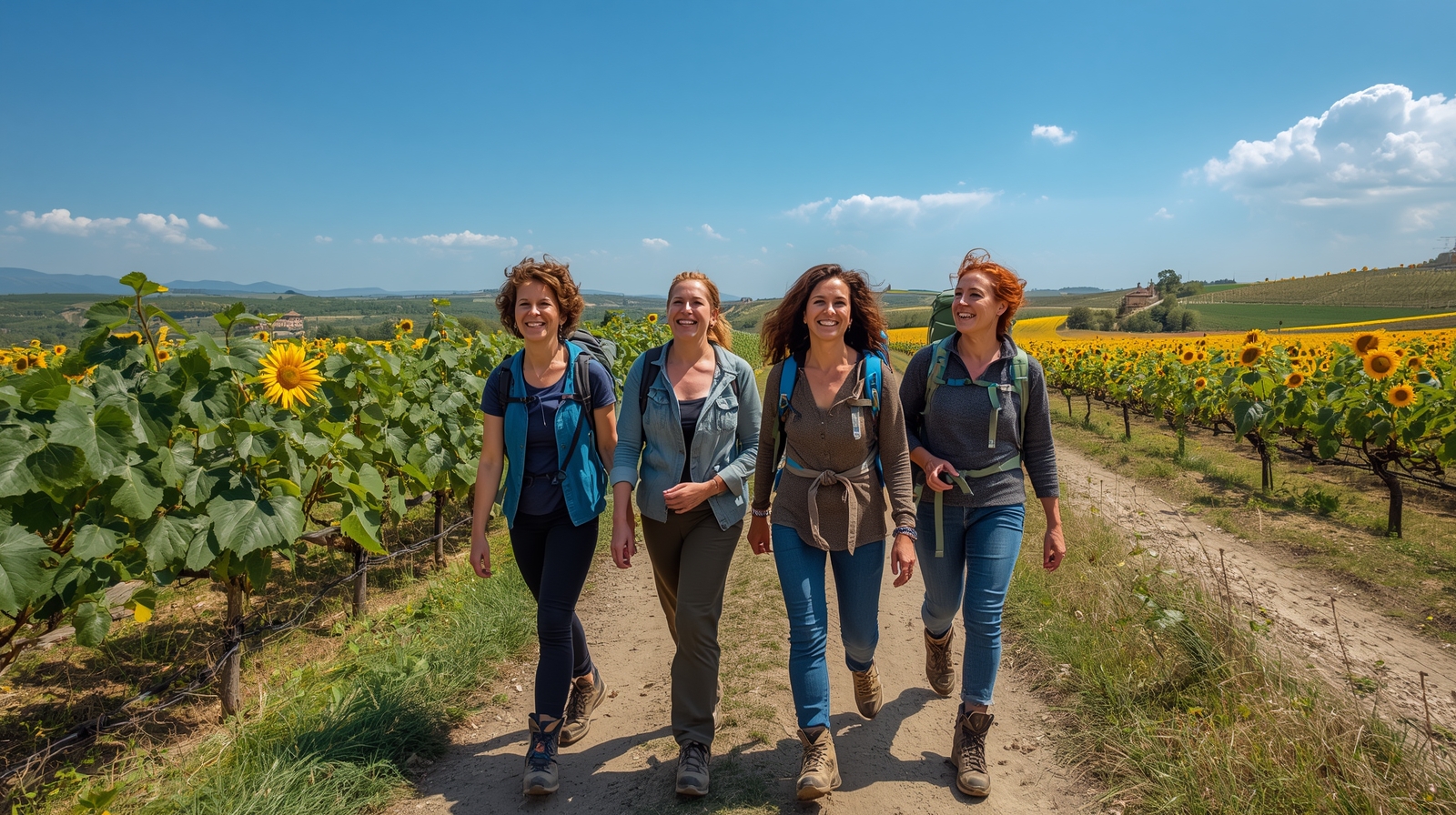
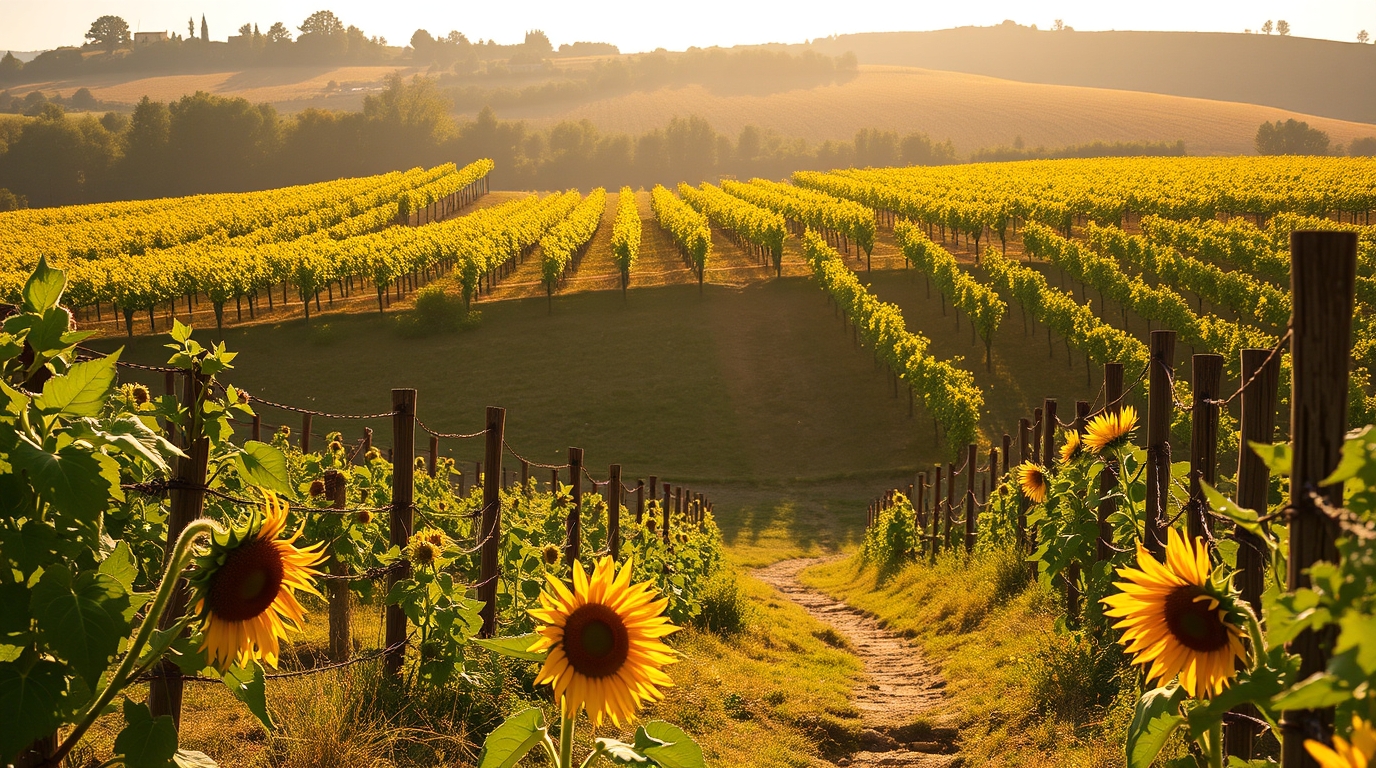
Day One was brutal—not physically, but psychologically. He walked the Chemin de Saint-Jacques between Eauze and the next village, roughly 15 kilometres through rolling vineyards and sunflower fields. Marcus walked like he was late for a meeting, pushing ahead, breathing hard, not looking at anything.
By the afternoon, his feet hurt. Not catastrophically, just enough that he couldn’t ignore them. “I don’t think my boots are right,” he muttered.
“Your boots are fine. You’re walking like you’re trying to outrun something.”
“I need to make good time.”
“Why?”
He had no answer. There was nowhere to get to. No meeting waiting. Just another village, another meal, another bed. The pointlessness of rushing confronted him, and I watched his face cycle through confusion, frustration, and something like grief.
We stopped at a stone wall overlooking a valley where autumn light turned the vineyards bronze. I made him sit. “Close your eyes. Tell me three things you can hear.”
“This is touchy-feely nonsense.”
“Humour me.”
He sighed. Closed his eyes. Thirty seconds passed. “Birds. Some kind of bird. Wind in the… I don’t know, the leaves. And… tractors? Somewhere far away.”
“Now, three things you can feel.”
“The stone. It’s warm. Sun on my face. And my feet. They’re throbbing.”
“Now, three things you can smell.”
His face changed. Softened. “Earth. Something sweet, like… honey? And mint, maybe?”
When he opened his eyes, they were different. Present. “I haven’t done that since I was a kid,” he said quietly. “Just… noticed things.”
That night, he slept six hours straight.
By Day Three, his pace had changed. He’d stopped checking the time. Stopped asking how much further. He walked beside me instead of ahead, and we fell into the rhythm that happens when humans walk together—a kind of silent agreement between bodies and breath.
On Day Four, something broke open. We’d walked through morning mist that clung to the fields, our boots wet with dew, and Marcus started talking. Not the rehearsed executive summary version of his life—the real thing. The deal that haunted him. The promotion he’d sacrificed his marriage for. The moment he realised his daughter was afraid to interrupt him. How he’d become someone he didn’t recognise and couldn’t figure out how to stop being.
“I’m so tired,” he said, and started crying. Just standing there on a dirt path between sunflower fields, crying like the world was ending. “I’m so fucking tired.”
I let him cry. Handed him water. We sat on our packs in the middle of the path, and I said, “That’s your body finally talking to you. Listen to it.”
By Day Seven, Marcus walked differently. His shoulders had dropped. His breath had deepened. He’d started noticing things—a hawk circling, the way light moved through oak leaves, how morning tasted different from evening. At dinner that night, he said, “I don’t know who I’m going to be when I go back. But I can’t be who I was.”
The final morning, he turned to me and said, “Thank you for making me do this.”
“You made yourself do it. You just needed permission to stop.”
Six months later, Marcus sent me an email. Subject line: “Still sleeping.” He’d restructured his role, hired a deputy, implemented no-meeting Wednesdays, and taken his family to Greece for two weeks—phone off. “My wife says I’m back,” he wrote. “My daughter actually talks to me now. And I sleep. Not perfectly, but most nights I get six solid hours. Turns out my body just needed me to stop treating it like an inconvenience.”
The Science of Why Walking Works: Your Nervous System Needs Movement
Here’s what happens neurologically when you’re under chronic stress: your sympathetic nervous system—the gas pedal—stays down. Your amygdala becomes hypervigilant. Your prefrontal cortex, which handles rational decision-making, gets partially shut down. Blood flow diverts from your digestive system and reproductive organs to your large muscles, preparing you to fight or flee from threats that never materialise.
You can’t think your way out of this state. You have to move your way out.
Walking—specifically, sustained, rhythmic walking—does something remarkable: it activates your parasympathetic nervous system, the brake pedal. The repetitive motion, combined with time in nature and distance from digital stimuli, creates what neuroscientists call “transient hypofrontality”—a temporary quieting of your planning, judging, always-analysing prefrontal cortex.
This is why solutions appear on walks that never emerge in meeting rooms. Your brain waves shift from beta (active, anxious thinking) to alpha and theta (creative, integrative states). Problems that seemed insurmountable at your desk suddenly have obvious answers on a forest path.
But it’s not just your brain that changes—it’s your entire nervous system. Extended walking recalibrates your vagal tone, the measure of how well your body recovers from stress. High vagal tone means you can shift from activated to calm quickly. Low vagal tone means you’re stuck in overdrive, which is where most high-performers live.
The Camino specifically adds another layer: it’s a pilgrimage route. Something about walking where millions have walked before you, carrying their own burdens and questions, creates a sense of being part of something larger than your quarterly targets. There’s humility in following ancient footsteps. And humility is often the gateway back to yourself.
Guest Testimonial: Sally M., Marketing Director
“I came to Dr. Montagu’s retreat thinking I’d get some exercise and clear my head. I left with my life back on track. For three years, I’d been in constant fight-or-flight mode, powering through exhaustion with coffee and willpower. Within four days of walking, my body finally felt safe enough to rest. I slept through the night for the first time in months. But the real gift was remembering what it felt like to be present—not planning the next thing or reviewing the last thing, just HERE. That shift has stayed with me. I still walk every morning before work, and when stress builds, I know how to release it now instead of white-knuckling through it. This retreat didn’t just change my stress management—it changed how I show up in the world.”
Three Micro-Stress-Reset Practices You Can Start Today
You don’t need to walk across France tomorrow (though I highly recommend you do eventually). You can begin retraining your nervous system right now with these practices I teach all my clients:
1. The Doorway Reset (30 seconds)
Every time you walk through a doorway today—any doorway—pause completely. Take three full breaths: in for four counts, hold for four, out for six. That’s it.
Why doorways? They’re natural transition points. You’re already moving from one space to another. This practice simply makes the transition intentional. Within a week, your nervous system will begin associating doorways with micro-recovery. You’re essentially installing pause buttons throughout your environment.
The extended exhale is crucial—it activates your vagus nerve, which runs from your brainstem to your abdomen and is the primary brake pedal for your stress response. Six seconds out signals safety to your body in a way no amount of positive thinking can match.
2. The Calendar Compassion Buffer (2 minutes)
Stop scheduling back-to-back meetings. I know this seems impossible. Everyone says it’s impossible right before they do it and realise it was their sanity.
Your brain needs 120 seconds to process what just happened and prepare for what’s next. Without this buffer, you carry emotional residue from one interaction into the next. That tension in your jaw? That’s unmetabolized stress from three meetings ago, compounding.
Schedule 28-minute meetings instead of 30. Use those two minutes to stand, stretch, look out a window, shake your body literally—shake your hands, roll your shoulders, do anything that moves stuck energy. This isn’t luxury. This is basic nervous system hygiene.
3. The 3-5-7 Breath (90 seconds)
When pressure spikes and you feel panic rising, use this pattern: breathe in through your nose for 3 counts, hold for 5, exhale through your mouth for 7. Repeat three times.
Why this works: when you’re stressed, your breath becomes shallow and rapid, which signals danger to your amygdala, which releases stress hormones, which makes your breath more shallow. It’s a vicious cycle. The extended exhale breaks the cycle by activating your parasympathetic nervous system faster than any other technique.
I’ve watched executives go from the edge of panic attacks to functional presence in under two minutes using this breath. Keep it in your back pocket for difficult conversations, presentations, or moments when you feel control slipping.
Journaling Prompt: Where Are You Running To?
Take 15 minutes with your journal and explore these questions without editing yourself:
If I could stop running, what would I be afraid I’d discover?
What does my body feel like right now? (Actually scan from your feet to your head—where is there tension, pain, numbness?)
When was the last time I felt truly rested, not just “not working”?
What would change in my life if I treated rest as strategy, not reward?
If my body could speak to me right now, what would it say?
Don’t rush this. Write messily. Write honestly. This isn’t about solutions—it’s about finally listening.
The Perfect Quote for This Moment
“In every walk with nature, one receives far more than he seeks.” — John Muir
I chose this quote because it captures the essential paradox of walking retreats: you come seeking solutions, strategies, or stress relief, and you receive something far more valuable—yourself back.
Muir, the Scottish-American naturalist who founded the Sierra Club, understood that nature doesn’t give you what you think you need. It gives you what you’ve forgotten you needed. When you walk with intention through landscape—especially ancient landscape—you don’t extract value like it’s another resource to optimise. You receive. You soften. You remember that you’re not separate from the natural world but part of it, subject to the same rhythms of exertion and rest, growth and dormancy.
The Camino operates on this principle. You don’t conquer it. You walk it. And in walking it, it walks you back to your essential self—the one that existed before the job titles and quarterly targets, the one that still knows how to be awed by sunset and humbled by blisters.
Why I Host These Retreats: A Personal Note
After 20 years as a doctor, I’ve seen every presentation of chronic stress: the executive with mysterious chest pain, the lawyer with IBS that no medication touches, the entrepreneur who hasn’t slept properly in three years. I’ve written prescriptions, referred to specialists, and taught breathing techniques.
But something shifted when I walked the Camino for the first time. 10km, more or less in my backyard. I realised that we’re trying to solve a body problem with mind tools. Stress lives in your tissues, your fascia, your breath patterns, your muscle memory. You can’t cognitive-behavioural-therapy your way out of a dysregulated nervous system.
Walking—particularly extended, intentional walking on sacred ground—does what therapy can’t and medication won’t: it gives your body permission to release what it’s been holding. The rhythm of footsteps becomes meditation. The physical exhaustion becomes catharsis. The distance from normal life becomes perspective.
For the past decade, I’ve been hosting small groups on the French Way of the Camino de Santiago, specifically the section between Eauze and Nogaro in southwest France. This isn’t the tourist Camino—it’s quieter, less crowded, undeniable agricultural. You walk through working vineyards and sunflower fields, past Romanesque churches that have stood for 800 years. The landscape holds you differently here.
I’ve watched CEOs cry on day three. Seen lawyers sleep for ten hours straight by day five. Witnessed the exact moment when someone’s shoulders finally drop and their breath deepens and they look around and notice they’re alive, not just productive.
This work—combining my medical training with NLP mastery and hypnotherapy, all delivered through the ancient technology of walking—is the most meaningful thing I do. Because I’m not fixing people. I’m walking beside them while they remember how to be whole.
Further Reading: Five Books That Changed How I Think About Stress and Recovery
1. “Why Zebras Don’t Get Ulcers” by Robert Sapolsky
Sapolsky, a neuroendocrinologist at Stanford, explains brilliantly why humans are uniquely terrible at managing stress. Zebras get chased by lions, experience acute stress, then it’s over. Humans experience chronic psychological stress that our bodies can’t distinguish from physical danger. This book will help you understand what’s happening in your body when you’re “just stressed.” It’s dense but accessible, and it changed how I practice medicine.
2. “The Body Keeps the Score” by Bessel van der Kolk
Van der Kolk demonstrates that trauma and chronic stress aren’t just psychological—they’re physiological. Your body literally stores unprocessed stress. This groundbreaking work explains why talk therapy alone often isn’t enough and why movement-based practices (like walking meditation) can access healing that cognitive approaches can’t reach. Essential reading for anyone serious about understanding the mind-body connection.
3. “In Praise of Walking” by Shane O’Mara
O’Mara, an Irish neuroscientist, makes the scientific case for walking as humanity’s superpower. He covers everything from how walking shapes our brains to why it enhances creativity and mood. This book will make you want to cancel your gym membership and just walk. It’s also delightfully readable—O’Mara clearly loves his subject, and it shows.
4. “The Untethered Soul” by Michael Singer
This isn’t a scientific book—it’s a spiritual one. But Singer’s exploration of how we get trapped in our own mental patterns, and how to observe rather than identify with our thoughts, is profound. The chapter on pain alone is worth the price. I recommend this to clients who intellectually understand stress management but can’t seem to actually implement it. Sometimes the barrier isn’t information—it’s identity.
5. “Burnout: The Secret to Unlocking the Stress Cycle” by Emily Nagoski and Amelia Nagoski
The Nagoski sisters explain the crucial difference between stressors (the things that cause stress) and stress itself (the physiological response in your body). You can eliminate every stressor and still have stress trapped in your system. They offer practical, evidence-based strategies for “completing the stress cycle”—and walking is one of the most effective. This book is particularly helpful for high achievers who think they can think their way out of burnout.
Five Frequently Asked Questions
Q1: “I can’t possibly take a week off. How do I know this retreat is worth it?”
The question itself reveals the problem. If you can’t take a week off, you’ve built something fragile—either a business model that depends entirely on your constant presence, or an identity that can’t tolerate rest.
Here’s what I tell everyone who asks this: the people who “can’t get away” are exactly the people who most need to. Your work will be there when you return. The emails will wait. And if your entire organisation collapses without you for eight days, that’s a structural problem that deserves urgent attention.
What you get from this retreat isn’t just stress relief—it’s pattern interruption. You can’t see the system when you’re in it. Distance creates perspective. Every single participant has told me they wish they’d done it sooner. Not one person has regretted the investment of time.
Q2: “I’m not spiritual or religious. Is this stress reset retreat for me?”
Absolutely. The Camino is a pilgrimage route, yes, but what you’re pilgrimaging toward is entirely personal. Some people walk for spiritual reasons. Others walk to solve a business problem or process grief or simply prove to themselves they can.
I’m a medical doctor. I approach this work through neuroscience and physiology, not mysticism. The “magic” of walking is actually just biology functioning as designed. Your nervous system resets. Your brain waves shift. Your body metabolises stored stress through movement.
That said, there’s something profound about walking where humans have walked for over a millennium, carrying their own burdens and questions. You don’t have to believe in anything supernatural to feel connected to something larger than yourself. That sense of humility and perspective is often what high-performers have lost—and desperately need back.
Q3: “What if I’m not fit enough? I don’t want to hold the group back.”
The retreat is designed for humans, not athletes. We walk 10-12 kilometres per day—roughly 6-7 miles. Yes, you’ll be tired. Your feet might hurt. But we’re not racing. There’s no prize for arriving first.
I’ve hosted people from their 30s to their 70s, from marathon runners to people who haven’t exercised in years. The only requirement is that you can walk continuously for an hour at your own pace. If you can do that, you can do this.
Also, struggling a bit is part of the point. When your feet hurt and your legs are tired, your carefully constructed identity as “senior executive” or “industry leader” becomes irrelevant. You’re just a person, walking. There’s deep wisdom in that reduction.
Q4: “What’s different about your retreats versus just walking the Camino on my own?”
Three things:
First, structure without rigidity. I handle all logistics—accommodation, meals, route planning, and emergency protocols. You just walk. But there’s also flexibility built in for rest days, shorter walking days, or private processing time when needed.
Second, medical and therapeutic expertise. I’m not just a host—I’m a doctor and trained therapist who specialises in stress and nervous system regulation. If someone has a physical or emotional breakthrough (or breakdown), I have 20 years of clinical experience to support them appropriately.
Third, intentional community. Walking alone is powerful. Walking with a small group of people on similar journeys—all high-performers, all reckoning with the cost of success—creates a container for transformation that solo walking doesn’t. The conversations that happen around dinner tables after a long day of walking are often as valuable as the walking itself.
Q5: “What happens after the retreat? How do I maintain this when I’m back in the chaos?”
This is the most important question, and why our final two days include integration work. We don’t just walk and hope the benefits stick—we explicitly practice translating the experience into sustainable daily rhythms.
You’ll leave with a personalised micro-recovery protocol: specific practices that fit your schedule and personality. We work through likely obstacles and plan for them.
But here’s the deeper truth: you won’t be able to go back to exactly how you were. Once your nervous system remembers what true rest feels like, it won’t tolerate chronic activation the same way. Once you’ve experienced presence, busy-ness feels different. You’ll naturally make different choices—not through willpower, but because your system now has a reference point for what regulation feels like.
Most participants report that six months later, they’re still walking daily, still implementing the practices, and most importantly, still sleeping. That’s not me being a great host—that’s nervous system change that persists because it’s physiological, not just psychological.
Conclusion
Here’s what I’ve learned after guiding hundreds of high-performers through this journey: the walk doesn’t change you. It reveals the real you.
Underneath the job title and the quarterly targets and the endless optimisation, there’s a person who once knew how to rest. Who could feel joy without needing to justify it. Who understood that life isn’t a problem to solve but an experience to have.
That person didn’t disappear. They just got buried under layers of stress, performance, and the relentless pressure to prove themselves valuable through productivity.
Walking—particularly walking on ancient paths where millions have carried their own burdens—strips away those layers. Not through forced introspection or therapeutic processing, but through the simple, repetitive rhythm of one foot in front of the other. Through exhaustion that’s earned rather than chronic. Through silence that isn’t empty but full.
Marcus found himself again between Eauze and Nogaro. So have dozens of others. Not because the Camino is magic, but because it creates conditions where your nervous system can finally do what it’s been trying to do all along: release, restore, remember.
You don’t need to walk across all of France to begin this journey. Start with the doorway reset. Try the 3-5-7 breath. Take a 15-minute walk without your phone tomorrow morning.
But if you’re reading this and thinking, “This sounds nice, but I can’t get away,” pay attention to that thought. That’s not wisdom—that’s fear. Fear that if you stop, you’ll discover you’re not as essential as you think. Fear that rest might reveal how tired you actually are. Fear that pausing means losing ground in a race you’re not even sure you want to win anymore.
The people who most resist this work are the ones who most need it. I know because I was one of them.
Your Invitation: The Rediscover Your Natural Rhythm Retreat
If this article resonated, you’re exactly who this retreat is designed for.
I host small groups (maximum 4 people) on the French Way between Eauze and Nogaro in southwest France—a quiet, beautiful section of the Camino de Santiago that holds you differently than the tourist routes, walking through vineyards and medieval villages, supported by 20 years of my medical expertise and a decade of guiding people back to themselves.
This isn’t a vacation. It’s not a networking event. It’s a stress reset for people who’ve forgotten how to rest and are ready to remember.
The retreats fill quickly—not because I’m a brilliant marketer, but because people who’ve walked with me can’t stop talking about it. That’s the only metric that matters.
Your nervous system is waiting for you to listen. The path is already there. You just need to take the first step.
Dr. Margaretha Montagu MBChB, MRCGP, NLP Master Practitioner, Medical Hypnotherapist Founder, Camino de Santiago Stress Reset Walking Retreats
P.S. Still not sure? Send me an email at MargarethaMontagu@gmail.com. I’m happy to answer questions, discuss whether this stress reset retreat is right for you, or simply share more stories of transformation. The investment isn’t just time and money—it’s giving yourself permission to be human again. That’s priceless.
What Life Lessons Can You Learn While Walking the Camino de Santiago? – a free guide filled with 10 not just “quaint anecdotes” or Instagram-worthy moments (though there are plenty of those) but real transformations from real people who walked this insight-giving trail – Subscribe to my monthly newsletter to Download the Guide
“I am an experienced medical doctor – MBChB, MRCGP, NLP master pract cert, Transformational Life Coach (dip.) Life Story Coach (cert.) Stress Counselling (cert.) Med Hypnotherapy (dip.) and EAGALA (cert.) I may have an impressive number of letters after my name, and more than three decades of professional experience, but what qualifies me to excel at what I do is my intuitive understanding of my clients’ difficulties and my extensive personal experience of managing major life changes using strategies I developed over many years.” Dr M Montagu
Research
Bahrami, F. (2025). Walking farther and more: learning from long-distance walkers in London. Mobilities, 1–18.
Ding, Ding et al. Daily steps and health outcomes in adults: a systematic review and dose-response meta-analysis The Lancet Public Health, Volume 10, Issue 8, e668 – e681
Ungvari Z, Fazekas-Pongor V, Csiszar A, Kunutsor SK. The multifaceted benefits of walking for healthy aging: from Blue Zones to molecular mechanisms. Geroscience. 2023 Dec;45(6):3211-3239.
A Guide to Rediscovering Yourself When the Kids Leave Home
The Sharp Overview: What You’re About to Read
So the last child has packed their dubiously laundered clothes, grabbed their childhood teddy bear (the one they swore they’d outgrown), and driven off into their independent future. You stand in the doorway, waving like the Queen at a garden party, smiling bravely. Then you close the door, turn around, and face a house that suddenly echoes with one terrifying question: “Who on earth am I without my children to define me?”
Empty nests hit high-achieving executives, entrepreneurs, or professionals who have been expertly juggling boardroom presentations and parent-teacher conferences differently. You’ve spent decades being brilliant at everything—except perhaps preparing for this moment. This article explores why successful people often struggle most with empty nest syndrome, how this disorientation can become your greatest transformation yet, and what to do when your identity seems to have left home along with your children.
Spoiler alert: This isn’t the end of your story.
Five Key Takeaways for the Disoriented Empty Nester
Identity confusion is proportional to success elsewhere. The more competent you’ve been at managing multiple roles, the more disoriented you’ll feel when one of those primary roles disappears. This isn’t weakness—it’s the natural result of having invested heavily in something meaningful.
Empty nest syndrome deserves serious attention. Just because others might say “at least you have healthy children who can leave home” doesn’t diminish your genuine grief and confusion. Successful people often minimise their own emotional needs—don’t fall into that trap.
This transition is a forced sabbatical from who you’ve been. Use it. Your children’s departure creates space for the parts of yourself you’ve postponed, forgotten, or not yet discovered. The question isn’t “who am I?” but rather “who might I become?”
Community impact begins with personal transformation. When you navigate this transition authentically, you model emotional intelligence for everyone around you—your colleagues, your still-nested friends, and paradoxically, your adult children who are watching how you handle change.
Grief and excitement can coexist. You can simultaneously mourn the end of active parenting while feeling genuinely thrilled about your newfound freedom. Both emotions are valid. Both are true. Learning to hold contradictions is advanced emotional work.
Introduction: The Identity Crisis Nobody Warns You About
You’ve survived sleepless nights with colicky infants, navigated teenage rebellion with the diplomatic skills of a UN negotiator, and somehow managed to close million-dollar deals while mentally calculating whether you’d bought enough milk for breakfast. You’ve been extraordinary at being everything to everyone.
Then one Tuesday morning, you wake up and realise nobody needs you to sign a permission slip, drive them anywhere, or give an opinion about their life choices. The silence is deafening.
Here’s what’s particularly cruel for high-achievers: you’ve probably handled every other major life transition with strategic planning and executed action items. You approached parenthood like a project, researched childcare options like you were preparing a market analysis, and scheduled your children’s activities with the precision of a military campaign. But somehow, nobody mentioned that when the project ends, the project manager would face an existential crisis.
This isn’t about missing your children (though you do). It’s about suddenly confronting the question you’ve been too busy to ask for two decades: without the role of “parent” front and centre, who are you really?
As someone who has spent twenty years as a physician specializing in stress management, fifteen years hosting walking retreats on the Camino de Santiago, and countless hours in storytelling circles listening to accomplished people unravel this very question, I can tell you this: the empty nest identity crisis is real, it’s profound, and it might just be the gift you didn’t know you needed.
Margaret’s Story: The Day the House Fell Silent
For two decades, Margaret’s life had been a symphony of chaos—bickering, blenders, and shouting boys. Now, there was only silence.
Everyone had warned her about empty nest syndrome. “Oh, it’s hard at first,” they said, “but then you rediscover yourself.” Margaret had no idea how she was supposed to do that.
On Monday, determined to be proactive, she made a list titled Operation Reinvention. It included:
Start yoga.
Learn French.
Write a memoir.
By Wednesday, she had pulled a hamstring, told Duolingo’s passive-aggressive owl to “mind its own damn business,” and realised her memoir consisted mostly of snack distribution adventures.
By the second week, she started talking to the furniture. “Well, aren’t you looking particularly supportive today,” she said to the couch, sinking into it with a family-sized bag of crisps and a nostalgic episode of Gilmore Girls.
Then came The Great Closet Purge. Every empty-nester’s rite of passage. She approached her children’s rooms like an archaeologist excavating the remains of a lost civilisation—complete with strange artefacts: a fossilised sandwich, a prom corsage(?!), seventeen mismatched socks, and a mysterious note that read “Don’t tell Mom.” (Tell Mom what, exactly?)
When that didn’t help, she joined a local book club. Big mistake. It wasn’t really a book club—it was a covert wine syndicate with occasional literary references. Sheila was apparently divorcing Gary (who no one liked anyway), and Greg’s banana bread had become a political issue. The only book anyone could recall was Eat, Pray, Pour Another Merlot.
Her next bright idea was to reconnect with her husband. Poor Roger. He’d been quietly minding his own business, enjoying the rare luxury of watching football without interruptions. Suddenly, Margaret was there. All the time. Suggesting “fun couple activities.”
“Let’s take a pottery class!” she announced one evening. Roger, who had survived 25 years of PTA meetings, instantly recognised danger. “How about darts?” he countered.
They compromised on a cooking class, which ended with Margaret flambéing her sleeve and Roger bravely eating burnt risotto.
The turning point came one afternoon while she was scrolling through social media, nursing her third cup of coffee and her growing sense of irrelevance. She stumbled across a post from her daughter: “Miss you, Mom. Thanks for always believing in me.”
Margaret blinked. Then smiled. Because maybe—just maybe—the silence wasn’t empty after all. Maybe it was space. Space to breathe, to rediscover, to reinvent. An invitation to remember who she was before she was everyone’s breakfast chef, chauffeur, therapist, and human GPS.
That night, she lit a candle, poured another glass of the “special occasion” wine.
“To me,” she said, raising her glass. “To rediscovery. To reinvention. And to never having to label another lunchbox again.”
She opened her journal and wrote: “Dear Me, congratulations—you survived child-rearing, adolescence, and gluten-free meal planning. If you can survive this, you can survive anything.”
Her words stirred something — a faint memory, like the rustle of wind through cypress trees.
Last spring, Margaret had attended a stress-management retreat on the Camino de Santiago— a gift from a well-meaning colleague who’d told her she needed “soul maintenance.” At the time, she’d rolled her eyes. But something unexpected had happened out there, walking under French skies with strangers who quickly stopped feeling like strangers.
The retreat leader had asked everyone to tell the story of a life transition. Margaret had chosen motherhood. She’d described the fear and fierce love, the exhaustion and joy, the complete identity collapse and rebuild.
The retreat leader had listened quietly, then said, “On the Camino, every ending is also a beginning.”
Corinne hadn’t understood it then. But now, sitting on her support coach, the words returned with startling clarity.
This was her new Camino — not the one lined with vineyards and sunflower fields, but an invisible path stretching ahead through her own uncertainty.
Now, unburdened by curfews and permission slips, was free to discover who she might be next.
Understanding the Empty Nest Identity Crisis
The empty nest phenomenon affects everyone who’s raised children, but high-achieving professionals often experience it with particular intensity. Why? Because you’ve spent decades being exceptional at simultaneous role management. You’ve been the executive and the parent, the entrepreneur and the homework helper, the professional and the person who remembered that Tuesday was violin lesson day.
Your identity has been complex, multi-layered, rich. When one of those layers—arguably the most emotionally significant one—suddenly dissolves, the entire structure feels unstable.
Here’s what research and two decades of clinical experience have taught me: the grief of the empty nest isn’t really about missing your children (though you do). It’s about losing a version of yourself that felt purposeful, needed, and central to someone else’s daily existence.
For successful people, this hits particularly hard because you’re used to being in control. You’ve built careers on your ability to anticipate challenges, create solutions, and execute plans. But your children’s departure isn’t something you can strategy-meeting your way through. It’s a fundamental life transition that requires not just adaptation but transformation.
The Broader Impact: How Your Transformation Affects Your World
When you navigate this transition authentically—when you allow yourself to grieve, question, and ultimately reinvent—you create ripples far beyond your own experience.
Your colleagues watch how you handle change. In a work culture that often demands we pretend personal life doesn’t affect professional performance, your honest engagement with this transition models emotional intelligence.
Your community benefits when you redirect parenting energy toward broader engagement. Some of the most effective community leaders, mentors, and change-makers are people who’ve moved through the empty nest transition and discovered new ways to channel their nurturing abilities.
Your adult children observe how you handle this ending. They’re learning from you—again—about resilience, about allowing yourself to be imperfect, about the courage it takes to ask “who am I now?” and wait for an answer that feels true.
And perhaps most importantly, you give yourself permission to evolve.
Take your time. Then spread your wings.
In a society that often treats ageing as a process of diminishment, you can model something different: ageing as freedom, as the beginning of chapters you couldn’t have written before.
Three Powerful Writing Prompts for Empty Nesters
Prompt 1: The Letter to Your Younger Self
Write a letter to yourself on the day your first child was born. Tell that younger you what you’ve learned, what you’d do differently, and what you’d do exactly the same. Then write what you wish a younger version of yourself could tell you now about who you were before you became a parent. What did that person love? Dream about? What got lost in the busy years that might be worth recovering?
Prompt 2: The Calendar Exercise
Draw or describe your ideal week five years from now. Don’t include any “should” activities—nothing you think you ought to do. Include only things that make you feel alive, curious, or engaged. Who are you spending time with? What are you learning? What are you creating? Let yourself imagine without the constraints of your current reality.
Prompt 3: The Epitaph Question
This sounds morbid but it’s remarkably clarifying: What do you want people to say about you after you’re gone? When your children speak about you to their own children, what qualities do you hope they remember? Now ask yourself: are you living in a way that develops those qualities? If not, what needs to change?
Further Reading: Five Unconventional Books for Empty Nesters
1. “The Artist’s Way” by Julia Cameron
Yes, it’s technically about creative recovery, but I recommend this for empty nesters because it addresses the fundamental question of identity reconstruction. Cameron’s twelve-week program helps you rediscover buried creative impulses and desires—exactly what you need when a major life role ends. The morning pages practice is particularly valuable for processing the complex emotions of this transition.
2. “The Second Mountain” by David Brooks
Brooks writes about the difference between first-mountain goals (career, success, achievement) and second-mountain purposes (relationship, community, depth). For accomplished empty nesters who’ve conquered the first mountain, this book offers a framework for thinking about what comes next that’s more meaningful than simply staying busy.
3. “Women Who Run With the Wolves” by Clarissa Pinkola Estés
This exploration of wild woman archetypes through storytelling helps midlife women reconnect with parts of themselves that got domesticated or suppressed during the intensive parenting years. Estés’ work reminds us that we contain multitudes, and that the fierce, creative, instinctual self doesn’t disappear—it just waits to be reclaimed.
4. “The Gifts of Imperfection” by Brené Brown
Brown’s work on vulnerability and wholehearted living speaks directly to the empty nest experience. Her research shows that people who navigate transitions successfully are those who can acknowledge grief while remaining open to joy. For perfectionistic high-achievers, this book offers permission to be messy in your process.
5. “Transitions: Making Sense of Life’s Changes” by William Bridges
This classic distinguishes between change (external) and transition (internal). Bridges identifies three phases: ending, neutral zone, and new beginning. Understanding that you’re in the neutral zone—that uncomfortable space between identities—can help you stop trying to rush through it and instead use it as the transformative space it’s meant to be.
P.S. My own book, “Embracing Change – in 10 Minutes a Day,” offers practical, brief exercises for navigating any major life transition. It’s designed specifically for busy people who need tools that fit into real life.
Guest Testimonials: Real Women, Real Transformations
From a Camino Walking Retreat Guest:
“I came to Dr. Montagu’s Camino retreat six months after my youngest left for university, feeling completely unmoored. I’d been a pediatric surgeon for twenty-five years AND an intensely involved mother—I thought I knew who I was. The empty nest revealed I’d been using both roles to avoid asking deeper questions about myself.
Walking the Camino, I finally let myself feel the grief I’d been intellectualising. The daily mindfulness practices helped me stay present with uncomfortable emotions instead of strategising around them. But what truly transformed me was the storytelling circle. Hearing other accomplished women voice the same fears and questions I’d thought were my unique failure made me realise this transition was normal, not a personal weakness.
Six months later, I’ve started painting again—something I loved in my twenties but abandoned as ‘impractical.’ I’ve also begun mentoring young female physicians, channelling my nurturing energy in new directions. The empty nest didn’t diminish me. It gave me back to myself.” — Patricia H., London
From a Storytelling Circle Member:
“Dr. Montagu’s storytelling circles literally saved me from a midlife crisis that would have involved expensive mistakes. I’d been contemplating radical changes—quitting my job, moving abroad, anything to fill the void my children’s departure had created.
In the circle, with Dr. Montagu’s horses grazing nearby (something about their calm presence made it easier to be vulnerable), I told the story of my children leaving. But as I spoke, I realized I was really telling the story of how I’d lost myself gradually over twenty years, and how I’d blamed them for a disappearance I’d orchestrated.
The other women in the circle asked me questions I hadn’t asked myself: What brought me joy before children? When did I last feel creative? What would I do if nobody else’s opinion mattered? Through their witnessing—not advice-giving, just authentic listening—I found my own answers.
I didn’t quit my job or move abroad. Instead, I renegotiated my role to create more flexibility, started a book club focused on books I actually want to read (not ‘important’ books), and reconnected with friends I’d neglected. The storytelling circle taught me that transformation doesn’t require drama. Sometimes it just requires honesty.” — Margaret L., Manchester
Five Razor-Sharp FAQs
Q1: Is it normal to feel relieved when my children leave, even though I also feel sad?
Absolutely, unequivocally normal. Emotions aren’t mutually exclusive. You can simultaneously grieve the end of intensive parenting, feel relieved about reclaiming time and energy, worry about your children’s wellbeing, and feel excited about your newfound freedom. Humans are capable of holding contradictory feelings. The problem comes when we think we should feel only one “appropriate” emotion and then judge ourselves for feeling everything else. Relief doesn’t mean you didn’t love parenting. Sadness doesn’t mean you’re not ready for this transition. Both are true. Let them coexist.
Q2: My identity has been so wrapped up in being a parent that I don’t remember who I was before. How do I start?
Start with curiosity rather than pressure. You’re not trying to excavate a fossilised earlier self—you’re discovering who you’re becoming now, which includes all the growth and wisdom you’ve gained through parenting. Try this: notice what catches your attention during an ordinary day. What makes you pause? What do you find yourself thinking about in the shower? What topics make you want to learn more? These small moments of genuine interest are breadcrumbs leading you toward your current authentic self, not your previous one.
Q3: I feel guilty about focusing on myself when I should be happy my children are thriving. What’s wrong with me?
Nothing is wrong with you. This is another example of unnecessary emotional policing. Your children thriving and you struggling with identity transition are not incompatible facts. You can be genuinely happy for their independence while grieving what you’ve lost. Here’s a reframe: by doing the work of rediscovering yourself, you’re modelling for your adult children that life is a series of transformations, not a single destination. You’re teaching them that it’s possible to honour endings while embracing new beginnings. That’s a gift.
Q4: My partner/spouse and I seem to be handling this differently, and it’s creating tension. Is this normal?
Completely normal, and actually an opportunity for deeper connection if you approach it with curiosity rather than judgment. Different attachment styles, different parenting intensities, and different needs for purpose all mean you’ll navigate this transition differently. The key is communication without criticism. Instead of “you don’t understand what I’m going through,” try “I’m struggling with this transition more than I expected. Can we talk about what we’re each experiencing?” This might be a good time for couples counselling or a retreat that helps you renegotiate your relationship now that it’s not structured around coordinating children’s schedules.
Q5: How long does this identity crisis last? When will I feel normal again?
I understand the desire for a timeline, but transitions don’t work that way. Some people move through the disorientation in months; others take years. What I can tell you is this: the discomfort lessens when you stop trying to rush through it and instead let yourself inhabit it fully. The fastest way through is acknowledging where you are. “Normal” won’t feel like it used to feel because you’re not who you used to be—and that’s exactly the point. You’re not trying to return to a previous normal; you’re creating a new one. The question isn’t “when will this end?” but rather “what am I learning here that I couldn’t have learned any other way?”
Conclusion: It’s a Doorway, Not a Dead End
You’re standing in a doorway. Behind you is the country of intensive parenting—a place you know intimately, with all its demands, joys, terrors, and profound meaning. Ahead of you is territory you haven’t mapped yet. Of course you’re disoriented. Of course you’re asking “who am I now?”
But here’s what I’ve learned from twenty years as a physician specialising in stress management, fifteen years hosting walking retreats, and countless conversations in storytelling circles: this question is not a crisis to be solved. It’s an invitation to be answered.
The empty nest doesn’t diminish you. It offers you back to yourself—older, wiser, carrying the depth that only comes from loving something beyond yourself so intensely for so long. You’re not losing your identity; you’re shedding an outdated version to make room for who you’re becoming.
Your children don’t need you to remain the person you were when they needed you most. They need you to show them what it looks like to evolve, to ask hard questions, to reinvent yourself while honouring what came before.
This is not the end of your story’s best chapters.
So stand in the doorway a little longer. Let yourself feel the grief and the anticipation. Ask the question “who am I now?” and then—this is crucial—wait for an answer that comes from your authentic self rather than from other people’s expectations or your own anxiety.
The second half of your life is waiting. And it might just be extraordinary.
A Special Invitation: The Camino, the Horses, and the Stories That Heal
If this article has resonated with you—if you’re standing in that doorway between identities and you need space to discover what comes next—I’d like to invite you to something that’s transformed empty nesters for fifteen years: my stress-busting life transition retreatin the breathtaking southwest of France.
This isn’t your typical wellness retreat with prescribed schedules and forced enthusiasm. This is about walking the Camino de Santiago at your own pace, with daily mindfulness and meditation practices specifically designed for stress management. But what makes this retreat unique are the storytelling circles, held in the presence of my Friesian and Falabella horses—creatures whose calm, non-judgmental presence has a remarkable way of making vulnerability feel safe.
In these circles, accomplished women like you tell the stories they haven’t been able to tell anywhere else. Stories about who they were before they became mothers. Stories about who they’re afraid they might not be anymore. Stories about the futures they’re beginning to imagine. The horses graze nearby, occasionally coming close as if to witness your truth-telling. There’s something about their presence that makes authentic conversation not just possible but inevitable.
The walking itself becomes meditative—a physical metaphor for the journey you’re on internally. Each day, you move forward, sometimes easily, sometimes with effort. You rest when you need to. You discover what pace feels right for your body, not someone else’s expectations. And slowly, step by step, you begin to hear yourself again beneath all the noise of who you thought you should be.
The retreat is limited to small groups because transformation happens in authentic connection, not performance. You’ll eat remarkable food (this is France, after all), sleep in comfortable accommodations, and have plenty of solitude if you need it. But you’ll also have the rare gift of being witnessed by women who understand exactly what you’re navigating because they’re navigating it too.
Past guests describe it as “the reset I didn’t know I desperately needed,” “a week that changed how I see the rest of my life,” and “the first time I felt like myself in years.” With more than forty testimonials on my website from people whose lives have been genuinely transformed, I can promise you this: you won’t leave this retreat the same person who arrived. You’ll leave clearer, more grounded, and more excited about who you’re becoming.
The empty nest can be an ending. Or it can be the beginning of your most authentic chapter yet.
What Life Lessons Can You Learn While Walking the Camino de Santiago? – a free guide filled with 10 not just “quaint anecdotes” or Instagram-worthy moments (though there are plenty of those) but real transformations from real people who walked this insight-giving trail – Subscribe to my monthly newsletter to Download the Guide
The Purpose Pivot Challenge – drawing inspiration from the Camino de Santiago, this transformative course guides you through a proven framework to recalibrate your authentic purpose and create a meaningful and fulfilling next act. Get immediate access
Dr. Margaretha Montagu (MBChB) is an NLP Master and Medical Hypnotherapist with twenty years of experience in stress management. She has spent fifteen years hosting transformative walking retreats on the Camino de Santiago and has authored eight non-fiction books addressing divorce, loss, unexpected illness, and coping with life’s major crises. Her work combines medical expertise with deep understanding of the human spirit’s capacity for resilience and reinvention.
Resources
Khatir MA, Modanloo M, Dadgari A, Yeganeh LT, Khoddam H. Empty nest syndrome: A concept analysis. J Educ Health Promot. 2024 Jul 29;13:269. PMID: 39309983; PMCID: PMC11414866. This article provides a comprehensive definition of empty nest syndrome (ENS), outlining its stages (mourning to adaptation) and proposing avenues for clinical models and measurement.
Ahmadi Khatir M, Modanloo M, Dadgari A, Khoddam H, Yeganeh LT. Developing and identifying the psychometric properties of Empty Nest Syndrome Scale. BMC Psychol. 2025 Jul 7;13(1):743. Introduces the Miniature Empty Nest Syndrome (ENS) Scale, integrating psychological, neurobiological, and cultural aspects of ENS. Discusses the need for standardized assessment tools and diverse interventions.
Kabiri M, Namdari K, Abedi A. Psychological Resilience Level after Cognitive-Behaviour Therapy in Old People with Empty Nest Syndrome – A single-case Experimental Design. Clin Gerontol. 2023 May-Jun;46(3):446-456. Epub 2022 Aug 11. PMID: 35950313.
Mangla, J. & Sahai, A. (2024). Influence of Empty Nest Syndrome on the Quality of Life of Middle Aged Parents. International Journal of Indian Psychology, 12(2), 3597-3602.
Summary: Forget the Hollywood version of transformation—burn your old self, rise like a phoenix, better than ever before etc. etc. etc. Impressive, but not helpful when you’re just trying to survive till Tuesday. When your nervous system is screaming for relief, practical tools often work a whole lot better than “life-altering reconstruction.” Reinvention can wait. What you need now isn’t transformation. It’s stress management tools.
5 Key Takeaways
Transformation often demands reinvention. Transformational retreats often require you to deconstruct your identity before reconstruction. When you’re already stressed, this added requirement often compounds the problem rather than solving it.
Peak experiences fade; practical skills compound: The euphoric breakthrough at a transformational retreat feels powerful in the moment but rarely translates to sustainable change. Stress management retreats give you tools you’ll still be using five years later.
“Fixing” implies brokenness; empowerment assumes wholeness: Transformational language suggests you’re fundamentally flawed and need complete overhaul. Stress reducing approaches meet you where you are and build on existing strengths.
Stress management requires stability, not more chaos: When your nervous system is dysregulated, adding the chaos of identity deconstruction is like trying to renovate a house during an earthquake. Stress management provides stable ground first, then builds from there.
Transformational retreats often create powerful moments of insight that participants struggle to integrate into daily life. Empowering retreats focus on immediately applicable practices that fit into your actual existence, not an idealised version of it.
Introduction: The Question We’re Not Asking
Here’s what I’ve learned after 20 years as a doctor specialising in stress management, a decade hosting Camino de Santiago walking retreats, and years working with horses as co-therapists: the people seeking the biggest transformations often only need the right tools.
We’ve built an entire industry around dramatic change. Breakthrough retreats. Life-altering experiences. Complete reinvention. Transformation has become the goal, as if your current self—stressed, struggling, searching—is so fundamentally flawed that only total reconstruction will do.
But here’s the uncomfortable question nobody in the wellness industry wants to ask: What if the pursuit of transformation is making you stress more?
What if the constant message that you need to completely change is exactly what’s preventing you from accessing the tools that could help you right now? What if the right tools—not transformation—is what actually creates sustainable stress management?
I wrote four books about coping with life’s hardest moments: After the Divorce, After the Loss, After the Diagnosis, and Embracing Change. Notice the framework: after. Not “how to completely transform yourself following trauma” but “here’s how to cope, how to function, how to build on what remains.” Because when you’re in crisis, you don’t need to become someone new. You need tools to navigate the storm, right now, in this difficult moment.
Let me tell you about Catherine.
The Woman Who Tried to Transform Herself Stressfree: Catherine’s Story
Catherine Morrison’s assistant booked the call. “She needs this retreat,” the assistant said carefully. “She’s done three others this year, and I think they’ve made things worse, but she won’t listen to me.”
Catherine was 44, Chief Marketing Officer of a global cosmetics brand, divorced mother of two teenagers, marathon runner, board member of two nonprofits. Her LinkedIn profile was basically an endless list of achievements. Her nervous system was a disaster.
When she arrived at my farm in southwest France on a Saturday afternoon in June, I noticed her efficiency first. She’d read all the pre-retreat materials, completed the intake forms in detail, brought the exact items on the packing list—no more, no less. She unpacked her rental car with military precision, each item finding its designated place.
“I’m so ready for this,” she said, extending her hand for a firm handshake. Her palm was damp. “I’ve done Vipassana in Thailand, plant medicine in Peru, and a transformational leadership intensive in California. Each one was powerful, but the effects wear off. I’m hoping this will be different.”
I shoop her hand and gestured toward the pasture where Twiss, my large Friesian mare, grazed in afternoon light. “Before we talk about effects, let’s just walk. Come meet the horses.”
Her smile flickered. “Oh, I thought we’d start with an overview of the week’s schedule? Set intentions, discuss my goals?”
“We’ll get there. But first, just breathe. Can you do that?”
She looked at me like I’d asked her to speak Mandarin. “Just… breathe?”
“Just that.”
We walked to the pasture in silence. Catherine’s gait was brisk, purposeful, as if she were late for a meeting. Her breath was shallow and high in her chest. Every few seconds, her hand moved toward her phone before remembering she’d left it in her room per my request.
“Tell me about the other retreats,” I said as we reached the fence line.
Her face lit up—the rehearsed narrative of personal growth. “Vipassana was intense. Ten days of silence, meditating from 4 AM. I had this incredible breakthrough on day seven where I saw how my need for control stems from childhood abandonment. It was profound.”
“And when you got home?”
The light dimmed. “Within two weeks, I was back to my old patterns. Maybe worse, because now I knew what I was doing wrong but couldn’t seem to stop. So I tried ayahuasca in Peru. That was—” she paused, searching for words “—that was like dying and being reborn. I saw my whole life from outside myself. Understood how my ego was causing all my suffering.”
“And then?”
“Same thing. Two, maybe three weeks of clarity, then gradually the old anxiety crept back. The insomnia returned. The constant sense that I was failing everyone.” She leaned against the fence, exhausted just recounting it. “The leadership intensive promised lasting transformation through radical vulnerability and breaking through limiting beliefs. We did hot seats, confrontation exercises, somatic experiencing. People were crying, screaming, having these massive breakthroughs.”
“Were you one of them?”
“Yes! I finally expressed rage at my father that I’d been carrying for thirty years. It felt like exorcism. Like I was finally free.”
“How long did that last?”
Her shoulders sagged. “Maybe a month. And then one morning I woke up and realised the rage was still there, plus now I felt guilty for expressing it, plus I’d spent $8,000 and taken a week off work, and I was still stressed, still not sleeping, still snapping at my kids.” Her voice cracked. “What’s wrong with me? Why can’t I sustain the transformations?”
Twiss, who’d been grazing fifty feet away, lifted his head and looked directly at her. She fell silent.
“What if nothing’s wrong with you?” I said quietly. “What if transformation isn’t what you need?”
She stared at me. “But all the teachers say—”
“I know what they say. I’m asking what your body says. Right now. What does your nervous system actually need?”
She opened her mouth. Closed it. Started crying—not the cathartic sobbing of a breakthrough, but the exhausted tears of someone who’s run out of solutions.
That first evening, instead of the intensive processing session Catherine expected, we simply walked. I, Catherine, and Kashkin, my steadiest Friesian, walked the perimeter of the property as the sun set. No agenda. No therapeutic intervention. Just footsteps and breath and the rhythm of a horse’s hoofbeats.
Catherine couldn’t tolerate the silence at first. “Shouldn’t we be working on something? Processing? Setting intentions?”
“We are working. You’re learning to just be. Not analyse, not fix, not transform. Just be.”
“I don’t know how to do that.”
“Kashkin will show you.”
We walked for ninety minutes. By the end, Catherine’s breath had deepened. Her pace had slowed. Her shoulders had dropped an inch. Not transformed—regulated.
That night, she slept ten hours straight.
Day Two, I introduced her to the concept I’d been developing for years: empowerment rather than transformation.
“Transformation says: you need to change,” I explained during brunch—strong coffee, fresh bread from the village bakery, local butter that tasted like sunshine. “Empowerment says: you’re stressed and need better tools to deal with it.”
Catherine’s hand moved to her journal. “But don’t we need change? Isn’t that the point?”
“Do you? Or do you need sustainable practices that work on Tuesday morning when you have seven meetings and your daughter needs help with her college essay and your mother calls worrying about your father’s health?” I refilled her coffee. “Transformation is sexy. It promises miracles. The right tools deliver what you actually need.”
That day, instead of deep identity work, we focused on immediate nervous system tools. I taught her the doorway reset—three breaths every time she crossed a threshold. The 3-5-7 breath pattern for acute stress. How to use calendar buffers to prevent stress accumulation.
“This seems too simple,” she protested.
“Simple and sustainable beat complex and fleeting. Will you actually use these next month?”
She paused. “Yes. Probably. They’re not asking me to be different—just to use new tools.”
“Exactly.”
By Day Four, Catherine was walking with Loki, my miniature Falabella. At just 80 centimeters tall, Loki teaches what the larger horses can’t: that authentic communication transcends size.
Catherine sat in the grass beside him, watching him graze. The corporate efficiency had melted away. Her face looked younger, softer.
“I keep waiting for the big breakthrough,” she said quietly. “The moment where everything changes and I understand why I’ve been suffering.”
“What if there is no big breakthrough? What if stress management is just using effective tools consistently over time?”
She laughed—genuine, surprised. “That’s so boring compared to miraculous transformation.”
“Boring but effective. You know what’s really boring? Still being stressed five years from now because you keep chasing peak experiences instead of building daily practices. Transformation can wait. “
Loki walked over and put his tiny nose against her knee. She stroked his mane absently, and I watched her whole body soften further. Less stressed. Resourced.
Day Six, we walked the Camino. The French Way between Eauze and Nogaro, through vineyards turning gold in autumn light.
“This is different from the other retreats,” she said afterwards. “Those were all about becoming someone new. This feels like… remembering who I am? Before I got so stressed?”
Catherine breathed deeply—all the way down to her belly, the first truly full breath I’d seen her take. “I think I’ve been addicted to the drama of transformation. The intensity. The promise that this time, everything will change.”
“And instead?”
“Instead, I’m learning to walk. To breathe. To notice when my shoulders are up by my ears and actually do something about it. To put two-minute buffers in my calendar. She laughed. “It’s almost embarrassingly simple.”
“Simple, sustainable, and you’ll actually still be doing it next year. That’s effective stress management.”
Six months later, Catherine sent me a photo: her kitchen table covered with breakfast dishes, her daughter’s homework, and her own planner—where every meeting had a two-minute buffer marked. The caption: “Still using the tools. Every. Single. Day. No breakthrough needed at the moment.”
Her follow-up email was longer: “I spent three years and probably $30,000 chasing transformation at intensive retreats. I’d have these powerful experiences, cry, rage, ‘see the light,’ then come home and within weeks everything reverted. I thought something was wrong with me.
“Your retreat taught me nothing was wrong with me—I was just stressed and needed better tools. The doorway reset. The calendar buffers. Walking. Learning from the horses. These tools aren’t exactly sexy. They don’t make for dramatic Instagram posts about ego death and rebirth. But I use them every single day, and they work.
“I sleep now. Not perfectly, but consistently. I’m present with my kids—actually present, not just physically there while my mind churns. I still have stressful days, but I have tools to dissolve the stress instead of accumulating it.
“Thank you for teaching me that empowerment beats transformation. I don’t need to be someone new. I just needed to be a less-stressed version of myself.”
The Science Behind Why Stress Reset Retreats Work: Meeting Your Nervous System Where It Lives
When you’re chronically stressed, your nervous system is dysregulated. You’re stuck in sympathetic activation—the flattened gas pedal—with insufficient parasympathetic response—the broken brakes. This isn’t a personality flaw or spiritual crisis.
Transformational retreats often add more activation to an already activated system. The intensity of confrontation, the catharsis of breakthrough, the emotional overwhelm of “doing the deep work”—all of this can spike cortisol and adrenaline. You feel like you’re making progress because intensity feels important. But for a stressed nervous system, more intensity rarely equals improvement.
Stress management approaches work differently. They focus on regulation first, insight later. Simple, repeatable practices that signal safety to your nervous system: rhythmic walking, breath work, time in nature, connection with animals, calendar buffers that prevent stress accumulation.
These practices don’t require you to deconstruct your identity. They don’t demand emotional catharsis. They simply give your nervous system what it’s been asking for: consistent signals of safety, tools for regulation, permission to rest without needing complete transformation first.
Research on habit formation shows that sustainable change comes from small, consistent practices, not dramatic interventions. A study on stress management found that participants who implemented simple daily practices (similar to the doorway reset or calendar buffers) showed more sustained cortisol reduction at six-month follow-up than those who attended intensive weekend workshops.
The difference? Integration beats innovation. Transformational experiences often create powerful moments that feel life-changing in the intensity of the retreat environment but fail to translate to daily life. You can’t recreate the ayahuasca ceremony or the silent meditation retreat on a Wednesday morning when you’re late for work and your inbox is exploding.
But you can pause at a doorway and take three breaths. You can create two-minute calendar buffers. You can walk for fifteen minutes. These practices are simple, unglamorous, and profoundly effective precisely because they fit into your actual life.
Guest Testimonial: Michael R., Technology Executive
*”I spent five years attending transformational retreats—Hoffman Process, Landmark Forum, various plant medicine ceremonies. Each one promised lasting change. Each one delivered a powerful experience followed by gradual return to my baseline stress levels. I started thinking I was broken, that transformation just didn’t work for me.
“Dr. Montagu’s retreat was completely different. No dramatic breakthroughs required. No confrontation or catharsis. Just practical tools: walking, breathing, horses who reflected my nervous system state back to me, and simple practices I could actually use on Monday morning.
“The first week back, I was skeptical. These tools seemed too simple to work. But I kept using them because they were so easy to integrate—doorway resets between meetings, the 3-5-7 breath before difficult conversations, calendar buffers to prevent stress accumulation.
“It’s been fourteen months. I’m still using every tool she taught me. My blood pressure is down. I sleep six hours a night instead of four. My team says I’m more present and less reactive. This isn’t because I transformed into someone new—it’s because I empowered the person I already was with tools that actually work.
“I wish I’d found this approach five years ago. I could have saved myself a lot of money and emotional drama chasing transformation when what I needed was practical stress management.”*
Three Empowering Practices You Can Start Today
Unlike transformational work that requires intensive retreat settings, empowering practices work precisely because you can implement them immediately in your current life:
1. The Stress Arithmetic Practice (5 minutes daily)
Most people think about stress as an on/off switch: either you’re stressed or you’re not. Stress accumulates. Throughout your day, you accumulate stress units. If you don’t release them, they compound.
Every evening, take five minutes to do this exercise:
List three moments today when stress increased (difficult conversation, bad news, overwhelming task)
List three moments when stress decreased (good conversation, laughter, accomplishment)
Did you release more than you accumulated?
2. The Energy Boundary Audit (15 minutes weekly)
Sunday evenings, review your calendar for the coming week:
Which commitments energise you (even if they’re work)?
Which deplete you?
For depleting commitments, what’s the minimum viable presence required?
Can you add a buffer after draining commitments?
This isn’t about eliminating responsibilities—it’s about honest accounting. When you know Wednesday’s board meeting depletes you, you can schedule recovery time after it instead of booking another draining commitment immediately following.
3. The “Good Enough” Mantra (ongoing)
Perfectionism and stress are intimate partners. Transformational thinking often feeds perfectionism: “I need to completely change, do the deep work, achieve breakthrough.” Effective stress management embraces good enough.
When you notice perfectionism creeping in—the email you’ve rewritten five times, the presentation you keep polishing, the parenting moment you’re ruminating over—pause and ask: “Is this good enough to serve its purpose?”
Not “Is this perfect?” Not “Is this the best I’m capable of?” Just: “Does this meet the actual need?”
Good enough is the enemy of stress. Good enough is also sustainable. Perfection demands constant vigilance. Good enough empowers you to let go and rest.
Journaling Prompt: What Are You Actually Seeking?
Take 20 minutes with your journal and explore these questions with brutal honesty:
When I think about “transforming,” what am I hoping will change? Be specific: my stress levels? My identity? Other people’s perception of me? My self-perception?
Have I been chasing transformation as a way to avoid accepting who I currently am? What would it feel like to accept my current self and just give that person better tools?
What if the goal wasn’t to become someone new, but to resource who I already am? How would that change my approach to stress management?
Think of a transformational experience I’ve had (retreat, therapy breakthrough, spiritual experience). How long did the effects last? What practices from it, if any, am I still using?
What simple tool—something I could use this week—would make the biggest difference in my daily stress? (Not “What would completely transform me?” but “What small practice would help today?”)
Write without censoring. Notice if part of you resists the “simplicity” of the activity. That resistance is often perfectionism in disguise, or the addiction to intensity that our culture has trained us to crave.
Why I Teach Stress management: A Personal Note
After more than 10 years as a retreat host, I’ve watched the wellness industry swing toward increasing intensity. Transformation became the buzzword. Breakthrough the goal. As if stress—a physiological response to overwhelm—requires spiritual crisis and identity reconstruction to become manageable.
I wrote my books (After the Divorce, After the Loss, After the Diagnosis, Embracing Change) from a different philosophy: when life breaks you open, you don’t need to transform. You need tools to cope, permission to grieve, and practical strategies to navigate the actual reality you’re living.
The same applies to stress management. You don’t need ayahuasca ceremonies or silent retreats or confrontational processing circles (though these can be powerful for some people in specific contexts). You need:
Walking that regulates your nervous system
Horses that reflect your authentic state back to you
Calendar buffers that prevent stress accumulation
Breath practices that activate your parasympathetic response
Permission to be good enough instead of perfect
For the past decade, I’ve been guiding retreats that integrate Camino walking with equine work, all grounded in this stress management philosophy. We walk the French Way between Eauze and Nogaro—ancient pilgrimage routes where millions have carried their burdens.
No dramatic confrontations. No forced catharsis. No promise that you’ll leave completely transformed. Just practical tools, nervous system regulation, and permission to be exactly who you are while learning to manage stress more effectively.
This approach works not because it’s sexy, but because it’s sustainable. Participants leave with practices they’re still using years later, not memories of peak experiences that had faded by the following month.
Further Reading: Five Books That Shaped My Empowerment Philosophy
1. “The Upside of Stress” by Kelly McGonigal
McGonigal, a health psychologist at Stanford, challenges the conventional wisdom that all stress is bad. She presents research showing that stress can be enhancing when we have the right mindset and tools to work with it. This book fundamentally shifted my practice from “eliminate stress” (transformation thinking) to “resource yourself to handle stress” (empowerment thinking). It’s evidence-based, practical, and profoundly hopeful.
2. “Atomic Habits” by James Clear
Clear demonstrates that massive transformation rarely works, while tiny, consistent habits compound into remarkable results. This is empowerment thinking applied to behavior change. The book offers a framework for implementing small practices (like the doorway reset or calendar buffers) that actually stick—unlike the dramatic interventions that fade. Every retreat participant gets a copy of this book because it’s the antidote to transformation addiction.
3. “The Body Keeps the Score” by Bessel van der Kolk
Van der Kolk’s groundbreaking work on trauma shows that stress and trauma live in the body, not just the mind. But here’s what’s often missed: his most effective interventions aren’t dramatic breakthroughs—they’re simple, repeatable practices like yoga, EMDR, and rhythmic movement. This validated my emphasis on walking and horses as empowerment tools. The body needs regulation more than the psyche needs confrontation.
4. “Burnout: The Secret to Unlocking the Stress Cycle” by Emily Nagoski and Amelia Nagoski
The Nagoski sisters explain the crucial difference between stressors (things that cause stress) and stress itself (the physiological response). Most transformation-focused approaches address stressors: “Change your life! Quit your job! Reinvent yourself!” Empowerment addresses stress completion: simple, physical practices that close the stress cycle in your body. This book offers the scientific foundation for why walking, breathing, and movement work better than intensive emotional processing for stress management.
5. “Four Thousand Weeks: Time Management for Mortals” by Oliver Burkeman
Burkeman dismantles the myth that perfect productivity and complete control are achievable—or even desirable. He makes the case for accepting limits, embracing “good enough,” and building sustainable practices instead of constantly optimizing. This is empowerment philosophy applied to time and productivity. The book helps readers let go of transformation fantasies (becoming the person who does it all perfectly) and embrace realistic strategies that fit actual human limitations.
Five Frequently Asked Questions
Q1: “Are you saying transformational retreats are bad? What about people who’ve had life-changing experiences at them?”
Not at all. Transformational work has its place—particularly for people who are relatively stable and consciously seeking deep identity exploration, or for processing specific trauma with appropriate support.
My argument is narrower: for stress management specifically, empowerment approaches are more effective than transformational ones for most people.
Here’s why: when your nervous system is already dysregulated from chronic stress, adding the intensity and identity disruption of transformational work often compounds the problem. You need regulation first, profound exploration later (if ever).
The people who benefit most from transformational retreats are often those who aren’t chronically stressed. They have bandwidth for deep work because their baseline is stable. If you’re already overwhelmed, transformation is like renovating during an earthquake.
Also, transformational experiences can be profound and still fail to create lasting change. The peak experience of breakthrough doesn’t automatically translate to sustainable daily practice. Stress management focuses on that translation: what will you actually still be doing six months from now?
Q2: “Isn’t stress management just a band-aid if we don’t address root causes?”
This question assumes that stress has “root causes” that require excavation—the transformation model. But stress can simply be situational and cumulative, not rooted in deep psychological wounds requiring transformation.
Sometimes you’re stressed because you have three teenagers, aging parents, a demanding job, and get insufficient sleep—not because of unresolved childhood trauma.
The band-aid metaphor also misunderstands how nervous system regulation works. Learning to complete the stress cycle through walking, breathing, and movement isn’t superficial—it’s addressing the actual physiology of stress. That’s not a band-aid; that’s treating the condition directly.
Think of it this way: if you have high blood pressure, taking medication isn’t a “band-aid” because you haven’t done deep psychological work on why your blood pressure is high. Sometimes the physiological intervention IS the appropriate treatment.
That said, stress management doesn’t preclude depth work. It just doesn’t require it as a prerequisite for stress relief. You can implement practical tools immediately while also exploring deeper patterns if that interests you. But you don’t have to tear yourself down to build yourself back up.
Q3: “How do I know if I need stress management tools or transformation?”
Ask yourself these questions:
You likely need more tools if:
You’re functioning but overwhelmed
You have specific stressors you can identify (work, family, health)
You’ve tried transformational approaches and the effects faded quickly
You want practical tools you can use immediately
Your main complaint is “I’m stressed” not “I don’t know who I am”
You might benefit from transformation if:
You’re relatively stable but feeling stuck in life patterns
You have time, resources, and support for intensive work
You’re drawn to deep identity exploration for its own sake
You’re processing specific trauma (with appropriate therapeutic support)
You have a stable foundation and bandwidth for upheaval
You’re seeking meaning and purpose, not stress relief
Notice the difference: stress management addresses stress as a physiological state. Transformation addresses identity, meaning, and deep patterns. Both are valid. They’re just different tools for different needs.
If you’re reading this article because you’re stressed, overwhelmed, and looking for help—you almost certainly need effective tools first. You can always explore transformation later if it calls you.
Q4: “Your retreats include walking ancient pilgrimage routes and working with horses. Isn’t that inherently transformational?”
Great question. The practices can be profound without requiring transformation. Here’s the distinction:
Transformational framing: “Walk the Camino to completely reinvent yourself. Let the ancient path break help you reconstruct your identity. Emerge as someone new.”
Stress management framing: “Walk the Camino to regulate your nervous system. The repetitive motion, time in nature, and distance from daily stressors create conditions for stress release. Learn practical tools you’ll use at home.”
Same walk. Different frame. Different outcomes.
With horses, same thing:
Transformational framing: “The horses will mirror your deepest wounds and force you to confront your shadow. Expect emotional breakthrough and identity reconstruction.”
Empowerment framing: “Horses reflect your nervous system state, giving you real-time biofeedback about your stress levels. Learn to read their signals and your own body’s signals. Practice slef-awareness.”
The practices themselves are powerful. But empowerment approaches say: “Here’s what’s happening physiologically and here are tools you can use” rather than “You must have a breakthrough or you’ve failed.”
Some participants do have profound experiences. That’s wonderful. But it’s not required, promised, or positioned as the goal. The goal is nervous system regulation and practical skill-building. Everything else is a bonus.
Q5: “This sounds less exciting than transformation. How do I sell my boss/partner/myself on taking time for something so ‘simple’?”
You’re right—stress management is less sexy than transformation. “I’m going to walk in France and learn calendar buffers” doesn’t have the same ring as “I’m doing ayahuasca in Peru to completely reinvent myself.”
But here’s your pitch:
For your boss: “This retreat focuses on sustainable stress management practices proven to reduce burnout and improve decision-making. Rather than dramatic experiences that fade, I’ll return with immediately applicable tools that will make me more effective long-term. The ROI is measurable: better sleep, clearer thinking, and reduced stress-related performance issues.”
For your partner: “I need tools that work on Monday morning, not peak experiences that quickly fade. This approach gives me practical strategies I’ll actually use—which means I’ll be less stressed, more present, and easier to live with. Not temporarily, but sustainably.”
For yourself: “I’ve chased transformation for years, and it hasn’t worked. Maybe what I need isn’t to become someone new, but to resource who I already am. Simple doesn’t mean ineffective. It means sustainable. And sustainable means I might actually still be using these tools five years from now—which is the whole point.”
The “excitement” of transformation is often intensity addiction in disguise. Stress management trades intensity for sustainability, full-on drama for long-term effectiveness. That might feel less exciting initially, but it’s far more satisfying long-term.
Here’s what I’ve learned guiding dozens of stressed professionals through this work: the ones who successfully mange their stress are the ones who implement simple practices and stick with them.
Catherine didn’t need ayahuasca or silent retreats or confrontational processing. She needed to learn to breathe, walk, notice her body’s signals, and create calendar buffers. Boring? Maybe. Effective? Absolutely. Still using these tools fourteen months later? Yes.
That’s empowerment. Not sexy. Not marketable as “life-changing weekend.” But profoundly effective for the actual problem: chronic stress marring an already demanding life.
The transformation industry thrives on the promise that this time will be different, this retreat will finally fix you, this breakthrough will last. It’s profitable precisely because the effects fade, so you keep coming back for more intensity.
Empowerment operates differently. It gives you tools and sends you home. The tools work because they’re simple enough to use on Monday morning. And they keep working because they’re practices, not peak experiences.
You don’t need to become someone new. You need to be a less-stressed version of who you already are. That requires tools, not transformation. Permission, not perfection. Good enough, not complete reinvention.
Your Invitation: Empowering Stress Reset Retreat
If this philosophy resonates, you’re exactly who this retreat is designed for.
I host small groups (maximum 4 people) through a week-long empowering stress reset retreats in southwest France. Participants walk the Camino de Santiago between Eauze and Nogaro—ancient pilgrimage routes that regulate nervous systems and spend time with five horses (Twiss, Zorie, Kashkin, Loki, and Angelito) who teach self-awareness through their honest reflection of your stress state.
This isn’t a transformational retreat. No dramatic breakthroughs expected. No identity deconstruction. Just:
Practical tools you’ll actually use at home
Nervous system regulation
Permission to be good enough instead of perfect
Integration support to ensure practices stick
You won’t leave transformed. You’ll leave empowered. And six months later, you’ll still be using the same tools.
What Life Lessons Can You Learn While Walking the Camino de Santiago? – a free guide filled with 10 not just “quaint anecdotes” or Instagram-worthy moments (though there are plenty of those) but real transformations from real people who walked this insight-giving trail – Subscribe to my monthly newsletter to Download the Guide
Author Bio: Dr Margaretha Montagu – described as a “game changer”, “gifted healer”, “guiding light” and “life-enriching author” – is an experienced medical doctor, a certified NLP practitioner, a medical hypnotherapist, an equine-assisted psychotherapist (EAGALAcertified) and a transformational retreat leader who guides her clients through life transitions – virtually, or with the assistance of her Friesian and Falabella horses, at their home in the southwest of France.
Here’s what I’ve learned after two decades of watching executives burn out in slow motion: they don’t need 60 minutes of yoga. They need 60 seconds of recovery on demand.
Last Tuesday, I watched a CEO take three back-to-back calls without breathing properly, not once. Not metaphorically – literally. Shallow chest breathing, shoulders hunched, jaw clenched. By the time she reached for her third espresso at 11 AM, her nervous system was already operating in the red zone.
Sound familiar?
Three Micro-Recovery Stress Relief Techniques
We’ve been sold a myth about stress management: that we need elaborate rituals, expensive memberships, or chunks of time we don’t have. The truth? Stress isn’t a problem that needs solving. It’s pressure that needs releasing.
Think of your nervous system like a pressure cooker. You can’t avoid the heat – that’s called having a career. But you need a release valve. And here’s the fascinating part: your body doesn’t know the difference between a 60-minute meditation retreat and a 60-second intentional pause. Both trigger the parasympathetic nervous system. Both lower cortisol. Both are effective.
Let me share three micro-recovery hacks that transformed how my clients lead:
The Doorway Reset (30 seconds) Every time you walk through a doorway today, pause for three full breaths. That’s it. Doorways are natural transition points anyway – you’re simply making them intentional. This builds what neuroscientists call “state control” – the ability to shift your physiology on demand. My clients report feeling 40% more centred after just one week of this practice.
The Calendar Compassion Buffer (2 minutes) Stop scheduling back-to-back meetings. I know, revolutionary. But here’s why it matters: your brain needs 120 seconds to process what just happened and prepare for what’s next. Without this buffer, you’re bringing the emotional residue of one meeting into the next. That tension in your shoulders? That’s unmetabolised stress, and it compounds. Schedule 28-minute meetings instead of 30. Use those two minutes to stand, stretch, and literally shake it off.
The 3-5-7 Breath (90 seconds) When pressure spikes, your breath becomes shallow and rapid. This signals danger to your amygdala, which releases more stress hormones, which makes your breath more shallow. It’s a vicious cycle. Break it with this: breathe in for 3 counts, hold for 5, exhale for 7. The extended exhale activates your vagus nerve – your body’s internal brake pedal. Three rounds of this changes your biochemistry. I’ve watched executives go from panic to presence in less time than it takes to connect to Instagram for a cat video.
These micro-tools are powerful. They keep you functional. But they’re short-term, not long-range.
Five years ago, I hit a wall I didn’t see coming. Not burnout exactly – I was still productive, still showing up. But I’d become a stranger to myself. I was managing stress brilliantly while losing touch with why any of it mattered. I was winning a game I’d forgotten how to enjoy.
That’s when I started walking short sections of the Camino de Santiago.
Here’s what happens to your brain when you walk with intention:
The repetitive motion induces what researchers call “transient hypofrontality” – a temporary quieting of your prefrontal cortex, the part of your brain that plans, judges, and never stops talking. Meanwhile, your brain waves shift from beta (active thinking) to alpha and theta (creative, meditative states). You access insights that no amount of sitting meditation or executive coaching could touch.
But it’s more than neurochemistry. It’s humility. When you are walking the Camino, your carefully constructed identity as “senior leader” or “industry expert” becomes irrelevant. You’re just a person, moving through ancient landscapes, stripped down to essentials. There’s profound wisdom in that reduction.
Walking meditation does something that boardroom strategy sessions never can: it aligns your three brains. Your head brain (cognition), heart brain (emotion), and gut brain (intuition) synchronise. This isn’t a metaphor – all three have neural networks, and walking creates the conditions for them to communicate.
The Questions Nobody Asks Until They Stop
One Sunday afternoon on the Camino, I sat on a stone wall watching the sun set over vineyards that had been tended for centuries. A farmer nodded at me on his way home. And I thought: When did I last do anything at walking pace?
We optimise everything. Revenue per employee. Minutes per meeting. Steps per day. But we never ask: What if efficiency is the wrong metric for a human life?
The executives who attend my Camino de Santiago walking retreats don’t find answers immediately. That’s not the point. They find the right questions. Questions like:
What am I building toward if I’m not present for the building?
When did stress become my primary relationship?
What would I do if I trusted myself completely?
These aren’t questions you can answer in a coffee break. They require space. Silence. The kind of deep time that only walking provides.
Why Walking Recalibrates Us
When you walk 15 miles a day, you can’t multitask. You can’t optimise. You can’t perform. You can only be. And in that radical simplicity, something unexpected happens: you remember what it feels like to be resourced instead of depleted. Spacious instead of compressed. Connected instead of isolated.
The people who return from these retreats don’t have all the answers. But they have something more valuable: they trust their own compass again. They make decisions faster because they’re not second-guessing their instincts. They lead with more presence because they’re not constantly bracing against the next thing. They’re simply more themselves.
Your Next Right Step
You don’t need to walk across France tomorrow. Start with your favourite of these stress relief techniques: the doorway reset. Test the 3-5-7 breath. Build your micro-recovery muscle.
But if you’re reading this and thinking, “This sounds nice, but I haven’t got time,” that’s exactly when you need to do it – now.
👉 That’s why I created Camino de Santiago Walking Executive Reset Retreats.
Small groups. Intentional pacing. No forced epiphanies or manufactured vulnerability. Just walking, reflection, and the kind of conversations that only happen when people are moving together toward something meaningful.
Because the fastest way to go far isn’t to run faster. It’s to remember why you started walking in the first place.
What’s your 60-second reset? Drop it in the comments – I’d love to hear from you.
P.S. If you’re curious about the retreats, send me a message. The retreats fill up fast, not because I’m a great marketer, but because people who’ve walked with me can’t stop talking about it. That’s the only metric that matters.
What Life Lessons Can You Learn While Walking the Camino de Santiago? – a free guide filled with 10 not just “quaint anecdotes” or Instagram-worthy moments (though there are plenty of those) but real transformations from real people who walked this insight-giving trail – Subscribe to my monthly newsletter to Download the Guide
“I am an experienced medical doctor – MBChB, MRCGP, NLP master pract cert, Transformational Life Coach (dip.) Life Story Coach (cert.) Stress Counselling (cert.) Med Hypnotherapy (dip.) and EAGALA (cert.) I may have an impressive number of letters after my name, and more than three decades of professional experience, but what qualifies me to excel at what I do is my intuitive understanding of my clients’ difficulties and my extensive personal experience of managing major life changes using strategies I developed over many years.” Dr M Montagu
Why Your Retreat Participants Need the Opportunity to Tell Their Truth
The Most Powerful Transformative Tool Hiding in Plain Sight
So. You’re leading a wellness retreat in paradise—pristine meditation halls, organic meals, Instagram-worthy sunrises. Your participants dutifully follow the schedule: morning yoga, mindful eating, and silent walks. But despite all the perfect programming, something crucial is missing. Your stressed professionals are going through the motions, but they’re not truly transforming.
Here’s what most retreat leaders miss: beneath every stressed executive, burned-out entrepreneur, and overwhelmed professional lies a story begging to be heard. Not just any story—their story. The messy, imperfect, beautifully human narrative of how they got here, what they’re carrying, and who they’re becoming.
After two decades as a physician witnessing the devastating effects of chronic stress, and ten years guiding professionals through transformational retreats, I’ve discovered the most potent healing tool isn’t found in any wellness manual. It’s not meditation techniques or breathing exercises (though these matter). It’s the revolutionary act of creating sacred space where people can finally tell their truth—and be witnessed in it.
When retreat leaders master this art, something magical happens. Participants don’t just relax; they undergo profound psychological healing that changes them long after they return home. The question isn’t whether you have time for storytelling in your retreat. It’s whether you can afford not to make it central to everything you do.
5 Key Takeaways: The Science Behind Story-Centred Retreat Leadership
1. Authentic Storytelling Accelerates Neuroplasticity When retreat participants share their genuine experiences in a safe environment, they literally rewire their brains. The combination of verbal processing, emotional release, and social witnessing creates optimal conditions for forming new neural pathways that support resilience and stress management.
2. Witnessed Stories Break Isolation Cycles Chronic stress thrives in isolation. When retreat leaders facilitate authentic story-sharing, participants discover they’re not alone in their struggles. This recognition releases shame, reduces cortisol levels, and activates the parasympathetic nervous system—the body’s natural healing state.
3. Narrative Integration Creates Lasting Change. Unlike temporary relaxation techniques, storytelling helps participants integrate their experiences into a coherent life narrative. This integration is what transforms a pleasant retreat weekend into a genuine life transformation that persists months and years later.
4. Story-Centred Retreats Build Deeper Community When retreat leaders prioritise authentic sharing over surface-level activities, participants form profound connections based on shared humanity rather than shared interests. These bonds become ongoing support networks for stress management.
5. Facilitating Stories Develops Leadership Presence Retreat leaders who master the art of holding space for difficult stories develop unshakeable presence and authenticity. This transformation in the facilitator creates ripple effects that enhance every aspect of their retreat leadership.
Tina’s Transformation: When a Retreat Leader Discovered Intentional Listening
The lavender-scented evening air of Provence drifted through the open windows of the converted monastery as Tina Clarkson surveyed her retreat participants. Twenty successful professionals sat in a perfect circle, their faces politely attentive but eyes glazed with the familiar sheen of people going through the motions. The day had unfolded exactly as planned: sunrise meditation, organic breakfast, guided nature walks, mindful lunches. Everything Pinterest-perfect, everything… hollow.
Tina felt the familiar knot of frustration in her stomach, the metallic taste of professional inadequacy rising in her throat. Despite five years of leading wellness retreats, despite the impeccable venue and carefully crafted programs, she watched her participants check their phones during meditation breaks and engage in superficial small talk over gourmet vegetarian meals. The sweet fragrance of jasmine from the garden seemed to mock her efforts—all this beauty, all this intention, yet her participants remained trapped behind invisible walls.
“Before we close with tonight’s gratitude practice,” Tina announced with manufactured enthusiasm, “let’s share something we learned today.” The predictable responses followed: appreciation for nature, the value of slowing down, gratitude for the peaceful setting. Safe. Sanitized. Soulless.
Then Margaret, a corporate lawyer from London, raised her hand slightly. Her voice barely above a whisper, she said, “I learned that I’ve been running from my own story for twenty years.”
The room stilled. Even the cicadas seemed to pause their evening chorus. Margaret’s hands trembled as she continued, “This morning, during the silent walk, I couldn’t stop thinking about my daughter. She died in a car accident three years ago, and I’ve been working eighteen-hour days ever since because… because if I stop moving, I might fall apart completely.”
Tina felt her throat constrict, her rehearsed facilitator responses evaporating. This wasn’t in any manual. Margaret’s words hung in the air like incense—sacred, raw, transformative. The other participants leaned forward, their phones forgotten, their masks of professional competence slipping away.
“I don’t know how to grieve and still be strong enough to lead my team,” Margaret continued, tears reflecting the flickering candlelight. “I came here thinking I needed to learn meditation techniques, but what I really need is to learn how to be human again.”
Tina’s carefully controlled retreat environment shifted in that moment. She could hear her own heartbeat, feel the cool stone beneath her bare feet, smell the lingering aroma of dinner rosemary mingling with Margaret’s quiet courage. Without consulting her schedule or her training manual, Tina made a choice that would transform not only this retreat but her entire approach to healing work.
“Margaret,” she said softly, “would you like to tell us more about your daughter?”
What followed was two hours of the most profound healing Tina had ever witnessed. As Margaret shared stories of her daughter’s laugh, her dreams, her final phone call, other participants began opening their own carefully guarded chambers of pain. David, a tech entrepreneur, spoke about his father’s disapproval that drove him to work-related exhaustion. Sarah, a marketing executive, revealed her struggle with imposter syndrome that made every success feel fraudulent.
Tina realised she wasn’t facilitating a gratitude circle anymore—she was midwifing a miracle. By simply creating space and asking gentle questions, she watched twenty strangers become a community of wounded healers, each story building upon the last like stones in a cathedral of shared humanity.
The sound of authentic crying replaced polite applause. The smell of vulnerability—slightly salty, completely honest—replaced the artificial fragrance of wellness perfection. The taste of truth, both bitter and sweet, filled the room as participants discovered they could be broken and beautiful simultaneously.
By the retreat’s end, Tina had thrown out her structured program entirely. Instead, she’d created what participants later called “the most transformative weekend of my life”—not through perfect planning, but through imperfect, authentic witnessing of their deepest stories.
Margaret returned to London with more than relaxation techniques. She returned with a community of people who knew her whole story and loved her anyway. Six months later, she’d established a grief support group in her company and reduced her working hours without compromising her leadership effectiveness.
For Tina, that night in Provence became the template for all her future retreats. She learned that her job wasn’t to provide answers but to create questions safe enough to explore. Not to offer solutions but to offer sanctuary. Not to heal people but to create conditions where they could heal themselves through the ancient medicine of witnessed storytelling.
The lavender still perfumes her retreat centre, the meals remain lovingly prepared, the setting continues to inspire. But now these elements serve their true purpose—not as the main event, but as the sacred container holding space for the real transformation that happens when people finally feel safe enough to tell their truth.
The Neuroscience of Witnessed Stories: Why This Matters More Than Meditation
As retreat leaders, we often focus on techniques—teaching meditation, facilitating yoga, providing nutritious meals. While these elements support healing, they’re not the primary agents of transformation. The real magic happens when we create what I call “narrative sanctuary”—safe spaces where participants can share their authentic stories and experience being truly witnessed.
The Neurobiological Impact of Story-Sharing
When retreat participants share personal stories in a supportive environment, several powerful neurobiological processes occur simultaneously. The act of verbalising traumatic or stressful experiences activates both the left hemisphere (responsible for language and logic) and the right hemisphere (handling emotions and creativity). This bilateral brain activation is crucial for processing and integrating difficult experiences.
Moreover, when stories are received with empathy rather than judgment, the listener’s mirror neurons fire in synchrony with the storyteller’s emotional state. This neurological mirroring creates genuine connection and reduces the storyteller’s sense of isolation—a primary factor in chronic stress and depression.
The Polyvagal Response to Witnessed Storytelling
Dr. Stephen Porges’ polyvagal theory explains why witnessed storytelling is so powerful for stress relief. When people feel genuinely heard and accepted, their vagus nerve—the longest cranial nerve connecting the brain to major organs—shifts into its “ventral vagal” state. This is the neurobiological state of safety, connection, and healing.
In contrast, when people carry untold stories or feel misunderstood, they often exist in sympathetic arousal (fight-or-flight) or dorsal vagal shutdown (collapse and numbness). No amount of guided meditation can fully shift someone from these stress states if their fundamental story remains unwitnessed.
Integration vs. Suppression
Traditional wellness approaches often inadvertently encourage emotional suppression through emphasis on “letting go” or “staying positive.” While positive reframing has value, it becomes toxic when it prevents authentic processing of difficult experiences. Retreat leaders who create space for storytelling facilitate integration rather than suppression.
Integration occurs when we can acknowledge our full range of experiences—both light and shadow—within a coherent narrative framework. This integration is what creates lasting resilience rather than temporary relief.
The Therapeutic Power of Group Witnessing
Individual therapy offers valuable healing, but group storytelling in retreat settings provides something unique: the experience of being seen and accepted by multiple witnesses simultaneously. This collective witnessing can repair attachment wounds and social trauma in ways that individual work cannot.
When retreat participants witness each other’s stories with compassion, they also practice extending that same compassion to themselves. This reciprocal healing—where helping others heal ourselves—is perhaps the most profound aspect of story-centred retreat work.
Creating Psychological Safety for Vulnerable Sharing
The key to facilitating transformative storytelling lies in creating what psychologist Amy Edmondson calls “psychological safety”—the belief that one can speak up without risk of punishment or humiliation. Retreat leaders must master several skills to create this environment:
Modelling vulnerability by sharing appropriate personal stories first
Holding space without fixing by resisting the urge to offer immediate solutions
Setting clear containers with time boundaries and confidentiality agreements
Normalising difficult emotions by naming them as natural parts of the human experience
Facilitating witnessing skills by teaching participants how to listen without judgment
5 Powerful Prompts for Retreat Leaders to Facilitate Story-Sharing
Prompt 1: The Turning Point Story “Think of a moment in your life when everything changed—for better or worse. This might be a decision you made, something that happened to you, or a realisation that shifted your perspective. Share the story of that turning point and how it shaped who you are today.”
Prompt 2: The Burden You’ve Been Carrying “We all carry invisible weights—stories of shame, failure, loss, or fear that we rarely share. In this safe space, what burden have you been carrying alone? What would it feel like to set it down, even temporarily, by sharing it with us?”
Prompt 3: The Wisdom in Your Wounds “Our deepest wounds often become our greatest sources of wisdom and compassion. Share a story about a time you were hurt, disappointed, or challenged, and the unexpected gifts or insights that eventually emerged from that experience.”
Prompt 4: The Person You Were Before “Tell us about who you were before life taught you to be careful, before you learned to protect yourself, before you built the walls you now carry. What did that earlier version of yourself love? What did they believe was possible?”
Prompt 5: The Story You’ve Never Told “What’s a story from your life that you’ve never fully told anyone? Not because it’s too dark or shameful, but because you’ve never found the right space or the right listeners. What would it mean to finally give voice to that untold experience?”
Further Reading: Essential Books for Story-Centred Retreat Leadership
“Kitchen Table Wisdom” by Rachel Naomi Remen Written by a physician who understands both medical and spiritual healing, this collection of stories reveals how sharing our authentic experiences creates profound healing. Remen’s insights into the difference between fixing people and witnessing their wholeness makes this essential for retreat leaders who want to facilitate rather than heal.
“The Storytelling Animal” by Jonathan Gottschall This fascinating exploration of how stories shape human consciousness explains why narrative is fundamental to psychological healing. Gottschall’s research on how storytelling literally changes our brain structure provides retreat leaders with scientific backing for story-centered approaches.
“Sacred Economics” by Charles Eisenstein While primarily about economics, Eisenstein’s exploration of gift culture and authentic community speaks directly to retreat leaders creating spaces for vulnerable sharing. His understanding of how genuine connection transforms both individuals and communities offers profound insights for facilitating group healing.
“The Way of Council” by Jack Zimmerman and Virginia Coyle This practical guide to creating sacred speaking and listening circles provides retreat leaders with concrete tools for facilitating authentic storytelling. The authors’ decades of experience leading council circles in therapeutic and spiritual settings makes this an invaluable resource for any retreat leader.
“Embracing Change in 10 Minutes a Day” by Dr. Margaretha Montagu My own contribution to this field focuses on using narrative techniques and gratitude practices to navigate major life transitions. Drawing from my experience with significant personal challenges and twenty years of helping others through stress and change, it provides practical frameworks for retreat leaders wanting to integrate storytelling into their programs.
From the Guest’s Perspective
“I attended Margaretha’s retreat as a wellness centre owner, thinking I’d learn new meditation techniques to offer my clients. Instead, I discovered I’d been running spiritual bypassing sessions—helping people feel temporarily peaceful while avoiding their real issues. When Margaretha created space for us to share our actual struggles, not just our gratitude lists, everything shifted. I watched a room full of ‘successful’ people finally admit they were drowning, and in that admission, they found each other. I completely restructured my retreat programs after that weekend. Instead of filling every moment with activities, I now create spacious circles where stories can emerge organically. My retreat evaluations have never been higher, and more importantly, I see genuine transformation instead of temporary relaxation. The courage to let participants be real—messy, broken, human—has made me a better facilitator and a more authentic person.”
— Rachel K., Wellness Centre Owner, California
Frequently Asked Questions
Q: What if participants share something too traumatic or triggering for the group? This is why creating clear containers is essential. Begin each sharing session by establishing boundaries: “Share what feels authentic but not necessarily what feels most dramatic.” Remind participants they can share the existence of an experience without sharing graphic details. As facilitators, we hold space for pain without requiring participants to relive trauma. If someone does share beyond what feels safe for the group, acknowledge their courage and gently guide the conversation toward their resilience and healing journey.
Q: How do I handle participants who dominate story-sharing time? Set clear time boundaries from the start: “We have space for everyone to share for about five minutes each.” Use gentle verbal and visual cues to guide transitions: “Thank you for sharing that powerful story. Let’s hold space now for the next person.” Remember that people who over-share are often desperate to be heard—acknowledge their story while maintaining group safety through structure.
Q: What if I get triggered by a participant’s story and can’t maintain my facilitator presence? First, normalise this reality—retreat leaders are human beings with our own stories and wounds. Develop practices for self-regulation: deep breathing, grounding techniques, or even briefly stepping outside if needed. Consider co-facilitating with someone who complements your triggers and strengths. Most importantly, seek your own therapeutic support to process your stories so they don’t unconsciously interfere with your ability to hold space for others.
Q: How do I know if story-sharing is actually helping or just creating emotional overwhelm? Look for integration signs: participants making connections between their story and others’, expressing relief at being witnessed, or finding new perspectives on old experiences. Overwhelm looks like: inability to stop crying, dissociation, or expressing regret about sharing. Always provide grounding techniques and follow vulnerable sharing with activities that help people integrate and stabilise.
Q: Can introverted participants benefit from group storytelling, or does this approach only work for extroverts? Some of the most profound transformations I’ve witnessed have come from quiet participants finally finding their voice. Offer multiple modalities: verbal sharing, written stories read aloud by facilitators, artwork that tells stories, or partner sharing before group sharing. The key is creating enough safety and variety that everyone can participate authentically, not necessarily identically.
Conclusion: The Sacred Art of Witnessing Human Stories
In our rush to provide solutions, techniques, and transformative experiences, we retreat leaders sometimes forget the most fundamental human need: to be seen, heard, and accepted in our full truth. The stressed professionals who come to our retreats aren’t broken machines needing fixing—they’re human beings carrying stories that have never been fully witnessed.
When we create sacred space for authentic storytelling, we offer something revolutionary in our disconnected world: the experience of being fully known and completely accepted. This witnessing doesn’t just reduce stress—it restores faith in human connection and reminds people of their inherent worthiness.
The retreat leaders who master this art don’t just facilitate temporary relaxation; they catalyse lasting transformation. They understand that healing happens not in the doing but in the being—being present, being authentic, being willing to hold space for the full spectrum of human experience.
Your retreat participants don’t just need another meditation technique or breathing exercise—though these have value. They need permission to be human, space to tell their truth, and the profound healing that comes from being witnessed in their wholeness. When you provide this, you’re not just leading retreats—you’re facilitating miracles.
The question isn’t whether you have time for storytelling in your retreats. It’s whether you can afford to lead retreats without it.
Where Stories Come Alive: Join Me in the French Countryside
Imagine walking ancient pilgrimage paths where millions of seekers have shared their stories across centuries, where each footstep becomes a meditation and every conversation a potential breakthrough. Welcome to my transformational retreats in the heart of southwest France, where the art of witnessed storytelling meets the healing power of mindful movement.
Set in the rolling hills of Gascony, these intimate five-day experiences combine gentle hiking with story-sharing circles that honour both your struggles and your strength. Each walk begins with walking meditation as sunrise paints the countryside gold, followed by mindful walks along scenic trails where the rhythm of your steps naturally opens the pathways to your heart.
Here, you’ll discover the transformative power of sharing your authentic story with fellow travellers who truly understand. My Friesian and Falabella horses serve as gentle witnesses to our human journeys, their presence reminding us that healing often happens in silence as much as in words.
These aren’t typical wellness retreats filled with busy schedules and surface-level sharing. Instead, they’re spacious containers for authentic connection—with yourself, with others, and with the ancient wisdom that emerges when we slow down enough to listen. Through carefully facilitated story circles, solo reflection time, and the therapeutic rhythm of walking meditation, you’ll leave not just refreshed but fundamentally shifted in how you relate to your life’s challenges.
Limited to eight participants to ensure intimate, personalised attention, these retreats offer the perfect balance of structure and spaciousness. You’ll return home carrying not just techniques for stress management, but a community of fellow travellers who have witnessed your authentic story and love you anyway.
Click here for more information and upcoming retreat dates
What Life Lessons Can You Learn While Walking the Camino de Santiago? – a free guide filled with 10 not just “quaint anecdotes” or Instagram-worthy moments (though there are plenty of those) but real transformations from real people who walked this insight-giving trail – Subscribe to my monthly newsletter to Download the Guide
“I am an experienced medical doctor – MBChB, MRCGP, NLP master pract cert, Transformational Life Coach (dip.) Life Story Coach (cert.) Stress Counselling (cert.) Med Hypnotherapy (dip.) and EAGALA (cert.) I may have an impressive number of letters after my name, and more than three decades of professional experience, but what qualifies me to excel at what I do is my intuitive understanding of my clients’ difficulties and my extensive personal experience of managing major life changes using strategies I developed over many years.” Dr M Montagu
Storytelling? while you’re drowning in deadlines, your inbox is a digital avalanche, and your stress levels are somewhere between “astronaut launch sequence” and “contestant on reality TV?” What if I told you that the same skill you’ve been using since childhood to make sense of your world could be your most powerful stress-busting tool?
As someone who’s spent 20 years as a physician witnessing stress wreak havoc on brilliant minds and bodies, I’ve discovered something remarkable. The simple act of storytelling—sharing our experiences in narrative form—doesn’t just entertain or inform. It literally rewires our stressed brains, transforming chaos into clarity, overwhelm into understanding.
After a decade of guiding stressed professionals through transformational retreats in the French countryside, I’ve watched countless individuals discover that their greatest stories aren’t just experiences to endure—they’re medicine that heals. The research is crystal clear: when we craft our challenges into coherent narratives, we don’t just survive stress—we transform it into strength, wisdom, and resilience that serve us for life.
Ready to turn your stress stories into your secret superpower?
5 Key Takeaways: The Science Behind Story-Powered Stress Relief
1. Narrative Coherence Creates Calm When we organise chaotic experiences into structured stories, our prefrontal cortex engages, naturally calming the amygdala’s stress response. Your brain literally shifts from panic mode to problem-solving mode.
2. Externalisation Reduces Emotional Intensity Putting stressful experiences into words creates psychological distance. Instead of being trapped inside the experience, storytelling helps you step outside it, reducing emotional overwhelm by up to 50%.
3. Meaning-Making Builds Resilience Stories help us find purpose in pain. When we can identify lessons learned, growth achieved, or strength discovered through challenges, we build psychological resilience that protects against future stress.
4. Social Connection Multiplies Healing Sharing our stories creates bonds and normalises struggles. When others respond with empathy or similar experiences, we realise we’re not alone—a fundamental human need that dramatically reduces stress hormones.
5. Creative Expression Activates Flow States The act of crafting narratives engages our creative faculties, naturally inducing flow states that reduce cortisol levels and increase feel-good neurotransmitters like dopamine and endorphins.
Ellen’s Story: When Narrative Became Medicine
The rain drummed against Ellen Jeffers’ office window like impatient fingers, each drop echoing the staccato rhythm of her racing heart. The fluorescent lights above cast harsh shadows across the financial reports scattered on her desk—numbers that seemed to mock her with their relentless red ink. The acrid smell of overbrewed coffee mixed with the metallic taste of anxiety coating her tongue, while the constant hum of the air conditioning felt like white noise drowning out her ability to think clearly.
Ellen pressed her palms against her temples, feeling the familiar throb of tension. At 42, she’d climbed the corporate ladder with determination that had cost her two marriages and countless sleepless nights. Now, as CFO of a struggling tech startup, she faced the possibility of laying off half her team—people she’d hired, mentored, and genuinely cared about. The weight of their families’ futures pressed down on her shoulders like a lead blanket.
“Just breathe,” she whispered, but her breath came in shallow gasps that seemed to fuel her panic rather than calm it. The walls of her corner office, once symbols of achievement, now felt like they were closing in. She could hear her heart pounding in her ears, drowning out the muffled conversations from the hallway.
Then something unexpected happened. Ellen found herself speaking aloud, her voice barely above a whisper: “Once upon a time, there was a woman who thought success meant never showing weakness…”
The words surprised her. Where had that come from? But something about speaking in third person, about framing her experience as a story rather than her current reality, created a tiny bubble of space around her anxiety. She continued, her voice growing steadier: “This woman had worked so hard to prove herself that she’d forgotten how to ask for help. She believed that showing vulnerability would make her team lose confidence in her leadership.”
As Ellen continued weaving her narrative, describing the character’s fears and challenges, something remarkable began to happen. The crushing weight on her chest began to lift. The story format allowed her to examine her situation from a new angle—not as a victim trapped in circumstances, but as a protagonist facing challenges that could lead to growth.
She found herself exploring questions through the story: What if this crisis wasn’t a failure but a test of her true leadership abilities? What if asking her team for creative solutions didn’t show weakness but demonstrated trust in their capabilities? The metallic taste of anxiety began to fade, replaced by the familiar taste of her morning tea that she’d forgotten she was still holding.
Ellen reached for a pen and began writing, letting the story flow onto paper. She wrote about the woman’s fear of disappointing others, her struggle with perfectionism, and her journey toward recognising that authentic leadership sometimes meant admitting you didn’t have all the answers. With each sentence, she felt her breathing deepen, her muscles relax, her mind clear.
Two hours later, Ellen looked up from her notebook, surprised by the sunlight now streaming through her window. The rain had stopped, and so had the frantic racing of her thoughts. She wasn’t just telling a story anymore—she was living a new chapter. The financial crisis hadn’t disappeared, but her relationship to it had fundamentally shifted.
That afternoon, Ellen called a team meeting. Instead of announcing layoffs, she shared her story—not the polished version she might have told in a presentation, but the real, vulnerable truth about her fears and the insights she’d discovered through writing. She asked for their help in finding creative solutions.
The response was electric. Team members who had been quietly updating their resumes began brainstorming innovative cost-cutting measures. The marketing director suggested a pivot strategy that could open new revenue streams. The sense of shared purpose and collective problem-solving that emerged from Ellen’s vulnerable storytelling transformed not just her stress levels but the entire company culture.
Six months later, the company not only survived but thrived, becoming a case study in crisis leadership. But for Ellen, the greatest victory wasn’t the financial turnaround—it was the discovery that her stories, authentically told, could transform panic into possibility, isolation into connection, and overwhelming stress into collaborative strength.
The Science of Storytelling: How Narratives Rewire Our Stressed Brains
The transformation Ellen experienced isn’t magic—it’s neuroscience in action. When we engage in storytelling, several powerful processes occur simultaneously in our brains, creating what researchers call the “narrative advantage” for stress management:
The Neurological Shift During high stress, our amygdala (the brain’s alarm system) hijacks rational thinking, flooding our system with cortisol and adrenaline. However, when we begin constructing narratives about our experiences, we activate the prefrontal cortex—the brain’s executive center responsible for planning, reasoning, and emotional regulation. This shift literally moves us from reactive to reflective mode, allowing us to process stress more effectively.
Emotional Processing Through Language Dr. James Pennebaker’s groundbreaking research at the University of Texas revealed that when we put traumatic or stressful experiences into words, we engage both hemispheres of the brain. The left hemisphere processes the logical, sequential aspects of the story, while the right hemisphere handles emotional and creative elements. This bilateral processing helps integrate difficult experiences, reducing their emotional charge and making them easier to understand and manage.
The Distance Effect Storytelling creates psychological distance from our experiences through what psychologists call “self-distancing.” When we narrate our challenges, especially in third person or as part of a larger life narrative, we naturally step outside the immediate emotional intensity. This distance allows us to see patterns, recognise growth, and identify resources we might not notice while immersed in the stress itself.
Meaning-Making and Post-Traumatic Growth Stories help us find meaning in suffering, a process essential for psychological resilience. When we can identify how challenges have contributed to our growth, strength, or wisdom, we experience what researchers call post-traumatic growth. This isn’t just positive thinking—it’s a fundamental shift in how we understand ourselves and our capabilities.
Social Connection and Shared Humanity Sharing our stories activates the brain’s social bonding networks, releasing oxytocin (the “connection hormone”) while reducing cortisol levels. When others respond with empathy, validation, or their own similar stories, we experience the profound relief of realising we’re not alone in our struggles. This social aspect of storytelling is crucial for stress management, as isolation amplifies stress while connection diminishes it.
5 Powerful Writing Prompts for Stress-Relief Storytelling
Prompt 1: The Hero’s Journey Write about your current stress as if you were the protagonist in an adventure story. Begin with: “Once upon a time, there was a [your profession] who faced an impossible challenge…” Focus on the quest, the allies you discover, the obstacles you overcome, and the wisdom you gain along the way.
Prompt 2: The Time Traveller’s Perspective Imagine yourself five years from now, having successfully navigated your current stressful situation. Write a letter to your present self, describing how this challenge ultimately contributed to your growth, what lessons it taught you, and what advice you’d offer from that future perspective.
Prompt 3: The Wise Observer Describe your stressful situation as if you were a compassionate, wise observer watching a dear friend go through this experience. What would you notice about their strengths? What encouragement would you offer? What patterns or possibilities might you see that they can’t see from inside the situation?
Prompt 4: The Phoenix Story Write about a time when something in your life seemed to fall apart but ultimately led to something better. Focus on the process of transformation—what “burned away,” what emerged from the ashes, and how the breakdown became a breakthrough. Then connect this pattern to your current challenge.
Prompt 5: The Mentor’s Tale Imagine you’re sharing your story with someone facing a similar challenge. Write it as a teaching story, focusing on what you’ve learned, what you’d do differently, and what insights you’ve gained that could help others. Sometimes we find our own wisdom by trying to help others find theirs.
Further Reading: Unconventional Books for Stress and Story
“The Body Keeps the Score” by Bessel van der Kolk While primarily about trauma, this groundbreaking book reveals how storytelling and narrative therapy can literally rewire our nervous systems. Van der Kolk’s research on how stories help process stress makes it essential reading for anyone interested in the healing power of narrative.
“Rising Strong” by Brené Brown Brown’s exploration of how we rise from failure, disappointment, and hurt centers on the stories we tell ourselves about these experiences. Her research on vulnerability and resilience makes this a powerful companion for stress-relief storytelling.
“Man’s Search for Meaning” by Viktor Frankl Frankl’s profound insights from surviving Nazi concentration camps demonstrate how finding meaning in suffering can transform even the most extreme stress. His emphasis on narrative meaning-making remains unparalleled in psychological literature.
“The Gifts of Imperfection” by Brené Brown This book explores how our stories about shame, perfectionism, and self-worth either increase or decrease our stress levels. Brown’s practical guidance on rewriting these internal narratives is invaluable for busy professionals.
“Embracing Change in 10 Minutes a Day” by Dr. Margaretha Montagu My own book focuses on using gratitude journaling and narrative techniques to cope with major life transitions. Based on my personal experience with significant health challenges and professional insights from two decades of stress management work, it offers practical strategies for transforming stress through storytelling and meaning-making.
From a Retreat Guest’s Perspective
“When I arrived at Dr. Montagu’s retreat, I was completely burned out from years of trying to ‘handle everything’ as a marketing director. The idea that storytelling could help with stress seemed almost silly to me—I thought I needed meditation or therapy, not creative writing. But when Margaretha guided us through sharing our ‘failure stories’ and reframing them as ‘growth adventures,’ something clicked. I realised I’d been telling myself the same stress-inducing story for years: that I had to be perfect to be valuable. Through the storytelling exercises, I discovered a new narrative—one where my challenges were evidence of my courage to take risks, not my inadequacy. Six months later, I still use these techniques daily. Instead of spiralling into stress when projects don’t go perfectly, I ask myself, ‘What story am I telling about this, and how can I reframe it in a way that serves me?’ It’s been life-changing.” — Sarah M., Marketing Director, London
Frequently Asked Questions
Q: I’m not a good writer. Can storytelling still help with my stress? Absolutely! Storytelling for stress relief isn’t about literary quality—it’s about authentic expression. You can speak your stories aloud, write them in simple language, or even tell them through drawings or movement. The healing power comes from organising your experience into narrative form, not from perfect prose.
Q: How do I find time for storytelling when I’m already overwhelmed? Start with just five minutes. You can tell a story about your day during your commute, write three sentences about a challenging situation before bed, or share an experience with a trusted friend over coffee. Storytelling doesn’t require hours—it requires intention and consistency.
Q: What if my stories are too painful to tell? Begin with smaller stresses and build your narrative muscles gradually. You might start by storytelling about minor daily frustrations before tackling major traumas. Also, consider the support of a counsellor or therapist when dealing with deeply painful experiences. Professional guidance can make storytelling safer and more effective.
Q: How can I tell if storytelling is actually reducing my stress? Notice physical changes: deeper breathing, relaxed shoulders, decreased muscle tension. Emotionally, you might feel more clarity, less overwhelm, or a sense of perspective you didn’t have before. Many people report feeling “lighter” after telling their stories, as if they’ve shared the weight of carrying difficult experiences alone.
Q: Can storytelling help with work-related stress specifically? Yes! Work stress often stems from feeling powerless, unheard, or overwhelmed by competing demands. Storytelling can help you identify patterns in your work challenges, recognise your problem-solving abilities, and communicate your experiences more effectively to colleagues or supervisors. Many professionals find that reframing work challenges as growth stories reduces anxiety and increases confidence.
Conclusion: Your Storytelling Prescription
In our hyperconnected yet paradoxically isolated world, the ancient art of storytelling offers us something revolutionary: the ability to transform our stress from the inside out. As I’ve witnessed over two decades of medical practice and a decade of retreat leadership, the professionals who thrive aren’t those who experience less stress—they’re those who’ve learned to alchemise their challenges into wisdom through the power of narrative.
Your stress isn’t your enemy—it’s raw material for your most important story. Every overwhelmed moment, every impossible deadline, every fear that keeps you awake at night carries within it the seeds of a tale that could not only heal you but inspire others. When we stop seeing ourselves as victims of our circumstances and start recognising ourselves as protagonists in meaningful stories, everything changes.
The science is clear, the benefits are profound, and the practice is accessible to everyone. All that remains is for you to begin. Your story is waiting to be told, and in the telling, you’ll discover that you’re not just surviving your stress—you’re transforming it into strength, one narrative at a time.
Remember: You are not defined by your stress. You are the storyteller who can put your stress in perspective. And that makes all the difference.
Escape the Stress: Transform Your Life in the French Countryside
Imagine stepping away from the relentless pace of your professional life and into a world where ancient stone walls whisper stories of resilience, where morning mist rises from rolling vineyards like prayers of possibility, and where the simple act of walking becomes meditation in motion. Welcome to my stress-relief retreats in the heart of southwest France.
Nestled in the peaceful Gascon countryside, these intimate five-day retreats combine the profound practice of storytelling with gentle hiking, mindfulness exercises, and the therapeutic presence of nature. Each morning begins with guided meditation as the sun paints the landscape in golden hues, followed by leisurely walks along scenic trails where the rhythm of your footsteps naturally synchronises with the rhythm of your breathing.
Here, surrounded by lavender fields and accompanied by the gentle wisdom of my Friesian and Falabella horses (who serve as magnificent teachers of presence and authenticity), you’ll discover how your most challenging stories can become your greatest sources of strength. Through carefully crafted writing exercises, small group sharing circles, and one-on-one coaching sessions, you’ll learn to transform stress narratives into empowerment tales.
This isn’t just a retreat—it’s a renaissance of your relationship with stress, story, and self. Limited to eight participants to ensure personalised attention, these retreats offer the perfect blend of structured learning and spacious reflection. You’ll return home not just refreshed, but fundamentally shifted in how you relate to life’s challenges.
For more information and upcoming dates, click here.
What Life Lessons Can You Learn While Walking the Camino de Santiago? – a free guide filled with 10 not just “quaint anecdotes” or Instagram-worthy moments (though there are plenty of those) but real transformations from real people who walked this insight-giving trail – Subscribe to my monthly newsletter to Download the Guide
“I am an experienced medical doctor – MBChB, MRCGP, NLP master pract cert, Transformational Life Coach (dip.) Life Story Coach (cert.) Stress Counselling (cert.) Med Hypnotherapy (dip.) and EAGALA (cert.) I may have an impressive number of letters after my name, and more than three decades of professional experience, but what qualifies me to excel at what I do is my intuitive understanding of my clients’ difficulties and my extensive personal experience of managing major life changes using strategies I developed over many years.” Dr M Montagu
Research
Online Narrative Therapy Intervention Improves PTSD Symptoms and Perceived Stress in Nurses (Brazilian Journal of Psychiatry, 2025): A randomised controlled trial found that online narrative therapy significantly reduced PTSD symptoms, stress, anxiety, and depression among nurses working in stressful conditions.
Effects of Narrative Exposure Therapy for Treating Depression and Anxiety (PMC, 2024): This meta-analysis (11 RCTs, 754 participants) found that narrative exposure therapy significantly alleviates depression and anxiety, confirming its effectiveness in clinical management of stress-related emotional symptoms.
Contribution of Narrative Therapy in Reduction of Anxiety and PTSD (PLOS Mental Health, 2025): Reviewing 11 studies, this paper shows how narrative therapy helps trauma survivors reconstruct their narratives and bolster resilience, with reductions in anxiety and stress.
The Effectiveness of Solution-focused Narrative Therapy vs. Mindfulness-Based Stress Reduction (Journal of Clinical and Counselling Nursing, 2023): A comparative clinical study highlighting the unique stress-reduction capabilities of narrative therapy compared to standard mindfulness interventions.
Most professionals don’t see the difference until they’ve already crossed the line.
Last month, a brilliant C-suite executive sat across from me, her usual commanding presence replaced by something I’d seen too many times before. “I thought I was just stressed,” she said, voice barely above a whisper. “But then I woke up one Tuesday morning, stared at my laptop, and my body just… refused. Like it had gone on strike without consulting me first.”
She laughed—a hollow sound that held no joy. “Fifteen years building this company, and suddenly I couldn’t bring myself to check my email. My assistant probably thought I’d been abducted by aliens.”
The Invisible Line Between Thriving and Barely Surviving
Here’s what most high-achievers don’t realise: stress and burnout aren’t just different degrees of the same thing. They’re entirely different beasts wearing similar masks.
Stress? That’s your Ferrari engine running hot but still purring with power. You feel the pressure, yes, but there’s an aliveness to it—a sense that you’re operating at peak capacity. Your mind stays sharp, solutions come faster, and despite the intensity, you can still find moments of genuine satisfaction in your achievements.
Burnout, however, is when that same Ferrari engine seizes up completely. No amount of premium fuel or expert maintenance can coax it back to life in the moment. The difference isn’t volume—it’s mechanical failure.
As both a medical doctor and someone who’s worked with dozens of executives over the past decade, I’ve witnessed this transformation more times than I care to count. The pattern is heartbreakingly consistent, yet each person experiences it as if they’re the first human being ever to feel this way.
The Body’s Quiet Rebellion
What fascinates me most is how our bodies try to protect us long before our minds catch up. The signs aren’t dramatic—they’re subtle, like a concerned friend gently tugging at your sleeve:
Chronic exhaustion that sleep can’t touch. You’re getting seven, eight, even nine hours, but waking up feels like surfacing from quicksand. Your energy reserves seem to have developed a leak you can’t locate.
Irritability that surprises even you. Suddenly, your team’s perfectly reasonable questions feel like fingernails on a chalkboard. Your family’s dinner conversation becomes background noise that somehow manages to be both boring and overwhelming simultaneously.
The great numbness. This one’s the most insidious. Things that used to light you up—closing a major deal, seeing your team succeed, even that first sip of really good coffee—start feeling like you’re experiencing them through bulletproof glass. Present but not really there.
Decision fatigue disguised as perfectionism. You find yourself obsessing over increasingly trivial choices. Which email to answer first becomes a ten-minute internal debate. The restaurant menu turns into an existential crisis.
The Cruel Irony of Success
Here’s the paradox that keeps me up at night: the very traits that make you exceptional at what you do are often the same ones that push you past the point of no return.
Your ability to power through obstacles? It makes you ignore your body’s early warning system.
Your commitment to excellence? It convinces you that feeling terrible is just the price of playing at the highest level.
Your sense of responsibility to your team, your family, your investors? It makes asking for help feel like weakness or, worse, betrayal.
I remember working with a tech founder who’d built a unicorn startup. He came to me after his wife found him crying in their garage at 2 AM, unable to explain why. “I have everything I ever wanted,” he told me. “So why do I feel like I’m drowning in my own life?”
The answer isn’t complicated, but it is counterintuitive: success without recovery isn’t sustainable. It’s borrowed time, and the interest rates are brutal.
The Science of Human Sustainability – Chronic Stress or Burnout
From a purely physiological standpoint, what we call “burnout” is actually a complex cascade of hormonal, neurological, and immune system dysfunction. Your adrenal glands, which have been faithfully pumping out cortisol and adrenaline for months or years, begin to sputter. Your prefrontal cortex—the part of your brain responsible for executive function, creativity, and emotional regulation—starts to go offline.
It’s not a character flaw. It’s not a weakness. It’s biology.
The good news? Biology is also remarkably resilient when given the right conditions to heal. But—and this is crucial—recovery requires different strategies than prevention. Once you’ve crossed that invisible line into burnout territory, you can’t simply “stress-manage” your way back to health.
The Reset Imperative
This is why I created something that didn’t exist when I needed it most: Doctor-Led Executive Reset Retreats. Five days, maximum four participants, designed specifically for leaders who’ve forgotten how to be human beings first and executives second.
These aren’t yoga-and-green-juice retreats (though both have their place). They’re intensive, science-based interventions that address the root causes of executive burnout, not just the symptoms. We work with your nervous system, not against it. We rebuild your capacity for joy, not just productivity.
Think of it as emergency maintenance for high-performance humans.
The Question You’re Probably Asking Yourself
“But how do I know if what I’m feeling is just stress or actual burnout?”
It’s simpler than you might think. Stress responds to solutions—better boundaries, improved systems, strategic delegation. Burnout doesn’t. With burnout, even when you address the external pressures, the internal emptiness remains.
Here’s a quick litmus test: Can you remember the last time you felt genuinely excited about something work-related? Not satisfied with an outcome, not relieved that something went well, but actually excited? If you have to think hard about that answer, we should probably talk.
An Invitation, Not a Prescription
I’m not here to diagnose your life or prescribe solutions through a LinkedIn post. But I am here to say this: if any of this resonates, you’re not broken. You’re not weak. You’re human.
And humans, even extraordinarily capable ones, have limits.
The most successful leaders I know aren’t the ones who never hit walls—they’re the ones who recognise walls early and respond with wisdom rather than just willpower.
If you’re reading this and wondering whether what you’re experiencing is stress or something more serious, send me an email at margarethamontagu@gmail.com. I’ll ask you a few quick questions—no sales pitch, no lengthy consultation—just clarity about where you stand and what your next right step might be.
Because the difference between pressure and collapse isn’t just academic. It’s the difference between a career that sustains you and one that slowly consumes you.
And you, whatever you’re building, whatever you’re leading, whatever you’re fighting for—it’s too important to leave to chance.
What Life Lessons Can You Learn While Walking the Camino de Santiago? – a free guide filled with 10 not just “quaint anecdotes” or Instagram-worthy moments (though there are plenty of those) but real transformations from real people who walked this insight-giving trail – Subscribe to my monthly newsletter to Download the Guide
Author Bio: Dr Margaretha Montagu – described as a “game changer”, “gifted healer”, “guiding light” and “life-enriching author” – is an experienced medical doctor, a certified NLP practitioner, a medical hypnotherapist, an equine-assisted psychotherapist (EAGALAcertified) and a transformational retreat leader who guides her clients through life transitions – virtually, or with the assistance of her Friesian and Falabella horses, at their home in the southwest of France.
Key Research
Tang, Y. (2025). “Burnout and stress: new insights and interventions.” Nature Scientific Reports.
Reviews new research on distinguishing features and findings related to stress and burnout, with an emphasis on emotional exhaustion, depersonalization, and personal accomplishment in burnout compared to more transient and reversible features of stress.
Maddock, A. et al. (2024). “The Relationships between Stress, Burnout, Mental Health, and Well-being in the Social Work Profession.” British Journal of Social Work.
Edú-Valsania, S. et al. (2022). “Burnout: A Review of Theory and Measurement.” PMC.
Details theoretical models like the Demands–Resources Theory that delineate stress (acute, often resolvable) from burnout (chronic, leading to exhaustion and depersonalization).
Zeng, P. et al. (2024). “A Study of the Psychological Mechanisms of Job Burnout.” Frontiers in Psychology.
Documents empirical findings and models showing how chronic work pressure predicts job burnout, with burnout as a gradual process distinct from acute stress reactions.
Pines, A. M. et al. (2005). “Stress and burnout: The significant difference.” Personality and Individual Differences.
Argues that although both arise from job stressors, stress and burnout have different antecedents and effects, highlighting the need for precise differentiation.
All content of this website is copyrighted. You cannot copy the content of this page