Dr Margaretha Montagu – described as a “game changer”, “gifted healer”, “guiding light” and “life-enriching author” – is a certified transformational retreat leader who guides her clients towards their most meaningful and fulfilling lives, particularly when navigating life transitions – virtually, or with the assistance of her Friesian Horses, at their home in the southwest of France.
I am a member of a writing group called the WordWeavers in the southwest of France. We meet once a month to share stories of 1000 words written in response to a prompt.
This month’s prompt is “backwards glance”, and here is my contribution, a ghost story:
Logline: When a former corporate executive receives a phantom work anniversary notification three years after being laid off, she confronts the high-powered ghost of her LinkedIn profile and must decide whether to resurrect her toxic past or finally lay it to rest in the present of her new life as a digital nomad in Bali.
The Wi-Fi in the Canggu café was acting like a capricious teenager: fast and furious when it felt like it, sullen and slow when you really needed it.
Cleo tapped her fingers against the ceramic cup. Tap-tap-tap. Condensation pooled around the base of her iced turmeric latte, the coffee so roasted it probably had its own zip code. Outside, a scooter horn blared, answered by a motorbike weaving around a stray dog like a stunt double in a low-budget action film. Tuesday had a new soundtrack: no sirens, no elevator chimes from the 42nd floor.
Her laptop screen flickered. A notification slid into the top right corner, polite but lethal.
LinkedIn:Congrats on your work anniversary at Orion Global! Give your network a heads-up.
Cleo stared. The cursor hovered over the “X,” trembling slightly.
Orion Global. It had been three years since the layoffs. Three years since the “restructuring” that had escorted her out of the glass-walled building with a cardboard box and a severance package that felt more like hush money.
The algorithm, in its infinite wisdom, had forgotten she was fired. It thought she was still the VP of Strategic Operations. She was still the woman in the silk blouse who slept four hours a night and considered a panic attack a valid form of cardio.
She clicked the notification. Mistake.
A ghost filled the screen. Her old headshot.
Just look at her. The blazer was sharp enough to cut glass. The smile was practised—teeth whitened to a blinding unnatural gleam, eyes wide and terrifyingly alert. It was the face of a woman who answered emails at 3:00 AM and wore waterproof mascara because crying in the bathroom had to be a scheduled event.
Three years, the notification chirped. Celebrate with your network!
“Celebrate,” she muttered. A barista with a topknot looked over, concerned. She waved him off.
She scrolled down. The phantom limb syndrome kicked in—buzzing phone, adrenaline spike, toxic triumph in the boardroom. Down, down, into the archives of her digital past.
Cleo M. (3 years ago):“Grind while they sleep. Sleep is for the weak when you’re changing the world!. #HustleCulture #Leadership”
She winced. Physical pain. She actually posted that.
Cleo M. (3 years ago):“Another 80-hour week in the books. The team crushed it. “
“Sleep is for the weak,” she whispered to her latte. “FFS, Cleo.”
She looked up. Through the open slats of the café window, she saw a woman walking down the dusty street. The woman was balancing a basket of offerings—flowers, incense, rice—on her head. She moved with a fluid, unhurried grace, stepping around a puddle without breaking her rhythm.
Cleo looked back at the screen. The “Cleo” in the posts was a stranger. A frantic, hollowed-out stranger who thought “busy” was a personality trait. She remembered the ulcer that had gnawed at her stomach lining during Q4. She remembered missing her sister’s engagement party because of a merger that fell through anyway.
She looked at her hands now. Unmanicured. Tan. A small callous on her thumb from the surfboard she was terrible at riding but loved anyway.
The ghost on the screen was so very successful. The woman in the café had a pulse.
The choice wasn’t hard, but it was heavy. It required an exorcism.
She hit Edit Profile.
The cursor blinked at “VP of Strategic Operations.” It waited for her to update the years, to legitimise the lie.
Instead, she highlighted the text. Delete.
She typed: Freelance Consultant & Errant Nomad.
She went to the summary section. The paragraph about “synergy” and “maximising ROI” vanished.
New Summary: “I help sustainable brands tell their stories. Sometimes I miss meetings. I never miss the sunset. Formerly high-powered, currently high-humidity.”
She hovered over the “Update” button. A sudden, sharp fear spiked in her chest. The fear of irrelevance. If she wasn’t the VP of Orion Global, who was she? Just another digital nomad with a laptop and a fantasy?
She looked outside again. The woman with the basket had reached the temple gate. She set the offering down, lit the incense, and bowed. A small, quiet act of devotion.
Cleo exhaled. The breath was long and shaky, leaving her lungs empty and ready to be filled with the damp, thick air of the present.
She clicked Save.
The page refreshed. The blazer photo remained—she’d change that later, maybe to one where she looked less like a hostage—but the title was gone. The anniversary notification vanished, replaced by the new truth.
Her phone buzzed. Not an email. A WhatsApp message from her surf instructor.
Waves good at 4pm. You coming?
Cleo closed the laptop. The screen went black, reflecting her own face. No filter. Just her, unenhanced, looking back at herself.
“Yeah,” she said to the empty chair opposite her. “I’m on my way.”
Wordweavers in France has recently published an anthology called Thank you, Shirley Valentine that contains stories about strong women making radical changes in their lives.
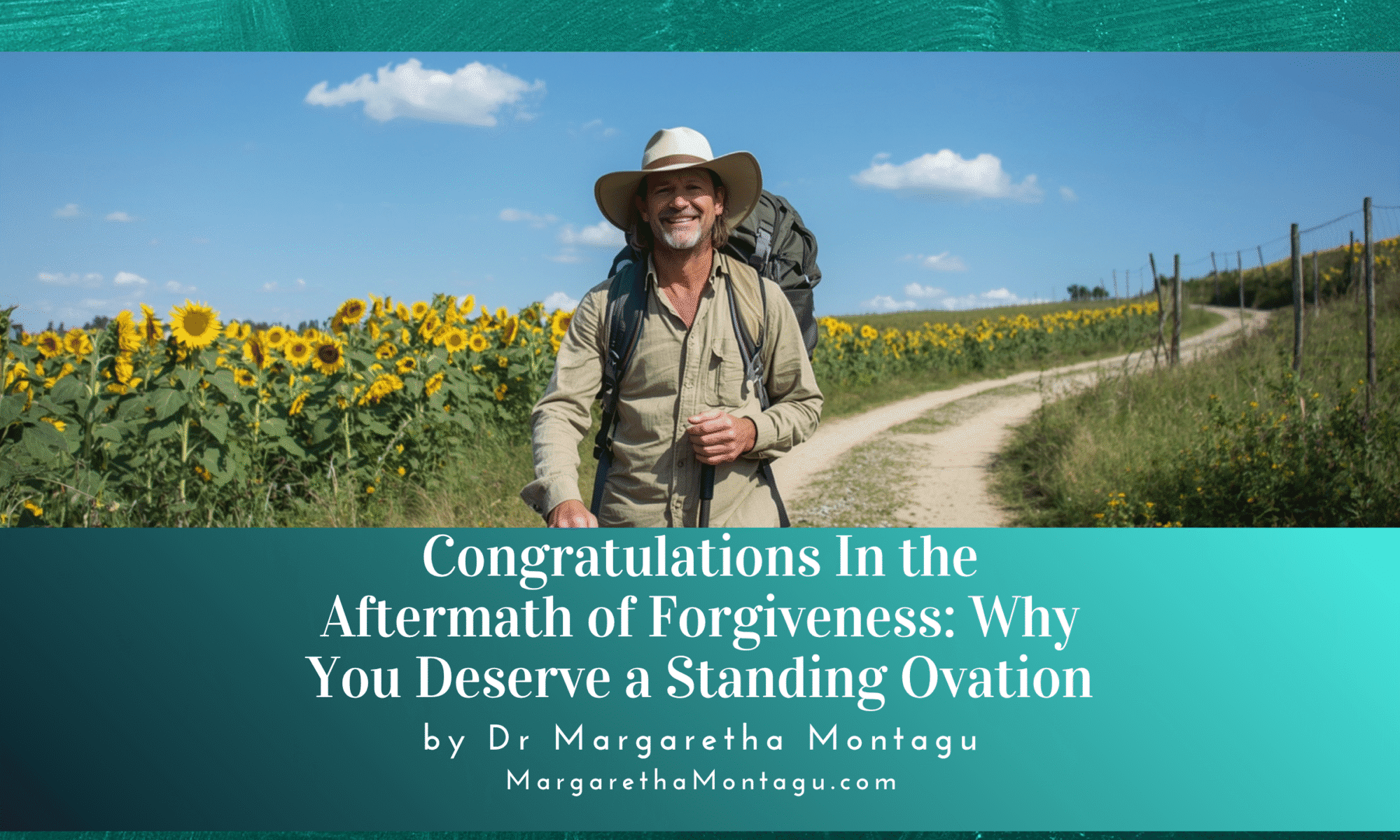
On the threshold of your next chapter, how do you lay the ghost of your first chapter to rest?
To lay the ghost of a first chapter to rest, you must stop trying to ignore it and instead invite it to sit down for a final exit interview.
In psychological terms, you are navigating a liminal space—the disorienting “threshold” between an identity that no longer fits and one that hasn’t fully formed. The “ghost” isn’t the job or the relationship itself; it is the neural pathways of your old habits and the lingering attachment to status or security.
Here is a protocol for laying that ghost to rest, drawing on narrative therapy and transition psychology.
1. The “Skill Distillation” (Deconstruction)
Ghosts often haunt us because we think we left our “best self” behind in the old life. You need to separate your intrinsic value from your institutional container.
The Exercise: Take a piece of paper. In one column, write down the things you miss about the old chapter (e.g., “I miss being the expert,” “I miss the team,” “I miss the adrenaline”).
The Shift: In the second column, strip away the context to reveal the core skill or need. “I miss being the VP” becomes “I miss high-level problem solving.” “I miss the office banter” becomes “I need connection.”
The Insight: You realize the ghost (the title/role) is dead, but the spirit (your capability) is alive and can be translocated to your new life.
2. The “Digital Exorcism” (Ritual)
As Cleo discovered in the story, our digital footprints act as anchors, keeping us tethered to past versions of ourselves. We often keep old profiles “just in case,” which signals to our brain that the door is still ajar.
The Exercise: Schedule a 30-minute “Digital Exorcism.” Go to LinkedIn, your website, or your bio. Delete the corporate buzzwords. Archive the photos that look like a stranger.
The Shift: Do not just delete; replace. Write a bio that reflects your current reality, even if it feels smaller. “Former Architect” is a tombstone; “Landscape Painter” is a living breathing person.
The Insight: When you align your public avatar with your private reality, you stop performing for an audience that has already left the theater.
3. The “Eulogy for the Old Self” (Grief Work)
We often rush to “move on” without properly mourning. This creates “unresolved grief,” which manifests as that phantom limb syndrome—reaching for a phone that doesn’t ring.
The Exercise: Write a literal eulogy for your past self. Acknowledge what that version of you achieved, what they survived (the burnout, the late nights), and—crucially—thank them for getting you to this threshold.
The Shift: Read it aloud (perhaps on a walk or in nature, given your affinity for the outdoors). Then, perform a physical act of closure: burn the paper, delete the old work files, or pack the “power suit” into a donation bag.
The Insight: You are not killing the past; you are burying it with honor so it becomes an ancestor rather than a ghost. Ancestors offer wisdom; ghosts just make noise.
4. Re-Authoring the Narrative
In narrative therapy, we move from a “contamination sequence” (where the good past was ruined by the bad ending) to a “redemption sequence” (where the struggle was the necessary fire for the new forging).
The Shift: Stop telling the story of “how I lost X.” Start telling the story of “how I chose Y.”
The Reframing: Instead of “I got laid off and now I’m freelancing,” try “I survived a system that wasn’t built for me, and now I’m building one that is.”
The goal isn’t to forget the first chapter. It’s to place it firmly on the bookshelf of your life so you can stop re-reading it and finally pick up the pen to write the next one.
Author Bio: Dr Margaretha Montagu – described as a “game changer”, “gifted healer”, “guiding light” and “life-enriching author” – is an experienced medical doctor, a certified NLP practitioner, a medical hypnotherapist, an equine-assisted psychotherapist (EAGALAcertified) and a transformational retreat leader who guides her clients through life transitions – virtually, or with the assistance of her Friesian and Falabella horses, at their home in the southwest of France.
How to Leave Behind What You’ve Built Without Losing Who You Are
What this is: A compassionate exploration of the terror, grief, and unexpected liberation that comes when successful people consider stepping away from their empires, careers, or identities they’ve spent decades building.
What this isn’t: Career advice, retirement planning, or a cheerful “just follow your passion” pep talk that ignores the very real psychological complexity of releasing a life’s work.
Read this if: You’ve built something impressive but feel trapped by it. You wake at 3 a.m. wondering if this is all there is. You’re terrified that without your title, company, or professional identity, you’ll simply… disappear.
Five Key Takeaways for the Fatally Accomplished
Your identity crisis is actually an identity opportunity. That uncomfortable feeling isn’t failure, it’s your authentic self knocking rather insistently on the door you’ve kept locked for years.
Walking away doesn’t erase what you’ve built, it completes it. The greatest leaders know when their chapter ends and someone else’s begins.
You are not your résumé, and thank goodness for that. Your achievements are things you’ve done, not who you are, though you’ve been confusing the two for so long they’ve become entangled.
The void you fear is actually spaciousness. What feels like losing yourself is often the first time you’ve had room to find yourself.
Your next chapter doesn’t diminish your last one. Evolution isn’t betrayal. Growth isn’t abandonment. And reinvention isn’t admission of failure.
Introduction: The Cage You Built Yourself
There’s a particular flavour of success that tastes like achievement but feels like entrapment. You’ve built something remarkable, something that bears your name or carries your vision or wouldn’t exist without your relentless determination. And now? Now you’re not entirely sure whether you own it or it owns you.
The thought of walking away creates a vertigo so profound you can barely let yourself think it. Who would you be without this company, this practice, this role you’ve inhabited so completely that colleagues, clients, even your own family, can’t seem to imagine you outside of it? More terrifyingly, can you imagine yourself outside of it?
This isn’t about burnout, though I’m sure you’re familiar with that particular companion. This is something deeper, more existential. This is about the dawning realisation that the life you worked so hard to build might not be the life you want to live anymore. And the guilt, oh, the guilt of even thinking such a thing.
But here’s what I’ve learned from twenty years as a doctor specialising in stress management, fifteen years hosting retreats where exhausted professionals walk the Camino de Santiago, and countless conversations with people who’ve stood exactly where you’re standing now: this crisis of identity isn’t the end of your story. It’s the beginning of the most authentic chapter you’ve ever written.
The Woman Who Built an Empire and Then Dismantled It
Sarah Elisabeth Thornton sat in her corner office on the forty-second floor, watching the November rain streak the windows, transforming the cityscape below into an impressionist painting of blurred lights and shadows. The leather of her chair creaked as she shifted, a sound so familiar it had become the soundtrack to a thousand difficult decisions. But this decision, the one she’d been avoiding for eighteen months, was different.
The company she’d founded twenty-three years ago, the one that had grown from a single rented desk to three continents and 847 employees, the one that bore her name in elegant serif font on buildings in seven cities, no longer fit. The realisation had crept in slowly, like cold water seeping through a crack, until one morning she woke and knew with absolute clarity: she was done.
Not burned out. Done. There’s a difference.
Her hands trembled as she touched the edge of her mahogany desk, feeling the smooth wood grain beneath her fingertips. How many times had she gripped this desk during crisis calls? How many strategies had been sketched on the notepad that sat, as always, perfectly aligned in the upper right corner? The smell of her office, that particular combination of expensive carpet, her bergamot hand cream, and the faint coffee aroma that never quite disappeared, seemed suddenly overwhelming. This was the scent of her identity, or what she’d thought was her identity.
The terror came in waves. Without Thornton Consulting, who was Sarah Elisabeth Thornton? The woman who turned around failing corporations? The sought-after keynote speaker? The name that opened doors and commanded respect before she even entered the room? Or simply… someone’s mother, someone’s ex-wife, someone who used to be someone?
She could taste the copper tang of fear in her mouth as she imagined telling her board. Worse, telling her father, who’d never built anything but had endless opinions about those who did. The sound of her own heartbeat seemed deafening in the quiet office. Through the window, she watched a bird, just a small dark shape against the grey sky, flying in whatever direction it chose. The freedom of it made her throat tighten.
That evening, she drove to the place she always went when the walls closed in: a small café three miles from her home, the kind of place where nobody knew her name or cared about her LinkedIn profile. The warmth inside hit her face as she entered, steam from the espresso machine creating small clouds, the comfortable murmur of conversations she wasn’t part of, the clink of spoons against ceramic. She ordered chamomile tea, something she never drank, and sat by the window.
An elderly man at the next table was showing his grandson photographs, their heads bent together over a phone, both laughing. The boy couldn’t have been more than eight. “Tell me about when you were young, Grandpa,” she heard him say. The man’s response was immediate, animated, joyful: “Oh, I wasn’t always this handsome, you know…”
Sarah found herself crying, right there in the café, tears running down her cheeks and dropping onto the scratched wooden table. Not from sadness, exactly, but from a sudden, piercing recognition. That man wasn’t telling his grandson about his career. He was sharing who he’d been, who he was. His identity wasn’t trapped in what he’d built. It lived in him.
She pulled out her phone, hands still shaking but steadier now, and texted her executive coach: “We need to talk about succession planning. Real succession planning. I’m ready.”
The relief that flooded through her body was so intense she had to steady herself against the table. Her chest loosened. The café air tasted sweeter somehow. She could hear the music playing, something gentle and acoustic that she’d been too preoccupied to notice before. The possibility of a future that wasn’t just more of the same opened before her like a door she’d been too afraid to try.
She didn’t know yet what came next. She only knew that the cage she’d built, beautiful and impressive as it was, had a door. And she’d just decided to find the key.
Why Identity and Achievement Become Dangerously Entangled
What Happens When Success Becomes Your Surname?
For driven professionals, entrepreneurs, and executives, success rarely arrives quietly. It demands everything: your time, your energy, your weekends, your attention at your daughter’s school play, your presence at dinner parties where you’re physically there but mentally reviewing tomorrow’s presentation. Slowly, imperceptibly, your professional identity doesn’t just describe what you do, it becomes who you are.
This entanglement happens through repetition and reinforcement. Every introduction begins with your title. Every conversation eventually winds its way to your work. Your achievements become conversational currency. Your business card might as well say “Doctor/CEO/Founder/Director” and then, in smaller print, “Also Sometimes a Person.”
I’ve witnessed this phenomenon countless times during my twenty years in medical practice and fifteen years hosting Inner Camino crisis management retreats in southwest France. The peoplewho arrive at my Camino de Santiago walking retreats often can’t complete the simple exercise: “Describe yourself without mentioning your profession.” They stumble, genuinely confused, as if I’d asked them to describe the colour blue without using colours.
This isn’t vanity or superficiality. It’s the natural consequence of pouring yourself so completely into something that the boundaries between you and it dissolve. You’ve metabolised your work into your very sense of self. Your achievements have become your autobiography.
But here’s what I’ve learned as an NLP master practitioner and medical hypnotherapist working with people in transition: this entanglement, whilst feeling permanent, is actually a trance state. You’ve been hypnotised by your own success story, repeating it so many times that you’ve forgotten it’s just one story you could tell about yourself.
The Crisis That Precedes The Transformation
Walking away triggers what I call the “identity dissolution panic,” a psychological state where your sense of self feels genuinely threatened. This isn’t dramatic language, it’s neuroscience. The brain structures that have been reinforcing your professional identity for decades don’t distinguish between career transition and actual threat. Your amygdala responds to the thought of resignation with the same alarm system it would activate if you were standing at the edge of a cliff.
This is why successful people stay in roles they’ve outgrown. It’s not lack of courage or imagination. It’s that the brain perceives starting over as existential danger.
Yet in my eight non-fiction books about divorce, loss, unexpected illness, and coping with crises, the pattern remains consistent: the people who break through this fear don’t do so by becoming fearless. They do it by recognising that who they are exists independently of what they’ve built. The company can thrive without you. The practice can continue. Your professional legacy stands complete. But you? You have chapters left to write that have nothing to do with quarterly earnings or strategic initiatives.
How Your Transition Transforms More Than Just You
The Ripple Effect of a Courageous Reinvention
When you summon the courage to walk away from what you’ve built, you don’t just change your own story. You give permission to everyone watching, especially those who thought they had no choice but to keep performing in roles that have become costumes rather than callings.
Your employees, your colleagues, your children, they’re all absorbing the lesson you’re teaching. If you stay trapped, you teach them that success is a life sentence. If you transition with integrity, you teach them that wholeness matters more than titles, that evolution is strength, not weakness.
I’ve seen this ripple effect firsthand in my Purpose Pivot Protocol online course. When one leader steps into authentic transition, it creates space for others to examine their own lives honestly. Your courage becomes contagious. Your reinvention gives others permission to reimagine their own futures.
The Purpose Pivot Challenge – drawing inspiration from the Camino de Santiago, this transformative course guides you through a proven framework to recalibrate your authentic purpose and create a meaningful and fulfilling next act. Get immediate access
Beyond your immediate circle, your community benefits when successful people demonstrate that there’s life, meaning, and purpose beyond professional achievement. You become a model for sustainable success, for knowing when to hold on and when to let go, for understanding that the greatest legacy isn’t what you built but how you lived.
Gratitude Practice: Finding Yourself in What You’re Leaving Behind
Each evening for the next week, write down three things:
Something your professional identity taught you about yourself. (Not what you achieved, but what you discovered about your character, your values, your capabilities.)
Something that will remain true about you regardless of your title. (Your kindness, your curiosity, your sense of humour, your ability to see solutions.)
Something you’re grateful for that has nothing to do with your professional success. (A friendship, a sunset, your ability to make perfect scrambled eggs, the way your dog greets you.)
This practice gently separates identity from achievement, reminding you that you existed before your success and you’ll continue existing after you walk away. You’re not losing yourself. You’re finally meeting yourself.
Further Reading: Books That Understand Your Transition
1. “Transitions: Making Sense of Life’s Changes” by William Bridges
I recommend this book first because Bridges understands what most career advice misses: the neutral zone. That uncomfortable space between letting go and beginning again where you feel lost and directionless. He doesn’t rush you through it. He helps you inhabit it wisely. For high-achievers who are used to having a plan, learning to trust the in-between is revolutionary.
2. “The Second Mountain” by David Brooks
Brooks writes with unusual honesty about how first-half-of-life success (building, achieving, climbing) eventually rings hollow. His exploration of second-mountain living, where contribution and connection matter more than conquest, speaks directly to executives wondering if there’s more to life than the summit they’ve already reached. It’s permission, in book form, to want something different.
3. “Falling Upward: A Spirituality for the Two Halves of Life” by Richard Rohr
Rohr, a Franciscan priest, offers a spiritual framework for understanding why successful people often face their deepest questions at the height of their achievement. His concept of the “second half of life” as necessarily different from the first gives language to the transition you’re experiencing. This isn’t failure, it’s maturation. Not everyone will resonate with his religious framework, but his wisdom transcends denomination.
4. “Die Empty: Unleash Your Best Work Every Day” by Todd Henry
Henry’s premise is deceptively simple: don’t die with your best work still inside you. For people considering walking away, this book asks the uncomfortable question: are you staying because you still have contribution to make here, or because you’re avoiding the harder work of discovering what else you might create? It’s a book about legacy that might help you see yours isn’t finished, it’s just changing form.
5. “The Crossroads of Should and Must: Find and Follow Your Passion” by Elle Luna
Luna’s slim, beautifully illustrated book distinguishes between “should” (what others expect) and “must” (what your soul demands). For professionals who’ve spent careers meeting everyone else’s expectations whilst ignoring their own inner compass, this book is a gentle but firm invitation to finally listen to that quieter voice that’s been waiting for your attention.
P.S. My own book, “Embracing Change, in 10 Minutes a Day,”offers daily practices specifically designed for people navigating major life transitions. It’s structured for busy professionals who need bite-sized wisdom they can actually implement between meetings, including exercises I’ve developed over fifteen years of retreat work and my training as a life transition coach. Available on my website and wherever books are sold.
Voices
“I arrived at Dr. Montagu’s Camino retreat convinced I was having a breakdown because I wanted to leave the law firm I’d built. The walking, the space, the storytelling circles, they showed me I wasn’t losing my mind, I was finding it. Sitting with her Friesian horses, who couldn’t care less about my impressive client list, I finally understood: I am not my career. The relief was physical. Within six months of returning, I’d begun my transition. Best decision I’ve ever made, including starting the firm in the first place.” — Rebecca M., Corporate Attorney, London
“The Inner Camino virtual storytelling circles gave me something I didn’t know I needed: witnesses to my transition who weren’t invested in my old identity. When I shared my fear about stepping down as CEO, nobody tried to talk me out of it or convince me to stay. They just listened, really listened, and helped me see my own courage. That circle held me through the scariest months of my life. Now, eighteen months into my new chapter, I’m still part of the group. We’ve all transformed, together.” — Jennifer S., Former CEO, Virtual Circle Member
Five Razor-Sharp FAQs: What People Are Actually Asking
How do I know if it’s time to walk away or if I’m just tired?
Tiredness wants rest. A soul that’s finished wants release. Here’s the test: imagine taking a three-month sabbatical where you’re completely refreshed. Now imagine returning to your current role. Does the thought energise you or make your chest tighten? Fatigue is temporary. Completion is existential. If rest sounds good but return sounds like re-imprisonment, you have your answer.
What if I walk away and regret it?
This question assumes walking away is irreversible, but most transitions are negotiations, not exits. You might step back and discover consultancy work that keeps your hand in without consuming your life. You might find you miss certain aspects and can incorporate them differently. The bigger question: what if you stay and regret never trying? That regret has no remedy. At least transition regret can be course-corrected.
How do I financially prepare for stepping away from my primary income?
This deserves more than a paragraph, but here’s the starting point: begin modeling your exit twelve to eighteen months before you take it. Work with a financial planner who understands entrepreneurial transition. Build your “freedom fund” that covers twelve months of expenses. Explore how your expertise translates to less time-intensive income streams. Most importantly, separate your identity from your income. You might earn less. You’ll live more. That’s a trade-off worth considering.
Won’t people judge me for walking away from success?
Yes. Some will. People who’ve never built anything substantial will have opinions about why you shouldn’t dismantle what you’ve built. People who are trapped in their own successful cages will judge you for finding your key. Here’s the liberating truth: their judgment is about their fear, not your choice. The people whose opinions actually matter, the ones who love you rather than your achievements, they’ll understand. As for the rest? Their judgment is the price of your freedom. Pay it gladly.
How do I introduce myself once my title is gone?
This is the existential heart of your fear, isn’t it? I’ll tell you what I’ve watched successful people discover: you introduce yourself as a person with interests, values, and curiosity rather than as a profession with a title. Try it at a dinner party. Instead of “I’m the CEO of…” say “I’m fascinated by…” or “I’ve been exploring…” or simply “I’m Sarah.” The conversations that follow are often the first authentic ones you’ve had in years. Your identity isn’t what you do. It’s how you engage with being alive.
Conclusion: The Identity That Survives Everything
Walking away from what you’ve built doesn’t diminish it. It doesn’t erase your accomplishments or make your professional life meaningless. It completes that chapter so a new one can begin. Your achievements stand as testimony to what you’re capable of. Your transition stands as testimony to who you are.
The person you are without your title, without your company, without your professional identity, that person has been there all along. They’ve been the one making the decisions, showing the courage, demonstrating the resilience. They’ve been you, underneath the achievements, before the success, beyond the accolades.
You are not what you’ve built. You’re the one who built it. And you can build again. Or rest. Or explore. Or simply exist without building anything at all. That choice, that freedom, that spaciousness, it’s not loss. It’s reclamation.
As the poet David Whyte writes: “The antidote to exhaustion is not necessarily rest. The antidote to exhaustion is wholeheartedness.”
Perhaps it’s time to discover what wholeheartedness looks like when you’re no longer performing someone else’s definition of success, or even your own outdated one.
A Bold Invitation
If you’re standing at this crossroads, exhausted by achievement and terrified of what comes next, I want to extend a very specific invitation.
My Camino de Santiago CrossRoads walking retreats in southwest France are designed precisely for people like you. Not tourists seeking picturesque walks, though the landscape is breathtaking. Not casual wanderers looking for a holiday, though rest is woven throughout.
These retreats are for successful, stressed, questioning professionals who need space to hear themselves think. Who need physical distance from their impressive lives to gain psychological distance from their consuming identities. Who need to walk, literally and metaphorically, into a different way of being.
You’ll walk moderate distances through stunning French countryside, allowing your body to release what your mind has been holding. We practice mindfulness and meditation techniques I’ve refined over twenty years of stress management work as a GP, techniques that actually work for people whose minds run at executive speed. We gather in storytelling circles, sometimes with just us, sometimes in the presence of my Friesian horses, who have an uncanny ability to help humans drop pretence and find authenticity.
But here’s what really happens on these retreats: you discover you’re still you without your title. You remember what it feels like to be interested in things that don’t advance your career. You have conversations where nobody asks what you do, only who you are. You sleep properly for the first time in years. You cry, you laugh, you question everything, and somewhere along the path, you find the courage to imagine your next chapter.
The Inner Camino isn’t about religious pilgrimage, though some find spiritual renewal. It’s about the internal journey that happens when you give yourself permission to step off the treadmill long enough to ask: is this the life I want? And if not, what am I going to do about it?
Space is intentionally limited to ensure the intimacy necessary for transformation. If this speaks to you, I invite you to explore the retreat details and consider whether now might be your time to take the walk that changes everything.
Stress destroys Lives. To find out what you can do to safeguard your sanity by taking my insight-giving quiz, subscribe to my mailing list.
“I am an experienced medical doctor – MBChB, MRCGP, NLP master pract cert, Transformational Life Coach (dip.) Life Story Coach (cert.) Stress Counselling (cert.) Med Hypnotherapy (dip.) and EAGALA (cert.) I may have an impressive number of letters after my name, and more than three decades of professional experience, but what qualifies me to excel at what I do is my intuitive understanding of my clients’ difficulties and my extensive personal experience of managing major life changes using strategies I developed over many years.” Dr M Montagu
You hit your forties, and suddenly that career ladder you’ve been dutifully ascending starts giving off serious “is this thing up to code?” energy. The view is… adequate. The title sounds important at dinner parties. The paycheck clears. And yet, some annoying little voice inside keeps asking, “Wait, this is the final destination?”
Cue your old fears, now cosplaying as “practical advice” and “being realistic.”
Today, let’s gently eviscerate these fears with facts.
Here are the five biggest fairy tales about a career change at 40, or after 40, and the reality checks that might dramatically improve your outlook.
Myth #1: “You’ll have to start from scratch.”
Ah yes, the 2 a.m. special from your inner saboteur.
Plot twist: You’re not starting from scratch — you’re starting from decades of competence.
You’ve accumulated years of judgment, problem-solving wizardry, emotional intelligence, and the ability to lead without having a meltdown. These superpowers don’t evaporate when you pivot. They’re literally your competitive advantage.
The real work? Teaching a new industry to recognise your value. That’s not starting over — that’s strategic rebranding.
Myth #2: “You’ll make less money.”
Maybe. Maybe not. (Helpful, right?)
Sure, some folks take a temporary financial haircut during a transition. But I’ve watched just as many people increase their earning potential once they stop forcing themselves into ill-fitting roles.
When you strategically align your expertise with what you actually do well — and what the market desperately needs — your value doesn’t shrink. It multiplies.
Also, burnout has a price tag. Misalignment bleeds energy, joy, and productivity. When you’re actually engaged, your performance improves dramatically — and not altogether surprisingly, so does your bank account.
Myth #3: “You’re too old to change careers.”
Adorable. But no.
You’re not too old — you’re too experienced to keep tolerating mediocrity.
Career pivots at this stage aren’t panicked escapes; they’re intentional pursuits of meaning.
Every lesson, every failure, every soul-crushing meeting — it’s all been training. You’re not a beginner. You’re a strategic powerhouse with better instincts than your 25-year-old self could’ve dreamed of.
Myth #4: “You’ll lose your professional identity.”
Ooh, this one hits different because it’s wrapped in feelings.
Who are you without that LinkedIn headline? Without your corner office?
Here’s the thing: you’re not your job title. You’re the brilliance that made that title possible.
When you stop clinging to labels and reconnect with your actual purpose, you realize your professional identity was never meant to be permanent. It was meant to grow.
Repositioning your expertise doesn’t delete your identity — it upgrades it.
Myth #5: “It’s too risky.”
You know what’s risky? Staying exactly where you are.
Burnout, resentment, and the quiet desperation of “is this really it?” — those are the slow-motion disasters that steal your best years.
Yes, change requires courage. But the real risk is waking up half a decade from now in the exact same spot, still muttering “what if.”
The truth: you don’t need to YOLO your entire life. You can pivot strategically, methodically, with actual structure and support.
It’s not a guide to dramatic bridge-burning. It’s a blueprint for repositioning your expertise — safely, confidently, and with a plan that doesn’t involve panic.
So the next time your inner critic hisses, “You’re too old for a complete career change at 40”, just smile sweetly and reply, “Bold of you to assume I’m starting over. I’m starting smarter.”
Because the only thing riskier than changing direction — is staying stuck pretending you’re fine.
“I am an experienced medical doctor – MBChB, MRCGP, NLP master pract cert, Transformational Life Coach (dip.) Life Story Coach (cert.) Stress Counselling (cert.) Med Hypnotherapy (dip.) and EAGALA (cert.) I may have an impressive number of letters after my name, and more than three decades of professional experience, but what qualifies me to excel at what I do is my intuitive understanding of my clients’ difficulties and my extensive personal experience of managing major life changes using strategies I developed over many years.” Dr M Montagu
Stress destroys Lives. To find out what you can do to safeguard your sanity by taking my insight-giving quiz, subscribe to my mailing list.
How admitting “I don’t know” can transform your relationships
What this is: A practical exploration of intellectual humility, the art of knowing what you don’t know, and why the happiest people are those brave enough to admit their blind spots.
What this isn’t: A call to become indecisive, self-doubting, or to abdicate your expertise. This isn’t about diminishing your accomplishments; it’s about amplifying your capacity to grow.
Read this if: You’re exhausted from always having to have all the answers. You’ve noticed your certainty sometimes costs you relationships. You’re ready to lead with wisdom rather than just intelligence. You suspect there might be freedom in the phrase “I could be wrong.”
Five Key Takeaways
Intellectual humility doesn’t weaken your authority; it strengthens it. When you acknowledge gaps in your knowledge, people trust you more, not less.
The smartest people in the room are often those willing to say, “Teach me.” Curiosity is the hallmark of true intelligence, not the illusion of omniscience.
Being intellectually humble reduces stress and anxiety. When you stop defending every position as if your identity depends on it, you breathe easier.
It transforms conflict into collaboration. Arguments become explorations. Disagreements become opportunities to learn rather than battles to win.
Intellectual humility can be mastered. It’s not a personality trait you either have or don’t have, it’s a practice you can cultivate, starting today.
Use this prompt to ask AI to help you learn something new: “Help me design a personalised learning plan for mastering [subject]. Break it down into daily learning tasks, recommended resources, and practical exercises I can do to build my skills.”
Introduction: The Paradox at the Heart of Success
I came across the term “intellectual humility” for the first time recently as I was reading an article in the Greater Good Magazine. I though it may be interesting to look into it, in more depth, considering the opinionated times we live in.
Why? Because the very traits that got you to the top, your decisiveness, your confidence, your ability to analyse complex situations and make bold calls, may now be the cage keeping you trapped in stress, frustration, and diminishing returns.
You’ve spent decades building credibility. You’re the person people turn to for answers. Your opinion carries weight in boardrooms, strategy sessions, and family decisions. You’ve earned your expertise through late nights, hard lessons, and relentless dedication. So why would you ever admit you don’t know something?
Because intellectual humility, the capacity to recognise the limits of your knowledge and remain open to new information, might be the single most valuable skill you haven’t yet fully embraced. It’s the counterintuitive secret that separates leaders who burn out from those who evolve. It’s what transforms strained relationships into genuine connections. And it’s a quality that can help you sleep better at night, even when you don’t have all the answers.
My mentoring approach, refined by personal experience over many, many years, is based on the premise that true transformation begins not with adding more knowledge, but with creating space, space to question, space to be wrong, space to grow. Over 20 years of working with executives and professionals in stress management, I’ve witnessed a pattern: the most resilient leaders aren’t those with the most answers, they’re those comfortable with the most questions.
The Story of Catherine Ainsworth
Catherine Ainsworth had perfected the art of certainty. As the Chief Operating Officer of a mid-sized pharmaceutical company, she’d built her reputation on making tough calls quickly and being right more often than not. The data was her religion, the spreadsheet her bible, and her track record spoke for itself: three consecutive years of revenue growth, a streamlined supply chain that competitors envied, and a team that, though occasionally resentful of her exacting standards, consistently delivered results.
But at 47, Catherine was exhausted in a way that no amount of sleep could fix.
Eventually, the cracks began to show.
She was sitting in the executive conference room, the autumn light streaming through floor-to-ceiling windows, illuminating dust motes that danced above the polished mahogany table. Her CFO, Marcus, was presenting an alternative approach to the Q4 strategy, one that diverged significantly from Catherine’s proposal.
She could feel her jaw tightening, that familiar sensation of her teeth pressing together as Marcus spoke. Her fingers drummed against her leather portfolio, a staccato rhythm of impatience. The room smelled of fresh coffee and the faint vanilla scent of someone’s perfume, but Catherine tasted only the metallic edge of defensiveness on her tongue.
“The problem with that approach,” she interrupted, her voice clipped and precise, “is that it ignores the supply chain vulnerabilities we identified in Q2. We’ve already analysed this.”
Marcus paused, his shoulders dropping almost imperceptibly. Around the table, eyes shifted downward to notes that suddenly required intense scrutiny. The silence stretched like taffy, uncomfortable and sticky. Catherine could hear the hum of the air conditioning, the soft tap of someone’s pen against paper, the sound of her own pulse in her ears.
She won that meeting, as she usually did. But as she returned to her office, the victory felt hollow. Through her glass walls, she could see her team, heads bent over their desks, and she realised with a jolt how rarely anyone challenged her anymore. How often meetings ended with nods of agreement that felt more like resignation than genuine consensus.
That evening, Catherine sat in her BMW in the underground car park, unable to summon the energy to drive home. Her fingers gripped the steering wheel, knuckles white, and she felt the leather’s grain pressing into her palms. The fluorescent lights cast everything in a sickly green hue. She could smell engine oil and concrete, that particular scent of enclosed spaces where cars live instead of people.
Her phone buzzed. A text from her daughter: “Mom, are you coming to my recital or are you too busy being right about everything?”
Catherine’s breath caught. The words stung precisely because they were true. When had “being right” become her primary mode of existing? When had her need for certainty transformed from an asset into a wall, one that kept her apart from her team, her family, herself?
She thought about her marriage, dissolved three years earlier. “You can’t just listen, can you?” her ex-husband had said during one of their final arguments. “You always have to correct, to improve, to show me the better way. Sometimes I just need you to be uncertain with me.”
Sitting in that car park, the engine cooling with soft metallic ticks, Catherine felt something crack open inside her. Not breaking, exactly. More like the first fissure in a chrysalis. She didn’t have the words for it yet, but she was touching the edge of intellectual humility, the recognition that her relentless certainty had become both her shield and her prison.
The next morning, Catherine did something unprecedented. She walked into the executive suite and asked Marcus to coffee. “Tell me more about your Q4 proposal,” she said, and then, with words that felt foreign but somehow liberating in her mouth: “I think I might have dismissed it too quickly. I’d like to understand what I’m missing.”
Marcus’s expression shifted from wariness to something resembling hope. And Catherine felt, for the first time in months, the lightness that comes with putting down a burden you didn’t realise you were carrying.
Over the following weeks, as she began practising what she’d later learn to call intellectual humility, Catherine noticed something remarkable. Her team started speaking up more. Meetings became laboratories for ideas rather than stages for her expertise. Her blood pressure, which had been creeping upward for years, began to normalise. She slept better. She laughed more.
And her daughter started texting more often, messages that began with “I’ve been thinking about what you said” rather than complaints about what she hadn’t heard.
Catherine’s journey was just beginning, but she’d discovered that intellectual humility isn’t weakness dressed up as virtue. It’s the courage to grow, even when you’ve already arrived.
What Is Intellectual Humility, and Why Does It Matter?
The Definition: More Than Just Admitting You’re Wrong
Intellectual humility is the recognition that your beliefs, knowledge, and perspectives are inherently limited and potentially flawed. It’s the capacity to hold your convictions lightly enough to examine them honestly, to welcome contradictory evidence without defensiveness, and to change your mind when the facts warrant it.
But here’s what makes it truly powerful: intellectual humility isn’t self-deprecation. It’s not about thinking less of yourself, it’s about thinking of yourself less often. It’s the difference between “I might be wrong” (humility) and “I’m probably wrong about everything” (lack of confidence). One opens doors; the other closes them.
Research in psychology and organisational behaviour reveals that intellectually humble people actually make better leaders, maintain stronger relationships, learn faster, and experience less anxiety. They’re not paralysed by doubt, they’re liberated by curiosity. In my work with executives during our Camino de Santiago stress management retreats, I’ve observed this transformation repeatedly: when people give themselves permission to not know, they paradoxically become more effective at navigating complexity.
The Neuroscience of Certainty and Why We Cling to It
Our brains are prediction machines, constantly creating models of reality and then defending those models as if our survival depends on it. In our evolutionary past, it often did. Uncertainty triggered the amygdala, our brain’s threat-detection system, because not knowing where the predator lurked could mean death.
Today, intellectual threats activate the same neural pathways. When someone challenges your deeply held belief, your brain processes it similarly to a physical threat. Your heart rate increases, stress hormones flood your system, and your prefrontal cortex, responsible for nuanced thinking, goes partially offline. You literally become less intelligent when your certainty is challenged. See Porter T, Elnakouri A, Meyers EA, Shibayama T, Jayawickreme E, Grossmann I. Predictors and consequences of intellectual humility. Nat Rev Psychol. 2022;1(9):524-536.
This is why intellectual humility is both difficult and essential. It requires overriding your brain’s protective instincts in service of growth. It demands that you befriend uncertainty rather than banish it. Through two decades of clinical practice and fifteen years hosting transformative retreats where guests walk the Camino de Santiago, I’ve witnessed how powerful this shift can be when people learn to sit with “I don’t know” without panic. See also Bąk W, Wójtowicz B, Kutnik J. Intellectual humility: an old problem in a new psychological perspective. Current Issues in Personality Psychology. 2022;10(2):85–97.
The Professional Benefits: Why Humble Leaders Outperform
Study after study confirms what seems counterintuitive: leaders who display intellectual humility create more innovative, engaged, and profitable organisations. Why? Because they:
Build psychological safety. When the leader can say “I was wrong” or “I need help understanding this,” team members feel safe to take risks, admit mistakes, and propose unconventional ideas.
Make better decisions. By actively seeking disconfirming evidence and diverse perspectives, intellectually humble leaders avoid costly confirmation bias and groupthink.
Adapt faster. In rapidly changing environments, the ability to update your mental models quickly is more valuable than being right initially.
Inspire loyalty. People don’t trust perfection, they trust authenticity. A leader who admits limitations appears more credible, not less.
Reduce team stress. When perfectionism isn’t the standard, everyone breathes easier. Teams led by intellectually humble managers report lower burnout and higher job satisfaction.
In my Road Map to Resilience online course, we explore how intellectual humility serves as a foundation for career transitions and leadership evolution. It’s not about abandoning your expertise, it’s about holding it with an open hand.
If you’re feeling overwhelmed, exhausted, or on the edge of burnout, you need immediate support. The Road Map to Resilience: Burnout to Brilliance online course (with the option of adding coaching sessions) is designed for exactly that: a practical, step-by-step course to help you regain control, rebuild your energy, and find clarity in the chaos. This isn’t a quick fix—it’s about proven strategies to calm your nervous system, shift your mindset, and create sustainable resilience. No need to cope with this on your own—let’s get you back on track.
How Intellectual Humility Transforms Those Around You
The Ripple Effect in Relationships
When you embrace intellectual humility, something remarkable happens in your relationships. Arguments lose their edge. Your partner’s different perspective becomes interesting rather than threatening. Your children feel heard rather than corrected. Your colleagues become collaborators rather than competitors.
This isn’t just about keeping the peace, it’s about accessing collective wisdom. Every person in your life has knowledge you lack, experiences that could inform your blind spots, and insights that could shift your trajectory. But they’ll only share them if they believe you’re genuinely open to being influenced.
I’ve written eight books about divorce, loss, unexpected illness, and coping with crises, and one pattern emerges consistently: relationships fracture not because people disagree, but because they defend their convictions as if life itself is at stake. Intellectual humility reverses this. It says, “Your perspective matters more than my need to be right.”
The Community Impact: Leadership That Lifts
When you model intellectual humility, you give others permission to do the same. You create cultures, whether in your organisation, your family, or your community, where learning is valued over looking smart, where curiosity trumps certainty, where “I changed my mind” is celebrated as growth rather than criticised as inconsistency.
This matters beyond your immediate circle. In a world fractured by polarisation and rigid ideologies, intellectual humility is a form of radical hope. It suggests that bridge-building is possible, that we can hold strong values without demonising those who disagree, that complexity can be navigated without pretending everything is simple.
The people who attend my retreats often describe a profound shift: from seeing themselves as islands of competence to recognising they’re part of an ecosystem of wisdom. With over 30 testimonials on my website speaking to these transformations, the pattern is clear: intellectual humility doesn’t just change you, it changes the people around you.
How to Cultivating Intellectual Humility – three Options
A Writing Prompt
Set aside 20 minutes in a quiet space. Consider a belief you hold with strong conviction, something you feel certain about in your professional or personal life. Now write:
Part 1: Describe this belief in detail. Why do you hold it? What evidence supports it? How has it served you?
Part 2: Now, imagine you’re wrong. Not slightly mistaken, but fundamentally incorrect about this belief. Write from that perspective. What would the evidence for the opposite view look like? What would you need to revise about your understanding?
Part 3: Reflect on what this exercise felt like. Did you resist? Did you discover nuances you hadn’t considered? What might you be missing by holding this belief too tightly?
This practice, inspired by the reflective work we do during Inner Camino storytelling circles, isn’t about abandoning your convictions. It’s about loosening your grip enough to examine them honestly.
A Gratitude and Intention-Setting Exercise
Each morning for the next week, practice this brief ritual:
Gratitude: Identify one thing you learned yesterday that challenged or expanded your previous understanding. It might be small (“I learned my colleague’s scepticism comes from a past project failure I knew nothing about”) or significant (“I realised my approach to work-life balance isn’t the only valid one”). Express gratitude for that learning.
Intention: Set an intention for intellectual humility today. It might be: “I will ask three questions before offering my opinion in meetings,” or “I will respond to criticism with ‘Tell me more’ instead of defending myself,” or “I will notice when I feel defensive and breathe before responding.”
An AI Prompt
Use this prompt to ask AI to help you examine your convictions: “Act as an expert on [your conviction], explain the most important concepts, and provide real-world examples to illustrate each. Then, give me a step-by-step guide to master this topic in the next 30 days.”
Further Reading: Five Books on Intellectual Humility
1. “Think Again: The Power of Knowing What You Don’t Know” by Adam Grant
Grant, an organisational psychologist at Wharton, makes a compelling case for the joy of being wrong. His research-backed insights into how successful people update their beliefs make this essential reading. I chose this book because it bridges rigorous science with practical application, perfect for evidence-driven professionals.
2. “The Scout Mindset: Why Some People See Things Clearly and Others Don’t” by Julia Galef
Galef distinguishes between “soldier mindset” (defending your beliefs) and “scout mindset” (mapping the terrain accurately). This book offers concrete techniques for developing intellectual humility without sacrificing conviction. It’s particularly valuable for leaders who need to make decisive calls while remaining open to new information.
3. “Humble Inquiry: The Gentle Art of Asking Instead of Telling” by Edgar Schein
Schein, a pioneer in organisational culture, demonstrates how asking the right questions builds relationships and solves problems more effectively than having all the answers. This book transformed how I facilitate the storytelling circles during our retreats, showing how curiosity creates connection.
4. “Being Wrong: Adventures in the Margin of Error” by Kathryn Schulz
Schulz explores the experience of being wrong with humour and philosophical depth. She argues that our capacity for error is inseparable from our capacity for genius. I included this because it reframes “wrongness” as not just acceptable but essential to the human experience.
5. “The Wisdom of Insecurity: A Message for an Age of Anxiety” by Alan Watts
Watts, the philosopher who bridged Eastern and Western thought, explores how our pursuit of security and certainty creates the very anxiety we’re trying to escape. This contemplative book pairs beautifully with the physical practice of walking, which is why I often recommend it to retreat participants.
P.S. For a practical, accessible guide to navigating life transitions with humble curiosity, explore my book Embracing Change, in 10 minutes a day. It offers daily practices for building psychological flexibility, including exercises that cultivate intellectual humility during uncertain times.
From the Inner Camino Community: Real Stories of Transformation
Testimonial from a Camino de Santiago Retreat Guest:
“I arrived at Dr Montagu’s Camino de Santiago walking retreat convinced I had my life figured out. I was a successful consultant, used to being the smartest person in the room. But during our evening storytelling circle with the Friesian horses present, something shifted. When Margaretha gently asked, ‘What if your certainty is costing you connections?’ I felt defensive. Then I felt tears. By the end of the week, walking those ancient paths and sharing vulnerably with strangers who became friends, I discovered that admitting ‘I don’t know’ wasn’t weakness, it was freedom. My relationships at home have transformed. My teenage son actually talks to me now because I’ve stopped lecturing and started listening.” — Richard M., Management Consultant, London
Testimonial from a Virtual Storytelling Circle Member:
“Joining Dr Montagu’s virtual storytelling circle was a leap of faith during a difficult career transition. I’d always been the one with the plan, the answers, the five-year strategy. But redundancy at 52 shattered that identity. In the circle, I learned to hold my story lightly, to listen without immediately problem-solving, to say ‘I’m still figuring this out’ without shame. The other members modelled intellectual humility in the most beautiful ways, sharing their own uncertainties, their revised beliefs, their works in progress. Being part of this community taught me that wisdom isn’t having all the answers, it’s being brave enough to sit with the questions. I’m now in a new role that I never would have considered before because I was finally open to paths I hadn’t predetermined.” — Jennifer L., Former Financial Director, Manchester
Frequently Asked Questions About Intellectual Humility
Doesn’t intellectual humility make you appear weak or indecisive as a leader?
Quite the opposite. Research shows that leaders who display intellectual humility are perceived as more competent and trustworthy, not less. There’s a crucial distinction between intellectual humility (“I might be missing something, let’s examine all angles”) and chronic indecisiveness (“I can’t make up my mind”). Strong leaders make decisions, but they do so after genuinely considering alternative viewpoints. When you admit what you don’t know, people trust what you say you do know.
How do I balance intellectual humility with the need to project confidence in high-stakes situations?
Confidence and humility aren’t opposites, they’re dance partners. You can be absolutely confident in your values, your commitment to finding the best solution, and your ability to navigate complexity, while remaining humble about whether your current understanding is complete. In high-stakes situations, saying “Based on current information, here’s my recommendation” is both confident and humble. It demonstrates decisiveness while acknowledging that you’ll adjust if better data emerges.
Won’t people take advantage of me if I admit I don’t know things?
This concern usually reflects past environments where vulnerability was punished. In healthy systems, intellectual humility builds respect rather than inviting exploitation. People who might take advantage of genuine openness are revealing their own character, not exposing a flaw in your approach. Moreover, pretending to know what you don’t creates far greater vulnerability, when you’re eventually found out, which is inevitable, you lose credibility permanently.
How can I develop intellectual humility when my entire career has been built on being the expert?
Your expertise remains valuable, intellectual humility doesn’t erase it. Instead, it expands your expertise by making you coachable and adaptive. Start small: in low-stakes situations, practice saying “I hadn’t considered that angle” or “Tell me more about your thinking.” Notice that the world doesn’t end. In fact, you’ll likely find that people engage more deeply with you. Your expertise becomes more impactful when it’s offered as a contribution rather than a declaration.
Is there such a thing as too much intellectual humility?
Yes, though it’s rare. Intellectual humility becomes problematic when it slides into self-doubt or prevents you from acting on well-founded knowledge. If you find yourself paralysed by uncertainty or dismissing your own expertise automatically, you’ve overcorrected. Healthy intellectual humility says, “I’m confident in what I know, and I’m open to learning more.” It’s the integration of confidence and curiosity, not the abdication of judgment.
Conclusion: The Courage to Admit We Do Not Know
In a world that rewards certainty, choosing intellectual humility is an act of courage. It’s the recognition that your growth matters more than your image, that connection matters more than being right, that wisdom is found not in having all the answers but in asking better questions.
As David Foster Wallace observed, “The truth will set you free. But not until it is finished with you.” Intellectual humility is the willingness to be finished with, to let truth refine you rather than defend yourself against it. It’s uncomfortable work. It requires dismantling the fortress of certainty you’ve built brick by brick over decades. But on the other side of that dismantling is something more valuable than being right: the freedom to keep growing.
You’ve achieved remarkable things with your intelligence, your decisiveness, your expertise. Imagine what becomes possible when you add humility to that already impressive foundation. Imagine leading teams where people bring you their wildest ideas because they know you’ll truly consider them. Imagine relationships where disagreement becomes opportunity rather than threat. Imagine sleeping soundly, knowing you don’t have to have all the answers because you’re part of a community of seekers, all fumbling toward truth together.
The path of intellectual humility doesn’t diminish you. It liberates you. And that liberation ripples outward, touching everyone you lead, love, and serve.
The question isn’t whether you know enough. The question is: Do you understand the need to keep on learning?
Your Invitation: Walk the Camino, Transform Your Relationship with Certainty
Imagine seven days where the only thing you need to know for certain is which foot to place next on an ancient pilgrim path. Where the rhythm of walking, the beauty of the French countryside in Gascony, and the companionship of fellow seekers creates space for the kind of transformation that’s impossible to schedule into your already-packed calendar.
My Camino de Santiago Crossroads walking retreats in the south-west of France offer something increasingly rare: permission to not have it all figured out. Each day, you walk through stunning landscapes, practising mindfulness and meditation techniques designed specifically for people who carry the weight of responsibility like a second skin. The walking itself becomes a metaphor for intellectual humility; you can’t rush the path, you can’t control the terrain, you can only show up present for each step.
Evenings are spent in our storytelling circles, sometimes in the peaceful presence of my Friesian horses, who have an uncanny ability to reflect back our authentic selves without judgment. Here, we become simply human, sharing vulnerabilities, asking questions that have no easy answers, practising the art of listening without needing to fix or solve. Participants consistently describe these circles as the most transformative element of the retreat, the place where intellectual humility shifts from concept to lived experience.
This isn’t a holiday, though the setting in the south-west of France is undeniably beautiful. This is intentional time away from the demands of your high-performance life to reconnect with the curiosity and openness that first fuelled your success before certainty became your default mode. It’s where you remember that “I don’t know” can be the beginning of wisdom rather than the admission of weakness.
With 15 years of hosting these retreats and a varied collection of testimonials speaking to their impact, I’ve witnessed again and again how the combination of walking, mindfulness practices, and authentic community creates lasting shifts in how participants lead, relate, and live. You’ll return not with all the answers, but with something better: the capacity to sit with uncertainty while still moving forward with purpose.
Spaces are intentionally limited to preserve the intimacy and depth of the experience. If you’re ready to trade the exhausting weight of certainty for the liberating practice of intellectual humility, I’d be honoured to host you.
Stress destroys Lives. To find out what you can do to safeguard your sanity by taking my insight-giving quiz, subscribe to my mailing list.
Use all suggested AI prompts with circumspection.
Dr Margaretha Montagu, MBChB, MRCGP, NLP Master Practitioner, Medical Hypnotherapist, Life Transition Coach, has spent 20 years supporting stressed professionals in finding sustainable wellbeing and 15 years guiding transformative walking retreats on the Camino de Santiago. She is the author of eight books on navigating life’s inevitable transitions and the creator of the Inner Camino approach to stress management and personal growth.
When life gets overwhelming, do you reach for the phone to call a friend? Make tea for everyone, even though you’re the one falling apart? Organise a girls’ night out? That’s not weakness—that’s your nervous system’s brilliant survival strategy in action. While traditional stress research focuses on fight-or-flight, women often have a completely different response: we tend (nurture and care for others) and befriend (strengthen our social bonds). This article explores why women instinctively gather their tribe during crisis, why that’s actually your superpower, and how understanding this changes everything about managing stress during life’s major transitions.
5 Key Takeaways
The tend-and-befriend stress reaction is biological, not cultural. Oxytocin, released during stress in women, drives us toward connection rather than isolation.
This response pattern is equally valid as fight-or-flight but has been historically overlooked in stress research that primarily studied men.
Tend-and-befriend becomes particularly crucial during major life transitions—precisely when women aged 35-65 need it most.
Understanding your natural stress reaction helps you stop judging yourself for “not being strong enough” when you seek support.
Intentional community-building—from walking groups to storytelling circles—isn’t indulgent; it’s essential stress management.
Introduction: The Invitation You Didn’t Know You Needed
Picture this: Your world is crumbling. Perhaps it’s divorce papers on the kitchen table, redundancy notice in your inbox, or the sudden silence of an empty nest. What do you do?
If you’re like most women, your first instinct isn’t to run away (flight), pick a fight (fight), shut down completely (freeze), or desperately please everyone (fawn). No—you ring your best friend. You put the kettle on. You gather your people.
And then you judge yourself for it.
“I should be stronger,” you think. “Why can’t I handle this alone?”
But what if I told you that this instinct to reach out, to nurture others whilst seeking comfort yourself, isn’t a weakness at all? What if it’s actually your nervous system’s most sophisticated survival strategy—one that science ignored for decades because researchers primarily studied stressed-out male rats and university lads?
Welcome to the revolutionary world of tend-and-befriend: the stress reaction pattern that’s been hiding in plain sight, waiting to validate what women have known intuitively for millennia.
Andrea White’s Story: The Woman Who Tried to Be an Island
Andrea White arrived at one of my Camino de Santiago retreat’s storytelling circles in the Gers region of south-west France with shoulders hunched like question marks and a smile that didn’t quite reach her eyes. Fifty-three years old, recently divorced, and utterly convinced she needed to “woman up” and face her new life alone.
“I’m not here to make friends,” she announced on our first evening, as three other women settled onto cushions in the ancient stone barn, candlelight dancing across weathered beams. “I just need to walk. Clear my head. Get strong.”
I recognised that particular brand of fierce independence immediately. I’d worn it myself once—like armour that’s actually a cage.
The Gers countryside stretched before us: rolling hills of sunflowers, medieval villages perched like crowns on hilltops, and the white-and-gold path of the Camino winding through it all. We’d spend three days walking, meditating, and sharing stories.
Andrea walked alone that first day. Quite deliberately. When others paired up, chatting and laughing, she strode ahead, jaw set, earbuds firmly in place. At our midday rest stop—a perfect picnic beneath plane trees, with fresh bread, local cheese, and tomatoes that tasted of pure sunshine—she sat apart, scrolling her phone.
“She’s hurting,” whispered Marie, a French teacher from Lyon.
“She’s terrified,” added Susan, a doctor from Edinburgh.
By day three, Andrea’s isolation had become almost comical. She’d speed-walk ahead, but we’re a persistent lot on these retreats. Someone would inevitably catch her up. “Gorgeous view, isn’t it?” “Did you try the plum tart at breakfast?” “My feet are killing me—are yours?”
I watched her defences crack like dried mud in rain.
It happened properly on day three. We’d stopped at a tiny chapel, barely larger than a garden shed, its interior cool and dark after the fierce August sun. The smell of old incense and candles mixed with lavender from the fields outside. Inside, a visitors’ book lay open, filled with prayers and hopes scrawled in dozens of languages.
Andrea stood reading them, and I saw her shoulders begin to shake.
That evening’s storytelling circle was different. We’d built a fire carefully—crackling oak, the smoke sweet and sharp, stars appearing one by one in the darkening sky. The ritual is always the same: whoever holds the talking stick shares what they need to share. Sometimes it’s funny. Sometimes profound. Often both.
Andrea took the stick with trembling hands.
“I’ve been so angry,” she began, her voice rough as sandpaper. “Angry at my ex-husband. Angry at myself. But mostly—” she paused, tears now flowing freely, reflecting firelight like tiny amber rivers, “—I’ve been furious at myself for needing people. For not being able to just… cope alone.”
She told us everything then. The twenty-five-year marriage that had slowly suffocated her. The adult children who’d moved away. The career she’d sacrificed. The friends she’d lost touch with because her husband hadn’t liked them. And underneath it all, the crushing shame of needing help.
“When the stress hit,” she said, “everyone kept telling me about fight-or-flight. My therapist, my GP, the self-help books. They said I needed to fight for myself or remove myself from the situation. But all I wanted—” her voice broke, “—all I wanted was for someone to sit with me. To just… be there.”
Around the circle, women nodded. The knowing was palpable, thick as the wood smoke.
“I thought that made me weak,” Andrea whispered.
That’s when Susan spoke. “That’s oxytocin, love. That’s your stress reaction doing exactly what it’s meant to do.”
What happened next was pure magic—the kind that only occurs when women stop performing strength and start practising it. We spent three hours by that fire, sharing stories of times we’d felt broken for seeking connection, ashamed for not being “strong enough” to isolate ourselves through pain.
By dawn, Andrea was sleeping peacefully, surrounded by new friends who’d promised to WhatsApp daily, to visit, to stay connected. She’d walked alone for three days. She’d spend the next weeks walking hand-in-hand with her tribe.
The Science Behind the Sisterhood: Understanding Tend-and-Befriend
For decades, stress research focused almost exclusively on the fight-or-flight response—that adrenaline-fuelled reaction where your body prepares either to battle the threat or leg it in the opposite direction. This model, developed largely from studies on male subjects (both human and animal), became the default understanding of how humans respond to stress.
But here’s the fascinating bit: it’s incomplete.
In 2000, psychologist Dr Shelley Taylor and her colleagues at UCLA published groundbreaking research identifying a distinctly different stress reaction pattern, observed predominantly in women: tend-and-befriend – Taylor SE, Klein LC, Lewis BP, Gruenewald TL, Gurung RA, Updegraff JA. Biobehavioral responses to stress in females: tend-and-befriend, not fight-or-flight. Psychol Rev. 2000 Jul;107(3):411-29.
When women experience stress, particularly chronic or social stress, our bodies release oxytocin alongside the usual stress hormones. This “bonding hormone” doesn’t just make us feel warm and fuzzy—it actively drives us toward social connection and nurturing behaviours. Instead of fighting or fleeing, we tend (care for offspring and others) and befriend (build and strengthen social networks).
This isn’t socialisation or cultural conditioning (though those certainly reinforce it). It’s biology. Evolution shaped this response because, for most of human history, a woman’s survival—and her children’s survival—depended not on her individual ability to outfight or outrun threats, but on the strength of her social bonds.
Think about it: when danger threatened our ancestors, men might benefit from aggressive defence or rapid escape. But women, often pregnant or caring for young children, needed different strategies. Gathering together, sharing resources, and maintaining strong community bonds became survival tools as powerful as any spear or swift legs.
The tend-and-befriend stress reaction offers remarkable benefits:
Stress buffering: Social connection literally dampens our stress response. When we’re with trusted friends, our cortisol levels decrease, our heart rate stabilises, and our nervous system calms.
Enhanced resilience: Women with strong social networks navigate major life transitions—divorce, bereavement, illness, career changes—with significantly better mental and physical health outcomes.
Collective wisdom: When we gather and share experiences, we access perspectives and solutions we’d never discover alone. Your crisis becomes less overwhelming when you realise others have weathered similar storms.
Oxytocin’s magic: This hormone not only motivates social connection but also reduces anxiety and promotes healing. It’s literally nature’s antidote to stress.
Yet despite this biological imperative toward connection, we live in a culture that often valorises isolation as strength. “I’m fine on my own,” we say proudly, as though needing others reflects poorly on our character.
This is particularly damaging during the transitional years between 35 and 65, when women face some of life’s most profound shifts. Empty nests. Caring for ageing parents. Menopause. Divorce. Career pivots. Bereavement. These aren’t moments for stoic isolation—they’re precisely when our tend-and-befriend response should be activated at full throttle.
The problem? Many of us have spent decades disconnecting from this natural response. We’ve absorbed messages about independence and self-sufficiency to such a degree that we’ve forgotten how to properly tend and befriend. We’ve let friendships atrophy. We’ve prioritised productivity over community. We’ve worn our ability to “cope alone” like a badge of honour.
And then stress hits, our bodies scream for connection, and we judge ourselves for the need.
Understanding tend-and-befriend isn’t just intellectually interesting—it’s transformative. It means that when you reach for the phone during a crisis, you’re not being weak; you’re being wise. When you organise a girls’ weekend or join a walking group or book yourself onto a retreat, you’re not being indulgent; you’re practising essential stress management.
Your nervous system knows what it needs.
Further Reading: Five Unconventional Books
1. “Tending the Fire: Through Conflict, Trauma and Tragedy, What We Share in Common Is Seeking Peace” by Tending the Fire Collective (edited by Molly Remer)
This isn’t a traditional academic text—it’s a collection of women’s voices exploring how we hold space for each other through crisis. What makes this book invaluable is that it demonstrates tend-and-befriend in action rather than just theorising about it. The contributors—mothers, activists, healers, and ordinary women—share raw, honest accounts of how they’ve created circles of care during their darkest moments. I chose this because it mirrors what I witness in my storytelling circles: the transformative power of women simply showing up for each other. It’s proof that tending isn’t passive or weak; it’s revolutionary resistance against a culture that insists we suffer alone.
2. “The Tend and Befriend Theory of Stress: A New Perspective on Women’s Responses to Stress” (published research collection, available through academic libraries)
For those who want the actual science straight from the source, this collection includes Dr Shelley Taylor’s original groundbreaking research along with subsequent studies that expanded our understanding of women’s stress responses. Yes, it’s more academic, but Taylor writes accessibly, and reading the research that overturned decades of male-centred stress theory is genuinely thrilling. I recommend this because understanding the biological mechanisms—the interplay of oxytocin, oestrogen, and social bonding—gives you scientific ammunition when others suggest your need for connection during stress is somehow “emotional” rather than physiological. It validates what you’ve always known in your bones.
3. “Linked: How Everything Is Connected to Everything Else and What It Means for Business, Science, and Everyday Life” by Albert-László Barabási
This might seem an unexpected choice for a book about women’s stress responses, but stay with me. Barabási, a network scientist, explores how connection and networks function across all systems—from the internet to disease transmission to social relationships. What makes this relevant is his research showing that the strength of a network lies not in isolated strong nodes but in the quality and diversity of connections between nodes. Reading this, I had a revelation: tend-and-befriend isn’t just a stress response; it’s women instinctively understanding network theory. We’re not building dependencies; we’re creating resilient systems. When one node struggles, the network redistributes support. It’s brilliant, interconnected survival—and this book explains why it works so effectively.
4. “The Village Effect: How Face-to-Face Contact Can Make Us Healthier and Happier” by Susan Pinker
This isn’t another self-help manifesto telling you to journal your feelings. Pinker, a developmental psychologist, presents compelling evidence that in-person social contact is as important to longevity as giving up smoking. I chose this because it validates what my Camino retreats demonstrate repeatedly: there’s something irreplaceable about physical presence, shared meals, walking side-by-side, and actual eye contact. Zoom calls are lovely, but they don’t trigger the same biological stress-buffering responses as sitting around a fire with other humans.
5. “Women Who Run With the Wolves” by Clarissa Pinkola Estés
This might seem an odd choice, but hear me out. Estés, a Jungian analyst and cantadora (keeper of old stories), explores women’s wild nature through myth and fairy tale. Her work reminds us that gathering to share stories isn’t frivolous—it’s ancient feminine practice, a way of passing wisdom and processing experience that predates written language. After years of running storytelling circles, I’ve witnessed the profound healing that occurs when women reclaim this tradition. Estés articulates why it matters so deeply.
“I arrived at Margaretha’s Camino retreat convinced that asking for help meant I’d failed somehow. After thirty years in corporate law, I’d built my entire identity around being the person others leaned on. When my mother died and I fell apart, I was horrified by my own neediness. The retreat changed everything. Walking with other women, sharing stories around the fire, practising meditation together—I finally understood that connection isn’t weakness; it’s how we’re meant to move through pain. The tend-and-befriend concept gave me permission to be human. Six months on, I still WhatsApp my Camino sisters weekly. They’ve become my lifeline.” — Rachel M., London
FAQs about Tend-and-Befriend
Q: Is tend-and-befriend only a female stress reaction?
Not exclusively, but predominantly. Men can and do experience tend-and-befriend responses, particularly in nurturing contexts (fatherhood, caregiving roles). However, hormonal differences—specifically the interaction between oxytocin and testosterone—mean this pattern is more consistently observed in women. Testosterone appears to reduce oxytocin’s social bonding effects, whilst oestrogen enhances them.
Q: What if I’m a woman who doesn’t feel drawn to “befriending” during stress?
Perfectly valid! Stress responses exist on a spectrum, and individual variation is normal. Some women do default to fight-or-flight patterns. Others might have learned to suppress tend-and-befriend impulses due to past experiences where seeking connection felt unsafe. The key is noticing your authentic response without judgment and ensuring you have adequate stress-management strategies that work for your nervous system.
Q: Can you develop tend-and-befriend responses if they don’t come naturally?
Absolutely. Like any skill, building and maintaining social connections strengthens with practice. Start small: regular coffee dates, joining a walking group, attending workshops or retreats. Notice what happens in your body when you’re with trusted others during stressful periods. Your nervous system can learn that connection equals safety, which gradually makes reaching out feel more natural.
Q: How is this different from codependency or people-pleasing (fawning)?
Brilliant question. Tend-and-befriend is about mutual support and authentic connection—you give and receive care within healthy boundaries. Fawning is a trauma response where you prioritise others’ needs to avoid conflict or rejection, often at significant cost to yourself. The difference lies in reciprocity, choice, and whether the connection genuinely soothes your nervous system or leaves you depleted and resentful.
Q: What about introverts who find social interaction draining?
Introversion relates to how you recharge energy (alone time versus social time), not whether you need connection. Introverted women still benefit enormously from tend-and-befriend responses—they just need to structure connection differently. Smaller gatherings, one-on-one walks, written correspondence, or time-limited social events can all activate the stress-buffering benefits of connection without overwhelming your system. Quality matters far more than quantity.
Conclusion: Reaching Out
We’ve been sold a lie about strength—that it means gritting teeth and soldiering on alone, that needing others reflects some fundamental inadequacy within us.
But your body knows better. When stress strikes and you feel that pull toward connection, toward sharing your story, toward gathering your people—that’s not weakness whispering. That’s wisdom. That’s millions of years of evolutionary intelligence reminding you that humans are tribal creatures who survive and thrive through connection.
The tend-and-befriend stress reaction isn’t a lesser response to fight-or-flight. It’s a sophisticated, deeply effective strategy for navigating life’s inevitable storms, particularly those transitional periods when everything familiar seems to be shifting beneath your feet.
So the next time stress sends you reaching for the phone, booking coffee with a friend, or considering a retreat with strangers who might become sisters—don’t judge that impulse. Honour it. Your nervous system is doing exactly what it’s meant to do.
And perhaps, just perhaps, what you’re really seeking isn’t someone to fix your problems or tell you what to do. Perhaps you’re seeking the oldest medicine humans possess: the healing that occurs when we stop pretending we’re islands and remember we’re part of an archipelago.
You don’t have to walk this path alone. You were never meant to.
Walk Your Story into Being: Join a Camino de Santiago Retreat
Imagine this: walking the ancient Camino de Santiago through the honey-coloured hills of south-west France, where medieval villages crown hilltops and sunflower fields stretch toward the distant Pyrenees mountains. This isn’t a hiking holiday. It’s a coming home—to yourself.
Our Camino de Santiago Crossroads Retreats combine gentle daily walking (no hardcore fitness required—just willingness and comfortable shoes) with mindfulness practices that ground you in the present moment, meditation exercises specifically designed for stress management, and evening storytelling circles where transformation happens around the fire.
You’ll sleep in an old French farmhouse, eat meals prepared from local markets, and walk paths where millions of pilgrims have processed their own transitions over a thousand years. The rhythm of walking, the beauty of the landscape, and the companionship of others navigating life’s crossroads create the perfect conditions for healing and clarity.
This is where your tend-and-befriend response gets exactly what it’s been asking for: time in nature, meaningful connection, space to share your story and hear others’, and practices that help your nervous system remember what peace feels like.
Because life’s crossroads aren’t meant to be navigated alone. They’re invitations to gather your tribe and walk into what’s next—together.
“I am an experienced medical doctor – MBChB, MRCGP, NLP master pract cert, Transformational Life Coach (dip.) Life Story Coach (cert.) Stress Counselling (cert.) Med Hypnotherapy (dip.) and EAGALA (cert.) I may have an impressive number of letters after my name, and more than three decades of professional experience, but what qualifies me to excel at what I do is my intuitive understanding of my clients’ difficulties and my extensive personal experience of managing major life changes using strategies I developed over many years.” Dr M Montagu
Reclaim Your Power and Peace by Celebrating the Courage It Takes to Forgive
What this is: A deep dive into the overlooked final stage of forgiveness: the bit where you actually pat yourself on the back for completing one of life’s most gruelling emotional marathons. Think of it as permission to throw yourself a one-person ticker-tape parade.
What this isn’t: Another “forgiveness is a gift you give yourself” platitude that makes you want to throw something. This isn’t about bypassing your pain or rushing the process. We’re not here to tie everything up with a pretty bow and pretend betrayal doesn’t sting like fury.
Read this if: You’ve done the hard yards of forgiving someone (or yourself), you’re exhausted from the emotional heavy-lifting, and you’re wondering why there’s no certificate, medal, or at least a decent bottle of wine waiting for you on the other side.
5 Key Takeaways
Forgiveness is a multi-stage process that deserves recognition at every milestone, especially at the very end
The lack of external validation for forgiveness work means you must become your own cheerleader
Celebrating your forgiveness journey creates neurological pathways that make future emotional work easier
Acknowledging your achievement prevents resentment from creeping back in through the back door
Introduction: The Silent Achievement
Here’s something nobody tells you about forgiveness: it’s the only Herculean task you’ll ever complete without so much as a participation trophy. You can run a marathon and get a medal. Finish your degree and receive a diploma. Lose weight and people notice. But forgive someone who shattered your trust? Crickets.
We live in a culture obsessed with visible achievements, yet forgiveness, one of the most demanding emotional accomplishments a human being can undertake, happens entirely in the shadows of your psyche. No one rings a bell. No one posts congratulations on your social feed. The person you forgave might not even know you’ve done it.
Admit it: you probably haven’t congratulated yourself either.
We’re brilliant at beating ourselves up for holding grudges, but rubbish at celebrating when we finally let them go. It’s as if we expect forgiveness to be instantaneous, like flicking a light switch, rather than what it actually is: a slow, painful climb up a mountain you never asked to scale in the first place.
As someone who has spent 20 years working with stressed professionals and executives, I’ve witnessed countless successful people who can negotiate million-pound deals, manage teams of hundreds, and juggle impossible schedules, yet they struggle to acknowledge their own emotional victories. The hardest journey isn’t always the one under your feet, it’s the one within.
So let’s change that narrative. Let’s talk about why you deserve a standing ovation for the forgiveness work you’ve done, and why celebrating yourself isn’t optional, it’s essential.
The Story of Elena Rogers: When Forgiveness Feels Like Failure
Elena Rogers sat in her corner office on the 47th floor, watching the September sun paint London in shades of amber and gold. The view was spectacular. Her career was spectacular. Her life, on paper, was spectacular. But inside, she felt hollow, as though she’d been scooped out with a spoon and left to function on autopilot.
Six months earlier, Elena had forgiven her former business partner, Marcus, for the betrayal that had nearly destroyed the company they’d built together over a decade. He’d been siphoning funds, making deals behind her back, undermining her authority with clients she’d nurtured from their first nervous pitch meetings. When the truth emerged, it felt like being hit by a lorry she never saw coming.
The forgiveness hadn’t been a lightning bolt moment. It had been more like erosion, waves of acceptance gradually wearing down the jagged edges of her rage. She’d worked with a therapist. She’d written letters she never sent. She’d walked, and walked, and walked, through parks and along the Thames, trying to make sense of something that would never fully make sense.
And then one morning, she woke up and realised the burning sensation in her chest had faded. She could think about Marcus without her jaw clenching. She could remember the good years without the memories being immediately contaminated by the betrayal. She had, impossibly, forgiven him.
But instead of relief, Elena felt… deflated. Shouldn’t there be fireworks? Shouldn’t she feel transformed, lighter, free? Instead, she just felt tired. Bone-tired. The kind of exhaustion that seeps into your marrow and then sets up camp.
She mentioned it, almost embarrassedly, to her sister during their weekly phone call. “I’ve forgiven Marcus,” she said, the words tasting strange in her mouth.
“That’s good,” her sister replied absently, clearly distracted by her toddler’s demands in the background. “What are you doing for Dad’s birthday?”
That was it. The conversation moved on. No acknowledgement of the Everest she’d just climbed. No recognition of the emotional surgery she’d performed on herself without anaesthesia. Elena felt a fresh wave of something, not anger exactly, but disappointment. She’d expected… more.
What Elena didn’t realise was that she was waiting for external validation for an entirely internal achievement. She was waiting for someone else to hand her the gold star she needed to give herself.
That evening, Elena poured herself a glass of wine, something she rarely did on weeknights. The city lights twinkled below her, each one a life being lived, a story unfolding. She could smell the leather of her sofa, the faint vanilla from the candle she’d lit. The wine was crisp on her tongue, cold and sharp.
She raised her glass to her reflection in the floor-to-ceiling window. “Well done, Elena,” she whispered. The words felt ridiculous. Melodramatic. But also, somehow, necessary. “You did something really bloody hard, and you did it alone, and you did it anyway.”
The tears came then, hot and unexpected, streaming down her face in a way they hadn’t during all those months of anger and processing. These weren’t tears of sadness. They were tears of recognition. Of finally, finally, acknowledging what she’d accomplished.
She’d forgiven someone who didn’t deserve it, not for him, but for herself. She’d chosen peace over vindication. She’d done the work when every instinct screamed to stay bitter, to nurse the wound, to make sure the world knew how wronged she’d been.
And nobody had noticed. Nobody except her.
In that moment, Elena understood something profound: the celebration, the congratulations, the recognition, it all had to come from within. She was the only witness to her own transformation. She was the only one who could truly comprehend what she’d survived and how she’d emerged on the other side.
Why Don’t We Congratulate Ourselves After Forgiveness?
The absence of self-congratulation following forgiveness isn’t accidental; it’s cultural, psychological, and deeply ingrained. I’ve spent two decades exploring this phenomenon with stressed professionals, and I’ve identified several reasons why we skip our own celebration party.
The Invisibility Problem
Forgiveness leaves no physical evidence. There’s no “before and after” photo opportunity. Your colleagues can’t see that you’ve shed 20 pounds of emotional baggage. Unlike external achievements, forgiveness is an internal revolution that looks utterly unremarkable from the outside. We’re conditioned to celebrate visible milestones, not invisible victories.
The “Should” Trap
Many people operate within a framework of shoulds. “I should be able to forgive.” “I should be the bigger person.” “I should have done this months ago.” When we frame forgiveness as an obligation rather than an achievement, we strip it of its celebratory potential. It becomes just another item ticked off an endless to-do list.
The Minimisation Reflex
Successful people are often experts at moving the goalposts on themselves. The moment they achieve something difficult, they immediately focus on what’s next or what’s still imperfect. “Yes, I forgave them, but I still feel sad sometimes.” “I’ve let it go, but I’m still dealing with the consequences.” This relentless focus on what remains undone prevents us from honouring what we’ve already accomplished.
The Humility Myth
There’s a pervasive belief, particularly in British culture, that celebrating yourself is somehow unseemly or arrogant. We’ve confused healthy self-recognition with narcissism. We’ve internalised the notion that proper people don’t make a fuss, even when they’ve done something extraordinary.
The Exhaustion Factor
Frankly, by the time you’ve completed the forgiveness process, you’re knackered. The last thing you want to do is organise a celebration. You just want to collapse on the sofa with a cup of tea and pretend to watch television whilst your brain finally, blissfully, quiets down.
But here’s what 15 years of hosting stress management retreats on the Camino de Santiago has taught me: the celebration isn’t optional. It’s not the cherry on top; it’s the final, crucial stage of the forgiveness process itself.
The Stages of Forgiveness
Understanding forgiveness as a staged process helps us recognise why congratulations matter. Drawing from psychological research and my own clinical experience, here are the stages most people traverse:
Stage One: Impact and Injury
This is the immediate aftermath of betrayal, loss, or harm. You’re in shock. The wound is fresh. Your nervous system is in fight-or-flight mode. This isn’t the time for forgiveness; this is the time for acknowledgement and self-protection. You’re simply trying to survive the emotional tsunami.
Stage Two: Anger and Blame
The shock wears off and fury rushes in to fill the space. This stage is necessary and healthy. Anger is information. It tells you that your boundaries were violated, that something precious was damaged. Many people try to skip this stage because anger feels uncomfortable or “unspiritual.” Don’t. Anger is the bridge between victimhood and empowerment.
Stage Three: Bargaining and Rumination
Your mind becomes a hamster wheel of “what ifs” and “if onlys.” You replay the situation endlessly, trying to find the moment where things went wrong, the place where you could have prevented the damage. This stage is exhausting and can last far longer than the others if you’re not careful.
Stage Four: Depression and Grief
You stop fighting reality and start feeling the full weight of your loss. This is where many people struggle most because they’re not accustomed to sitting with difficult emotions. They want to do something, fix something. But this stage requires you to simply feel.
Stage Five: Acceptance
This isn’t forgiveness yet. Acceptance means you’ve stopped fighting with reality. You’ve acknowledged that what happened, happened, and you cannot change it. You’ve integrated this painful truth into your life narrative.
Stage Six: Meaning-Making
Here, you begin to explore what this experience has taught you. How have you grown? What have you learned about yourself, about others, about life? This is where post-traumatic growth begins to emerge from post-traumatic stress.
Stage Seven: Forgiveness
Finally, you reach a place where the person or situation no longer holds power over your emotional wellbeing. You’ve released the need for revenge or vindication. You’ve chosen peace over being right. This doesn’t mean forgetting or excusing the behaviour. It means you’re no longer willing to let the past poison your present.
Stage Eight: Celebration (The Forgotten Stage)
This is where most people drop the ball. Having completed one of life’s most demanding emotional journeys, they simply… move on. They miss the crucial opportunity to consolidate the learning, reinforce the new neural pathways, and honour the incredible work they’ve done.
Each of these stages deserves attention and respect. The journey through forgiveness isn’t linear; you might circle back through stages, and that’s perfectly normal. But the celebration? That’s non-negotiable.
How Forgiveness Changes Everything: The Ripple Effect
When you forgive, you don’t just free yourself from the prison of resentment, you fundamentally alter your relationship with the world. This has implications far beyond your individual wellbeing.
Research in positive psychology demonstrates that forgiveness reduces stress hormones, lowers blood pressure, improves sleep quality, and strengthens immune function. These aren’t minor benefits; for busy executives and professionals already operating at maximum capacity, these improvements can mean the difference between thriving and burning out.
But the transformation extends further. When you model forgiveness, you give others permission to do the same. Your children watch how you handle betrayal and learn emotional resilience. Your team observes how you navigate conflict and learns that mistakes don’t define people. Your community witnesses your grace and remembers that redemption is possible.
I’ve written eight non-fiction books exploring divorce, loss, illness, and coping with change, Challenges and crises because I’ve seen firsthand how one person’s journey can illuminate the path for countless others. The 30-plus testimonials on my website aren’t just about individual transformations; they’re evidence of how personal healing ripples outward, touching everyone in its path.
Consider Elena from our earlier story. Her forgiveness of Marcus didn’t just free her from bitterness; it changed how she led her team. She became more patient with mistakes, more willing to have difficult conversations, more focused on solutions than blame. Her entire leadership style evolved because she’d done the internal work of forgiveness.
Your forgiveness journey, whatever form it takes, has the potential to be equally transformative, not just for you, but for everyone you encounter. That’s worth celebrating.
A Gratitude Practice to Sustain the Forgiveness Process
Each evening for the next seven days, write down three specific things you’re grateful for related to your forgiveness journey. These might include:
The strength you discovered you possessed
The people who supported you (even if they didn’t fully understand)
The lessons you learned about yourself
The damage you didn’t do
The peace you now experience
The freedom to move forward
This practice rewires your brain to associate forgiveness with positive outcomes rather than just the painful process.
Further Reading: Four Unconventional Books on Forgiveness
“The Sunflower: On the Possibilities and Limits of Forgiveness” by Simon Wiesenthal – A Holocaust survivor’s meditation on whether some things are unforgivable. I include this because it honours the complexity of forgiveness and doesn’t offer easy answers.
“Forgive for Good” by Dr Fred Luskin – Based on scientific research at Stanford University, this book provides evidence-based techniques for forgiveness. I appreciate that it treats forgiveness as a learnable skill rather than a personality trait.
“Left to Tell” by Immaculée Ilibagiza – A Rwandan genocide survivor’s journey to forgive her family’s killers. This book demonstrates the extraordinary capacity of the human spirit and makes our own forgiveness challenges feel navigable by comparison.
“The Dance of Anger” by Harriet Lerner – While not exclusively about forgiveness, this book brilliantly explains why we must honour our anger before we can genuinely forgive. It’s the missing piece most forgiveness books ignore.
P.S. My book, “Embracing Change, in 10 minutes a day,” offers practical daily practices that support the forgiveness process by helping you navigate life transitions with greater ease and self-compassion.
Testimonial: Sarah’s Journey on the Camino
“I came to Dr Montagu’s Camino de Santiago walking retreat carrying three years of bitterness towards my ex-husband like a rucksack full of rocks. I thought I’d forgiven him, moved on, done the work. But during a storytelling circle with her Friesian horses, something cracked open. I realised I’d never actually congratulated myself for the forgiveness I’d already accomplished. I’d been so focused on what still hurt that I couldn’t see how far I’d travelled. Dr Montagu helped me understand that celebration isn’t self-indulgence; it’s completion. On the final day of the retreat, I stood on a hilltop in southwest France and literally applauded myself. It sounds ridiculous, but it was one of the most powerful moments of my life. I finally felt free.” – Sarah M., Management Consultant, London
FAQs: What You’re Really Asking About Forgiveness
Does forgiving someone mean I have to reconcile with them?
Absolutely not. Forgiveness is internal; reconciliation is external. Forgiveness means you’ve released the emotional charge around what happened. Reconciliation means re-establishing a relationship. You can forgive someone and never speak to them again. You can forgive and maintain firm boundaries. Forgiveness doesn’t require you to be naive or to put yourself back in harm’s way.
What if I’ve forgiven someone but still feel angry sometimes?
That’s completely normal. Forgiveness isn’t a permanent state of zen. It’s more like a direction you’re moving in. You might have moments where old anger flares up, especially if you encounter triggers. This doesn’t mean you haven’t truly forgiven; it means you’re human. The key is that the anger no longer dominates your emotional landscape or controls your decisions. “Emotional forgiveness is much harder and takes longer, as it’s common for those feelings to return on a regular basis,” says Dr. VanderWeele, co-director of the Initiative on Health, Religion, and Spirituality at the Harvard T.H. Chan School of Public Health. “This often happens when you think about the offender, or something triggers the memory, or you still suffer from the adverse consequences of the action.”
How do I know if I’ve actually forgiven someone or if I’m just suppressing my feelings?
Suppression requires constant energy to keep feelings pushed down. True forgiveness brings a sense of spaciousness and ease. Ask yourself: Can I think about this person or situation without my body tensing up? Am I free to talk about what happened without needing to make them the villain? Do I wish them ill or am I indifferent to their situation? Suppression feels heavy; forgiveness feels light.
Is it possible to forgive too quickly?
Yes. Rushed forgiveness is often spiritual bypassing, a way of avoiding the difficult emotions that need to be processed. Genuine forgiveness can’t be forced or hurried. If you’re pushing yourself to forgive because you “should” or because someone else expects it, you’re not actually forgiving, you’re performing forgiveness. Give yourself permission to move through the stages at your own pace.
Should I tell the person I’ve forgiven them?
It depends entirely on the situation and your motivations. Ask yourself why you want to tell them. Is it to free yourself from the need for their response? Is it to restore a relationship? Is it because you think it will help them? Sometimes sharing your forgiveness can be healing for both parties. Other times, it reopens wounds or creates expectations that aren’t healthy. The forgiveness itself doesn’t require their participation or acknowledgement.
Conclusion: The Standing Ovation
Here’s what I know after 20 years of working with stressed professionals and 15 years of walking the Camino de Santiago with people in transition: the hardest journeys are the ones nobody sees.
You’ve climbed a mountain that has no summit marker, run a race with no finish line tape, completed a transformation that leaves no visible scar. You’ve chosen peace over bitterness, grace over grudges, freedom over being right.
And you did it without a roadmap, without a cheering section, without any guarantee that it would work.
That deserves recognition. Not from me, not from the person you forgave, not from anyone else. It deserves recognition from you.
So here’s your permission slip: Stop waiting for someone else to notice. Stop minimising what you’ve accomplished. Stop moving immediately to the next challenge without pausing to honour this one.
Take a moment. Pour yourself that glass of wine or that perfect cup of tea. Stand in front of a mirror if you need to. And say the words out loud: “I forgive you, and I’m proud of myself for doing the work.”
You’ve earned it.
As the poet Maya Angelou so perfectly expressed: “It is one of the greatest gifts you can give yourself, to forgive. Forgive everybody.” But I’d add this: another great gift you can give yourself to acknowledge that you’ve done it.
Imagine standing on a hillside in the sun-drenched southwest of France, the Pyrenees mountains magnificent in the distance, your feet on an ancient pilgrimage path that has witnessed a thousand years of transformation.
You walk sections of the historic Camino de Santiago, yes, but you’re not just covering physical distance, your’re traversing the internal landscape of personal growth.
Each day combines mindful walking through stunning French countryside with practical stress management tools drawn from my 20 years as a medical doctor specialising in stress-related conditions. We practice meditation and mindfulness exercises that calm your nervous system and create space for genuine peace. And perhaps most powerfully, we gather in storytelling circles with my Friesian horses, majestic beings whose quiet presence helps us access truths we’ve been carrying but haven’t yet spoken.
These aren’t ordinary retreats. They’re carefully crafted experiences where forgiveness is not just discussed but embodied. Where your achievements are witnessed and celebrated. Where you finally get the recognition and support your journey deserves.
The southwest of France provides the perfect backdrop for this work: rolling green hills, medieval villages, paths worn smooth by millions of pilgrims seeking their own answers. The slower pace, the absence of daily demands, the beauty of the landscape itself, it all conspire to help you finally breathe.
You’ve done the hard work of forgiveness. Now it’s time to consolidate that achievement, to integrate your learning, and to step fully into the next chapter of your life, whatever that might be.
Click Hereto discover dates, programme details, and everything else you need to know about joining us.
What Life Lessons Can You Learn While Walking the Camino de Santiago? – a free guide filled with 10 not just “quaint anecdotes” or Instagram-worthy moments (though there are plenty of those) but real transformations from real people who walked this insight-giving trail – Subscribe to my monthly newsletter to Download the Guide
Dr Margaretha Montagu is a medical doctor (MBChB, MRCGP), NLP Master Practitioner, Medical Hypnotherapist, and Life Transition Coach with 20 years of experience helping professionals manage stress and navigate life’s challenges. She is the author of eight non-fiction books and has guided hundreds of people through transformative experiences on the Camino de Santiago.
Author Bio: Dr Margaretha Montagu – described as a “game changer”, “gifted healer”, “guiding light” and “life-enriching author” – is an experienced medical doctor, a certified NLP practitioner, a medical hypnotherapist, an equine-assisted psychotherapist (EAGALAcertified) and a transformational retreat leader who guides her clients through life transitions – virtually, or with the assistance of her Friesian and Falabella horses, at their home in the southwest of France.
References
Mróz J, Kaleta K. Forgive, Let Go, and Stay Well! The Relationship between Forgiveness and Physical and Mental Health in Women and Men: The Mediating Role of Self-Consciousness. Int J Environ Res Public Health. 2023 Jun 26;20(13):6229.
Feng Gao, Yuanwei Li, Xuejun Bai, Forgiveness and subjective well-being: A meta-analysis review, Personality and Individual Differences, Volume 186, Part B, 2022, 111350, ISSN 0191-8869
A Love Letter to Failures and Other Magnificent Mess-Ups
What’s This About? Right, let’s cut through the motivational fluff. This isn’t another tedious sermon about “embracing failure”. This is about why your most spectacular messes might actually be the secret ingredient in your recipe for brilliance, why failure is less about falling flat and more about falling forward, and how one chap named Stewart Carr learned this lesson whilst accidentally setting fire to his reputation (and nearly his kitchen). If you’re an entrepreneur or executive who’s ever wondered whether your failures are building blocks or millstones, pour yourself a decent coffee and settle in.
Five Key Takeaways
Failure is just data, not unavoidable destiny – Every spectacular flop is essentially expensive market research you didn’t know you were conducting
Your scars are your credentials – The most trusted leaders aren’t those who’ve never failed, but those who’ve failed, learned, and lived to tell surprisingly entertaining tales about it
Refinement requires friction – Diamonds are formed under pressure, and so are are exceptional humans
Vulnerability can be magnetic – Your willingness to acknowledge failure makes you infinitely more relatable than your highlight reel ever could
The best stories come from the worst moments – Your future dinner party anecdotes are currently masquerading as your present-day disasters
Introduction: The Surprising Truth About Success
Here’s something they don’t mention in business school: success is rather like trying to assemble flat-pack furniture without instructions whilst wearing oven mitts. Messy. Frustrating. Occasionally punctuated by profanity.
We’ve somehow collectively decided that failure is the embarrassing cousin we don’t invite to family gatherings. We airbrush it from our LinkedIn profiles, omit it from our pitches, and certainly don’t discuss it at networking events between the canapés and awkward small talk.
The irony is the most successful entrepreneurs and executives reading this have failed, at least once. Spectacularly. Sometimes repeatedly. Often publicly. The difference isn’t that they avoided failure—it’s that they refused to let failure have the final word. They understood, whether consciously or not, that failure doesn’t define you; it refines you. It’s the kiln that hardens your clay, the fire that tempers your steel, the absolutely dreadful first draft that eventually becomes a masterpiece.
And nowhere was this truth more viscerally demonstrated than in the cautionary, hilarious, ultimately redemptive tale of Stewart Carr.
The Ballad of Stewart Carr: How One Man’s Kitchen Catastrophe Became His Greatest Teacher
Stewart Carr arrived at my storytelling circle on a drizzly Thursday evening looking like a man who’d recently been chewed up by life and spat out into a puddle. His handshake was limp, his smile apologetic, and when he spoke, his voice carried the particular exhaustion of someone who’d stopped believing in himself, approximately six months earlier.
“I’ve failed,” he announced to our intimate group of eight, seated in the warm amber glow of my study. The radiator clanked sympathetically. Rain tapped against the window like a metronome marking time. “Catastrophically, publicly, and the presence of several witnesses.”
The room leaned in. Because here’s what I’ve learned from years of facilitating these circles: everyone loves a good disaster story, particularly one with the promise of redemption lurking somewhere in act three.
Stewart had been a chef. Not just any chef—the kind of chef whose name people whispered reverently, whose restaurant reservation list stretched months into the future, whose signature dish (a deconstructed beef Wellington with truffle foam and the tears of angels, or something equally poncy) had food critics composing sonnets.
Then came The Implosion.
A prominent food critic, notorious for his savage reviews and peculiar fondness for spotted bow ties, had booked a table. Stewart, confident to the point of hubris, decided to debut an entirely new dish. Live. During service. On the busiest Saturday night of the year.
“I wanted to prove something,” Stewart told us, his fingers worrying the edge of his jumper. The scent of someone’s perfume drifted through the room, mixing with the rich aroma of the Earl Grey tea I’d served. “I wanted to show everyone I was still innovating, still relevant, still…”
“Still afraid of being ordinary?” someone offered gently.
Stewart nodded, his eyes suddenly bright with unshed tears.
The dish was an ambitious molecular gastronomy creation involving liquid nitrogen, edible flowers, and what Stewart described as “a symphony of textures that would redefine modern British cuisine.” What it actually became was a smoking, hissing disaster that resembled something you’d find at a particularly aggressive science experiment gone wrong.
The nitrogen created an unexpected reaction. Smoke billowed. The fire alarm shrieked. Sprinklers activated. Diners screamed. The bow-tied critic sat motionless, soup dripping from his spectacles, looking like a malevolent, soggy owl.
“I could feel it all crumbling,” Stewart said, his voice barely above a whisper. “Twenty years of reputation, melting like ice cream on a hot pavement.”
The review, published the following Wednesday, was brutal. The headline read: “Stewart Carr Serves Disaster with a Side of Hubris.” The restaurant emptied. Bookings evaporated. Staff left. Within three months, Stewart had closed his doors, sold his equipment, and found himself working prep shifts at a pub, chopping onions and questioning every decision that had led him to this moment.
“I’d lie awake at night,” he continued, “feeling the weight of it. The failure felt like it had become my identity. I wasn’t Stewart Carr, chef. I was Stewart Carr, the bloke who destroyed his own career with liquid nitrogen and delusions of grandeur.”
But here’s where the story pivots, where the taste of bitter disappointment begins to transform into something richer, more complex.
One evening, whilst mechanically julienning carrots in the pub kitchen, Stewart overheard a young chef talking about a dream of opening her own place. The excitement in her voice, the raw hope, reminded Stewart of himself two decades prior. And something shifted.
“I realised,” he told our circle, his voice gaining strength, “that the failure hadn’t destroyed me. It had just… stripped away all the artifice. The ego. The need to prove something. And underneath all that rubbish was the actual reason I’d become a chef in the first place.”
Stewart began mentoring that young chef. Then another. He started teaching cooking classes from his tiny flat kitchen, the smell of roasting garlic and fresh bread becoming his new signature. He wrote about failure, about hubris, about the journey from devastation to discovery. His vulnerability resonated. People listened.
“The failure didn’t define me,” Stewart said, looking around at our group, his eyes clear now, present. “It refined me. It burned away everything that wasn’t essential and left behind something… truer. Smaller, perhaps. But infinitely more valuable.”
When Stewart finished his story, the room sat in profound silence. The rain had stopped. Someone’s teacup clinked softly against a saucer. And I watched as eight people sat with the recognition that their own failures, their own spectacular disasters, might not be endings at all.
They might be beginnings.
Transforming Lead Into Gold
Failure isn’t comfortable. It’s not meant to be. It’s the universe’s rather aggressive way of providing feedback, like a particularly honest friend who tells you those trousers really don’t suit you.
But here’s what makes failure valuable: it’s information. Pure, unfiltered, occasionally devastating information about what doesn’t work. And in a world where most feedback is filtered through politeness, hierarchy, and fear of lawsuits, failure is bracingly honest.
Failure reveals your assumptions. Every failure contains within it a hidden assumption that proved incorrect. You assumed the market wanted your product. You assumed your team was aligned. You assumed liquid nitrogen behaved predictably. (It doesn’t.) When you fail, you get to excavate those assumptions and examine them in the harsh light of reality.
Failure tests your resilience. Success, frankly, teaches you very little about yourself. It’s pleasant, certainly, but it’s failure that reveals whether you’re built from steel or papier-mâché. And here’s the secret: you’re probably built from both, which is perfectly fine. The steel keeps you standing; the papier-mâché keeps you human.
Failure creates empathy. Once you’ve failed publicly, you develop an almost supernatural ability to empathise with others facing similar challenges. Your previous judgement (“Why didn’t they just…?”) transforms into compassion (“Ah yes, I remember when I thought I had all the answers too”).
Failure is the prerequisite for innovation. Every breakthrough innovation is surrounded by a graveyard of failed attempts. Edison famously failed thousands of times before the light bulb worked. The difference between innovators and everyone else isn’t that innovators don’t fail, it’s that they fail faster, learn quicker, and refuse to interpret failure as a full stop.
The entrepreneurs and executives who truly excel aren’t those with unblemished records. They’re the ones who’ve learned to metabolise failure, to extract the nutrients from it whilst discarding the toxins. They’re the ones who understand that refinement is an active process, not a passive state.
Further Reading: Three Unconventional Books About Failure
1. “The Gift of Failure” by Jessica Lahey Whilst ostensibly about parenting and education, Lahey’s book offers profound insights into how our relationship with failure shapes our capacity for growth. I’ve recommended this to countless executives who discover that their fear of failure often traces back to how mistakes were handled in their childhood. It’s a gentle reminder that learning to fail well is perhaps the most important skill we never formally teach.
2. “Mismatch: How Inclusion Shapes Design” by Kat Holmes This brilliant exploration of inclusive design demonstrates how our “failures” to serve certain populations have led to innovations that benefit everyone. Holmes shows that what we perceive as failures are often just mismatches between our solutions and the actual needs of diverse users. It’s a paradigm-shifting read that transforms how you think about setbacks in product development and leadership.
3. “The Art of Possibility” by Rosamund Stone Zander and Benjamin Zander The Zanders’ masterpiece doesn’t explicitly focus on failure, but it revolutionises how you frame challenges. Their concept of “giving yourself an A” and working backwards transforms failure from a verdict into a learning opportunity. It’s written with such warmth and wisdom that you’ll find yourself rereading passages and scribbling in the margins like an enthusiastic undergraduate.
A Voice from A Circle
“Before joining the storytelling circles, I couldn’t even speak about my business failure without my voice shaking. I’d spent two years avoiding networking events, turning down speaking opportunities, convinced that everyone saw me as ‘that woman who lost everything.’ Through sharing stories in this safe, warm community, I learned that my failure wasn’t a scarlet letter—it was a badge of courage. The way the facilitator held space for all our messy, complicated stories showed me that vulnerability isn’t weakness; it’s connection. Six months later, I launched a new venture, but this time with the wisdom that only failure can teach. The storytelling circle didn’t just help me process my past; it gave me permission to build a different future.” — Rebecca T., Former CEO turned Social Enterprise Founder
Five Razor-Sharp FAQs
Q: How do I know whether to persist through failure or pivot away from a failing venture? A: The distinction lies in whether you’re learning or merely suffering. If each failure reveals new insights, adjusts your approach, and moves you closer to understanding what works, persist. If you’re repeating the same mistakes whilst hoping for different results, that’s not persistence—that’s stubbornness wearing a motivational disguise. Ask yourself: “What has this most recent failure taught me?” If you can articulate clear lessons, you’re refining. If you’re just accumulating scars without wisdom, it might be time to pivot.
Q: How can I reframe failure for my team without appearing tone-deaf to their genuine struggles? A: Acknowledge the pain first, always. Don’t rush to the silver lining whilst people are still processing the disappointment. Say something like: “This is genuinely difficult, and I’m not going to pretend otherwise. Let’s sit with this for a moment.” Then, once emotions have been honoured, invite collective learning: “When we’re ready, let’s explore what this teaches us.” The key is sequencing—feel first, learn second.
Q: I’ve failed so many times that I’m starting to wonder if I’m simply not cut out for entrepreneurship. How do I distinguish between healthy persistence and delusional optimism? A: Delusional optimism ignores feedback; healthy persistence incorporates it. Are you adapting your approach based on what you’re learning? Are trusted advisors seeing progress, even if it’s slower than you’d like? Or are the same people repeatedly warning you about the same issues you’re dismissing? Sometimes the bravest thing isn’t persisting—it’s acknowledging that this particular path isn’t yours and redirecting your considerable talents elsewhere.
Q: How do I discuss past failures in job interviews or pitch meetings without tanking my credibility? A: Frame failure as expensive education. “I learned what doesn’t work in X situation, which saved me from making similar mistakes in Y venture, ultimately leading to Z success.” The pattern is: failure, lesson, application of the lesson, positive outcome. You’re not hiding the failure; you’re demonstrating that you’re someone who extracts value from every experience. Investors and employers aren’t looking for people who’ve never failed—they’re looking for people who fail intelligently.
Q: I’m terrified that my recent failure has permanently damaged my reputation. How do I rebuild trust? A: Transparency, consistency, and time. Own the failure publicly and specifically. Explain what you’ve learned and, crucially, what you’re doing differently. Then demonstrate those changes through consistent action over time. Reputation isn’t rebuilt through explanations; it’s rebuilt through behaviour. Stewart Carr didn’t restore his reputation by explaining his failure—he restored it by mentoring others, teaching, and showing up differently. Trust grows when people watch you walk your talk over extended periods.
Conclusion: Failure is Your Forge
Here’s the truth that every successful entrepreneur and executive eventually discovers: the person you’re becoming is forged in the fire of your failures, not in the comfort of your successes.
Failure doesn’t define you unless you allow it to be the final chapter of your story. Instead, let it be the plot twist that forces your character development, the obstacle that reveals your resilience, the disaster that strips away everything inauthentic and leaves behind what’s real.
Stewart Carr’s kitchen catastrophe didn’t end his career—it ended a version of his career that was built on ego rather than substance. What emerged from those ashes was something more valuable: authenticity, humility, and purpose.
Your failures are doing the same work right now, whether you recognise it or not. They’re refining you. They’re removing the impurities, testing your alloys, revealing what you’re truly made of.
So the next time failure comes knocking—and it will, because that’s the price of doing anything worthwhile—don’t slam the door. Invite it in for tea. Ask it what it’s trying to teach you. Listen carefully. Then use that hard-won wisdom to build something better, truer, more aligned with who you’re becoming.
Because you’re not defined by how many times you fall. You’re defined by what you do with the mud on your face when you stand back up.
Failure and Your Life Purpose
Discovering your purpose isn’t about having all the answers, it’s about asking better questions. The Purpose Protocols are my comprehensive online programs designed for entrepreneurs and executives who are ready to transform their relationship with failure, success, and the messy, magnificent journey between the two.
Through a carefully crafted blend of storytelling exercises, reflective practices, and community connection, you’ll learn to articulate your authentic purpose and align your professional life with your deepest values. We explore the stories that have shaped you (including, yes, your failures), excavate the beliefs holding you back, and create a roadmap towards work that genuinely matters.
Whether you’re rebuilding after a setback or simply sensing there’s more to your professional life than what you’re currently experiencing, the Purpose Protocols offer a thoughtful, warm-hearted path forward.
Because your story isn’t finished yet. And the best chapters? They’re often written after the plot twists you never saw coming.
The Purpose Pursuit Challenge – if you want to discover your life purpose, this course will provide you with the clarity, motivation and direction you need to manifest your next chapter – in both your personal and professional life. Get immediate access
The Purpose Pivot Challenge – drawing inspiration from the Camino de Santiago, this transformative course guides you through a proven framework to recalibrate your authentic purpose and create a meaningful and fulfilling next act. Get immediate access
“I am an experienced medical doctor – MBChB, MRCGP, NLP master pract cert, Transformational Life Coach (dip.) Life Story Coach (cert.) Stress Counselling (cert.) Med Hypnotherapy (dip.) and EAGALA (cert.) I may have an impressive number of letters after my name, and more than three decades of professional experience, but what qualifies me to excel at what I do is my intuitive understanding of my clients’ difficulties and my extensive personal experience of managing major life changes using strategies I developed over many years.” Dr M Montagu
One of my favourite (and best!) stories in this one!
Ever found yourself nodding enthusiastically at someone’s opinion about the “best” holiday destination whilst internally screaming that you’d rather spend a fortnight in your garden shed? Congratulations, you’ve been fitting in. This article explores the exhausting difference between genuinely belonging somewhere and simply shape-shifting yourself into whatever configuration gets you through the door. We’re talking about why successful women keep performing this particular parlour trick, what it costs us, and how to finally, graciously, stop.
5 Key Takeaways
Fitting in requires constant performance; belonging requires presence. One exhausts you, the other energises you.
The “successful woman” archetype often becomes an expert at fitting in, having spent decades reading rooms and adjusting accordingly.
Belonging means being valued for who you actually are, not for how well you’ve mastered the art of becoming what others need.
The midlife years are your permission slip to stop auditioning for roles you never wanted in the first place.
True belonging feels like coming home to yourself, not like winning a place on someone else’s guest list.
Being Almost Ourselves
Success often requires becoming exceptionally good at fitting in. We learn to read the room before we enter it, to calibrate our laughter, to edit our opinions, to become fluent in the unspoken language of whatever space we’re trying to occupy. By the time we reach midlife, we’ve become such accomplished chameleons that we’ve forgotten what colour we actually are.
The irony is tragic. We spend our twenties and thirties climbing, achieving, succeeding, and arriving at various destinations, only to discover in our forties and fifties that we’ve been wearing someone else’s shoes the entire time. They pinch. They’ve always pinched. But they looked the part, didn’t they?
The difference between fitting in and belonging is the difference between holding your breath and breathing freely. One you can maintain for impressive lengths of time. The other is sustainable for, oh, the rest of your life.
Alicia Moore and the Great Wine Tasting Charade
Alicia Moore had perfected the art of fitting in by the age of forty-two. She could walk into any room, any situation, any social configuration, and within approximately eight minutes, she’d have calibrated herself to match the frequency of everyone around her. It was, she often thought, her superpower. Also possibly a curse, but she tried not to think about that part.
The wine tasting incident happened on a humid Saturday evening in July. Alicia had been invited by a potential client, a woman named Cordelia who wore statement necklaces that looked like modern art installations and spoke about “notes of tobacco and leather” as though wine were a sentient being with a wardrobe.
The tasting room smelled of expensive oak and the kind of air conditioning that costs more per month than most people’s mortgages. Eighteen women sat around a gleaming table, each with five crystal glasses arranged before them like tiny, pristine soldiers. The glasses caught the recessed lighting and threw small rainbows onto the white tablecloth. Alicia could hear the soft clink of jewellery, the whisper of silk against silk, the low murmur of women who’d never had to raise their voices to be heard.
She’d dressed carefully. Not too casual, not too formal. The Goldilocks zone of fitting in. Her navy dress was expensive enough to belong but understated enough not to intimidate. She’d practised her wine vocabulary in the car: “complex,” “structured,” “mineral notes.” Words that sounded like she knew things.
The first wine arrived. Alicia lifted the glass, swirled it as she’d seen others do, brought it to her nose. It smelled like… wine. Expensive wine, presumably, but mostly just wine. Around the table, women were making soft appreciative noises, their eyes closed as though in prayer.
“Blackcurrant,” someone murmured reverently.
“Definitely some vanilla,” another agreed.
“Is that… cedar?” Cordelia asked, looking around the table with the expression of a teacher pleased with her students.
Alicia’s mouth opened. Here was her moment. Here was where she’d join the chorus, add her own adjective to the collective appreciation, cement her place in this particular tribe. The word “earthy” was right there, waiting on her tongue. Easy. Safe. Appropriate.
Instead, what came out was: “It tastes like that feeling when you’ve been holding in a sneeze all through a meeting and you finally get to your car and just explode.”
The silence that followed had texture. You could have knitted with it. Alicia felt her face flush hot, then cold, then hot again. Her heart performed gymnastics. The fluorescent lights suddenly felt very bright, very exposing. She’d done it now. Blown it. All that careful calibration, destroyed by one moment of catastrophic honesty.
Then something unexpected happened.
A woman three seats down, someone Alicia hadn’t even noticed before, threw her head back and laughed. Not a polite titter. A full, snorting, uncontrollable laugh that made her mascara start to run. “Oh my God,” she gasped between laughs, “YES. That’s exactly what it’s like. I’ve been sitting here pretending I can taste tobacco for twenty bloody minutes.”
Another woman started giggling. Then another. Within seconds, the entire table had dissolved into laughter. Someone admitted she’d been copying wine descriptors from Instagram all week. Cordelia herself confessed that she mostly just liked wine because it made her feel pleasantly fuzzy and couldn’t actually tell Merlot from Shiraz half the time.
The evening transformed. Conversations became real. Women who’d been performing expertise started sharing actual stories. Someone talked about drinking cheap wine from a mug at university. Someone else admitted to preferring beer. Alicia found herself in a genuine conversation with three women about completely unrelated topics: divorce, teenage children, the strange grief of watching your parents age.
Driving home, windows down, the evening air tasting of cut grass, Alicia realised something fundamental had shifted. For forty-two years, she’d been fitting in. Adjusting, calibrating, performing. And in one ridiculous, unrehearsed moment, she’d accidentally belonged instead.
That was three years ago. These days, in my storytelling circles, Alicia tells this story herself. She’s learned that the moments when we stop performing are often the moments when we finally find our people. The ones who don’t need us to be anyone other than exactly who we are, sneeze metaphors and all.
The Psychology of Fitting In vs. Belonging
Let’s get serious for a moment (but not too serious, we’re not writing a dissertation). Fitting in and belonging are not synonyms, despite what we’ve been led to believe. In fact, they’re almost opposites.
Research in social psychology consistently shows that fitting in is about assessing a situation and adjusting ourselves to meet its requirements. It’s transactional. Performance-based. Conditional. We fit in by becoming what we think others want us to be. It requires constant vigilance, emotional labour, and a rather impressive amount of cognitive bandwidth.
Belonging, on the other hand, is about being accepted for who we actually are. It’s relational rather than transactional. It doesn’t require editing, performing, or shape-shifting. When we belong, we can exhale. We can be messy, authentic, occasionally ridiculous. We can use sneeze metaphors at wine tastings.
For successful professionals, this distinction becomes particularly poignant. We’ve spent decades mastering the art of fitting in, reading professional situations, social dynamics, family expectations. We’ve become fluent in dozens of different versions of ourselves. But fluency isn’t the same as authenticity, and performance, no matter how polished, is exhausting.
The cost of chronic fitting in is substantial. Research links it to increased anxiety, depression, and that peculiar feeling of being disconnected from your own life. It’s like being a very convincing hologram of yourself, impressing everyone who sees you whilst you slowly fade from your own experience.
Brené Brown, who’s made a career of studying this exact phenomenon, puts it beautifully: “True belonging doesn’t require you to change who you are; it requires you to be who you are.” Simple words. Revolutionary implications.
Why This Is Your Permission Slip
Here’s the good news: midlife is when many people finally give themselves permission to stop fitting in and start belonging. There’s something about reaching your forties and fifties that clarifies things. Perhaps it’s hormones. Perhaps it’s wisdom. Perhaps it’s simply the accumulated exhaustion of decades of performance.
Whatever the cause, midlife often brings a delightful inability to care quite as much about what others think. The internal dialogue shifts from “What do they need me to be?” to “What do I actually think about this?” It’s liberating and slightly terrifying in equal measure.
This is when we start leaving book clubs we’ve attended for years but never enjoyed. Start declining invitations to events that drain rather than energise them. Start speaking up in meetings even when our opinion isn’t popular. Start, in short, by belonging to ourselves first.
The irony is that when we stop trying so hard to fit in, we often find our actual people. The ones who were looking for exactly who we are, not who we thought we should be. These relationships, forged in authenticity rather than performance, tend to be deeper, more satisfying, and considerably less exhausting.
How to Know the Difference
So how do you distinguish between fitting in and belonging? Here are some clues:
Fitting in feels like holding your breath. You’re monitoring yourself constantly, editing in real-time, performing a carefully calibrated version of yourself. It’s vigilant, tiring, unsustainable.
Belonging feels like breathing. You can relax. Be silly. Disagree. Share unpopular opinions. Express uncertainty. You’re not worried about saying the wrong thing because the relationship can handle your full humanity.
Fitting in requires you to hide parts of yourself. Your weird sense of humour. Your unconventional opinions. Your vulnerabilities. Anything that might not match the expected profile stays carefully concealed.
Belonging means showing up whole. Quirks, flaws, contradictions, and all. You don’t need to edit yourself down to a palatable version because the people you’re with actually like the full, complicated, occasionally ridiculous person you are.
Fitting in feels fragile. One wrong move, one authentic reaction, and the whole carefully constructed facade might crumble. You’re always one sneeze metaphor away from exposure.
Belonging feels resilient. It can withstand disagreement, disappointment, and messiness. It’s not conditional on your performance. It’s based on a genuine connection, which is considerably harder to break.
The Courage to Stop Fitting In
Making the shift from fitting in to belonging requires courage. It means risking rejection. It means accepting that not everyone will appreciate your authentic self, and that’s actually fine. Better than fine. Necessary.
It also means developing a stronger relationship with yourself. You can’t belong anywhere externally until you belong to yourself internally. This means knowing what you actually think, feel, value, and believe, underneath all those layers of social conditioning and performance.
In my storytelling circles, this is the work we do. We create spaces where we can practise belonging. Where the goal isn’t to craft the perfect story but to share the true one. Where we learn that our messy, complicated, authentic experiences are exactly what connect us to each other.
Stories have this remarkable quality: they can’t be performed in the same way that conversations can. A genuine story, told from the heart, reveals who we actually are. It’s vulnerable, risky, and profoundly connecting. When we share our real stories, we give others permission to share theirs. We create belonging by practising authenticity.
The Ripple Effect
Here’s what happens when you stop fitting in and start belonging: other people notice. Your authenticity gives them permission to be authentic. Your willingness to be vulnerable creates space for others to be vulnerable. Your refusal to perform becomes an invitation for others to stop performing too.
This is how cultures change. Not through grand gestures or formal programmes, but through people deciding they’re done with the exhausting work of fitting in. Done with holding their breath. Done with shape-shifting to meet others’ expectations.
It starts small. A genuine response instead of the expected one. A boundary stated clearly. An invitation declined without elaborate excuses. A sneeze metaphor at a wine tasting. These small acts of authenticity accumulate. They ripple outward. They change the atmosphere of rooms, relationships, organisations.
Yes, she’s everywhere, one of my favourite authors, and there’s a reason for that. Brown’s work on authenticity and belonging is foundational, but this particular book focuses on the courage required to show up as yourself. It’s practical without being prescriptive, warm without being saccharine. I chose this because Brown understands that belonging isn’t about finding the right people; it’s about being the right version of yourself.
“Women Who Run With the Wolves” by Clarissa Pinkola Estés
This isn’t your typical psychology book. It’s mythology, storytelling, and feminine psychology woven together into something rather magical. Estés explores the “wild woman” archetype, the part of us that’s been socialised into submission. She argues that true belonging requires reclaiming our instinctual nature, the parts we’ve learned to hide to fit in. I chose this because it approaches belonging through story, which is how we actually make meaning of our lives.
“The Power of Vulnerability” by Brené Brown (Audio Collection)
Another Brown recommendation, but this audio collection captures something her books sometimes miss: the humour and humanity in her delivery. She’s funny, self-deprecating, and deeply wise. The stories she shares about her own struggles with fitting in and belonging are remarkably relatable. I chose this because sometimes we need to hear a voice reminding us that we’re not alone in this particular struggle, and Brown’s voice does that beautifully.
A Word from A Circle
“I spent eighteen years in a career I’d chosen because it looked successful, not because it felt meaningful. I attended networking events where I performed ‘professional.’ I joined committees to look community-minded. I exhausted myself fitting into spaces that were never meant for me. In the storytelling circle, I told a story about my childhood love of making things with my hands, something I’d dismissed as ‘not serious’ decades ago. The response was immediate and warm. Someone asked if I still created. I admitted I’d stopped, that it didn’t fit the person I was supposed to be. That conversation changed everything. I started making again. I left the committees. I redefined success. I stopped fitting in and started belonging to my own life. That story, that authentic sharing, gave me permission to finally come home to myself.” — Sarah, storytelling circle participant
Frequently Asked Questions
What if belonging to myself means not belonging anywhere else?
This is the fear that keeps many of us fitting in long past its expiration date. Here’s the truth: when you belong to yourself, you become magnetic to people who appreciate exactly who you are. You’ll belong in fewer places, certainly, but those places will actually sustain you rather than drain you. Quality over quantity isn’t just a cliché; it’s the path to relationships that actually matter.
How do I start if I’ve been fitting in for decades?
Start embarrassingly small. Share one genuine opinion. Decline one invitation you’d normally accept out of obligation. Wear something you love that doesn’t quite match the expected dress code. Tell one true story. The shift from fitting in to belonging isn’t a dramatic transformation; it’s a series of tiny, authentic choices that accumulate over time.
What if I lose relationships when I stop performing?
You will. Some relationships are based entirely on who we’re performing being, not who we actually are. Losing these relationships, whilst painful, creates space for connections based on authenticity. It’s grief and relief in equal measure. The relationships worth keeping will survive your authenticity. Actually, they’ll deepen because of it.
Isn’t fitting in sometimes necessary for professional success?
There’s a difference between professional competence and chronic self-editing. You can be professional, appropriate, and effective without abandoning your authentic self. The question isn’t whether to have professional boundaries, but whether those boundaries require you to fundamentally betray who you are. Many women discover that their authentic selves are actually more professionally effective than their performed selves.
How do I know if I’m belonging or just fitting in with a different group?
Pay attention to your body. Fitting in feels like tension, performance, vigilance. Belonging feels like relaxation, ease, and presence. If you’re constantly monitoring yourself, editing in real-time, and worried about exposure, you’re fitting in. If you can be silly, vulnerable, disagreeable, and still feel accepted, you’re belonging. Your nervous system knows the difference even when your mind doesn’t.
Conclusion: Finally Coming Home
Here’s what I know after years of facilitating storytelling circles and watching people move from fitting in to belonging: the journey isn’t about finding where you fit. It’s about discovering you don’t need to fit anywhere except inside your own skin.
That’s the revolution midlife offers. Not youth, not perfection, not endless energy, but something infinitely more valuable: permission to finally, gloriously, stop performing. To exhale. To take up space as exactly who you are, sneeze metaphors and all.
The people who belong to themselves are recognisable. They laugh differently, speak their minds more freely, carry themselves with a particular kind of ease. They’ve stopped auditioning for roles in other people’s productions. They’re no longer available for relationships that require them to be smaller, quieter, more palatable.
They’ve discovered what Alicia discovered that Saturday evening at the wine tasting: the moments when we risk being authentic are often the moments when we finally find our people. The ones who don’t need us to be anyone other than exactly who we are.
Your people are out there. They’re not looking for a performance. They’re looking for you. The real, complicated, occasionally ridiculous, wonderfully authentic you.
Stop fitting in. Start belonging. Today.
Discover Your Authentic Purpose
If this article resonated with you, if you’re tired of fitting in and ready to belong to yourself, my Purpose Protocol online courses offer a structured path home. Through storytelling, reflection, and practical exercises, you’ll uncover what you actually value beneath all those layers of expectation and performance. You’ll learn to recognise your authentic voice and give yourself permission to use it. These courses combine psychology, storytelling, and spiritual practice to help us reclaim ourselves. It’s not about becoming someone new; it’s about remembering who you’ve always been beneath the performance. Join people from around the world who are choosing belonging over fitting in, authenticity over approval, and presence over performance. Your most authentic life is waiting. All you have to do is come home to yourself.
The Purpose Pursuit Challenge – if you want to discover your life purpose, this course will provide you with the clarity, motivation and direction you need to manifest your next chapter – in both your personal and professional life. Get immediate access
The Purpose Pivot Challenge – drawing inspiration from the Camino de Santiago, this transformative course guides you through a proven framework to recalibrate your authentic purpose and create a meaningful and fulfilling next act. Get immediate access
“I am an experienced medical doctor – MBChB, MRCGP, NLP master pract cert, Transformational Life Coach (dip.) Life Story Coach (cert.) Stress Counselling (cert.) Med Hypnotherapy (dip.) and EAGALA (cert.) I may have an impressive number of letters after my name, and more than three decades of professional experience, but what qualifies me to excel at what I do is my intuitive understanding of my clients’ difficulties and my extensive personal experience of managing major life changes using strategies I developed over many years.” Dr M Montagu
Got made redundant? Join the club nobody wanted to join. This article is your antidote to panic, despair, and the terrifying urge to apply for 127 jobs before breakfast. Inside: one executive’s spectacular unravelling (and rebuilding), five takeaways that make a difference, unconventional book recommendations that won’t bore you senseless, and practical wisdom on navigating a career change without losing your marbles. Pour yourself something lovely and settle in, this might be exactly what you need.
Five Key Takeaways
Treat your career like a business you own, not a job someone bestows upon you. You’re the CEO now, darling, act like it.
Resistance isn’t the enemy, it’s information. That tightness in your chest when you think about your old role? Pay attention to it.
Your transferable skills are more extensive than you think. Leadership is leadership, whether you’re managing spreadsheets or managing meaning.
The gap between jobs is not empty space. It’s the fertile void where transformation happens, if you let it.
Community beats willpower every single time. You cannot think your way out of this alone, nor should you try.
The Unexpected Gift of Being Shown the Door
Let me tell you about the worst Tuesday of Alistair Jackson’s life.
The meeting was scheduled for 2pm. He knew, the way you know when you smell smoke, that something wasn’t right. The HR director’s face had that particular sheen of professional sympathy, like expensive moisturiser applied too thickly. His manager couldn’t meet his eyes. There was a box of tissues on the table, which felt both thoughtful and insulting, as though his emotional collapse had been pre-approved and budgeted for.
“We’re restructuring,” they said. “It’s not personal,” they said. “Your position is being eliminated,” they said.
Alistair heard the words through a sort of underwater distance. He’d been with the firm for fourteen years. Fourteen years of strategy documents and quarterly reviews and that one ghastly team-building exercise involving clay and far too much earnestness. He’d missed his daughter’s school plays for this place. He’d taken calls on holiday. He’d believed, stupidly, that loyalty mattered.
He nodded. He signed things. He shook hands because that’s what you do when your professional life is being dismantled in a beige conference room that smells faintly of desperation and filter coffee.
Then he walked to his car, sat in the driver’s seat, and absolutely nothing happened. His hands simply refused to start the ignition. It was as though his entire nervous system had gone on strike in solidarity.
That’s when the rage arrived. Rage at them, obviously. But also rage at himself for not seeing it coming, for trusting that his performance reviews meant something, for caring so bloody much. The anger sat in his throat like a stone he couldn’t swallow.
By Wednesday morning, the rage had given way to something worse: panic. Alistair found himself at his kitchen table at 5am, laptop glowing, firing off applications to anything remotely relevant. Director of Operations in Manchester? Sure. Strategy Lead in Edinburgh? Why not. He barely read the job descriptions. He was a man possessed, scrolling through LinkedIn with the desperate energy of someone trying to outrun his own obsolescence.
His wife, Sarah, found him like that, wild-eyed and unshowered, still in yesterday’s clothes.
“What are you doing?” she asked, though the answer was painfully obvious.
“Getting back on track,” he said, not looking up from the screen.
“Darling,” she said gently, sitting down beside him, “that track just ran out. Maybe it’s time to find a new one.”
He couldn’t hear her. Not yet. He was too busy drowning.
By Friday, Alistair had applied for forty-seven positions. He’d received three automated rejection emails and a crushing wall of silence from everyone else. That’s when the shame arrived. Shame that he was fifty-two and suddenly unemployed. Shame that he’d have to tell his friends. Shame that his identity, so carefully constructed over decades, had been dismantled in a twenty-minute meeting.
His daughter, Mia, seventeen and ruthlessly perceptive, caught him staring blankly at his phone that evening.
“Dad, you look terrible.”
“Thanks, sweetheart. Really helping.”
“I’m serious. When did you last eat?”
He couldn’t remember. The kitchen, usually full of Sarah’s cooking smells and Mia’s chaotic after-school presence, felt foreign. Everything felt foreign. He’d become a stranger in his own life.
“I don’t know what I’m supposed to do,” he admitted, the words falling out before he could stop them.
Mia sat down across from him, her expression softening. “Maybe stop trying to get back to where you were. That place doesn’t exist anymore.”
Teenagers, it turns out, can be devastatingly wise.
That weekend, Sarah dragged Alistair to a storytelling circle a friend had mentioned. He protested, naturally. He wasn’t some artist or creative type. He was a business professional. What possible use could sitting around listening to stories be?
But Sarah had that look, the one that meant resistance was futile, so he went.
The circle met in a draughty community centre that smelled of old books and optimism. Twelve strangers sat in uncomfortable plastic chairs, and a facilitator with kind eyes invited them to share. Not their CVs or their accomplishments, but their actual stories. Their fears. Their losses. Their hopes.
Alistair listened. A woman who’d lost her marketing job talked about finally starting the pottery business she’d dreamed of for twenty years. A man who’d been made redundant from banking spoke about retraining as a counsellor. Their voices, hesitant at first, grew stronger as they spoke. They weren’t reciting LinkedIn profiles. They were offering up pieces of themselves, raw and real.
When his turn came, Alistair surprised himself by speaking. He told them about the beige conference room. About the box of tissues. About the rage and the panic and the shame. About being fifty-two and terrified that his best years were behind him.
Nobody offered solutions. Nobody told him it would all work out. They just listened. And somehow, in that listening, something loosened in his chest.
He kept coming back.
Week after week, Alistair showed up to the circle. He began to notice things. The way a story could hold multiple truths at once. The way vulnerability wasn’t weakness but a kind of courage. The way meaning could exist outside of job titles and salary packages.
In one session, the facilitator asked them to complete this sentence: “The career change I’m resisting most is…”
Alistair wrote: “Admitting that I don’t want to go back to corporate life. Admitting that I’ve been performing success instead of living it. Admitting that being made redundant might be the best thing that ever happened to me.”
He stared at the words, shocked by his own honesty.
Three months later, Alistair launched a consulting practice helping mid-career professionals navigate transitions. Not the glossy, CV-polishing kind. The messy, soul-searching, what-actually-matters kind. He combined his business acumen with what he’d learned in the storytelling circles: that transformation happens through narrative, through community, through being brave enough to sit with uncertainty.
His income wasn’t what it used to be, not at first. But when he woke up in the morning, that stone in his throat was gone. He could breathe. He could laugh. He could taste his food again.
The redundancy hadn’t destroyed his career. It had cracked it open, letting light in where there’d only been the artificial glow of fluorescent office lighting.
“You know what the strangest part is?” Alistair told the storytelling circle six months into his new life. “I spent fourteen years building a career I thought I wanted. It took losing it to discover what I actually needed.”
Someone in the circle nodded. Someone else wiped their eyes. And Alistair realised, not for the first time, that the most powerful thing we can do for each other is simply tell the truth about what it means to be human, to lose things, to find ourselves in the wreckage.
The Deeper Truth About Career Change After Redundancy
Here’s what nobody tells you about being made redundant: it’s not actually about the job. It’s about identity. It’s about the story you’ve been telling yourself about who you are and what you’re worth. When that job disappears, so does the scaffolding holding up your sense of self. The experience often reveals that we’ve failed to treat our careers like businesses we’re in charge of, waiting instead for someone else to make the sale, to grant the promotion, to validate our worth.
The panic that follows redundancy is your psyche trying to rebuild that scaffolding as quickly as possible, using the same old blueprints. But what if the blueprints were wrong? What if you weren’t meant to reconstruct what was, but to create something entirely new?
Career change shouldn’t be an impulse decision driven solely by the trauma of redundancy. Yet it also shouldn’t be dismissed simply because it feels terrifying. The question worth asking isn’t “How do I get back to where I was?” but rather “Who am I becoming, and what does that person need?”
The CEO of Your Own Career
When you shift your mentality from employee to owner, from worker to CEO of your own career, your world suddenly looks different. Employees wait to be chosen. CEOs make strategic decisions. Employees feel victimised by circumstances. CEOs analyse market conditions and pivot accordingly.
This isn’t about adopting some aggressive, hustling mentality. It’s about recognising that your career belongs to you, not to any employer, no matter how many years you’ve given them. The moment you understand this, redundancy stops being something that happened to you and becomes information you can work with.
The Wisdom of Resistance
Your body knows things your mind hasn’t caught up to yet. That dread you felt on Sunday evenings before work? That wasn’t weakness or ingratitude. That was data. The relief that sometimes accompanies redundancy, even when it’s mixed with fear? Also data.
Pay attention to where you feel resistance. Not the surface resistance of “change is scary” but the deeper resistance of “this path is wrong for me.” That’s not something to overcome through willpower. That’s your soul’s GPS redirecting you.
Transferable Skills and Hidden Assets
The process of career change requires taking a self-inventory and identifying transferable skills that apply well to new industries. But transferable skills aren’t just technical abilities. They’re also your capacity for resilience, your ability to build relationships, your skill at navigating uncertainty.
You’ve spent years developing expertise that extends far beyond your job description. You know how to read people, manage complexity, solve problems, create meaning from chaos. These capabilities don’t expire when you leave a particular industry. They’re portable, valuable, and often more relevant than you realise.
The Power of Not Knowing
Western culture despises uncertainty. We’re supposed to have five-year plans and clear trajectories. But the space between identities, between one career and another, is sacred. It’s the fertile void where actual transformation happens.
Many people who’ve experienced redundancy find that the layoff sends their careers in new, very positive directions that wouldn’t have otherwise happened. But this only works if you resist the urge to fill the void immediately with the first thing that’ll have you.
Give yourself permission to not know. To explore. To try things on and discard them. To be bewildered and curious rather than certain and closed. This isn’t procrastination or avoidance. It’s the work.
Community as Compass
You cannot think your way through a career change alone. You need mirrors, people who can reflect back to you what they see, who can challenge your limiting stories, who can hold space for your grief and your becoming.
This is where storytelling circles, coaching cohorts, mastermind groups, and genuine friendships become essential. Not networking in the transactional sense, but connection in the human sense. People who’ve walked this path and can say, “Yes, that’s exactly how it feels. And yes, it gets better. And no, you’re not broken.”
Building out a network of people who can offer perspective becomes crucial, particularly when transitioning to a new field where you may need to develop connections from scratch. But more than connections, you need witnesses. People who see you as more than your job title, who can remind you of your worth when you’ve forgotten it.
Further Reading: Three Books
“The Art of Possibility” by Rosamund Stone Zander and Benjamin Zander
This isn’t a career book, which is precisely why it belongs on this list. The Zanders, a psychotherapist and a conductor, explore how we create our own constraints through the stories we tell. Particularly relevant is their concept of “giving an A” to yourself and others, stepping into possibility rather than scarcity. When you’ve been made redundant, your brain defaults to scarcity: “I’m not enough. There aren’t enough jobs. I don’t have enough time.” This book gently but firmly reframes that narrative. It’s about seeing the world as full of possibility rather than full of threats, which is precisely the mindset shift needed for genuine career change rather than desperate job-seeking.
“Let Your Life Speak” by Parker Palmer
Palmer, a Quaker educator and activist, writes about vocation as listening to your life rather than imposing your will upon it. He shares his own story of repeatedly trying to become someone he wasn’t, experiencing breakdown, and eventually discovering that authenticity requires paying attention to what gives you life rather than what you think should give you life. This slim book dismantles the myth that career change is about force and willpower. Instead, it’s about discernment, about noticing where you come alive and where you wither. For executives and entrepreneurs used to making things happen through sheer determination, this is revolutionary, challenging wisdom.
“Transitions: Making Sense of Life’s Changes” by William Bridges
Bridges distinguishes between change (external circumstances) and transition (the internal reorientation that follows). Most career change advice focuses on the former: update your CV, learn new skills, network strategically. Bridges focuses on the latter: the psychological and emotional journey from ending through the neutral zone to new beginning. This matters because layoffs and career changes can make you feel as if you’re not in control of your situation, but being proactive early on about managing both financial and mental health helps you work through the stress. Understanding that you’re in a predictable psychological process, not just a logistical challenge, makes the whole experience less terrifying and more navigable.
Words from a Circle
“I came to the storytelling circle three weeks after being made redundant from a role I’d held for eleven years. I was certain I just needed to ‘get over it’ and move on quickly. But listening to others share their experiences of loss and transformation, I realised I was grieving, not just job-hunting. The facilitator created a space where it was safe to admit I had no idea what came next, where not knowing was honoured rather than rushed past. That permission to pause, to feel, to explore without a predetermined outcome, changed everything. Six months later, I’m in a completely different field, doing work that lights me up. But none of that would have happened if I’d just tried to recreate what I’d lost. The storytelling circle taught me that career change isn’t about finding the next job. It’s about finding the next version of yourself.”
— Michael T., Former Finance Director, now Social Enterprise Founder
Five Essential FAQs
How long should I give myself before accepting that a career change is necessary?
There’s no universal timeline, but pay attention to your body and your patterns. If you’re applying desperately for anything remotely similar to what you left and feeling increasingly hollow with each application, that’s information. If you find yourself energised by completely different possibilities, even if they seem impractical, that’s also information. Generally, give yourself at least three months to move through the initial shock and grief before making major decisions. Not three months of paralysis, but three months of exploration, conversation, and honest self-assessment.
What if I can’t afford to make a career change right now?
Career change doesn’t have to mean immediate, dramatic transformation. It requires building a long-term strategy that keeps you focused and moving forward. Start by identifying what aspects of your previous work drained you and what gave you energy. Then look for roles that offer more of the latter, even in your current field. Simultaneously, develop new skills in areas that genuinely interest you. This isn’t about abandoning financial responsibility. It’s about strategic movement towards work that sustains you rather than depletes you. Sometimes the bridge job isn’t the destination, it’s the funding mechanism for getting there.
How do I explain a career change to potential employers without sounding flaky or desperate?
Frame it as strategic evolution, not retreat. Taking a self-inventory to identify transferable skills that apply well to a new industry allows you to tell a coherent story about why this move makes sense. Focus on what you’re moving towards, not what you’re running from. For example: “My experience leading teams in the financial sector developed my ability to navigate complexity and build trust under pressure. I’m now applying those capabilities to healthcare because I’m passionate about improving systems that directly impact people’s wellbeing.” That’s not flaky. That’s purposeful.
What if I’m too old to start over?
You’re not starting over. You’re bringing decades of experience, wisdom, and capability to something new. People in their mid-fifties have successfully transitioned to entirely new careers, including launching consulting practices and starting training businesses. Age is only a liability if you treat it as one. Reframe it: you have the financial literacy, emotional intelligence, and professional credibility that takes decades to develop. That’s not obsolescence. That’s valuable expertise being redirected.
How do I know if this is the right career change or just another mistake?
You don’t know. Nobody does. Certainty is a myth we sell ourselves. But you can move towards more alignment by asking better questions: Does this energise me or deplete me? Does this reflect my values or betray them? Am I doing this because I think I should or because I genuinely want to? Does this use my strengths and talents? Career change isn’t about finding the perfect, permanent answer. It’s about taking the next right step, learning from it, and adjusting accordingly. Trust your capacity to navigate, not your ability to predict.
Where You Go From Here
You’re reading this because something ended. Perhaps violently, perhaps with surprising relief, perhaps with a confusing mixture of both. Either way, you’re in the space between stories, between the career you had and the one you haven’t discovered yet.
This space is uncomfortable. Our culture offers you exactly two scripts: panic and apply for everything, or “follow your passion” into reckless impracticality. Neither is particularly helpful.
What if there’s a third way? One that honours both your legitimate need for financial stability and your soul’s deep requirement for meaning. One that treats career change not as emergency or indulgence but as a thoughtful process of becoming.
You have capabilities and wisdom that don’t disappear when a job does. You have a lifetime of accumulated skills, insights, and relationships. You have the capacity to navigate uncertainty, even when it feels terrifying. You have the right to work that doesn’t drain the life from you.
The redundancy wasn’t the end. It was the crack in the structure, letting light in. What grows in that light is up to you.
You don’t need to have it all figured out today. You just need to take the next kind, honest step. Then the next one. Then the next.
And you don’t need to do it alone.
An Invitation to Purposeful Change
If Alistair’s story resonated, if you recognised yourself in the panic and the resistance and the desperate desire to just get back to normal, you’re not alone. Thousands of accomplished professionals find themselves in exactly this position, asking exactly these questions.
The Purpose Protocol online courses were created precisely for this moment. Not generic career coaching that treats you like a widget to be repackaged, but deep, transformative work that helps you identify what actually matters to you and build a career around that clarity.
Through a combination of practical strategy (yes, you’ll update your CV and learn to articulate your value) and deeper exploration (discovering what work genuinely aligns with who you are), these courses guide you through the career change process with both rigour and compassion. You’ll join a community of fellow travellers who understand that professional transition isn’t just about finding the next role, it’s about finding the next version of yourself. The curriculum includes storytelling practices that help you process what’s ending and imagine what’s beginning, practical frameworks for identifying transferable skills and uncovering hidden opportunities, and ongoing support from facilitators who’ve walked this path themselves.
This isn’t about quick fixes or false promises. It’s about doing the real work of career change with people who genuinely care about your flourishing, not just your employment status. If you’re ready to stop running from what ended and start walking purposefully towards what’s next, the Purpose Protocols are waiting for you.
The Purpose Pursuit Challenge – if you want to discover your life purpose, this course will provide you with the clarity, motivation and direction you need to manifest your next chapter – in both your personal and professional life. Get immediate access
The Purpose Pivot Challenge – drawing inspiration from the Camino de Santiago, this transformative course guides you through a proven framework to recalibrate your authentic purpose and create a meaningful and fulfilling next act. Get immediate access
P.S. Just a quick reminder: If you would like some support while you work through a course, you can book one or more consultations with me (dr. Margaretha Montagu) for inspiration, motivation, implementation support and accountability (at additional cost). Send an email to margarethamontagu@gmail.com to find out more.
“I am an experienced medical doctor – MBChB, MRCGP, NLP master pract cert, Transformational Life Coach (dip.) Life Story Coach (cert.) Stress Counselling (cert.) Med Hypnotherapy (dip.) and EAGALA (cert.) I may have an impressive number of letters after my name, and more than three decades of professional experience, but what qualifies me to excel at what I do is my intuitive understanding of my clients’ difficulties and my extensive personal experience of managing major life changes using strategies I developed over many years.” Dr M Montagu
Stress destroys Lives. To find out what you can do to safeguard your sanity by taking my insight-giving quiz, subscribe to my mailing list.
References
Measuring the True Impact of Job Loss on Future Earnings Pawel Krolikowski, Senior Research Economist 08.10.2017ISSN 2163-3738 EC 2017-11
Brand, J. E. (2015). The Far-Reaching Impact of Job Loss and Unemployment. Annual Review of Sociology, 41, 359.
This isn’t another breathless “AI is coming for your job” sermon. Instead, it’s a warm-hearted exploration of why successful leaders in the 2030s will be those who grasp AI’s brilliant capabilities and its unexpected limitations. Through the cautionary tale of one executive’s mishap and some unconventional wisdom, you’ll discover why your humanity might be your greatest competitive advantage. Pour yourself a cup of your favourite hot drink, and let’s talk about leading in the currect age of AI.
Five Key Takeaways
Successful leaders embrace AI as a brilliant assistant, not an omniscient oracle – knowing the difference will save you from spectacular failures
Human judgement, context, and emotional intelligence remain irreplaceable – AI can’t read the room, sense the mood, or understand what’s left unsaid
The leaders who thrive will be fluent in AI’s language – not as programmers, but as strategic thinkers who know what questions to ask
AI amplifies your strengths and weaknesses equally – feed it rubbish questions, get rubbish results (just faster and more confidently presented)
The most successful leaders will use AI to reclaim their humanity – freeing themselves from drudgery to do the deeply human work only they can do
Introduction: Authentic Human Skills
Here’s something that keeps me awake at night: we’re standing at the threshold of an era in human history where knowing things matters less than knowing what questions to ask.
Successful leaders have always been those who could see around corners, who possessed that rare combination of vision and pragmatism. But the game has shifted. The leaders who will thrive in the coming decade won’t necessarily be those who know the most about AI’s inner workings. They’ll be those who understand, with bone-deep certainty, what AI can brilliantly accomplish and, perhaps more importantly, what it spectacularly cannot.
This distinction isn’t academic. It’s the difference between leading organisations that harness AI’s power and those that become its unwitting servants. Between humans who use machines and machines that use humans.
And the most delicious irony? The thing that will separate successful leaders from the merely competent won’t be technological at all. It’ll be profoundly, messily, wonderfully human.
Alistair Jackson and the £3.7 Million e-mail
Alistair Jackson prided himself on being an early adopter. His corner office overlooked the Thames, and on a grey Tuesday morning in March 2024, he was feeling particularly pleased with himself. He’d just implemented an AI system to handle his executive communications, freeing him, as the consultant had promised, “to focus on strategic thinking.”
The leather chair creaked as he leaned back, the scent of fresh coffee mingling with the faint smell of the river wafting through the cracked window. Outside, a Thames clipper churned through water the colour of weak tea. Alistair watched it, feeling the spring sunshine warm on his face, and thought about the nine holes of golf he’d play that afternoon, now that his inbox was “handled.”
The AI, he’d been assured, had been trained on two years of his correspondence. It understood his voice, his priorities, his decision-making style. It was, the eager sales director had said, “basically you, but more efficient.”
What Alistair didn’t know, as he savoured that coffee (Colombian, perfectly bitter, just a whisper of caramel), was that his AI assistant was, at that very moment, responding to an email from Zhang Wei, the CEO of their largest potential client in Asia. Zhang had written what Alistair’s human brain would have immediately recognised as a carefully worded, face-saving way of expressing serious concerns about their proposal.
The AI, trained on Alistair’s typically direct British communication style, responded with efficiency and clarity. It addressed each point systematically. It was logical, thorough, and completely tone-deaf to the cultural nuance embedded in every line of Zhang’s message.
I heard this story, later, in one of my storytelling circles, from a woman who’d been Alistair’s PA for fifteen years. Sarah told us how she’d watched it unfold, her stomach knotting as she read the AI’s response before it sent. How she’d felt the blood drain from her face, tasting the metallic tang of panic. She’d lunged for the mouse, but the system was designed to work quickly. The email had already gone.
“I could see exactly what would happen,” she told us, her hands twisting in her lap, still feeling the weight of that moment. “I’d worked with Zhang Wei’s office for three years. I knew his assistant’s children’s names. I’d learned that when Mr Zhang wrote ‘perhaps we might consider’, he meant ‘this is a serious problem that needs addressing.’ But the AI just saw words. It didn’t see the relationship, the history, the careful dance of respect that business in that part of the world requires.”
She described rushing into Alistair’s office, the plush carpet muffling her urgent steps, her voice coming out higher than intended. She could feel her heart hammering against her ribs. Alistair had looked up from his golf club catalogue, confused by her distress. The sun was still shining. His coffee was still hot. Everything felt normal to him.
It took forty-eight hours for Zhang Wei’s polite, formal, and utterly final response to arrive. The deal was off. They’d be exploring other partnerships. The relationship, built over five years of careful cultivation, was over. Sarah said Alistair’s face had gone from confusion to comprehension to a grey pallor she’d never seen before. She watched him age a decade in those seconds as he understood what had been lost.
The sound he made, she told us, wasn’t even a word. Just a sort of deflating exhale, like air leaving a punctured tyre. He’d reached for his phone with trembling fingers, the screen’s glow reflecting in eyes that had suddenly lost their shine. But it was too late. The damage wasn’t in what the AI had written, exactly. It was in what it hadn’t written, hadn’t sensed, hadn’t known to feel.
“The worst part,” Sarah said, and here her voice cracked with the memory, “was watching him realise that he’d outsourced the one thing that had always made him successful: his ability to read people, to sense what wasn’t being said, to respond to the human being behind the words.”
That’s when I learned that successful leaders in the coming decade won’t be those who adopt AI fastest. They’ll be those who know, with crystal clarity, what only humans can do.
Understanding the Paradox: What AI Brilliantly Does (and Doesn’t)
Let me be clear: AI is genuinely extraordinary at specific tasks. It can analyse patterns across millions of data points that would take humans lifetimes to process. It can spot anomalies, predict trends, automate repetitive processes, and generate content at speeds that still make me slightly dizzy when I think about it.
Successful leaders aren’t those who resist this technology. They’re those who embrace it whilst remaining clear-eyed about its limitations.
AI can process language, but it cannot understand meaning the way humans do. It can identify patterns, but it cannot grasp context in the rich, layered way that comes from lived experience. It can optimise for defined goals, but it cannot question whether those goals are worth pursuing in the first place.
Think of AI as the most brilliant, tireless research assistant you’ve ever had, combined with the most literal-minded colleague in your organisation. It will do exactly what you ask, often brilliantly, but it won’t tell you when you’re asking the wrong question.
This is where successful leaders distinguish themselves. They develop what I call “AI fluency”, not in a technical sense, but in a strategic one. They learn to:
Ask better questions. The quality of AI’s output is entirely dependent on the quality of your input. Rubbish in, rubbish out, but now at speed with confident-sounding explanations.
Recognise the human-only zones. Certain domains remain stubbornly human: ethical judgement in complex situations, building genuine relationships, sensing unspoken concerns, making decisions when values conflict, inspiring people through uncertainty, and that mysterious thing we call wisdom.
Use AI to reclaim humanity. Here’s the beautiful paradox: successful leaders use AI to automate the automated-feeling parts of their work, freeing themselves for the deeply human activities that actually create value. Strategic thinking. Mentoring. Building culture. The conversations that matter.
Stay curious about capabilities and limitations. The technology is evolving rapidly. What AI couldn’t do last year, it might do adequately this year. Successful leaders stay curious, test assumptions, and adjust their approach.
The New Leadership Literacy
In my storytelling circles, I’ve noticed something fascinating. When people share stories about workplace challenges, AI-related mishaps now appear regularly. But the most insightful leaders aren’t those who’ve mastered the technology. They’re those who’ve developed a new kind of literacy: understanding where human judgment is non-negotiable.
One participant, Marcus, runs a medium-sized manufacturing firm. He described using AI to optimise his supply chain, which saved his company millions. Brilliant. But he also described the day he nearly used AI to write redundancy letters. “I’d generated the first draft,” he told us, “and it was actually quite good. Professional. Clear. All the legal bits right.”
He paused, and we waited.
“Then I imagined Trevor, who’d been with us twenty-three years, reading words that a machine had written to end his career with our company. And I realised that some things you just can’t outsource. Not because the AI couldn’t write something adequate, but because the act of writing it myself, sitting with that difficulty, honouring what these people had given us – that was the work of leadership.”
Successful leaders understand this instinctively. They know that efficiency isn’t the only virtue, that speed isn’t always progress, that some work is valuable precisely because it’s hard and human.
The Practical Path Forward
So what does this mean for you, leading your organisation into an AI-saturated future?
First, get curious about AI’s capabilities. Not at a technical level (unless that genuinely interests you), but at a practical one. What could it do in your specific context? Where might it create value? Start small, experiment, learn from failures.
Second, become militant about protecting the human spaces. Identify the activities that create disproportionate value precisely because they require human judgment, creativity, or connection. Guard those jealously. These are your competitive advantages.
Third, develop your AI questioning skills. Learn to frame problems in ways that leverage AI’s strengths whilst keeping humans firmly in the judgment seat. This is a learnable skill, and successful leaders are investing in developing it.
Fourth, build a culture of thoughtful adoption. Your organisation will take its cues from you. If you chase every AI trend uncritically, they will too. If you model thoughtful, strategic implementation, they’ll follow that lead.
Finally, remember that successful leaders have always been those who could hold seemingly contradictory truths simultaneously. AI will transform how we work AND human skills will become more valuable, not less. Technology will advance rapidly AND the fundamentals of good leadership remain unchanged. We need to move quickly AND we need to be thoughtful.
Further Reading: Three Unconventional Books
“The Master and His Emissary” by Iain McGilchrist
Yes, it’s about brain hemispheres, not AI. But McGilchrist’s exploration of how the brain’s left hemisphere (systematic, analytical, detail-focused) can’t function without the right hemisphere’s ability to grasp context, meaning, and relationships is the perfect metaphor for this AI moment. AI is like the left hemisphere: brilliant at specific tasks but fundamentally unable to grasp the whole picture. Successful leaders need to be ambidextrous. This book will change how you think about thinking itself.
“Shop Class as Soulcraft” by Matthew B. Crawford
A philosopher-turned-motorcycle-mechanic’s meditation on the value of manual competence and embodied knowledge. Crawford argues that some kinds of intelligence emerge only through physical engagement with the world. For leaders grappling with AI, this book offers a crucial counterbalance: a reminder that not all valuable knowledge can be digitised, and that there’s profound intelligence in hands-on, contextual work that resists algorithmic reduction.
“The Timeless Way of Building” by Christopher Alexander
Ostensibly about architecture, this is actually about pattern languages and how living systems create quality that can’t be reduced to rules. Alexander demonstrates why genuine quality emerges from patterns that algorithms can recognise but not create. For successful leaders trying to understand what AI can’t do, this book offers a framework for thinking about the difference between following rules and creating something alive and responsive to human needs.
“I run a tech startup, so I thought I had to be all-in on AI for everything. But in one of the storytelling circles, when we explored leadership challenges, I realised I’d stopped trusting my own judgement. I was asking AI for opinions on strategy, on people decisions, on everything. The circle helped me understand that AI should inform my decisions, not make them. My company’s actually doing better since I reclaimed that space for human thinking. Sometimes the best use of technology is knowing when not to use it.” – Jennifer K., CEO, Cambridge
Five Sharp FAQs
Q: Do I need to learn to code to be a successful leader in the AI age?
A: No more than you needed to understand combustion engines to be a successful leader in the automobile age. You need strategic understanding, not technical implementation skills. Focus on what problems AI can solve and what questions to ask, not how the algorithms work. Your engineering team can handle the how; you need to nail the what and why.
Q: Won’t AI eventually be able to do everything humans can do?
A: Even if it could (and that’s a philosophical rabbit hole for another day), the question isn’t what AI can do, but what humans should do. Some work creates value precisely because a human did it with intention, care, and judgment. Would you want an AI to apologise to a wronged customer? To mentor a struggling employee? To decide your company’s ethical stance on a complex issue? Capability and appropriateness are different questions.
Q: How do I know if I’m using AI too much or too little?
A: Ask yourself: “Am I using this to amplify my human capabilities or to avoid human responsibility?” AI that helps you analyse data faster so you can make better decisions? Brilliant. AI that makes decisions you should be making? Dangerous. The discomfort of important decisions is often a feature, not a bug.
Q: What if my competitors are using AI more aggressively than I am?
A: Remember Alistair Jackson. Speed without wisdom is just expensive mistakes happening faster. Successful leaders focus on strategic advantage, not technological one-upmanship. Sometimes your competitive edge is precisely that you haven’t outsourced the human elements that create lasting relationships and trust. Play the long game.
Q: How do I help my team navigate this AI transition?
A: Model thoughtful adoption. Be transparent about what you’re experimenting with and what you’re learning. Celebrate when people use AI well AND when they correctly identify situations where human judgment is essential. Create psychological safety for people to admit when they don’t understand something. The leaders who’ll thrive are those who create learning cultures, not those who pretend they have all the answers.
Conclusion: About Responsibility
Here’s what I’ve come to believe: successful leaders in the next decade will be those who embrace a beautiful responsibility. Not to resist AI, but to remain stubbornly, wonderfully human in their leadership.
They’ll use brilliant tools to handle the things that tools handle well, freeing themselves for the work only humans can do: the messy, complicated, emotionally intelligent work of building organisations where people flourish, creating value that matters, and making decisions that honour both logic and humanity.
The future won’t belong to leaders who know the most about AI. It will belong to those who know themselves, their people, and their purpose with enough clarity to know when to trust the machine and when to trust the human heart.
Your competitive advantage isn’t going to be technological. It’s going to be you: your judgement, your relationships, your ability to see what the algorithms miss, your courage to make decisions that matter, your humanity.
So yes, learn about AI. Experiment with it. Use it strategically. But never, ever outsource the things that make you human. The world needs leaders who can hold both the power of technology and the wisdom of humanity. The world needs you to remain brilliantly, irreplaceably yourself.
Discover Your Leadership Purpose
Are you a successful leader navigating the complexity of modern business whilst trying to stay true to what matters most? My Purpose Protocol online courses offer a warm, structured space to explore the questions that keep you up at night (in the good way).
Through a combination of storytelling, reflective practices, and practical frameworks rooted in gratitude, kindness, and authentic connection, you’ll discover the clarity that comes from aligning your leadership with your deepest values. Whether you’re grappling with AI integration, team dynamics, or simply feeling the weight of decision-making, the Purpose Protocol provides tools and community to help you lead with both confidence and heart.
These aren’t generic leadership courses. They’re intimate, thoughtful explorations designed for executives and entrepreneurs who know that true success isn’t just about results, it’s about meaning. Join a community of fellow travellers who understand that the best leadership emerges when you know not just what you’re doing, but why it matters. Visit purposeprotocol.com to explore how we might work together on your journey.
The Purpose Pursuit Challenge – if you want to discover your life purpose, this course will provide you with the clarity, motivation and direction you need to manifest your next chapter – in both your personal and professional life. Get immediate access
The Purpose Pivot Challenge – drawing inspiration from the Camino de Santiago, this transformative course guides you through a proven framework to recalibrate your authentic purpose and create a meaningful and fulfilling next act. Get immediate access
Author Bio: Dr Margaretha Montagu – described as a “game changer”, “gifted healer”, “guiding light” and “life-enriching author” – is an experienced medical doctor, a certified NLP practitioner, a medical hypnotherapist, an equine-assisted psychotherapist (EAGALAcertified) and a transformational retreat leader who guides her clients through life transitions – virtually, or with the assistance of her Friesian and Falabella horses, at their home in the southwest of France.
All content of this website is copyrighted. You cannot copy the content of this page