

18 December 2025 – only 7 days to Christmas!
Theme: Making Friends and Maintaining Friendships in Difficult Times
Today’s Story: Walking Wednesdays
Harold stood in the car park of the Plage de Messanges, watching a group of men mill about near the wooden walkway that led down to the beach. December wind came off the Atlantic in cold gusts that tasted of salt, under a heavy sky, the colour of wet slate.
His daughter had been relentless: “Dad, you need to get out. What about the widowers’ walking group that meets on Wednesdays? Why don’t you go? Once, at least.”
He’d agreed because it was easier than arguing and because Emma had inherited her mother’s stubbornness—that particular quality Catherine deployed like a surgical instrument. Resistance was futile. Emma would probably just appear at his door every Wednesday morning with her coat already on, car keys jingling, until he surrendered.
One walk. He’d do one walk, report back that it was dreadful, and return to his comfortable routine of coffee, crosswords, and the fiction that Catherine was just in the next room, reading, about to call out something inconsequential about the neighbours’ entitled cat.
A man detached himself from the group—early seventies, face weathered to the colour of old oak, wearing the kind of practical waxed jacket that suggested this was not his first walk.
“You must be Harold. I’m Jean-Pierre. Welcome to les marcheurs du mercredi.” His English carried the music of the southwest, vowels rounded by a lifetime of speaking Gascon at market stalls. “We walk, we don’t talk much, we drink a cup or two of coffee together afterwards. Et c’est tout.”
“How long do you walk?”
“However long feels right. Some days five kilometres, some days two. Some days we just stand here watching the ocean until we get too cold.” He shrugged—shoulders, hands, eyebrows all participating in a gesture that managed to convey centuries of French philosophy about the absurdity of asking how long a piece of string was. “We just show up and see.”
The group set off without fanfare or introductions. Eight men, ranging from perhaps fifty to somewhere past eighty, walking in a loose cluster that shifted like birds in formation. No one spoke. The only sounds were boots grinding against sand mixed with crushed shells, wind rattling through the sharp leaves of oyat grass, and the constant percussion of waves hitting the shore in irregular rhythm—crash, hiss, silence, crash.
Harold had expected—what? Some sort of grief support session with walking as an excuse? The kind of awkward male bonding that involved talking about rugby to avoid talking about anything that might hurt?
Instead: silence. Comfortable, undemanding silence.
They walked north along the beach where the sand was firm and dark from the retreating tide, marked with the delicate tracks of sanderlings. The ocean was steel-grey, with white foam where waves collapsed in on themselves. A few surfers in black wetsuits bobbed in the distance like seals, waiting for a wave worth riding. The beach stretched empty in both directions—the off-season gift of French coastal towns.
After perhaps twenty minutes, Jean-Pierre spoke: “Six months?”
Harold nodded, throat tight.
“The worst part.”
“Everyone says it gets better.”
“Bof.” Jean-Pierre made that particularly French sound of implied scepticism—somewhere between a scoff and a sigh. “It does not get better. It gets different. You learn to carry it. But it’s always there.”
A man on Harold’s left—younger, maybe mid-fifties, hands shoved deep in his pockets, spoke without looking at anyone: “Six months for me too. Last June. Heart attack. She was fifty-two.”
Silence. Just the crunch of sand, the shriek of a gull overhead.
“The Christmas lights went up in town yesterday,” the younger man—Michel—continued. “First time seeing them without her. Thought I’d be ready. I was wrong.”
“No one is ready for the firsts,” said an older man with a pronounced limp, Bernard. “First Christmas, first birthday, first spring…”
“My wife loved dogs,” Harold heard himself say. The words came out raw, unplanned. “Always wanted one. I kept saying, after I retired, when we had more time. Then she got sick, and suddenly time was the one thing we didn’t left. We had forty-two years, and somehow it wasn’t enough time for a dog.”
“Mine loved this beach,” Jean-Pierre said quietly. “Walked it every morning, six-thirty, rain or shine. Even in January, when the wind tended to knock you sideways. For two years after she died, I couldn’t come here. Felt like trespassing on her private property, vous comprenez? Then one day I realised—merde, she’d be furious that I stayed away. She’d want me to come here. She’d want me to freeze my but off just like she did.”
Someone laughed—a soft, knowing sound, almost whipped away by the wind, before Harold could catch it.
“I keep setting two places at dinner,” Michel said. “Nine weeks in a row now. Every single time I realise what I’ve done, I feel stupid. But my hands just do it. Napkin, fork, knife. Napkin, fork, knife. Twice.”
“I still say goodnight to an empty bedroom,” someone else offered—Philippe, Harold thought. “Three years. Still doing it. Bonne nuit, chérie, like she’s just in the bathroom.”
“I bought her a Christmas present without thinking,” said Bernard, pausing to adjust his weight off his bad leg. “Silk scarf, her favourite colour—that particular blue, like the ocean on a perfect June day. It’s still in my car. Can’t return it, can’t throw it out, can’t look at it. It’s just there in the boot under a blanket.”
Harold felt his shoulders loosening, something unclenching in his chest. These men with their habits and their ghosts and their stubborn insistence on walking on the beach every Wednesday, carrying what couldn’t be put down, what couldn’t be left behind, no matter how far you walked.
By the time they reached the car park, Harold’s face was numb from the cold. His legs ached, but his mind felt clearer than it had in months.
“Coffee,” Jean-Pierre announced, leading the way to Mamasé, a small café in the heart of the village—the only one open in December, its windows fogged with warmth and light spilling onto the wet pavement like an incantation.
Inside, it smelled of espresso and cardamom, cinnamon and something else—ginger maybe. A wreath hung on the far wall, simple pine branches and red ribbon, and someone had arranged a small nativity scene on the counter—santons from Provence, hand-painted, the shepherds looking appropriately bewildered.
They claimed a large table scarred with use. A tall woman with box braids and an easy smile brought coffee without being asked—real ceramic cups, not those little tourist thimbles—and a plate of canelés that she placed in the centre of the table with a firm, “Profitez, messieurs.” The pastries were perfect: caramelised outside, soft custardy centres that tasted of vanilla.
The men talked now—about the weather (the forecast called for storms), local politics (the new mayor was an idiot), someone’s grandson’s wedding (in Bordeaux, too much money spent on flowers and not enough on wine). Easy conversations. Harold learned their names: Michel. Bernard. Luc, Philippe, André, Christophe. Each one carrying his own grief, none of it on display like a badge, all of it shared in the spaces between words.
“So,” Jean-Pierre said eventually, catching Harold’s eye over the rim of his coffee cup. “Next Wednesday?”
Harold thought about his empty house waiting for him. His daughter’s worried phone calls that came every evening now, her voice too bright, too careful. Catherine’s reading glasses still on the bedside table where she’d left them six months ago, one arm slightly bent from where she’d dozed off wearing them that last week. The way silence had become both refuge and sentence.
“I’ll be here,” Harold said. The words felt solid, real. “I’ll be here.”
Harold sat for a moment after they’d gone, watching rain blur the café window, watching the Christmas lights smear into soft halos of colour. He wouldn’t tell Emma about the walking yet—let her think she’d won too easily and she’d find something else for him to join. Some pottery class or book club where he’d have to make small talk with strangers. But he’d be back on Wednesday. And the Wednesday after that.
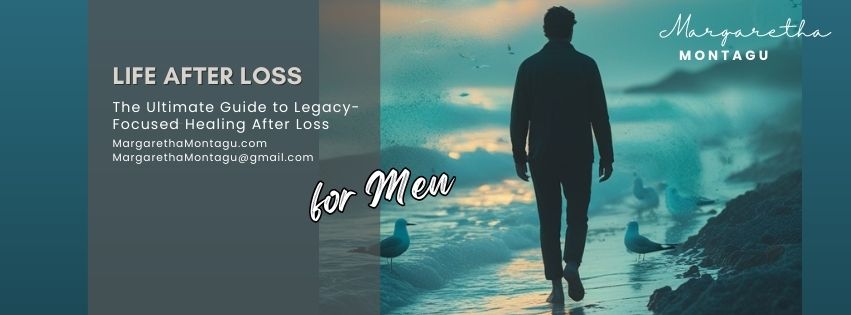

Life after Loss isn’t just another grief book. Written by a medical doctor with decades of experience in psychology and men’s reactions to loss, this book suggests a strategic, science-backed framework designed for men who want to process loss, rebuild identity, and create a life with renewed purpose.
The Making Friends and Maintaining Friendships Masterplan
| Today, join a group specifically designed for people going through what you’re going through. Don’t wait until you feel ready. You’ll never feel ready. Show up anyway. Worst case scenario: You spend a few hours with people you don’t connect with, walk on a cold beach, drink mediocre coffee, and decide it’s not for you. Best case scenario: You find your Wednesday people—the ones who understand what you’re going through, who walk beside your grief without trying to fix it, who show up week after week not because they have answers but because they know that sometimes the only answer is silence. You discover that healing isn’t about moving on or getting over it—it’s about learning to carry what you’ve lost, one step at a time, until one day you realise you’ve walked further than you thought possible and you’re not walking alone anymore. |
In times of transition, it’s easy to overlook the small, beautiful moments that make life meaningful—especially in friendships. These small wins could be as simple as an honest conversation, a laugh shared over coffee, or a moment of understanding that reminds you why this person is in your life.
Friendships don’t need grand milestones to thrive. They flourish in the quiet, consistent acts of care and attention that you both invest in each other. Celebrate the friend who checks in on you, the one who makes you smile when things feel heavy, or the friend who simply sits with you in silence.
What’s a small but meaningful moment you’ve shared with a friend recently?
Subscribe to my Newsletter
I’m still collecting subscriptions to my news letter with these post, so if you haven’t subscribed already and would you like to find out what type of friend you are, how well you know your friends or if you and a new friend really are compatible, subscribe my filling in your email address in the box below and I’ll send you a set of light-hearted quizzes, quotes and questions to help you do just that. Just fill in the form below and you’ll get immediate access to them all. You can unsubscribe from this list effortlessly and at any time. Included:
–How well do you know your Friends? Quiz
– What is Your Friendship Style? and Are your Friendship Styles compatible? Quiz
– 20 of the Most Inspiring Friends and Friendship Quotes and
– 20 lighthearted Questions you can ask to get to know a new Friend
Discover how to build meaningful, lasting friendships and create a support system that truly has your back—delivered straight to your inbox!
Designed for those navigating a life transition, the Radical Renaissance Protocol guides you through an identity reset, helping you reconnect with your purpose, realign your values, and reclaim the clarity you thought you’d lost. This isn’t about fixing what’s broken: through reflection, strategic reinvention, and soul-anchored mentoring, you’ll transform uncertainty into direction and dormant potential into meaningful impact.
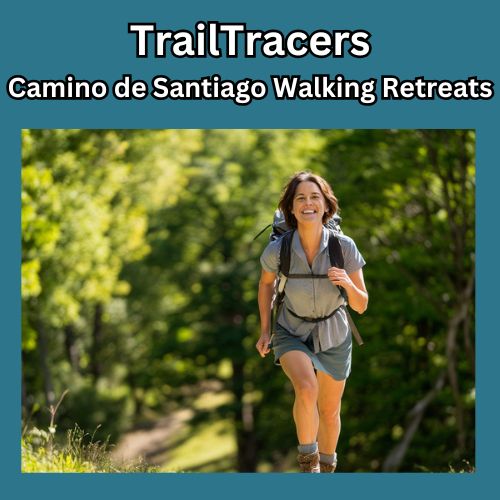
If your soul is craving fresh air, meaningful movement, and a chance to reconnect with nature, join us on a Camino de Santiago Crossroads Retreat in the southwest of France. This isn’t just a scenic hike – it’s a powerful, natural reboot for your body, mind, and spirit. Imagine quiet paths, rolling hills, cozy evenings, and slow conversations. No fitness requirements. No forced bonding. No pressure to have a breakthrough. Just one foot in front of the other, and a journey that meets you exactly where you are.

Author Bio: Dr Margaretha Montagu – described as a “game changer”, “gifted healer”, “guiding light” and “life-enriching author” – is an experienced medical doctor, a certified NLP practitioner, a medical hypnotherapist, an equine-assisted psychotherapist (EAGALAcertified) and a transformational retreat leader who guides her clients through life transitions – virtually, or with the assistance of her Friesian and Falabella horses, at their home in the southwest of France.
4 responses to “Countdown to Christmas Day 6”
Murphy’s law can help you through a difficult time, certainly when surrounded by friends in this sort of situation and the laughter can’t be held back.
I’m so glad the comment section finally works!!! Indeed,as far as I can make out, Murphy was an optimist. 😉
“Women’s friendships are like a renewable source of power.” Jane Fonda and she is right and shows it.
Endlessly renewable. “We need women at all levels, including the top, to change the dynamic, reshape the conversation, to make sure women’s voices are heard and heeded, not overlooked and ignored.” Sheryl Sandberg