
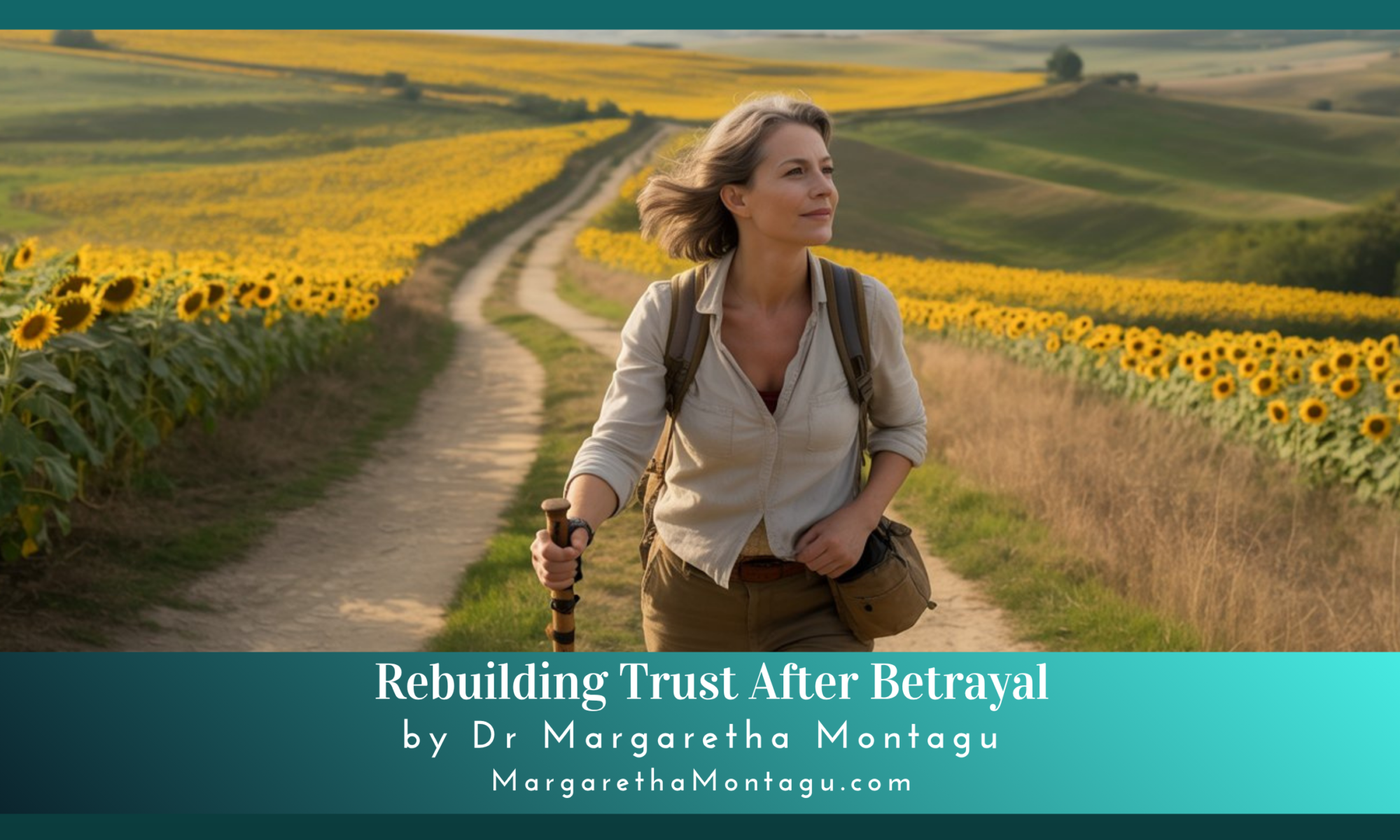
Rebuilding Trust After Betrayal in Friendships – more indepth article
I was in the middle of one of the hardest weeks of my life when a friend of over a decade simply stopped being there for me. Not dramatically — there was no argument, no angry text, no falling out I could point to. She just went quiet exactly when I needed her most, and stayed quiet long enough that the message became impossible to misunderstand. I told myself she was busy. I told myself maybe she doesn’t realise how bad things were. Eventually I ran out of excuses.
It felt like a betrayal — not a lie, not a knife in the back, just an absence exactly where presence was needed. And I think it stings in a quieter but longer-lasting way. A dramatic betrayal at least gives you something to be angry about. Being abandoned gives you nothing to hold, just a friend-shaped space where support should have been, and a slow, creeping question about whether you were ever as close as you thought you were.
I spent two decades as a doctor before I started hosting retreats in a French farmhouse with a herd of rescued horses, and if there’s one thing both my careers have taught me, it’s that people are remarkably bad at processing betrayal. We tend to do one of two things: we either loop endlessly, replaying the moment until it’s worn meaningless, or we shove it to the back of our minds entirely and decide to “move on.” Neither one involves processing the betrayal. Both are delay tactics, just with different aesthetics.
I’ve learned a few things, painfully, from my own experiences, and from years of sitting across from people mid-way through theirs:
Name the feelings accurately
Before you can process betrayal, you have to stop calling it something less than it is. “I’m annoyed” when you mean “I’ll never trust this person again” is a very common way of protecting yourself from the extent of the betrayal. It doesn’t work. Vague feelings won’t help you resolve anything. Name it plainly, even if only to yourself: this was a betrayal, and it hurt, badly.
Expect your body to weigh in before your mind does
Betrayal tends to announce itself physically before it makes emotional sense: a tight chest, a bad night’s sleep, an inexplicable urge to reorganise your kitchen cupboards at 11pm. This isn’t drama. It’s a nervous system responding to a genuine threat: the loss of safety in a relationship you depended on. Give that reaction some room instead of talking yourself out of it.
Separate the story from the facts
This is the part I find myself repeating most often, to friends and to former patients alike. What actually happened is usually less dramatic and more specific than the story we build around it. The story includes every past slight reinterpreted in a darker light, every future conversation you’re dreading, every conclusion about your own worth that the betrayal seems to confirm. The facts are simple: this person did this specific thing. Untangling the essence doesn’t make the betrayal hurt less, but it stops it from metastasising into a damning verdict on your ability to choose trustworthy friends.
Grieve the version of the friendship you thought you had
This is SO important. Even should you eventually repair the relationship, the friendship you had before the betrayal is gone — not necessarily replaced by something worse, but definitely replaced by something different. That’s worth grieving on its own terms, separate from any decision about what comes next. Trying to skip straight to resolution, before you’ve let yourself mourn what was lost, tends to backfire later.
Decide what you need to rebuild trust after betrayal
There’s a difference between the apology you feel you’re owed and the resolution you actually need to move forward, and they don’t always match. Sometimes the person who hurt you never fully understands why, and you have to find your own way through the betrayal. That’s not fair. It’s also frustratingly common. Waiting for accountability before you allow yourself to heal can leave you stuck indefinitely, tethered to someone else’s (un)willingness to show up.
Let the timeline be unreasonable
Processing betrayal rarely follows a tidy arc. You’ll think you’re through it, and then a smell, a song, an unrelated conversation will put you right back at the beginning. That’s not failure — it’s just how injuries to trust actually heal, in loops rather than lines. Be suspicious of anyone, including yourself, who tells you that you should be “over it” by now.
What I didn’t expect, in my own situation, was how much clarity came simply from having somewhere quiet to think it through without an audience of people who already had opinions. Betrayal has a way of making you want to talk to everyone and no one about it at the same time — and yet it’s rarely a group conversation that actually gets you through it. It’s often one honest conversation, uninterrupted, in a setting that isn’t asking anything else of you. And sometimes that is a conversation you have with yourself.
That’s the whole raison d’être of my private Realignment Retreat — three days, just you, no group to engage with or perform “fine” in front of. Time to wander along the Camino de Santiago, think out loud, and actually work through what happened, at your own pace, with someone who’s spent two decades learning how to listen for what’s underneath the version people lead with.

5-day/4-night “Press Pause” Camino de Santiago Walking Retreat – If your soul is craving fresh air, meaningful movement, and a chance to reconnect with nature and connect with horses, join me on a powerful, natural reboot for your body, mind, and spirit. Same content as the 3-day retreat, spread over 5 days. And an extra day of walking. No extreme fitness requirements. No forced bonding. No pressure to have a breakthrough. For one or two guests travelling together.
Do you dream of escaping your stressful life to raise a herd of goats or grow sunflowers in the south of France? Then you may be ready for an Esprit Meraki retreat. Get access to this “very serious” quiz to help you figure out how urgent your need for a change of scenery is, when you subscribe to my monthly newsletter.

Author Bio: Dr Margaretha Montagu – described as a “game changer”, “gifted healer”, “guiding light” and “life-enriching author” – is an experienced medical doctor, a certified NLP practitioner, a medical hypnotherapist, an equine-assisted psychotherapist (EAGALAcertified) and a transformational retreat leader who guides her clients through life transitions – virtually, or with the assistance of her Friesian and Falabella horses, at their home in the southwest of France.