
.
Crossroads Conversations
When I first started hosting Camino de Santiago walking retreats in rural Gascony, the French Tuscany, I assumed I would be the one doing most of the teaching.
I couldn’t have been more wrong.
Over the years, dozens of people have arrived at my farmhouse carrying backpacks, walking boots, and lives that had gradually become much too heavy. Some were still working. Some had retired. Some were rebuilding after loss, illness or divorce. Others simply couldn’t explain why they felt so restless.
They thought they had come to walk a couple of sections of the Camino.
In the end, they became MY teachers. The CrossRoads Conversations blog post series explores what my guests have taught me over the last twenty-odd years.
.
There’s a number I’ve become slightly obsessive about, and it isn’t a step count.
It’s four.
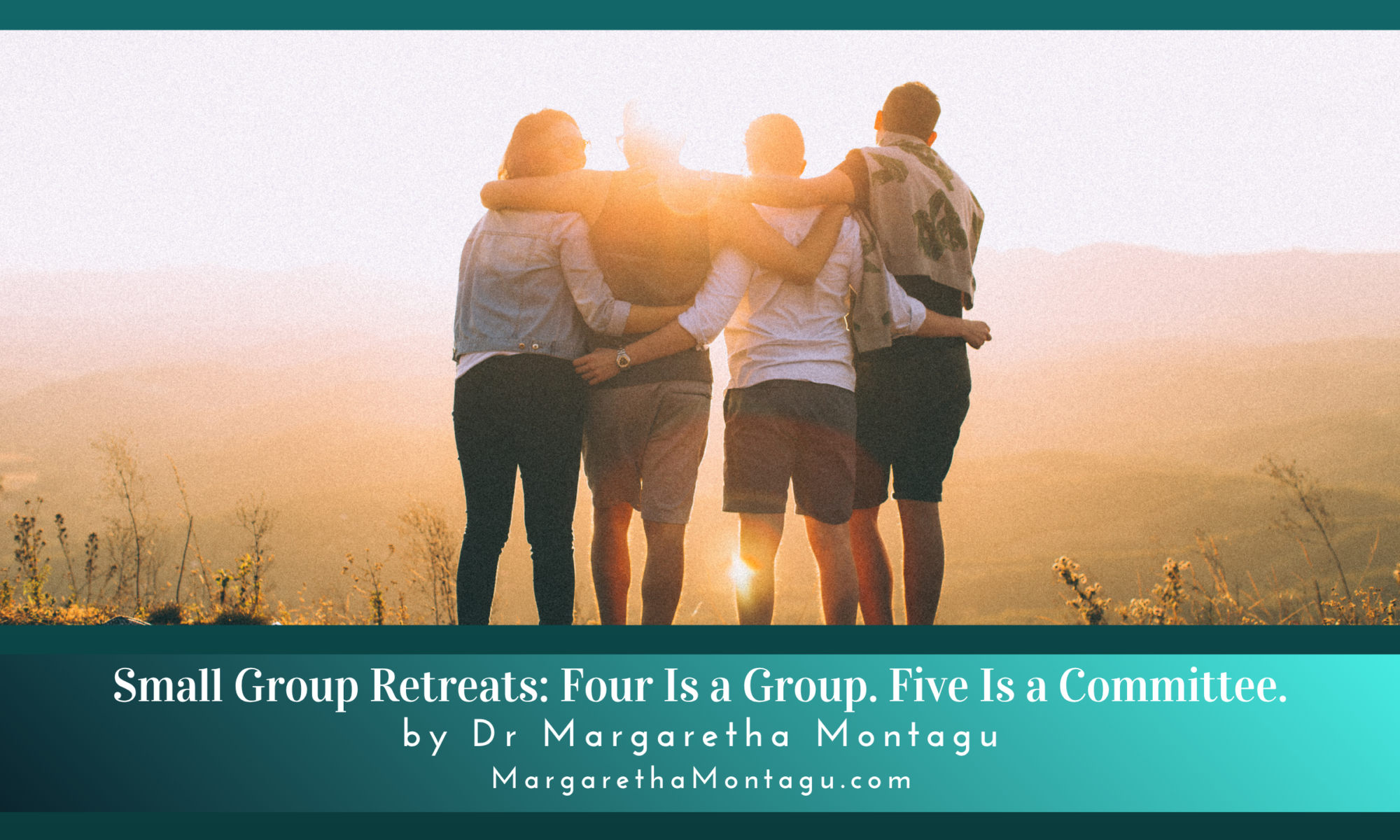
After years of hosting small group Camino retreats from my farmhouse in Gascony, I’ve come to believe that somewhere between three guests and four, something magical happens. And somewhere between four and five, that same magical something quietly leaves the room.
I didn’t plan it this way, not really. When I started, “small group” was mostly a polite way of saying “I don’t have the budget for a minibus.” But over enough retreats along the Voie du Puy, I noticed a pattern too consistent to be accidental. With three or four people, the group is the experience. With five or more, the group starts managing the experience — schedules, seating, who walks with whom, who feels left out at dinner. You’ve gone from a shared journey to something closer to light committee work, and nobody signed up for that.
The Maths of Connection
Here’s the part that surprised me most: it’s not really about logistics. I could, if I were feeling ambitious, absolutely organise brunch for five. The farmhouse table is long enough, the coffee pot is large enough, and most mornings I have enough enthusiasm, too.
It’s about attention. Every guest I add divides the attention available to each person who’s already there. With four guests, I can notice who’s gone quiet at brunch, who’s favouring their left ankle, who mentioned their mother in passing on day one and might want to circle back to that on day four. With five, I’m noticing the group. I’m managing a shape rather than meeting three or four individual people exactly where they are.
And the guests notice this too, even if they couldn’t tell you why. They arrive expecting a walking holiday and leave, more often than not, surprised by how seen they felt. That doesn’t happen by accident, and it definitely doesn’t happen at scale.
What Five Actually Costs You
I want to be honest about what “five is a committee” really means in practice, because it sounds a bit unreal written down.
It means someone becomes the unofficial pace-setter, and someone else quietly resents them for it. It means the conversations — which are, frankly, where all the good stuff happens — start splitting into two smaller conversations instead of one shared one, and somebody’s always left slightly outside. It means dinner becomes a performance rather than a debrief, because five or more adults around a table naturally reorganise into an audience and a stage, whether they mean to or not.
None of this is dramatic. It’s subtle — a retreat that’s merely nice instead of one that quietly rearranges something in you.
Small By Design, Not By Accident
So when people ask why I cap my groups at three or four guests, the honest answer is: because five changes the chemistry, and I’m not willing to trade what happens at four for what fits in a minibus.
It also means, if I’m honest, that I’ve turned away bookings I could have taken. There’s a particular kind of ache in saying no to a lovely-sounding group of six because I know, deep down, they’d have a fine time — just not the time they’re actually hoping for.
If you’re the kind of person who reads “small group retreat” in a brochure and immediately wonders what “small” actually means — now you know, at least for me. It’s not marketing shorthand. It’s the whole design brief.
I keep the Camino de Santiago walking retreats at Maison Meraki small on purpose, walking sections of the Voie du Puy, with never more than three or four guests at a time. If that sounds like the kind of attention you’d like turned your way for a week, e-mail me at MargarethaMontagu@gmail.com.
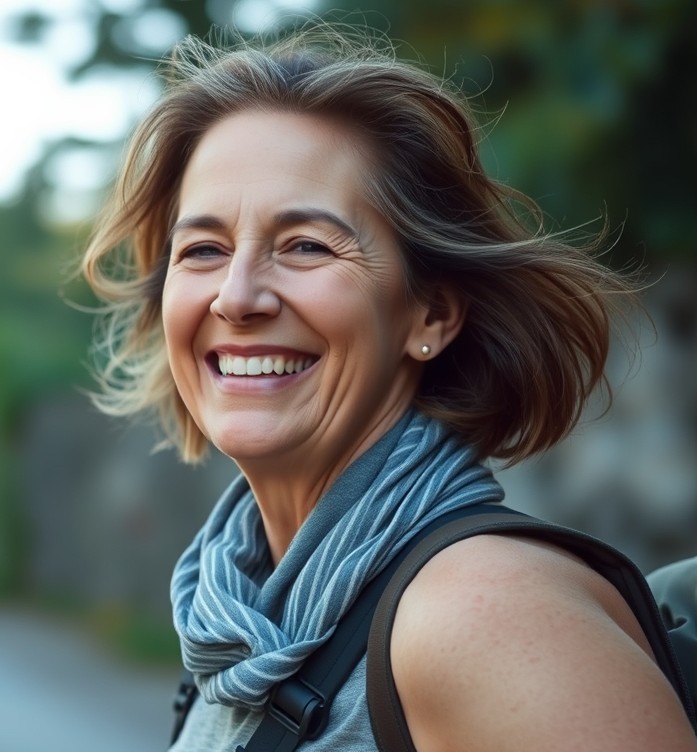
5-day/4-night “Press Pause” Camino de Santiago Walking Retreat – If your soul is craving fresh air, meaningful movement, and a chance to reconnect with nature and connect with horses, join me on a powerful, natural reboot for your body, mind, and spirit. Same content as the 3-day retreat, spread over 5 days. And an extra day of walking. No extreme fitness requirements. No forced bonding. No pressure to have a breakthrough. For one or two guests travelling together.
Do you dream of escaping your stressful life to raise a herd of goats or grow sunflowers in the south of France? Then you may be ready for an Esprit Meraki retreat. Get access to this “very serious” quiz to help you figure out how urgent your need for a change of scenery is, when you subscribe to my monthly newsletter.

What Life Lessons Can You Learn While Walking the Camino de Santiago? – a free guide filled with 10 not just “quaint anecdotes” or Instagram-worthy moments (though there are plenty of those) but real transformations from real people who walked this insight-giving trail – Subscribe to my monthly newsletter to Download the Guide

Author Bio: Dr Margaretha Montagu – described as a “game changer”, “gifted healer”, “guiding light” and “life-enriching author” – is an experienced medical doctor, a certified NLP practitioner, a medical hypnotherapist, an equine-assisted psychotherapist (EAGALAcertified) and a transformational retreat leader who guides her clients through life transitions – virtually, or with the assistance of her Friesian and Falabella horses, at their home in the southwest of France.