
Sometimes Standing Still Is the Most Courageous Step You Can Take
.
Crossroads Conversations
When I first started hosting Camino de Santiago walking retreats in rural Gascony, the French Tuscany, I assumed I would be the one doing most of the teaching.
I couldn’t have been more wrong.
Over the years, dozens of people have arrived at my farmhouse carrying backpacks, walking boots, and lives that had gradually become much too heavy. Some were still working. Some had retired. Some were rebuilding after loss, illness or divorce. Others simply couldn’t explain why they felt so restless.
They thought they had come to walk a couple of sections of the Camino.
In the end, they became MY teachers. The CrossRoads Conversations blog post series explores what my guests have taught me over the last twenty-odd years.
We tend to admire people who take decisive action.
The person who quits the corporate job to sail around the world.
The couple who sell everything and move to Tuscany.
The entrepreneur who launches a new business at sixty-five.
These are the stories that make the headlines. They fit neatly into our belief that courage always looks dramatic.
Over the years, however, hosting dozens of Camino de Santiago walking retreats has taught me something different.
Sometimes the bravest thing a person can do isn’t to force an answer. It’s to let the real question surface first.
That isn’t a particularly fashionable message. We live in a culture that loves action plans, five-step strategies and making things happen. We celebrate momentum. We applaud people who have a clear vision of where they’re going next.
Uncertainty, on the other hand, tends to make us uncomfortable.
We want answers.
We want decisions.
Preferably by 6 am on Tuesday.
Many of my guests arrive hoping that somewhere during their retreat, they’ll finally decide what to do. Should they retire? Move house? Start a business? End a relationship? Say yes to a new opportunity? Say no to an old obligation?
They’re often disappointed when I don’t have the answers.
Actually, that’s not quite true.
They’re often surprised that I don’t pretend to have them.
One of the principles on which I built my retreats is that I don’t walk the Camino with my guests. Instead, they spend two or three days walking alone along the historic Le Puy route, following the familiar arrows through vineyards, woodland and sleepy villages.
People occasionally ask whether I worry about sending them off on their own.
Not really. The route is well-marked and well-trodden, and I’m never more than a phone call away. What I’d genuinely worry about is walking beside them, offering opinions every few hundred metres, and interrupting the most important conversation of all — the one quietly unfolding inside their own heads.
Something interesting happens when people stop trying quite so hard to force a decision.
As the kilometres pass, the urgency begins to lessen. The scent of wild mint drifts through the trees. Cicadas accompany the afternoon sunshine with all the enthusiasm of a choir that never seems to need a tea break. A breeze stirs the leaves in the vineyards, and for a little while, the only thing demanding your attention is the path beneath your boots.
It is astonishing how many problems become less intimidating when viewed at walking pace.
I’ve noticed that guests often return from their first day on the Camino saying something they didn’t expect to say.
“I’ve realised I’ve been asking myself the wrong question.”
Far from being a sign of avoidance, this is usually the beginning of clarity.
Sometimes we’ve been trying to solve for the wrong problem entirely.
Sometimes we haven’t gathered enough information.
Sometimes we’re simply exhausted, and exhaustion has a remarkable talent for making every crossroads feel overwhelming.
Would you trust yourself to make an important financial decision after being awake all night?
Probably not.
So why are we so willing to make life-changing decisions when we’re emotionally drained, overwhelmed or running on empty?
It’s hardly the stuff of bestselling productivity books, but I’ve watched it work time and again — not because it stops people from deciding, but because it changes what they end up deciding.
One guest arrived convinced she needed to decide whether to retire. By the final evening, she’d landed somewhere she hadn’t expected. Retirement wasn’t the real issue at all. She loved her work. What she no longer loved was working sixty-hour weeks. The decision she actually needed to make had nothing to do with her job title, and everything to do with giving herself rest she hadn’t felt entitled to.
She did not find her answer because she pushed harder.
She found it because she stopped chasing the question she’d started with, and let the real one catch up.
Perhaps that’s why I love the Camino so much.
It reminds us that progress and speed are not the same thing.
Sometimes the most meaningful journey begins the moment we stop rushing towards the next destination and become fully present where we are.
The vines surrounding my farmhouse understand this perfectly. They don’t produce grapes all year round. They grow, they flower, they fruit, and they rest. Nobody would call a dormant vine indecisive. It’s simply not yet time.
Nature has never confused rest with failure.
Perhaps we shouldn’t either.
Looking back over the dozens of guests who have walked the Camino during my retreats, I realise that very few returned home because they’d solved the problem they arrived with.
Most returned because they’d finally worked out which problem was actually theirs to solve.
That quiet shift in perspective often proved far more life-changing than any hurried decision could have been.
Sometimes courage isn’t taking the next step.
Sometimes it’s refusing to take the wrong one until you know where you want to go.
Are you standing at a crossroads?
If you’re facing questions that don’t have easy answers, perhaps what you need isn’t more pressure to decide, but a little space to reflect.
My small-group Camino de Santiago retreats in southwest France offer two or three days of walking, thinking and slowing down, without anyone telling you what your next steps should be.
Sometimes the bravest step is allowing yourself not to take one—at least until you’re ready.
If you’d like to know more, I’d love to hear from you. You can email me at MargarethaMontagu@gmail.com.
5-day/4-night “Press Pause” Camino de Santiago Walking Retreat – If your soul is craving fresh air, meaningful movement, and a chance to reconnect with nature and connect with horses, join me on a powerful, natural reboot for your body, mind, and spirit. Same content as the 3-day retreat, spread over 5 days. And an extra day of walking. No extreme fitness requirements. No forced bonding. No pressure to have a breakthrough. For one or two guests travelling together.
Do you dream of escaping your stressful life to raise a herd of goats or grow sunflowers in the south of France? Then you may be ready for an Esprit Meraki retreat. Get access to this “very serious” quiz to help you figure out how urgent your need for a change of scenery is, when you subscribe to my monthly newsletter.
What Life Lessons Can You Learn While Walking the Camino de Santiago? – a free guide filled with 10 not just “quaint anecdotes” or Instagram-worthy moments (though there are plenty of those) but real transformations from real people who walked this insight-giving trail – Subscribe to my monthly newsletter to Download the Guide
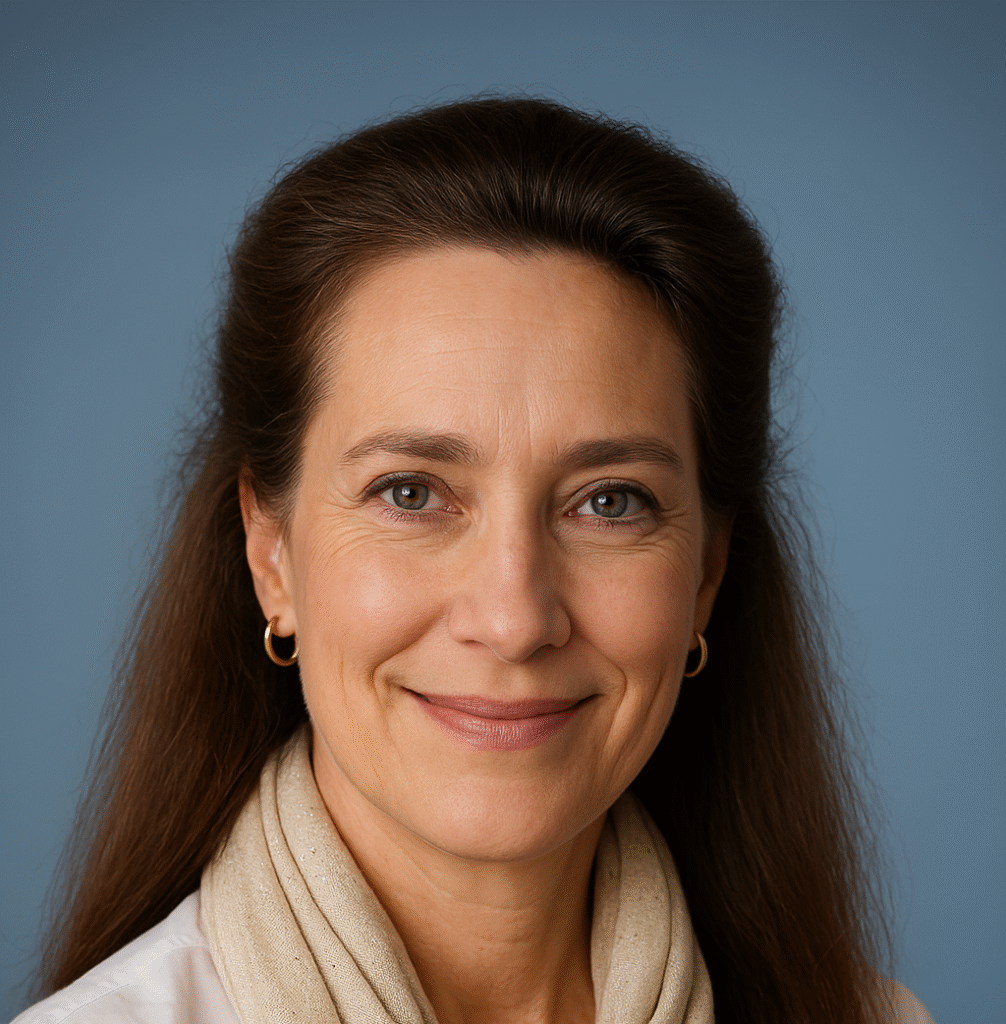
“I am an experienced medical doctor – MBChB, MRCGP, NLP master pract cert, Transformational Life Coach (dip.) Life Story Coach (cert.) Stress Counselling (cert.) Med Hypnotherapy (dip.) and EAGALA (cert.) I may have an impressive number of letters after my name, and more than three decades of professional experience, but what qualifies me to excel at what I do is my intuitive understanding of my clients’ difficulties and my extensive personal experience of managing major life changes using strategies I developed over many years.” Dr M Montagu