
Crossroads Conversations
When I first started hosting Camino de Santiago walking retreats in rural Gascony, the French Tuscany, I assumed I would be the one doing most of the teaching.
I couldn’t have been more wrong.
Over the years, dozens of people have arrived at my farmhouse carrying backpacks, walking boots, and lives that had gradually become much too heavy. Some were still working. Some had retired. Some were rebuilding after loss, illness or divorce. Others simply couldn’t explain why they felt so restless.
They thought they had come to walk a couple of sections of the Camino.
In the end, they became MY teachers. The CrossRoads Conversations blog post series explores what my guests have taught me over the last twenty-odd years.
When guests book one of my Camino de Santiago retreats, I always ask why they chose this particular one.
The answers are surprisingly varied. “I’ve just retired.” “I’m thinking of changing careers.” “I’ve just been through a divorce.” “I’ve lost my raison d’être.” “I’ve been so busy looking after everyone else that I’ve forgotten what I want.” Occasionally, someone says, with admirable honesty, “I’m not entirely sure. I just know I needed to come.” That one might be my favourite. It’s the most truthful answer of the lot, even though it sounds the least like one.
After hosting dozens of guests over the years, I’ve learned that these first answers are almost never the whole story. People don’t arrive with the problem they actually need to solve. They arrive with the symptom, dressed up convincingly as the diagnosis.
The real question usually reveals itself somewhere between Eauze and Manciet. I never know exactly when it will happen. Sometimes it’s on the first day’s walk, while the morning mist is still lifting off the vineyards. Sometimes it’s over supper beneath the old oak tree, as swallows dart overhead collecting insects with more competence than most of us manage before our second coffee. Occasionally, it doesn’t arrive until the final evening, just when someone has finally stopped trying quite so hard to find it. Clarity, I’ve noticed, rarely responds well to being chased. It prefers to make an entrance when nobody’s watching the door.
Many of my guests are formidably capable people. They’ve spent decades solving problems, making decisions, and carrying responsibility for other people’s lives and livelihoods. They assume they can approach a crossroads in their own life exactly the same way: identify the problem, analyse it, make a plan, take action, tick it off. If only life came with a project plan and a Gantt chart.
The Camino has a gentle habit of disrupting this strategy. During my retreats, guests spend two or three days walking alone along sections of the historic Le Puy route, carrying little more than a picnic, some water and perhaps a notebook. I don’t walk with them — not because I’m unsociable, but because I’ve discovered that people ask themselves far better questions when there’s no one beside them poised to answer. Besides, the arrows mark the way clearly enough. They’ve been doing the job since long before either of us arrived.
On the first morning, minds are usually still busy back home. Guests replay disturbing conversations. They mentally rewrite emails written in a hurry. They wonder whether they remembered to lock the back door. Some worry about work despite being several hundreds or even thousands of kilometres away from it, which I’ve come to think is the greatest feat of modern technology: convincing us the office cannot possibly survive without us for three whole days. Remarkably, it always does.
As the kilometres pass, though, something shifts. The rhythm of walking has a curious way of untangling thoughts. The scent of warm pine replaces the smell of traffic fumes, cicadas provide the soundtrack instead of incoming notifications, and sunlight flickers through the trees while the only decision that really matters is whether to stop now for lunch or hold out for the next shaded bench. Life becomes, almost embarrassingly, uncomplicated. And that’s usually when the real questions turn up, uninvited and rather more interesting than the ones that came before.
Someone who arrived because they’ve just retired realises they were never afraid of stopping work — they’re afraid of no longer feeling useful. Someone else spends months agonising over whether to move house, only to discover by the end of the retreat that the address was never the point; what they actually longed for was a different way of living. Another guest wrestles for weeks over whether to accept a promotion, and eventually understands that the promotion isn’t the dilemma at all. The real question is why they’ve spent so many years believing their worth is measured in achievements.
The problem they thought they had was simply the loose thread. The Camino, in its unhurried way, leads them to the whole tapestry.
I’ve watched this happen so often that it no longer surprises me. What does still surprise me is how kind people become towards themselves once they see the deeper question. The urgency fades. The self-criticism softens. Instead of demanding an immediate answer, they grow curious — and curiosity, I’ve found, is a far more useful travelling companion than certainty ever was.
Perhaps that’s one of the Camino’s greatest gifts. It doesn’t hand us solutions. It helps us ask better questions — sometimes a little uncomfortable, but infinitely more useful than the ones we arrived with. Looking back, I realise my guests have taught me this lesson again and again: very few people come here because they need to make a decision. Most come because they need to understand themselves well enough to make the right one.
There’s a world of difference between the two. And somehow, somewhere along an ancient pilgrim path through the peaceful countryside of southwest France, with birdsong overhead and boots crunching gravel underfoot, a good many of them begin to do exactly that.
So — are you solving the wrong problem?
If you’re standing at your own crossroads and some part of you suspects that the thing you keep circling isn’t really the thing at all, that’s usually a sign worth listening to. Not a crisis. Not a red flag. Just a nudge that the question underneath is still waiting to be asked properly.
You don’t need to have it figured out before you come. Nobody does. That’s rather the point.
My small-group Camino de Santiago retreats in southwest France offer something surprisingly hard to come by these days: a few unhurried days, an ancient path that’s been sorting people out for a thousand years, and no one asking you to have the answer by Tuesday.
If that sounds like exactly what you didn’t know you needed, I’d love to hear from you. Email me at MargarethaMontagu@gmail.com — tell me what’s nagging at you, even if it doesn’t quite make sense yet. Especially if it doesn’t quite make sense yet.
.
If you (or someone you know) are carrying more emotional baggage than you’d like to admit — and you suspect a few days on the Camino de Santiago might help you set some of it down — email me at MargarethaMontagu@gmail.com
5-day/4-night “Press Pause” Camino de Santiago Walking Retreat – If your soul is craving fresh air, meaningful movement, and a chance to reconnect with nature and connect with horses, join me on a powerful, natural reboot for your body, mind, and spirit. Same content as the 3-day retreat, spread over 5 days. And an extra day of walking. No extreme fitness requirements. No forced bonding. No pressure to have a breakthrough. For one or two guests travelling together.
Do you dream of escaping your stressful life to raise a herd of goats or grow sunflowers in the south of France? Then you may be ready for an Esprit Meraki retreat. Get access to this “very serious” quiz to help you figure out how urgent your need for a change of scenery is, when you subscribe to my monthly newsletter.
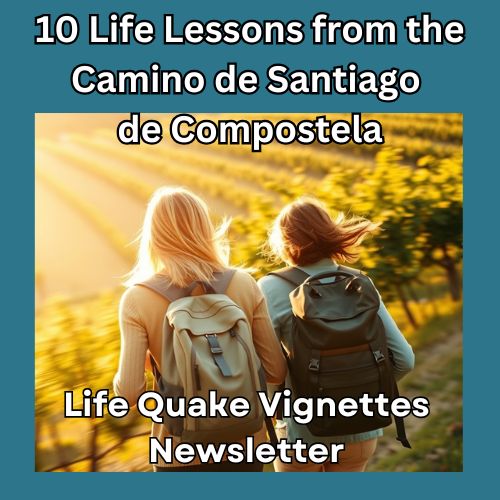
What Life Lessons Can You Learn While Walking the Camino de Santiago? – a free guide filled with 10 not just “quaint anecdotes” or Instagram-worthy moments (though there are plenty of those) but real transformations from real people who walked this insight-giving trail – Subscribe to my monthly newsletter to Download the Guide
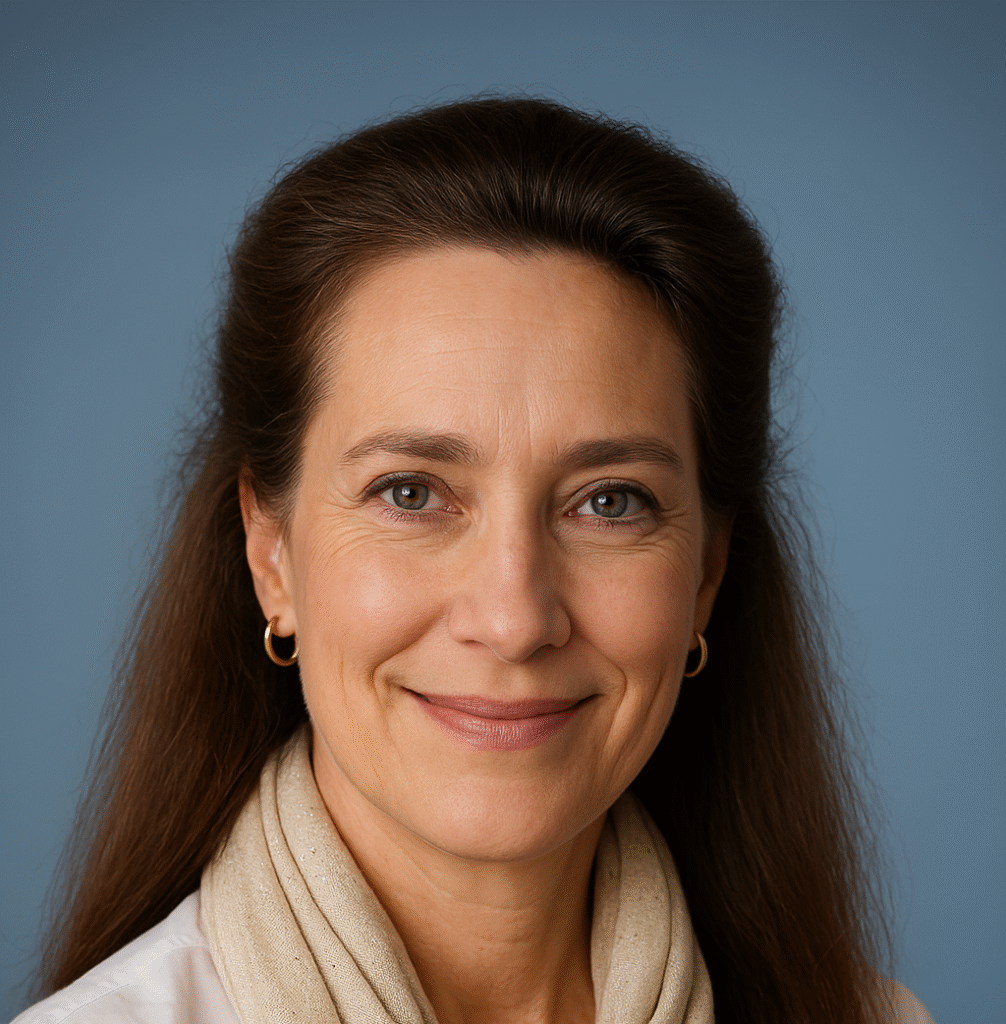
“I am an experienced medical doctor – MBChB, MRCGP, NLP master pract cert, Transformational Life Coach (dip.) Life Story Coach (cert.) Stress Counselling (cert.) Med Hypnotherapy (dip.) and EAGALA (cert.) I may have an impressive number of letters after my name, and more than three decades of professional experience, but what qualifies me to excel at what I do is my intuitive understanding of my clients’ difficulties and my extensive personal experience of managing major life changes using strategies I developed over many years.” Dr M Montagu