
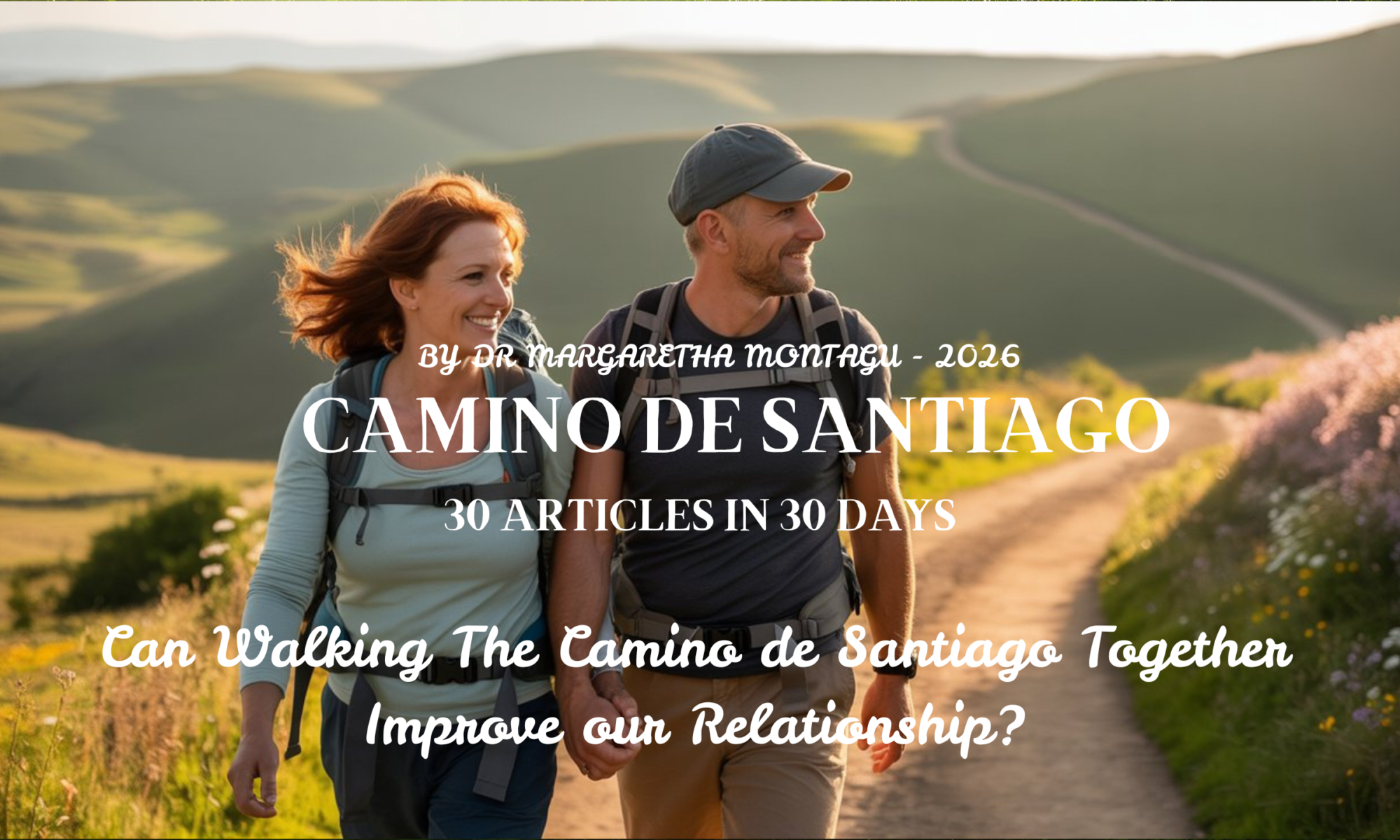
Couples who walk the Camino together don’t just survive the blisters — they start talking to each other in a different way.
What This Article Is About
This article is for the couple who is fine. Not in crisis, not miserable, not in need of urgent intervention — just fine. Fine in the way that a good jumper that has been washed too many times is fine: still perfectly functional, slightly less vivid than it used to be, a little shapeless in places you’d rather not examine too closely. If you and your partner have been meaning to do something properly together — not a weekend city break where you mostly argue about where to eat, not a package holiday where you stare at separate phones by a pool — but something that actually means something, this article is about why walking the Camino de Santiago together through the French countryside might be the most unexpectedly transformative thing you do for your relationship all decade.
Walking Together as a Couple: 5 Key Takeaways
- Couples who walk together talk to each other in a different way. Side-by-side movement removes the face-to-face confrontational dynamic that makes difficult conversations feel like negotiations, and replaces it with something more like thinking aloud together — which is frequently where the real conversations finally happen.
- Shared physical challenge recalibrates how partners see each other. You discover things about the person you have been living with for years — their pace, their resilience, their particular way of navigating difficulty — that daily life had completely obscured.
- Five days without the usual props of distraction (work, screens, social obligations, the endless administration of ordinary life) creates a quality of attention between two people that most couples haven’t experienced since the early days of their relationship.
- The Camino’s structure — a route, a direction, a shared daily purpose — provides couples with something surprisingly rare: a goal they are working towards together, rather than in parallel.
- Most couples who walk the Camino together report not just enjoying the experience, but returning with a renewed sense of who they are as a pair — not the administrative unit that manages the household and the children and the diary, but the two actual people who chose each other.
The Couple Who Walked Until Found Each Other Again
Tom and Rachel Girard had been together for nineteen years and married for fourteen of them. They had two children aged eleven and eight, a semi-detached house in Lyon that was simultaneously too small and too expensive, a shared calendar on their phones that contained almost no entries that belonged exclusively to either of them, and a relationship that both of them would have described, if pressed, as good. Solid. Fine, really.
The problem — if it was a problem, which neither of them was entirely prepared to name as such — was that they had not had a conversation that surprised either of them in approximately three years. They knew each other’s opinions on everything. They finished each other’s sentences not because of romantic synchronicity but because the sentences were usually about logistics. Who was collecting Léa on Thursday. Whether the boiler service had been booked. What they were doing about Christmas this year given the situation with Tom’s mother, which was, as it had been for some time, complicated.
The Camino retreat was Rachel’s idea. She had read about it somewhere, mentioned it over dinner with the tone of someone proposing something they expect to be declined, and was slightly startled when Tom said yes immediately. He would later admit that he had said yes before she finished the sentence because he could not, at that precise moment, have told you a single interesting thing about himself that wasn’t also true of the role he occupied. Father. Husband. Architect. Man who needed to book the boiler service.
They arrived in Gascony on a Friday evening in September. The air was different. Cooler than Lyon, green in a way that felt almost aggressive after months of city living, and conspicuously, thrillingly quiet. They had dinner with the other walkers — a retired woman from Edinburgh, a man who had left his job in finance and wasn’t yet sure what came next, a woman from Amsterdam who laughed at everything. Rachel had two glasses of local wine and told a story about herself that Tom had never heard before. He looked at her across the table with an expression she didn’t immediately recognise.
It was, she realised later, interest. Uncomplicated, undistracted, fully present interest. The look he used to give her before they knew everything about each other.
They began walking the following morning. The path wound through farmland and ancient forest, marked with the Camino’s familiar shell symbols, unhurried and entirely indifferent to the contents of their shared calendar. By the end of the first hour, they were talking. Not about Léa’s Thursday collection or the boiler or Christmas. About something Tom had been thinking about at work that he hadn’t mentioned because there had never quite been a moment. About something Rachel had been reading that had shifted something in her thinking and that she had filed away because the right conversation hadn’t arrived.
The right conversation, it turned out, had been waiting for a path through the French countryside and ten kilometres of uninterrupted time.
On the second day, somewhere on a ridge above a valley that had no name either of them could find on their phones, Tom said something that made Rachel stop walking. She stood on the path and looked at him. He was standing in the light with mud on his boots and his hair slightly toussled by the wind, and she thought — with a clarity that felt almost physical — that she had missed him. That she had been missing him for years while living in the same house. And that he was, standing right there on an old French pilgrimage path, entirely real.
What they discovered over the remaining three days — and what they brought home that neither of them has been able to leave behind — is what this article is about.
What Couples Who Walk Together Know That Too-Busy-To-Walk Couples Don’t
There is a well-documented phenomenon in psychology sometimes called the ‘shoulder-to-shoulder effect.’ It describes the way that conversations held during side-by-side activity — walking, driving, doing something physical together — have a measurably different quality from conversations held face-to-face. The directional gaze is removed. The implicit confrontational dynamic of facing each other dissolves. There is something else to look at, something else to be present to, and in that slight redistribution of attention, the defences come down and the honest things become easier to say.
This is one reason why the most important conversations in many relationships happen in cars. It is also one reason why walking together is, neurologically and relationally speaking, one of the most connecting things two people can do.
The Camino de Santiago amplifies this effect considerably. A single walk in a local park has some of it. Several consecutive days of walking through ancient French landscape, with nowhere else to be and nothing else to manage, has it in a concentration that most couples find genuinely startling. The conversations that happen on day four of a Camino retreat are conversations that have often been waiting years to occur — not because the couples were avoiding them, but because modern life had never once produced a silence long enough for them to begin.
There is also the question of novelty. Relationship research is consistent on this point: shared new experiences reactivate the neural pathways associated with early-stage attraction and bonding. The brain, encountering something new alongside a familiar person, responds in ways that closely resemble the neurochemistry of falling for someone. New landscape, new physical challenge, new community, new rhythm of days — the Camino delivers all of this, and it delivers it to both people simultaneously, which means you are having the experience together rather than one of you having it while the other watches.
The couples who come to the Camino not in crisis but simply in need of something they can’t quite name are often the ones who are most changed by it. They didn’t know they were looking for each other. They found each other anyway.
The physical challenge matters too, and it is worth being honest about this. Ten kilometres a day is not a stroll. There will be moments of discomfort, of tiredness, of blisters requiring unglamorous attention at the end of the day. There will almost certainly be at least one moment when one of you is walking faster than the other, or one of you wants to stop for longer at a view that the other has already finished admiring. These small negotiations — navigated daily, in real time, in a context where the stakes are low enough to be honest — are, in miniature, the negotiations of a shared life. Couples who walk together are, without necessarily realising it, practising something.
What they practise on the path, they tend to carry home.
Walking Together as a Couple: 5 Mistakes to Avoid
1. Treating it as a test of the relationship. The Camino is not an assessment centre for couples. It is not designed to expose your incompatibilities or stress-test your communication under pressure. Arrive with curiosity rather than an agenda. The couples who get the most from it are the ones who came to have an experience together, not to prove something or fix something. If something needs fixing, the walking tends to surface it gently anyway — without anyone having to engineer the moment.
2. Walking at different paces and making it mean something. Partners rarely walk at exactly the same pace, and this can become, if you let it, a surprisingly charged daily negotiation. One of you will be faster. One of you will want to stop more. Neither of these things is a metaphor for the relationship unless you decide it is. Walk at the pace of the slower person, or agree to walk separately for sections and reconvene. The path goes to the same place regardless of how quickly you arrive.
3. Using the retreat to have the conversation you’ve been avoiding for three years. The Camino will, in all likelihood, create the conditions for honest conversation naturally. You do not need to arrive with a list of grievances and a five-year plan for the relationship. Couples who attempt to use the walking as a venue for pre-planned difficult discussions tend to find the conversations go badly — not because the Camino can’t hold difficult things, but because forced conversations in beautiful landscapes have the same problem as forced conversations anywhere. Let it happen naturally. It will.
4. Spending the evenings on your phones. The quality of what builds between two people over several days of walking is directly proportional to the quality of attention they give each other when they stop walking. The evenings — dinner, a glass of wine, the particular tiredness that comes from a day of purposeful movement — are where a significant amount of the relational magic actually happens. If both of you are checking emails by eight o’clock, you are importing the problem you came to leave behind.
5. Not talking about it when you get home. The shift that happens on the Camino requires a little maintenance in the early days after returning. Life reconvenes fast, and the calendar fills quickly, and it is entirely possible to be back in the full logistics of ordinary existence within forty-eight hours of landing. Make a small, specific commitment before you leave France: one evening a week with no phones, a walk together on Sundays, a check-in question at dinner.
Further Reading
The Relationship Cure by Dr. John Gottman
John Gottman has spent four decades studying what makes relationships work and what makes them quietly fail, and his research findings are both rigorous and occasionally uncomfortable reading. This particular book focuses on what he calls ‘bids for connection’ — the small, often-unnoticed moments where one partner reaches towards the other and what happens when those bids are met, missed, or turned away. It is directly relevant to the Camino experience because walking together for five days is, essentially, an extended series of bids for connection made and received in conditions that make the receiving easier than usual. Understanding the mechanism helps you replicate it when you are back in a context that makes it harder.
Mating in Captivity by Esther Perel
Esther Perel’s central argument is that long-term relationships erode desire not through conflict but through excessive familiarity — that knowing someone too completely, in all their domestic ordinariness, is the quiet enemy of passion. Her prescription is not affairs or upheaval but the deliberate cultivation of mystery, novelty, and the experience of seeing your partner as a separate, surprising person rather than the other half of a domestic unit. The Camino, read through Perel’s lens, is exactly this: five days of encountering your partner in an unfamiliar context, watching them navigate something new, and being reminded that the person you came with is more interesting than the role they play at home. Read this before you go. You will walk differently.
Embracing Change — in 10 Minutes a Day by Margaretha Montagu
Walking the Camino together can bring change — and the couples who sustain the shift they find on the path are the ones who bring intentionality to what comes next. MargarethaMontagu’s Embracing Change — in 10 Minutes a Day offers a practical, warmhearted framework for doing exactly that: making change a daily practice rather than a one-off event. Given that the most common post-Camino challenge is returning to the life that needed changing in the first place, this is the book to read on the flight home.
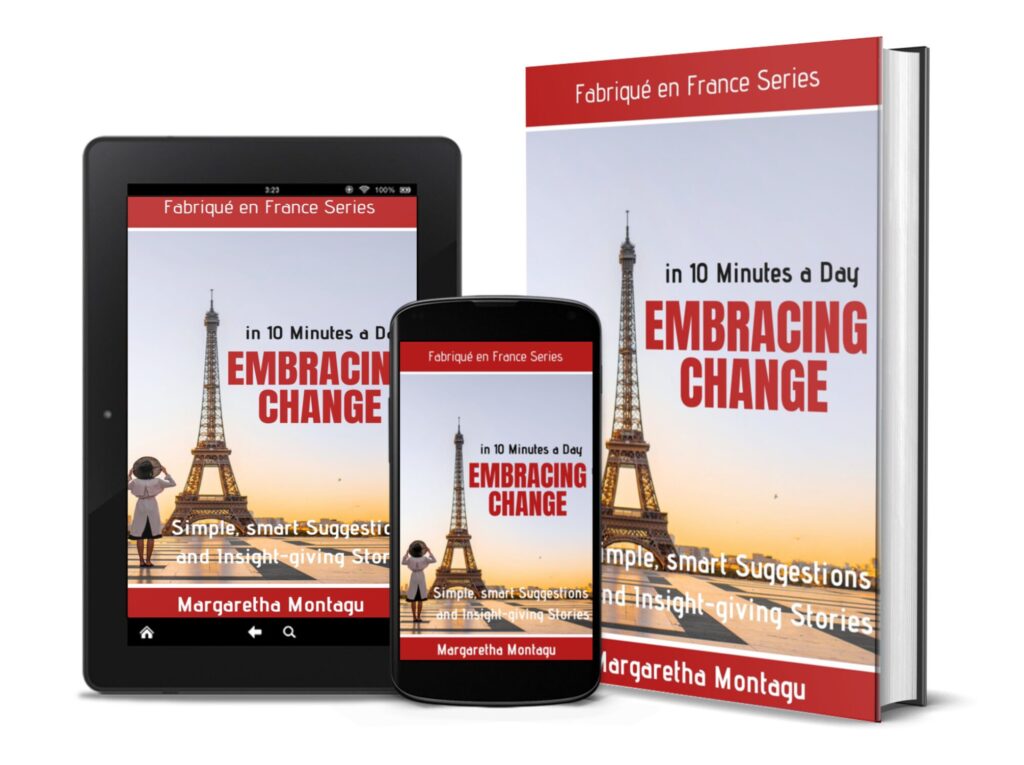
If you are currently facing a major life transition or any other dramatic change in your circumstances, and you have no idea how you are going to cope, the good news is that the strategy presented in this book can help you, step by step, to improve your ability to handle the stress caused by change, even if you feel entirely powerless at the moment.
5 FAQs About Walking Together
What if we walk at completely different paces?
This is one of the most common practical concerns couples raise before a walking retreat, and one of the least problematic in practice. The Camino in France is not a race, and a guided small-group retreat structures the day in a way that accommodates different paces comfortably. You may walk sections together and sections separately — many couples find that the periods of walking alone, followed by reuniting further down the path, are among the most interesting parts of the experience. A little distance, as it turns out, does wonders for the quality of what you say when you catch up.
We’re not in crisis — is a Camino retreat still relevant for us?
Arguably more so. Couples in acute difficulty often need specific therapeutic support that a walking retreat is not designed to provide. But couples who are simply in the slow drift of familiarity — who are functional, affectionate, busy, and quietly less connected than they used to be — are precisely the people the Camino seems to work on most reliably. You don’t need to be broken to benefit from being reset. And the reset, for couples who arrive in reasonable shape, tends to be surprisingly profound.
What if one of us is significantly fitter than the other?
The French Camino routes used in the retreat are chosen for accessibility as well as beauty — they are challenging enough to be meaningful without requiring athletic preparation. The distances walked each day are manageable for people of average fitness who have done some preparation walking beforehand. If there is a significant fitness difference between you, discuss it before you come; the important thing is that both partners arrive having done some walking in the weeks beforehand, so that the experience is one of shared effort rather than one person managing the other.
Can walking together really improve a relationship, or is that overstated?
The research on shared physical activity and relationship satisfaction is consistent: couples who exercise or engage in physical activity together report higher relationship quality, greater feelings of closeness, and increased attraction compared to couples who do these things separately. Add the dimensions of nature, shared novelty, purposeful direction, community, and five days of unhurried time — all of which the Camino provides — and you have a combination that the research would predict to be powerfully connecting. It is not overstated. If anything, the couples who come tend to be surprised by how much more it delivers than they expected.
What if we argue on the walk?
Then you argue on the walk. The Camino is not a conflict-free zone, and a five-day retreat with your partner will not be uniformly harmonious — particularly on the days when someone’s feet hurt and someone else is being relentlessly optimistic about how much further it is to lunch. Arguments that happen while walking through beautiful French countryside, however, have a quality that kitchen arguments do not: they tend to resolve faster, escalate less, and leave less residue. Movement helps. Fresh air helps. The particular absurdity of being cross with someone on an ancient pilgrimage path helps most of all.
The Path Goes in the Same Direction
Tom and Rachel Girard came home from Gascony on a Wednesday afternoon. The children were collected. The boiler appointment was, eventually, rescheduled. The calendar filled back up with the usual entries, because life does not pause for revelation, and theirs was no exception.
But something had changed in the architecture of the ordinary. There was a walk on Sunday mornings now — not a long one, just an hour, just the two of them — that had become, without anyone formally deciding it, non-negotiable. There were dinner conversations that didn’t end at the logistics. There was, occasionally, the particular look across a room that Rachel had thought she might have lost permanently, and that had turned out to be merely mislaid somewhere on a ridge above an unnamed valley in the French countryside.
Nineteen years in, they were still surprising each other. It turned out that was less a matter of having the right relationship and more a matter of giving the relationship room to breathe. Five days, ten kilometres a day, and one very old path had been room enough.
Couples retreats on the Puy en Veslay route of the Camino de Santiago are available for small groups of up to four guests. Three non-guided walks, beautiful surroundings, good food, and the particular quality of time that only arrives when you’ve left the calendar behind. Couples welcome — especially the perfectly fine ones.
Find out more and book your retreat at margarethamontagu.com
Do you dream of escaping your stressful life to raise a herd of goats or grow sunflowers in the south of France? Then you may be ready for an Esprit Meraki retreat. Get access to this “very serious” quiz to help you figure out how urgent your need for a change of scenery is, when you subscribe to my monthly newsletter.
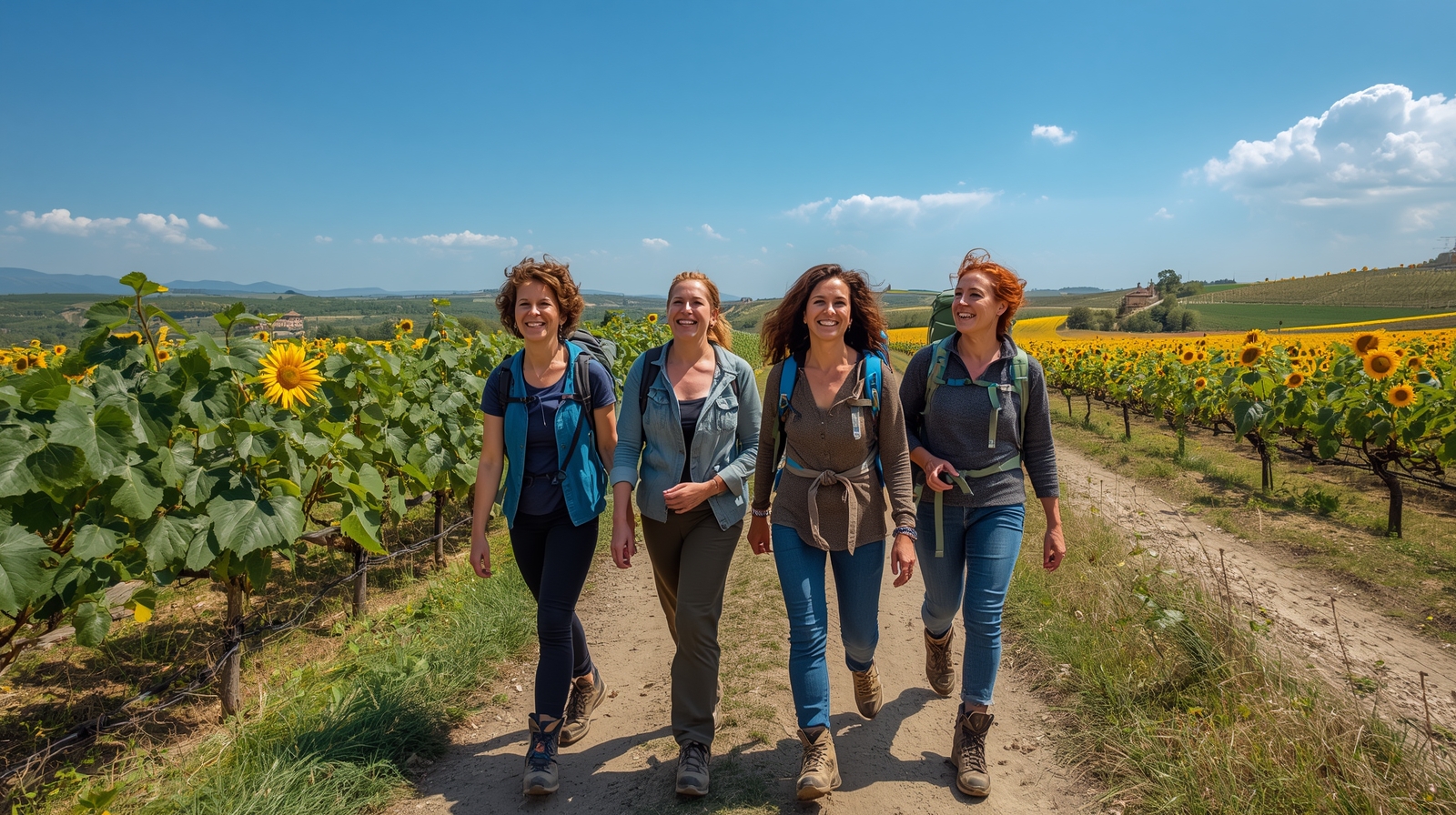
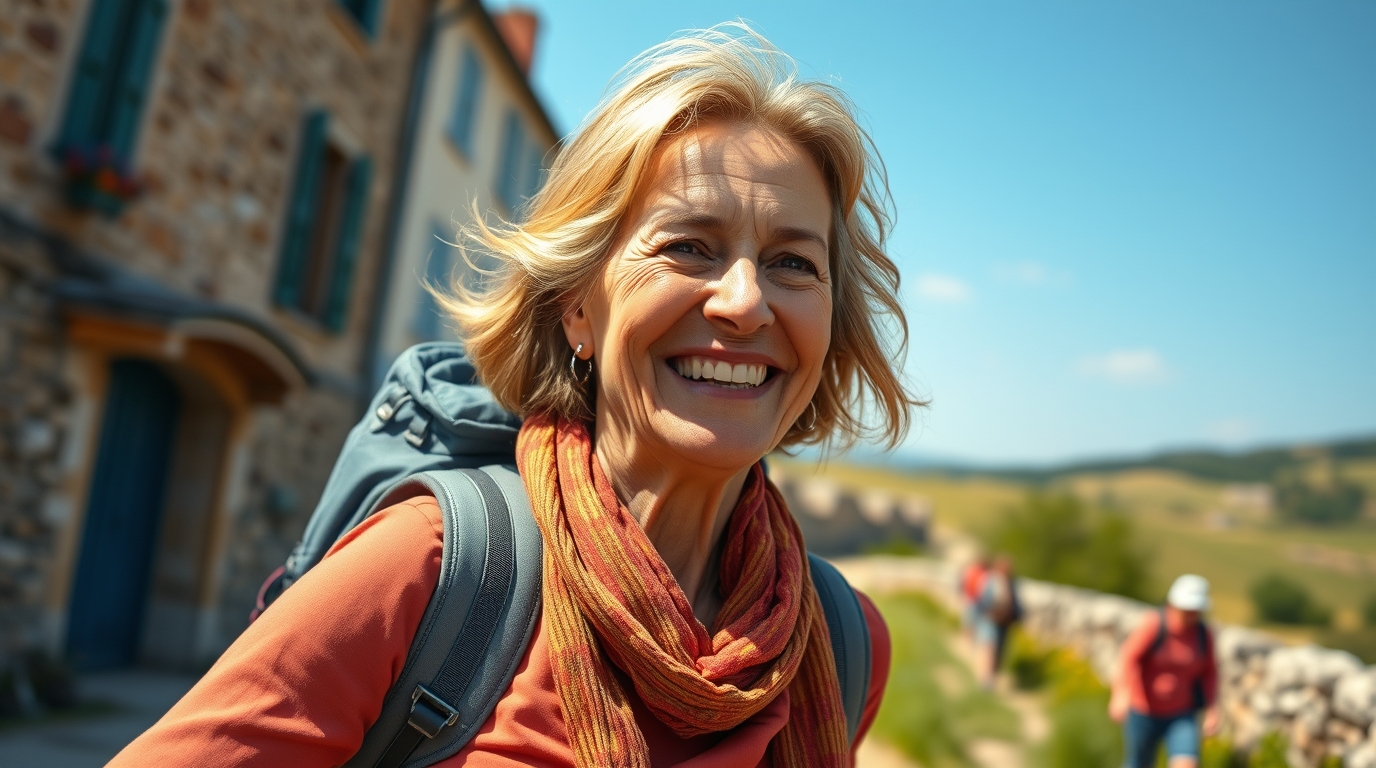
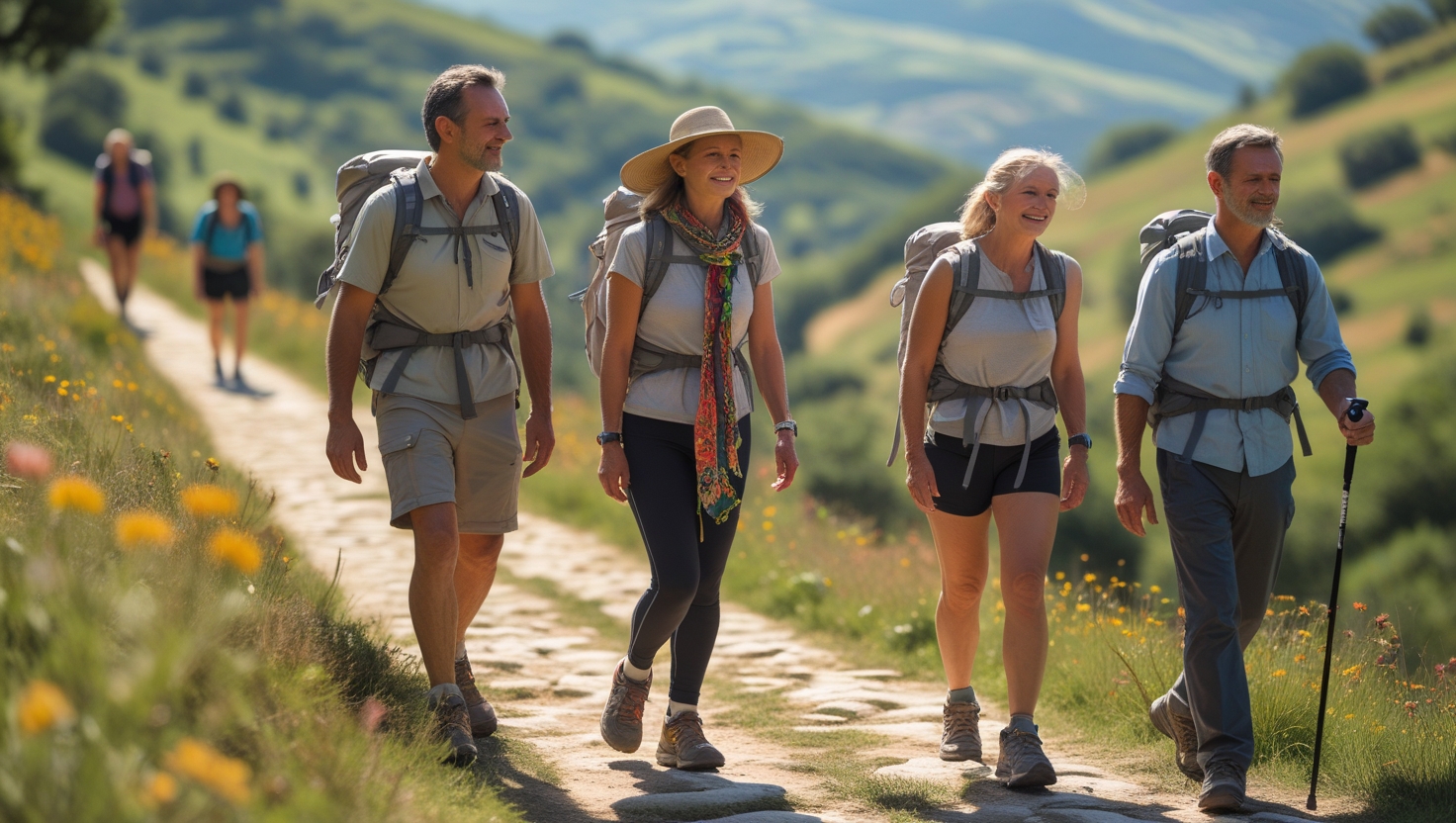
If your soul is craving fresh air, meaningful movement, and a chance to reconnect with nature, join us on a Camino de Santiago Walking Retreat in the southwest of France. This isn’t just a scenic hike – it’s a powerful, natural reboot for your body, mind, and spirit. Imagine quiet paths, rolling hills, cozy evenings, and slow conversations. No fitness requirements. No forced bonding. No pressure to have a breakthrough. Just one foot in front of the other, and finding your way to a brighter future.
What Life Lessons Can You Learn While Walking the Camino de Santiago? – a free guide filled with 10 not just “quaint anecdotes” or Instagram-worthy moments (though there are plenty of those) but real transformations from real people who walked this insight-giving trail – Subscribe to my monthly newsletter to Download the Guide
Research
1. “The Pilgrimage on the Camino de Santiago and Its Impacts on Marital and Familial Relationships” — PubMed / Journal of Religion and Health (2023) pmc.ncbi.nlm.nih.gov/articles/PMC10150338/
This is a peer-reviewed academic study published in 2023, based on surveys and in-depth interviews with 24 couples who walked the Camino together. The research found that walking the Camino as a couple had a measurably positive impact on marital relationships — specifically helping to strengthen bonds and trust, improve communication and mutual connection, and increase expressions of care and affection. It’s Camino-specific, couples-specific, and academically rigorous. Cite this one with confidence.
2. “Couples’ Shared Participation in Novel and Arousing Activities and Experienced Relationship Quality” — Journal of Personality and Social Psychology (Aron et al., 2000)
The foundational study behind the self-expansion theory that underpins so much of modern relationship psychology. Across three controlled experiments, couples who participated in novel and arousing activities together showed significantly greater increases in experienced relationship quality than those who did mundane activities — and the effect held even when controlling for relationship social desirability. This is the science behind why the Camino works on couples specifically — the novelty, the physical challenge, the unfamiliar landscape. Published in one of psychology’s most respected journals and cited thousands of times since.
3. “Walking Together for a Better Marriage” — Marriage Dynamics Institute
A more accessible, practitioner-focused piece that draws together several studies into one readable argument. It cites sociologist Harry Brod’s finding that men are more likely to define emotional closeness as working or playing side-by-side, while women often view it as talking face-to-face — making walking together one of the rare activities that meets both partners’ instincts for connection simultaneously. Psychology Today

“I am an experienced medical doctor – MBChB, MRCGP, NLP master pract cert, Transformational Life Coach (dip.) Life Story Coach (cert.) Stress Counselling (cert.) Med Hypnotherapy (dip.) and EAGALA (cert.) I may have an impressive number of letters after my name, and more than three decades of professional experience, but what qualifies me to excel at what I do is my intuitive understanding of my clients’ difficulties and my extensive personal experience of managing major life changes using strategies I developed over many years.” Dr M Montagu