
Why five days on the Camino de Santiago does what three months of therapy cannot — and costs less than your gym membership
What This Article Is About (And Whether It’s Worth Your Next Five Minutes)
You are probably carrying more than you should be right now. Not in your bag — in your head. The low-level hum of things unresolved, decisions deferred, conversations avoided, and a general background noise of modern life doing what modern life does best, which is refuse to be quiet for five consecutive minutes. This article is about why walking to reduce anxiety — specifically, walking the ancient pilgrimage route of the Camino de Santiago — has been dissolving exactly this kind of accumulated human weight for over a thousand years, and why it continues to work with a reliability that would be frankly embarrassing for most wellness industries if they cared to look too closely. If you have ever stood in your own kitchen feeling vaguely overwhelmed by a life that is, by most objective measures, absolutely fine, this article is for you.
5 Key Takeaways
- Walking is not exercise disguised as therapy. It is, neurologically speaking, one of the most powerful mood-regulating tools available to a human being — and it requires no prescription, no Wi-Fi, and no prior experience of being outdoorsy.
- The Camino de Santiago works not just because of the walking, but because of the specific combination of rhythm, nature, community, and purposeful forward movement that is almost impossible to replicate in ordinary life.
- Three days is enough. You do not need to walk five hundred kilometres to experience a genuine shift. The pilgrimage effect — that particular quality of attention and release that the Camino is famous for — begins on day one.
- The worries do not vanish. Something more interesting happens: they rearrange themselves. The ones that were enormous at home become manageable. The ones you had forgotten about entirely turn out to be the ones that mattered.
- People do not return from the Camino unchanged. This is not marketing copy. It is the consistent, slightly startled testimony of the vast majority of people who have walked it, regardless of age, fitness level, background, or original reason for going.
The Man Who Walked Until the Noise Stopped
Daniel Forsythe had not slept properly in eleven months. He knew this because his phone, with the cheerful cruelty of modern technology, had been tracking his sleep and presenting him with weekly summaries that read like a minor medical concern dressed up in pastel graphics. He was forty-four years old, a project director at a mid-sized engineering consultancy in Bristol, the father of two children who were technically at ages he had been told would be easier by now, and the owner of a body that had recently started expressing its opinions about his lifestyle in ways that were increasingly difficult to ignore.
He was not, he would have been at pains to clarify, unwell. He was just — and here he would pause, looking for the word — full. Full of information. Full of decisions. Full of the particular modern affliction of never being entirely anywhere because there was always somewhere else he was supposed to be monitoring. His wife had described it as watching a man who had forgotten how to be in a room. His GP had suggested mindfulness. His colleague had suggested a long weekend in the Cotswolds. His mother had suggested he was working too hard, which was true but not useful.
What Daniel did instead — on the recommendation of a man he barely knew at a conference in Birmingham who had said ‘I’m not a spiritual person at all, but something happened on that road’ — was book five days on the Camino de Santiago.
He packed badly. He drove to the airport in a state of low-grade panic about seventeen things he had not finished before leaving. He sat on the plane with his laptop open for forty minutes before he admitted he was not actually reading what was on the screen. He closed it. He looked out of the window. Somewhere below him, southern France was doing what it had been doing for millennia, which was existing with considerable serenity and no particular interest in his project deadlines.
He began walking on a Tuesday morning. The path was marked with red-and-white arrows. The air smelled of eucalyptus and, less poetically, his own sun cream. His feet, in boots he had owned for three years and never properly broken in, began to offer feedback within the first two kilometres.
By the end of day one, something had happened that Daniel would later describe, with the slightly embarrassed precision of a man who does not usually talk like this, as the noise getting quieter. Not gone. Just — further away. As though the walking had created some physical distance between him and the contents of his own head. As though his worries, unable to keep up with the pace of his boots on an ancient stone path, had fallen slightly behind.
He stopped on a hillside above a village whose name he couldn’t pronounce. He stood still. For the first time in eleven months, his mind was not already somewhere else. He was, entirely, there.
What happened on the remaining days — and what Daniel understood by the end of them that he had not understood at the beginning — is the subject of the rest of this article.
Why Walking to Reduce Anxiety Works When Everything Else Doesn’t
There is a reason human beings have been walking towards things that matter to them for as long as they have existed. Before therapy, before pharmaceuticals, before the fourteen-day mindfulness course with the optional retreat, there was movement. Forward, purposeful, rhythmic movement through landscape — and the particular quality of thinking that it produces.
Neuroscience has spent the last two decades catching up with what pilgrims have known for centuries. Bilateral stimulation — the left-right alternating movement of walking — activates the same neural mechanism used in EMDR therapy to process difficult experiences and memories. The rhythmic nature of walking regulates the nervous system in ways that sitting, however therapeutically, does not. Nature exposure reduces cortisol. The combination of mild physical exertion and forward progress releases a neurochemical cocktail that even the most enthusiastic pharmacologist would struggle to improve upon.
But the Camino is not merely a walk in the woods. It is a walk with intention. And intention, it turns out, matters enormously. The pilgrimage format — a route with a beginning, a direction, and a destination — provides something that a circular walk in a local park does not: the psychological architecture of a journey. You are going somewhere. You are moving forward. You are, however you choose to interpret it, heading towards something.
This is not a small thing. A significant proportion of the anxiety and low-level misery that characterises modern life is the product of feeling stuck. Stuck in patterns, in roles, in relationships, in identities that were assumed years ago and never quite examined since. The Camino does not ask you to examine any of this. It simply puts you on a path and asks you to walk. And in the walking — in the days of putting one foot in front of the other through villages and vineyards and ancient stone-paved hills — the examination happens anyway. Quietly, without fanfare, at its own pace.
The Camino does not solve your problems. It does something more useful: it gives you enough distance from them to see which ones are actually problems, and which ones are just noise you forgot to stop listening to.
The community of the Camino adds another layer that is difficult to replicate. You walk alongside strangers who become, with the peculiar alchemy of shared miles, something approximating friends — people who know the version of you that showed up on a French road with nothing to prove and nowhere particular to be, rather than the version that exists inside your professional title and your family role and the ten-year accumulation of other people’s expectations. These conversations — unhurried, unscheduled, conducted at the pace of walking rather than the pace of modern life — have a quality that most people recognise immediately as something they have not had in years.
Five days is not a long time. But it is, as it turns out, precisely long enough.
5 Mistakes to Avoid When Walking to Reduce Anxiety
1. Treating it like a fitness challenge rather than a walking meditation. The Camino will involve physical effort, and you will be glad of a degree of preparation. But approaching it primarily as a fitness test — tracking pace, competing with other walkers, measuring everything — is a reliable way to miss the point entirely. The goal is not a personal best. The goal is to be present on a road for five days. The body is the vehicle. It is not the destination.
2. Filling every quiet moment with your phone. The quality of attention that the Camino produces is not accidental. It is the product of extended periods of not being entertained, stimulated, or distracted. Podcasts during every hour of walking, social media updates from the albergue, live-streaming your pilgrimage to your Instagram audience — all of these are ways of bringing the noise with you. Leave more space than feels comfortable. The discomfort is precisely where the interesting things happen.
3. Expecting a dramatic revelation rather than a gradual one. People arrive on the Camino hoping for a Road to Damascus moment — a single clear insight that restructures everything. What usually happens is quieter and more durable: a slow accumulation of small clarities over several days, arriving not as lightning but as light. The shift you will feel on day five would not have been possible without days one through four. Trust the pace of the thing.
4. Under-preparing physically and then suffering for it. There is a balance to strike. Treating it as purely spiritual and doing no walking preparation whatsoever means your first two days will be dominated by the extremely unspiritual experience of managing blisters. Walk regularly in the weeks before you come. Break in your boots. Bring the right socks — this is not a trivial detail. Your feet are carrying you to wherever you are going. They deserve your prior attention.
5. Rushing to return to normal life the moment it ends. The Camino effect is real, but it is also fragile in the immediate aftermath. The people who find that it changes nothing are often the people who stepped off the plane and immediately reimmersed in exactly the conditions that sent them to France in the first place. Build in a day of transition. Write something down before you land. Give the shift a chance to settle before the noise reconvenes.
Further Reading
The Camino de Santiago: A Pilgrimage to the Stars by Gitlitz & Davidson
For anyone who wants to understand what they are actually walking through — not just geographically, but historically and culturally — this is the essential companion. Gitlitz and Davidson trace the full history of the pilgrimage from its medieval origins to its modern revival, with a depth of scholarship that transforms the road beneath your boots from a pleasant walking route into a thousand-year conversation between human beings and the things they are trying to work out. Understanding why the Camino has drawn millions of people across a millennium of human history does not diminish the experience of walking it. It considerably deepens it.
Consolations: The Solace, Nourishment and Underlying Meaning of Everyday Words by David Whyte
David Whyte is a poet who has walked the Camino and written about walking, belonging, and the interior life with more precision and beauty than almost anyone working in the language. This book — a meditation on words like ‘Alone,’ ‘Despair,’ ‘Rest,’ ‘Silence,’ and ‘Worrying’ — is the ideal companion for anyone going to the Camino with unresolved things in their head. It does not offer solutions. It offers, as the title suggests, consolation: the particular relief of having your experience named accurately. Pack it alongside your boots.
Embracing Change — in 10 Minutes a Day by Margaretha Montagu
The Camino is, at its core, about change — walking away from one version of yourself and returning as someone slightly, meaningfully different. Margaret Montagu’s Embracing Change — in 10 Minutes a Day offers the perfect preparation for that process: a practical, warm, and genuinely useful framework for loosening the grip of the patterns and habits that make change feel more threatening than it actually is. Read it before you go. The Camino will do the rest.
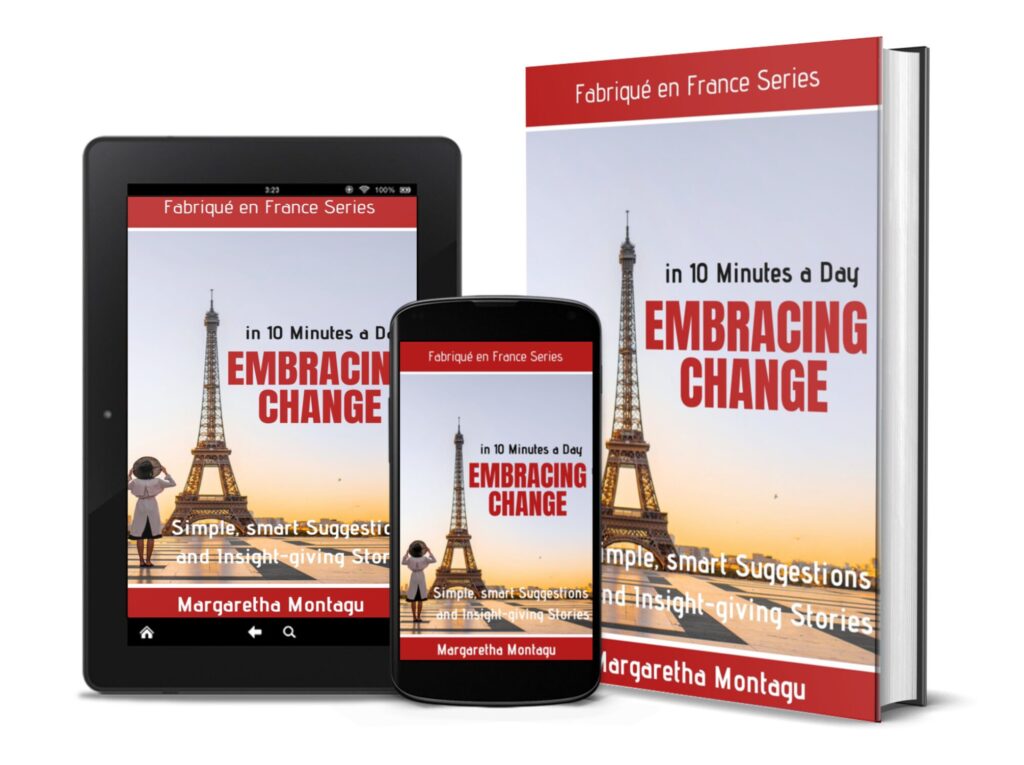
If you are currently facing a major life transition or any other dramatic change in your circumstances, and you have no idea how you are going to cope, the good news is that the strategy presented in this book can help you, step by step, to improve your ability to handle the stress caused by change, even if you feel entirely powerless at the moment.
5 FAQs
Do I need to be fit to walk the Camino?
You need to be able to walk comfortably for several hours a day — which is a different thing from being conventionally fit. People of all ages, sizes, and fitness levels walk the Camino. The preparation that matters most is not gym work but progressive walking practice in the weeks before you go: building up to longer distances, on varied terrain, in the boots you intend to wear. If you can walk ten to fifteen kilometres on a weekend without significant difficulty, you are ready.
Does it matter if I’m not religious or spiritual?
Not in the slightest. The Camino is a pilgrimage route with deep religious origins, but the majority of modern walkers describe their motivation as personal rather than religious: they come because they need space to think, a change of perspective, a break from the life that has been accumulating around them. The road does not enquire about your beliefs. It simply offers the walking, the landscape, the community, and a thousand years of other people’s footsteps. What you make of it is entirely your own business.
What actually happens to your mental state after five days of walking?
The consistent testimony across thousands of walkers is a combination of the following: reduced anxiety, improved sleep, greater clarity about what matters and what doesn’t, a reduced tolerance for unnecessary complexity, and a heightened capacity for being present. Some people also report decisions made, conversations planned, or long-postponed changes finally felt as possible. The neurological reasons for this are well-documented. The experiential reasons are harder to articulate, which is why most Camino veterans eventually give up trying to explain it and simply recommend that you go.
Can walking actually help with anxiety and burnout, or is that overstated?
The research on this is robust and consistent. Regular walking in natural environments reduces cortisol, lowers blood pressure, improves sleep quality, and decreases symptoms of anxiety and depression with an effectiveness that compares favourably to medication for mild to moderate cases. The Camino adds the dimensions of purpose, community, rhythm, and extended nature immersion to the basic neurological benefits of walking. Whether it is ‘better than therapy’ depends on the person and the problem. But as a reset for an overloaded nervous system, it is difficult to improve upon.
How do I know if a five-day Camino retreat is right for me rather than doing it independently?
Independent walking on the Camino is wonderful — and also involves logistics, navigation, accommodation-booking, and an amount of planning that can itself become a source of stress for people who are already operating at capacity. A small-group guided retreat removes that friction entirely: the route is planned, the meals are arranged, the accommodation is sorted, and you arrive simply to walk. For first-time visitors, for people coming to walk as a form of recovery rather than adventure, and for anyone who wants the depth of the experience without the overhead of organising it, a guided retreat is not the soft option. It is the sensible one.
The Road Has Been Here the Whole Time
Daniel Forsythe came home from the Camino on a Friday evening. His children were at the kitchen table doing homework. His wife was making something that smelled of garlic and good intentions. The house was exactly as he had left it. The job was waiting. The emails had accumulated with their usual indifference to his five days of enlightenment.
But something had shifted in the way he stood in the middle of it all. Not the circumstances — those were identical. The relationship between Daniel and the circumstances. The noise was still there. He had simply stopped mistaking it for the important thing.
The Camino does not offer you a different life. It offers you a different relationship with the one you have. And sometimes — more often than you might expect, more reliably than almost anything else available to a human being with a pair of boots and five days to spare — that is exactly enough.
If you are carrying more than you should be right now, there is a road in northern Spain that has been receiving exactly this kind of weight for over a thousand years. It is very good at it. Summer and autumn retreats are available for small groups of up to four guests — three Camino walks, good food, good company, and the particular quality of silence that only arrives when you have been walking long enough to earn it.
Do you dream of escaping your stressful life to raise a herd of goats or grow sunflowers in the south of France? Then you may be ready for an Esprit Meraki retreat. Get access to this “very serious” quiz to help you figure out how urgent your need for a change of scenery is, when you subscribe to my monthly newsletter.
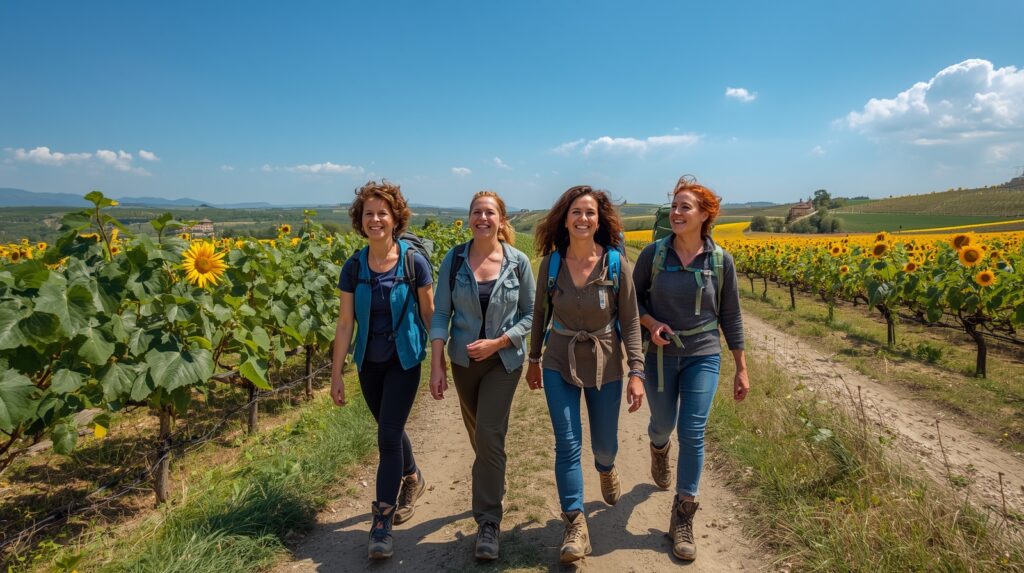
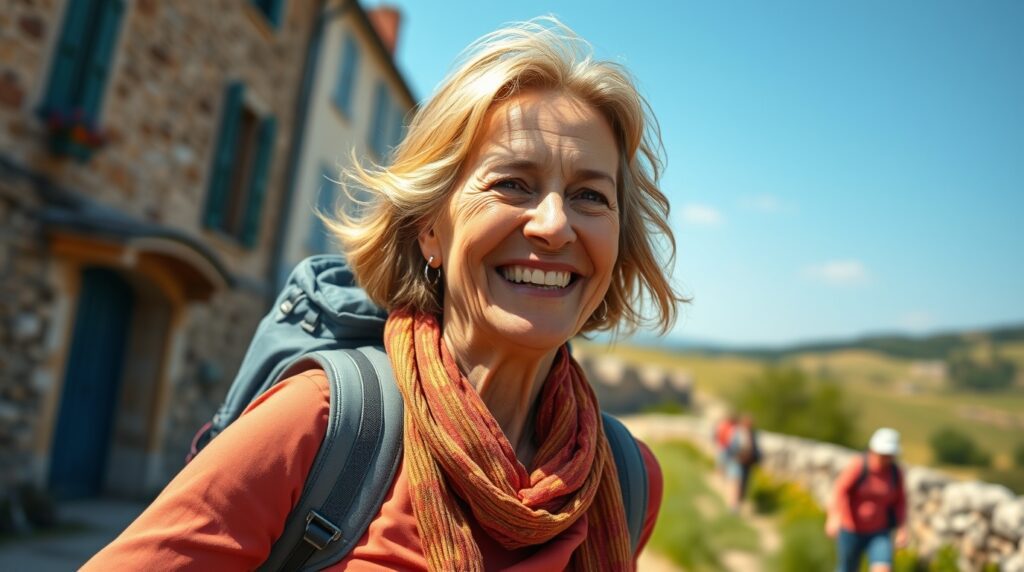
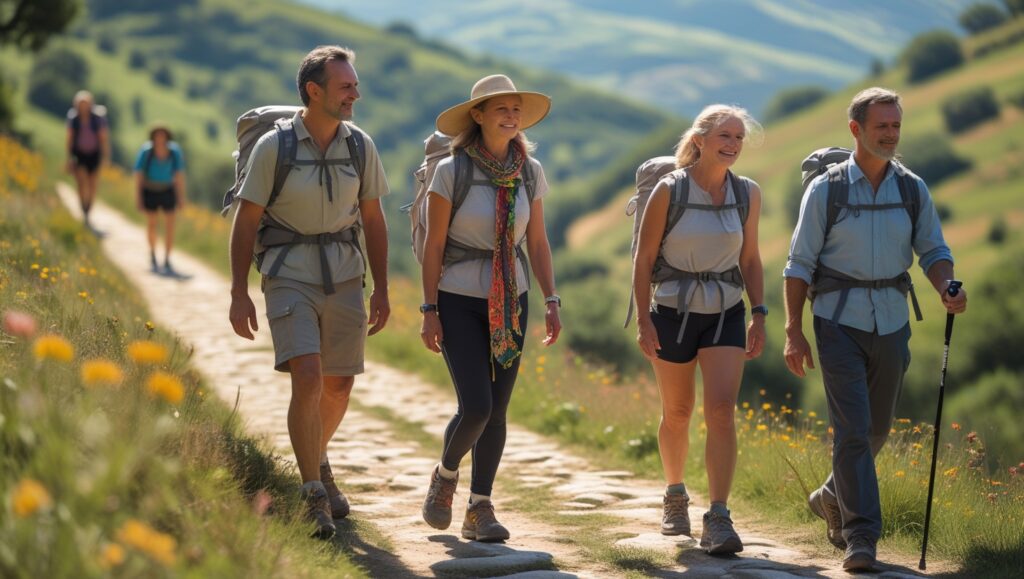
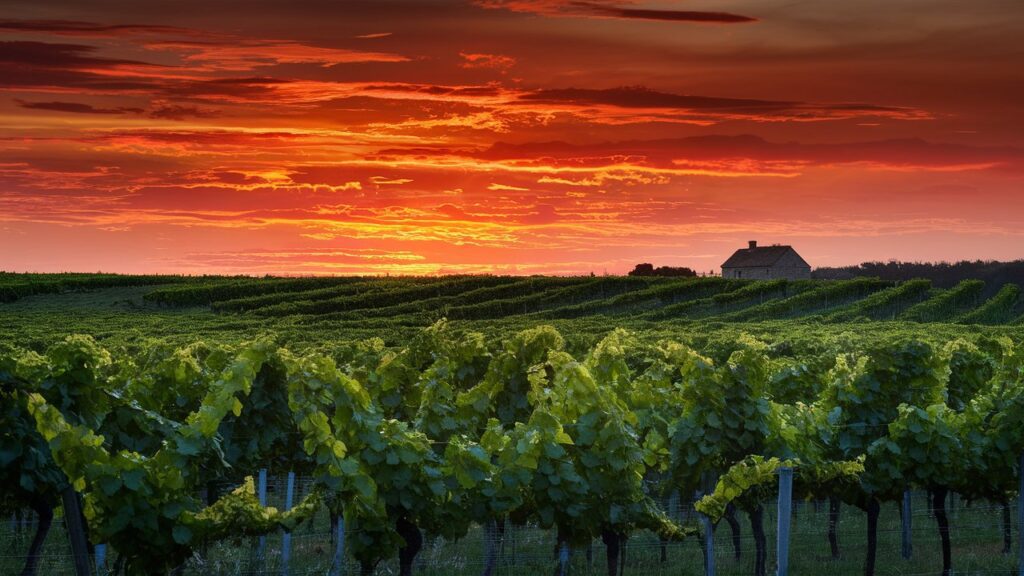
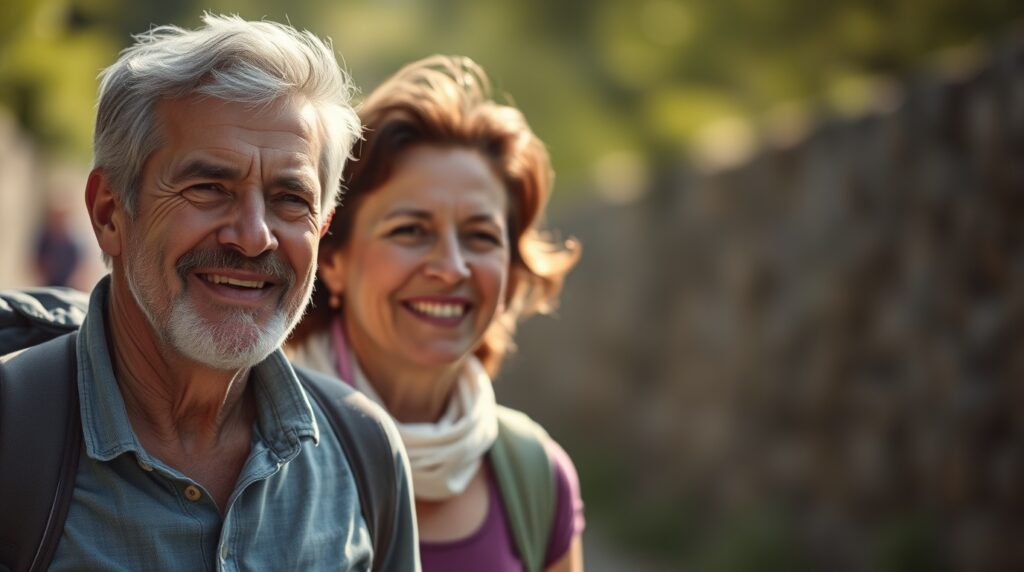
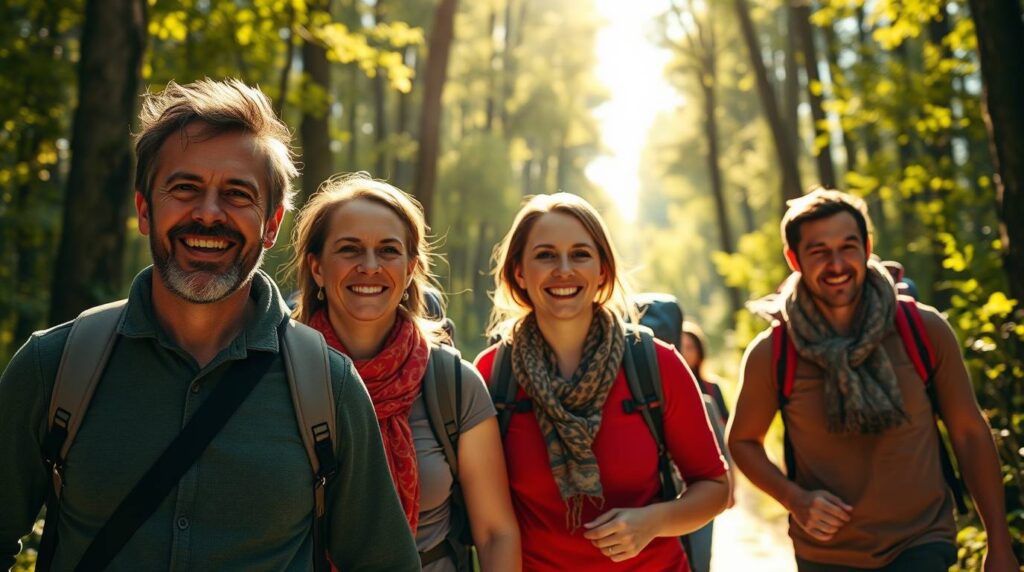

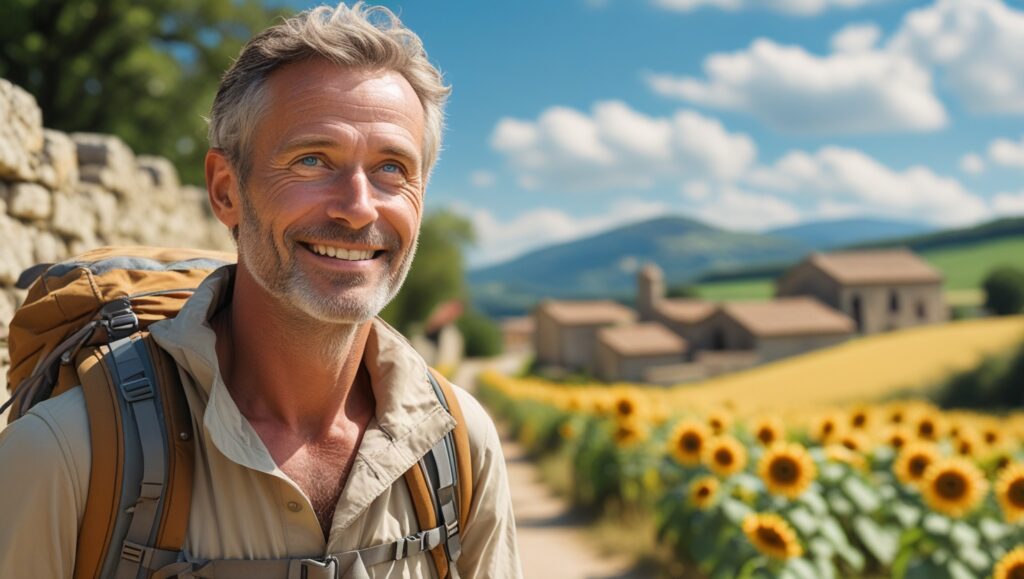
If your soul is craving fresh air, meaningful movement, and a chance to reconnect with nature, join us on a Camino de Santiago Walking Retreat in the southwest of France. This isn’t just a scenic hike – it’s a powerful, natural reboot for your body, mind, and spirit. Imagine quiet paths, rolling hills, cozy evenings, and slow conversations. No fitness requirements. No forced bonding. No pressure to have a breakthrough. Just one foot in front of the other, and finding your way to a brighter future.
What Life Lessons Can You Learn While Walking the Camino de Santiago? – a free guide filled with 10 not just “quaint anecdotes” or Instagram-worthy moments (though there are plenty of those) but real transformations from real people who walked this insight-giving trail – Subscribe to my monthly newsletter to Download the Guide
Find out more and book your retreat at margarethamontagu.com
Research
1. “The Benefits of Walking the Camino de Santiago” — Psychology Today (September 2022)
Written by a psychologist who has walked the Camino three times, this article examines the research on pilgrimage as a form of Exceptional Human Experience (EHE) — a term coined by researcher Rhea White to describe spontaneous experiences that produce lasting positive changes in mental and physical health. The most striking changes documented include increased appreciation for life, a heightened quest for meaning and purpose, greater self-acceptance, and deeper concern for others. Accessible, well-sourced, and written by someone with both academic credentials and personal experience of the route. Psychology Today
2. “The Effects of the Pilgrimage to Santiago de Compostela on Mental Health and Wellbeing” — ResearchGate / Proyecto Ultreya (2021)
This is the academic study behind everything. Compared to a control group who took a standard holiday, pilgrims showed significantly greater increases in positive affect, life satisfaction, and valued living, alongside greater reductions in anxiety, depression, and perceived stress — with most improvements sustained at a three-month follow-up. Stress and depressive symptoms decreased by 20–50%, and the Camino was found to function as a form of mindfulness training, encouraging pilgrims to be present in the moment and navigate challenges without judgment. This is the one to cite when anyone asks “but is there actual evidence?”
3. “Effect of Nature Walks on Depression and Anxiety: A Systematic Review” — MDPI Sustainability (April 2021)
A broader peer-reviewed systematic review covering 12 studies on nature walking as a mental health intervention. Nature walks consistently reduced state anxiety across multiple studies, with significant decreases measured by validated scales — and nature walks produced notably greater reductions in anxiety than urban walks. Useful for the wider argument that the Camino’s effects are grounded in solid, replicable science rather than anecdote or pilgrim romanticism.

“I am an experienced medical doctor – MBChB, MRCGP, NLP master pract cert, Transformational Life Coach (dip.) Life Story Coach (cert.) Stress Counselling (cert.) Med Hypnotherapy (dip.) and EAGALA (cert.) I may have an impressive number of letters after my name, and more than three decades of professional experience, but what qualifies me to excel at what I do is my intuitive understanding of my clients’ difficulties and my extensive personal experience of managing major life changes using strategies I developed over many years.” Dr M Montagu
© Margaretha Montagu | margarethamontagu.com