
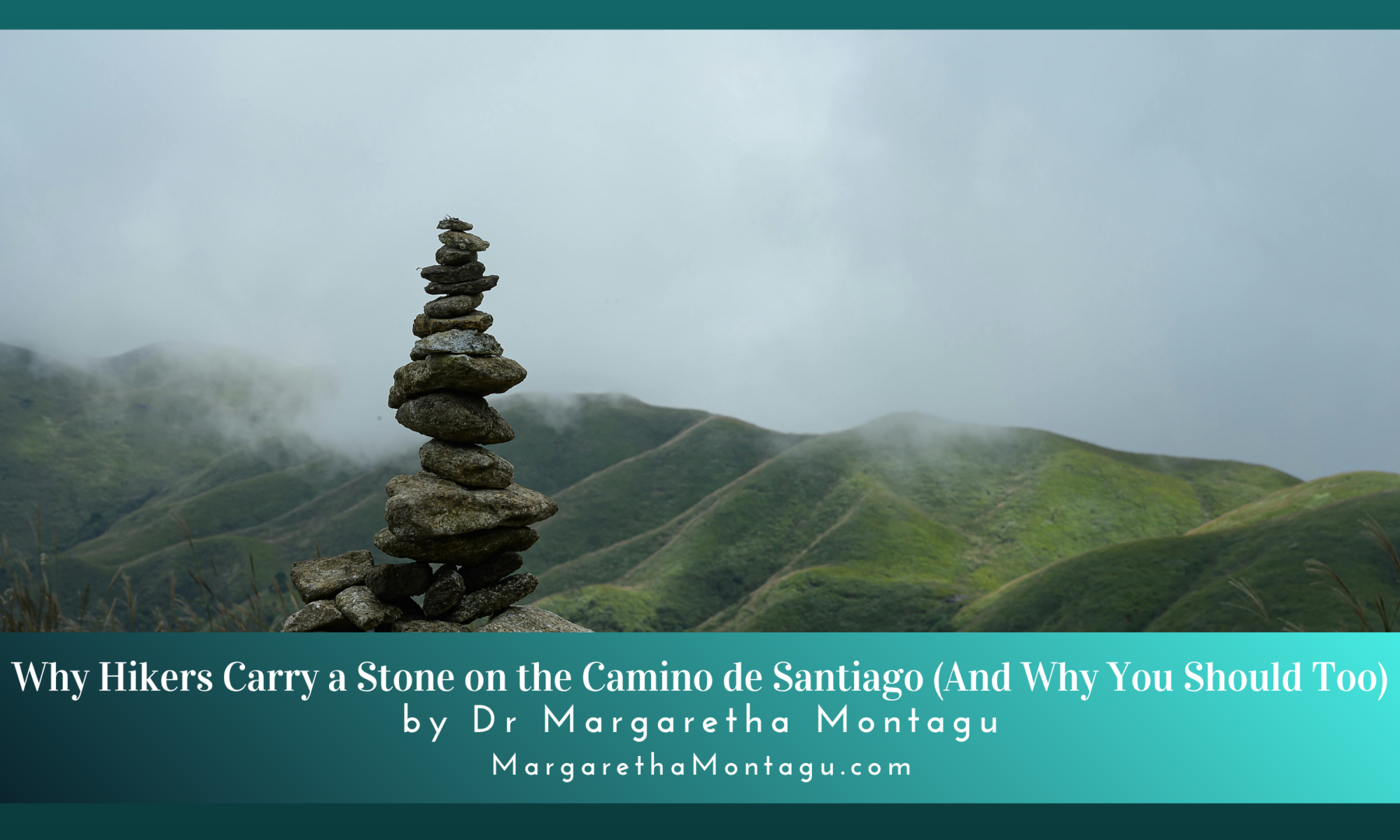
The ancient tradition that turns a simple rock into a radical act of release, and what it means for your overstretched mind
Why do hikers carry a stone on the Camino de Santiago? You choose a stone before you leave home, and you load it, consciously and deliberately, with whatever has been weighing you down: a grief, a fear, a chapter of your life that needs closing. You carry it in your hand or your pack for days, feeling its weight, letting it do what abstract worry never quite manages, which is to give your burden a shape you can actually hold. Then, at a chosen point along the route, you set it down and walk away without it.
What this is: A deep dive into the stone-carrying tradition and other meaningful Camino de Santiago rituals, why they matter more than ever right now, and how they could quietly rewire the way you see your life.
Read this if: You’re exhausted by the noise of the world, quietly wondering if there’s a more intentional way to live, and you suspect that somewhere between your to-do list and your doomscrolling habit, you may have misplaced yourself.
Put Down Your Phone. Pick Up a Stone.
5 Key Takeaways
- The stone-carrying ritual is not mere superstition — it is a practised, psychologically grounded act of intentional release that has helped pilgrims process grief, anxiety, and overwhelm for centuries.
- Camino traditions work because they are embodied — you don’t just think about letting go; you physically do it, and that distinction matters enormously for stressed nervous systems.
- You don’t have to walk 800 kilometres to access the transformative power of the Camino — even a 3-day section in the beautiful southwest of France offers the full depth of the experience.
- The traditions of the Camino are a masterclass in community building— the buen camino greeting, the hospitalero welcome, the shared table: small rituals that remind us we are not as alone as we feel.
- Reading and walking together is not an indulgence — it is one of the most evidence-supported combinations for restoring cognitive clarity, emotional resilience, and a sense of purpose and meaning.
Introduction
What a 1,000-year-old pilgrimage practice teaches us about letting go, starting over, and finding your footing again
SOMEWHERE on a dusty path in rural France, a woman stopped walking, reached into her backpack, pulled out a good-sized pebble and placed it on a cairn beside the trail.
She had carried it from home. She had written a single word on it in black marker the night before she left: fear.
She stood there for a moment, breathe in deerly, and then out, and walked on without it.
Sound a little woo-woo? Perhaps. But she slept better that night than she had in eight months.
The Camino de Santiago has been doing this sort of thing for over a thousand years. Long before wellness retreats, breathwork coaches, or productivity podcasts told us we needed to “release what no longer serves us,” pilgrims were picking up stones, carrying burdens made tangible, and choosing, deliberately, to put them down.
And in a world that currently feels like it is spinning slightly faster than any of us signed up for, that ancient practice is suddenly looking extraordinarily relevant.
Since I ask all my retreat guests to bring a stone from home (or to pick up a stone on their first walking day), I want to explain why I do that, and at the same time talk about a couple of the Camino’s most meaningful traditions, starting with the stone-carrying ritual, and unpacking why they resonate so deeply with people who are stressed, overstretched, and quietly yearning for something more grounded. We’ll also look at how a 5-day reading and walking the Camino retreat in southwest France might be exactly the kind of reset your mind and body are asking for, whether you know it yet or not.
Eleanor’s Stone (Or: How a Divorced Florida Mum Found Herself in Rural France, Arguing with a Rock)
Eleanor Marsh did not want to carry a blasted stone.
She was forty-seven, recently divorced, the sole parent of two teenagers who communicated exclusively in eye-rolls and the forensic examination of empty cereal boxes, and she had just compressed five days of existence into a carry-on to fly from Tampa to Toulouse. The last thing she needed was a travelling rock.
“It’s a Camino tradition,” her friend Daphne had said, with the alarming brightness of someone about to volunteer you for personal growth. “You carry a stone that represents a burden. Then you leave it on the path.”
Eleanor had stared at her. “Daphne. I have two teenagers, a mortgage, and a Pinterest board full of aspirational sourdough recipes from my divorce era. I am not short of burdens. I wouldn’t know which one to choose.”
The instruction arrived a week before the start of the retreat.
“Find something that fits in your palm,” said the retreat host, radiating the calm authority of someone who has gently outmanoeuvred many sceptics into having meaningful experiences despite themselves. “You’ll carry it. On the final day, you’ll leave it behind.”
Eleanor stepped into her garden and looked down. An innocent piece of rock looked back up at her—smooth, palm-sized, with the quiet confidence of an object about to become deeply symbolic, whether she liked it or not. She picked it up. It was cold, dusty, and offensively heavy for something with no job description.
She carried it for three days.
By day two, she’d named it. Not out loud—she wasn’t unwell—but privately, she called it “Gravis,” which lacked poetry but excelled in accuracy. The divorce. The financial untangling. The teenagers, particularly the fourteen-year-old who had recently informed her that she “just didn’t get it,” a critique so comprehensive it left no room for appeal.
She turned the stone in her fingers as she walked, the path unspooling through oak woods that smelled of damp earth and fallen leaves. Beside her, a retired schoolteacher from Edinburgh named Ruth walked in companionable silence. Eleanor, who had made a minor career out of filling silences, discovered—somewhat suspiciously—that she didn’t need to. This silence was different. It had texture. It didn’t need managing.
On the last afternoon, the path climbed to a ridge, and there it was: a weathered heap of pale stones left by pilgrims who had come this way before, each one having carried something heavy and, at this exact spot, decided they were done with it.
The host had explained the ritual. Some people write on their stones. Some say a few words. Some simply let go.
Eleanor looked at the stone in her hand. She thought about the two years of quiet, grinding grief that had followed the end of her marriage. Not the cinematic kind—no dramatic collapses—just the daily, unglamorous business of recalibrating a life that had not consulted her before changing shape. She thought about how tired she was of being the one who held everything together. And, if she was honest, how quietly proud she was that she had.
She kneeled.
She placed the stone carefully in the middle of the pile so it wouldn’t roll off.
(She remained, at her core, a woman who did things properly.)
Then she stood up, and something that had been lodged between her shoulder blades for two years slowly dissolved.
No speech. No fanfare. Just… gone.
She breathed in.
She breathed out.
She walked on, her hands empty, her rucksack lighter, and somewhere in the valley below, a bell rang for no particular reason, which felt, frankly, terribly appropriate.
The Camino de Santiago’s Ancient Traditions, Unpacked
The stone-carrying custom is one of the Camino’s most powerful traditions, but it is far from the only one. The whole pilgrimage is, in a sense, a living museum of meaningful ritual, each tradition a small, embodied act of intention that has survived centuries because it works.
The Stone Ritual (Cruz de Ferro)
Traditionally, pilgrims carry a stone from home and leave it at the Cruz de Ferro (the Iron Cross), one of the Camino’s most iconic waymarkers, high on the meseta plateau in Spain. The symbolism is ancient and layered: you are carrying a burden, making it physical and portable, and then choosing, at a specific moment and place, to release it.
What makes this so neurologically interesting is that the act of physically putting something down appears to help the brain register the emotional release in a way that purely mental intention-setting often does not. Embodied ritual engages the body and the mind simultaneously, which is precisely why it cuts through in a way that “just deciding not to worry” rarely does.
The Scallop Shell (La Concha)
The scallop shell is the universal symbol of the Camino pilgrim. Its grooved lines converge at a single point, representing the many routes of the Camino converging on Santiago. Pilgrims wear or carry it to identify themselves to fellow walkers and to the communities along the route. It is also, importantly, a symbol of hospitality: villages and towns along the Camino have for centuries welcomed shell-bearers with warmth and practical generosity.
In a time when many of us feel increasingly atomised, the simple act of wearing a symbol that says I am a pilgrim, I am on a journey and having strangers respond with warmth is quietly revolutionary.
Buen Camino
This simple greeting, offered to every pilgrim you pass, translates roughly as “good way” or “have a good Camino.” It is said to strangers, to people you will never see again, to those who are clearly struggling and those who are clearly thriving. It is a ritual affirmation that the journey matters, that the person walking it matters, and that the community of walkers, however temporary, holds space for each of its members.
In a world of curated social media interactions and carefully managed professional encounters, the unguarded warmth of buen camino between strangers on a mountain path is, for many pilgrims, one of the most unexpectedly moving experiences of the entire journey.
The Pilgrim’s Credential (La Credencial)
The pilgrim’s passport, stamped at churches, cafés, and shelters along the route, is both a practical document and a growing record of the journey. Each stamp says: I was here. I kept going. Filling a credential page by page is a tangible, accumulating evidence of perseverance that resonates deeply with people who have been feeling scattered or purposeless.
The Camino Effect Ripples Outward
Here is what the wellness industry rarely tells you about transformative experiences: they do not stay neatly contained within the individual.
Eleanor went home from the retreat and, within a fortnight, had reorganised her relationship with the news. Not by disengaging from the world, but by becoming more deliberate. She started reading long-form journalism instead of scrolling headlines. She joined a community book group. She began, slowly, to talk more honestly with her soon-to-be adult children about what she was finding difficult, and found that they were relieved to have the conversation.
This is not coincidence. Research consistently shows that experiences which restore our sense of personal agency, connection, and meaning, precisely what the Camino traditions facilitate, tend to have cascading social effects. When one person in a family or community finds their footing again, the quality of their relationships improves. They listen better, panic less, and model a kind of grounded resilience that others around them begin to absorb.
Communities benefit too. The Camino itself is evidence of this: the villages and towns along the route have been economically and culturally sustained by the pilgrimage economy for over a thousand years. Local culture, food, architecture, and hospitality have all been shaped by the tradition of welcoming strangers on a journey.
When you walk, you are not just helping yourself. You are participating in one of the longest-running acts of communal trust and mutual care in human history.
And perhaps that, in a fractured and frightening world, is the most radical thing you can do.
5 Mistakes to Avoid on Your Camino (or Your First Retreat)
1. Treating the Stone Ritual as Optional
If your guide offers a stone practice, do not skip it because it feels “a bit much.” The people who lean into the rituals consistently report more meaningful experiences than those who observe them ironically from a safe emotional distance. You came this far. Pick up the stone.
2. Overloading Your Schedule
The Camino’s power lies in its spaciousness. If you arrive at a retreat and immediately fill every gap with podcasts, messages, and plans, you have, in a sense, just brought your normal life along for a walk. Resist. The emptiness is the WHOLE point.
3. Comparing Your Experience to Others’
Someone else will cry at the Cruz de Ferro. Someone else will feel nothing and then sob quietly over dinner two days later. Someone else will have a profound insight on day one and spend days two through five mildly bored. All of this is completely valid. The Camino gives you what you need, not what you planned.
4. Neglecting Your Body in Service of Your Mind
You are walking. Wear proper footwear. Stay hydrated. Eat the cheese. The body and the mind are not separate on the Camino, and some of the most significant mental and emotional shifts happen specifically because your body is tired and fed and moving. Do not power through physical discomfort as though the real retreat is happening above the neck.
5. Rushing Back to “Normal” at the End
The integration period after any transformative experience is as important as the experience itself. Build in transition time before returning to full work and social intensity. Write in your journal. Walk in your neighbourhood. Let what happened settle before the noise rushes back in.
Intention-Setting Exercise: The Stone Practice (Anywhere, Any Time)
You do not need the Camino to do this. You need five minutes and a stone.
- Find a stone. Any stone. A pebble from your garden, a smooth river rock, a piece of gravel from the car park. It does not need to be beautiful or significant. It just needs to be physical and present.
- Hold it in both hands. Close your eyes.
- Name what you’re carrying. Not to fix it, not to analyse it. Just name it. Anxiety about the news. Grief. Exhaustion. A fear you’ve been circling for months. Speak it aloud, if you can. Let the stone hold it for you.
- Walk with it. Even if only around the block. Feel its weight. Let it be a companion rather than a problem.
- Choose your moment to put it down. A park, a garden, a river. Set it down with intention. Say, if it feels right: I leave this here. I walk on.
- Notice what’s in your hands now. They are empty. And empty hands can hold new things.
Further Reading: Books That Illuminate the Camino Experience
1. I’m Off Then: Losing and Finding Myself on the Camino de Santiago by Hape Kerkeling A German comedian’s unexpectedly tender account of walking the Camino through exhaustion, faith, and self-discovery. Funny, honest, and quietly profound, this is the book that introduced millions of readers to the pilgrimage. Chosen for its warmth and accessibility, particularly for those who are new to the Camino and approach spiritual subjects with a healthy dose of scepticism.
2. The Pilgrimage by Paulo Coelho Before The Alchemist, Coelho wrote this semi-autobiographical account of his own Camino journey. It is less polished than his later work and all the better for it, raw, searching, and full of the specific rituals and practices encountered on the Way. Chosen for its direct engagement with the symbolic dimensions of the journey and its honest portrayal of resistance, doubt, and breakthrough.
3. Walking Home: A Poet’s Journey by Simon Armitage Though this follows England’s Pennine Way rather than the Camino, Armitage’s account of walking with a rucksack and his own thoughts is one of the finest meditations on what long-distance walking does to the inner life. Chosen for readers who respond to literary quality and who want to understand the specific relationship between walking and creative thinking.
4. The Way is Made by Walking by Arthur Paul Boers A deeply considered account of a Mennonite pastor’s Camino journey, exploring what pilgrimage means in a secular age and why embodied practice matters for spiritual and psychological wellbeing. Chosen for its thoughtful engagement with the intersection of faith, community, and the traditions of the Way.
5. Pilgrim Strong: Rewriting My Story on the Way of Saint James by Kathy Elkind A middle-aged woman walks the Camino alone after a period of personal upheaval and discovers not just the trail but a new understanding of her own resilience. Chosen for its direct relevance to the audience: people in midlife, under pressure, looking for evidence that a significant reset is possible.
P.S. If the idea of intentional, incremental change resonates with you, do take a look at Embracing Change — in 10 Minutes a Day by Margaretha Montagu. It is a generous, practical companion for anyone navigating a period of transition, and pairs beautifully with the kind of reflection that a retreat experience tends to open up.
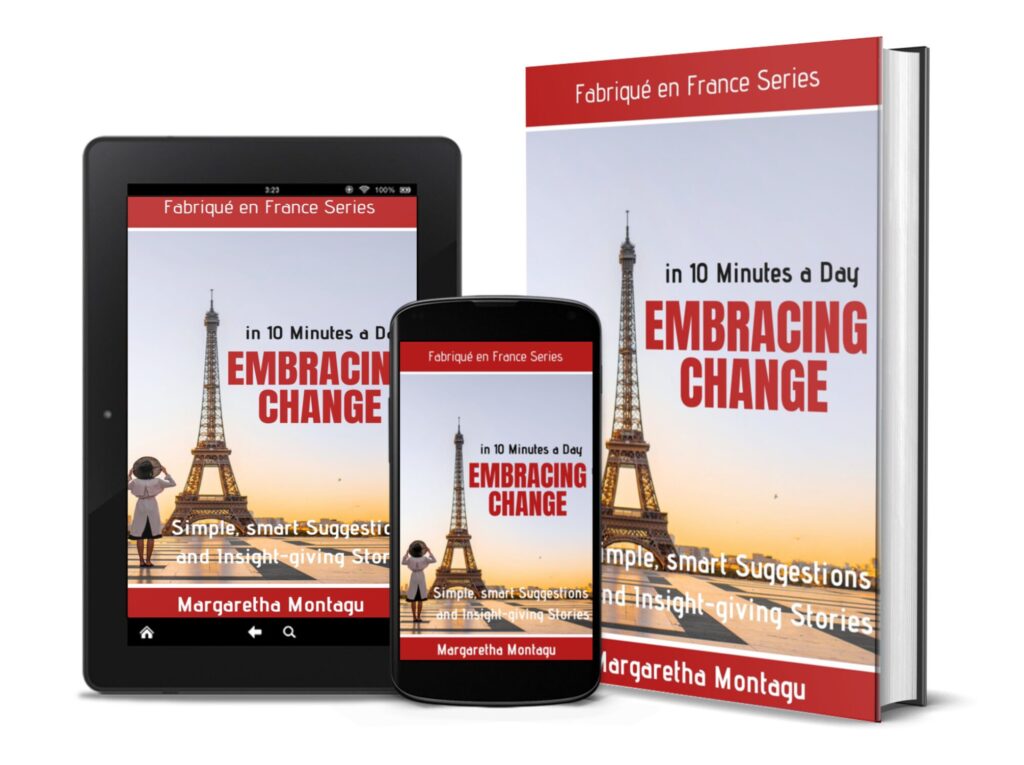
If you are currently facing a major life transition or any other dramatic change in your circumstances, and you have no idea how you are going to cope, the good news is that the strategy presented in this book can help you, step by step, to improve your ability to handle the stress caused by change, even if you feel entirely powerless at the moment.
Every guest at the reading retreat receives free access to Reconnect with Nature: A Guided Journaling Course Inspired by Horses, an online course that uses the wisdom of horses and the grounding practice of nature journaling to deepen your connection with the present moment. It is a quietly extraordinary complement to the walking and reading experience, and many retreat guests find themselves returning to it long after they are home.
Reconnect with Nature: A Guided Journaling Course Inspired by Horses for anyone interested in increasing their emotional, physical and social resilience by starting a journal, but does not have much time to invest and is looking for a simple, easy-to-implement strategy that gives tangible and lasting results. Get immediate access
5 FAQs: The Carry a Stone on the Camino de Santiago Tradition and What People Are Really Asking
Q: Do I have to be religious to take part in the stone-carrying tradition? Not even remotely. The Camino has been a pilgrimage route in the traditional religious sense for over a thousand years, but the majority of today’s walkers approach it as a personal, philosophical, or simply restorative journey. The stone ritual is meaningful to atheists, agnostics, and people of every faith. It is about intention and release, not doctrine.
Q: Does the stone have to come from home, or can I find one on the trail? Traditionally, pilgrims bring a stone from home to symbolise that they are carrying something specific from their previous life. However, many walkers find a stone along the route that speaks to them, and this is equally valid. The significance lies in your intention, not the stone’s postcode.
Q: What do people write on their stones? Common choices include a fear, a name of someone who has died or is ill, a word representing something to be released (grief, anger, resentment, anxiety), or a single intention for the journey ahead. Some people leave their stone blank. Some write a sentence. Some draw a symbol. There are no rules.
Q: What happens at the Cruz de Ferro if I am only walking a section of the Camino? The stone tradition has expanded well beyond the Cruz de Ferro. On shorter Camino sections and guided retreats, cairns or designated stopping points fulfil the same function. The ritual is the point, not the precise geography.
Q: Can children take part in the stone tradition? Absolutely, and they often engage with it more naturally than adults do. Children tend to be less self-conscious about symbolic acts, and many families have found the ritual a meaningful way to process difficult emotions or transitions together.
Conclusion
Here is what a thousand years of pilgrimage tradition has quietly known, and what neuroscience is now beginning to confirm: the body is not a vehicle for carrying the mind from one worry to the next. It is, in fact, a participant in healing.
When you walk, you think differently. When you carry a physical weight and set it down with intention, you give your nervous system something to do with the abstract freight of anxiety and grief. When you follow yellow arrows through ancient countryside, reading beside a fire at the end of the day, exchanging buen camino with strangers who will become, briefly, your community, something in you remembers itself.
You are not just a mind in distress about the state of the world. You are a person with feet and hands and a capacity for wonder that the noise of daily life has been slowly crowding out.
The stones you carry are real. And so is the path.
“The longest journey is the journey inward.” Dag Hammarskjöld
Take the Next Step (Literally)
If you have read this far, something in you recognised itself in these pages. Perhaps in Eleanor’s story. Perhaps in the idea of a path with red-and-white arrows and no algorithm. Perhaps simply in the thought of five days with good books, good company, and the kind of quiet that actually restores rather than merely pauses.
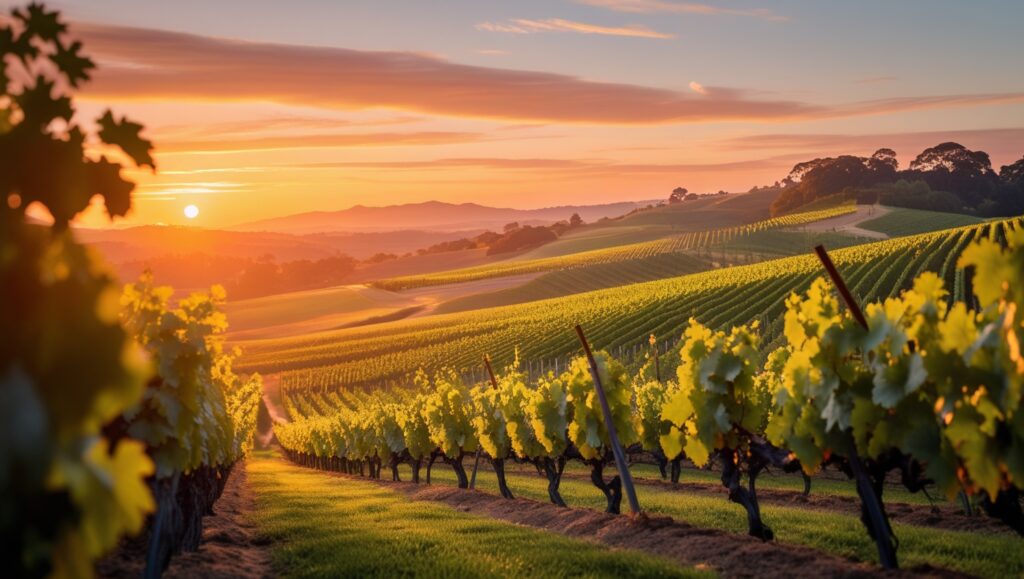
The 5-Day Book Lovers’ Binge Reading and Camino de Santiago Hiking Retreat in the southwest of France was created precisely for people like you: thoughtful, well-read, stretched too thin, and quietly ready for something different. Small groups. Carefully chosen books. Walking on ancient pilgrim paths through one of France’s most beautiful landscapes. Excellent food and unhurried evenings. And the kind of conversation you have been craving with people who mean it.
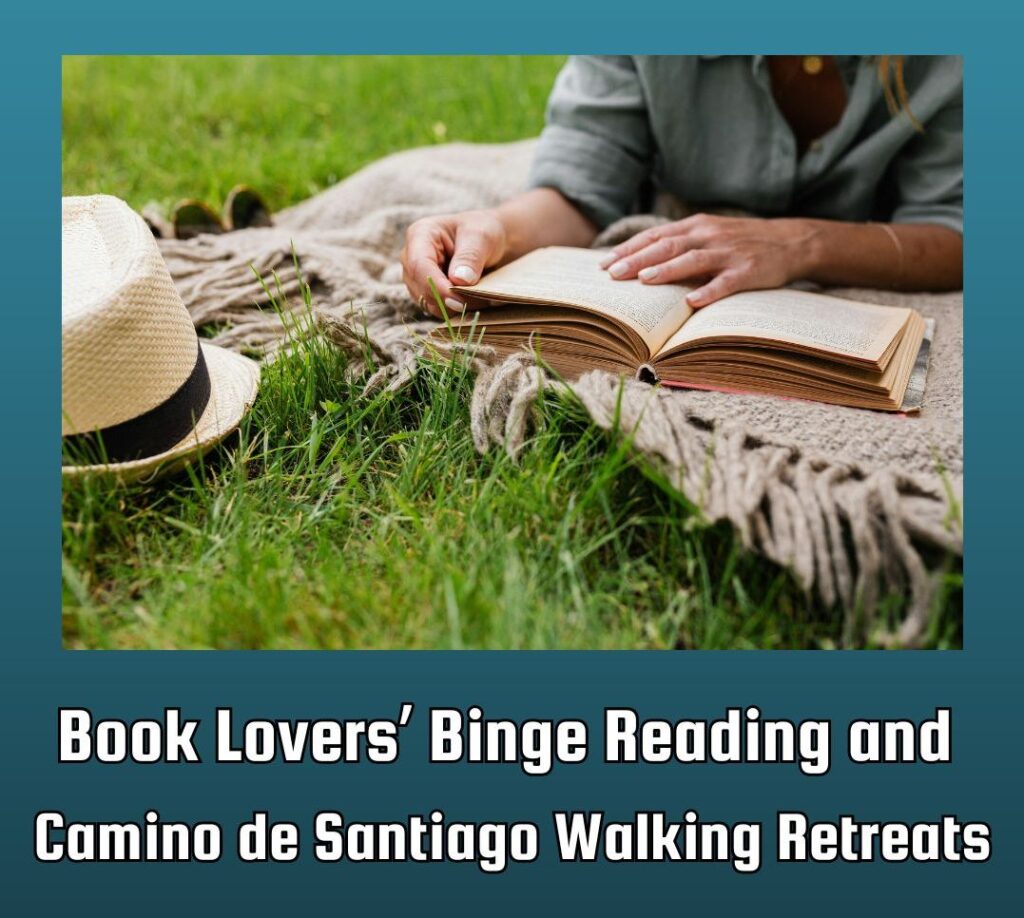
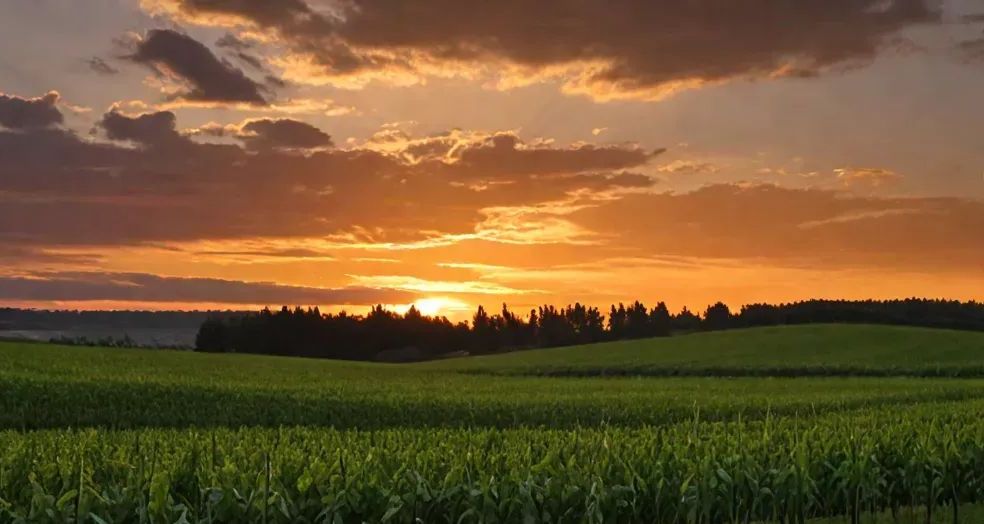
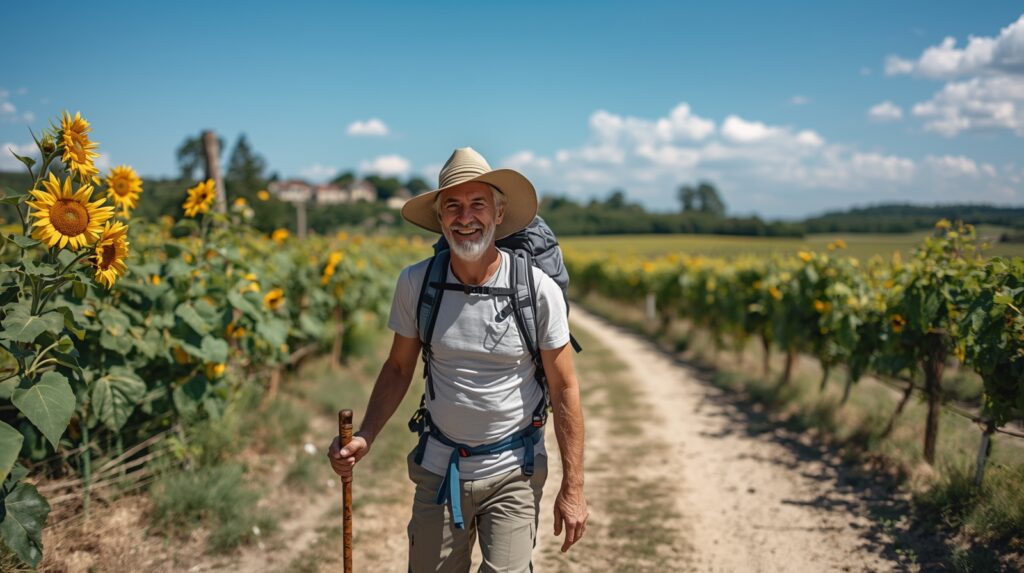
Join us for the Book Lovers Binge Reading Camino de Santiago Walking Retreat in the sun-drenched southwest of France: a journey where the trail and the story unfold together. Walk ancient paths at your own pace, then settle in each evening with a good book. This isn’t a fitness challenge—it’s a gentle rhythm—one step, one chapter, one honest conversation at a time. Rolling hills, quiet villages, golden light. No expectations, no performance, no agenda but your own unfolding.

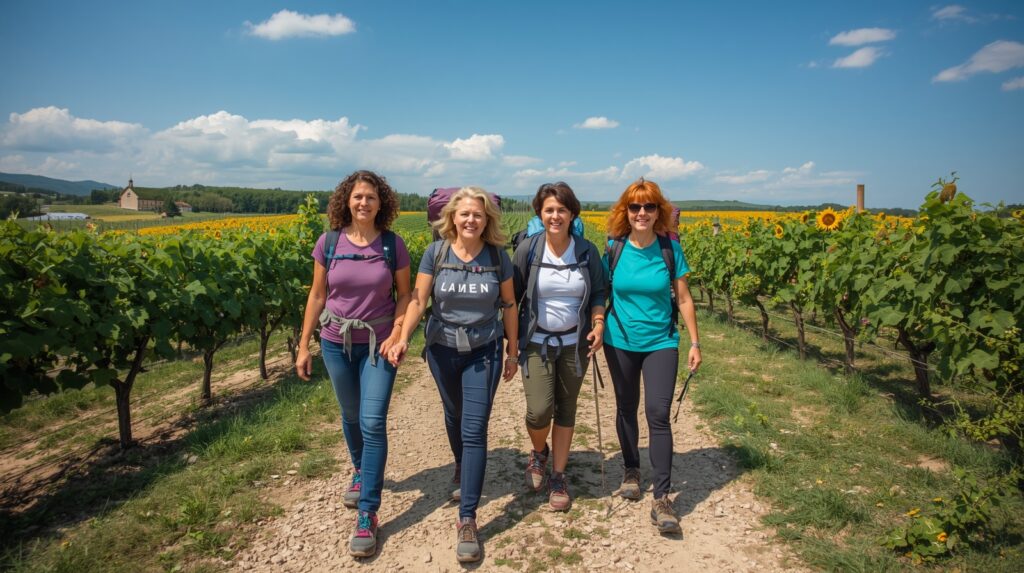
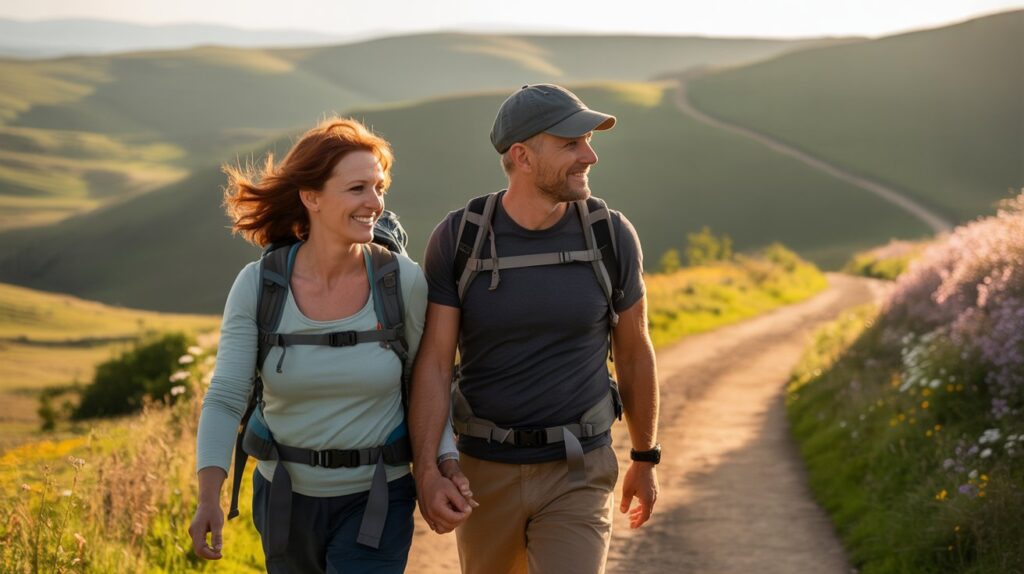
You do not have to walk 800 kilometres. You just have to say yes to five days.
Are You Ready for a Retreat?
Not sure which kind of retreat is right for you right now? Take the Ready for a Retreat? Quiz when you sign up for the newsletter, and find out where you are on the path — and what kind of journey your mind and body are actually asking for.
Do you dream of escaping your stressful life to raise a herd of goats or grow sunflowers in the south of France? Then you may be ready for an Esprit Meraki retreat. Get access to this “very serious” quiz to help you figure out how urgent your need for a change of scenery is, when you subscribe to my monthly newsletter.
What would you write on your stone? And, perhaps more importantly, are you ready to put it down/let it go/leave it behind?

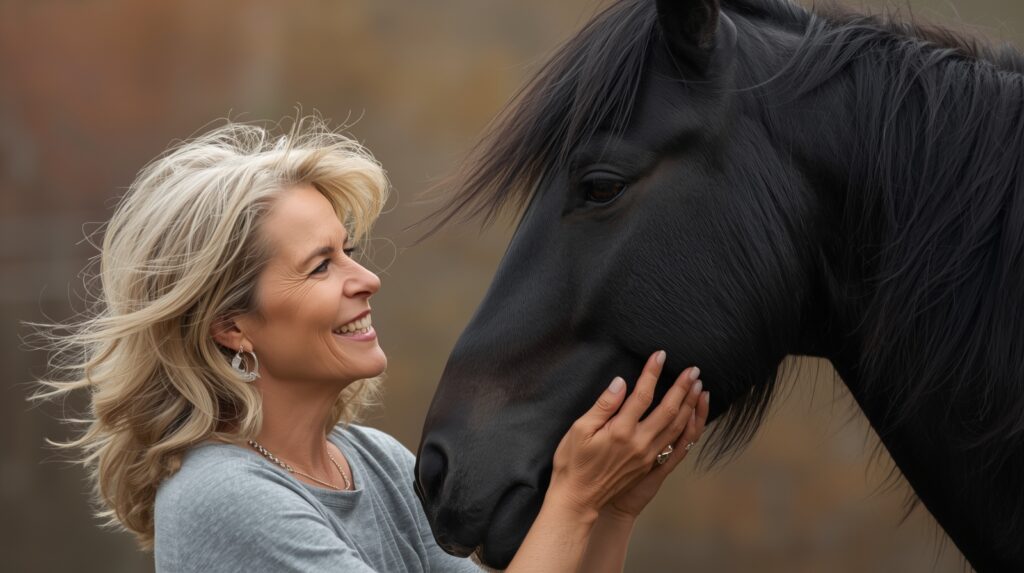
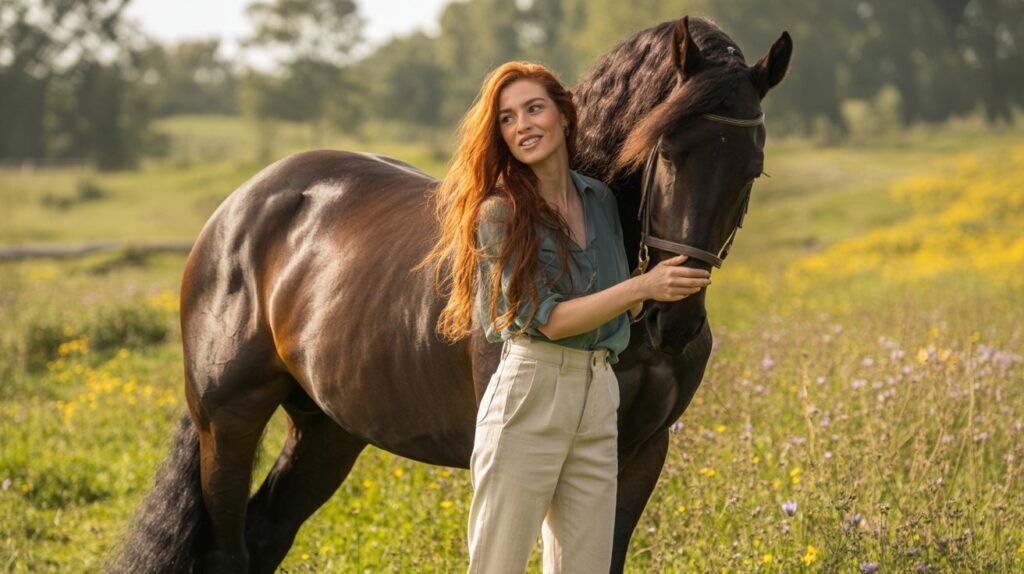
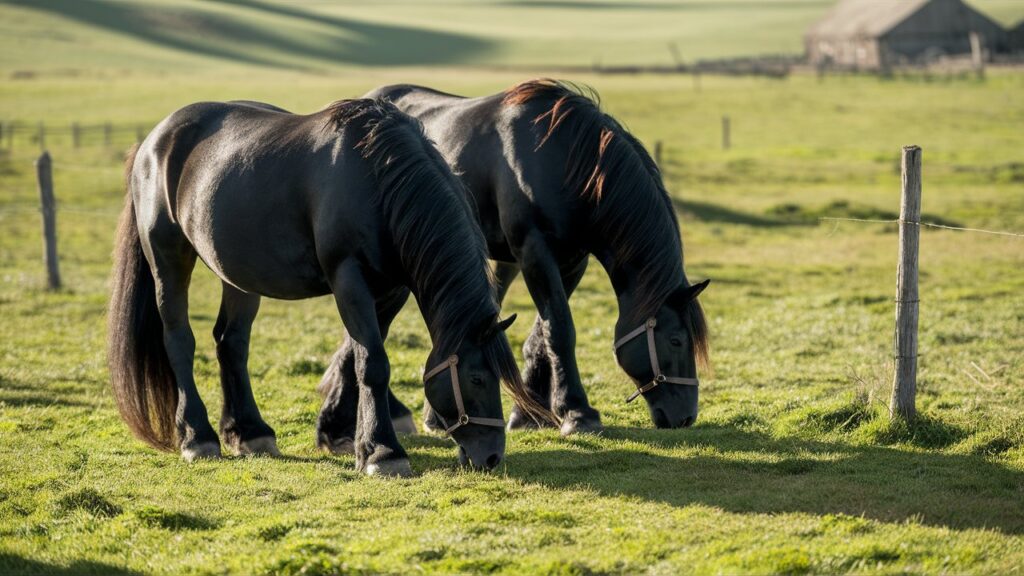
Author Bio: Dr Margaretha Montagu – described as a “game changer”, “gifted healer”, “guiding light” and “life-enriching author” – is an experienced medical doctor, a certified NLP practitioner, a medical hypnotherapist, an equine-assisted psychotherapist (EAGALAcertified) and a transformational retreat leader who guides her clients through life transitions – virtually, or with the assistance of her Friesian and Falabella horses, at their home in the southwest of France.
References
- Bratman, G. N., Hamilton, J. P., Hahn, K. S., Daily, G. C., & Gross, J. J. (2015). Nature experience reduces rumination and subgenual prefrontal cortex activation. Proceedings of the National Academy of Sciences, 112(28), 8567–8572. (Demonstrates that walking in nature, as opposed to urban environments, significantly reduces maladaptive self-referential thought, directly relevant to the stress-relieving effects of Camino walking.)
- Pilcher, J. J., Stanton, J. D., & Morris, D. M. (2020). The effects of walking on cognitive functioning and mental health outcomes: A systematic review. Health Psychology Review, 14(3), 371–394. (Reviews evidence for walking’s effects on anxiety, depression, and cognitive clarity — the physiological basis for the Camino experience’s documented benefits.)
- Park, B. J., Tsunetsugu, Y., Kasetani, T., Kagawa, T., & Miyazaki, Y. (2010). The physiological effects of Shinrin-yoku (taking in the forest atmosphere or forest bathing): Evidence from field experiments in 24 forests across Japan. Environmental Health and Preventive Medicine, 15(1), 18–26. (Provides robust evidence for the physiological relaxation response triggered by immersion in natural forest environments, underpinning the science of why Camino environments reduce stress hormones.)
- Verghese, J., Lipton, R. B., Katz, M. J., Hall, C. B., Derby, C. A., Kuslansky, G., Ambrose, A. F., Sliwinski, M., & Buschke, H. (2003). Leisure activities and the risk of dementia in the elderly. New England Journal of Medicine, 348(25), 2508–2516. (Groundbreaking study demonstrating that reading and other cognitively engaging leisure activities significantly reduce cognitive decline — supporting the evidence base for the reading-and-walking retreat combination.)
- van Tilburg, M. A. L., Vingerhoets, A. J. J. M., & van Heck, G. L. (1996). Homesickness: A review of the literature. Psychological Medicine, 26(5), 899–912. (While focused on homesickness, this paper explores the profound human need for a sense of belonging and the psychological disruption caused by disconnection from community — directly relevant to why the Camino’s communal rituals, including the buen camino greeting, provide such meaningful psychological repair.)