
This post first appeared on my Substack as “Blind to what matters most”
Early one March morning, I was standing at the kitchen window holding a cup of coffee I kept forgetting to drink. This was really not the way I usually treat my coffee. Usually, my coffee gets all my attention. 100% of it.
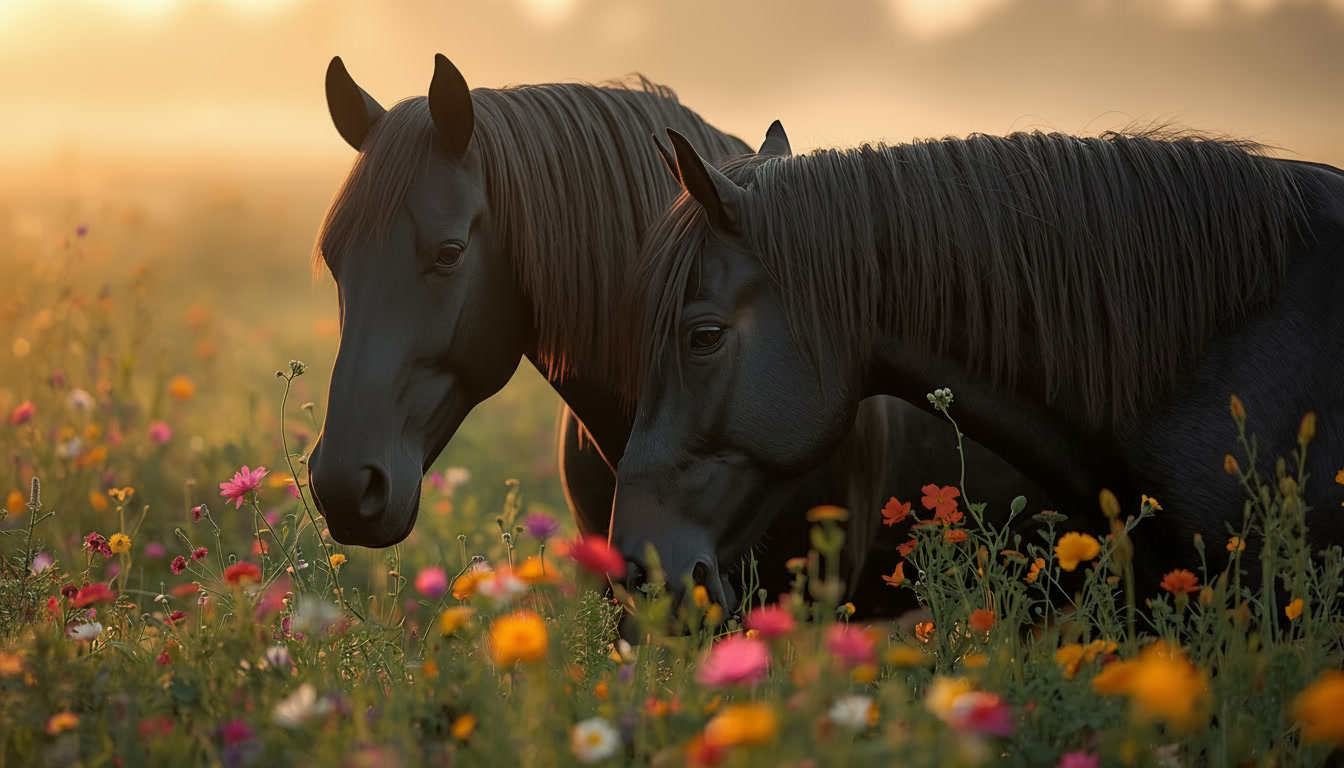
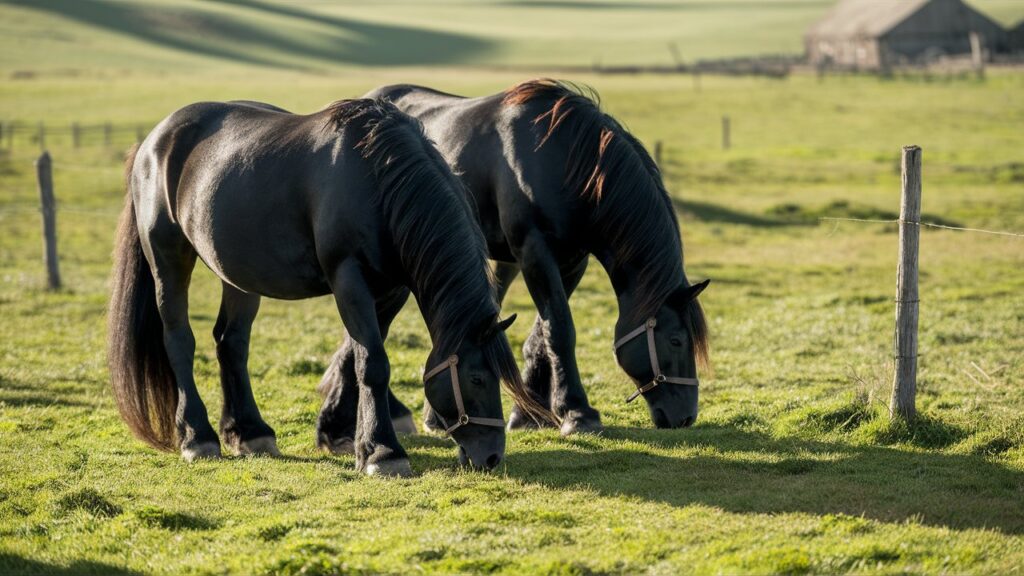
Outside, the horses were grazing with that unhurried, total commitment most of us only manage when scrolling our phones. The grass was just starting to grow again. It was early spring, that hopeful and slightly indecisive season where the earth isn’t quite sure of the sun’s commitment yet. The light was soft, the air still, and the horses were doing what horses do best: absolutely nothing of consequence, and somehow everything that matters. One of them lifted her head, chewed thoughtfully, and blinked in my direction as if to say, You again — still overthinking things, I see.
Guilty as charged. I was thinking of something I read: that the amount of good in your life depends on your ability to notice it. I’m obsessed with stress management, as a preventative strategy, and have been for decades. I was carefully dissecting this statement because it seemed to me that noticing the good in our lives could help us cope better with stressful situations. Like the current ever-escalating international conflict.
It struck me, not for the first time, how much of the good things in life goes unnoticed. Not because it’s hidden. But because some of us are so magnificently, so committedly, so almost professionally focused on everything that’s wrong, that the good in our lives doesn’t stand a chance.
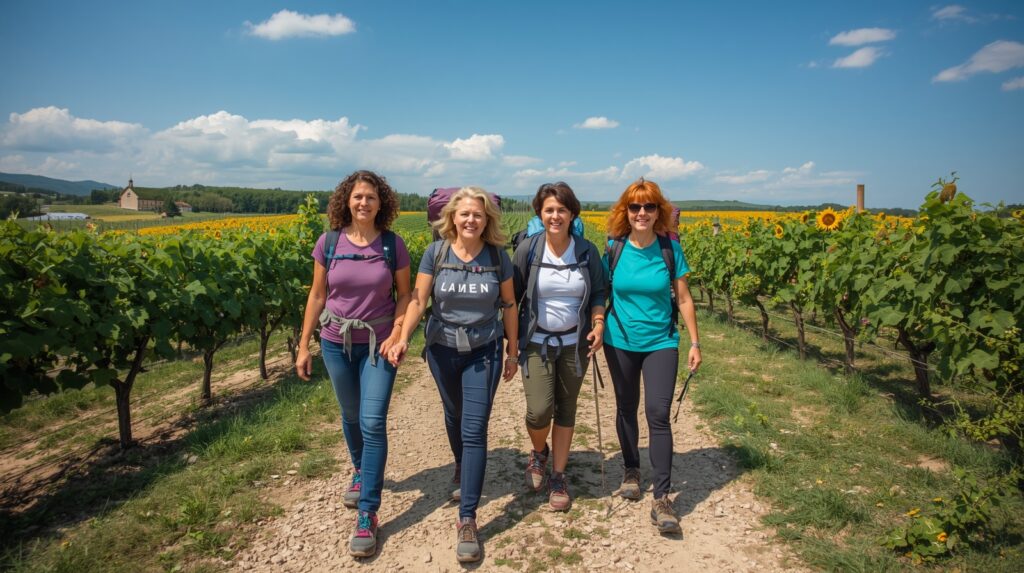
A few weeks ago, I hosted a small Booklovers’ Binge Reading retreat, that includes walking short, specially-selected sections of the Camino de Santiago (I didn’t actually force that spreme bit of alliteration, it happened quite naturally.)
People arrive with different stories, but there’s usually a shared undercurrent — the need to escape a world of never-ending and always escalating demands. Sarah, though, could name it. She could name everything that was off, in considerable detail, with supporting evidence and an expected timeline.
Within four hours of arriving, she had generously shared that her room was “too cold,” the path outside was “uneven in a way that felt deliberate,” the other guests were “a loud lot,” dinner was “fine, but.” She delivered all of this not with malice but with the weary authority of someone who has appointed themselves the quality control department of lived experience, and takes the role very seriously.
By the next morning, the group had developed a kind of affectionate tolerance for her. Whenever Sarah drew breath, there was an almost imperceptible collective bracing — accepting, but bracing.
On the first evening, we were sitting around the table after dinner, conversation flowed easily, someone making a joke about the bread, there is always, without fail, a moment on every retreat where the bread becomes a subject of passionate interest — when Sarah said, in exactly the same tone she’d used to report the uneven path:
“I don’t think I can feel anything anymore.”
The table went quiet. Not awkwardly. Attentively.
“I used to enjoy things,” she added, as though this were a further complaint to log. “Small things. But now everything just sort of passes me by. Like I’m watching my own life through a dirty window.”
Yes, Sarah, we noticed.
If you’ve felt that, and more people have than would ever admit it, you’ll recognise it immediately. Not sadness exactly, not the dramatic, operatic kind that at least has the decency to announce itself. More like a low-grade internal dimming. Someone has quietly turned down the brightness on your experience of life, and you didn’t even notice it happening.
What gave me pause, though, was the irony. Here was a woman with a gift for noticing, who could detect a drop in room temperature, an imperfect hem, a passive-aggressive email, from fifty paces — and yet the actual texture of her life, the warmth of it, the colour and smell and small daily grace of it, was passing by her entirely unregistered.
She wasn’t failing to notice. She was noticing selectively. And with tremendous dedication.
This is a dangerous habit. It’s stress-inducing. Because your helpful RAS (reticular activation system), clocking that you are focusing on negative things, will help you notice more negative things, while making the good things invisible, and so significantly increase your stress levels.
The following morning, we walked the Camino de Santiago. The air was sharp and clean in that way that makes you feel briefly virtuous just for breathing it. The light came at a low angle through the ancient oak trees, the kind of light that makes even mud look designer-inspired. Birds were doing their chaotic, joyful thing in the hedgerows. It was, objectively, a rather beautiful morning.
Sarah found the stile “unsafe.”
I watched her over the next hour or so (not clinically, though old habits die hard) and noticed how she moved through the landscape. Alert, observant, taking everything in. But like a building inspector rather than a tourist. Every stone wall assessed for structural integrity. Every cloud considered for its inconvenience potential.
We stopped at a spot I particularly love, where your thoughts either settle or finally catch up with you. People drank water, stretched, and one person became bafflingly obsessed with the perfect length of their walking ticks. Sarah stood slightly apart, scanning the horizon with the expression of someone expecting to find something disappointing, and not wanting to be caught off guard by it.
I walked over. We stood in silence for a moment, which is always a more generous thing to offer than people realise.
“What do you see?” I asked eventually.
“That fence needs attention,” she said, without hesitation.
I waited.
“Also, the path is quite rutted further on. Someone should do something about that.”
I waited a little longer.
“What else?” I said.
She paused. Looked again. And I watched something interesting happen — not a transformation, nothing so tidy as that, but a kind of very slight recalibration, like a lens shifting fractionally into focus.
“So many different shades of green,” she said, somewhat reluctantly.
“Go on.”
“Those yellow flowers are quite pretty. Not the right time of year for them, surely. A bit presumptuous.” She paused. “But pretty.”
This, I told her, is wild mustard. It doesn’t care much about timing.
“And it’s very quiet,” she said, after a moment. Not as a complaint, for once. Just as an observation. “Not uncomfortably quiet. Just… soothingly quiet.”
Learning to notice the good things in your life again is a gradual process.
Over the following days we kept returning to it, gently, the way you might keep turning a plant toward the light. At breakfast, I remarked that the coffee was rich and satisfying. Sarah considered this, then agreed it was “better than expected.” At dinner, the candles threw soft gold light across the table and someone laughed so suddenly and so genuinely that the whole room caught it, and Sarah smiled — a real smile, not a smirk. On the walk the next morning, the air smelled of wood smoke and she stopped, breathed it in, and said nothing at all.
Progress.
By the final day, something had shifted, ever so slightly. She was still Sarah — she noted, correctly, that the breakfast eggs were slightly overdone, and she had THOUGHTS about the font I used to pen the retreat schedule — but she was also present in a way she hadn’t been at the start. At one point, she looked out across the valley, the light coming soft and golden over the hills, the horses visible in the distance like slow, contented punctuation marks, and she said, almost to herself:
“I think I’ve been so busy finding what’s wrong that I stopped seeing what isn’t.”
Which is, in my experience, one of the more stress-disolving things you can discover about yourself. An acknowledgement considerably harder to make than it sounds.
I think what is actually going on is that we’ve been sold the idea that gratitude is a practice — something you do each morning in a journal with a tasteful linen cover. Three things I’m grateful for. And maybe that works for some people. But for others, and I’d wager for more of us than we’d like to admit, it feels hollow. Forced. Like clapping on command.
The amount of good in your life does, to a surprising extent, depend on your ability to see it. Not perfectly, not constantly, but often enough that life doesn’t slip past unnoticed while you’re busy attending to everything else. So what can you do?
What works best for me, and it is so effective that I teach it to all my retreat participants, whether they are attending a basic 5-day Camino de Santiago Hiking Retreat or an all-singing-all-dancing Camino de Santiago Crossroads retreat, is the 5 Senses Mindfulness Exercise, with a twist of my own: take a moment to notice 5 things you can see, that you are grateful for, 4 things that you can feel, that you’re grateful for, 3 that you can hear, 2 that you can smell and 1 that you can taste, all things that you are grateful for, at this specific moment in your life.
There you are: an extremely powerful stress-busting gratitude exercise that also retrains your RAS to notice the good things in your life.




Stress destroys Lives. To find out what you can do to safeguard your sanity by taking my insight-giving quiz, subscribe to my mailing list.

Author Bio: Dr Margaretha Montagu – described as a “game changer”, “gifted healer”, “guiding light” and “life-enriching author” – is an experienced medical doctor, a certified NLP practitioner, a medical hypnotherapist, an equine-assisted psychotherapist (EAGALAcertified) and a transformational retreat leader who guides her clients through life transitions – virtually, or with the assistance of her Friesian and Falabella horses, at their home in the southwest of France.