
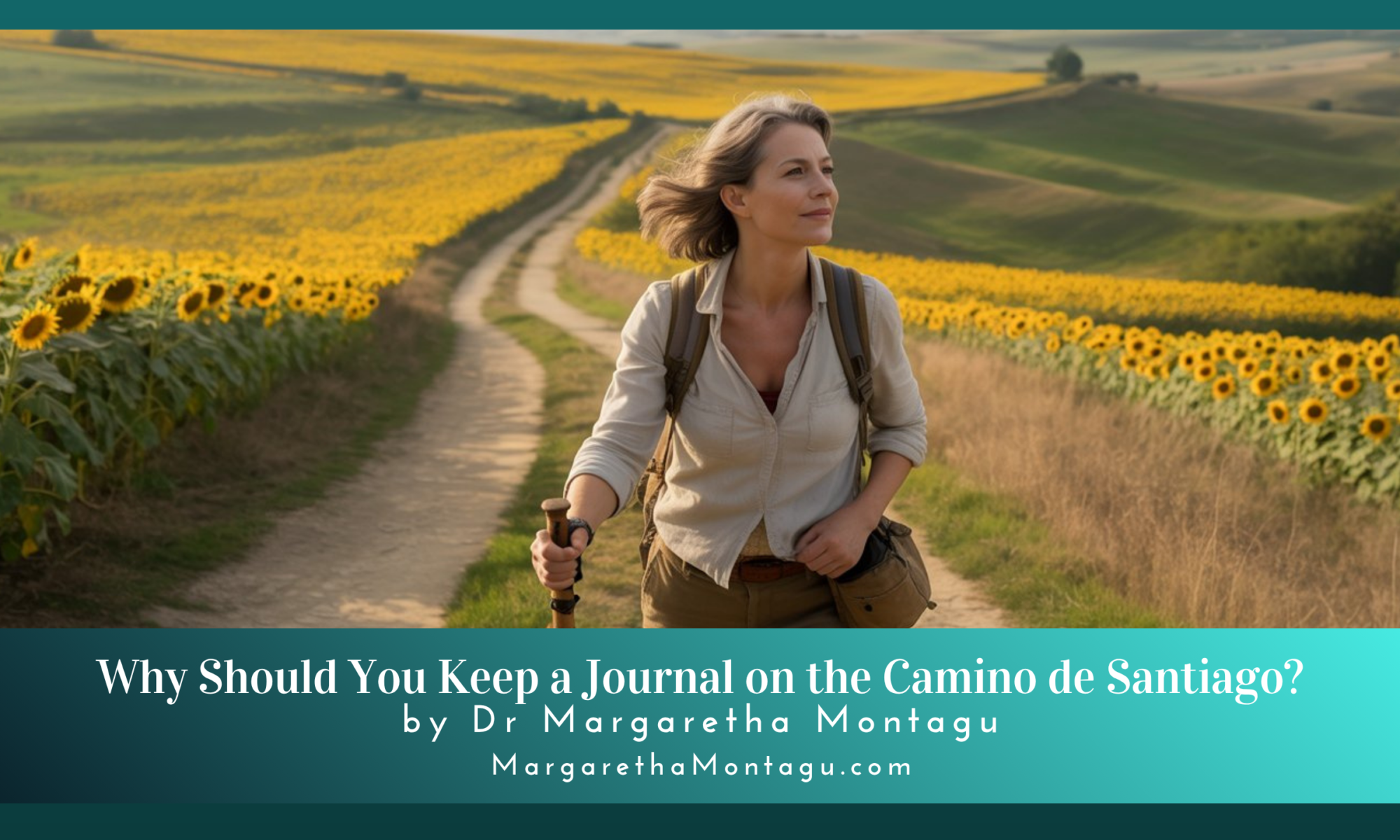
Exploring Embodied Cognition and Constructive Self-reflection
5 Key Takeaways
- Journaling on the Camino isn’t about writing — it’s about thinking clearly. The combination of movement and reflection rewires how you process stress and emotion.
- The Camino provides the perfect conditions for what psychologists call “constructive self-reflection,” breaking the rumination loop that keeps stressed people stuck.
- Writing during a pilgrimage creates a personal archive of resilience — evidence you can return to when the world feels overwhelming again.
- You don’t need to walk 800 km. Even a three-day section through the stunning southwest of France delivers the neurological and psychological reset that makes journalling transformative.
- The community you meet on the Camino — and the stories you record — can ripple outward, changing not just your life but the lives of those around you.
What this is: A heartfelt, practical, occasionally cheeky deep-dive into why journalling on the Camino de Santiago is one of the most powerful things a person can do for their mental and emotional health — especially right now, in a world that seems to have lost the plot entirely.
What this isn’t: A beginner’s guide to buying the right journal, or a lecture about the importance of “self-care.” You already know that. This is about why the specific combination of walking, wilderness, and writing cracks something open in people that nothing else quite manages to touch.
Read this if: You are quietly exhausted by the state of the world, you’ve tried meditating (twice), you’ve read the productivity books, and you still feel like you’re living someone else’s life at someone else’s pace. Also read this if you suspect that somewhere between the news cycle and the to-do list, you got a little lost.
Introductionn: The Quiet Emergency Nobody’s Talking About
You wake up, reach for your phone, and before your feet have touched the floor, you’ve already absorbed three international crises, a political scandal, and seventeen opinions about all of it. By 8am, your nervous system is running at the kind of frequency that would have been reserved for actual emergencies in any previous century.
This isn’t weakness. This is the entirely rational response of a finely-tuned human being to an entirely irrational information environment. The trouble is, your body can’t tell the difference between a breaking news alert and a genuine threat. And so it keeps bracing. Keeps scanning. Keeps waiting for the danger to pass.
It doesn’t pass. It just refreshes.
Here’s what this article will give you: a compelling case for why the ancient practice of walking the Camino de Santiago, combined with the deceptively simple act of keeping a journal, may be the most effective and genuinely enjoyable intervention available to a stressed, world-weary, quietly-desperate-for-something-different human being in 2025.
And yes, there is a story. A rather good one, involving a woman named Vivienne Marsh, a battered blue notebook, and the precise moment she stopped running from herself somewhere on a sun-drenched path in southwest France.
The Story of Vivienne Marsh
A Story in Four Movements
Movement One: The Problem (or, How Vivienne Stopped Being Vivienne)
Vivienne Marsh had, by every observable metric, an excellent life.
She had a good job, a nice flat, two cats with only moderately volatile personalities, and a group of friends who genuinely liked and looked out for her. She ran half-marathons. She read actual books. She owned a gratitude journal she had used at least four times.
And yet.
On the Tuesday morning she turned forty-three, she stood in her kitchen, waiting for the kettle to boil, and realised with startling calm that she could not remember the last time she had felt like herself. The not-stressed version of herself. Not performing-competence-at-a-meeting of herself. Herself. The one with opinions about poetry and strong feelings about olive oil and a laugh that started in her stomach.
That person had gone quiet somewhere around 2022, and Vivienne had been too busy to notice.
She didn’t have a breakdown. She was far too organised for that. Instead, she did what capable, resourceful women with a type A personality do: she googled solutions. Asked ChatGPT, Claude etc. She tried a meditation app (abandoned after eleven days), a digital detox weekend (spent mostly anxious about being offline), and therapy (helpful, but somehow still happening inside four walls, just as everything else).
What she needed, though she didn’t know it yet, was to get out of her head by getting into her body. To move.
What she needed was the Camino.
Movement Two: The Struggle (or, Day One, Blisters, and a Notebook She Almost Didn’t Pack)
The retreat in southwest France arrived in her inbox via a friend’s recommendation and stayed there for six weeks before Vivienne clicked the link. A reading retreat? On the Camino? It sounded either perfectly designed for her or entirely absurd. She booked it on a Wednesday evening after a particularly dispiriting news cycle, half-expecting to cancel by Friday.
She didn’t cancel.
What she did do was pack badly, overestimate her fitness, and forget that “scenic” in the French countryside might mean “uphill.” On the first morning, following a brunch that smelled of warm bread and woodsmoke, the group set off along a path lined with wild thyme and the very particular silence that only exists when there are no cars anywhere near. Vivienne’s new boots were slightly uncomfortable. Her shoulders were tight. Her brain was still analysing spreadsheets and composing emails.
The group facilitator, a warmly practical woman with the energy of someone who has walked this particular way and won, handed out notebooks before they left. Small, cream-paged things with a dark blue cover. “Write whatever comes,” she said. “Or don’t write anything. But carry it.”
Vivienne shoved hers in her jacket pocket, slightly irritated by the sentimentality of it.
By lunchtime, she had written six pages.
Not about anything important, she would tell you. About the way the light came through the oak trees in long, golden columns. About the smell of the earth after last night’s rain, something between mushroom and memory. About the sound her boots made on the packed-clay path — a soft, rhythmic thud that began, after an hour, to feel like something she could lean into.
She wrote about her cats. She wrote half a sentence about her mother and then stopped, surprised by the lump in her throat.
She ate her lunch on a low stone wall, looking out over a valley that had absolutely no idea what the FTSE 100 was doing, and felt, for the first time in longer than she could calculate, that the moment she was in was the only moment that mattered.
It was slightly terrifying. It was also, unmistakably, a relief.
Movement Three: The Solution (or, What Happened When Vivienne Started Telling herself the Truth)
By day three, something had shifted.
It wasn’t dramatic. There was no epiphany moment soundtracked by swelling violins. It was quieter than that, and stickier. Vivienne had begun to write in the evenings too, curled in one of the deep armchairs in the retreat house with a glass of local wine and her increasingly dog-eared notebook. Around her, other women read. Wrote. The fire crackled. Someone laughed softly at something in her book.
The afternoon’s shared reading session — a selection of passages about solitude, nature, and the peculiar freedom of being somewhere nobody expects anything from you — had loosened something in Vivienne’s chest. The discussion that followed, honest and unperformative in the way that conversations become when people have spent a day walking together, had loosened it further.
She wrote, that evening, about the gap between the life she was living and the life she wanted. Not in a crisis-journal way. In the way you write when you’re finally honest with yourself because you’ve run out of energy for pretending.
She wrote about what she was grateful for, properly, not in the three-words-before-bed way of the abandoned app, but in the full-bodied way of someone who has spent eight hours in extraordinary countryside and eaten extraordinary food and laughed with strangers who somehow already feel like friends. Gratitude, she discovered, is much easier to access when you’ve given your senses something real to work with.
She wrote about what scared her. About what she missed. About the version of herself she wanted to find again.
Movement Four: The Takeaway (or, a different Vivienne Marsh Goes Home)
On the last morning, the group walked a longer stretch, emerging eventually at a high point with a view that made several people go briefly speechless. The world spread out below them, green and ancient and entirely unconcerned with current affairs. Vivienne stood there and felt, in her chest and her shoulders and the soles of her slightly-blistered feet, something she would later describe to her therapist as “a sense of having been put back together in the right order.”
She came home with three things: a slightly battered blue notebook filled to the last page, a list of books she intended to read, and a clarity about her life that no amount of productivity systems had ever managed to provide.
She also came home with a new habit. Every morning, before the phone, before the news, before the day could colonise her thoughts — she wrote. Not much. Sometimes only a paragraph. But it was hers. A room of her own, in ink.
Her colleagues noticed. Her friends noticed. Her cats noticed, though they declined to comment.
Vivienne Marsh had, somewhere between the thyme-scented paths of southwest France and the last page of a cream-paged notebook, remembered who she was.
The Science of Wandering, Wondering and Writing
Why this combination is so extraordinarily effective, not just poetic, but physiological.
Walking, particularly in nature, directly reduces cortisol levels. Research from Stanford University has shown that walking in natural environments, as opposed to urban settings, reduces rumination, the repetitive, self-critical thought patterns that characterise anxiety and depression. The Camino routes in southwest France deliver this in abundance: ancient forests, open fields, gentle river valleys, and the kind of uninterrupted sky that makes problems feel manageable.
Expressive writing reorganises traumatic and stressful experiences. The pioneering work of psychologist James Pennebaker demonstrated that writing about emotionally significant events, even for just fifteen to twenty minutes a day, measurably improves immune function, reduces physician visits, and creates lasting improvements in mood. When you walk the Camino, you have time to write in this way, properly, not squeezed in between meetings, but in the golden space of an evening with nowhere else you need to be.
The combination of physical exertion and reflective writing creates what researchers call “embodied cognition.” Ideas don’t just live in your head; they live in your body. When you’ve walked eight kilometres through landscape that has hosted pilgrims for a thousand years, your body is ready to help your mind make sense of things it has been avoiding.
The Camino strips away the scaffolding. No role, no performance, no identity except pilgrim and walker. In this stripped-back state, journalling becomes not a discipline but a compulsion, because there is so much arising, so much noticing, so much feeling, that not writing it down feels wasteful.
And then there is the community. Fellow walkers, fellow readers, people who have also arrived carrying invisible weight and are, gently and without ceremony, setting some of it down. The conversations that happen on the Camino, at mealtimes, on resting stones, in the half-dark of early morning starts, are of a different quality to ordinary conversation. They are honest in the way that temporary proximity allows. And what you hear in those conversations, what you witness, often finds its way into your journal and into your understanding of your own life.
When Vivienne Marsh came home different, her relationships changed. Not because she announced anything, or made demands, or began ending sentences with “as I learned on my journey.” But because she was calmer, more present, more honest. Because she had stopped performing fine and started being, more genuinely, okay. Because she asked better questions and listened to the answers.
Her team at work noticed that meetings became less fraught. Her friendships deepened, because she brought more of herself to them. Her mother, whom she called more regularly after the retreat, commented that Vivienne seemed, somehow, lighter.
This is how it works. Clarity is contagious. Groundedness ripples. The person who finds their way back to themselves gives implicit permission to everyone around them to do the same.
A community of even slightly more intentional, slightly less reactive, slightly more grounded people is, frankly, a better community. And it starts with one person, one notebook, one path through the thyme-scented hills of southwest France.
5 Journalling Mistakes to Avoid on the Camino
Because Good Intentions and Wrong Approaches Are a Waste of Good Scenery
1. Treating Your Journal Like a List of Events “Walked 9km. Had soup for lunch. Blisters on left heel.” This is a logbook, not a journal. Push past the facts into the feelings, the questions, the noticing. What did the soup taste like? What did you think about during the uphill stretch? What surprised you?
2. Writing Only When You Have “Something Important” to Say The Camino’s magic lives in the ordinary moments: the conversation with a stranger, the quality of light at 7am, the unexpected emotion triggered by a particular bend in the path. If you wait for significance, you’ll miss it.
3. Writing for an Imaginary Reader Your journal is not your Instagram. It doesn’t need to be beautiful, wise, or quotable. The moment you start writing for an audience, even a fictional one, you lose access to the raw material that makes journalling genuinely useful.
4. Skipping the Morning Pages Mornings on the Camino are extraordinary. The light, the quiet, the particular quality of thought before the day takes hold. Even ten minutes of writing before you set off will set a completely different tone for your walk.
5. Leaving Your Notebook in Your Bag Keep it accessible. In your jacket pocket, clipped to your pack, tucked into a top strap. The insight you want to capture will arrive at a completely inconvenient moment, on a hillside, at a water stop, mid-conversation. Reach for it.
Before You Put One Foot on the Path
Find a quiet spot, ideally outdoors, ideally with something living nearby (a tree will do). Take three slow breaths. Then write, without overthinking, your responses to these three prompts:
- What am I carrying into this walk that I am ready to put down?
- What do I want to feel by the end of this journey?
- What would it mean to come home as a slightly different version of myself?
Don’t edit. Don’t explain. Just write. Seal the page with a date and, if you like, a single word that sums up how you feel right now.
You’ll return to this on the last day. What you discover may astonish you.
Further Reading
1. The Artist’s Way by Julia Cameron The foundational text on journalling as creative and spiritual practice. Cameron’s “morning pages” concept is essentially the Camino approach to writing: daily, unfiltered, and transformative. Essential reading before any retreat.
2. Wild by Cheryl Strayed A masterclass in what happens when a woman puts herself on a long trail and writes the truth. Not specifically about the Camino, but spiritually adjacent in every way that matters. Strayed’s memoir demonstrates precisely what embodied, moving reflection can produce.
3. The Camino de Santiago: A Pilgrimage to the Stars by Gitlitz and Davidson For historical and cultural context. Understanding why millions of people have walked this path for a thousand years deepens the journalling experience enormously. You are not just walking, you are walking in the footsteps of a very long human story.
4. Writing Down the Bones by Natalie Goldberg The most joyful, generous, and practically useful book about writing as a mindfulness practice. Goldberg makes the case, beautifully, that writing is not just expression but investigation. A perfect companion for the Camino journal.
5. Lost Connections by Johann Hari A rigorous and compassionate exploration of why so many of us feel anxious and disconnected, and what actually helps. Hari’s evidence-based case for reconnecting with meaningful values, community, and the natural world reads like a manifesto for exactly what a Camino retreat offers.
P.S. If you want to build a daily reflective writing practice before or after your retreat, Embracing Change in 10 Minutes a Day is a gentle, practical, and genuinely lovely place to start. It does exactly what the title promises, and it fits in a jacket pocket.
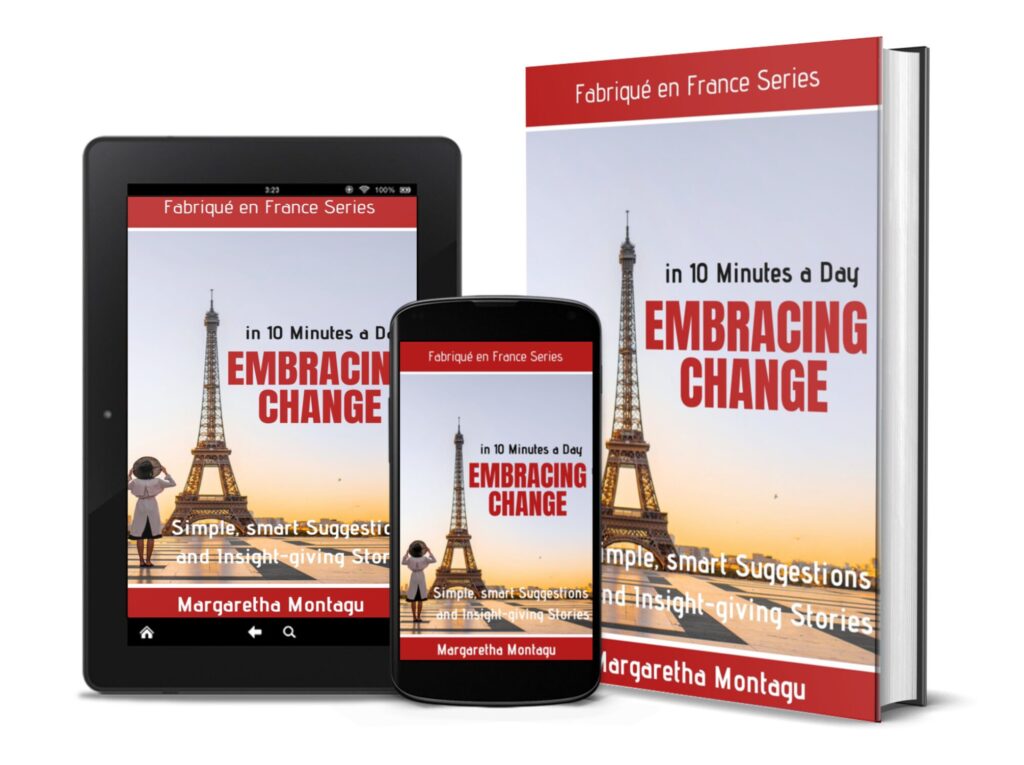
If you are currently facing a major life transition or any other dramatic change in your circumstances, and you have no idea how you are going to cope, the good news is that the strategy presented in this book can help you, step by step, to improve your ability to handle the stress caused by change, even if you feel entirely powerless at the moment.
The Reconnect with Nature: A Guided Journaling Course Inspired by Horses online course, a uniquely grounding and sensory writing programme, is included free with all my retreats, including my reading retreats.
5 FAQs About Journalling on the Camino de Santiago
Q: Do I have to be any good at writing to journal on the Camino? Absolutely not. In fact, having no writerly self-consciousness is an advantage. You’re not writing for publication; you’re writing for clarity. If you can think, you can journal.
Q: How much time should I set aside for journalling each day? Most people find that twenty to thirty minutes in the evening and ten minutes in the morning is ideal. But even five uninterrupted minutes of genuine honesty will serve you better than an hour of unstructured navel-gazing.
Q: What kind of notebook should I bring? Small enough to carry comfortably, large enough to write freely. Unlined pages give more creative latitude; lined pages feel less intimidating. Avoid anything so beautiful you’re afraid to use it. This is a working tool, not a keepsake.
Q: Will journalling on the Camino help with anxiety and stress? The research is clear that expressive writing reduces psychological distress, and that walking in nature reduces cortisol. Together, and in the context of community and rest, many people find the combination genuinely transformative. It is not a clinical treatment, but it is a powerful and evidence-informed practice.
Q: What if I don’t know what to write? Start with your senses. What can you see, hear, smell, taste, feel right now? Move from the physical outward. The body is an extraordinarily reliable guide to what the mind is actually trying to process.
Conclusion: Ancient Technology for Modern Problems
There is something quietly radical about walking a path that humans have walked for a thousand years, carrying only what fits on your back, and writing down what you find when the noise finally stops.
The Camino has always been, at its heart, a journey inward disguised as a journey forward. The journal is the tool that makes the inward journey legible, that turns experience into understanding and movement into meaning.
In a world that profits from your distraction and anxiety, choosing to walk, to be still, to write, to reflect, is not escapism. It is, in the most practical sense, an act of resistance. And, as Vivienne Marsh would tell you, it is one of the best decisions a person can make.
“Not all those who wander are lost. But the ones who carry a notebook tend to find their way home considerably faster.” M Montagu
Your Invitation: Five Days That Could Change Everything
The Book Lovers’ Binge Reading & Camino de Santiago Retreats
If the world has been too loud for too long, and you are quietly, urgently ready for something different, consider five days in the southwest of France doing something magnificently, unapologetically good for yourself.
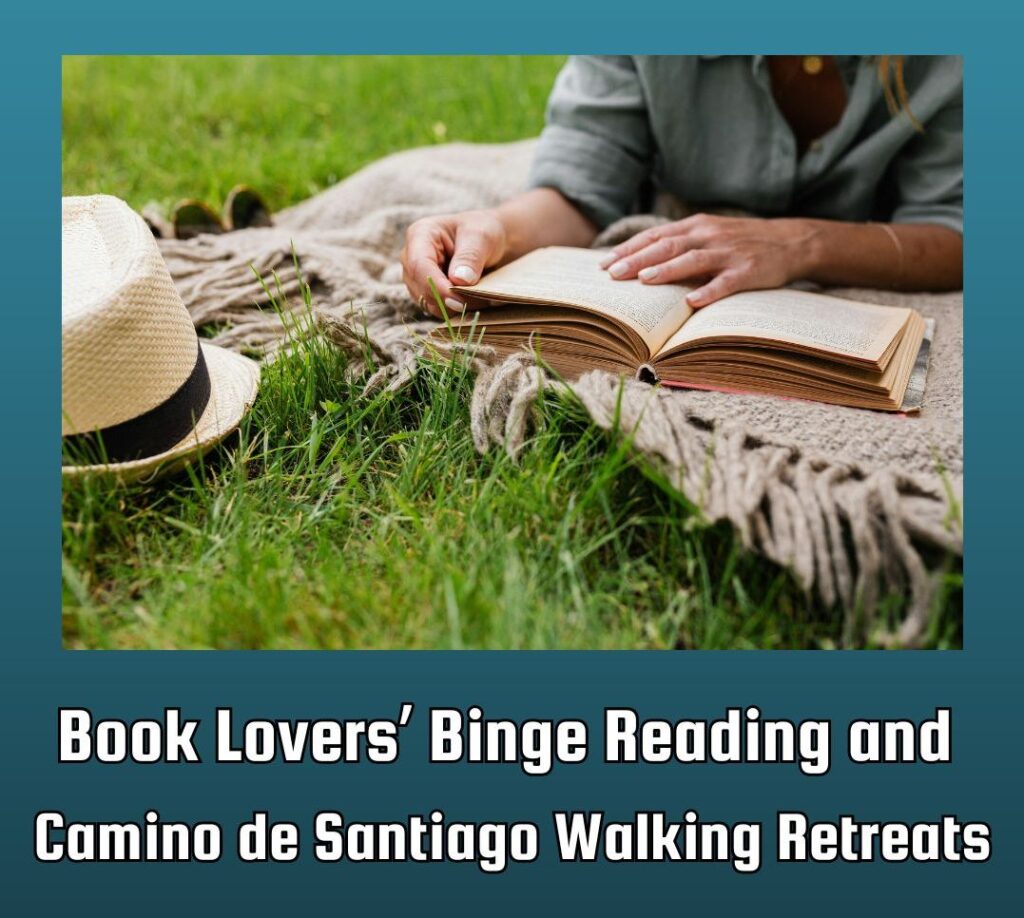
Join us for the Book Lovers Binge Reading Camino de Santiago Walking Retreat in the sun-drenched southwest of France: a journey where the trail and the story unfold together. Walk ancient paths at your own pace, then settle in each evening with a good book. This isn’t a fitness challenge—it’s a gentle rhythm—one step, one chapter, one honest conversation at a time. Rolling hills, quiet villages, golden light. No expectations, no performance, no agenda but your own unfolding.
The Book Lovers’ Binge Reading and Camino de Santiago Retreats combine guided walking on ancient Camino paths, shared reading and reflection, exceptional food, extraordinary landscape, and real human connection. You will walk. You will read. You will write. You will sleep deeply and wake without an alarm. The Reconnect with Nature journalling course is included. So is more fresh air than you’ve had in years.
This is not a “fix yourself” retreat. It is a find yourself one.
Take the Quiz: Are You Ready for a Retreat?
Sign up for the newsletter and discover, via the Ready for a Retreat? quiz, exactly what kind of reset your particular nervous system is asking for. It takes five minutes and is considerably more illuminating than doom-scrolling.

Do you dream of escaping your stressful life to raise a herd of goats or grow sunflowers in the south of France? Then you may be ready for an Esprit Meraki retreat. Get access to this “very serious” quiz to help you figure out how urgent your need for a change of scenery is, when you subscribe to my monthly newsletter.
References
- Bratman, G. N., Hamilton, J. P., Hahn, K. S., Daily, G. C., & Gross, J. J. (2015). Nature experience reduces rumination and subgenual prefrontal cortex activation. Proceedings of the National Academy of Sciences, 112(28), 8567–8572.
- Pennebaker, J. W., & Beall, S. K. (1986). Confronting a traumatic event: Toward an understanding of inhibition and disease. Journal of Abnormal Psychology, 95(3), 274–281.
- Smyth, J. M., Stone, A. A., Hurewitz, A., & Kaell, A. (1999). Effects of writing about stressful experiences on symptom reduction in patients with asthma or rheumatoid arthritis. JAMA, 281(14), 1304–1309.
- Aspinwall, L. G., & Taylor, S. E. (1992). Modeling cognitive adaptation: A longitudinal investigation of the impact of individual differences and coping on college adjustment and performance. Journal of Personality and Social Psychology, 63(6), 989–1003.
- Berman, M. G., Jonides, J., & Kaplan, S. (2008). The cognitive benefits of interacting with nature. Psychological Science, 19(12), 1207–1212.
Here is something to sit with: if you could write one sentence in a journal tonight, one honest sentence about where you actually are right now, what would it say?
You don’t have to share it with anyone. Just write it down.

“I am an experienced medical doctor – MBChB, MRCGP, NLP master pract cert, Transformational Life Coach (dip.) Life Story Coach (cert.) Stress Counselling (cert.) Med Hypnotherapy (dip.) and EAGALA (cert.) I may have an impressive number of letters after my name, and more than three decades of professional experience, but what qualifies me to excel at what I do is my intuitive understanding of my clients’ difficulties and my extensive personal experience of managing major life changes using strategies I developed over many years.” Dr M Montagu