
18 months ago, I realised it was time for change, and I wrote this post:
The first quote in this list of quotes below comes from the post above. Now, a year and a half later, as I’m reviewing the changes I made, I am writing this post:
It takes courage to make changes, not knowing what the outcome will be, and I often look for guidance in the words of others who have walked this path before me. Below is a list of the quotes that inspired the further changes I have decided to make:
“Change can be exhilarating, intimidating, overwhelming, challenging, or liberating, depending on your perspective. Changing your perspective can positively influence your ability to cope with change, whether voluntary or involuntary.” ― Dr Margaretha Montagu
“Even if you cannot change all the people around you, you can change the people you choose to be around. Life is too short to waste your time on people who don’t respect, appreciate, and value you. Spend your life with people who make you smile, laugh, and feel loved.”
― Roy T. Bennett, The Light in the Heart
“There are women who make things better… simply by showing up. There are women who make things happen. There are women who make their way. There are women who make a difference. And women who make us smile. There are women of wit and wisdom who- through strength and courage- make it through. There are women who change the world everyday… Women like you.”
― Ashley Rice
“Resilience is accepting your new reality, even if it’s less good than the one you had before. You can fight it, you can do nothing but scream about what you’ve lost, or you can accept that and try to put together something that’s good.”
― Elizabeth Edwards
“This was when I learned that you have to give up your life as you know it to get a new one: that sometimes you need to let go of everything you’re clinging to and start over, whether because you’ve outgrown it or because it’s not working anymore, or because it was wrong for you in the first place.”
― Kelly Cutrone, If You Have to Cry, Go Outside: And Other Things Your Mother Never Told You
“The snake which cannot cast its skin has to die. As well the minds which are prevented from changing their opinions; they cease to be mind.”
― Friedrich Nietzsche
“Nothing in the world is permanent, and we’re foolish when we ask anything to last, but surely we’re still more foolish not to take delight in it while we have it. If change is of the essence of existence one would have thought it only sensible to make it the premise of our philosophy.”
― W. Somerset Maugham, The Razor’s Edge
Simone de Beauvoir
“Change your life today. Don’t gamble on the future, act now, without delay.”
― Simone de Beauvoir, The Book of Positive Quotations
“The only way that we can live, is if we grow. The only way that we can grow is if we change. The only way that we can change is if we learn. The only way we can learn is if we are exposed. And the only way that we can become exposed is if we throw ourselves out into the open. Do it. Throw yourself.”
― C. JoyBell C.
“When we least expect it, life sets us a challenge to test our courage and willingness to change; at such a moment, there is no point in pretending that nothing has happened or in saying that we are not yet ready. The challenge will not wait. Life does not look back. A week is more than enough time for us to decide whether or not to accept our destiny.”
― Paulo Coelho, The Devil and Miss Prym
“We are taught you must blame your father, your sisters, your brothers, the school, the teachers – but never blame yourself. It’s never your fault. But it’s always your fault, because if you wanted to change you’re the one who has got to change.”
― Katharine Hepburn, Me: Stories of My Life
“We are products of our past, but we don’t have to be prisoners of it.”
― Rick Warren, The Purpose Driven Life: What on Earth Am I Here for?
“So many people live within unhappy circumstances and yet will not take the initiative to change their situation because they are conditioned to a life of security, conformity, and conservatism, all of which may appear to give one peace of mind, but in reality nothing is more dangerous to the adventurous spirit within a man than a secure future. The very basic core of a man’s living spirit is his passion for adventure. The joy of life comes from our encounters with new experiences, and hence there is no greater joy than to have an endlessly changing horizon, for each day to have a new and different sun.”
― Jon Krakauer, Into the Wild
“I’ve come to believe that in everyone’s life, there’s one undeniable moment of change, a set of circumstances that suddenly alters everything.”
― Nicholas Sparks, Safe Haven
“See if you can catch yourself complaining, in either speech or thought, about a situation you find yourself in, what other people do or say, your surroundings, your life situation, even the weather. To complain is always nonacceptance of what is. It invariably carries an unconscious negative charge. When you complain, you make yourself into a victim. When you speak out, you are in your power. So change the situation by taking action or by speaking out if necessary or possible; leave the situation or accept it. All else is madness.”
― Eckhart Tolle, The Power of Now: A Guide to Spiritual Enlightenment
“We cannot change our past… we cannot change the fact that people will act in a certain way. We cannot change the inevitable. The only thing we can do is play on the one string we have, and that is our attitude. I am convinced that life is 10% what happens to me and 90% of how I react to it. And so it is with you… we are in charge of our attitudes.”
― Charles R. Swindoll
“Joy is sometimes a blessing, but it is often a conquest. Our magic moment help us to change and sends us off in search of our dreams. Yes, we are going to suffer, we will have difficult times, and we will experience many disappointments — but all of this is transitory it leaves no permanent mark. And one day we will look back with pride and faith at the journey we have taken.”
― Paulo Coelho, By the River Piedra I Sat Down and Wept
“Some periods of our growth are so confusing that we don’t even recognize that growth is what is happening. We may feel hostile or angry or weepy and hysterical, or we may feel depressed. It would never occur to us, unless we stumbled on a book or person who explained it to us, that we were in fact in the process of change, of actually becoming larger, spiritually, than we were before. Whenever we grow, we tend to feel it, as a young seed must feel the weight and inertia of the earth as it seeks to break out of its shell on its way to becoming a plant. Often the feeling is anything but pleasant. But what is most unpleasant is the not knowing what is happening . . . Those long periods when something inside ourselves seems to be waiting, holding its breath, unsure about what the next step should be, eventually become the periods we wait for, for it is in those periods that we realize that we are being prepared for the next phase of our life and that, in all probability, a new level of the personality is about to be revealed.”
― Alice Walker, Living by the Word: Essays
“Real change is difficult at the beginning. Without the familiar to rely upon, you may not in as much command as you had once been. When things are not going your way, you will start doubting yourself. Stay positive, keep the faith, and keep moving forward – your breakthrough may be just around the corner.”
― Roy T. Bennett
Courage to change rarely arrives as a lightning bolt. More often, it grows quietly in the shadows of fear, fatigue, and “surely there must be more than this”. Change is scary because it asks us to loosen our grip on what is familiar, even when the familiar is painful.
Why change feels so hard
Change threatens our sense of safety, identity, and belonging, which is why even clearly positive changes can trigger resistance. People often stay in situations that drain them simply because the pain of the unknown feels greater than the pain they already understand.
Underneath that stuckness you’ll often find:
- Fear of failure: “What if I try and it doesn’t work?”
- Fear of judgement: “What will people think if I change my mind / career / relationship?”
- Fear of loss: “If I change, who or what might I lose?”
When you understand that resistance is protective, not pathological, you stop shaming people for it and start helping them feel safe enough to experiment.
Start with honest, compassionate truth
Courage usually begins with a clear, kind look at reality. People need space to tell the truth about what is and is not working in their lives – without being rushed into solutions.
- Ask yourself gentle stock‑taking questions like “What’s costing you the most energy right now?” or “If nothing changed in 12 months, how would you feel?” It helps you notice the true impact of staying the same.
- Naming both the cost and the possibility: It often helps to acknowledge that staying where you are is painful, and that change is possible but will feel uncomfortable.
The turning point for many people is when we realise that the pain of staying the same has quietly become greater than the risk of change.
Connect with what really matters
Courage is rarely abstract; it is fuelled by meaning. We are more willing to face discomfort when we are rooted in what we care about most.
- Values: “Who do you want to be in this season of your life?” or “What kind of example do you want to set?” Values like integrity, creativity, faith, or being a present parent can become anchors.
- Motivators: We find courage in many sources – love for family, self-respect, faith, anger at past mistreatment, or a deep desire to serve others.
When change is framed as an act of alignment with our deepest values, it stops being just a scary leap and becomes an expression of who we truly are.
Normalise fear and reframe it
We often think, “If I were braver, I wouldn’t feel this terrified.” In reality, courage is not the absence of fear; it is taking wise action while fear is still in the room.
You can:
- Normalise your experience: Fear is a natural response to uncertainty, not a sign you’re weak or “not ready”.
- Reframe fear as information: Instead of “fear means stop”, treat it as “fear means pay attention and go slowly”. This helps you stay engaged instead of shutting down.
Shifting from harsh, negative self-talk to more hopeful, grounded thinking builds courage over time. Replacing “I’ll never manage this” with “This will be hard, but I can take one step today” sounds small, but repeated often it changes everything.
Change is far easier when you feel genuinely accompanied. A single trusted companion – a friend, coach, counsellor, mentor, or spiritual guide – can make a huge difference to someone’s ability to keep going.
When I mentor people, I try to
- Offer safety, not judgement, to create a space where they can express mixed feelings, doubts, and “ugly truths” without fear of criticism.
- Ask more than I advise: Curious, open questions (“What feels most important to you right now?”) often help people uncover their own wisdom more effectively than advice ever could.
- Witness their courage out loud: Name the brave things I see – making the appointment, setting the boundary, saying “no”, telling the truth. These “courage micro‑moments” strengthen their identity as someone who can do hard things.
As a mentor, I feel that my role is not to steer your life, but to walk beside you as you find your own path.
Anchor change in identity and practice
Sustained courage comes from seeing oneself differently: not as a person who occasionally does something brave, but as someone who lives in alignment with their deeper values. Try “I am” statements rooted in identity rather than outcome – “I am someone who tells the truth kindly”, “I am a learner”, “I am a person who takes small brave steps.”
Over time, repeated small acts of courage re‑shape your story about who you are. You begin to walk taller, trusting your own capacity to respond to life with integrity and heart.
If you’re standing at a turning point yourself, perhaps the bravest question you can ask today is simply: “What is one small, honest step towards the life I long for?”
Foundations for Your Future Protocol – a fast-paced, high-impact, future-focused course that facilitates the construction of identity-shaping stories about your future self so that you can make the changes needed to avoid having to go through big life changes again and again—without needing to process your past in depth and in detail.
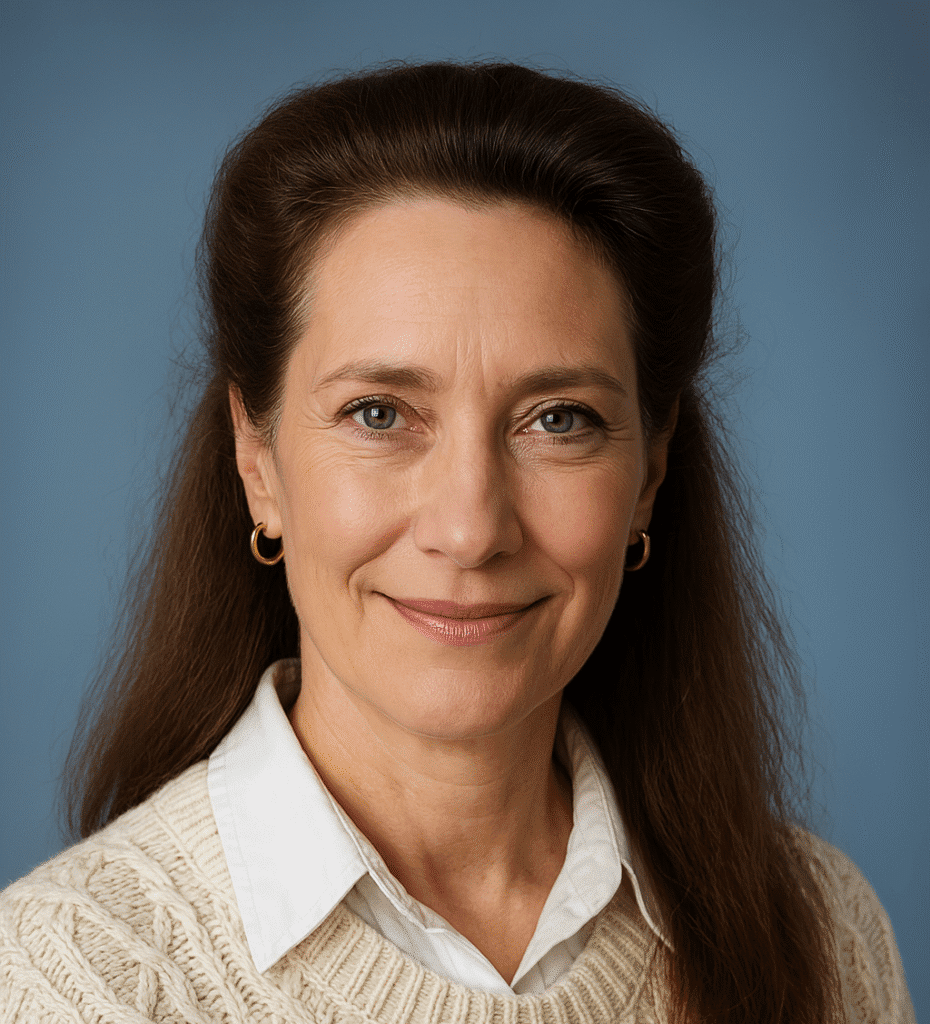
Author Bio: Dr Margaretha Montagu – described as a “game changer”, “gifted healer”, “guiding light” and “life-enriching author” – is an experienced medical doctor, a certified NLP practitioner, a medical hypnotherapist, an equine-assisted psychotherapist (EAGALAcertified) and a transformational retreat leader who guides her clients through life transitions – virtually, or with the assistance of her Friesian and Falabella horses, at their home in the southwest of France.