
Trade your to-do list for a stack of books: The counterintuitive reason high achievers are choosing books over bootcamps
What This Is: A research-backed exploration of why deliberately stepping away to read, intently and without interruption, can create more meaningful life change than months of frantic productivity.
What This Isn’t: A prescription to abandon responsibility, a criticism of action-taking, or another “self-care” lecture. This isn’t about running away from your life; it’s about making your way toward clarity.
Read This If: You’ve been working hard on your “next chapter” but feel like you’re spinning your wheels. You’re exhausted from doing all the right things that somehow aren’t working. You suspect you need something fundamentally different, not just more of the same.
5 Key Takeaways
- Your brain needs the story – Stories rewire neural pathways in ways that strategic planning simply cannot.
- Reading creates psychological distance – The space between you and your problems allows for perspective that’s impossible when you’re in the thick of things.
- Immersive reading is a form of active rest – Unlike passive scrolling, reading engages your brain in restorative, meaning-making work.
- Retreat conditions matter – Five uninterrupted days do exponentially more than scattered reading moments over five months.
- Recalibration precedes transformation – Sometimes the bravest thing you can do is stop, read and relax, and pay attention to what emerges.
Introduction: The Productivity Paradox
You’ve been running for months, maybe years.
Not literally (though perhaps that too), but in every way that counts: running toward solutions, running through your to-do list, running from the discomfort of standing still. You’ve read the articles, hired the coach, implemented the morning routine, set the intentions. You’ve hustled like your life depended on it.
And yet, here you are. Still searching. Still stuck. Still wondering why all that motion hasn’t translated into momentum.
Here’s the truth nobody talks about: sometimes the very act of trying harder is what’s keeping you trapped. Your overworked, overstimulated brain has been running on crisis mode for so long that it’s forgotten how to access the deeper wisdom that actually creates breakthrough change.
This article isn’t about adding another strategy to your overwhelmed plate. It’s about why five days of doing something radically different, something that looks suspiciously like “nothing” to the outside world, can create the shift that five months of grinding couldn’t touch.
The Woman Who Stopped Running Long Enough to Remember
Sarah Blackwood’s Breaking Point
Sarah Blackwood sat in her rental car outside the small stone cottage in southwestern France, engine running, hands gripping the steering wheel so tightly her knuckles had gone white. Through the windscreen, she could see warm light glowing from the windows, could make out the silhouettes of other women settling into armchairs with books. The reading retreat she’d impulsively booked three weeks ago.
What am I even doing here?
The scent of lavender drifted through the car’s air vents, mixing uncomfortably with the stale coffee smell from her morning drive. Her phone buzzed for the forty-seventh time that day. Another email from her business partner. Another question that apparently only she could answer. Another reminder that taking five days away was irresponsible, indulgent, foolish.
She turned off the engine. The sudden silence felt like pressure in her ears.
Sarah had built a successful consulting practice over fifteen years, survived a devastating divorce two years ago, and spent the last eighteen months “rebuilding” with the kind of determined efficiency that had made her professional reputation. Therapy every Tuesday. Networking every Thursday. Dating apps on Sunday mornings. Exercise at 6am. Meditation at 6:15am (well, most days). Affirmations. Vision boards. Strategic plans for her strategic plans.
She was doing everything right. So why did she feel like she was drowning in stinking, shallow water?
The retreat host, Dr Margaretha Montagu, had sent a welcome email that morning: “Leave your laptop in the car. Silence your phone. Bring only yourself and an open mind.”
Sarah had laughed when she’d first read it. Books? She hadn’t read a proper novel in three years. Who had time for fiction when real life demanded so much strategic management?
But here she was, divorce papers finally settled, business stable but unfulfilling, dating life a series of perfectly pleasant dinners that led precisely nowhere. She’d done all the recommended healing work, all the practical next steps. She’d hustled her way through grief and come out the other side… to what, exactly?
The cottage door opened, and a woman with kind eyes and dark hair appeared, a mug of something steaming in her hand. She didn’t wave or call out, just stood there, present and unhurried, as if she had all the time in the world for Sarah to make up her mind.
Something in Sarah’s chest cracked open, just a little.
She grabbed her overnight bag, left her laptop where it was, and stepped out into the cool evening air. The gravel crunched under her feet – such a specific sound, like every step was announcing itself. She could smell woodsmoke now, and something baking. Bread, maybe.
“I don’t actually know why I’m here,” Sarah said when she reached the doorway, her voice smaller than she’d intended.
“Perfect,” Dr Montagu replied, that single word holding no judgment, no expectation. “The women who know exactly why they’ve come rarely find what they’re looking for. Come in. Grab a book. Sit anywhere. We’ll talk when you’re ready.”
The cottage interior was exactly what Sarah’s overworked nervous system had been craving without knowing it: soft lamplight, deep chairs, a fire crackling, and everywhere – everywhere – books. Stacked on tables, lining shelves, sitting in inviting piles on windowsills. Fiction, mostly. Stories.
Sarah chose a novel almost randomly – a woman on the cover, looking out to sea – and sank into a chair by the window. The leather was worn smooth, shaped by previous bodies, previous breakthroughs. She opened to the first page.
An hour later, she was crying. Not the controlled, therapeutic crying she’d done in her Tuesday sessions, but the messy, gulping kind that comes from somewhere deeper than strategy can reach. The novel’s protagonist had just made a decision that mirrored Sarah’s own life so perfectly that it felt like being seen by someone who shouldn’t have been able to see.
She wasn’t reading about the protagonist anymore. She was reading about herself, about truths she’d been too busy to notice, about questions she’d been too efficient to ask.
By day three, Sarah had stopped checking her phone entirely. By day four, she’d shared her story in a storytelling circle, with Margaretha’s gentle Friesian horses as witnesses, and heard her own voice say things she hadn’t known she needed to say. By day five, when she walked a portion of the Camino trail with the other women, she understood what had changed.
She hadn’t figured anything out. She hadn’t made lists or set goals or developed strategies.
She’d recalibrated.
Her nervous system, which had been running on emergency power for two years, had finally downshifted into a frequency where wisdom could actually be heard. The stories she’d read had given her brain permission to process her own story differently, to see patterns she’d been too close to notice, to access creativity that strategic planning had completely bypassed.
When Sarah drove away on the final morning, her laptop still untouched in the boot, she didn’t have a five-year plan. But she had something better: a bone-deep knowing of what her next chapter actually needed to be about. Not the chapter she thought she should write, but the one that was authentically hers.
The hustle hadn’t been wrong. It had been premature. She’d been trying to build before she’d done the essential work of remembering who she actually was beneath all the doing.
Why Reading Creates Change That Hustling Cannot
The Neuroscience of Narrative Recalibration
Here’s what’s happening in your brain when you read deeply, according to research from cognitive neuroscience: you’re not just processing information. You’re running complex neural simulations of other lives, other choices, other ways of being in the world.
When you read fiction, specifically, your brain doesn’t fully distinguish between lived experience and vividly imagined experience. The same neural networks light up. This is why a powerful novel can shift your perspective as profoundly as a real-life encounter – your brain has, in essence, lived that alternate reality.
But here’s the crucial part: this only happens when you read deeply, without interruption, for extended periods. The fragmented reading most of us do, snatched moments between meetings, a chapter before bed after a draining day – that doesn’t create the immersive neural state required for this kind of transformation.
Five days of uninterrupted reading does something that five months of sporadic reading cannot: it allows your default mode network, the part of your brain responsible for self-referential thinking and meaning-making, to fully engage without constant disruption.
This is particularly crucial for people navigating major life transitions. When you’re in the middle of divorce, career upheaval, loss, or illness, your brain is already overwhelmed with trying to process reality. Adding more action, more decisions, more strategies often just increases cognitive load without creating clarity.
Reading, paradoxically, creates space. It gives your conscious mind something to focus on (the story) while your unconscious mind does the essential work of integrating your experience, processing emotions, and accessing wisdom that strategic planning bypasses entirely.
The Ripple Effect: How Individual Recalibration Transforms Communities
When you change at this fundamental level, it doesn’t stay contained. It can’t.
The person who returns from a reading retreat isn’t just calmer or more focused (though they often are). They’re operating from a different set of priorities, making decisions based on deeper wisdom, responding to life rather than reacting to it.
This shifts every relationship they’re in. Their children suddenly have a parent who’s present rather than productive. Their colleagues encounter someone who asks better questions rather than just offering faster answers. Their community gains a member who contributes from authentic values rather than exhausted obligation.
One person’s recalibration becomes a permission slip for others. When your friends see you choosing depth over speed, meaning over metrics, wisdom over hustle – and thriving as a result – it challenges their own assumptions about what’s required to navigate difficult seasons well.
This is how culture changes: one recalibrated nervous system at a time, creating ripples that eventually become waves.
Five Critical Mistakes People Make When Trying to Transform Their Lives
1. Confusing Motion with Progress
The mistake: Believing that constant activity equals healing, growth, or advancement. Filling every moment with courses, coaching, networking, and “working on yourself” because standing still feels like falling behind.
Why it fails: Your nervous system needs integration time. Without it, you’re just collecting information and experiences without actually digesting them into wisdom. Like eating constantly without ever allowing your body to metabolise the food.
What to do instead: Build in protected time for “niksen”. Not “productive rest” or “strategic reflection” – actual, unscheduled space where something other than your agenda can emerge.
2. Treating Insight Like Implementation
The mistake: Assuming that understanding your problem intellectually is the same as resolving it. Reading every self-help book but never giving yourself the conditions to embody the insights.
Why it fails: Transformation requires both hemispheres of your brain. The left brain can understand concepts, but the right brain needs narrative, metaphor, and space to integrate those concepts into new ways of being.
What to do instead: Balance analytical learning with immersive experiences that engage your whole self – storytelling, nature, creative expression, deep reading.
3. Seeking Solutions Before Allowing Questions
The mistake: Rushing to fix, solve, or strategise before you’ve fully understood what actually needs attention. Treating every life transition as a problem to solve rather than a threshold to cross thoughtfully.
Why it fails: Premature solutions often address surface symptoms while leaving root causes untouched. You end up with a new job that recreates the same patterns, a new relationship that mirrors the old dynamics, a relocated life that carries the same unresolved issues.
What to do instead: Spend time on the question. Its OK not to know. Allow confusion without immediately trying to eliminate it. This is where genuine insight lives.
4. Underestimating the Power of the Environment
The mistake: Trying to create profound change while remaining in the exact environment that shaped your current state. Expecting different results from the same context, same routines, same stimulus patterns.
Why it fails: Your environment is constantly cueing habitual responses. It’s nearly impossible to access new ways of thinking, feeling, and being when every sight, sound, and smell is triggering well-worn neural pathways.
What to do instead: Create deliberate environmental disruption. This is why retreats work – new place, new rhythms, new inputs. Your brain literally cannot fall into its usual patterns.
5. Isolating When You Need Witnessed Transformation
The mistake: Believing transformation is a solo journey. Trying to process major life changes entirely alone or only with professionals who hold therapeutic space but aren’t walking alongside you.
Why it fails: Humans are relational beings. We discover who we’re becoming partly through being seen by others. Sharing your story, hearing others’ stories, witnessing and being witnessed – this is how integration happens.
What to do instead: Seek experiences that combine solitude with community. Reading retreats, walking pilgrimages, creative workshops – spaces where you can do your internal work while being held by a container of others doing theirs.
Intention Setting Exercise: The Recalibration Ritual
Find a quiet moment. Take three deep breaths. Then write your answers to these prompts:
1. What am I running from by staying so busy?
(Write without censoring. Let the truth surface.)
2. If my life were a novel, what chapter am I actually in?
(Not the chapter you wish you were in – the honest one.)
3. What question am I avoiding by seeking so many answers?
(There’s usually one question underneath all the others.)
4. What does my wisest self know that my busiest self keeps ignoring?
(Listen. You already know.)
5. What would recalibration, not hustle, look like for me right now?
(Be specific. What would actually create the space for something to shift?)
Fold this paper. Keep it somewhere you’ll see it. Let these questions work on you, rather than you working on them.
Further Reading: Books That Understand Recalibration
1. “The Midnight Library” by Matt Haig
Why this book: A profound exploration of parallel lives and the choices that define us. Perfect for anyone standing at a crossroads, wondering about the paths not taken. It gently reminds us that the life we’re living might be exactly the one we need – once we shift perspective.
2. “Untamed” by Glennon Doyle
Why this book: For anyone who’s spent years performing a version of themselves that no longer fits. Doyle’s memoir is both a permission slip and a roadmap for trusting your own knowing over everyone else’s expectations.
3. “The Artist’s Way” by Julia Cameron
Why this book: Not just for artists. This is about recovering creative thinking after it’s been beaten out of you by productivity culture. The morning pages practice alone can create the kind of space where recalibration happens naturally.
4. “Transitions: Making Sense of Life’s Changes” by William Bridges
Why this book: Bridges understands that transitions aren’t about the external change (new job, divorce, relocation) but about the internal process of letting go, the neutral zone, and new beginnings. Essential reading for anyone in the messy middle.
5. My book “Embracing Change – in 10 Minutes a Day” offers practical, bite-sized practices for anyone navigating life transitions who needs daily support without overwhelm. It’s designed for exactly this moment you’re in. Available here
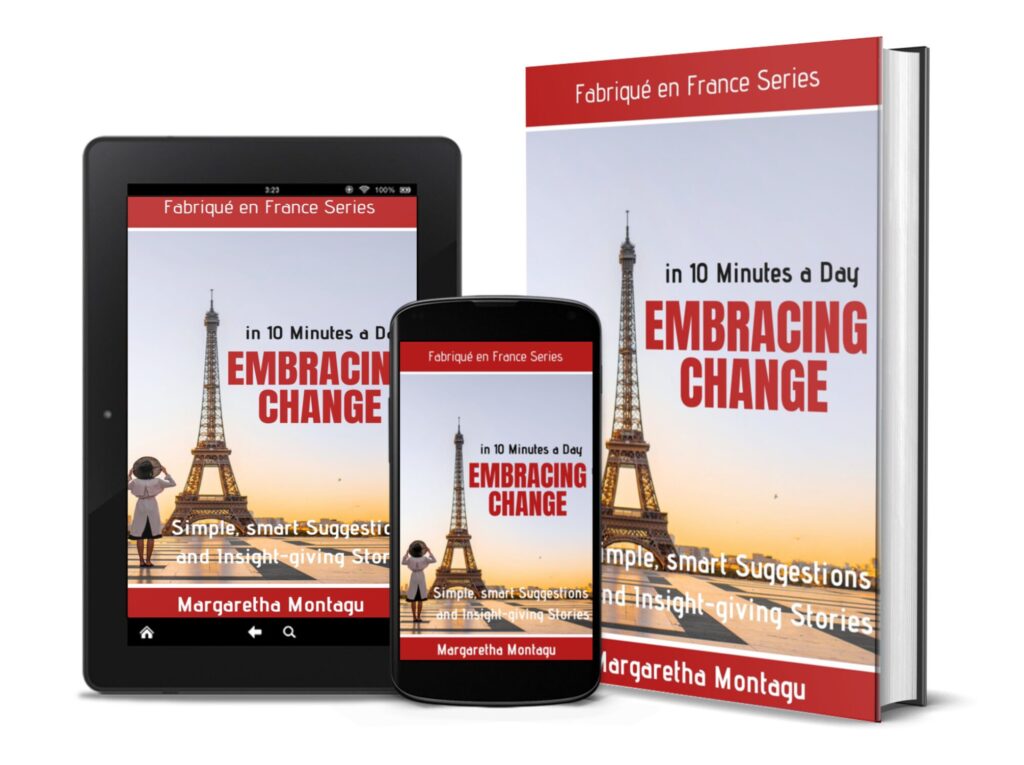
If you are currently facing a major life transition or any other dramatic change in your circumstances, and you have no idea how you are going to cope, the good news is that the strategy presented in this book can help you, step by step, to improve your ability to handle the stress caused by change, even if you feel entirely powerless at the moment.
Frequently Asked Questions
Isn’t a reading retreat just escapism disguised as personal development?
No, and here’s why the distinction matters: escapism is about avoiding reality, numbing discomfort, or distracting yourself from what needs attention. A reading retreat is about creating the conditions where you can finally face reality without the constant static of daily demands interfering. You’re not escaping your life; you’re gaining the perspective to see it clearly. The proof is in what happens after – people return with greater capacity to engage with their actual circumstances, not less.
How can reading fiction possibly help with real-world problems?
Fiction is how humans have processed complex life situations for millennia. When you read about characters navigating divorce, loss, career crises, or identity shifts, your brain practices those scenarios in a low-stakes environment. You explore multiple solutions, witness consequences, and access emotional wisdom that analytical thinking bypasses. Research shows that literary fiction specifically increases empathy, perspective-taking, and psychological complexity – exactly the capacities needed to navigate your own challenges with greater wisdom.
Five days seems excessive. Can’t I get the same benefit from a weekend?
The honest answer is no, and here’s why: Days 1-2 are typically spent just downshifting from your normal stress response. Day 3 is when you actually begin to drop into the deeper state where insight can emerge. Days 4-5 are where integration happens. A weekend retreat gets you to the doorway but doesn’t give you enough time to actually walk through it. Think of it like deep sleep cycles – you can’t just skip to REM and expect rest. You need the full progression.
What if I don’t enjoy reading or haven’t read a book in years?
This is more common than you think, and it’s usually because reading has become another thing on your productivity list rather than a genuine source of pleasure and insight. Reading retreats reintroduce reading as it was meant to be experienced – immersive, unhurried, chosen freely. The retreat format, with others reading nearby, creates a collective energy that often reignites a dormant love of books. And if reading truly isn’t your medium, the principles still apply: you need extended, uninterrupted time in an altered environment with input that engages your whole self differently.
How do I justify taking five days away when I have responsibilities?
By recognising that returning as a recalibrated version of yourself serves everyone far better than continuing to show up depleted, reactive, and running on emergency power. The people and responsibilities in your life don’t need more of your exhausted hustle; they need you operating from clarity, wisdom, and genuine presence. Five days away can create months of better functioning. The real question isn’t whether you can afford to go – it’s whether you can afford not to. As Sarah discovered, sometimes the most responsible thing you can do is stop trying so hard and give yourself space to remember what actually matters.
Conclusion: The Courage to Recalibrate
There’s a particular kind of courage required to stop doing and simply be. In a culture that glorifies hustle and measures worth by productivity, choosing five days of reading feels almost transgressive.
But here’s what I’ve witnessed over two decades of hosting transformational retreats: the people who have the guts to step away, to read deeply, to walk slowly, to share their stories – these are the people who create the most profound and lasting change in their lives.
Not because they tried harder. Because they finally stopped trying in the old ways that weren’t working.
As author Rebecca Solnit writes: “Leave the door open for the unknown, the door into the dark. That’s where the most important things come from, where you yourself came from, and where you will go.”
Your Invitation to Recalibrate
Imagine five days where your only job is to read, walk, recalibrate, and let something shift in the quiet spaces between. My Booklovers Binge Reading and Camino de Santiago Hiking Retreat in southwestern France offers exactly this: a chance to step completely away from the demands of daily life into a container designed for recalibration.









You’ll spend mornings with books that speak to your soul, afternoons walking portions of the ancient Camino trail. This isn’t about fixing yourself (you’re not broken) or finding all the answers (some questions are meant to be lived). It’s about creating the conditions where wisdom can finally surface, where your nervous system can downshift from crisis mode, and where your next chapter can emerge from genuine knowing rather than exhausted hustle. If you’re tired of doing all the right things that somehow aren’t creating the change you need, this retreat might be exactly the recalibration your soul is asking for. Learn more and book here
When was the last time you gave yourself permission to stop, truly stop, and let something shift in the silence? What might be waiting to emerge if you did?

10 Powerful Life Lessons Learned While Walking the Camino de Santiago – a free guide filled with 10 not just “quaint anecdotes” or Instagram-worthy moments (though there are plenty of those) but real transformations from real people who walked the same insight-giving trail you might want to walk one day – Subscribe to my monthly newsletter to Download the Guide

“I am an experienced medical doctor – MBChB, MRCGP, NLP master pract cert, Transformational Life Coach (dip.) Life Story Coach (cert.) Stress Counselling (cert.) Med Hypnotherapy (dip.) and EAGALA (cert.) I may have an impressive number of letters after my name, and more than three decades of professional experience, but what qualifies me to excel at what I do is my intuitive understanding of my clients’ difficulties and my extensive personal experience of managing major life changes using strategies I developed over many years.” Dr M Montagu