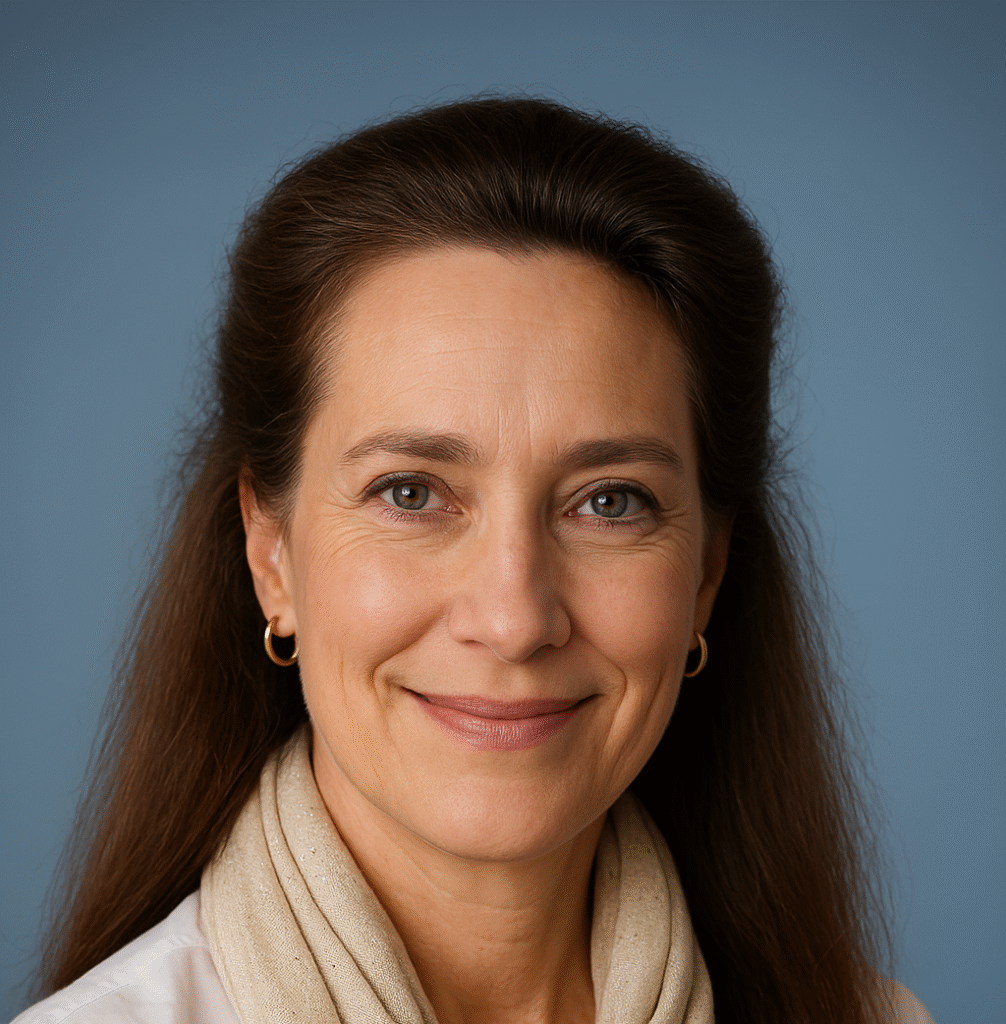
As you may know, I host Camino de Santiago walking and writing retreats, and I’m also a proud member of the Wordweavers writing group here in the southwest of France. At one of our gatherings—held, with admirable dramatic flair, on Friday the 13th of February 2026—I shared the story below.
This is the story of a doctor who spent years teaching other people how to breathe… and only much later discovered that she herself had forgotten how. Dr. Anna Vermeer was a competent, respected, thoroughly overworked physician who could diagnose stress in her patients within minutes and prescribe sensible solutions with great confidence. Every day people arrived in her office with tight chests, racing thoughts, insomnia, and the quiet sense that life had become a little too much.
Anna listened carefully, reassured them, and encouraged them to slow down.
Part One
If coping with stress had a frequent-flyer program, Dr. Anna Vermeer would have platinum status.
Not that anyone would have guessed.
To her patients, she was the calm one. The composed one. The doctor who spoke in reassuring tones and had a small bowl of smooth river stones on her desk for people to hold when life felt too jagged.
“Your body is asking for rest,” she would say gently. “You need to slow down.”
“Have you tried breathing exercises?” She said these things often. With conviction. With kindness.
And, like many excellent doctors, she never took her own advice.
Her days began before the sun had quite made up its mind to rise. The alarm would sound in the dark at 5:30 a.m., followed immediately by the glow of a phone screen lighting the bedroom like a small interrogation lamp.
Emails. Lab results. Messages from the clinic.
Anna would scroll through them while half-sitting in bed, her hair doing that messy-nest thing hair does after sleep. By the time her feet touched the floor, she had already mentally treated three patients, worried about two others, and scheduled a conversation she didn’t want to have with the clinic manager.
Coffee followed. Strong enough to wake the ancestors.
She drank it standing at the kitchen counter while the house slowly filled with the small morning sounds of life: the kettle ticking as it cooled, a blackbird rehearsing its spring repertoire just outside her kitchen window, the quiet thud of the newspaper landing somewhere near the front gate.
Anna noticed none of it. Her mind was already in the consulting room.
By 7:30am, she would be at the clinic, moving briskly through corridors that smelled faintly of disinfectant, printer ink, and the lingering ghost of yesterday’s reheated soup.
The waiting room would already be filling up. People arrived carrying invisible loads: anxiety, insomnia, burnout, tight chests, pounding hearts, headaches that refused to leave, and the peculiar exhaustion that comes from trying to hold everything together all the time.
Anna saw them all.
The executive who slept three hours a night and called it “being productive.”
The young mother whose shoulders had not relaxed since the baby was born.
The retired teacher who watched the news too often and now felt permanently on edge.
Stress had become the unofficial epidemic of the 21st century.
Fortunately, Anna was very good at treating it.
She had a way of listening that made people feel as though their worries were not ridiculous after all. She spoke slowly, asked thoughtful questions, and occasionally slid one of the smooth river stones across the desk.
“Hold this for a moment,” she would say. “Just notice your breathing.”
The stones were cool and comforting in the hand. Patients often left the office looking slightly lighter, as if someone had quietly loosened a strap on an overstuffed backpack.
Anna liked that feeling. The moment when someone realised their life did not have to feel quite so overwhelming.
What she did not notice was that she herself had been carrying a rather large backpack for years.
Her version of stress wore respectable clothing. It looked like responsibility. Dedication. Professionalism. It looked like arriving early and leaving late.
It looked like finishing charts long after the clinic lights had dimmed and the cleaning staff had begun their slow migration through the corridors with squeaking carts and lemon-scented spray.
It looked like answering emails at 11:47 p.m. because patients deserved prompt replies.
It looked like caring. And Anna did care. Deeply.
But caring, when mixed with an unlimited workload and the vague belief that one must hold everything together personally, has a curious side effect.
It becomes heavy.
Over time, small signs began appearing—quiet little flags her body waved in polite protest. She woke at three in the morning sometimes, her mind already scrolling through tomorrow’s patient list. Occasionally, a colleague would peer at her over their glasses and say things like, “You look tired.”
Anna always smiled. “I’m fine,” she would reply. And she believed it. After all, she was the doctor who helped everyone else manage their stress.
Surely that counted for something.
By mid-morning, the clinic would be in full motion. Phones ringing. Printers humming. Doors opening and closing. The murmur of conversations drifting down the hallway like distant radio signals.
Anna moved through it all efficiently, white coat flapping slightly behind her like a small professional cape. Patient after patient. Listen. Diagnose. Reassure.
Repeat.
Around noon, she would realise she had forgotten lunch again. Not a problem. There was always at least one more cup of coffee stewing in the percolator.
Once in a while, when she paused between appointments, she would notice the faint tightness in her chest.
Nothing alarming.
Just a slight sense that her breathing had become shallow, like someone gently pressing a hand against her ribs. She would roll her shoulders, take a quick sip of coffee, and move on to the next patient.
The human body is surprisingly patient. It sends polite messages first. Whispers.Mere suggestions: Perhaps you might like to slow down a little.
Anna did not pay attention.
Or rather, she heard them the way one hears distant traffic through closed windows—vaguely, but not urgently enough to investigate.
The strange thing was that she regularly gave her patients the exact advice she herself needed.
“Your body is trying to tell you something,” she would say. “You need to give yourself permission to rest.”
“Try taking a few slow breaths.”
Patients nodded thoughtfully when she said these things. Anna nodded too. Then she hurried to the next appointment.
By the time the afternoon sun slanted through the clinic windows, painting warm rectangles across the floor, Anna had seen sixteen patients, signed three prescription renewals, and responded to six messages marked “urgent.”
She was moving a little faster now. Just a few more consultations to go. Just one more hour. Just one more patient.
And then, late in the afternoon, something unexpected happened.
Not dramatic. Not catastrophic. Just a quiet moment in a consultation room… with a patient who could not catch their breath.
And a doctor who was about to discover, somewhat to her surprise, that neither could she.
Every year, people arrive here carrying the invisible weight of busy lives — constant pressure, endless responsibilities, and minds that have forgotten how to switch off. They come a little tired, a little out of breath, and often not quite sure what they need, only that something in their life feels too fast, too full, too loud.
And then, quietly, something begins to change. Somewhere between a gentle Camino de Santiago walk, the soft chorus of birds greeting the sunrise, and a phone that remains firmly switched off for a few hours, the mind starts to settle. Breathing becomes deeper. Thoughts slow down. What felt urgent suddenly feels less so, and space begins to appear again.
If you feel that same quiet tug — the sense that it might be time to slow down and breathe again — you may enjoy spending a few days with us here in the gentle countryside of southwest France. You can come to one of my Camino de Santiago Walking Retreats, designed to offer the kind of calm, spacious days where small but important shifts have a way of happening naturally.
I put the essence of who I am, and everything I have experienced that makes me who I am, with great enthusiasm, into my retreats, courses and books. – Dr Margaretha Montagu (MBChB, MRCGP, NLP master pract (cert,) Transformational Life Coach (dip,) Life Story Coach (cert) Counselling (cert,) Med Hypnotherapy (dip) and EAGALA (cert)