
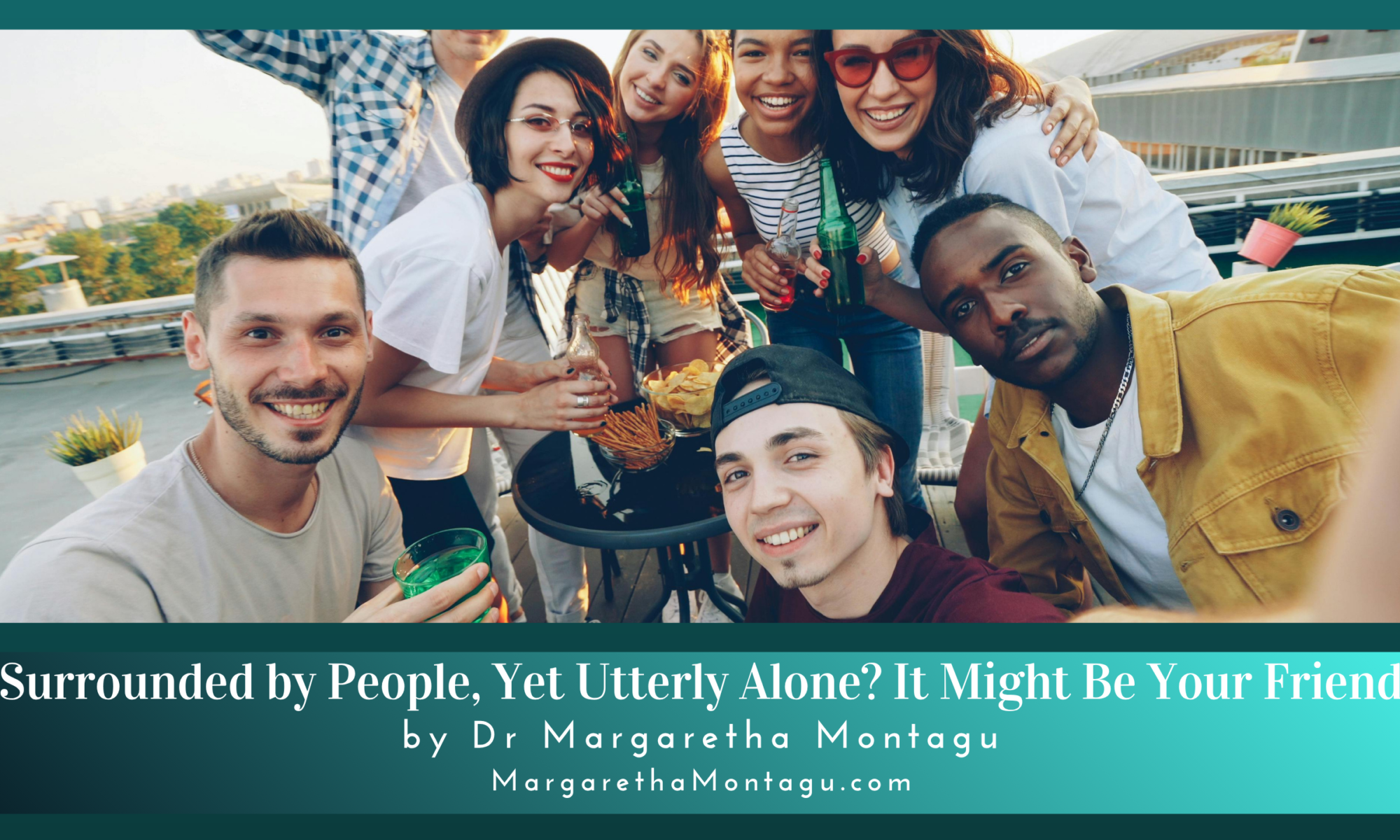
What stress research tells us about toxic connections, emotional depletion, and the life-changing power of real friendship
What this is: A frank, warm, occasionally eyebrow-raising look at why you might feel profoundly lonely even when surrounded by people who claim to care about you — and what to do about it.
What this isn’t: A guilt trip about cutting people off, a checklist of “red flags,” or yet another listicle about “narcissists” that sends you spiralling down a rabbit hole at midnight.
Read this if: You’re going through a major life change (divorce, illness, job loss, bereavement, a world that feels increasingly unhinged) and have a sneaking suspicion that some of your friendships are part of the problem rather than part of the solution.
Five Key Takeaways
- Loneliness within relationships is real and measurable — and it is often more damaging to your health than being genuinely alone.
- Major life transitions act as a filter, revealing which friendships are built on shared history versus genuine care. The results are sometimes jaw-dropping.
- Tolerating energy-draining friendships during a crisis is not loyalty — it is a form of self-neglect that compounds your stress exponentially.
- The antidote to toxic connection is not isolation — it is intentional, quality connection, ideally in a context that strips away the noise.
- You don’t need dozens of friends. Research consistently shows that two or three deeply authentic connections are profoundly more protective than an entire address book of acquaintances.
Introduction: The Loneliest Room You’ve Ever Been In
The science of toxic friendships, the art of letting go, and the surprisingly peaceful path back to yourself
You’re sitting in a restaurant surrounded by people who’ve known you for years. Someone is telling a funny story. Glasses are clinking. And somewhere beneath the noise, a quiet thought surfaces: Nobody here actually sees me.
You push it down with a sip of wine. But it comes back.
If that moment feels familiar, you are not having a breakdown. You are having a reckoning.
Major life changes — divorce, serious illness, bereavement, career collapse, or simply the cumulative weight of living through what the world has become — do something remarkable to our social landscapes. They act like a tide going out, and quite suddenly, you can see exactly what’s been lurking beneath the surface all along.
Some friendships, it turns out, were only ever suited to the sunnier version of you. The one who didn’t need too much. The one who made everyone feel comfortable. The one who kept it together.
In this article, you’ll gain clarity on why certain relationships feel so depleting during life’s hardest chapters, how to identify the friendships that are quietly making things worse, and what it looks like to begin building the kind of connection that genuinely sustains you. Including, perhaps, a rather unexpected invitation to walk an ancient pilgrimage path in south-west France.
Why Your Social Circle Might Be Making Your Life Crisis Worse Clio’s Story
The invitation had been sitting in Clio’s inbox for three weeks. She’d opened it twice, closed it both times, and gone back to managing her current implosion.
Fifty-seven years old. Recently separated. Her mother had died eighteen months ago, and her cancer diagnosis, caught early, thank God, had arrived six months after that. She was, by any objective measure, going through a lot.
Her friends had rallied, initially. There had been casseroles. WhatsApp messages. One particularly memorable afternoon when her friend Debbie had driven forty minutes to sit on Clio’s sofa, spend forty-five minutes talking about Debbie’s marital problems, and driven home again.
The casseroles stopped after about six weeks. The messages became more sporadic. And Clio, a woman who had spent a lifetime being the competent one, the one people rang in a crisis, found herself completely unable to ask for help and surrounded by people who seemed quietly relieved she wasn’t asking.
She was exhausted in a way she couldn’t explain to her GP. Not tired, exactly. More like hollowed out.
The email she kept opening was from a retreat called The Book Lovers’ Binge Reading and Camino de Santiago Walking Retreat in south-west France. A friend-of-a-friend had sent it. “You like books,” the friend had said, with the devastating understatement of someone who had never seen Clio’s ever-increasing reading stacks. “And you like walking. This seems like you.”
Clio had not walked the Camino. She had never been on a retreat. She had very strong opinions about groups of strangers talking about themselves. She booked it anyway, at eleven-fifteen on a Tuesday night, slightly surprised by herself.
She arrived in France in late September, when the light slants gold and the air carries something almost medicinal in it, the smell of pine and warm earth and something she couldn’t name, old and clean at once. Her fellow guests were a collection of women she might never have encountered in her ordinary life: a retired architect from Edinburgh, a recently widowed teacher from Dublin, a management consultant from Berlin who had left her job without another one lined up and was either having a breakdown or a breakthrough, possibly both at the same time.
Nobody performed wellness. Nobody gave unsolicited advice. Nobody said, “At least you caught the cancer early,” which was, Clio had discovered, the sentence she now hated most in the English language.
On the second morning, they walked. Not hurriedly, not competitively, not with podcasts plugged into their ears. The path curved through ancient oak forest, dappled and quiet, and Clio became aware, somewhere around the second kilometre, that her shoulders had dropped approximately three inches from where they’d been living for the past eighteen months.
That evening, they sat with books and wine and the sound of crickets, and Clio found herself in a conversation with the management consultant from Berlin, Petra, about what it meant to have spent forty years being useful to everyone except yourself. It lasted three hours. Neither of them noticed.
The hollowed-out feeling, Clio realised, wasn’t grief exactly. It wasn’t the cancer, or the separation, or even her mother. It was the particular exhaustion of performing okayness for people who needed her to be okay, people whose own comfort depended on her composure.
She had confused company with connection. She had confused loyalty with love.
On the last morning, walking alone along a ridge above the valley, the autumn light turning the distant hills to amber, Clio started to cry. Not the gasping, apologetic crying she’d been doing at home, alert for the sound of her daughter on the stairs. Just quiet, unhurried tears, the kind that mean something is releasing rather than breaking.
She thought about Debbie. About the WhatsApp threads she’d been maintaining with the cheerful energy of a woman not in crisis. About the dinner parties she’d attended because refusing felt like admitting things weren’t fine.
She thought: I am very, very tired of my social life.
And then, almost immediately after: I am not tired of this, though.
Why Does This Happen? The Deeper Picture
Why Do Major Life Transitions Expose Toxic Friendships?
There is a reason the research on social connection becomes particularly urgent during periods of crisis. When life is stable, we can absorb the cost of friendships that are mildly draining, reciprocally imbalanced, or simply built on proximity and habit rather than genuine resonance. We have the reserves.
During a major life transition, we don’t.
Stress, whether from divorce, illness, bereavement, job loss, or the cumulative anxiety of living in a world that seems to be coming unmoored, depletes what psychologists call our “allostatic load capacity,” our ability to adapt to and absorb further demands. And demanding friendships — the ones that require emotional management, careful performance, constant reassurance, or the suppression of our actual experience — place a genuine physiological burden on our systems.
Dr. Julianne Holt-Lunstad’s landmark research at Brigham Young University established that the quality of social relationships matters significantly more than the quantity. High-quality social connection is associated with a 50% increase in survival odds. But here is the part that often gets lost in translation: low-quality, stressful social relationships can be actively harmful, more damaging, in some studies, than being genuinely alone.
This matters. It means that if you are surrounded by people who consistently leave you feeling worse about yourself, more exhausted, more invisible, more managed, this is not a minor inconvenience. It is a measurable health concern.
What Does “Toxic” Actually Mean in a Friendship?
The word “toxic” has been somewhat overused to the point of losing precision. For our purposes, a toxic friendship during a life transition is not necessarily a friendship with a bad person. It is a friendship that consistently:
- Costs more than it gives, particularly when your resources are already depleted
- Requires you to perform a version of yourself that isn’t truthful to what you’re experiencing
- Centres the other person’s comfort over your actual need
- Responds to your vulnerability with competition, advice, minimisation, or withdrawal
- Leaves you feeling lonelier after the conversation than you were before
That last one is the most reliable indicator. If you hang up the phone or leave the coffee feeling more alone than when you arrived, pay attention.
How Can This Realisation Ripple Beyond One Person?
Here is what is worth sitting with: when you begin to make more intentional choices about your social connections, the effects rarely stay limited to you alone.
The people around you, particularly your children, your colleagues, and your wider community, absorb the quality of your presence. A chronically depleted, emotionally performing version of you is giving everyone a fraction of what you’re capable of. When you stop pouring your limited energy into connections that drain rather than restore, something becomes available, not just for you, but for everyone whose life yours touches.
There is also a cultural dimension worth naming. We are living through a period of collective anxiety — about politics, climate, technology, the future in general — that is straining even healthy relationships. When individuals do the work of becoming clearer about what genuine connection looks and feels like, they bring that clarity into families, workplaces, and communities. This is not small work. It is, in fact, exactly the kind of quietly radical act the world currently needs more of.
Five Mistakes to Avoid When Navigating Toxic Friendships During a Life Crisis
Mistake 1: Assuming Loyalty Obligates You to Continue
Long-term friendships carry history, and history is precious. But history is not the same as health. You can honour someone’s place in your past without continuing to invest in a dynamic that is actively harming your present. Loyalty is not a life sentence.
Mistake 2: Waiting for the Other Person to Change
This is the most common and most expensive mistake. You cannot restructure someone else’s capacity for empathy. What you can do is stop extending your energy toward a deficit account and redirect it somewhere that returns something.
Mistake 3: Cutting Everyone Off and Calling It Boundaries
Wholesale social withdrawal, while temporarily appealing in its simplicity, tends to deepen the problem rather than solve it. The antidote to depleting connection is not isolation. It is better connection. These are not the same prescription.
Mistake 4: Performing Gratitude for Friendships That Cost You
There is an exhausting cultural pressure, particularly for women, to express gratitude for any attention received during a hard time, regardless of whether that attention was actually helpful. You are allowed to notice the difference between a friend who showed up and a friend who performed showing up. These are different things.
Mistake 5: Trying to Figure All of This Out in Your Usual Environment
Context shapes cognition. The same relationships that feel intractable at home often become remarkably clear when you have genuine physical and mental space, particularly in natural settings that quiet the nervous system and make room for honest reflection. There’s a reason the Camino has been a site of personal reckoning for eight hundred years. Walking does something to thinking that sitting simply cannot replicate.
A Short Intention-Setting Exercise: The Before-and-After Test
Find a quiet moment and a piece of paper. Think of three people you’ve spent time with in the last fortnight.
For each person, complete these two sentences:
Before I saw them, I felt: (note your physical and emotional state)
After I saw them, I felt: (be honest, not kind)
Now look at what you’ve written without judgment. You are not looking for evidence to prosecute anyone. You are looking for honest data about where your energy goes and what it returns. That information belongs to you.
Further Reading: Five Books on Finding Your People
1. Lost Connections by Johann Hari Hari’s investigation into the social roots of depression and anxiety is essential reading for anyone who suspects that their environment, including their social environment, is contributing to how they feel. He is rigorous, warm, and occasionally enraging in the best possible way.
2. Necessary Endings by Dr. Henry Cloud A compassionate, practically useful book about when to let go, in friendships, relationships, and situations, and why doing so is an act of wisdom rather than failure. Less brutal than the title suggests.
3. Untamed by Glennon Doyle Particularly relevant for women who have spent decades being the person other people needed them to be. Doyle writes about the process of stopping that performance with the specificity and wit of someone who has lived it at some cost.
4. The Art of Belonging by Hugh Mackay A thoughtful Australian social psychologist examines what genuine community and connection require of us, not just what they give us. A useful corrective to the transactional way we often think about friendship.
5. Friendship in the Age of Loneliness by Adam Smiley Poswolsky Practically focused and surprisingly moving, this book offers concrete frameworks for building intentional adult friendships without it feeling like networking for your soul.
P.S. If you’d like something shorter, more personal, and designed to create genuine change in small daily increments, Dr. Margaretha Montagu’s book Embracing Change — in 10 Minutes a Day is precisely what it says on the tin: a practical, warm, and genuinely useful companion for navigating life’s harder chapters without losing yourself in the process.

If you are currently facing a major life transition or any other dramatic change in your circumstances, and you have no idea how you are going to cope, the good news is that the strategy presented in this book can help you, step by step, to improve your ability to handle the stress caused by change, even if you feel entirely powerless at the moment.
Five FAQs: What People Are Actually Asking
FAQ 1: “How do I know if a friendship is toxic or if I’m just going through a hard time and being unfair?”
Both can be true simultaneously. A useful distinction: are you consistently depleted by this person’s presence regardless of your overall state, or only when you’re already running low? The former is worth examining carefully. The latter may simply mean you need to protect your limited resources more fiercely during this season, with everyone, including people you love.
FAQ 2: “Do I have to end friendships, or can I just change them?”
You can absolutely change them — by being more honest about what you need, by spending less time in certain dynamics without formal announcement, and by simply investing less energy where it isn’t returned. Formal endings are rarer than popular culture suggests. Most friendships quietly recalibrate when the energy shifts.
FAQ 3: “I feel guilty for even thinking this way. Is something wrong with me?”
No. The guilt is evidence of your capacity for loyalty and care, which are good qualities. But loyalty applied indiscriminately, particularly during a crisis that is genuinely depleting you, is not noble. It’s unsustainable.
FAQ 4: “Won’t I end up more isolated if I pull back from friendships?”
Only if you pull back without moving toward anything. The movement matters. Pulling back from connections that drain and actively seeking connections that nourish creates a net gain, not a loss. The transition period can feel lonely, yes. It is worth tolerating.
FAQ 5: “I’m already overwhelmed. Is a retreat really the right time for more self-reflection?”
Counterintuitively, yes. Trying to do this work within your normal environment, surrounded by the same triggers, social obligations, and noise, is like trying to read in a room with the television on. A genuinely well-designed retreat doesn’t pile on more reflection. It creates the conditions in which reflection becomes possible rather than exhausting.
Conclusion
There is a particular kind of loneliness that belongs exclusively to people who haven’t been alone. It arrives in the middle of dinner parties and WhatsApp threads and relationships that have been on the calendar for years. It is the loneliness of being unseen, in plain sight.
Major life transitions tend to make this visible, brutally and usefully, because they strip away the easier explanations. When you can no longer maintain the performance, you discover with startling clarity who in your life was actually watching you, and who was watching their own reflection in you.
This is not a tragedy. It is, if you’re willing to let it be, a beginning.
A Gentle Invitation
If some part of this article has felt uncomfortably accurate, you might be ready for something different.
Dr. Margaretha Montagu’s 5-Day Book Lovers’ Binge Reading and Camino de Santiago Walking Retreats in south-west France are designed for intelligent, capable, quietly exhausted people who know something needs to shift but haven’t yet found the conditions in which that shift becomes possible.
Here, the days are structured around walking an ancient pilgrimage path through remarkable landscape, reading deeply, and talking honestly, in a small group of people who are there for the same reasons you are. There are no performance requirements. No wellness theatre. Just good books, extraordinary countryside, nourishing food, and the kind of company that reminds you what it felt like to be genuinely accompanied.
Ready for a Retreat? Take the Quiz

Do you dream of escaping your stressful life to raise a herd of goats or grow sunflowers in the south of France? Then you may be ready for an Esprit Meraki retreat. Get access to this “very serious” quiz to help you figure out how urgent your need for a change of scenery is, when you subscribe to my monthly newsletter.
Here’s a question worth sitting with:
If you stripped away every friendship that requires you to perform rather than simply be — what, and who, would remain? And what might become possible in that cleared space?

Author Bio: Dr Margaretha Montagu – described as a “game changer”, “gifted healer”, “guiding light” and “life-enriching author” – is an experienced medical doctor, a certified NLP practitioner, a medical hypnotherapist, an equine-assisted psychotherapist (EAGALAcertified) and a transformational retreat leader who guides her clients through life transitions – virtually, or with the assistance of her Friesian and Falabella horses, at their home in the southwest of France.
References
- Holt-Lunstad, J., Smith, T. B., & Layton, J. B. (2010). Social relationships and mortality risk: A meta-analytic review. PLOS Medicine, 7(7), e1000316.
- Cacioppo, J. T., & Hawkley, L. C. (2009). Perceived social isolation and cognition. Trends in Cognitive Sciences, 13(10), 447–454.
- Umberson, D., & Montez, J. K. (2010). Social relationships and health: A flashpoint for health policy. Journal of Health and Social Behavior, 51(Suppl), S54–S66.
- Steptoe, A., Shankar, A., Demakakos, P., & Wardle, J. (2013). Social isolation, loneliness, and all-cause mortality in older men and women. Proceedings of the National Academy of Sciences, 110(15), 5797–5801.
- Hawkley, L. C., & Cacioppo, J. T. (2010). Loneliness matters: A theoretical and empirical review of consequences and mechanisms. Annals of Behavioral Medicine, 40(2), 218–227.