

Why Purpose matters more than ever when you are going through a Divorce/Breakup
What this is: A frank, research-informed look at why reconnecting with purpose isn’t just feel-good advice when you’re divorcing, it’s the difference between starting over and simply surviving. Expect practical strategies, not platitudes.
What this isn’t: Another “you’ll be fine” pep talk that glosses over the genuine grief and complexity of divorce. This won’t tell you to “just move on” or pretend your pain doesn’t matter.
Read this if: You’re past the acute crisis phase and sensing there’s something more important than just getting through the day, but you’re not sure what that “something” is or how to access it when your entire identity feels like it’s been put through a blender.
5 Key Takeaways
- Purpose acts as a psychological anchor when everything else feels unmoored, giving your brain a forward focus that literally changes your stress response.
- Your purpose doesn’t disappear with your marriage, it was always separate from your relationship status, but divorce can make it visible again for the first time in years.
- Avoiding the “purpose question” prolongs suffering, research shows that people who actively engage with meaning-making recover faster and more completely from major life transitions.
- Purpose isn’t a destination you find, it’s a daily practice of alignment between your values and your choices, especially when those choices feel impossibly small.
- The community impact of your purpose work extends far beyond you, your willingness to rebuild meaningfully gives others permission to do the same.
Introduction: When Everything Falls Apart, What Holds You Together?
There’s a particular kind of vertigo that comes with divorce. Not the dramatic, movie-scene kind where you throw wine glasses. The quieter version: sitting in your car in the supermarket car park, realising you’ve forgotten why you came, forgotten what you need, possibly forgotten who you are without the scaffolding of that relationship holding you upright.
This isn’t about closure. It’s not even about healing, not yet. It’s about the terrifying question that arrives somewhere between the solicitor’s office and your first solo Saturday night: Now what?
Here’s what I’ve learned from two decades of working with people in transition, from hosting transformational retreats on the Camino de Santiago, from writing eight books about navigating life’s ruptures, and frankly, from my own stumbles through unexpected change: the people who not only survive divorce but actually emerge more fully themselves have one thing in common. They found, or refound, their purpose. Not as a luxury. As a lifeline.
In this article, you’ll discover why purpose isn’t an indulgence when you’re in crisis, it’s your compass. You’ll learn practical ways to reconnect with what matters when everything feels like it’s shattering. And you’ll understand why this work, this uncomfortable, necessary work, doesn’t just rebuild your life, it can reshape the lives of everyone around you.
The Woman Who Lost Her Marriage and Found Her Mission
Sarah Elizabeth Thornton had been married for nineteen years when her husband told her, quite calmly over breakfast, that he’d fallen in love with someone from his running club. The scrambled eggs went cold on her plate. She remembers the sound of the clock ticking, the smell of coffee she suddenly couldn’t stomach, the weight of her wedding ring that seemed to have tripled in the span of a single sentence.
The months that followed were a blur of legal jargon, divided furniture, and well-meaning friends who kept saying she’d “bounce back.” Sarah, a former primary school deputy head who’d reduced her hours when the children were small and never quite ramped back up, felt like she was walking through fog. She went through the motions: signed papers, attended mediation, smiled absentmindedly when people asked how she was coping.
But inside? Inside she felt like someone had stolen not just her husband, but the entire map of her future. The retirement plans. The travel dreams. The quiet certainty of who she was: Michael’s wife. Ben and Lucy’s mum. That woman with the nice garden who volunteers at the summer fête.
Six months after the decree absolute, Sarah found herself at a storytelling circle during a retreat I was hosting in the foothills of the French Pyrenees. The evening air smelled of wild thyme and woodsmoke. Around her, women shared their own stories of transition, their voices catching on words like “after” and “alone.” When it was Sarah’s turn, she said something that made everyone go still.
“I don’t know why I’m here anymore.”
The silence that followed wasn’t awkward. It was recognition. That collective intake of breath that says: Oh. Yes. That.
Over the next forty-eight hours, Sarah walked segments of the Camino. She stood in the early morning mist, feeling the ache in her calves, watching the light change over ancient hills. She spent time with my Friesian horses, who have an uncanny ability to reflect back what we’re avoiding in ourselves. One mare, Toos, simply wouldn’t move forward until Sarah stopped trying to pull her along and instead stood still, hand on the horse’s warm neck, breathing.
“I was trying to drag myself forward,” Sarah told me later, tears streaming. “But I hadn’t even let myself stop. I hadn’t let myself feel how lost I was.”
That weekend, something shifted. Not magically. Not completely. But enough. Sarah began asking different questions. Not “How do I get back to who I was?” but “Who am I becoming?” Not “What did I lose?” but “What have I achieved?”
She remembered that before marriage, before children, before the comfortable patterns of coupled life, she’d loved working with children who struggled with reading. She’d had a gift for making words come alive for kids who thought books were boring. That gift hadn’t gone anywhere. It had just been buried under years of being everyone else’s support system.
Within a year, Sarah had retrained as a specialist literacy tutor. She now runs after-school programmes for children with dyslexia. Her kitchen table, once the site of those terrible breakfast conversations, is now covered with colourful phonics cards and success stories from grateful parents. She’s not “over” her divorce. She’ll tell you that some days still ache. But she knows why she’s here. And that makes all the difference.
Why Does Purpose Matter So Much During Divorce?
Can purpose really change your brain chemistry during a crisis?
Yes, and the science is compelling. When you’re going through a divorce, your brain is essentially in threat mode, cortisol levels elevated, prefrontal cortex compromised. You’re operating from your limbic system, that ancient part of your brain designed to keep you alive, not help you thrive.
Purpose acts as a circuit breaker. Research from neuroscientist Viktor Frankl’s work, later confirmed by modern neuroscience, shows that when we engage with meaningful activity, our brain shifts from threat response to challenge response. Instead of “I’m being attacked,” it’s “I’m working toward something that matters.” That shift isn’t semantic. It’s physiological. Your body literally produces different chemicals.
People who report a strong sense of purpose show lower levels of inflammatory markers, better sleep quality, and faster recovery from stressful events. During divorce, when your entire nervous system is on high alert, purpose becomes the signal to your brain that you’re not just surviving, you’re moving toward something.
What happens when we ignore the purpose question?
Here’s the uncomfortable truth: avoiding the purpose question doesn’t make it go away. It makes everything harder. Without a sense of direction beyond “get through today,” you’re vulnerable to what psychologists call “meaning void”, a state where nothing feels particularly important, so nothing motivates action, so you drift, so the void deepens.
I’ve seen this pattern repeatedly in my work as a life transition coach and through my medical background managing stress-related conditions. People who postpone the purpose work often find themselves stuck in loops: serial relationships that replicate old patterns, work that pays the bills but hollows them out, busyness that masks the deeper question of why.
Divorce already strips away so much. If you don’t actively engage with meaning-making, you risk losing not just your marriage, but your momentum, your agency, your sense that your life is about something beyond simply coping with what happened to you.
How does purpose work differ from “finding yourself”?
Purpose isn’t a treasure hunt where you dig around in your psyche until you unearth some hidden True Self. It’s more like learning to hear a radio frequency that’s always been broadcasting, you just couldn’t pick it up over the noise of your old life.
The difference matters because “finding yourself” can become an excuse for endless introspection without action. Purpose, by contrast, is revealed through engagement. You don’t think your way to purpose. You do your way to it. You try things. You notice what creates energy versus what drains it. You pay attention to the moments when you forget to check your phone because you’re absorbed in something that matters.
During my twenty years hosting retreats where guests walk the Camino, I’ve watched this unfold hundreds of times. People arrive convinced they need to “figure out” who they are. What actually happens is simpler and more profound: they start walking, they start talking, they start being present to what emerges, and slowly, sometimes suddenly, they recognise themselves. Not a new self. Their actual self, which had just been buried under years of accommodating, performing, and surviving.
Can pursuing purpose make your community stronger?
This might be the most overlooked aspect of purpose work: its ripple effects. When you rebuild your life around what genuinely matters to you, you’re not just helping yourself. You’re modelling something essential for everyone watching.
Your children, if you have them, learn that endings can be beginnings. They see that adults can face hard things and come out purposeful, not broken. That’s a gift that will serve them their entire lives.
Your friends who are quietly unhappy in their own situations see that change is possible. They watch you choose courage over comfort, meaning over safety, and something in them starts asking: “What if I could do that too?”
Your community, whether that’s your workplace, your neighbourhood, or your book club, benefits from having someone who’s done the work. You become the person who understands others’ pain because you’ve sat with your own. You become the one who asks the better questions, who sees possibilities others miss, who brings a kind of hard-won wisdom that can’t be faked.
I’ve seen this transformation countless times. People who come to my “Bruised but Unbroken” group retreat are convinced they have nothing to offer, and by the end, they’re exchanging numbers, planning projects, and supporting each other’s reinventions. Purpose isn’t solitary. It’s connective tissue.
5 Mistakes to Avoid When Pinpointing Your Purpose After Divorce
1. Waiting until you “feel ready”
If you wait until you feel completely ready to explore purpose, you’ll wait forever. Grief doesn’t follow a timetable, and there’s always another wave of emotion around the corner. The people who rebuild most successfully start small explorations even when they’re still raw. Not because they’re healed, but because engagement with meaning creates healing.
What to do instead: Pick one tiny action aligned with something you once cared about. Volunteer for two hours. Take a single class. Write in a journal for ten minutes a day. Purpose reveals itself through motion, not contemplation.
2. Confusing purpose with career
Your purpose might involve your work, but it’s not the same thing as your job title. Purpose is about the impact you want to have, the values you want to embody, the difference you want to make. You can express that as a teacher, a mother, a volunteer, an artist, a friend, or all of the above, simultaneously.
What to do instead: Ask yourself not “What should I do for work?” but “What problems in the world make me angry or sad enough to do something about them?” Your purpose lives in that answer.
3. Trying to skip the grief work
Some people grab onto purpose work as a way to bypass the painful feelings of divorce. That’s understandable, but it backfires. Unfelt grief doesn’t disappear, it goes underground and sabotages you later. Real purpose work requires emotional honesty. You can’t authentically help others if you’re running from your own pain.
What to do instead: Let both be true. You’re grieving and you’re growing. You’re devastated and you’re discovering new capacities. Humans can cope with contradictions.
4. Comparing your timeline to anyone else’s
There’s no standard schedule for purpose revelation after divorce. Some people have their breakthrough six months in. Others take three years. Some people report that it came in the middle of the crisis, others said it emerged years later. Comparing yourself to your friend who “bounced back so quickly” or your sister who “seems so together” is a violence against your own process.
What to do instead: Track your own progress. Notice what’s different this month versus three months ago. Celebrate tiny shifts: the day you laughed authentically, the conversation that sparked something, the moment you realised you’d gone an hour without thinking about your ex.
5. Building your new purpose around proving something to your ex
This is the sneakiest trap. You unconsciously design your “new life” to show your former partner what they’re missing. You choose goals because they’d be impressive, not because they’re true to you. This keeps you tethered to the old relationship, just in a different configuration.
What to do instead: Notice when you’re making choices with an imaginary audience in mind. Ask yourself: “Would I want this if my ex never knew about it? If no one ever posted about it? If I could never tell that story at a party?” Your real purpose doesn’t need external validation.
Intention Setting Exercise: Your Purpose Anchor
Find a quiet space. Place both feet flat on the ground. Take three deep breaths, feeling your body settle into the chair or floor beneath you.
Now, ask yourself these five questions and write whatever comes, without editing:
- What was I doing the last time I completely lost track of time?
- If I had complete confidence and all practical obstacles removed, what would I attempt?
- What do people naturally come to me for help with?
- What breaks my heart about the world?
- When I imagine myself five years from now, living purposefully, what does a typical Tuesday morning look like?
Read your answers. Circle three words or phrases that create energy in your body, not your head.
Your intention: “I am open to purpose revealing itself through small, daily choices. I trust that meaning emerges through action, not perfection. I give myself permission to rebuild one authentic decision at a time.”
Write this somewhere you’ll see it daily. Let it be your anchor when the fog rolls in.
Further Reading: 5 Books That Understand This Journey
1. Man’s Search for Meaning by Viktor E. Frankl
Why this book: Frankl, a psychiatrist and Holocaust survivor, explores how finding meaning is not just helpful during suffering, it’s the primary human drive. His framework for logotherapy, therapy through meaning, revolutionised how we understand resilience. If you read only one book on this list, make it this one. It’s short, devastating, and ultimately hopeful in a way that doesn’t insult your intelligence.
2. The Power of Meaning: Finding Fulfilment in a World Obsessed with Happiness by Emily Esfahani Smith
Why this book: Smith distinguishes between happiness (a fleeting emotion) and meaning (a lasting sense of purpose), and offers a practical framework built on four pillars: belonging, purpose, storytelling, and transcendence. Her research-backed approach is perfect for people who want substance, not slogans.
3. Rising Strong by Brené Brown
Why this book: Brown’s work on vulnerability and resilience speaks directly to the divorce experience. Her process, the reckoning, the rumble, the revolution, mirrors the journey from crisis to purpose. She’s funny, honest, and refreshingly free of spiritual bypassing. She gets that falling is inevitable; purpose is what you do with the fall.
4. The Gifts of Imperfection by Brené Brown
Why this book: Because rebuilding after divorce requires releasing the perfectionism that often kept you stuck in the first place. Brown’s work on wholehearted living, embracing who you are rather than who you think you should be, is foundational purpose work. Read this when you’re tired of trying to have it all together.
5. When Things Fall Apart: Heart Advice for Difficult Times by Pema Chödrön
Why this book: Chödrön, a Buddhist nun, offers wisdom on how to stay present with discomfort rather than running from it. Her teaching that “only to the extent that we expose ourselves over and over to annihilation can that which is indestructible be found in us” is challenging and, I’ve found, completely true. This book doesn’t promise easy answers, which is exactly why it’s trustworthy.
PS: My book, Embracing Change, in 10 Minutes a Day
I wrote this as a practical companion for exactly this situation: when you’re overwhelmed, time-poor, and need bite-sized strategies you can actually implement. Each chapter takes about ten minutes to read and gives you one actionable tool. It’s designed for people who know they need to do the work but can’t face another 300-page tome that requires weeks of commitment. Think of it as a friend checking in daily, offering exactly what you need for that day’s challenge.

If you are currently facing a major life transition or any other dramatic change in your circumstances, and you have no idea how you are going to cope, the good news is that the strategy presented in this book can help you, step by step, to improve your ability to handle the stress caused by change, even if you feel entirely powerless at the moment.
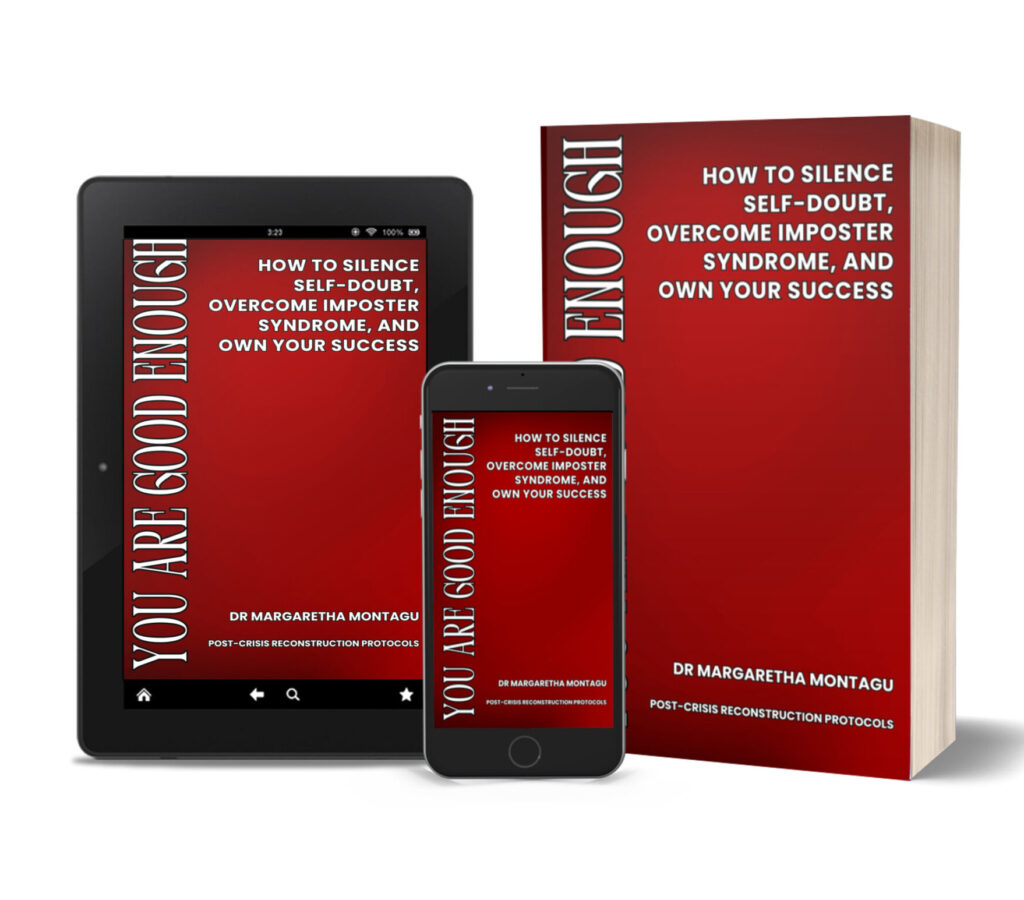
Stop second-guessing yourself. Start owning your success. This book gives you the step-by-step roadmap to break free from imposter syndrome, build unshakable confidence, and finally believe you deserve every bit of your success. You ARE Good Enough!
The Purpose Pivot Protocol
The story of Sarah that opened this article? She was part of a storytelling circle working through my Purpose Pivot Protocol, an online course designed specifically for people navigating major life transitions.
The Protocol isn’t about finding some grand, singular Purpose with a capital P. It’s about learning to recognise and act on the quiet promptings of meaning that appear even in crisis. Through weekly modules, reflection exercises, and community support, you build the muscle of purpose-directed living, one small choice at a time.
The course integrates everything I’ve learned from 20 years as a physician specialising in stress management, two decades of hosting transformational retreats, my training as an NLP master practitioner and medical hypnotherapist, and my experience as a life transition coach. More importantly, it incorporates what hundreds of retreat guests have taught me about what actually works when you’re rebuilding from the ground up.
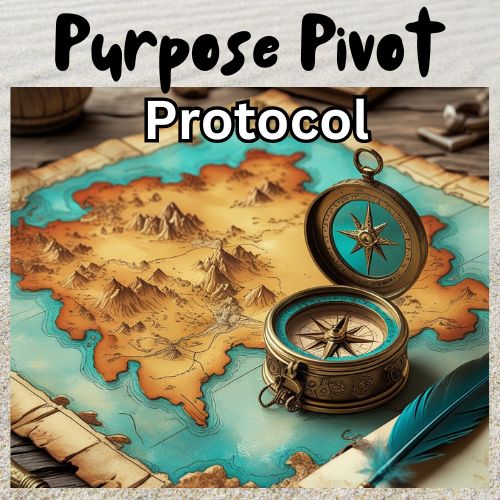
The Purpose Pivot Protocol – drawing inspiration from the Camino de Santiago, this transformative course guides you through a proven framework to recalibrate your authentic purpose and create a meaningful and fulfilling next act. Get immediate access
FAQs: Your Purpose Questions, Answered
Is it selfish to focus on my purpose when my children are struggling with the divorce?
No, and here’s why: your children don’t need you to be perfect or painless. They need you to model resilience and authenticity. When you engage meaningfully with your own life, you show them that hard things don’t have to break you permanently. You demonstrate that adults can face uncertainty and find a way forward. That’s not selfish. That’s essential parenting during a crisis. Obviously, you still attend to their needs, hold their feelings, and create stability. But you don’t serve them by becoming a martyr who sacrifices all personal growth. You serve them by being a whole human, doing your best to live purposefully despite the chaos.
What if I genuinely don’t know what my purpose is?
Then you’re in the exact right place. Purpose isn’t something you know before you start, it’s something you discover through engagement. Start with curiosity rather than certainty. Try things. Notice what creates energy. Pay attention to what you do in your free time when no one’s watching. Ask trusted friends: “What do you come to me for?” Their answers will surprise you and reveal patterns you can’t see yourself. Purpose isn’t hiding from you. It’s waiting for you to pay attention.
How do I know if I’m pursuing a genuine purpose or just running from grief?
Excellent question. Here’s the distinction: running from grief feels frantic, compulsive, like you’re trying to outpace something that’s chasing you. Genuine purpose work feels more grounded, even when it’s uncomfortable. You might still be sad, but you’re sad and engaged, not sad therefore desperately busy. Ask yourself: “Am I doing this to avoid feeling, or am I doing this while feeling?” If you can hold both the pain and the purpose work simultaneously, you’re on the right track. If you’re using purpose as anaesthesia, it won’t work long-term, and you’ll know because you’ll burn out or feel increasingly hollow despite all your activity.
Can I have more than one purpose, or does it need to be singular?
Purpose is plural for most people, and that’s perfectly fine. You might find purpose in your work with struggling learners and in being the kind of grandmother who teaches children to bake and in volunteering with a domestic violence charity. The thread connecting these isn’t a single activity, it’s a common value or impact: maybe empowerment, maybe nurturing, maybe helping people find their voice. Don’t force yourself into a single lane. Life is large enough for multiple expressions of meaning.
What if my sense of purpose keeps changing?
Good. That means you’re growing. Purpose isn’t static because you’re not static. The purpose that sustains you at 45 after divorce might look different from the purpose that emerges at 55 or 65. Evolution isn’t failure. It’s evidence you’re paying attention to who you’re becoming. The core values usually stay consistent, “I care about helping people who feel invisible be seen”, but how you express that can and should change as you change. Give yourself permission to outgrow old versions of purpose. It’s not fickleness. It’s wisdom.
Conclusion: The Chapter After the One You Didn’t Choose
Here’s what I’ve learned, sometimes the hard way: you don’t get to choose all your chapters. Divorce is a chapter you probably didn’t select, didn’t want, would rewrite if you could. But you absolutely get to choose what you do within that chapter. You get to decide if this is just a story of loss, or if it’s also a story of discovery. Both can be true.
Purpose doesn’t erase the pain of divorce. It doesn’t make the loneliness vanish or the financial stress disappear or the logistics of divided holidays simple. What it does do is give you a reason to get up that extends beyond basic functioning. It reminds you that your life is about something, even when it looks nothing like you planned.
As the poet David Whyte writes: “The soul would rather fail at its own life than succeed at someone else’s.”
Your purpose work after divorce isn’t about succeeding at some prescribed recovery timeline. It’s about refusing to fail at your own life. It’s about reclaiming your agency, your direction, your “why” in a world that just took your “who” away.
That’s not consolation. That’s revolution.
Walk the Path Back to Yourself
If this article resonated, if you found yourself thinking “Yes, but how do I actually do this?”, I want to invite you to my private Bruised but Unbroken Divorce & Breakup Recovery Retreat in the south-west of France.
This isn’t a spa weekend with wine and sympathy, though there’s good food and beautiful scenery. It’s a 2-day, 2-night intensive where you walk sections of the Camino de Santiago, literally and figuratively. You’ll be part of intimate storytelling circles with my Friesian horses, who have an uncanny gift for reflecting back what we’re avoiding in ourselves.
The retreat is designed for the space you’re in right now: past acute crisis, ready for something more than survival, but not quite sure what that “more” looks like. We work with purpose, grief, identity, and next chapters in ways that are practical, not performative. You’ll leave with clarity you couldn’t access alone. Most importantly, you’ll remember that you’re not broken, just breaking open into something new.
Places are intentionally limited. If you’re ready, learn more here.

Private Breakup and Divorce Recovery Retreat -this 2-day/2-night, bespoke, one-on-one break-up and divorce retreat on the Camino de Santiago in the sun-blessed southwest of France enables you to press pause, recalibrate your inner compass, and return to your life with more purpose, intention, and clarity.









One final question for reflection:
What’s one small thing you know you’ve been avoiding because it matters, not because it’s urgent? What would happen if you did that thing this week?