
An Esprit Meraki Stress-Reducing Retreat Could Be Your Most Powerful Reset in These Uncertain Times
What this is: A grounded, honest look at why attending a stress-reducing retreat during a period of sustained political uncertainty is genuinely useful, not indulgent. We’re talking neuroscience, narrative, and the particular magic of walking the Camino de Santiago in south-west France with Friesian horses for company.
What this isn’t: A suggestion to simply “unplug for a while” and hope the world sorts itself out. Advice that assumes your anxiety is a personal failing rather than a reasonable response to an unreasonable amount of global noise. Anything that uses the phrase “just focus on what you can control” without acknowledging how exhausting that instruction has become.
Read this if: The relentless churn of political uncertainty has been quietly eroding your concentration, your sleep, and your sense of what’s actually solid. You’re thoughtful, informed, and have already tried most of the standard remedies. You’re not looking for distraction. You’re looking for genuine restoration.
5 Key Takeaways
- A retreat is a strategic pause, not an abdication of responsibility. Stepping out of the noise is often the only way to gain the perspective you cannot find inside it.
- Political stress is physiologically real, and sustained exposure to uncertainty activates the same stress pathways as any other chronic threat. The body does not distinguish between personal and global.
- Walking is not just exercise, it is a time-honoured tool for processing anxiety, quieting mental noise, and arriving at clarity that sitting still, or sitting in front of a screen, rarely offers.
- Community matters more than we admit. Shared honest conversation with people who understand the particular weight of this moment can shift something that isolation cannot.
- Retreating is not giving up. You return more grounded, more clear-headed, and more genuinely useful to everyone around you than you were when you left.
Introduction: Why Right Now Is Exactly the Right Moment to Stop
Here is something worth admitting out loud: the idea of booking a retreat when the world feels like it’s mid-unravelling can seem spectacularly self-indulgent.
The world is in turmoil. You have opinions, responsibilities, a newsfeed that refreshes every four minutes with something new to absorb and react to. And somewhere underneath all of that, a quiet, exhausted voice that whispers, what if I just… stopped. For a minute.
That voice is not a weakness. That voice is wisdom.
The world right now is changing. Political instability, collective anxiety, the erosion of certainties that once felt permanent, the relentless noise of a global information environment designed to keep you activated and alarmed, all of it accumulates. Not dramatically. Quietly. In the quality of your sleep, the length of your attention span, the way you snap at the people you love for no reason you can clearly identify, the vague but persistent sense that you are perpetually braced for something.
This is what chronic low-grade existential stress actually does to a person. And it is doing it to a great many people simultaneously, which makes it both more understandable and, paradoxically, harder to address. When everyone around you is equally stressed, the stress starts to feel like the weather. Just the way things are.
It is not just the way things are. It is a physiological state with measurable effects and evidence-based remedies.
What you’ll find in this article: a clear-eyed, evidence-informed case for why an intentional, nature-based stress management retreat might be one of the most strategically sound decisions you make this year. Not an escape from the world. A return to yourself, so that you can engage again from a position of genuine strength rather than accumulated exhaustion.
The Story: How Claire Desmarais Found Solid Ground Again
Claire’s Story: When the Noise Gets Too Loud to Hear Yourself Think
Claire Desmarais had always been the kind of woman who stayed informed.
Not obsessively. Responsibly. She read serious journalism. She listened to thoughtful podcasts on her commute. She voted, gave to causes she believed in, had considered opinions about things that mattered. For twenty-two years, being a well-informed, engaged citizen had been part of how she understood herself.
And then, somewhere in the past two years, it had curdled into something else entirely.
She couldn’t pinpoint the exact moment. It wasn’t a single headline. It was the accumulation, the slow drip of instability, the sense that the floor of things she’d assumed were solid, institutions, norms, the basic predictability of how the world worked, was less solid than she’d thought. She still read the news every morning. She just no longer felt better informed afterward. She felt insecure, and then read more, and felt more insecure, in a loop that had its own grim momentum.
She was sleeping badly. Her concentration at work, previously one of her great professional assets, had developed holes in it. She’d find herself mid-sentence in a meeting, having lost the thread. She’d start a book and abandon it after two pages. Her youngest had asked her, with the blunt precision only a fifteen-year-old can deploy, whether she was “always going to be this tense from now on.”
She’d laughed. It hadn’t entirely felt like a laugh.
She tried the obvious things. She set limits on her news consumption. She went to the gym with more regularity. She had dinner with friends where they agreed not to talk about current events, which lasted approximately twenty-five minutes before someone said “I know we said we wouldn’t, but did you see…” She tried meditation, which she found useful in the way that a plaster is useful on a wound that really requires stitches.
Her colleague sent her a link. “This is either exactly what you need or completely mad,” she said. “Possibly both.”
The link was to a five-day Camino de Santiago retreat in south-west France. Hosted by a retired physician, Dr Margaretha Montagu, who had spent more than fifteen years guiding people through exactly this kind of sustained inner turbulence. Walking the Camino de Santiago. Storytelling circles. Friesian horses. Small group. Ancient path. A deliberate, held pause in a landscape that predated every current crisis by approximately a thousand years.
Claire booked it before she’d finished reading the page, then immediately worried this was too impulsive. Then decided impulsive was probably fine, given the circumstances.
She arrived in France on a Sunday evening in October, when the light was doing that particular golden thing it does in the south-west, slanting through chestnut trees at an angle that seemed personally designed to make you feel something other than dread. She smelled woodsmoke, dry earth, and something faintly floral she couldn’t name. Her shoulders, which had been residing somewhere near her ears for the better part of eighteen months, dropped approximately two centimetres.
There were three other participants. A secondary school teacher who described himself as “constitutionally incapable of switching off” and had the eye bags to prove it. A retired civil servant who had spent four decades working in institutions she now watched being dismantled, and didn’t quite know what to do with the grief of it. A freelance writer who’d found that the anxiety she’d once channelled productively into her work had started, recently, to simply be anxiety.
They were all, in their own way, running on fumes and not admitting it.
On the first morning, they walked ten kilometres through farmland and forest, mostly in silence. Claire noticed she kept waiting for the urge to check her phone and was surprised to discover it didn’t come. The path demanded something from her feet, and her feet demanded something from her attention, and her attention had no room left over for the static.
The light through the trees was specific and unhurried. Her boots on the path made a sound she found unexpectedly comforting. A bird she couldn’t identify called from somewhere to her left. She had no idea what it was, and for the first time in a long time, that felt completely fine.
In the storytelling circle that evening, Dr Montagu asked a question Claire later described as the most useful thing anyone had said to her in a year: not how are you coping with everything, but what does the noise drown out, and is that the thing you actually need to hear?
Claire thought about that question for six kilometres the next day.
The horses, two enormous Friesians with the calm authority of creatures entirely unbothered by the geopolitical situation, were very present on the third day. Claire found herself standing next to the larger one, who was warm against her shoulder, breathing slowly and deliberately, like a gentle instruction. She matched her breath to the horse’s. Something in her chest, tight for longer than she could accurately remember, loosened by about a quarter turn.
By day four, she had slept, properly, for three consecutive nights. She had cried once, from simple relief at the quiet. She had laughed, genuinely, at something the retired civil servant said about her attempts to explain algorithmic news feeds to her eighty-year-old mother. She had arrived at a clarity about what she actually valued, and what she was actually afraid of, that two months of anxious scrolling had entirely prevented her from accessing.
She didn’t come home fixed. She came home different. Quieter in the places that had been loudest. More able to engage with the world thoughtfully rather than reactively. And in possession of something she hadn’t expected: a sense of her own ground, something stable to stand on, that the noise hadn’t managed to erode.
Why Does Political Uncertainty Hit So Hard, and What Can Actually Help?
What does sustained political stress actually do to us?
Let’s be specific about this, because “stress is bad for you” has been said so often that it has almost stopped meaning anything.
When the brain perceives threat, whether immediate and physical or ambient and political, it activates the hypothalamic-pituitary-adrenal axis and releases cortisol. This is useful in short bursts. It is not useful when it becomes the permanent background state of daily life.
Sustained cortisol elevation disrupts sleep architecture, impairs the hippocampus (affecting memory and the ability to contextualise new information), reduces activity in the prefrontal cortex (the part of the brain responsible for nuanced judgment, long-term thinking, and the ability to tolerate ambiguity), and increases the amygdala’s reactivity, making you quicker to alarm and slower to reason your way back from it.
In other words: chronic political stress systematically impairs exactly the cognitive and emotional capacities you most need in order to think clearly about a complex world. It is, neurologically speaking, spectacularly counterproductive.
This is not a character flaw. It is a physiological response to an environment that is genuinely more uncertain, more noisy, and more relentlessly demanding of your attention than the one human nervous systems were designed for.
Nature exposure and rhythmic movement, on the other hand, reduce cortisol measurably. Green space lowers rumination and activates parasympathetic nervous system function. Long-distance walking in natural environments has been shown to facilitate what researchers call “involuntary attention,” a form of soft, effortless focus that allows the deliberate, effortful attention system to rest and recover. It is, in effect, a reboot of the exhausted mind.
Dr Margaretha Montagu, MBChB, MRCGP, NLP Master Practitioner, Medical Hypnotherapist, and Life Transition Coach, has spent over twenty years observing and facilitating this process. As a physician with a specialist interest in stress management, and as the host of transformational Camino nature retreats for fifteen years, she has accompanied dozens of guests through the particular modern exhaustion of feeling perpetually braced against a world that won’t stay still.
“The Camino has been walked by people carrying enormous mental weight for over a thousand years,” she observes. “It knows what to do for a troubled mind. You just have to keep walking.”
Why does walking in nature specifically help?
The evidence is robust and growing. Research published in Scientific Reports found that spending at least two hours per week in natural settings was significantly associated with better health and wellbeing outcomes. Studies on nature-based stress reduction consistently find that natural environments lower cortisol, reduce rumination, and activate the parasympathetic nervous system in ways that urban or indoor environments do not.
The Camino de Santiago, walked through its original landscape of forest paths, river valleys, and ancient stone villages in south-west France, offers something beyond generic “green time.” It offers a route with meaning and purpose, paths worn by centuries of people who were also, in their own historical moments, navigating uncertainty. There is something in that lineage that many people find quietly steadying, the knowledge that difficulty is not new, that people have always found their way through it, and that the path goes somewhere.
Why we need the support of our community
One of the quieter revelations of a well-facilitated group retreat is discovering that you are not, in fact, the only person who has been quietly hollowed out by the accumulated weight of the current moment.
Political stress, unusually among stressors, carries a particular social isolation. People disagree. Conversations feel loaded. There is a reluctance to admit just how much it is affecting you, in case that sounds dramatic, or alarmist, or insufficiently resilient.
The storytelling circles at the heart of Dr Montagu’s retreats create something specific and valuable: a space in which honesty is the norm rather than the exception. The neurological term for what happens in such a group is “co-regulation,” the way that calm, honest, attuned human presence helps regulate an overactivated nervous system. The human term is simpler. I felt less alone.
Why Your Reset Matters to Everyone Around You
It is tempting to frame a retreat as a self-indulgent act, particularly when the world seems to require constant engagement.
Here is a more accurate frame: you are the nervous system that other people are regulated by.
Your children, your colleagues, your friends, they read your quality of presence before they process your words. When you are operating from a state of chronic low-grade alarm, that state is contagious. Not metaphorically. Neurologically. The people around you pick it up and carry it.
When someone returns from a genuine process of restoration, the effects do not stay contained within them. They bring a different presence to their relationships. They make decisions from a less reactive, more considered place. They model, for everyone watching, what it looks like to remain grounded when the world is not, which is, it turns out, one of the most useful things a person can do right now.
The ripple effects are real. A person who returns from a retreat quieter, steadier, and more genuinely present is not less engaged with the world. They are more usefully engaged with it. There is a difference between anxious attention and clear attention. Only one of them actually helps.
5 Mistakes to Avoid When Considering a Stress-Reducing Retreat
Mistake 1: Confusing information with insight
Consuming more news does not produce more clarity. It produces more activation. The assumption that staying constantly informed is a form of civic responsibility has become, for many thoughtful people, a very effective way of staying stressed while feeling very productive.
Mistake 2: Choosing a retreat based on luxury rather than substance
Lovely as a spa weekend is, it is not the same as a structured, professionally facilitated experience designed to help you actually process sustained stress. Look for retreats that combine evidence-based approaches, skilled facilitation, embodied practice, and genuine community. The quality of the facilitation matters enormously. With over twenty years of medical and psychological expertise, and nearly fifteen years hosting transformational retreats, Dr Montagu brings a depth of understanding to this work that goes well beyond wellness industry aesthetics.
Mistake 3: Waiting until the world calms down
The world is not going to calm down on a schedule that is convenient for your wellbeing. Waiting for a stable moment to invest in your own restoration is a form of optimism that the current environment does not reward. The time to address chronic stress is not after it has extracted its full cost.
Mistake 4: Going it alone when you could go supported
There is a meaningful difference between taking a holiday alone to decompress and attending a structured, facilitated retreat with a trained professional and a small group of equally thoughtful people. The former can be restorative. The latter can be genuinely transformative. The presence of skilled facilitation means that what arises in the space between people is held, worked with, and integrated, rather than simply experienced and left unprocessed.
Mistake 5: Underestimating the physical element
The body is where political stress actually lives, in the tension in your shoulders, the shallowness of your breathing, the way your jaw is probably clenched right now. Movement in nature is not incidental to the retreat experience. It is central to it. Walking, particularly long and rhythmic, through a landscape that asks nothing of you except your attention, is one of the most reliable ways available to shift what the thinking mind alone cannot reach.
A Short Intention-Setting Exercise Before You Decide
Find five quiet minutes. Preferably outside, or at least with a window. Without your phone.
Sit, and bring to mind what your attention has been most absorbed by in the past two months. Notice how that absorption feels in your body. Notice where it lives. Notice whether it is energising you or depleting you.
Now ask yourself, honestly: when did I last feel genuinely quiet? Not distracted, not numbed, but actually still?
And then: what would become possible if I gave myself several intentional days to stop absorbing the noise of the world and instead hear what I actually think, feel, and need?
Write down whatever comes. Don’t edit it. Just notice.
That noticing is your starting point.
Further Reading: 5 Books Worth Your Time
1. Why Zebras Don’t Get Ulcers by Robert Sapolsky. Chosen because it is the clearest, most readable, and most entertaining account available of what chronic stress actually does to the body and mind, and why the modern human experience of sustained, ambient, unresolvable threat is uniquely damaging. Essential reading for anyone who wants to understand, rather than just describe, what is happening to them.
2. The Anxious Generation by Jonathan Haidt. Because understanding the broader cultural and technological architecture of the anxiety epidemic is itself clarifying. Haidt’s analysis of how the information environment actively exploits our threat-detection systems is both sobering and oddly relieving. It is not just you, and it is not just weakness.
3. The Body Keeps the Score by Bessel van der Kolk, because stress, including political and ambient stress, is not only a cognitive event. It lives in the body, in ways the thinking mind can’t always access. Understanding this is practical, particularly when considering why embodied practices like walking work as well as they do.
4. Deep Work by Cal Newport. Because the capacity for sustained, focused attention, precisely what chronic news-anxiety erodes most reliably, is also one of the most valuable and recoverable human capacities available. Newport’s case for protecting it is both rigorous and useful.
5. Man’s Search for Meaning by Viktor Frankl. Because when external circumstances are genuinely difficult and genuinely beyond our control, the question of meaning becomes not philosophical but practical. Frankl’s account of constructing meaning under the most extreme circumstances imaginable is both humbling and, strangely, one of the most grounding things you can read right now.
P.S. If you’re looking for something shorter, sharper, and designed for people who are already saturated and don’t have time for a long read, Dr Margaretha Montagu’s own book, Embracing Change: In 10 Minutes a Day, offers daily micro-practices specifically designed to help people find steadiness when the ground beneath them won’t stay still. It’s warm, it’s practical, and it doesn’t require you to clear your schedule to benefit from it.
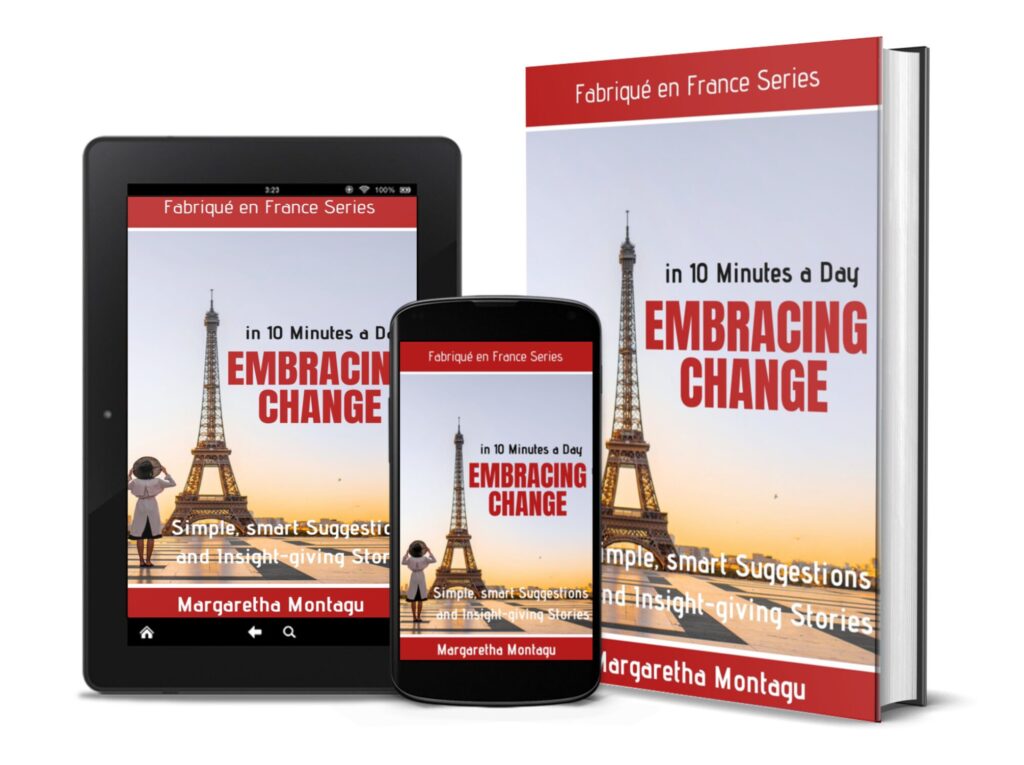
If you are currently facing a major life transition or any other dramatic change in your circumstances, and you have no idea how you are going to cope, the good news is that the strategy presented in this book can help you, step by step, to improve your ability to handle the stress caused by change, even if you feel entirely powerless at the moment.
5 FAQs About Stress Management Retreats: Real Questions, Honest Answers
FAQ 1: Isn’t retreating from the news irresponsible when things actually matter?
This is the most important question, and it deserves a direct answer. Retreating for several intentional days does not make you less informed or less engaged. It makes you less reactive and more capable of genuine discernment. There is a meaningful difference between anxious, cortisol-driven news consumption and calm, considered engagement with the world. A retreat helps you access the latter. It does not ask you to stop caring. It asks you to care from a more sustainable place.
FAQ 2: I’m not fit enough to walk the Camino.
The retreats are designed for regular people, not athletes. Daily walks are manageable, meaningful, and paced for the group. The goal is presence and process, not performance. If you can walk for a few hours at a moderate pace with occasional rest, you can participate fully.
FAQ 3: What makes this different from just taking a holiday?
A holiday is about stepping away from your life. This is about stepping into yourself more clearly. The combination of skilled facilitation, structured reflection, honest storytelling, equine interaction, and intentional movement creates conditions for genuine restoration that a lovely week somewhere warm, however well earned, typically doesn’t produce. You return from a holiday rested. You return from a well-facilitated retreat changed.
FAQ 4: I’m worried this isn’t a good use of money when things are uncertain.
Chronic stress has measurable costs: in productivity, in health, in the quality of your relationships, in decision-making. The question is not whether you can afford to address it. The question is whether you can afford not to. A retreat is an investment in the asset that everything else in your life depends on. That is not an indulgence. That is maintenance.
FAQ 5: What’s the actual evidence that retreats help?
It is robust and growing. Research on nature-based interventions, mindfulness retreats, and somatic movement practices all point consistently in the same direction: structured, nature-based, community-supported experiences reduce cortisol, lower rumination, improve mood and cognitive flexibility, and support longer-term resilience. The combination of walking, professional facilitation, and honest group storytelling offered on Dr Montagu’s retreats draws on all three evidence streams simultaneously, and the over thirty guest testimonials on her website offer the kind of first-hand evidence that research papers, for all their value, cannot quite replicate.
Conclusion: You Cannot Think Your Way Out of Nervous Exhaustion
Here is what is genuinely difficult about political stress: it is diffuse, ongoing, and largely unresolvable by individual action. Unlike a concrete personal problem, it does not respond to problem-solving. Unlike a specific fear, it does not respond to reassurance. It just sits there, underneath everything, quietly consuming resources you needed for other things.
The answer is not more information, more discussion, more analysis, or more determined attempts to “stay positive.” The answer is a physiological reset, sufficient in depth and duration that the nervous system actually returns to baseline rather than simply pausing momentarily before resuming its alarm.
A well-designed retreat, held by someone who genuinely understands both the neuroscience and the human experience of what you’re carrying, in a landscape that the noise of the modern world cannot follow you into, is one of the most effective means available of achieving that reset. And returning from it not as a person who has opted out, but as a person who has, finally, opted back in to themselves.
“You cannot think clearly from inside the noise. Sometimes the most courageous thing you can do is walk somewhere quiet and listen for what you already know.”
Ready to Walk Away From the Noise? (Quite Literally.)
Imagine five or seven days in the sunlit landscape of south-west France, walking ancient Camino paths through forests and farmland that have absorbed a thousand years of human footfall, waking up to birdsong instead of breaking news, and spending your evenings in honest, warm conversation with a small group of remarkable people who are also, quietly, looking for solid ground.
Dr Margaretha Montagu’s Crossroads Camino de Santiago Retreats combine daily guided walks, structured storytelling sessions working through the Purpose Pivot Protocol, individual reflection, and the quietly extraordinary company of Friesian horses. Designed for people who are thoughtful, capable, and running on empty in a world that won’t stop demanding more, these 5 and 7-day retreats offer something genuinely rare: experienced medical and psychological expertise, ancient landscape, and warm, honest community, held together by someone who has spent nearly fifteen years helping people find their footing again.
If the noise has been too loud and your own signal has become hard to find, this is where you walk back toward it.

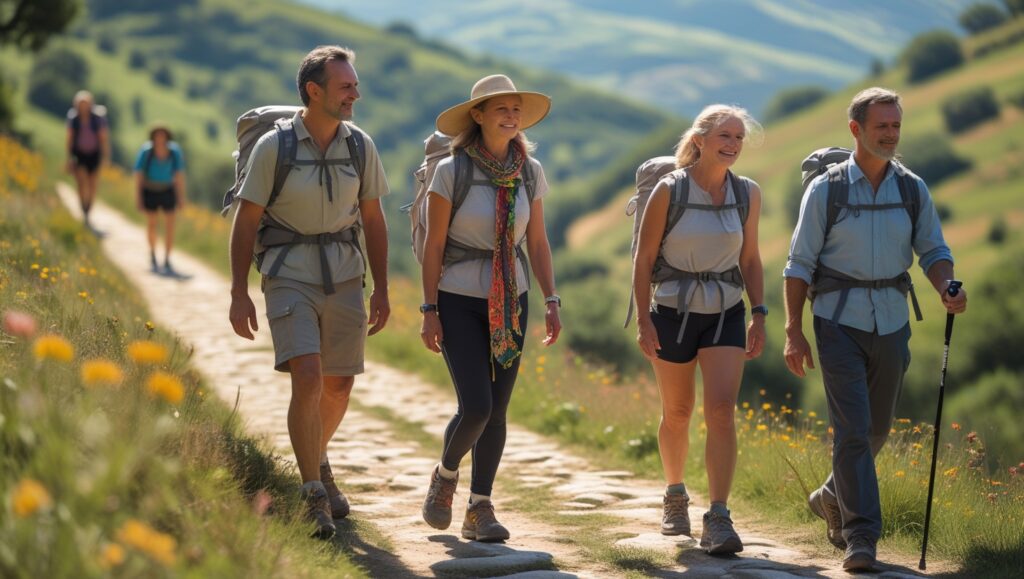
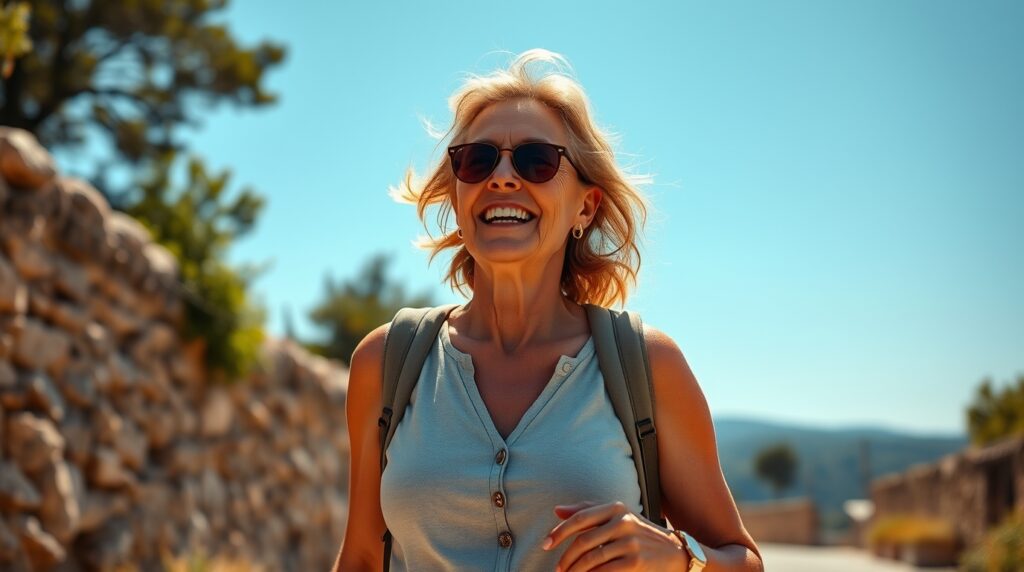
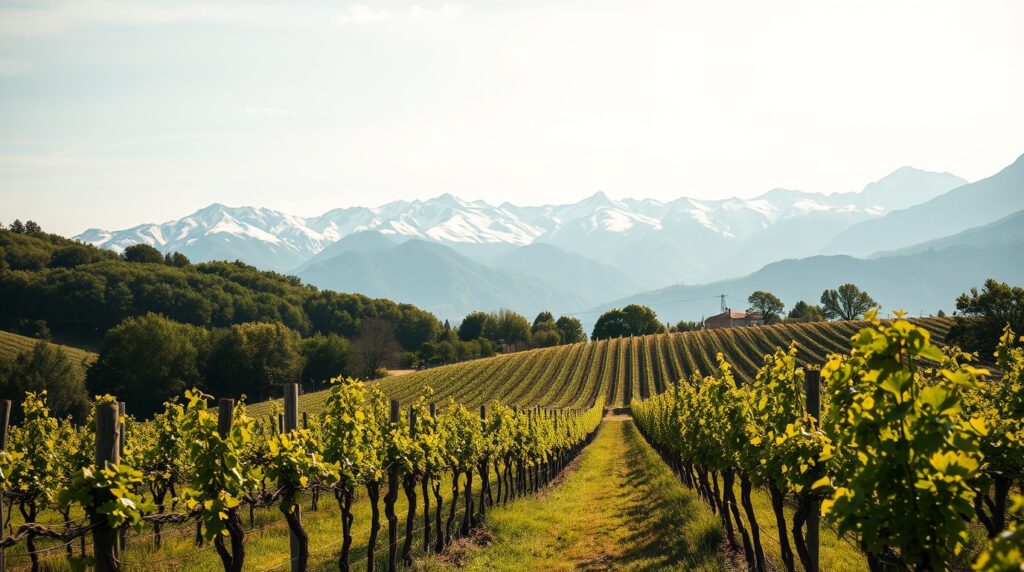
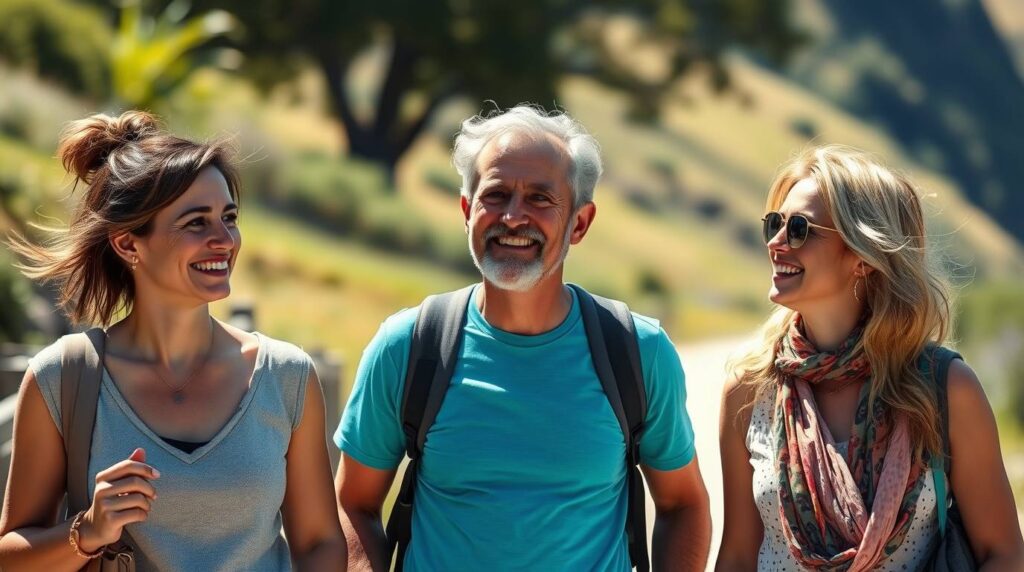

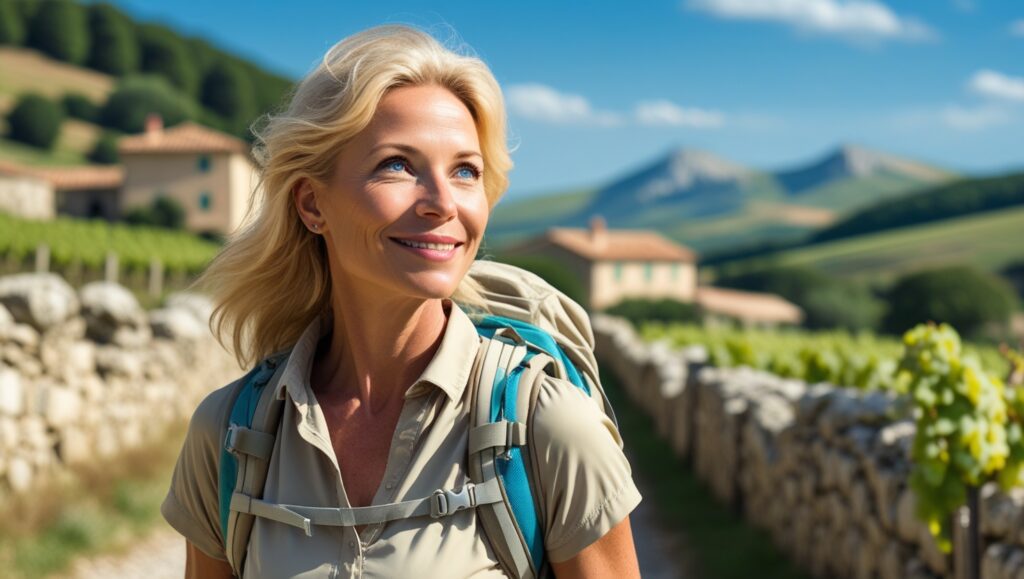
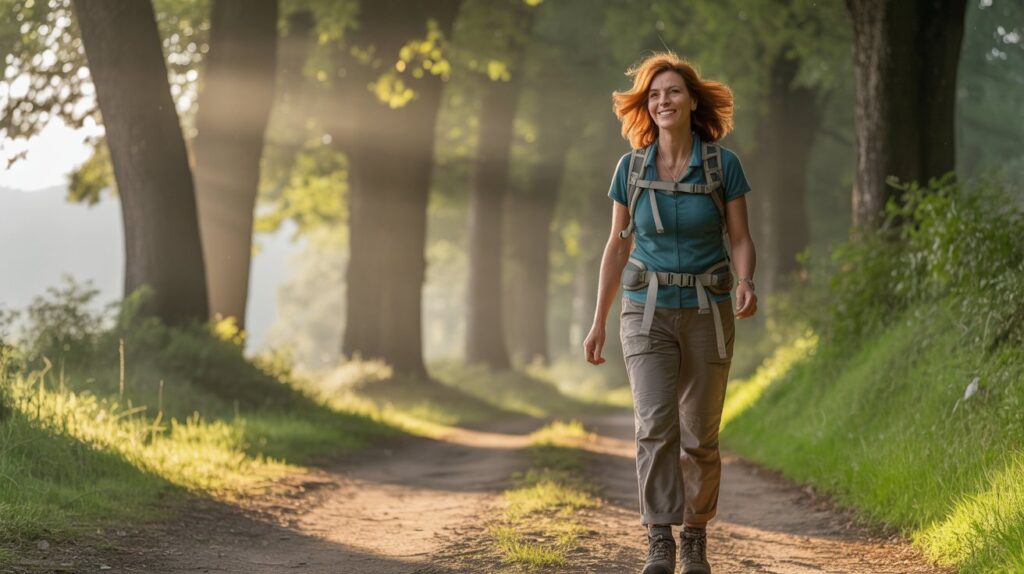
If your soul is craving fresh air, meaningful movement, and a chance to reconnect with nature, join us on a Camino de Santiago Crossroads Retreat in the southwest of France. This isn’t just a scenic hike – it’s a powerful, natural reboot for your body, mind, and spirit. Imagine quiet paths, rolling hills, cozy evenings, and slow conversations. No fitness requirements. No forced bonding. No pressure to have a breakthrough. Just one foot in front of the other, and a journey that meets you exactly where you are.
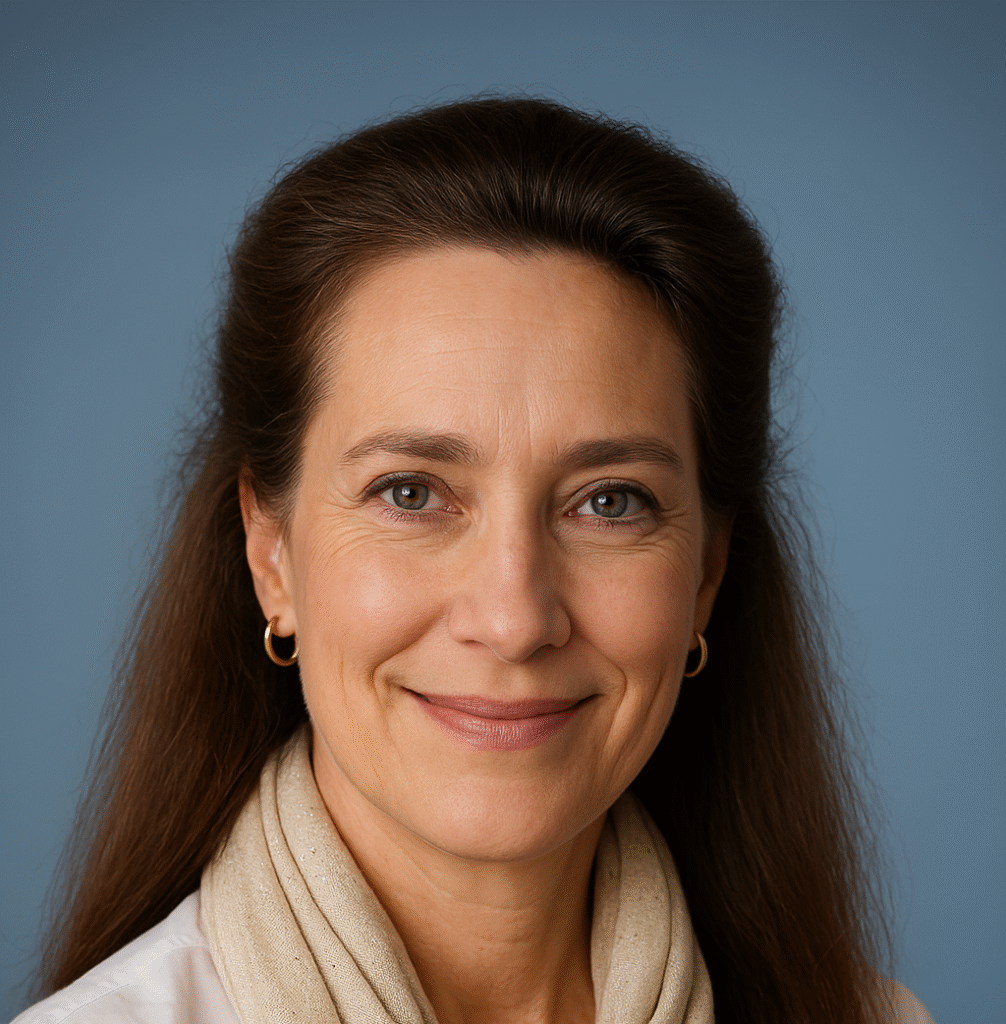
“I am an experienced medical doctor – MBChB, MRCGP, NLP master pract cert, Transformational Life Coach (dip.) Life Story Coach (cert.) Stress Counselling (cert.) Med Hypnotherapy (dip.) and EAGALA (cert.) I may have an impressive number of letters after my name, and more than three decades of professional experience, but what qualifies me to excel at what I do is my intuitive understanding of my clients’ difficulties and my extensive personal experience of managing major life changes using strategies I developed over many years.” Dr M Montagu
References
- White, M.P., Alcock, I., Grellier, J., Wheeler, B.W., Hartig, T., Warber, S.L., … & Fleming, L.E. (2019). Spending at least 120 minutes a week in nature is associated with good health and wellbeing. Scientific Reports, 9(1), 7730.
- Bratman, G.N., Hamilton, J.P., Hahn, K.S., Daily, G.C., & Gross, J.J. (2015). Nature experience reduces rumination and subgenual prefrontal cortex activation. Proceedings of the National Academy of Sciences, 112(28), 8567-8572.
- Sapolsky, R.M. (2004). Why zebras don’t get ulcers: The acclaimed guide to stress, stress-related diseases, and coping. Henry Holt and Company. (Key supporting work on chronic stress and allostatic load.)
- Leka, S., Griffiths, A., & Cox, T. (2003). Work organisation and stress: Systematic problem approaches for employers, managers and trade union representatives. World Health Organisation.
- Steptoe, A., Shankar, A., Demakakos, P., & Wardle, J. (2013). Social isolation, loneliness, and all-cause mortality in older men and women. Proceedings of the National Academy of Sciences, 110(15), 5797-5801.