
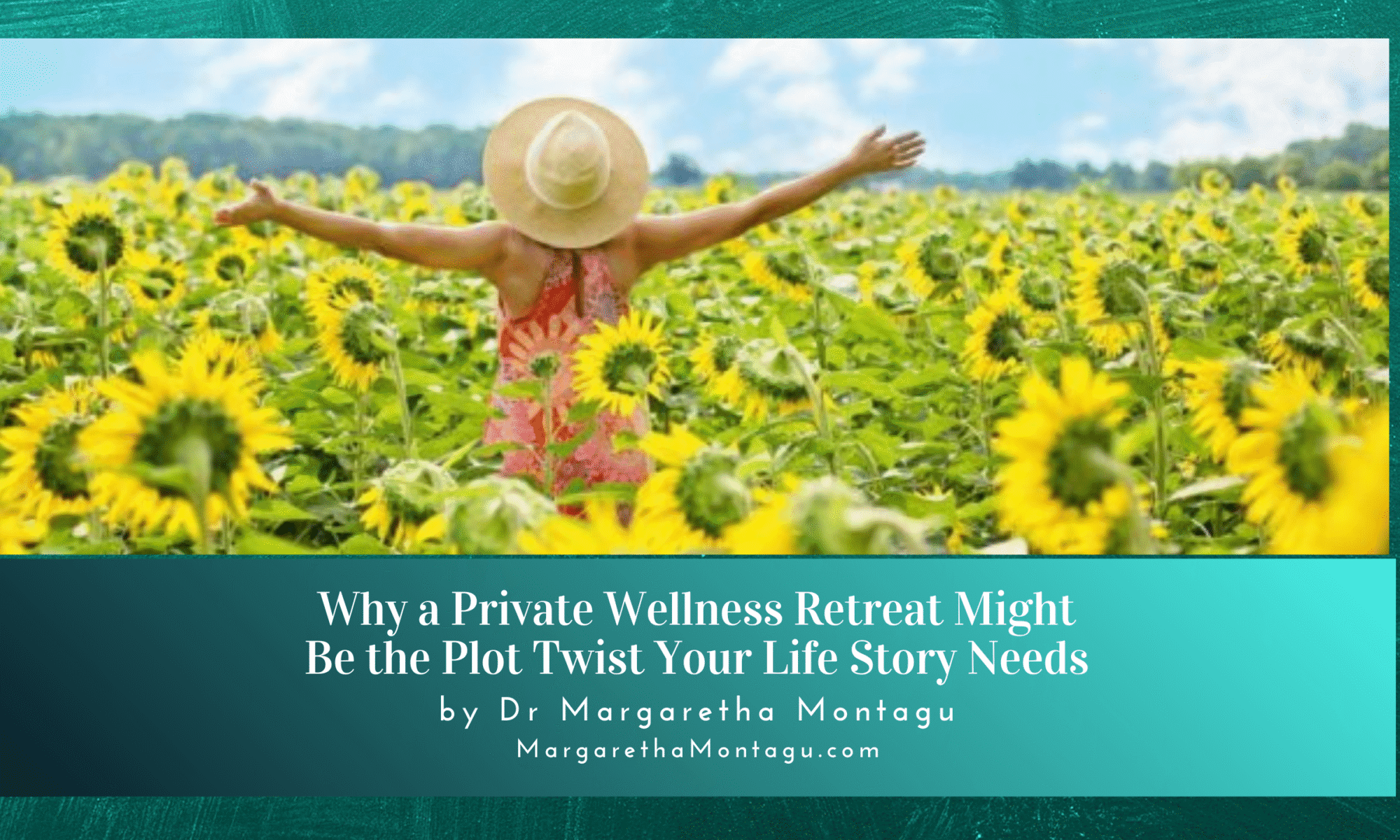
How Private Retreats Can Revolutionise Your Well-being
I have been hosting small group Camino de Santiago hiking retreats for more than a decade, here at my house in the southwest of France. Last week, I came across this post in a group: “Would you go on a private wellness retreat?”
The response was such an overwhelming “Yes!” that I started wondering why so many people are interested in attending a retreat on their own. Would I want to attend a solo (private) retreat?
I can see the attraction of a tailor-made private retreat: escaping from the ever more urgent demands and digital overwhelm of everyday life, spending a few days on my own, focusing on my own needs, taking activities at my own pace and in my own time, with one-on-one attention from the retreat leader…the idea has a certain appeal.
Are YOU thinking about running away from your life for a few days? Before you do something rash like moving to Bali or joining a circus, consider this then: a private retreat could be the answer you’re looking for. In this article, I explore why booking yourself into solitude, especially during major life transitions, isn’t selfish or indulgent, it’s possibly the most sensible thing you’ll do all year. We’ll look at what makes private retreats different from group experiences, why they’re particularly powerful during crossroads moments, and how stepping away might be the only way to truly step forward. Fair warning: contains one woman’s hilariously disastrous attempt at finding herself, practical wisdom, and zero judgment about where you are right now.
Five Key Takeaways
- Private retreats offer bespoke transformation: Unlike group retreats where you’re part of the chorus, a private retreat lets you be the soloist, addressing your specific challenges without having to navigate other people’s emotional baggage alongside your own.
- Solitude isn’t loneliness: Being alone in a supportive environment creates space for the kind of honest conversation with yourself that’s impossible when you’re performing your life for an audience, even a well-meaning one.
- Major life transitions require dedicated processing time: Whether you’re recovering from burnout, grieving a loss, or standing at a crossroads, a private retreat provides the safe container you need to fall apart and reassemble yourself without witnesses.
- Nature and stillness are underrated healing tools: When you strip away digital noise, social obligations, and the constant need to be “on,” your nervous system can finally exhale and your intuition can finally be heard.
- Investing in yourself isn’t selfish: Taking time away to reconnect with who you are and what you truly want isn’t abandoning your responsibilities, it’s ensuring you’ll have something left to give when you return.
Introduction: The Permission Slip You’ve Been Waiting For
Here’s something nobody tells you about major life changes: they don’t come with an instruction manual, a helpline, or even a sympathetic customer service representative. One day you’re navigating your normal life, and the next you’re standing in the middle of emotional rubble wondering how you got here and where “here” even is.
Maybe your career imploded. Perhaps a relationship ended or transformed beyond recognition. You might be caring for aging parents whilst simultaneously launching teenagers into the world, feeling like a human wishbone pulled in opposite directions. Or maybe everything looks fine from the outside, but inside you’re running on fumes, held together by coffee and the sheer determination not to let anyone see you’re actually drowning in overwhelm.
The world has opinions about how you should handle these moments. “Stay busy!” they chirp. “Throw yourself into work!” “Get back out there!” “You’ve got this!” Well-meaning friends serve up platitudes like they’re handing out life preservers, but what you actually need is something entirely different: space. Time. Silence. A chance to hear yourself think without the Greek chorus of other people’s expectations drowning out your own voice.
That’s where a private retreat enters the story.
Not as an escape (though it can feel gloriously like one), but as a homecoming. A chance to remember who you are beneath all the roles you play and the masks you wear. Private retreats aren’t about running away from your life, they’re about running towards yourself, often for the first time in years.
In a world that glorifies constant connection and productivity, choosing solitude feels revolutionary. It is. Because the truth nobody wants to admit is this: sometimes the bravest thing you can do is stop. Stop performing, stop achieving, stop pretending you’re fine. Just… stop. And in that stopping, in that sacred pause, you might discover that the person you’ve been searching for, the answer you’ve been seeking, has been waiting patiently inside you all along.
The Story of Eleanor’s Magnificent Unravelling
Eleanor arrived at the farmhouse on a Tuesday afternoon in late September with three matching suitcases, a colour-coded itinerary, and an Excel spreadsheet titled “Operation Find Myself.” She was 47, recently made redundant from a job that had consumed her for two decades, and absolutely convinced that five days of structured self-discovery would solve everything.
The gravel crunched under her sensible walking shoes as she stepped out of the rental car, already mentally ticking off the first item on her to-do list: Arrive at retreat. Check. She’d read all the materials, researched mindfulness techniques, downloaded seven meditation apps, and packed three self-help books she fully intended to finish. Eleanor approached finding herself with the same methodical efficiency she’d brought to managing product launches and quarterly reports.
What she hadn’t planned for was Belle.
Belle, the enormous black Friesian mare, was standing by the fence as Eleanor hauled her perfectly organised luggage towards the house. The horse lifted her head, fixed Eleanor with eyes that seemed to see straight through the carefully constructed facade, and did something that stopped Eleanor mid-stride: she whinnied, soft and low, a sound that somehow contained both greeting and question.
Eleanor, who’d been holding her breath for approximately six months without realising it, exhaled.
The first 24 hours unfolded exactly as Eleanor had planned. She rose at 6:30, completed her morning pages, attended the guided meditation in the meadow (where she mentally drafted a memo about improving the session structure), went for her scheduled walk on the Camino path, and even managed to eat mindfully, though her brain kept trying to schedule her bites. By day two, her jaw ached from clenching, her shoulders had formed a permanent shrug, and she’d rewritten her reflection journal twice to make it neater.
Then came Wednesday afternoon.
The storytelling circle that evening was optional, but of course Eleanor attended, she wasn’t someone who skipped optional activities. Sitting on cushions around the fire pit, with two other solo retreatants and the retreat host, they were invited to share a story about a moment of transition. Eleanor, who could deliver presentations to boardrooms of fifty without breaking a sweat, found herself completely stuck.
“I don’t really have a story,” she said, picking at the fringe of her cushion. “I mean, I got made redundant. That’s not a story, that’s just… a thing that happened.”
The host, a woman with gentle eyes and an unsettling ability to wait through uncomfortable silences, simply nodded. “Sometimes the things that ‘just happen’ are where our biggest stories begin.”
That night, Eleanor couldn’t sleep. She lay in the brass bed in her room overlooking the sunflower fields, listening to the wind whisper through the trees, and felt something crack open in her chest. Not break, exactly. More like split, the way seeds split before they sprout.
Thursday morning, she abandoned her schedule entirely. Instead of her planned walk, she found herself back at the fence where Belle grazed. The mare approached, and Eleanor, who hadn’t cried in front of anyone since 1997, pressed her forehead against Belle’s warm neck and sobbed. Proper, ugly, hiccupping sobs that shook her entire body and scared two chickens in the adjacent field.
She cried for the job she’d lost, yes, but more for the life she’d never lived. For the novel she’d never written because reports and proposals took precedence. For the relationship that ended because she was always at the office. For the twenty years she’d spent becoming excellent at something that turned out to be entirely replaceable. For the daughter she was, who’d learned that love meant achieving and producing and never, ever being inconvenient.
Belle stood perfectly still, steady as a mountain, breathing her grassy breath while Eleanor fell apart. The horse’s warmth seeped through Eleanor’s cardigan, and the rhythmic rise and fall of Belle’s breathing gradually synced with her own. When Eleanor finally lifted her head, eyes swollen and nose running most inelegantly, Belle simply regarded her with what looked distinctly like approval.
“Well,” Eleanor said to the horse, her voice hoarse and wobbly, “that wasn’t on the schedule.”
Belle flicked an ear as if to say: Obviously. The best things never are.
That afternoon, Eleanor sat under the walnut tree with a notebook, not to make lists or plans, but simply to write. She wrote about the smell of the horse, warm and earthy and real. About the rough texture of Belle’s coat under her fingers and the surprising softness of her muzzle. About the sound of hooves on grass and how the afternoon light turned the meadow golden. About the taste of fresh bread at lunch and the sight of purple wildflowers she couldn’t name but desperately wanted to.
She wrote about how her body felt lighter, as if she’d been carrying invisible stones in her pockets for years and had only just discovered she could set them down. About the sudden, shocking realisation that she had absolutely no idea what she wanted to do next, and how terrifying and thrilling that was in equal measure.
By Friday, Eleanor had stopped checking her phone every ten minutes. She’d also stopped wearing her watch, which felt almost scandalously rebellious. She walked the Camino path without tracking her steps or pace. She sat in meditation without judging whether she was “doing it right.” She talked in the storytelling circle about failure and fear and the strange relief of having nothing left to prove.
On her last evening, sitting on the terrace with a glass of local wine, Eleanor watched the sunset paint the sky in shades of orange and pink she’d forgotten existed. Belle and the other horses grazed in the meadow below, their dark shapes silhouetted against the fading light. The air smelled of lavender and earth and possibility.
“I thought I’d come here to find answers,” Eleanor said to the host, who’d joined her to watch the light show. “I thought I’d leave with a plan, you know? A new direction.”
“And?” the host asked, her voice warm with understanding.
Eleanor smiled, surprising herself. “I think I found something better. I found the questions I was too afraid to ask. And maybe, just maybe, permission to not have everything figured out.”
The next morning, as Eleanor loaded her three matching suitcases back into the rental car (though she’d abandoned the colour-coded itinerary and let the Excel spreadsheet languish unopened), she paused at the fence one last time. Belle wandered over, and Eleanor offered her a piece of apple she’d saved from breakfast.
“Thank you,” she whispered to the horse, stroking her velvet nose. “For showing me it’s okay to fall apart. For teaching me that falling apart might actually be how you come back together.”
Belle crunched her apple thoughtfully, unbothered by philosophy or profundity, secure in the ancient equine wisdom that Eleanor was only beginning to grasp: sometimes you have to stand still in order to move forward. Sometimes strength looks like surrender. And sometimes, finding yourself requires getting thoroughly, magnificently lost first.
Eleanor drove away that morning without a five-year plan or a clear career trajectory. But she drove away different, softer around the edges, more honest in the middle. She drove away knowing that the most important thing she’d learned had nothing to do with mindfulness techniques or self-help strategies, and everything to do with the revolutionary act of simply being with herself, in all her imperfect, unscheduled, beautifully human messiness.
Three months later, she adopted two rescue horses.
Understanding Private Retreats: Solitude Is the Secret Ingredient
In our aggressively social world, where connection is currency and networking is considered a virtue, choosing solitude can feel almost transgressive. We’re told that healing happens in community, that sharing our stories creates connection, that we’re “better together.” And whilst there’s truth in that, there’s an equally important truth that gets whispered rather than shouted: sometimes you need to be alone.
Not lonely. Alone. There’s a universe of difference.
The Fundamental Difference Between Group and Private Retreats
Group retreats can be magnificent. They offer shared experience, collective energy, and the comfort of knowing you’re not the only one struggling. There’s something powerful about sitting in a circle with others who understand, who nod in recognition at your pain because they’ve felt it too.
But here’s what nobody mentions in the glossy retreat brochures: group experiences require performance. Even in the most supportive, non-judgemental circles, you’re still managing how you appear to others. You’re editing your tears, timing your breakdowns, wondering if you’re sharing too much or not enough. You’re comparing your journey to theirs, measuring your progress against their breakthroughs, feeling guilty when you’re having a bad day and everyone else seems to be glowing with transformation.
A private retreat strips all that away. There’s no audience for your unravelling, no witnesses to your worst moments, no need to put on a brave face during breakfast. You can cry at 3am without worrying about disturbing roommates. You can spend an entire day in silence without explaining yourself. You can eat chocolate biscuits in bed whilst reading your third novel of the week and call it “self-care” without irony or justification.
This isn’t about being antisocial or misanthropic. It’s about creating conditions where your authentic self, the one you might have been hiding even from yourself, can finally emerge without fear of judgment or the pressure to perform recovery in a way that makes others comfortable.
Why Major Life Transitions Demand This Kind of Space
Life transitions, the meaty ones that actually change who you are, don’t happen on schedule. They don’t follow a neat arc from problem to solution, from pain to healing, from confusion to clarity. They’re messy, nonlinear, full of false starts and backsliding and moments where you question everything, including your decision to question everything.
When you’re recovering from burnout, you might need three days of doing absolutely nothing before you can even begin to think about what comes next. When you’re processing grief, you might need to rage one day and feel perfectly fine the next, then wake up the third morning drowning in sadness again. When you’re standing at a crossroads, trying to choose between paths, you might need weeks of sitting with uncertainty before your intuition speaks up.
Private retreats honour this messy reality. They give you permission to take as long as you need, to change your mind, to have a breakthrough on Tuesday and a breakdown on Wednesday. There’s no group schedule to keep, no communal activities to attend unless you want to, no pressure to show up as anything other than exactly who you are in each moment.
The Science and Soul of Solitude
Research increasingly supports what contemplatives and introverts have known forever: time alone is essential for psychological wellbeing. Our brains need periods of low stimulation to process experiences, integrate learning, and make meaning from chaos. The default mode network, the brain’s “daydreaming” state, is where creativity emerges and problems solve themselves, but it only activates when we’re not engaged in directed attention or social interaction.
In practical terms, this means that the breakthrough you’re desperately seeking might require you to stop seeking it. The clarity you need might only emerge when you stop trying to force it. The answer you’re looking for might whisper itself during a solitary walk through wildflower meadows or whilst watching horses graze or in that spacious moment between waking and thinking where truth slips through before your defences rebuild.
But beyond the neuroscience, there’s something soulful about solitude. It’s where you remember who you were before the world told you who to be. It’s where the masks slip and the performance ends and you’re just… you. Raw, unedited, uncensored. And whilst that can be uncomfortable, profoundly so, it’s also where genuine transformation begins.
The Particular Power of Solitude in Nature
There’s a reason cultures across millennia have sent people into wilderness for vision quests, walkabouts, and spiritual retreats. Nature doesn’t require you to be anything other than what you are. A tree doesn’t judge your life choices. A mountain doesn’t care about your credentials. A sunrise doesn’t ask what you’ve achieved lately.
When you combine the solitude of a private retreat with immersion in nature, something alchemical happens. The constant low-level anxiety that characterises modern life, the vigilance required to navigate social situations and professional demands, begins to dissipate. Your nervous system, which has been in fight-or-flight mode for so long you’ve forgotten what calm feels like, gradually downshifts into rest.
Walking the Camino paths through ancient woods and sun-drenched vineyards, you’re not just exercising, you’re literally stepping away from your old story with each footfall. Sitting in a meadow with horses who model presence and authenticity without trying, you’re learning languages your body remembers even if your mind has forgotten. Sleeping in a 300-year-old farmhouse where hundreds of others have sought refuge and renewal before you, you’re plugging into a tradition of transformation that predates self-help books and therapy speak.
Nature, in her infinite patience, simply holds space for whatever needs to emerge. She doesn’t rush your healing or critique your process. She offers lessons without lectures: the storm that clears the air, the seed that waits in darkness before sprouting, the tree that grows around obstacles rather than breaking against them.
What Makes a Private Retreat Different from Just… Going Somewhere
Fair question. After all, couldn’t you just book an Airbnb in the countryside and call it a retreat? Technically, yes. But here’s the difference: a true private retreat offers more than just location, it offers intentional structure and supportive presence.
The structure isn’t rigid, it’s more like scaffolding, support for your transformation without constraints. It might include optional guided meditations, suggested walking routes, storytelling circles you can join or skip, mindfulness practices with horses who serve as four-legged meditation teachers. This gentle framework helps when you’re so overwhelmed you can’t even decide what to do with your day, offering possibilities without prescriptions.
The supportive presence, often an experienced guide who’s walked their own rough roads, matters more than most people realise. Not because you need someone to tell you what to do or think or feel, but because having a witness, someone who can hold space for your unravelling without trying to fix you, is profoundly validating. Someone who can say, “Yes, this is hard, and you’re not broken for finding it hard,” can be the permission slip you need to stop pretending you’re fine.
This is especially crucial if you’re recovering from trauma, processing grief, or dealing with mental health challenges. A retreat environment with someone trained to recognise when you might need additional support provides safety that a random Airbnb doesn’t. You have the solitude and privacy you crave, but you’re not truly alone if things get difficult.
The Practical Magic of Doing Nothing
One of the most radical aspects of a private retreat is permission to do absolutely nothing. Not “nothing” as in sitting still whilst your mind races with to-do lists and worries. Nothing as in genuinely resting, letting your nervous system reset, allowing your body to remember it’s safe to relax.
This is harder than it sounds. Most of us are achievement-oriented, we feel guilty if we’re not being productive. We fill silence with podcasts, stillness with scrolling, solitude with streaming. The idea of spending five days without producing anything tangible, without achieving anything measurable, without having something to show for our time, can feel almost terrifying.
But here’s the thing about doing nothing: it’s actually when everything happens. The insight that emerges during a afternoon nap. The clarity that crystallises whilst watching clouds drift past. The decision that makes itself whilst you’re reading on the terrace with a cat purring on your lap. The healing that occurs when you finally stop fighting and just let yourself be.
Private retreats honour this counterintuitive truth: sometimes the most productive thing you can do is nothing at all.
Frequently Asked Questions
Isn’t spending time alone during a crisis a bit… selfish? Shouldn’t I be with my family/at work/being useful?
Let’s reframe this, shall we? When you’re on an aeroplane and the oxygen masks drop, you’re instructed to secure your own before helping others. Not because you’re selfish, but because you can’t pour from an empty cup, you can’t support others from a place of depletion, and you’re genuinely no use to anyone when you’re running on fumes and resentment. Taking time for a private retreat isn’t abandoning your responsibilities, it’s ensuring you’ll have something left to give when you return. Consider this: what’s more selfish, taking a week to properly tend to your wellbeing, or continuing to show up half-present, exhausted, and increasingly bitter? Your family, your work, your community deserves the full version of you, not the depleted shadow you’ve become. Sometimes the most generous thing you can do for others is to properly care for yourself first.
What if I get there and realise I’ve made a terrible mistake and I’m actually worse at being alone than I thought?
First, that’s a completely valid fear, and second, it happens less often than you’d think. Most people discover that whilst the first day or two of solitude can feel uncomfortable (we’re not used to our own company), it quickly becomes something precious. However, if you genuinely struggle, a well-run private retreat will have contingencies. You’re not locked in a room, you have access to your host, you can adjust your schedule, add more structured activities, or simply cut your stay short if necessary. The beauty of a private retreat is its flexibility, it adapts to what you need rather than forcing you to adapt to it. Also, there’s a difference between productive discomfort (the kind that precedes breakthrough) and genuine distress. Any experienced retreat leader can help you distinguish between the two and support you accordingly.
How do I know if I need a private retreat versus regular therapy or coaching?
They’re not mutually exclusive, they serve different functions. Therapy and coaching are brilliant for ongoing support, processing trauma, developing new patterns, and accountability. A private retreat offers something different: intensive, immersive space for integration and transformation. Think of it this way: therapy is the weekly conversation that helps you understand your story, a retreat is the chapter where you actually live the changes you’ve been talking about. Many people find that combining both is most effective, regular therapeutic support plus occasional retreats for deeper work. If you’re in acute crisis, therapy first, retreats later. If you’re recovering from burnout, dealing with transition, or feeling stuck despite regular therapeutic support, a retreat might provide the breakthrough you need.
I’m an extrovert. Will I absolutely hate a private retreat?
Not necessarily, though you might need to approach it differently. Extroverts recharge through social interaction, so a week of complete solitude might indeed feel depleting rather than renewing. However, many extroverts find that a private retreat offers something they rarely experience: depth without distraction. Instead of choosing the longest retreat option, perhaps start with three to five days. Look for retreats that offer optional communal meals or activities, so you have some social contact without the full group-retreat experience. Consider a retreat that includes activities with other beings (horses, for instance) who provide companionship without the need for conversation. Many extroverts discover that whilst they love social connection, they’ve been using it to avoid being with themselves, and a private retreat offers the rare opportunity to develop that relationship.
What should I actually expect to happen during a private retreat? Will I have some massive epiphany?
Maybe? But probably not in the Hollywood movie way you’re imagining. Transformation rarely looks like a dramatic revelation accompanied by swelling orchestral music. More often, it’s quiet, cumulative, surprising. You might spend three days feeling absolutely nothing is happening, then on day four realise you’ve been sleeping through the night for the first time in months. You might have a good cry with a horse and feel oddly lighter afterwards. You might simply discover that you can spend an entire afternoon without checking your phone and the world didn’t end. Expect the unexpected, or more accurately, expect nothing specific and be open to whatever emerges. Some people leave with crystal-clear clarity about their next steps. Others leave with more questions but less fear about not having answers. Both are valuable. Trust that whatever happens is exactly what needs to happen, even if it doesn’t match your expectations.
Conclusion: The Plot Twist You Author Yourself
When you’re standing at a crossroads, afraid to move in any direction, frozen by the weight of choosing wrong, sometimes the bravest choice is to choose yourself.
Not in a selfish, abandoning-all-responsibility way. But in a “I matter, my wellbeing matters, and I deserve the time and space to figure out who I’m becoming” way.
A private retreat isn’t magic. It won’t solve all your problems, erase your past, or hand you a blueprint for your future tied up in ribbon. But it will give you something increasingly rare and infinitely precious: space to breathe, permission to rest, and the opportunity to hear yourself think without the static of everyone else’s opinions drowning out your inner wisdom.
In my years of hosting retreats and leading storytelling circles, I’ve witnessed countless transformations. Not the dramatic Before-and-After kind beloved by advertising, but the quieter, deeper kind that actually lasts. The woman who arrived brittle with burnout and left softer, slower, more herself. The man who came running from grief and left walking toward acceptance. The countless souls who showed up pretending to be fine and left courageously honest about not being fine at all, which turned out to be the beginning of actually becoming okay.
What they all had in common was this: they gave themselves permission to stop, to rest, to fall apart if necessary, to ask the questions they’d been avoiding, to be exactly as messy and uncertain and imperfect as they actually were. They chose solitude not as escape but as homecoming, not as isolation but as integration, not as giving up but as gathering themselves back together in more authentic arrangements.
Your life is your story, and right now you’re in one of those crucial chapters where everything changes. The chapter where the protagonist stops living everyone else’s script and starts writing her own. Where he finally admits the path he’s been following isn’t actually leading anywhere he wants to go. Where they gather the courage to say, “I don’t know who I’m becoming, but I’m willing to find out.”
This is sacred work, this unravelling and reweaving. It deserves dedicated time, protected space, and the kind of gentle, patient attention we so rarely give ourselves. It deserves the morning light through farmhouse windows, the ancient rhythm of walking pilgrim paths, the quiet wisdom of horses who know something about being fully present that humans have forgotten. It deserves your undivided attention, just for a few days, just long enough to remember who you are beneath all the roles and expectations and performances.
So perhaps the question isn’t whether you can afford to take a private retreat. Perhaps the question is whether you can afford not to. Whether you can afford to continue running on empty, performing fine, postponing the honest reckoning with yourself that you know, deep down, is overdue.
The story you’re living is still being written. There are blank pages ahead, waiting for your pen. The plot twist that changes everything might not be a dramatic external event, it might simply be you, choosing yourself, choosing rest, choosing the radical act of paying attention to your own life.
Your crossroads is waiting. So is your next chapter. And sometimes, the only way forward is to first stand still long enough to remember which direction actually feels like home.
Your Invitation: The Camino Calls, But Only When You’re Ready
There’s a particular magic that happens when you walk the Camino de Santiago through the sun-blessed southwest of France. Not the crowded, well-trodden routes everyone photographs for Instagram, but the quiet paths that wind through medieval villages, noble vineyards, and wildflower meadows where the only sound is your footfall and your breathing and the occasional greeting from a passing pilgrim.
My Camino de Santiago Crossroads Retreats are designed for people like Eleanor, like you, who stand at life’s turning points needing more than platitudes and prescriptions. They’re for those brave enough to admit they’re lost and wise enough to know that being lost might actually be the beginning of finding your true path.
During these seven-day private retreats at my 200-year-old farmhouse in Gascony, we combine the transformative power of walking ancient pilgrim routes with mindfulness practices, meditation exercises specifically designed for stress management, and the deep, honest work that happens in storytelling circles. Because I believe, with every fibre of my storyteller’s soul, that your story matters, that telling it truthfully heals, and that listening to others tell theirs builds bridges of compassion we desperately need.
The retreat includes optional guided walks on the Camino (you’re never forced to keep pace with anyone but yourself), equine-guided mindfulness sessions with my gentle Friesian horses who teach presence better than any human instructor, and plenty of unstructured time for whatever your soul requires, reading under the walnut tree, writing in the meadow, napping in the afternoon sunshine, or simply sitting with a cup of tea watching the light change over the vineyards.
We gather for home-cooked meals featuring local ingredients (because breaking bread together is its own form of storytelling), and optional evening storytelling circles around the fire pit where we share our journeys with gratitude and kindness, creating temporary communities of friendship built on authenticity rather than performance.
This isn’t a fitness retreat, though you’ll walk. It isn’t a silent retreat, though you’ll have abundant silence. It isn’t therapy, though healing happens. It’s something harder to categorise and more valuable than any single label could capture: it’s protected time and sacred space for you to unravel, examine, release, and reweave the story of your life into something that actually fits who you’re becoming.
The retreats are intentionally small, only three to four guests, ensuring genuine attention and the privacy necessary for deep work. Because whilst community has its place, some transformations require fewer witnesses and more spaciousness.
If this calls to you, if something in your body said “yes” before your mind could list all the reasons why you can’t possibly take a week for yourself right now, I invite you to explore more at margarethamontagu.com/camino-de-santiago-crossroads-retreat/. We can arrange a conversation to ensure this retreat fits your needs like your favourite worn-in hiking boots, comfortable enough to carry you through difficult terrain.
The Camino has been calling pilgrims for over a thousand years. It’s patient, it’ll wait. But perhaps your crossroads won’t. Perhaps the time to choose yourself, to honour your journey, to invest in your own transformation, is precisely now, when it feels most impossible and most necessary.
Come walk with me, not to find all the answers, but to ask better questions. Not to become someone new, but to remember who you’ve always been beneath the accumulated layers of should and must and supposed to. Not to escape your life, but to return to it renewed, clearer, more wholly yourself.
The path is waiting. Your story is waiting. You are waiting, somewhere beneath the exhaustion and overwhelm, waiting to be remembered and reclaimed.
All that’s required is one brave decision: to choose yourself, just for a week, just long enough to find your way home.
When you look back on this chapter of your life ten years from now, what do you hope you’ll have been brave enough to choose?
Research
My research revealed that a variety of solo (private) retreats are offered in various parts of the world. I discovered that people attend private retreats
- To prevent/recover from burnout. A solo retreat offers you the privacy to gain deeper insight into yourself, your values, and your purpose in life. Spending time alone, away from the distractions and demands of daily life can empower you to identify your strengths and weaknesses clearly and adjust your lifestyle to avoid/bounce back from burnout.
- To process overwhelm. If you feel overwhelmed by the multitude of decisions you face in your personal or professional life, a solo retreat can provide a secure environment where you can make important decisions with greater clarity and confidence.
- To deal with past traumas, grief, or emotional injury, in a safe and supportive space. Being alone enables you to confront your emotions, process difficult experiences, and begin the journey towards healing, health and wholeness.
- To reconnect with nature. Spending time alone in nature can be intensely rejuvenating and restorative, helping you to find inner peace, serenity, and rediscover your sense of awe and adventure.
- To get unstuck. During a solo retreat, you’ll have the opportunity to reflect on your past experiences, evaluate your current circumstances, and set meaningful objectives for the future.
- To escape your stifling, boring and monotonous daily routine. A private retreat allows you to explore a new location, a different culture, and alternative habits and gain a fresh perspective on your life, in your own time and at your own pace.
- To unleash your creativity (and increase your ability to solve problems.) With time to yourself, you can often reignite the spark of inspiration that may have dimmed in the hustle and bustle of daily life.
- To expand your spiritual practice. A solo retreat can enable you to commune with your innermost self and explore your relationship with the divine in a profound and meaningful way.
- To disconnect from digital overload: If you struggle with technology addiction, a solo retreat provides a much-needed break from the constant bombardment of information allowing you to reduce your stress levels, reconnect with your senses and engage fully with the present moment.
A private wellness retreat offers a break from the demands and stresses of daily life, providing you with the chance to rest, relax, and replenish your energy reserves. It can be a catalyst for personal transformation, enabling you to confront challenges, overcome obstacles, and develop new skills, habits or perspectives.
A man can be himself only so long as he is alone, and if he does not love solitude, he will not love freedom, for it is only when he is alone that he is really free. – Arthur Schopenhauer
©MargarethaMontagu
In addition to the Camino de Santiago retreats that I host at my little French farm southwest of Bordeaux, I have also created 7 online courses, ex. The Purpose Protocols, The Roadmap to Resilience – from Burnout to Brilliance Protocol and The Change Careers without Starting from Scratch – each course is available with or without one-to-one support. To stay in contact, I invite you to subscribe to my newsletter, you’ll get immediate access to my free life crisis quiz.