
Theme: Making Friends and Maintaining Friendships
December 14, 2025 – 11 days to Christmas
Today’s Story:
Margaux stood in Henri’s farmhouse kitchen at 4:47 AM on December 24rd, drinking coffee that could strip paint and wondering why she’d agreed to this.
“Remind me,” she said, “why I’m awake at an hour that shouldn’t exist, preparing to go to a marché aux gras?”
Henri, who looked distressingly awake for someone sixty-five years old, handed her a thermos. “Because you’ve spent six months alone in your apartment trolling everyone with an opinion on the internet, and I decided it was my civic duty to intervene before you became completely insufferable.”
“I’m already completely insufferable. It’s who I am.”
“Mais non. You are a ‘brilliant journalist who’s temporarily lost her mojo’.” He pulled on a worn jacket. “The market starts at six. Let’s go and watch them set it up.”
Margaux had known Henri for thirty-five years. They’d covered wars, corruption scandals, and environmental disasters together; they reported fearlessly all the ways humans found to destroy each other. Then Henri had retired, bought a farm, started raising ducks ethically (a phrase Margaux found oxymoronic), and apparently decided that dragging his cynical former colleague to a foie gras market at dawn was going to give her a new zest for life. (???)
She got in his Deux Chevaux. The Gers countryside was pitch black, silent except for their engine rattling and the occasional bark of a farm dog. Winter fog hung low, making everything look like a badly exposed photograph.
“This is going to be depressing,” Margaux said. “Industrial animal agriculture, rural economic collapse, traditional farming methods disappearing—”
“Or,” Henri interrupted, “it’s going to be a lively farmers’ market, days before Christmas. With farmers proudly selling their produce. You should try observing before editorialising.”
“Observing IS editorialising. Everything’s a story with an angle.”
Henri did not reply, he was manoeuvring the Citroen into a minuscule parking spot on a point rond.
The Marché au Gras in Samatan was not what Margaux expected.
She’d expected corporate stands, industrial farming, the sanitised brutality of modern food production.
She found hundreds of small farmers setting up individual stalls in the pre-dawn dark, the intoxicating aroma of freshly brewed coffee and vin chaud, in deference to the season, a market that had apparently run every Monday from November to March since the Middle Ages, uninterrupted by wars, revolutions, and the general collapse of rural France.
“This is it,” Henri said. “Biggest foie gras market in France. Two hundred producers, all small-scale, all local. Most of them I know personally.”
They walked through the setup. Farmers arranging their products with the precision of people who’d done this weekly for decades: whole ducks and geese, foie gras (raw, mi-cuit, stuffed), confit, rillettes, eggs, and a large selection of vegetables from winter potagers. Everything displayed in metal basins or wicker baskets, no plastic, no corporate branding, just food and the people who’d produced it.
“Sacré Henri!” A woman roughly Henri’s age embraced him, then looked at Margaux with the assessing gaze of someone who could judge character at twenty paces. “This is the journalist? The famous one?”
“Former journalist,” Margaux corrected. “Retired. Inactive.”
“Bah. Once a journalist, always nosy.” The woman—Claudette, apparently—gestured at her stall. “You want to learn about foie gras? Real foie gras, not the industrial garbage? I’ll teach you.”
Before Margaux could protest, she really did not want to have anything to do with foie gras, Claudette was explaining: the ducks (prize Mulards, or crossbreeds), the feeding (gavage, controversial, but done traditionally—hand-feeding twice daily, birds living outdoors), the liver itself (colour, texture, marbling, how to identify quality).
“People say it’s cruel,” Claudette said bluntly. “City people who’ve never seen a duck. These birds—” She gestured at photos of her farm. “They run to me at feeding time. They’re not afraid. Industrial farming is cruel. This? This is tradition. The birds live good lives. More respect than humans give each other.”
Margaux found herself asking questions, her journalist’s instinct impossible to suppress. About economics (tight, but sustainable), about regulations (onerous, but necessary), about why Claudette did this when she could make more money doing literally anything else.
“Because my grandfather did it. My father did it. The land is ours. The knowledge is ours. If we stop, it dies.” Claudette shrugged. “Also, the ducks need someone who gives a shit. Might as well be me.”
The market opened at six. Instant chaos: buyers flowing in, farmers calling out prices, rapid-fire negotiations in French and Occitan, the particular energy of commerce that’s been happening in the same place for six centuries.
Henri moved through it like he belonged—greeting farmers, inspecting products, negotiating prices with the practised ease of someone who understood both quality and value. Margaux followed, notebook appearing in her hand without conscious decision, journalist brain engaging despite her much-maligned retirement.
She watched an old farmer, had to be eighty at least, selling foie gras he’d clearly prepared himself, hands shaking slightly as he wrapped each purchase in paper, refusing to raise his prices even though his product was clearly superior to his neighbours’.
She watched a young couple, not yet thirty, hesitantly buying what must be their first Christmas foie gras, the vendor explaining, at length and in detail, the various preparation methods, with the patience of someone teaching something that mattered to him.
She watched Henri negotiate for a foie gras with a woman named Thérèse, both of them laughing about something, their transaction more conversation than commerce, twenty minutes of discussion ending with a handshake and Henri paying slightly more than asked because “it’s Christmas and your grandson needs braces.”
“You overpaid,” Margaux said when they moved on.
“I paid what it was worth. There’s a difference.”
By eight AM, they’d bought: one exceptional foie gras (Thérèse’s), two confits de canard, fresh eggs, walnuts from someone’s orchard, wine from a neighbour’s vineyard, and vegetables from Claudette’s winter garden.
“This is for tonight,” Henri explained. “Réveillon. Christmas Eve dinner. Traditional. That you’re cooking with me.”
“I don’t cook—”
“You observe and criticise. Same skill set, different application.”
Later that evening, Henri’s kitchen smelled like duck fat and Armagnac. They’d spent the afternoon preparing: the foie gras seared quickly, perfectly, served with toasted bread and fig jam Henri had made in September. The confit cooked slowly in its own fat, skin crisping, meat falling off the bone. Potatoes roasted in duck fat with garlic and thyme.
Simple food. Prepared with great care. Nothing industrial, nothing corporate, just ingredients treated with respect by people who cooked with love.
“You’ve been quiet,” Henri said, pouring wine—the neighbour’s Côtes de Gascogne, rough but honest.
“I’m processing.”
“Process out loud. You’re a journalist. Report.”
Margaux stared at her wine. “I spent thirty years documenting how terrible people are. Corruption, violence, environmental destruction, all the ways we’re destroying everything I care about. I got good at it. Won awards. Then I retired.”
“And?”
“This morning, I just watched two hundred farmers wake up at 4 AM to sell food they produced themselves, in a market that’s run for more than six hundred years, in a rural area that everyone says is dying, and it’s not dying—their story is just very different from the story I expected.” She took another sip. “It’s not all moonshine and roses. Half of those farmers are seriously struggling. The economics are brutal. Traditional farming is being crushed by industrial agriculture.”
“But?”
“But they’re still there. Still doing it. Thérèse is raising ducks the way her grandmother did. Claudette could sell to corporations for twice the money, but won’t because it would compromise quality. That old man of eighty is still showing up every Monday.” She looked at Henri. “You could have stayed in journalism. Covered more wars, won more awards. Instead, you’re raising ducks and paying extra for foie gras because someone’s grandson needs braces.”
“Your point?”
“My point is I forgot that we are also capable of this, of doing things because they’re worth doing even when they’re hard. And controversial.” She gestured at the food, the kitchen, the farm outside. “I’ve been so focused on documenting darkness that I forgot to look for light. And then you dragged me to a duck market at 4 AM and forced me to see it.”
Henri smiled. “The world is full of darkness. You know that better than most. But it’s also full of farmers who care about their ducks, markets that run for centuries, and people who overpay for foie gras because community matters. Both things are true. You just forgot to look for the other part.”
They ate slowly, carefully, the food tasting like history and the particular satisfaction of knowing exactly where it came from. Outside, Christmas Eve settled over the Gers—cold, clear, stars sparkling in the vast night sky.
“Thank you,” Margaux said finally. “For not letting me disappear into cynicism.”
“De rien. That’s what friends do. Also, you’re coming back for the January market. Claudette wants to introduce you to her nephew. He’s single, runs an organic vegetable farm, and apparently needs someone to argue with.”
“I’m sixty-two and retired—”
“So is he. Perfect match. Also, you should write about this.”
“Henri, I’m retired—”
Margaux looked at her notebook, at the pages of observations she’d accumulated without meaning to. At the story forming in her head: the market, the farmers, the six centuries of tradition continuing despite everything.
“Maybe,” she said. “Maybe one more story.”
The Making of Friends and Maintaining of Friendships Master Plan
During challenging times, friends often serve as our guiding lights. They may not have all the answers, but their presence helps us find our way. This holiday season, take a moment to honour the friends who’ve been a source of light in your life.
Think about the friend who calls just to check in, the one who sends a random text that makes you smile, or the person who’s always willing to listen. These acts, no matter how small, are profound reminders that you are not alone.
Friendships are about mutual illumination. Just as your friends light your path, you have the power to brighten theirs. Even if life feels uncertain right now, trust that the light you share will always be enough.
| Today, reach out to a friend who’s found meaning in simple, honest work. Go to the market, the farm, the place where people are doing something real with their hands. Observe without editorialising. Let yourself see both the struggle and the passion. Worst case scenario: You wake up at 4 AM, feel awkward around strangers, and confirm that the world is as depraved and depressing as it’s always been. Best case scenario: Your former colleague, who left journalism to raise ducks, drags you to a six-hundred-year-old foie gras market where two hundred small farmers prove that tradition, passion and honest work still exist despite industrial agriculture trying to crush them. You remember why you became a journalist—not to document darkness exclusively, but to tell true stories about both darkness and light. You accidentally take notes, meet farmers who care more about quality than profit, and watch your friend overpay for foie gras because their community matters to them. You end up writing one more story, maybe dating an organic vegetable farmer, definitely returning to the January market, because your friend reminded you that the world contains both corruption and duck farmers who hand-feed their birds, and both deserve documentation, and maybe the second story is actually more important because everyone already knows about the darkness but someone needs to remind people about the light. |
Who has been a source of light in your life this year? How can you express your gratitude to them this holiday season?
Newsletter Subscription
I’m still collecting subscriptions to my news letter with these post, so if you haven’t subscribed already and would you like to find out what type of friend you are, how well you know your friends or if you and a new friend really are compatible, subscribe my filling in your email address in the box below and I’ll send you a set of light-hearted quizzes, quotes and questions to help you do just that. Just fill in the form below and you’ll get immediate access to them all. You can unsubscribe from this list effortlessly and at any time. Included:
–How well do you know your Friends? Quiz
– What is Your Friendship Style? and Are your Friendship Styles compatible? Quiz
– 20 of the Most Inspiring Friends and Friendship Quotes and
– 20 lighthearted Questions you can ask to get to know a new Friend
Discover how to build meaningful, lasting friendships and create a support system that truly has your back—delivered straight to your inbox!
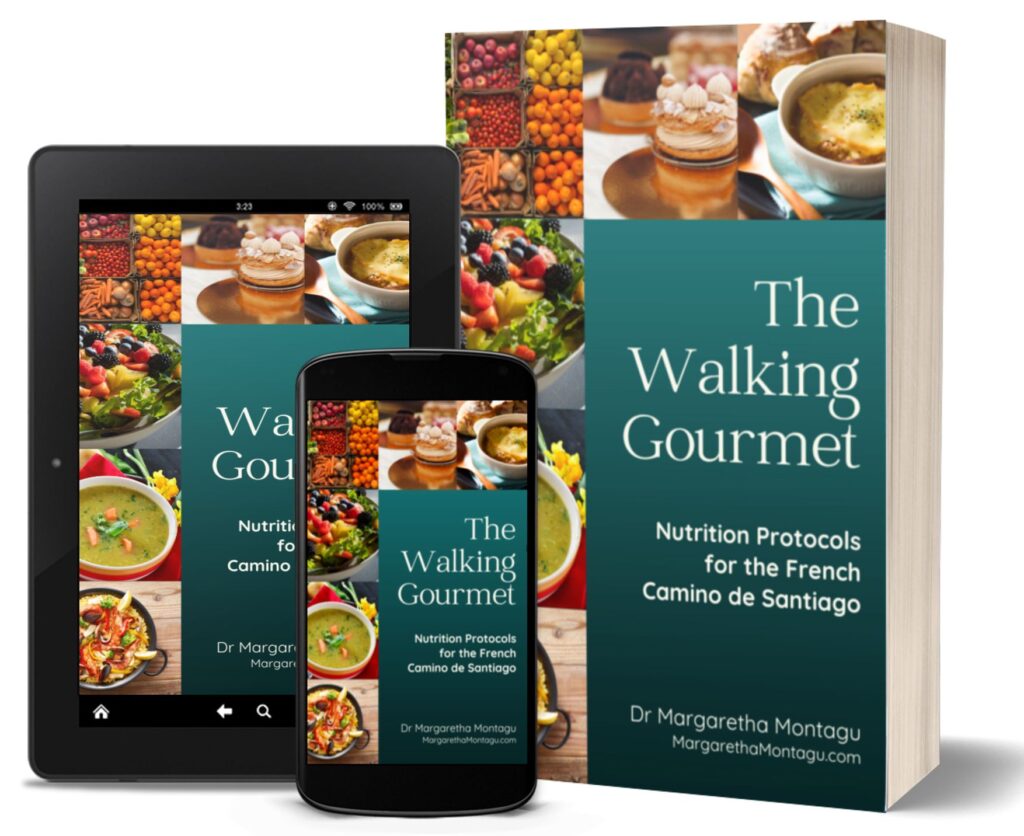
I’ve lost count of the number of guests who have asked for the recipes of the dishes I serve during my retreats. I’ve finally gotten around to publishing my retreat recipe collection as an e-book. If you’re interested in nutrition, especially while you’re walking the Camino de Santiago, or you just love authentic French cuisine, here is a link to my ebook The Walking Gourmet: Essential Food Strategies for the French Camino de Santiago
Designed for those navigating a life transition, the Radical Renaissance Protocol guides you through an identity reset, helping you reconnect with your purpose, realign your values, and reclaim the clarity you thought you’d lost. This isn’t about fixing what’s broken: through reflection, strategic reinvention, and soul-anchored mentoring, you’ll transform uncertainty into direction and dormant potential into meaningful impact.
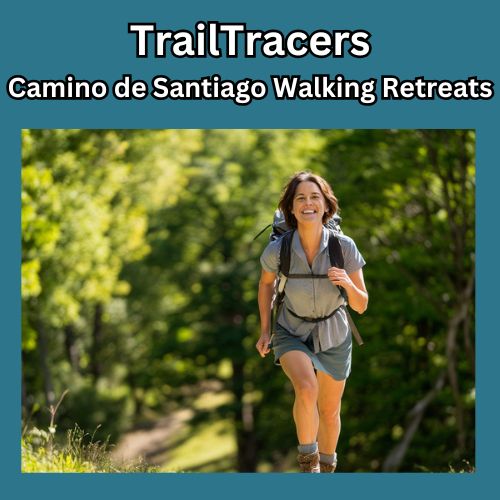
If your soul is craving fresh air, meaningful movement, and a chance to reconnect with nature, join us on a Camino de Santiago Crossroads Retreat in the southwest of France. This isn’t just a scenic hike – it’s a powerful, natural reboot for your body, mind, and spirit. Imagine quiet paths, rolling hills, cozy evenings, and slow conversations. No fitness requirements. No forced bonding. No pressure to have a breakthrough. Just one foot in front of the other, and a journey that meets you exactly where you are.
I put the essence of who I am, and everything I have experienced that makes me who I am, with great enthusiasm, into my retreats, courses and books. – Dr Margaretha Montagu (MBChB, MRCGP, NLP master pract (cert,) Transformational Life Coach (dip,) Life Story Coach (cert) Counselling (cert,) Med Hypnotherapy (dip) and EAGALA (cert)

That’s why we love the Gers, part of France that’s still is authentic and real. People matter, products matter, friendship matters. Life is lived here at a lower speed and that’s why the people here reach the highest age of the whole of France.
I couldn’t have said it better! xxxM