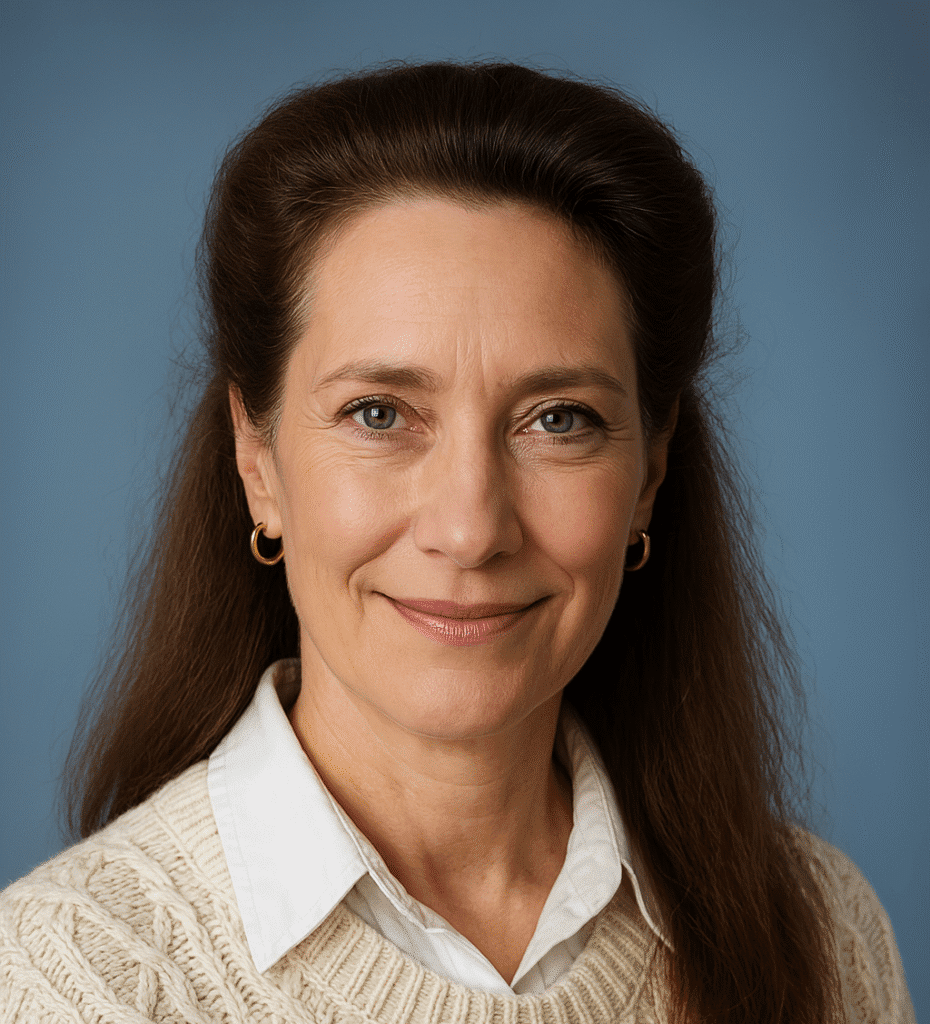
Dr Margaretha Montagu – described as a “game changer”, “gifted healer”, “guiding light” and “life-enriching author” – is a certified transformational retreat leader who guides her clients towards their most meaningful and fulfilling lives, particularly when navigating life transitions – virtually, or with the assistance of her Friesian Horses, at their home in the southwest of France.
In the moment between Armand’s collapse and the arrival of the ambulance, Sophie discovered that resilience isn’t about being strong – it’s about being present when strength fails.
A Masterclass in Radical Resilience
Yesterday, our intrepid pilgrims wrestled with the emotional turbulence, a relatively cerebral affair. Today, however, begins with a rather rude awakening from the body politic: our magnificent physical bodies will age, regardless of how eternally youthful our spirits feel. The Camino, in its infinite wisdom, reminds us that true resilience after 45 isn’t about bench-pressing your own denial; it’s about learning to dance a surprisingly graceful tango with your limitations – rather than constantly tripping over them.
Dr. Fournier’s Freedom Tango
The hospital waiting room in Aire-sur-Adour had a distinct aroma of disinfectant and existential dread. Sophie, clutching Armand’s compass like a lifeline, her knuckles a ghostly white, endured what felt like an eternity for news. The past six hours had been a crash course in how swiftly life can pivot from philosophical musings to primal panic.
Thankfully, it wasn’t a heart attack. No, it was a more humble, yet equally effective, foe: severe dehydration, good old-fashioned exhaustion, and what the doctor, with the diplomacy of a seasoned diplomat, referred to as “overenthusiastic exertion for a man of your age and fitness level.” Sophie had to physically restrain herself from launching a fist into his condescendingly empathetic face. But, if she was brutally honest (and the Camino was making her brutally honest brutally quickly), the man had a point.
“I’m an idiot,” Armand croaked when she was finally permitted to see him. He was a rather unfetching shade of pale, but at least he was alert, an IV drip snaking its way into his arm like a liquid lifeline. “Trying to prove I’m twenty-five when my body keeps filing insistent grievances about being fifty-eight.”
“We’re both card-carrying members of the idiot club,” Sophie retorted, flopping into the suspiciously uncomfortable plastic chair beside his bed. “I’ve been popping ibuprofen like they’re Tic Tacs and pretending my knees aren’t staging a full-blown revolution. When exactly did we collectively decide that acknowledging our limits was synonymous with surrender?”
Armand managed a weak, almost charmingly sheepish smile. “Probably around the same time we decided that ageing was a personal failure instead of a rather impressive achievement.”
Just then, Dr. Melissa Fournier, a woman clearly north of fifty herself and exuding the kind of no-nonsense confidence that only comes from having survived her own existential reckonings (and probably several Caminos), joined them for the discharge conversation.
“Monsieur Novel, let’s be abundantly clear: you are not twenty-five. Neither am I, and neither is Madame Marelli, your long-suffering friend here.” Her directness was a refreshing splash of cold water. “But you’re also not invalids. You’re simply humans in your prime years who apparently forgot that ‘prime’ doesn’t translate to ‘indestructible.'”
“So, we should just throw in the towel? Pack our bags and go home?” Sophie asked, a cold dread seeping into her voice.
“Absolutely not,” Dr. Fournier declared, her eyes twinkling. “But you should adjust. Listen to those loud, opinionated bodies of yours. Rest when they stage a sit-in. Eat when they demand sustenance. And hydrate like your very existence depends on it – because, ironically, it does.” She leaned forward, her voice dropping to an almost conspiratorial whisper. “I’ve walked the Camino three times. Started at forty-eight, and most recently at fifty-six. Each time was profoundly different because I was different. That’s not failure, my dears – that’s wisdom blooming.”
Later, as they ambled slowly through Aire-sur-Adour’s joyful streets – Armand liberated from his hospital bed but under strict orders to take it easy – Sophie pondered the day’s rather harsh lessons.
“I’ve spent my entire adult life trying to be utterly bulletproof,” she confessed, kicking at a loose stone. “Perfect career, perfect marriage (ha!), perfect image. The idea that I might need to slow down, adjust, adapt, admit I have limits… it feels like waving the white flag.”
“Or maybe,” Armand suggested, his voice thoughtful, “it feels like finally growing up. I’ve been mulling over what Dr. Fournier said. Each walk being different because we are different. What if that’s the whole glorious point? What if resilience isn’t about being the exact same person under all circumstances, but about being authentically ourselves within whatever circumstances we’re currently facing?”
They found a quiet bench overlooking the gentle flow of the Adour River, watching the water elegantly navigate around obstacles rather than attempting to brute-force its way through them.
“The river doesn’t try to be a mountain,” Sophie observed, a new understanding dawning in her eyes. “It just keeps flowing, finding the path that actually works.”
As the sun dipped below the horizon, painting the river in hues of orange and purple, they made a silent pact: they would continue their Camino, but they would walk as the people they were today, not the idealised versions of yesterday or the impossible expectations they thought they should be
Journaling Prompt
Where in your life are you stubbornly trying to be the unyielding oak when you desperately need to be the flexible bamboo? Write about the profound difference between giving up and simply adapting. What would it truly look like to cultivate radical resilience by working with your current reality rather than exhausting yourself fighting against it?
“The bamboo that bends is stronger than the oak that resists.” – Japanese Proverb
Key Takeaways for Your Journey
True resilience means adapting to reality, not frantically denying it. Your body’s limits aren’t a personal affront; they’re valuable information.
Our bodies gracefully (or ungracefully) age – but our capacity for growth doesn’t have to. The wisdom of experience is a superpower.
Limitations aren’t failures; they’re vital information. They tell you where to lean in, where to pivot, and when to ask for help.
The most radical thing we can do after 45 is to be unapologetically, authentically ourselves. No more pretending.
Strength comes from flowing around obstacles, not attempting to bulldoze through them. Channel your inner river.
The Wisdom of Age: A New Kind of Courage
Armand’s rather dramatic collapse served as a powerful, albeit painful, reminder: life after 45 requires a distinctly different kind of courage than life before it. We’re called to be radically honest about our limitations while simultaneously remaining radically committed to our ongoing growth. The Camino, it seems, isn’t just about accumulating kilometres; it’s about shedding the pretence of youth and embracing the profound wisdom that comes with age. The goal isn’t to walk like a twenty-five-year-old on a mission to prove something, but to walk like the wise, experienced, and beautifully imperfect human you’ve gloriously become.
For those navigating their own evolving purpose and seeking to cultivate this “radical resilience” in every aspect of life, explore my Rooted in Resilience Protocol. It’s designed to help you, like Sophie and Armand, uncover your authentic path, redefine success on your terms, and confidently pivot when life (or your knees) demands it. Because sometimes, the greatest strength lies in knowing when and how to bend.
Want to follow Sophie and Armand on their life-changing journey?Subscribe to receive each new instalment directly in your inbox, plus insights and tools for navigating your own life transitions. Maybe it’s time toexcavate your buried dreams and chart a course toward your true north – no matter how long you’ve been walking in the wrong direction.
The next morning, Sophie wakes to a disquieting silence. Armand’s bed is empty, and a note lies on his pillow – a note that will force her to confront the hardest truth of all: sometimes the bravest thing you can do is walk on alone…
If you’re feeling overwhelmed, exhausted, or on the edge of burnout, you need immediate support. The Road Map to Resilience: Burnout to Brilliance online course (with the option of adding coaching sessions) is designed for exactly that: a practical, step-by-step course to help you regain control, rebuild your energy, and find clarity in the chaos. This isn’t a quick fix—it’s about proven strategies to calm your nervous system, shift your mindset, and create sustainable resilience. No need to cope with this on your own—let’s get you back on track.
Author Bio: Dr Margaretha Montagu – described as a “game changer”, “gifted healer”, “guiding light” and “life-enriching author” – is an experienced medical doctor, a certified NLP practitioner, a medical hypnotherapist, an equine-assisted psychotherapist (EAGALAcertified) and a transformational retreat leader who guides her clients through life transitions – virtually, or with the assistance of her Friesian and Falabella horses, at their home in the southwest of France.
Sometimes the most courageous thing you can do is admit that your dreams need updating – and Sophie’s phone call proved that courage comes in unexpected forms.
Day 3: Wisdom lies not in stubborn adherence to old Dreams
What happens when you discover that your current purpose needs a complete overhaul? Today, as our pilgrims walk from Nogaro toward Aire-sur-Adour, Sophie’s overheard conversation forces both travellers to confront a difficult truth: sometimes living your purpose means being brave enough to adjust it.
You know that moment when you finally get exactly what you’ve always wanted, and your first instinct is to run screaming in the opposite direction? Welcome to the pivot point – where dreams meet reality and discover they need couples therapy.
After All These Years
Armand pretends to study his map while Sophie paces the small courtyard of the ancient farmhouse near Nogaro. Her phone was practically surgically attached to her ear, and her voice, well, it had the kind of intensity that could curdle milk at 20 paces and cut through the evening air like a hot knife through butter.
“Yes, Marcus, I grasp the ‘opportunity’ part,” she declared, “but perhaps you could try grasping the ‘I’m not the same person who bolted from Lyon six months ago’ part? No, it’s not a divorce-induced midlife crisis, thank you very much. This is about finally figuring out who the heck I actually am!”
She paused, listening, and Armand watched her face morph from pure frustration to something akin to fierce, unadulterated joy. He braced himself.
“A travel writing position? With Condé Nast?” Her voice dropped to a conspiratorial whisper. “After all these years?”
Armand’s heart did a little two-step of vicarious hope. He knew that feeling intimately – the universe, in its infinite comedic wisdom, offering you your wildest dream just as you’d started to dream of something else entirely.
“I need to stew on it,” Sophie continued. “I know it sounds utterly bonkers, but this whole Camino thing has shown me that maybe what I thought I wanted isn’t actually what I need. Give me a week to think it over.”
When she hangs up, she finds rmand watching her with knowing eyes. “Congratulations,” he says quietly. “And condolences.” Sophie laughs, surprised. “That’s exactly how it feels. Dream job offer, everything I thought I wanted at eighteen, handed to me on a silver platter at fifty-two. So why do I feel like I’m being offered a gilded cage?”
They hit the road early the next morning, leaving Nogaro bathed in the golden glow of the rising sun. The previous night’s conversation hovered between them like the morning mist – undeniably present, yet ever-shifting.
“So, tell me about this writing thing,” Armand prompted as they tackled a particularly lung-busting uphill section.
“I used to think I wanted to write about places,” Sophie huffed, in desperate need of an oxygen mask. “Exotic locales, luxury resorts, the whole champagne-and-caviar-in-a-bathtub vibe. But these past few days, trekking with you, with the group… I think what I really want to write about is transformation. About people finding their ‘inner awesome’ in the most unexpected spots.”
“That’s quite a detour from five-star reviews.”
“Terrifying, actually. It’s one thing to stumble upon your purpose. It’s another entirely to realize your purpose has been doing its own thing, evolving behind your back, while you were busy chasing shiny objects.”
Armand nodded slowly, a thoughtful look on his face. “I spent forty years convinced my purpose was building things – planes, intricate systems, grand structures. But watching you scribble in your journal every night, seeing how you genuinely listen to people’s stories… I’m starting to wonder if my real purpose might be less about charting territories and more about helping people navigate their own messy journeys.”
“A pivot from cartography to… what? Life coach for lost souls?”
“Something along those lines,” he admitted, a wry smile playing on his lips. “Quite the terrifying thought for a man who’s spent a lifetime with blueprints and measurements that leave no room for ‘feelings.'”
They crested a hill, and below them, Aire-sur-Adour unfurled, its church bells ringing across the valley like a triumphant fanfare for their newfound clarity.
“Maybe that’s the Camino’s actual masterclass,” Sophie mused. “Not just to follow your purpose, but to let it adapt. To trust that the person you’re becoming might actually be way cooler than the person you dreamed of being.”
“Even if it means politely declining dream jobs and starting from scratch at fifty-eight?”
“Especially then,” she affirmed, a spark of conviction in her eyes.
Your Turn to Reflect:
Write about a time when you got exactly what you thought you wanted, only to realise you’d outgrown that want. How might you need to adjust your current sense of purpose? What would it look like to honour both who you were and who you’re becoming? If your dreams came with update notifications, what would the latest version look like?
“The cave you fear to enter holds the treasure you seek.” – Joseph Campbell
Key Takeaways:
Purpose isn’t static – it evolves as we do – Your purpose at 25 might be completely different from your purpose at 50, and that’s not failure, it’s growth
Sometimes the scariest pivot is away from our old dreams toward our new truth – The hardest person to disappoint is often the person we used to be
Growth often means outgrowing even our cherished goals – What got you here won’t get you there
It’s never too late to course-correct, even when you’re already on course – Sometimes the right path leads away from the right destination
The most authentic path often requires disappointing our former selves – Your 18-year-old dreams might not fit your 50-year-old soul
The Purpose Pivot Protocol
Sophie’s phone call illuminates one of life’s cruellest ironies: sometimes we get what we always wanted just when we’re ready for something completely different. It’s like finally getting invited to the cool kids’ table only to realise you’d rather eat lunch with the debate team.
The Purpose Pivot Protocol recognises that purpose isn’t a destination you arrive at and stay forever – it’s a living, breathing, evolving thing that grows as you do. The dreams that sustained you through your twenties might feel like straitjackets in your fifties, and that’s not a sign that you’re ungrateful or confused. It’s a sign that you’re alive.
This protocol teaches us to honour both who we were and who we’re becoming. It’s about having the courage to disappoint your former self in service of your authentic self. It’s about recognising that the most terrifying pivot isn’t away from failure – it’s away from a success that no longer fits who you’ve become.
Conclusion
The Camino teaches us that real wisdom lies not in stubborn adherence to old dreams, but in the courage to let our purpose evolve. After 45, we have the luxury of experience and the burden of knowing ourselves well enough to demand authenticity over achievement.
Sophie’s deleted phone number represents more than turning down a job – it’s a declaration of independence from the person she thought she was supposed to be. It’s the moment when she stops asking “What do I want?” and starts asking “Who am I becoming?” And sometimes, the bravest thing you can do is admit that your dreams need updating.
As they approach Aire-sur-Adour, Armand collapses on the path, clutching his chest. Sophie’s scream echoes across the valley, and she realises that all her plans for tomorrow might be meaningless if she loses the friend who’s helping her find herself today. Sometimes the biggest pivot isn’t professional – it’s personal, and it happens in the space of a heartbeat.
Want to follow Sophie and Armand on this transformative journey?Subscribe to receive each new instalment directly in your inbox, plus insights and tools for navigating your own life transitions. Because your adventure – whatever form it takes – is waiting for you to be brave enough to begin.
Ready to embrace your own purpose pivot? The Purpose Pivot Protocol helps you navigate the space between who you were and who you’re becoming – even when it means disappointing the person you used to be.
The Purpose Pivot Challenge – drawing inspiration from the Camino de Santiago, this transformative course guides you through a proven framework to recalibrate your authentic purpose and create a meaningful and fulfilling next act. Get immediate access
“I am an experienced medical doctor – MBChB, MRCGP, NLP master pract cert, Transformational Life Coach (dip.) Life Story Coach (cert.) Stress Counselling (cert.) Med Hypnotherapy (dip.) and EAGALA (cert.) I may have an impressive number of letters after my name, and more than three decades of professional experience, but what qualifies me to excel at what I do is my intuitive understanding of my clients’ difficulties and my extensive personal experience of managing major life changes using strategies I developed over many years.” Dr M Montagu
Armand had carried the compass for forty years, but until today, he’d never realised it had been pointing the wrong direction all along.
A Compass becomes a Catalyst
Yesterday, we met two souls beginning a journey that would challenge everything they believed about life after 50. Today, as they walk from Manciet toward Nogaro, a discovered compass becomes the catalyst for questioning what we’re really meant to do with our lives – and why most of us have been following the wrong magnetic north.
What if I told you that the most dangerous lie we tell ourselves isn’t about our limitations, but about our possibilities? That we spend decades following a compass that points toward “should” instead of “soul”? Today’s story will challenge everything you think you know about finding your purpose – especially the part where you think it’s too late to find it.
Chapter 2: A Drawer marked “Someday.”
The brass compass sat heavy in Sophie’s palm, warmer than she’d expected, as though it still remembered the hand that used to hold it. They had just finished their less-than-legendary breakfast—a sad, crumbling granola bar that cost roughly the GDP of a small nation and coffee so acidic it could have powered jet engines – overpriced, underwhelming, and possibly life-threatening.
The inscription on the back was simple, almost stubborn in its earnestness: To Armand – Follow your true north. Love, Grand-père Henri, 1984.
Armand’s voice, when it came, carried the brittle edges of forty years of regret. “It was my eighteenth birthday gift,” he said, not meeting her eye. “My grandfather was a cartographer. An explorer. He mapped parts of Algeria no one had charted before. He wanted me to carry on his legacy.”
Sophie turned the compass over, feeling the indentations of the engraving under her thumb. “But you became an engineer instead.”
It wasn’t a question. She recognised that particular cadence, the apologetic confession of a life lived to make other people comfortable.
Armand’s laugh was short and sharp, bitter enough to corrode their tin cup of coffee. “Practical parents. Practical choice. Steady income, good pension, social approval. I put the compass in a drawer and promised myself I’d explore ‘someday.’” He glanced skyward, watching a hawk spiral above the mist-wrapped Gascon hills with a longing that bordered on physical pain. “Someday turned into forty years of CAD diagrams and meetings where the most thrilling moment was a three-hour argument about bolt tension tolerances.”
Sophie winced in solidarity. She knew that particular flavour of regret—the slow suffocation of youthful dreams, neatly pressed under the heavy fabric of what everyone else called ‘sensible choices.’
They trudged on, the morning mist clinging to the hills and to them, as if reluctant to let them go. The path narrowed into a slippery mud-slick, the kind that seemed custom-designed to test their endurance, patience, and dignity.
“I wanted to be a travel writer,” Sophie said, her voice almost lost in the hush of the mist. “I was accepted to a journalism program when I was eighteen. I kept the letter pinned above my desk for three whole days.”
“Three days?” Armand shot her a sidelong glance.
“Before my parents’ voices got louder than my own. ‘Writing isn’t a real career, Sophie. Marketing is stable. Think of your future.’”
She skidded slightly on a patch of mud, arms flailing, but recovered her balance, just in time. Armand raised an eyebrow but mercifully said nothing.
The irony nipped at her like a persistent gnat: she’d spent her entire adult life selling dreams she never dared to chase herself. Brochures, commercials, digital campaigns—all shouting at potential clients: You deserve this!
The one person she’d never tried to sell that story to was herself.
“I used to write stories,” she confessed, steadying herself on a gnarled walking stick as the path tilted again. “About places I’d never been. About people braver than I was.”
“What stopped you?” Armand asked. Then, before she could answer, he waved a hand. “Wait, no, let me guess: fear, but disguised as caution?”
She stopped walking and stared at him, a breath caught somewhere between annoyance and admiration. “Do you have some secret mind-reading side gig I should know about?”
“We all have an inner compass,” he said with a shrug. “Most of us just forgot how to read it.”
They hiked in companionable silence, their footfalls softened by the damp earth, until Armand pointed to an ancient stone marker up ahead, its surface worn by centuries of wind and pilgrims’ hands.
“Look at that. Eight hundred years old, maybe more. Still standing, still pointing the way.”
Sophie traced the weathered grooves with her fingertips. “Why did we stop chasing our own destinies?”
Armand exhaled slowly, his breath fogging in the cool air. “When we started believing dreams came with expiration dates. When we let other people’s caution deafen our compass. When we convinced ourselves that practical and purposeful were the same thing.”
A group of twenty-somethings breezed past them, their backpacks practically bouncing, their chatter light and unburdened, as if they’d never even heard of regret. Sophie watched them go, feeling a twist in her gut that might’ve been envy or might’ve been something closer to hope.
“They make it look so easy,” she muttered.
“Maybe because no one’s taught them how to complicate it yet,” Armand said, his mouth quirking into a grin. “Maybe they still think the compass points to possibility, not security. They haven’t been told yet that really wanting something more is selfish.”
Sophie absorbed that as they walked on, the rhythm of their steps syncing in a quiet, unspoken cadence.
“You know what’s funny?” she said eventually. “I spent twenty-five years in marketing convincing people they deserved to follow their dreams. Buy this car, book that holiday, wear this perfume—because you’re worth it, right? But the only person I never managed to sell that dream to was myself.”
Armand’s grin widened. “The cobbler’s children have no shoes.”
“In our case, the dream-seller has no dreams.”
Their laughter echoed down the empty path, startling a pair of drowsy pigeons into flight. Sophie realised, as her chest unknotted just a little, that this was the first time she’d laughed at her own story instead of feeling trapped inside it. Maybe that was something.
As the spires of Nogaro’s so-called green cathedral appeared in the valley, like an ancient waypoint on a medieval GPS, Sophie pressed the compass back into Armand’s palm.
“It’s not too late, you know,” she said softly. “To follow it.”
He closed his fingers around the brass, as though anchoring himself to its weight. “Is that what we’re doing out here? Realigning ourselves with our destiny?”
“Maybe we’re finally learning to read our inner compass properly,” Sophie said, brushing a strand of hair from her damp forehead. “Maybe the compass was never at fault—we just stopped trusting what it was telling us.”
Armand paused, turning the compass over in his hand as though seeing it for the first time. He held it up between them, watching the needle tremble, spin, and settle, pointing unerringly toward magnetic north.
But for the first time in four decades, he understood what his grandfather had really meant.
“My grandfather used to say that a compass doesn’t tell you where to go,” Armand said, his voice steady now, like something inside him had finally clicked into place. “It tells you where you are. And once you know where you are, you can decide where to go.”
Sophie smiled, the first true, unguarded smile in what felt like years. “We’ve been following other people’s directions for so long, we forgot to trust our inner compass.”
“Time to realign ourselves,” Armand agreed, and for the first time since she met him, he sounded like a man who knows exactly where he’s going. When they set off again, his steps were lighter.
Your Turn to Reflect
If you could ignore all practical considerations – money, others’ opinions, fear of failure – what would your internal compass point toward? Write about the dreams you’ve buried under “practicality” and what it would mean to resurrect them now. What would your eighteen-year-old self think of the direction you’ve chosen? What would your eighty-year-old self advise?
“I’ve come to believe that each of us has a personal calling that’s as unique as a fingerprint and that the best way to succeed is to discover what you love and then find a way to offer it to others in the form of service, working hard and also allowing the energy of the universe to lead you.” —Oprah Winfrey
Key Takeaways about Recalibrating Your Compass:
Our society confuses practical with purposeful, but they’re not the same thing – Just because something pays the bills doesn’t mean it feeds the soul
Dreams don’t have expiration dates – only we do – The only deadline on your purpose is the one you create
The compass of purpose points inward, not toward external validation – Your purpose isn’t what others expect of you; it’s what you expect of yourself
It’s never too late to course-correct toward your true north – Every day is a chance to choose direction over drift
Sometimes we need to get lost to find our real direction – The detour might be the path
The Purpose Pursuit Protocol:
Armand’s compass reveals something profound about midlife transformation: most of us have been following the wrong magnetic north our entire adult lives. We’ve been guided by external expectations instead of internal convictions, by fear instead of fascination, by what we should do instead of what we’re called to do.
The Purpose Pursuit Protocol isn’t about searching for your purpose – it’s about digging it up. It’s about excavating the dreams buried under decades of “practical” choices and discovering that they’re not dead, just dormant.
This protocol recognises that purpose after 45 looks different from purpose at 25. It’s more nuanced, more authentic, more willing to disappoint others in order to satisfy the soul. It’s purpose seasoned with experience, tempered by wisdom, and unafraid of being called “impractical” by people who have confused safety with success.
Conclusion
Armand’s compass reveals a profound truth about life after 45: we often spend the first half following other people’s directions and the second half discovering our own.
The Camino de Santiago forces us to confront this lie and gives us permission to consult our own discarded compasses once more. It whispers the dangerous truth that our culture doesn’t want us to hear: it’s not too late. It’s never too late. The compass still works, the path still calls, and the only thing standing between you and your true north is the courage to admit you’ve been walking in the wrong direction.
Want to follow Sophie and Armand on their life-changing journey?Subscribe to receive each new instalment directly in your inbox, plus insights and tools for navigating your own life transitions. Maybe it’s time toexcavate your buried dreams and chart a course toward your true north – no matter how long you’ve been walking in the wrong direction.
That evening in Nogaro, Sophie makes a phone call that will change the trajectory of her entire journey – and Armand overhears every shocking word. What happens when the universe offers you exactly what you always wanted, just when you’ve started to want something completely different?
The Purpose Pursuit Challenge – if you want to discover your life purpose, this course will provide you with the clarity, motivation and direction you need to manifest your next chapter – in both your personal and professional life. Get immediate access
“I am an experienced medical doctor – MBChB, MRCGP, NLP master pract cert, Transformational Life Coach (dip.) Life Story Coach (cert.) Stress Counselling (cert.) Med Hypnotherapy (dip.) and EAGALA (cert.) I may have an impressive number of letters after my name, and more than three decades of professional experience, but what qualifies me to excel at what I do is my intuitive understanding of my clients’ difficulties and my extensive personal experience of managing major life changes using strategies I developed over many years.” Dr M Montagu
He was unprepared to die because he’d never really figured out how to live.
Q: “I’ve just been told that I have a life-threatening disease. I’ve heard that knowing your life purpose can help during difficult times. Well, this is a VERY difficult time. Can someone explain how knowing my life purpose might help me cope with the physical and emotional challenges of this diagnosis?”
A: When faced with a life-threatening diagnosis, knowing your life purpose acts as an emotional anchor, providing meaning that transcends physical suffering, clarity for difficult decisions, and a compelling reason to fight. It transforms you from a victim of circumstances into someone with unfinished business—and that shift changes everything.
Picture this: You’re sitting in a sterile medical office, fluorescent lights humming overhead, when three words shatter your world like a sledgehammer through glass. “You have cancer.” It’s “a stage four diagnosis.” Maybe “six months remaining.”
In that moment, everything you thought you knew about your life gets turned upside down. The grocery list on your phone suddenly seems absurd. Your mortgage payments feel meaningless. That argument with your neighbour about the fence? Laughably trivial.
But here’s what the doctors don’t tell you in those first devastating moments: while they’re focused on treating your body, you’re about to embark on the most profound journey of meaning-making you’ve ever experienced. And whether you emerge from this journey bruised but not broken or shattered in a million pieces often depends on one crucial factor—knowing why you’re here.
Jason’s Story: When Your Life Purpose Becomes Your Life Line
Jason Morrison was the kind of guy who collected problems like some people collect stamps. At 47, he was juggling a failing marriage, a job that sucked his soul dry, and three teenagers who seemed determined to test every boundary known to humanity. And then some. He lived in what he called “the gray zone”—not happy, not sad, just… there.
Then came the phone call that changed everything.
“Mr. Morrison, I’m afraid the tests show you have ALS—Lou Gehrig’s disease. Given the progression we’re seeing, we’re looking at perhaps two to three years.”
Jason sat in his Honda Civic in the hospital parking lot for two hours, staring at nothing. Two to three years. The words echoed in his head like a broken record. He thought about all the things he’d never done, all the dreams he’d shelved, all the conversations he’d avoided. But mostly, he thought about how utterly unprepared he was to die because he’d never really figured out how to live.
The first few weeks were a blur of medical appointments, second opinions, and well-meaning casseroles from neighbours. But it was during a sleepless night, scrolling through his phone at 3 AM, that Jason stumbled upon an article about Viktor Frankl, the Holocaust survivor who wrote “Man’s Search for Meaning.” One quote stopped him cold:
“Those who have a ‘why’ to live, can bear with almost any ‘how.'”
Something clicked. Jason realised he’d been living his entire life without a “why.” He’d been checking boxes—graduate college, get married, buy a house, have kids, climb the corporate ladder—but he’d never asked himself the fundamental question: What am I here for?
That realisation sparked what Jason would later call his “purpose quest.” He started with the obvious question: If I only had two years left, what would I want to accomplish? But as he dug deeper, he discovered something profound. His purpose wasn’t about what he wanted to do—it was about who he was meant to be.
Jason had always been the guy people came to with their problems. Friends, colleagues, even strangers seemed drawn to share their struggles with him. He’d dismissed this as just being a good listener, but now he saw it differently. What if his purpose was to help others navigate their darkest moments? What if his own journey through this medical crisis was preparation for something bigger?
The transformation was remarkable. Jason started a support group for people facing terminal diagnoses. He began writing about his experience, sharing the raw, honest, sometimes hilariously inappropriate thoughts that come with confronting mortality. He launched a podcast called “Dying to Live” where he interviewed others facing their own mortality about what really matters.
Most surprisingly, Jason found that knowing his purpose didn’t make the physical symptoms easier—the muscle weakness, the difficulty speaking, the progressive loss of independence were all still there. But something fundamental had shifted. He wasn’t just a man dying of ALS anymore. He was a man living with ALS while fulfilling his purpose of helping others find meaning in their darkest hours.
“The weird thing,” Jason told me during one of our conversations, “is that I’m more alive now than I ever was when I was healthy. I spent 47 years sleepwalking through life, and it took a death sentence to wake me up. The irony isn’t lost on me—I had to face dying to learn how to live.”
Jason’s story illustrates something powerful about purpose: it doesn’t eliminate suffering, but it transforms it. When you know why you’re here, pain becomes meaningful. Struggle becomes sacred. Even death becomes a teacher rather than just an ending.
Eighteen months after his diagnosis, Jason was still exceeding his prognosis. His marriage had transformed from surviving to thriving. His kids, witnessing their father’s courage, had become his biggest supporters and advocates. His support group had grown to over 200 members across three cities.
“I don’t know how much time I have left,” Jason reflected, “but I know I’m not wasting it anymore. Every day I wake up and ask myself: How can I use whatever time I have left to serve my purpose? It’s made all the difference.”
Five Key Takeaways: Purpose as Medicine
1. Purpose Provides Emotional Resilience
When you know your “why,” you develop what psychologists call “meaning-making capacity”—the ability to find significance in suffering. This doesn’t minimise the pain, but it contextualises it within a larger story where you’re not just a victim but a protagonist with important work to do.
2. Purpose Clarifies Priorities Instantly
A life-threatening diagnosis forces you to confront what truly matters. When you know your purpose, this brutal prioritisation becomes less overwhelming. You’re not just cutting things out—you’re focusing on what aligns with your deeper calling.
3. Purpose Transforms Your Relationship with Time
Instead of feeling like time is being taken from you, purpose helps you see the time you have as a gift to be stewarded. Every moment becomes precious not because it might be your last, but because it’s an opportunity to fulfil your purpose.
4. Purpose Connects You to Something Greater
Medical crises can feel isolating, but purpose connects you to a larger story. Whether it’s helping others, creating beauty, or advancing knowledge, purpose reminds you that your life has meaning beyond your individual experience.
5. Purpose Becomes Your Compass for Difficult Decisions
From treatment choices to end-of-life planning, purpose provides a framework for making decisions that feel authentic and aligned rather than just reactive to fear.
Powerful Exercises for Purpose Discovery
The Legacy Letter Exercise
Write a letter to be opened 100 years from now. What would you want future generations to know about how you spent your precious time on earth? What impact did you have? What mattered most to you? This exercise often reveals purpose themes that aren’t immediately obvious.
The Deathbed Clarity Prompt
Imagine you’re at the end of your life, surrounded by loved ones. What would you need to have accomplished, experienced, or contributed to feel like your life was well-lived? What would you regret not doing? This morbid but powerful exercise cuts through the noise to reveal what truly matters.
The Values Excavation
List your top five values (not what you think they should be, but what they actually are based on how you spend your time and energy). Then ask: How can I express these values in service to others? Purpose often emerges at the intersection of your values and the world’s needs.
The Narrative Journaling Prompt
Write about a time when you felt most alive, most yourself, most connected to something greater than yourself. What were you doing? Who were you with? What values were you expressing? These peak experiences often contain clues about your deeper purpose.
“In the midst of winter, I found there was, within me, an invincible summer.” – Albert Camus
Frequently Asked Questions
Q: What if I’m too sick or overwhelmed to think about purpose right now? A: That’s completely understandable and normal. Purpose discovery isn’t about adding pressure—it’s about finding peace. Start small. Even asking “What brought me joy today?” can be a first step. Purpose work can be done in whatever increments you can manage.
Q: What if I discover my purpose but don’t have time to fulfil it? A: Purpose isn’t always about grand gestures or lengthy projects. Sometimes it’s about embodying certain qualities—courage, compassion, authenticity—in whatever time you have. The man who faces his diagnosis with grace and helps one person feel less alone has fulfilled a profound purpose.
Q: How is this different from just “positive thinking”? A: Purpose isn’t about pretending everything is fine or forcing optimism. It’s about finding authentic meaning in your actual circumstances, including the difficult ones. It’s about mattering, not just feeling better.
Q: What if my purpose feels too big for my current circumstances? A: Purpose scales. If your purpose is to help others heal but you’re bedridden, maybe it’s through writing, or phone calls, or even just how you treat your caregivers. Purpose finds a way to express itself within whatever constraints exist.
Q: Can purpose really make a difference in medical outcomes? A: While purpose isn’t a cure, research shows that people with a strong sense of purpose often have better treatment compliance, stronger immune responses, and improved quality of life. It’s not magic—it’s the power of having something meaningful to live for.
The Path Forward: Your Purpose Awaits
Whether you’re facing a health crisis yourself or supporting someone who is, remember this: your life has meaning that transcends your circumstances. That meaning—your purpose—is waiting to be discovered or rediscovered.
If you’re just beginning this journey of purpose discovery, my Purpose Pursuit Protocolprovides a structured, compassionate approach to uncovering what you’re truly here for. It’s designed for people who’ve never done this work before, meeting you exactly where you are.
If you once knew your purpose but life has thrown you off course, the Purpose Pivot Protocol helps you recalibrate and realign with what matters most. Sometimes our purposes evolve, and that’s not just okay—it’s necessary.
Both programs understand that purpose work during a health crisis isn’t a luxury—it’s a necessity. They’re designed to be gentle, flexible, and deeply practical for people navigating medical challenges.
Conclusion: The Treatment You Didn’t Know You Needed
Viktor Frankl, writing from his experience in Nazi concentration camps, observed that “suffering ceases to be suffering in some way the moment it finds meaning.” This isn’t about toxic positivity or pretending pain doesn’t hurt. It’s about the profound human capacity to find significance in even the most difficult circumstances.
When you know your purpose, you don’t just survive a medical crisis—you meet it with clarity, courage, and a sense of mission that transforms the entire experience. You discover that while you can’t always control what happens to your body, you retain authorship over the meaning of your life.
Your diagnosis may have changed your timeline, but it doesn’t have to diminish your significance. In fact, it might be the catalyst that helps you discover what you’re truly here for. And that discovery, my friend, might just be the most powerful medicine of all.
The Bottom Line
A life-threatening diagnosis strips away illusions and forces you to confront what truly matters. When you know your life purpose, you face this challenge not as a victim of random misfortune, but as someone with meaningful work to do in whatever time you have. Purpose doesn’t eliminate suffering, but it transforms it from meaningless pain into a sacred journey of becoming who you were always meant to be. And sometimes, that transformation is the most profound healing of all.
“I am an experienced medical doctor – MBChB, MRCGP, NLP master pract cert, Transformational Life Coach (dip.) Life Story Coach (cert.) Stress Counselling (cert.) Med Hypnotherapy (dip.) and EAGALA (cert.) I may have an impressive number of letters after my name, and more than three decades of professional experience, but what qualifies me to excel at what I do is my intuitive understanding of my clients’ difficulties and my extensive personal experience of managing major life changes using strategies I developed over many years.” Dr M Montagu
Two Souls, One Path: Sophie and Armand’s Life-changing Adventure in the Southwest of France
More and more, I find myself using storytelling as a medium to pass on insights, probably not altogether surprising as my first love, even after 8 books, remains writing. Today I embark on a 7-part story, the Camino Chronicles, that I hope will be as thought-provoking as it is entertaining.
Day 1: Surviving a Storm in the Southwest of France
At 52, Sophie Marelli discovered that losing everything might be the best thing that ever happened to her – but first, she had to survive the storm.
When Life Forces You Off the Beaten Path
Society tells us that 45+ is the time to settle down, play it safe, and prepare for decline. We’re supposed to accept smaller dreams, lower expectations, and the gentle slide toward irrelevance. But what if this conventional wisdom is not just wrong – what if it’s dangerous?
What if this is exactly when we need to set off on our wildest adventures?
Today begins the story of two strangers who discovered that the path to renewal doesn’t run through a boardroom or therapist’s office – it winds through the ancient routes of the Camino de Santiago. Their journey will challenge everything you think you know about starting over, about courage, and about what’s possible when you’re brave enough to let your old life fall apart so a new one can begin.
When Everything Falls Apart
Dawn seeped into the narrow streets of Eauze, softening the edges of the ancient stones. Sophie Marelli stood in the shadow of the cathedral, the straps of her backpack cinched so tightly that her shoulders ached—a familiar ache, though, until now it had always been hidden. She had spent decades carrying the weight of expectations, mostly other people’s, mostly without complaint. But this—this was different. This had teeth.
The medieval stones beneath her boots gleamed wet with morning dew, slick and treacherous underfoot. Somewhere behind her, a boulangerie’s warm, yeasty exhale curled through the air, brushing her cheek like a memory that wasn’t hers. The scent awakened something inside her—hunger, yes, but not for bread.
Six months ago, she was a woman of sharp heels and sharper schedules, a marketing executive with a view over Lyon’s skyline and a marriage polished to perfection, if only on Instagram. Now, standing on this sacred path, she was jobless, divorced, and about to walk forty kilometres across the ribs of rural France with a group of strangers with whom she had nothing in common.
The irony bit deep: she’d spent a career selling curated adventures to people craving escape while she herself desperately clung to safety. And now, at fifty-two, stripped bare of the scaffolding she’d spent years constructing, she was finally stepping into the unknown.
Across the worn square, Armand Novel adjusted the straps of his backpack for the third time in as many minutes. He wasn’t looking at her—not directly—but he was watching in the way of someone who understood the weight she carried because he’d felt it too. He recognised that brittle exhaustion, that pulse of panic at the edge of one’s consciousness. He’d worn that expression like a mask these past two years, since retirement had morphed quietly from reward to life (what’s left of it) sentence.
At fifty-eight, the man who once sent machines into the sky now struggled to lift his own feet off the ground.
The guide—a wiry woman with silver-threaded hair and a sun-cracked face that spoke of storms weathered and survived—clapped her hands to gather the group. Her voice was sandpaper over stone, rough but steady.
“The Camino doesn’t care about your title, your bank account, your expectations, your regrets. It only cares about one thing—whether you are strong and courageous enough to keep walking when everything hurts.”
The words settled in Sophie’s chest like stones dropped in deep water. She had built her life on controlled outcomes and calculated risks. She wasn’t here to suffer. She was here to outwalk the ache, wasn’t she?
But something inside her-a shattering, shaking thing-knew the truth: she’d come to exorcise it.
The group moved off, the medieval streets unfurling ahead like the pages of a well-thumbed book. Pairs formed easily, chatter bubbling around her, but Sophie kept herself to herself, to the middle, neither part of the noise nor fully alone. Her boots—sleek, expensive, and impossibly ill-suited—slipped on the uneven stones, each step reminding her that no amount of research or online reviews could prepare her for the blistering honesty of this trail.
She stumbled. Of course she stumbled.
A hand caught her elbow, steady and firm. Heat radiated from his palm to her skin, a simple contact that sliced through her composure.
“Careful there.” Armand’s voice was a little rough, as though it had been unused for too long. When she looked up, she found eyes not of a man amused or inconvenienced, but one quietly offering understanding. No judgment. No expectation.
“Thank you,” she managed, but the words snagged in her throat. She blinked rapidly, unwilling to let tears—stupid, ambushing tears—fall for something as simple as kindness.
But it wasn’t simple, was it? Not when life had been so complicated for so long.
The first kilometres were brutal, but not in the grand, cinematic way she’d imagined. The boots she’d bought after precisely thirty-two minutes of online comparison now gnawed at her heels like scavengers. Somewhere between kilometre six and seven, she realised that the marketing team who’d sold her on their “perfect fit for the modern adventurer” had almost certainly never met an adventurer. Or a foot.
Armand limped beside her, waging his own battle. His knees, mute for years behind a desk, had apparently found their voices and were shouting obscenities in some forgotten dialect of pain. The countryside opened around them in slow, spectacular sweeps—vineyards rippling under a September sky so wide and blue it seemed almost impossible that it could be real.
At their first rest stop, Sophie collapsed onto a low stone wall, her body humming with unfamiliar exhaustion.
“I used to love mornings like this,” she said, breath still ragged. “Before everything became about urgent emails and someone else’s overbooked calendar.”
Armand followed her gaze skyward, to where a hawk carved lazy spirals into the blue. “I built machines to own the sky. Spent thirty years making wings. Funny—I can’t remember the last time I actually watched something fly.”
His voice was rough-edged but quiet, like he was still getting used to speaking aloud the things that mattered.
She blurted the question before she could shape it gently. “Why are we doing this? Really? We could be home, sipping long, cool drinks, with unblistered noses and feet.”
His answer didn’t come quickly. He seemed to taste the weight of the words before voicing them.
“Because comfort isn’t living. We’ve tried that. Maybe we’re here because safety started to feel like a kind of… slow death.”
The truth of it punched the breath from her chest.
She picked at the stitching on her water bottle strap, throat tight. “I thought I was falling apart. Divorce. Job gone. Sister telling me to pull myself together like I’m just missing a few puzzle pieces.”
Armand’s mouth quirked, not quite a smile. “Maybe you are trying to build the puzzle with the wrong pieces. Or maybe the old pieces don’t fit together anymore?”
The words hung between them, reverent, as if the air itself was holding its breath.
She hadn’t thought of it like that. Not really. She’d been fighting to put the old life back together with frantic, bruised hands and heart when maybe—maybe—it wasn’t broken. Maybe it was redundant.
The Camino wove through gold-stitched fields and sleepy hamlets, where the clink of church bells and the scent of woodsmoke replaced the buzz of urgent phones. They walked mostly in silence after that, but it was a kind silence, the kind that settles when two people suddenly feel less alone.
By the time they reached the night’s simple lodgings, Sophie’s feet throbbed in angry bursts, and her shoulders had formed a quiet conspiracy against her. But beneath the ache was something unfamiliar and precious—a pulse of life she’d thought she’d buried under spreadsheets and glossy magazine spreads.
She liked Armand. His quiet steadiness. His questions that didn’t feel like tests. And she trusted him, which surprised her, after months of trusting no one, especially not herself.
As they unpacked, laughing with the others about blistered toes and the secret betrayals of supposedly ergonomic gear, Armand’s backpack spilt open.
Sophie bent to help, her fingers brushing against something unexpected, creased and worn, tucked inside a leather pouch.
She froze.
This man, the one she’d just begun to trust, wasn’t the man she thought he was.
Your Turn to Reflect
What storm are you currently weathering in your life? Instead of asking “Why me?” write about what this storm might be preparing you for. What old structures in your life need to be torn down so something new can grow?
Take fifteen minutes to write freely about your current challenges. Don’t censor yourself, don’t try to find solutions – just acknowledge the storm and explore what it might be clearing away to make room for what comes next.
“We must walk consciously only part way toward our goal, and then leap in the dark to our success.” – Henry David Thoreau
Five Truths About Surviving Life’s Storms
Life’s storms often arrive to clear the path for us to grow – What feels like destruction might be preparation. The job loss that leads to the dream career, the divorce that leads to authentic love, the health scare that leads to real vitality.
Society’s timeline for when we should seek adventure might be completely wrong – We’re told to take risks when we’re young and play it safe when we’re older. But it’s precisely when we have experience, wisdom, and nothing left to lose that we’re best equipped for real adventure.
Physical challenges can break open emotional breakthroughs – There’s something about pushing our bodies beyond comfort that cracks open emotional armour we didn’t even know we were wearing. The Camino forces honesty in ways that therapy sometimes can’t.
Sometimes we need to lose everything to find ourselves. Our identities become so tied to external circumstances that we forget who we are underneath. Crisis strips away the non-essential and reveals what’s truly important.
The journey of a thousand miles begins with one wobbly step – You don’t need to have it all figured out to begin. You just need to be willing to put one foot in front of the other, even when you’re not sure where you’re going.
The Revelation
Sophie and Armand’s first day reveals a truth our culture desperately wants to hide: disruption after 45 isn’t a failure – it’s an invitation. While society pushes us toward safety and predictability, our souls crave challenge and growth. The Camino strips away pretence and forces us to confront who we are when everything we thought defined us is gone.
This is why so many people find themselves called to dramatic change in their middle years. It’s not a crisis – it’s an awakening. The comfortable life that once felt like success starts to feel like a prison. The safe choices that once seemed wise start to feel like cowardice. The voice that whispers “there has to be more than this” gets louder until we finally have to listen.
Sophie’s storm – divorce, job loss, the complete dismantling of her carefully constructed life – isn’t punishment. It’s preparation. Every challenge she’s facing is developing muscles she’ll need for what comes next. Every loss is making space for something better. Every step on this ancient path is teaching her to trust herself in ways she never has before.
When we’re in the middle of our storms, it’s hard to see them as anything but devastating. But Sophie is beginning to understand what countless pilgrims before her have discovered: sometimes you have to lose your way completely before you can find your true path.
The question isn’t whether you’ll face storms in your life – you will. The question is whether you’ll have the courage to see them as the beginning of your adventure rather than the end of your story.
Sophie is learning what I’ve discovered through working with hundreds of people navigating major life changes: storms are not punishments to endure but classrooms to graduate from. When divorce papers arrive, when the job disappears, when the kids leave home, when health scares hit – these aren’t signs that life is over. They’re invitations to reconstruct.
This is exactly why I developed the Survive the Storm Protocol. Not because I’m some guru who never faces challenges (trust me, I’ve had my share of spectacular life implosions), but because I’ve walked through enough storms to know they all have the same secret: they’re not trying to destroy you, they’re trying to liberate you.
Tomorrow, we’ll discover what Sophie found in Armand’s backpack and how a simple object can change everything we think we know about the person walking beside us. But today, the lesson is this: your storm isn’t your ending. It’s your beginning.
Want to follow Sophie and Armand on this transformative journey?Subscribe to receive each new instalment directly in your inbox, plus insights and tools for navigating your own life transitions. Because your adventure – whatever form it takes – is waiting for you to be brave enough to begin.
What happens when Sophie confronts Armand about his secret? Find out in the next instalment, “The Compass That Points Inward” – where a hidden object reveals that the most important directions aren’t the ones that lead us to new places, but the ones that lead us home to ourselves.
I put the essence of who I am, and everything I have experienced that makes me who I am, with great enthusiasm, into my retreats, courses and books. – Dr Margaretha Montagu (MBChB, MRCGP, NLP master pract (cert,) Transformational Life Coach (dip,) Life Story Coach (cert) Counselling (cert,) Med Hypnotherapy (dip) and EAGALA (cert)
Question: “I’m going through a divorce and trying to make sense of it all. I’ve heard that knowing your life purpose can help during difficult times. Can someone explain how knowing my life purpose might help me cope with the emotional challenges of divorce?”
Short Answer: When your relationship ends, knowing your life purpose provides stability when everything feels chaotic, helps you make decisions aligned with your values rather than reactive emotions, and transforms your divorce from a devastating ending into a powerful beginning of authentic living.
Picture this: You’re standing in the wreckage of what you thought was your forever. The house feels too quiet, the bed too big, and your phone notifications have become a minefield of legal documents and custody arrangements. Welcome to the divorce rollercoaster—life’s cruellest plot twist that nobody is ever really prepared for, despite the statistics screaming that half of us will have to find our way through it.
Would you believe me if I told you that this devastating disaster could become the very catalyst that launches you into the most purposeful, impactful and authentic version of yourself you’ve ever been?
The secret weapon isn’t therapy alone (though that certainly helps), it isn’t retail therapy (though your credit card might disagree), and it certainly isn’t that well-meaning friend who keeps saying “everything happens for a reason” (please, just stop). The game-changer is something far more profound: knowing your life purpose with crystal clarity.
The Tale of Antoine Delfour
Antoine Delfour, a 42-year-old architect from Lyon story’s might sound achingly familiar. For eighteen years, Antoine had built his identity around being half of “Antoine and Marie.” They were the couple everyone admired—successful careers, a beautiful home overlooking the Rhône, two teenage children who seemed to have inherited the best of both parents.
Then came the conversation that shattered his world.
“I don’t know who I am anymore,” Marie said over dinner at their favourite bistro—the same place where Antoine had proposed two decades earlier. “I need space to find myself.”
The irony wasn’t lost on Antoine. As an architect, he spent his days designing spaces for others to live their dreams, yet he had no idea what space his wife needed in her life. When Marie moved out three weeks later, Antoine found himself staring at blueprints he couldn’t focus on, surrounded by the echoing silence of a house that suddenly felt like a museum of his former life.
The first month was brutal. Antoine moved through his days like a zombie, mechanically drawing lines and calculating angles while his inner world crumbled. His work suffered. His relationship with his children became strained as he struggled to hide his devastation behind insincere forced smiles during their weekend visits. He lost fifteen pounds not because he was trying to get back in shape for dating (that thought just terrified him), but because food had lost all taste.
Then came the breaking point.
Standing in his empty kitchen at 2 AM, Antoine realised he had been living someone else’s design for nearly two decades. The successful career? Chosen because it impressed Marie’s father. The suburban house? Picked because it fit their success-saturated image. Even his hobbies—tennis at the country club, wine tastings with other couples—had been selected to maintain their social standing rather than feed his soul.
“Who am I now that I’m no longer half of a couple?” he whispered to the darkness.
This question, terrifying as it was, became his lifeline.
Antoine began what he now calls his “archaeological dig to find his soul.” He started journaling, not about his anger or sadness (though those emotions appeared often), but about moments in his life when he felt most alive. Patterns emerged that surprised him. His happiest memories weren’t from lavish vacations or professional achievements—they were from volunteer work building homes for families in need, from teaching his nephew to sketch, from the quiet satisfaction of designing a small community center that became the heart of a struggling neighbourhood.
Slowly, painfully, beautifully, Antoine’s true purpose began to emerge: creating spaces where community flourishes, and people feel genuinely at home.
This revelation changed everything.
Instead of seeing his divorce as the destruction of his life’s work, Antoine began to view it as the demolition phase necessary before constructing something better. He started making decisions through the lens of his newfound purpose. When his boss offered him a promotion to work on luxury developments, Antoine politely declined and instead pitched a pro bono project for affordable housing. When Marie suggested they sell their house quickly to “just get it over with,” Antoine advocated for taking time to find a buyer who would love the home as much as they once had.
Most remarkably, Antoine’s relationship with his children prospered. Instead of trying to be the “fun weekend dad” to compensate for the divorce, he began sharing his authentic self with them. He taught them to see architecture not as a career but as a way of caring for others. Their weekend activities shifted from expensive entertainment to meaningful projects—visiting construction sites, sketching interesting buildings, even volunteering together at Habitat for Humanity.
Six months after Marie moved out, Antoine made a decision that shocked everyone: he started his own firm specialising in community-focused architecture. Friends worried he was having a midlife crisis. His ex-wife questioned his sanity during a heated phone call about child support. But Antoine knew something they didn’t—he was finally building a life that matched his soul’s blueprint.
Today, three years later, Antoine’s firm has designed twelve community centres, fifteen affordable housing projects, and a children’s hospital wing that wins architectural awards not for its beauty (though it’s stunning) but for its ability to make families feel hopeful during their darkest hours. His relationship with Marie evolved from bitter to tolerant. His children are proud to tell their friends what their father really does for work.
“Purpose,” Antoine reflects, “didn’t take away the pain of divorce, but it gave the pain meaning. It transformed my suffering from something that happened to me into something that was preparing me for who I was meant to do next.”
Five Life-Changing Takeaways: How Purpose Transforms Divorce
1. Purpose Provides Emotional Stability When Everything Else Is Chaos
When your marriage ends, it feels like the very foundations of your life are crumbling. Your living situation changes, your financial picture shifts, your social circle often fractures, and your daily routines disappear overnight. In this storm, your life purpose becomes your emotional anchor—the one thing that remains constant when everything else is in flux.
Unlike external circumstances that can change without warning, your purpose is internal and unshakeable. It’s not dependent on another person’s choices or feelings. When Antoine discovered his purpose was creating community-centred spaces, that calling didn’t disappear when Marie left. In fact, it became more urgent and clear.
Divorce triggers some of our most primitive emotional responses—fear, anger, the desperate need for control. When you’re operating from raw emotion, you make decisions that often hurt your long-term interests. You might agree to unfavourable custody arrangements out of guilt, or refuse reasonable settlement terms out of spite.
Your life purpose acts as a decision-making filter that transcends temporary emotions. Antoine could have chosen to work more hours to afford a flashier lifestyle and “show Marie what she was missing.” Instead, his purpose-driven approach led him to take calculated risks that aligned with his values, ultimately creating both financial success and personal fulfilment.
3. Purpose Transforms Victims into Heroes of Their Own Stories
There’s a profound difference between someone who has been divorced and someone who used divorce as a catalyst for authentic living. The first sees themselves as a victim of circumstances beyond their control. The second recognises divorce as a painful but necessary plot point in their hero’s journey.
When you know your purpose, you begin to see challenges—even devastating ones like divorce—as opportunities to align more closely with your true calling. The pain doesn’t disappear, but it gains meaning. You’re not just surviving divorce; you’re using it as fuel for becoming who you were always meant to be.
4. Purpose Creates New Identity Beyond Relationship Status
One of divorce’s cruellest tricks is how it strips away identity. If you’ve been “John’s wife” or “Sarah’s husband” for years, suddenly being just “John” or “Sarah” can feel terrifyingly empty. Many people rush into new relationships not because they’ve found love, but because they’re desperate to fill this identity void.
Knowing your life purpose provides a rich, meaningful identity that exists independently of your relationship status. You’re not “the divorced person” or “someone looking for love”—you’re the person who helps others heal, or creates beautiful things, or builds bridges between communities. This identity is permanent and empowering.
5. Purpose Turns Your Divorce Story into a Gift for Others
Perhaps the most beautiful transformation happens when you realise your divorce experience, filtered through your life purpose, becomes a source of wisdom and inspiration for others facing similar challenges. Antoine now mentors other divorced professionals who want to align their careers with their values. His story gives them permission to see their own divorces not as failures but as invitations to authenticity.
When your purpose is clear, even your most painful experiences become part of your contribution to the world.
Your Divorce Recovery Toolkit: Practical Exercises for Purpose-Driven Healing
The Archaeology of Joy – a Journaling Prompt
Set aside 30 minutes when you won’t be interrupted. Pour yourself something comforting—tea, coffee, whatever brings you peace. Now write continuously for 20 minutes answering this question:
“Looking back at my entire life, when have I felt most alive, most myself, most like I was doing exactly what I was meant to do? Don’t filter these memories based on whether they were ‘important’ or ‘successful’ by others’ standards. Include childhood moments, random Tuesday afternoons, brief interactions with strangers—any time you felt that spark of ‘this is me at my truest.'”
Don’t worry about grammar or making sense. Just let the memories flow. You’re looking for patterns, for themes that reveal what activities, environments, and ways of being consistently light you up.
The Values Clarification Exercise
Your marriage likely involved compromise—sometimes healthy, sometimes not. Now it’s time to rediscover your uncompromised values. Create three columns:
Column 1: Non-Negotiable Values What principles are so core to who you are that violating them makes you feel sick? (Examples: Honesty, creativity, service to others, adventure, spiritual growth)
Column 2: Negotiable Preferences What do you enjoy but could adapt or change? (Examples: City vs. country living, career prestige, social activities)
Column 3: Values You Adopted to Keep the Peace What did you pretend to care about to avoid conflict in your marriage? (Be honest—this takes courage but creates freedom)
The Future Self Visualisation
Imagine yourself five years from now, living fully in alignment with your life purpose. You’ve healed from the divorce, discovered your calling, and built a life that reflects your truest self. Write a letter from this future version of yourself to your current self, offering encouragement and guidance. What does future you want current you to know?
“Rock bottom became the solid foundation on which I rebuilt my life.” – J.K. Rowling
.
Your Own Archaeological Dig
If Antoine’s story resonates with you, if you recognise yourself in that moment of staring into the darkness and asking “Who am I now that I’m no longer half of a couple?”—then you’re ready for something more than just surviving your divorce. You’re ready to use this crisis as the catalyst for discovering your life’s deepest purpose.
This is where my Purpose Pursuit Protocol comes in—a comprehensive course designed specifically for people who feel lost, who know there’s something more meaningful waiting for them but can’t quite grasp what it is. Through guided exercises, supportive community, and proven frameworks, you’ll excavate your authentic calling from beneath years of “shoulds” and societal expectations.
Maybe you already have some sense of your purpose but your divorce has left you questioning everything. Perhaps you thought you knew your calling, but now wonder if it was built around your marriage rather than your true self. If this sounds familiar, the Purpose Pivot Protocolis designed for you—helping people recalibrate their purpose during major life transitions.
Because here’s what I’ve learned from working with hundreds of divorced individuals: The people who not only survive but truly thrive after divorce are those who use the crisis as an invitation to finally, courageously, build a life around their authentic purpose.
The Purpose Pursuit Challenge – if you want to discover your life purpose, this course will provide you with the clarity, motivation and direction you need to manifest your next chapter – in both your personal and professional life. Get immediate access
The Purpose Pivot Challenge – drawing inspiration from the Camino de Santiago, this transformative course guides you through a proven framework to recalibrate your authentic purpose and create a meaningful and fulfilling next act. Get immediate access
.
Frequently Asked Questions
Q: Is it selfish to focus on finding my purpose when my kids are dealing with the divorce?
A: Absolutely not. Children of divorce benefit enormously from seeing a parent who is intentionally creating a meaningful, purpose-driven life rather than just going through the motions. You’re modelling resilience, authenticity, and the possibility that difficult experiences can lead to positive transformation. The best gift you can give your children is showing them what it looks like to live with purpose, even after life doesn’t go according to plan.
Q: What if I discover my life purpose and it requires major changes that might affect my divorce settlement or custody arrangements?
A: Purpose-driven decisions are usually more sustainable and ultimately more beneficial than reactive ones, even if they seem scary initially. However, this is exactly why having clarity about your purpose before making major legal decisions is so valuable. When you know what you’re building toward, you can negotiate arrangements that support rather than hinder your authentic life. Consider working with both a therapist and a life coach during your divorce process.
Q: I’m worried that focusing on finding my purpose is just a way of avoiding dealing with the pain of my divorce. How do I know the difference?
A: Healthy purpose discovery doesn’t bypass emotional processing—it provides a framework for it. If you’re using purpose-seeking to avoid grief, therapy, or practical divorce tasks, that’s avoidance. But if you’re processing your emotions while also asking “How can this experience serve my growth and contribution to others?”—that’s integration. The pain still needs to be felt and worked through, but purpose gives it meaning.
Q: What if I’m not ready to think about purpose yet? The divorce is too fresh and I’m just trying to get through each day.
A: Honour where you are. Survival mode is valid and sometimes necessary. But consider that even small steps toward understanding your values and what matters most to you can provide stability during chaos. You don’t need to figure out your entire life purpose immediately—even identifying one core value that will guide your decisions this week can be helpful. Purpose discovery is a journey, not a destination with a deadline.
Q: How long does it typically take to gain clarity about life purpose after a divorce?
A: Everyone’s timeline is different, but most people begin to gain meaningful clarity within 6-18 months of intentional exploration. The key word is “intentional”—clarity rarely comes from waiting for inspiration to strike. It comes from consistent, honest self-reflection and often benefits from professional guidance. Remember, you’re not just healing from divorce; you’re potentially uncovering parts of yourself that were dormant during your marriage.
The Beginning of Your New Story
Here’s the truth your divorce attorney won’t tell you, that your therapist might only hint at, and that your well-meaning friends probably don’t realise: Your divorce might be the best thing that ever happened to you.
Not because divorce is good—it’s brutal, expensive, and emotionally exhausting. But it creates the space necessary for authenticity to emerge. It strips away the roles and expectations that may have been suffocating your truest self for years. It asks the questions that comfortable married life allows you to avoid: Who are you, really? What do you want your life to stand for? What legacy do you want to create?
Antoine Delfour discovered that his marriage’s end was actually his authentic life’s beginning. His divorce didn’t destroy his purpose—it amplified it. The pain of separation became the labour pains of birthing his truest self.
Your divorce is not the end of your story. It’s the end of one chapter and the beginning of what could be your most meaningful one yet.
When you know your life purpose with clarity, divorce transforms from something that happened to you into something that prepared you for who you were meant to become. The question isn’t whether you’ll survive your divorce—you will. The question is whether you’ll use this crisis as the catalyst for finally, courageously, building a life around your deepest purpose.
The blueprint for that life is already inside you, waiting to be discovered. Sometimes we need everything to fall apart before we’re willing to rebuild according to our soul’s true design.
Summary
Knowing your life purpose doesn’t make divorce painless, but it transforms that pain from meaningless suffering into meaningful preparation for the most authentic chapter of your life. Your purpose becomes your compass when everything else feels like it’s spinning out of control—and that makes all the difference between surviving divorce and using divorce to finally start truly living.
3-day/2-night Private Breakup, Separation and Divorce Retreat– a one-on-one, bespoke retreat on the Camino de Santiago in the sun-blessed southwest of France offers a purposeful pause to rediscover yourself and reconstruct your life, reconnect with nature and a small herd of Friesian and Falabella horses, and return to your life with more purpose, confidence and intention.
Do you dream of escaping your stressful life to raise a herd of goats or grow sunflowers in the south of France? Then you may be ready for an Esprit Meraki retreat. Get access to this “very serious” quiz to help you figure out how urgent your need for a change of scenery is, when you subscribe to my monthly newsletter.
“I am an experienced medical doctor – MBChB, MRCGP, NLP master pract cert, Transformational Life Coach (dip.) Life Story Coach (cert.) Stress Counselling (cert.) Med Hypnotherapy (dip.) and EAGALA (cert.) I may have an impressive number of letters after my name, and more than three decades of professional experience, but what qualifies me to excel at what I do is my intuitive understanding of my clients’ difficulties and my extensive personal experience of managing major life changes using strategies I developed over many years.” Dr M Montagu
References
Lamela D, Figueiredo B. Determinants of personal growth and life satisfaction in divorced adults. Clin Psychol Psychother. 2023 Jan;30(1):213-224.
Mentser, S., & Sagiv, L. (2025). Cultural and personal values interact to predict divorce. Communications Psychology, 3(1), 1-11.
Sbarra DA, Hasselmo K, Bourassa KJ. Divorce and Health: Beyond Individual Differences. Curr Dir Psychol Sci. 2015 Apr 1;24(2):109-113.
Success is not how high you have climbed, but how you make a positive difference to the world. – Roy T. Bennett
The morphine drip wasn’t doing much anymore. Richard Hartwell, CEO of Meridian Industries—a name you’d recognise from your 401k statements—lay propped against hospital pillows at 3:47 AM, staring at his phone with the desperate intensity of a man running out of time.
He wasn’t checking stock prices. He wasn’t reviewing quarterly projections. For the first time in thirty-seven years, Richard Hartwell was scrolling through LinkedIn, frantically searching for someone—anyone—who might remember him for something other than increasing shareholder value by 12% annually.
“I built a $4 billion company,” he whispered to his night nurse, Maria, who had heard variations of this monologue for three consecutive shifts. “Four billion dollars. Do you know what that means?”
Maria, a woman who’d held more dying hands than she could count, adjusted his IV and said gently, “What do you think it means, Mr. Hartwell?”
The question hung in the sterile air like a challenge. Because here’s the thing nobody tells you about success: it’s remarkably easy to climb a ladder that’s leaning against the wrong wall. And sometimes you don’t realise it until you’re at the top, looking down, wondering why the view feels so… empty.
The Meridian Man
Let me back up. I didn’t know Richard personally—not at first. I knew of him, the way you know of most Fortune 500 CEOs: as a name in business journals, a quote in earnings calls, a figure who transformed a mid-sized manufacturing company into a global powerhouse. The business press loved him. Harvard Business Review featured him twice. He was the kind of success story that made other executives wake up at 4 AM to hit the gym, determined to unlock whatever secret sauce had made this guy so phenomenally… successful.
But success, I learned, is a trickier beast than we imagine.
I first encountered Richard’s story through his daughter, Jennifer, who attended one of my Purpose Pursuit Protocol courses last spring. She sat quietly, arms crossed, looking like she’d rather be anywhere else. During the lunch break, she cornered me.
“This purpose stuff,” she said, voice tight with something between anger and desperation. “Is it real? Or is it just another self-help fantasy for people who don’t have real problems?”
Jennifer had real problems. Her father—this titan of industry, this master of the universe—was dying. And in his final weeks, he’d become obsessed with a question that was slowly driving him mad: What was the point of any of it?
“He keeps asking me to help him find people who remember him,” she said. “Not business associates. Not board members. People who remember him as… him. And the list is getting shorter every day.”
The Success Trap
Here’s what Richard had accomplished by age 64: He’d increased Meridian’s revenue by 2,400% over his tenure. He’d created 47,000 jobs. He’d been featured on the cover of Fortune magazine three times. His net worth was north of $200 million. He owned homes in seven countries and a yacht that required a crew of twelve.
He was also, by every metric that matters to dying people, completely alone.
“I worked 80-hour weeks for three decades,” he told me during one of our later conversations—yes, I eventually met him, thanks to Jennifer’s persistent advocacy. “I missed Jennifer’s piano recitals, her graduation, her wedding rehearsal dinner. I missed Christmas mornings and birthday parties and Saturday afternoon soccer games. But I told myself it was worth it because I was building something important.”
The morphine made him brutally honest. “I was building other people’s wealth. I was making rich people richer. And I convinced myself that was a noble calling.”
This is the dirty secret of success culture that nobody wants to acknowledge: we’ve created a system that rewards the appearance of purpose while systematically destroying actual purpose. We celebrate people who sacrifice their relationships, their health, their authentic selves on the altar of achievement. We call it “dedication” and “drive” and “leadership.”
But lying in that hospital bed, Richard could see the truth with crystalline clarity: he’d spent forty years optimising for metrics that ultimately meant nothing to the person he actually was underneath all those accolades.
The 3 AM Revelation
It was during one of those sleepless nights—the kind where pain and medication conspire to strip away all your comfortable delusions—that Richard had what he called his “3 AM revelation.”
“I realised I couldn’t answer the most basic question,” he told me, his voice barely above a whisper. “If someone asked me who Richard Hartwell really was, beyond his job title, I wouldn’t know what to say. I’d become so identified with my role that I’d lost track of my actual self.”
This wasn’t just philosophical navel-gazing. Richard was experiencing what psychologists call “identity foreclosure”—when we commit to an identity without exploring alternatives, often because external pressures make one path seem like the only acceptable option.
But here’s the kicker: Richard had never actually chosen his path. He’d defaulted into it.
“I was good at math in college,” he explained. “Got recruited by a consulting firm. Did well there. Got poached by Meridian. Worked my way up. Each promotion felt like validation, like I was winning at life. But I never stopped to ask: winning at what, exactly? And for whom?”
He’d been playing a game whose rules he’d never questioned, pursuing a definition of success that had been handed to him by… well, by whom? Society? His parents? Business school professors? The metrics were clear—revenue, growth, market share—but the meaning behind those metrics had always been fuzzy.
“I optimised my entire existence around numbers that looked impressive in annual reports,” he said. “But I never asked whether those numbers aligned with anything I actually cared about.”
The Inventory
In his final weeks, Richard embarked on what he called “The Inventory”—a systematic review of his life choices through the lens of authentic purpose rather than external achievement.
He made lists. Lots of lists. (Old habits die hard, even when you’re dying.)
Things that energised him: Teaching his daughter to drive. Mentoring young employees. The early days at Meridian when the company was small enough that he knew everyone’s name. Solving complex operational problems. Building systems that actually worked.
Things that drained him: Board meetings. Quarterly earnings calls. Networking events. Golf with investors. (“I hate golf,” he confided. “Always have. But everyone assumed I loved it because I was good at it.”)
Moments he felt most alive: When he was solving problems that mattered to real people. When he was building something, not just managing it. When he was learning, not just performing.
Moments he felt most dead: Most of the last fifteen years.
The pattern was clear, even to someone pumped full of painkillers. Richard’s natural gifts—systems thinking, problem-solving, teaching—had been channelled into a role that utilised maybe 20% of what made him feel genuinely alive.
“I could have been a great teacher,” he mused. “Or an engineer working on infrastructure projects. Or started a company that actually solved problems I cared about. But I got seduced by the external validation of climbing the corporate ladder.”
The Course Correction That Never Came
Here’s where Richard’s story gets really heartbreaking. About ten years into his tenure as CEO, he’d started feeling restless. The initial challenge of turning around a struggling company had been replaced by the grinding routine of managing a successful one.
“I remember sitting in my office one Tuesday afternoon,” he said, “looking out at the city and thinking: ‘Is this it? Is this what I’m going to do for the next twenty years?’ I felt this… emptiness. Like I was living someone else’s life.”
That was his moment. His chance for what I call a “Purpose Pivot”—when life circumstances align to offer you a clear choice between continuing on autopilot or intentionally redirecting toward something more aligned with your authentic self.
But Richard didn’t have the tools to process what he was feeling. He didn’t have a framework for distinguishing between temporary dissatisfaction and deeper misalignment. He didn’t know how to evaluate whether his restlessness was pointing him toward something important or if it was just midlife malaise.
“I told myself it was normal,” he said. “Everyone gets bored with their job sometimes, right? I figured it would pass.”
Instead of investigating the feeling, he doubled down. Took on bigger challenges. Pursued more aggressive growth targets. Convinced himself that the solution to feeling empty was to achieve more, not to reconsider what he was achieving.
“I medicated my existential crisis with workaholism,” he admitted with a wry smile. “It’s socially acceptable addiction.”
Haunting Questions
In those final weeks, Richard became obsessed with questions he’d never allowed himself to ask:
What if I’d had the courage to change course when I first felt misaligned?
What if I’d defined success based on my own values instead of society’s expectations?
What if I’d prioritised becoming the person I wanted to be over becoming the person I thought I should be?
What if I’d understood that purpose isn’t something you find once and then forget about, but something you have to keep choosing, again and again, as you grow and change?
These weren’t just hypothetical musings. They were urgent, practical questions about how to live a life that feels meaningful from the inside, not just impressive from the outside.
“The tragedy,” he told me, “isn’t that I made the wrong choices. It’s that I never realised I was making choices at all. I thought I was just following the obvious path, but there were dozens of other paths I never even saw.”
The Legacy Situation
Three days before Richard died, he asked me something that I haven’t been able to stop thinking about:
“If someone else was living my exact life—same challenges, same opportunities, same pressures—but they had a clear sense of their authentic purpose, how differently would they have navigated it?”
It’s a profound question. Because Richard wasn’t fundamentally flawed or uniquely misguided. He was intelligent, capable, well-intentioned. He got trapped not by personal failings but by a cultural system that conflates external achievement with internal fulfilment.
How many of us are living versions of Richard’s story right now? How many of us are optimising for metrics that don’t actually matter to who we are underneath all our roles and responsibilities?
How many of us are climbing ladders without ever checking whether they’re leaning against walls we actually want to reach?
The Plot Twist
Here’s the thing that surprised me most about Richard’s story: despite everything, he wasn’t bitter. Regretful, yes. Wistful about roads not taken, absolutely. But not bitter.
“I had a good life,” he said. “It just wasn’t my life, if that makes sense. I lived the life I thought I was supposed to want instead of the life I actually wanted.”
In his final days, Richard did something extraordinary. He started reaching out to people—not to network or maintain relationships, but to apologise. To Jennifer for being absent. To employees he’d been harsh with. To friends he’d neglected.
But mostly, he started having conversations about purpose with anyone who would listen. Warning people about the seductive trap of external validation. Encouraging them to get clear about what actually mattered to them before they got too far down someone else’s path.
“If I can save even one person from living my life,” he said, “then maybe all of this wasn’t completely pointless.”
The Framework He Wished He’d Had
In our conversations, Richard and I developed what he called “The Deathbed Test”—a framework for evaluating life choices through the lens of what will matter when everything else falls away.
The Questions:
If I was lying in a hospital bed looking back on my life, would I be proud of how I spent my time?
Am I building something that aligns with my deepest values, or just something that looks impressive to other people?
When I feel energised and alive, what am I doing? When I feel drained and empty, what am I doing?
If I could design my ideal day with no external constraints, what would it look like? How far is my current life from that vision?
What would I do if I weren’t afraid of other people’s opinions?
“These seem like simple questions,” Richard noted, “but they’re actually revolutionary. Because most of us never ask them. We just assume that if we’re successful by conventional metrics, we must be on the right track.”
The Two Paths Forward
Richard’s story illustrates something I see constantly in my work: there are two critical moments when people need support in aligning their lives with their authentic purpose.
The First Moment: When you’re feeling generally restless or unfulfilled but can’t quite put your finger on why. You know something’s off, but you don’t have clarity about what you actually want instead. This is what I call the “Purpose Pursuit” phase—when you need tools and frameworks to discover what actually energises you, what you value most deeply, and how to translate those insights into concrete life choices.
The Second Moment: When you’ve had some clarity about your purpose but life circumstances have knocked you off course, or when you’ve evolved as a person and your previous sense of purpose no longer fits. This is the “Purpose Pivot” phase—when you need support in course-correcting without throwing away everything you’ve built.
Richard never got support for either moment. He powered through the first with willpower and alcohol. He ignored the second entirely until it was too late to do anything but regret.
The Conversation We All Need to Have
Here’s what Richard taught me: the conversation about purpose isn’t a luxury for people who have their basic needs met. It’s not self-indulgent navel-gazing or privileged philosophical meandering.
It’s literally a matter of life and death. Not physical death, necessarily, but the death of your authentic self. The slow erosion of whatever makes you uniquely you.
“I succeeded at someone else’s definition of success,” Richard said, “and failed at my own life.”
We live in a culture that’s incredibly sophisticated about optimising for external metrics—productivity, efficiency, growth, achievement—but remarkably primitive when it comes to optimising for internal fulfilment. We have detailed frameworks for strategic planning in business but wing it when it comes to strategic planning for our actual lives.
We spend more time researching which car to buy than clarifying what kind of person we want to become.
The Gift in the Tragedy
Richard died on a Thursday morning in April. Jennifer was holding his hand. His last words, according to the nurse, were: “Tell people to figure it out sooner.”
But here’s the beautiful thing: Richard’s story doesn’t have to be your story. The questions that tortured him in his final weeks can guide you toward a different kind of life right now. The regrets that haunted him can become wisdom that liberates you.
Because the truth is, it’s never too late to ask the hard questions. It’s never too late to course-correct. It’s never too late to choose alignment over achievement, authenticity over approval, purpose over prestige.
But it’s also never too early to start.
Your 3 AM Moment
I’m willing to bet that something in Richard’s story resonated with you. Maybe you saw yourself in his early career trajectory. Maybe you recognised the feeling of climbing a ladder without checking whether it’s leaning against the right wall. Maybe you’ve had your own 3 AM moments of wondering whether you’re living your life or someone else’s expectations.
If so, you’re not alone. And you’re not stuck.
The difference between Richard’s story and yours is that you still have time. You still have choices. You still have the opportunity to align your external life with your internal truth.
But—and this is crucial—purpose doesn’t just happen. It requires intention. It requires tools. It requires support and frameworks and communities of people who understand that this work is not selfish but essential.
Whether you’re in the “Pursuit” phase—trying to get clarity about what you actually want—or the “Pivot” phase—needing to recalibrate after getting knocked off course—the work of aligning your life with your authentic purpose is both the most challenging and most rewarding thing you’ll ever do.
Richard spent his final weeks wishing he’d had the courage to ask the hard questions sooner. You don’t have to wait until you’re running out of time to start living the life that’s actually yours.
The only question is: what are you going to do with the time you have left?
If Richard’s story stirred something in you—if you recognise yourself in his journey or felt that familiar pang of “there has to be more than this”—you’re ready for the conversation about purpose. Whether you’re just beginning to question your current path (Purpose Pursuit) or you’ve lost your way and need to find it again (Purpose Pivot), the tools and frameworks exist to help you navigate toward a life that feels authentic from the inside, not just impressive from the outside. Because the most successful life isn’t the one that looks best on paper—it’s the one you’re proud to have lived when you’re looking back from your own hospital bed. The choice is yours. The time is now.
The Purpose Pursuit Challenge – if you want to discover your life purpose, this course will provide you with the clarity, motivation and direction you need to manifest your next chapter – in both your personal and professional life. Get immediate access
The Purpose Pivot Challenge – drawing inspiration from the Camino de Santiago, this transformative course guides you through a proven framework to recalibrate your authentic purpose and create a meaningful and fulfilling next act. Get immediate access
“I am an experienced medical doctor – MBChB, MRCGP, NLP master pract cert, Transformational Life Coach (dip.) Life Story Coach (cert.) Stress Counselling (cert.) Med Hypnotherapy (dip.) and EAGALA (cert.) I may have an impressive number of letters after my name, and more than three decades of professional experience, but what qualifies me to excel at what I do is my intuitive understanding of my clients’ difficulties and my extensive personal experience of managing major life changes using strategies I developed over many years.” Dr M Montagu
This article explores the profound difference between being needed for what you do versus being loved for who you are. Through the story of Sophie Lemaire, we uncover how many people mistake feeling useful for being loved, leading to burnout, resentment, and a hollow sense of self-worth. We’ll examine why understanding this distinction is crucial for authentic relationships and personal fulfilment, and how discovering your life purpose can transform your relationship with both yourself and others.
5 Key Takeaways
Being needed creates dependency; being loved creates connection – One is transactional, the other transformational
Your worth isn’t your work – You are valuable simply by existing, not by what you produce or provide
Authentic love sees you, not just your usefulness, and appreciates your essence, quirks, and humanity
Purpose clarity helps distinguish between roles and identity – Knowing why you’re here prevents you from being just what you do
Setting boundaries protects your relationships – Saying no to being constantly needed opens space for being genuinely loved
Picture this: You’re scrolling through your phone at 11 PM, and there it is—another text asking for a favour. Your heart sinks. Not because you don’t want to help, but because somewhere deep down, you wonder if people would still reach out just to say hello if you couldn’t solve their problems, babysit their kids, or work late to finish before their deadline.
If this sounds familiar, you’re not alone. You’re caught in what I call “The Needed vs Loved Dilemma”—that sneaky little belief that being needed equals being loved. But here’s the truth bomb that might sting a little: being someone’s go-to person for everything doesn’t mean you’re their go-to person for love.
Invisible but Indispensable Sophie
At forty-two, Sophie Lemaire had perfected the art of being useful.
Each day began not with coffee but with the vibration of her phone slitting the silence. Texts flashing like distress signals. Calendar alerts stacked like dominoes. Her brother’s name flashing on the screen—“Do you think Mom should try those new meds? She didn’t sleep a wink last night.” At the same time, her VP at work fires off a Slack message with three flaming emojis and: “Sophie, that deck. Need it by EOD! 🔥🔥🔥”
She responded to both messages before her feet hit the floor.
People often said she was indispensable—a word they spoke like a compliment, though it had long started to feel like a kind of sentence. Sophie was the axis upon which three worlds spun: a high-octane career in marketing, the slow, sorrowful orbit of her mother’s decline, and the unspoken family role of “fixer,” a position she’d accepted so long ago she couldn’t even remember applying.
Her days were a blur of other peoople’s needs—she could write a campaign pitch with one hand while sorting her mother’s prescriptions with the other, all while gently talking her friend Maria down from another cliffside heartbreak. Sophie had become expert at patching the cracks in other people’s lives while her own foundation quietly eroded beneath her.
Still, there was a kind of high to being needed that softened the loneliness.
“I felt important,” she confessed to me once. She twisted the ring on her finger, not looking up. “I thought that meant I was loved.”
Her birthday fell on a Tuesday that year.
She stayed late at the office, polishing a deck for a colleague who’d “totally owe her one.” She skipped lunch. She left with a headache. At home, the apartment was silent but for the hum of her mother’s oxygen machine.
Dinner was scrambled eggs, because that’s all her mother could chew without choking. After cleaning up, she curled onto the couch with her phone, only to be ambushed by another call from Maria—another hour-and-a-half marathon counselling her best friend through another dating disaster.
By the time Sophie hung up, it was 10:06 PM. Her phone’s battery was at 3%. Her spirit, even lower.
She stared at the blank ceiling above her. A single thought pressed through the haze.
No one remembered her birthday.
“I am surrounded by people who need me,” she whispered into the dark, almost to herself. “But I feel completely alone.”
“I felt so important,” Sophie told me during one of our coaching sessions, her voice loaded with a mixture of exhaustion and confusion. “Everyone needed me. I thought that meant I was loved.”
Sophie’s story isn’t unique.
The Anatomy of Being Needed vs. Being Loved
Let’s dissect this distinction, shall we? Because understanding the difference isn’t just philosophical—it’s life-changing.
Being Needed: The Relationship Resume
When you’re needed, you’re valued for your:
Skills and abilities
Availability and reliability
Problem-solving capacity
What you can provide or produce
Your usefulness in specific situations
Think of it as being someone’s human Swiss Army knife. Very handy, but ultimately replaceable when they find a better tool.
Being Loved: The Relationship Revolution
When you’re loved, you’re cherished for your:
Unique personality and quirks
Presence, not just your presents
Authentic self, including your flaws
Intrinsic worth as a human being
The joy you bring simply by existing
Meeting Others’ Needs
When we mistake being needed for being loved, we pay a hefty price:
1. The Exhaustion Tax
Constantly being “on call” for everyone’s needs is like running a 24/7 emergency service. Sophie discovered this when she calculated that she spent less than two hours a week doing something just for herself. “I was running on empty and calling it purpose,” she laughed ruefully.
2. The Identity Crisis
When your worth becomes tied to your utility, who are you when you’re not needed? This question terrified Sophie when she considered taking a vacation. “What if they realise they don’t actually need me?” she worried. This fear reveals how being needed can become an addiction—a hit of temporary validation that requires increasingly higher doses.
3. The Resentment Build-Up
Here’s what nobody talks about: being constantly needed breeds resentment. You start keeping score. “I helped them move, planned their wedding, listened to their problems for hours, and they can’t even remember my birthday?” Sound familiar?
4. The Authenticity Deficit
When you’re always in helper mode, when do you get to be human? When do you get to have bad days, need support, or just exist without producing value? As psychologist Dr. Kristin Neff notes, “With self-compassion, we give ourselves the same kindness and care we’d give to a good friend.”
The Purpose Connection: Why Knowing Your ‘Why’ Changes Everything
This is where understanding your life purpose becomes absolutely crucial. When you’re clear on why you’re here—your unique contribution to the world—you can distinguish between your calling and other people’s convenience.
Sophie’s transformation began when she enrolled in the Purpose Pursuit Protocol. Through deep reflection and guided exercises, she discovered her true purpose: helping others find their authentic voice in professional settings. This wasn’t about being needed for every little task; it was about making a specific, meaningful impact.
“Once I knew my purpose,” Sophie explained, “I could see the difference between someone needing my specific gifts and someone just needing a helping hand to solve their problems.”
Purpose as Your Compass
Your life purpose acts like a GPS for your relationships and commitments:
It helps you say yes to what aligns with your calling
It gives you permission to say no to what doesn’t
It attracts people who value your unique contribution
It transforms you from a people-pleaser to a purpose-pursuer
As Viktor Frankl wrote in “Man’s Search for Meaning,” “Those who have a ‘why’ to live, can bear with almost any ‘how.'” But I’d add this: those who know their ‘why’ can also discern who genuinely appreciates their ‘who.’
The Transition from Needed to Loved
Making this shift isn’t about becoming selfish or unhelpful. It’s about becoming selective and intentional. Here’s how:
1. The Audit Exercise
Sophie started by listing everyone who contacted her in a typical week and categorising each interaction:
Appreciation: “Thanks for being you”
Need: “Can you help me with…”
Connection: “How are you doing?”
The results were eye-opening. 80% of her interactions fell into the “need” category.
2. The Boundary Revolution
Setting boundaries isn’t about building walls; it’s about installing gates with you as the gatekeeper. Sophie learned to ask herself: “Is this request aligned with my purpose, or am I just being convenient?”
She started saying things like:
“I’m not available for that, but here’s someone who might help.”
“I care about you, but I can’t take this on right now.”
“Let me think about it and get back to you.” (Revolutionary concept: not everything needs an immediate yes!)
3. The Vulnerability Practice
Here’s the counterintuitive part: to be loved for who you are, you have to show who you are. Sophie began sharing her struggles, dreams, and fears with close friends. Initially terrifying, but it filtered out those who were only there for what she could do.
4. The Purpose Filter
Every request now went through Sophie’s purpose filter: “Does this align with helping others find their authentic voice, or am I just being a general problem-solver?” This clarity helped her say yes to mentoring junior colleagues while saying no to organizing every office party.
Exercise: The Love vs. Need Assessment
Take a moment to reflect on your own relationships:
Part 1: The Contact Analysis
List the last 20 people who contacted you
Categorise each contact as: Love/Connection, Need/Request, or Mixed
Calculate the percentages
Part 2: The Energy Audit
Which interactions energised you?
Which interactions drained you?
What patterns do you notice?
Part 3: The Purpose Connection
How do your most draining “need-based” interactions differ from your life purpose?
Which relationships appreciate your unique gifts vs. your general helpfulness?
Exercise: The Boundary Blueprint
Week 1: The Observation Phase
Track every request for help you receive
Note your automatic response
Record how you felt before and after each interaction
Week 2: The Pause Practice
Before responding to any request, take 24 hours (unless it’s a genuine emergency)
Ask yourself: “Does this align with my purpose or just my people-pleasing?”
Practice saying: “Let me check my capacity and get back to you”
Week 3: The Selective Yes
Say yes only to requests that align with your purpose or bring you genuine joy
For everything else, offer alternatives or simply decline gracefully
Notice how this feels and how others respond
The Ripple Effect: How This Shift Transforms Everything
Sophie’s transformation didn’t happen overnight, but the changes were profound:
In her career: Instead of being the catch-all problem solver, she became known as the go-to person for communication coaching. Her expertise was valued, not just her willingness to work late.
In her family: Her mother initially resisted Sophie’s new boundaries, but eventually their relationship deepened. “When I stopped being her fix-everything person, we started having real conversations,” Sophie noted.
In her friendships: Some relationships faded—the ones built solely on her utility. But the remaining friendships became richer and more reciprocal.
In her self-relationship: Sophie rediscovered parts of herself she’d forgotten existed. She started painting again, joined a hiking group, and—revolutionary concept—went to movies alone without feeling guilty.
The Purpose Protocols: Your Compass to Authentic Living
If Sophie’s story resonates with you, you might be wondering: “How do I discover my own purpose to create this kind of clarity?” This is exactly why I developed two specialised programs:
The Purpose Pursuit Protocol
Perfect for those who haven’t yet discovered their life purpose. This comprehensive program guides you through:
Deep self-discovery exercises
Values clarification processes
Passion and talent alignment techniques
Mission statement development
Purpose integration strategies
The Purpose Pursuit Challenge – if you want to discover your life purpose, this course will provide you with the clarity, motivation and direction you need to manifest your next chapter – in both your personal and professional life. Get immediate access
The Purpose Pivot Protocol
Designed for those who need to recalibrate their existing life purpose. Maybe your purpose has evolved, or life circumstances have changed. This program helps you:
Reassess your current purpose alignment
Navigate life transitions with purpose clarity
Integrate new insights into your existing framework
Realign your relationships and commitments with your evolved purpose
The Purpose Pivot Challenge – drawing inspiration from the Camino de Santiago, this transformative course guides you through a proven framework to recalibrate your authentic purpose and create a meaningful and fulfilling next act. Get immediate access
Both programs include the boundary-setting tools and relationship assessment strategies that helped Sophie (and hundreds of others) transform from being chronically needed to being authentically loved.
Learning to Laugh at Our People-Pleasing Past
Let’s take a moment to appreciate the absurdity of our former selves, shall we? Sophie now jokes about her “Swiss Army knife phase,” where she genuinely believed her value as a human being was measured by how many different problems she could solve in a single day.
“I once helped someone move, baked cookies for a bake sale, wrote a recommendation letter, and provided relationship counselling—all in the same weekend,” she laughed. “I was like a one-woman crisis response team. No wonder I was exhausted!”
This humour isn’t dismissive; it’s healing. When we can laugh at our past patterns, we create space for new ones.
Moving Forward: Your Action Plan
Ready to make the shift from being needed to being loved? Here’s your roadmap:
This Week:
Complete the Love vs. Need Assessment
Identify one relationship where you feel more needed than loved
Practice the “24-hour pause” before responding to requests
This Month:
Implement the Boundary Blueprint exercises
Start one activity that brings you joy but serves no one else’s needs
Have one vulnerable conversation with someone you trust
This Quarter:
Consider enrolling in either the Purpose Pursuit or Purpose Pivot Protocol
Evaluate which relationships have deepened vs. which have faded
Celebrate the progress you’ve made in honouring your authentic self
Frequently Asked Questions
1. Q: What if people get angry when I stop being so available?
A: This is actually valuable information. People who are genuinely invested in you as a person will respect your boundaries and want you to be happy. Those who get angry were likely more attached to your utility than your humanity. As Dr. Henry Cloud says, “Boundaries define us. They define what is me and what is not me.” Some people won’t like your boundaries precisely because they benefited from you not having them.
2. Q: How do I know if someone loves me for who I am or just needs me?
A: Pay attention to these signs: Do they check in when you can’t help them? Do they remember details about your life that have nothing to do with what you can do for them? Are they interested in your dreams, fears, and opinions? Do they offer support when you’re going through difficult times? Love-based relationships are reciprocal and see you as a whole person, not just a resource.
3. Q: Won’t I become selfish if I stop helping everyone?
A: There’s a difference between being selfish and having healthy boundaries. Selfish people don’t care about others’ wellbeing. You’re learning to help from a place of choice rather than compulsion, and to align your helping with your purpose rather than just people’s convenience. This actually makes your help more valuable and sustainable.
4. Q: What if I lose relationships when I set boundaries?
A: You might, and that’s not necessarily a bad thing. Relationships built solely on what you can provide aren’t really relationships—they’re arrangements. As Maya Angelou said, “When people show you who they are, believe them.” If someone can’t respect your boundaries, they’re showing you they value your utility more than your wellbeing.
5. Q: How do I handle the guilt when I say no to helping?
A: Guilt often comes from old beliefs about our worth being tied to our usefulness. Remember that saying no to one thing means saying yes to something else—often something more aligned with your purpose. Practice reframing: instead of “I’m being selfish,” try “I’m being intentional.” The guilt will lessen as you see the positive results of your boundaries.
Conclusion: Your Work Is Not Your Worth
Sophie’s journey from chronic people-pleaser to purpose-driven boundary-setter isn’t just one woman’s story—it’s a roadmap for anyone who has ever wondered if they matter beyond what they can provide.
The truth is, your worth was never your work. Your value was never your utility. You are not a human doing; you are a human being. And being—simply existing as your authentic, flawed, beautiful self—is enough.
When you understand this distinction, everything changes. Your relationships become richer because they’re based on genuine connection rather than convenient transaction. Your energy increases because you’re no longer constantly depleted by others’ endless needs. Your purpose becomes clearer because you’re not drowning in everyone else’s priorities.
Most importantly, you discover what it feels like to be truly seen, appreciated, and loved for the magnificent, irreplaceable person you are—not just the handy person you can be.
As Sophie puts it now: “I used to think love was spelt H-E-L-P. Now I know it’s spelt Y-O-U M-A-T-T-E-R.”
The question isn’t whether you’ll stop being helpful—it’s whether you’ll start being intentional. Will you continue to scatter your precious energy like seed on rocky ground, or will you plant it purposefully where it can truly flourish?
Your authentic self is waiting. Your purpose is calling. And somewhere out there, people who will love you for exactly who you are—likes and dislikes, boundaries, and all—are waiting to meet the real you.
The love you seek is seeking you too. But first, you have to stop hiding behind your helpfulness long enough to be found.
Ready to discover your life purpose and transform your relationships? Explore the Purpose Pursuit Protocol for those beginning their purpose journey, or the Purpose Pivot Protocol for those ready to recalibrate. Because when you know why you’re here, you’ll know who you’re meant to be—and who’s meant to love you for it.
Ready for a retreat? Do you dream of escaping your stressful life to raise a herd of goats or grow sunflowers in the south of France? Then you may be ready for an Esprit Meraki retreat. Get access to this “very serious” quiz to help you figure out how urgent your need for a change of scenery is when you subscribe to my monthly newsletter.
“I am an experienced medical doctor – MBChB, MRCGP, NLP master pract cert, Transformational Life Coach (dip.) Life Story Coach (cert.) Stress Counselling (cert.) Med Hypnotherapy (dip.) and EAGALA (cert.) I may have an impressive number of letters after my name, and more than three decades of professional experience, but what qualifies me to excel at what I do is my intuitive understanding of my clients’ difficulties and my extensive personal experience of managing major life changes using strategies I developed over many years.” Dr M Montagu
Blending soulful insight, dry wit, and hard-earned real-world wisdom, these articles offer more than just feel-good inspiration — they’re field guides for anyone who’s found themselves standing at a crossroads or stuck in a life crisis. Whether you’re navigating an empty nest, a career change, a major loss, or just a nagging sense that your life needs a rewrite, you’ll find thoughtful guidance, gentle provocation, and the occasional laugh — all aimed at helping you rediscover clarity, reclaim your purpose, and set off in a new, more aligned direction.
Why bother figuring out your life purpose at all? Because a life without one runs on autopilot. Every decision, from which job to take to how to spend a Tuesday, starts to feel arbitrary, and that’s exhausting in a way that’s hard to pinpoint. You end up making the same choices over and over, not …
If you love walking, you may have come across the term walking retreat and wondered how on earth it differs from an organised walking holiday. After all, both involve beautiful countryside, well-worn walking shoes, fresh air and a few days away from everyday life. There may even be a backpack involved, although hopefully not one …
AI has revolutionised online learning in ways we could never have imagined. These days, you can ask AI to create a course on almost anything—from astrophysics to how to keep your houseplants alive—and it will hand you a neatly structured programme in seconds. Want six modules? No problem. Learning objectives, worksheets, quizzes, reflection questions and …
. I assumed, in the early days, when I was still walking the Camino with my guests, that silence was simply the absence of talking — that if I stopped scheduling activities and left enough open space in the day, quiet would arrive on its own, the way it does when you finally turn off …
. For years, I planned reflection exercises the way I imagine a nervous conference organiser plans icebreakers — carefully, a little anxiously, with a backup in case the first one fell flat. A guided journaling prompt after brunch. A short silent walk with a question to chew on. A candle, occasionally, if I’m honest, which …
. For the first year or two of hosting Camino de Santiago walking retreats, I worried about the wrong things. I fretted over the towels. I agonised slightly over whether the guest rooms felt “smart” enough, whether the breakfast presentation looked sufficiently considered, whether I measured up to the polished retreat centres with their infinity …
. I used to believe the most meaningful conversations happened at dinner. Good food, candlelight, everyone finally relaxed after a day’s walking — surely that was where people opened up. Sometimes, it is. But not always. Sometimes, the real conversations, the ones guests still mention to me months later, don’t happen at the table. They …
. What years of hosting Camino de Santiago walking retreats in France taught me about connection on the trail I’ve watched a lot of icebreakers fail in my time. Name games, “two truths and a lie,” the earnest go-round where everyone shares what they’re hoping to get from the retreat — I’ve tried most of …
. I used to think I was in the walking business. . After enough Camino de Santiago walking retreats along the Voie du Puy, I’ve had to quietly revise that. I’m not in the walking business. I’m in the business of letting people be someone slightly different for a week — and the walking, as …
A strange thing happens when you lean your forehead against a horse’s shoulder. I didn’t fully appreciate the stress management effect until a guest, a cardiologist, of all people, told me she could feel her own heart rate drop within about ninety seconds of standing next to Valentino. She wasn’t being poetic. She was, quite …
. One of the questions I’m asked most often is whether my guests feel lonely walking the Camino on their own. The answer surprises many people. Almost never. People often assume that solitude and loneliness are the same thing. They aren’t. In fact, after hosting dozens of Camino de Santiago walking retreats over the years, …
. . There’s a number I’ve become slightly obsessive about, and it isn’t a step count. It’s four. After years of hosting small group Camino retreats from my farmhouse in Gascony, I’ve come to believe that somewhere between three guests and four, something magical happens. And somewhere between four and five, that same magical something …
I love collecting meaningful quotes because I’m a hoarder at heart. Just collecting quotes for the sake of collecting them is no longer as satisfying as it used to be. These days, I tend to ponder the meaning of each quote before I add it to my collection. Must be something to do with getting …
Sometimes Standing Still Is the Most Courageous Step You Can Take . We tend to admire people who take decisive action. The person who quits the corporate job to sail around the world. The couple who sell everything and move to Tuscany. The entrepreneur who launches a new business at sixty-five. These are the stories …
For years, whenever someone asked me about leadership, I gave the answer I thought I was supposed to give. I talked about vision. I talked about decisiveness. I talked about the importance of being the one in the room who makes the call. It was a perfectly serviceable answer, and it was also, I now …
What if you don’t want to discover your life purpose, reinvent yourself, release your limiting beliefs, become your best self or emerge from the Gascon countryside at dawn knowing exactly what you’re going to do with the next thirty years? What if you would simply like to walk somewhere beautiful, eat something delicious, sleep properly …
Ready for a retreat? Do you dream of escaping your stressful life to raise a herd of goats or grow sunflowers in the south of France? Then you may be ready for an Esprit Meraki retreat. Get access to this “very serious” quiz to help you figure out how urgent your need for a change of scenery is when you subscribe to my monthly newsletter.
Author Bio: Dr Margaretha Montagu – described as a “game changer”, “gifted healer”, “guiding light” and “life-enriching author” – is an experienced medical doctor, a certified NLP practitioner, a medical hypnotherapist, an equine-assisted psychotherapist (EAGALAcertified) and a transformational retreat leader who guides her clients through life transitions – virtually, or with the assistance of her Friesian and Falabella horses, at their home in the southwest of France.
I’ve handpicked 30 films not just because they’re entertaining (though they absolutely are), but because each one offers something special for you, if you are going through a difficult time. They don’t preach or lecture; instead, they reveal subtle (or not so subtle) truths about resilience, second chances, and the beautiful messiness of being human. These stories understand that growth isn’t always pretty, that courage doesn’t always roar, and that sometimes the most profound transformations happen quietly, one small step at a time.
Each of these films demonstrates that life isn’t about having it all figured out. They celebrate the messy, uncertain, transformative moments that make us human. Grab your favourite drink, and maybe that cozy blanket that’s seen you through other tough times, and let these insight-giving films remind you that your story—yes, yours—is far from over. Sometimes we need to see other people (even fictional ones) survive their plot twists before we can imagine our own happy endings.
1. About Time (2013) What starts as a quirky time-travel premise becomes something much deeper when Tim discovers he can relive any day. But here’s the twist: instead of using his power to become rich or famous, he learns to notice the magic hiding in ordinary Tuesday mornings and quiet conversations with his father. By the end, you’ll find yourself paying attention to the small moments that usually slip by unnoticed. It’s like having someone gently shake you awake to your own beautiful, imperfect life.
2. The Way (2010) Martin Sheen’s character begins the ancient Camino de Santiago pilgrimage to honour his son who died, but somewhere between the blisters and the breathtaking Spanish countryside, grief transforms into something unexpected. This isn’t a religious film—it’s about the strange alchemy that happens when you put one foot in front of the other, day after day, carrying your pain until it somehow becomes lighter. Perfect for anyone who needs to believe that movement, literal or metaphorical, can be medicine.
3. Sing Street (2016) Set against the gritty backdrop of 1980s Dublin, a teenager forms a band to impress a mysterious girl, but what unfolds is pure magic about the power of music to transport us beyond our circumstances. The songs are infectious, the performances authentic, and the message clear: sometimes creating something beautiful is the only way to survive the mess around you. You’ll leave humming the soundtrack and believing in the transformative power of artistic expression.
4. Chef (2014) Jon Favreau’s character hits rock bottom when a food critic destroys his career, but his journey from prestigious restaurant to humble food truck becomes a delicious metaphor for rediscovering passion. Watching him reconnect with his love of cooking—and his relationship with his son—while travelling across America is pure joy. The food looks incredible, but the real feast is seeing someone remember why they fell in love with their craft in the first place.
5. Begin Again (2013) When a disgraced music producer meets a heartbroken singer-songwriter, they create music that heals them both—and they do it by recording in surprising locations around New York City. It’s about second acts, creative partnerships, and how art can be both intensely personal and beautifully collaborative. The chemistry between the leads is electric, and the music feels authentic in a way that most music movies miss entirely.
6. The Secret Life of Walter Mitty (2013) Ben Stiller transforms from a man who lives entirely in his imagination to someone who makes his fantasies reality, and the journey takes him (and us) to some of the most stunning locations on Earth. It’s visually spectacular, but more importantly, it’s about that moment when you stop dreaming about adventure and start living it. Every daydreamer will see themselves in Walter’s transformation from observer to participant in his own life.
7. A Man Called Ove (2015) This Swedish gem follows a curmudgeonly widower whose suicide attempts keep getting interrupted by his chaotic new neighbours—and thank goodness for that. What could have been depressing becomes hilarious and deeply moving as we learn about Ove’s past and watch his icy exterior melt. It’s proof that community can find you even when you’re doing everything possible to avoid it, and that it’s never too late to let people in.
8. Hunt for the Wilderpeople (2016) A troubled city kid is placed with foster parents in rural New Zealand, and when circumstances force him and his gruff foster uncle to flee into the wilderness, an unlikely adventure begins. Director Taika Waititi balances humour with heart perfectly, creating a story about finding family in unexpected places. The New Zealand scenery is breathtaking, but the real beauty is watching two misfits discover they belong together.
9. Little Forest (2018) This quiet Korean film follows a young woman who returns to her rural hometown and finds healing through the simple acts of growing, preparing, and eating seasonal food. Each meal becomes a meditation, each season a lesson in patience and renewal. It’s the antithesis of our fast-paced world—a gentle reminder that sometimes the most profound changes happen slowly, one homemade meal at a time.
10. The Peanut Butter Falcon (2019) Zak, a young man with Down syndrome, escapes his nursing home to pursue his dream of becoming a professional wrestler, and the adventure that follows is pure heart and soul. What could have been a typical “inspirational disability” movie instead becomes a genuine buddy comedy about friendship, dreams, and the importance of being seen for who you truly are. The performances are natural and joyful, making this impossible not to love.
11. Leave No Trace (2018) A father and teenage daughter have been living completely off-grid in a Portland forest park, and their quiet, self-sufficient life is both beautiful and haunting. When they’re discovered and forced back into society, we watch them navigate the painful tension between love and letting go. Thomasin McKenzie and Ben Foster deliver powerhouse performances in this meditation on trauma, healing, and the different ways people need to exist in the world.
12. Brooklyn (2015) Saoirse Ronan’s Eilis leaves 1950s Ireland for Brooklyn, and her journey from homesick immigrant to confident young woman is gorgeously rendered. But when tragedy calls her back to Ireland, she must choose between the security of her past and the uncertain promise of her future. It’s a masterclass in depicting the complexity of major life decisions, especially when both choices have merit and heartbreak attached.
13. The Intouchables (2011) When an ex-convict becomes a caregiver to a wealthy quadriplegic, their friendship defies every expectation and stereotype. What emerges is a story about two men who desperately need what the other has to offer—one needs practical help, the other needs purpose and genuine connection. It’s hilarious without mocking disability, touching without being manipulative, and absolutely joyful in its celebration of unlikely bonds.
14. Pride (2014) Based on the incredible true story of LGBTQ+ activists who raised money for striking Welsh miners in the 1980s, this film proves that solidarity can bloom in the most unexpected places. The culture clash between London’s gay community and a traditional mining town creates both comedy and profound moments of human connection. It’s about finding allies where you least expect them and discovering that fighting for others can heal your own wounds.
15. The Farewell (2019) When Billi’s beloved grandmother is diagnosed with terminal cancer, her family decides to hide the diagnosis—a common practice in Chinese culture but foreign to Americanized Billi. What follows is a nuanced exploration of cultural identity, family loyalty, and the different ways we express love. Awkwafina’s performance is revelatory, and the film never takes the easy way out of its complex emotional and cultural terrain.
16. Hearts Beat Loud (2018) Frank is a record store owner facing closure and his daughter’s departure for college, so he suggests they form a band together for one last summer. What starts as a father grasping at connection becomes a beautiful exploration of how relationships evolve, how we support each other’s dreams even when they take us apart, and how music can express what words cannot. The songs are genuinely catchy, and the father-daughter dynamic feels completely authentic.
17. The Station Agent (2003) When a man with dwarfism inherits an abandoned train station, he seeks solitude but finds himself reluctantly drawn into friendship with a talkative food vendor and a grieving artist. Peter Dinklage’s breakthrough performance anchors this quiet gem about how connection can sneak up on us when we’re not looking. It’s proof that the best friendships often happen not despite our differences, but because of them.
18. Puzzle (2018) Agnes has spent her life as a dutiful housewife until she discovers a gift for jigsaw puzzles, which leads her to the competitive puzzling world and a partnership with a wealthy, eccentric man. Kelly MacDonald’s performance is subtle and powerful as Agnes awakens to her own intelligence and desires. It’s a celebration of late-blooming confidence and the courage to claim space for yourself, even when it disrupts everyone else’s expectations.
19. Whale Rider (2002) Twelve-year-old Pai believes she’s destined to be her Māori tribe’s next chief, but tradition dictates the role belongs to males only. Her journey to prove herself worthy becomes a powerful story about honouring tradition while also challenging it. Keisha Castle-Hughes delivers a fierce, spiritual performance that makes you believe in the power of young people to change the world when they refuse to accept limitations.
20. The Lunchbox (2013) In Mumbai’s famous dabba delivery system, a lunchbox mistakenly gets delivered to the wrong person, sparking a correspondence between a lonely housewife and a widowed office worker. Their relationship unfolds entirely through handwritten notes tucked into lunchboxes, creating an achingly beautiful story about connection, longing, and the courage to reach for something different. The food looks incredible, but the emotional feast is even more satisfying.
21. Tracks (2013) Robyn Davidson’s true story of walking 1,700 miles across the Australian desert with four camels and her dog is both a stunning visual journey and a profound meditation on solitude, endurance, and self-discovery. Mia Wasikowska embodies the fierce determination of a woman who needs to strip away everything familiar to find out who she really is. The vast desert landscapes mirror the internal journey, and by the end, you’ll understand why sometimes we need to get completely lost to find ourselves.
22. Captain Fantastic (2016) Ben Cash has raised his six children off-grid, teaching them philosophy, survival skills, and critical thinking instead of pop culture and consumerism. But when tragedy forces them into mainstream society, his idealistic parenting is put to the test. Viggo Mortensen’s performance anchors this thought-provoking film about alternative ways of living, the complexity of protecting our children, and what happens when our carefully constructed worlds collide with reality.
23. The Boy Who Harnessed the Wind (2019) Thirteen-year-old William Kamkwamba’s village in Malawi is facing famine, but he believes a windmill could save them all. Based on Kamkwamba’s memoir, this film radiates hope and ingenuity as William uses salvaged materials and self-taught engineering to build his dream. It’s about the power of education, the resilience of the human spirit, and the reminder that innovation often comes from those who have the most to lose and the least to work with.
24. Garden State (2004) Zach Braff’s character returns to his New Jersey hometown for his mother’s funeral, emotionally numb from years of medication and disconnection. What follows is a journey back to feeling, aided by quirky friendships and a free-spirited love interest. The film captures that particular kind of depression that feels like living underwater, and the slow, sometimes awkward process of learning to breathe again. Plus, the soundtrack is absolutely perfect.
25. Philomena (2013) When elderly Philomena Lee finally decides to search for the son she was forced to give up fifty years earlier, she teams up with a cynical journalist for a journey that’s both heartbreaking and surprisingly funny. Judi Dench’s performance as a woman who maintains grace and humour despite profound loss is extraordinary. It’s about the persistence of mother love, the complexity of forgiveness, and the power of telling stories that have been silenced.
26. The Big Sick (2017) Kumail Nanjiani and Emily Gordon’s real-life romance becomes a brilliant exploration of cultural expectations, family loyalty, and how crisis can either break relationships or forge them stronger. When Emily falls into a medically induced coma, Kumail must navigate his relationship with her parents while confronting his own family’s traditional expectations. It’s honest about the messiness of intercultural relationships while being genuinely hilarious and deeply moving.
27. Julie & Julia (2009) Two women separated by decades find purpose through cooking—Julia Child mastering French cuisine in 1950s Paris, and Julie Powell blogging her way through Child’s cookbook in modern New York. Both stories celebrate the transformative power of committing to something challenging, the joy of creative expression, and how sharing our passions can connect us across time and space. Plus, watching Meryl Streep embody Julia Child is pure delight.
28. Kodachrome (2017) When a famous photographer’s estranged son reluctantly agrees to drive him to Kansas to develop his final rolls of Kodachrome film, old wounds resurface alongside new understanding. Ed Harris and Jason Sudeikis navigate the complicated terrain of father-son relationships with authenticity and heart. It’s about the art of memory, the pain of missed opportunities, and the possibility of connection even when time is running out.
29. The Fundamentals of Caring (2016) Ben becomes a caregiver to sarcastic, sharp-tongued Trevor, who has muscular dystrophy, and their planned road trip to see roadside attractions becomes a journey of mutual healing. Paul Rudd and Craig Roberts have fantastic chemistry, and the film balances humour with genuine emotion without ever becoming manipulative. It’s about how helping others can heal our own wounds, and how the best friendships often form when we stop trying so hard to be impressive.
30. My Octopus Teacher (2020) Filmmaker Craig Foster’s daily dives in a South African kelp forest lead to an extraordinary relationship with a common octopus, and their connection becomes a meditation on nature, patience, and wonder. This documentary unfolds like a love story—not romantic, but deeply respectful and curious. Watching Foster learn to move through the octopus’s world with reverence and attention is a masterclass in how slowing down and paying attention can transform our understanding of everything around us.
Finding Your Way Forward
These insight-giving films remind us that transformation isn’t just possible—it’s part of being human. Every character in these stories faces uncertainty, makes mistakes, and discovers that the path forward often looks nothing like what they imagined. And that’s exactly as it should be.
If you’re navigating your own major life transition and looking for more than just movie inspiration, you might find value in structured support and community. The LifeQuake Survivors online course offers practical tools and connection with others who understand that life’s biggest disruptions often become our greatest opportunities for growth.
Remember: your story isn’t over. Sometimes it’s just time for a new chapter, and these films are here to remind you that the best plot twists are often the ones we never saw coming.
Ready for a retreat? Do you dream of escaping your stressful life to raise a herd of goats or grow sunflowers in the south of France? Then you may be ready for an Esprit Meraki retreat. Get access to this “very serious” quiz to help you figure out how urgent your need for a change of scenery is when you subscribe to my monthly newsletter.
Author Bio: Dr Margaretha Montagu – described as a “game changer”, “gifted healer”, “guiding light” and “life-enriching author” – is an experienced medical doctor, a certified NLP practitioner, a medical hypnotherapist, an equine-assisted psychotherapist (EAGALAcertified) and a transformational retreat leader who guides her clients through life transitions – virtually, or with the assistance of her Friesian and Falabella horses, at their home in the southwest of France.
All content of this website is copyrighted. You cannot copy the content of this page