
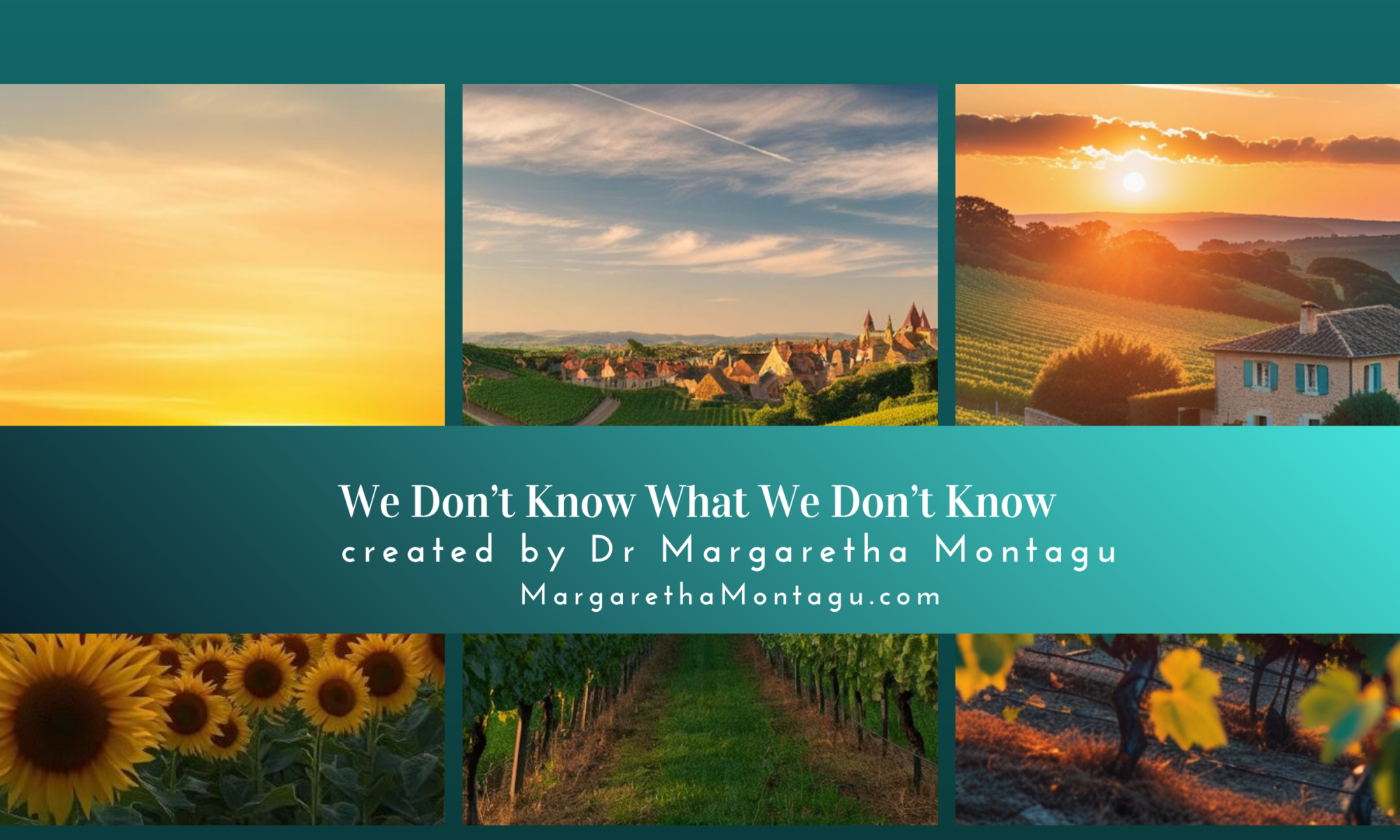
Why the Wisest Thing You Can Do Right Now Is Admit You Might Be Missing the Whole Picture
What this is: A raw, honest, occasionally funny exploration of what we don’t know and why the most transformative thing you can do for your life is acknowledge what you cannot yet see, and what happens when you finally give yourself the time and space to find out.
What this isn’t: A motivational pep talk, a to-do list for self-improvement, or another article telling you to journal more and drink less coffee.
Read this if: You’ve done the work, read the books, ticked the boxes, and still feel like something’s just slightly off, like there’s a version of your life you haven’t quite located yet.
5 Key Takeaways
- The most important things about your life are often invisible to you until something, a challenge, a conversation, a change of scenery, forces them into the light.
- Slowing down is not a luxury. It is the only reliable method for seeing yourself and your life with any real clarity.
- Your unknown unknowns are running the show. The beliefs, patterns, and assumptions you don’t even know you hold are directing your decisions far more than your conscious intentions ever will.
- Community and landscape are profoundly underrated teachers. Walking alongside others in nature dissolves the carefully constructed personas we carry into ordinary life.
- Awareness, even uncomfortable awareness, is always the beginning of freedom. You cannot change what you cannot see. But once you see it? Everything becomes possible.
Introduction: What You Don’t Know Might be Costing You More Than You Realise
There’s a version of you that’s been waiting very patiently at the other end of a long walk through the French countryside.
You haven’t met yet.
Not because you haven’t tried. You’ve tried. You’ve done the courses, the retreats, the affirmations, the therapy sessions where you cried tastefully into a tissue and called it a breakthrough. You’ve read the books, downloaded the apps, reorganised your mornings. You’ve put in the effort. And yet, there’s still this quiet, persistent sense that you’re missing something. Something important. Something you can’t quite name.
That’s because you can’t name it yet. And that is precisely the point.
The ancient Sufi poets had a concept for it. The Johari Window model of psychology describes it. Donald Rumsfeld made it accidentally famous in a 2002 press briefing that the internet never fully got over. And I discovered it, with embarrassing vividness, while hosting walking retreats on the Camino de Santiago in the green hills of southwest France.
We do not know what we do not know.
It sounds obvious. It sounds almost too simple to be useful. But sit with it for a moment, really sit with it, and you’ll find it is one of the most radical, most liberating, and most quietly devastating ideas you will ever genuinely reckon with.
Because here’s what it actually means: the thing that is most limiting your life right now is something you are not even aware exists. It isn’t the problem you’ve been working on. It’s the one you haven’t found yet.
What you’ll gain from reading this: a clearer understanding of why life feels stuck even when you’re doing everything right, a story that might feel uncomfortably familiar, five mistakes most people make once they start waking up to their blind spots, and a small but genuinely powerful practice to begin changing this today.
How Oliver Marsh Walked 35 Kilometres and Discovered He’d Been Living Someone Else’s Life
“How Five Days Walking in the French Countryside Cracked Open Everything I Thought I Understood About Myself“
Oliver Marsh arrived in Gascony with expensive hiking boots, a brand-new journal with not a single word in it, and the confident air of a man who had already done a considerable amount of work on himself.
He was fifty-two. He was successful, by every observable measure. A respected architect in Bristol, a father of two adult children he genuinely liked, a husband of twenty-three years to a woman he still found interesting. He ran on Sundays. He cooked elaborate meals on Saturdays. He had read most of the books on the “must read before you die” lists and had opinions about all of them.
He had signed up for the five-day Camino de Santiago walking retreat in southwest France because his wife had suggested it might be “revealing,” and because he had recently turned fifty-two and felt, somewhere beneath the successful surface of himself, the low hum of something unfinished.
He did not expect to be undone by it.
He had, after all, come prepared.
The first morning was fine. The light was extraordinary, gold and green and impossibly clear, and Oliver noticed it with the appreciative detachment of a man who has been to Florence. He walked at a confident pace. He made conversation easily. He was charming at breakfast, articulate on the trail, and quietly pleased with himself by the time they stopped for lunch in a stone village so old it seemed to have grown from the earth rather than been built upon it.
He ate bread with butter and local honey, drank coffee that tasted the way coffee is supposed to taste, and wrote three words in his journal: “Lovely. Very French.”
By day two, something started to unravel.
It was the silence, partly. Not the absence of sound, there were birds, and wind, and the soft percussion of walking boots on ancient paths, but the absence of agenda. Of performance. Of the particular mental hum that comes from being a person with responsibilities and a reputation to maintain.
Out here, on a gravel path worn smooth by centuries of pilgrims, nobody needed Oliver to be impressive. Nobody was waiting on an email. The oak trees lining the path were entirely indifferent to his professional standing.
He found it, unexpectedly, unbearable.
Not the walk. The quiet. The simplicity.
On the evening of day two, over a long dinner lit by candles and laden with food from the surrounding fields, the conversation turned to the question that hung over the retreat like woodsmoke: What are you not seeing about your own life?
Oliver opened his mouth to give a polished answer and found, to his considerable surprise, that nothing came out.
Not because he had nothing to say. But because, for the first time in years, he was genuinely uncertain what the honest answer was.
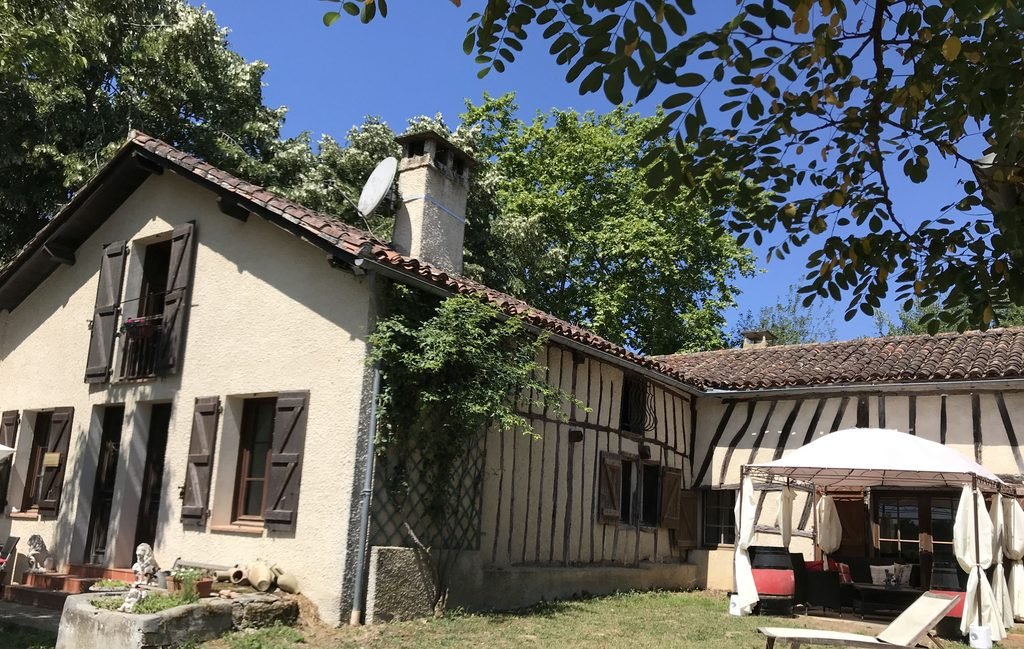
He sat with it. He looked at the candlelight. He smelled rosemary and roasting garlic and the particular damp-stone scent of an old French farmhouse. He heard the others around the table, talking softly, laughing occasionally, unspooling themselves gently in the way people do when they have been walking all day and are warm and fed and temporarily released from who they usually are.
Something, entirely unexpectedly, cracked open.
By day three, Oliver had begun to notice a pattern he had never seen before.
Not because it wasn’t there. It had always been there. But in the rhythm of ordinary life, in the pace and noise and obligation of being Oliver Marsh of Bristol, there had simply been no space to see it.
He had spent thirty years becoming excellent at architecture because his father, a quiet, disappointed man who had given up his own creative dreams, had made it very clear, through the eloquent medium of silence, that this was what success looked like. Oliver had taken that blueprint, literally, and built a career on it. A good career. A career he was, largely, proud of.
But was it his?
He stood on a hillside on the third morning, breathing the cold lavender-scented air, looking out over a valley that had been farmed and walked and prayed over for two thousand years, and he thought: I don’t actually know.
He thought: I have never actually asked.
He thought, with something between grief and relief: I did not know that I did not know this.
By day five, Oliver had filled thirty-four pages of his journal. His wife would later say, when he came home and she saw his face, that he looked like someone who had remembered something important that they had not known they had forgotten.
He had not resolved anything, not yet. The unknown unknowns do not all obligingly reveal themselves in five days. But he had found the questions.
Our Blind Spots
What “We Don’t Know What We Don’t Know” Actually Means for Your Life
The concept has a formal home in psychology. The Johari Window, developed in 1955 by psychologists Joseph Luft and Harry Ingham, describes four quadrants of self-knowledge: what we know about ourselves and others know too, what we know but keep hidden, what others can see but we can’t, and, most fascinatingly, the unknown unknown, what neither we nor anyone else in our immediate world can see about us yet.
That fourth quadrant is not a small room. For most of us, living busy, distracted, screen-saturated lives in environments that reward performance over reflection, that fourth quadrant is more like a continent.
And this matters enormously, because our unknown unknowns are not passive. They don’t sit quietly in the corner waiting to be discovered. They act. They shape our choices, colour our perceptions, drive our fears and our ambitions, and construct the stories we tell about who we are and what we deserve.
The person who keeps choosing relationships that mirror their childhood wounds and can’t understand why they keep ending the same way, they’re in that quadrant. The driven professional who is relentlessly productive and can’t understand why they feel empty at the end of a successful week, same quadrant. The woman who longs for simplicity and yet keeps saying yes to everything and can’t understand why her life is so complicated, yes. That too.
Here is what makes this particularly interesting: the pace of modern life is almost perfectly designed to keep that quadrant invisible. Speed, noise, busyness, the tyranny of the to-do list, these are not neutral conditions. They are, functionally, very effective ways of never having to sit still long enough to notice what’s really going on.
This is why walking retreats, done well, can be genuinely transformational in ways that therapy or books or weekend workshops often can’t replicate. Not because walking is magic, though the research on what happens to your brain chemistry and your capacity for insight when you walk in nature for extended periods is remarkable. But because five days of intentional slowness, in a landscape that is indifferent to your usual identity, alongside other thoughtful humans who are doing the same work, creates precisely the conditions in which the unknown unknowns can finally surface.
And when they surface, not for everyone, not always, but for many, the change they catalyse is not incremental. It is architectural.
This is not just personal, either. When one person in a family, a team, a community begins to see themselves more clearly, the ripple effects are significant and measurable. Relationships shift. Conversations deepen. The particular quiet cruelty of unconscious patterns, passed down through families, replicated in workplaces, recycled in communities, begins to lose its grip. One person’s clarity has a remarkable tendency to give permission to those around them to seek their own.
This is why the question “What don’t I know about myself?” is not a navel-gazing luxury. It may be among the most socially responsible questions a thoughtful person can ask.
5 Mistakes to Avoid When You Start Waking Up to Your Blind Spots
Because the Journey from “I don’t know what I don’t know” to “I actually know something now” has some predictable potholes
1. Assuming that knowing is the same as changing. Insight and transformation are not the same event, though we often treat them as though they are. You can have a profound realisation on a hillside in France and be behaving unchanged by Thursday. Awareness is the beginning, not the finish line. Be patient with the gap between seeing and shifting.
2. Turning self-discovery into another performance. There is a particular trap for high-achievers: they approach inner work the same way they approach everything else. They do it well, they do it thoroughly, they get good at the vocabulary of it, and they present a beautifully curated version of their insights to the world. This is still a mask. The work happens underneath the performance, in the places you don’t yet have language for.
3. Going it alone. The unknown unknowns are called that for a reason. By definition, you cannot see them yourself, which means solitary reflection has a ceiling. You need other perspectives, gentle, trusted, honest ones, to illuminate what your own vision cannot reach. A skilled guide, a thoughtful group, a retreat environment, these are not optional extras. They are the mechanism.
4. Rushing the process. Modern wellness culture has given us a very peculiar relationship with speed. We want the insight and we want it efficiently. Five days in France is already a commitment; two days feels more manageable. But the deeper material, the unknown unknowns, tends not to surface on demand. It surfaces in the third day’s silence. The fourth evening’s conversation. Give it time. Give it more time than you think you need.
5. Treating the discomfort as a sign something is wrong. When the unknown unknowns begin to surface, it doesn’t always feel like relief. It can feel like grief, confusion, or a disconcerting sense that the floor of your life is less solid than you believed. This is not failure. This is not breakdown. This is, as the Camino pilgrims have known for a thousand years, exactly what it feels like to walk through something important.
Five Minutes That Might Change the Direction of Your Year
You don’t need a retreat in France for this, though it helps enormously. You need five uninterrupted minutes, a pen, and the willingness to be genuinely curious rather than defensively certain.
Step 1: Find somewhere quiet. Outside is ideal. Put your phone face down, or, bravely, in another room entirely.
Step 2: Take three slow breaths. Not the performative kind. Actually slow down.
Step 3: Write, without editing, your answer to this question: “If there is something important that I am not currently seeing about my own life, what might it be?”
Write whatever comes. Even if it feels silly. Especially if it feels uncomfortable.
Step 4: Write this: “I am open to seeing what I have not yet been able to see. I give myself permission to not have all the answers yet.”
Step 5: Close the journal. Go for a walk, if you can. Let it breathe.
Do this once a week. Watch what emerges over time. Be patient with yourself. The unknown unknowns don’t surrender on a schedule.
Further Reading
Five Books That Will Help You See What You Haven’t Been Seeing
1. Thinking, Fast and Slow by Daniel Kahneman Kahneman’s masterwork is, at its core, a detailed and occasionally humbling tour of all the ways your brain confidently deceives you. His research on cognitive biases is the scientific architecture beneath the “we don’t know what we don’t know” experience. Essential reading for anyone who considers themselves a rational person (spoiler: you are less rational than you think, and so is everyone else, including Kahneman).
2. Awareness by Anthony de Mello A Jesuit priest and psychotherapist, de Mello writes about the nature of self-deception with a kind of warm, laughing ruthlessness that is almost unique in spiritual literature. His central argument, that we are almost all sleepwalking through our lives and calling it living, is delivered with enough humour and compassion to make the medicine go down beautifully. Particularly useful for those whose blind spots involve the stories they’ve been told about who they are.
3. The Untethered Soul by Michael A. Singer Singer asks the question that underlies all unknown-unknown work: who is the one inside you who is aware of your thoughts and feelings? And why have you let that one be run so completely by fear and habit? A gentle but genuinely destabilising read for people who are ready to meet themselves more honestly.
4. Essentialism: The Disciplined Pursuit of Less by Greg McKeown McKeown’s argument is deceptively practical: most of what you are doing is not actually what matters most to you, and you have been too busy to notice. For people living overfull lives who suspect the fullness is partly a strategy for not looking too carefully, this book is both diagnosis and prescription.
5. The Road Less Travelled by M. Scott Peck One of the most quietly radical books of the last century. Peck opens with the sentence “Life is difficult,” and proceeds to spend the rest of the book explaining, with profound compassion and clinical precision, why our refusal to accept this truth is the source of most of our suffering. His chapters on self-deception and the “maps of reality” we carry, rarely updated, often inherited, are directly relevant to anyone wrestling with unknown unknowns.
P.S. If you want a gentle, practical, daily companion for this kind of inner work, my book Embracing Change, in 10 Minutes a Day was written precisely for this: those moments when you know something needs to shift but aren’t quite sure yet what, or how. It’s designed for real life, not a retreat (though it works beautifully on one). You can find it here: Embracing Change, in 10 Minutes a Day
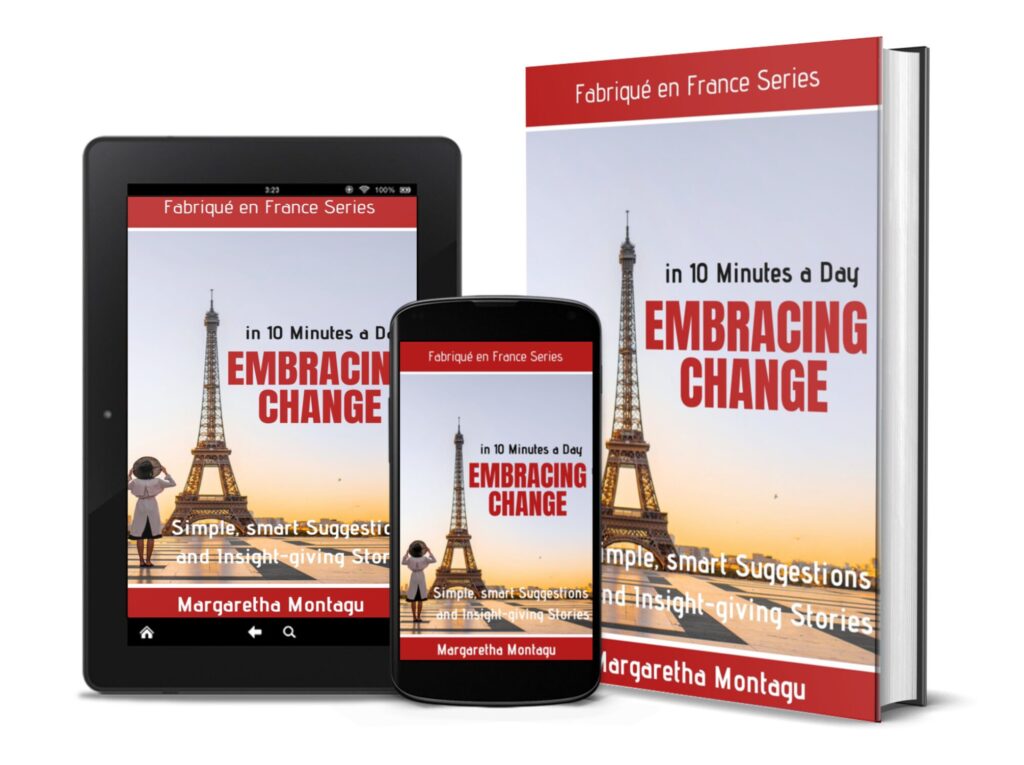
If you are currently facing a major life transition or any other dramatic change in your circumstances, and you have no idea how you are going to cope, the good news is that the strategy presented in this book can help you, step by step, to improve your ability to handle the stress caused by change, even if you feel entirely powerless at the moment.
And if you want to go considerably deeper into this work, particularly through the lens of nature, horses, and guided self-inquiry, my online course Reconnect with Nature: A Guided Journaling Course Inspired by Horses offers a structured, beautifully curated path into exactly the kind of reflective practice that makes the unknown knowable. This course is available completely free to all retreat guests, as part of the retreat experience.
Reconnect with Nature: A Guided Journaling Course Inspired by Horses for anyone interested in increasing their emotional, physical and social resilience by starting a journal, but does not have much time to invest and is looking for a simple, easy-to-implement strategy that gives tangible and lasting results. Get immediate access
5 Razor-Sharp FAQs
Answering the Questions People Are Actually Asking Right Now
Q1: How do I know if I have significant blind spots about my own life? The most reliable indicator is a persistent gap between how much effort you are putting in and how satisfied or alive you actually feel. If you are doing everything “right” and still feel vaguely dissatisfied, stuck, or like you’re living slightly beside your own life rather than in it, that’s the signal. Not a crisis. A compass point.
Q2: Can I discover my unknown unknowns on my own, or do I need help? You can begin the process alone, and the intention-setting exercise above is a good starting place. But by definition, what you cannot see, you cannot see on your own. A skilled guide, a retreat environment, a trusted community, or even a single honest conversation with the right person can illuminate things that decades of solo journaling cannot reach. Both have their place. Neither is sufficient alone.
Q3: Isn’t a walking retreat just a holiday with spiritual marketing? Fair question. The answer depends entirely on the retreat. A well-designed walking retreat, one with intentional structure, skilled facilitation, genuine space for reflection, and a community of like-minded people, creates conditions that are qualitatively different from a holiday. The walking matters: research shows that bilateral movement in nature measurably increases insight and reduces rumination. The community matters: being witnessed by others in a non-ordinary context accelerates self-awareness significantly. The distance from ordinary life matters. It’s not magic. It’s design.
Q4: What if what I discover about myself is something I don’t want to know? Then you are in very good company, and you have found something worth finding. The things we don’t want to know about ourselves are almost always the things that are most limiting us. The discovery may be uncomfortable. Staying unconscious is worse. And in the right environment, with the right support, uncomfortable discoveries tend to feel less like devastation and more like relief.
Q5: How do I integrate what I learn on a retreat back into ordinary life? This is the most important question, and the most underasked. Integration requires three things: community (people who knew you before and can hold you accountable to your new understanding), practice (something small and daily that keeps the new awareness alive, like the exercise above or a regular journaling practice), and patience (real change happens in the weeks and months after a retreat, not always during it). The work done on the retreat is the planting. The rest of the year is the growing.
Conclusion: The Beginning of Change
There is an old Sufi story about a man who spends his whole life searching for a great treasure, travelling the world, consulting wise men, crossing deserts and seas. He comes home, exhausted and empty-handed, and digs in his own garden to plant something. The treasure is there, three feet down.
This is not a story about staying home. It is a story about looking.
The most important thing about “we don’t know what we don’t know” is not the not-knowing itself. It is what becomes possible the moment you admit it. The moment you loosen your grip on certainty and let yourself become genuinely curious about what you might be missing, something extraordinary happens. Not all at once. But it begins.
Invitation: Come and Find Out What You Don’t Yet Know
You’ve tried rearranging the pieces. What if the picture itself needs changing?
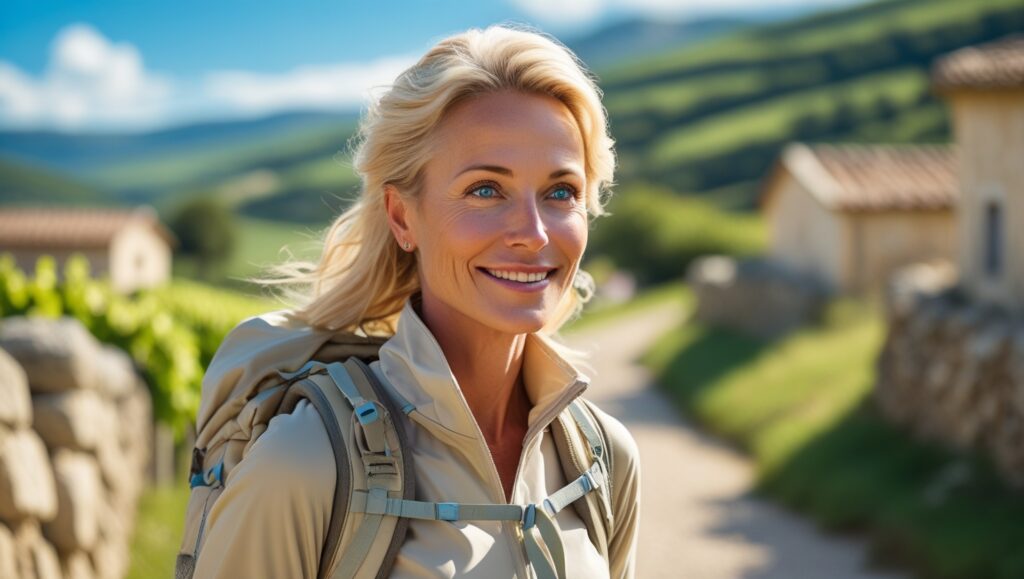
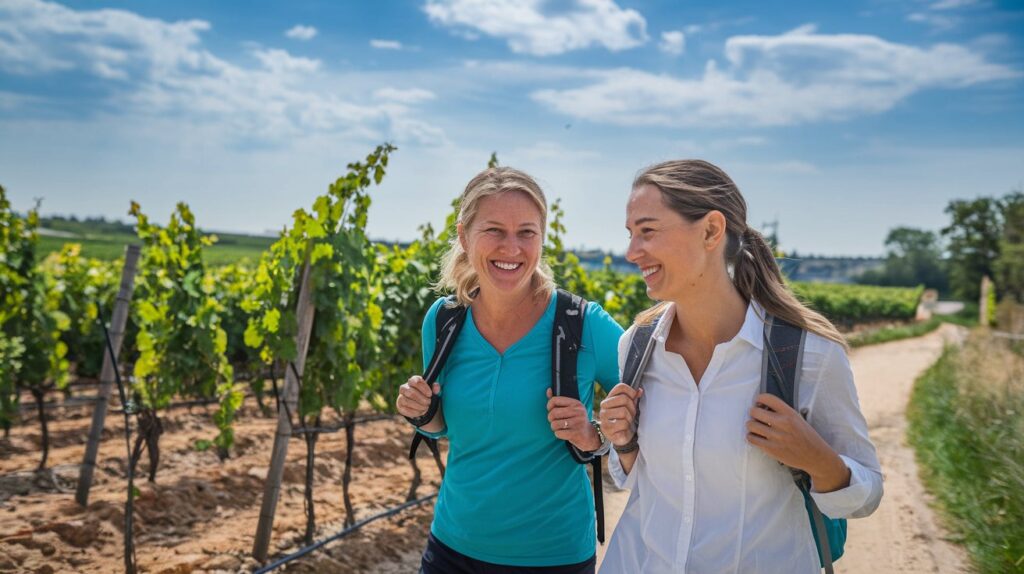
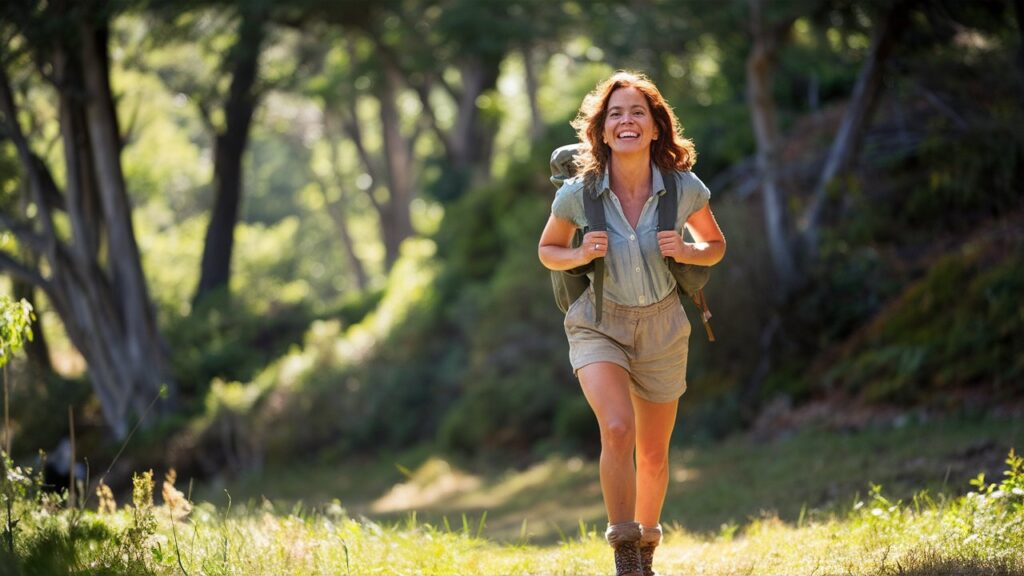
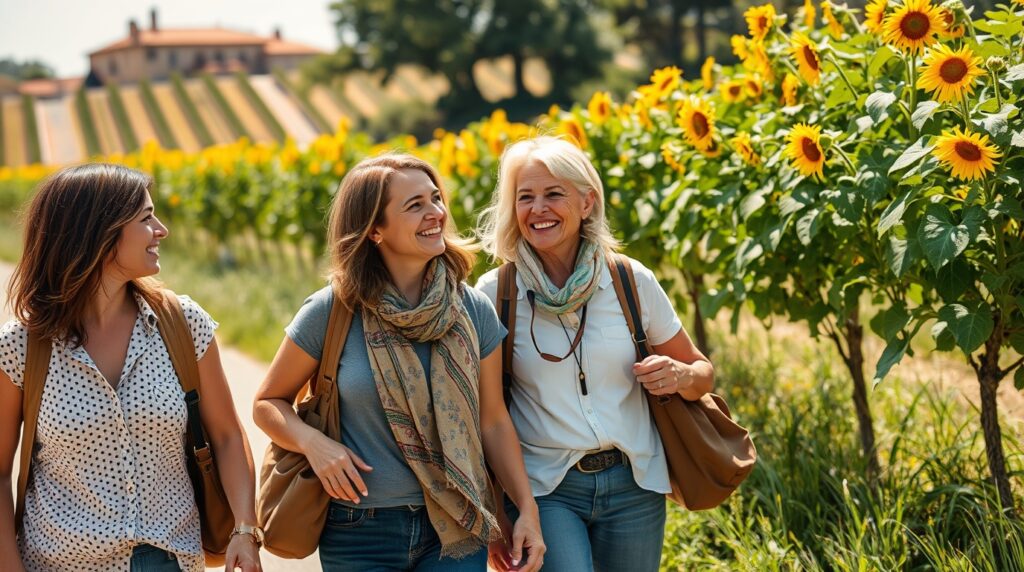
My five-day Camino de Santiago walking retreats in the breathtaking southwest of France are designed, deliberately and lovingly, for exactly the person who is ready to find out what they’ve been missing. On an ancient pilgrimage path, at farmhouse dinners and due to the quiet miracle of sustained time in wild nature, guests consistently discover not just rest, but clarity. Not just beauty, but insight. Together, they create the conditions in which your unknown unknowns can finally, gently, tell you what you need to hear.
If you’re ready to stop managing your life at a distance and start actually living it, with more depth, more meaning, and considerably better bread, come and walk with us. Find out more and reserve your place here.
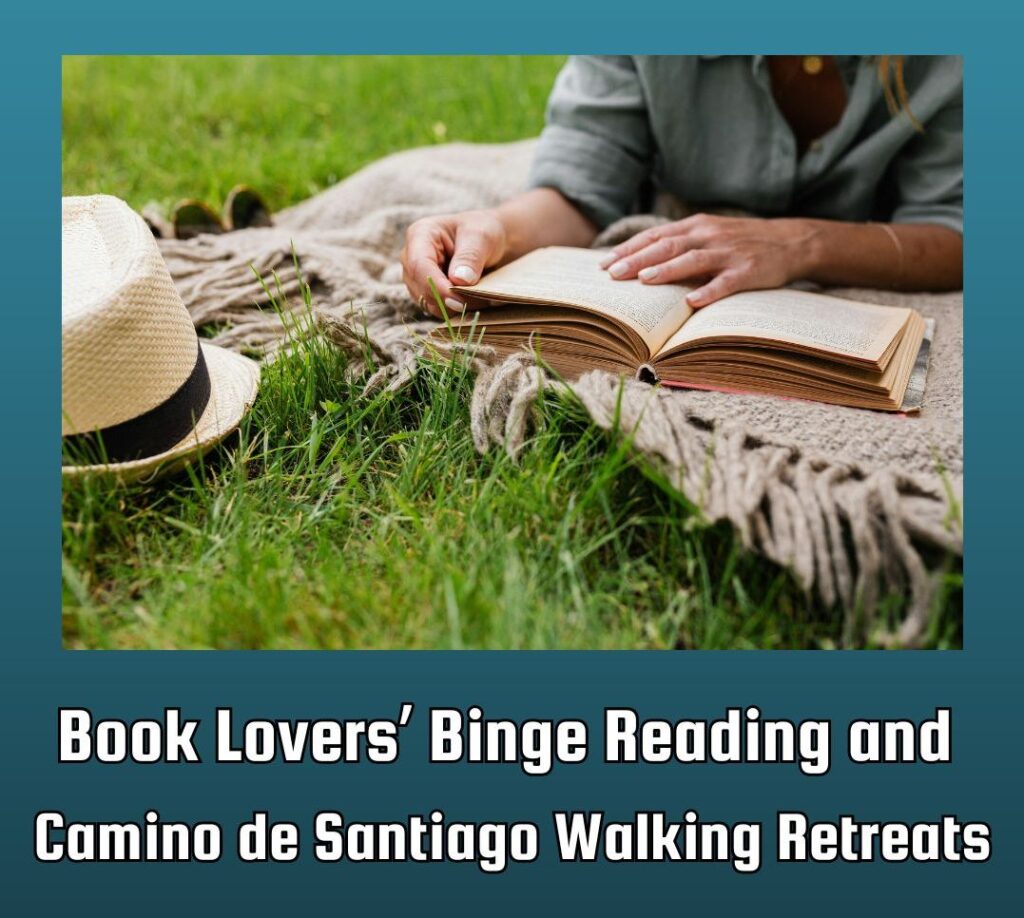
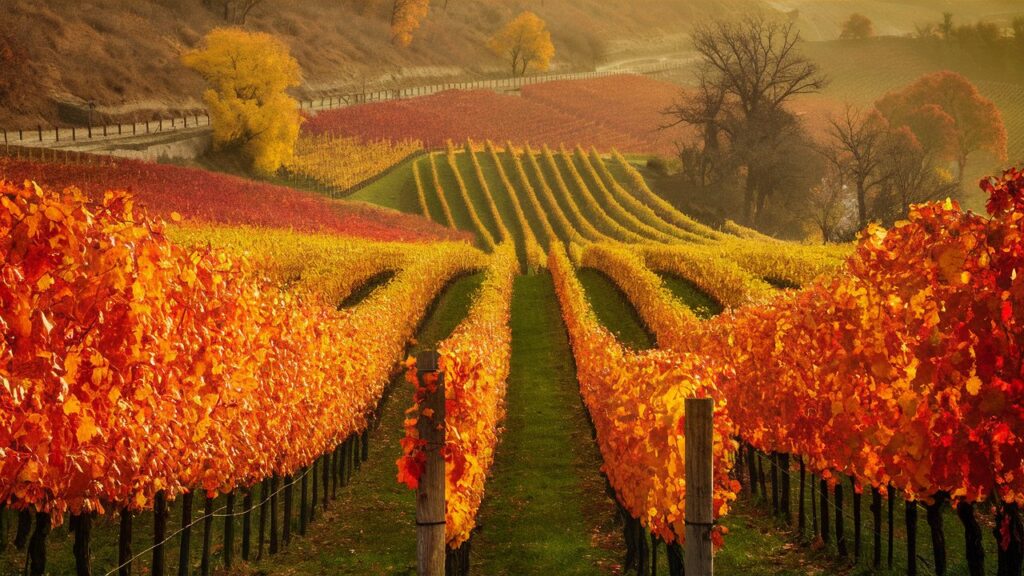
Join us for the Book Lovers Binge Reading Camino de Santiago Walking Retreat in the sun-drenched southwest of France: a journey where the trail and the story unfold together. Walk ancient paths at your own pace, then settle in each evening with a good book. This isn’t a fitness challenge—it’s a gentle rhythm—one step, one chapter, one honest conversation at a time. Rolling hills, quiet villages, golden light. No expectations, no performance, no agenda but your own unfolding.


Are You Ready for a Retreat?
Not sure if a retreat is right for you right now? Or perhaps you simply want to explore the idea gently, without commitment? Take my Ready for a Retreat? Quiz when you sign up for my newsletter. It takes five minutes and is surprisingly honest. Sometimes it’s useful to have something outside of your own head help you see clearly.
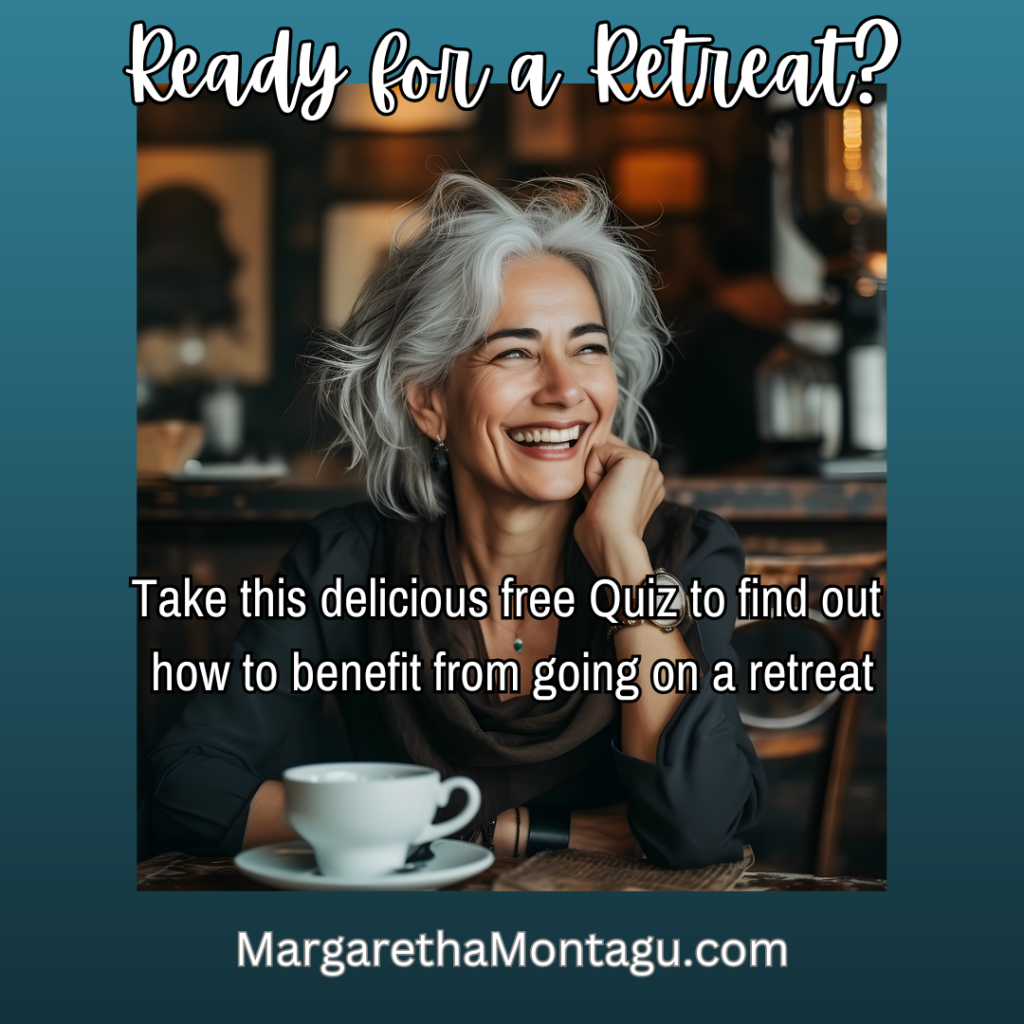
Do you dream of escaping your stressful life to raise a herd of goats or grow sunflowers in the south of France? Then you may be ready for an Esprit Meraki retreat. Get access to this “very serious” quiz to help you figure out how urgent your need for a change of scenery is, when you subscribe to my monthly newsletter.
Sign up and take the quiz here.
A Final Reflection
Oliver Marsh, on his last morning, stood at the edge of a field that had been planted and harvested and left fallow and planted again for longer than his country had existed. He thought about the word “fallow.” How it means unplanted. Resting. Waiting.
How it is not, in fact, doing nothing.
What part of you has been waiting for permission to lie fallow long enough to remember what it’s actually for?
References
- Luft, J., & Ingham, H. (1955). The Johari window, a graphic model of interpersonal awareness. Proceedings of the Western Training Laboratory in Group Development. University of California, Los Angeles. (The foundational paper introducing the Johari Window model and its four quadrants of self-knowledge, directly underpinning the “unknown unknowns” framework discussed throughout this article.)
- Kruger, J., & Dunning, D. (1999). Unskilled and unaware of it: How difficulties in recognizing one’s own incompetence lead to inflated self-assessments. Journal of Personality and Social Psychology, 77(6), 1121–1134. (The landmark study demonstrating that people systematically overestimate their own competence in areas where they lack knowledge, providing empirical support for why we struggle to see what we do not yet know.)
- Bratman, G. N., Hamilton, J. P., Hahn, K. S., Daily, G. C., & Gross, J. J. (2015). Nature experience reduces rumination and subgenual prefrontal cortex activation. Proceedings of the National Academy of Sciences, 112(28), 8567–8572. (This study found that walking in natural environments significantly reduces repetitive negative thought patterns and associated neural activity, explaining part of why extended time in nature, as on a walking retreat, creates measurable conditions for new insight and self-awareness.)
- Oppezzo, M., & Schwartz, D. L. (2014). Give your ideas some legs: The positive effect of walking on creative thinking. Journal of Experimental Psychology: Learning, Memory, and Cognition, 40(4), 1142–1152. (Stanford research demonstrating that walking, especially outdoors, significantly increases creative output and divergent thinking, providing a biological mechanism for why walking retreats facilitate the kind of open, associative thinking required to see beyond one’s existing cognitive maps.)
- Kross, E., & Ayduk, Ö. (2017). Self-distancing: Theory, research, and current directions. Advances in Experimental Social Psychology, 55, 81–136. (Research on psychological self-distancing demonstrates that creating temporal, physical, or conceptual distance from one’s ordinary self-view dramatically increases the capacity for objective self-reflection, a mechanism central to why retreat environments, particularly those involving physical distance from one’s usual context, are disproportionately effective at enabling new self-understanding.)