
.
When I first started hosting Camino de Santiago walking retreats in rural Gascony, the French Tuscany, I assumed I would be the one doing most of the teaching.
I couldn’t have been more wrong.
Over the years, dozens of people have arrived at my farmhouse carrying backpacks, walking boots, and lives that had gradually become much too heavy. Some were still working. Some had retired. Some were rebuilding after loss, illness or divorce. Others simply couldn’t explain why they felt so restless.
They thought they had come to walk a couple of sections of the Camino.
In the end, they became MY teachers. The CrossRoads Conversations blog post series explores what my guests have taught me over the last twenty-odd years.
Why So Many Guests Leave With Less
One of the first things I notice when guests arrive at my little farmhouse in the Gers isn’t their smiling faces. It’s their luggage.
Some people pull up with suitcases that suggest they’re headed to the North Pole for six months, not to a five-day retreat in the sun-warmed southwest of France. A bag for clothes. A bag for shoes. A bag for “just in case.” Every year, I watch another wheel snag on the gravel, and another guest laughs and says, “I think I brought a bit too much, maybe?”
I know that feeling. Most of us do. We pack for sunshine and for rain, for elegant dinners and impromptu barbecues, for books we’ll never crack open and snacks we’ll never eat. Travelling light, it turns out, does not come naturally to the human species.
Until we decide to walk the Camino.
During my Camino de Santiago walking retreats, guests spend two or three days on foot along the historic Le Puy route. The walks are unguided — deliberately so. I’ve come to believe that people find their way through life more easily when they’re trusted to find their own way along a path, rather than being herded down it.
Before setting off, I nudge them gently: take only what you truly need. Water. A picnic. A waterproof, if the sky looks moody. Maybe a notebook. That’s more or less it.
And somewhere between those first uncertain steps and the end of the day’s walking, something quietly shifts. Carrying a lighter backpack has a funny way of reminding you that other things in life have gotten unnecessarily heavy, too.
Not everyone who arrives here is grieving or burnt out. Some are wondering what comes after retirement. Some, despite having hit a successful stride in their careers, still feel oddly restless. Some have recently lost someone dear. Others just have that nagging sense that life has become far more complicated than it needs to be.
After hundreds of crossroads conversations, I’ve noticed a pattern: the heaviest things people carry are seldom visible.
Expectations. Old disappointments. The pressure to keep achieving. Guilt. Regret. Responsibilities that quietly stopped belonging to them years ago. The belief that they need every answer before they’re allowed to take the next step.
Unlike an overstuffed suitcase, none of that gets left behind in the bedroom. It comes along for the whole walk.
The Camino has a gentle way of bringing this into focus. It doesn’t solve anything, and it certainly doesn’t perform miracles. What it does is make space — enough space for people to finally notice what they’ve been hauling around without ever questioning it.
I never set out to host retreats for people standing at life’s crossroads. And yet, somewhere along the way, I realised that’s precisely who kept showing up on my doorstep. Doctors, teachers, business owners, engineers, artists, retirees, parents, grandparents. Different stories, remarkably similar undertone: I can’t keep going on like this.
The Camino rarely answers that outright. Instead, it asks a quieter question:
What are you still lugging around that you should be leaving behind?
Not your responsibilities, obviously. Not the people you love. But perhaps the unrealistic expectations. The relentless busyness. The need to prove yourself, again and again. The habit of dragging yesterday into tomorrow.
If there’s one thing dozens of guests have taught me, it’s this: people usually arrive believing they need to add something to their lives. More confidence. More certainty. More purpose. More answers.
Far more often, they leave having let go of something instead.
A few unnecessary burdens stay behind on the Camino. Like the stone many people bring from home to leave on the path.
If you (or someone you know) are carrying more emotional baggage than you’d like to admit — and you suspect a few days on the Camino de Santiago might help you set some of it down — email me at MargarethaMontagu@gmail.com
If your soul is craving fresh air, meaningful movement, and a chance to reconnect with nature and connect with horses, join me on a 5-day/4-night “You’ve Got This” Camino de Santiago Walking Retreat – a powerful, natural reboot for your body, mind, and spirit. No fitness requirements. No forced bonding. No pressure to have a breakthrough. Just one foot in front of the other, and finding your way to a brighter future.
Do you dream of escaping your stressful life to raise a herd of goats or grow sunflowers in the south of France? Then you may be ready for an Esprit Meraki retreat. Get access to this “very serious” quiz to help you figure out how urgent your need for a change of scenery is, when you subscribe to my monthly newsletter.
What Life Lessons Can You Learn While Walking the Camino de Santiago? – a free guide filled with 10 not just “quaint anecdotes” or Instagram-worthy moments (though there are plenty of those) but real transformations from real people who walked this insight-giving trail – Subscribe to my monthly newsletter to Download the Guide
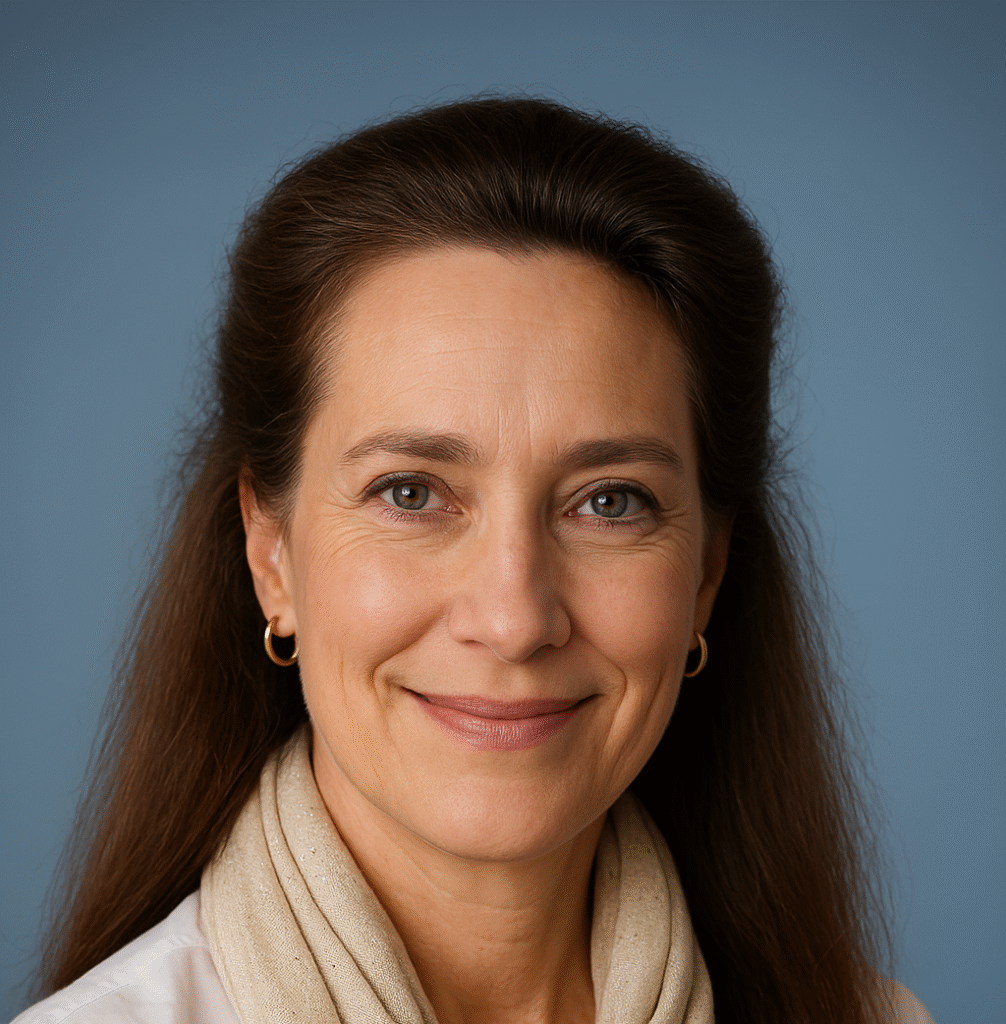
“I am an experienced medical doctor – MBChB, MRCGP, NLP master pract cert, Transformational Life Coach (dip.) Life Story Coach (cert.) Stress Counselling (cert.) Med Hypnotherapy (dip.) and EAGALA (cert.) I may have an impressive number of letters after my name, and more than three decades of professional experience, but what qualifies me to excel at what I do is my intuitive understanding of my clients’ difficulties and my extensive personal experience of managing major life changes using strategies I developed over many years.” Dr M Montagu